Interviews are opportunities to demonstrate your expertise, and this guide is here to help you shine. Explore the essential Asset Management for Energy Systems interview questions that employers frequently ask, paired with strategies for crafting responses that set you apart from the competition.
Questions Asked in Asset Management for Energy Systems Interview
Q 1. Explain the lifecycle cost analysis of an energy asset.
Lifecycle cost analysis (LCCA) is a crucial process in asset management that evaluates the total cost of ownership of an energy asset over its entire lifespan. This isn’t just the initial purchase price; it encompasses all costs from conception to decommissioning.
Think of it like buying a car – you consider the purchase price, but also fuel, insurance, maintenance, repairs, and eventual resale or scrap value. LCCA applies this same principle to energy assets, such as turbines, transformers, or solar panels.
- Acquisition Costs: Initial purchase price, transportation, installation, and commissioning.
- Operating Costs: Fuel, labor, maintenance, and repairs.
- Maintenance Costs: Preventive maintenance, corrective maintenance, and overhauls.
- Replacement Costs: Cost of replacing components or the entire asset at the end of its useful life.
- Decommissioning Costs: Costs associated with dismantling and disposing of the asset at the end of its life.
By performing an LCCA, we can make informed decisions about asset selection, maintenance strategies, and replacement timing, ultimately optimizing the overall cost of ownership and maximizing the asset’s value.
For example, a seemingly cheaper turbine might have significantly higher maintenance costs over its lifespan, making a more expensive, but more reliable, turbine a better long-term investment. LCCA helps us see the bigger picture and avoid costly surprises down the line.
Q 2. Describe your experience with different asset management software.
Throughout my career, I’ve worked extensively with various asset management software solutions. My experience spans both cloud-based and on-premise systems, catering to different scales of operations.
- IBM Maximo: A robust and widely used solution, excellent for managing large and complex energy systems. I’ve used it for work order management, preventative maintenance scheduling, and asset performance tracking. Its strength lies in its comprehensive features and integration capabilities.
- SAP Plant Maintenance (PM): Another powerful system, particularly useful for integrating asset management with broader enterprise resource planning (ERP) systems. I’ve utilized this for detailed cost accounting and optimized maintenance planning in large-scale power generation facilities.
- EAM (Enterprise Asset Management) cloud-based solutions: Several cloud-based platforms offer scalable and cost-effective solutions for smaller energy companies. I’ve worked with platforms that provide mobile access for technicians, real-time data visualization, and improved collaboration features. These are particularly advantageous for smaller organizations or those with geographically dispersed assets.
My experience isn’t limited to just using these systems; I’ve also been involved in the implementation, customization, and training aspects, ensuring effective adoption within different organizational contexts.
Q 3. How do you prioritize maintenance tasks in a complex energy system?
Prioritizing maintenance tasks in a complex energy system requires a systematic approach, balancing urgency, criticality, and cost-effectiveness. I typically utilize a combination of methods:
- Risk-Based Prioritization: This method assesses the potential consequences of equipment failure. Assets with high failure impact and high failure probability are prioritized. For example, a critical transformer failure might cause a widespread outage, warranting immediate attention.
- Condition-Based Monitoring (CBM): This involves using sensors and data analytics to monitor the condition of assets. Real-time data on vibration, temperature, and other parameters allows for proactive maintenance scheduling before a failure occurs. This is particularly effective in preventing catastrophic failures.
- Preventative Maintenance Schedules: Regular scheduled maintenance, based on manufacturer recommendations and historical data, is critical for extending asset lifespan and minimizing unexpected breakdowns. This minimizes downtime and extends the lifespan of the assets.
- Economic Prioritization: This weighs the cost of maintenance against the potential cost of failure. This can be particularly useful where budget constraints are a concern.
Often, I use a combination of these methods, employing software tools to generate optimized maintenance schedules based on various factors.
Q 4. What are the key performance indicators (KPIs) you use to monitor asset health?
Key Performance Indicators (KPIs) are vital for monitoring asset health and overall system performance. They provide actionable insights for improvement and decision-making.
- Mean Time Between Failures (MTBF): Indicates the average time between equipment failures. A higher MTBF suggests better reliability.
- Mean Time To Repair (MTTR): Measures the average time it takes to repair a failed asset. A lower MTTR indicates efficient maintenance processes.
- Overall Equipment Effectiveness (OEE): A holistic KPI that considers availability, performance, and quality. This helps assess the overall productivity of an asset.
- Asset Uptime/Downtime: A straightforward indicator of asset availability and the frequency of outages.
- Maintenance Costs per Unit of Production: Measures the cost-effectiveness of maintenance efforts.
- Failure Rates of Specific Components: Identifies patterns and potential areas for improvement in design or maintenance procedures.
By regularly monitoring these KPIs and analyzing trends, we can identify potential problems, optimize maintenance strategies, and ultimately enhance the reliability and efficiency of the energy system. Data visualization dashboards are invaluable for presenting these KPIs effectively.
Q 5. Explain your understanding of risk assessment and mitigation in asset management.
Risk assessment and mitigation are fundamental aspects of effective asset management. It involves identifying potential hazards, evaluating their likelihood and impact, and implementing strategies to reduce or eliminate those risks.
A common framework uses a risk matrix, plotting the likelihood of an event against its potential impact. This matrix helps prioritize risk mitigation efforts. For example, a high-likelihood, high-impact risk (like a major equipment failure) demands immediate attention, whereas a low-likelihood, low-impact risk might require less urgent action.
Mitigation strategies can include:
- Preventive Maintenance: Regularly scheduled maintenance reduces the likelihood of failures.
- Redundancy: Implementing backup systems or components to ensure continued operation in case of failure.
- Safety Systems: Incorporating safety features to prevent accidents and mitigate their consequences.
- Regular Inspections: Identifying potential issues early through inspections and testing.
- Training and Procedures: Ensuring that personnel are properly trained to operate and maintain equipment safely and effectively.
Risk assessment is an iterative process; regular reviews and updates are necessary to account for changes in the operational environment, asset condition, and regulatory requirements. This ensures that the mitigation strategies remain effective.
Q 6. How do you handle unexpected equipment failures and outages?
Unexpected equipment failures and outages require a rapid and coordinated response to minimize downtime and prevent further damage.
My approach involves:
- Immediate Response: Activating emergency protocols and isolating the affected equipment to prevent escalation.
- Damage Assessment: Determining the extent of the damage and the impact on the overall system.
- Emergency Repairs: Implementing temporary repairs to restore service as quickly as possible.
- Root Cause Analysis (RCA): Investigating the root cause of the failure to prevent recurrence (discussed further in the next answer).
- Permanent Repairs: Planning and executing permanent repairs once the immediate crisis has passed.
- Post-Incident Review: Conducting a thorough review of the incident to identify areas for improvement in maintenance procedures, risk mitigation strategies, and emergency response plans.
Effective communication during an outage is critical. Keeping stakeholders informed of the situation and the progress of recovery efforts is crucial for managing expectations and minimizing disruption.
Q 7. Describe your experience with Root Cause Analysis (RCA).
Root Cause Analysis (RCA) is a systematic investigation technique used to identify the underlying causes of equipment failures or incidents. It’s more than just identifying the immediate cause; it delves deeper to find the root problems that contributed to the event.
I frequently use methods like the ‘5 Whys’ technique, which involves repeatedly asking ‘why’ to uncover the root cause. For example:
- Problem: Turbine failed.
- Why? Bearing seized.
- Why? Insufficient lubrication.
- Why? Lubrication system malfunctioned.
- Why? Sensor failed to alert maintenance.
- Why? Sensor was not properly calibrated.
The root cause here isn’t the bearing seizure – it’s the failure to properly calibrate the sensor. Addressing this root cause prevents future failures, even if different components are involved.
Other RCA methodologies I utilize include Fault Tree Analysis (FTA) and Fishbone diagrams. The choice of methodology depends on the complexity of the incident and the available data. A thorough RCA ensures that corrective actions are targeted at the root cause, preventing similar incidents in the future.
Q 8. What are your preferred methods for forecasting future maintenance needs?
Forecasting future maintenance needs is crucial for effective asset management in energy systems. My preferred methods combine several approaches for a holistic view. I utilize time-series analysis, employing statistical models like ARIMA or exponential smoothing to predict equipment degradation based on historical maintenance data. This approach leverages patterns in past failures to project future needs.
Further, I incorporate condition-based monitoring data, such as sensor readings from turbines or transformers. Analyzing vibration levels, temperature fluctuations, and other key indicators allows us to identify potential issues before they escalate into major failures. We use machine learning algorithms, often incorporating supervised learning techniques with labeled datasets of historical maintenance events and sensor readings, to make these predictions more accurate and proactive.
Finally, I also rely on expert judgment and knowledge, particularly for specialized equipment or unique operating conditions. Experienced engineers and technicians can provide invaluable insights that complement quantitative forecasting methods. For example, knowing the specific operating conditions of a wind turbine in a particularly harsh environment would inform a more conservative maintenance schedule than one in a gentler climate.
By integrating these three approaches, we achieve a more robust and reliable forecast of future maintenance needs, enabling proactive planning and resource allocation.
Q 9. Explain your understanding of predictive maintenance techniques.
Predictive maintenance goes beyond reactive fixes and scheduled maintenance; it’s about anticipating equipment failures using data analysis and advanced technologies. The core idea is to move from a time-based (e.g., ‘change oil every 3000 miles’) to a condition-based strategy (‘change oil when sensors indicate contamination’).
In the energy sector, this might involve deploying vibration sensors on gas turbines to detect bearing wear, infrared cameras to identify overheating components, or oil analysis to assess lubricant degradation. Data collected from these sensors is then fed into predictive models (often machine learning algorithms), which analyze patterns and predict the remaining useful life of assets. This allows for scheduling maintenance before failures occur, minimizing downtime, and preventing catastrophic events.
For instance, if a predictive model identifies a high probability of bearing failure in a wind turbine within the next two weeks, we can schedule preventative maintenance, reducing the risk of a complete turbine shutdown and the associated high costs of repair and lost energy production. We might even prioritize this work above others based on the predicted severity and potential impact of failure.
Q 10. How do you ensure compliance with relevant regulations and standards?
Compliance is paramount in asset management for energy systems. We maintain rigorous adherence to all relevant regulations and standards through a multi-faceted approach. First, we establish a comprehensive compliance program that identifies applicable regulations – these vary by location and the type of asset (e.g., pipeline safety regulations, OSHA requirements for power plants). We then develop specific procedures and protocols to ensure that all activities are compliant.
Regular audits and inspections are conducted to monitor compliance and identify any gaps. These can be internal audits by our team or third-party assessments. We maintain detailed documentation of all inspections, maintenance activities, and compliance-related records. This documentation not only assists with audits, but also forms a critical component of our risk management strategy. We maintain a robust training program for our staff, ensuring everyone understands their roles and responsibilities in maintaining compliance.
Finally, we actively participate in industry events and collaborate with regulatory agencies to stay informed about evolving regulations and best practices. For example, staying updated on changes to API standards for pipeline safety is critical for compliance and minimizing risk.
Q 11. Describe your experience with budget management and cost control.
Budget management and cost control are integral to successful asset management. I utilize a zero-based budgeting approach, starting from scratch each year and justifying every expenditure. This ensures that resources are allocated efficiently and prevents unnecessary spending. We also employ various cost-control strategies, such as negotiating favorable contracts with vendors, implementing energy-efficient technologies, and optimizing maintenance schedules to minimize downtime.
We utilize cost-benefit analysis for major investments, carefully evaluating the cost of new equipment, maintenance, and operations against the expected benefits (e.g., increased efficiency, reduced emissions, or enhanced safety). This ensures our investments align with our business objectives. Furthermore, we develop detailed cost tracking systems, regularly monitoring actual costs against budget projections. If variances occur, we investigate the cause and implement corrective actions. For example, if maintenance costs for a specific asset exceed expectations, we might examine whether preventive maintenance is effective or if a different maintenance strategy is needed.
Regular reporting and analysis of budget performance enable proactive management and identification of potential cost overruns.
Q 12. How do you communicate effectively with stakeholders?
Effective communication is crucial in asset management, as it involves diverse stakeholders with varying levels of technical expertise. My approach emphasizes clarity, conciseness, and visual aids. I tailor my communication style to the audience, avoiding technical jargon when speaking to non-technical stakeholders. I use clear language and visuals (charts, graphs, dashboards) to present complex data and technical information in an easily understandable manner.
I employ various communication channels depending on the message and audience. For routine updates, email is sufficient. However, for complex issues or important decisions, I prefer face-to-face meetings or video conferences. Regular meetings with key stakeholders allow for open discussion, feedback, and collaborative problem-solving. A well-structured presentation with clear objectives and outcomes helps to guide the conversation and foster engagement.
Finally, I establish clear communication protocols to ensure timely dissemination of information and to manage expectations effectively. For example, establishing a regular reporting schedule provides transparency and builds trust with stakeholders.
Q 13. How do you manage conflicting priorities in asset management?
Conflicting priorities are inevitable in asset management, as resources are often limited, and numerous competing demands exist. My approach to managing these conflicts involves a structured prioritization process that relies on a combination of quantitative and qualitative factors.
I use a risk-based approach, prioritizing assets and maintenance tasks based on their criticality and potential impact on operations. For example, a critical asset like a main transformer will have higher priority than a less critical asset like a lighting system. A weighted scoring system can be used to incorporate multiple factors such as criticality, cost of failure, and regulatory requirements. We’ll assign weights to each factor to reflect its relative importance. This creates a measurable, objective criteria for prioritization.
Furthermore, I encourage open communication and collaboration among stakeholders to reach a consensus on priorities. Transparency and data-driven decision-making play crucial roles in resolving conflicts fairly. Finally, regular review and adjustment of priorities are essential to adapt to changing conditions and new information.
Q 14. Explain your experience with data analysis and reporting.
Data analysis and reporting are fundamental aspects of my work. I leverage various tools and techniques to collect, analyze, and visualize data from various sources. These include CMMS (Computerized Maintenance Management Systems) databases, sensor readings from connected assets, and historical maintenance records.
I employ techniques like statistical analysis to identify trends, patterns, and anomalies in maintenance data. Data visualization tools, such as dashboards and reports, are crucial for communicating findings effectively to stakeholders. I also leverage predictive modeling techniques (as mentioned earlier) using tools like R or Python to forecast future maintenance needs and optimize asset utilization.
Reporting is structured to meet the specific needs of different stakeholders. For example, operational management needs concise summaries of key performance indicators (KPIs) such as equipment uptime and maintenance costs. Executive management may require high-level strategic reports on overall asset health and performance. The choice of data visualization method (e.g., charts, tables, dashboards) will depend on the audience and the goal of the report.
Q 15. What is your approach to managing aging assets?
Managing aging assets in energy systems requires a proactive and multi-faceted approach. It’s not just about reacting to failures; it’s about predicting them and mitigating their impact. My approach centers around a robust condition-based monitoring system, coupled with predictive maintenance strategies.
Condition Monitoring: We utilize various technologies – from vibration analysis and infrared thermography to advanced data analytics – to assess the health of assets in real-time. This allows us to identify potential issues early, before they escalate into major failures.
Predictive Maintenance: Instead of adhering to rigid schedules, we leverage the data from condition monitoring to predict when maintenance is truly needed. This optimizes maintenance costs and minimizes downtime.
Remaining Useful Life (RUL) Assessment: We use advanced algorithms and statistical models to estimate the remaining lifespan of critical components. This informs decisions on repairs, replacements, or upgrades.
Asset Retirement Planning: For assets nearing the end of their life, we develop detailed retirement plans, considering decommissioning costs, environmental regulations, and potential replacements.
For example, in a recent project involving a large wind farm, we implemented a remote monitoring system that allowed us to detect early signs of gearbox wear in several turbines. This enabled us to schedule proactive maintenance, preventing costly unplanned outages and extending the operational life of the assets.
Career Expert Tips:
- Ace those interviews! Prepare effectively by reviewing the Top 50 Most Common Interview Questions on ResumeGemini.
- Navigate your job search with confidence! Explore a wide range of Career Tips on ResumeGemini. Learn about common challenges and recommendations to overcome them.
- Craft the perfect resume! Master the Art of Resume Writing with ResumeGemini’s guide. Showcase your unique qualifications and achievements effectively.
- Don’t miss out on holiday savings! Build your dream resume with ResumeGemini’s ATS optimized templates.
Q 16. How do you incorporate sustainability considerations into asset management?
Sustainability is integral to modern asset management, particularly within the energy sector. We incorporate it by focusing on:
Lifecycle Assessment (LCA): We consider the environmental impact of assets throughout their entire lifecycle – from manufacturing and transportation to operation and eventual disposal. This helps us choose assets with lower carbon footprints.
Renewable Energy Integration: We prioritize the integration of renewable energy sources into our asset portfolio, reducing reliance on fossil fuels. This includes incorporating solar panels on power substations or wind turbines in suitable locations.
Energy Efficiency Improvements: We actively seek opportunities to improve the energy efficiency of existing assets through upgrades and optimized operating procedures. This reduces operational costs and environmental impact.
Circular Economy Principles: We explore options for reuse, remanufacturing, and recycling of assets at the end of their useful life. This minimizes waste and reduces environmental damage.
Carbon Accounting: We implement carbon accounting systems to track and manage greenhouse gas emissions associated with our assets. This provides transparency and allows us to set ambitious emission reduction targets.
For instance, during a power plant refurbishment project, we opted for energy-efficient transformers and implemented a smart grid control system, resulting in significant energy savings and a reduction in carbon emissions.
Q 17. Describe your experience with asset optimization and performance improvement.
Asset optimization and performance improvement are core to my expertise. My experience includes utilizing data analytics to identify inefficiencies and implementing strategies to enhance asset performance and reduce operational costs.
Data-Driven Optimization: I utilize advanced data analytics techniques to analyze operational data, identify performance bottlenecks, and optimize asset utilization. This includes using techniques like predictive modeling and machine learning.
Performance Benchmarking: We compare our assets’ performance against industry best practices and identify areas for improvement. This requires a robust data collection and analysis framework.
Process Optimization: We analyze workflows and operational procedures to identify inefficiencies and implement improvements that enhance asset performance and reduce operational costs.
Technology Upgrades: We explore opportunities to upgrade existing assets with newer, more efficient technologies. This often involves a cost-benefit analysis to justify the investment.
In a recent project, by analyzing operational data from a network of gas pipelines, we identified pressure drop anomalies which were causing inefficiencies. By implementing a new control system, we were able to improve pipeline efficiency and reduce operational costs by 15%.
Q 18. Explain your understanding of different maintenance strategies (preventive, corrective, etc.).
Effective maintenance strategies are crucial for extending the lifespan of assets and minimizing downtime. I’m familiar with various approaches, each with its strengths and weaknesses:
Corrective Maintenance: This is reactive maintenance performed only after a failure occurs. It’s cost-effective in the short term but can lead to unexpected downtime and higher repair costs.
Preventive Maintenance: This involves performing regular inspections and servicing at predetermined intervals. It helps prevent failures and extend asset life but can be costly if performed too frequently or unnecessarily.
Predictive Maintenance: This is a more advanced approach that uses data analytics and condition monitoring to predict when maintenance is needed. It optimizes maintenance schedules and minimizes downtime while maximizing asset lifespan. This is my preferred strategy whenever feasible.
Condition-Based Maintenance (CBM): Similar to predictive maintenance, CBM uses real-time data from sensors and other monitoring devices to determine the condition of assets and schedule maintenance accordingly. This is highly effective for managing aging assets.
Run-to-Failure Maintenance: This strategy involves allowing assets to operate until failure, then repairing or replacing them. It’s generally not recommended for critical assets due to the potential for significant downtime and safety risks.
The choice of maintenance strategy depends on factors such as asset criticality, cost of failure, and available resources.
Q 19. How do you integrate asset management with other business functions?
Asset management doesn’t operate in a vacuum; it’s deeply intertwined with other business functions. Effective integration is vital for optimal performance.
Finance: Close collaboration with finance is crucial for budgeting, cost control, and investment decisions related to assets. This includes justifying capital expenditures and demonstrating ROI from maintenance activities.
Operations: Alignment with operations is essential for efficient asset utilization, scheduling maintenance, and ensuring smooth day-to-day operations.
Engineering: Engineering teams provide technical expertise for asset design, upgrades, and repair. Collaboration is crucial for making informed decisions about asset lifecycle management.
Procurement: Effective procurement strategies are crucial for acquiring quality assets at competitive prices. This includes managing contracts with suppliers and ensuring timely delivery of spare parts.
Risk Management: Asset management plays a key role in identifying and mitigating risks associated with asset failures, such as safety hazards and environmental damage.
For example, during a major upgrade project, we collaborated with the finance team to develop a detailed budget and ROI model, and with the operations team to minimize disruption during the implementation phase.
Q 20. How do you manage change in an asset management context?
Managing change in an asset management context requires a structured and systematic approach. This often involves technology upgrades, regulatory changes, or shifts in business strategy.
Change Management Framework: We use a defined framework to plan, implement, and monitor changes. This involves identifying stakeholders, assessing potential impacts, developing communication plans, and establishing clear roles and responsibilities.
Impact Assessment: Before implementing any significant change, we conduct a thorough impact assessment to evaluate potential risks and benefits. This includes considering technical feasibility, cost implications, and potential disruptions to operations.
Stakeholder Engagement: We actively engage with all stakeholders affected by the change, ensuring they are informed and involved in the process. This minimizes resistance and promotes buy-in.
Training and Support: We provide adequate training and support to ensure that personnel are equipped to work with new systems and processes. This includes providing detailed documentation and ongoing assistance.
Monitoring and Evaluation: After the change has been implemented, we monitor its effectiveness and evaluate its impact on asset performance. This allows for continuous improvement and adaptation.
For instance, when implementing a new CMMS (Computerized Maintenance Management System), we followed a phased rollout, starting with pilot testing in a small section of the organization, and then gradually expanding to other areas, while continuously gathering feedback and making adjustments along the way.
Q 21. Explain your understanding of Total Cost of Ownership (TCO).
Total Cost of Ownership (TCO) is a critical concept in asset management. It represents the total cost of an asset over its entire lifecycle, encompassing not only the initial purchase price but also all associated costs.
Acquisition Costs: This includes the initial purchase price, transportation, installation, and commissioning.
Operational Costs: These are ongoing costs such as energy consumption, maintenance, repairs, and operating personnel.
Maintenance Costs: This covers preventive and corrective maintenance activities, including labor, materials, and spare parts.
Disposal Costs: These are costs associated with decommissioning and disposing of the asset at the end of its useful life.
Understanding TCO allows for informed decision-making regarding asset acquisition, maintenance, and replacement. It helps to identify the true cost of ownership and optimize asset lifecycle management. For example, while an asset might have a lower initial purchase price, it may have higher operational costs or a shorter lifespan, resulting in a higher overall TCO. By considering TCO, we can make more informed decisions about asset selection that minimize long-term expenses and optimize asset value.
Q 22. Describe your experience with asset valuation.
Asset valuation in energy systems involves determining the economic worth of physical assets like power plants, transmission lines, and renewable energy installations. It’s crucial for various reasons, including investment decisions, financial reporting, insurance assessments, and merger & acquisition activities. My experience encompasses a range of valuation methodologies, including:
- Cost Approach: Estimating the current replacement cost of an asset, less depreciation. This is particularly useful for newer assets or those with readily available market data for components.
- Market Approach: Analyzing comparable asset sales to determine a market-based value. This requires careful consideration of market conditions, asset specifics, and the comparability of the transactions.
- Income Approach: Projecting future cash flows generated by the asset and discounting them to their present value. This is commonly used for generating assets like power plants, where future revenue streams are relatively predictable.
For example, I recently valued a wind farm using a combination of the income and market approaches. The income approach considered projected energy output, electricity prices, and operating costs, while the market approach utilized comparable wind farm transactions to adjust for specific regional market conditions and asset characteristics. The final valuation was a weighted average of these two methods, reflecting the inherent uncertainties and complexities of energy markets.
Q 23. How do you utilize technology to improve asset management processes?
Technology plays a pivotal role in enhancing asset management processes. I’ve leveraged several technologies to improve efficiency, accuracy, and decision-making:
- Geographic Information Systems (GIS): GIS enables visualizing the spatial distribution of assets, facilitating efficient planning of maintenance, inspections, and upgrades. This is particularly valuable for large, geographically dispersed energy systems, allowing for optimized routing and resource allocation.
- SCADA (Supervisory Control and Data Acquisition) Systems: These systems provide real-time monitoring of asset performance and operational data, allowing for early detection of anomalies and proactive maintenance scheduling. Early fault detection can prevent costly breakdowns and extend asset lifespan.
- Predictive Maintenance Software: Using machine learning algorithms and historical data, these systems predict potential equipment failures, optimizing maintenance schedules and minimizing downtime. Instead of relying on fixed maintenance schedules, we can intervene only when it’s statistically most likely to prevent a failure, saving on unnecessary maintenance.
- Data Analytics and Business Intelligence Tools: These tools analyze operational data to identify trends, optimize asset utilization, and improve overall efficiency. Dashboards provide a clear overview of key performance indicators (KPIs), facilitating data-driven decision-making.
For instance, I implemented a predictive maintenance program using machine learning on a network of transformers. By analyzing historical data such as temperature, load, and vibration readings, the model accurately predicted failures weeks in advance, allowing for scheduled maintenance and avoiding costly emergency repairs.
Q 24. Describe your experience with contract negotiation and management.
Contract negotiation and management are crucial for ensuring optimal value and risk mitigation in asset management. My experience includes negotiating and managing contracts for various services, including:
- Maintenance contracts: Negotiating service level agreements (SLAs) with contractors to ensure timely and efficient maintenance.
- Equipment supply contracts: Securing competitive pricing and delivery timelines for new equipment and components.
- Construction contracts: Managing contracts for new infrastructure development projects.
A key aspect is understanding the commercial terms, technical specifications, and risk allocation within the contracts. I employ a structured approach, including detailed due diligence, risk assessment, and clear communication with all stakeholders. For example, in negotiating a major maintenance contract for a power plant, I focused on clearly defining performance metrics, penalties for non-compliance, and escalation procedures to address potential disputes. This approach ensured the contractor delivered the agreed-upon service quality while protecting the interests of the asset owner.
Q 25. What are the challenges in managing assets in a distributed generation environment?
Managing assets in a distributed generation (DG) environment presents unique challenges compared to centralized generation. The key challenges include:
- Increased complexity: Managing a large number of smaller, geographically dispersed assets requires sophisticated monitoring and control systems.
- Intermittency: The output from renewable DG sources like solar and wind is intermittent and unpredictable, requiring robust forecasting and grid management capabilities.
- Data integration: Integrating data from numerous DG assets into a centralized platform for analysis and decision-making is crucial but can be technically complex.
- Ownership diversity: DG assets may be owned by multiple parties, leading to challenges in coordinating maintenance and operations.
- Regulatory compliance: Navigating various regulatory frameworks and interconnection standards for different DG technologies can be complex.
For example, integrating numerous rooftop solar installations onto a utility grid requires robust monitoring systems to ensure grid stability and safety. This necessitates advanced data analytics capabilities and effective communication protocols between the various stakeholders involved.
Q 26. Explain your experience with implementing an asset management system.
Implementing an asset management system (AMS) involves a structured process. My experience includes:
- Needs assessment: Identifying the specific needs and requirements of the organization, considering factors like asset types, geographic location, and regulatory requirements.
- System selection: Evaluating different AMS software options based on functionality, scalability, and cost-effectiveness.
- Data migration: Transferring existing asset data into the new system, ensuring data integrity and accuracy.
- User training: Providing comprehensive training to staff on using the new system.
- System integration: Integrating the AMS with other relevant systems, such as SCADA and GIS.
- Ongoing monitoring and optimization: Continuously monitoring system performance and making adjustments as needed.
In one project, I successfully implemented a new AMS for a large utility company, resulting in improved asset visibility, reduced maintenance costs, and optimized asset utilization. The system streamlined workflows, allowing maintenance personnel to access real-time information about asset conditions and planned maintenance tasks. This improved efficiency and reduced unplanned outages.
Q 27. How do you measure the effectiveness of your asset management program?
Measuring the effectiveness of an asset management program requires a comprehensive approach using Key Performance Indicators (KPIs). Some critical KPIs include:
- Mean Time Between Failures (MTBF): Measuring the average time between asset failures, indicating reliability.
- Mean Time To Repair (MTTR): Measuring the average time taken to repair a failed asset, indicating maintenance efficiency.
- Asset Utilization Rate: Measuring the percentage of time an asset is actively in use, indicating operational efficiency.
- Total Cost of Ownership (TCO): Considering all costs associated with an asset throughout its lifecycle, including acquisition, maintenance, and disposal.
- Return on Investment (ROI): Assessing the financial returns from the asset management program.
Regularly tracking and analyzing these KPIs enables us to identify areas for improvement and measure the success of implemented strategies. For example, by tracking MTBF for wind turbines, we can assess the effectiveness of preventative maintenance programs and identify potential issues with specific turbine components.
Q 28. Describe a time you had to make a difficult decision related to asset management.
One challenging decision involved determining whether to decommission an aging power plant or invest in significant upgrades. The plant was nearing the end of its operational life, but it was still generating revenue. Decommissioning would result in an immediate loss of revenue but would eliminate ongoing maintenance and operating costs. Upgrading would require a substantial capital investment with uncertain returns.
To make an informed decision, we conducted a comprehensive cost-benefit analysis that included financial modeling of both scenarios, considering factors like potential future revenue streams, upgrade costs, regulatory compliance, and environmental impact. The analysis also involved extensive stakeholder consultations to consider various perspectives, including environmental concerns and the potential impact on local employment. Ultimately, the decision was made to decommission the plant based on the financial analysis demonstrating a superior net present value and reduced environmental risk, although it was difficult given the potential short-term economic impact.
Key Topics to Learn for Asset Management for Energy Systems Interview
- Lifecycle Asset Management: Understanding the entire lifecycle of energy assets, from planning and acquisition to operation, maintenance, and decommissioning. Consider the implications of each stage on cost, risk, and performance.
- Risk Assessment and Mitigation: Applying risk management frameworks to identify, analyze, and mitigate potential risks associated with energy assets. This includes understanding various risk assessment methodologies and their practical application in the energy sector.
- Data Analytics and Predictive Maintenance: Utilizing data analytics techniques to predict equipment failures, optimize maintenance schedules, and improve overall asset performance. This involves understanding different data sources, analytical methods, and the interpretation of results.
- Regulatory Compliance and Standards: Familiarity with relevant industry standards, regulations, and best practices related to asset management in the energy sector. Demonstrate understanding of how compliance impacts asset management strategies.
- Financial Evaluation of Asset Investments: Ability to perform cost-benefit analyses, Net Present Value (NPV) calculations, and other financial assessments to justify asset investments and optimize resource allocation.
- Sustainable Asset Management: Integrating sustainability considerations into asset management strategies, including lifecycle environmental impact assessments and the adoption of renewable energy technologies.
- Technology Integration: Understanding the role of emerging technologies such as IoT, AI, and machine learning in enhancing asset management processes and improving operational efficiency.
- Teamwork and Communication: Demonstrating strong communication skills and the ability to collaborate effectively with cross-functional teams involved in asset management (engineering, finance, operations).
Next Steps
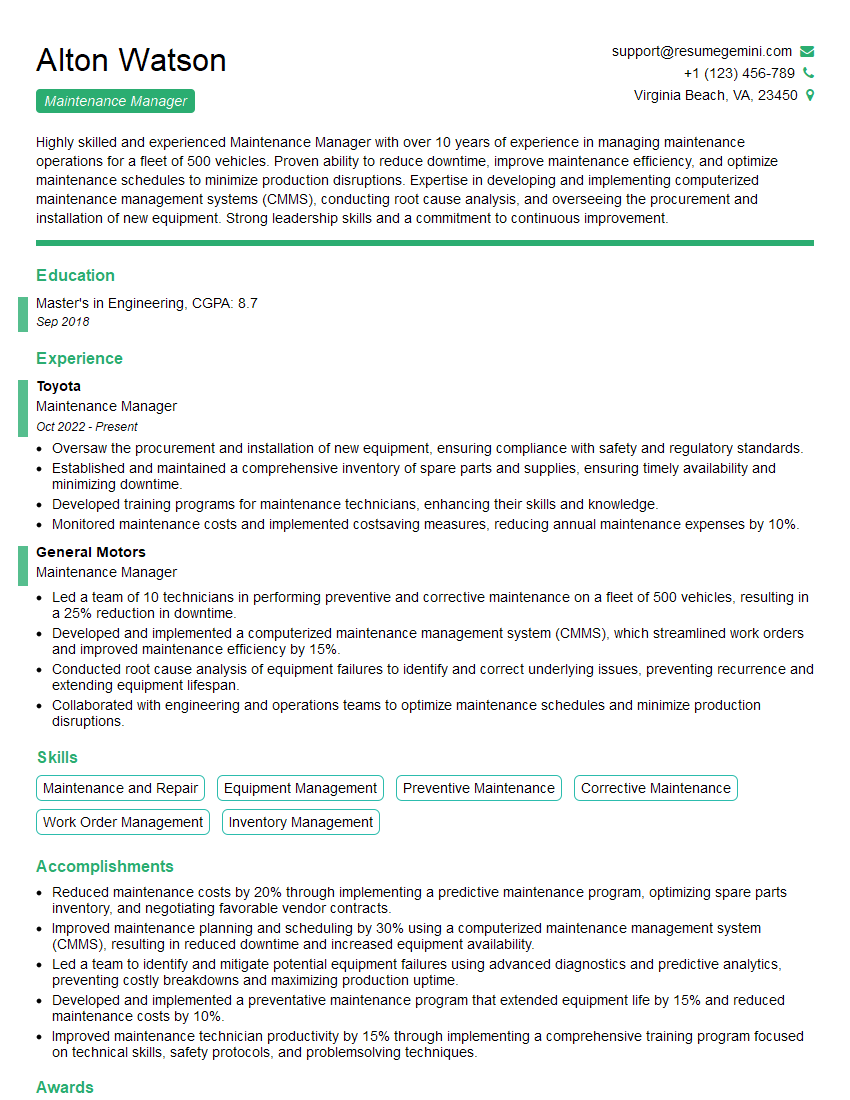
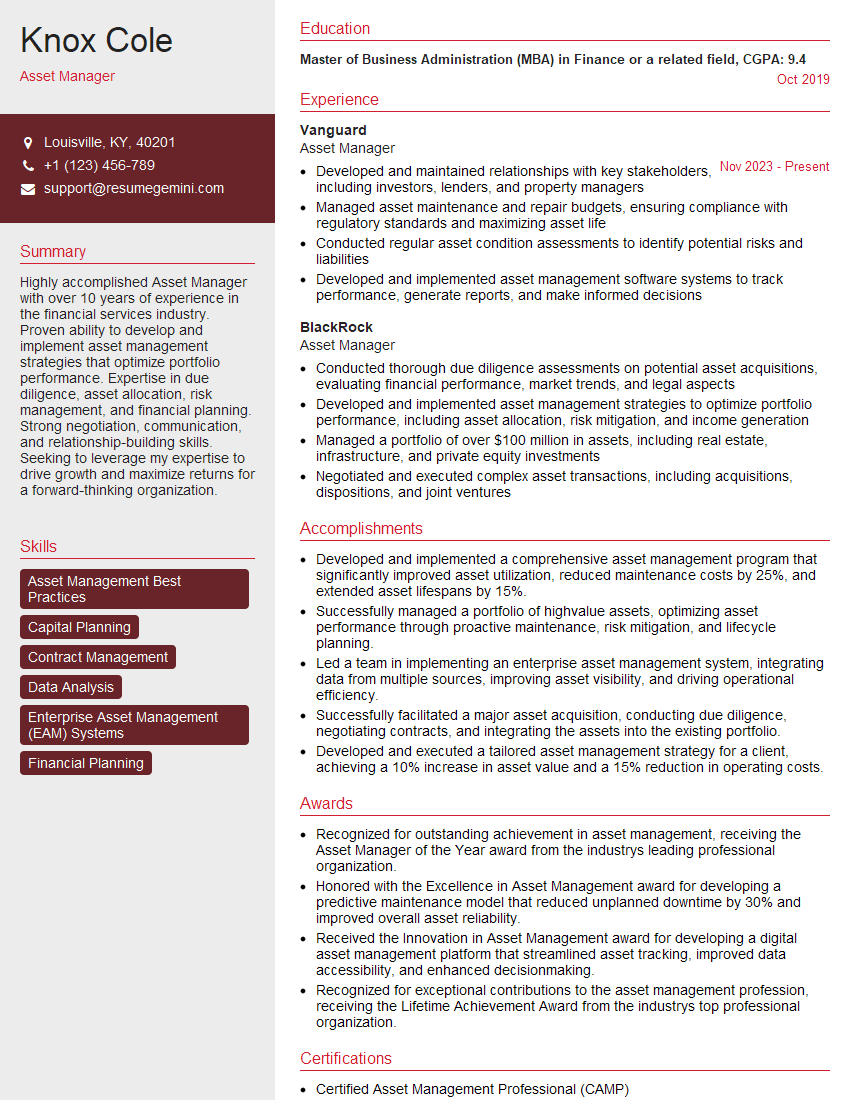
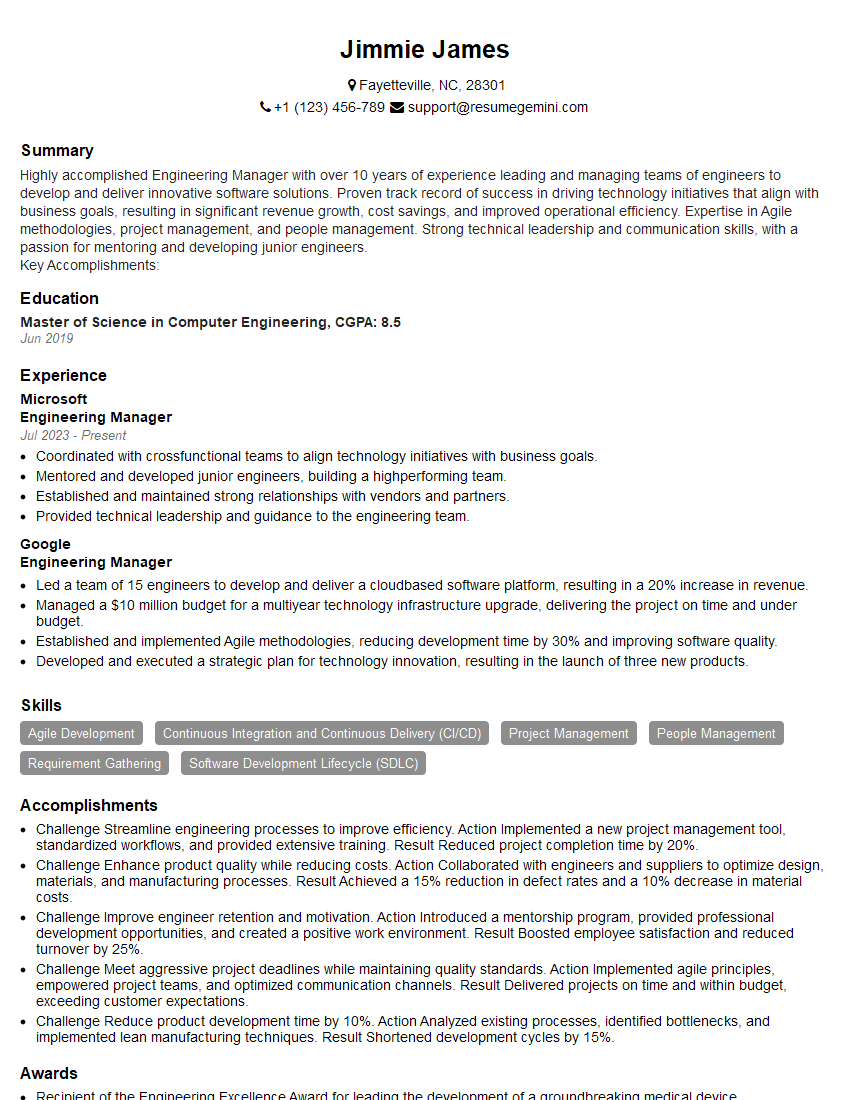
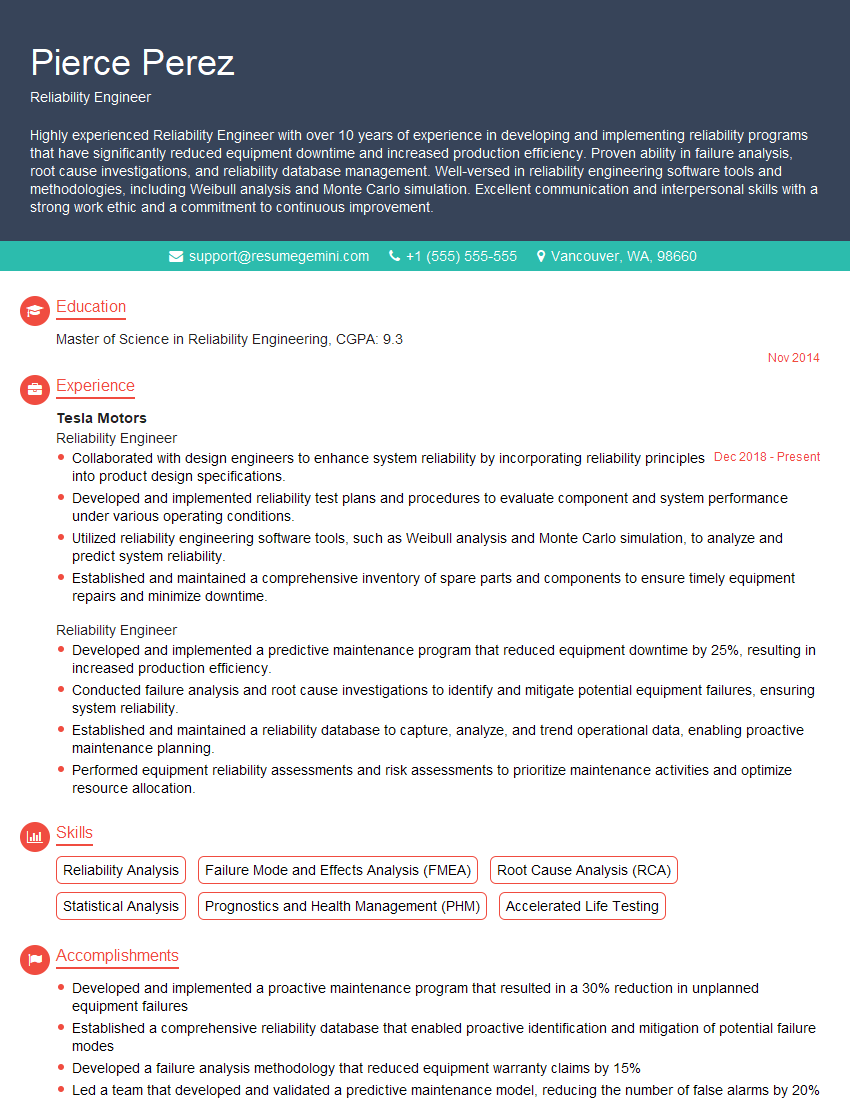
Mastering Asset Management for Energy Systems is crucial for career advancement in this rapidly growing field. A strong understanding of these concepts will significantly enhance your interview performance and open doors to exciting opportunities. To maximize your job prospects, creating a compelling and ATS-friendly resume is essential. ResumeGemini is a trusted resource that can help you build a professional resume tailored to your skills and experience. We provide examples of resumes specifically designed for Asset Management for Energy Systems roles to help guide your preparation. Take the next step in your career journey – build a resume that shines!

Explore more articles
Users Rating of Our Blogs
Share Your Experience
We value your feedback! Please rate our content and share your thoughts (optional).
What Readers Say About Our Blog
Very informative content, great job.
good