The thought of an interview can be nerve-wracking, but the right preparation can make all the difference. Explore this comprehensive guide to Oceanography Knowledge interview questions and gain the confidence you need to showcase your abilities and secure the role.
Questions Asked in Oceanography Knowledge Interview
Q 1. Explain the concept of thermohaline circulation.
Thermohaline circulation, also known as the ocean’s ‘global conveyor belt,’ is a large-scale, slow, density-driven movement of ocean water. It’s driven by differences in water density, which is in turn controlled by temperature (thermo) and salinity (haline). Colder, saltier water is denser and sinks, while warmer, less salty water is less dense and rises. This creates a continuous cycle of water moving throughout the ocean’s depths.
Imagine a pot of water on a stove. As you heat it, the water at the bottom gets warmer and rises, while cooler water sinks to the bottom. This is similar to how temperature affects ocean currents. However, salinity also plays a crucial role. When seawater freezes in polar regions, the salt is left behind, increasing the salinity and density of the remaining water, causing it to sink. This sinking water then pulls other water along, creating a global current system.
This circulation is crucial for regulating Earth’s climate by distributing heat around the globe. The sinking water in polar regions helps to transport heat from the tropics to higher latitudes, moderating temperatures. Disruptions to this circulation, such as through melting glaciers and increased freshwater input, could have significant impacts on global climate patterns.
Q 2. Describe the different types of ocean waves and their formation.
Ocean waves come in various types, primarily classified by their generating force. The most common are wind waves, generated by the friction of wind blowing over the water’s surface. These waves can range from small ripples to massive storm waves, their size depending on wind speed, duration, and fetch (the distance over which the wind blows). Think of gently blowing on a cup of water – that’s a small-scale version of wind wave generation.
- Wind Waves: Most common, generated by wind.
- Swells: Long, smooth waves that have traveled far from their origin, often appearing after a storm has passed. They have a more regular and predictable pattern.
- Tsunamis: Giant waves caused by underwater earthquakes, volcanic eruptions, or landslides. These waves have incredibly long wavelengths and can travel at tremendous speeds across ocean basins.
- Tidal Waves (tides): These are not actually waves in the same sense as wind waves; they’re caused by the gravitational pull of the moon and sun on the Earth’s oceans.
Wave formation involves a transfer of energy from the wind to the water. This energy causes water particles to move in circular orbits, creating the wave form. As the wave approaches the shore, the interaction with the seabed changes the orbits, leading to the wave breaking.
Q 3. What are the major ocean currents and how do they impact climate?
Major ocean currents are driven by a combination of factors, including wind, temperature, salinity, and the Earth’s rotation (Coriolis effect). These currents form large-scale patterns that circulate water around the globe. Some examples include the Gulf Stream, the Kuroshio Current, the California Current, and the Antarctic Circumpolar Current.
The Gulf Stream, for instance, carries warm water from the tropics northward along the eastern coast of North America, significantly influencing the climate of Western Europe, making it much milder than other regions at similar latitudes. In contrast, cold currents like the California Current bring cool water southward along the western coast of North America, contributing to cooler and drier climates in those areas.
Ocean currents play a critical role in regulating global climate by transporting heat, moisture, and nutrients. They influence regional temperatures, precipitation patterns, and the distribution of marine life. Changes in ocean currents, whether due to climate change or other factors, can have profound effects on global and regional climates, affecting weather patterns and even impacting agricultural yields.
Q 4. Explain the process of upwelling and its ecological significance.
Upwelling is the process where deep, cold, nutrient-rich water rises to the surface. This typically happens along coastlines where winds blow parallel to the shore. The wind pushes surface water away from the coast, and deeper water rises to replace it. Imagine a conveyor belt bringing up water from below.
This process is ecologically significant because it brings essential nutrients like nitrates and phosphates to the surface, fueling phytoplankton growth. Phytoplankton are the base of the marine food web, so increased nutrient availability leads to a greater abundance of phytoplankton, supporting larger populations of zooplankton, fish, and other marine organisms. Areas with significant upwelling, like the coasts of Peru and California, are known for their high marine productivity and support rich fisheries.
Conversely, disruptions to upwelling, such as changes in wind patterns caused by climate change, can lead to decreased marine productivity, negatively impacting the entire ecosystem and fisheries depending on those areas.
Q 5. Discuss the role of phytoplankton in the marine ecosystem.
Phytoplankton are microscopic, plant-like organisms that form the foundation of most marine food webs. They are primary producers, meaning they convert sunlight into energy through photosynthesis, much like plants on land. This process is crucial because it supports almost all other life in the ocean.
Their role extends beyond simply providing food for zooplankton and other consumers. Phytoplankton also play a critical role in the global carbon cycle, absorbing significant amounts of atmospheric carbon dioxide during photosynthesis. This helps to regulate Earth’s climate. They also produce a large fraction of the Earth’s oxygen through photosynthesis.
Changes in phytoplankton populations, driven by factors like ocean acidification, nutrient pollution, or changes in water temperature, can have cascading effects throughout the entire marine ecosystem. A decrease in phytoplankton could lead to reduced fish populations, impacting fisheries and the livelihoods of those who depend on them.
Q 6. Describe the different zones of the ocean and their characteristics.
The ocean is divided into distinct zones based on depth and light penetration. These zones have unique characteristics influencing the types of life they support.
- Epipelagic Zone (Sunlight Zone): The uppermost layer, where sunlight penetrates. This is the most productive zone, supporting a high diversity of marine life, including phytoplankton, zooplankton, and many fish species.
- Mesopelagic Zone (Twilight Zone): Dimly lit, with decreasing light penetration. Many organisms here have adaptations for low-light conditions, and bioluminescence is common.
- Bathypelagic Zone (Midnight Zone): Completely dark, with extreme pressure and cold temperatures. Organisms here are adapted to these harsh conditions and often rely on scavenging or chemosynthesis (using chemicals, not sunlight, for energy).
- Abyssalpelagic Zone (Abyssal Zone): The deepest part of the ocean, with consistently cold temperatures, high pressure, and low oxygen levels. Organisms are sparse but uniquely adapted to this environment.
- Hadalpelagic Zone (Hadal Zone): The deepest trenches of the ocean, found in subduction zones. Life here is extremely specialized and adapted to intense pressure.
Understanding these zones is crucial for managing marine resources, protecting biodiversity, and studying oceanographic processes. Each zone has specific challenges and opportunities for research and conservation efforts.
Q 7. Explain the concept of ocean acidification and its consequences.
Ocean acidification is the ongoing decrease in the pH of the Earth’s oceans, caused by the absorption of excess carbon dioxide (CO2) from the atmosphere. When CO2 dissolves in seawater, it forms carbonic acid, lowering the pH. This is analogous to how carbonated drinks become more acidic as they absorb CO2 from the air.
The consequences of ocean acidification are far-reaching. It makes it more difficult for marine organisms, particularly those with calcium carbonate shells and skeletons (like corals, shellfish, and some plankton), to build and maintain their structures. This can lead to weakened shells, reduced growth rates, and increased mortality. The impact cascades through the food web, affecting entire ecosystems.
Ocean acidification also impacts the physiology and behavior of many marine organisms, potentially affecting their reproduction, development, and overall survival. The cumulative effects of ocean acidification pose a significant threat to marine biodiversity and the services the ocean provides, including fisheries and coastal protection. Mitigation strategies focus on reducing CO2 emissions to limit the extent of future ocean acidification.
Q 8. What are the main types of marine sediments and how are they formed?
Marine sediments are the unconsolidated materials that accumulate on the ocean floor. They’re broadly classified into several types, primarily based on their origin.
- Terrigenous Sediments: These originate from land, primarily through erosion of rocks and soil. Rivers carry these sediments to the ocean, while wind can also contribute. Think of the mighty Amazon River, constantly depositing massive amounts of sediment into the Atlantic Ocean. The composition varies depending on the source rocks; for example, sediments near mountainous areas might be rich in quartz, while those near volcanic regions could contain volcanic ash.
- Biogenous Sediments: These are formed from the skeletal remains of marine organisms. Diatoms (single-celled algae) and coccolithophores (microscopic plankton) produce siliceous (silica-based) and calcareous (calcium carbonate-based) skeletons, respectively. When these organisms die, their skeletons sink to the ocean floor, forming vast layers of biogenic ooze. Think of the white cliffs of Dover – a stunning example of ancient calcareous biogenic sediments.
- Hydrogenous Sediments: These sediments precipitate directly from seawater. Manganese nodules, rich in manganese and other metals, are a prime example. They form slowly through chemical processes on the seafloor. Another example is the formation of evaporite deposits in areas with high evaporation rates, such as shallow seas with restricted circulation.
- Cosmogenous Sediments: These originate from extraterrestrial sources, like meteorites and cosmic dust. They contribute a relatively small portion of the total sediment volume, but they hold valuable clues about the early solar system. Microscopic tektites, formed by meteorite impacts, are one such example.
Understanding sediment types is crucial for reconstructing past climates, identifying mineral resources, and understanding oceanographic processes. For example, the distribution of foraminifera (a type of single-celled organism) in sediments can be used to infer past ocean temperatures and salinity.
Q 9. Describe the process of plate tectonics and its impact on ocean basins.
Plate tectonics is the theory that Earth’s lithosphere (outer rigid shell) is divided into several large and small plates that are constantly moving. These plates float on the semi-molten asthenosphere beneath. The movement is driven by convection currents in the mantle, which transfer heat from the Earth’s core to the surface.
This movement has profound impacts on ocean basins:
- Seafloor Spreading: At mid-ocean ridges, plates move apart, allowing magma to rise and create new oceanic crust. This process expands ocean basins over time. The Mid-Atlantic Ridge is a classic example, where the North American and Eurasian plates are diverging.
- Subduction: Where plates collide, denser oceanic plates can be forced beneath continental plates (or other oceanic plates) into the mantle. This process forms deep ocean trenches and volcanic arcs (like the Ring of Fire). The subduction of the Pacific Plate under the Nazca Plate is responsible for the Andes Mountains and the Peru-Chile Trench.
- Transform Boundaries: Plates can also slide past each other horizontally along transform faults, causing earthquakes. The San Andreas Fault is a well-known example, but similar processes occur underwater along mid-ocean ridges.
- Basin Formation and Evolution: The interplay of these processes shapes the size, depth, and features of ocean basins over geological time. For instance, the Pacific Ocean Basin is constantly changing due to subduction and seafloor spreading along its margins.
Understanding plate tectonics is fundamental to comprehending ocean circulation, the distribution of marine life, and the occurrence of earthquakes and tsunamis.
Q 10. Explain the concept of El Niño and La Niña events.
El Niño and La Niña are two opposing phases of a climate pattern called the El Niño-Southern Oscillation (ENSO). They are characterized by unusual changes in sea surface temperatures (SST) and atmospheric pressure in the tropical Pacific Ocean.
El Niño: During El Niño events, the trade winds weaken or even reverse, leading to a warming of the eastern tropical Pacific Ocean. This warming disrupts normal ocean currents and weather patterns globally. It’s often associated with increased rainfall in normally dry regions and drought in normally wet regions. The 1997-98 El Niño was one of the strongest on record, causing widespread damage and disruption worldwide.
La Niña: La Niña is the opposite phase. The trade winds strengthen, leading to cooler-than-normal SSTs in the eastern tropical Pacific. This usually results in more intense tropical storms in the western Pacific and drier conditions in the eastern Pacific. The effects of La Niña are generally less dramatic than those of El Niño, but they still impact global weather patterns significantly.
ENSO events have profound consequences for marine ecosystems, fisheries, and global weather patterns. Predicting these events is a crucial task for scientists and policymakers alike, as it allows for better preparedness and mitigation strategies.
Q 11. What are the different methods used to measure ocean salinity?
Measuring ocean salinity, the concentration of dissolved salts in seawater, involves several methods, each with its strengths and weaknesses:
- Titration: This classic method involves chemically reacting a seawater sample with a solution of known concentration to determine the amount of chloride ions present. Since chloride accounts for a significant portion of seawater salinity, it provides a good estimate. While accurate, it’s time-consuming and less suitable for large-scale studies.
- Electrical Conductivity: This is the most common method used today. Salinity is closely related to the electrical conductivity of seawater; the higher the salinity, the higher the conductivity. Conductivity sensors are deployed on ships, buoys, and autonomous underwater vehicles (AUVs) for continuous measurements. This method is efficient and provides high-resolution data. The conductivity ratio is then used to calculate practical salinity units (PSU), which are closely related to the mass concentration of dissolved salts.
- Refractometry: This method measures the refractive index of seawater, which is affected by salinity. It’s useful for relatively quick and simple measurements but is less precise than conductivity methods. Handheld refractometers are often used for field measurements.
- Hydrometers: These instruments measure the density of seawater, which is also related to salinity. Though not as precise as other methods, they are relatively inexpensive and provide a quick estimate.
The choice of method depends on the desired accuracy, the scale of the study, and the available resources. For large-scale oceanographic surveys, conductivity sensors are the preferred choice due to their efficiency and accuracy.
Q 12. How are oceanographic data collected and analyzed?
Oceanographic data collection employs a variety of techniques and instruments, depending on the parameter being measured and the depth and location.
- Ships and Research Vessels: These are the backbone of oceanographic data collection, equipped with sophisticated instruments for measuring temperature, salinity, currents, and other parameters. They can also deploy instruments to greater depths.
- Autonomous Underwater Vehicles (AUVs) and Gliders: These unmanned vehicles can collect data over extended periods and in remote areas. They are equipped with sensors for various parameters and can profile the water column from the surface to great depths. They offer increased efficiency and access to areas difficult for ships to reach.
- Buoys and Moorings: These stationary platforms collect continuous data at specific locations. They measure surface and subsurface conditions, including temperature, salinity, currents, and wave height. Data are often transmitted wirelessly to shore stations.
- Satellite Remote Sensing: Satellites provide a global perspective on ocean conditions. They measure sea surface temperature, chlorophyll concentration (indicative of phytoplankton), sea level, and other parameters. Satellite data complements in-situ measurements (those taken directly in the ocean). It offers broad coverage, especially in remote areas.
Data analysis involves various techniques, from basic statistical analysis to complex numerical modeling. Data visualization and interpretation are crucial steps in extracting meaningful information and understanding oceanographic processes. Sophisticated software packages and programming languages (e.g., Python, MATLAB) are commonly used for data processing and analysis.
Q 13. Describe the different types of marine habitats.
Marine habitats are incredibly diverse, ranging from shallow coastal areas to the deepest ocean trenches. They can be categorized in various ways:
- Coastal Habitats: These include estuaries (where rivers meet the sea), salt marshes, mangroves, seagrass beds, rocky shores, and sandy beaches. These are highly productive areas supporting a wide variety of species.
- Pelagic Habitats: This encompasses the open ocean, divided into zones based on depth and light penetration. The epipelagic zone (surface waters) receives sunlight and supports phytoplankton, which form the base of the food web. The deeper zones (mesopelagic, bathypelagic, etc.) receive little or no sunlight and are characterized by unique adaptations of marine life.
- Benthic Habitats: These are the habitats on the seafloor, including the continental shelf, slope, rise, and abyssal plains. Benthic habitats range from shallow-water coral reefs to deep-sea hydrothermal vents. Each zone harbors distinct communities of organisms adapted to their specific environment.
- Deep-Sea Habitats: These include hadal zones (deepest trenches) and hydrothermal vents. Hydrothermal vents support unique chemosynthetic ecosystems, independent of sunlight.
Understanding the different types of marine habitats is essential for conservation efforts, fisheries management, and predicting the impacts of climate change on marine ecosystems. For example, understanding the vulnerability of coral reefs to ocean acidification is crucial for developing strategies to protect these vital habitats.
Q 14. What are the challenges in studying the deep ocean?
Studying the deep ocean presents numerous challenges:
- Extreme Pressure: The immense pressure at great depths requires specialized equipment capable of withstanding the crushing forces. Submersibles and remotely operated vehicles (ROVs) are designed to withstand these pressures, but their operation is complex and expensive.
- Darkness: Sunlight does not penetrate to the deep ocean, making visibility extremely limited. Researchers rely on artificial lighting and specialized imaging techniques.
- Cold Temperatures: Deep-ocean temperatures are near freezing, requiring instruments and equipment to operate reliably in these harsh conditions.
- Accessibility: Reaching and exploring the deep ocean requires specialized vessels and equipment, increasing the cost and complexity of research. It’s a logistical challenge to conduct research in the remote and harsh deep-sea environment.
- Technological Limitations: While technology has advanced significantly, there are still limitations in our ability to observe and study deep-sea processes effectively. Developing new technologies is crucial to overcome these limitations.
Overcoming these challenges requires significant investment in technology, robust research designs, and skilled researchers. Despite the difficulties, the deep ocean holds many secrets and the potential for new discoveries. The study of the deep ocean is an ongoing process that pushes the boundaries of scientific exploration.
Q 15. Explain the impact of pollution on marine ecosystems.
Pollution significantly impacts marine ecosystems, disrupting the delicate balance of life and leading to widespread consequences. Think of the ocean as a complex web; damage to one part affects the entire system. Pollutants enter the ocean through various pathways including land-based runoff, atmospheric deposition, and direct discharge. This contamination takes many forms:
- Plastic Pollution: Microplastics ingested by marine life cause internal injuries and blockages. Larger plastics entangle animals, leading to suffocation or starvation. Imagine a sea turtle mistaking a plastic bag for a jellyfish – a fatal mistake.
- Chemical Pollution: Heavy metals like mercury and lead bioaccumulate in the food chain, impacting top predators like tuna and sharks. This means the concentration of these toxins increases as you move up the food chain, posing serious health risks to humans who consume contaminated seafood.
- Nutrient Pollution: Excess nutrients from fertilizers cause algal blooms. These blooms deplete oxygen in the water, creating “dead zones” where marine life cannot survive. Think of it like a suffocating blanket over the ocean floor.
- Noise Pollution: Shipping traffic, sonar, and seismic surveys generate underwater noise that disrupts marine mammals’ communication, navigation, and foraging behaviours. Whales, for instance, rely on sound for everything from finding mates to finding food; excessive noise can be detrimental to their survival.
The cumulative effect of these pollutants leads to habitat destruction, biodiversity loss, and reduced ecosystem services. The economic implications are also significant, impacting fisheries, tourism, and coastal communities.
Career Expert Tips:
- Ace those interviews! Prepare effectively by reviewing the Top 50 Most Common Interview Questions on ResumeGemini.
- Navigate your job search with confidence! Explore a wide range of Career Tips on ResumeGemini. Learn about common challenges and recommendations to overcome them.
- Craft the perfect resume! Master the Art of Resume Writing with ResumeGemini’s guide. Showcase your unique qualifications and achievements effectively.
- Don’t miss out on holiday savings! Build your dream resume with ResumeGemini’s ATS optimized templates.
Q 16. Discuss the importance of marine protected areas.
Marine Protected Areas (MPAs) are vital for conserving marine biodiversity and safeguarding ocean health. They’re essentially designated zones within the ocean where human activities are regulated to protect the natural environment. Imagine them as national parks, but underwater. Their importance stems from several key roles:
- Biodiversity Conservation: MPAs provide refuge for vulnerable species, allowing populations to recover and thrive. They safeguard habitats such as coral reefs and seagrass beds, which are crucial nurseries for many marine species.
- Fisheries Management: By limiting fishing pressure within MPAs, they can help replenish fish stocks and improve the overall health of fisheries outside the protected area. It’s like allowing a section of a forest to regenerate, thereby supporting the surrounding areas.
- Climate Change Resilience: Healthy marine ecosystems are more resilient to climate change impacts like ocean acidification and warming waters. MPAs can help buffer these effects, preserving valuable habitats and species.
- Scientific Research and Education: MPAs provide ideal locations for studying marine ecosystems and conducting long-term monitoring programs. They also offer valuable opportunities for education and outreach, raising awareness about the importance of ocean conservation.
Effective MPA management requires careful planning, community engagement, and strong enforcement. The design and size of an MPA must be carefully tailored to the specific ecological needs of the area and the threats it faces.
Q 17. Describe different techniques for marine resource management.
Marine resource management employs diverse techniques to balance human use with the sustainability of ocean ecosystems. It’s a complex balancing act, much like managing a shared resource like a forest. Some key techniques include:
- Fisheries Management: This involves setting catch limits, regulating fishing gear, and establishing fishing seasons to prevent overfishing and ensure stock recovery. Techniques such as individual transferable quotas (ITQs) grant fishers exclusive rights to a specific portion of the catch, promoting responsible fishing practices.
- Habitat Protection and Restoration: This focuses on protecting critical habitats like coral reefs, mangroves, and seagrass beds through MPAs, habitat restoration projects, and pollution control measures. Think of it as reforestation efforts, but for underwater habitats.
- Integrated Coastal Zone Management (ICZM): This holistic approach considers the interconnectedness of land and sea, integrating various sectors (e.g., fisheries, tourism, development) to achieve sustainable coastal development. It’s like town planning, but for coastal communities.
- Marine Spatial Planning (MSP): This involves mapping and analyzing human activities and ecological features in marine areas to create effective plans for resource allocation and conflict resolution. Think of it as zoning for the ocean.
- Ecosystem-Based Management (EBM): This holistic approach takes into account the entire ecosystem, recognizing the interconnectedness of species and their habitats. It moves beyond single-species management to consider the broader ecological context.
Successful marine resource management requires collaboration between governments, scientists, industry stakeholders, and local communities.
Q 18. Explain the principles of sonar and its applications in oceanography.
Sonar, or Sound Navigation and Ranging, is a technology that uses sound waves to detect and locate objects underwater. Imagine it as an underwater echolocation system. A sonar device emits sound pulses, and by measuring the time it takes for the sound waves to bounce back (echo) from an object, it can determine the object’s distance, size, and sometimes even its composition.
There are two main types of sonar:
- Active Sonar: This system emits its own sound pulses and then listens for the echoes. It’s like shouting and listening for the echo of your voice.
- Passive Sonar: This system only listens for sounds produced by other sources, such as marine animals or vessels. It’s like quietly listening to sounds in the environment.
Applications in Oceanography:
- Bathymetry: Mapping the ocean floor using sonar is crucial for understanding ocean floor topography and its influence on currents and marine life.
- Fishery Research: Sonar is used to locate and assess fish stocks, enabling better management and conservation efforts.
- Marine Mammal Research: Passive sonar helps scientists study the behaviour and distribution of marine mammals.
- Navigation and Obstacle Avoidance: Sonar is essential for safe navigation of ships and underwater vehicles.
- Underwater Archaeology: Sonar aids in locating and mapping underwater wrecks and other archaeological sites.
Sonar technology has greatly advanced our understanding of the ocean’s physical characteristics and the life it supports.
Q 19. What are the ethical considerations in oceanographic research?
Ethical considerations in oceanographic research are paramount, ensuring that studies are conducted responsibly and without causing harm to the environment or the people who depend on it. Key considerations include:
- Minimizing Environmental Impact: Research activities must be designed to minimize disruption to marine ecosystems. This includes careful planning of sampling procedures, avoiding sensitive habitats, and using non-invasive techniques whenever possible. Think of it as being a responsible tourist, not leaving a trail of damage behind.
- Data Sharing and Transparency: Research data should be shared openly and transparently to facilitate collaboration and broader scientific understanding. This promotes scientific integrity and ensures that research findings benefit society as a whole.
- Benefit Sharing: Research involving Indigenous communities or local stakeholders must ensure that the benefits of the research are shared equitably. This includes involving communities in the research design and decision-making process and sharing the results with them.
- Animal Welfare: Research involving marine animals must adhere to strict ethical guidelines to minimize stress and suffering. This might involve using non-invasive methods of observation or obtaining appropriate permits and approvals.
- Avoiding Bias and promoting diversity: Researchers should be mindful of potential biases in their research methods and interpretations and actively work to promote diversity and inclusion within the scientific community.
Adherence to these ethical principles ensures that oceanographic research contributes to sustainable ocean management and benefits all stakeholders.
Q 20. Discuss the role of remote sensing in oceanographic studies.
Remote sensing plays a crucial role in oceanographic studies by providing a broad-scale perspective of the ocean’s surface and subsurface properties. It’s like having a bird’s-eye view of the ocean, allowing us to gather information across vast areas. Different remote sensing technologies offer unique capabilities:
- Satellite Oceanography: Satellites equipped with sensors measure various parameters like sea surface temperature (SST), sea surface height (SSH), chlorophyll concentration (an indicator of phytoplankton abundance), and ocean colour. This data helps us understand large-scale ocean processes such as currents, eddies, and upwelling.
- Aerial Surveys: Aircraft equipped with sensors can capture high-resolution images and data of coastal zones and other specific areas of interest. This allows for more detailed observations of coastal habitats, pollution plumes, and other features.
Applications:
- Climate Monitoring: Remote sensing data is crucial for monitoring changes in sea level, ocean temperature, and sea ice extent, helping scientists understand the impacts of climate change on the ocean.
- Fisheries Management: Satellite imagery can help track fish schools, monitor fishing activities, and identify areas with high biodiversity.
- Pollution Monitoring: Remote sensing techniques are used to detect and track oil spills, algal blooms, and other forms of pollution.
- Coastal Zone Management: Remote sensing provides valuable information for coastal erosion monitoring, habitat mapping, and planning sustainable coastal development.
By combining remote sensing data with in situ measurements (data collected directly from the ocean), scientists can gain a comprehensive understanding of ocean dynamics and processes.
Q 21. Explain the use of numerical models in oceanographic prediction.
Numerical models are powerful tools for simulating and predicting ocean behaviour. These models are essentially computer programs that use mathematical equations to represent the complex physical, chemical, and biological processes that occur in the ocean. Imagine them as sophisticated simulations of the ocean’s dynamics.
How they work: The ocean is divided into a grid of points, and the model calculates the values of various parameters (temperature, salinity, currents, etc.) at each grid point based on the governing equations and the input data. This is an iterative process, with the model stepping through time, calculating the changes in these parameters based on interactions and external factors.
Applications in Oceanographic Prediction:
- Weather Forecasting: Ocean models are coupled with atmospheric models to provide more accurate weather forecasts, particularly in coastal areas.
- Climate Change Prediction: Global climate models rely on ocean models to simulate the ocean’s role in the climate system, providing insights into future climate scenarios.
- Ocean Current Prediction: Ocean models can predict ocean currents, which is crucial for shipping, search and rescue operations, and understanding marine ecosystems.
- Oil Spill Modeling: Models are used to simulate the movement and fate of oil spills, helping in cleanup efforts and assessing environmental impacts.
- Marine Ecosystem Management: Models are used to simulate the effects of human activities on marine ecosystems, aiding in the development of effective management strategies.
The accuracy of oceanographic predictions depends heavily on the quality of the input data and the sophistication of the model. Continuous improvement in both areas leads to more reliable predictions.
Q 22. Describe different methods for studying marine biodiversity.
Studying marine biodiversity requires a multi-faceted approach, combining various techniques to capture the vast complexity of life beneath the waves. We can broadly categorize these methods into:
- Direct Observation: This involves visually surveying marine life through SCUBA diving, remotely operated vehicles (ROVs), or submersibles. For example, a detailed benthic survey might involve ROV dives to catalogue species composition and abundance on the seafloor. This provides a visual record and allows for sample collection.
- Sampling Techniques: These methods collect samples of organisms or their genetic material for analysis. This includes techniques like plankton nets (for microscopic organisms), trawling (for bottom-dwelling species), and sediment coring (for studying benthic communities). Analyzing the DNA from these samples (environmental DNA or eDNA) allows us to identify species even without directly observing them.
- Acoustic Methods: Sonar and other acoustic technologies are used to map the distribution and abundance of marine life, particularly fish and larger marine mammals, by detecting sound reflections from their bodies. This non-invasive method allows for larger-scale surveys than direct observation.
- Remote Sensing: Satellites and aerial imagery provide valuable data on oceanographic features like water temperature, chlorophyll concentration (indicating phytoplankton abundance), and sea surface height, indirectly informing about marine life distribution. For instance, changes in sea surface temperature can indicate the movement of large fish populations.
- Genetic Analysis: This powerful approach utilizes molecular techniques to identify species, track genetic diversity, and study evolutionary relationships. This is crucial in understanding cryptic species (species that are morphologically similar but genetically distinct).
The choice of method depends heavily on the research question, the target species, the habitat, and the available resources. Often, a combination of these techniques is employed for a comprehensive understanding of marine biodiversity.
Q 23. What are the key challenges in marine conservation?
Marine conservation faces significant challenges, many stemming from the interconnectedness of ocean systems and the impacts of human activities. Key challenges include:
- Climate Change: Rising sea temperatures, ocean acidification, and sea-level rise are drastically altering marine habitats and threatening numerous species. Coral bleaching, for instance, is a direct result of warming waters.
- Pollution: Plastic debris, chemical runoff, and noise pollution are severely degrading ocean ecosystems. Plastic ingestion by marine animals is a major concern, causing starvation and entanglement.
- Overfishing: Unsustainable fishing practices deplete fish stocks, disrupt food webs, and damage marine habitats through bottom trawling. Many commercially important fish populations are severely overexploited.
- Habitat Destruction: Coastal development, dredging, and destructive fishing practices lead to the loss and degradation of vital marine habitats like coral reefs, seagrass beds, and mangroves.
- Invasive Species: Non-native species introduced through ballast water or other means can outcompete native species, disrupt ecosystems, and cause significant economic damage. The spread of lionfish in the Caribbean is a prime example.
- Lack of Funding and Awareness: Addressing these issues requires significant financial investment and widespread public awareness to promote responsible stewardship of the oceans.
Effective marine conservation requires a multi-pronged approach that addresses these challenges through policy changes, sustainable practices, technological innovations, and public engagement.
Q 24. Explain the concept of oceanographic instrumentation and its applications.
Oceanographic instrumentation refers to the suite of technologies used to collect data about the physical, chemical, and biological properties of the ocean. These instruments allow us to explore and monitor the ocean in ways unimaginable just a few decades ago. Examples include:
- CTD (Conductivity, Temperature, Depth) sensors: These are fundamental instruments measuring the basic properties of seawater, providing crucial data for understanding ocean currents, mixing processes, and water mass characteristics. Imagine them as the ocean’s vital signs monitor.
- ADCP (Acoustic Doppler Current Profiler): These instruments use sound waves to measure water currents at different depths, providing critical insights into ocean circulation patterns.
- Autonomous Underwater Vehicles (AUVs): These robots can be deployed for extended periods to collect data over large areas, mapping the seafloor, monitoring water quality, and searching for underwater features. They’re like the ocean’s tireless explorers.
- Floats (Argo floats): These free-drifting instruments profile the ocean’s temperature and salinity at different depths, providing real-time data on ocean conditions globally. They are a crucial part of global ocean observing systems.
- Underwater cameras and sensors: These provide visual and other data on marine life and habitat characteristics, aiding biodiversity studies and ecological monitoring.
Applications of oceanographic instrumentation span a broad range, including climate change research, fisheries management, pollution monitoring, marine resource exploration, and understanding ocean processes.
Q 25. How do you ensure data accuracy and reliability in oceanographic research?
Ensuring data accuracy and reliability in oceanographic research is paramount. This involves a meticulous approach throughout the entire process:
- Calibration and Maintenance: Instruments need to be regularly calibrated against known standards to ensure accurate measurements. Regular maintenance is crucial to prevent malfunctions and data errors.
- Quality Control: Data quality control checks are implemented at every stage, from data acquisition to processing and analysis. This involves visual inspection, statistical analysis, and cross-checking with other data sources.
- Data Validation: Data is often validated by comparing it with data from independent sources or through inter-calibration with other instruments.
- Data Management: A robust data management system is essential for organizing, archiving, and sharing data effectively. Metadata (information about the data) is crucial to ensuring data reproducibility and understanding.
- Replication: Where feasible, measurements should be repeated to assess variability and uncertainty. This improves the reliability of the results.
- Error Propagation: Understanding and accounting for potential sources of error throughout the research process, from instrument limitations to environmental factors, is crucial.
For instance, a CTD cast might be repeated multiple times at the same location to assess the variability of measurements, and the data are then checked for outliers or inconsistencies before further analysis.
Q 26. Describe the importance of collaboration in oceanographic projects.
Collaboration is absolutely essential in oceanographic projects due to the scale and complexity of the research involved. Oceanographic studies often require large datasets, specialized equipment, and diverse expertise. Benefits of collaboration include:
- Resource Sharing: Collaborations facilitate the sharing of expensive equipment, data, and infrastructure, making projects more cost-effective.
- Expertise Integration: Bringing together scientists with different backgrounds (e.g., biologists, chemists, physicists, engineers) enhances the breadth and depth of the research.
- Increased Scope: Collaboration allows projects to cover larger spatial and temporal scales, yielding a more comprehensive understanding of the ocean system.
- Data Synthesis and Interpretation: Combining data from multiple sources and perspectives improves data analysis and interpretation, leading to more robust conclusions.
- Enhanced Dissemination: Collaborative efforts often result in wider dissemination of research findings through publications, conferences, and outreach activities.
For example, a large-scale oceanographic survey of a particular region might involve collaborations between multiple universities, government agencies, and private research institutions, each contributing their unique expertise and resources.
Q 27. What are some current research trends in oceanography?
Current research trends in oceanography are largely driven by pressing global challenges, such as climate change and the need for sustainable ocean management. These include:
- Oceanographic Impacts of Climate Change: This involves investigating how climate change affects ocean temperatures, currents, salinity, acidification, and sea level, and its cascading effects on marine ecosystems.
- Ocean Deoxygenation: Research focusing on the expansion of oxygen-minimum zones (OMZs) and its impacts on marine life and biogeochemical cycles is a rapidly growing area.
- Marine Biodiversity and Conservation: Understanding and protecting marine biodiversity requires sophisticated tools and techniques, including genetic analysis, advanced imaging, and ecological modeling.
- Ocean Modeling and Prediction: Developing increasingly sophisticated models to predict future ocean conditions and their impacts is critical for informed management decisions.
- Marine Robotics and Autonomous Systems: The use of AUVs, gliders, and other autonomous technologies is revolutionizing our ability to collect data in remote and challenging environments.
- Ocean Data Assimilation: Combining observations with models to improve our understanding of ocean dynamics and provide more accurate predictions.
These are just some examples. The field is constantly evolving as new technologies emerge and our understanding of the ocean’s complexity increases.
Q 28. Discuss your experience with specific oceanographic equipment or techniques.
Throughout my career, I’ve had extensive experience with various oceanographic equipment and techniques. One notable example involves my work with Argo floats as part of a global ocean observing system. We deployed these floats in the Pacific Ocean to monitor temperature and salinity profiles over several years. The data collected was crucial for understanding large-scale ocean circulation patterns and their response to climate variability. This work involved careful pre-deployment calibration, regular data quality control checks, and close collaboration with international research teams. The data was then incorporated into global ocean models, improving our ability to predict future climate scenarios. Additionally, I’ve utilized underwater video systems and sediment corers to conduct benthic habitat assessments, analyzing the diversity and abundance of deep-sea organisms. This involved careful handling and processing of delicate samples, ensuring minimal disturbance to the environment. These experiences highlighted the importance of meticulous data acquisition, rigorous quality control, and collaborative data sharing in producing robust and impactful scientific results.
Key Topics to Learn for Oceanography Knowledge Interview
- Physical Oceanography: Understanding ocean currents, waves, tides, and their impact on marine ecosystems. Practical application: Analyzing data from oceanographic buoys to predict coastal erosion.
- Chemical Oceanography: Exploring the chemical composition of seawater, nutrient cycles, and pollution impacts. Practical application: Modeling the effects of ocean acidification on marine organisms.
- Geological Oceanography: Investigating the ocean floor, plate tectonics, and sediment processes. Practical application: Interpreting seismic data to map underwater geological features.
- Biological Oceanography: Studying marine life, ecosystems, and their interactions. Practical application: Designing and implementing marine conservation strategies.
- Oceanographic Instrumentation and Data Analysis: Proficiency in using various oceanographic tools and analyzing collected data. Practical application: Developing algorithms for autonomous underwater vehicle (AUV) navigation and data acquisition.
- Ocean Modeling and Simulation: Understanding and applying numerical models to simulate ocean processes. Practical application: Predicting the spread of pollutants in the ocean.
- Climate Change and the Ocean: Exploring the impacts of climate change on the ocean and its ecosystems. Practical application: Assessing the vulnerability of coastal communities to sea-level rise.
Next Steps
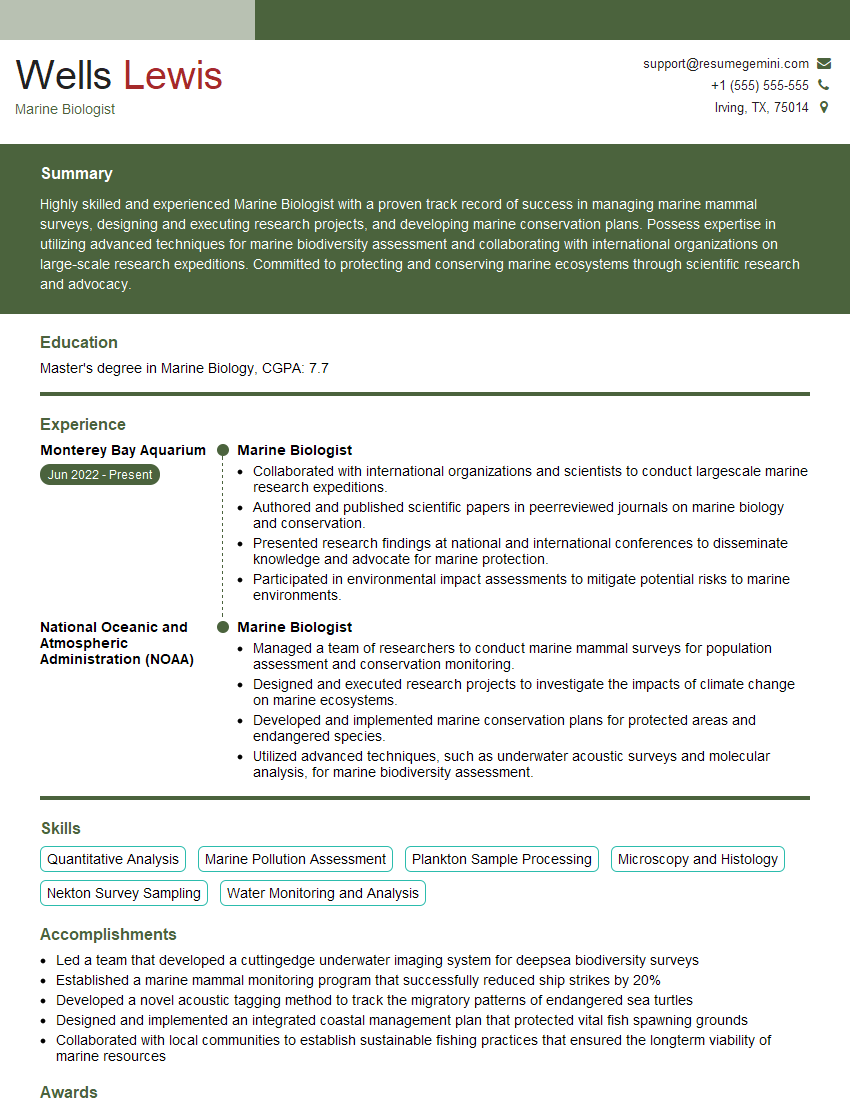
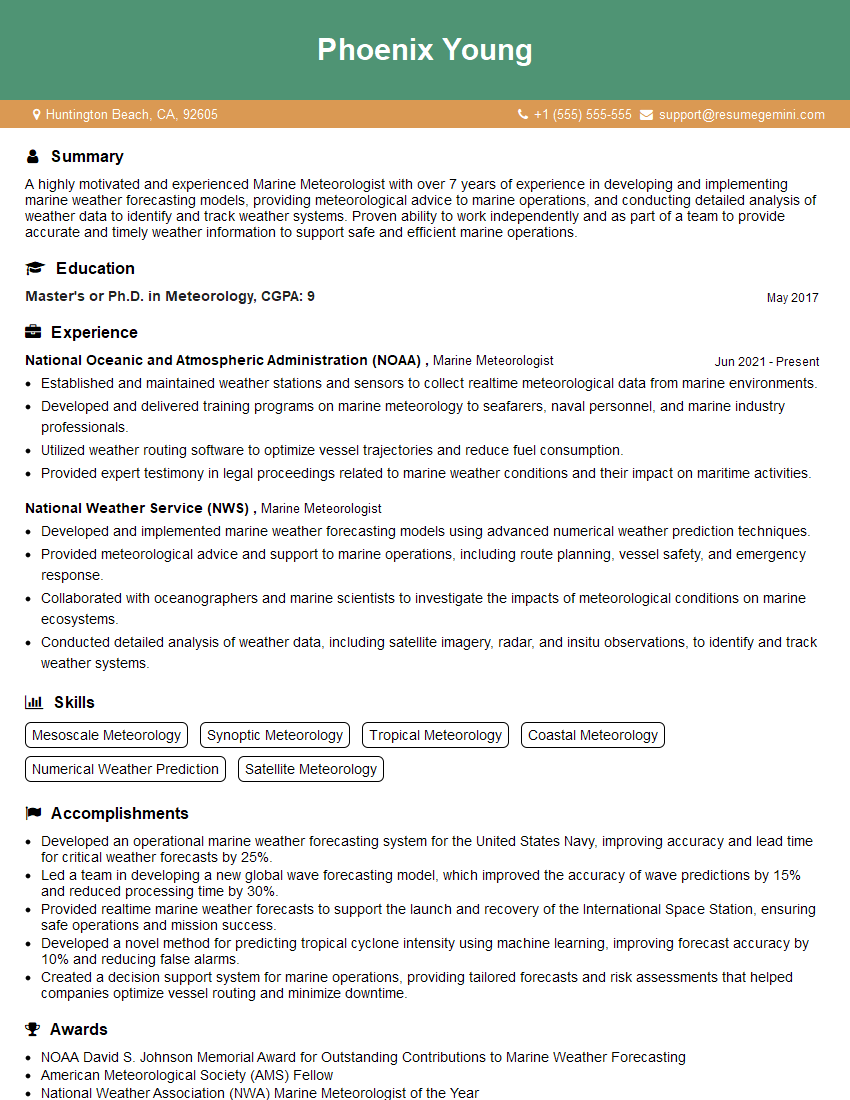
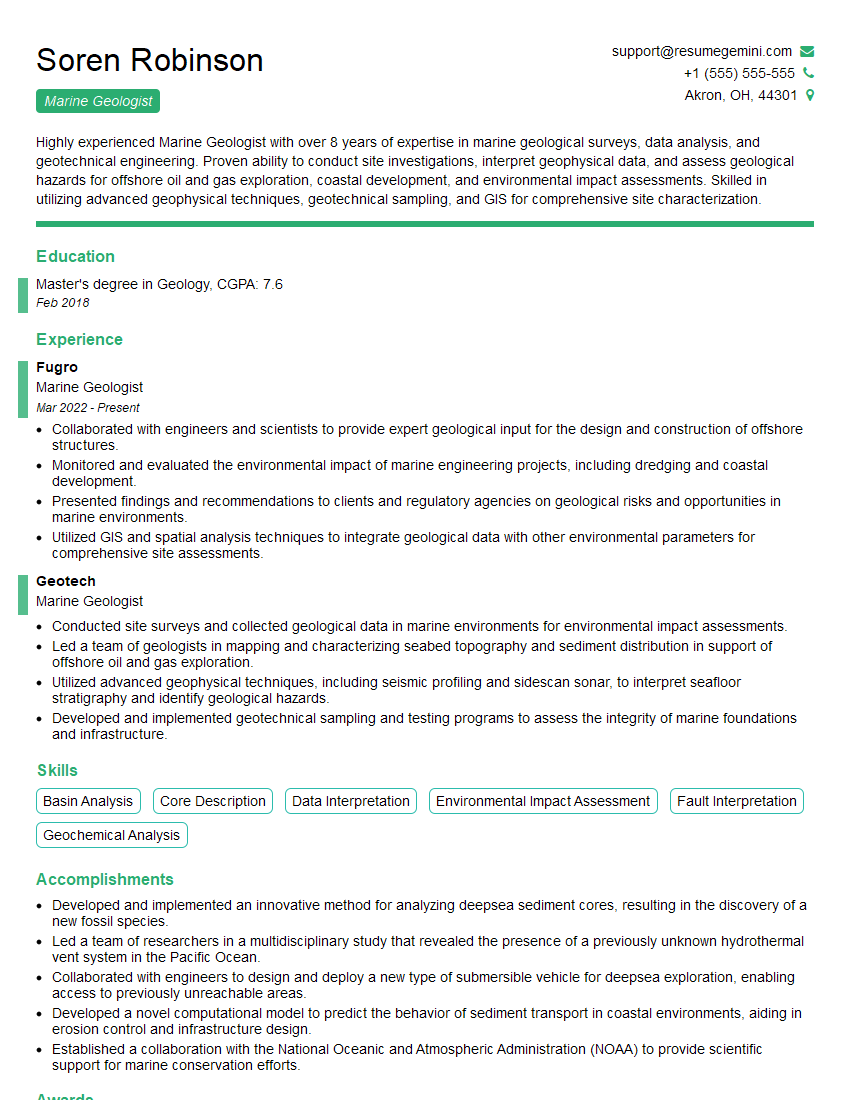
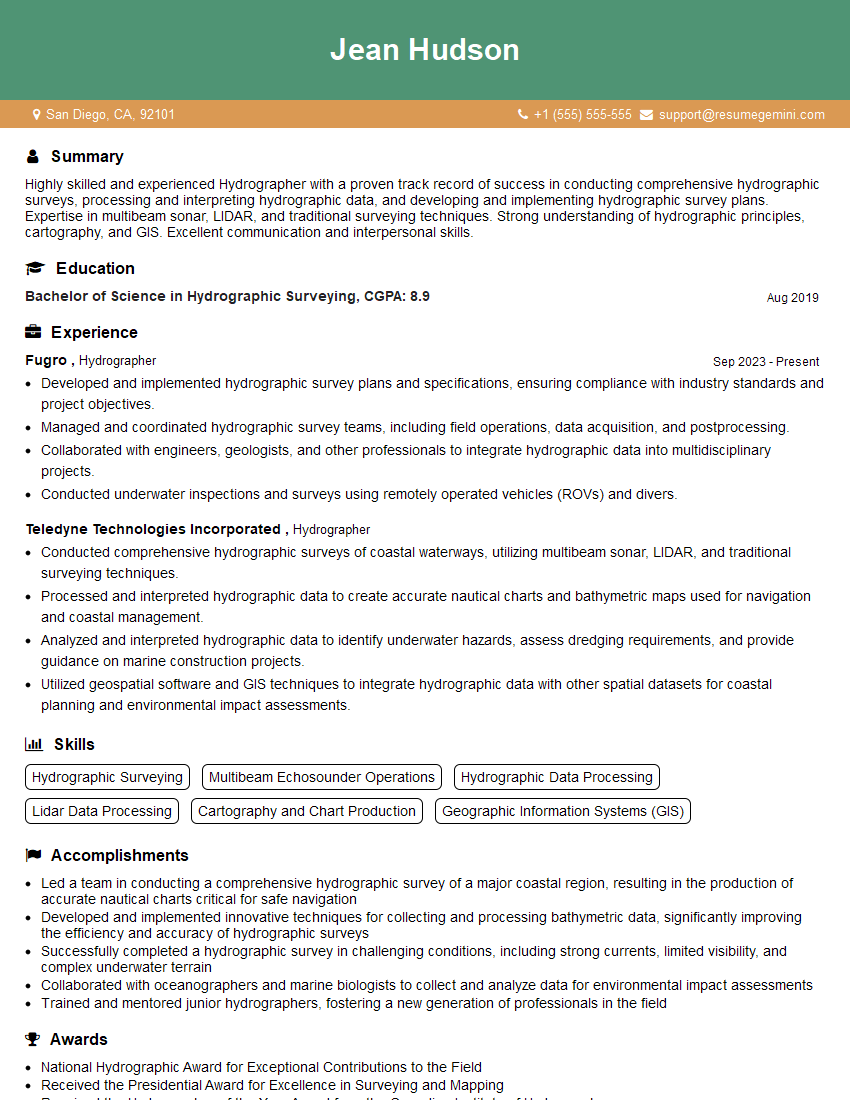
Mastering oceanography knowledge is crucial for career advancement in this exciting and vital field. A strong understanding of these concepts opens doors to diverse roles in research, environmental management, and marine technology. To maximize your job prospects, invest time in crafting an ATS-friendly resume that highlights your skills and experience effectively. ResumeGemini is a trusted resource that can help you build a professional and impactful resume tailored to your specific expertise. Examples of resumes tailored to Oceanography Knowledge are available to guide you through the process. Let ResumeGemini help you make a strong first impression!
Explore more articles
Users Rating of Our Blogs
Share Your Experience
We value your feedback! Please rate our content and share your thoughts (optional).
What Readers Say About Our Blog
Very informative content, great job.
good