Cracking a skill-specific interview, like one for Basic Sewing Techniques, requires understanding the nuances of the role. In this blog, we present the questions you’re most likely to encounter, along with insights into how to answer them effectively. Let’s ensure you’re ready to make a strong impression.
Questions Asked in Basic Sewing Techniques Interview
Q 1. What types of needles are used for different fabrics?
Choosing the right needle is crucial for a smooth sewing experience and to prevent damage to your fabric. Different fabrics require needles with varying sizes and points to ensure proper penetration and prevent skipped stitches or fabric damage.
- Fine Fabrics (Silk, chiffon, voile): These delicate materials require a very fine needle, typically a size 60/8 or smaller, with a sharp point to minimize holes. Think of it like using a tiny, precise scalpel.
- Medium-weight Fabrics (Cotton, linen, lightweight wool): A size 70/10 or 80/12 needle is generally suitable for these fabrics. The point should be sharp but not too fine to avoid bending.
- Heavyweight Fabrics (Denim, canvas, upholstery): For thicker fabrics, you’ll need a heavier needle, usually a size 90/14 or larger, with a strong, sharp point that can pierce the fabric easily. Imagine using a sturdier knife for thicker materials.
- Knit Fabrics (Jersey, rib knit): Knit fabrics require a ballpoint needle (marked with a ‘B’) to prevent snagging or damaging the loops of the fabric. These needles have a rounded point that glides between the knit loops instead of piercing them.
- Leather and Vinyl: These materials need a leather needle with a sharp, triangular point to pierce the dense material without breaking. These are typically heavier needles.
Always check your needle package for specific fabric recommendations and choose the needle size appropriate to both your fabric weight and machine.
Q 2. Explain the difference between a straight stitch and a zig-zag stitch.
The straight stitch and zig-zag stitch are fundamental stitches with distinct purposes. The difference lies primarily in their appearance and function.
- Straight Stitch: This is the most basic stitch, creating a simple, continuous line of stitching. It’s excellent for seams that require strength and durability, such as in pants or shirts. Think of it as the backbone of sewing.
- Zig-zag Stitch: This stitch creates a series of interconnected diagonal lines. It’s primarily used for finishing seams (preventing fraying), attaching elastic or decorative trims, and sewing stretchy fabrics. Its interlocked nature provides greater flexibility and strength for stretchy materials. Imagine it as a reinforced, flexible seam.
While a straight stitch provides strength, the zig-zag stitch offers a flexible and decorative finish. Choosing between them depends on the intended use and the characteristics of the fabric.
Q 3. How do you adjust stitch length and width on a sewing machine?
Adjusting stitch length and width is key to achieving professional-looking results. Most sewing machines have dials or buttons that control these settings.
- Stitch Length: This is measured in stitches per inch (spi). A shorter stitch length (e.g., 2.0 spi) is more durable and suitable for areas needing strength, like seams. A longer stitch length (e.g., 4.0 spi) is quicker and suitable for basting (temporary stitching) or decorative effects. The adjustment is usually done via a dial or button clearly labeled ‘stitch length’ or a similar term.
- Stitch Width: This refers to the width of the zig-zag stitch. It’s usually measured in millimeters. A narrow width creates a tight zig-zag, ideal for seam finishing. A wider width can be used for decorative purposes or to accommodate thicker fabrics during a zig-zag stitch. The adjustment is generally done via another dial or button labeled ‘stitch width’ or ‘zig-zag width’.
Experiment with different settings on a scrap fabric before working on your project to find the optimal stitch length and width for the fabric and desired effect. Always consult your sewing machine’s manual for specific instructions.
Q 4. Describe the process of threading a sewing machine.
Threading a sewing machine might seem daunting, but with a little practice, it becomes second nature. The process varies slightly depending on the machine model, but the general steps are similar.
- Raise the presser foot: This gives you access to the threading path.
- Raise the needle to its highest position: This prevents accidental needle damage.
- Wind the bobbin: This small spool holds the lower thread. Your machine’s manual will show you how to do this correctly.
- Insert the bobbin into the bobbin case: Carefully follow the directions in your machine’s manual; improper placement can lead to problems.
- Thread the upper thread: This usually involves guiding the thread through several guides and tension discs. Your machine’s manual provides a clear diagram of this path; follow it meticulously.
- Engage the handwheel: Gently turn the handwheel to ensure the thread is properly engaged and the needle moves smoothly.
Always refer to your machine’s manual for the specific threading instructions. A clear diagram is usually provided, but if you still struggle, look up a video tutorial specific to your sewing machine model.
Q 5. How do you properly handle different types of fabrics to prevent damage?
Proper fabric handling is essential to avoid damage and ensure a successful sewing project. Different fabrics have different sensitivities and require specific care.
- Pre-washing: Always pre-wash your fabrics, especially natural fibers like cotton and linen, to prevent shrinkage after sewing. This prevents unexpected changes in size and ensures a well-fitting garment.
- Pressing: Press fabrics as needed throughout the sewing process. Using the correct heat setting for your fabric type is crucial, to avoid scorching or melting the material. Use a pressing cloth between the iron and the fabric, especially on delicate materials.
- Cutting and Handling: Handle delicate fabrics gently, avoid pulling or stretching them. Use sharp scissors to prevent fraying, and use a rotary cutter and cutting mat for large pieces of fabric.
- Pinning: Use plenty of pins, but avoid over-pinning, which can leave pinholes. Use pins appropriate to the fabric type, and avoid pins with sharp points that can snag delicate materials.
- Storage: Store fabrics properly to avoid wrinkles or damage. Fold them neatly and store them in a cool, dry place away from direct sunlight.
Handling fabrics with care ensures your finished product looks its best and lasts longer.
Q 6. What are the common causes of skipped stitches and how do you troubleshoot them?
Skipped stitches are a common sewing frustration, but often have simple solutions.
- Incorrect Threading: Double-check that the thread is correctly threaded through all the guides and tension discs. A missed step is a common culprit.
- Bent or Dull Needle: A bent or dull needle can’t penetrate the fabric consistently, leading to skipped stitches. Replace it with a new one appropriate for your fabric type.
- Incorrect Tension: Improperly adjusted upper or lower thread tension can cause skipped stitches. Consult your machine’s manual on how to adjust tension. Too much tension can cause breakage, too little can cause skipped stitches.
- Fabric Type: Some fabrics are naturally more difficult to sew, such as overly thick or stretchy fabrics. Try using the right needle type for the material, and consider using a walking foot for difficult fabrics.
- Lint and Debris: Lint and dust buildup in the machine can hinder its operation. Clean your machine regularly, paying attention to the areas around the needle and bobbin case.
Troubleshooting skipped stitches usually involves systematic elimination. Check the needle, threading, tension, and cleanliness, and you’ll often resolve the issue quickly.
Q 7. Explain the steps involved in hemming a garment.
Hemming a garment neatly finishes the bottom edge, preventing fraying and improving its appearance. There are several ways to hem, but here’s a common method.
- Prepare the hem: Finish the raw edge of the fabric to prevent fraying (a zig-zag stitch or serger is ideal). Press the hem allowance (the fabric folded up for the hem) to the desired width.
- Fold the hem: Fold the hem allowance up again, creating a clean, finished edge. Press the hem firmly to create a crisp fold.
- Baste the hem: Use a long basting stitch to temporarily tack the hem in place. This ensures the hem is even and secure before the final stitching.
- Stitch the hem: Sew the hem using a straight stitch or a narrow zig-zag stitch. Depending on the fabric and desired finish, a blind hem stitch can be used to make the seam almost invisible.
- Press the hem: Press the hem one last time to remove any stitching creases and give a professional finish.
The specific steps might vary slightly depending on the garment and fabric type but these general steps provide a strong foundation for achieving a clean and durable hem.
Q 8. How do you measure fabric accurately for a project?
Accurate fabric measurement is paramount for a successful sewing project. It prevents ill-fitting garments and wasted fabric. Always measure on a flat surface, using a flexible tape measure. For woven fabrics, ensure the fabric is pulled taut but not stretched, to avoid distortion. For knits, allow for some give depending on the fabric’s stretch.
- Straight Grain: Fold the fabric in half lengthwise, aligning selvages (the finished edges of the fabric). Measure along the fold for the full length you need. This ensures the fabric hangs correctly.
- Cross Grain: Measure perpendicular to the straight grain. This is important when working with patterned fabrics or to check fabric width.
- Bias: The bias is cut at a 45-degree angle to the straight grain. It is used for creating curves and adding stretch.
- Adding Seam Allowances: Remember to add seam allowances (usually 1/4 inch to 5/8 inch, depending on the project) to your pattern measurements before cutting your fabric. This allowance is added to the pattern piece to give you room for sewing the seam.
For example, if your pattern piece is 10 inches wide, and you need a 5/8 inch seam allowance, you would add 1 1/4 inches (5/8 inch allowance x 2) to the width measurement, before cutting.
Q 9. What are different types of seams and when are they used?
Seams are the foundation of garment construction. Different seam types offer varying degrees of strength, stretch, and appearance.
- French Seam: This seam is enclosed, making it incredibly durable and neat. Ideal for fine fabrics or garments where a clean finish is crucial, like blouses or lingerie.
- Seam: A simple, strong seam created by sewing two fabric pieces together. It is the most common seam for various applications.
- Overlocked Seam: This uses a serger to stitch and finish the seam simultaneously, preventing fraying and giving a professional finish. Suitable for knit fabrics or woven fabrics prone to fraying.
- Flat-Felled Seam: Very durable and suitable for heavy-duty items such as jeans or workwear. One seam allowance is enclosed within the other.
- Hong Kong Seam: Used for a high-end, clean finish where you encase the raw edge of the seam with bias binding. It’s commonly seen in couture garments.
The choice of seam depends heavily on the project’s purpose and the fabric type. For instance, a French seam would be inappropriate for heavy denim due to bulk, while an overlocked seam would be inefficient for a fine silk dress where a clean and crisp finish is needed.
Q 10. Describe the process of using a pattern to cut fabric.
Using a pattern to cut fabric involves several steps to ensure accurate and consistent pieces. It’s like baking a cake – you need to follow the recipe precisely!
- Prepare the Pattern: Trace the pattern pieces onto pattern paper (if necessary), adding seam allowances, and marking all notches and markings.
- Prepare the Fabric: Press your fabric to remove wrinkles and lay it out on a flat, clean surface, ensuring the fabric is smooth. Pay close attention to the straight grain, making sure it is parallel to the selvedge.
- Pinning: Carefully pin the pattern pieces to the fabric, matching notches and grainline markings to your fabric. Use plenty of pins to hold the pattern securely in place, especially on fabrics that shift easily.
- Cutting: Use sharp fabric shears to cut the fabric, following the pattern lines precisely. Keep your shears perpendicular to the fabric to avoid stretching or distorting the cut.
- Notches and Markings: After cutting, carefully transfer all notches and other important markings from the pattern to the fabric using either chalk or tailor’s tacks.
Always remember to double-check your cutting before removing the pattern piece. One wrong cut can ruin your entire project, so attention to detail is vital!
Q 11. Explain the importance of pressing seams during garment construction.
Pressing seams is a crucial step often overlooked but significantly impacts the final garment’s appearance and fit. Pressing, as opposed to ironing (which involves a back-and-forth motion), flattens the seam allowances, creating a professional finish. This prevents puckering and ensures clean lines.
- Flat Seams: Pressing open seams creates a flatter seam, which is ideal for delicate fabrics or when a smooth, un-bulky seam is desired.
- Pressed Seams: Pressing seams to one side ensures neatness and reduces bulk when working with multiple layers of fabric, or where a crisp edge is needed.
- Importance: Proper pressing ensures that the garment will retain its shape and look professional. Uneven or unpressed seams can distort the finished garment’s fit and appearance.
Think of pressing as ‘setting’ the seams. Just as you would press a freshly ironed shirt to maintain its crispness, pressing seams locks in the stitching and creates a polished, professional look.
Q 12. How do you repair a broken zipper?
Zipper repair depends on the nature of the break. If the slider is broken, you’ll need a replacement slider. If the zipper teeth are separated, you might be able to repair them.
- Assess the Damage: Determine the specific problem with the zipper – is the slider broken, or are the teeth separated?
- Replace the Slider (if broken): If the slider is the issue, carefully remove the old slider and replace it with a new one of the same size. Make sure the new slider fits snugly onto the zipper teeth.
- Repair Separated Teeth (if applicable): If the zipper teeth are separated, gently coax them back together using needle-nose pliers or tweezers. For small separations, you can carefully stitch the teeth back together with a strong thread.
- Re-sew the Zipper (if necessary): If the zipper is completely detached from the garment, you’ll need to hand-stitch or machine-stitch it back into place. Make sure the seam allowances are neat and even.
Always use the correct size slider and pay attention to the direction of the zipper teeth. A little patience and the right tools can make a simple fix and extend the life of your garment!
Q 13. How do you sew a button?
Sewing a button is a basic yet essential skill. It requires a needle, thread, and the button itself.
- Thread the Needle: Thread a needle with a strong thread, knotting the end.
- Secure the Button: Place the button on the fabric where it should be sewn.
- Create Stitches: Insert the needle from the back of the fabric, through one of the holes. Then, insert the needle through the other hole, making the stitches quite close together.
- Secure the Knot: Once you’ve made several stitches (at least 6), wrap the thread several times between the button and the fabric to create a secure knot. You can also add several small back stitches close to the button.
- Tie Off the Knot: Tuck the needle under the last few stitches and cut off any excess thread.
For extra security, consider adding a backstitch or two before tying off the thread to prevent the button from falling off. If you are working with a thicker fabric, it may help to sew a small ‘X’ stitch pattern under the button before making the stitches through the button holes.
Q 14. What are some common sewing tools and their uses?
A well-stocked sewing kit is essential for any sewer, from beginner to expert. Here are some key tools:
- Sewing Machine: The workhorse of sewing, allowing for efficient stitching of various fabrics.
- Scissors: Sharp fabric shears are crucial for clean cuts, while smaller scissors are useful for snipping threads.
- Pins: Used to hold fabric pieces together securely while sewing.
- Measuring Tape: Essential for accurate fabric measurements and pattern adjustments.
- Seam Ripper: For removing stitches quickly and easily.
- Needles: A variety of sizes and types for hand-sewing and machine sewing. Different fabrics may require different needles.
- Iron and Ironing Board: For pressing seams and removing wrinkles from fabrics.
- Thimbles: To protect your fingers when hand-sewing.
- Pattern Weights: To keep your patterns in place without pinning.
The specific tools you need will depend on your projects and skill level. However, these basics form the core of any well-equipped sewing kit.
Q 15. How do you use a seam ripper effectively and safely?
A seam ripper is a crucial tool for any sewer, allowing you to carefully and efficiently remove stitches. Its small, sharp blade makes quick work of seams, but using it improperly can lead to damage to the fabric or injury. Effective and safe use involves a gentle, controlled approach.
- Grip and Posture: Hold the seam ripper comfortably, using a firm but not tense grip. Maintain good posture to avoid strain.
- Blade Positioning: Insert the pointed end of the blade under the seam. Avoid forcing the blade, as this can lead to skipped stitches or fabric damage.
- Gentle Rocking Motion: Instead of aggressively pulling or yanking, gently rock the blade back and forth to separate the stitches. This prevents the fabric from stretching or tearing.
- Protecting the Fabric: Place a firm surface like a cutting board underneath the fabric you’re working on. This safeguards the underlying fabric from being accidentally pierced.
- Sharp Blades: A sharp seam ripper works more efficiently and requires less force, minimizing the risk of accidental damage. Replace dull seam rippers.
For example, when taking out a poorly sewn side seam in a dress, a gentle rocking motion prevents pulling on the fabric, preserving the integrity of the garment.
Career Expert Tips:
- Ace those interviews! Prepare effectively by reviewing the Top 50 Most Common Interview Questions on ResumeGemini.
- Navigate your job search with confidence! Explore a wide range of Career Tips on ResumeGemini. Learn about common challenges and recommendations to overcome them.
- Craft the perfect resume! Master the Art of Resume Writing with ResumeGemini’s guide. Showcase your unique qualifications and achievements effectively.
- Don’t miss out on holiday savings! Build your dream resume with ResumeGemini’s ATS optimized templates.
Q 16. Explain the concept of grainlines in fabric.
Grainlines refer to the direction of the warp (lengthwise) and weft (crosswise) yarns in a woven fabric. Understanding grainlines is vital because it directly affects how your garment will hang, fit, and drape.
- Warp: The lengthwise yarns run parallel to the selvage (the finished edge of the fabric). They provide strength and stability.
- Weft: The crosswise yarns run perpendicular to the selvage, offering flexibility and drapability.
- Bias: The bias is any direction at a 45-degree angle to the warp and weft. It’s highly stretchy and should be used strategically.
Imagine a tightly woven basket. The warp yarns are the strong vertical strands, and the weft yarns are the horizontal strands that interlace. Cutting with the grain (parallel to the warp) prevents distortion; cutting against the grain can lead to warping or stretching.
Q 17. How do you handle different types of closures (buttons, zippers, hooks and eyes)?
Different closures require different techniques, but precision and the right tools are key.
- Buttons: Attaching buttons involves creating a secure shank (a small loop at the back) for ease of buttoning. You can sew a shank using buttonhole stitches or by placing a small piece of cardboard or fabric between the button and the fabric before sewing.
- Zippers: Inserting zippers requires careful alignment and even stitching. Techniques vary based on the type of zipper (e.g., invisible, center, separating). Proper zipper foot usage on your machine is critical for even seam allowance.
- Hooks and Eyes: These tiny fasteners require precise placement and strong stitching to maintain closure strength. Hand stitching is often preferred for better control and durability.
For instance, sewing a sturdy shank on a button prevents it from pulling through the fabric. Similarly, using the correct zipper foot ensures a clean, invisible zipper installation.
Q 18. What are some basic fabric types and their properties?
Basic fabric types possess diverse properties affecting suitability for different projects.
- Cotton: A natural fiber, known for breathability, absorbency, and softness. It’s versatile but wrinkles easily.
- Linen: Another natural fiber, stronger and more durable than cotton, with excellent breathability but tends to wrinkle significantly.
- Wool: A natural fiber known for its warmth, durability, and moisture-wicking properties. It can be expensive and may require specific care.
- Silk: A luxurious natural fiber with a beautiful drape and luster. It’s delicate and requires careful handling.
- Polyester: A synthetic fiber that’s wrinkle-resistant, durable, and inexpensive. It doesn’t breathe well and lacks the drape of natural fibers.
Choosing the right fabric depends on the intended garment. For a summer dress, cotton or linen would be suitable; for a warm winter coat, wool would be ideal.
Q 19. What are the safety precautions while operating a sewing machine?
Safety is paramount when operating a sewing machine. Following these precautions minimizes risks:
- Proper Setup: Ensure the machine is on a stable surface, away from distractions and water sources.
- Finger Protection: Keep fingers away from the needle and presser foot while the machine is running. Use finger guards or guides when necessary.
- Needle Safety: Use the correct needle type and size for your fabric. Change needles regularly to prevent breakage and prevent injury from sharp points.
- Proper Maintenance: Regularly clean and lubricate the machine according to the manufacturer’s instructions to prevent malfunctions.
- Appropriate Clothing: Avoid loose clothing or jewelry that could get caught in the machine.
For instance, always unplug the machine before cleaning or making adjustments. This is the single most important safety practice.
Q 20. How do you identify and address common sewing errors?
Identifying and addressing sewing errors is crucial for creating high-quality garments. Common errors include:
- Uneven Stitching: This usually results from incorrect tension settings, inconsistent speed, or a poorly maintained machine. Adjust tension, sew at a consistent pace, and clean/lubricate your machine.
- Skipped Stitches: This often indicates a dull needle, incorrect thread type, or improper threading. Replace the needle, use the correct thread, and double-check threading.
- Puckered Seams: Caused by too much tension or using an incorrect stitch length. Adjust your tension and stitch length to suit your fabric.
- Distorted Fabric: Often due to ignoring grainlines. Pay attention to the fabric’s grain and use it as a guide when cutting and sewing.
If you find puckered seams, carefully rip them out and re-sew them with adjusted tension and a suitable stitch length. Each error requires specific troubleshooting, focusing on the cause.
Q 21. What is the difference between serging and overlocking?
While both serging and overlocking finish raw edges to prevent fraying, there are subtle differences.
- Serging: Uses a specialized sewing machine called a serger to create a decorative and functional stitch that encloses raw edges. It typically uses three or more threads to create an interlocked stitch, offering durability and flexibility.
- Overlocking: A specific type of serging that focuses on finishing raw edges for durability and preventing fraying. It creates a neat, closed seam. Overlocking may be done on a serger or an overlock machine.
In essence, overlocking is a type of serging, but serging encompasses a broader range of decorative and functional edge finishes. Both prevent fraying, but serging offers more aesthetic options.
Q 22. Describe your experience with different types of sewing machines (e.g., industrial vs. domestic).
My experience spans both domestic and industrial sewing machines. Domestic machines, like those found in homes, are versatile but generally have lower power and speed. They’re great for smaller projects, quilting, and alterations. I’ve worked extensively with various brands, mastering their unique features, from basic straight stitching to intricate decorative stitches. Industrial machines, on the other hand, are built for high-volume production. I’ve had experience operating single-needle and multi-needle industrial machines, specifically for tasks like lockstitching, chainstitching, and overlocking. These machines are powerful and efficient, capable of handling heavy fabrics and producing consistent stitch quality at much higher speeds than domestic machines. The key difference lies in their durability, power, and specialized functions suited to mass production. For instance, industrial machines often have features like automatic lubrication and enhanced needle threading mechanisms that significantly increase productivity and reduce downtime.
Working with both types has given me a comprehensive understanding of sewing machine mechanics and their applications. I can quickly adapt to different models and prioritize the machine’s capabilities to achieve the best results for a given project.
Q 23. What are your strengths and weaknesses in sewing?
My strengths lie in my precision and attention to detail. I excel at creating clean, even seams and precise pattern matching, even on intricate designs. I’m also adept at problem-solving, quickly identifying and resolving sewing machine issues or adapting patterns to unexpected fabric behavior. For example, recently I had to adjust a pattern significantly when the fabric I was using had a much more pronounced diagonal grain than anticipated. My experience with various fabrics and patterns means I can anticipate potential problems before they occur.
A weakness, if I had to identify one, would be my speed on complex, high-volume projects involving industrial machines. While I’m proficient, the sheer speed and efficiency of those machines requires a high level of muscle memory and consistent practice to reach true top speed. I am constantly working to improve in this area.
Q 24. How do you maintain a sewing machine?
Maintaining a sewing machine is crucial for its longevity and optimal performance. Regular cleaning is paramount. This involves removing lint and dust from the bobbin area, feed dogs, and presser foot. I always use a soft brush and compressed air to do this. Lubrication is equally important. I use the appropriate sewing machine oil, applying it to designated lubrication points as recommended in the machine’s manual. I also routinely check and replace the needle, as a bent or dull needle can significantly affect stitch quality and potentially damage the machine. Finally, preventative maintenance includes inspecting the tension system and making minor adjustments as needed to maintain consistent stitch quality. Think of it like servicing a car – regular maintenance prevents more costly repairs in the future. Consistent cleaning and lubrication ensure the smooth, reliable operation of the machine. Ignoring maintenance leads to skipped stitches, jamming, and ultimately, costly repairs.
Q 25. What are some common sewing techniques for mending clothes?
Mending clothes involves a range of techniques, depending on the type of damage. For small tears, a simple running stitch or a backstitch is often sufficient. A running stitch is quick and efficient for invisible repairs, suitable for delicate fabrics or where the stitching shouldn’t show. The backstitch, though slower, provides greater durability due to its interlocking nature. For larger tears, a patch may be necessary. I usually use a matching or contrasting fabric, securing it with an overcast stitch to prevent fraying. For holes, a darning stitch can be employed to weave new threads into the damaged area, effectively ‘rebuilding’ the fabric. Button replacement is also a common mending technique, and I am comfortable working with various button types and attaching methods.
Choosing the right technique involves considering the fabric, the type of damage, and the desired level of visibility. My approach involves careful examination of the garment to determine the best and most discreet mending solution.
Q 26. How do you adapt to working with different patterns and instructions?
Adapting to different patterns and instructions requires careful reading and analysis. I begin by thoroughly reviewing the pattern instructions, noting all steps and required materials. I pay close attention to the size chart and make any necessary adjustments to match the wearer’s measurements. When discrepancies or challenges arise (e.g., fitting issues), I use my sewing knowledge to troubleshoot. This often involves making adjustments to the pattern pieces, such as grading seams or altering dart placement. I’m not afraid to experiment to find solutions, and I keep detailed notes of these changes for future reference. Working with different patterns is like learning a new recipe – each requires understanding the underlying techniques to achieve a successful outcome. I frequently consult reference books and online resources for clarification or techniques when needed.
Q 27. Describe your experience with creating different types of garments.
My experience with garment creation encompasses a wide range of items. I’ve made dresses, skirts, blouses, pants, and outerwear pieces, using a variety of fabrics such as cotton, linen, silk, and wool. I’m proficient in different construction methods, from simple designs to those with more complex details such as zippers, collars, and pockets. For example, I recently constructed a tailored linen blazer, which involved precise pattern cutting, careful fitting, and advanced techniques like welt pockets. Working with different materials and designs allows me to hone my skills and explore new creative opportunities. The experience also helped me improve my pattern-making skills, developing a knack for identifying patterns that work best for different body types.
Q 28. Explain your understanding of quality control in garment production.
Quality control in garment production is essential for delivering a high-quality product. It begins with selecting high-quality materials and ensuring the pattern is accurately cut. Throughout the sewing process, I consistently check for consistent stitch length, even seams, and accurate pattern matching. I meticulously inspect finished garments for any flaws, such as missed stitches, loose threads, or uneven hems. This often includes checking for proper garment fit and ensuring consistent sizing. Implementing quality control throughout every step, from fabric selection to final inspection, guarantees a product that meets the highest standards of quality. This isn’t just about aesthetics; it’s about ensuring the garment’s durability and overall structural integrity. This careful attention to detail prevents issues like easily torn seams, buttons falling off, or inconsistent sizing in garments.
Key Topics to Learn for Basic Sewing Techniques Interview
- Hand Sewing Techniques: Understanding basic stitches like running stitch, backstitch, and slip stitch. Know their applications in different fabric types and project needs.
- Machine Sewing Fundamentals: Familiarity with sewing machine parts, threading, basic operation, and common troubleshooting issues. Be prepared to discuss different stitch types and their suitability for various fabrics.
- Fabric Selection and Preparation: Discuss the properties of different fabrics (e.g., cotton, linen, silk) and how to prepare them for sewing (e.g., pre-washing, cutting). Explain the importance of accurate pattern cutting.
- Pattern Interpretation and Use: Demonstrate understanding of reading and interpreting sewing patterns, including marking, cutting, and assembling pieces accurately. Explain how to adjust patterns for different sizes or body types.
- Seam Finishes: Discuss various methods for finishing seams (e.g., pinking, serging, zigzag stitch) to prevent fraying and improve garment durability. Explain the advantages and disadvantages of each method.
- Basic Garment Construction: Be prepared to discuss the steps involved in constructing simple garments, such as skirts, bags, or simple tops. This includes understanding darts, seams, and closures.
- Troubleshooting and Problem Solving: Showcase your ability to identify and solve common sewing problems, such as skipped stitches, broken needles, or fabric puckering. Describe your approach to diagnosing and fixing issues.
- Sewing Safety and Maintenance: Discuss essential safety precautions while using sewing machines and hand needles. Explain basic maintenance procedures to ensure optimal machine performance.
Next Steps
Mastering basic sewing techniques opens doors to diverse and rewarding career opportunities in fashion, design, alterations, and more. To significantly boost your job prospects, create a resume that highlights your skills effectively and gets noticed by Applicant Tracking Systems (ATS). ResumeGemini is a trusted resource to help you build a professional, ATS-friendly resume tailored to your experience. Examples of resumes specifically designed for candidates with Basic Sewing Techniques skills are available to guide you. Invest time in crafting a strong resume – it’s your first impression with potential employers.

Draper Resume Sample

Seamstress Resume Sample

Sewing Machine Operator Resume Sample
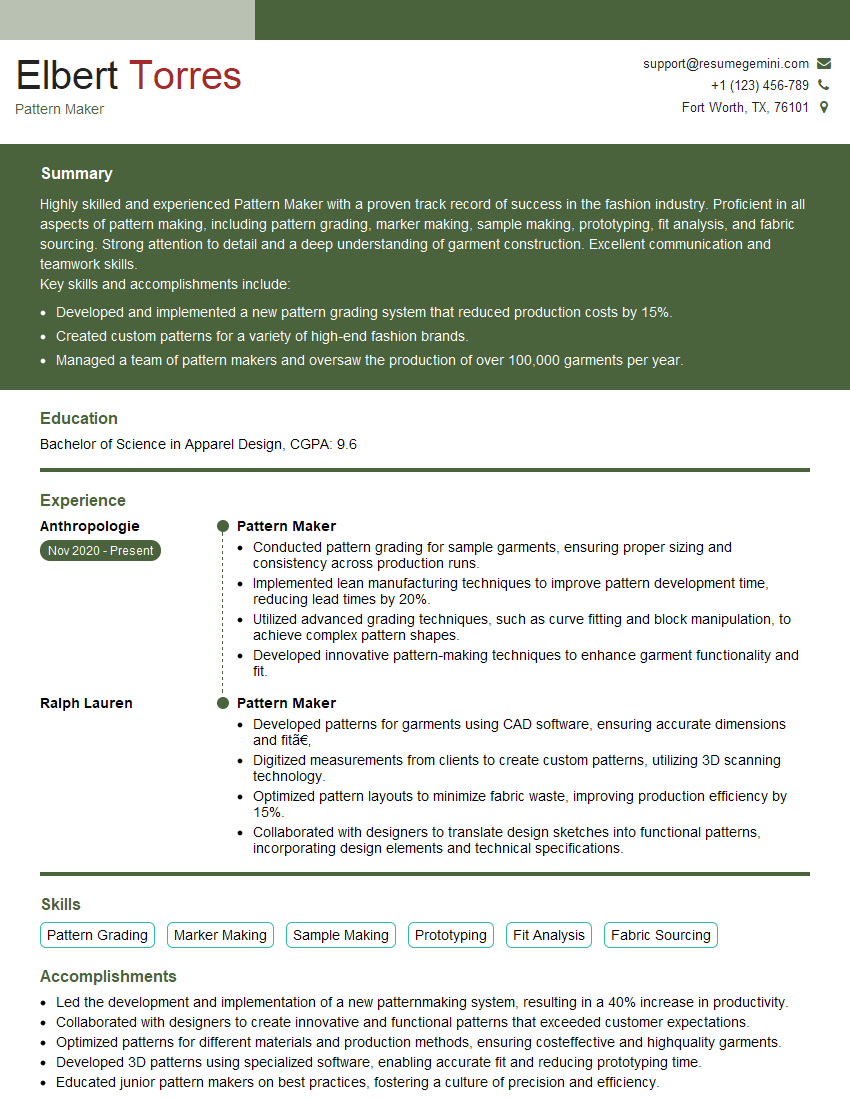
Pattern Maker Resume Sample

Finishing Technician Resume Sample

Dressmaker Resume Sample

Sample Maker Resume Sample
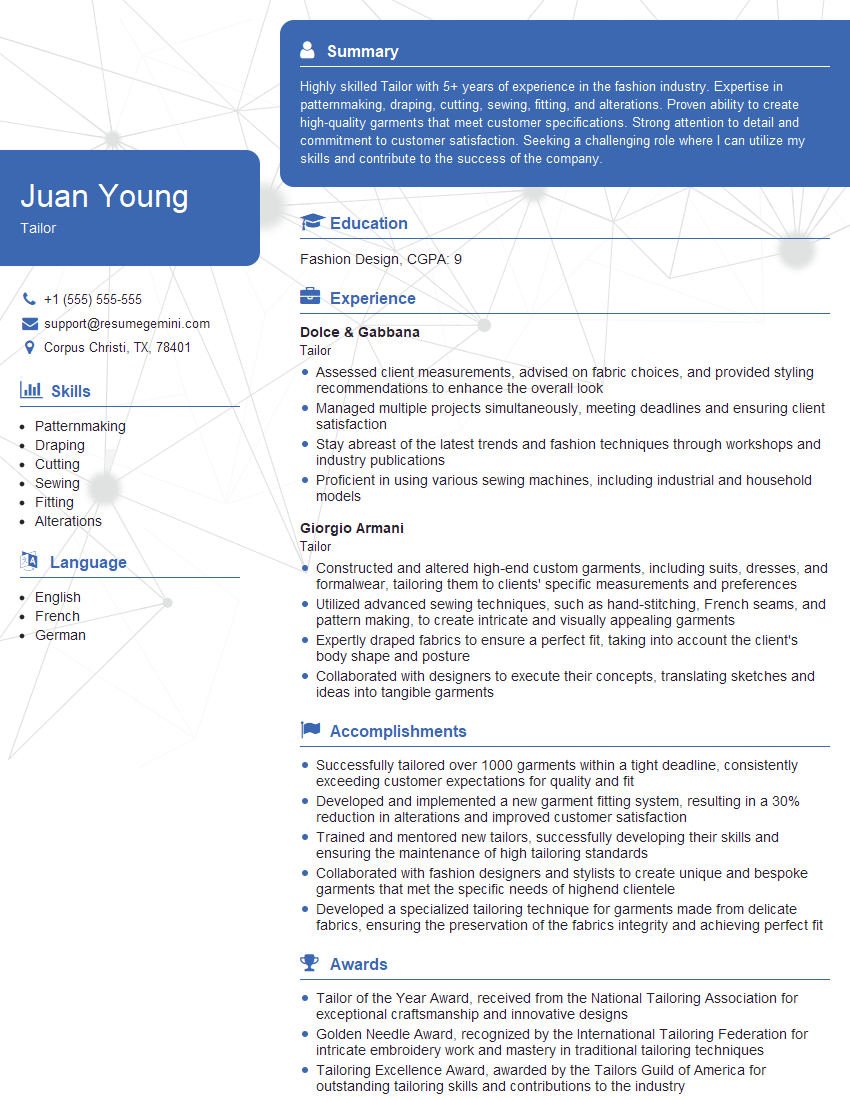
Tailor Resume Sample

Embroidery Specialist Resume Sample
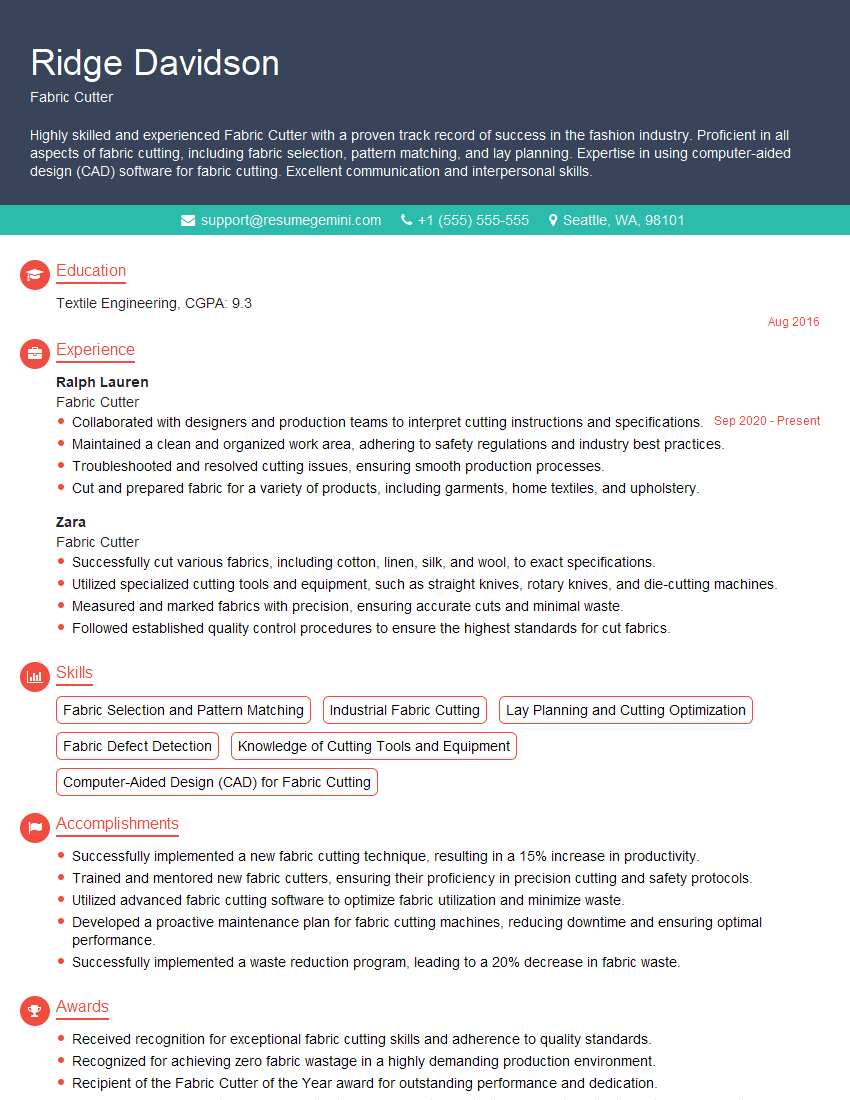
Fabric Cutter Resume Sample

Upholsterer Resume Sample
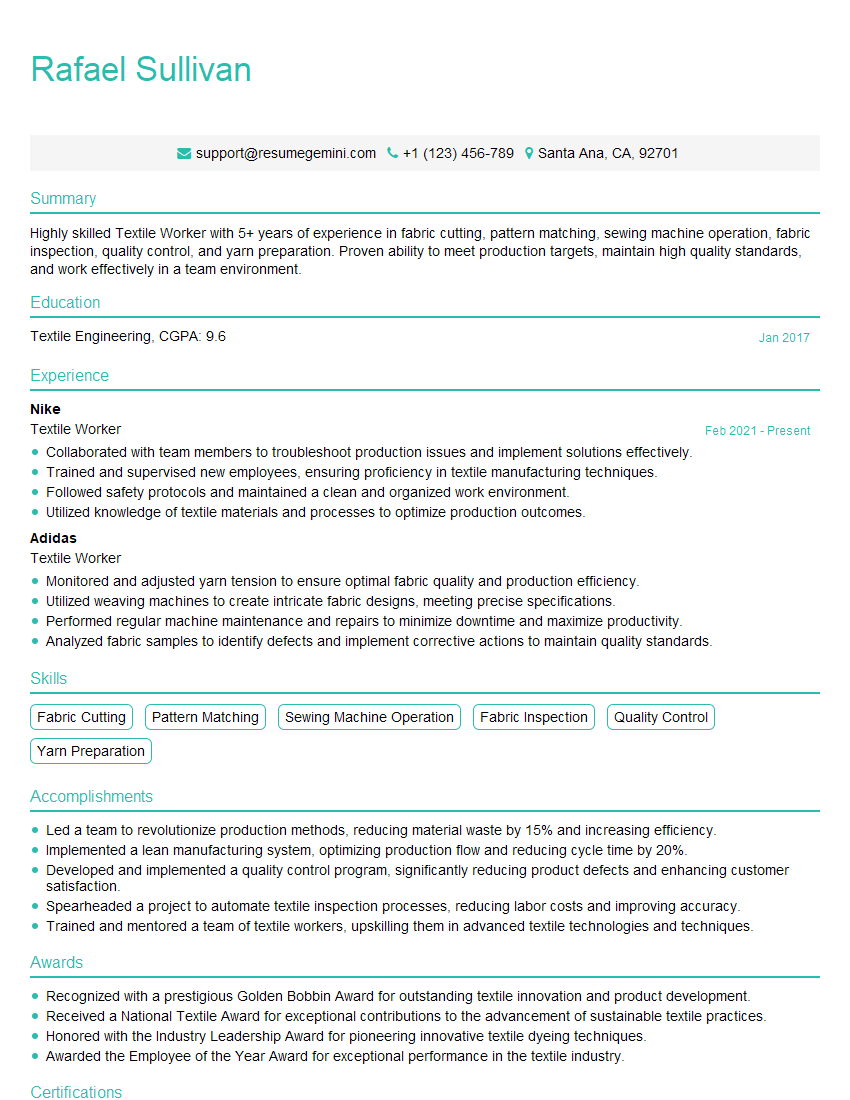
Textile Worker Resume Sample
Explore more articles
Users Rating of Our Blogs
Share Your Experience
We value your feedback! Please rate our content and share your thoughts (optional).
What Readers Say About Our Blog
Very informative content, great job.
good