Every successful interview starts with knowing what to expect. In this blog, we’ll take you through the top Proficient in GPS and Chart Plotting interview questions, breaking them down with expert tips to help you deliver impactful answers. Step into your next interview fully prepared and ready to succeed.
Questions Asked in Proficient in GPS and Chart Plotting Interview
Q 1. Explain the difference between latitude and longitude.
Latitude and longitude are the two coordinates that define a specific point on the Earth’s surface. Think of it like a grid system laid over the globe. Latitude measures the distance north or south of the Equator, running horizontally. The Equator is 0° latitude, with values increasing to 90° North at the North Pole and 90° South at the South Pole. Longitude measures the distance east or west of the Prime Meridian (which runs through Greenwich, England), running vertically. Longitude values range from 0° to 180° East and 0° to 180° West.
For example, the coordinates 34°N, 118°W would place you somewhere in Los Angeles, California. The ‘N’ and ‘W’ indicate the direction from the Equator and Prime Meridian respectively. Understanding this fundamental difference is crucial for accurate navigation and plotting positions on charts.
Q 2. Describe the various types of GPS systems (e.g., WAAS, EGNOS).
GPS systems rely on a constellation of satellites to provide positioning information. While the US-owned NAVSTAR GPS is the most widely known, several augmentation systems improve accuracy and reliability. These include:
- WAAS (Wide Area Augmentation System): This is a US-based system that enhances the accuracy of the GPS signal across North America. It does this by broadcasting corrections to GPS signals from ground-based stations, reducing errors to within a few meters.
- EGNOS (European Geostationary Navigation Overlay Service): Similar to WAAS, EGNOS covers Europe and surrounding areas. It provides improved accuracy and integrity for GPS signals, useful in various applications like aviation and maritime navigation.
- MSAS (Multi-functional Satellite Augmentation System): This system covers Japan and surrounding areas offering similar augmentation as WAAS and EGNOS.
- GAGAN (GPS Aided GEO Augmented Navigation): India’s regional augmentation system, offering improved accuracy and reliability across the Indian subcontinent.
Each system works by receiving raw GPS data, correcting errors, and retransmitting improved signals to users. The choice of system depends on the geographical location and the required level of accuracy.
Q 3. What are the limitations of GPS?
Despite their widespread use, GPS systems have inherent limitations:
- Atmospheric Effects: The ionosphere and troposphere can delay or refract GPS signals, leading to positional errors. This is particularly problematic in areas with high atmospheric activity or extreme weather conditions.
- Multipath Errors: Signals can bounce off buildings, hills, or water before reaching the receiver, causing inaccuracies in position calculations. Imagine the signal taking a longer or slightly different route.
- Obstructions: Tall buildings, dense forests, or even deep canyons can block GPS signals, resulting in signal loss or poor accuracy. This is common in urban canyons.
- Satellite Geometry (GDOP): The geometric arrangement of visible satellites can affect the accuracy of the position solution. Poor geometry (high GDOP) can lead to larger uncertainties in position.
- Selective Availability (SA): While no longer in effect, SA was a deliberate degradation of GPS accuracy implemented by the US government. Although decommissioned it’s important to understand its historical impact.
Understanding these limitations is crucial for proper use and interpretation of GPS data, especially in critical applications where high accuracy is essential.
Q 4. How do you correct for GPS errors?
Correcting for GPS errors often involves a multi-pronged approach:
- Differential GPS (DGPS): Uses a known fixed location (a reference station) to broadcast corrections to GPS signals. This significantly improves accuracy (discussed more thoroughly in the next answer).
- Real-Time Kinematic (RTK): A more precise technique offering centimeter-level accuracy. It uses two GPS receivers – a base station at a known location and a rover unit – to obtain highly accurate positional data, often used in surveying.
- Wide Area Augmentation Systems (WAAS, EGNOS, etc.): As previously discussed, these systems provide wide-area corrections that reduce GPS errors.
- Post-Processing: GPS data can be processed later using specialized software to correct for known errors. This often requires additional data such as precise ephemeris information.
- Sensor Fusion: Combining GPS with other navigation systems like inertial navigation systems (INS) can improve accuracy and provide positioning even when GPS signals are unavailable or weak.
The best method for correcting errors depends on the application, the required level of accuracy, and available resources. A pilot navigating a plane will have different error correction requirements than a hiker using a GPS app.
Q 5. Explain the concept of Differential GPS (DGPS).
Differential GPS (DGPS) significantly improves the accuracy of GPS data by using a reference station at a known location. This reference station receives the same GPS signals as the user’s receiver. The difference between the known position of the reference station and the position calculated by its GPS receiver represents the error in the GPS signal. This error is then broadcast to the user’s receiver, allowing it to correct its own position calculation.
Imagine a pair of identical watches, one set to the correct time (the reference station) and another slightly off (the user’s receiver). By comparing their difference, you can accurately adjust the time of the faulty watch. DGPS works similarly, using the known error at the reference station to correct errors in the user’s position.
DGPS offers significant accuracy improvement, typically reducing errors to within a few meters, making it ideal for applications requiring higher precision than standard GPS, like surveying or precision agriculture.
Q 6. Describe different types of charts (paper, electronic, etc.) and their uses.
Different chart types cater to specific needs and technologies:
- Paper Charts: Traditional nautical charts printed on paper. They provide a visual representation of waterways, coastlines, hazards, and other navigational information. While offering a backup in case of electronic failure, they require manual plotting and are not easily updated.
- Electronic Charts (ENCs): Digital versions of nautical charts stored on a computer or specialized chart plotter. ENCs provide detailed information and allow for advanced features like route planning, depth sounding overlays, and automatic position updates. They are easily updated and offer a high level of detail.
- Raster Charts: Digital charts created from scanned paper charts. They offer a familiar visual appearance but lack the advanced features of ENCs.
- Vector Charts: Digital charts where data is stored as mathematical objects instead of pixels. This allows for flexibility in scaling and display, offering a smoother and more detailed representation of the chart data.
The choice of chart depends on the user’s needs, the available technology, and the specific navigational environment. Many vessels today utilize electronic charts as their primary navigation tool but often carry paper charts as a backup.
Q 7. How do you determine a vessel’s position using GPS and a chart?
Determining a vessel’s position using GPS and a chart involves a simple yet crucial process:
- Obtain GPS Coordinates: Use your GPS receiver to obtain the vessel’s latitude and longitude.
- Locate the Position on the Chart: Find the corresponding latitude and longitude lines on your chart. The intersection of these lines represents your vessel’s position.
- Mark the Position: Use a pencil or other suitable marking tool to mark the vessel’s position on the chart. It’s standard practice to circle the position with a small circle and potentially record the time.
- Cross-Check with Other Information: Compare your GPS-derived position with other navigational aids like bearings, ranges, or landmarks to confirm your position and account for any potential GPS errors.
- Consider Chart Datum: Note the chart’s datum (the reference point for depth measurements). This helps avoid misinterpretations of water depths.
This process allows you to accurately track your vessel’s position and navigate safely. It’s essential to regularly update your position on the chart, particularly in dynamic environments or when navigating near hazards.
Q 8. Explain the process of plotting a course on a chart.
Plotting a course on a chart involves determining the most efficient and safe route between two points, considering factors like water depth, navigational hazards, and regulations. It’s like planning a road trip, but on water!
- Identify your departure and destination points: Locate these on your chart using their latitude and longitude coordinates.
- Draw the rhumb line: Using a parallel rule or a pencil and straight edge, draw a straight line connecting your departure and destination. This line represents the rhumb line, a line of constant bearing. It’s the simplest route, but not always the shortest.
- Consider waypoints: Depending on the distance and complexity of the route, you may need to add intermediate waypoints. These could be navigational aids, significant landmarks, or points to adjust course for optimal passage.
- Check for hazards: Carefully examine your chart for any potential hazards along the planned route, such as shoals, reefs, wrecks, or restricted areas. Adjust your course as needed to avoid these.
- Calculate distances and estimated times of arrival (ETA): Use the chart’s scale to measure the distance along your plotted course. Combine this with your vessel’s speed to calculate your ETA.
- Note important information: Mark your chosen route clearly on the chart, including waypoints and any relevant information, like depths along the route.
For instance, if you’re navigating from a harbor to an offshore buoy, you’d plot a course that avoids shallow areas and takes into account the prevailing currents and tides.
Q 9. How do you calculate a vessel’s speed and course over ground (COG)?
A vessel’s speed and course over ground (COG) are determined by tracking its position over time. Think of it like tracking a moving car on a map.
Speed Over Ground (SOG): SOG is the vessel’s speed relative to the earth’s surface. This is typically measured using GPS. A GPS receiver provides your latitude and longitude at regular intervals. By comparing the distance covered between these points and the time elapsed, the SOG is calculated. Modern GPS systems directly display SOG.
Course Over Ground (COG): COG is the direction of the vessel’s movement relative to the earth’s surface. Again, GPS receivers directly display COG. It’s the actual path the vessel is following, which can differ from the intended course due to currents and wind.
Calculation Example (Simplified): If a vessel travels 10 nautical miles in 1 hour, its SOG is 10 knots (nautical miles per hour). The GPS would directly provide the COG as a bearing (e.g., 090°).
For more precise calculations, particularly over longer distances, you’d typically use navigational software or plotting tools that account for the curvature of the earth.
Q 10. What are the different types of navigational aids?
Navigational aids are crucial for safe navigation. They help determine a vessel’s position and guide it along its intended route. They’re like signposts on a highway, but for the sea.
- Lighthouses and Beacons: Provide visual signals to indicate location and hazards.
- Buoys: Floating markers indicating channels, dangers, or other important information. Different colors, shapes, and markings have specific meanings.
- Radio Beacons (DGPS/GPS): Transmit radio signals to provide precise positioning information.
- Range Markers: Two or more objects used for bearing lines, helping determine a vessel’s position.
- Electronic Navigational Charts (ENCs): Digital charts providing up-to-date information on hazards, depths, and other relevant data.
- Automatic Identification System (AIS): A system allowing vessels to automatically broadcast and receive information about their identity, position, and course.
Each type of aid plays a vital role in providing a comprehensive picture of the navigational environment. The specific aids available vary depending on the location and the type of waterway.
Q 11. How do you use a compass and parallel rules for chart work?
A compass and parallel rules are essential tools for traditional chart work. They’re like the ruler and protractor of a sailor.
Compass: Used to measure bearings (angles from your position to a landmark or object). You would place the compass’s center on your vessel’s position on the chart and then rotate the compass rose to align with the landmark.
Parallel Rules: These allow you to draw lines parallel to a given line on the chart, useful for transferring bearings, measuring distances, and constructing lines of position (LOPs).
Example: To find your position using two bearings and a compass, you would use the compass to measure the bearing to two different landmarks. Then, you would use the parallel rules to transfer those bearings onto the chart, creating two lines of position. The intersection of these lines provides your estimated position. This technique is crucial when GPS is unavailable or unreliable.
Q 12. Explain the concept of magnetic variation and deviation.
Magnetic variation and deviation are corrections needed to convert a magnetic compass reading to true north. Think of it as calibrating a slightly off-kilter measuring instrument.
Magnetic Variation: This is the angular difference between magnetic north (the direction a compass needle points) and true north (the geographic North Pole). It varies with location and is shown on nautical charts as lines of equal variation (isogonic lines).
Deviation: This is the error caused by magnetic interference within the vessel itself. Metal objects, electrical equipment, and even the vessel’s structure can affect the compass needle. Deviation is unique to each vessel and is corrected through a process called compass adjustment.
Example: If the magnetic variation is 10° East and the deviation is 2° West, to find the true bearing, you would add the variation and subtract the deviation: Magnetic bearing + Variation – Deviation = True bearing. So, a magnetic bearing of 100° would become a true bearing of 108° (100° + 10° – 2° = 108°).
Q 13. How do you calculate the distance between two points on a chart?
Calculating the distance between two points on a chart is straightforward using the chart’s scale. It’s like measuring the distance between two cities on a map.
Method: Measure the distance between the two points on the chart using a ruler or dividers. Then, apply the chart’s scale to convert the measured distance into nautical miles or kilometers. For example, if the scale is 1:100,000, and you measure 10 centimeters on the chart, the actual distance is 10 cm * 100,000 cm/cm = 1,000,000 cm, which you then convert to nautical miles or kilometers.
Example: If a chart has a scale of 1 cm = 1 nautical mile, and you measure 5 cm between two points, the distance is 5 nautical miles. Modern electronic charts automate this calculation.
Q 14. Describe the importance of maintaining situational awareness.
Maintaining situational awareness is paramount in navigation. It’s about having a complete understanding of your surroundings and potential hazards. Think of it as being constantly aware of your environment, similar to driving a car and being aware of the other vehicles around you.
Importance: Situational awareness allows you to anticipate and react to changing conditions, avoiding collisions, grounding, and other hazards. It involves continually monitoring your vessel’s position, speed, heading, and surroundings; including other vessels, weather conditions, and potential navigational hazards.
Factors considered: Traffic density, weather forecasts, currents, tides, visibility, own vessel’s capabilities, and any other factors which may impact safety and efficiency of the voyage.
Methods: Regular chart checks, radar and AIS monitoring, visual observation, and communication with other vessels. A lack of situational awareness can have serious consequences in a maritime environment.
Q 15. How do you interpret weather information and its impact on navigation?
Interpreting weather information is crucial for safe navigation. It involves understanding weather forecasts, charts, and real-time observations to assess the potential impact on a vessel. This includes wind speed and direction, wave height and period, visibility, and the presence of storms or other hazardous weather phenomena.
For example, a strong headwind can significantly increase travel time and fuel consumption. High waves can make the vessel unstable and dangerous. Reduced visibility necessitates slower speeds and increased vigilance. I utilize various sources like meteorological broadcasts (NAVTEX, weather fax), specialized weather apps, and online weather services to gather this information. I then integrate this data with the planned route, considering the vessel’s capabilities and limitations to make informed decisions about route adjustments, speed changes, or even delaying the voyage altogether. A specific example would be altering course to avoid a developing squall line indicated on a weather radar, prioritizing safety over schedule.
Career Expert Tips:
- Ace those interviews! Prepare effectively by reviewing the Top 50 Most Common Interview Questions on ResumeGemini.
- Navigate your job search with confidence! Explore a wide range of Career Tips on ResumeGemini. Learn about common challenges and recommendations to overcome them.
- Craft the perfect resume! Master the Art of Resume Writing with ResumeGemini’s guide. Showcase your unique qualifications and achievements effectively.
- Don’t miss out on holiday savings! Build your dream resume with ResumeGemini’s ATS optimized templates.
Q 16. What actions do you take if you experience GPS failure?
GPS failure necessitates immediate and decisive action. My first step is to confirm the failure. Is it a complete loss of signal, or a partial issue? I then switch to backup systems. This typically involves utilizing an alternative GPS receiver, if available. If this also fails, I revert to traditional celestial navigation techniques (using a sextant) or dead reckoning, supplemented by visual landmarks and electronic charts.
I would immediately inform the relevant authorities (e.g., Coast Guard) and other vessels in the vicinity. Safe speed would be reduced, and increased vigilance employed to avoid collisions. For example, during a night passage where GPS failed, I successfully used visual identification of navigational buoys and charted lights, along with dead reckoning calculations, to confirm my position and proceed safely to port. The safety of the crew and the vessel remains my top priority.
Q 17. Explain the concept of dead reckoning.
Dead reckoning is a method of estimating a vessel’s position by using its last known position, course, speed, and time. It’s essentially a sophisticated form of educated guesswork. Imagine you’re driving a car; you know where you started, your speed, and the direction you’ve been traveling. You can then roughly estimate where you are. Dead reckoning does the same, but takes into account things like current and wind. It’s represented by calculations that include course, speed, leeway (the sideways movement due to wind), and current. It’s not precise but it provides an approximation, crucial in situations where other navigational aids fail or are unavailable. It forms the basis for many navigation applications and is used especially during GPS outages, offering a fallback method for positional awareness.
Q 18. How do you handle emergency situations at sea?
Emergency situations at sea demand rapid and informed responses. My actions follow a structured approach:
- Assess the situation: Determine the nature and severity of the emergency (fire, collision, man overboard, etc.).
- Activate emergency procedures: This includes contacting appropriate authorities (Coast Guard, etc.), using distress signals (Mayday, EPIRB), and initiating relevant shipboard emergency protocols.
- Take immediate actions: This may include damage control, first aid, or deploying life-saving equipment.
- Coordinate rescue efforts: Cooperate with rescue teams and follow their instructions.
- Post-incident report: File a comprehensive report detailing the events, actions taken, and lessons learned.
For instance, during a man overboard situation, immediate action would involve activating the MOB button (which records the location), launching a life raft, deploying a rescue boat, and notifying the Coast Guard. Following established procedures reduces confusion and maximizes the likelihood of a positive outcome.
Q 19. Describe your experience using electronic chart display and information systems (ECDIS).
I have extensive experience using ECDIS (Electronic Chart Display and Information System). It’s become an indispensable tool in modern navigation, replacing paper charts. ECDIS provides a high-resolution digital representation of nautical charts, integrated with various sensor data including GPS, AIS (Automatic Identification System), and radar. I’m proficient in using its features such as route planning, safety contouring (defining safe areas), and alarm management. I can effectively utilize ECDIS to create and modify routes, considering things like depth, proximity to hazards, and tidal information. This allows for more accurate and efficient navigation. Furthermore, ECDIS’s integration with other systems enhances situational awareness by providing real-time information on other vessels and potential dangers. I’ve personally used ECDIS to avoid grounding in shallow waters by utilizing its depth contouring capabilities, something not easily achieved with paper charts.
Q 20. What are the safety regulations related to navigation?
Navigation safety regulations vary depending on the flag state (the country under whose laws the vessel is registered) and the waters being navigated. However, some common regulations universally apply. These include adherence to the International Regulations for Preventing Collisions at Sea (COLREGs), which dictates rules for safe navigation and preventing collisions. Additionally, vessels must maintain proper watchkeeping procedures, carry the necessary navigational equipment (functioning GPS, charts, radar, etc.), and comply with reporting requirements (such as entering and leaving ports). Regular safety drills and crew training are also mandated to ensure proficiency in emergency procedures and compliance with regulations. Specific regulations for particular areas, like port limits and restricted zones, must also be meticulously followed. Failure to comply with these regulations can result in penalties, including fines, detention, and even legal repercussions.
Q 21. Explain the concept of a nautical mile.
A nautical mile is a unit of measurement used in navigation. Unlike a statute mile (approximately 1609 meters), one nautical mile is defined as one minute of latitude along any meridian. This roughly translates to 1852 meters (1.15 statute miles). Its significance in navigation comes from its direct relationship to latitude and the Earth’s curvature. This makes nautical miles particularly useful for calculating distances on charts, which are typically based on a projection of the Earth’s spherical surface. For instance, a vessel traveling at 10 knots (nautical miles per hour) will cover 10 nautical miles in one hour. The use of nautical miles simplifies calculations during navigation, enhancing accuracy and consistency in measurements and estimations.
Q 22. How do you identify and avoid hazards on a chart?
Identifying and avoiding hazards on a nautical chart is paramount for safe navigation. It’s a systematic process involving careful examination and cross-referencing several chart features.
Depth Contours: Look for shallow water areas indicated by closely spaced depth contours. These could indicate shoals, reefs, or other underwater obstructions. For example, seeing contours clustered together near a coast signifies a potentially hazardous shallow area. I always pay close attention to the chart’s depth datum (e.g., Mean Lower Low Water) to understand the actual water depth relative to the keel of the vessel.
Navigation Buoys and Beacons: These are your friends! Their positions and characteristics (color, shape, light) are clearly marked on the chart and indicate safe waterways or warn of hazards. Always verify their positions against your GPS and visually confirm them. Misplaced buoys are a possibility, so verifying with multiple sources is crucial.
Submerged Rocks/Wrecks: Charts clearly mark these dangers, often with symbols that indicate their size and depth. I often draw a safety margin around these features on my chart, especially in areas with poor visibility.
Restricted Areas: Look for areas marked with restricted navigation symbols or areas indicating military exercises, fishing zones, or other limitations. Entering these zones without proper authorization can have serious consequences.
Tidal Information: This is critical! Chart depths are often referenced to a specific tidal datum (like Mean Low Water). Always consult tidal predictions to determine the actual water depth at your location and time. Ignoring tides can lead to grounding.
Using a plotter, I’d overlay my GPS position on the chart to ensure I’m maintaining a safe distance from all identified hazards. Continuous monitoring is key, especially in dynamic environments with currents or changing weather conditions.
Q 23. Describe your experience with different types of plotting tools.
My experience encompasses a wide range of plotting tools, from traditional paper charts and parallel rulers to sophisticated electronic chart display and information systems (ECDIS).
Paper Charts & Parallel Rules: I’m proficient in traditional methods, understanding the importance of accurate plotting using parallel rules and dividers. This foundational skill is invaluable even in the digital age, serving as a critical backup in case of electronic system failure.
Plotters (Analog and Digital): I’ve extensively used both analog plotters, which use paper charts and overlays, and digital plotters integrated with GPS and other navigation sensors. Digital plotters provide superior accuracy and the ability to overlay various data layers.
ECDIS (Electronic Chart Display and Information System): I’m well-versed in using ECDIS, which offers advanced features like route planning, collision avoidance, and automatic chart updates. Understanding the ECDIS’s limitations and the importance of regularly verifying its data is crucial.
Each tool has its strengths and weaknesses; my experience allows me to adapt and use the most appropriate tool based on the context of the voyage and the available resources.
Q 24. What are the key components of a GPS receiver?
A GPS receiver’s core function is to determine its precise location on Earth. This is achieved through a complex interplay of several key components:
Antenna: Receives signals from GPS satellites. The quality of the antenna significantly impacts the accuracy and reliability of the received signal.
GPS Chipset: The ‘brain’ of the receiver, responsible for processing the satellite signals and calculating the position. The chipset’s capabilities determine the accuracy, speed, and additional features of the receiver.
Microprocessor: Manages the overall operation of the GPS receiver, including data processing, communication with other devices, and power management.
Memory: Stores data like satellite ephemeris (orbital data) and almanac (satellite location information). This allows the receiver to acquire the satellite signals more quickly.
Power Supply: Provides the necessary energy for the receiver’s operation.
User Interface: Displays the position data and other information to the user. This can range from simple LCD displays to sophisticated touchscreens.
The more sophisticated receivers include additional components like a WAAS (Wide Area Augmentation System) or EGNOS (European Geostationary Navigation Overlay Service) receiver for enhanced accuracy.
Q 25. Explain the process of updating charts and GPS data.
Chart and GPS data updates are critical for maintaining safe navigation. Charts are updated to reflect changes in water depths, navigation aids, and other important features. GPS data is updated to ensure accuracy of satellite positions and other relevant information. The process generally involves:
Chart Updates: New charts (or corrections) are obtained from official sources like the National Oceanic and Atmospheric Administration (NOAA) or equivalent national hydrographic offices. These updates typically involve comparing the current charts with the latest updates and incorporating corrections or replacing outdated charts entirely. Many ECDIS systems automate chart updates.
GPS Data Updates: GPS data is usually updated automatically by the receiver itself. However, some receivers require manual updates of the almanac and ephemeris data. These data files contain the orbital information of the satellites, which are continuously changing. Downloading the latest files from the manufacturer’s website or using GPS software that regularly synchronizes data ensures accuracy.
Failing to update charts and GPS data increases the risk of navigation errors and accidents. A proactive approach to data management is essential for safe navigation.
Q 26. How do you ensure the accuracy of your position?
Ensuring position accuracy is crucial. I use a multi-layered approach:
GPS Cross-Checking: I always use at least two independent GPS sources to compare position data. Discrepancies might indicate a problem with one of the receivers.
Visual Fixes: I regularly use visual bearings (e.g., with a compass and landmarks) to confirm my GPS position, especially in coastal waters. This acts as a critical backup and helps to detect errors.
Chart Comparison: Constantly comparing my GPS position to my chart ensures I’m on the planned course and away from hazards.
Differential GPS (DGPS) or other augmentation systems: When available, I use DGPS or other augmentation systems like WAAS or EGNOS, which significantly enhance positional accuracy. These systems correct for errors in the standard GPS signals.
Regular System Checks: I regularly check for GPS signal strength, the number of satellites acquired, and the precision of the position solution, paying attention to PDOP (Position Dilution of Precision) values. Higher PDOP values mean lower accuracy.
Combining GPS data with traditional navigation techniques and regularly verifying my position ensures the highest level of accuracy and safety.
Q 27. Describe your experience with different mapping software.
My experience includes several prominent mapping software packages.
OpenCPN: A free and open-source charting software that provides many features comparable to commercial software, including GPS integration, route planning, and various chart formats. It’s highly customizable and a great tool for detailed analysis.
MaxSea TimeZero: A professional-grade charting software popular among commercial vessels and yachts for its advanced features like real-time weather overlay, route optimization, and collision avoidance tools.
Navionics Boating: A widely used app for recreational boaters that offers excellent chart detail, community-contributed features, and easy-to-use interface.
My software selection depends on the specific needs of the navigation task. For instance, OpenCPN suits my needs for detailed analysis and customization. In a professional context, MaxSea TimeZero or a similar ECDIS is more appropriate for complex voyages demanding sophisticated features. Navionics is ideal for simpler recreational outings.
Key Topics to Learn for Proficient in GPS and Chart Plotting Interview
- GPS Fundamentals: Understanding GPS signals, triangulation, accuracy, and error sources (e.g., atmospheric effects, multipath).
- Chart Types and Symbols: Familiarity with various nautical charts (paper and electronic), understanding chart symbols, and interpreting chart information.
- Navigation Techniques: Proficiency in piloting using GPS, dead reckoning, compass, and celestial navigation (if applicable to the role).
- Chart Plotting Procedures: Accurate plotting of GPS positions on charts, calculating courses and distances, and understanding position uncertainty.
- Electronic Chart Display and Information Systems (ECDIS): Knowledge of ECDIS operation, data management, and safety features.
- GPS Equipment Operation and Maintenance: Practical experience with GPS receivers, antennas, and related equipment, including troubleshooting basic issues.
- Safety and Emergency Procedures: Understanding the importance of safe navigation practices, emergency procedures, and distress signaling using GPS and charts.
- Problem-Solving and Decision-Making: Ability to analyze navigation situations, identify potential hazards, and make sound decisions based on available information.
- Data Interpretation and Analysis: Interpreting GPS data, chart data, and other relevant information to determine position, course, and speed accurately.
Next Steps
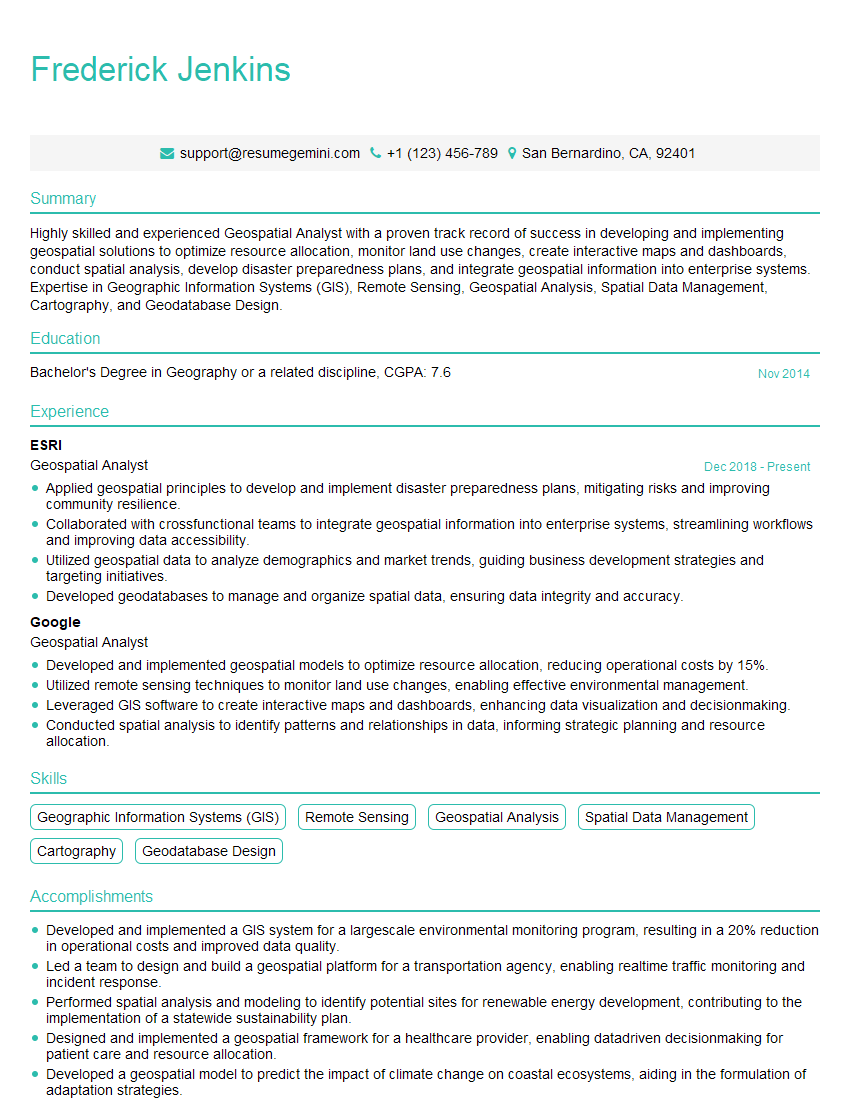
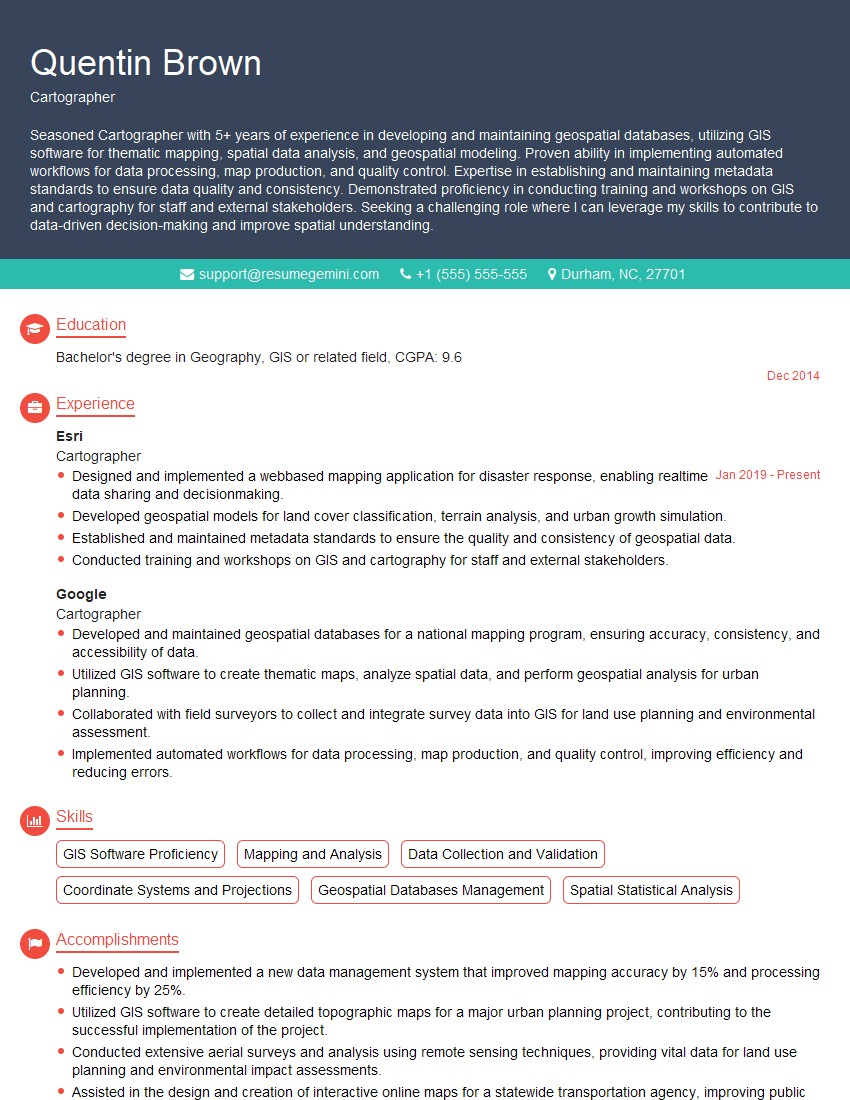
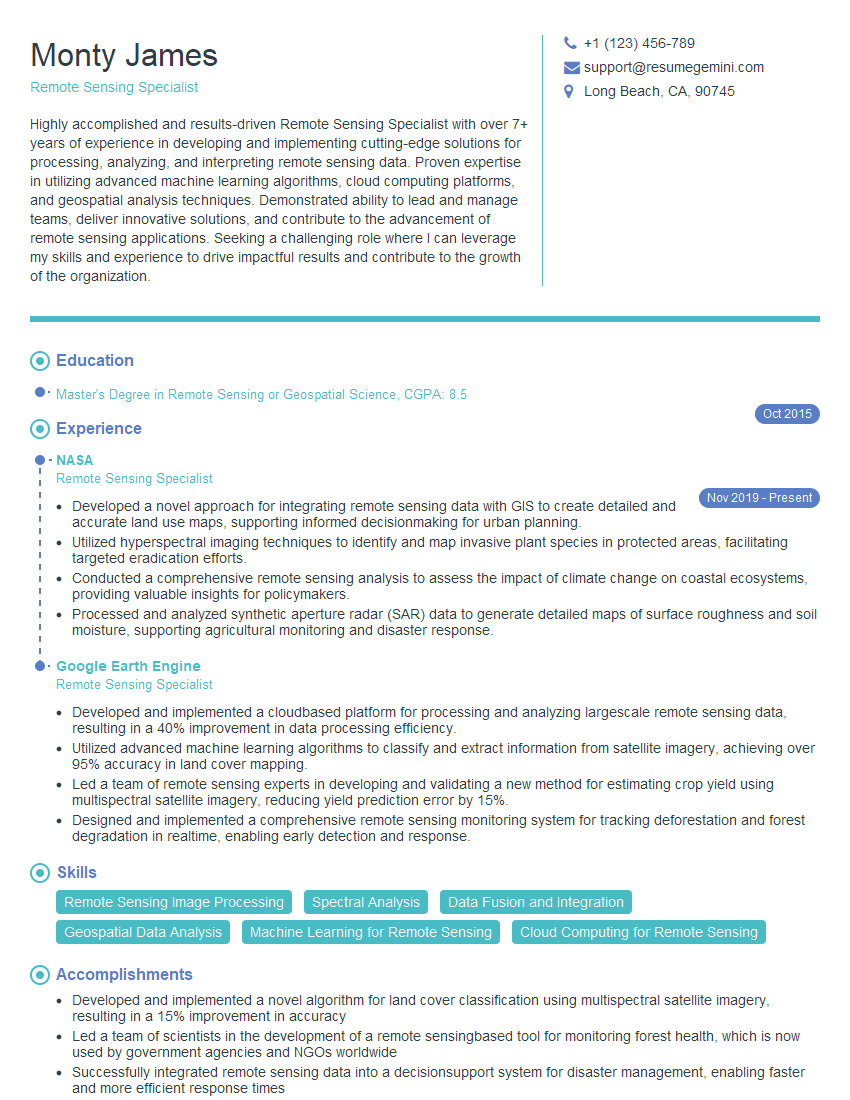
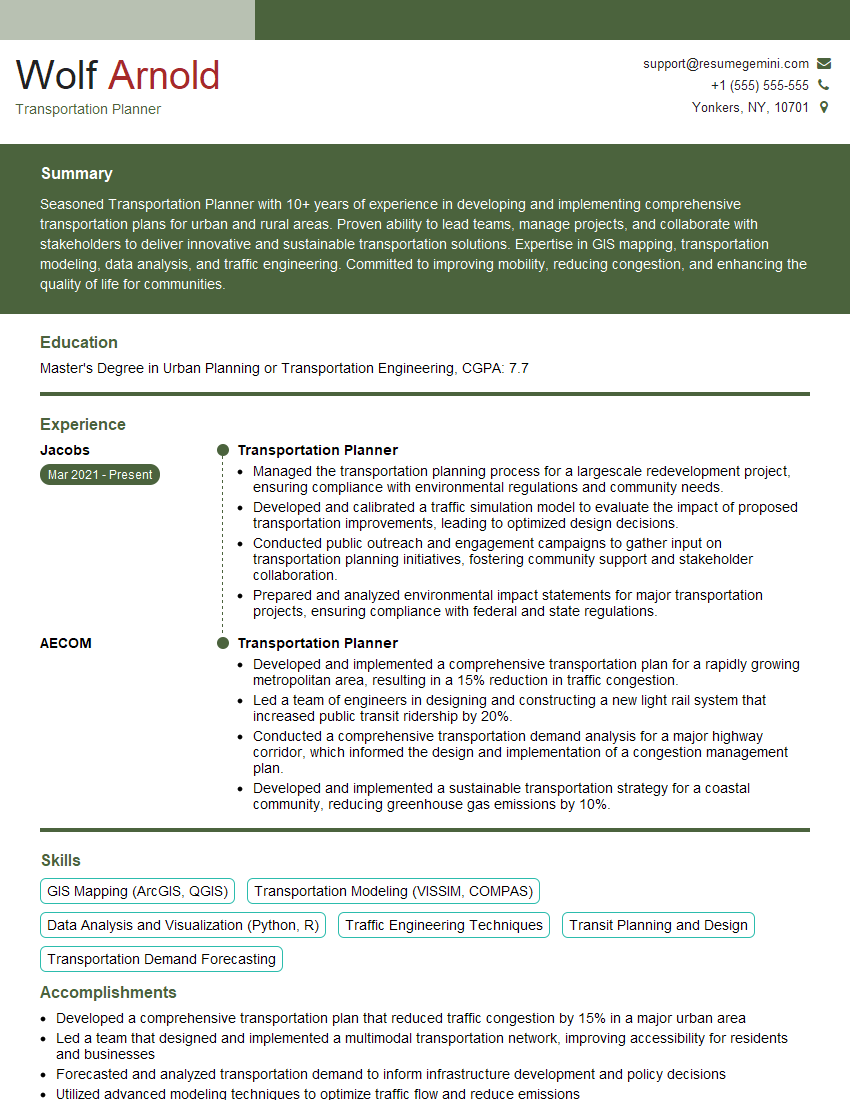
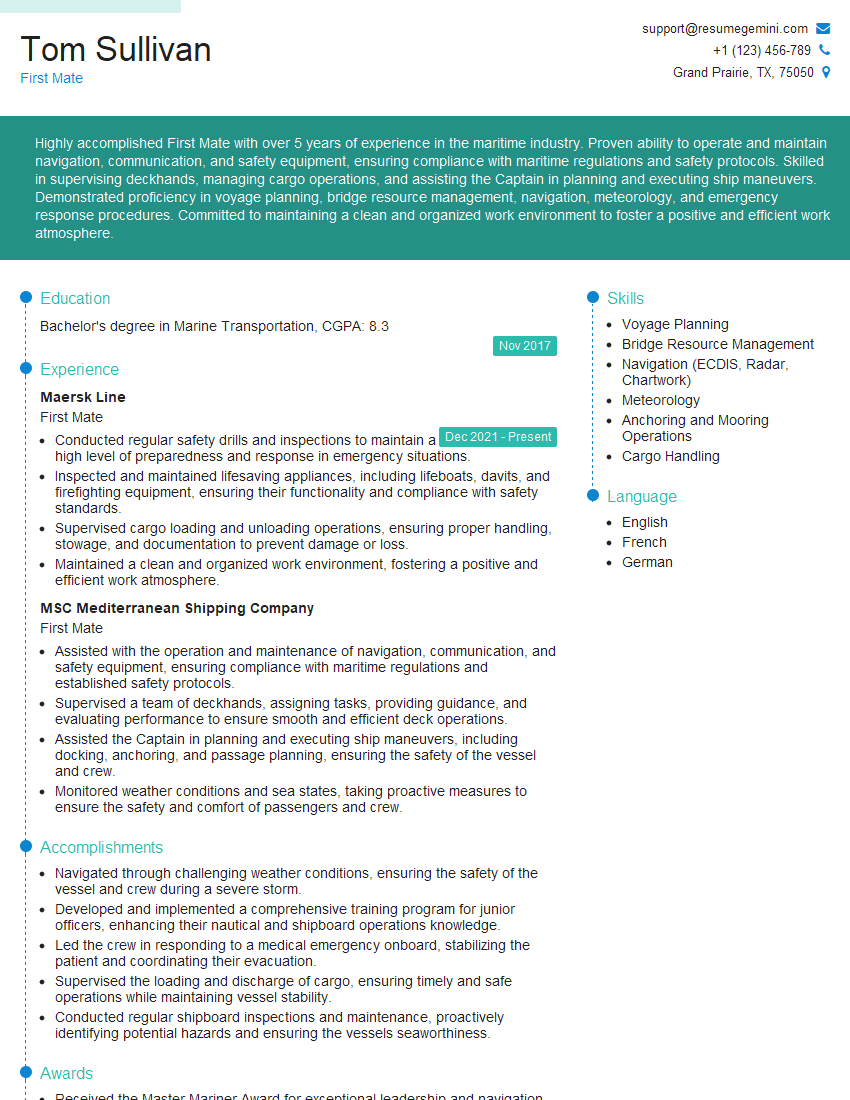
Mastering GPS and chart plotting is crucial for career advancement in maritime, aviation, surveying, and other navigation-dependent fields. A strong understanding of these skills demonstrates competence and reliability, opening doors to more challenging and rewarding opportunities. To maximize your job prospects, create a compelling and ATS-friendly resume that highlights your expertise. ResumeGemini is a trusted resource for building professional resumes, and we offer examples of resumes tailored to showcasing proficiency in GPS and chart plotting to help you get started. Let ResumeGemini help you craft a resume that truly reflects your skills and experience.
Explore more articles
Users Rating of Our Blogs
Share Your Experience
We value your feedback! Please rate our content and share your thoughts (optional).
What Readers Say About Our Blog
Very informative content, great job.
good