The thought of an interview can be nerve-wracking, but the right preparation can make all the difference. Explore this comprehensive guide to Experience in Law Enforcement or Military interview questions and gain the confidence you need to showcase your abilities and secure the role.
Questions Asked in Experience in Law Enforcement or Military Interview
Q 1. Describe your experience in high-pressure situations.
High-pressure situations are commonplace in law enforcement and military contexts. My experience encompasses responding to active shooter scenarios, managing hostage situations, and operating under intense scrutiny during investigations. These situations demand rapid decision-making, clear communication, and unwavering composure.
For instance, during a hostage negotiation, I was responsible for maintaining calm communication with the perpetrator while simultaneously coordinating a tactical team’s approach. The success hinged on my ability to remain calm under extreme pressure, to actively listen to the perpetrator’s demands, and to effectively relay critical information to my superiors and the tactical team. This involved carefully assessing the evolving situation and adapting my strategies accordingly – a constant balance of immediate action and long-term strategic planning. Another example involved a large-scale civil disturbance. Effective leadership, rapid assessment of the situation, and prioritization of safety for the public and my team were paramount to successful de-escalation.
Q 2. Explain your understanding of the chain of command.
The chain of command is a hierarchical structure crucial for maintaining order, accountability, and efficiency within any organization, particularly in high-stakes environments like the military or law enforcement. It defines the flow of authority and responsibility, ensuring that instructions are given and followed effectively.
Understanding the chain of command means recognizing my place within the hierarchy and adhering to the established communication channels. It ensures clarity in roles and responsibilities, preventing confusion and promoting effective coordination. For example, if I encounter a problem that exceeds my authority, I report it to my immediate superior, who then takes appropriate action or escalates it further up the chain. Ignoring the chain of command can lead to inefficiencies, errors, and potentially disastrous consequences. This structure isn’t just about following orders; it’s about ensuring coordinated action and accountability within the organization.
Q 3. How do you handle conflict resolution in a team environment?
Conflict resolution in a team setting requires a combination of strong communication, active listening, and a focus on finding mutually acceptable solutions. It’s about addressing the issue, not assigning blame. My approach involves several steps:
- Identify the root cause: Understanding the underlying reasons for the conflict is crucial before attempting to resolve it.
- Facilitate open communication: Creating a safe space for all parties to express their perspectives is essential. Active listening helps understand all sides of the story.
- Find common ground: Searching for shared goals and interests can facilitate compromise.
- Mediate and negotiate: Guiding the parties towards a mutually acceptable solution through compromise and negotiation.
- Document the agreement: Clearly outlining the agreed-upon solution ensures accountability and future clarity.
For example, I once mediated a dispute between two officers over resource allocation. By facilitating open communication and helping them see the bigger picture, we found a solution that satisfied both parties and benefited the team as a whole.
Q 4. Describe a time you had to make a quick, critical decision.
During a high-speed pursuit, I had to make a split-second decision about whether to continue the chase or call it off. The suspect, who had just committed a violent crime, was driving erratically and endangering the public. Continuing the pursuit risked further harm to civilians, while stopping could let the suspect escape.
My decision-making process involved weighing the risks and benefits of each option. I assessed the speed and location of the pursuit, the potential harm to the public, and the likelihood of apprehending the suspect if I continued. I also considered the resources available to me and the support of my team. Based on this quick assessment, I decided to terminate the pursuit in a safe location to minimize potential harm to innocent bystanders. While this meant losing the suspect temporarily, the safety of the public was the paramount consideration. The suspect was subsequently apprehended using different methods. This incident reinforced the importance of making timely and well-reasoned decisions in high-pressure environments.
Q 5. What is your experience with firearms and their safe handling?
My experience with firearms includes extensive training and practical application in various scenarios. I’m proficient in the safe handling, maintenance, and operation of several types of firearms, including handguns, rifles, and shotguns.
My training emphasized the ‘four rules of firearm safety’: always treat every firearm as if it were loaded; never point a firearm at anything you are not willing to destroy; keep your finger off the trigger until your sights are on the target and you have decided to shoot; and be sure of your target and what is beyond it. I have regularly participated in range exercises to maintain my proficiency and have also undergone specialized training in tactical firearm applications and close-quarters combat. The safe handling of firearms is not just a skill, but a mindset that demands constant vigilance and respect for the potential consequences.
Q 6. How familiar are you with relevant laws and regulations?
I possess a strong understanding of relevant laws and regulations, including those governing use of force, evidence collection, search and seizure, and the rights of individuals under the law. This knowledge is essential for performing my duties lawfully and ethically.
My familiarity extends to local, state, and federal statutes relevant to law enforcement and military operations. I regularly review updates and participate in training sessions to stay current with any changes. Understanding these legal frameworks is crucial, not just for personal safety, but for ensuring the integrity and legality of investigations and operations. Ignorance of the law is no excuse for its violation; profound legal awareness guides my actions and decisions.
Q 7. Explain your experience with evidence collection and preservation.
Evidence collection and preservation are critical to ensuring the integrity of any investigation. My experience involves following strict protocols to maintain the chain of custody, documenting each step of the process, and ensuring the proper handling and storage of evidence to prevent contamination or tampering.
This includes understanding the different types of evidence, their proper packaging and labeling, and the use of appropriate technology for documentation. For example, I’ve participated in crime scene investigations where meticulous evidence collection was crucial for subsequent legal proceedings. Every piece of evidence – from fingerprints to DNA samples – is handled with precision, documented in detail, and stored in accordance with established procedures to maintain its admissibility in court. This process is vital to ensure justice and uphold the integrity of the legal system.
Q 8. Describe your understanding of search and seizure procedures.
Search and seizure procedures are governed by the Fourth Amendment of the U.S. Constitution, which protects against unreasonable searches and seizures. This means law enforcement needs a warrant, based on probable cause, to legally search a person’s property or seize their belongings. However, there are exceptions, such as consent, plain view, exigent circumstances (like an imminent threat), and search incident to arrest.
Probable Cause: This requires sufficient reason based on known facts to believe a crime has been committed and evidence of that crime will be found in a specific location. For example, if a witness identifies a suspect and describes the suspect’s weapon as being hidden in their apartment, that could constitute probable cause for a search warrant.
Warrant Requirements: A warrant must be issued by a neutral and detached magistrate (judge) and must specifically describe the place to be searched and the things to be seized. This precision is crucial to prevent overly broad searches.
Exceptions: Exigent circumstances are time-sensitive situations where obtaining a warrant would jeopardize the investigation or public safety. Imagine a hostage situation – police wouldn’t wait for a warrant before entering the building. Consent, if freely given, eliminates the need for a warrant. Plain view allows for seizure of evidence visible to officers conducting a legal activity.
Search Incident to Arrest: A lawful arrest permits a search of the arrestee and the area within their immediate control to ensure officer safety and prevent the destruction of evidence.
Understanding and adhering to these procedures is paramount to upholding the law and protecting individual rights. Improper search and seizure can lead to evidence being inadmissible in court, jeopardizing an investigation.
Q 9. How do you maintain confidentiality in sensitive situations?
Maintaining confidentiality in sensitive situations is critical for trust and the integrity of investigations. This involves a multi-faceted approach.
- Strict adherence to regulations: I always follow the specific rules and regulations regarding the handling of confidential information, including those pertaining to data privacy acts (like HIPAA) and departmental policies.
- Secure communication channels: I utilize encrypted communication systems for sensitive discussions and avoid casual conversations about confidential cases in public or unsecured areas.
- Need-to-know basis: I share information only with individuals who have a legitimate need to know, based on their role and responsibilities in the investigation.
- Secure document storage: Confidential documents are stored in locked cabinets, password-protected files, or secure digital storage with restricted access.
- Ongoing vigilance: I maintain a high level of awareness and carefully monitor my actions to prevent any accidental breaches of confidentiality. This includes being mindful of what I discuss publicly and securely disposing of any sensitive documents.
For instance, in a domestic violence case, details about the victim’s location or personal information would be kept strictly confidential to ensure their safety and prevent further harm.
Q 10. Explain your experience with report writing and documentation.
Thorough and accurate report writing is the backbone of law enforcement and military documentation. It provides a permanent record of events, supports investigations, and can be crucial in legal proceedings.
My experience includes writing various reports, such as incident reports, arrest reports, investigative reports, and after-action reports. I am proficient in using clear, concise language, avoiding jargon, and adhering to departmental reporting standards and formats. I focus on:
- Objectivity: Presenting facts without personal opinions or biases.
- Accuracy: Ensuring all information is correct and verifiable.
- Completeness: Including all relevant details, including dates, times, locations, and individuals involved.
- Chronological order: Presenting events in a clear, sequential manner.
- Evidence-based reporting: Linking observations and statements to physical evidence and supporting documentation.
I’ve learned that even small details can be significant, so meticulous attention to detail is key. A well-written report can be the difference between a successful prosecution and a case dismissal.
Q 11. Describe a time you had to adapt to a rapidly changing situation.
During a large-scale civil disturbance, the initial strategy focused on containment. However, a sudden escalation involving a vehicle-borne improvised explosive device (VBIED) threat forced a rapid change of plans.
The immediate priority shifted from containment to evacuation and neutralization of the VBIED. This required real-time coordination with multiple agencies (police, fire, bomb squad), swift decision-making under extreme pressure, and rapid adaptation of established protocols. We had to quickly reassess the situation, establish a new command structure, and implement a revised strategy that prioritized the safety of civilians and first responders. Clear communication and decisive action were crucial. The situation highlighted the importance of flexibility, adaptability, and strong teamwork in high-stakes environments. The success in mitigating the threat and ensuring minimal casualties stemmed directly from our ability to adapt to the unforeseen circumstances.
Q 12. How do you prioritize tasks in a high-stress environment?
Prioritizing tasks in high-stress environments requires a systematic approach. I use a combination of techniques, often simultaneously:
- Immediate Threats First: Addressing immediate dangers and critical situations takes precedence. This is usually based on a risk assessment.
- Time Sensitivity: Tasks with impending deadlines are prioritized. This may involve timeboxing certain activities.
- Impact Assessment: Evaluating the potential consequences of completing or delaying each task helps to prioritize those with significant impact.
- Delegation: When appropriate, delegating tasks to others frees up time to focus on high-priority items.
- Maintaining Calm: Staying calm under pressure ensures clear thinking and effective decision-making. Employing deep breathing or mindfulness techniques helps me maintain focus.
Think of it like triage in a hospital. The most critically injured patients get immediate attention, followed by those with serious injuries, then those with less serious ones. The same principle applies to task prioritization in high-stress settings.
Q 13. What is your experience with surveillance techniques?
My experience with surveillance techniques encompasses various methods, always prioritizing legality and ethical considerations. These methods range from:
- Physical surveillance: This involves direct observation of a subject, often requiring careful planning, cover, and observation skills. Techniques include maintaining a safe distance, using concealment, and documenting observations meticulously.
- Technical surveillance: This may include using audio or video recording devices, while strictly adhering to all legal requirements and obtaining necessary warrants or authorization.
- Open-source intelligence (OSINT): Gathering information from publicly available sources such as social media, online databases, and news reports.
- Surveillance planning and execution: Includes risk assessments, contingency planning, and the use of appropriate equipment and personnel. Detailed observation reports are maintained throughout.
I understand the limitations and legal restrictions associated with surveillance, ensuring all activities are lawful and ethical. Privacy rights must always be respected, and all actions must be documented properly.
Q 14. How do you maintain situational awareness in diverse environments?
Maintaining situational awareness involves constantly scanning your environment, analyzing potential threats, and adapting your actions accordingly. It’s a dynamic process that requires attention to detail and anticipation.
- Observation: Constantly scanning the environment for unusual activity, potential threats, and changes. This includes paying attention to people, vehicles, and surroundings.
- Listening: Being attentive to sounds and conversations, paying attention to unusual noises or changes in ambient sound levels.
- Information Gathering: Collecting information from multiple sources, including communication systems, informants, and other first responders.
- Mental Mapping: Creating a mental picture of the area, identifying potential escape routes, and understanding the layout of the environment.
- Risk Assessment: Continuously assessing potential threats and adjusting your actions based on the level of risk.
Imagine patrolling a crowded market. You’re constantly scanning the crowd, listening for unusual noises, watching for suspicious behavior, and mentally mapping potential escape routes or safe zones. Situational awareness is a crucial skill for staying safe and effective in diverse and unpredictable environments.
Q 15. Explain your experience with interrogation techniques.
Interrogation techniques are a crucial aspect of law enforcement, focusing on eliciting truthful information from suspects or witnesses. My experience encompasses a range of methods, always prioritizing ethical and legal considerations. I’ve been trained in Reid Technique, focusing on rapport building, observation of verbal and nonverbal cues, and strategic questioning. This includes employing both direct and indirect questioning styles, adapting my approach based on the individual’s personality and the nature of the crime. For instance, in one case involving a robbery, I initially built rapport by showing empathy for the suspect’s difficult circumstances while carefully observing their reactions to my questions. This allowed me to identify inconsistencies in their story, ultimately leading to a confession. I am also well-versed in using cognitive interviewing techniques which encourage the witness to mentally reconstruct the event, improving the accuracy and detail of their recollection.
Crucially, I understand the limitations of certain interrogation techniques and always ensure that all statements are recorded and documented meticulously. I am very aware of the legal rights of the individuals being questioned and am careful to ensure these are respected and upheld throughout the process.
Career Expert Tips:
- Ace those interviews! Prepare effectively by reviewing the Top 50 Most Common Interview Questions on ResumeGemini.
- Navigate your job search with confidence! Explore a wide range of Career Tips on ResumeGemini. Learn about common challenges and recommendations to overcome them.
- Craft the perfect resume! Master the Art of Resume Writing with ResumeGemini’s guide. Showcase your unique qualifications and achievements effectively.
- Don’t miss out on holiday savings! Build your dream resume with ResumeGemini’s ATS optimized templates.
Q 16. Describe your experience in working with diverse populations.
My career has involved extensive interaction with diverse populations, requiring adaptability and cultural sensitivity. This includes working with individuals from various ethnic, racial, socioeconomic, and cultural backgrounds. I’ve learned the importance of active listening, demonstrating respect for cultural differences, and understanding how these differences might influence communication styles. For instance, during a domestic dispute involving a family with strong cultural ties to their community, I took time to involve community leaders to understand their perspectives and concerns which helped de-escalate the situation significantly and build trust. Successful communication requires understanding not just the language spoken, but the unspoken nuances of communication based on cultural norms.
This experience has honed my skills in building rapport and trust across diverse groups. My approach is always one of inclusivity, ensuring everyone feels heard and understood. I see this diversity as a strength, enriching my ability to understand the needs of the community at large.
Q 17. How do you manage stress and maintain composure under pressure?
Managing stress and maintaining composure under pressure is paramount in my field. High-stress situations are commonplace, ranging from critical incidents to intense interrogations. My approach involves a multi-faceted strategy. Firstly, physical fitness plays a significant role. Regular exercise, including cardiovascular training and strength conditioning, helps me to manage stress hormones and maintain mental clarity. Secondly, I utilize mindfulness and meditation techniques to improve my mental resilience and focus.
Furthermore, I’ve developed effective coping mechanisms for high-pressure scenarios. This includes deep breathing exercises to calm my nervous system and a mental checklist to ensure I remain focused on the task at hand. In a particularly stressful hostage negotiation, my ability to stay calm and employ deep breathing techniques allowed me to build rapport with the hostage taker, contributing to a peaceful resolution. Lastly, having a strong support system outside of work is crucial; it helps me decompress and process experiences that may be emotionally challenging.
Q 18. Explain your experience with physical fitness and training.
Physical fitness and training are integral to my profession. My experience includes rigorous physical training regimens designed to maintain peak physical condition. This includes strength training, cardiovascular endurance exercises, and tactical training. For example, I’ve regularly participated in obstacle courses and combat simulations to maintain my physical and tactical proficiency. Maintaining physical fitness is not just about strength; it’s also about agility, stamina, and quick reaction time, all essential for handling emergency situations effectively. Furthermore, I undergo regular firearms training to ensure accuracy and proficiency in the use of my weapons.
This commitment to physical fitness and training extends beyond the physical. Tactical training ensures I am prepared to handle high-pressure situations safely and effectively, understanding the importance of teamwork and coordination during critical incidents.
Q 19. How do you manage ethical dilemmas within your field?
Ethical dilemmas are unavoidable in law enforcement. I approach them by adhering to a strict code of conduct, always prioritizing the law and the well-being of individuals involved. For instance, I’ve faced situations where a compromise between upholding the law and showing compassion to individuals in vulnerable situations is necessary. I use a framework that considers the consequences of my actions on all stakeholders, adhering to principles of fairness, justice, and respect for human dignity.
If I encounter a situation where I have concerns about a potentially unethical action, I seek guidance from my superiors or legal counsel. Maintaining transparency and accountability is critical; it ensures that ethical considerations are central to all decision-making. My personal ethics guide my actions and prioritize doing what is morally and legally right, even if it’s challenging.
Q 20. Describe your experience with technology and its applications in your field.
Technology has fundamentally changed law enforcement. My experience includes using various technologies, from advanced communication systems to forensic analysis tools. I’m proficient in using computer-aided dispatch systems (CAD), body-worn cameras, and crime mapping software for evidence gathering and case management. For example, I’ve used facial recognition software to assist in identifying suspects from security footage, and crime mapping tools to identify crime hotspots and patterns to allocate resources effectively. I also understand the importance of data privacy and security, ensuring that all technologies are used ethically and within the legal framework.
Furthermore, I’ve received training in digital forensics and am familiar with various data extraction and analysis techniques. The ability to leverage technology enhances the effectiveness of investigations and enhances public safety.
Q 21. What is your experience with crisis intervention and de-escalation?
Crisis intervention and de-escalation are crucial skills. My training and experience include techniques focused on assessing the situation, establishing rapport, and communicating effectively to reduce tension. This includes active listening, empathy, and using verbal and nonverbal cues to understand the individual’s state of mind. I’ve developed a strategy for de-escalation that prioritizes safety and involves maintaining a calm and controlled demeanor, providing space, and showing understanding. For example, during a suicidal crisis situation, I employed empathetic listening techniques, which allowed me to establish trust and encourage professional help.
I’m proficient in identifying warning signs and utilizing appropriate response strategies for various crisis situations, including those involving mental health issues. My approach always prioritizes the safety of the individuals involved and the surrounding community while working towards a peaceful resolution.
Q 22. Explain your understanding of use-of-force policies and procedures.
Use-of-force policies and procedures are the cornerstone of responsible law enforcement and military operations. They provide a framework for officers and personnel to make critical decisions in dynamic, often high-stress situations, ensuring actions are lawful, ethical, and proportionate to the threat. These policies typically adhere to a tiered system, progressing from verbal commands and less-lethal options to the use of deadly force only as a last resort when facing imminent threat of death or serious injury to oneself or others.
A key element is the concept of ‘reasonable force,’ which means using only the level of force necessary to overcome immediate resistance or threat. Excessive force is strictly prohibited and can lead to serious legal and disciplinary consequences. Policies frequently include detailed definitions of various threat levels, acceptable responses, and post-incident reporting requirements. Training is crucial; officers and personnel undergo extensive simulations and scenario-based exercises to hone their judgment and response skills within these guidelines. For example, during my time in the military, we conducted regular training on rules of engagement (ROE), which are specific use-of-force policies tailored to military contexts. We practiced de-escalation techniques, practiced with less-lethal options (like pepper spray), and meticulously reviewed real-world scenarios to assess if the application of force was justified.
Furthermore, use-of-force policies include thorough documentation protocols. Any instance of force used must be meticulously recorded, including a detailed description of the event, the perceived threat level, the actions taken, and the resulting outcomes. These records are subject to rigorous review by supervisors and internal affairs departments, ensuring accountability and transparency. This rigorous documentation is vital for both legal defense and internal improvements of protocols.
Q 23. Describe your experience with emergency response protocols.
Emergency response protocols are crucial for efficient and coordinated responses to critical incidents. These protocols dictate the actions to be taken during emergencies, streamlining communication and resource allocation. Think of it as a well-rehearsed play – each person knows their role, and everyone works together to achieve the desired outcome. My experience in law enforcement involved extensive training in various emergency response protocols, including active shooter situations, hostage negotiations, and natural disaster responses. We practiced these procedures regularly, focusing on effective communication, swift deployment, and coordinated efforts with other agencies.
For instance, during an active shooter response, protocols typically involve immediate containment of the threat, evacuation of non-involved personnel, and the coordinated entry of specialized tactical units. This requires clear and concise communication using radio systems and standardized procedures. In disaster response, protocols emphasize search and rescue, providing medical aid, and ensuring the safety and welfare of the impacted population. The key is standardized, pre-planned procedures allowing diverse first responders to seamlessly work together. Effective emergency response protocols are not static documents; they are continually reviewed, updated, and improved based on lessons learned from past events and emerging challenges.
Q 24. How do you collaborate effectively with other agencies or departments?
Effective collaboration with other agencies and departments is paramount in law enforcement and military operations. It’s about understanding each agency’s roles, capabilities, and communication protocols. Building strong working relationships and mutual respect is key to this collaboration. During my career, I frequently worked with agencies such as SWAT teams, fire departments, FBI, DEA, etc.
One example is the establishment of joint task forces or intelligence sharing agreements. This ensures that we are all on the same page regarding objectives, strategies, and expected outcomes. Regular meetings, training exercises, and informal communication help maintain strong working relationships. Open communication and the ability to bridge different organizational cultures is crucial. I found using clear and concise language, avoiding jargon whenever possible, and actively listening to the perspectives of others fostered successful inter-agency cooperation.
Successful collaboration often involves identifying a shared goal and determining each agency’s contribution towards its achievement. This involves clearly defining roles, responsibilities and communication channels to ensure a clear chain of command and avoid conflicts.
Q 25. Explain your experience with investigative techniques and methodologies.
Investigative techniques and methodologies form the backbone of effective law enforcement and intelligence gathering. These range from basic interviewing and evidence collection techniques to complex forensic analysis and digital forensics. My experience encompasses a wide array of investigative methods, including crime scene investigation, interviewing and interrogation techniques, surveillance, and intelligence analysis.
For example, conducting a thorough crime scene investigation involves meticulously documenting the scene, collecting and preserving evidence, and interviewing potential witnesses. Proper chain-of-custody procedures are paramount, ensuring that the integrity of the evidence is not compromised. In interviews and interrogations, techniques are employed that respect legal boundaries while employing effective communication to gain information. Building rapport, active listening, and appropriate questioning techniques are key. Developing investigative hypotheses and testing them through rigorous analysis is also vital. In complex investigations, I regularly employed data analysis tools and databases to identify trends, patterns, and connections, often leveraging technological resources and collaborations with forensic experts to uncover critical evidence.
Q 26. How do you handle public relations and community engagement?
Public relations and community engagement are critical for building trust and fostering cooperation between law enforcement/military and the public. It’s about transparency, open communication, and active listening. This involves community outreach programs, proactive communication strategies, and responsiveness to public concerns. My experience includes participating in community events, delivering presentations, and engaging with community leaders.
Building strong relationships with community members through active listening and addressing their concerns is key. This builds trust and fosters a sense of partnership. Transparency in the department’s operations and proactive engagement in community discussions about public safety demonstrate commitment to shared well-being. During my career, I frequently engaged in public speaking engagements, community forums, and various outreach initiatives to promote understanding and cooperation between the community and the law enforcement agency. This approach requires effective communication strategies to build positive relationships and address any misperceptions about law enforcement.
Q 27. Describe your experience in conducting security assessments or threat analysis.
Conducting security assessments and threat analysis involves identifying vulnerabilities and potential threats to personnel, facilities, and operations. It’s a systematic process involving risk identification, vulnerability analysis, and threat assessment, leading to the development of mitigation strategies. My experience includes conducting vulnerability assessments of facilities, analyzing potential threats, and developing security plans. These assessments usually involve physical inspections of facilities, reviewing security systems, interviewing personnel, and analyzing intelligence reports.
For example, a security assessment of a government facility would involve identifying potential entry points, analyzing the effectiveness of security systems (cameras, alarms, access control), assessing the potential for insider threats, and evaluating the response capabilities of the security personnel. The process frequently involves the use of checklists, standardized methodologies, and threat modeling techniques. The output is a comprehensive report that outlines identified vulnerabilities and potential threats, along with recommended mitigation strategies. These strategies range from improving physical security measures to enhancing personnel training and improving communication protocols.
Q 28. What is your experience with risk management and mitigation strategies?
Risk management and mitigation strategies are essential for minimizing potential harm and maximizing the effectiveness of operations. This is a proactive process involving identifying potential risks, assessing their likelihood and impact, and implementing strategies to mitigate those risks. My experience covers various aspects of risk management, including developing risk assessment methodologies, implementing risk mitigation strategies, and conducting regular risk reviews.
For example, in planning a large-scale operation, a risk assessment might identify potential risks such as equipment malfunction, unforeseen weather conditions, and potential for civilian casualties. Developing mitigation strategies would involve backup equipment, contingency plans for various weather scenarios, and strict adherence to rules of engagement to minimize the risk of civilian harm. Regular risk reviews are crucial, allowing for updates to risk assessments and mitigation plans based on lessons learned and changing operational contexts. The ultimate goal is to proactively identify and mitigate risks to ensure the safety and effectiveness of operations.
Key Topics to Learn for Experience in Law Enforcement or Military Interview
- Leadership and Teamwork: Discuss instances where you demonstrated leadership, collaborated effectively within a team, and managed diverse personalities under pressure. Consider highlighting your contributions to team success and conflict resolution strategies.
- Decision-Making Under Pressure: Illustrate your ability to analyze situations quickly, make sound judgments in high-stress environments, and explain the rationale behind your decisions, even when faced with incomplete information or time constraints.
- Situational Awareness and Risk Assessment: Describe your experience in assessing potential threats, identifying risks, and implementing preventative measures. Provide specific examples of how you proactively mitigated risks and ensured safety.
- Adaptability and Resilience: Showcase your ability to adapt to rapidly changing circumstances, overcome challenges, and maintain composure and effectiveness in the face of adversity. Emphasize your problem-solving skills in unfamiliar or unpredictable situations.
- Communication and Interpersonal Skills: Explain how you effectively communicated with individuals from diverse backgrounds, including colleagues, superiors, and the public. Highlight your skills in active listening, de-escalation, and building rapport.
- Ethical Conduct and Integrity: Demonstrate your unwavering commitment to ethical principles and adherence to regulations. Share examples where you upheld high ethical standards, even when faced with difficult choices.
- Mission Accomplishment and Results: Describe your contributions to successful mission completion, highlighting quantifiable results and achievements whenever possible. Focus on the impact of your actions and your ability to deliver results.
Next Steps
Mastering the art of articulating your Law Enforcement or Military experience is crucial for career advancement. A strong resume is your first impression – make it count! An ATS-friendly resume significantly increases your chances of getting noticed by recruiters. ResumeGemini is a trusted resource that can help you craft a professional, impactful resume that showcases your skills and experience effectively. We provide examples of resumes tailored to Law Enforcement and Military backgrounds to help you get started. Invest in your future – build a resume that reflects your exceptional capabilities.
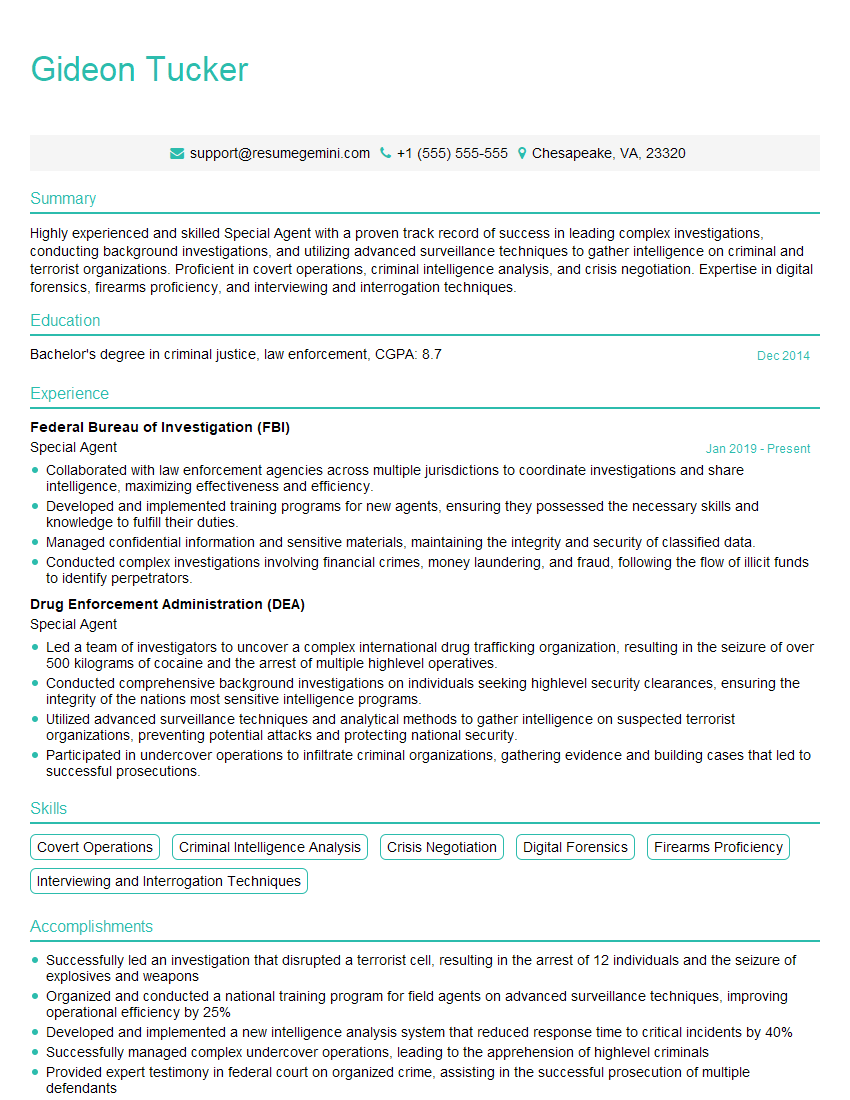
Special Agent Resume Sample
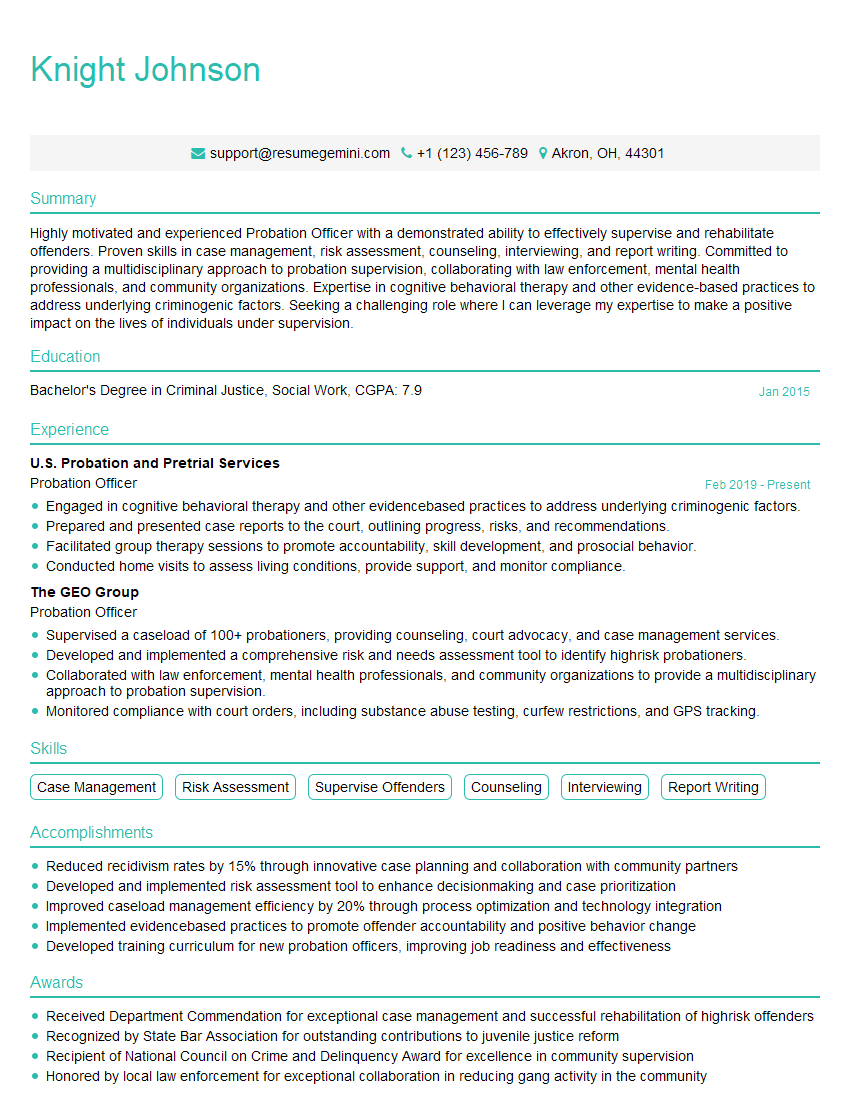
Probation Officer Resume Sample
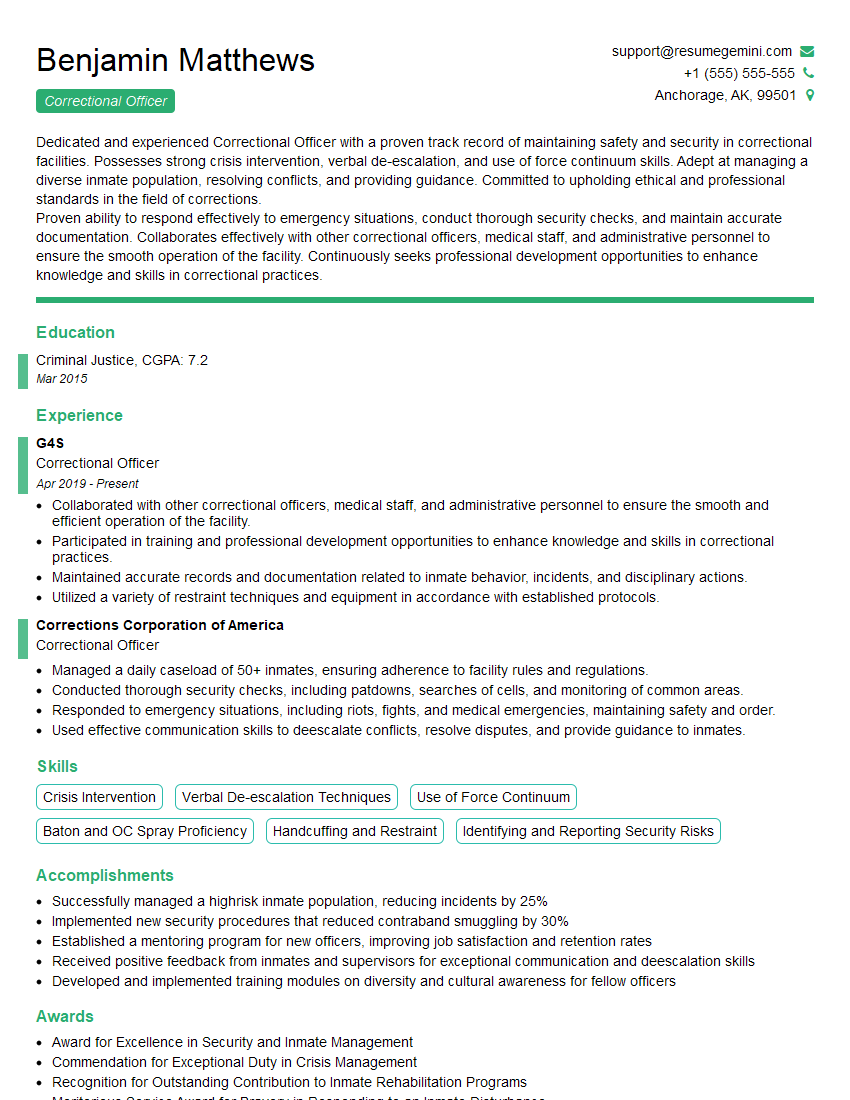
Correctional Officer Resume Sample
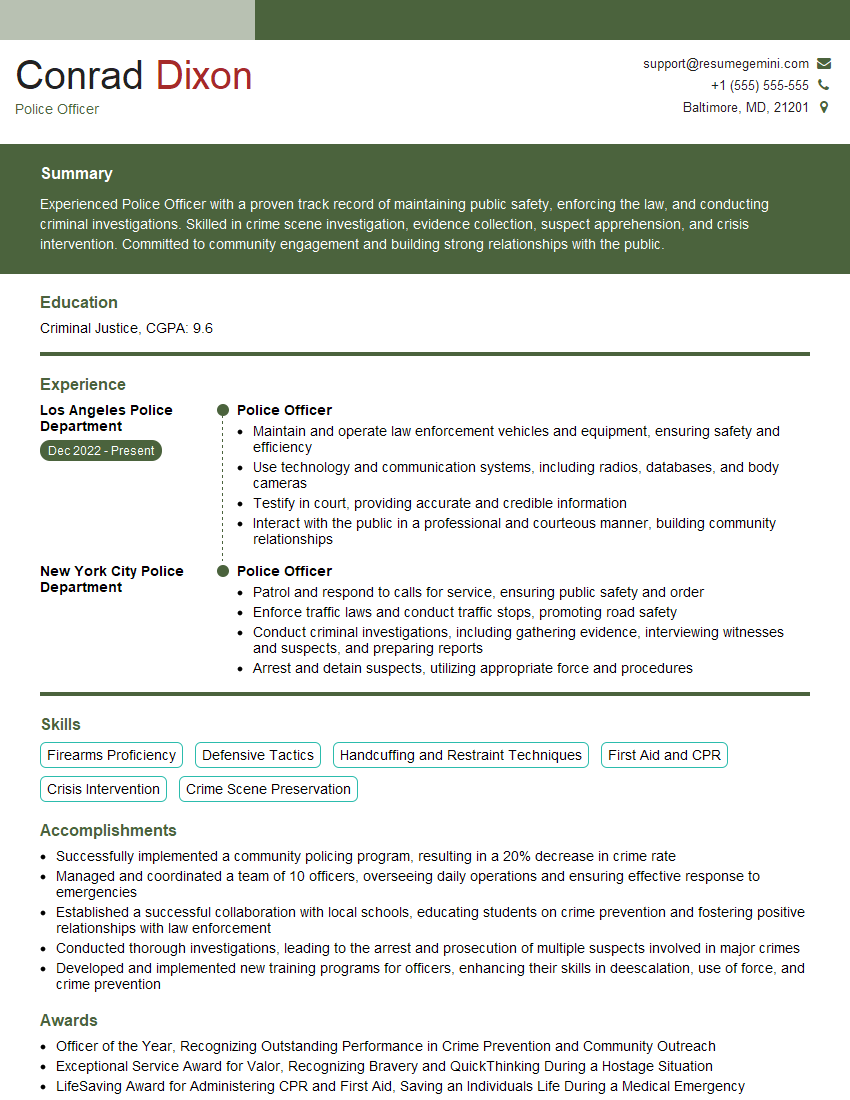
Police Officer Resume Sample
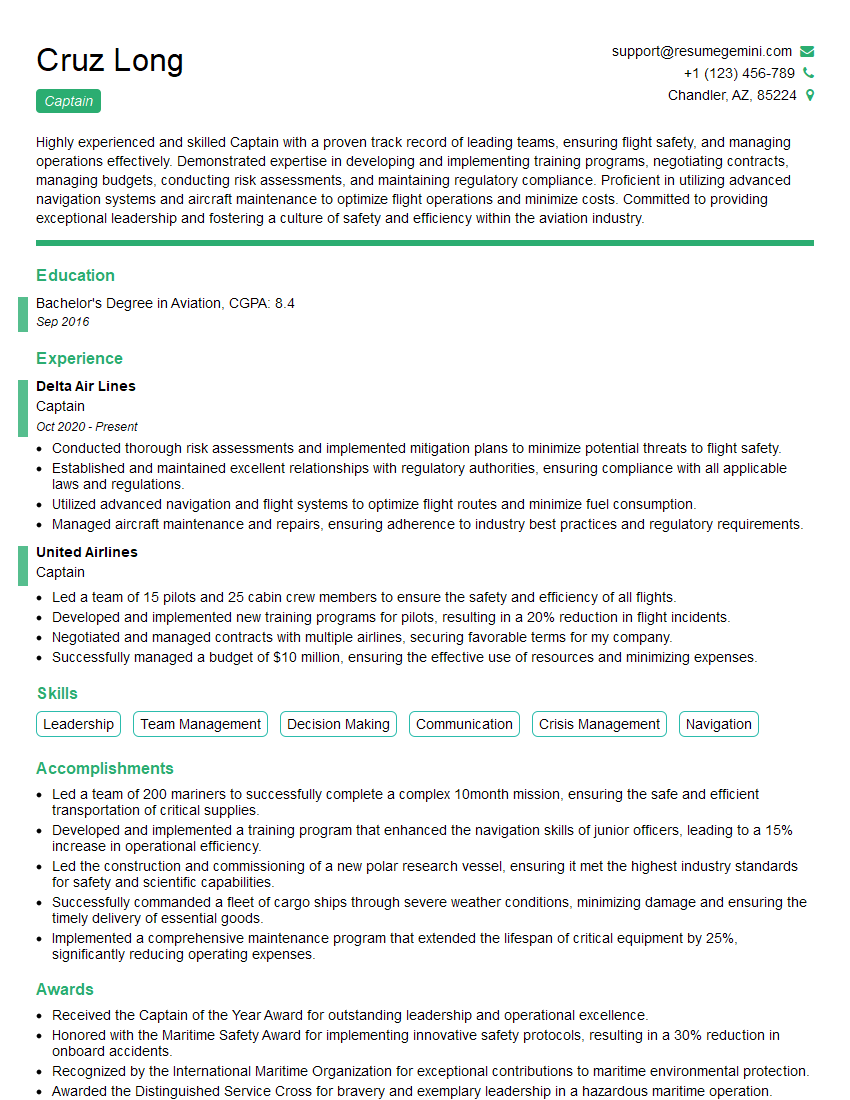
Captain Resume Sample
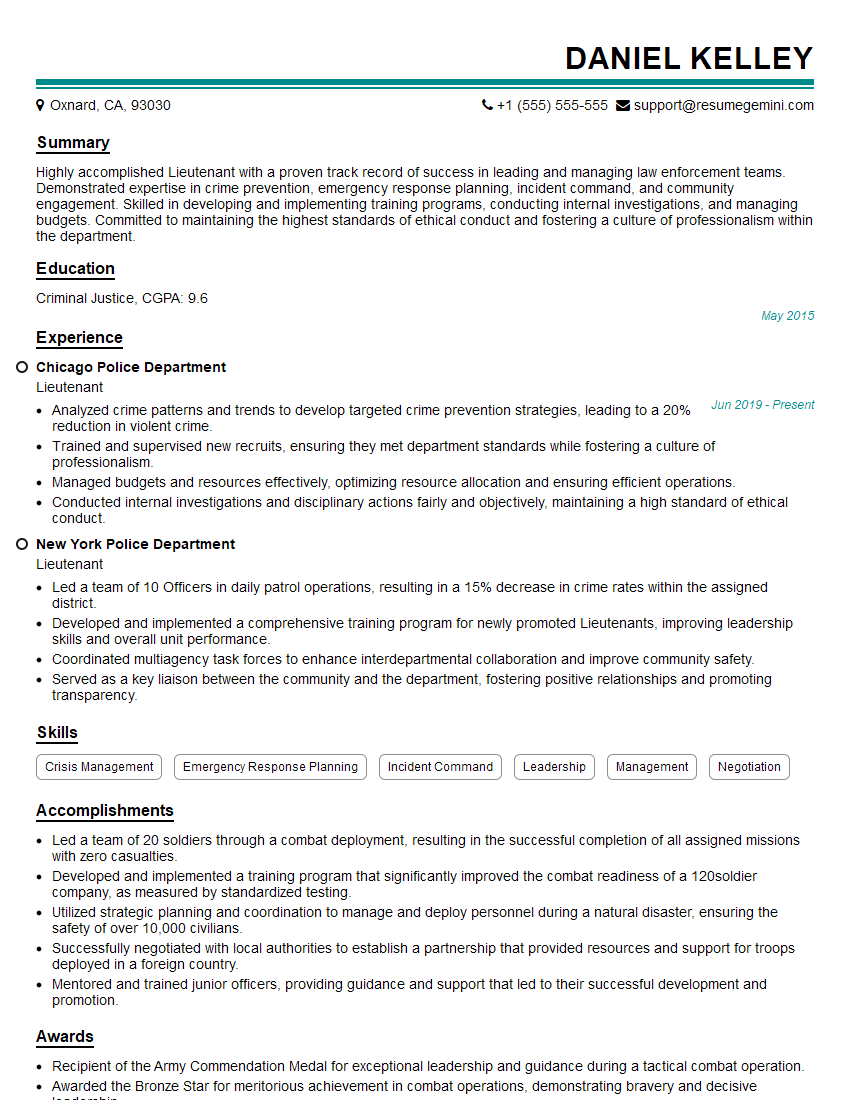
Lieutenant Resume Sample
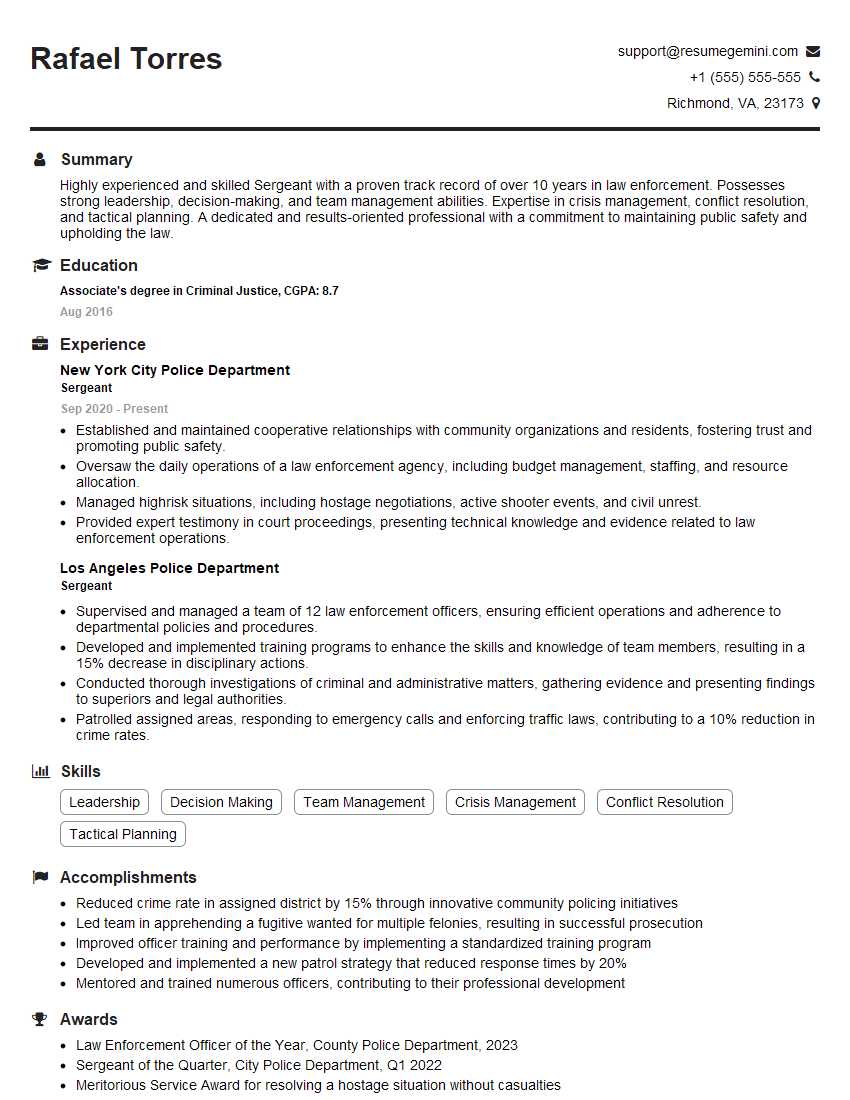
Sergeant Resume Sample
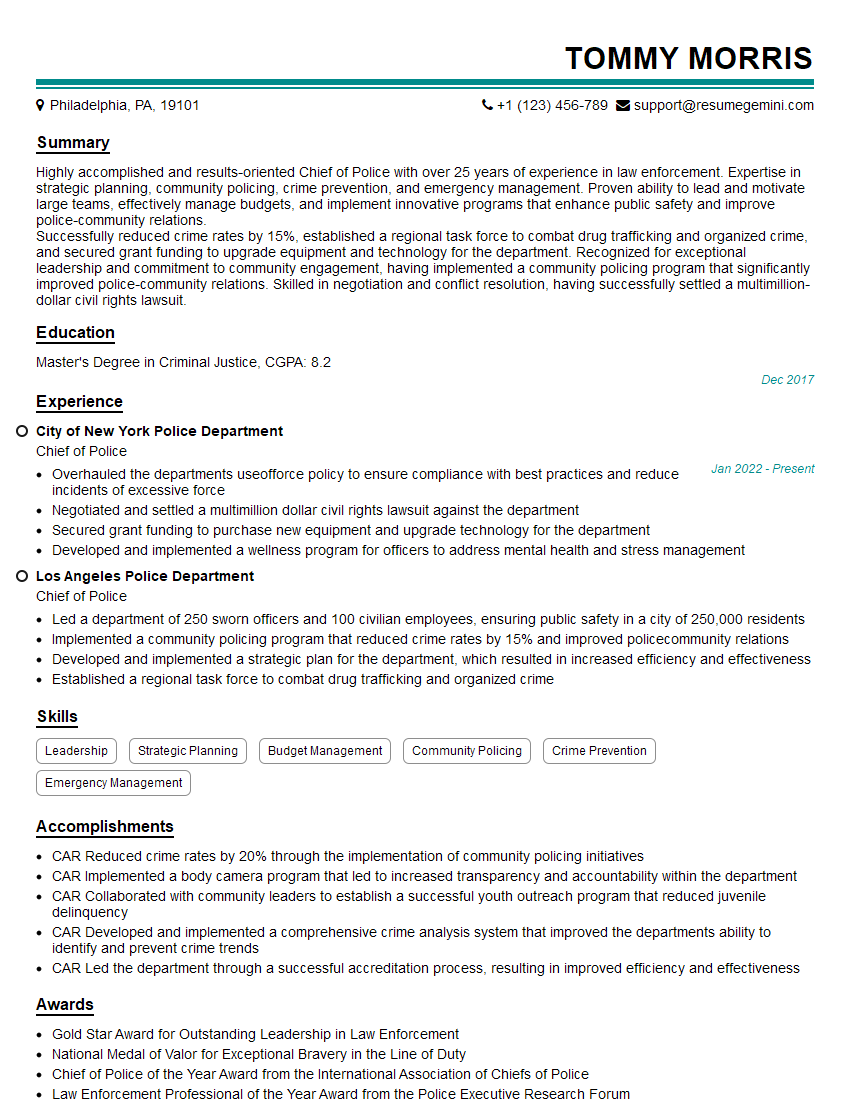
Chief of Police Resume Sample
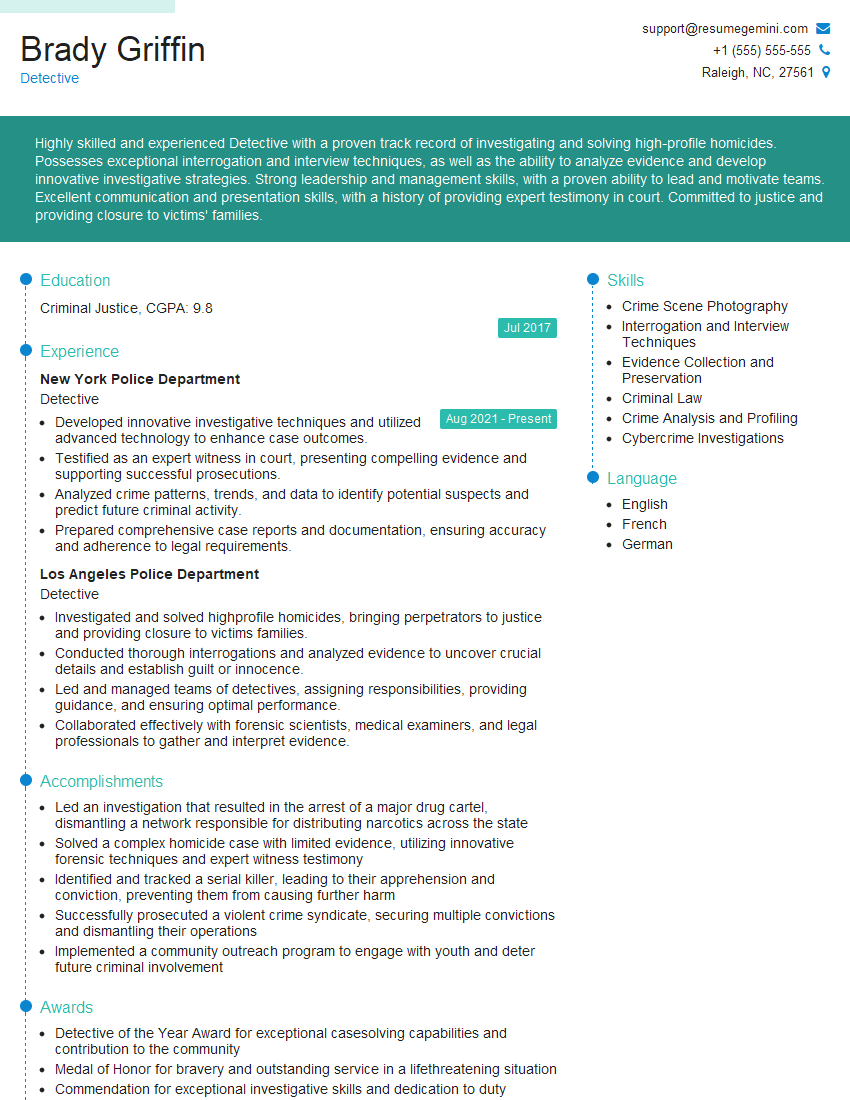
Detective Resume Sample
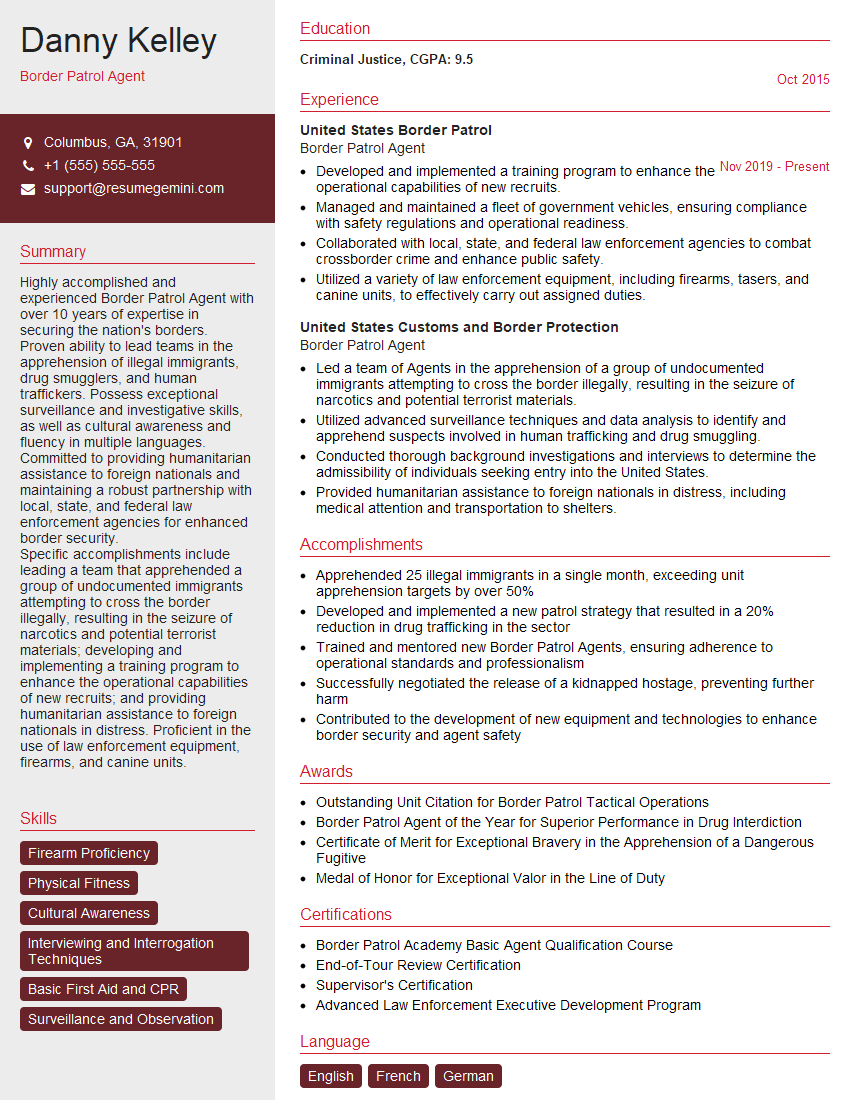
Border Patrol Agent Resume Sample
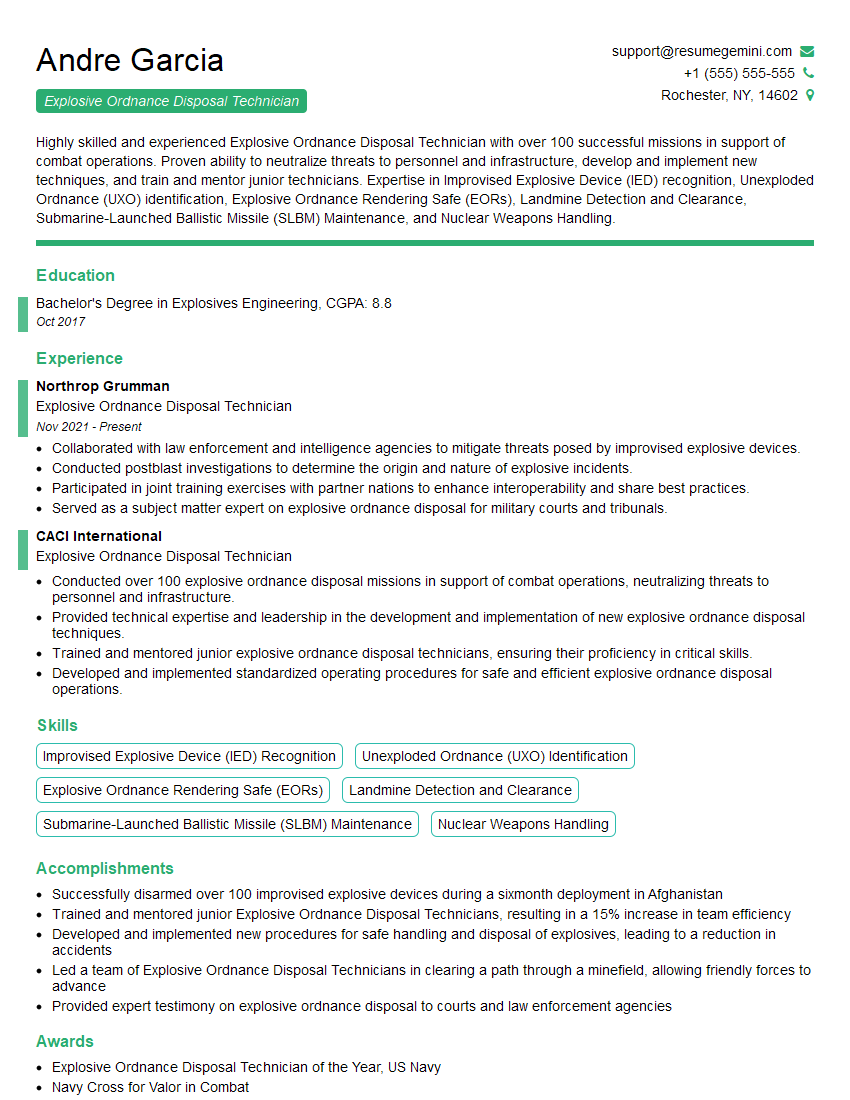
Explosive Ordnance Disposal Technician Resume Sample
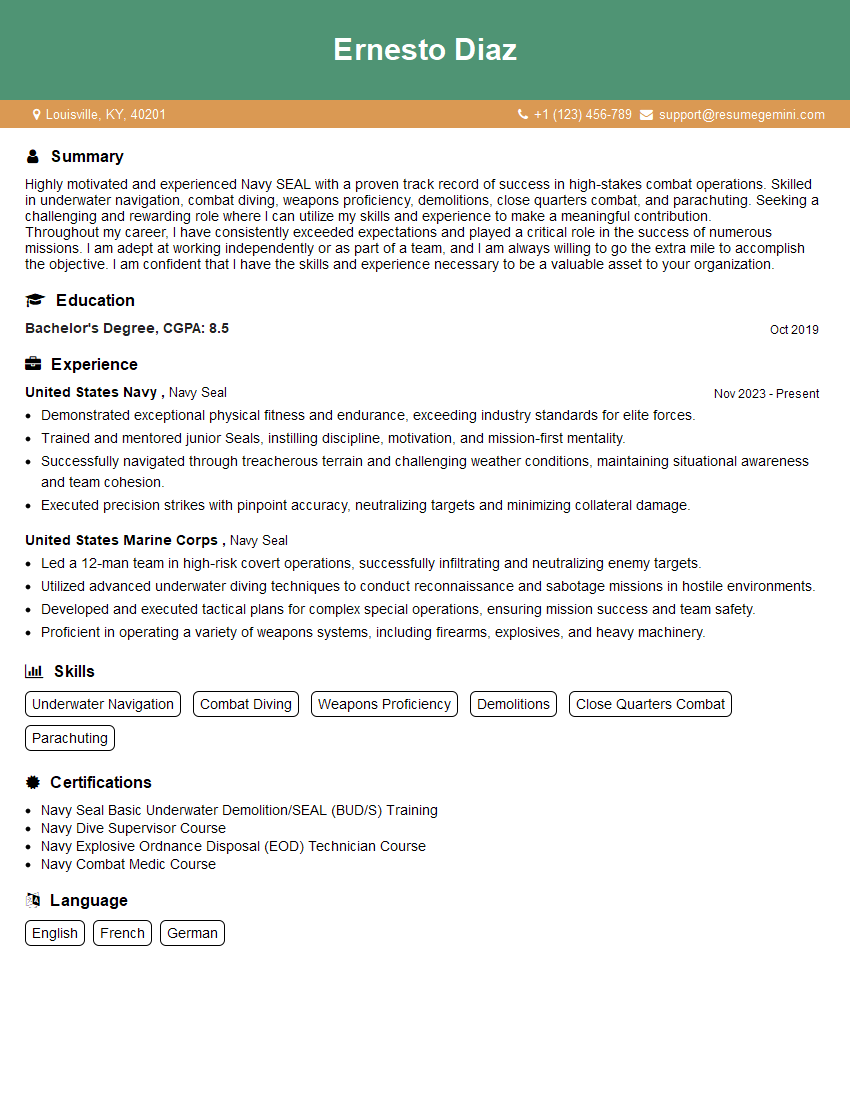
Navy Seal Resume Sample
Explore more articles
Users Rating of Our Blogs
Share Your Experience
We value your feedback! Please rate our content and share your thoughts (optional).
What Readers Say About Our Blog
Very informative content, great job.
good