The right preparation can turn an interview into an opportunity to showcase your expertise. This guide to Player Recruiting and Development interview questions is your ultimate resource, providing key insights and tips to help you ace your responses and stand out as a top candidate.
Questions Asked in Player Recruiting and Development Interview
Q 1. Describe your experience identifying and evaluating player talent.
Identifying and evaluating player talent is a multifaceted process that combines objective data analysis with subjective judgment. It’s like assembling a puzzle where each piece – physical attributes, technical skills, tactical awareness, mental fortitude, and character – contributes to the overall picture. My approach involves a systematic assessment across various touchpoints.
- Live Scouting: I attend games, tournaments, and training sessions to observe players in action, focusing on their performance under pressure and their interactions with teammates. For example, I once identified a young goalkeeper with exceptional reflexes but questionable decision-making under pressure during a high-stakes youth tournament. This highlighted the need for a tailored development plan.
- Film Analysis: I meticulously review game footage to analyze technical skills, tactical understanding, and decision-making. This allows for a detailed breakdown of strengths and weaknesses that might be missed during live observation. I utilize software that allows for slow-motion review and detailed tracking of player movements.
- Data Analysis: I leverage advanced statistics, such as passing accuracy, shot conversion rates, defensive actions, and possession metrics, to quantify player performance. This provides an objective measure of player effectiveness beyond subjective observation.
- Background Checks & Interviews: I conduct thorough background checks and interviews with players, coaches, and teammates to gain insight into their character, work ethic, and adaptability. This helps assess their potential to integrate into the team dynamic and handle the pressures of professional sports.
This multi-pronged approach allows for a comprehensive evaluation, minimizing bias and maximizing the chances of identifying players with high potential.
Q 2. What metrics do you use to assess player potential?
Assessing player potential goes beyond simple metrics; it’s about understanding the whole player. While quantitative data is crucial, qualitative assessment is equally important. Here are some key metrics I employ:
- Physical Attributes: Height, weight, speed, agility, strength, and endurance are assessed through testing and observation. For example, a basketball player’s vertical leap is crucial.
- Technical Skills: Passing accuracy, shooting percentage, dribbling skills, tackling effectiveness, and ball control are assessed using both live observation and statistical analysis.
- Tactical Awareness: Decision-making under pressure, positional sense, game intelligence, and ability to read the game are vital and are often evaluated through film review.
- Mental Fortitude: Resilience, work ethic, coachability, and competitive spirit are evaluated through interviews, background checks, and observation of their response to challenges during games.
- Character & Personality: Team player abilities, leadership qualities, and overall attitude are assessed through interviews and interaction with coaches and teammates.
- Injury History & Medical Reports: Accessing and reviewing medical history and reports is essential to assess long-term potential and avoid potential risks.
It’s important to note that no single metric defines potential. A holistic approach that considers the interplay of these factors provides the most accurate picture.
Q 3. How do you build relationships with coaches and agents?
Building strong relationships with coaches and agents is essential for effective player recruitment. It’s about establishing trust and mutual respect. I approach these relationships with transparency and professionalism.
- Regular Communication: I maintain regular contact through phone calls, emails, and in-person meetings to keep them updated on my progress and to gather valuable information.
- Networking: Attending coaching clinics, conferences, and scouting events allows me to expand my network and strengthen existing relationships.
- Providing Value: I offer honest feedback and insightful analysis, not just about their players but also about the broader landscape of the sport. This positions me as a valuable resource and builds credibility.
- Respectful Interactions: I prioritize clear, professional communication, respecting the confidentiality of sensitive information. Building trust through honesty and integrity is paramount.
- Understanding Their Needs: I take the time to understand their specific requirements and preferences when it comes to player profiles, allowing me to tailor my recommendations accordingly.
Ultimately, these relationships are built on trust, mutual respect, and a shared commitment to developing talented players.
Q 4. Explain your process for tracking player progress.
Tracking player progress involves a systematic approach that utilizes various methods to ensure a comprehensive understanding of their development. This is an ongoing process that informs future decisions regarding training, development plans, and even roster composition.
- Regular Performance Monitoring: I monitor in-game statistics, training performance data, and coach feedback on a consistent basis. This might involve attending practices regularly and reviewing game films.
- Performance Feedback Meetings: Regular meetings with players and coaches provide opportunities for detailed feedback and progress discussions. This allows for adjustments in training plans to address areas of improvement.
- Data-Driven Analysis: I use data analytics tools to track metrics over time, identifying trends and areas for improvement. This can include visual representations of performance trends to easily identify progress.
- Comparative Analysis: I compare a player’s progress against benchmarks, both internal (within the organization) and external (against league averages or similar players). This provides a context for their development.
- Injury & Health Monitoring: I collaborate with medical staff to monitor player health and injury history, ensuring that progress is not compromised by physical setbacks.
This detailed tracking allows for proactive adjustments to development strategies, ensuring players reach their full potential.
Q 5. How do you manage a large volume of player data?
Managing a large volume of player data requires a structured and efficient system. Think of it like managing a vast library – you need a robust cataloging and retrieval system. My approach involves:
- Database Management Systems (DBMS): I utilize a relational database system (like MySQL or PostgreSQL) or a specialized sports analytics platform to store and organize player data. This allows for efficient data querying and analysis.
- Data Cleaning and Validation: Data accuracy is crucial. I implement rigorous data cleaning and validation processes to ensure consistency and reliability of the information.
- Data Visualization Tools: Tools like Tableau or Power BI allow for the creation of dashboards and reports that visually represent key performance indicators (KPIs), making it easier to identify trends and patterns.
- Automation and Scripting: Using scripting languages like Python, I automate data collection, cleaning, and analysis processes, significantly reducing manual effort and improving efficiency.
- Cloud-Based Storage: Utilizing cloud-based storage solutions (like AWS or Google Cloud) provides scalable storage and enhances data security and accessibility.
This combination of technology and process allows for efficient management and analysis of large datasets, empowering data-driven decision-making.
Q 6. What is your approach to identifying undervalued players?
Identifying undervalued players requires a keen eye for detail and a willingness to go beyond the surface. It’s about finding the hidden gems, the players whose potential is underestimated by others. My approach involves:
- Deep Dive Analysis: I conduct in-depth analysis of players who might be overlooked due to size, perceived weaknesses, or lack of exposure in high-profile leagues. I focus on identifying hidden strengths and potential for improvement.
- Contextual Analysis: I consider the context of a player’s performance. A player might have lower statistics in a weaker league but demonstrate exceptional talent relative to their peers.
- Future Projection: I project a player’s future potential based on their growth trajectory and capacity for improvement. Many players improve significantly with proper coaching and training.
- Network and Information Gathering: I leverage my network of contacts to gather insider information and opinions on less-known players. This might involve talking to local coaches or attending lesser-known tournaments.
- Identifying Development Opportunities: I focus on players with clear areas for improvement that are addressable through targeted training and coaching. This highlights potential for significant growth.
This process requires patience, persistence, and a deep understanding of player development, but the rewards of finding a hidden gem can be substantial.
Q 7. How do you handle conflicting opinions within a scouting team?
Handling conflicting opinions within a scouting team requires effective communication, collaboration, and a focus on objective data. It’s crucial to remember that diverse perspectives enrich the evaluation process. My approach involves:
- Open Dialogue and Discussion: I facilitate open discussions where each scout can present their assessment and supporting evidence. This allows for a thorough examination of different viewpoints.
- Data-Driven Decision Making: I emphasize the use of objective data and metrics to support arguments. This provides a common ground for discussion and helps minimize bias.
- Collaborative Consensus Building: I guide the team towards a consensus by encouraging constructive dialogue and compromise. The goal is not to force agreement, but to find common ground.
- Second Opinions and Further Investigation: If significant disagreement persists, I may recommend additional scouting reports, film analysis, or even in-person observations to gather more data.
- Documentation and Transparency: All evaluations and discussions are carefully documented, ensuring transparency and accountability throughout the process. This also builds trust and creates a record of decision-making.
Ultimately, the goal is to leverage the collective expertise of the scouting team to arrive at the most informed and objective decision possible, even when faced with conflicting perspectives.
Q 8. Describe your experience using scouting software or databases.
My experience with scouting software and databases is extensive. I’ve utilized platforms like SportsRecruiter, NCSA, and Hudl, leveraging their features for identifying, evaluating, and tracking prospective athletes. These tools aren’t just repositories of data; they’re integral parts of a strategic recruitment process. For example, using Hudl‘s video analysis tools, I can meticulously assess a player’s technique, identifying both strengths and areas for improvement. This detailed analysis extends beyond simple highlight reels; it allows for a comprehensive evaluation of game performance, providing a much richer understanding of a prospect’s capabilities than traditional scouting methods alone. Beyond video analysis, these platforms allow for efficient organization of player profiles, including academic records and contact information, streamlining the communication and management aspects of the recruitment process. I’m proficient in utilizing the data filtering and search capabilities within these systems to refine searches based on specific criteria, such as position, GPA, test scores, and geographical location, ensuring efficient targeting of suitable candidates.
Q 9. How do you stay current on the latest player development techniques?
Staying current in player development requires a multi-pronged approach. I actively participate in professional development workshops and conferences, such as those offered by the NSCA (National Strength and Conditioning Association) and USA Track and Field. These events provide valuable insights into the latest training methodologies, injury prevention strategies, and technological advancements in sports science. I also subscribe to relevant journals and publications, including Strength and Conditioning Journal and Journal of Sports Science and Medicine, staying abreast of research findings and best practices. Furthermore, I maintain a strong network of colleagues within the field, engaging in regular discussions and knowledge sharing to learn from their experiences and diverse perspectives. Networking includes attending coaching clinics and engaging with coaches from various levels, from high school to professional organizations. Online resources like research databases (e.g., PubMed) and professional organizations’ websites are also critical for staying updated on the latest evidence-based practices. This ongoing learning ensures my development strategies remain effective and aligned with the newest scientific understanding of athlete performance.
Q 10. Explain your understanding of different player development models.
My understanding of player development models encompasses a range of approaches, from the more traditional linear model to the more contemporary integrated model. The linear model assumes a sequential progression through stages, with each stage building upon the previous one. This is a simpler model, but it doesn’t adequately account for individual variations in player development. In contrast, the integrated model acknowledges the interplay of various factors such as physical, technical, tactical, and psychological aspects, recognizing that development is multi-faceted and non-linear. I favor a holistic, integrated approach, tailoring the development plan to each athlete’s unique needs and potential. This often involves a combination of strength and conditioning programs, technical skill development, tactical training, and psychological support. For instance, a young player might focus heavily on fundamental skills and physical conditioning, while a more experienced athlete might concentrate on refining tactical awareness and mental resilience. I also consider the long-term athletic development (LTAD) model, which emphasizes age-appropriate training and periodization to optimize development over an athlete’s entire career, minimizing risk of injury and burnout.
Q 11. How do you adapt your recruiting strategy based on different sports or leagues?
Adapting my recruiting strategy across different sports and leagues requires a nuanced understanding of the specific demands of each environment. For instance, recruiting for a collegiate basketball program differs significantly from recruiting for a professional soccer team. The key differences lie in the evaluation criteria, timelines, and the overall competitive landscape. In collegiate recruiting, academic performance and character often play a greater role, while professional leagues emphasize proven performance and specific skill sets. My approach involves thoroughly researching each league’s rules and regulations, understanding the playing style and team needs, and adapting my scouting and evaluation criteria accordingly. This includes adjusting the emphasis on certain skills or physical attributes based on positional needs and league-specific requirements. For instance, the speed and agility requirements for a wide receiver in American football are drastically different from those for a center in basketball. Effective communication and networking within each sport’s community are crucial for gaining insights into the specific requirements and identifying potential candidates.
Q 12. What is your approach to player mentorship and guidance?
My approach to player mentorship is built on a foundation of open communication, trust, and mutual respect. It’s a collaborative process, not a top-down directive. I believe in fostering a supportive environment where athletes feel comfortable expressing their concerns, aspirations, and challenges. My role extends beyond just technical instruction; it includes providing guidance on academic pursuits, career planning, and personal well-being. I regularly meet with players to discuss their progress, set realistic goals, and address any obstacles they may be facing. I leverage feedback from coaches, trainers, and other support staff to create a comprehensive understanding of the player’s strengths and weaknesses. This integrated feedback allows me to provide tailored support and identify opportunities for growth. A significant aspect of mentorship involves fostering self-awareness and resilience. I encourage players to develop a strong work ethic and cultivate a positive mindset, equipping them with the tools to overcome setbacks and achieve their full potential. I view my role as helping them to become well-rounded individuals, not just successful athletes.
Q 13. How do you manage player expectations and disappointments?
Managing player expectations and disappointments is a critical aspect of the recruitment and development process. Transparency and honesty are paramount. I ensure players understand the competitive nature of the sport and that not every player will achieve their ultimate goals. Openly communicating the realistic possibilities and potential challenges helps manage expectations from the outset. When disappointment arises, such as not making a team or receiving a scholarship offer, I provide empathetic support and help players re-frame their perspective. This often involves focusing on their strengths, identifying alternative pathways, and developing a long-term plan. I encourage players to view setbacks as learning opportunities and emphasize the importance of perseverance and resilience. This often involves connecting them with other resources, such as academic advisors or sports psychologists, to provide additional support and guidance. The goal is to help players develop coping mechanisms and maintain a positive outlook, regardless of the outcome.
Q 14. Describe a time you had to make a difficult recruiting decision.
One of the most challenging recruiting decisions I faced involved two exceptionally talented players vying for the same position on our team. Both players possessed similar skill sets, but their personalities and leadership styles were quite different. Player A was a natural leader, highly vocal and assertive, while Player B was more introspective and relied on performance to speak for itself. Both were excellent prospects, but selecting one meant potentially losing out on the other. The decision wasn’t solely based on athletic merit; it also involved considering the team dynamics and the overall team culture we were trying to cultivate. After careful consideration of their strengths and weaknesses, both on and off the field, and extensive discussions with the coaching staff, we chose Player B. While Player A possessed strong leadership qualities, we felt Player B’s quiet leadership and team-first attitude would better complement the existing team dynamics and contribute to a more cohesive team environment. This decision, although difficult, ultimately proved successful, highlighting the importance of considering both individual talent and team fit in the recruitment process.
Q 15. How do you measure the success of your recruiting and development efforts?
Measuring the success of recruiting and development isn’t solely about wins and losses; it’s a multifaceted process. We use a balanced scorecard approach, tracking key performance indicators (KPIs) across several areas.
On-field Performance: This includes win-loss records at different levels (youth, college, professional), individual player statistics (goals, assists, tackles, etc.), and team rankings. For example, a significant increase in the team’s goal differential over a season could indicate the success of our recruitment and development strategies.
Player Progression: We meticulously monitor individual player development, tracking metrics like skill improvement, physical fitness gains, and psychological maturity. We use progress reports, coach evaluations, and performance analytics to gauge this. A clear example would be tracking a young player’s improvement in passing accuracy or shot conversion rate over a training cycle.
Player Retention: The ability to retain players, especially high-potential recruits, speaks volumes about the quality of our programs and coaching. A high retention rate indicates a supportive and effective development environment. We measure this by calculating the percentage of players who stay with the program year-over-year.
Alumni Success: Tracking the success of players who have moved on to higher levels of competition – whether professionally or in other walks of life – demonstrates the effectiveness of our long-term player development.
Return on Investment (ROI): While less tangible, this involves calculating the cost of recruitment and development against the benefits, such as wins, sponsorships, and enhanced reputation.
By combining these KPIs, we gain a holistic understanding of our program’s effectiveness, allowing for data-driven adjustments and improvements.
Career Expert Tips:
- Ace those interviews! Prepare effectively by reviewing the Top 50 Most Common Interview Questions on ResumeGemini.
- Navigate your job search with confidence! Explore a wide range of Career Tips on ResumeGemini. Learn about common challenges and recommendations to overcome them.
- Craft the perfect resume! Master the Art of Resume Writing with ResumeGemini’s guide. Showcase your unique qualifications and achievements effectively.
- Don’t miss out on holiday savings! Build your dream resume with ResumeGemini’s ATS optimized templates.
Q 16. How do you handle budget constraints in player recruitment?
Budget constraints are a reality in player recruitment. Our strategy focuses on efficiency and strategic investment rather than simply throwing money at the problem.
Prioritization: We meticulously identify target players based on potential, fit within the team’s strategy, and affordability. This might involve focusing on local talent or players from less prominent leagues who offer a higher return on investment.
Strategic Partnerships: We build strong relationships with scouting networks, youth clubs, and even rival teams for information sharing and collaborative scouting. This can provide access to talented players at a reduced cost.
Data-Driven Decision Making: Advanced analytics help us refine our search and identify undervalued players with high potential for growth. This minimizes the risk of overspending on players who may not deliver the expected results.
Creative Compensation Packages: We explore creative contract negotiations that may include performance-based bonuses, deferred payments, or signing bonuses spread over several years. This can significantly reduce the upfront financial burden while ensuring we attract and retain top talent.
Development-focused Approach: Rather than simply acquiring expensive, established players, we invest significantly in player development, enhancing the value of our existing roster and making them more competitive. This represents a longer-term strategy but can prove highly cost-effective in the long run.
By combining these approaches, we can maximize our limited resources, securing high-quality players without exceeding our budget.
Q 17. Describe your experience working with diverse player populations.
Working with diverse player populations is crucial and enriching. My experience involves fostering an inclusive environment where every player feels valued, respected, and empowered to reach their full potential.
Cultural Sensitivity Training: I actively participate in and promote cultural sensitivity training for coaching staff to understand and respect players from different cultural backgrounds. This includes learning about their customs, beliefs, and communication styles.
Multilingual Communication: Whenever possible, we utilize interpreters or multilingual staff to bridge communication gaps and avoid misunderstandings. This ensures clear and effective communication with players from diverse linguistic backgrounds.
Inclusive Training Environments: We create training environments that cater to a variety of learning styles and physical abilities. This includes adapting training methods to accommodate different physical characteristics and personal preferences.
Mentorship Programs: We leverage mentorship programs, pairing experienced players with newer ones, particularly those who might need additional support in navigating a new culture or environment. This helps foster a sense of belonging and camaraderie.
Open Communication Channels: We establish open and trusting communication channels to ensure players feel comfortable expressing their needs and concerns. This includes regular feedback sessions and opportunities for informal interaction.
A successful example was when we recruited a player from a very different cultural background. Through proactive communication and cultural sensitivity training, we ensured a smooth transition, and the player thrived within the team environment.
Q 18. How do you identify and address potential player burnout?
Player burnout is a serious concern that can significantly impact performance and well-being. Early identification and proactive intervention are key.
Monitoring Training Load: We meticulously track training volume, intensity, and recovery time to avoid overtraining. We utilize technology like wearable sensors to objectively monitor player exertion and recovery.
Psychological Assessment: Regular psychological assessments help gauge player morale, stress levels, and motivation. Changes in behavior or performance could be early warning signs of burnout.
Open Communication: We encourage open communication between players and coaching staff. This includes regularly checking in with players about their physical and mental state.
Individualized Training Plans: We develop individualized training plans that balance the demands of competition with sufficient rest and recovery time. This recognizes that every player has different needs and thresholds for training load.
Access to Support Services: We provide access to sports psychologists, physiotherapists, and other support professionals to help players manage stress and promote mental well-being.
Time Off and Rest: Scheduled rest days and periods of reduced training intensity are crucial for physical and mental recovery. We incorporate these strategically throughout the season.
Ignoring burnout can lead to injuries, decreased performance, and even career-ending consequences. Proactive management is vital for player longevity and success.
Q 19. What are some common mistakes to avoid in player recruitment?
Avoiding mistakes in player recruitment is vital for long-term success. Some common pitfalls include:
Relying solely on statistics: While statistics are important, they don’t tell the whole story. We need to evaluate a player’s character, work ethic, and overall suitability for the team environment.
Ignoring character and personality: Recruiting a talented player with a poor attitude can negatively impact team dynamics and morale. Character assessment is as important as skill evaluation.
Failing to consider long-term fit: We must consider how well a player aligns with the team’s long-term goals and playing style. Focusing only on short-term gains can be detrimental.
Neglecting player development plans: A recruitment strategy must encompass detailed plans for individual player development, outlining clear goals and a pathway for growth.
Overlooking medical history and fitness levels: Thorough medical evaluations are necessary to identify potential health issues that could hinder a player’s career.
Ignoring the importance of scouting: Thorough scouting, involving multiple perspectives and detailed observation, is crucial for accurately assessing a player’s potential.
By carefully avoiding these common mistakes, we can significantly improve our recruiting success and build a stronger, more sustainable team.
Q 20. How do you ensure player welfare and ethical considerations are prioritized?
Player welfare and ethical considerations are paramount. We prioritize these principles throughout our recruitment and development processes.
Safeguarding Policies: We have robust safeguarding policies in place to protect players from exploitation and abuse. This includes strict background checks on all staff and volunteers.
Fair Compensation and Contracts: We ensure players receive fair compensation and that contracts are clear, transparent, and protect their rights.
Education and Awareness: We provide players with education on their rights, responsibilities, and available support services. This includes workshops and individual counseling sessions.
Mental Health Support: We provide access to mental health services and promote a culture of open communication to encourage players to seek help when needed.
Ethical Recruitment Practices: We adhere to strict ethical recruitment practices, ensuring transparency and fair treatment of all players, regardless of their background or experience.
Compliance with Regulations: We ensure full compliance with all relevant regulations and guidelines concerning player welfare and ethical conduct.
Our commitment to player welfare is not just a policy; it’s a fundamental principle guiding all our actions.
Q 21. How do you leverage analytics to improve recruiting and development?
Leveraging analytics significantly enhances our recruiting and development strategies. We use data to make more informed decisions, identify hidden potential, and track progress objectively.
Scouting Data Analysis: We collect and analyze data from scouting reports, including player statistics, video footage, and performance metrics. This helps us identify players with high potential who might be overlooked using traditional methods.
Performance Tracking: We utilize performance tracking systems to monitor player progress in training and competition. This includes data on speed, agility, strength, and technical skills. We identify areas needing improvement, allowing for targeted development interventions.
Predictive Modeling: We utilize predictive modeling to forecast player performance based on various factors, such as physical attributes, technical skills, and past performance. This helps in identifying high-potential players.
Injury Risk Prediction: Analytics can help predict the likelihood of injuries based on training load, player history, and other factors. This enables proactive injury prevention strategies.
Recruitment Optimization: We analyze historical recruitment data to identify successful patterns and improve our targeting of potential recruits. This informs our recruitment strategies to maximize ROI.
By integrating data-driven insights into every stage of the process, we improve efficiency and effectiveness in recruiting and developing high-performing athletes.
Q 22. Describe your experience with international player recruitment.
International player recruitment requires a multifaceted approach, blending scouting networks, cultural understanding, and logistical expertise. My experience involves extensive travel to various countries, attending international tournaments and collaborating with local scouts and agents. This goes beyond simply identifying talent; it includes navigating visa requirements, understanding cultural nuances in communication and negotiation, and assessing a player’s ability to adapt to a new environment and playing style. For example, while scouting in South America, I not only evaluated players’ technical skills but also assessed their adaptability to a different training regime and competitive intensity compared to their local leagues. This involved building trust with players and their families, understanding their motivations, and managing expectations about their future.
I’ve successfully recruited players from diverse backgrounds, demonstrating a strong track record of identifying and onboarding international talent who have seamlessly integrated into the team. My approach involves thorough due diligence, including background checks and thorough video analysis beyond highlight reels, to ensure alignment with the team’s culture and long-term goals.
Q 23. How do you create and maintain a positive team culture in a scouting department?
A positive scouting department culture is paramount for success. I foster this by promoting open communication, collaboration, and mutual respect. Regular team meetings, where everyone’s input is valued, are crucial. I encourage constructive criticism and knowledge sharing through peer reviews of scouting reports and collaborative discussions on potential recruits. This collaborative approach ensures that all scouts feel empowered to voice their opinions, fostering a sense of ownership and collective responsibility. Transparency in decision-making processes is also essential; explaining the rationale behind recruitment choices ensures that the team understands the strategic direction.
Beyond the professional sphere, team-building activities, such as informal lunches or outings, help build camaraderie and strengthen bonds. Recognizing and rewarding individual and team achievements is vital in reinforcing positive behaviors and maintaining morale. For instance, I instituted a ‘Scout of the Month’ award to celebrate exceptional contributions, boosting motivation and fostering a sense of friendly competition.
Q 24. How do you prioritize recruiting needs based on team goals?
Prioritizing recruiting needs hinges on aligning scouting efforts with the team’s overall strategic goals. This begins with a thorough analysis of the team’s current roster, identifying weaknesses and areas needing improvement. This assessment involves considering factors like player age, skillsets, position needs, and projected future needs. Then, we define specific recruiting targets based on these identified gaps. This prioritization process is often visualized using a matrix, prioritizing needs based on their urgency and impact on team performance. For example, if the team is struggling defensively, then acquiring a high-impact defender becomes a top priority, potentially even ahead of other needed roles.
Furthermore, the timeline is crucial; immediate needs, such as filling a roster spot due to injury, have a higher priority than long-term developmental targets. This structured approach ensures that scouting efforts are focused and efficient, maximizing the return on investment in terms of player acquisition.
Q 25. Explain your understanding of NCAA or other relevant governing regulations.
My understanding of NCAA regulations, including those pertaining to amateurism, recruiting violations, and eligibility requirements, is comprehensive. I’m acutely aware of the strict rules surrounding contact with prospective student-athletes, including permissible communication methods, permissible recruiting activities, and the limitations on providing benefits. I also have a detailed understanding of the academic requirements for eligibility. I’m intimately familiar with the implications of violations, including sanctions that can significantly impact the program. This includes a deep understanding of the different regulations pertaining to international players and their eligibility for NCAA competition.
My approach is proactive; I maintain up-to-date knowledge of any rule changes and ensure that all recruitment activities strictly comply with NCAA regulations. I have developed and implemented compliance protocols within my previous roles to mitigate the risk of violations.
Q 26. Describe your experience negotiating player contracts or scholarships.
Negotiating player contracts or scholarships involves a delicate balance between securing the desired talent and working within budgetary constraints. My experience encompasses a wide range of scenarios, from negotiating multi-year contracts with professional athletes to securing scholarships for student-athletes. My approach is collaborative and fair, aiming to establish mutually beneficial agreements. I prioritize clear and transparent communication, ensuring that all parties understand the terms and conditions.
I’ve successfully navigated complex negotiations, considering various factors such as player performance, market value, future potential, and the team’s financial resources. For instance, in a recent negotiation with a promising high school prospect, I skillfully balanced the player’s expectations with the team’s budget by offering a combination of scholarship funds, guaranteed playing time, and potential for future contract incentives. This approach resulted in a successful agreement that benefited both parties.
Q 27. How do you adapt your communication style to different personalities and audiences?
Effective communication is key to success in player recruitment. My ability to adapt my communication style to different personalities and audiences is crucial. I tailor my approach based on the individual’s communication preferences and level of understanding, adjusting my vocabulary, tone, and delivery as needed. With younger players, I use a more supportive and encouraging approach, focusing on their development and potential. With experienced players or agents, I use a more direct and professional style, focusing on strategic objectives and mutual benefits.
I’m proficient in both written and verbal communication, utilizing a variety of tools and methods to reach different audiences. I use emails for formal communication, phone calls for informal conversations, and in-person meetings for building rapport and trust. For instance, I might use a formal presentation for a board meeting, while a casual conversation might be better suited to engage with a potential recruit.
Q 28. What are your salary expectations for this role?
My salary expectations for this role are commensurate with my experience, skills, and the market value for a player recruitment and development professional with my qualifications. I am open to discussing a competitive compensation package that reflects the responsibilities and challenges associated with this position. I would be happy to provide further details on my salary expectations once I have a better understanding of the full scope of the role and the organization’s compensation structure.
Key Topics to Learn for Player Recruiting and Development Interview
- Identifying and Assessing Talent: Understanding scouting methods, performance analysis techniques, and the use of data analytics to evaluate player potential across various skillsets and positions.
- Recruitment Strategies: Developing and implementing effective recruitment plans, including networking, utilizing databases, attending showcases and tournaments, and managing relationships with coaches, agents, and players.
- Player Development Programs: Designing and implementing training programs tailored to individual player needs and focusing on skill development, physical conditioning, and mental fortitude. This includes understanding various training methodologies and periodization.
- Budget Management and Resource Allocation: Prioritizing player recruitment and development investments, balancing costs with potential returns, and effectively managing resources within budgetary constraints.
- Legal and Compliance: Navigating NCAA rules, international transfer regulations, and other legal frameworks impacting player recruitment and development. Understanding contract negotiation principles is also vital.
- Building Relationships: Cultivating strong relationships with players, coaches, parents/guardians, and other stakeholders. Effective communication and conflict resolution skills are key.
- Performance Monitoring and Evaluation: Tracking player progress, analyzing performance data, and adjusting training programs to maximize individual and team success. This includes understanding statistical analysis and performance metrics.
- Long-Term Vision & Strategy: Aligning player recruitment and development with the overall strategic goals of the organization, ensuring sustainable success.
Next Steps
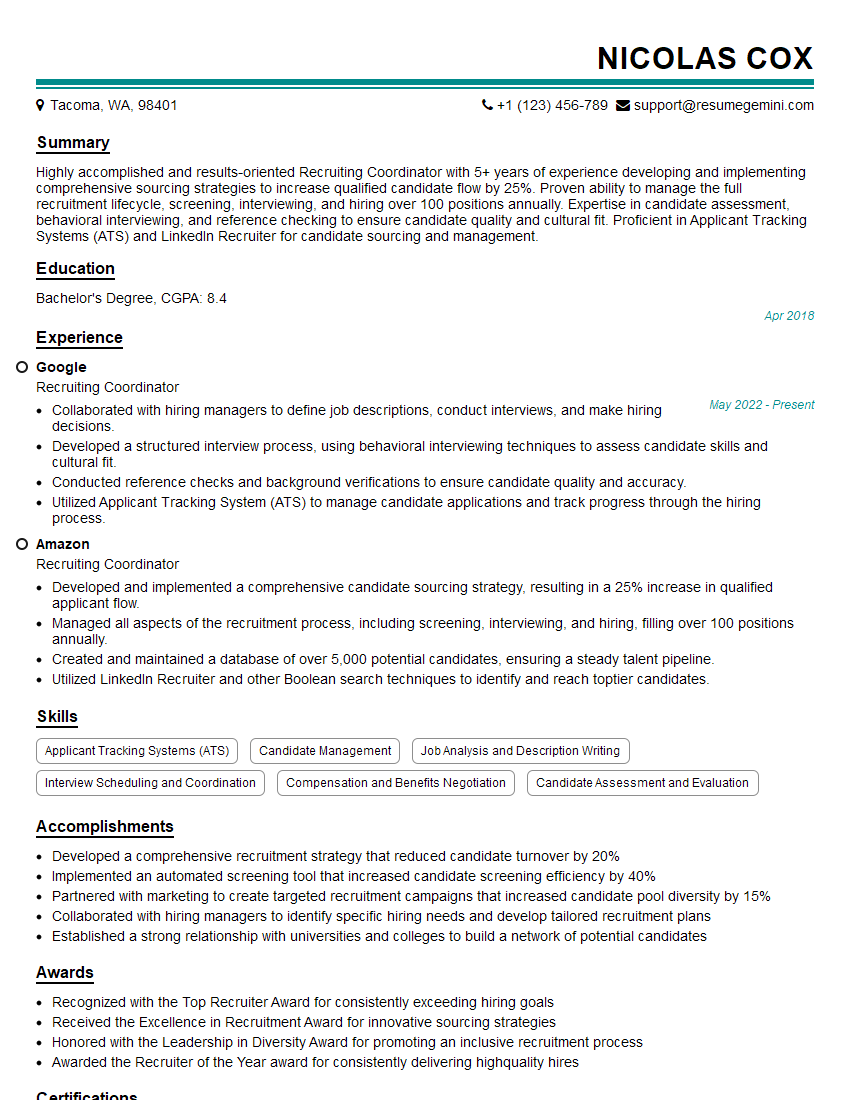
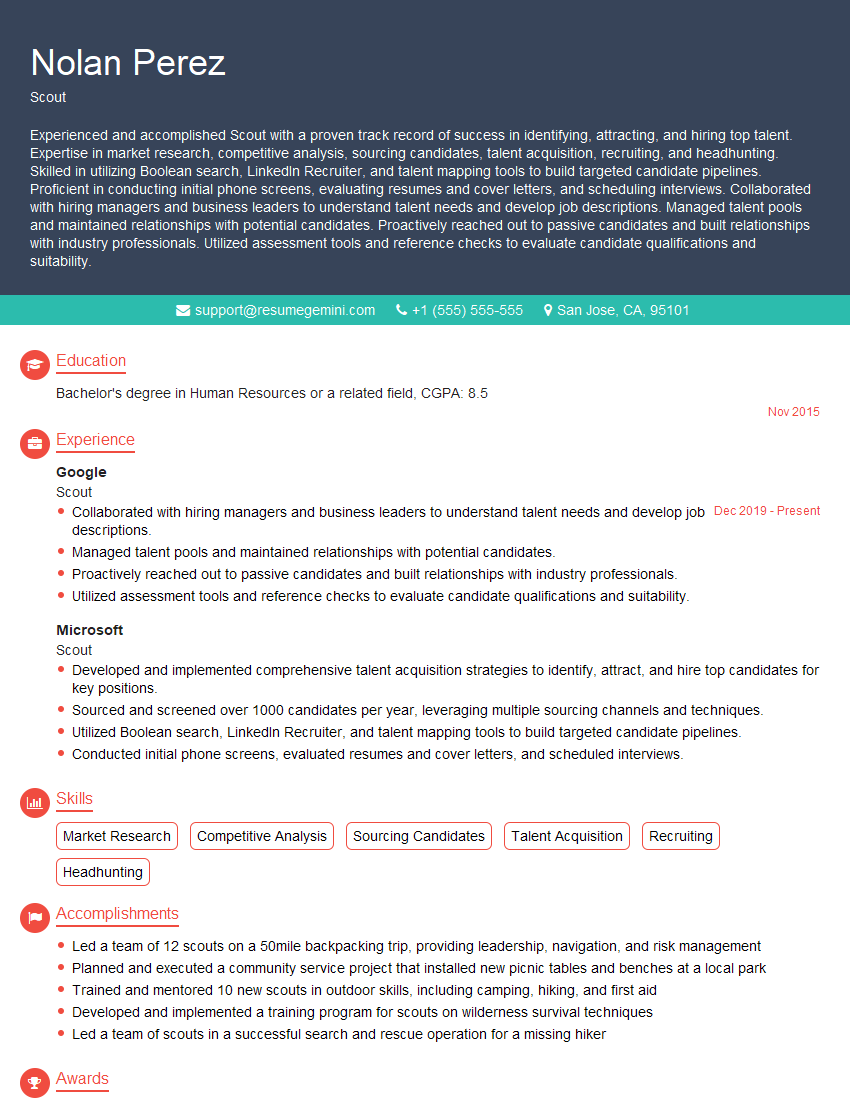
Mastering Player Recruiting and Development is crucial for a thriving career in sports. It demonstrates a comprehensive understanding of talent identification, strategic planning, and player growth, leading to higher-level roles and greater impact within the industry. To significantly boost your job prospects, create an ATS-friendly resume that showcases your skills and experience effectively. ResumeGemini is a trusted resource to help you build a professional and impactful resume. Examples of resumes tailored to Player Recruiting and Development are available to guide you, ensuring your application stands out.
Explore more articles
Users Rating of Our Blogs
Share Your Experience
We value your feedback! Please rate our content and share your thoughts (optional).
What Readers Say About Our Blog
Very informative content, great job.
good