Feeling uncertain about what to expect in your upcoming interview? We’ve got you covered! This blog highlights the most important Cargo and Deck Operations interview questions and provides actionable advice to help you stand out as the ideal candidate. Let’s pave the way for your success.
Questions Asked in Cargo and Deck Operations Interview
Q 1. Explain the different types of cargo securing methods.
Cargo securing methods are crucial for preventing damage and ensuring safety at sea. They vary depending on the type of cargo and the vessel’s characteristics. Broadly, they can be categorized into:
- lashing: This involves using strong straps, chains, or wire ropes to secure cargo to the deck or within containers. Think of it like tying down a package in your car, but on a much larger scale and with specialized equipment. Different types of lashing exist, including tensioned lashings (using turnbuckles for controlled tension), and various knotting techniques to ensure secure fastening.
- wedging: This technique utilizes wooden or other material wedges to fill gaps between cargo units, preventing shifting during transit. It’s like using blocks to support a stack of boxes, preventing them from collapsing.
- blocking and bracing: This involves using wooden or steel blocks and bracing materials (like timber or steel beams) to create a rigid structure supporting the cargo. This is particularly important for heavy or oddly shaped cargo, providing additional stability and preventing movement.
- container securing: Containers are secured using twistlocks that connect them to the ship’s deck, ensuring they remain firmly in place. These twistlocks are designed to withstand significant stress. Proper stacking and securing of containers within the ship’s cells are equally crucial.
- dunnage: This is the use of protective materials like wood, foam, or other padding to prevent cargo damage from rubbing, impacting, or shifting. It’s like using bubble wrap to protect fragile items during shipping.
The choice of securing method depends on factors like cargo weight, dimensions, and inherent stability, as well as sea conditions and the type of vessel.
Q 2. Describe your experience with lashing and securing different cargo types.
Throughout my career, I’ve handled a wide variety of cargo, from heavy machinery and steel coils secured using heavy-duty lashings and strongbacks, to delicate electronics requiring careful dunnaging and bracing within containers. For instance, I recall securing a shipment of wind turbine blades, which required specialized cradles and lashing systems due to their length and fragility. The process involved meticulous planning, ensuring the correct lashing points were used and tension levels were accurately monitored. With breakbulk cargo, I’ve employed a combination of blocking and bracing, wedging, and lashing, often needing to adapt my methods depending on the cargo’s unique characteristics. For containerized cargo, my focus was on proper stacking plans, verifying twistlock engagement, and ensuring the containers were adequately secured to withstand the stresses of sea travel. Each type of cargo requires a unique approach, demanding a deep understanding of the specific hazards and the most effective securing techniques.
Q 3. How do you ensure compliance with SOLAS regulations regarding cargo?
SOLAS (Safety of Life at Sea) regulations are paramount in cargo operations. To ensure compliance, we meticulously follow a multi-layered approach. This includes:
- Pre-loading surveys: Thorough inspections of the cargo and the vessel’s cargo spaces to identify potential hazards and ensure suitability for carriage.
- Cargo securing plans: Detailed plans outlining the chosen securing methods, including lashing patterns, blocking and bracing designs, and the quantity and type of securing materials used. These plans are reviewed and approved by the designated officer.
- Documentation: Maintaining comprehensive records of all cargo operations, including securing plans, inspections, and any issues encountered. This documentation is crucial for audits and demonstrating compliance.
- Regular inspections: Carrying out frequent inspections during the voyage to ensure the cargo remains secure. This involves checking lashings for tightness, examining for any signs of damage or shifting, and addressing any issues promptly.
- Training and competency: Ensuring all personnel involved in cargo handling are adequately trained and competent in following safety procedures and SOLAS regulations. This includes understanding the specific requirements for different cargo types.
Non-compliance can lead to serious consequences, including fines, delays, and potential safety hazards. A proactive and well-documented approach is essential to maintaining compliance.
Q 4. What are the key safety procedures for cargo handling?
Safety is paramount in cargo handling. Key procedures include:
- Risk assessment: Identifying potential hazards associated with the cargo and the handling process before commencing any work.
- Personal Protective Equipment (PPE): Ensuring all personnel wear appropriate PPE, such as safety helmets, gloves, and high-visibility clothing.
- Safe working practices: Following established procedures for lifting, moving, and securing cargo, using appropriate equipment and techniques to prevent accidents.
- Communication: Maintaining clear and effective communication among all personnel involved in the cargo handling process, using hand signals, radios, and other communication tools as needed.
- Emergency procedures: Establishing and practicing emergency procedures, such as procedures for dealing with cargo shifting, equipment malfunctions, or personnel injuries.
- Housekeeping: Maintaining a clean and organized work environment to prevent slips, trips, and falls.
A culture of safety, where reporting near misses and hazards is encouraged, is crucial for minimizing risks and maintaining a safe working environment.
Q 5. Explain the process of a cargo inspection.
A cargo inspection is a systematic process to verify the cargo’s condition, quantity, and compliance with documentation. It involves:
- Visual inspection: A thorough examination of the cargo’s external condition, checking for any damage, signs of leakage, or unusual characteristics.
- Quantity verification: Checking the quantity of the cargo against the shipping documents, using measuring tools and comparing with packing lists and manifests.
- Documentation review: Verifying that all necessary documentation is present and accurate, including bills of lading, certificates of origin, and any special permits for dangerous goods.
- Sampling (if required): Taking samples of the cargo for testing or analysis, if necessary, to verify quality or composition.
- Stowage verification: Checking the cargo’s stowage plan to make sure it’s appropriate and complies with safety and stability requirements.
- Reporting: Creating a detailed report of the inspection findings, noting any discrepancies or issues.
The level of detail in the inspection depends on the type of cargo and the specific requirements.
Q 6. How do you manage cargo weight distribution on a vessel?
Managing cargo weight distribution is critical for vessel stability and safety. This involves:
- Stowage planning: Creating a detailed plan outlining the placement of cargo within the vessel, considering weight, center of gravity, and the vessel’s structural limitations. Heavier cargo should generally be placed lower in the vessel.
- Weight calculations: Accurately calculating the weight of each cargo unit and its location on the vessel using specialized software or manual calculations. This information is crucial for determining the vessel’s overall center of gravity.
- Stability calculations: Using stability software or manual methods to calculate the vessel’s stability characteristics under various loading conditions. This ensures that the vessel remains stable and within safe operating limits.
- Trim and list control: Adjusting cargo placement to achieve the desired trim (the difference in draft between the bow and stern) and list (the angle of tilt of the vessel). Proper trim and list are crucial for safe and efficient sailing.
- Monitoring: Continuously monitoring the vessel’s stability throughout the voyage, making adjustments as needed to compensate for fuel consumption and cargo shifting.
Incorrect weight distribution can lead to instability, stress on the vessel’s structure, and potentially dangerous situations.
Q 7. Describe your experience with dangerous goods handling and regulations.
Handling dangerous goods requires strict adherence to international and national regulations, primarily the IMDG Code (International Maritime Dangerous Goods Code). My experience includes:
- Classification and segregation: Correctly classifying dangerous goods according to their hazard class and ensuring proper segregation to minimize the risk of interaction between incompatible substances.
- Packaging and labeling: Verifying that dangerous goods are packaged and labeled according to the IMDG Code requirements, with appropriate markings indicating the hazard class and UN number.
- Documentation: Preparing and reviewing the necessary documentation, including the dangerous goods declaration and ensuring it accurately reflects the cargo’s characteristics and compliance with regulations.
- Stowage: Following specific stowage guidelines for dangerous goods, which often involves segregating them from other cargo and placing them in designated areas of the vessel.
- Emergency response: Being familiar with emergency response procedures for incidents involving dangerous goods, including procedures for containment and evacuation.
I’ve handled various dangerous goods, from flammable liquids and gases to corrosive substances and explosives, always prioritizing safety and strict adherence to regulations. A single mistake in handling dangerous goods can have catastrophic consequences.
Q 8. How do you handle cargo damage or loss?
Cargo damage or loss is a serious issue with significant financial and reputational consequences. Handling it effectively requires a systematic approach, starting with immediate documentation and investigation.
- Immediate Action: Upon discovery, I immediately secure the affected area to prevent further damage and take photographs and videos as evidence. I also note the condition of the surrounding cargo.
- Investigation: A thorough investigation is conducted to determine the cause of the damage or loss. This might involve examining the cargo itself, the packaging, the stowage plan, and the handling procedures. We might need to involve surveyors or external experts.
- Documentation: Meticulous record-keeping is crucial. This includes detailed reports documenting the damage, loss, investigation findings, and any remedial actions taken. This documentation is essential for insurance claims and any potential disputes.
- Reporting: I report the incident to the relevant stakeholders, including the ship’s master, the cargo owners, and the insurance company. This ensures transparency and facilitates a prompt resolution.
- Remediation: Depending on the nature and extent of the damage, we may need to implement measures to mitigate further losses. This could include repackaging, repair, or disposal of damaged goods.
For example, I once encountered a container of delicate ceramics that suffered cracking due to improper dunnage (protective material). By meticulously documenting the damage, including photos showing inadequate dunnage, and engaging a surveyor, we were able to successfully claim compensation from the stevedore responsible for the improper handling.
Q 9. What is your experience with different types of cargo loading and unloading equipment?
My experience encompasses a wide range of cargo handling equipment, both on-board and on-shore. This includes:
- Container Cranes: Proficient in supervising the safe and efficient loading and unloading of containers using various types of container cranes, including ship-to-shore cranes, gantry cranes, and mobile harbor cranes. I’m familiar with their operational limitations and safety protocols.
- Forklifts and Reach Stackers: Extensive experience operating and supervising the use of forklifts and reach stackers for handling palletized cargo and containers within the terminal and on board the vessel.
- Cargo Winches and Derricks: Experienced in using cargo winches and derricks for loading and unloading breakbulk cargo (non-containerized cargo). I understand their capacity limitations and proper rigging techniques.
- Conveyors and Elevators: Familiar with conveyor systems and cargo elevators for the efficient movement of cargo within the ship and terminal. This includes understanding maintenance and safety requirements.
- Specialized Equipment: I have worked with specialized equipment like heavy-lift cranes for oversized or heavy cargo, and vacuum lifters for handling sensitive or awkward items.
Understanding the capabilities and limitations of each piece of equipment is essential for effective and safe cargo operations. A recent project involved using a specialized crane and a floating barge to load a massive turbine for an offshore wind farm. Careful planning and coordination were key to successful completion.
Q 10. Explain your understanding of stability and trim.
Stability and trim are crucial for the safe and seaworthy operation of a vessel. Stability refers to the vessel’s ability to remain upright and resist capsizing, while trim refers to the difference in draft (depth of the hull below the waterline) between the vessel’s bow (front) and stern (rear).
Stability is influenced by factors like the vessel’s shape, the distribution of weight (cargo, fuel, ballast), and the position of the center of gravity. An unstable vessel is prone to capsizing, particularly in rough seas. Maintaining stability involves careful cargo planning and the use of ballast water, which adds weight to adjust the vessel’s center of gravity.
Trim is the longitudinal inclination of the vessel. A vessel can have a positive trim (stern lower than bow), negative trim (bow lower than stern), or be level (no trim). Trim is influenced by the distribution of cargo along the vessel’s length. Improper trim can affect the vessel’s handling characteristics and stability.
Understanding stability and trim is critical for safe cargo operations. For instance, improperly distributed heavy cargo can cause excessive trim and reduce the ship’s stability. I use stability calculations and software to optimize cargo placement and ensure the ship remains within safe operational limits throughout the voyage.
Q 11. How do you prepare a cargo manifest?
A cargo manifest is a detailed document listing all the cargo carried on a vessel. It is a vital document for customs, insurance purposes, and cargo tracking. Preparing a cargo manifest involves:
- Collecting Cargo Details: Gathering information from shipping documents like bills of lading, packing lists, and other relevant documentation for each cargo item. This includes details such as the cargo description, quantity, weight, dimensions, packing type, and consignee information.
- Organizing the Data: Systematically organizing the collected data, ensuring accuracy and consistency in the information presented. This often involves using specialized software for creating cargo manifests.
- Verifying Accuracy: Double-checking all entries to ensure accuracy. Inconsistencies can lead to delays and potential problems at the port of destination.
- Adding Relevant Information: Including additional relevant information such as container numbers, seal numbers, and any special handling instructions.
- Generating the Manifest: Creating the final manifest document using established formats, which vary depending on the port of call and local regulations.
The manifest is usually prepared in multiple copies – one for the ship’s master, one for the shipping agent, one for customs, and several others, as needed. Ensuring accuracy is vital as any discrepancies can cause significant delays or fines.
Q 12. What are the common causes of cargo shifting and how are they prevented?
Cargo shifting is a dangerous situation where cargo moves during transit, potentially causing damage, instability, or even capsizing. Common causes include:
- Improper Stowage: Poorly secured cargo, inadequate dunnage, or incorrect weight distribution. This is the most common cause.
- Insufficient Lashing: Inadequate securing of cargo using ropes, chains, or other lashing materials.
- Rough Seas: Heavy rolling or pitching of the vessel in rough weather can dislodge even properly secured cargo.
- Improper Weight Distribution: Uneven distribution of weight, creating imbalances that increase the risk of shifting.
- Liquid Cargo Movement: Movement of liquid cargo within its tanks, especially if the tanks aren’t completely full or have inadequate baffling.
Preventing cargo shifting involves:
- Proper Stowage Planning: Careful planning of cargo placement, taking into account the weight, size, and nature of the cargo.
- Secure Lashing: Utilizing appropriate lashing techniques and materials to secure the cargo adequately. Regular inspections are also crucial.
- Adequate Dunnage: Using proper dunnage (wood, foam, etc.) to fill voids and prevent cargo from shifting.
- Correct Weight Distribution: Ensuring even weight distribution across the vessel.
- Compartmentalization: Using bulkheads or other dividers to separate different types of cargo.
For example, a poorly secured stack of timber can shift and damage other cargo. Implementing proper lashing and securing methods is vital to prevent accidents like these. I use various lashing plans and software simulations to ensure securement in various sea conditions.
Q 13. Describe your experience with stowage planning.
Stowage planning is the systematic process of arranging cargo within a vessel to ensure stability, safety, and efficient utilization of space. My experience involves:
- Analyzing Cargo Details: Reviewing the cargo manifest, bills of lading, and other relevant documents to understand the nature, quantity, weight, dimensions, and special handling requirements of the cargo.
- Considering Vessel Characteristics: Taking into account the vessel’s capacity, stability characteristics, hold configurations, and any structural limitations.
- Developing a Stowage Plan: Creating a detailed plan outlining the location of each cargo item within the vessel. This plan typically includes diagrams, weight calculations, and details about securing and lashing the cargo.
- Optimizing Space Utilization: Strategically arranging the cargo to maximize space utilization while considering stability and safety requirements.
- Ensuring Stability: Distributing cargo evenly to maintain the vessel’s stability and prevent excessive trim or list (lateral tilt).
- Accounting for Special Handling: Considering any special handling requirements for certain cargo types, like refrigerated goods or hazardous materials.
- Compliance with Regulations: Adhering to all relevant safety and regulatory requirements, including those relating to the International Maritime Dangerous Goods (IMDG) Code.
A recent project involved loading a mix of heavy machinery, oversized cargo and standard containers on a RoRo vessel. Careful stowage planning, taking into account the vessel’s stability limitations, and the weight and center of gravity of each item was crucial for successful and safe voyage.
Q 14. Explain the importance of proper ventilation in cargo holds.
Proper ventilation in cargo holds is essential for maintaining the quality and safety of certain types of cargo, particularly agricultural products, perishable goods, and hazardous materials. Inadequate ventilation can lead to:
- Spoilage and Deterioration: Lack of proper air circulation can lead to heat buildup and moisture accumulation, causing spoilage of temperature-sensitive goods.
- Mold and Fungal Growth: Damp conditions within cargo holds can promote the growth of mold and fungus, resulting in cargo damage and potential health hazards.
- Dangerous Gas Buildup: Certain cargoes can emit dangerous gases, and adequate ventilation is crucial to prevent their accumulation and the risk of explosions or suffocation.
- Insect Infestation: Poor ventilation can encourage insect infestation, leading to further damage and contamination.
Ensuring proper ventilation involves:
- Checking Ventilation Systems: Regularly inspecting and maintaining the ship’s ventilation systems to ensure they are functioning correctly. This involves inspecting fans, ducts, and vents for any blockages or damage.
- Adjusting Ventilation Settings: Adjusting the ventilation settings based on the type of cargo and the prevailing weather conditions to maintain the optimal temperature and humidity levels.
- Using Ventilation Equipment: Employing additional ventilation equipment such as portable fans or air circulation devices when needed.
- Monitoring Conditions: Continuously monitoring temperature and humidity levels within the holds using appropriate sensors and logging data for analysis.
For example, transporting bananas requires careful control of temperature and humidity. Failure to maintain adequate ventilation could lead to rapid spoilage and huge financial losses. I use specialized ventilation monitoring equipment and make daily checks to ensure that temperatures and humidity levels are within acceptable ranges for perishable goods.
Q 15. How do you handle discrepancies in cargo quantity or condition?
Discrepancies in cargo quantity or condition are a common occurrence in cargo operations. Handling them effectively requires a systematic approach, starting with meticulous documentation. Upon noticing a discrepancy – whether it’s a shortage of boxes, damage to goods, or a mismatch in the cargo manifest – my first step is to immediately report it to the relevant parties, including the ship’s master, the cargo surveyor (if one is present), and the notifying party (usually the shipper or consignee).
Next, I ensure comprehensive documentation, including photographs and detailed descriptions of the damage or shortage. This documentation becomes crucial evidence for any potential claims. A detailed discrepancy report is created, noting the location of the damaged goods, the estimated extent of damage, and any visible causes. We then follow the established procedure for survey, which often involves an independent surveyor assessing the extent of the damage and preparing a detailed report. Based on this survey report, a claim is prepared and submitted through the proper channels.
For example, if we discover several damaged pallets of electronics during discharge, we’d photograph each damaged pallet, noting the pallet number and the type of damage (e.g., crushing, water damage). We’d then cross-reference this information with the packing list and manifest to confirm the discrepancy. This meticulous record-keeping forms the backbone of a successful claim process.
Career Expert Tips:
- Ace those interviews! Prepare effectively by reviewing the Top 50 Most Common Interview Questions on ResumeGemini.
- Navigate your job search with confidence! Explore a wide range of Career Tips on ResumeGemini. Learn about common challenges and recommendations to overcome them.
- Craft the perfect resume! Master the Art of Resume Writing with ResumeGemini’s guide. Showcase your unique qualifications and achievements effectively.
- Don’t miss out on holiday savings! Build your dream resume with ResumeGemini’s ATS optimized templates.
Q 16. What is your experience with cargo documentation and paperwork?
Cargo documentation is the lifeblood of efficient and compliant cargo operations. My experience encompasses handling a wide range of documents, including bills of lading (B/Ls), packing lists, commercial invoices, certificates of origin, cargo manifests, dangerous goods declarations (DGDs), and various other customs and regulatory documents. I’m proficient in verifying the accuracy and completeness of these documents, ensuring compliance with international trade regulations and maritime conventions.
I’m familiar with the different types of B/Ls – shipped, received for shipment, and clean – and understand their implications for liability and responsibility. I’m adept at using electronic documentation systems and cargo management software to expedite processes and maintain efficient record-keeping. In my experience, a thorough understanding of these documents helps avoid delays and costly errors. For instance, a missing or incorrect DGD for hazardous cargo could lead to significant delays and penalties.
I also understand the importance of proper documentation in supporting cargo claims. Having accurate and complete documentation from loading to discharge is essential for demonstrating responsibility and accountability in the event of a cargo loss or damage.
Q 17. Explain the International Maritime Dangerous Goods Code (IMDG Code).
The International Maritime Dangerous Goods Code (IMDG Code) is an international code published by the International Maritime Organization (IMO) that governs the safe transportation of dangerous goods by sea. This code provides regulations and guidelines for packaging, labeling, stowage, and handling of such goods. It’s essentially the bible for anyone involved in the shipment of hazardous materials by sea.
The IMDG Code details classifications of dangerous goods (explosives, flammable liquids, toxic substances, etc.), specifying the requirements for each class. It outlines the necessary documentation, including the Dangerous Goods Declaration (DGD), which must accompany every shipment of dangerous goods. Furthermore, it dictates the proper stowage and segregation procedures to prevent hazardous interactions or accidents during transit. For example, it might specify that certain classes of dangerous goods should be segregated from oxidizers or other incompatible materials.
Non-compliance with the IMDG Code can lead to significant penalties, including fines, delays, and potential safety hazards. As a deck officer, adhering to the IMDG Code is paramount to ensuring the safety of the crew, the vessel, and the environment.
Q 18. Describe your knowledge of different types of containers and their specifications.
Containerization is the backbone of modern shipping, and I have a thorough understanding of the various container types and their specifications. The most common is the 20-foot and 40-foot standard containers (TEUs and FEUs respectively), but there are many variations:
- Standard Containers (20′ and 40′): These are the workhorses, used for a wide variety of general cargo.
- High Cube Containers: Offer increased height for bulky goods.
- Refrigerated Containers (Reefer Containers): Equipped with refrigeration units for temperature-sensitive goods.
- Open-Top Containers: Have an open top for loading and unloading oversized cargo.
- Flatrack Containers: Flat platforms used for heavy and oversized cargo.
- Tank Containers: Specialized containers for liquid cargo.
Understanding container specifications, including their weight limits (gross weight, tare weight, payload), dimensions, and construction standards, is critical for safe and efficient loading and stowage. This knowledge ensures compliance with weight restrictions, prevents structural damage, and maximizes cargo space utilization. For example, understanding the weight capacity of a flatrack container is crucial when loading heavy machinery, to avoid overloading and structural failure.
Q 19. How do you manage cargo claims?
Managing cargo claims involves a meticulous and documented process. It begins with a thorough investigation into the cause of the loss or damage, gathering all relevant evidence, including the original documentation, survey reports, and photographic evidence. This investigation must be impartial and objective, to establish the facts.
Next, the claim is prepared, outlining the nature of the damage, the value of the lost or damaged goods, and the justification for the claim. This is then submitted to the appropriate insurer or responsible party, following established procedures and timelines. Negotiations may be involved, depending on the complexity of the claim and any disagreements over liability or valuation.
Throughout the process, maintaining clear and accurate communication with all parties involved—the shipper, consignee, insurers, and surveyors—is crucial. Timely and effective communication prevents misunderstandings and delays. A well-documented and meticulously presented claim significantly improves the chances of a successful resolution. For instance, a detailed claim with clear photographic evidence of damaged goods is far more likely to be approved quickly than a poorly documented claim.
Q 20. Explain your understanding of the responsibilities of a deck officer regarding cargo.
A deck officer’s responsibilities regarding cargo are multifaceted and crucial for safe and efficient operations. Their duties encompass overseeing the loading and unloading operations, ensuring safe stowage, and maintaining the integrity of the cargo during the voyage. They are responsible for verifying the cargo’s condition upon receipt, comparing it against the shipping documents, and reporting any discrepancies.
Deck officers play a vital role in the proper securing and lashing of cargo, particularly in the case of breakbulk cargo, ensuring it’s safely stowed to withstand the stresses of the voyage. They monitor the cargo’s condition throughout the voyage, checking for signs of damage or shifting. They are also responsible for ensuring compliance with all relevant regulations, including the IMDG Code and other safety standards.
Furthermore, deck officers contribute to the preparation of cargo plans, considering factors such as weight distribution, stability, and the segregation of incompatible cargoes. Their vigilance and expertise are essential for preventing accidents, minimizing cargo damage, and ensuring the overall safety and efficiency of the vessel and its cargo.
Q 21. How do you communicate effectively with stevedores and port authorities?
Effective communication with stevedores and port authorities is paramount for smooth cargo operations. Clear and concise communication, using both verbal and written channels, is essential. I use standardized terminology and procedures to minimize misunderstandings.
Prior to operations, I ensure all parties have access to necessary information, including the cargo plan, stowage plan, and any specific instructions. During operations, I maintain regular contact with the stevedores, providing updates and addressing any issues promptly. I clearly communicate any safety concerns or operational challenges to both the stevedores and the port authorities.
With port authorities, communication often involves obtaining necessary permits, clearances, and adhering to port regulations. I strive to establish and maintain positive working relationships based on mutual respect and professional conduct. This proactive approach significantly contributes to avoiding delays and ensuring efficiency. For example, if a crane malfunctions, I would promptly inform both the stevedores and port authorities, working collaboratively to find a solution and minimize delays.
Q 22. Describe your experience with various cargo securing devices.
My experience encompasses a wide range of cargo securing devices, crucial for safe and efficient transportation. This includes understanding their strengths, limitations, and appropriate applications based on cargo type, weight, and voyage conditions.
- Lashing systems: I’m proficient in using various lashing materials like steel wire rope, chains, polyester webbing, and synthetic slings. I understand the importance of correct tensioning, securing, and documentation as per the cargo securing manual. For instance, I’ve successfully secured oversized project cargo using a combination of wire rope lashings and hydraulic tensioners, ensuring stability throughout the journey.
- Container securing: I’m experienced in the proper stacking and securing of containers, adhering to both the manufacturer’s guidelines and international standards. This includes the use of twistlocks, corner castings, and securing devices to prevent shifting during transit. I recall an instance where a slight misalignment of containers could have caused a significant stability issue, but careful inspection and readjustment prevented any problems.
- Dunnage and blocking: I’m skilled in the correct application of dunnage (wood or other materials used to fill empty space) and blocking (wood or other materials to prevent shifting) to prevent cargo movement and damage. I’ve used different types of dunnage and blocking materials effectively, and always prioritize securement based on the specific cargo and its fragility.
- Specialized equipment: I have experience using specialized equipment such as airbags, hydraulic wedges, and other specialized securing systems for unique cargo requirements. This includes handling of heavy machinery, vehicles, and other items requiring specific securing techniques.
My approach to cargo securing always prioritizes safety and compliance with regulations. Regular training keeps my skills and knowledge up-to-date.
Q 23. What is your understanding of the International Ship and Port Facility Security Code (ISPS Code)?
The International Ship and Port Facility Security Code (ISPS Code) is a crucial international maritime security measure designed to prevent acts of terrorism against ships and port facilities. It mandates a layered security approach involving risk assessments, security plans, and designated security personnel.
My understanding includes:
- Security Assessments: Conducting thorough risk assessments to identify potential vulnerabilities within the cargo operations. This involves analyzing factors such as access control, cargo handling procedures, and potential threats.
- Security Plans: Developing and implementing comprehensive security plans specific to the ship and port facility, detailing procedures for personnel access, cargo handling, and emergency responses. This involves regular review and updates based on identified risks and changes in security environments.
- Security Personnel: Working closely with designated security officers (DSOs) and other security personnel to ensure compliance with the ISPS Code. I understand the roles and responsibilities of each person involved in ensuring the security of the cargo and the personnel.
- Communication protocols: Establishing and maintaining secure communication channels, including clear protocols for reporting any suspicious activity or security breaches.
- Documentation: Maintaining accurate records of all security-related activities, including security assessments, security plans, training records, and incident reports. These are essential for demonstrating compliance with the ISPS Code.
I’ve always adhered to the ISPS Code’s standards, making security an integral part of every cargo operation, thus contributing to a safe and secure maritime environment.
Q 24. How do you maintain accurate records of cargo operations?
Maintaining accurate records of cargo operations is paramount for efficiency, accountability, and compliance. I utilize a combination of physical and digital methods to ensure accuracy and accessibility.
- Cargo manifests: Detailed cargo manifests are prepared and updated to account for each piece of cargo, including its identification, weight, dimensions, and destination. These are cross-referenced with loading and unloading records.
- Stowage plans: Detailed stowage plans are created indicating the precise location of each item of cargo on board. This ensures efficient loading and unloading and minimizes the risk of damage during transit.
- Loading and unloading records: A detailed log of all loading and unloading activities is maintained, including times, quantities, equipment used, and any issues encountered. This includes recording any damage or discrepancies observed during these operations.
- Digital systems: I’m proficient in using digital systems for cargo tracking and management, including using onboard systems to record real-time data on cargo status and movement, simplifying data management.
- Inspection reports: Regular inspections are conducted, and reports documenting the condition of cargo before, during, and after transport are prepared. This helps track the condition of the cargo and prevent any potential claims.
I ensure that all records are readily accessible, well-organized, and easily auditable. This facilitates efficient cargo management, enables swift resolution of any disputes, and guarantees compliance with regulations.
Q 25. Describe your experience resolving conflicts related to cargo operations.
Conflict resolution in cargo operations often involves addressing discrepancies between parties involved (shippers, receivers, carriers). My approach focuses on effective communication and adherence to established procedures.
- Open Communication: I start by fostering open communication with all parties involved, encouraging clear articulation of concerns and perspectives. This helps to identify the root cause of the conflict.
- Documentation Review: Thorough review of relevant documentation – cargo manifests, bills of lading, inspection reports – is crucial to verifying facts and establishing accountability.
- Mediation: Where possible, I act as a mediator, facilitating discussions and helping parties reach a mutually acceptable solution. This may involve compromising on delivery schedules, arranging for repairs, or negotiating compensation.
- Escalation Procedures: If mediation fails, I follow established escalation procedures. This involves reporting the conflict to relevant supervisors or employing external dispute resolution mechanisms, adhering to contractual obligations.
- Legal Advice: When appropriate, I seek legal advice to ensure compliance with the legal frameworks governing cargo transportation.
For example, I once resolved a conflict over damaged cargo by carefully reviewing the inspection reports, comparing them to the damage assessment, and ultimately negotiating a fair compensation with the involved parties. Successful conflict resolution maintains positive working relationships and ensures smooth cargo operations.
Q 26. What are your strategies for efficient cargo handling?
Efficient cargo handling requires a strategic approach that incorporates planning, coordination, and optimized resource utilization.
- Pre-planning: Thorough pre-planning, including accurate cargo manifests, detailed stowage plans, and efficient scheduling of loading and unloading operations, is essential. This includes anticipating potential challenges and devising mitigation strategies.
- Optimized Resource Allocation: Efficient utilization of equipment (cranes, forklifts, etc.), manpower, and storage space is crucial. This involves coordinating with stevedores, terminal operators, and other stakeholders to ensure seamless operations.
- Technology Integration: Utilizing technology such as cargo management systems (CMS) and terminal operating systems (TOS) can streamline processes, improving tracking, scheduling, and communication.
- Safety Procedures: Prioritizing safety measures, such as proper training, risk assessment, and adherence to safety regulations, ensures efficient operations without compromising safety. Accidents lead to delays and increased costs.
- Continuous Improvement: Regularly reviewing cargo handling processes and identifying areas for improvement is vital for maintaining efficiency and optimizing resource usage. This may involve adopting new technologies, improving workflows, or enhancing training programs.
By implementing these strategies, we can significantly reduce handling time, minimize costs, and prevent delays, ensuring efficient cargo operations.
Q 27. Explain your understanding of the effects of weather on cargo operations.
Weather significantly impacts cargo operations, posing risks to both personnel and cargo. Understanding these effects is crucial for effective planning and risk mitigation.
- Storms and High Winds: Severe weather can delay or halt operations, potentially causing damage to cargo and equipment. This might necessitate securing cargo more tightly or delaying loading/unloading altogether.
- Heavy Rain and Flooding: Heavy rain can lead to cargo damage from water ingress and increased risk of accidents due to slippery surfaces. Protective measures, like tarpaulins and improved drainage, are essential.
- Extreme Temperatures: Extreme heat or cold can impact certain cargo types, leading to damage or spoilage. Temperature-sensitive cargo needs to be handled and stored according to specific requirements.
- Visibility: Poor visibility due to fog or heavy rain can hinder operations, reducing efficiency and increasing the risk of accidents. Operations may need to be adjusted or postponed until visibility improves.
- Waves and Swell: For vessels, significant waves and swell can impact loading and unloading operations at ports, making it unsafe or even impossible to complete operations. Proper scheduling and risk mitigation plans are essential.
Understanding weather forecasts and having contingency plans in place is crucial for ensuring safety and minimizing disruptions caused by adverse weather conditions.
Q 28. How do you ensure the safety of personnel during cargo operations?
Ensuring personnel safety during cargo operations is paramount. A multi-faceted approach is essential:
- Risk Assessments: Conducting thorough risk assessments before each operation to identify potential hazards and develop mitigation strategies. This includes considering factors like cargo type, equipment used, and environmental conditions.
- Training and Education: Providing comprehensive training to all personnel involved in cargo operations. This includes instruction on safe operating procedures, use of equipment, and emergency response protocols. Regular refresher training is also crucial.
- Personal Protective Equipment (PPE): Ensuring that all personnel use appropriate PPE, including safety helmets, gloves, safety shoes, high-visibility clothing, and hearing protection, as needed for the tasks being undertaken.
- Safe Working Practices: Implementing and strictly enforcing safe working practices, such as using appropriate lifting techniques, securing cargo properly, and maintaining a clean and organized work area. Regular inspections of equipment are also crucial.
- Emergency Procedures: Developing and regularly practicing emergency procedures, including evacuation plans, and ensuring that appropriate emergency equipment is readily available and functioning correctly. This might include fire extinguishers, first-aid kits, and communication systems.
- Supervision and Monitoring: Supervisors should actively monitor operations to ensure that safe working practices are followed and promptly address any potential safety issues.
A culture of safety where everyone feels empowered to report hazards and concerns is vital for maintaining a safe working environment.
Key Topics to Learn for Cargo and Deck Operations Interview
- Cargo Handling and Securing: Understanding different cargo types, securing methods (lashing, bracing, dunnage), and relevant regulations (SOLAS, IMDG Code). Practical application includes describing your experience with specific cargo handling procedures and problem-solving scenarios involving unstable cargo.
- Deck Maintenance and Safety: Knowledge of routine maintenance tasks, safety regulations (STCW), and emergency procedures. Practical application includes outlining your experience with deck maintenance, reporting safety hazards, and participating in drills.
- Navigation and Communication: Familiarity with navigational tools (GPS, charts, etc.), communication protocols (GMDSS), and reporting procedures. Practical application involves describing your role in navigation, communication with other vessels or shore, and handling navigational challenges.
- Cargo Planning and Documentation: Understanding cargo plans, stowage plans, and relevant documentation (shipping manifests, bills of lading). Practical application includes explaining your experience in reviewing and interpreting cargo documentation and identifying potential issues.
- Load Planning & Stability: Understanding principles of ship stability, load distribution, and trim calculations. Practical application includes describing your experience in load planning and addressing potential stability concerns.
- Emergency Response and Procedures: Knowledge of emergency procedures, fire-fighting techniques, and man overboard procedures. Practical application involves describing your participation in drills and emergency response scenarios.
- International Maritime Regulations: Understanding and application of relevant international regulations and conventions governing cargo operations and safety. This includes demonstrating awareness of updates and changes in regulations.
Next Steps
Mastering Cargo and Deck Operations is crucial for career advancement in the maritime industry, opening doors to greater responsibility and higher earning potential. A well-crafted resume is your key to unlocking these opportunities. An ATS-friendly resume, optimized for applicant tracking systems, significantly increases your chances of getting noticed by recruiters. We highly recommend using ResumeGemini to build a professional and effective resume that showcases your skills and experience. ResumeGemini provides examples of resumes tailored to Cargo and Deck Operations to help you create a compelling application. Invest the time to build a strong resume – it’s your first impression and a vital step toward your success.
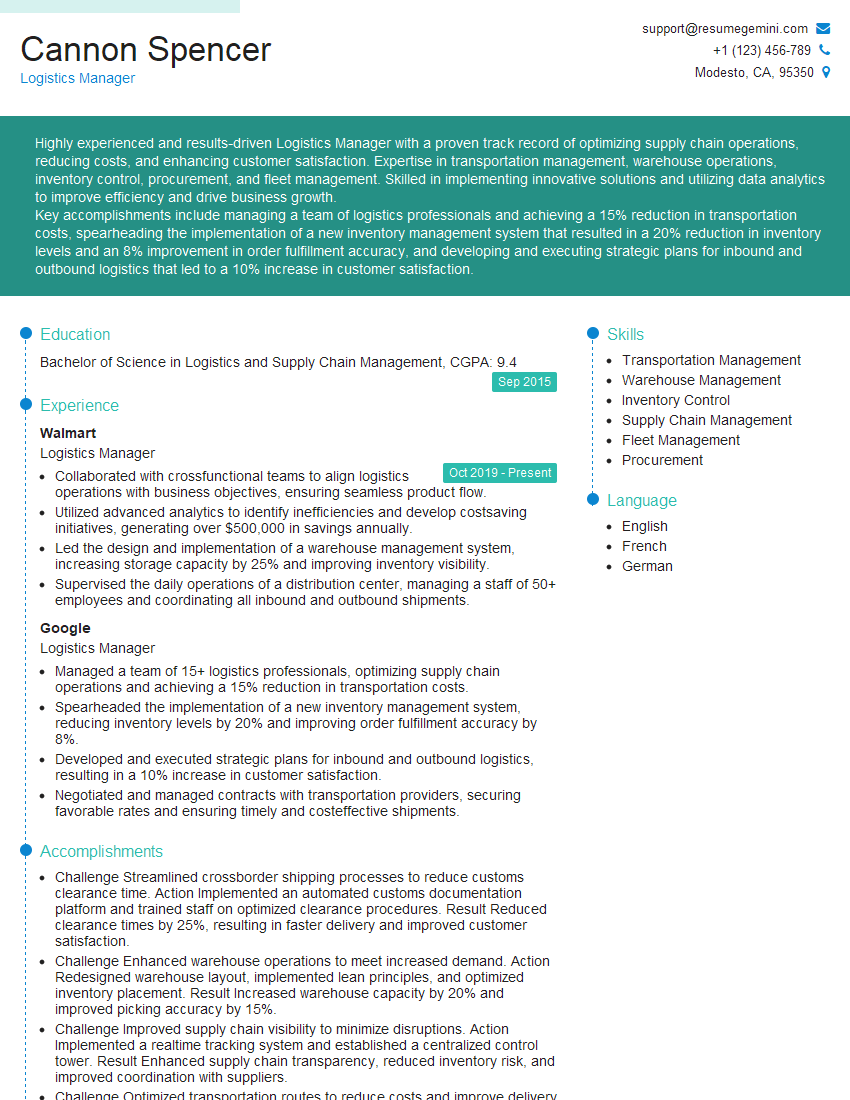
Logistics Manager Resume Sample
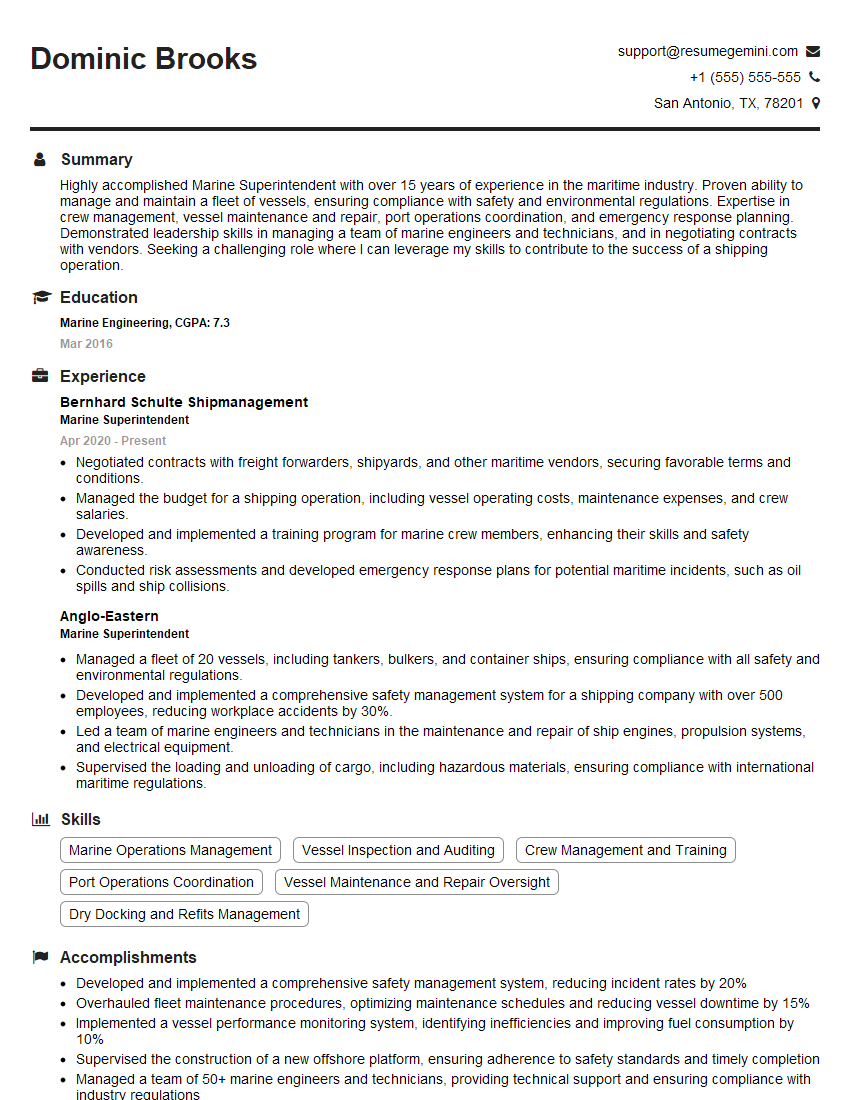
Marine Superintendent Resume Sample
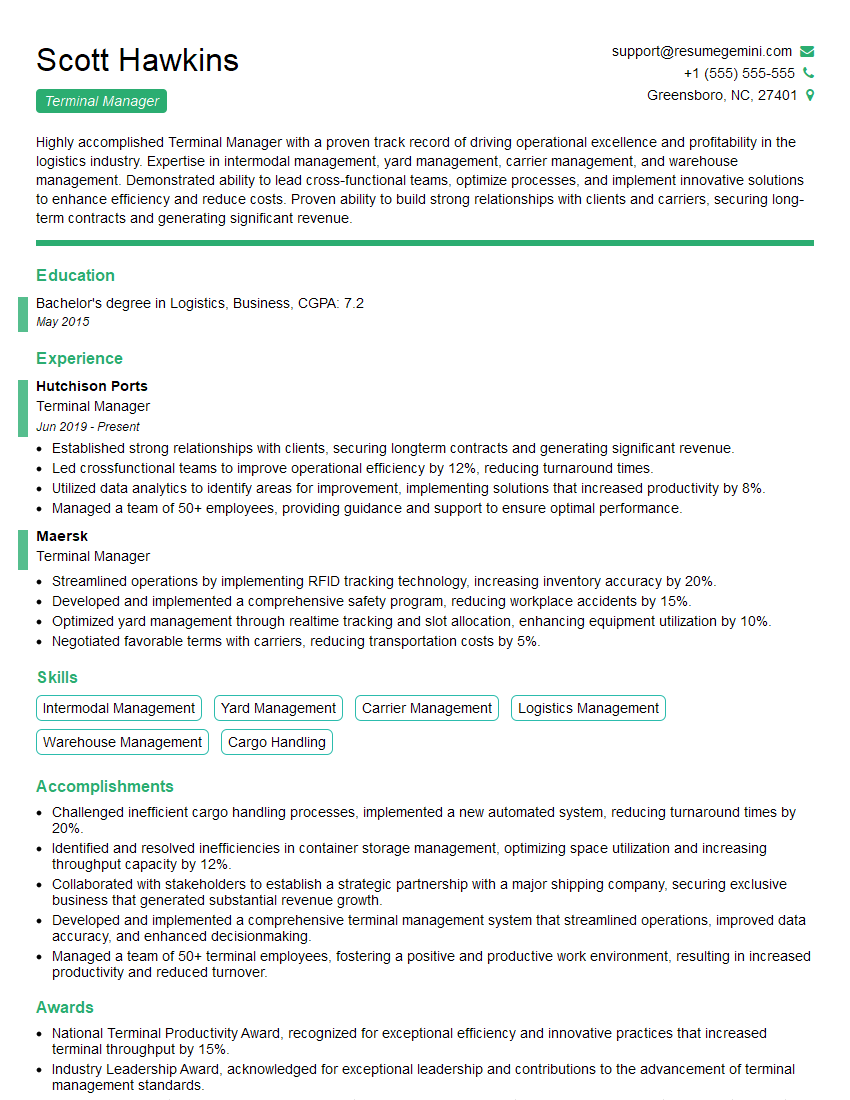
Terminal Manager Resume Sample
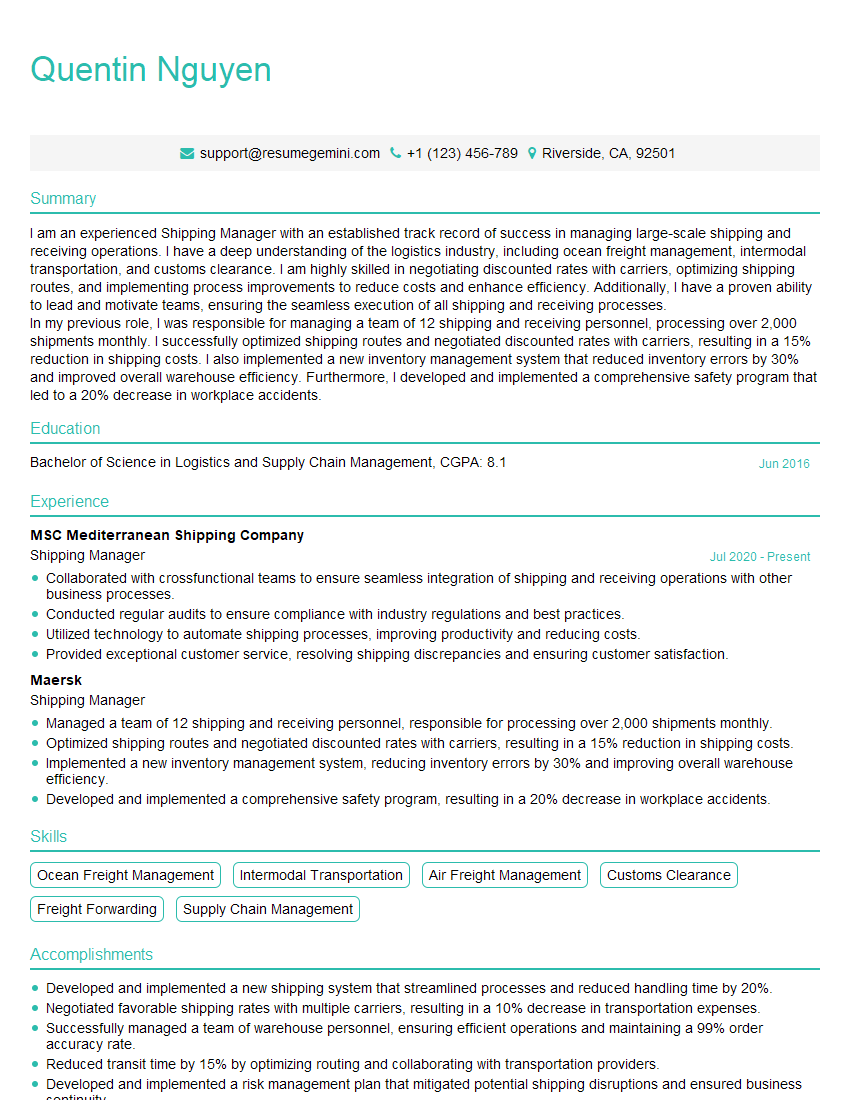
Shipping Manager Resume Sample

Crane Operator Resume Sample
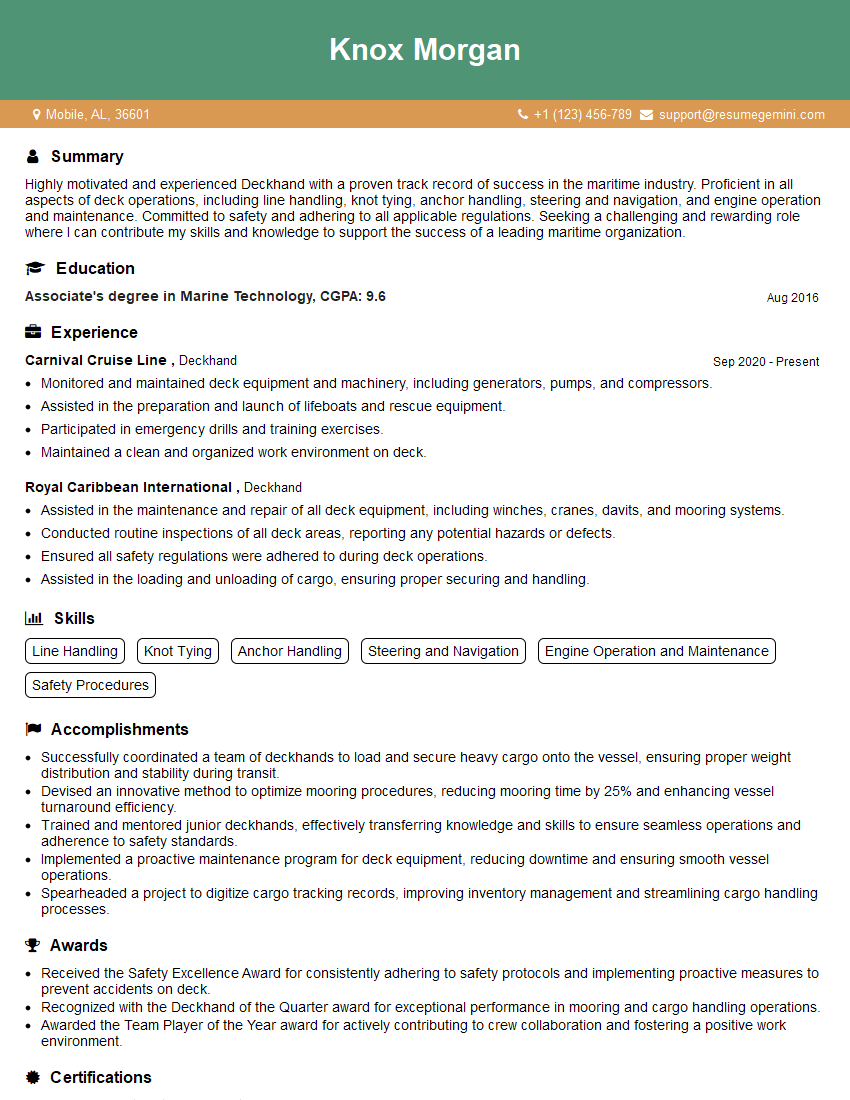
Deckhand Resume Sample
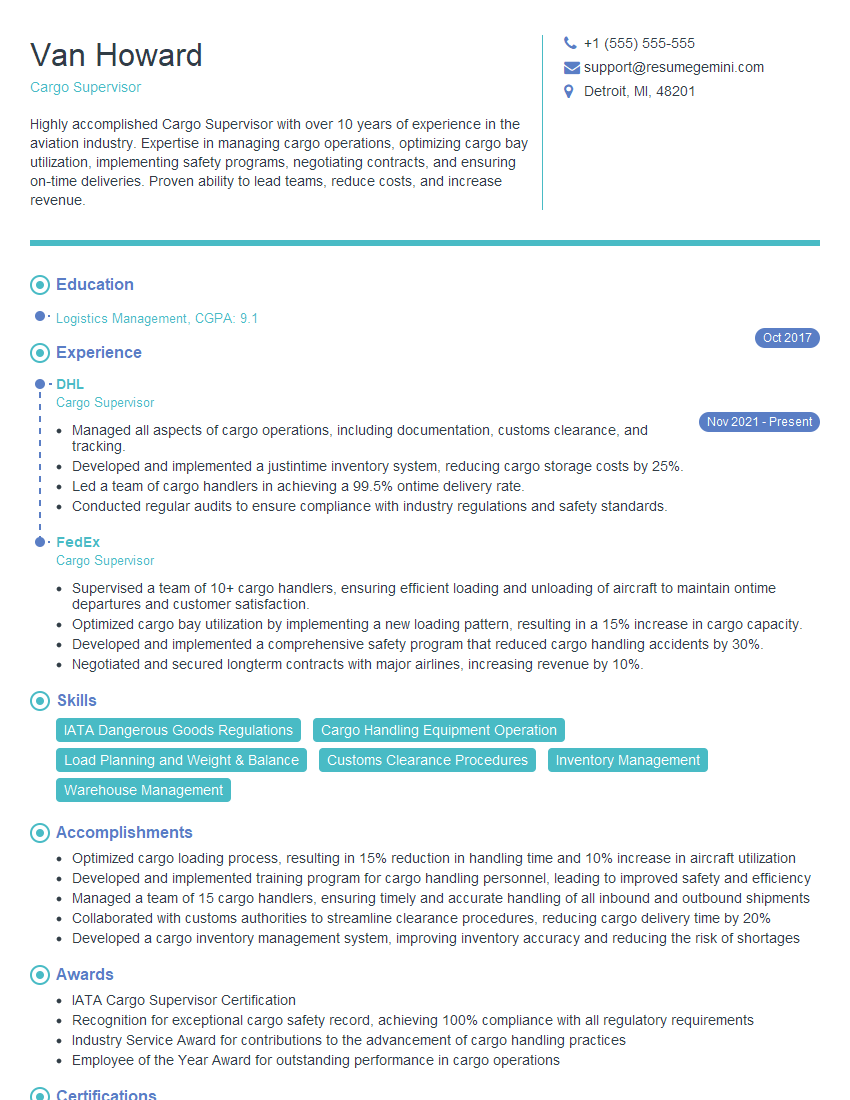
Cargo Supervisor Resume Sample
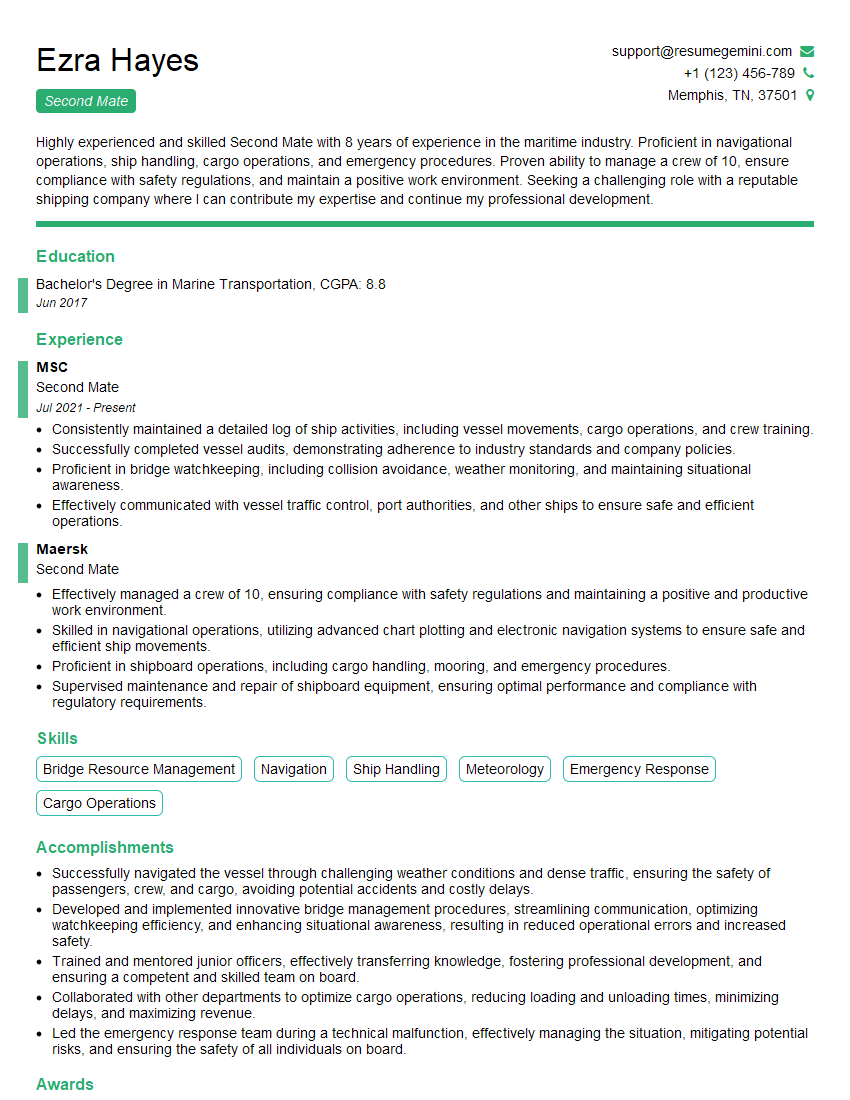
Second Mate Resume Sample
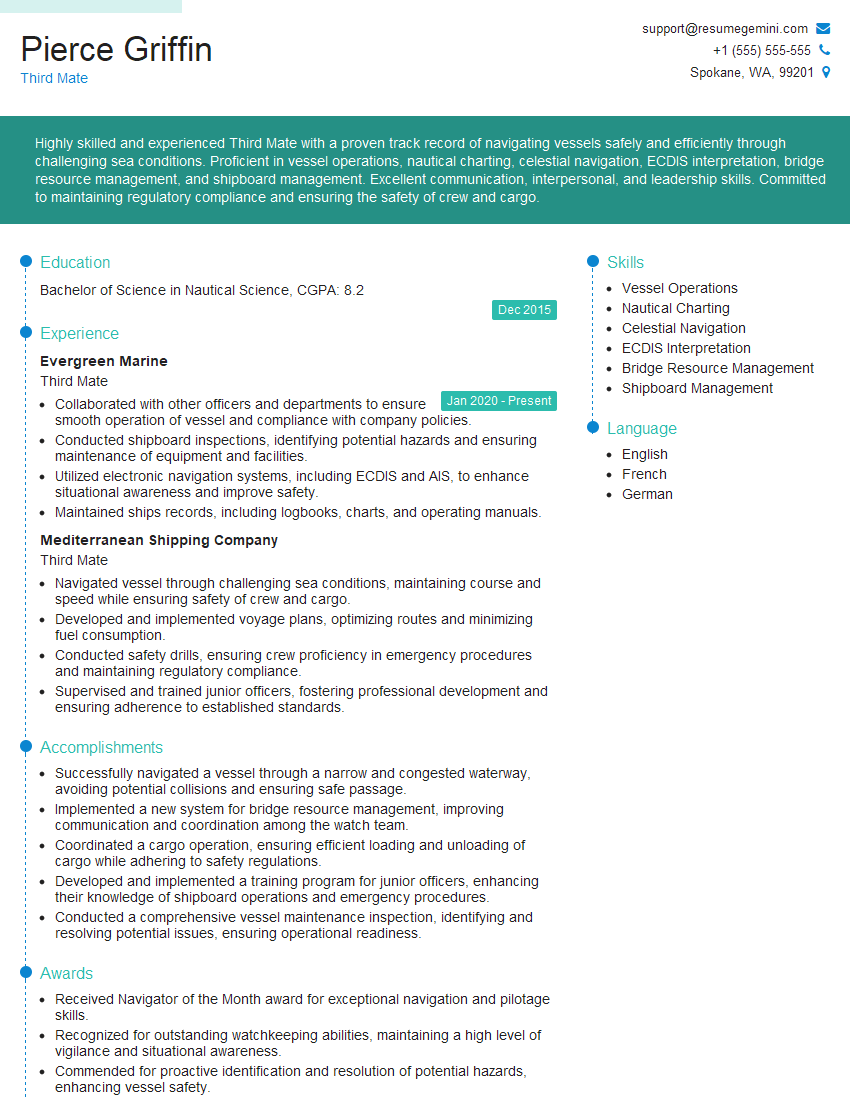
Third Mate Resume Sample
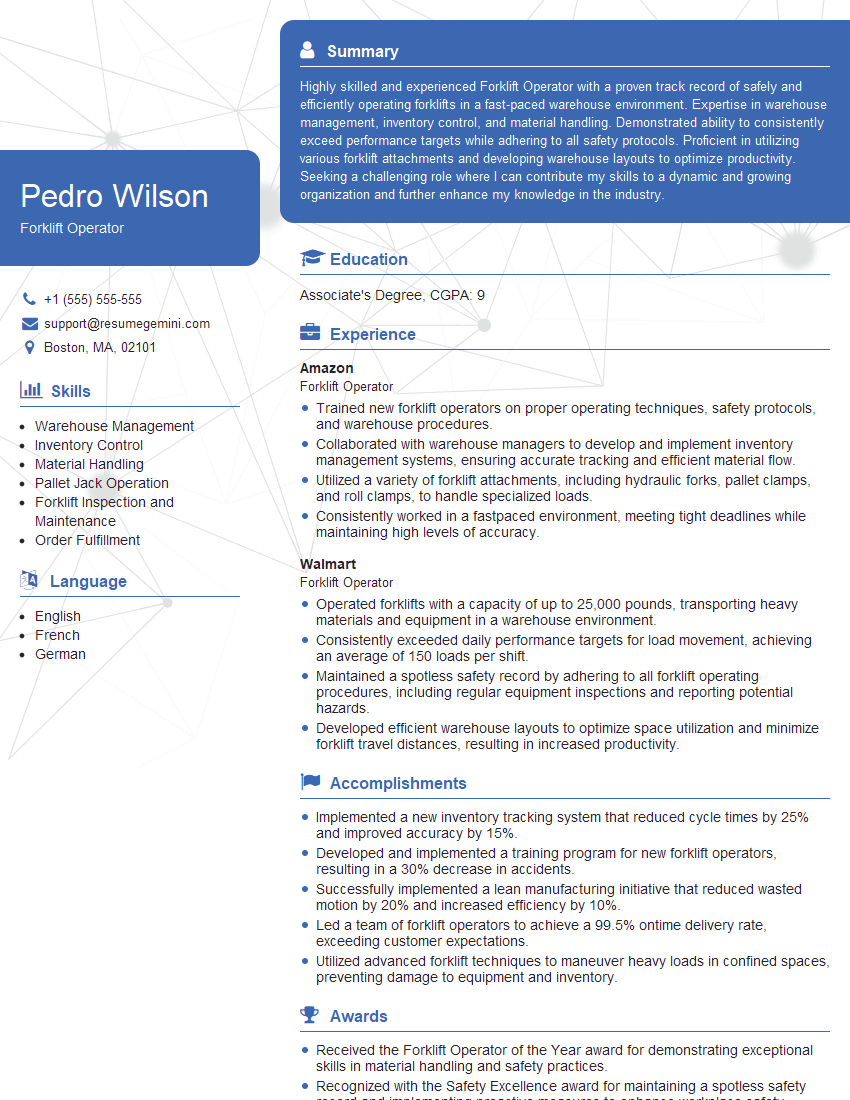
Forklift Operator Resume Sample
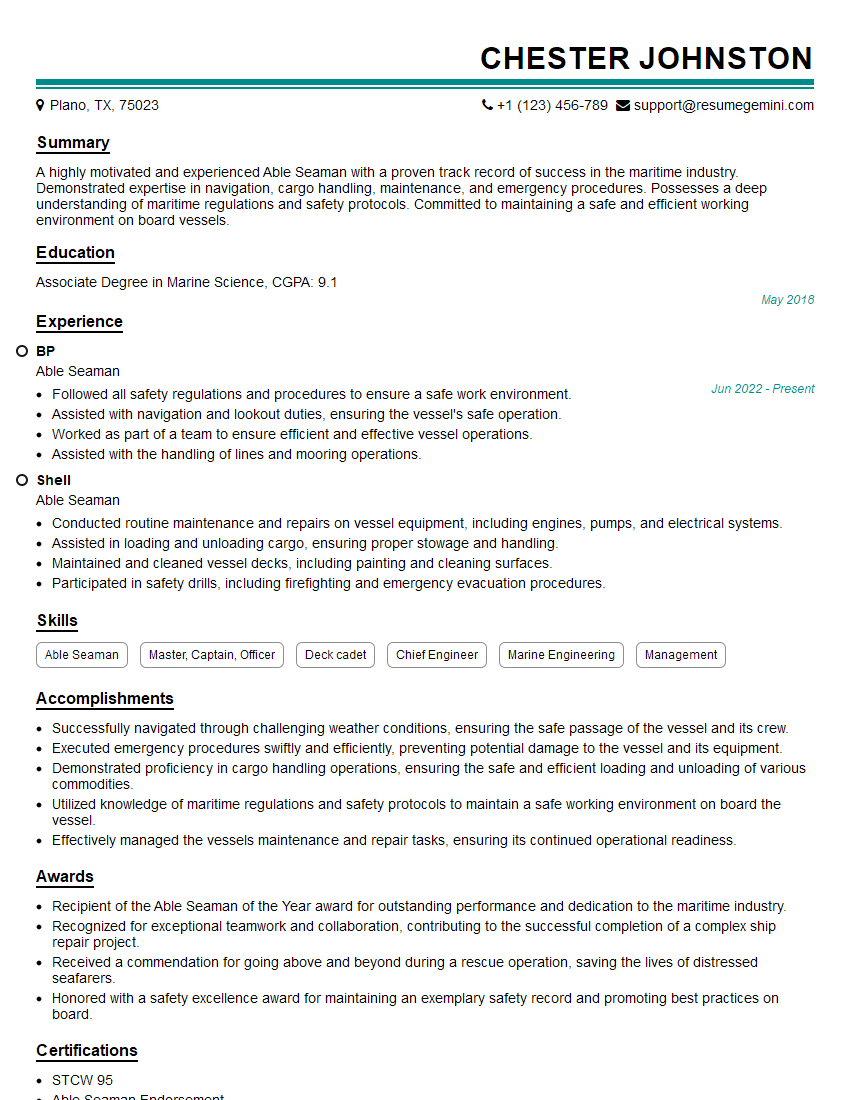
Able Seaman Resume Sample
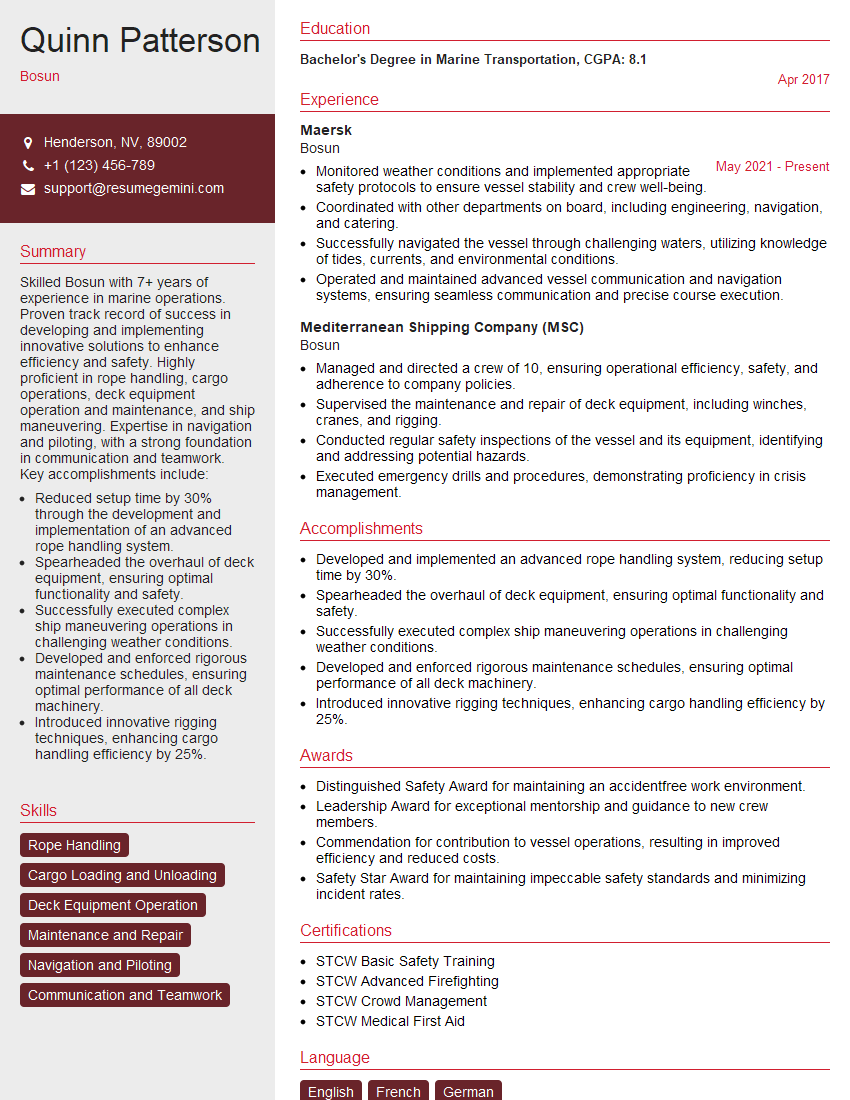
Bosun Resume Sample
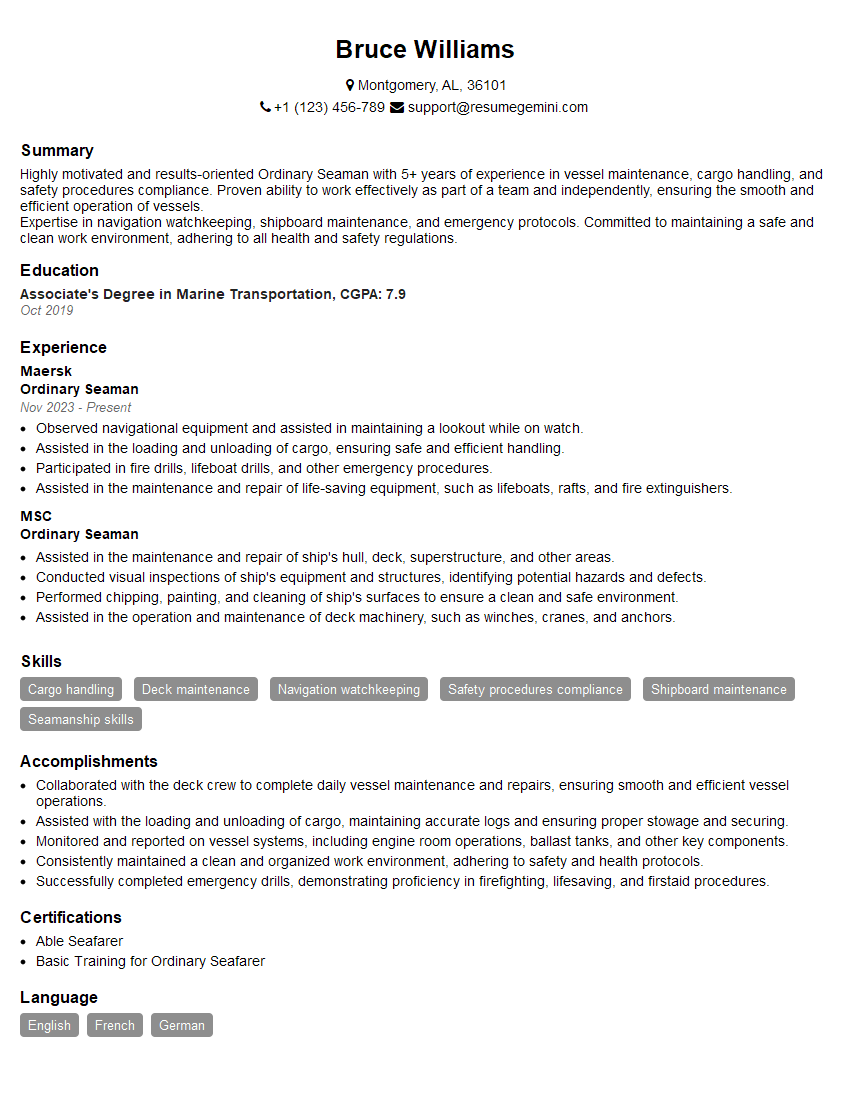
Ordinary Seaman Resume Sample
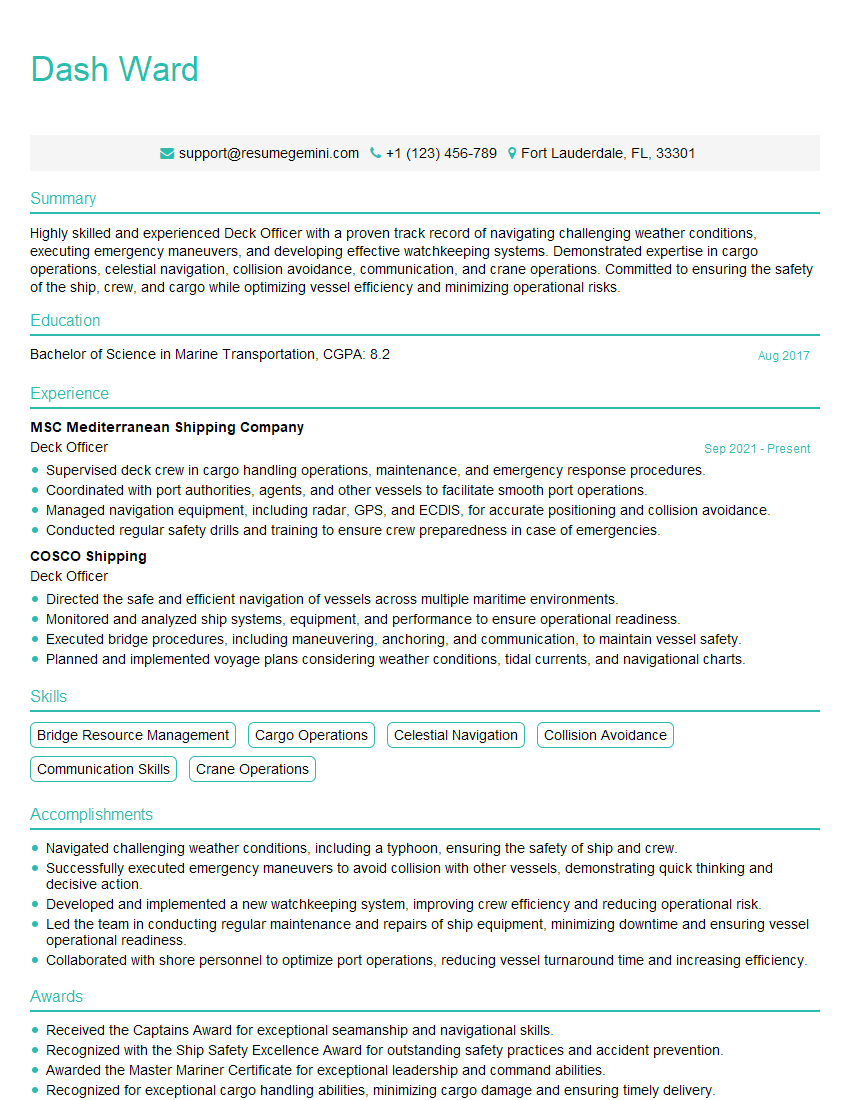
Deck Officer Resume Sample
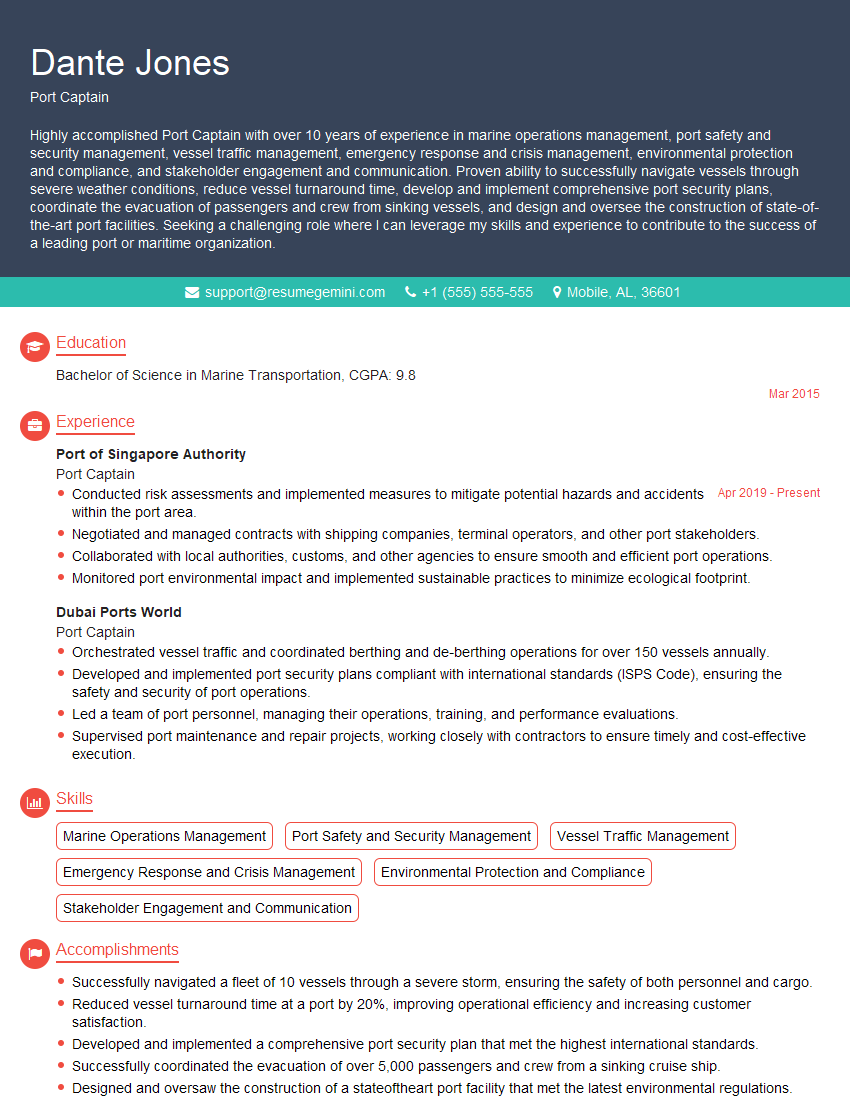
Port Captain Resume Sample

Cargo Surveyor Resume Sample
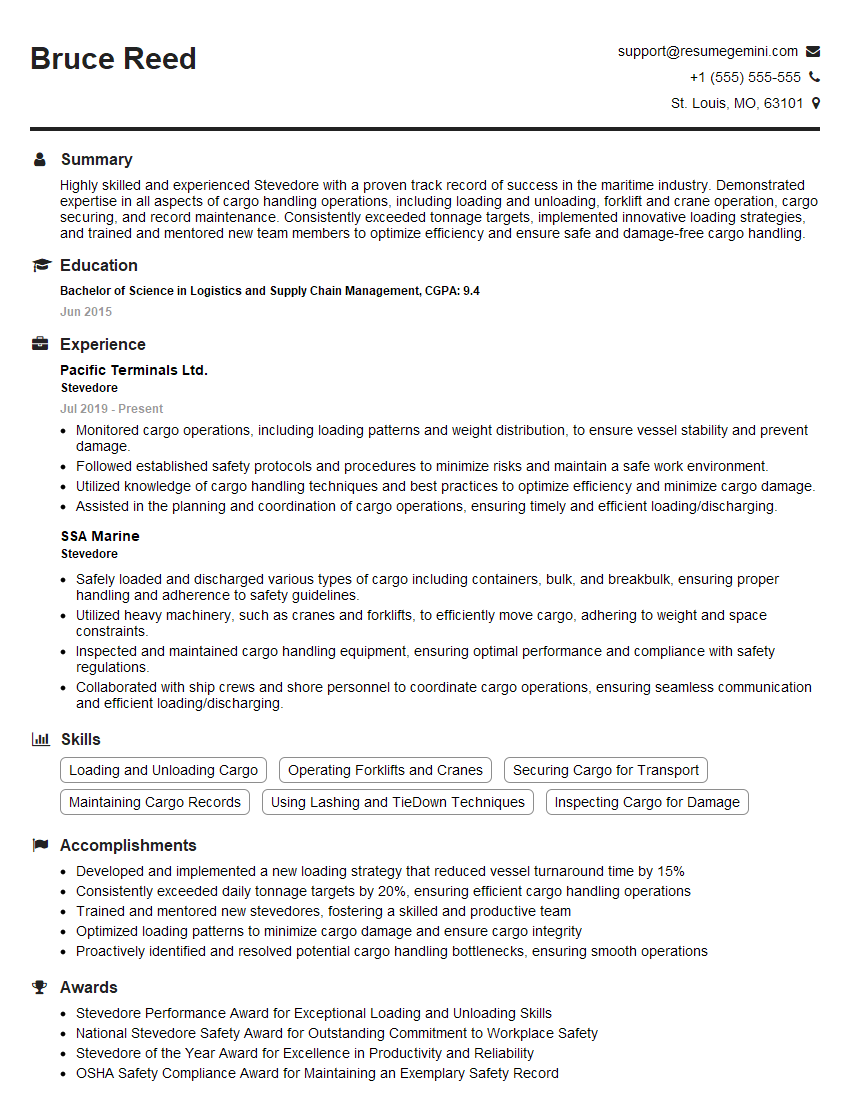
Stevedore Resume Sample
Explore more articles
Users Rating of Our Blogs
Share Your Experience
We value your feedback! Please rate our content and share your thoughts (optional).
What Readers Say About Our Blog
Very informative content, great job.
good