Preparation is the key to success in any interview. In this post, we’ll explore crucial Aviation Training Management interview questions and equip you with strategies to craft impactful answers. Whether you’re a beginner or a pro, these tips will elevate your preparation.
Questions Asked in Aviation Training Management Interview
Q 1. Describe your experience in developing and implementing aviation training programs.
Developing and implementing aviation training programs requires a systematic approach, blending instructional design principles with a deep understanding of aviation regulations and best practices. My experience spans over 15 years, encompassing the entire lifecycle – from needs analysis and curriculum development to instructor training and program evaluation. For example, at my previous role, I spearheaded the development of a new type rating program for the Airbus A350. This involved conducting a comprehensive needs analysis to identify pilot competency gaps, designing a curriculum incorporating classroom learning, full-flight simulator training, and online learning modules, and finally, securing regulatory approval from the relevant aviation authority. I also oversaw the recruitment and training of instructors, ensuring they were proficient in delivering the program effectively. Another project involved updating an existing flight training program to incorporate new technologies like advanced flight data recorders and synthetic training devices, thus improving training efficiency and safety.
Q 2. How do you ensure compliance with regulatory requirements in aviation training?
Compliance with regulatory requirements is paramount in aviation training. It’s not just about meeting the minimum standards; it’s about proactively ensuring adherence to all applicable rules and regulations. My approach involves establishing a robust quality assurance (QA) system. This includes regular audits of training materials and procedures, ensuring they are aligned with regulations like those published by the FAA (in the US) or EASA (in Europe). We utilize a document control system to track all revisions and ensure everyone is working with the most up-to-date materials. Furthermore, our instructors receive regular recurrent training to remain current on regulations and best practices. We maintain meticulous records of trainee progress, ensuring all training requirements are met and documented. Failure to comply can lead to serious consequences, impacting the safety and operational efficiency of airlines, so meticulousness and proactive planning are critical. A recent example involved updating our training program to reflect a change in emergency procedures issued by the FAA – we immediately implemented the changes and retrained all relevant personnel.
Q 3. Explain your approach to designing effective training curricula for pilots.
Designing effective training curricula for pilots necessitates a multi-faceted approach. It begins with a thorough needs analysis, identifying the specific knowledge, skills, and attitudes (KSAs) required for each pilot group. This analysis considers factors like aircraft type, operational environment, and regulatory requirements. Then, I structure the curriculum around learning objectives, breaking down complex topics into manageable modules. The curriculum incorporates a variety of teaching methods – classroom lectures, interactive simulations, realistic scenarios, and e-learning modules – to cater to different learning styles. For example, a new pilot training program might begin with ground school covering aviation fundamentals, followed by flight training in progressively challenging scenarios, culminating in complex maneuvers in a full-flight simulator. The use of blended learning approaches—combining classroom and online learning—enhances accessibility and engagement. Throughout the design process, I maintain a strong focus on safety, risk management, and human factors to ensure our training prepares pilots for real-world situations.
Q 4. How do you assess the effectiveness of your aviation training programs?
Assessing the effectiveness of aviation training programs is crucial for continuous improvement. We use a combination of quantitative and qualitative methods. Quantitative data includes evaluating pass rates on examinations, simulator performance metrics (e.g., proficiency scores, errors made), and trainee feedback surveys using standardized scales. Qualitative data comes from instructor observations, focus groups with trainees, and post-training performance monitoring of pilots in real-world operational settings. For instance, we might analyze the number of incidents or errors reported by pilots who have completed our training program compared to a control group. This data informs program improvements; if certain areas show consistent weakness, it points to areas needing revision in the curriculum or training methods. This iterative approach ensures that our training program remains relevant, efficient, and effective in producing highly skilled and safe pilots.
Q 5. What methods do you use to evaluate trainee performance?
Trainee performance is evaluated through a variety of methods, tailored to the specific learning objectives. This includes written examinations to assess theoretical knowledge, practical flight tests to evaluate piloting skills, and simulator assessments for handling emergency situations and complex maneuvers. We also use checkrides, conducted by qualified examiners, to formally assess a pilot’s proficiency. Throughout the training process, instructors provide continuous feedback, both formally (through written evaluations) and informally (during training sessions). Objective performance measures, such as the number of errors made, reaction times in simulator exercises, and adherence to checklists, form a key part of the evaluation. This combination of objective and subjective assessment provides a comprehensive understanding of a trainee’s performance and areas for improvement.
Q 6. How do you handle discrepancies between training standards and actual performance?
Discrepancies between training standards and actual performance are addressed through a structured process of investigation and corrective action. First, we identify the root cause of the discrepancy using methods such as analyzing training records, conducting interviews with involved personnel, and reviewing simulator data. This might reveal gaps in the training curriculum, ineffective training methods, or issues with trainee preparedness. Once the root cause is determined, we develop and implement corrective actions. These might include revising the training curriculum, enhancing training methods, providing additional training or mentoring to struggling trainees, or improving the quality of assessment tools. We also document these discrepancies, corrective actions, and their effectiveness to prevent recurrence. This proactive approach to addressing performance gaps ensures continuous improvement in training quality and pilot safety.
Q 7. Describe your experience with different training delivery methods (e.g., classroom, simulator, online).
My experience encompasses a wide range of training delivery methods. Classroom instruction remains a cornerstone for theoretical knowledge delivery, supplemented by interactive discussions and group activities. Full-flight simulators provide a safe and realistic environment for practicing complex maneuvers and emergency procedures, replicating challenging real-world conditions. Online learning modules offer flexible and accessible learning opportunities, particularly useful for delivering updates or refresher training. For example, we use online platforms for delivering recurrent training on specific regulations or emergency procedures. We also utilize blended learning, effectively combining classroom, simulator, and online components, thereby maximizing training effectiveness. The optimal selection of delivery methods depends on the specific learning objective, trainee needs, and available resources. Choosing the right combination significantly improves the learning experience and results in more effective training.
Q 8. How do you manage and motivate a team of aviation training instructors?
Managing and motivating a team of aviation training instructors requires a multifaceted approach focusing on both individual needs and team dynamics. It’s similar to leading any high-performing team, but with the added layer of safety-critical responsibilities.
- Clear Communication & Expectations: Regular team meetings, clear outlines of roles and responsibilities, and open channels for feedback are essential. I use a collaborative approach, encouraging instructors to contribute ideas and participate in curriculum development.
- Professional Development: Investing in ongoing training for instructors—whether it’s attending conferences, pursuing advanced certifications, or participating in workshops on teaching methodologies—shows my commitment to their growth and keeps them engaged. For example, I’ve successfully implemented a program where instructors can propose new training techniques and materials for consideration, fostering innovation.
- Recognition & Reward: Acknowledging outstanding performance, both individually and as a team, boosts morale significantly. This could include verbal praise, formal recognition in company communications, or even small rewards for exceeding expectations. In one instance, I organized a team-building event for exceeding our training completion targets, enhancing camaraderie.
- Mentorship & Support: Creating a supportive environment where less experienced instructors can learn from their more seasoned colleagues fosters teamwork and professional growth. I use a buddy system where new instructors are paired with senior colleagues for guidance and mentorship.
- Addressing Conflict: Addressing conflicts promptly and fairly is critical. I use a structured approach, encouraging open dialogue and finding solutions that benefit all parties involved. A clear code of conduct and procedures for reporting incidents helps create a fair and productive environment.
Q 9. Explain your experience with developing and managing training budgets.
Developing and managing training budgets requires meticulous planning, detailed cost analysis, and constant monitoring. It’s akin to running a small business within a larger organization.
- Needs Assessment: The budget begins with a thorough needs assessment. This involves identifying the training requirements, estimating the number of trainees, and determining the resources needed (instructors, materials, facilities, software).
- Cost Estimation: Each element of the training program is costed, including instructor salaries, training materials (e.g., manuals, software licenses, simulations), facility rentals, travel expenses, and any external consultant fees.
- Resource Allocation: Once costs are estimated, resources are allocated based on priority and available funds. This often involves prioritizing needs and justifying expenditures to upper management. For instance, I presented a proposal justifying the purchase of high-fidelity flight simulators, demonstrating their long-term cost-effectiveness through increased training efficiency.
- Budget Tracking & Control: Continuous monitoring ensures that the budget remains on track. Regular reviews, variance analysis, and proactive adjustments are necessary. I use specialized software to track expenses against planned budgets, allowing for timely identification of any overruns.
- Reporting & Justification: Regular budget reports and justifications to stakeholders (e.g., senior management, regulatory bodies) are necessary. This may involve providing detailed expense reports, demonstrating the return on investment of the training program, and highlighting cost-saving measures.
Q 10. How do you ensure the quality and accuracy of training materials?
Ensuring the quality and accuracy of training materials is paramount in aviation, where safety is non-negotiable. This involves a multi-stage process that goes beyond simply creating the materials.
- Subject Matter Experts (SMEs): Involve SMEs from different departments (e.g., maintenance, flight operations, air traffic control) to review materials for technical accuracy and consistency. I ensure SMEs are appropriately qualified and knowledgeable. For example, for a new engine maintenance course, I incorporated feedback from both maintenance engineers and pilots to provide a comprehensive understanding.
- Peer Review: Utilize a peer-review process where experienced instructors review materials for clarity, completeness, and adherence to industry best practices. This acts as a form of quality control, catching potential errors or areas for improvement.
- Pilot Testing: Conduct pilot testing of training materials with a small group of representative trainees to gather feedback on clarity, effectiveness, and any identified gaps or inconsistencies. Using feedback from pilot testing enables us to refine materials before wider rollout.
- Version Control: Employ a version control system to track changes, ensuring that all versions are properly documented and that the most up-to-date version is always used. This is vital for maintaining accuracy and consistency.
- Regular Updates: Regularly update training materials to reflect changes in aviation regulations, technologies, and best practices. I establish a structured review process that ensures timely and accurate updates to materials. For example, with the release of new regulations, we update our courses to reflect the changes.
Q 11. How do you incorporate new technologies into aviation training programs?
Incorporating new technologies into aviation training programs is crucial for keeping training relevant, engaging, and efficient. It’s about leveraging technology to enhance learning outcomes.
- Flight Simulators: High-fidelity flight simulators are essential, offering realistic training environments for pilots. We use simulators that closely replicate real-world flight conditions and emergencies.
- Virtual Reality (VR) and Augmented Reality (AR): VR/AR technologies offer immersive and engaging training experiences, particularly for complex maintenance procedures or emergency scenarios. For example, we use VR to simulate engine failure scenarios, allowing trainees to practice troubleshooting in a safe, controlled environment.
- E-learning Platforms: Utilizing online learning platforms provides flexibility and accessibility, allowing trainees to learn at their own pace and review materials at any time. We use a learning management system (LMS) that allows for personalized learning paths, progress tracking, and assessment.
- Interactive Training Aids: Incorporating interactive elements, such as simulations, quizzes, and gamification, makes learning more engaging and improves knowledge retention. For example, we use gamified quizzes to make learning regulatory procedures more entertaining and effective.
- Data Analytics: Analyzing training data provides valuable insights into trainee performance, identifying areas where additional training or support might be needed. Data analysis allows us to tailor training programs to address individual learning needs and optimize our training curriculum.
Q 12. Describe your experience with developing and delivering training for different levels of personnel (e.g., pilots, mechanics, cabin crew).
Developing and delivering training for diverse personnel—pilots, mechanics, cabin crew—requires a tailored approach that considers the unique skills, knowledge, and responsibilities of each group. It’s about understanding the specific needs of each audience.
- Needs Analysis: Conduct a thorough needs analysis for each group to identify their specific training needs, ensuring the curriculum is relevant and tailored to their roles and responsibilities. For example, pilot training focuses on flight operations, while maintenance training emphasizes technical skills and safety procedures.
- Curriculum Design: Develop separate curricula for each group, incorporating relevant scenarios and practical exercises. The content, delivery methods, and assessment techniques will differ based on the needs of each group.
- Instructional Strategies: Employ different instructional strategies appropriate for each group. For example, hands-on training is crucial for mechanics, while simulation is key for pilots. Classroom lectures and group discussions are effective for cabin crew training.
- Assessment Methods: Use assessment methods relevant to each group. Pilots require flight checks and simulator assessments, while mechanics undergo practical assessments and written exams. Cabin crew training includes role-playing and emergency response drills.
- Communication: Communicate effectively with each group, adapting your communication style to suit their understanding and learning styles. This ensures that information is conveyed clearly and easily.
Q 13. How do you address challenging or difficult trainees?
Addressing challenging or difficult trainees requires patience, understanding, and a structured approach. It’s about identifying the root cause of the difficulty and providing appropriate support.
- Identify the Root Cause: The first step is to identify why the trainee is struggling. Is it a lack of understanding, a lack of motivation, or a personal issue? I use one-on-one sessions to understand their struggles.
- Individualized Support: Provide individualized support tailored to the trainee’s specific needs. This could include additional tutoring, mentorship from a senior instructor, or adjustments to the training plan. For example, if a trainee is struggling with a specific concept, I provide additional practice and resources.
- Positive Reinforcement: Focus on positive reinforcement, highlighting the trainee’s strengths and progress. Positive feedback helps build confidence and encourages improvement.
- Clear Communication: Maintain open and honest communication with the trainee. Clearly explain expectations and provide constructive feedback. I aim to establish a professional and supportive relationship.
- Escalation Procedures: If the challenges persist, follow established escalation procedures, involving senior management or other support personnel as needed. Early identification and intervention are crucial to avoiding significant issues.
Q 14. How do you stay current with changes in aviation regulations and best practices?
Staying current with changes in aviation regulations and best practices is essential for maintaining the quality and relevance of aviation training programs. This is an ongoing process of continuous improvement.
- Regulatory Updates: Actively monitor changes in aviation regulations from organizations such as the FAA, EASA, and ICAO. I subscribe to relevant newsletters and attend industry conferences. New regulations are immediately integrated into the training programs.
- Industry Publications: Read industry publications, journals, and research papers to keep abreast of current best practices and new technologies. This proactive approach ensures we’re aware of the latest developments.
- Industry Conferences & Workshops: Regularly attend industry conferences and workshops to network with other professionals and learn about the latest innovations. This facilitates professional development and best-practice sharing.
- Professional Networks: Engage in professional networks and online forums to share information and best practices with other instructors and aviation professionals. This provides an invaluable network of peers and keeps me updated on industry happenings.
- Internal Training & Development: Participate in internal training and development programs focused on aviation safety and regulations. We conduct regular internal review and update sessions.
Q 15. Describe your experience with performance-based training (PBT) methodologies.
Performance-based training (PBT) focuses on demonstrating competency rather than simply absorbing information. Instead of lectures, PBT emphasizes hands-on practice and real-world simulations to assess skills. My experience with PBT spans over a decade, primarily within the airline industry. I’ve been involved in designing and implementing PBT programs for pilots, cabin crew, and maintenance technicians. For example, for pilot training, we moved away from traditional classroom-based instruction for emergency procedures. Instead, we developed a comprehensive flight simulator-based program where pilots had to manage various failures and emergencies in realistic scenarios. This approach significantly improved their decision-making and problem-solving skills under pressure. We also incorporate checkrides and practical evaluations to assess proficiency using standardized criteria, ensuring consistency and objective assessment of performance.
Another example involves the development of a PBT program for aircraft maintenance personnel. Instead of simply reading manuals, trainees were given malfunctioning aircraft systems and guided through the troubleshooting and repair process. This approach boosted their confidence and practical skills significantly, leading to a reduction in maintenance errors and improved safety.
Career Expert Tips:
- Ace those interviews! Prepare effectively by reviewing the Top 50 Most Common Interview Questions on ResumeGemini.
- Navigate your job search with confidence! Explore a wide range of Career Tips on ResumeGemini. Learn about common challenges and recommendations to overcome them.
- Craft the perfect resume! Master the Art of Resume Writing with ResumeGemini’s guide. Showcase your unique qualifications and achievements effectively.
- Don’t miss out on holiday savings! Build your dream resume with ResumeGemini’s ATS optimized templates.
Q 16. What is your experience with different types of aviation simulators?
My experience encompasses a wide range of aviation simulators, from basic flight training devices (FTDs) to full-flight simulators (FFS). I’ve worked with FTDs used for basic instrument training and procedural practice, which are cost-effective and suitable for initial training. These simulators typically provide a basic visual and motion system and are often used for familiarization with aircraft systems. On the other hand, I’ve extensively used FFS which offer highly realistic simulations of aircraft flight dynamics, systems, and even environmental conditions. These are crucial for advanced training, including emergency procedures, complex maneuvers, and unusual attitude recoveries. In addition to flight simulators, I have experience with simulators for other aviation disciplines. For example, I’ve worked with cabin service trainers for realistic emergency evacuations, and maintenance trainers for troubleshooting various aircraft systems.
The choice of simulator depends on the specific training objective and the trainee’s skill level. For example, a new pilot would start with FTDs before progressing to more advanced FFS for complex scenarios. Selecting the appropriate simulator ensures cost-effectiveness and maximizes training effectiveness.
Q 17. How do you use data and analytics to improve aviation training programs?
Data and analytics play a crucial role in optimizing aviation training. We collect various data points throughout the training process, including simulator performance data, student test scores, and feedback from instructors. This data is then analyzed to identify areas for improvement in training materials, instructional methods, and even simulator configurations. For instance, if we see a consistently low performance rate on a specific emergency procedure in the simulator, it indicates a need to refine that section of the training curriculum or adjust the simulator’s difficulty level. This data-driven approach enables us to make informed decisions to enhance training effectiveness and ensure we are delivering the highest quality instruction.
We use learning management systems (LMS) that track student progress and identify knowledge gaps. These systems provide valuable insights into individual learning styles and help personalize training. We also employ statistical analysis techniques to identify patterns and correlations in the data and produce reports to support continuous improvement initiatives. By consistently monitoring these metrics, we can measure the overall effectiveness of the training programs and demonstrate a positive return on investment.
Q 18. Explain your experience with creating training records and maintaining documentation.
Maintaining accurate and comprehensive training records is paramount in aviation for regulatory compliance and safety. My experience includes managing training records using both paper-based systems and sophisticated electronic learning management systems (LMS). These records meticulously document all training activities, including course completion, simulator sessions, exams, assessments, and any corrective actions. The data includes student details, training dates, instructors’ qualifications, and equipment used. We adhere to strict guidelines set by regulatory bodies like the FAA (in the US) or EASA (in Europe) to ensure compliance and maintain the integrity of the training records. This documentation is vital for auditing purposes and demonstrates compliance with safety regulations.
Using an LMS streamlines record-keeping, making it easier to search, retrieve, and share data. It offers features such as automated report generation, reducing manual effort and minimizing errors. The system allows us to monitor individual progress and identify areas needing further attention, leading to timely interventions and personalized support.
Q 19. How do you adapt training programs to accommodate diverse learning styles?
Catering to diverse learning styles is crucial for effective training. I incorporate varied instructional methods to accommodate visual, auditory, and kinesthetic learners. For example, for visual learners, we use diagrams, videos, and simulations. For auditory learners, lectures, discussions, and audio-based materials are employed. For kinesthetic learners, hands-on activities and simulations are emphasized. We might use a combination of techniques within a single training module. One example involves the use of interactive simulations where trainees actively participate in resolving scenarios. The interactive element allows participants to learn by doing, catering to kinesthetic learners. Simultaneously, visual and auditory learners receive cues from the simulator’s visuals and audio feedback.
Regular feedback and assessment help us adapt our approach based on individual responses. Pre-training assessments can identify learning preferences, enabling us to customize the approach. Post-training surveys also provide valuable input on what worked well and areas needing adjustment. This flexibility is critical for optimizing learning outcomes for all participants.
Q 20. Describe your experience with creating and delivering training using e-learning platforms.
E-learning platforms are increasingly important in aviation training. My experience includes developing and delivering courses using various e-learning platforms. This involves designing interactive modules, incorporating videos, simulations, and assessments to ensure engaging and effective learning. We carefully design the content to be concise and easy to follow, minimizing cognitive overload. We prioritize clear learning objectives and structured content for better knowledge retention. We also make use of gamification techniques such as points, badges, and leaderboards to enhance engagement and motivation.
For example, we developed an online ground school module on aviation meteorology, incorporating interactive quizzes and simulations to test comprehension and application of knowledge. This approach allows trainees to learn at their own pace and revisit materials as needed. Tracking and reporting features built into the platform allow us to monitor student progress and identify areas needing attention or improvement.
Q 21. How do you handle emergency situations during training exercises?
Handling emergency situations during training exercises requires a calm, decisive, and systematic approach. Our procedures emphasize clear communication, quick assessment, and controlled responses. Trainees are trained to follow established emergency procedures and are evaluated on their ability to manage the situation efficiently and effectively. Instructors play a critical role in guiding and supporting trainees during these exercises. We use a combination of techniques, including realistic scenarios, step-by-step instructions, and debriefing sessions to solidify learnings.
For example, during a simulated engine failure in a flight simulator, the instructor will closely monitor the trainee’s response, providing guidance and support where necessary. After the simulated emergency, a detailed debriefing session analyzes the trainee’s actions, highlighting both strengths and areas needing improvement. This method allows for effective learning from both successful and less-successful outcomes, strengthening the trainee’s skills and decision-making under pressure. Emphasis is always on safety and learning, not just perfect execution.
Q 22. How do you ensure the safety of trainees during training?
Ensuring trainee safety is paramount in aviation training. It’s not just about adhering to regulations; it’s about fostering a safety-first culture. This starts with a meticulously designed training program that prioritizes risk mitigation at every stage.
- Thorough Risk Assessments: Before any training commences, a comprehensive risk assessment is conducted, identifying potential hazards (e.g., equipment malfunction, adverse weather conditions during flight training) and implementing control measures (e.g., regular equipment checks, weather contingency plans).
- Qualified Instructors: We only employ highly experienced and certified instructors who possess the necessary expertise and teaching skills to guide trainees effectively and safely. Regular instructor proficiency checks are mandatory.
- Structured Training Programs: Our training programs follow a structured, progressive approach, starting with theoretical knowledge and gradually advancing to practical application. This ensures trainees build a solid foundation before handling complex tasks.
- Emergency Procedures Training: Significant emphasis is placed on emergency procedures training, preparing trainees to handle unexpected situations calmly and efficiently. This often involves simulator training and scenario-based exercises.
- Continuous Monitoring and Feedback: Trainees are continuously monitored during training, and regular feedback sessions are conducted to identify and address any shortcomings or concerns promptly. This ensures timely intervention if a trainee struggles with a specific skill or concept.
For instance, during flight simulation training, we use sophisticated software that replicates realistic flight scenarios, including potential emergencies. This allows trainees to practice their response skills in a controlled and safe environment, without compromising actual flight safety.
Q 23. What is your experience with using learning management systems (LMS)?
I have extensive experience leveraging Learning Management Systems (LMS) in aviation training. I’ve implemented and managed several LMS platforms, including Moodle and Canvas, to streamline the training process. These systems are invaluable for delivering online training modules, tracking student progress, managing assessments, and providing automated feedback.
- Content Delivery: LMS allows efficient delivery of theoretical training materials, such as manuals, videos, and interactive modules, ensuring consistency and accessibility.
- Progress Tracking: The system provides real-time tracking of student progress, enabling instructors to identify those who need additional support. This reduces the likelihood of students falling behind.
- Assessment Management: Automated assessments such as quizzes and tests, significantly streamline evaluation, providing quick feedback and freeing up instructor time for more personalized instruction.
- Communication and Collaboration: Many LMS platforms offer tools for communication and collaboration, facilitating interaction between trainees and instructors. This enables instructors to provide individualized support and address specific questions.
For example, I used Moodle to develop an online ground school course for instrument rating training. The platform allowed for the delivery of interactive eLearning modules, online quizzes, and a forum for student interaction. This dramatically reduced training time and improved knowledge retention compared to traditional classroom-only methods.
Q 24. How do you measure the return on investment (ROI) for aviation training programs?
Measuring the Return on Investment (ROI) for aviation training programs is crucial. It’s not simply about the cost of the program, but about the overall benefit it delivers to the organization.
- Reduced Accident Rates: Improved training leads to safer pilots, reducing the likelihood of accidents and their associated costs (e.g., aircraft damage, insurance claims).
- Increased Operational Efficiency: More proficient pilots translate to better fuel efficiency, reduced flight times, and improved overall operational efficiency.
- Improved Pilot Performance: Enhanced pilot skills lead to better decision-making, improved situational awareness, and ultimately, better flight performance.
- Compliance and Safety Audits: Investing in robust training programs minimizes risks related to regulatory non-compliance and facilitates successful safety audits.
- Enhanced Employee Retention: Providing high-quality training opportunities improves employee morale and job satisfaction, leading to reduced employee turnover costs.
We typically use a combination of qualitative and quantitative data to measure ROI. This might include tracking accident rates before and after implementing a new training program, surveying pilot performance, and analyzing operational costs. A cost-benefit analysis is key to demonstrate the financial return on the investment in aviation training.
Q 25. Describe your experience with needs analysis for aviation training.
Needs analysis is the cornerstone of effective aviation training program design. It involves systematically identifying the knowledge, skills, and attitudes (KSAs) required for a specific role or task, comparing those needs against existing competencies, and then defining the training gap that needs to be addressed.
- Performance Data Analysis: This includes reviewing accident reports, operational data, and pilot performance records to identify areas for improvement.
- Stakeholder Consultation: Gathering input from various stakeholders such as pilots, instructors, management, and regulatory bodies is crucial to ensure the training program aligns with operational needs and regulatory requirements.
- Job Task Analysis: This involves breaking down complex tasks into smaller, manageable units to identify the specific KSAs required for each step. This often involves observing experienced pilots perform tasks and interviewing them about their decision-making processes.
- Competency Gap Analysis: Comparing the identified KSAs with the existing competencies of the pilots or trainees reveals the training needs.
- Training Objectives Development: Based on the gap analysis, clear and measurable training objectives are developed, ensuring the training directly addresses the identified needs.
For example, after analyzing a series of near-miss incidents involving low-visibility landings, a needs analysis revealed a deficiency in the training related to instrument approach procedures in challenging weather conditions. This led to the development of a specialized training module focused on improving low-visibility landing skills.
Q 26. How do you ensure effective communication with stakeholders involved in aviation training (e.g., management, pilots, regulators)?
Effective communication with stakeholders is crucial for successful aviation training. I utilize a multi-faceted approach involving clear, concise communication through various channels.
- Regular Meetings: Holding regular meetings with instructors, pilots, management, and regulatory bodies ensures open communication and allows for addressing concerns promptly.
- Formal Reports and Documentation: Providing detailed reports on training progress, performance data, and any safety issues allows for transparent communication and accountability.
- Feedback Mechanisms: Establishing clear feedback mechanisms enables trainees, instructors, and management to provide input and suggestions for improvement.
- Utilizing Technology: Utilizing communication tools like email, project management software, and instant messaging platforms for quick updates and clarifications.
- Active Listening and Empathy: Actively listening to and understanding the perspectives of all stakeholders is critical to building trust and fostering collaboration.
For instance, when implementing a new training program, I regularly communicate with regulators to ensure compliance with regulations and obtain necessary approvals. This proactive approach prevents potential delays and ensures a smooth training implementation.
Q 27. Describe your experience with developing and implementing a quality management system for aviation training.
Developing and implementing a quality management system (QMS) for aviation training is essential to ensure consistent high-quality training and compliance with regulatory requirements. I have extensive experience implementing ISO 9001-compliant QMS in aviation training environments.
- Defining Quality Policy and Objectives: Establishing a clear quality policy and setting specific, measurable, achievable, relevant, and time-bound (SMART) objectives.
- Process Mapping and Documentation: Mapping out all training processes and documenting them in detail to ensure consistency and traceability.
- Internal Audits and Inspections: Conducting regular internal audits to identify areas for improvement and ensure compliance with established procedures.
- Corrective and Preventive Actions (CAPA): Implementing a robust CAPA system to address non-conformances and prevent their recurrence.
- Continuous Improvement: Utilizing data analysis and feedback to identify opportunities for continuous improvement in the training process.
For example, we implemented a system for tracking instructor qualifications and training records, ensuring all instructors remain up-to-date with the latest procedures and regulations. This streamlined audit processes and demonstrated a commitment to continuous improvement.
Q 28. How would you handle a situation where a trainee consistently underperforms?
Addressing a trainee’s consistent underperformance requires a structured, supportive approach focused on identifying the root cause and providing appropriate interventions.
- Initial Assessment: Conduct a thorough assessment to identify the specific areas where the trainee is struggling. This may involve reviewing their performance data, conducting interviews, and observing their training sessions.
- Identify Root Causes: Determine the reasons for underperformance. This could range from insufficient prior knowledge or skills to learning disabilities, lack of motivation, or even personal issues.
- Develop a Support Plan: Based on the identified root causes, develop a customized support plan that addresses the specific needs of the trainee. This could involve providing additional instruction, utilizing different teaching methods, offering mentoring, or seeking additional support from specialists.
- Regular Monitoring and Feedback: Closely monitor the trainee’s progress and provide regular feedback to encourage improvement and address any new challenges that arise.
- Consider Alternative Training Methods: Explore alternative training methods or resources if the initial interventions are not effective. This might involve utilizing different learning materials or employing different teaching techniques.
- Documentation and Communication: Maintain detailed records of the interventions provided, the trainee’s progress, and any decisions made. Regular communication with the trainee and relevant stakeholders ensures transparency and collaborative support.
If, despite these interventions, the trainee continues to underperform, a difficult decision may need to be made regarding their suitability for the training program. This decision should always be made in a fair and objective manner, with due consideration for the trainee’s welfare and safety. Often, referrals to professional counselors or other support services may be appropriate.
Key Topics to Learn for Aviation Training Management Interview
- Curriculum Development & Design: Understanding the principles of instructional design, learning objectives, and the creation of effective training programs tailored to different learning styles and regulatory requirements.
- Regulatory Compliance: Knowledge of relevant aviation regulations (e.g., FAA, EASA) and their impact on training program development, implementation, and auditing. Practical application includes demonstrating how to ensure compliance in a training program.
- Training Delivery Methods: Familiarity with various training methods (e.g., classroom instruction, simulator training, online learning) and their appropriate application based on training objectives and learner needs.
- Training Evaluation & Assessment: Understanding different assessment methods (e.g., written exams, practical evaluations, performance-based assessments) and how to measure the effectiveness of training programs. Problem-solving might involve designing an assessment to evaluate specific competency.
- Learning Technologies & Systems: Experience with Learning Management Systems (LMS), flight simulators, and other technologies used in aviation training. This could involve discussing how to integrate new technologies to enhance training efficacy.
- Budget Management & Resource Allocation: Understanding the financial aspects of aviation training, including budget planning, resource allocation, and cost-benefit analysis. A practical application might involve optimizing resource use within a given budget.
- Instructor Training & Development: Knowledge of effective instructor training methods and the importance of ongoing professional development for instructors. This could involve discussing strategies for improving instructor performance.
- Safety Management Systems (SMS) in Training: Integrating SMS principles into training programs to foster a safety-conscious culture and prevent errors.
Next Steps
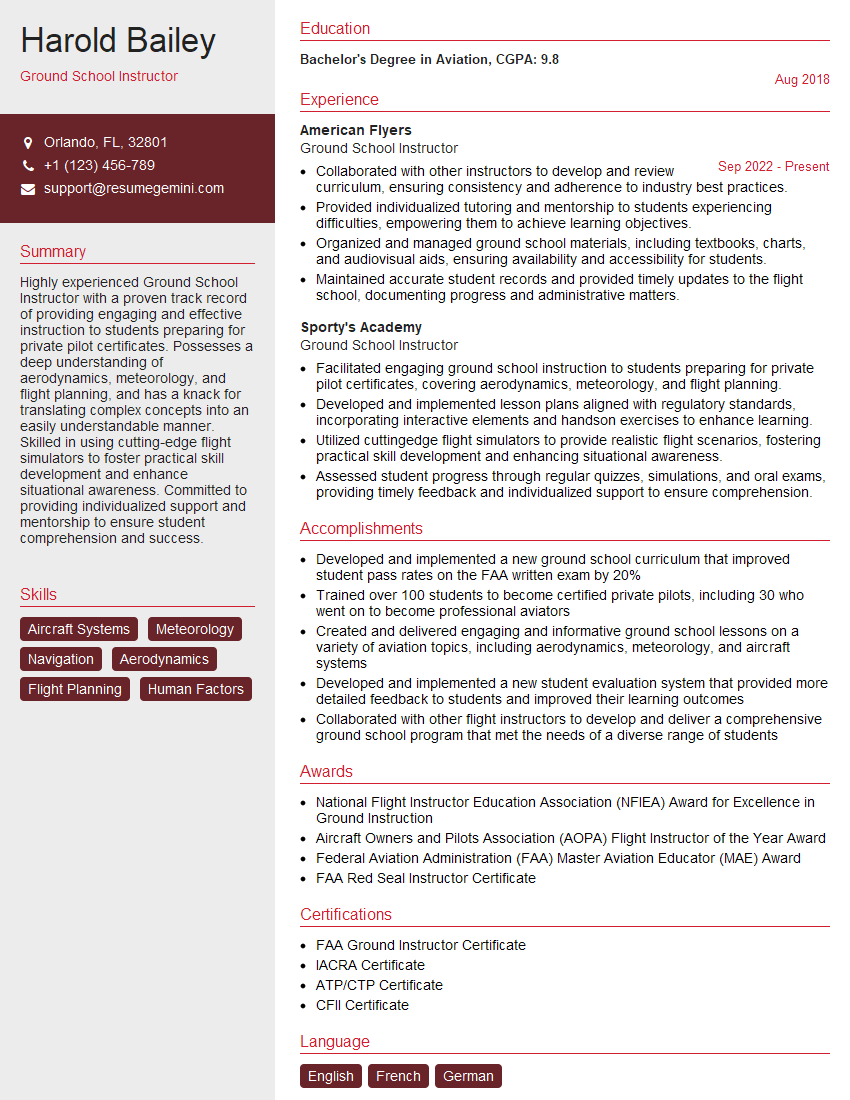
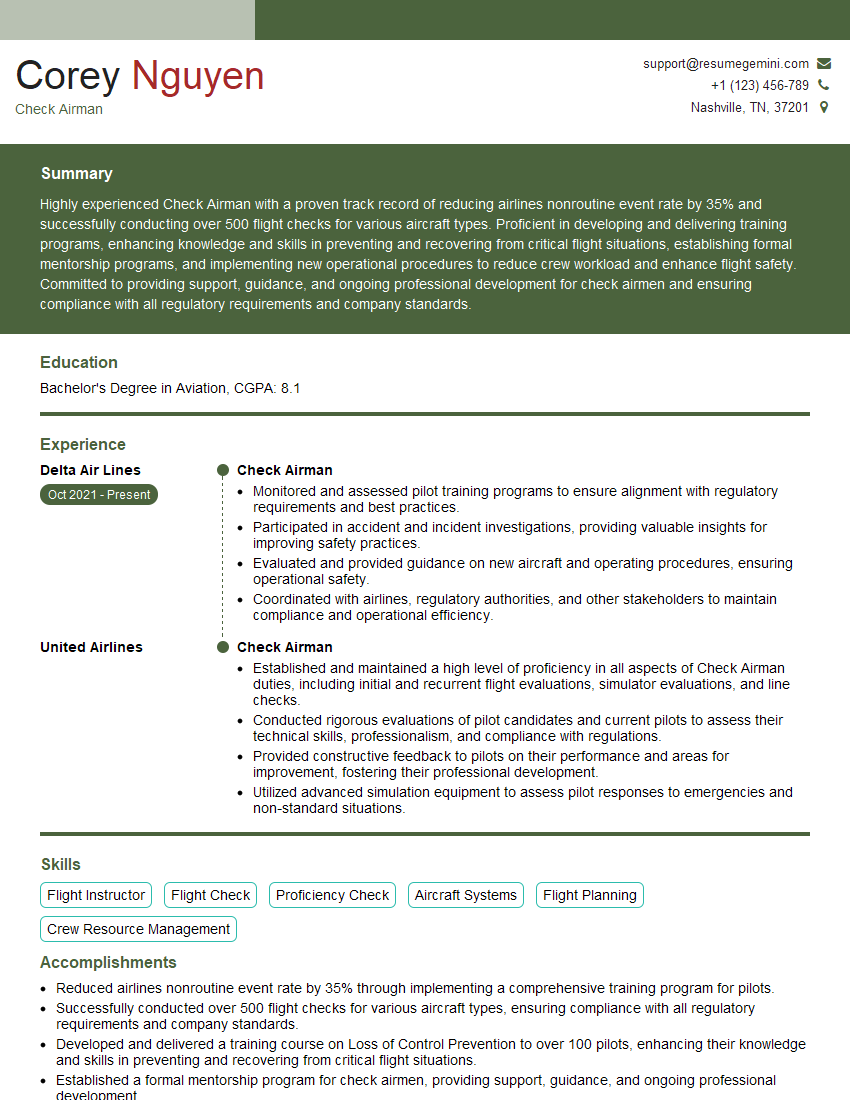
Mastering Aviation Training Management is crucial for career advancement in the dynamic aviation industry. It demonstrates your commitment to safety, efficiency, and regulatory compliance, opening doors to leadership roles and higher earning potential. To significantly improve your job prospects, focus on creating an ATS-friendly resume that highlights your skills and experience effectively. ResumeGemini is a trusted resource to help you build a professional and impactful resume. Examples of resumes tailored specifically to Aviation Training Management are available to guide you, ensuring your application stands out from the competition.
Explore more articles
Users Rating of Our Blogs
Share Your Experience
We value your feedback! Please rate our content and share your thoughts (optional).
What Readers Say About Our Blog
Very informative content, great job.
good