Interviews are more than just a Q&A session—they’re a chance to prove your worth. This blog dives into essential Experience in renewable energy project management interview questions and expert tips to help you align your answers with what hiring managers are looking for. Start preparing to shine!
Questions Asked in Experience in renewable energy project management Interview
Q 1. Describe your experience managing the entire lifecycle of a renewable energy project.
Managing the entire lifecycle of a renewable energy project is a multifaceted process, encompassing everything from initial concept and feasibility studies to commissioning and ongoing operation & maintenance. It’s like orchestrating a complex symphony, where each instrument (team, process, resource) plays a crucial role in creating a harmonious outcome.
My experience spans all phases: Starting with site selection and resource assessment (e.g., using GIS and solar irradiance data to identify optimal solar farm locations), I’ve then led the design, engineering, procurement, and construction (EPC) phases, ensuring compliance with all relevant standards and regulations. This includes managing engineering firms, contractors, and suppliers, coordinating their activities and resolving conflicts. During the construction phase, I closely monitor progress, manage risks, and ensure adherence to the project schedule and budget. Post-construction, I oversee commissioning and handover to the operations team, and even contribute to long-term asset management, ensuring optimal performance and return on investment. For example, in a recent 50MW wind farm project, I successfully navigated complex permitting processes, managed a team of 50+ individuals, and delivered the project on time and under budget, achieving a 99% safety record.
Q 2. Explain your understanding of different renewable energy technologies (solar, wind, hydro, etc.).
Renewable energy technologies offer diverse approaches to harnessing nature’s power. Think of them as different musical instruments, each with its unique capabilities.
- Solar PV: Converts sunlight directly into electricity using photovoltaic cells. This is relatively straightforward to implement, ideal for rooftops and large-scale solar farms, but its output fluctuates with weather conditions.
- Wind Energy: Captures kinetic energy from wind using turbines. This requires suitable wind resources and careful site selection, considering factors like wind speed, turbulence, and bird migration patterns. It is ideal for areas with consistent wind speeds.
- Hydropower: Leverages the potential energy of water stored at elevation to generate electricity using turbines. This requires access to water sources and often involves significant environmental considerations. It provides a more consistent power output compared to solar or wind.
- Geothermal Energy: Taps into heat from the Earth’s core. This is reliable and consistent, but its geographic limitations restrict its widespread implementation.
- Biomass Energy: Converts organic matter (plants, waste) into energy through combustion or anaerobic digestion. This offers a way to use renewable resources and reduce waste, but can have environmental concerns depending on the source and method of conversion.
My expertise encompasses all these technologies, allowing me to select the most suitable option for any given project based on its specific requirements and context.
Q 3. How do you manage project risks and uncertainties in renewable energy projects?
Managing risks and uncertainties in renewable energy projects requires a proactive and systematic approach. It’s like navigating a stormy sea—you need a detailed map (risk assessment), a sturdy ship (robust project plan), and a skilled captain (experienced project manager).
I employ a risk management framework that identifies, analyzes, and mitigates potential risks throughout the project lifecycle. This includes:
- Regular Risk Assessments: Identifying potential risks (e.g., regulatory delays, equipment failures, financing issues, grid connection challenges) and their probabilities and impacts.
- Mitigation Strategies: Developing plans to reduce or eliminate these risks. This may involve procuring insurance, diversifying suppliers, establishing contingency plans, or implementing robust quality control procedures.
- Contingency Planning: Preparing alternative plans or solutions for unexpected events. For example, having backup suppliers or alternative grid connection points.
- Monitoring and Reporting: Continuously tracking and documenting risks and mitigation efforts. Regular reporting keeps stakeholders informed and enables timely corrective action.
For example, in a solar project affected by unexpected supply chain disruptions, we mitigated the risk by securing alternative suppliers and adjusting the project schedule, ensuring minimal delay.
Q 4. What are the key regulatory and permitting challenges in renewable energy development?
Navigating the regulatory and permitting landscape is a significant hurdle in renewable energy development. It’s like obtaining multiple visas to travel to a new country. Each country (jurisdiction) has its own set of rules.
Key challenges include:
- Environmental Impact Assessments (EIAs): Thorough assessments are required to evaluate the project’s potential impacts on the environment and obtain necessary approvals. This is often lengthy and complex, needing interaction with environmental agencies.
- Land Use Permits: Securing permits for land acquisition, construction, and operation can be challenging, especially in areas with competing land uses or conservation concerns. Negotiations with landowners and local communities are crucial.
- Grid Connection Approvals: Connecting the renewable energy facility to the electricity grid requires approvals from grid operators and potentially upgrades to the grid infrastructure. This can lead to delays and added costs.
- Zoning and Building Codes: Complying with local zoning regulations and building codes can be complex and time-consuming. Each jurisdiction has its specific requirements and interpretation of regulations.
- Permitting timelines: Delays in obtaining permits can significantly impact project timelines and budgets. Effective communication with regulatory agencies is vital.
My experience involves building strong relationships with regulatory bodies, preparing comprehensive applications, and proactively addressing any potential concerns to expedite the permitting process.
Q 5. Describe your experience with project budgeting and financial management in renewable energy.
Project budgeting and financial management in renewable energy are critical for success. Think of it as managing a household budget, but on a much larger scale, with numerous variables such as fluctuating energy prices, interest rates, and government incentives.
My approach involves:
- Detailed Cost Estimation: Creating a comprehensive budget that accounts for all project costs, from land acquisition and equipment procurement to construction, operations, and maintenance. Using tools such as Levelized Cost of Energy (LCOE) models.
- Financial Modeling: Developing financial models to assess project feasibility, profitability, and return on investment (ROI). These models consider various scenarios and uncertainties.
- Funding Procurement: Securing project funding from various sources, such as banks, investors, government grants, and tax equity financing. Demonstrating strong financials to lenders is essential.
- Cost Control: Implementing rigorous cost control measures during the construction and operation phases to ensure the project remains within budget. Regular monitoring of expenditures and variance analysis are critical.
- Financial Reporting: Providing regular financial reports to stakeholders, including project owners, investors, and lenders, keeping them informed of the project’s financial performance.
For instance, on a recent project, I secured a $50 million loan by demonstrating a strong financial model that included realistic cost projections, robust revenue forecasts, and a detailed risk assessment.
Q 6. How do you ensure projects are completed on time and within budget?
Ensuring projects are completed on time and within budget requires a combination of effective planning, rigorous execution, and proactive monitoring. Think of it as conducting a complex orchestra where every musician needs to be in sync to create a harmonious outcome.
My strategies include:
- Detailed Project Schedules: Developing a comprehensive project schedule that clearly defines tasks, milestones, dependencies, and durations. Tools like MS Project or Primavera P6 are indispensable. Critical Path Method (CPM) analysis helps identify critical tasks.
- Regular Progress Monitoring: Tracking progress against the schedule and budget on a regular basis (weekly or bi-weekly) using Earned Value Management (EVM) techniques.
- Risk Management: Proactively identifying and mitigating potential risks that could impact the project timeline or budget.
- Effective Communication: Maintaining clear and consistent communication with the project team, stakeholders, and contractors. Regular meetings and progress reports facilitate issue resolution and prevent escalation.
- Change Management: Establishing a structured process for managing changes to the project scope, schedule, or budget. This involves formal change requests and impact assessments.
For example, in a wind farm project facing delays due to equipment delivery issues, we successfully mitigated the delay by implementing a revised schedule, securing alternative equipment, and leveraging fast-track construction methods.
Q 7. Explain your experience with stakeholder management (landowners, communities, utilities).
Stakeholder management is crucial in renewable energy projects. It’s all about building consensus and trust among different groups that each have their own interests and concerns. Think of it as being a mediator in a community, finding common ground among diverse perspectives.
My experience involves:
- Identifying Stakeholders: Identifying all key stakeholders, including landowners, local communities, utility companies, government agencies, and environmental groups.
- Stakeholder Analysis: Assessing the interests, influence, and potential concerns of each stakeholder.
- Communication and Engagement: Developing a robust communication plan to keep stakeholders informed about the project’s progress, addressing their concerns, and soliciting their feedback. This includes public meetings, workshops, and one-on-one discussions.
- Conflict Resolution: Proactively addressing and resolving conflicts among stakeholders. This requires diplomacy, negotiation skills, and a willingness to find mutually acceptable solutions.
- Relationship Building: Building strong relationships with stakeholders based on trust and mutual respect. Building these relationships early in the process is key.
For instance, in a community engagement process for a solar farm project, I successfully addressed concerns about land use and visual impacts, leading to broad community support for the project.
Q 8. How do you handle conflicts between project requirements and environmental concerns?
Balancing project requirements with environmental concerns is paramount in renewable energy. It’s not a case of choosing one over the other, but rather finding innovative solutions that meet both needs. I approach this by implementing a robust Environmental Impact Assessment (EIA) early in the project lifecycle. This EIA meticulously analyzes potential environmental impacts – including habitat disruption, water usage, and greenhouse gas emissions – and proposes mitigation strategies. For example, on a recent wind farm project, the initial site selection prioritized areas with minimal bird migration routes, reducing bird mortality risks. We also incorporated noise reduction technologies in turbine design to minimize impact on nearby communities. When conflicts arise, I facilitate collaborative discussions among stakeholders – engineers, environmental consultants, community representatives – to identify mutually acceptable compromises. This might involve adjusting the project scope, exploring alternative technologies, or implementing stricter environmental monitoring protocols. The key is open communication and a proactive approach to minimize environmental impact without compromising project feasibility.
Q 9. What are your preferred project management methodologies (Agile, Waterfall, etc.)?
My preferred project management methodologies are a hybrid approach that leverages the strengths of both Agile and Waterfall. While Waterfall’s structured approach is beneficial for well-defined aspects like regulatory approvals and grid connection processes, Agile’s iterative and adaptive nature allows for flexibility in areas like technology selection and site-specific challenges. For example, the initial phases of a solar farm project, including site surveys and permitting, benefit from the linear progression of a Waterfall methodology. However, once construction begins, Agile’s iterative approach, with frequent reviews and adjustments, becomes invaluable. This allows for quicker adaptation to unexpected site conditions or material delays. Regular sprint reviews with stakeholders enable early problem identification and resolution, ensuring the project stays on track and within budget. This flexible combination makes the project resilient to various challenges while maintaining a level of structure crucial for large-scale renewable energy endeavors.
Q 10. Describe your experience with renewable energy procurement processes.
My experience with renewable energy procurement encompasses the entire process, from initial market research and supplier selection to contract negotiation and vendor management. I’ve successfully managed procurement for various components including solar panels, wind turbines, inverters, and energy storage systems. I utilize a comprehensive approach involving detailed specifications, competitive bidding processes, and thorough due diligence to ensure quality, cost-effectiveness, and timely delivery. For example, in a recent project, we implemented a multi-criteria evaluation system that considered not only price but also technical specifications, warranty periods, supplier reputation, and sustainability certifications. This ensured the selection of high-quality, reliable components while prioritizing environmentally responsible suppliers. Effective contract management, including clear performance metrics and dispute resolution mechanisms, is critical to ensuring seamless procurement and minimizing potential risks.
Q 11. How do you monitor and control project progress and performance?
Monitoring and controlling project progress and performance is crucial for successful renewable energy project delivery. I utilize a combination of tools and techniques, including Earned Value Management (EVM), Gantt charts, and regular progress meetings. EVM allows me to track the project’s budget, schedule, and scope, identifying variances and taking corrective action. Gantt charts provide a visual representation of tasks and dependencies, enabling proactive identification of potential delays. Regular progress meetings with the project team and stakeholders facilitate open communication, problem-solving, and timely decision-making. Key performance indicators (KPIs) tailored to each project (e.g., energy yield, cost per kWh, safety incidents) are meticulously monitored and reported. Automated project management software helps streamline data collection and reporting. In case of deviations from the plan, I implement corrective measures like resource reallocation, schedule adjustments, and risk mitigation strategies. This proactive approach ensures the project remains within budget and on schedule, delivering the desired outcomes.
Q 12. Explain your experience with health and safety regulations in renewable energy projects.
Health and safety are paramount in renewable energy projects. My experience encompasses adhering to and implementing stringent health and safety regulations, including OSHA (or equivalent international standards) guidelines. This includes developing comprehensive safety plans, providing regular safety training to all personnel, and conducting thorough risk assessments. For example, I’ve implemented rigorous protocols for working at heights, handling heavy equipment, and managing electrical hazards on wind turbine projects. Regular safety inspections and audits are conducted to identify and mitigate potential hazards. Incident reporting and investigation processes are established to learn from mistakes and prevent future accidents. We utilize personal protective equipment (PPE) appropriate for the specific tasks and actively promote a safety-first culture where all employees are empowered to report hazards and stop work if necessary. This proactive approach ensures a safe working environment, reduces incidents, and safeguards the well-being of all project personnel.
Q 13. How do you manage and mitigate environmental impacts of renewable energy projects?
Managing and mitigating environmental impacts is a core element of my approach. This begins with a comprehensive EIA, identifying potential impacts and incorporating mitigation measures from the outset. This includes minimizing land disturbance, protecting biodiversity, managing water resources responsibly, and adhering to air quality standards. For example, in a solar farm project, we implemented measures to reduce habitat fragmentation by strategically placing solar panels and maintaining buffer zones for wildlife. We also incorporated water conservation strategies in the project design. Throughout the project lifecycle, we conduct regular environmental monitoring to assess the actual impacts compared to predictions in the EIA. Environmental management plans are regularly reviewed and updated based on monitoring data and technological advancements. This proactive, data-driven approach ensures compliance with regulations, minimizes negative environmental consequences, and contributes to the sustainability of the project.
Q 14. Describe your experience with grid integration of renewable energy projects.
Grid integration is a critical aspect of renewable energy projects, requiring careful planning and coordination with grid operators. My experience includes collaborating with grid authorities throughout the project lifecycle to secure grid connection approvals, meet technical requirements, and ensure seamless integration of renewable energy into the existing grid infrastructure. This involves detailed studies assessing grid stability, capacity, and voltage fluctuations. For example, on a large-scale wind farm project, we worked closely with the grid operator to ensure the project’s output was compatible with the grid’s capacity and that the necessary upgrades to the transmission lines were completed on time. We used advanced grid modeling software to simulate different scenarios and optimize the integration strategy. Effective communication and collaboration with grid operators are essential to prevent potential disruptions and ensure a reliable and efficient energy supply. Successful grid integration requires meticulous planning, technical expertise, and effective stakeholder management.
Q 15. How familiar are you with different energy storage technologies?
My familiarity with energy storage technologies is extensive. I’ve worked with various systems, from the most mature to emerging technologies. This includes:
- Pumped Hydro Storage (PHS): A well-established technology, PHS utilizes excess energy to pump water uphill, then releases it to generate power when demand is high. I’ve managed projects involving site assessments and permitting for PHS facilities.
- Battery Energy Storage Systems (BESS): This is a rapidly evolving field. I have experience with lithium-ion batteries, particularly in grid-scale applications, and understand the challenges related to battery lifetime, thermal management, and safety. I’ve overseen projects integrating BESS with solar and wind farms, improving grid stability.
- Compressed Air Energy Storage (CAES): I’m familiar with the principles of CAES and its potential, although its deployment remains less widespread than other technologies due to efficiency and cost considerations. I have assessed the feasibility of CAES in several projects.
- Thermal Energy Storage (TES): I understand the application of TES, utilizing molten salts or other materials to store energy from concentrated solar power plants, improving their dispatchability.
My knowledge extends beyond simply understanding the technologies themselves; I’m also proficient in evaluating the economic viability, environmental impact, and technical suitability of each option for specific project needs.
Career Expert Tips:
- Ace those interviews! Prepare effectively by reviewing the Top 50 Most Common Interview Questions on ResumeGemini.
- Navigate your job search with confidence! Explore a wide range of Career Tips on ResumeGemini. Learn about common challenges and recommendations to overcome them.
- Craft the perfect resume! Master the Art of Resume Writing with ResumeGemini’s guide. Showcase your unique qualifications and achievements effectively.
- Don’t miss out on holiday savings! Build your dream resume with ResumeGemini’s ATS optimized templates.
Q 16. What are your strategies for optimizing renewable energy project efficiency?
Optimizing renewable energy project efficiency is a multifaceted process. My strategies focus on several key areas:
- Detailed Site Assessment: Thorough analysis of wind resources (for wind), solar irradiance (for solar), and geographic constraints is paramount. For example, using LiDAR for wind resource assessment provides more accurate data compared to traditional methods, leading to better turbine placement and overall output.
- Advanced Modeling and Simulation: I use sophisticated software tools to simulate energy production, taking into account weather patterns, grid conditions, and energy storage integration. This helps in identifying potential bottlenecks and optimizing system design.
- Smart Grid Integration: Seamless integration with the existing grid infrastructure is crucial. This includes employing advanced control systems and predictive algorithms to manage power fluctuations and maximize grid stability. I have successfully implemented projects incorporating smart inverters and advanced forecasting techniques.
- Supply Chain Management: Effective procurement and logistics are essential for timely project completion and cost control. I’ve developed strategies to mitigate risks associated with supply chain disruptions, securing materials and equipment in advance.
- Optimized Operations and Maintenance (O&M): Establishing robust O&M plans from the initial project stages is crucial for long-term efficiency. This involves predictive maintenance strategies using sensor data and AI-powered analytics to minimize downtime and optimize performance.
For instance, on a recent solar project, optimizing the tilt angle of panels based on detailed solar irradiance modeling increased energy output by 5%.
Q 17. How do you identify and assess potential project risks?
Risk identification and assessment is a critical part of my process. I use a combination of qualitative and quantitative methods, including:
- SWOT Analysis: Identifying Strengths, Weaknesses, Opportunities, and Threats allows for a comprehensive understanding of the project landscape.
- Risk Register: A detailed register documents identified risks, their likelihood, potential impact, and mitigation strategies. This is a living document, updated throughout the project lifecycle.
- Probability and Impact Matrix: A visual tool for prioritizing risks based on their probability and potential impact. This allows for focusing resources on the most critical risks.
- Sensitivity Analysis: Assessing how changes in key variables (e.g., material costs, regulatory changes) would affect the project’s overall success.
- Stakeholder Analysis: Understanding the needs and concerns of all stakeholders (local communities, regulatory bodies, investors) is crucial for managing risks effectively.
For example, during a wind farm project, we identified a risk of delays due to permitting issues. By proactively engaging with regulatory bodies and developing a robust permitting strategy, we managed to mitigate this risk successfully.
Q 18. Explain your experience with contract negotiation and management.
I possess extensive experience in contract negotiation and management. My approach is collaborative and results-oriented. I ensure that contracts are:
- Clear and unambiguous: Using precise language to avoid disputes and misunderstandings.
- Comprehensive: Covering all aspects of the project, including scope, timelines, payments, and liabilities.
- Fair and equitable: Protecting the interests of all parties involved.
- Legally sound: Complying with all relevant laws and regulations.
I’m adept at negotiating favorable terms with suppliers, contractors, and off-takers. I leverage my technical expertise to understand the complexities of the contracts and to ensure the project’s success. I have successfully negotiated contracts for multiple renewable energy projects, ensuring that they align with project objectives and mitigate potential risks.
Q 19. Describe your experience with using project management software (MS Project, Primavera P6, etc.).
I’m proficient in using several project management software applications, including MS Project and Primavera P6. These tools are crucial for planning, scheduling, resource allocation, cost management, and risk assessment. My experience includes:
- Creating detailed project schedules: Defining tasks, dependencies, durations, and resource requirements.
- Tracking progress and managing changes: Using the software to monitor project performance against the baseline plan and to manage any deviations.
- Generating reports and dashboards: Providing stakeholders with clear, concise updates on project status and performance.
- Resource leveling and optimization: Allocating resources effectively to minimize conflicts and maximize efficiency.
For instance, in a recent large-scale solar project, I used Primavera P6 to create a comprehensive schedule that facilitated efficient resource allocation, leading to on-time and within-budget completion.
Q 20. How do you ensure compliance with relevant industry standards and regulations?
Compliance with industry standards and regulations is paramount. My approach involves:
- Proactive Monitoring: Staying up-to-date on the latest regulations and standards relevant to renewable energy projects (e.g., IEC standards, local building codes, environmental regulations).
- Internal Audits: Conducting regular audits to ensure adherence to these standards throughout the project lifecycle.
- Documentation Management: Maintaining comprehensive documentation to demonstrate compliance to regulatory bodies and stakeholders.
- Expert Consultation: Engaging with legal and environmental consultants as needed to ensure compliance.
I have successfully managed projects through complex permitting processes, obtaining necessary approvals from various agencies and demonstrating compliance with all relevant safety and environmental regulations.
Q 21. Explain your understanding of renewable energy policy and incentives.
My understanding of renewable energy policy and incentives is comprehensive. I’m familiar with various national and international policies aimed at promoting renewable energy adoption, such as:
- Renewable Portfolio Standards (RPS): Mandates requiring a certain percentage of electricity generation to come from renewable sources.
- Feed-in Tariffs (FITs): Guaranteed prices paid to renewable energy producers for electricity generated.
- Tax Credits and Incentives: Financial incentives aimed at reducing the cost of renewable energy projects.
- Carbon Pricing Mechanisms: Policies designed to put a price on carbon emissions, making renewable energy more competitive.
I integrate this understanding into my project planning, leveraging available incentives to optimize project finance and reduce costs. This includes exploring opportunities for grants, tax credits, and power purchase agreements (PPAs) that align with specific project needs and regulatory frameworks. For example, on a recent project, we successfully secured a significant tax credit, substantially reducing the project’s overall cost.
Q 22. How do you balance technical feasibility with economic viability in renewable energy projects?
Balancing technical feasibility and economic viability in renewable energy projects is a delicate dance. It requires a thorough understanding of both the technological constraints and the financial realities. Essentially, you need to ensure that the project can be built and operated as planned (technically feasible) and that it will generate sufficient returns to justify the investment (economically viable).
My approach involves a multi-stage process:
- Detailed Feasibility Study: This includes comprehensive technical assessments (site suitability, resource assessment, technology selection, grid connection analysis) and financial modeling (capital costs, operating expenses, revenue projections, return on investment (ROI), payback period).
- Sensitivity Analysis: We explore how changes in key parameters (e.g., energy prices, interest rates, equipment costs) impact the project’s financial performance. This helps identify risks and opportunities.
- Optimization: We use various optimization techniques to fine-tune project design and parameters to achieve the best possible balance between technical performance and cost-effectiveness. This might involve exploring different technologies, adjusting project scale, or optimizing operation strategies.
- Risk Management: We identify and mitigate potential risks throughout the project lifecycle. This could involve securing appropriate insurance, implementing robust contingency plans, and incorporating buffers into the financial model.
For example, in a recent solar project, we initially favored a more technologically advanced tracker system. However, the sensitivity analysis revealed that the additional upfront cost wasn’t justified by the marginal increase in energy production, given the prevailing energy prices. We opted for a fixed-tilt system, achieving a superior ROI without compromising on acceptable energy generation.
Q 23. Describe your experience in leading and motivating project teams.
Leading and motivating project teams in renewable energy requires a blend of technical expertise, strong communication skills, and a collaborative leadership style. I believe in fostering a culture of trust, transparency, and mutual respect.
My approach involves:
- Clear Goal Setting: Ensuring the team understands the project goals, objectives, and milestones. I use SMART goals (Specific, Measurable, Achievable, Relevant, Time-bound).
- Delegation and Empowerment: Assigning responsibilities based on team members’ strengths and providing them with the autonomy to execute tasks. I avoid micromanagement, preferring to support and guide rather than dictate.
- Open Communication: Regular team meetings, feedback sessions, and informal discussions help keep everyone informed and engaged. I encourage open dialogue and constructive criticism.
- Recognition and Appreciation: Acknowledging individual and team achievements is vital for maintaining morale and motivation. I celebrate successes both large and small.
- Conflict Resolution: I address conflicts promptly and fairly, using mediation techniques to find mutually agreeable solutions.
In one instance, we were facing a significant delay due to unforeseen permitting issues. By openly communicating the problem to the team, involving them in brainstorming solutions, and acknowledging their frustration, we were able to collectively navigate the challenge and ultimately deliver the project on time.
Q 24. How do you communicate project updates and progress effectively to stakeholders?
Effective communication with stakeholders is critical to project success. I tailor my communication approach to the audience, ensuring that information is clear, concise, and relevant.
My strategies include:
- Regular Reporting: Providing timely and accurate progress reports through various channels (e.g., email updates, project management software, presentations).
- Visual Communication: Using charts, graphs, and dashboards to visually represent project data and progress.
- Stakeholder Meetings: Conducting regular meetings to discuss project updates, address concerns, and gather feedback.
- Transparency and Honesty: Openly communicating both successes and challenges, proactively addressing potential issues before they escalate.
- Targeted Communication: Tailoring communication style and content to the specific needs and interests of each stakeholder group (e.g., technical details for engineers, financial summaries for investors).
For example, during the construction phase of a wind farm project, I used a dedicated project management platform to share real-time progress updates, including photos and videos from the site. This transparency helped alleviate anxieties among investors and community members, maintaining trust and support throughout the project.
Q 25. What are your experience with different types of renewable energy financing?
My experience encompasses various renewable energy financing mechanisms, each with its own advantages and disadvantages:
- Debt Financing: This involves securing loans from banks, financial institutions, or government agencies. It’s a common method, particularly for larger projects. I have experience negotiating loan terms, managing debt service, and ensuring compliance with loan covenants.
- Equity Financing: This involves raising capital by selling ownership shares in the project. I have worked with private equity firms, venture capital investors, and strategic partners to secure equity financing.
- Green Bonds: These are debt instruments specifically designed to finance green projects, including renewable energy. I’ve successfully secured green bond financing for several projects, leveraging the investor interest in sustainable investments.
- Government Grants and Subsidies: Many governments offer financial incentives to support renewable energy development. I’m adept at navigating the application processes and securing these funds.
- Power Purchase Agreements (PPAs): These are contracts that guarantee a fixed price for the electricity generated by the renewable energy project. This provides long-term revenue stability and can be used as collateral for financing.
Each financing option requires a different approach. For example, securing debt financing requires a strong financial model, demonstrating creditworthiness and project viability, while equity financing necessitates a compelling investment thesis highlighting the project’s potential returns.
Q 26. How do you handle changes in project scope or requirements?
Handling changes in project scope or requirements is an inevitable aspect of project management, particularly in dynamic environments like renewable energy. My approach prioritizes a structured and collaborative process:
- Formal Change Request Process: All changes must be documented through a formal change request, specifying the nature of the change, its impact on the project schedule and budget, and proposed solutions.
- Impact Assessment: A thorough assessment of the impact of the proposed change on technical feasibility, cost, schedule, and risks is crucial.
- Stakeholder Consultation: Consult with key stakeholders (e.g., clients, investors, regulatory authorities) to gain consensus on the proposed changes.
- Revised Project Plan: Update the project plan, budget, and schedule to reflect the approved changes.
- Communication: Communicate the changes effectively to all team members and stakeholders.
In one case, a change in interconnection requirements necessitated a redesign of the electrical infrastructure. By following a structured change management process, we minimized delays and cost overruns while ensuring that the project remained compliant with regulations.
Q 27. What is your experience with commissioning and handover of renewable energy projects?
Commissioning and handover of renewable energy projects are crucial stages that ensure the project is operational, meets performance requirements, and is transferred safely and effectively to the owner/operator. My experience covers all aspects of this process:
- Pre-commissioning: This involves testing and verifying individual components and systems before they are integrated into the overall project. This phase helps identify and resolve issues early.
- Commissioning: This is the systematic process of verifying that all systems and components function as designed and meet performance requirements. This involves rigorous testing, inspections, and documentation.
- Performance Testing: Measuring the performance of the completed project against specified benchmarks. This includes energy yield assessments, efficiency measurements, and reliability testing.
- Documentation: Comprehensive documentation of the commissioning process, including test results, performance data, and operational manuals, is essential for handover.
- Training: Providing training to the owner/operator’s personnel on the operation and maintenance of the project.
- Handover: The formal transfer of the completed project, including all documentation, to the owner/operator.
For example, in a recent solar farm project, we developed a detailed commissioning plan, which included comprehensive testing of each PV panel, inverter, and the entire grid connection system. This rigorous approach ensured that the project met its performance targets and was successfully handed over to the owner.
Q 28. Describe a time you faced a significant challenge in a renewable energy project and how you overcame it.
During the construction of an offshore wind farm, we experienced a significant delay due to unexpected geological conditions at the site. The seabed proved to be much more challenging than anticipated, making the installation of the foundation structures significantly more difficult and time-consuming.
To overcome this challenge, we took the following steps:
- Geotechnical Investigation: We conducted a detailed geotechnical investigation to thoroughly understand the soil conditions and identify the most appropriate foundation solutions.
- Engineering Redesign: Our engineers redesigned the foundation structures to accommodate the challenging seabed conditions, ensuring stability and safety.
- Specialized Equipment: We procured specialized equipment capable of working in the challenging conditions.
- Risk Assessment and Mitigation: We performed a thorough risk assessment, identifying and mitigating potential risks associated with the new foundation design and the challenging environment.
- Collaboration and Communication: We maintained open communication with all stakeholders, including the client, contractors, and regulatory authorities, keeping them informed of the situation and the progress made in addressing it.
While the unforeseen geological conditions caused a delay, our proactive approach and collaborative efforts minimized the impact on the project’s overall timeline and budget. Ultimately, the project was completed successfully, highlighting the importance of robust risk management and adaptive problem-solving skills in renewable energy project management.
Key Topics to Learn for Renewable Energy Project Management Interviews
- Project Scoping and Planning: Understanding project feasibility studies, defining project objectives, developing detailed project schedules, and resource allocation strategies within the renewable energy sector (e.g., solar, wind, hydro).
- Risk Management in Renewable Energy Projects: Identifying, assessing, and mitigating risks associated with weather dependencies, regulatory changes, supply chain disruptions, and technological advancements. Practical application: Developing contingency plans and risk mitigation strategies for specific project challenges.
- Renewable Energy Technologies: Demonstrating a solid understanding of various renewable energy technologies (solar PV, wind turbines, geothermal, etc.), their operational principles, and their respective advantages and disadvantages. Practical application: Discussing the selection criteria for a particular technology based on site-specific conditions and project goals.
- Environmental Impact Assessment and Permitting: Knowledge of environmental regulations and procedures for obtaining necessary permits for renewable energy projects. Practical application: Describing the process of conducting an environmental impact assessment and navigating the permitting process.
- Budget Management and Cost Control: Developing and managing project budgets, tracking expenses, and implementing cost-saving measures. Practical application: Explaining techniques for cost optimization and value engineering in renewable energy projects.
- Stakeholder Management: Effectively communicating with and managing expectations of diverse stakeholders (landowners, communities, government agencies, investors). Practical application: Describing strategies for building consensus and resolving conflicts among stakeholders.
- Project Monitoring and Reporting: Utilizing project management tools and techniques to monitor progress, identify potential delays, and prepare regular reports for stakeholders. Practical application: Explaining the use of key performance indicators (KPIs) to track project performance.
- Health and Safety Regulations in Renewable Energy: Adherence to safety protocols and best practices throughout the project lifecycle. Practical application: Describing safety measures specific to different renewable energy technologies.
- Contract Negotiation and Management: Understanding different contract types and successfully negotiating and managing contracts with suppliers, contractors, and other stakeholders. Practical application: Discussing strategies for managing contractual risks and resolving disputes.
Next Steps
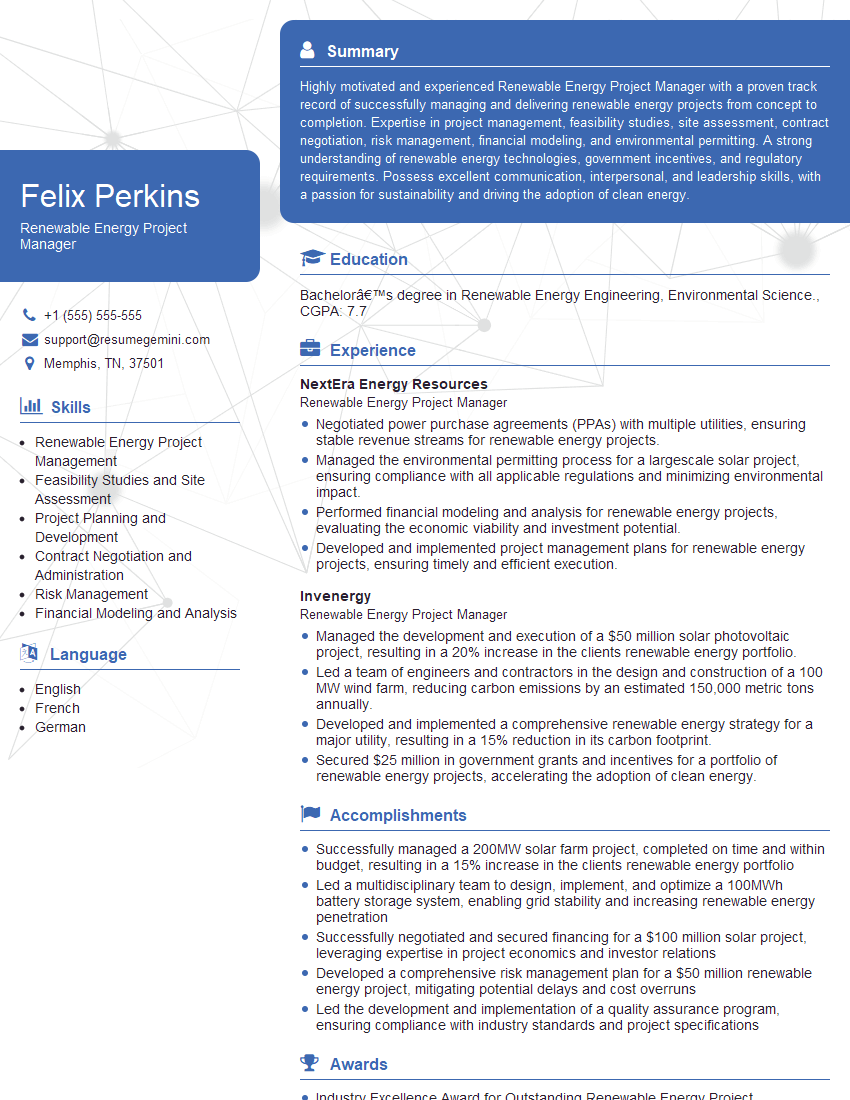
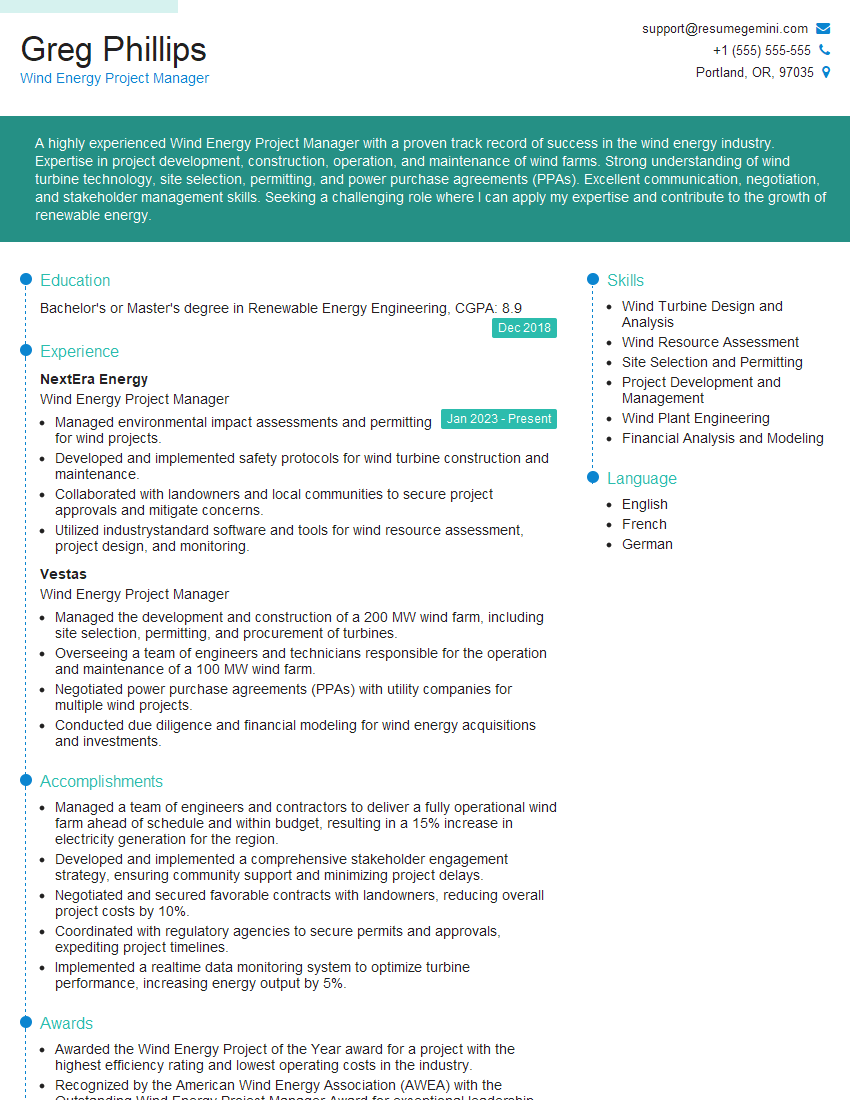
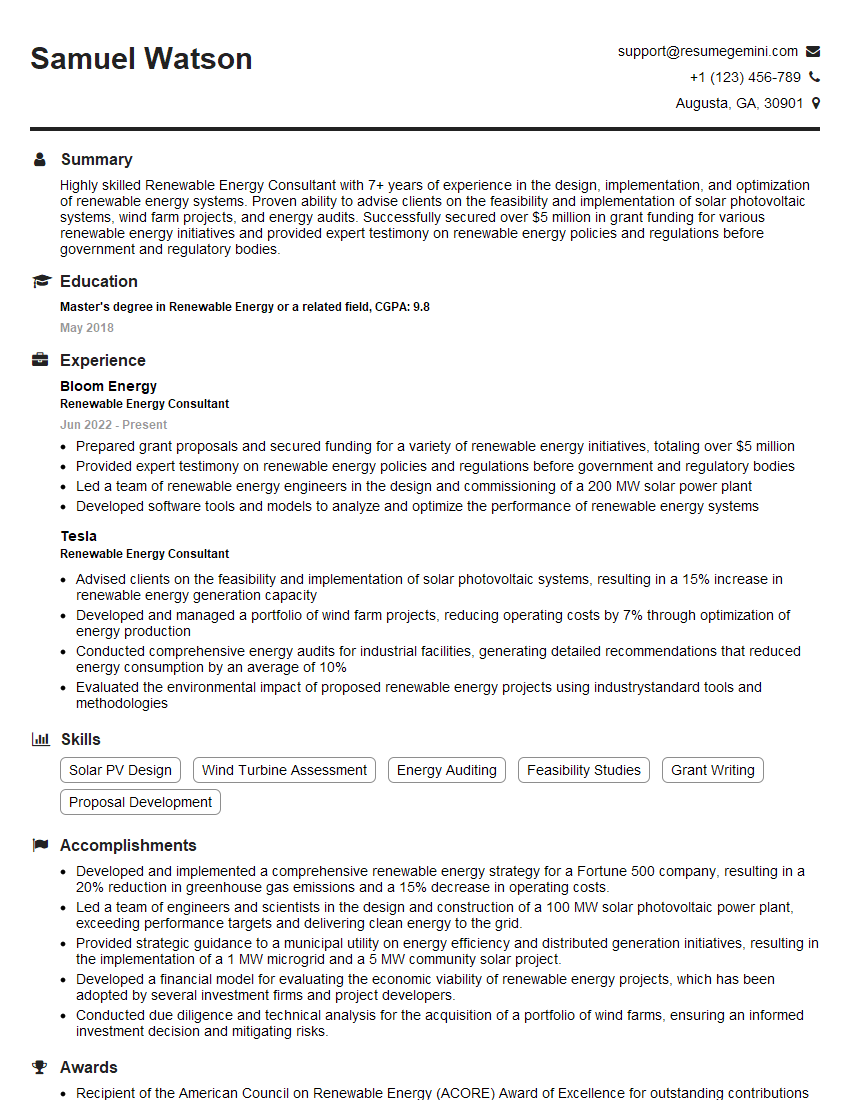
Mastering renewable energy project management is crucial for a successful and rewarding career in this rapidly growing sector. It opens doors to leadership roles and higher earning potential. To significantly boost your job prospects, create an ATS-friendly resume that effectively showcases your skills and experience. ResumeGemini is a trusted resource that can help you build a professional and impactful resume. Examples of resumes tailored to renewable energy project management experience are available to guide you. Take the next step towards your dream career today!
Explore more articles
Users Rating of Our Blogs
Share Your Experience
We value your feedback! Please rate our content and share your thoughts (optional).
What Readers Say About Our Blog
Very informative content, great job.
good