Interviews are more than just a Q&A session—they’re a chance to prove your worth. This blog dives into essential Swim Stroke Technique Instruction interview questions and expert tips to help you align your answers with what hiring managers are looking for. Start preparing to shine!
Questions Asked in Swim Stroke Technique Instruction Interview
Q 1. Explain the biomechanics of the freestyle stroke.
Freestyle, or front crawl, is a complex interplay of body rotation, propulsion, and breathing. Its biomechanics revolve around generating forward momentum through a cyclical arm pull and leg kick, all while maintaining a streamlined body position.
Body Rotation: Imagine a corkscrew – the body rotates around a longitudinal axis. This rotation allows for a longer reach and a more powerful pull. The rotation initiates with the leading arm entering the water and continues throughout the stroke cycle.
Arm Pull: The arm pull consists of several phases: entry, catch, pull-through, and recovery. The catch phase is critical, utilizing the forearm and hand to ‘catch’ the water and pull it backwards. The pull-through involves a powerful movement from the elbow to the hips. Proper body rotation maximizes the effectiveness of the pull phase.
Leg Kick: The leg kick is a relatively small but important component of propulsion, primarily focused on maintaining body position and balance. The kick should be performed from the hips, not just the knees, creating a narrow, high-frequency flutter kick.
Breathing: Breathing is integrated into the stroke cycle, typically occurring when the arm on the breathing side is in the recovery phase. This involves a quick turn of the head, inhaling and exhaling while minimizing disruption to the body position.
In essence, efficient freestyle is about seamlessly linking these elements. Think of it as a coordinated dance of movements, not a series of isolated actions. A common analogy is the action of a propeller—each part working together for optimal performance.
Q 2. Describe the proper body position for backstroke.
Proper body position in backstroke is crucial for minimizing drag and maximizing propulsion. The ideal position is a flat, streamlined body with minimal vertical movement.
High Hip Position: The hips should be kept high, close to the surface of the water. This prevents excessive drag from the lower body sinking. Imagine a slightly curved line from the head to the feet, not a straight line.
Core Engagement: A strong core helps maintain this flat position. Engaging your abdominal and back muscles stabilizes the body, preventing excessive rotation or swaying.
Streamlined Head and Shoulders: The head should remain in line with the body. Avoid lifting the head too high, which causes the lower body to sink. The shoulders should be relaxed and flat, minimizing resistance in the water.
Minimal Upper Body Rotation: While some rotation is natural, excessive rotation creates drag and reduces efficiency.
Think of a torpedo – long, smooth, and travelling through the water with minimal resistance. That’s the goal for backstroke body position.
Q 3. How do you teach efficient breathing techniques in breaststroke?
Efficient breathing in breaststroke is critical for maintaining endurance and comfort. It’s a uniquely challenging aspect, as the stroke requires a very specific body position and movement to breathe effectively.
Timing: Breathing occurs during the recovery phase, after the pull and before the kick. As the arms extend forward, the face rises above the water for a quick inhalation. Exhalation is performed underwater during the pull phase.
Head Position: The head should lift minimally; only enough to bring the mouth above the water for a brief inhalation. Avoid lifting the head too high, it disrupts the body’s streamlined position and hinders propulsion.
Controlled Exhalation: A slow, controlled exhalation underwater is essential. This prevents gasping for air and increases efficiency. Exhaling slowly prevents the buildup of pressure in the lungs and helps to create a smooth, rhythmic breathing pattern.
Practice: Mastering breaststroke breathing requires consistent practice. Start with short drills focusing solely on breathing technique before integrating it into the full stroke.
I often use the analogy of a gentle, controlled surfacing of a submarine—a smooth, swift inhalation, and a gradual, steady descent for exhalation. It’s all about smooth transitions and controlled movements.
Q 4. What are common errors in butterfly kick and how do you correct them?
The butterfly kick, a powerful and technically demanding element, suffers from several common errors that significantly impact performance.
Kicking from the knees: This is a major fault. The kick should originate from the hips, utilizing the core muscles for a powerful, undulatory movement. Knee-driven kicks are weak and inefficient.
Stiff ankles: The ankles should be flexible, allowing for a powerful ‘whip-like’ motion. Stiff ankles restrict range of motion and reduce propulsive force. Think of using your ankles as powerful springs.
Asymmetrical kick: The kick needs to be symmetrical and well-timed with the arm pull. A lack of symmetry can lead to imbalances and reduced speed. Visualization of a smooth wave-like motion can assist in achieving symmetry.
Poor timing with arm pull: The kick should be coordinated with the arm pull, typically reaching its peak power at the same time as the power phase of the arm stroke.
Corrections: These errors are corrected through drills that focus on proper hip and ankle flexibility, core engagement, and the timing of the kick. Drills involving kicking on the side, focusing on the hip-driven movement and ankle flexibility, are very effective. Visual and kinesthetic feedback is essential. Video analysis is a powerful tool in identifying and correcting these flaws.
Q 5. How do you assess a swimmer’s stroke technique?
Assessing a swimmer’s stroke technique involves a multi-faceted approach combining visual observation, video analysis, and sometimes even the use of technology.
Visual Observation: This is the foundational method. I look for overall body position, arm and leg action, breathing pattern, and rhythm. From the side, I analyze the body’s alignment, the entry of the arms, the pull phase, and the kick. From the front, I look for symmetry and balance. This observational assessment will highlight major errors.
Video Analysis: Recording and analyzing a swimmer’s stroke provides a detailed breakdown of individual movements. It allows for a slow-motion review of aspects like the catch phase and the kick’s timing, making it easier to identify subtle errors that might be missed during real-time observation. This is a powerful feedback tool
Technological Tools: Tools like underwater cameras, or even simple wearable sensors to monitor heart rate and stroke rate, provide objective data. This helps confirm the observations made during the visual analysis and offers more precision to the assessment.
Feedback and Communication: After assessment, a clear, effective communication of the identified issues is crucial. Providing constructive feedback in positive reinforcement to build confidence and facilitate improved technique is essential.
The goal is to create a picture of the swimmer’s stroke efficiency and identify areas for improvement. It’s not just about pointing out mistakes, it’s about helping the swimmer understand the mechanics and develop a more efficient and powerful stroke.
Q 6. What are the key elements of a good swim warm-up?
A good swim warm-up is crucial for preparing the body for a more effective and injury-free workout. It should increase blood flow, loosen muscles, and mentally prepare the swimmer for the session ahead. It usually involves a progression from gentle to more intense activities.
Light Cardio: Start with 5-10 minutes of light cardio, such as easy swimming or jogging, to increase heart rate and blood flow.
Dynamic Stretching: Include dynamic stretches such as arm circles, leg swings, and torso twists. These stretches improve range of motion without holding a static position for too long.
Stroke Drills: Incorporate specific stroke drills that focus on technique, such as single-arm freestyle, kick drills, or pull drills. These are fundamental to improving stroke technique.
Progressive Intensity: Gradually increase the intensity of your swim drills leading up to the main workout set. This prepares the body for the increased physical demands.
A good warm-up prevents injuries by preparing the muscles for activity. It also improves performance by enhancing range of motion and coordination. Think of a car engine being warmed up—it runs much more smoothly and efficiently after being properly prepared.
Q 7. Explain the importance of core stability in swimming.
Core stability is fundamental in swimming because it acts as the central point of power generation and control for all the stroke movements. A strong core provides stability, reduces drag, and maximizes the efficiency of the arm pull and leg kick.
Body Rotation: A stable core is crucial for efficient body rotation during strokes like freestyle, backstroke and butterfly. Without this core stability, rotation becomes uncontrolled, leading to energy loss.
Power Transfer: The core acts as a conduit, transferring power from the legs and arms to the rest of the body. A strong core maximizes the effectiveness of this power transfer for propulsion.
Streamlined Position: Core stability helps maintain the ideal streamlined body position in the water, minimizing drag and improving efficiency. It helps keep the body flat and minimizes undulation.
Injury Prevention: A strong core can help prevent injuries by supporting the spine and stabilizing the body during powerful movements.
Imagine the core as the center of a wheel—all the other parts (arms and legs) rotate around this central point of power. A weak core is like a wobbly wheel—inefficient and prone to failure.
Q 8. How do you adapt your teaching style for different age groups?
Adapting my teaching style to different age groups is crucial for effective learning. Younger children (e.g., 5-8 years old) require a more playful and game-based approach. Lessons incorporate fun activities, short attention spans are considered, and positive reinforcement is key. For example, I might use floating toys or games to teach body position. Teenagers, however, generally respond well to more structured, goal-oriented instruction, with an emphasis on technique refinement and competitive aspects. Adult learners often prioritize fitness goals and require detailed explanations of biomechanics and personalized feedback. With adults, I spend more time on the ‘why’ behind each technique adjustment.
- Children (5-8): Games, visual aids, short drills.
- Teenagers (13-18): Goal setting, competitive drills, detailed analysis of stroke technique.
- Adults (18+): Biomechanical explanations, personalized feedback, fitness-focused training.
Q 9. Describe your approach to teaching beginners.
Teaching beginners involves a gradual progression focusing on water safety and fundamental skills before introducing stroke techniques. First, I ensure they are comfortable in the water, teaching basic water acclimatization and safety procedures. Next, I introduce fundamental skills like kicking, arm movements, and breathing, all in a controlled and supportive environment. I start with simple, repetitive drills. For example, we might practice kicking on the side of the pool holding onto the wall or floating on their backs. Once comfort and basic skills are established, we gradually introduce the freestyle stroke, breaking it down into manageable components. The focus is always on building confidence and a solid foundation before increasing complexity.
Q 10. How do you motivate swimmers to improve their technique?
Motivating swimmers to improve technique requires a multifaceted approach. Positive reinforcement is crucial; celebrating small victories and highlighting progress keeps them engaged. Setting realistic, achievable goals, broken down into smaller milestones, prevents discouragement. Providing regular, constructive feedback, focusing on both strengths and areas for improvement, is also vital. I use video analysis to visually demonstrate progress and areas needing attention. Incorporating drills tailored to individual needs, ensuring challenges are appropriately scaled, keeps the training engaging. Finally, fostering a sense of community and camaraderie among swimmers helps to build motivation and encourage peer support. Sharing successes and challenges together fosters a positive and supportive training environment.
Q 11. What are the signs of overtraining in swimmers?
Overtraining manifests in various ways, and it’s crucial to recognize these signs. Persistent muscle soreness that doesn’t improve with rest is a significant indicator. A decrease in performance despite increased training volume is another key sign. Other symptoms include fatigue, irritability, loss of motivation, changes in appetite, and difficulty sleeping. Swimmers might also experience increased susceptibility to illness and injuries. It’s important to monitor these signs carefully and adjust the training plan if necessary. Rest and recovery are crucial in preventing overtraining. Early intervention is vital for preventing long-term health issues.
Q 12. How do you prevent injuries in swimmers?
Preventing injuries in swimmers requires a holistic approach. Proper warm-up and cool-down routines are essential to prepare muscles and prevent strain. Emphasis on correct technique reduces strain on joints and muscles. A gradual increase in training volume and intensity prevents sudden overload. Adequate rest and recovery are crucial to allow muscles to repair. Strength training, focusing on core and shoulder stability, enhances injury resistance. Hydration and proper nutrition support overall health and muscle function. Paying attention to any pain or discomfort and addressing it promptly is also very important. Regular check-ups with a medical professional can ensure early detection and management of any potential issues.
Q 13. How do you address swimmer’s fear of water?
Addressing a swimmer’s fear of water requires patience, understanding, and a gradual, supportive approach. I start by building trust and creating a safe, comfortable environment. We might begin with simple activities like playing in shallow water or getting used to the sensation of water on their face. Gradually, I introduce more challenging activities, always respecting their boundaries and ensuring they feel in control. Positive reinforcement and encouragement are crucial. Celebrating small accomplishments and focusing on their progress builds confidence. If needed, I may collaborate with other professionals, like a therapist or counselor, to address underlying anxieties.
Q 14. Describe your experience with different training equipment.
My experience with training equipment is extensive. I regularly incorporate pull buoys to isolate leg strength and improve body position. Kickboards help develop leg strength and kick technique. Hand paddles enhance arm strength and power. Using snorkels allows swimmers to focus on arm technique without the distraction of breathing. Underwater video cameras and wearable sensors allow for detailed analysis and precise feedback. Timing tools, like pace clocks, assist in developing consistent pacing. Each piece of equipment has a specific purpose and should be used strategically to improve particular aspects of the swimmer’s technique. Improper use of equipment can lead to injury or inefficient training, so careful instruction is essential.
Q 15. What is your experience with stroke analysis using video technology?
Video technology has revolutionized stroke analysis, allowing for objective and detailed feedback. My experience encompasses utilizing various software platforms to record and analyze swimmers’ strokes from multiple angles. This allows me to identify subtle inefficiencies in body position, timing, and propulsion. For example, I can pinpoint the exact moment a swimmer’s hand exits the water prematurely, leading to reduced power. I then use this data to create personalized drills and training plans tailored to correct these issues. I find slow-motion analysis particularly beneficial in identifying flaws that might be missed during real-time observation. The use of video also provides a visual record of progress, allowing the swimmer to see tangible improvements over time, which is a powerful motivational tool.
Career Expert Tips:
- Ace those interviews! Prepare effectively by reviewing the Top 50 Most Common Interview Questions on ResumeGemini.
- Navigate your job search with confidence! Explore a wide range of Career Tips on ResumeGemini. Learn about common challenges and recommendations to overcome them.
- Craft the perfect resume! Master the Art of Resume Writing with ResumeGemini’s guide. Showcase your unique qualifications and achievements effectively.
- Don’t miss out on holiday savings! Build your dream resume with ResumeGemini’s ATS optimized templates.
Q 16. How do you create and implement a swim training plan?
Creating a swim training plan is a multi-faceted process that begins with a thorough assessment of the swimmer’s current skill level, goals, and training history. I consider factors such as their age, experience, and any existing injuries. A well-structured plan incorporates elements like distance work, speed work, and technique drills. For example, a plan for a competitive swimmer might involve high-intensity intervals for speed development, combined with longer, continuous swimming for endurance. For beginners, the emphasis would be on proper technique and building a solid foundation. The plan is not static; it’s adaptable based on the swimmer’s progress and feedback. Regular assessment through testing and observation enables continuous refinement, ensuring the plan remains effective and challenging. I always incorporate rest and recovery periods to prevent overtraining and injury.
Q 17. How do you modify stroke technique for swimmers with disabilities?
Adapting stroke technique for swimmers with disabilities requires a highly individualized approach. The modifications need to be tailored to the specific disability and its impact on the swimmer’s movement. For instance, a swimmer with limited range of motion in their shoulders might benefit from alternative arm movements, or a swimmer with a visual impairment might need more verbal cues and tactile guidance. My approach involves close collaboration with the swimmer, physical therapists, and other healthcare professionals to develop a safe and effective training program. The focus is always on maximizing the swimmer’s potential while ensuring their safety and well-being. I might use assistive devices such as pull buoys or kickboards to compensate for limitations. Success relies on understanding the unique challenges each individual faces and creatively finding solutions that allow them to participate and enjoy swimming.
Q 18. Describe your experience teaching different swim strokes.
I’ve had extensive experience teaching all four major competitive strokes: freestyle, backstroke, breaststroke, and butterfly. Each stroke requires a unique approach to teaching. Freestyle, for instance, emphasizes body rotation and a high elbow catch, while butterfly requires exceptional strength and coordination. Breaststroke is characterized by its undulating body movement, while backstroke necessitates a strong kick and consistent body alignment. My teaching methodology emphasizes breaking down each stroke into fundamental components, focusing on proper technique before progressing to speed and endurance. I use a combination of demonstrations, verbal cues, and visual aids to ensure understanding. I also incorporate games and drills to maintain engagement and make the learning process enjoyable, catering my approach to each swimmer’s learning style and individual needs. Providing feedback in a positive and constructive manner is key to helping swimmers improve and build confidence.
Q 19. What are the benefits of dryland training for swimmers?
Dryland training is crucial for swimmers because it complements in-water practice by enhancing strength, flexibility, and power. Exercises that focus on core strength, such as planks and stability ball work, directly improve body position and rotational power in the water. Weight training can improve muscular strength and endurance, leading to faster and more efficient swimming. Flexibility exercises, including dynamic stretching and yoga, improve range of motion, reducing the risk of injury and allowing for a more efficient stroke. Dryland training also enhances balance and coordination, which are vital for maintaining proper body alignment and technique in the water. It can also help improve overall fitness and reduce the risk of injury from overuse.
Q 20. Explain the importance of proper pacing in swimming.
Proper pacing in swimming is essential for optimizing performance and preventing early fatigue. It’s about distributing energy effectively throughout the race to maintain a consistent speed and finish strong. A poorly-paced race can lead to a rapid depletion of energy, resulting in a significantly slower finish time. I teach my swimmers to understand their own energy levels and adjust their pace accordingly. Factors such as race distance, individual strengths, and race strategy all influence the ideal pacing plan. For example, a longer race might necessitate a more conservative initial pace, gradually increasing speed in the latter stages. Regular practice of pace-specific training sets helps swimmers develop an intuitive sense of their optimal pace and build endurance. Using heart rate monitors and pace clocks can also provide valuable feedback and assist in refining pacing strategies.
Q 21. How do you handle challenging or unmotivated swimmers?
Dealing with challenging or unmotivated swimmers requires patience, understanding, and a tailored approach. The first step involves identifying the root cause of the challenge or lack of motivation. This may stem from fear, injury, lack of confidence, or simply a lack of enjoyment. Once the underlying issue is identified, I create a supportive and encouraging environment, focusing on setting realistic goals and celebrating even small achievements. Positive reinforcement and constructive feedback are key. I adapt my teaching methods to better match the swimmer’s learning style and preferences. Involving the swimmer in the goal-setting process helps them feel a sense of ownership and increases their commitment. Sometimes, simply changing the training routine or incorporating fun games and drills can rekindle interest. For more persistent challenges, seeking additional support from sports psychologists or other professionals may be beneficial.
Q 22. How do you maintain a safe and positive learning environment?
Maintaining a safe and positive learning environment in swim instruction is paramount. It’s about creating a space where swimmers feel comfortable, challenged, and respected, fostering both skill development and a love for the sport.
- Safety First: This involves meticulous adherence to safety regulations, including proper supervision ratios, clear communication of rules, and regular equipment checks. For example, I always ensure that lane lines are securely in place, and that all swimmers understand the buddy system before entering deep water.
- Positive Reinforcement: Focusing on effort and progress, rather than just results, creates a supportive atmosphere. I frequently praise effort, even small improvements, and use positive language to correct techniques. For instance, instead of saying ‘That was wrong,’ I might say, ‘Let’s try extending your arm a bit further next time.’
- Inclusivity and Respect: Creating a welcoming environment for all skill levels and backgrounds is crucial. I actively encourage teamwork and peer support, ensuring everyone feels valued and respected. This could mean pairing advanced swimmers with beginners for buddy swims, promoting a spirit of camaraderie.
- Clear Communication: Effective communication is essential. I ensure instructions are clear, concise, and delivered in a manner that’s easy to understand, regardless of the swimmer’s age or experience level. Demonstrations and visual aids often complement verbal instructions.
By consistently prioritizing safety, positivity, and inclusivity, I cultivate a learning environment where swimmers thrive.
Q 23. What are your methods for providing constructive feedback?
Constructive feedback in swim instruction is about providing specific, actionable information that helps swimmers improve their technique. It’s not about criticism, but about guiding them towards better performance.
- Specific and Actionable: Instead of general comments like ‘Your stroke is bad,’ I focus on specific aspects. For example, ‘Your pull-through is lacking extension, let’s work on keeping your arm straight for a more powerful stroke.’
- Positive Framing: I always begin with positive reinforcement, acknowledging their strengths before addressing areas for improvement. This helps maintain their motivation and confidence.
- Video Analysis: Using video recordings allows swimmers to visualize their technique and identify areas for improvement. We review the video together, focusing on specific points of their stroke, comparing their form to that of accomplished swimmers. This provides visual confirmation of feedback.
- Progressive Improvement: I set realistic goals, breaking down improvements into manageable steps. Focusing on one or two key elements at a time, rather than overwhelming them with multiple corrections, fosters better progress.
- Individualized Approach: Recognizing that swimmers learn at different paces and have unique strengths and weaknesses, I personalize my feedback to address their individual needs. Some may need more visual cues, while others benefit more from kinesthetic instruction.
By using a blend of these methods, I ensure my feedback is both helpful and motivating, promoting a continuous cycle of improvement.
Q 24. Describe your experience with swim meets and competitions.
My experience with swim meets and competitions spans over ten years, encompassing various roles from coaching to officiating. I’ve worked with swimmers of all ages and skill levels, preparing them for local, regional, and even national competitions.
- Coaching: I’ve developed training plans focusing on peak performance, strategy development, and mental preparation for competitions. This involves analyzing swimmers’ strengths and weaknesses, creating race-specific strategies, and incorporating mental training techniques to manage competition stress.
- Officiating: Officiating at various meets provided valuable insight into judging techniques and race procedures. This understanding helps me better prepare my swimmers for competition and expectations.
- Team Dynamics: I understand the importance of teamwork, camaraderie, and the supportive environment necessary for a successful team. I’ve fostered team unity and cohesiveness, promoting collaboration and mutual support among team members.
- Meet Preparation: Preparing swimmers for competition involves more than just physical training. It involves creating a schedule of practice meets to help swimmers adapt to the competition environment. This includes managing warm-up routines, understanding the race start procedures, and performing under pressure.
My extensive experience in this arena has honed my ability to understand what it takes to prepare athletes for success in the competitive environment.
Q 25. How do you adapt your teaching to different learning styles?
Adapting to different learning styles is essential for effective swim instruction. Swimmers learn in diverse ways—visually, kinesthetically, or auditorily. I use a multi-sensory approach to cater to this diversity.
- Visual Learners: For visual learners, I use demonstrations, video analysis, diagrams, and visual aids to illustrate proper technique. Watching a demonstration or reviewing a video of their own stroke can be extremely effective.
- Kinesthetic Learners: Kinesthetic learners learn best through hands-on experience. I use physical corrections, guiding their movements, and providing tactile feedback to improve their form. I might physically adjust their hand position or body rotation to illustrate the correct movement.
- Auditory Learners: Auditory learners respond well to verbal instructions and explanations. I provide clear, concise verbal cues, explaining the reasons behind each technique adjustment, and explaining the mechanics of the movements.
- Combination Approach: I employ a combination of these methods to ensure all learning styles are addressed. For example, I demonstrate the proper arm pull, provide verbal cues during the demonstration, then physically adjust the swimmer’s position to reinforce the technique. This ensures a comprehensive learning experience.
By understanding and adapting to these diverse learning styles, I ensure every swimmer receives the individualized attention and support they need to succeed.
Q 26. What are the common causes of fatigue in swimming?
Fatigue in swimming stems from a combination of physical and physiological factors. Understanding these factors is crucial for effective training and injury prevention.
- Lactate Accumulation: Intense swimming produces lactic acid, leading to muscle fatigue and burning sensations. Proper training paces and recovery strategies can mitigate this.
- Dehydration: Loss of fluids and electrolytes through sweat affects muscle function and can cause cramping and fatigue. Adequate hydration before, during, and after swimming is essential.
- Muscle Glycogen Depletion: Exhaustion of glycogen stores (the body’s primary energy source) in muscles leads to decreased performance and fatigue. Maintaining proper nutrition and carbohydrate intake is key.
- Overtraining: Pushing the body too hard without sufficient rest can lead to both physical and mental fatigue, increasing the risk of injury and burnout.
- Poor Technique: Inefficient technique increases energy expenditure, leading to quicker onset of fatigue. Focusing on proper form reduces unnecessary strain and prolongs swimming endurance.
- Inadequate Recovery: Insufficient rest between sets and training sessions prevents the body from recovering, leading to cumulative fatigue.
Addressing these factors through proper training programs, hydration strategies, and nutrition plans is crucial for preventing fatigue and maximizing performance.
Q 27. What is your experience with different types of aquatic facilities?
My experience encompasses a variety of aquatic facilities, from Olympic-sized pools to smaller community centers and even open water environments. Understanding the nuances of each type of facility is critical for effective and safe swim instruction.
- Olympic-sized Pools: These offer the ideal environment for competitive swimming, providing ample space for distance swimming and lane training. However, the depth and size can be intimidating for beginners.
- Community Pools: These facilities cater to a broader range of swimmers, from beginners to intermediate. The smaller size and shallower depths can be advantageous for beginners but limit the space available for large groups.
- Open Water: Open water swimming presents unique challenges, including varying water temperatures, currents, and unpredictable conditions. Teaching safety and navigation skills are paramount in this setting.
- Indoor vs. Outdoor: The environmental differences between indoor and outdoor pools must be addressed. Temperature regulation, sunlight exposure, and water quality considerations all need to be factored into training and instruction.
Regardless of the facility, I always adapt my teaching to suit the environment and safety protocols, ensuring the lessons remain safe and effective.
Q 28. Describe your understanding of swim safety regulations and procedures.
A thorough understanding of swim safety regulations and procedures is non-negotiable for swim instructors. My knowledge covers various aspects, from basic water safety rules to emergency response protocols.
- Supervision Ratios: I am fully aware of and strictly adhere to the appropriate swimmer-to-instructor ratios, depending on the age and skill levels of the swimmers.
- Emergency Procedures: I am trained in CPR and first aid and proficient in emergency response procedures, including rescue techniques. I regularly review these procedures to ensure I am well-prepared to handle any emergency.
- Water Safety Rules: I teach and enforce water safety rules, including entering and exiting the pool properly, following lane rules, and understanding the importance of deep-water safety.
- Facility-Specific Rules: I am familiar with and adhere to all facility-specific rules and regulations concerning pool usage, equipment, and safety.
- Risk Management: I actively engage in risk assessment, identifying potential hazards and taking appropriate measures to mitigate them. This includes regularly checking equipment, ensuring proper water conditions, and addressing any safety concerns immediately.
Safety is my utmost priority, and my continuous professional development ensures I remain up-to-date on the latest safety guidelines and best practices.
Key Topics to Learn for Swim Stroke Technique Instruction Interview
- Hydrodynamics and Body Position: Understanding principles of drag reduction, body alignment, and efficient propulsion in water.
- Stroke Mechanics: Detailed knowledge of freestyle, backstroke, breaststroke, butterfly, and their variations. Practical application includes analyzing swimmer form and identifying areas for improvement.
- Breathing Techniques: Teaching efficient breathing patterns for each stroke, emphasizing rhythm and coordination.
- Turn and Start Techniques: Instruction on efficient starts, turns, and finishes, including underwater techniques.
- Drills and Progressions: Designing and implementing appropriate drills to improve specific aspects of each stroke, catering to different skill levels.
- Common Errors and Corrections: Identifying and correcting common errors in stroke technique, adapting solutions to individual swimmer needs.
- Teaching Methodology and Communication: Effective communication strategies, including demonstration, feedback, and motivational techniques for swimmers of all ages and abilities.
- Safety Procedures and Risk Management: Ensuring water safety for students and implementing appropriate emergency procedures.
- Individualized Instruction: Adapting teaching techniques and providing personalized feedback to meet individual swimmer needs and goals.
- Stroke Rate and Pacing: Teaching the concepts of optimal stroke rate, pacing strategies for endurance and speed, and the relationship between technique and performance.
Next Steps
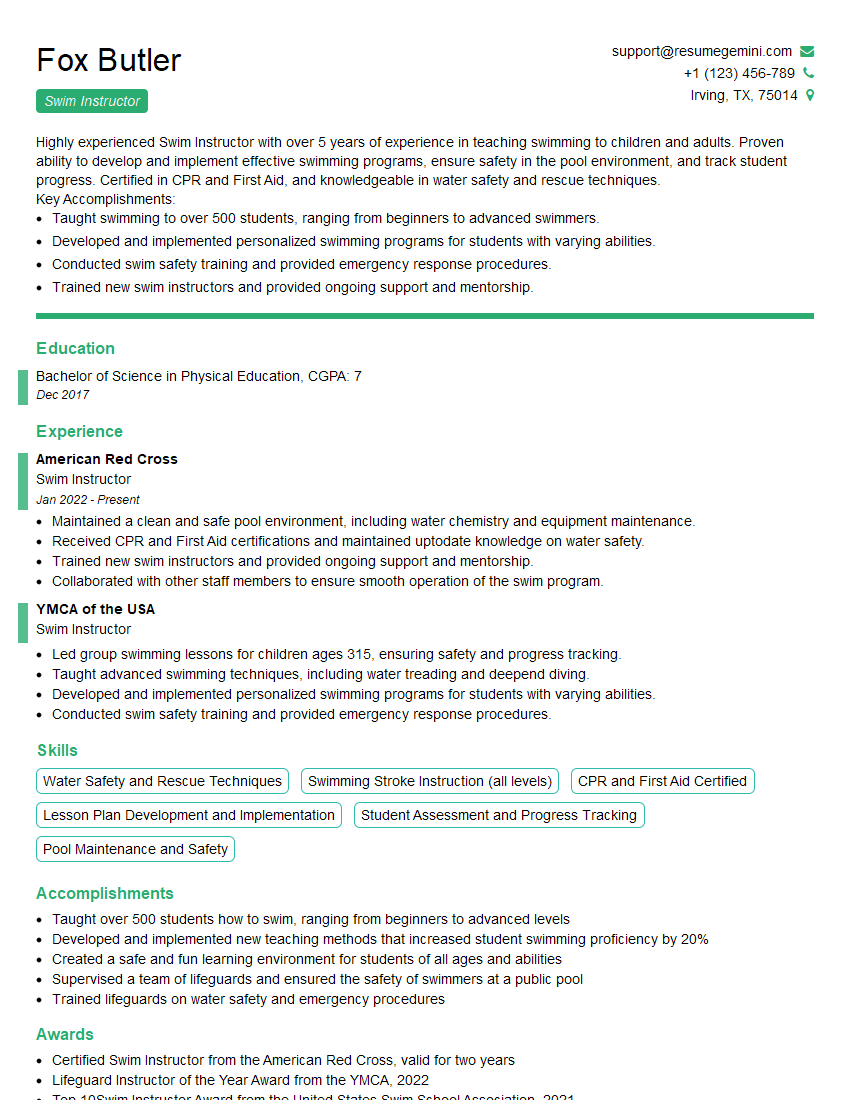
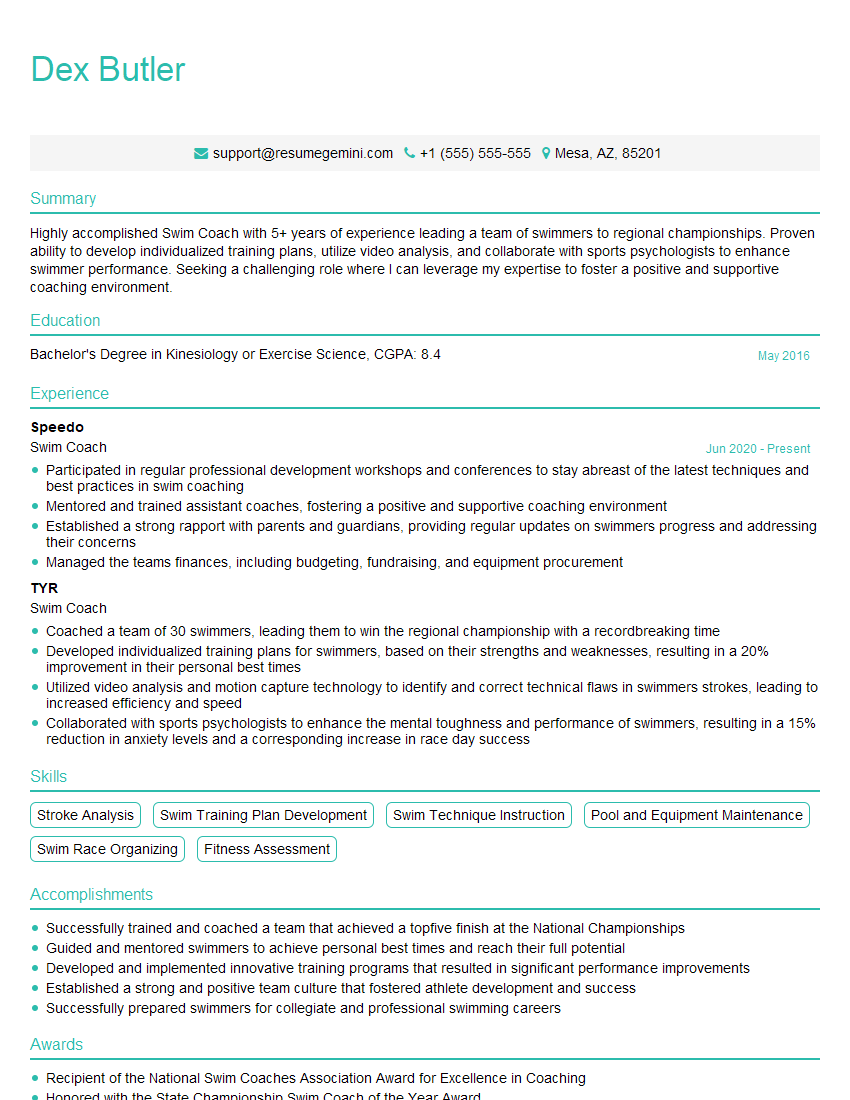
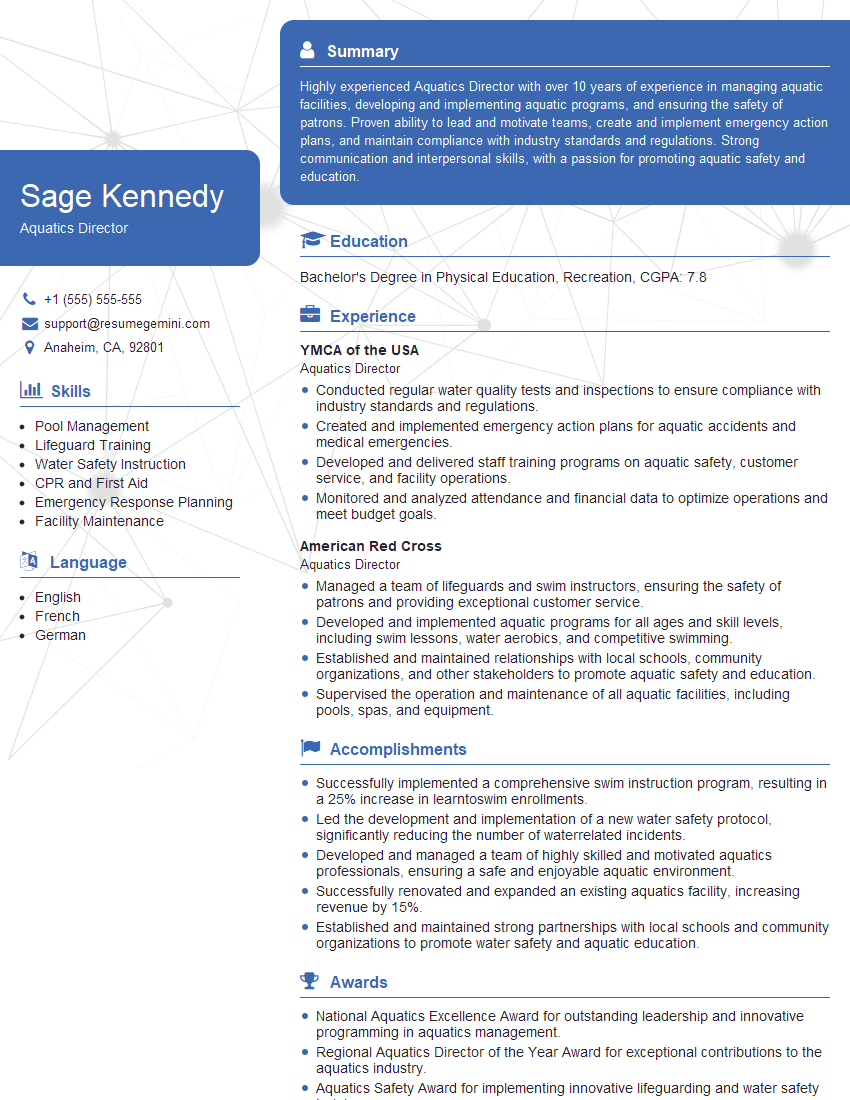
Mastering Swim Stroke Technique Instruction opens doors to rewarding careers in coaching, aquatic centers, and private instruction. A strong resume is crucial for showcasing your skills and experience. Building an ATS-friendly resume significantly improves your chances of getting your application noticed. We highly recommend using ResumeGemini to create a professional and effective resume that highlights your expertise. ResumeGemini provides examples of resumes tailored to Swim Stroke Technique Instruction, helping you craft a compelling document that captures the attention of potential employers.
Explore more articles
Users Rating of Our Blogs
Share Your Experience
We value your feedback! Please rate our content and share your thoughts (optional).
What Readers Say About Our Blog
Very informative content, great job.
good