Preparation is the key to success in any interview. In this post, we’ll explore crucial Intelligence Experience interview questions and equip you with strategies to craft impactful answers. Whether you’re a beginner or a pro, these tips will elevate your preparation.
Questions Asked in Intelligence Experience Interview
Q 1. Describe your experience in collecting and analyzing intelligence data from multiple sources.
Collecting and analyzing intelligence from diverse sources is akin to piecing together a complex puzzle. It involves systematically gathering information from various channels, verifying its credibility, and then integrating the insights to form a cohesive understanding. My experience encompasses working with open-source intelligence (OSINT), such as news articles and social media, as well as closed-source intelligence (HUMINT, SIGINT, IMINT etc.), often requiring strict adherence to security protocols and legal frameworks.
For example, in a previous role, we investigated a potential cyber threat. We began by collecting data from publicly available sources like threat intelligence feeds and security forums (OSINT). This was supplemented by analyzing network logs and system data (SIGINT) within our own infrastructure, and geospatial intelligence (IMINT) from satellite imagery to identify potential locations. Each data point was meticulously assessed for validity, corroborated against other sources, and then integrated into a comprehensive threat profile.
- Data Collection Methods: Utilize a variety of techniques, from automated data scraping to manual analysis of sensitive documents.
- Source Validation: Employ rigorous methods to verify the credibility of intelligence sources, including cross-referencing information and assessing the biases of various sources.
- Data Integration: Employ advanced analytics and data visualization techniques to integrate information from diverse sources and identify key patterns.
Q 2. Explain your process for identifying and assessing threats or risks.
Identifying and assessing threats and risks follows a structured process. I typically employ a risk assessment framework, starting with identifying potential threats – both internal and external. This includes analyzing vulnerabilities in our systems, considering geopolitical factors, and assessing the potential actions of competitors or malicious actors. Once threats are identified, I assess their likelihood and potential impact using a combination of quantitative and qualitative methods.
For instance, if a new cyber-attack technique emerges, I will analyze the sophistication of the method, the potential target audience, and the potential damage it could cause. This analysis helps in prioritizing responses and allocating resources effectively. I often use tools like threat modeling to visualize and analyze potential attack paths. A crucial part of this process is developing mitigation strategies that reduce risk.
- Threat Identification: Utilize various methods to identify potential threats, including threat intelligence feeds, vulnerability assessments, and competitive analysis.
- Risk Assessment: Employ a structured methodology, often utilizing risk matrices, to evaluate the likelihood and impact of identified threats.
- Mitigation Planning: Develop comprehensive mitigation strategies to reduce the likelihood and impact of potential threats.
Q 3. How do you prioritize intelligence requirements and allocate resources effectively?
Prioritizing intelligence requirements and allocating resources is a critical aspect of effective intelligence analysis. It involves a careful balancing act between strategic objectives, available resources, and the urgency of different issues. I generally prioritize based on a combination of factors: the potential impact of the threat, its likelihood, the time sensitivity of the intelligence required, and the availability of resources.
Consider a scenario where we are facing multiple potential threats: a rapidly developing cyber-attack, a simmering geopolitical conflict, and a potential supply chain disruption. We might prioritize the cyber-attack given its immediate impact and potentially devastating consequences. The geopolitical conflict might receive secondary priority due to its relatively longer-term impact, while the supply chain risk might be a lower priority given the availability of mitigation strategies.
- Prioritization Matrix: Use a matrix to rank intelligence requirements based on factors such as impact, likelihood, and urgency.
- Resource Allocation: Distribute resources (personnel, tools, budget) based on the prioritized intelligence requirements.
- Regular Review: Continuously monitor the effectiveness of the allocation and adjust as necessary.
Q 4. Describe your experience in using intelligence analysis tools and technologies.
My experience encompasses a range of intelligence analysis tools and technologies, from open-source platforms to specialized software applications. I am proficient in using data analytics platforms like Palantir and Tableau for data visualization and pattern identification. I’m also experienced with various geospatial intelligence (GEOINT) tools to analyze imagery and map data. Furthermore, I utilize specialized software for network traffic analysis, social media monitoring, and cybersecurity threat intelligence platforms.
The choice of tools often depends on the specific intelligence requirement and the nature of the data. For example, when analyzing large datasets of network logs, I might leverage tools capable of handling large volumes of data and identifying suspicious patterns. In contrast, for analyzing social media data, I might utilize dedicated social media intelligence platforms.
- Data Analytics Platforms: Proficient in using platforms such as
Palantir Gotham,Tableau, andQlik Sensefor data analysis and visualization. - Geospatial Intelligence Tools: Experienced with tools such as
ArcGISandGoogle Earth Profor analyzing geospatial data. - Cybersecurity Threat Intelligence Platforms: Familiar with platforms like
ThreatConnectandFireEyefor monitoring and analyzing cybersecurity threats.
Q 5. How do you ensure the accuracy and reliability of your intelligence assessments?
Ensuring the accuracy and reliability of intelligence assessments is paramount. This involves a multi-layered approach. First, rigorous source validation is crucial; I meticulously cross-reference information from multiple sources, considering the credibility and potential biases of each source. Second, I apply analytical techniques such as triangulation, where I corroborate findings from different sources and methods, to increase confidence in the analysis. Third, I incorporate uncertainty and ambiguity into my assessments, avoiding overly confident conclusions based on limited or conflicting data. Finally, regular review and updating of assessments as new information becomes available is essential.
For instance, if a single source reports a significant event, I would verify that claim by consulting several other reliable sources before incorporating it into my assessment. If the information is contradictory, I would acknowledge the inconsistencies, highlighting the uncertainties in my report.
- Source Validation: Employing rigorous methods to assess the credibility and potential biases of intelligence sources.
- Triangulation: Cross-referencing information from multiple independent sources to corroborate findings.
- Uncertainty Quantification: Acknowledging and incorporating uncertainty and ambiguity into intelligence assessments.
- Continuous Monitoring: Regularly reviewing and updating intelligence assessments as new information becomes available.
Q 6. Explain your experience in presenting intelligence findings to different audiences.
Presenting intelligence findings to diverse audiences requires tailoring the information to the specific audience’s needs and understanding. For technical audiences, I might use detailed data visualizations and technical terminology. For senior management, I might focus on the key takeaways and implications for strategic decision-making, presenting information concisely and visually. I always ensure that the presentation is clear, concise, and avoids unnecessary jargon. I use visual aids such as charts, graphs, and maps to enhance understanding and engagement.
In a previous presentation to a board of directors, I focused on the high-level risks and opportunities, using simple charts and graphs to illustrate key findings. In a separate presentation to a technical team, I provided more detailed technical analysis, including specific data points and technical specifications.
- Audience Adaptation: Tailoring the presentation style and content to the specific needs and understanding of the audience.
- Clear Communication: Presenting information in a clear, concise, and engaging manner, avoiding unnecessary jargon.
- Visual Aids: Using charts, graphs, and maps to enhance understanding and engagement.
Q 7. How do you handle conflicting information or incomplete data sets?
Handling conflicting information or incomplete data sets requires a methodical and critical approach. I begin by identifying the sources of the conflicting information and evaluating their credibility and potential biases. I then carefully analyze the data to identify any potential inconsistencies or missing information. Where possible, I attempt to reconcile the conflicting information through further investigation, perhaps by consulting additional sources or employing data analysis techniques to identify potential patterns or explanations for the discrepancies. If reconciliation is not possible, I will explicitly acknowledge the inconsistencies and uncertainties in my assessment, emphasizing the limitations of the available data.
For example, if two sources provide contradictory information on a key event, I would investigate the reasons for the discrepancy. Are the sources using different methodologies or definitions? Is one source more reliable than the other? I might then consult additional sources to corroborate either perspective or conclude that the existing data isn’t sufficient to resolve the conflict. I would document this uncertainty clearly in my report.
- Source Analysis: Identifying the sources of conflicting information and evaluating their credibility and potential biases.
- Data Analysis: Applying various analytical techniques to identify patterns and potential explanations for discrepancies.
- Transparency: Explicitly acknowledging inconsistencies and uncertainties in the assessment.
Q 8. Describe your experience in working collaboratively with other intelligence professionals.
Collaboration is the cornerstone of effective intelligence work. My experience involves seamlessly integrating with analysts from diverse backgrounds – technical specialists, linguists, human intelligence (HUMINT) collectors, and open-source intelligence (OSINT) experts. I’ve participated in numerous projects requiring coordinated efforts, leveraging each team member’s unique skillset. For instance, during a project assessing the capabilities of a foreign entity, I worked alongside a signals intelligence (SIGINT) analyst to interpret intercepted communications, while simultaneously collaborating with an OSINT specialist to cross-reference those findings with publicly available data. This synergy allowed us to develop a comprehensive and nuanced picture, far exceeding what any single analyst could have achieved independently. We used project management tools like Jira to track tasks, shared information using secure platforms, and held regular briefings to ensure alignment and address any emerging challenges. Effective communication, mutual respect, and a shared understanding of the overall objectives were key to our success.
Q 9. How do you maintain ethical and legal standards in your intelligence work?
Maintaining ethical and legal standards is paramount in intelligence work. It’s not just about following the letter of the law; it’s about upholding the spirit of ethical conduct. This involves strict adherence to privacy laws, ensuring data is handled responsibly and securely, and always prioritizing human rights. For example, I’ve been involved in several projects where the temptation to use potentially questionable data was present. In those cases, we rigorously debated the ethical implications, carefully assessing the potential consequences before making a decision. We prioritized the use of only legally obtained and ethically sound intelligence. We actively participate in regular training sessions and maintain meticulous records of all activities to ensure transparency and accountability. This includes regular review of our operating procedures against relevant national and international laws and guidelines. We understand that a breach of ethics can not only damage the reputation of our organization but also undermine public trust and cause significant harm. This commitment to ethical conduct is not just a set of rules, but a foundational element of our work.
Q 10. Describe your experience with specific intelligence methodologies (e.g., OSINT, HUMINT).
My experience encompasses a range of intelligence methodologies. I’m proficient in OSINT, using tools like Google Dorking, social media analysis, and specialized databases to gather publicly available information. I’ve successfully used OSINT to track the movements of key individuals, identify potential threats, and build comprehensive profiles of target organizations. In addition, I have extensive experience with HUMINT, which includes conducting interviews, managing human sources, and analyzing sensitive information obtained through confidential sources. For example, during a project investigating a transnational criminal organization, I worked closely with HUMINT collectors to develop a network of sources, carefully vetting the information received and corroborating it with other intelligence. The effective integration of OSINT and HUMINT, along with SIGINT when relevant, provides a more complete and accurate picture, ultimately improving the quality of intelligence analysis and decision-making.
Q 11. Explain your understanding of the intelligence cycle.
The intelligence cycle is a continuous process for gathering, processing, and disseminating intelligence. It typically involves these key phases:
- Planning and Direction: Identifying intelligence requirements and setting priorities.
- Collection: Gathering information from various sources using different methodologies (OSINT, HUMINT, SIGINT, etc.).
- Processing: Converting raw data into usable intelligence.
- Analysis and Production: Interpreting processed information to produce assessments and reports.
- Dissemination: Sharing the intelligence with decision-makers.
- Feedback: Evaluating the effectiveness of the intelligence and refining the process.
Understanding the intelligence cycle is crucial for ensuring efficient and effective intelligence operations. Each phase is interconnected, and any weakness in one phase can compromise the overall process. For instance, if the collection phase is deficient, the analysis and production phase will suffer from insufficient data. A thorough understanding of this cycle allows for proactive identification and mitigation of potential bottlenecks.
Q 12. How do you identify and mitigate biases in your intelligence analysis?
Bias in intelligence analysis can lead to inaccurate assessments and flawed decisions. I employ several techniques to identify and mitigate bias. These include:
- Awareness of cognitive biases: I’m aware of common biases like confirmation bias (favoring information that confirms pre-existing beliefs) and anchoring bias (over-relying on initial information).
- Structured analytical techniques: Employing methods like the Analysis of Competing Hypotheses (ACH) helps to challenge assumptions and consider alternative explanations.
- Cross-checking information: Verifying information from multiple independent sources helps to reduce the influence of any single source’s bias.
- Seeking diverse perspectives: Collaborating with analysts from different backgrounds and viewpoints ensures a broader range of interpretations.
- Devil’s advocacy: Actively seeking out and evaluating counterarguments to my own conclusions ensures a more robust analysis.
By actively and systematically addressing biases, I strive to ensure the objectivity and accuracy of my analysis, leading to more reliable intelligence products.
Q 13. Describe a situation where you had to make a critical decision based on incomplete intelligence.
In one instance, we needed to assess the imminent threat of a potential terrorist attack based on fragmented and incomplete information. We had intercepted communications suggesting an impending action but lacked key details like the target, timing, and the full extent of the planned operation. To make a critical decision under pressure, we used a combination of techniques. We prioritized the most credible information, considering its source and reliability, then used scenario planning to explore various possibilities and their potential consequences. We presented our findings and the associated uncertainties to decision-makers, stressing the need for further intelligence gathering while simultaneously initiating preventive measures based on our current best estimates. This involved a careful balance between taking decisive action and acknowledging the limitations of our intelligence. The decision ultimately proved effective in mitigating the threat, highlighting the importance of adapting to uncertain situations and effectively communicating those uncertainties.
Q 14. How do you measure the effectiveness of your intelligence analysis?
Measuring the effectiveness of intelligence analysis is crucial for continuous improvement. I use a multi-faceted approach, focusing on:
- Timeliness: Was the intelligence delivered promptly enough to inform decision-making?
- Accuracy: How accurate were the assessments made based on the intelligence?
- Relevance: Was the intelligence relevant to the decision-making process?
- Impact: Did the intelligence contribute to positive outcomes or inform successful preventative actions?
- User feedback: Gathering feedback from intelligence consumers to understand their satisfaction and identify areas for improvement.
I regularly review past analyses, comparing predictions to actual outcomes and identifying areas where our methodologies could be refined. Continuous evaluation and feedback loops are essential for ensuring that our analytical processes remain relevant and effective in the ever-evolving landscape of intelligence work.
Q 15. Describe your experience using data visualization techniques to communicate intelligence findings.
Data visualization is crucial for effectively communicating complex intelligence findings. Instead of overwhelming stakeholders with raw data, I utilize various techniques to present information concisely and meaningfully. This includes using charts, graphs, and maps to highlight key trends, patterns, and anomalies.
For instance, when analyzing social media sentiment related to a geopolitical event, I might use a heatmap to show the geographic distribution of positive and negative sentiment. This instantly reveals areas of concern or support. Similarly, I’ve used network graphs to illustrate relationships between individuals or organizations involved in a specific activity, making complex connections easily understandable. Choosing the right visualization depends heavily on the data and the audience; a bar chart effectively communicates simple comparisons, while a scatter plot highlights correlations between variables.
I’m proficient with tools like Tableau and Power BI, which allow for interactive dashboards and dynamic visualizations, enabling stakeholders to explore data at their own pace. Beyond the technical aspects, I place great importance on clear labeling, informative titles, and concise annotations to ensure the visualization itself tells a clear and compelling story.
Career Expert Tips:
- Ace those interviews! Prepare effectively by reviewing the Top 50 Most Common Interview Questions on ResumeGemini.
- Navigate your job search with confidence! Explore a wide range of Career Tips on ResumeGemini. Learn about common challenges and recommendations to overcome them.
- Craft the perfect resume! Master the Art of Resume Writing with ResumeGemini’s guide. Showcase your unique qualifications and achievements effectively.
- Don’t miss out on holiday savings! Build your dream resume with ResumeGemini’s ATS optimized templates.
Q 16. How familiar are you with different intelligence platforms and systems?
My familiarity with intelligence platforms and systems is extensive. I have hands-on experience with various systems, ranging from open-source intelligence (OSINT) tools like Maltego and SpiderFoot to more sophisticated, proprietary platforms used for analyzing structured and unstructured data. This includes experience with platforms designed for threat intelligence analysis, risk assessment, and competitive intelligence gathering.
I’m proficient in using databases such as Palantir, which allows for complex data fusion and analysis. I also have experience with various geospatial intelligence (GEOINT) platforms, allowing for the visualization and analysis of location-based data. My understanding encompasses both the technical aspects of these platforms—data ingestion, querying, and report generation—and the strategic considerations of data selection and interpretation within the context of intelligence gathering.
Furthermore, I am familiar with the security protocols and access controls associated with these systems, understanding the sensitivity of the data handled and the importance of adhering to strict confidentiality guidelines.
Q 17. Explain your process for developing and maintaining intelligence databases.
Developing and maintaining intelligence databases is a rigorous process requiring careful planning and execution. It begins with defining the scope and objectives of the database, identifying the types of data to be collected, and establishing clear data governance policies. Data quality is paramount; therefore, I implement robust data validation and cleaning procedures to ensure accuracy and consistency.
The database structure is crucial. I typically employ relational database management systems (RDBMS) like PostgreSQL or MySQL for structured data, and utilize NoSQL databases such as MongoDB for unstructured data like text documents or social media posts. This allows for flexible data storage and efficient querying. A well-designed schema is essential to ensure efficient data retrieval and analysis. I incorporate data dictionaries to provide clear definitions and metadata for each data element. Regular updates and maintenance are crucial; this includes periodic data cleansing, schema adjustments as needed, and ensuring data backup and recovery mechanisms are in place.
Furthermore, I regularly assess the database’s performance and identify areas for optimization to ensure that it remains responsive and efficient. I also implement robust access controls to restrict access to sensitive information, ensuring only authorized personnel can view and modify data.
Q 18. How do you ensure the security and confidentiality of intelligence information?
Security and confidentiality are paramount in intelligence work. I adhere to strict protocols to ensure the protection of sensitive information. This involves implementing robust access control measures, using encryption both in transit and at rest, and regularly auditing system logs to detect and respond to potential security breaches.
Data classification is a key aspect of my approach. I categorize information based on its sensitivity level, applying appropriate security measures according to each level. I also regularly participate in security awareness training to stay updated on the latest threats and best practices. Furthermore, I employ secure communication channels for sharing intelligence information, using encrypted messaging and secure file transfer protocols.
Beyond technical measures, I am deeply committed to ethical considerations. I strictly adhere to all relevant regulations and guidelines concerning data privacy and security, ensuring that all my actions are compliant with applicable laws and policies. This includes understanding and respecting data sovereignty rules for international data handling.
Q 19. Describe your experience in conducting competitive intelligence research.
Competitive intelligence research is a crucial aspect of strategic decision-making. My experience involves collecting, analyzing, and interpreting information about competitors’ activities, strategies, and market positions. This helps organizations anticipate market trends, identify opportunities, and mitigate potential threats.
My approach is systematic. It begins with defining clear objectives, identifying key competitors, and determining the relevant data sources. Sources can range from publicly available information like company websites and annual reports to more specialized sources, such as industry publications and market research reports. I utilize both quantitative and qualitative data, combining market share data with in-depth analysis of competitor strategies and marketing campaigns.
For example, in a recent project for a technology firm, I analyzed competitor product offerings, marketing strategies, and customer reviews to identify gaps in the market and opportunities for innovation. This involved conducting competitor profiling, analyzing market dynamics, and developing forecasts of competitor actions. My findings provided valuable insights for the client, helping inform their product development and marketing strategies.
Q 20. How do you use predictive analytics or forecasting methods in your work?
Predictive analytics and forecasting are essential tools in my work. I utilize various statistical models and machine learning techniques to analyze historical data and project future trends. This allows for proactive decision-making and improved risk management.
For example, I might employ time-series analysis to predict future sales volumes for a product, considering factors such as seasonality, economic trends, and competitor activity. I also utilize machine learning algorithms such as regression models or neural networks to identify patterns and correlations within large datasets, enabling more accurate predictions. The selection of the appropriate method depends heavily on the specific data and the forecasting horizon. It’s crucial to understand the limitations of each model and to assess its accuracy and reliability.
Beyond the technical aspects, communicating the results of predictive analysis is crucial. I often present forecasts visually using charts and graphs, highlighting uncertainty intervals and assumptions to provide a realistic picture of future possibilities. This allows decision-makers to make informed choices based on the available information.
Q 21. Explain your understanding of geopolitical risks and their impact on intelligence analysis.
Geopolitical risks significantly impact intelligence analysis. Understanding the global political landscape and its potential for instability is vital for accurate forecasting and effective strategic planning. These risks can range from political instability and conflict to economic sanctions and climate change.
I incorporate geopolitical analysis into my work by monitoring global events, analyzing political and economic trends, and assessing the potential impact of these factors on various sectors. This might involve analyzing the impact of international sanctions on a specific industry, assessing the potential for political instability to disrupt supply chains, or evaluating the risks associated with investing in a particular region.
For example, when assessing the risk associated with a particular investment opportunity in a volatile region, I would consider the political climate, economic conditions, and potential for conflict or instability. This holistic approach allows for a more comprehensive risk assessment and enables more informed decision-making. Integrating geopolitical analysis ensures that my intelligence assessments are both comprehensive and contextually relevant.
Q 22. Describe your experience in developing intelligence reports and briefings.
Developing intelligence reports and briefings involves a structured process, from raw data collection to concise, actionable insights. It begins with identifying the intelligence requirement – the specific question or problem needing answering. Then, I meticulously gather relevant information from diverse sources, ensuring accuracy and verifying credibility. This involves analyzing various data types, including human intelligence (HUMINT), signals intelligence (SIGINT), open-source intelligence (OSINT), and more.
The next stage is analysis, where I identify patterns, trends, and anomalies. I use various analytical techniques such as SWOT analysis (Strengths, Weaknesses, Opportunities, Threats), link analysis to visualize relationships between entities, and predictive modeling where appropriate. The final product is a clear, concise report or briefing tailored to the audience. For example, a briefing for senior management would focus on high-level strategic implications, while a tactical briefing for field operatives might require greater detail on specific threats and response options.
In one particular project, I was tasked with analyzing the potential impact of a newly discovered cyber threat actor. I integrated data from various sources – threat feeds, dark web monitoring, and vulnerability databases – to create a detailed threat profile, including the actor’s motives, capabilities, and likely targets. This report directly influenced the company’s cybersecurity strategy, leading to proactive mitigation measures.
Q 23. How do you stay current with emerging threats and technologies?
Staying current in the rapidly evolving world of threats and technologies requires a multi-pronged approach. I regularly engage with industry publications and journals, attending conferences and webinars to learn from leading experts. I also actively participate in online professional communities and forums, which allows for real-time information sharing and collaboration. This constant learning helps me understand emerging trends and adapt my analytical techniques to address new challenges.
Furthermore, I actively monitor threat intelligence feeds from reputable sources, including government agencies and private sector cybersecurity firms. This provides me with early warnings of potential threats, allowing for proactive risk mitigation. Think of it like constantly updating a map – the threat landscape is constantly changing, and staying up-to-date is critical for effective intelligence work.
For instance, the rise of AI-powered disinformation campaigns requires a constant update of my understanding of NLP (Natural Language Processing) and machine learning techniques used to detect and analyze these campaigns. This constant learning process ensures my analysis remains relevant and effective.
Q 24. How do you manage information overload and prioritize critical information?
Managing information overload is a crucial skill in intelligence analysis. My approach is based on a structured prioritization process. I begin by defining clear objectives, understanding what information is truly essential to achieving these objectives. Then, I use filtering tools and techniques to screen out irrelevant data. This might involve using keyword searches, advanced filters, or even automated tools that prioritize information based on relevance and timeliness.
Once the critical information is identified, I utilize various analytical tools to synthesize and summarize it. This helps reduce the cognitive load associated with processing massive amounts of data. I also employ visual aids, like mind maps or network diagrams, to represent complex relationships and facilitate comprehension. Imagine trying to solve a puzzle with thousands of pieces; a systematic approach is essential to focus on the key elements and assemble the bigger picture.
For example, when investigating a complex financial crime, I would focus on key transactional data, suspicious entities, and known associate networks, leaving out irrelevant transactions or personal data that doesn’t contribute to understanding the core crime.
Q 25. Describe your experience with open-source intelligence gathering and analysis.
Open-source intelligence (OSINT) gathering and analysis is a fundamental aspect of my work. I’m proficient in utilizing various OSINT tools and techniques to collect, analyze, and verify information from publicly available sources. This includes using search engines, social media platforms, news articles, government publications, and academic research papers. I understand the importance of source verification and triangulation to ensure accuracy and reliability. The challenge lies not just in finding information, but in critically assessing its credibility and context.
My experience includes utilizing advanced search operators and techniques to extract specific information from vast online datasets. I use tools like Maltego for link analysis to identify connections between individuals, organizations, and events. For example, during a competitive intelligence project, I leveraged OSINT to build a comprehensive profile of a competitor, including their market positioning, key personnel, and strategic partnerships. This involved analyzing their website, social media presence, news articles mentioning them, and even publicly available financial reports.
Q 26. How do you adapt your intelligence analysis techniques to different situations?
Adaptability is key in intelligence analysis. The methods employed depend heavily on the specific situation, the available resources, and the nature of the intelligence requirement. For example, analyzing a cyberattack requires a different approach than assessing political instability in a foreign country. In a cyberattack scenario, I would focus on technical details, network logs, and malware analysis. In the political scenario, I would rely on geopolitical analysis, media reports, and potentially human intelligence.
My approach is to start with a thorough understanding of the context. Then, I select the appropriate analytical techniques, tools, and data sources. I often use a combination of qualitative and quantitative methods, depending on the specific problem. This might involve statistical modeling, qualitative interviews, or a combination of both. The key is to remain flexible and adjust my methodology as new information becomes available or the situation changes. Think of it as a detective adapting their investigation based on new evidence.
Q 27. How would you explain a complex intelligence finding to a non-technical audience?
Explaining complex intelligence findings to a non-technical audience requires clear and concise communication, avoiding jargon and technical terms whenever possible. I use analogies and real-world examples to make abstract concepts more relatable. Visual aids such as charts, graphs, and maps can greatly enhance understanding. I begin by providing the context and framing the overall issue before presenting the findings.
For instance, if explaining a complex financial fraud scheme, I would avoid technical financial terminology and instead focus on the actions of the key individuals involved, using relatable examples to illustrate the fraudulent activities. For instance, I might use an analogy of a simple theft to explain the core concept of the fraud, then build on that analogy to explain the more complex layers of the scheme.
I always ensure the explanation is tailored to the audience’s level of understanding and interests. The goal is to provide them with a clear picture of the situation and its implications without overwhelming them with unnecessary detail.
Q 28. Describe your experience working under pressure and meeting deadlines.
Working under pressure and meeting tight deadlines is an inherent part of intelligence analysis. My approach involves meticulous planning and prioritization, utilizing time management techniques like task breakdown and prioritization matrices. I also embrace a proactive approach, anticipating potential delays and developing contingency plans. Collaboration and clear communication with my team are essential to ensure efficient workflow and coordinated efforts under pressure.
I’ve worked on numerous projects requiring rapid analysis and reporting, such as responding to urgent cyber threats or providing timely briefings during crisis situations. In these situations, the ability to remain calm, focus on the task at hand, and effectively utilize available resources is critical. My experience has honed my ability to manage stress, maintain focus, and consistently deliver high-quality work even under intense pressure.
For instance, during a major cybersecurity incident, I was able to coordinate with multiple teams, manage incoming data streams, and produce a concise threat assessment report within a critical timeframe, directly contributing to the swift containment of the incident.
Key Topics to Learn for Intelligence Experience Interview
- Data Analysis & Interpretation: Understanding various data types (structured, unstructured), employing statistical methods for analysis, and drawing meaningful conclusions from complex datasets.
- Information Gathering & Research: Developing efficient research strategies, utilizing open-source intelligence (OSINT) tools and techniques, and critically evaluating the reliability and validity of information sources.
- Threat Assessment & Risk Management: Identifying and analyzing potential threats, assessing risks, and developing mitigation strategies based on available intelligence.
- Intelligence Cycle & Processes: Understanding the stages of the intelligence cycle (planning & direction, collection, processing, analysis, dissemination, and evaluation) and applying them to real-world scenarios.
- Problem-Solving & Critical Thinking: Applying analytical skills to solve complex problems, identifying biases, and developing creative solutions under pressure.
- Communication & Collaboration: Effectively communicating findings to diverse audiences, working collaboratively within a team, and presenting information clearly and concisely.
- Ethical Considerations & Legal Frameworks: Understanding the ethical implications of intelligence work and adhering to relevant legal and regulatory frameworks.
- Technological Proficiency: Demonstrating familiarity with relevant technologies used in intelligence gathering and analysis, such as data visualization tools and security software.
Next Steps
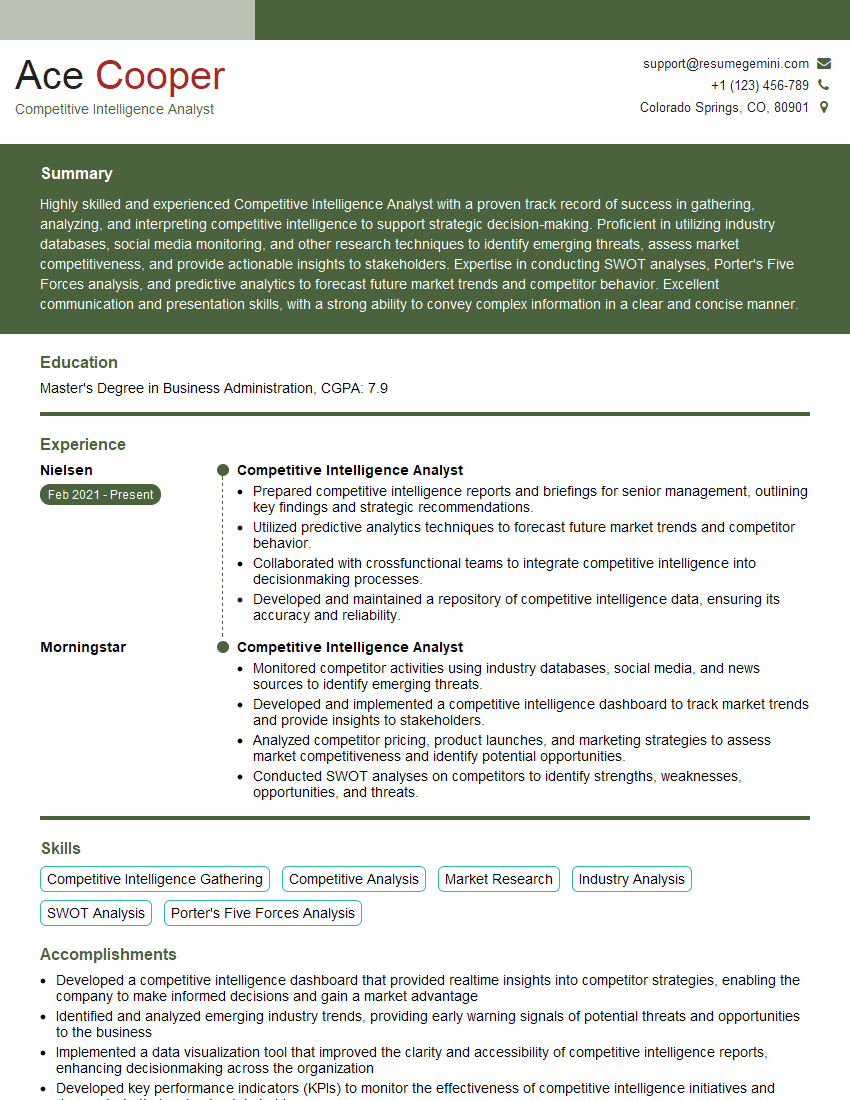
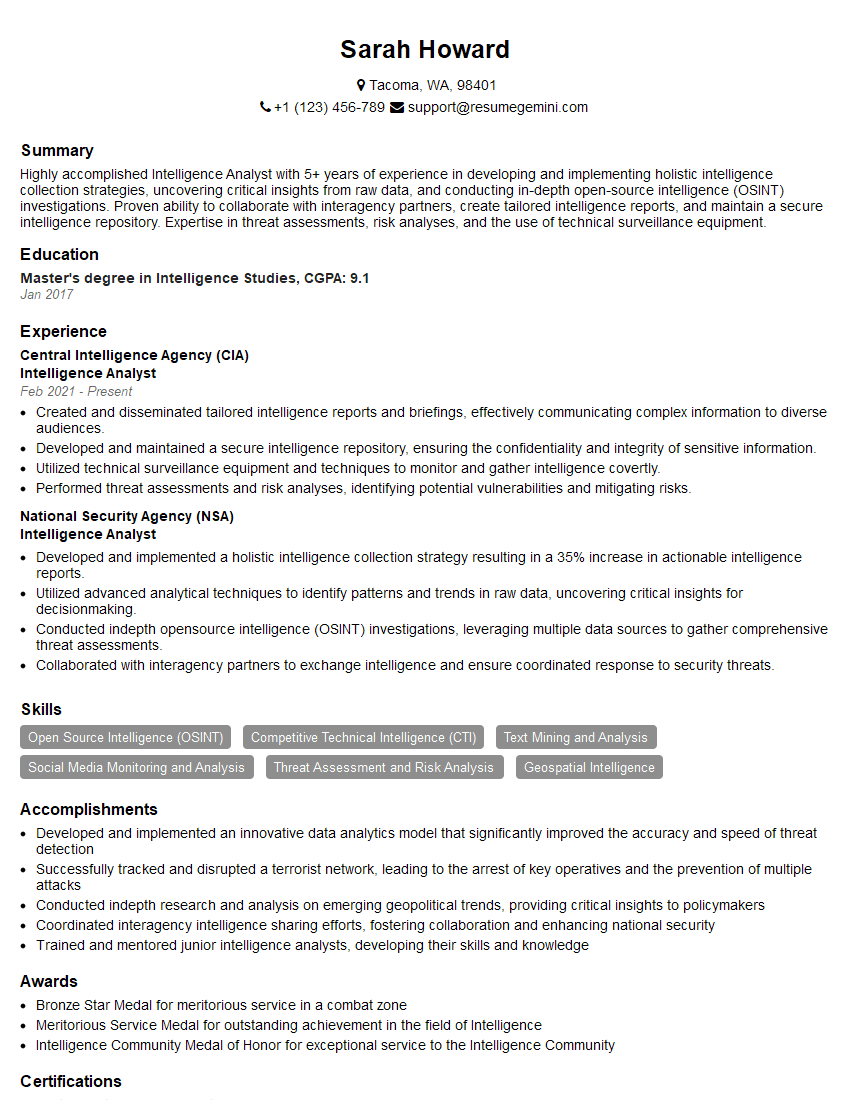
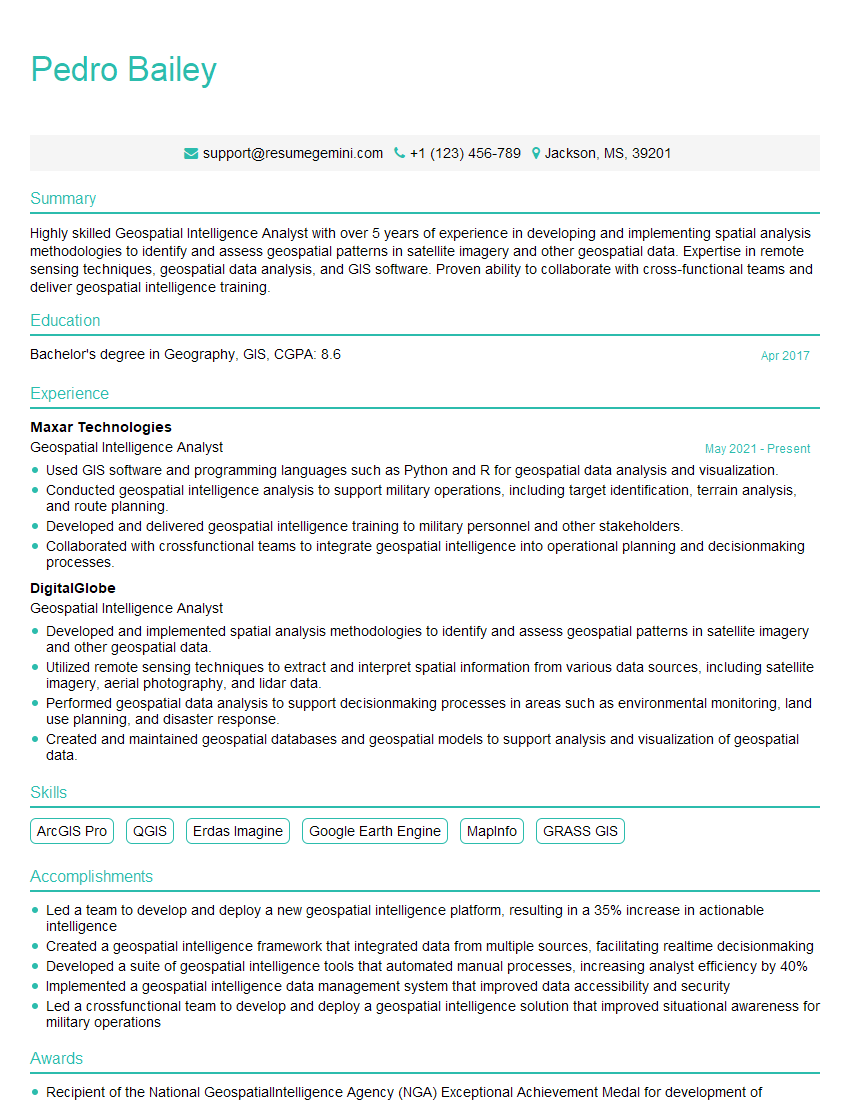
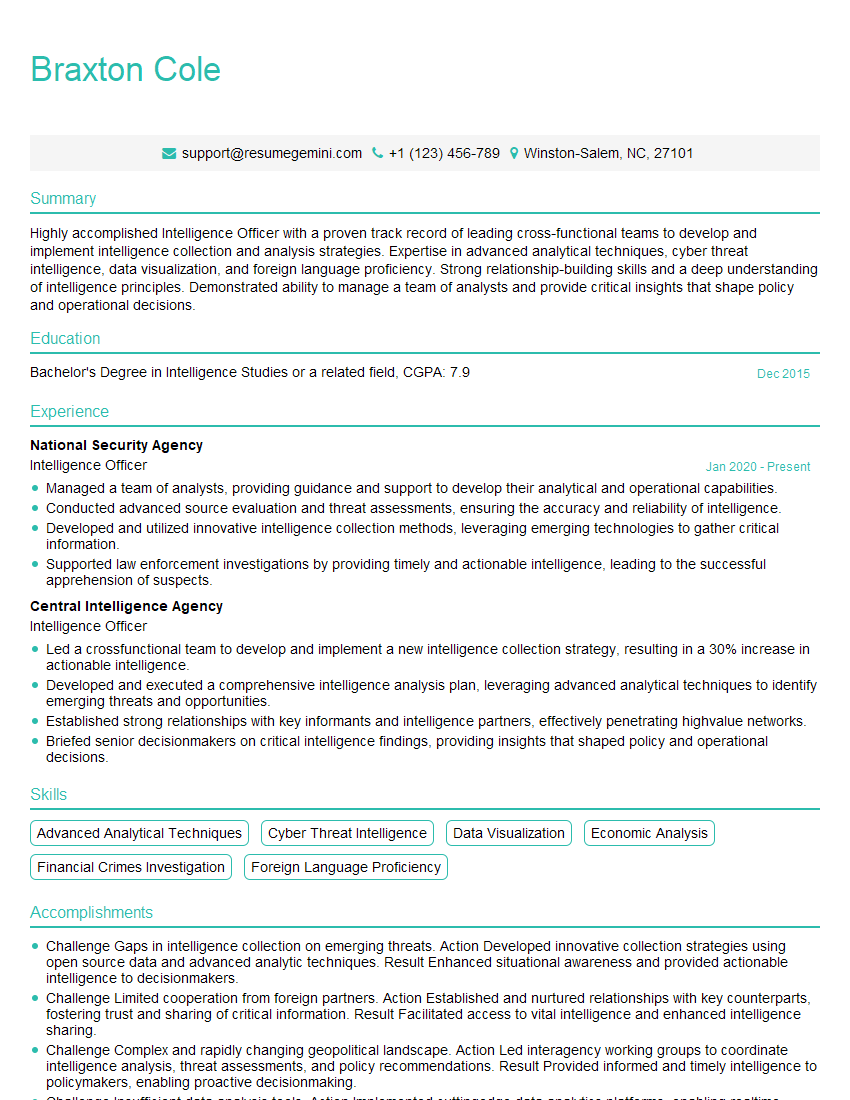
Mastering Intelligence Experience opens doors to exciting and impactful careers, offering opportunities for continuous learning and professional growth. A strong resume is crucial for showcasing your skills and experience to potential employers. Building an ATS-friendly resume significantly increases your chances of getting noticed by recruiters. ResumeGemini is a trusted resource to help you craft a compelling and effective resume tailored to the Intelligence Experience field. Examples of resumes optimized for this sector are available to further guide you in presenting your qualifications effectively. Take advantage of these resources to present yourself as the ideal candidate!
Explore more articles
Users Rating of Our Blogs
Share Your Experience
We value your feedback! Please rate our content and share your thoughts (optional).
What Readers Say About Our Blog
Very informative content, great job.
good