Preparation is the key to success in any interview. In this post, we’ll explore crucial Battle Damage Assessment and Repair interview questions and equip you with strategies to craft impactful answers. Whether you’re a beginner or a pro, these tips will elevate your preparation.
Questions Asked in Battle Damage Assessment and Repair Interview
Q 1. Describe your experience in assessing structural damage caused by explosions.
Assessing structural damage from explosions requires a systematic approach combining visual inspection with advanced techniques. I begin with a thorough visual survey, identifying the blast epicenter and mapping the damage radius. This initial assessment helps determine the severity and extent of the damage, focusing on potential collapse risks and compromised structural elements. For example, I look for signs of spalling (chipping or fracturing) in concrete, evidence of buckling in steel members, and the presence of cracks throughout the structure.
Beyond visual inspection, I often employ non-destructive testing (NDT) methods such as ground-penetrating radar (GPR) to identify subsurface damage not readily visible. Ultrasonic testing can assess the integrity of concrete and reveal internal voids or cracks that could significantly weaken the structure. In one case, a seemingly minor exterior crack, upon GPR analysis, revealed significant internal damage requiring extensive repairs that were not immediately apparent. Finally, I integrate data from these inspections and analyses to produce a detailed damage report that includes photographic and schematic documentation.
Q 2. Explain the process of evaluating the safety of a damaged building.
Evaluating the safety of a damaged building is paramount and hinges on a multi-stage process. First, I ensure the safety of my team and the public, establishing a security perimeter and employing safety precautions like hard hats and protective eyewear. Then, I conduct a preliminary assessment from a safe distance, noting any immediately apparent hazards such as leaning walls or compromised floors. This initial observation dictates the extent of further investigation. Detailed inspection then follows, focusing on critical structural elements like columns, beams, and foundations.
Next, I analyze the building’s structural design and materials using available architectural drawings and material specifications. This helps me understand the building’s intended load-bearing capacity and its current structural integrity. I would employ NDT techniques again, focusing on areas of suspected weakness. Based on this combined data, I formulate an assessment report which will determine whether the building is safe to occupy, needs temporary shoring, or requires complete demolition. The report would contain clear recommendations and a detailed explanation of the rationale. I always prioritize safety, and in cases of uncertainty, err on the side of caution.
Q 3. How do you prioritize repairs in a large-scale damage scenario?
Prioritizing repairs in a large-scale damage scenario demands a strategic approach that balances urgency with resource allocation. I utilize a tiered system:
- Immediate Life Safety Hazards: Addressing imminent threats to life and property comes first. This might involve shoring up unstable structures or securing hazardous materials.
- Essential Services Restoration: Next, focus on restoring essential services like water, power, and sanitation, enabling the community’s recovery.
- Critical Infrastructure Repair: Repairing critical infrastructure like roads, bridges, and communication systems follows, allowing for emergency response and facilitating reconstruction.
- Remaining Damage: Repairs based on urgency and cost-effectiveness are addressed progressively. This phased approach ensures optimal resource use and accelerates the overall recovery process.
For example, in a post-hurricane scenario, restoring power to hospitals would take precedence over repairing minor residential damage.
Q 4. What are the common types of damage you encounter in battle damage assessment?
Battle damage assessment reveals a range of destructive patterns. Common types of damage include:
- Blast Effects: Cratering, spalling of concrete, structural fragmentation, and damage caused by shock waves.
- Impact Damage: Punctures, penetration, and crushing from projectiles or debris.
- Fire Damage: Structural weakening due to heat, charring, and collapse from weakened structural supports.
- Debris Impact: Damage caused by impact from flying debris generated by explosions or collapsing structures.
- Ground Movement: Settlement and cracking due to vibrations from explosions or seismic activity.
The specific type and severity of damage vary significantly depending on the nature and intensity of the conflict, type of weapons used, and the structural characteristics of the building.
Q 5. What methods do you use to document damage for insurance claims or reports?
Thorough documentation is vital for insurance claims and reports. My approach involves a multi-faceted strategy:
- High-Resolution Photography: Detailed photographs capturing the extent of damage from multiple angles are taken, with clear reference points for scaling and location.
- Videography: Video documentation provides a dynamic record, illustrating the extent and nature of the damage more comprehensively.
- 3D Modeling: For complex damage scenarios, 3D laser scanning creates precise models showing the building’s pre- and post-damage state. This allows for accurate volume calculations and repair cost estimations.
- Detailed Written Report: A comprehensive report summarizes the findings, including a description of damage types, location, cause, and repair recommendations.
- Data Storage and Management: All data are meticulously stored and organized to facilitate accessibility and maintain data integrity.
This integrated approach minimizes ambiguity and ensures a complete and convincing record for claims and reporting.
Q 6. Explain your experience with different repair techniques for concrete structures.
My experience with concrete repair techniques encompasses a broad range of methods adapted to the specific damage:
- Crack Repair: Simple cracks are addressed with epoxy injection or surface patching, while larger cracks may require more extensive repairs, potentially involving the removal and replacement of damaged sections.
- Spalling Repair: Spalled concrete is typically removed, and the area is cleaned and reinforced before replacing it with high-strength concrete.
The choice of repair technique depends on the extent and type of damage, as well as the structural implications. For instance, minor spalling may be addressed with surface patching, whereas extensive damage may warrant the use of specialized concrete repair mortars or even complete section replacement. I am proficient in techniques such as shotcrete application for restoring structural integrity and fiber-reinforced polymer (FRP) strengthening for enhancing the structural capacity of damaged members. Each technique is selected based on factors such as load-bearing capacity requirements, aesthetic considerations, and cost-effectiveness. Prioritizing structural integrity while minimizing disruption is always the primary focus.
Q 7. How do you determine the cost-effectiveness of different repair options?
Determining the cost-effectiveness of repair options necessitates a comprehensive analysis. I use a Life-Cycle Cost Analysis (LCCA) approach which compares the initial cost of each option with its long-term maintenance and operational costs over the expected lifespan of the repair. For example, a cheaper repair method may require more frequent maintenance and replacement, increasing its overall cost over time.
This LCCA includes factors such as material costs, labor costs, time required for the repair, potential downtime, and anticipated maintenance costs for each option. Risk assessment is also incorporated, considering the probability of failure and the consequences of each repair option failing. The option with the lowest LCCA, while meeting structural integrity and safety requirements, represents the most cost-effective solution. Transparency in this analysis is crucial, providing stakeholders with a clear understanding of the financial implications of each choice.
Q 8. Describe your experience with temporary repairs versus permanent repairs.
Temporary repairs, often called emergency repairs, focus on immediate stabilization and damage control. Think of it like applying a tourniquet to a severe wound – it stops the bleeding, but doesn’t heal it. These repairs are designed to make a structure safe enough to prevent further damage or injury, and to allow for occupancy (if safe to do so), but are not intended to be long-term solutions. They buy you time until permanent repairs can be carried out. Permanent repairs, on the other hand, are comprehensive and aimed at restoring the structure to its original or improved condition. They address the root cause of the damage and use high-quality materials and techniques to ensure long-term durability and stability.
For example, a temporary repair might involve shoring up a damaged wall with timber supports after a minor earthquake. The shoring provides stability until a structural engineer can assess the damage and a permanent repair, such as replacing damaged sections of the wall, can be made. A permanent repair would involve removing the temporary supports, assessing and remediating any underlying structural issues, and restoring the wall to its original condition, possibly utilizing stronger, reinforced materials.
Q 9. How do you ensure the safety of personnel during the repair process?
Ensuring personnel safety is paramount. This begins with a thorough risk assessment before any work commences. We identify potential hazards, such as unstable structures, exposed utilities, hazardous materials, and the risk of falling debris. This assessment informs our safety plan, which outlines the necessary precautions and safety measures. This might include using fall protection equipment, implementing traffic control measures to cordon off hazardous areas, providing personal protective equipment (PPE) such as hard hats, safety glasses, and high-visibility vests, and performing regular safety checks throughout the repair process. We also establish clear communication protocols to ensure all personnel are aware of the risks and procedures, and we conduct regular safety briefings and training sessions to reinforce safe work practices. Furthermore, environmental conditions such as weather are taken into account, postponing work if necessary to ensure the safety of the personnel and the integrity of the repair work.
Q 10. What are the key factors to consider when selecting repair materials?
Material selection is critical. We consider several key factors, including the type and extent of damage, the structural requirements, the environmental conditions, the material’s durability, its compatibility with existing materials, and its cost-effectiveness. For instance, if repairing concrete damaged by corrosion, we’d choose a high-strength, corrosion-resistant concrete mix with appropriate admixtures. In areas prone to freeze-thaw cycles, we’d prioritize materials with good resistance to freeze-thaw damage. We always ensure compliance with relevant building codes and industry standards when selecting materials, often referring to specifications outlined in project documentation.
Consider a scenario where we are repairing a historic building. In this case, we might need to source materials that match the original historical materials in both appearance and composition, while ensuring they meet modern structural requirements and safety standards. This often requires a considerable amount of research and coordination.
Q 11. How do you manage multiple repair projects simultaneously?
Managing multiple projects effectively requires a well-structured approach. We employ project management techniques such as work breakdown structures (WBS), Gantt charts, and critical path methods to schedule and track progress across all projects. Each project has a dedicated team leader responsible for coordinating activities, resource allocation, and reporting. Regular project meetings ensure seamless communication and efficient problem-solving across the teams. We prioritize projects based on urgency and impact, ensuring critical repairs are addressed first. Utilizing project management software allows us to centralize information, track progress in real-time, and manage resources effectively. In addition, a robust communication plan ensures that all stakeholders are kept informed of progress and any potential issues.
Q 12. Describe your experience with using specialized equipment for damage assessment and repair.
I have extensive experience utilizing various specialized equipment for both damage assessment and repair. This includes ground-penetrating radar (GPR) to detect subsurface damage, drones with high-resolution cameras for visual inspection of hard-to-reach areas, laser scanners for precise 3D modeling of damaged structures, and robotic systems for performing repairs in dangerous or confined spaces. For repairs, we often employ specialized equipment like concrete pumps for efficient placement of concrete, hydraulic jacks for lifting and stabilizing damaged structures, and specialized welding and cutting equipment for precise metal repairs. The choice of equipment is always dictated by the specific nature of the damage and the project requirements. We prioritize the safe and effective use of all equipment through proper training and regular maintenance.
Q 13. How familiar are you with relevant building codes and safety regulations?
I am intimately familiar with a wide range of relevant building codes, safety regulations, and industry standards. My knowledge spans various jurisdictions, including local, state, and national codes. I regularly refer to codes such as the International Building Code (IBC), relevant structural engineering standards (e.g., ACI, AISC), and OSHA guidelines for construction safety. Staying current with these regulations is essential, and I participate in continuing education programs to maintain my expertise and ensure compliance in all our projects. I understand that non-compliance can lead to project delays, cost overruns, and potentially severe safety issues. Therefore, adhering to these codes is a crucial aspect of our operations.
Q 14. How do you handle unexpected issues during a repair project?
Unexpected issues are inevitable in construction and repair projects. Our approach involves proactive risk management, detailed planning, and a flexible problem-solving process. When unexpected issues arise, we immediately halt operations to assess the situation and identify the root cause. This involves thorough documentation of the issue and consultations with relevant experts (structural engineers, geotechnical engineers, etc.) to determine the safest and most effective solution. We then develop and implement a revised plan to address the issue, taking necessary steps to mitigate risks and adjust the project timeline and budget as needed. Clear communication with clients and other stakeholders ensures transparency and collaboration throughout the process. Thorough record-keeping helps in identifying recurring problems and implementing preventive measures to minimize their occurrence in future projects.
For instance, discovering unexpected asbestos during demolition would necessitate a complete halt of operations, calling in an asbestos abatement specialist, and updating all safety protocols before proceeding. This would entail a delay, potential budget revisions, and detailed documentation to ensure compliance with asbestos handling regulations.
Q 15. What software or tools are you proficient in using for damage assessment?
For battle damage assessment, I’m proficient in several software and tools, each tailored to specific tasks. For example, I extensively use AutoCAD for precise 2D and 3D modeling of damaged structures, allowing for detailed damage mapping and the creation of accurate as-built drawings. This is crucial for understanding the extent of the damage and planning repairs. I also utilize Revit for Building Information Modeling (BIM), which helps in visualizing the structure and its components in 3D, facilitating better collaboration and planning. For photogrammetry and 3D scanning, I rely on software like Agisoft Metashape and RealityCapture to create accurate 3D models from photographs and laser scans, providing detailed insights into hard-to-reach areas. Finally, I’m comfortable with various data analysis software like Excel and SPSS to analyze data collected during assessment, helping to identify patterns and predict potential issues.
Career Expert Tips:
- Ace those interviews! Prepare effectively by reviewing the Top 50 Most Common Interview Questions on ResumeGemini.
- Navigate your job search with confidence! Explore a wide range of Career Tips on ResumeGemini. Learn about common challenges and recommendations to overcome them.
- Craft the perfect resume! Master the Art of Resume Writing with ResumeGemini’s guide. Showcase your unique qualifications and achievements effectively.
- Don’t miss out on holiday savings! Build your dream resume with ResumeGemini’s ATS optimized templates.
Q 16. Describe your experience with creating repair plans and specifications.
Creating repair plans and specifications involves a systematic approach. It starts with a thorough analysis of the damage assessment report, identifying the affected areas and the extent of the damage. Then, I develop a detailed repair strategy, specifying the materials, methods, and sequence of operations. This includes creating detailed drawings and specifications for contractors, ensuring clarity and minimizing ambiguity. For example, in a project involving a blast-damaged building, the repair plan would specify the removal of damaged structural elements, reinforcement using high-strength steel, and the application of specialized concrete mixes resistant to future blasts. My experience includes generating comprehensive documents that clearly define all aspects of the repair, including timelines, budgets, and safety protocols. I also integrate quality control measures and procedures to ensure that the repairs meet the required standards and are durable. Finally, I always ensure alignment with relevant building codes and regulations.
Q 17. How do you communicate effectively with clients and stakeholders during a project?
Effective communication is paramount in battle damage assessment and repair. I prioritize clear and concise reporting, using visual aids like photographs, 3D models, and diagrams to explain complex technical information to clients who may not have a technical background. Regular updates, both written and verbal, are crucial to keep stakeholders informed of progress and any potential challenges. I actively encourage open dialogue, fostering a collaborative environment where questions are welcomed and addressed promptly. For example, during a project involving a damaged historical building, I organized regular site visits for the client and heritage specialists, providing real-time updates and addressing concerns about preserving the building’s historical integrity. My approach ensures transparency and builds trust, leading to smoother project execution and increased client satisfaction.
Q 18. How do you manage risks and uncertainties in battle damage assessment and repair?
Risk management is a critical aspect of battle damage assessment and repair. I start by identifying potential hazards, including structural instability, unexploded ordnance (UXO), hazardous materials, and environmental concerns. A thorough risk assessment helps in developing mitigation strategies. For example, during the assessment of a building potentially containing UXO, I would coordinate with explosive ordnance disposal (EOD) teams to ensure safety before commencing the assessment. Uncertainties are addressed by employing contingency planning, allowing for flexible adaptations as the project progresses. This includes incorporating buffer times into the schedule to account for unforeseen delays and having alternative repair methods ready in case of material shortages. Regular monitoring and progress reviews allow for early identification of emerging risks and proactive mitigation measures. My approach focuses on proactively addressing potential issues, minimizing disruptions, and ensuring the safety of all involved.
Q 19. Describe your experience with working in challenging environments or under pressure.
I’ve worked in numerous challenging environments, including war zones and disaster-stricken areas. One particular project involved assessing damage to a hospital after a significant earthquake. The environment was chaotic, with limited access and resources. However, using a combination of satellite imagery, drones, and on-site assessments under strict security protocols, I successfully completed the assessment within a tight timeframe. Working under pressure requires a calm and methodical approach, prioritizing safety and using effective time management techniques. Experience has taught me the importance of adaptability, problem-solving, and maintaining composure under stressful conditions. This ability to stay focused and resourceful, even in high-pressure situations, is critical to ensure the safety and efficiency of our projects.
Q 20. Explain your understanding of different types of explosives and their impact on structures.
Understanding the effects of different explosives on structures is crucial for accurate damage assessment. High explosives, like TNT or C4, generate intense blast waves and create significant damage through pressure effects. The damage pattern depends on factors like the explosive type, quantity, distance from the structure, and the structural characteristics. Low explosives, like gunpowder, produce a less intense but longer-duration pressure wave, leading to different types of damage. For instance, a high explosive blast might cause catastrophic collapse, while a low explosive detonation might result in localized damage like cracking and spalling. The type of explosive used also affects the composition and size of fragments, which are crucial elements in determining repair strategies. Additionally, the interaction between the explosive’s effects and the construction materials of the structure, like concrete, steel, or wood, significantly determines the extent and nature of the damage. Assessing the type of explosive used is fundamental to understanding the forces at play.
Q 21. How do you identify potential hazards during damage assessment?
Identifying potential hazards during damage assessment is a systematic process that begins with a thorough review of available information, including pre-event site plans and photographs. Once on-site, a visual inspection is conducted, looking for obvious dangers such as structural instability, presence of hazardous materials (asbestos, lead paint), and UXO. Using specialized equipment such as gas detectors and radiation meters helps to detect less visible hazards. I meticulously document all observations and potential hazards, ensuring comprehensive reporting and communication with all stakeholders. Establishing clear safety protocols and utilizing personal protective equipment (PPE) is paramount throughout the assessment process. Moreover, I coordinate with relevant authorities and specialists, including EOD teams and environmental consultants, to mitigate risks effectively. The safety of the assessment team and others is always my top priority.
Q 22. What are your skills in using surveying instruments for damage assessment?
My proficiency in surveying instruments for damage assessment is extensive. I’m experienced with total stations, laser scanners, and drones equipped with photogrammetry capabilities. For example, in assessing a building damaged by a hurricane, I would use a total station to accurately measure the displacement of walls and foundations. This precise data is crucial for determining the extent of structural damage. Laser scanning provides a 3D point cloud model of the damaged structure, enabling detailed analysis of complex geometries and difficult-to-reach areas. Drone-based photogrammetry allows for efficient and safe surveying of large areas, providing high-resolution imagery that can be processed to create accurate orthomosaics and 3D models, particularly beneficial in situations where ground access is limited or unsafe.
Beyond the instrument operation, my expertise lies in interpreting the collected data. I’m adept at using specialized software like AutoCAD Civil 3D and specialized point cloud processing software to generate accurate as-built drawings and damage reports. This involves analyzing the data to identify critical damage patterns, quantify the extent of damage, and create documentation that is suitable for engineering design and insurance claims.
Q 23. How do you ensure the quality of repairs performed by subcontractors?
Quality control for subcontractor work is paramount. My approach is multi-faceted and begins even before the work starts. This includes a thorough review of the subcontractor’s qualifications, experience, and insurance. We clearly define scope of work, specifications, and quality standards in the contract, including regular inspections during the repair process. This might involve daily site visits and progress reports. I use checklists and standardized forms to ensure consistency and track progress against the agreed-upon schedule and quality parameters.
During construction, regular inspections are conducted, focusing on compliance with plans, specifications, and building codes. This includes visual inspections, material testing (e.g., concrete compressive strength testing), and documenting any deviations or non-conformances. A key aspect is documenting all findings with photographs and detailed written reports. Finally, a comprehensive final inspection is conducted upon completion to verify that all work meets the required standards before final payment is released. Any deficiencies are meticulously documented and addressed with the subcontractor before project sign-off. Failure to meet standards results in corrective actions, which may include rework or financial penalties as outlined in the contract.
Q 24. Describe your experience in working with different types of materials such as steel, wood, and concrete.
My experience spans a wide range of construction materials, encompassing steel, wood, and concrete. I understand the properties, strengths, and weaknesses of each material and how they behave under various stress conditions. Working with steel structures requires an understanding of weld inspections, corrosion assessment, and the use of specialized tools for structural repairs. Wood requires knowledge of different species, grading, and the effects of moisture content. Concrete necessitates an understanding of its mix design, curing process, and the causes of common defects like cracking and spalling.
For example, in repairing a steel structure damaged by fire, I’d assess the extent of heat damage, conduct metallurgical tests to determine the residual strength of the affected members, and specify appropriate repair techniques, which could involve replacing damaged sections or applying strengthening techniques. In repairing a wood-framed building damaged by water, I’d assess the extent of rot and insect damage, specifying appropriate remediation techniques, including removal and replacement of affected components, and potentially incorporating protective treatments to prevent future damage. Concrete repairs might involve removing damaged sections, patching with specialized repair mortars, and applying surface treatments to improve durability.
Q 25. Explain your understanding of structural analysis and design principles.
My understanding of structural analysis and design principles is a cornerstone of my expertise. I’m proficient in using various analytical methods, including both hand calculations and computer-aided engineering (CAE) software such as SAP2000 and ETABS. I understand structural mechanics, including statics, dynamics, and the behavior of materials under load. I can analyze various structural systems, including beams, columns, trusses, and frames, to determine their load-carrying capacity and identify areas of weakness or potential failure.
In practice, this involves reviewing structural drawings, performing load calculations, evaluating existing conditions, and developing appropriate repair strategies. For instance, when assessing a building damaged by an earthquake, I might use CAE software to model the building’s structural behavior, considering the observed damage patterns and ground motion data. The analysis helps determine the extent of structural damage and identify critical repairs needed to restore the building’s structural integrity to meet current building codes.
Q 26. How do you address ethical considerations during the repair process?
Ethical considerations are paramount in my work. Transparency and honesty are crucial throughout the process. This means providing clients with accurate assessments of damage, transparently disclosing any potential conflicts of interest, and ensuring that repairs are performed to the highest standards, using appropriate materials and methods. I prioritize the safety and well-being of all stakeholders, including workers and the public.
For example, if I identify a structural deficiency that poses a safety risk, I have a professional obligation to immediately inform the client and recommend appropriate corrective actions, even if it means incurring extra cost or delays. I would also ensure that all work is performed in accordance with all relevant building codes and regulations, avoiding shortcuts that could compromise the safety or longevity of the structure. Conflicts of interest are carefully managed by disclosing any potential biases and ensuring independent evaluation.
Q 27. Describe your experience with post-disaster recovery efforts.
I have extensive experience in post-disaster recovery efforts, participating in numerous projects following hurricanes, earthquakes, and wildfires. This involves rapid assessment of damage, prioritization of repairs based on safety and functionality, and coordination with various stakeholders, including government agencies, insurance companies, and contractors. My experience covers everything from initial damage assessments in chaotic post-disaster environments to the long-term reconstruction of damaged buildings and infrastructure.
A significant example was my involvement in the aftermath of Hurricane Katrina. I was part of a team that conducted rapid visual assessments of thousands of residential and commercial buildings to identify those that were unsafe and required immediate attention. This involved working under pressure, prioritizing critical repairs, and managing logistics in a highly challenging environment. This experience highlighted the importance of effective communication, coordination, and resource management during post-disaster recovery efforts.
Q 28. How do you ensure compliance with environmental regulations during the repair process?
Compliance with environmental regulations is strictly adhered to in all my projects. This begins with a thorough understanding of all applicable local, state, and federal regulations, including those pertaining to hazardous materials, waste disposal, and air and water quality. We develop and implement comprehensive environmental management plans that address all aspects of the repair process. This includes proper handling, storage, and disposal of hazardous materials, such as asbestos and lead paint. We ensure that all contractors are aware of and comply with these plans.
For example, before beginning demolition or renovation work, we conduct thorough asbestos surveys to identify any potential hazards and develop a plan for safe removal and disposal in accordance with EPA regulations. We also ensure proper management of construction debris, minimizing waste and recycling materials wherever possible. Maintaining thorough documentation of all environmental compliance activities is key to ensuring accountability and demonstrating adherence to regulations.
Key Topics to Learn for Battle Damage Assessment and Repair Interview
- Damage Assessment Techniques: Understanding various methods for evaluating structural damage, including visual inspection, non-destructive testing (NDT) methods, and the use of specialized equipment.
- Structural Analysis: Applying engineering principles to determine the extent of damage and its impact on structural integrity. This includes understanding load paths and potential failure mechanisms.
- Repair Planning and Methodology: Developing comprehensive repair plans, including material selection, sequencing of repairs, and safety considerations. This involves practical experience in prioritizing repairs based on urgency and impact.
- Material Science and Selection: Knowledge of different materials used in construction and their properties, as well as selecting appropriate materials for repairs based on cost-effectiveness, durability, and availability.
- Cost Estimation and Budgeting: Accurately estimating the costs associated with repairs, including labor, materials, and equipment. This involves experience with creating detailed cost breakdowns.
- Regulatory Compliance and Safety Protocols: Adhering to relevant safety regulations and best practices during the assessment and repair process. Understanding relevant codes and standards is crucial.
- Documentation and Reporting: Thorough and accurate documentation of the assessment process, repair methods, and outcomes. This includes creating clear and concise reports for clients or supervisors.
- Problem-Solving and Critical Thinking: Applying critical thinking skills to identify root causes of damage and develop effective repair solutions, even in complex or unusual scenarios.
Next Steps
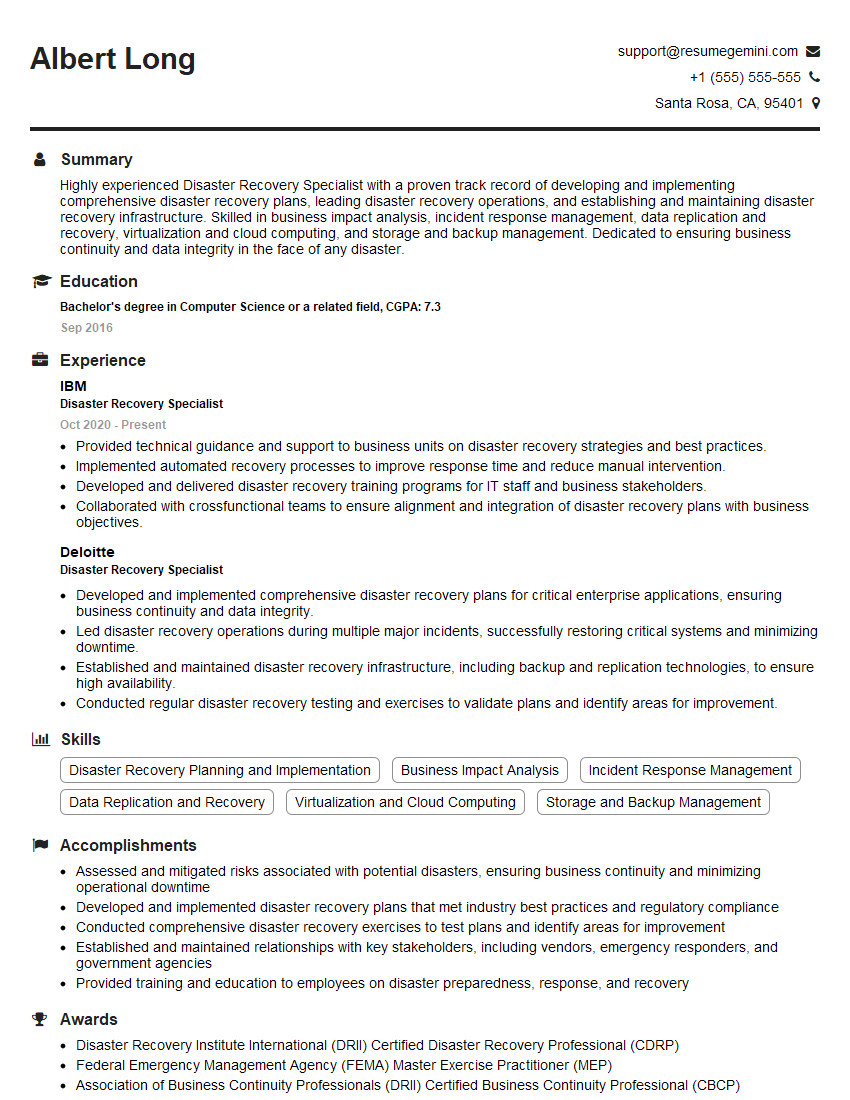
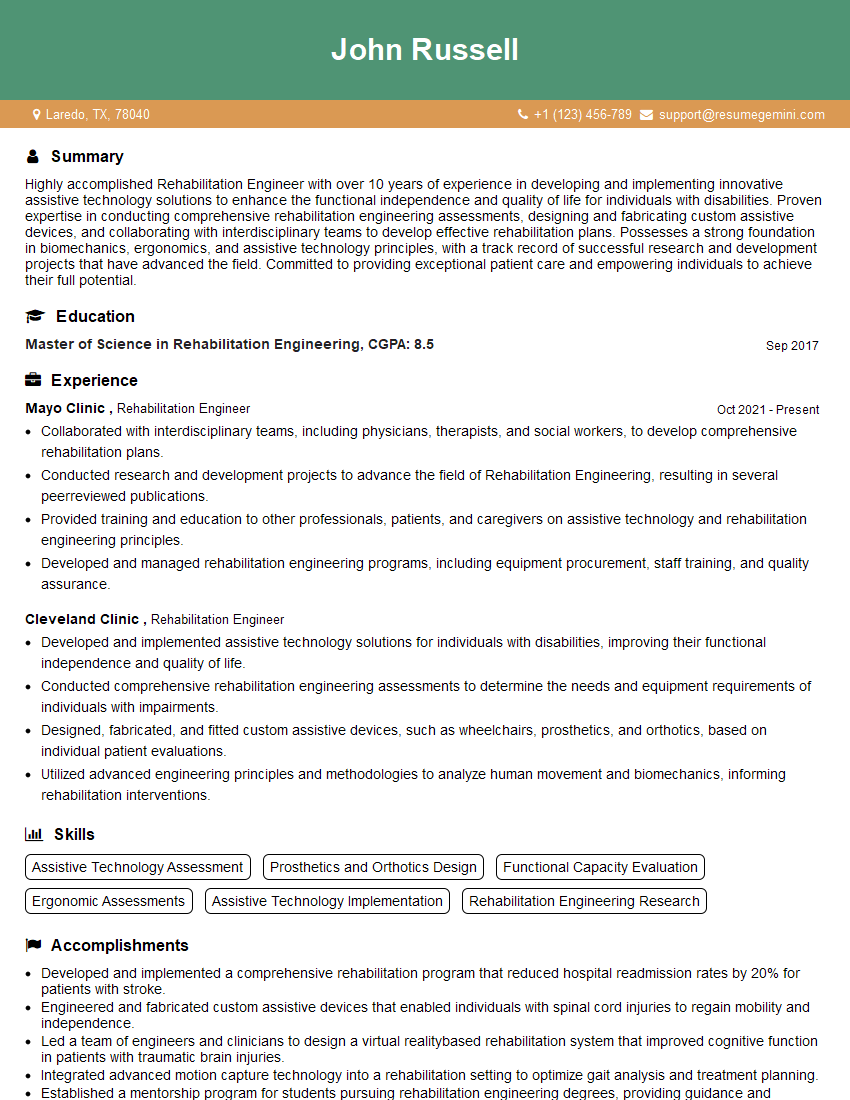
Mastering Battle Damage Assessment and Repair opens doors to exciting career opportunities in construction, engineering, and disaster recovery. A strong understanding of these principles is highly valued by employers. To maximize your job prospects, create a compelling and ATS-friendly resume that showcases your skills and experience effectively. ResumeGemini is a trusted resource to help you build a professional resume that stands out. Examples of resumes tailored to Battle Damage Assessment and Repair are available to guide you, ensuring your qualifications are presented in the best possible light.
Explore more articles
Users Rating of Our Blogs
Share Your Experience
We value your feedback! Please rate our content and share your thoughts (optional).
What Readers Say About Our Blog
Very informative content, great job.
good