Are you ready to stand out in your next interview? Understanding and preparing for Animal Legislation interview questions is a game-changer. In this blog, we’ve compiled key questions and expert advice to help you showcase your skills with confidence and precision. Let’s get started on your journey to acing the interview.
Questions Asked in Animal Legislation Interview
Q 1. Explain the key differences between the Endangered Species Act and the Marine Mammal Protection Act.
The Endangered Species Act (ESA) and the Marine Mammal Protection Act (MMPA) are both landmark pieces of US legislation focused on protecting wildlife, but they have key differences. The ESA focuses broadly on protecting imperiled plant and animal species, regardless of their habitat, listing them as threatened or endangered and implementing recovery plans. It also regulates actions that might jeopardize listed species or their habitats. The MMPA, conversely, focuses specifically on marine mammals (whales, dolphins, seals, etc.). While it shares the goal of conservation with the ESA, it takes a more precautionary approach, prohibiting the taking (harassing, hunting, killing) of marine mammals except under specific circumstances, such as scientific research permits or for subsistence hunts by indigenous communities. In essence, the ESA is broader in scope but requires a species to be demonstrably threatened or endangered for protection, whereas the MMPA offers a blanket protection to all marine mammals unless specific exceptions apply.
Example: The ESA might protect a specific subspecies of bird facing habitat loss, while the MMPA might protect all populations of a certain whale species from accidental entanglement in fishing gear, regardless of their current population status.
Q 2. Describe the process of drafting and enacting animal welfare legislation.
The process of drafting and enacting animal welfare legislation is complex and often lengthy, involving multiple stages. It typically begins with identifying a problem or concern, such as widespread animal cruelty in factory farms or the lack of regulation for exotic pet ownership. This often involves lobbying from animal welfare groups, scientific evidence, and public pressure. Next, a bill is drafted, typically by a member of the legislature, outlining proposed changes to existing laws or introducing new ones. This draft then undergoes scrutiny through committees, where it is debated, amended, and possibly revised based on expert testimony and public input. If it successfully passes through committee, the bill proceeds to the full legislature for debate and a vote. Finally, if passed by the legislature, the bill is sent to the executive branch (e.g., the President in the US) for signature, thereby becoming law. The process is iterative, involving numerous revisions and compromises along the way.
Example: The passage of the Animal Welfare Act in the US involved extensive lobbying by animal welfare organizations highlighting inhumane practices in research labs and other settings, leading to the establishment of minimum standards for animal care and use.
Q 3. What are the ethical considerations in balancing animal welfare with economic interests?
Balancing animal welfare with economic interests presents a significant ethical challenge. The question lies in determining the appropriate level of compromise between the potential economic benefits of activities that may harm animals (e.g., intensive farming, fur trade) and the ethical imperative to minimize animal suffering. Utilitarian ethics might advocate for minimizing overall harm, weighing the economic benefits against the animal suffering involved, whereas deontological ethics might prioritize animal rights regardless of economic consequences. The challenge lies in finding a balance that reflects societal values and acknowledges the intrinsic value of animals, while also considering the livelihoods of people involved in industries impacting animals. Transparency, robust regulation, and incentivizing humane practices are crucial in navigating this ethical tightrope.
Example: The debate surrounding factory farming highlights this conflict. While factory farming provides affordable meat, it raises ethical concerns about animal welfare due to the often cramped and unsanitary conditions. Finding a balance that assures humane treatment while maintaining affordability requires careful consideration of economic, social, and ethical factors.
Q 4. How does international animal welfare law impact national legislation?
International animal welfare law significantly impacts national legislation through various mechanisms. International treaties and conventions, such as the Convention on International Trade in Endangered Species (CITES), establish binding obligations on signatory nations to implement domestic laws aligning with international standards. Furthermore, international organizations like the World Organisation for Animal Health (WOAH) set standards and guidelines for animal health and welfare, influencing national regulations aimed at preventing the spread of disease and ensuring humane treatment. Global trade agreements may also incorporate animal welfare provisions, indirectly affecting national laws related to food safety and import/export regulations. Pressure from international NGOs and public opinion can further incentivize nations to strengthen their animal welfare legislation to meet or exceed international standards.
Example: CITES has influenced many countries’ domestic laws on wildlife trade, prohibiting the import and export of endangered species, thereby safeguarding biodiversity on a global scale.
Q 5. Summarize the key provisions of the Animal Welfare Act.
The US Animal Welfare Act (AWA) regulates the treatment of animals in research, exhibition, transport, and by dealers. Key provisions include minimum standards for housing, handling, sanitation, veterinary care, and the humane treatment of animals used in these contexts. The AWA mandates the licensing and inspection of facilities using regulated animals and establishes penalties for violations. However, it notably excludes farm animals (cattle, pigs, poultry) from its scope, a source of ongoing debate and advocacy efforts. The AWA also requires that institutions using animals for research follow the “3Rs”: Replacement (of animals with non-animal models), Reduction (of the number of animals used), and Refinement (of procedures to minimize animal distress).
Example: The AWA mandates specific cage sizes for dogs kept in research facilities, aiming to prevent overcrowding and minimize stress. The exclusion of farm animals is a primary focus of current animal welfare advocacy.
Q 6. Explain the concept of ‘animal sentience’ and its relevance to legislation.
Animal sentience refers to the capacity of animals to experience feelings, such as pain, pleasure, fear, and distress. Acknowledging animal sentience is crucial for legislation because it provides a scientific basis for establishing ethical standards of animal welfare. If animals can feel pain and suffering, it implies a moral obligation to minimize harm and ensure humane treatment. The recognition of sentience in legislation moves beyond mere consideration of animal welfare as productivity or economic factors, and establishes a fundamental right to avoid suffering. This concept underpins many modern animal welfare laws, influencing everything from farming practices to research regulations.
Example: The growing recognition of animal sentience has spurred calls for stricter regulations on factory farming, the use of animals in research, and other practices that might cause significant animal suffering. Scientific research demonstrating the capacity for complex emotions in various animal species directly supports legislative reforms.
Q 7. What are the common challenges in enforcing animal welfare laws?
Enforcing animal welfare laws presents numerous challenges. These include limited resources for inspection and enforcement, particularly in remote areas or for smaller facilities. Another major challenge is the difficulty of detecting and documenting abuse, as it often occurs behind closed doors. The lack of standardized reporting mechanisms and inconsistent enforcement across different jurisdictions create loopholes and disparities in protection. Furthermore, the definition of “humane treatment” can be subjective and challenging to define objectively, leading to disagreements about whether specific practices constitute animal cruelty. Finally, public apathy and a lack of awareness can make enforcement efforts difficult, particularly in areas where certain practices are culturally accepted.
Example: Lack of sufficient inspectors means that many facilities may go uninspected for extended periods, creating opportunities for violations to occur unchecked. The varied interpretation of ‘humane treatment’ among different agencies and courts can also lead to inconsistencies in enforcement.
Q 8. Discuss the role of scientific evidence in shaping animal protection policies.
Scientific evidence is the bedrock of effective animal protection policies. It provides the factual basis for understanding animal needs, assessing the impact of human activities, and evaluating the effectiveness of conservation strategies. Without robust scientific data, policies risk being ineffective, even counterproductive.
For example, studies on the cognitive abilities of cephalopods (like octopuses) have led to increased consideration of their welfare in research and aquaculture. Similarly, research on habitat loss and its effect on specific endangered species informs legislation regarding land use and development. The use of population viability analysis (PVA), a sophisticated modeling technique, helps predict the long-term survival of species and guides conservation efforts. This data-driven approach ensures that regulations are based on a sound understanding of the biological realities of the species in question, maximizing the effectiveness of legislative action.
The scientific method is crucial; research findings must be peer-reviewed, transparent, and replicable to ensure reliability. This ensures that policy decisions are based on the best available knowledge, rather than on assumptions or biases.
Q 9. How do you address conflicts between different stakeholders in animal welfare debates?
Addressing conflicts among stakeholders – such as conservationists, landowners, hunters, and industry representatives – requires a multi-faceted approach emphasizing transparency, communication, and compromise. The key is to create a space where all voices can be heard and understood.
- Facilitated Dialogue: Bringing stakeholders together in a neutral setting, guided by a trained mediator, allows for open discussion and exploration of common ground. This helps to identify shared goals and address underlying concerns.
- Data-Driven Decision Making: Presenting scientifically sound evidence helps to de-escalate emotionally charged debates and shift discussions towards objective analysis of the situation. For instance, population data can inform sustainable hunting quotas or land management practices.
- Collaborative Management: Establishing joint management plans involving all stakeholders empowers local communities to participate actively in conservation. This can involve shared responsibility for monitoring wildlife populations, habitat restoration, or implementing mitigation measures.
- Legal Frameworks: Clear and enforceable laws and regulations set a baseline for acceptable behavior and provide a framework for resolving conflicts through mediation or legal channels. This often involves clear definitions of rights and responsibilities for each stakeholder.
For example, in managing wolf populations, conflicts arise between ranchers worried about livestock depredation and conservationists advocating for wolf protection. A successful approach might involve the implementation of non-lethal deterrents, compensation programs for ranchers who experience losses, and regulated hunting quotas to control the population while ensuring long-term viability.
Q 10. Explain the implications of captive breeding programs for endangered species.
Captive breeding programs aim to increase the population of endangered species to a point where reintroduction into the wild becomes feasible. However, they are not without challenges and implications.
- Genetic Bottleneck: Breeding a small number of animals can lead to a loss of genetic diversity, resulting in reduced fitness and vulnerability to disease in the captive and wild populations. This is mitigated through careful genetic management, such as cross-breeding with unrelated individuals and maintaining studbooks.
- Adaptation to Captivity: Animals born and raised in captivity may lack the skills necessary for survival in the wild, such as foraging, predator avoidance, and social interactions. Careful habituation and reintroduction programs are essential to address this.
- Habitat Availability: Even with successful captive breeding, reintroduction is only possible if suitable habitat exists. Habitat loss and degradation remain a significant hurdle. Legislation protecting habitats is therefore crucial for captive breeding efforts to be truly effective.
- Cost and Resources: Captive breeding programs are expensive and require substantial resources, expertise, and dedicated infrastructure. Funding and allocation of resources are often significant challenges.
The California condor’s recovery exemplifies both the success and challenges. Through intensive captive breeding, the population has increased. However, reintroduction efforts highlight the importance of habitat preservation and continued monitoring. The success of the program ultimately depends on the interplay between captive breeding efforts and suitable habitat management.
Q 11. What are the legal ramifications of animal cruelty?
The legal ramifications of animal cruelty vary depending on jurisdiction but generally involve criminal penalties and, increasingly, civil liabilities. Many countries have legislation that specifically addresses animal abuse and neglect.
- Criminal Penalties: These can include fines, imprisonment, and the confiscation of animals. The severity of the punishment depends on the nature and extent of the cruelty, ranging from misdemeanors for minor offenses to felonies for severe cases.
- Civil Liabilities: Victims of animal cruelty can sue perpetrators for damages, including veterinary bills, emotional distress, and lost value of the animal. This provides a financial deterrent and promotes accountability.
- Injunctive Relief: Courts can issue injunctions to prevent further cruelty, requiring perpetrators to take specific actions, such as providing proper care for an animal or relinquishing ownership.
Examples of animal cruelty offenses include deliberate infliction of pain, neglect, abandonment, and participation in illegal animal fighting. The legal frameworks are continuously evolving to reflect a growing societal awareness of animal sentience and welfare. For example, many jurisdictions are increasingly recognizing the harm caused by emotional distress to animals and treating it as a criminal offense.
Q 12. Describe different approaches to managing wildlife populations.
Managing wildlife populations requires a multifaceted approach tailored to the specific species and ecosystem. The strategies employed often depend on the conservation goals (e.g., population increase, population control, disease prevention).
- Habitat Management: Protecting and restoring habitats is crucial for supporting healthy wildlife populations. This includes land acquisition, habitat restoration projects, and regulation of human activities that impact wildlife habitats.
- Population Control: In cases where populations exceed carrying capacity or pose a threat to human safety or other species, population control measures may be necessary. These can include regulated hunting, trapping, and relocation programs.
- Disease Management: Preventing and controlling wildlife diseases is vital for population health. This includes surveillance programs, vaccination strategies, and management of wildlife interaction with livestock.
- Translocation: Moving animals from areas of high density or low habitat quality to areas with more suitable conditions is sometimes used to improve population viability.
- Protected Areas: Establishing national parks, wildlife reserves, and other protected areas is critical to conserving biodiversity and safeguarding crucial habitats.
For instance, managing deer populations often involves a combination of habitat management (thinning forests to improve forage) and regulated hunting to prevent overgrazing and reduce collisions with vehicles.
Q 13. How does climate change impact wildlife conservation efforts and relevant legislation?
Climate change is a significant threat to wildlife conservation, impacting species distribution, breeding patterns, and overall survival. This necessitates adaptation in legislation and conservation strategies.
- Range Shifts: As climates change, species are forced to shift their ranges in search of suitable habitats. This can lead to habitat loss and fragmentation, increasing competition for resources and causing conflict between species.
- Phenological Mismatches: Changes in timing of seasonal events (e.g., migration, breeding) can disrupt ecological interactions. For example, if the timing of insect emergence doesn’t match the migratory arrival of birds relying on them, the birds may face starvation.
- Increased Disease Risk: Climate change can expand the geographical range of disease vectors, increasing the risk of disease outbreaks in wildlife populations.
- Extreme Weather Events: More frequent and intense extreme weather events (droughts, floods, heat waves, wildfires) can decimate populations and destroy habitats.
Legislation needs to address these challenges through adaptation measures, such as establishing climate refuges, promoting habitat connectivity, and integrating climate change projections into conservation planning. For example, legislation could require environmental impact assessments to account for the effects of climate change on specific species and habitats.
Q 14. Discuss the legal frameworks for regulating wildlife trade.
International and national legal frameworks regulate wildlife trade to prevent the illegal trafficking of endangered species and their products. The Convention on International Trade in Endangered Species of Wild Fauna and Flora (CITES) is the cornerstone of international wildlife trade regulation.
- CITES: This treaty lists species according to their conservation status, regulating international trade through permits and other measures. Species are listed in three appendices, reflecting different levels of protection.
- National Legislation: Individual countries have their own domestic laws to implement CITES and to further regulate wildlife trade within their borders. These laws often include provisions for confiscating illegally traded wildlife, imposing penalties on traffickers, and establishing permitting systems for legal trade.
- Enforcement Challenges: Illegal wildlife trade is a global challenge, demanding collaboration among countries to combat trafficking networks and improve border controls. Limited resources and corruption hinder effective enforcement in many parts of the world.
- Sustainable Use: While some species are listed in CITES appendices to prevent any trade, others are managed for sustainable use, allowing limited and carefully regulated trade to support local communities.
The illegal ivory trade, for example, is a significant threat to elephant populations. CITES has listed elephants under Appendix I (prohibiting commercial trade), but enforcement is crucial to prevent poaching and the illegal sale of ivory.
Q 15. What are the key considerations for designing effective animal welfare inspections?
Effective animal welfare inspections require a multi-faceted approach, balancing thoroughness with practicality. Key considerations include:
- Clear Legal Framework: Inspectors must be thoroughly familiar with all relevant legislation, regulations, and guidelines specific to the animals being inspected (e.g., farm animals, zoo animals, pets in shelters). This ensures consistent application of the law.
- Standardized Procedures: A standardized inspection checklist ensures consistency across all inspections. This checklist should cover housing conditions (space, cleanliness, ventilation), animal health (signs of disease, injury, malnutrition), and husbandry practices (feeding, watering, handling). Specific checklists may be required depending on the species.
- Objective Assessment: Inspectors must avoid subjective judgments and focus on observable facts. Documentation should be thorough, including photographic or video evidence. This minimizes bias and strengthens any subsequent legal actions.
- Risk-Based Approach: Resources are often limited, so prioritizing inspections based on risk assessment is crucial. Facilities with a history of non-compliance or those involving animals known to be vulnerable should receive more frequent inspections.
- Communication and Collaboration: Effective communication is essential. Inspectors should clearly explain findings to facility operators, offering guidance for improvement. Collaboration with veterinarians and other experts can enhance the inspection process.
- Follow-up and Enforcement: Following up on identified deficiencies is critical. This may include issuing warnings, imposing penalties, or initiating legal proceedings if necessary. Consistent and fair enforcement is vital to deter future violations.
For example, an inspection of a dairy farm would focus on factors like cow comfort (adequate space, bedding, access to water), milking hygiene, and the absence of lameness or other injuries. An inspection of a pet store would emphasize proper sanitation, disease prevention measures, and appropriate handling of animals.
Career Expert Tips:
- Ace those interviews! Prepare effectively by reviewing the Top 50 Most Common Interview Questions on ResumeGemini.
- Navigate your job search with confidence! Explore a wide range of Career Tips on ResumeGemini. Learn about common challenges and recommendations to overcome them.
- Craft the perfect resume! Master the Art of Resume Writing with ResumeGemini’s guide. Showcase your unique qualifications and achievements effectively.
- Don’t miss out on holiday savings! Build your dream resume with ResumeGemini’s ATS optimized templates.
Q 16. Explain the differences between various types of animal licenses and permits.
Animal licenses and permits vary widely depending on the jurisdiction and the type of animal. The key difference lies in their purpose and scope.
- Licenses: These are typically broader authorizations, often required for ongoing activities involving animals. Examples include:
- Breeder’s License: Allows for the breeding and sale of animals, often with specific requirements on animal health and housing.
- Zoo License: Allows for the keeping and exhibition of animals in a zoological setting, with stringent standards related to animal welfare, conservation, and public safety.
- Pet Shop License: Allows the sale of animals with specific regulations regarding animal source, health checks, and housing.
- Permits: These are usually for specific actions or events. Examples include:
- Import/Export Permits: Required for bringing animals into or out of a country, often with stringent health and quarantine requirements.
- Transport Permits: Required for transporting animals, particularly over long distances, emphasizing animal welfare during transit.
- Special Event Permits: Might be needed for events such as circuses or rodeos, with specific stipulations on animal handling and welfare.
The specific requirements for each license or permit will vary considerably. It’s crucial to consult the relevant regulatory authorities for detailed information applicable to the specific animal and activity.
Q 17. How can technology be used to improve animal welfare enforcement?
Technology offers numerous opportunities to improve animal welfare enforcement. Here are some key applications:
- Remote Monitoring: Sensors and cameras can provide real-time data on animal activity, health, and environmental conditions (temperature, humidity). This allows for proactive intervention and reduces the need for frequent on-site inspections.
- Geographic Information Systems (GIS): GIS technology can map animal populations, identify high-risk areas, and optimize inspection routes, improving efficiency.
- Data Analysis and Predictive Modeling: Analyzing data from inspections, monitoring systems, and other sources can identify trends, predict potential welfare issues, and target preventative measures.
- Blockchain Technology: Tracking the movement of animals throughout the supply chain can increase transparency and accountability, reducing the risk of illegal activities.
- Artificial Intelligence (AI): AI-powered image and video analysis can automate the detection of welfare issues such as injuries or signs of disease, assisting inspectors in identifying problems more efficiently.
For example, a farmer might use sensors to monitor the temperature and humidity in a barn, alerting authorities to potential problems. AI could analyze images from cameras to detect lameness in dairy cows, triggering a prompt inspection.
Q 18. What are the legal responsibilities of animal owners?
Animal owners have several crucial legal responsibilities, which vary depending on the type of animal, location, and relevant legislation. However, some common responsibilities include:
- Providing Adequate Care: This includes providing sufficient food, water, shelter, veterinary care, and protection from harm, appropriate to the animal’s species, age, and individual needs. Neglect is a serious offense.
- Preventing Suffering: Owners must prevent their animals from suffering unnecessary pain, injury, or distress. This responsibility extends to taking prompt action if an animal is injured or becomes ill.
- Compliance with Regulations: Owners must adhere to all applicable laws and regulations, including licensing requirements, restrictions on animal types, and animal control ordinances.
- Public Safety: Owners are responsible for ensuring their animals do not pose a danger to the public. This includes controlling their animals’ behavior, preventing bites, and ensuring they are properly restrained when necessary.
- Responsible Disposal: This applies to disposing of animal waste appropriately and managing the end of an animal’s life humanely and responsibly. Improper disposal of carcasses can present a public health risk.
Failure to meet these responsibilities can lead to fines, animal seizure, legal action, and even criminal charges. The specifics will vary widely depending on the jurisdiction and the severity of the neglect or abuse.
Q 19. Discuss the role of public education in promoting responsible animal ownership.
Public education is fundamental to promoting responsible animal ownership. Effective strategies include:
- School Programs: Introducing children to responsible pet ownership from a young age through curriculum incorporating kindness, respect, and responsible care of animals.
- Community Outreach: Workshops, seminars, and public awareness campaigns can inform potential pet owners about the commitments involved in owning animals, including financial aspects and ongoing responsibilities.
- Media Campaigns: Utilizing television, radio, social media, and online platforms to reach broad audiences with informative messages and appealing visuals, showcasing the positive aspects of responsible ownership and the negative consequences of neglect.
- Collaboration with Veterinarians and Animal Shelters: Partnering with these organizations to provide educational resources, promote adoption, and offer advice on responsible pet care practices.
- Clear and Accessible Information: Providing easy-to-understand resources (brochures, websites, FAQs) that clearly explain animal welfare laws, responsible pet care practices, and where to find help if needed.
A successful campaign might feature stories of responsible pet ownership, highlighting the rewards of caring for animals correctly while simultaneously showcasing the devastating impact of animal neglect.
Q 20. How can you effectively communicate complex animal welfare issues to a non-expert audience?
Communicating complex animal welfare issues to a non-expert audience requires careful consideration. Key strategies include:
- Simple Language: Avoid jargon and technical terms. Use clear, concise language easily understood by the general public.
- Relatable Stories and Examples: Use compelling narratives and real-life examples to illustrate the issues. This can generate emotional connection and increase engagement.
- Visual Aids: Use photographs, videos, and infographics to convey information effectively. A picture is often worth a thousand words, especially when dealing with animal welfare issues.
- Focus on Key Messages: Highlight the most important aspects of the issue, avoiding overwhelming the audience with too much detail. A concise and well-structured message is easier to understand and retain.
- Interactive Elements: Incorporate interactive elements such as quizzes or polls to encourage participation and enhance learning.
- Empathy and Emotional Connection: Connect with the audience on an emotional level, showing the impact of the issue on animals and people.
For example, instead of explaining ‘zoonotic diseases’ explain it as ‘diseases that can spread from animals to people,’ providing a specific example, like rabies. Images of neglected animals are far more impactful than technical descriptions of their conditions.
Q 21. Explain the concept of ‘One Health’ and its relevance to animal legislation.
The ‘One Health’ approach recognizes the interconnectedness of human, animal, and environmental health. It emphasizes that the health of one cannot be separated from the others. Its relevance to animal legislation is significant because many diseases and health risks affect all three areas.
- Zoonotic Diseases: Many infectious diseases, such as rabies, avian influenza, and COVID-19, can spread between animals and humans. Effective animal welfare legislation helps prevent the emergence and spread of these diseases.
- Antimicrobial Resistance: The overuse of antibiotics in animal agriculture contributes to the development of antimicrobial resistance, affecting both animal and human health. Legislation can promote responsible antibiotic use in livestock.
- Environmental Contamination: Poor animal husbandry practices can lead to environmental pollution, affecting both human and animal health. Regulations can ensure environmentally responsible practices in animal production and waste management.
- Wildlife Conservation: Protecting wildlife habitats and biodiversity is crucial for human and animal health. Legislation can safeguard endangered species and their habitats.
For example, effective animal welfare legislation that addresses overcrowding in livestock farms will not only improve animal welfare but also reduce the risk of disease outbreaks that could spill over to humans. Similarly, regulations controlling the use of antibiotics in animal feed help to prevent the spread of antibiotic-resistant bacteria, protecting both animals and humans.
Q 22. What are the legal challenges in protecting endangered species from habitat loss?
Protecting endangered species from habitat loss presents a significant legal challenge because it often involves balancing competing interests – conservation needs against economic development, individual property rights, and even cultural practices.
Legally, the challenge lies in enforcing legislation that restricts activities harmful to habitats. This can involve proving a direct causal link between a specific activity (e.g., deforestation, mining) and habitat destruction, leading to a decline in the endangered species population. Gathering sufficient scientific evidence to support such claims can be expensive and time-consuming. Furthermore, enforcement often lacks the resources to monitor vast areas and prosecute offenders effectively.
For example, imagine a logging company operating legally in a forest that is also a crucial habitat for an endangered primate. Proving that their logging activities are directly causing the primate population to decline requires extensive ecological studies, population surveys, and perhaps even modeling future population trends based on various logging scenarios. Even with strong evidence, legal battles can be protracted and expensive, often leading to delays that further endanger the species.
- Weak legislation: Laws might be inadequate in addressing the scale of habitat destruction.
- Enforcement challenges: Lack of resources and manpower to effectively monitor and enforce regulations.
- Conflicting interests: Balancing conservation with economic development and individual rights creates complexities.
- Scientific evidence: Establishing a definitive link between habitat loss and species decline requires strong scientific evidence.
Q 23. Describe the role of NGOs in influencing animal welfare legislation.
NGOs (Non-Governmental Organizations) play a crucial role in influencing animal welfare legislation through advocacy, lobbying, and public awareness campaigns. They act as watchdogs, monitoring government policies and practices, and holding authorities accountable for their actions. Their influence stems from their ability to mobilize public support, provide expertise, and lobby for stricter regulations.
For instance, NGOs often conduct research on animal welfare issues, compiling data that informs policy-makers and strengthens the case for legislative changes. They may also participate directly in drafting proposed legislation, suggesting amendments, and presenting their findings to parliamentary committees. Moreover, effective public awareness campaigns, leveraging social media and traditional media outlets, can significantly sway public opinion, creating pressure on governments to act.
Examples include the World Wildlife Fund (WWF), Greenpeace, and the Humane Society International (HSI), which have significantly impacted legislation on issues ranging from wildlife trade to animal testing and habitat protection.
Q 24. How do you stay updated on the latest developments in animal welfare legislation?
Staying updated on animal welfare legislation requires a multi-faceted approach. I regularly subscribe to legal databases specializing in environmental and animal law, which provide alerts on new legislation, court rulings, and policy changes. I also actively follow the websites and publications of key governmental agencies and international organizations like the IUCN (International Union for Conservation of Nature) and the FAO (Food and Agriculture Organization of the United Nations).
Networking with colleagues and attending conferences and workshops is essential for gaining insights and exchanging information about recent developments. Participating in professional organizations dedicated to animal law allows access to the latest research, policy discussions, and legal updates. Finally, monitoring the activities of key NGOs and advocacy groups provides a valuable perspective on current policy debates and upcoming legislative changes.
Q 25. Explain the differences between proactive and reactive approaches to animal welfare.
Proactive and reactive approaches to animal welfare differ fundamentally in their timing and strategy. A proactive approach focuses on preventing animal welfare problems before they arise. This involves implementing preventative measures, such as establishing strict regulations on factory farming practices to avoid cruelty or proactively establishing protected areas to safeguard habitats.
Conversely, a reactive approach addresses animal welfare problems only after they have occurred. This might involve responding to reports of animal abuse, investigating instances of wildlife poaching, or implementing emergency measures after a natural disaster impacting animal populations. Think of it like this: proactive is putting up a fence to keep the animals in, while reactive is trying to round them up after they’ve escaped.
While reactive approaches are necessary to address immediate crises, a proactive strategy is more effective in the long run by preventing problems before they escalate into larger-scale welfare issues. Ideally, a balanced approach incorporating both proactive prevention and reactive intervention is most effective.
Q 26. Discuss the potential impacts of genetically modified animals on existing legislation.
Genetically modified (GM) animals present a unique challenge to existing animal welfare legislation. Current laws often do not adequately address the specific welfare concerns raised by GM animals, such as the potential for increased susceptibility to disease or the development of unforeseen physical or behavioral problems. The ethical implications of genetic manipulation also demand careful consideration.
For example, if GM animals are created with enhanced growth rates, this might lead to musculoskeletal problems or other health issues not previously accounted for in legislation. Similarly, altering an animal’s genetic makeup might affect its social behavior or its ability to adapt to its environment, requiring new legal frameworks to address these potential welfare concerns. Existing regulations often focus on the treatment of animals *after* they are born, not on the genetic processes that might impact their well-being from the outset. Thus, current laws might require significant amendments or entirely new regulations to specifically address the ethical and welfare implications of GM animals.
Q 27. What are some emerging trends in animal welfare and their legislative implications?
Several emerging trends in animal welfare are shaping legislative developments. One key trend is the growing recognition of animal sentience, meaning the capacity to feel and experience things, impacting legislation around animal cognition and emotional well-being. This is leading to a shift from focusing solely on physical welfare to encompassing emotional and psychological aspects. We are seeing this in stricter regulations around transportation, confinement, and other practices.
Another trend is the increasing focus on the welfare of animals used in research. There’s a growing demand for stricter regulations on animal experimentation, with a push towards the 3Rs: Reduction, Refinement, and Replacement of animal use in research. Finally, the growing awareness of the environmental impact of animal agriculture is driving legislation aimed at promoting sustainable and ethical farming practices. This includes addressing issues like intensive livestock farming and its contribution to climate change.
Q 28. How would you handle a situation where legislation conflicts with ethical considerations in animal welfare?
When legislation conflicts with ethical considerations in animal welfare, a multi-pronged approach is required. Firstly, a thorough analysis of the legislation is essential to understand the specific points of conflict. This includes reviewing the scientific evidence underpinning the legislation and comparing it with the available ethical arguments.
Next, advocacy and public engagement are crucial. Raising awareness of the ethical concerns through public campaigns, lobbying efforts, and collaborations with NGOs can help influence policy changes. Simultaneously, engaging in legal challenges, such as filing lawsuits or petitions, can provide a means to contest the legislation through the legal system.
Finally, exploring alternative solutions that balance both legal requirements and ethical considerations is essential. This might involve proposing amendments to the existing legislation or developing innovative approaches that reconcile the legal framework with ethical principles. For instance, advocating for stricter enforcement of existing legislation while simultaneously pushing for progressive changes to better align the law with the best available ethical knowledge is a balanced approach.
Key Topics to Learn for Animal Legislation Interview
- Animal Welfare Laws: Understanding the core principles of animal welfare legislation, including definitions of animal cruelty and neglect, and the legal frameworks protecting animals from harm.
- Species-Specific Legislation: Familiarize yourself with laws pertaining to specific animal groups (e.g., companion animals, livestock, wildlife). Consider the unique challenges and considerations for each.
- Enforcement and Compliance: Explore the mechanisms for enforcing animal welfare laws, including investigative processes, penalties for violations, and the role of various regulatory agencies.
- Ethical Considerations in Animal Research: Understand the ethical debates surrounding animal experimentation and the regulations governing its conduct. Be prepared to discuss the balance between scientific advancement and animal welfare.
- International Animal Protection Treaties and Agreements: Gain familiarity with significant international treaties and agreements related to animal welfare and conservation. Consider their impact on national legislation.
- Policy Analysis and Advocacy: Develop your ability to analyze existing animal legislation, identify areas for improvement, and articulate effective arguments for policy changes. Practice constructing well-supported policy recommendations.
- Case Law and Precedent: Become familiar with landmark cases and legal precedents that have shaped the interpretation and application of animal welfare laws.
- Emerging Issues in Animal Legislation: Stay updated on current trends and challenges in animal welfare, such as animal trafficking, factory farming practices, and the impact of climate change on animals.
Next Steps
Mastering Animal Legislation opens doors to impactful careers dedicated to protecting animal welfare. A strong understanding of these legal frameworks is crucial for roles in government, non-profit organizations, and private practice. To significantly boost your job prospects, creating an ATS-friendly resume is essential. ResumeGemini is a trusted resource that can help you craft a professional and compelling resume tailored to highlight your expertise in Animal Legislation. Examples of resumes specifically designed for this field are available within ResumeGemini to guide your creation process. Investing time in crafting a strong resume will significantly increase your chances of securing your dream role.

Environmental Compliance Officer Resume Sample

Wildlife Biologist Resume Sample
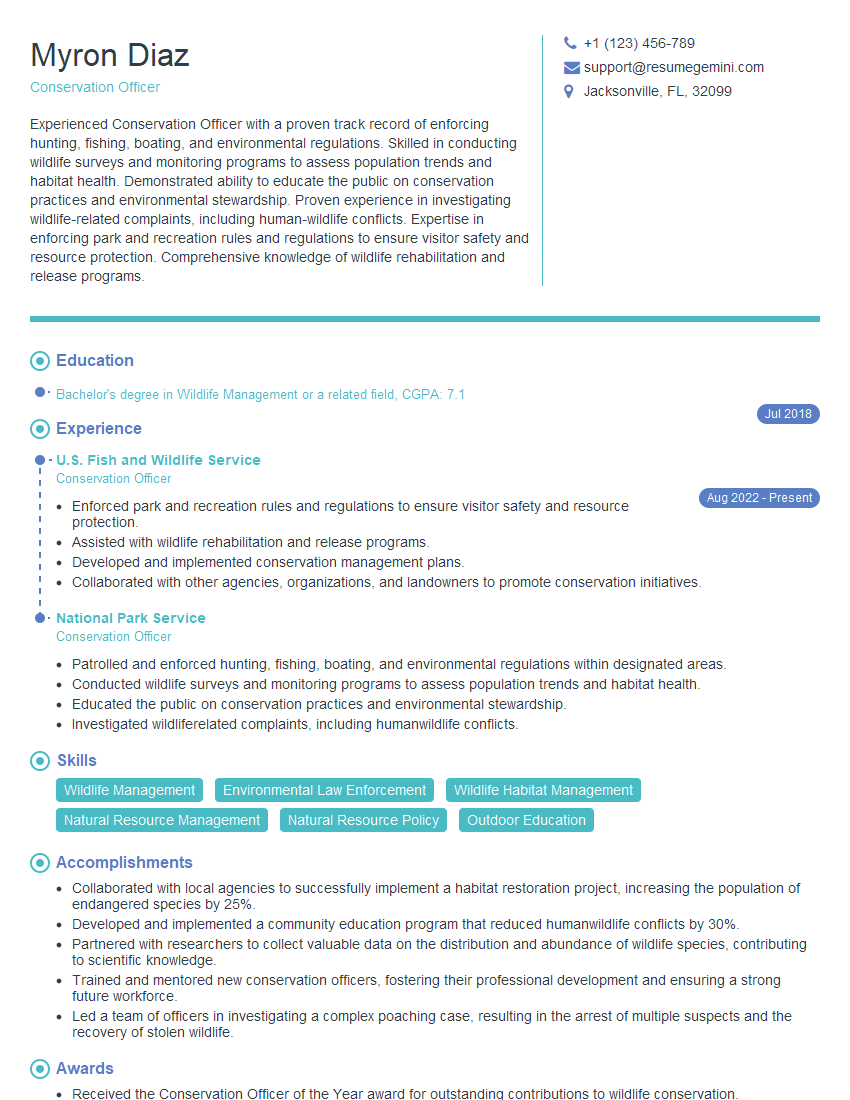
Conservation Officer Resume Sample
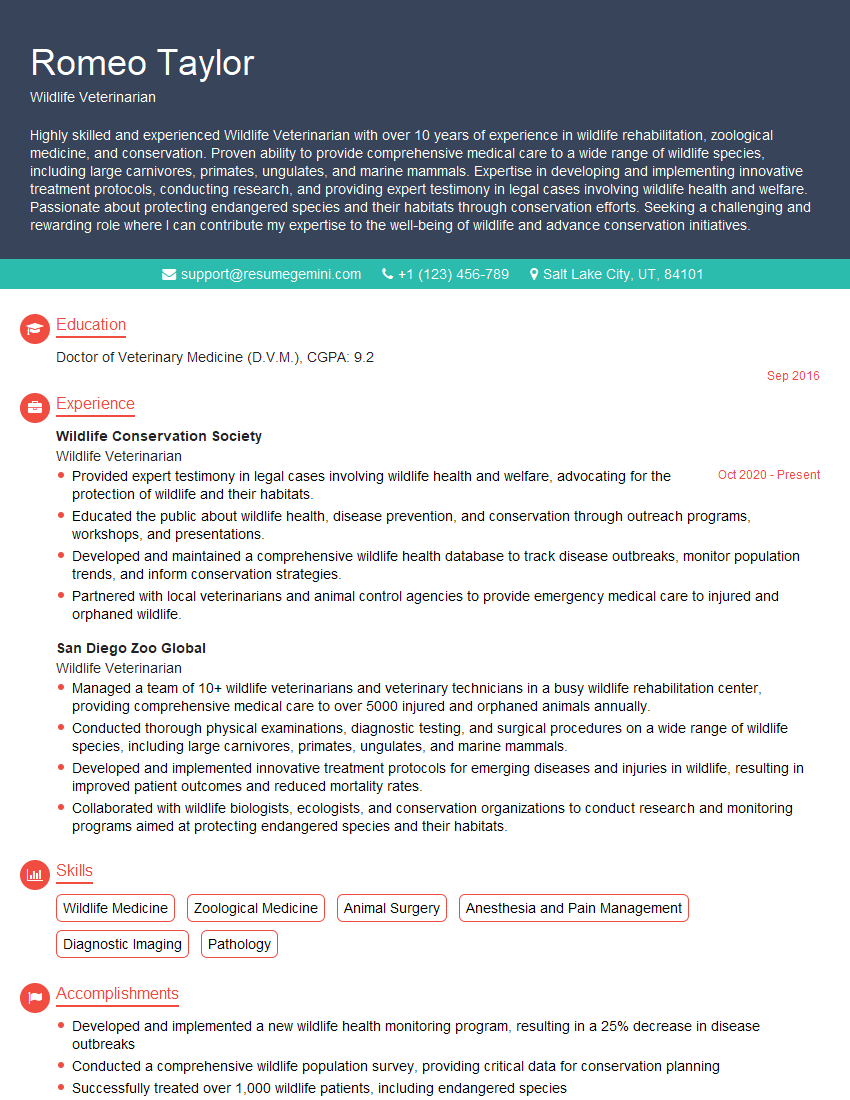
Wildlife Veterinarian Resume Sample
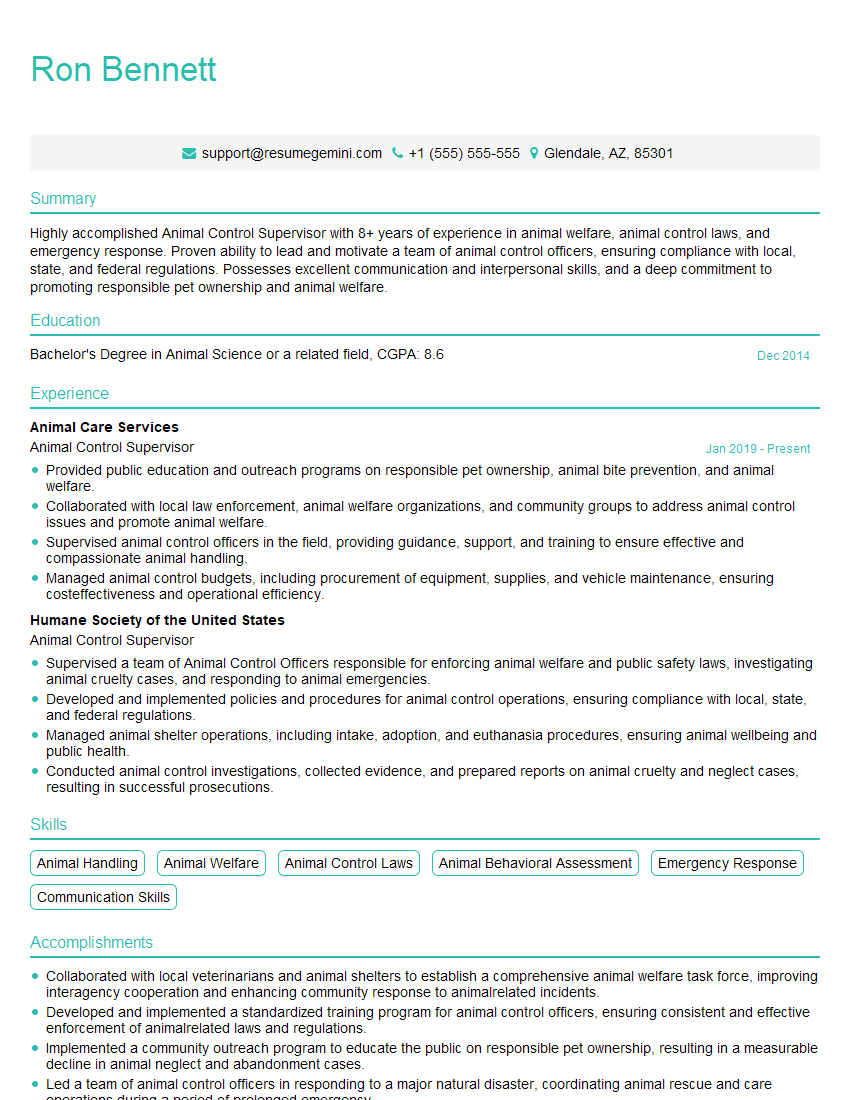
Animal Control Supervisor Resume Sample
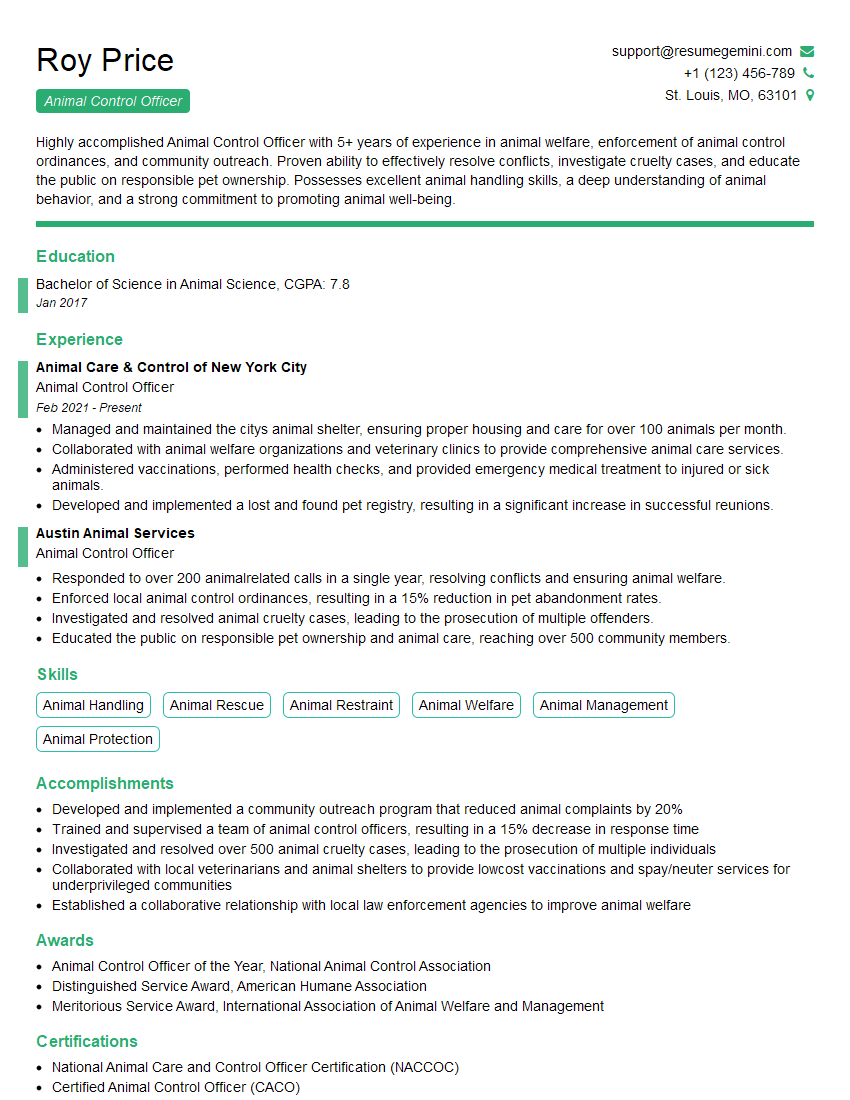
Animal Control Officer Resume Sample

Wildlife Rehabilitator Resume Sample
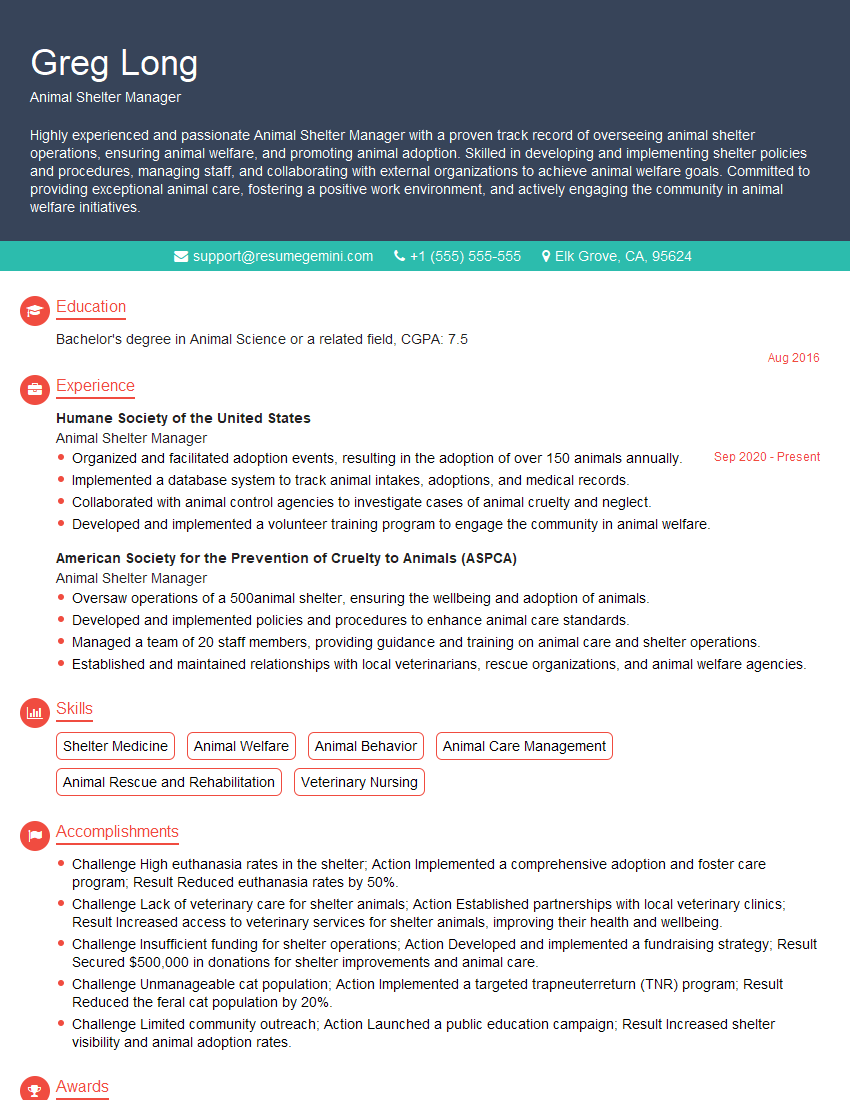
Animal Shelter Manager Resume Sample
Explore more articles
Users Rating of Our Blogs
Share Your Experience
We value your feedback! Please rate our content and share your thoughts (optional).
What Readers Say About Our Blog
Very informative content, great job.
good