Interviews are opportunities to demonstrate your expertise, and this guide is here to help you shine. Explore the essential Wildlife Health and Disease Recognition interview questions that employers frequently ask, paired with strategies for crafting responses that set you apart from the competition.
Questions Asked in Wildlife Health and Disease Recognition Interview
Q 1. Describe the lifecycle of a common wildlife pathogen in your region.
Let’s consider the lifecycle of Leptospira spp., a common bacterial pathogen affecting wildlife in many regions, including my own. Leptospira are spirochetes, bacteria with a spiral shape. Their lifecycle involves two main stages: the saprophytic stage and the parasitic stage.
- Saprophytic Stage: In this stage, Leptospira survive in moist environments like soil and water, often persisting for extended periods. They can survive in this phase for weeks, even months, depending on environmental factors. Think of it as their dormant, survival mode.
- Parasitic Stage: This stage begins when a susceptible animal (e.g., a rodent, deer, or even a human) ingests contaminated water or comes into contact with infected urine. The bacteria then enter the bloodstream, causing leptospirosis. The infected animal then sheds the bacteria through its urine, contaminating the environment and restarting the cycle. The severity of the infection varies greatly, depending on factors like host immunity and bacterial strain virulence.
Understanding this lifecycle is crucial for developing control strategies. For instance, targeting rodent populations or improving sanitation can interrupt the cycle by reducing bacterial shedding and environmental contamination. We often see seasonal peaks in leptospirosis cases linked to increased rainfall and flooding, which facilitates the spread of Leptospira.
Q 2. Explain the difference between zoonotic and epizootic diseases.
Zoonotic and epizootic diseases both involve infectious agents spreading through populations, but their targets differ. A zoonotic disease is one that can be transmitted from animals to humans. Think of rabies, Lyme disease, or avian influenza – these can jump the species barrier. The impact of zoonotic diseases is significant, affecting both human and animal health and often requiring coordinated interdisciplinary responses.
An epizootic disease, on the other hand, is an infectious disease that rapidly spreads through a population of animals of the same species. A classic example would be an outbreak of avian influenza in a poultry farm or a highly pathogenic strain of Newcastle disease in a wild bird population. Epizootics can devastate wildlife populations, impacting biodiversity and ecosystem health. While not directly transmitted to humans, epizootics can indirectly affect human populations through economic losses (e.g., reduced agricultural yields) or threats to food security.
The key difference lies in the host: zoonotic diseases cross the animal-human barrier, whereas epizootics are confined to animal populations within a species.
Q 3. What are the key diagnostic techniques used in wildlife disease investigation?
Diagnosing wildlife diseases presents unique challenges due to the difficulty in handling and obtaining samples. Our diagnostic arsenal involves a multi-faceted approach, combining various techniques.
- Necropsy and Histopathology: A thorough post-mortem examination (necropsy) reveals gross lesions, and tissue samples are analyzed microscopically (histopathology) to identify tissue damage characteristic of specific diseases. This is often the starting point in investigating mortality events.
- Bacteriology and Virology: Cultures are used to isolate and identify bacteria and viruses. Molecular techniques, like PCR (Polymerase Chain Reaction), are invaluable for detecting pathogens even when present in low numbers or difficult to culture.
- Serology: Serological tests detect antibodies in blood samples, indicating past exposure to a pathogen. ELISA (Enzyme-Linked Immunosorbent Assay) is a widely used serological technique.
- Parasitology: Microscopic examination of fecal samples or tissues reveals parasites. Techniques like flotation or sedimentation help detect parasite eggs or larvae.
- Molecular Diagnostics: Advanced techniques like next-generation sequencing (NGS) are used to identify novel pathogens or analyze the genetic diversity within known pathogens.
The choice of techniques depends on the suspected disease, the available resources, and the nature of the samples obtained. A combination of methods is usually employed for a conclusive diagnosis.
Q 4. How would you approach an outbreak of a novel wildlife disease?
The appearance of a novel wildlife disease requires a rapid and coordinated response. My approach would involve the following steps:
- Rapid Assessment and Containment: Immediately gather information on the affected species, geographic location, the extent of the outbreak, and clinical signs. Implement measures to minimize further spread, potentially including quarantine or movement restrictions.
- Sample Collection and Diagnostic Testing: Collect samples from both sick and dead animals, adhering to strict biosecurity protocols. Employ a battery of diagnostic tests as described earlier, likely incorporating advanced techniques like NGS to characterize the novel pathogen.
- Disease Characterization: Once identified, determine the pathogen’s characteristics – transmissibility, virulence, and host range – to understand its potential impact.
- Risk Assessment and Communication: Assess the risk to other wildlife populations, livestock, and humans. Communicate findings to stakeholders, including wildlife agencies, public health officials, and the community.
- Disease Management Strategies: Develop and implement management strategies based on the risk assessment. This may involve vaccination programs, environmental modifications, or culling in extreme cases. The ethical implications of each strategy must be carefully considered.
- Surveillance and Monitoring: Establish ongoing surveillance to monitor the disease’s spread and effectiveness of implemented control measures.
A crucial aspect is collaboration. Working with veterinary epidemiologists, molecular biologists, and wildlife managers is critical for successful outbreak management. The whole process needs transparency and efficient communication.
Q 5. Discuss the ethical considerations of wildlife disease management.
Ethical considerations are paramount in wildlife disease management. Decisions often involve difficult trade-offs, and careful consideration is necessary to ensure that actions are both effective and morally justifiable.
- Animal Welfare: Minimizing suffering during sampling, treatment, or culling is critical. Euthanasia, when necessary, should be conducted humanely.
- Conservation Implications: Intervention strategies must consider the potential impact on biodiversity and the long-term viability of affected populations. Actions should be proportionate to the threat posed by the disease.
- Public Health: The risk to human health must be carefully balanced against the potential impact of interventions on wildlife. Transparent communication with the public is crucial.
- Resource Allocation: Decisions regarding resource allocation must be based on a sound scientific assessment of priorities. Limited resources necessitate careful prioritization of control efforts.
- Scientific Integrity: Research and management decisions must be guided by sound science, with transparency in data collection and analysis. Avoiding biases and conflicts of interest is vital.
Ethical frameworks and guidelines provide valuable guidance in navigating these complex considerations. Ethical review boards play a critical role in ensuring that research and management actions align with ethical principles.
Q 6. What are the limitations of using serological tests in wildlife disease diagnosis?
Serological tests, while valuable, have limitations in wildlife disease diagnosis.
- Cross-reactivity: Antibodies produced in response to one pathogen may cross-react with other similar pathogens, leading to false-positive results. This is particularly problematic when dealing with closely related viruses or bacteria.
- Sensitivity and Specificity: The sensitivity (ability to detect true positives) and specificity (ability to detect true negatives) of serological tests vary. A low sensitivity may result in false negatives, while low specificity may lead to false positives. These factors affect the reliability of the test results.
- Antibody Persistence: Antibodies can persist in the blood long after an infection has cleared. This makes it difficult to determine whether a positive result indicates a current infection or previous exposure. This is especially significant in chronic infections.
- Sample Quality: Obtaining high-quality blood samples from wildlife is challenging. Hemolysis (breakdown of red blood cells) or improper storage can compromise test results.
- Individual Variation: Individual animals can exhibit different immune responses, affecting the sensitivity and interpretation of serological results.
Therefore, serological tests are best used in conjunction with other diagnostic techniques for a more accurate diagnosis. The interpretation of serological results must always be considered in the context of clinical signs, epidemiological data, and other diagnostic findings.
Q 7. Explain the concept of wildlife disease surveillance and its importance.
Wildlife disease surveillance is the systematic collection, analysis, and interpretation of data on wildlife health to detect, monitor, and predict disease outbreaks. Think of it as a proactive approach to wildlife health management. It’s not just about reacting to an outbreak, but anticipating and preventing them.
Its importance is multifold:
- Early Detection: Surveillance allows for early detection of disease outbreaks, enabling prompt implementation of control measures before widespread transmission occurs.
- Disease Monitoring: It helps track the geographic distribution and prevalence of diseases, identifying high-risk areas and populations.
- Risk Assessment: Surveillance data informs risk assessment, facilitating the development of effective prevention and control strategies.
- Disease Prediction: By analyzing trends in disease occurrence, surveillance can help predict future outbreaks, allowing for proactive planning and resource allocation.
- Conservation Management: Understanding the impact of diseases on wildlife populations is essential for effective conservation planning and management.
- Zoonotic Disease Prevention: Surveillance systems can identify and monitor zoonotic diseases in wildlife, contributing to human public health protection.
Effective surveillance requires a well-defined system with established protocols for data collection, analysis, and communication. Collaboration among different agencies and stakeholders is critical for success.
Q 8. How do environmental factors influence wildlife disease prevalence?
Environmental factors are crucial in shaping wildlife disease prevalence. Think of it like this: the environment is the stage, and the animals and their diseases are the actors. Changes to this stage directly impact the play.
- Climate Change: Altered temperatures and precipitation patterns can expand the range of disease vectors (like mosquitoes carrying West Nile Virus) or influence the lifecycle of pathogens. For example, warmer winters might allow disease-carrying ticks to survive longer, increasing the risk of Lyme disease in deer populations.
- Habitat Loss and Fragmentation: Reduced habitat forces animals into closer proximity, increasing the chance of disease transmission. Imagine a crowded apartment building – the risk of spreading illness is higher than in a spacious house.
- Pollution: Exposure to pollutants can weaken immune systems, making animals more susceptible to diseases. It’s like weakening the actors before the play even begins, making them more vulnerable to the diseases (the antagonists).
- Resource Availability: Scarcity of food and water can stress animals, making them more susceptible to infection. A malnourished actor is less likely to fight off the illness.
Understanding these environmental influences is vital for predicting and managing wildlife disease outbreaks. Conservation efforts that protect and restore habitats are crucial not only for biodiversity but also for wildlife health.
Q 9. Describe different methods for collecting wildlife samples for disease testing.
Collecting wildlife samples for disease testing requires careful consideration to minimize contamination and ensure sample integrity. The method depends on the species, suspected disease, and available resources.
- Blood Samples: Drawn using sterile needles and syringes, often from the jugular or tail vein, providing serological information (antibody detection) and sometimes DNA analysis.
- Fecal Samples: Collected non-invasively, ideal for detecting parasitic infections or pathogens shed in feces. Proper labeling and storage are crucial to prevent degradation.
- Tissue Samples: Obtained during necropsy (animal autopsy) or sometimes through minimally invasive biopsies. These samples offer insight into various pathologies and are essential for identifying many diseases. Specific tissue types are selected based on suspected disease. For instance, lung samples for respiratory infections.
- Swabs: Used to collect samples from various orifices (e.g., oral, cloacal) for detecting pathogens.
- Environmental Samples: Soil, water, or vegetation samples can help detect the presence of pathogens or identify potential sources of infection.
All samples need to be properly labeled, packaged, and transported to the lab to maintain their integrity and prevent cross-contamination. This careful process ensures accurate disease diagnosis and effective management.
Q 10. What are the challenges of conducting necropsy on wildlife?
Conducting necropsies on wildlife presents unique challenges compared to domestic animal necropsies. The difficulties often stem from the wild animal’s inherent characteristics and the limited resources available.
- Safety: Handling wild animals, even deceased ones, can pose risks of zoonotic diseases (diseases transmitted from animals to humans). Protective equipment and strict protocols are essential.
- Decomposition: Wildlife carcasses often arrive in advanced stages of decomposition, making it difficult to obtain useful information and potentially obscuring the primary cause of death. Rapid sample collection is critical.
- Accessibility: Accessing remote locations where carcasses might be found can be challenging, requiring specialized transportation and equipment.
- Species-Specific Knowledge: Knowledge of the animal’s anatomy and normal physiology is vital to avoid misinterpreting post-mortem changes.
- Resource Limitations: Limited equipment and diagnostic testing capabilities can hinder thorough investigations.
Overcoming these challenges requires careful planning, appropriate safety measures, quick response times, and collaboration among professionals with various skillsets.
Q 11. Explain the importance of biosecurity measures in wildlife health management.
Biosecurity measures are fundamental to preventing and controlling wildlife diseases. It’s about creating barriers to protect healthy animals from exposure to pathogens. Think of it as creating a protective shield around the wildlife population.
- Quarantine: Isolating newly introduced or potentially infected animals to prevent disease spread.
- Hygiene: Maintaining clean environments and disinfecting equipment to reduce pathogen transmission.
- Vector Control: Managing disease vectors like ticks, fleas, and mosquitoes through appropriate techniques.
- Waste Management: Proper disposal of carcasses and infected materials to minimize environmental contamination.
- Movement Restrictions: Limiting or regulating animal movement to prevent disease transmission.
- Surveillance: Monitoring wildlife populations for signs of disease and implementing early detection strategies.
Implementing robust biosecurity measures is crucial for protecting vulnerable wildlife populations and safeguarding human health. It’s a preventative approach rather than reactive, maximizing conservation efforts and minimizing losses.
Q 12. Discuss the role of genetic analysis in understanding wildlife disease.
Genetic analysis plays a vital role in understanding wildlife diseases, providing insights not possible through traditional methods. It’s like having a powerful magnifying glass to examine the disease’s intricacies.
- Pathogen Identification: Genetic sequencing can accurately identify pathogens, even novel ones, allowing for tailored disease management strategies.
- Evolutionary Studies: Tracking genetic changes in pathogens over time helps understand their evolution, virulence, and potential for spread.
- Host Genetics and Susceptibility: Genetic analysis can identify genes that influence an animal’s susceptibility to specific diseases, revealing why some individuals are more vulnerable than others.
- Population Genetics and Disease Spread: Genetic markers can trace disease transmission patterns within and between populations, identifying high-risk areas and crucial for controlling outbreaks.
- Disease Surveillance: Non-invasive genetic monitoring using environmental samples (e.g., fecal DNA) can detect pathogens without needing to handle animals directly.
The integration of genetic analysis with other disease investigation techniques significantly improves our ability to understand, manage, and predict wildlife disease outbreaks.
Q 13. How would you determine the cause of mortality in a deceased wildlife animal?
Determining the cause of mortality in a deceased wildlife animal requires a systematic approach. It’s like solving a wildlife detective story.
- Initial Observation: Note the animal’s species, age, sex, body condition, and any obvious signs of injury or disease.
- Scene Investigation: Document the location where the carcass was found, searching for clues about potential causes of death (e.g., presence of toxins, signs of predation or human involvement).
- Necropsy: Conduct a thorough post-mortem examination to assess internal organs for abnormalities, collect tissue samples for histopathology (microscopic examination of tissues) and microbiology (bacterial and viral cultures).
- Laboratory Testing: Submit samples for various diagnostic tests, including toxicology (detecting poisons), serology (detecting antibodies), histopathology, microbiology, and potentially genetic analysis.
- Data Integration: Integrate all collected data—field observations, necropsy findings, and laboratory results—to formulate a diagnosis and determine the most likely cause of death.
This multi-step process often requires collaboration with various specialists to obtain a definitive cause of death, especially in complex cases.
Q 14. What are some common diseases affecting [specific wildlife species in your region]?
(This answer will vary depending on the region specified. The following is an example for a temperate North American region.)
Some common diseases affecting wildlife in temperate North America include:
- Chronic Wasting Disease (CWD): A prion disease affecting cervids (deer, elk, moose) leading to neurological dysfunction and death.
- West Nile Virus: A mosquito-borne virus that can affect a wide range of wildlife species, including birds, mammals, and reptiles.
- Lyme Disease: A bacterial disease transmitted by ticks affecting many mammals, including deer, squirrels, and rodents.
- Rabies: A viral disease affecting mammals, transmitted through saliva, causing neurological symptoms and death.
- White-Nose Syndrome (WNS): A fungal disease affecting bats causing significant population declines.
The prevalence and impact of these diseases can vary geographically and seasonally, depending on factors such as climate, habitat, and wildlife density. Surveillance and management strategies are crucial to minimize their impact.
Q 15. Describe your experience with wildlife capture and handling techniques.
Wildlife capture and handling requires a nuanced understanding of species-specific behaviors and a commitment to minimizing stress and injury. My experience encompasses a wide range of techniques, selected based on the target species, the research or management objective, and the available resources. For smaller mammals, I’ve extensively used techniques like Sherman traps, Tomahawk traps, and mist nets, always ensuring proper bait selection and trap placement to avoid accidental harm. Larger mammals often necessitate more elaborate strategies, such as darting with immobilizing agents. This requires precise aiming, appropriate drug dosage calculation based on the animal’s estimated weight and physiological condition, and a skilled team to safely restrain and monitor the animal’s recovery. In all cases, prioritization is given to safety, both for the animal and the handling team, employing appropriate personal protective equipment (PPE), such as heavy gloves, and implementing strict protocols for emergency situations. For example, during a recent project involving the capture of black bears for health assessments, we utilized a combination of remote-triggered snare traps and radio telemetry to monitor their movements, ensuring minimal disturbance to their natural behaviors. Post-capture, procedures include careful weighing, physical examination, sample collection (blood, feces, etc.), and the fitting of radio collars or GPS transmitters where necessary before safe release back into their habitat.
Career Expert Tips:
- Ace those interviews! Prepare effectively by reviewing the Top 50 Most Common Interview Questions on ResumeGemini.
- Navigate your job search with confidence! Explore a wide range of Career Tips on ResumeGemini. Learn about common challenges and recommendations to overcome them.
- Craft the perfect resume! Master the Art of Resume Writing with ResumeGemini’s guide. Showcase your unique qualifications and achievements effectively.
- Don’t miss out on holiday savings! Build your dream resume with ResumeGemini’s ATS optimized templates.
Q 16. Explain the principles of population health management in wildlife populations.
Population health management in wildlife focuses on maintaining the health and viability of a species at the population level. It’s not just about treating individual sick animals; instead it emphasizes a proactive approach, integrating various disciplines like epidemiology, ecology, and veterinary medicine. Key principles include monitoring population demographics (abundance, age structure, sex ratio), assessing disease prevalence and patterns through surveillance programs (e.g., serological testing, necropsy), identifying risk factors (habitat loss, climate change, human-wildlife conflict), and implementing interventions such as vaccination campaigns, habitat restoration, or culling (in extreme cases). For instance, managing the population health of a deer herd might involve monitoring for Chronic Wasting Disease (CWD) through testing harvested animals, and then implementing strategies like targeted culling of infected individuals to control the spread of the disease while also managing the overall deer population size to prevent overgrazing and minimize negative impacts on the environment. A holistic approach, considering the interplay between the animal, its environment, and human activities, is crucial for effective population health management.
Q 17. What are the challenges of managing wildlife diseases in fragmented habitats?
Habitat fragmentation poses significant challenges for managing wildlife diseases. Fragmented habitats increase the risk of disease outbreaks in several ways. First, it restricts gene flow, potentially leading to reduced genetic diversity and decreased population resilience to disease. Second, fragmented populations are more likely to experience higher densities in isolated patches, leading to increased transmission rates. Third, edge effects, such as increased human-wildlife interaction at habitat boundaries, can create opportunities for disease spillover from domestic animals or humans to wildlife. Finally, the loss of connectivity makes it difficult to implement control measures, such as vaccination campaigns, across fragmented populations. Consider a population of mountain lions split into small, isolated groups by habitat loss. An outbreak of a highly contagious disease in one group could rapidly decimate that group and spread slowly or not at all to other groups. Effective management in such scenarios often requires spatially explicit modeling to predict disease spread, tailored interventions in different habitat patches, and potentially the creation of wildlife corridors to reconnect fragmented populations and increase gene flow.
Q 18. Discuss the impact of climate change on wildlife disease dynamics.
Climate change significantly alters wildlife disease dynamics. Rising temperatures can expand the geographic range of disease vectors (like ticks and mosquitoes), leading to the emergence of diseases in previously unaffected regions. Changes in precipitation patterns can affect disease transmission rates by influencing vector populations and the availability of suitable breeding grounds. Extreme weather events can stress wildlife populations, making them more susceptible to diseases. For example, warmer temperatures might allow West Nile Virus to spread further north, affecting bird populations and potentially even posing a greater risk to humans. Similarly, more frequent and intense droughts can lead to increased crowding at remaining water sources, boosting the transmission of waterborne diseases. Predicting these changes requires sophisticated climate and ecological models to integrate climate projections with disease dynamics, enabling proactive management strategies such as disease surveillance in newly at-risk areas, adjusting vaccination programs based on changing vector distribution, and implementing mitigation measures to reduce wildlife stress.
Q 19. Describe the role of wildlife rehabilitation in disease management.
Wildlife rehabilitation plays a crucial, albeit often limited, role in disease management. While it’s primarily focused on individual animal care, successful rehabilitation can contribute to overall disease control by removing infected individuals from the population (reducing transmission), providing opportunities for treatment and preventing further spread of disease, and giving researchers valuable insights into disease pathogenesis. However, it is important to acknowledge the limitations: rehabilitation resources are often limited, and the success rate can be variable, especially with severely ill animals. Moreover, the release of rehabilitated animals back into the wild can inadvertently reintroduce pathogens if proper quarantine and monitoring protocols are not followed. Therefore, rehabilitation efforts must be carefully integrated with broader disease management strategies, considering the potential risks and benefits within the context of the larger population.
Q 20. How would you communicate complex wildlife health information to the public?
Communicating complex wildlife health information to the public requires a clear, concise, and engaging approach. I utilize several strategies: First, I simplify complex scientific terms and concepts, replacing jargon with readily understandable language. Second, I use visuals such as maps, graphs, and images to illustrate key points and make information more accessible. Third, I tailor my communication style to the target audience; a technical report for scientists will differ greatly from an educational pamphlet for the general public. Fourth, I leverage storytelling techniques, incorporating personal anecdotes and relatable examples to connect with the audience on an emotional level. For instance, instead of stating abstract statistics on avian flu, I might share a story about a rehabilitated bird affected by the disease, highlighting the consequences of the illness and the importance of preventative measures. Finally, I encourage two-way communication, fostering a Q&A environment to address concerns and build trust. Active engagement through social media and public presentations is crucial for promoting effective communication and public awareness.
Q 21. What are the different types of wildlife disease transmission?
Wildlife disease transmission occurs through various pathways.
- Direct contact: This involves physical contact between infected and susceptible individuals, such as through bites, scratches, or mating. Rabies is a classic example of a disease spread via direct contact.
- Indirect contact: This involves transmission through contaminated environmental sources like water, soil, or food. For example, many enteric diseases spread indirectly.
- Vector-borne transmission: This involves disease transmission through intermediary organisms like ticks, mosquitoes, and fleas. Lyme disease, West Nile Virus, and many other significant wildlife diseases are vector-borne.
- Aerosol transmission: Some diseases can spread through airborne particles, like viruses causing respiratory infections in birds and mammals.
- Zoonotic transmission: This refers to the spread of diseases from animals to humans (or vice versa). Many emerging infectious diseases originate from wildlife, highlighting the interconnectedness of human and wildlife health.
Q 22. Explain the concept of disease resistance in wildlife populations.
Disease resistance in wildlife populations refers to the ability of a species or population to withstand the negative effects of a disease. This isn’t simply about individuals not getting sick; it’s a complex interplay of factors at both the individual and population level.
At the individual level, resistance can stem from an animal’s genetic makeup, influencing its immune system’s strength and ability to fight off pathogens. Some animals are naturally more resistant due to inherited genes that code for effective immune responses. Think of it like some people are naturally more resistant to colds than others.
At the population level, resistance is impacted by factors such as population density, genetic diversity, and the presence of pre-existing immunity within the population (from previous exposures or vaccinations, if applicable). A larger, genetically diverse population is typically more resistant to disease outbreaks than a small, inbred population because a wider range of immune responses exists within the group. A disease might wipe out a smaller, less diverse population while a larger one might experience reduced mortality with the same exposure.
Practical Application: Understanding disease resistance is critical for conservation efforts. By maintaining healthy, diverse populations, we increase their resilience to emerging diseases. Genetic monitoring programs can help assess levels of genetic diversity and identify potential vulnerabilities.
Q 23. How would you assess the risk of a wildlife disease spillover event?
Assessing the risk of a wildlife disease spillover event – meaning a disease jumping from one species to another, often from wildlife to humans – requires a multi-faceted approach. We need to consider several key factors:
- Host characteristics: The susceptibility of the wildlife species, their population density, and their interaction patterns with humans or other species.
- Pathogen characteristics: The virulence (severity) of the disease, its mode of transmission (e.g., airborne, direct contact, vector-borne), and its ability to adapt to new hosts.
- Environmental factors: Climate change, habitat alteration, and other environmental stressors can increase stress in wildlife, making them more susceptible to disease and potentially altering pathogen transmission dynamics.
- Human-wildlife interaction: The intensity of interaction, such as proximity to human settlements, hunting practices, or wildlife trade, dramatically affects the risk.
Risk assessment frameworks often employ a combination of qualitative and quantitative methods, including epidemiological models and expert elicitation, to estimate the probability and potential consequences of a spillover event. For example, we might develop a model predicting the likelihood of avian influenza transmission to humans based on the density of infected waterfowl populations near human settlements and the effectiveness of control measures.
Q 24. Describe the role of vaccination in wildlife disease control.
Vaccination in wildlife disease control is a complex but potentially powerful tool. It’s not as simple as giving shots to every animal, as it requires careful consideration of various challenges:
- Delivery Methods: Oral vaccines (in bait or water) are often preferred for large populations of wild animals to avoid capturing and handling them, which can be stressful and risky for both animals and researchers. Other methods include aerial delivery via helicopters or even darts.
- Vaccine Efficacy and Safety: Vaccines need to be highly effective and safe for the target species and the environment. Side effects must be minimal, and the vaccine must elicit a robust immune response without compromising the health or behavior of the animal.
- Coverage and Herd Immunity: Achieving high vaccination coverage within a wildlife population is crucial to establish herd immunity, where enough animals are protected to prevent widespread outbreaks. This requires careful planning and logistical strategies.
- Ethical Considerations: Ethical implications are a major concern; there can be debates about manipulating wildlife populations through vaccination.
Example: Oral rabies vaccination programs have been successfully implemented in various parts of the world to control rabies in wild canids, significantly reducing human rabies cases.
Q 25. What are the potential consequences of neglecting wildlife health issues?
Neglecting wildlife health issues carries significant consequences, impacting not only the affected wildlife but also human well-being and the environment.
- Wildlife population declines: Diseases can cause significant mortality and morbidity in wildlife populations, leading to population crashes and even extinctions, potentially disrupting ecosystem balance.
- Economic losses: Diseases can impact industries reliant on wildlife, such as hunting, tourism, and agriculture. For example, outbreaks affecting livestock can have huge economic repercussions.
- Human health risks: Many wildlife diseases are zoonotic, meaning they can be transmitted to humans. Ignoring wildlife health can increase the risk of spillover events and outbreaks of diseases like influenza, Ebola, and Lyme disease.
- Ecosystem disruption: Loss of keystone species (species with disproportionately large effects on their ecosystem) due to disease can trigger cascading effects throughout the food web and result in broader environmental damage.
Example: The decline of amphibian populations worldwide due to chytrid fungus has highlighted the devastating impact of neglecting wildlife diseases, causing massive ecosystem shifts and affecting biodiversity.
Q 26. Explain your understanding of One Health and its relevance to wildlife health.
One Health is a collaborative, multisectoral approach to addressing health issues that recognizes the interconnectedness of human, animal, and environmental health. It emphasizes that the health of humans, animals, and the environment are inextricably linked, and that a problem in one area can have repercussions in others.
Relevance to Wildlife Health: One Health is crucial for understanding and managing wildlife diseases because it acknowledges that wildlife diseases are not isolated events. Factors such as deforestation, climate change, and human encroachment on wildlife habitats can influence wildlife health and increase the risk of zoonotic disease transmission.
Practical Application: A One Health approach involves collaboration among veterinarians, medical doctors, ecologists, and other professionals to address complex health challenges. For example, understanding the role of deforestation in increasing human-wildlife contact and the consequent risk of zoonotic disease spread requires input from all these disciplines.
Q 27. How would you interpret a wildlife disease prevalence study?
Interpreting a wildlife disease prevalence study involves carefully considering several aspects:
- Study design: Understanding the sampling methods used (e.g., random sampling, stratified sampling), sample size, and the study population is crucial. A poorly designed study can lead to biased results.
- Prevalence estimation: The reported prevalence (the proportion of individuals in a population affected by the disease) is only an estimate. Confidence intervals should be examined to gauge the uncertainty surrounding the estimate.
- Statistical significance: Assessing whether observed differences in prevalence between groups or over time are statistically significant is critical to avoid drawing inaccurate conclusions.
- Potential biases: It’s essential to consider potential biases introduced by factors such as imperfect diagnostic tests, difficulties in sampling hard-to-reach populations, or variations in the disease’s detection among different age or sex groups.
- Contextual factors: The results must be interpreted in light of the ecological context and other relevant factors (e.g., habitat quality, human activity).
Example: A study reporting a high prevalence of a certain disease in a specific geographic area might prompt further investigation into potential underlying factors, such as environmental contamination or human-wildlife conflict.
Q 28. Describe a situation where you had to troubleshoot a challenging wildlife health issue.
I once encountered a significant die-off of sea otters in a coastal region. Initial investigations pointed to several potential causes: toxins, infectious diseases, or malnutrition. The challenge was to pinpoint the exact cause amid these possibilities.
Troubleshooting steps:
- Comprehensive sample collection: We collected samples from multiple deceased otters, focusing on various tissues for pathological analysis, toxicology, and microbiological testing.
- Multidisciplinary approach: We collaborated with pathologists, toxicologists, and microbiologists to analyze the samples. This ensured that different perspectives were integrated.
- Environmental monitoring: We simultaneously assessed the environmental conditions, including water quality, prey availability, and potential pollution sources.
- Data analysis and interpretation: We meticulously analyzed the results of all tests and integrated them with the environmental data. We employed statistical methods to identify associations between factors and otter mortality.
- Conclusion and recommendations: The investigation revealed the presence of a novel toxin in the area, linked to algal blooms, leading to widespread otter mortality. Our findings led to the implementation of water quality monitoring programs and public awareness campaigns.
This case highlighted the importance of systematic investigation, collaboration, and a multidisciplinary approach to resolve complex wildlife health issues.
Key Topics to Learn for Wildlife Health and Disease Recognition Interview
- Disease Ecology: Understanding the interplay between pathogens, wildlife populations, and their environment. Consider the impact of climate change and habitat loss on disease prevalence.
- Wildlife Pathology: Developing a strong understanding of necropsy techniques, sample collection, and histopathology for diagnosing diseases in various wildlife species. Practical application includes interpreting lab results and formulating differential diagnoses.
- Disease Surveillance and Monitoring: Learn about designing and implementing effective surveillance programs, including data analysis and interpretation of disease trends. This includes understanding various statistical methods.
- Epidemiology in Wildlife: Mastering the principles of epidemiological investigation, including outbreak investigation, risk factor identification, and modeling disease spread. Practical application includes designing and implementing control measures.
- Wildlife Immunology: Understanding the immune responses of wildlife to various pathogens and how this can impact disease susceptibility and transmission. Consider the challenges in studying wildlife immunology compared to domesticated animals.
- Conservation Medicine: Explore the intersection of human, animal, and environmental health. Consider the “One Health” approach and its application to wildlife disease management.
- Specific Wildlife Diseases: Develop in-depth knowledge of significant diseases affecting various wildlife groups (e.g., avian influenza, rabies, chronic wasting disease). Focus on their unique characteristics, transmission dynamics, and management strategies.
- Data Analysis and Interpretation: Mastering data analysis skills is crucial for interpreting results from disease surveillance programs and research studies. Familiarize yourself with relevant statistical software.
- Problem-Solving and Critical Thinking: Develop your ability to approach complex scenarios, analyze data, and formulate effective solutions to wildlife health challenges. Practice applying your knowledge to hypothetical case studies.
Next Steps
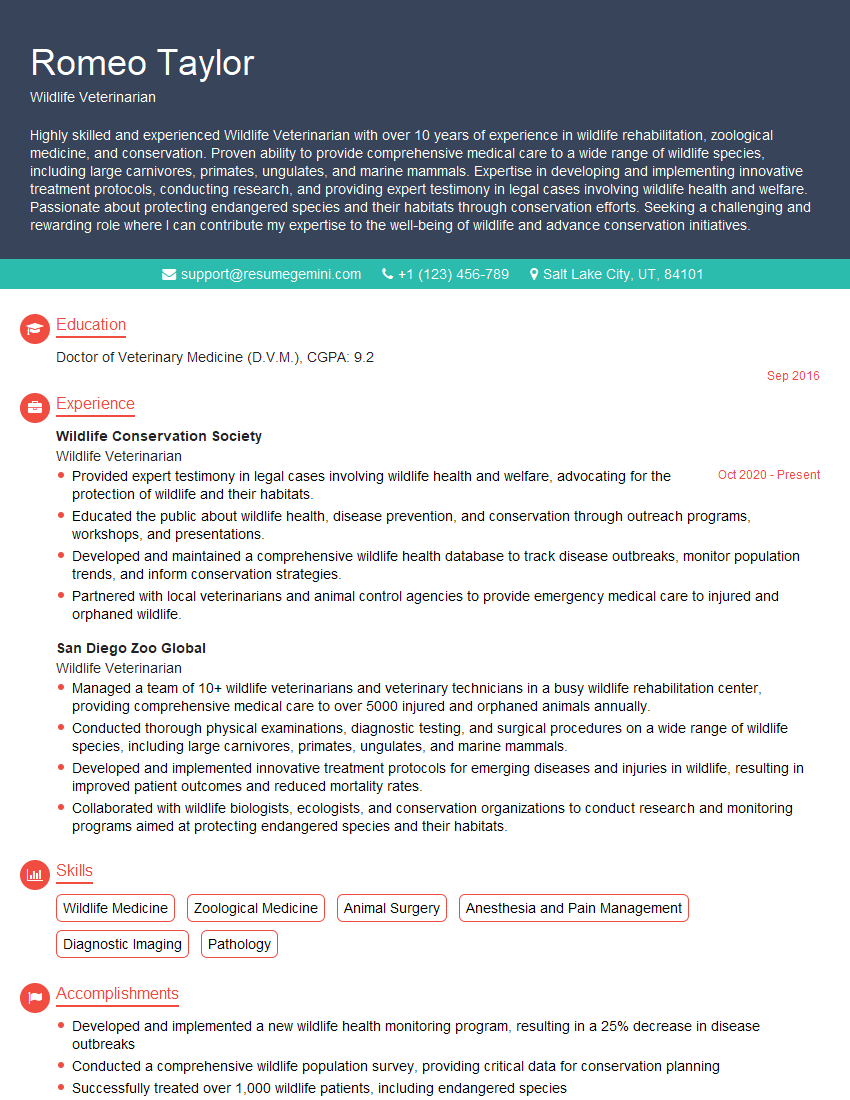
Mastering Wildlife Health and Disease Recognition is crucial for career advancement in conservation, research, and wildlife management. A strong understanding of these concepts will significantly enhance your job prospects and allow you to contribute meaningfully to the field. To maximize your chances of securing your dream role, creating an ATS-friendly resume is essential. ResumeGemini is a trusted resource that can help you build a professional and impactful resume tailored to showcase your skills and experience effectively. Examples of resumes tailored to Wildlife Health and Disease Recognition are provided to guide you in this process.
Explore more articles
Users Rating of Our Blogs
Share Your Experience
We value your feedback! Please rate our content and share your thoughts (optional).
What Readers Say About Our Blog
Very informative content, great job.
good