Cracking a skill-specific interview, like one for Dog Walking and Exercise, requires understanding the nuances of the role. In this blog, we present the questions you’re most likely to encounter, along with insights into how to answer them effectively. Let’s ensure you’re ready to make a strong impression.
Questions Asked in Dog Walking and Exercise Interview
Q 1. What is your experience with different dog breeds and their specific exercise needs?
My experience encompasses a wide range of dog breeds, from energetic Border Collies requiring extensive exercise to more laid-back Greyhounds who need gentler walks. Understanding breed-specific needs is crucial. For instance, a high-energy breed like a Siberian Husky might need a long, vigorous walk or run, possibly including off-leash time in a secure area, while a smaller breed like a Chihuahua might be content with a shorter, slower-paced stroll. I tailor each walk to the individual dog’s breed characteristics, age, health status, and overall fitness level. For example, I’ve worked with senior Golden Retrievers who benefit from shorter walks with frequent rest stops, compared to younger, more active dogs of the same breed. I also consider any physical limitations the dog might have – arthritis, hip dysplasia, etc. – and adjust my approach accordingly.
- Example: A client’s Jack Russell Terrier, known for their boundless energy, gets a combination of fetch in a park and a longer walk to satisfy its high exercise needs.
- Example: A client’s elderly Bulldog benefits from shorter, less strenuous walks on even terrain, focusing on sniffing and relaxed exploration.
Q 2. Describe your approach to handling reactive dogs during walks.
Handling reactive dogs requires patience, understanding, and a proactive approach. My strategy focuses on preventing triggers and managing the dog’s anxiety. I start by identifying potential triggers – other dogs, people, bikes, loud noises – and then create a walking plan that minimizes exposure. This might involve choosing quieter routes, using high-value treats to distract the dog, and maintaining a safe distance from potential triggers. Positive reinforcement is key. If the dog shows signs of reactivity, I immediately redirect its attention using a calming voice and treats. I never force interaction with other dogs; I respect the dog’s boundaries and space. Desensitization and counter-conditioning techniques are also valuable tools; gradually exposing the dog to its triggers at a distance and rewarding calm behavior helps build confidence.
- Example: With a dog exhibiting leash aggression, I would use a wide leash to maintain distance from other dogs, and immediately reward calm behaviour with treats whenever another dog approaches.
Q 3. How do you ensure the safety of dogs in your care during walks?
Safety is my paramount concern. I always use appropriate leashes and harnesses, ensuring a secure fit. I keep dogs on leash unless in designated off-leash areas where I confirm safety and suitability. Before each walk, I carefully check the dog’s collar and harness for damage and ensure identification tags are present. I choose walk routes that avoid high-traffic areas whenever possible, keeping to side streets and paths rather than busy roads. I’m attentive to the dog’s behaviour throughout the walk, monitoring for any signs of distress or injury. I have a first-aid kit with me and carry a fully charged phone for emergencies.
- Example: Before every walk, I conduct a quick check of the dog’s harness and ensure it is securely fastened and the dog’s ID tags are visible.
Q 4. What are some common dog-walking safety hazards and how do you mitigate them?
Common dog-walking hazards include traffic, other animals (both domesticated and wild), poisonous plants, and unsafe terrain. To mitigate these risks, I choose routes that minimize exposure to busy roads and traffic. I’m always vigilant for other animals, including squirrels, cats, or other dogs, that could trigger reactivity or aggression. I avoid areas with known poisonous plants. I carefully assess the terrain for potential hazards such as holes, uneven surfaces, and slippery areas, choosing routes suitable for the dog’s physical abilities and age. I also consider the weather conditions; avoiding walks during extreme heat or cold.
- Example: I avoid busy intersections and instead choose routes with ample sidewalks or designated pedestrian walkways.
- Example: In areas known for ticks or other parasites, I perform tick checks after the walk.
Q 5. Explain your method for handling multiple dogs on a single walk.
Walking multiple dogs requires careful planning and management. I only take on a number of dogs that I can comfortably and safely handle, prioritizing individual safety. I use appropriate harnesses and leashes designed for multiple dogs, ensuring each dog has enough space and that they don’t become entangled. I establish a clear hierarchy, walking the most dominant dog furthest away from the group to avoid disputes. I provide constant supervision, monitoring for any signs of aggression, fear, or fatigue in any individual. I adjust my pace based on the group’s needs, prioritising safety and preventing any dog from getting ahead or falling behind. If a dog seems overwhelmed, I will separate it from the group to allow a moment to de-stress.
- Example: I use a double coupler leash to walk two dogs, allowing sufficient space for each while still maintaining control.
Q 6. How do you manage dogs with different energy levels and temperaments on group walks?
Managing dogs with different energy levels and temperaments on group walks requires careful assessment and planning. I group dogs with similar energy levels and temperaments together. A high-energy dog should not be grouped with a lethargic dog or one prone to anxiety. I offer opportunities for both high-energy activities (such as a game of fetch) and low-key exploration (such as sniffing and slower-paced walks) to cater to the diverse needs of the group. I closely monitor each dog’s body language and adjust the pace and activities as needed. If a dog becomes overwhelmed or aggressive, it is immediately separated from the group until it calms down. The focus is on creating a positive and safe experience for every dog.
- Example: I might split a group walk into two parts: a high-energy activity in a park for more active dogs, followed by a calmer exploration of a quieter neighborhood for the rest.
Q 7. Describe your experience with dog first aid and emergency procedures.
I have completed a certified dog first aid and CPR course. My first-aid kit is always with me on walks and includes items like antiseptic wipes, bandages, gauze, a muzzle (for safety in case of injury), and gloves. I know how to assess a dog’s injuries, provide basic first aid, and when to seek veterinary attention. Knowing how to perform CPR on a dog is also crucial, though hopefully, it is a skill I’ll never need to use.
- Example: I’m trained to handle minor injuries like cuts and scrapes, providing initial care and knowing when to transport the dog to a vet.
Q 8. What is your strategy for dealing with an aggressive or fearful dog?
Safety is paramount when dealing with aggressive or fearful dogs. My strategy involves a calm, patient, and observant approach, prioritizing both the dog’s and public safety. I never force interaction.
For aggressive dogs: I maintain a safe distance, avoiding direct eye contact which can be perceived as a challenge. I use positive reinforcement techniques like high-value treats to create positive associations with my presence. If the aggression is severe, I may consult with a certified dog trainer or veterinary behaviorist for a tailored management plan. I’d also carefully assess the environment; avoiding triggers like other dogs or loud noises.
For fearful dogs: My approach is gentle and reassuring. I avoid sudden movements or loud noises. I’ll let the dog approach me at their own pace, offering treats and gentle verbal reassurance. I focus on building trust through positive reinforcement, gradually increasing the level of interaction. The goal is to create a positive association with walks and my presence. Imagine a shy child – you wouldn’t rush them; you’d be patient and build trust slowly.
Q 9. How do you handle a dog that refuses to walk or pulls excessively on the leash?
Pulling on the leash and refusing to walk are common issues, often stemming from excitement or lack of training. My approach focuses on positive reinforcement and building a reliable recall.
For pulling: I use a front-clip harness or a head halter which discourages pulling without causing pain or discomfort. The moment the dog slackens the leash, I immediately reward with praise and treats. I break walks into smaller, more manageable segments, rewarding frequent compliance. Think of it like teaching a child to walk – you reward small steps of progress. I also avoid using retractable leashes, as they can exacerbate pulling issues.
For refusal to walk: I identify potential underlying causes, such as discomfort or fear. If physical issues are ruled out, I make walks more engaging, using high-value treats, changing routes, or incorporating playtime. I also work on building a strong ‘leave it’ command so the dog learns to ignore distractions. Sometimes, simply changing the environment or using different equipment (such as a shorter leash) can solve the problem. Patience and positive reinforcement are key.
Q 10. What methods do you use to prevent dog-to-dog aggression on group walks?
Preventing dog-to-dog aggression on group walks requires careful selection of dogs, constant monitoring, and an understanding of canine body language.
Dog Selection: I carefully assess each dog’s temperament and history before including them in a group walk. I avoid mixing dogs with known aggression issues or those displaying signs of stress. Owners are informed of the screening process, and any concerns are addressed upfront.
Monitoring and Intervention: During walks, I maintain a close watch on all dogs, looking for signs of stress or aggression. Early intervention is key. If I notice a dog becoming tense or showing signs of aggression, I immediately separate them, providing space and calming them down individually. This might involve redirecting their attention or employing techniques like counter conditioning (replacing negative associations with positive ones).
Space and Control: I maintain ample space between dogs, and always use appropriate equipment, such as multiple leashes, to control movement and prevent escalation. I also teach clients appropriate leash handling techniques.
Q 11. How do you adapt your approach to dog walking based on weather conditions?
Weather significantly impacts dog walking. Adapting my approach ensures both the dogs and I stay safe and comfortable.
Extreme Heat: Walks are shortened, conducted during cooler parts of the day, and include frequent water breaks. Paved surfaces are avoided, and I pay close attention to signs of overheating (excessive panting, lethargy).
Cold Weather: Shorter walks are better for smaller breeds; I check paw pads for ice or salt irritation. I use appropriate clothing for the dogs (coats or booties), and limit time spent outside in extreme cold.
Rain or Snow: I make sure dogs are wearing reflective gear if visibility is poor. Walks may be shorter depending on the intensity of the precipitation, and the walk location is chosen with good traction in mind.
In all weather conditions, I communicate regularly with owners regarding any adjustments made to the walk.
Q 12. Describe your routine for managing waste during dog walks.
Responsible waste management is crucial. My routine involves always carrying multiple, sealed waste bags. I promptly pick up after each dog, ensuring all waste is securely contained and disposed of in appropriate receptacles. If no receptacles are available, the waste is properly bagged and disposed of later at my facility.
Hygiene: I wash my hands thoroughly after handling waste and use hand sanitizer. All equipment is regularly cleaned and sanitized to maintain a high level of hygiene and prevent the spread of diseases.
Q 13. How do you ensure dogs receive adequate hydration during extended walks?
Adequate hydration is crucial, especially during extended walks. I always carry fresh water and a portable bowl for each dog. Frequent water breaks are scheduled, particularly in hot or humid weather. The duration and frequency of the breaks depend on factors such as the dog’s breed, size, age, and the intensity of the exercise. I closely monitor dogs for signs of dehydration, such as excessive panting or lethargy.
Owner Communication: Before longer walks, I communicate with owners to check if their dog has any special hydration needs or restrictions. For example, some dogs may require electrolyte supplements during strenuous activities.
Q 14. Explain your understanding of canine body language and how it impacts your approach.
Understanding canine body language is essential for safe and effective dog walking. I’m trained to recognize subtle cues, such as ear position, tail wags, lip licking, yawning, and posture. These indicators provide valuable insights into a dog’s emotional state and help me anticipate potential problems.
Examples: A whale eye (showing the whites of their eyes) often indicates fear or stress. A stiff body posture, tucked tail, or pinned ears can signify anxiety or aggression. Conversely, a relaxed posture, soft eyes, and a loose, wagging tail often indicate a happy and comfortable dog.
Practical Application: By understanding these subtle cues, I can adjust my approach accordingly. For instance, if a dog exhibits signs of fear, I would give them more space, avoid direct interaction, and use positive reinforcement techniques to build confidence. This allows me to create a safe and positive walking experience for all dogs in my care.
Q 15. How do you handle situations where a dog becomes injured during a walk?
My primary concern is the safety and well-being of the dogs in my care. If a dog is injured during a walk, my immediate response follows a clear protocol. First, I’ll assess the severity of the injury. Minor scrapes or cuts are treated on-site with cleaning and a bandage if needed. For more serious injuries, like broken bones or deep wounds, I immediately contact the owner and, depending on the severity, either seek veterinary attention myself or ensure the owner is able to do so promptly. I always carry a well-stocked first-aid kit specifically designed for canine injuries, including antiseptic wipes, bandages, gauze, and a muzzle in case a dog is in pain or distressed. Documentation is key – I meticulously record the incident, including the time, location, nature of the injury, and the steps taken to address it. This information is then shared with the owner. Preventing injuries is paramount. I carefully select walking routes appropriate to each dog’s abilities and temperament, avoiding potentially hazardous areas. I also maintain close supervision to prevent altercations with other animals or accidents.
Career Expert Tips:
- Ace those interviews! Prepare effectively by reviewing the Top 50 Most Common Interview Questions on ResumeGemini.
- Navigate your job search with confidence! Explore a wide range of Career Tips on ResumeGemini. Learn about common challenges and recommendations to overcome them.
- Craft the perfect resume! Master the Art of Resume Writing with ResumeGemini’s guide. Showcase your unique qualifications and achievements effectively.
- Don’t miss out on holiday savings! Build your dream resume with ResumeGemini’s ATS optimized templates.
Q 16. What are the signs of heatstroke in dogs and how would you respond?
Heatstroke is a life-threatening condition in dogs, and recognizing its signs is crucial. Symptoms can range from excessive panting and drooling to vomiting, diarrhea, and disorientation. The dog’s gums may appear bright red or even bluish. Increased heart rate and weakness are also telltale signs. If I suspect heatstroke, my immediate action is to move the dog to a cool, shaded area. I would then apply cool (not cold) water to its paws, groin, and belly, using a damp cloth or towel. Offering small amounts of cool water to drink can help, but forcing it could be dangerous. I would then immediately contact the owner and seek immediate veterinary attention. Prevention is key; I always check the weather forecast before walks and avoid exercising dogs during the hottest parts of the day. I always carry plenty of water for the dogs, and I adjust the length and intensity of the walk based on temperature and humidity. Short, frequent breaks in shady areas are essential.
Q 17. What are the benefits of different types of exercise for dogs (e.g., running, swimming, agility)?
Different types of exercise offer unique benefits for dogs. Running is excellent for cardiovascular health and building endurance, but it’s crucial to start slowly and gradually increase distance and intensity to avoid injury. Swimming is a low-impact exercise that’s gentler on joints, making it ideal for older or overweight dogs. It provides a great full-body workout. Agility training, involving obstacle courses, improves coordination, problem-solving skills, and provides mental stimulation alongside physical exertion. It’s crucial to remember that the optimal exercise type depends on the dog’s breed, age, health condition, and individual preferences. For instance, a high-energy Border Collie might thrive on agility, while a senior Labrador might benefit most from shorter, slower walks and swims.
Q 18. How do you assess a dog’s fitness level before creating an exercise plan?
Assessing a dog’s fitness level before creating an exercise plan is crucial for their safety and well-being. I begin with a thorough observation of the dog’s body condition score (BCS), checking for excessive weight or leanness. I’ll ask the owner about the dog’s breed, age, medical history, and any existing health conditions. I then observe the dog’s gait and movement; is it stiff, hesitant, or energetic? I’ll start with a short, low-impact walk to gauge the dog’s stamina and response. I might introduce a gentle incline or some stairs to assess its joint health and strength. Any signs of fatigue, labored breathing, or discomfort would indicate a need for a modified plan. This initial assessment informs the creation of a gradual, individualized exercise program to safely build fitness and avoid injury. This might include a structured progression of shorter walks, gradually increasing in duration and intensity, incorporating interval training where appropriate.
Q 19. How do you modify exercise routines for dogs with age-related limitations?
Modifying exercise routines for senior dogs is essential to cater to their age-related limitations. Reduced stamina, arthritis, and other health issues necessitate a gentler approach. I often replace long runs with shorter, more frequent walks on level terrain. Swimming can be an excellent alternative due to its low-impact nature. I focus on minimizing stress on their joints and muscles. The duration and intensity of walks are carefully controlled to prevent exhaustion. Regular breaks and opportunities for rest are paramount. I might incorporate gentle stretches or mobility exercises, under veterinary guidance, to maintain flexibility and range of motion. Any signs of discomfort or pain are carefully monitored, and the exercise plan adjusted accordingly. The goal is to maintain their physical and mental well-being while respecting their physical limitations.
Q 20. What are some common signs of illness or injury in dogs that you would watch for?
Recognizing signs of illness or injury in dogs is crucial for timely intervention. Common indicators include lethargy, changes in appetite (eating less or more than usual), unusual thirst, vomiting, diarrhea, coughing or sneezing, changes in urination or defecation habits, lameness or limping, unusual swelling, discharge from eyes or nose, and changes in behavior such as increased aggression or withdrawal. A change in the coat condition, such as excessive shedding or dullness, can also indicate an underlying problem. If I notice any of these signs during a walk, I immediately contact the owner and recommend a veterinary check-up. Early detection can significantly improve the dog’s prognosis. Regular monitoring of each dog’s overall health, behavior, and energy level are also key preventive measures.
Q 21. How familiar are you with different types of dog leashes, harnesses, and collars?
I’m very familiar with various types of leashes, harnesses, and collars, and I tailor my choice based on the individual dog’s needs and temperament. A simple flat collar is suitable for well-behaved dogs who don’t pull. A martingale collar is useful for dogs who slip out of their collars, as it tightens gently when pulled. Harnesses are gentler on a dog’s neck than collars, especially for strong pullers; there are front-clip harnesses (which can help discourage pulling) and back-clip harnesses (which are more comfortable for dogs who don’t pull). I understand the differences in leash types – retractable leashes offer freedom but require careful handling, while standard leashes provide more control. A head halter is another option for dogs that pull excessively, but I use these only when necessary and after proper training to ensure correct and safe usage. My selection prioritizes the dog’s safety and comfort, always choosing equipment appropriate for their size, breed, and training level. I would never use a choke chain or other harmful restraints.
Q 22. What is your experience with using GPS tracking devices for dog walking?
GPS tracking devices are invaluable for ensuring the safety and security of dogs during walks, providing peace of mind for both the dog walker and the owner. I’ve used several different devices, from simple GPS trackers to those integrated with smartphone apps. The benefits are numerous: real-time location tracking allows me to quickly locate a dog if they stray, even momentarily; it provides data on the distance walked, speed, and duration of the walk, allowing me to tailor exercise to each dog’s specific needs; and it helps me maintain accurate records of each walk, fulfilling my commitment to transparency with clients.
For example, I recently used a tracker to monitor a senior dog with arthritis. The data helped me adjust the walk’s length and intensity, ensuring he got sufficient exercise without overexertion. Another example involves using a tracker to reassure a client whose anxious dog had a tendency to pull on the leash – the GPS data proves the dog never strayed far from the designated walking area.
Q 23. How do you communicate effectively with dog owners regarding their dog’s behavior and exercise needs?
Effective communication with dog owners is paramount. I begin by conducting a thorough consultation before the first walk, discussing the dog’s personality, behavioral quirks, exercise tolerance, and any medical conditions. This initial conversation lays the groundwork for a successful working relationship. During the walks, I note any unusual behaviors, such as changes in energy levels, appetite, or toileting habits. After each walk, I send a brief text or email update to the owner, summarizing the walk and highlighting anything noteworthy. For example, if a dog showed signs of leash reactivity, I would describe the situation, explain my approach to handling it, and suggest potential training strategies.
I also utilize a dedicated client communication app, which allows me to easily share photos and videos of the dogs during their walks, creating a personalized record of their adventures. This transparency and consistent communication builds trust and allows for a quick and efficient resolution of any concerns.
Q 24. How do you handle a situation where a dog escapes your supervision?
A dog escaping supervision is a serious incident requiring immediate and decisive action. My first priority is the dog’s safety. I would immediately initiate a search, utilizing the GPS tracker if available, to pinpoint the dog’s location. I’d contact the owner immediately, alerting them to the situation and providing updates as I search. If necessary, I would contact local authorities or animal control to assist in the search. Once the dog is found, I would assess its condition, ensure it’s unharmed, and transport it back to a secure location. A thorough post-incident report would be prepared and shared with the owner, outlining the sequence of events, the corrective measures taken, and preventive steps to mitigate future occurrences. In the future, walks would be tailored to manage any specific risk factors associated with this incident, perhaps involving using a more secure leash or harness.
One time, a particularly spirited young dog slipped his collar during a walk. Thanks to quick thinking and a nearby resident’s assistance, we found him within minutes. The incident highlighted the need for double-checking harness and collar fit before each walk and prompted me to invest in a more secure escape-proof harness.
Q 25. Describe your experience with different types of dog parks and their rules and regulations.
My experience encompasses various dog park types, from small neighborhood parks to large, fenced-in facilities with separate areas for small and large dogs. I’m familiar with the rules and regulations governing each, understanding the importance of adhering to them for the safety and well-being of all dogs and park users. These typically include leash requirements (when entering and exiting), vaccination documentation, appropriate behavior expectations (no aggression, no mounting), waste cleanup, and restrictions on certain breeds or age groups. I’m always mindful of the social dynamics within dog parks, recognizing that not all dogs are suited for off-leash environments. I carefully assess each dog’s temperament and reactivity before entering a dog park and make sure that I maintain close supervision to ensure the safety of all dogs.
For example, I would never bring a dog with a history of aggression to an off-leash park. At other parks, I’ll use a long leash to provide a measure of control and prevent any potentially problematic interactions. Observing body language is crucial. I’m trained to recognize signs of stress or aggression in dogs and remove my dog from the situation if necessary.
Q 26. How do you maintain accurate records of your dog walking activities?
Maintaining accurate records is crucial for professional accountability and client satisfaction. I utilize a combination of digital and paper-based methods. For each walk, I record the date, time, duration, location (including GPS data if available), the dog’s name and owner’s name, and any noteworthy observations regarding the dog’s behavior or health. This information is logged in a digital spreadsheet, allowing for easy data analysis and reporting. Paper copies of invoices, service agreements, and release forms are maintained separately in a secure filing system. I also regularly back up my digital records to prevent data loss. This robust record-keeping system helps me stay organized, allows me to track trends in dog behavior, and ensures that I’m readily prepared to answer any questions from clients or regulatory authorities.
Q 27. How do you deal with complaints from clients or neighbors regarding dog behavior?
Addressing complaints promptly and professionally is essential. I listen attentively to the concerns, seeking to understand the perspective of both the client and any neighbors involved. I would strive to empathize with their concerns and would never be defensive or dismissive. If the complaint involves a dog behavior issue, I’d examine my own practices and the dog’s actions during walks. I may need to consult with the owner to implement behavior modification strategies and to ensure that proper training methods are being utilized. In cases involving damage, I would work with the client’s homeowner’s insurance to resolve the issue. Open communication is key. Maintaining thorough records, including detailed notes from each walk, is vital in responding to complaints effectively. I aim for a solution that satisfies all parties involved.
For example, a neighbor once complained about barking. We worked together to identify the trigger (the delivery person) and implemented a desensitization training protocol that drastically reduced barking during deliveries. Transparency and willingness to find a solution resolved the situation amicably.
Q 28. What are your professional development goals related to dog walking and exercise?
My professional development goals focus on continually enhancing my skills and knowledge in dog walking and exercise. I plan to pursue certifications in canine first aid and CPR to be fully equipped to handle any medical emergencies. I also aim to expand my understanding of canine behavior by attending workshops and seminars on topics such as reactivity, aggression, and fear-based behaviors. Staying current on best practices in dog handling and exercise is crucial. I also plan to explore opportunities to collaborate with other dog walkers and trainers, fostering a network for sharing expertise and resources. This commitment to continuous learning ensures I provide the highest quality of care for every dog under my supervision.
Key Topics to Learn for Your Dog Walking and Exercise Interview
- Understanding Canine Behavior: Learn to identify different dog breeds, their temperaments, and common behavioral issues. This includes recognizing signs of stress, aggression, and playfulness.
- Safe Handling Techniques: Master proper leash handling, walking techniques for various dog sizes and temperaments, and safe group walking procedures. Practice different scenarios, like encountering other dogs or distractions.
- Dog Exercise Principles: Understand appropriate exercise routines based on breed, age, and health. This includes recognizing the signs of fatigue and knowing when to adjust activity levels.
- Health and Safety Protocols: Learn about common canine health issues, emergency procedures (e.g., first aid for minor injuries), and how to maintain a clean and safe environment for the dogs in your care.
- Client Communication and Professionalism: Practice clear and concise communication with clients, handling scheduling, providing updates, and addressing concerns professionally and responsibly.
- Business Acumen (if applicable): If you’re interviewing for a business-oriented role, understand basic business principles like pricing, scheduling, marketing, and client management.
- Legal and Liability Considerations: Familiarize yourself with relevant local laws and regulations concerning dog walking and pet care businesses, and understand your responsibilities regarding liability and insurance.
Next Steps
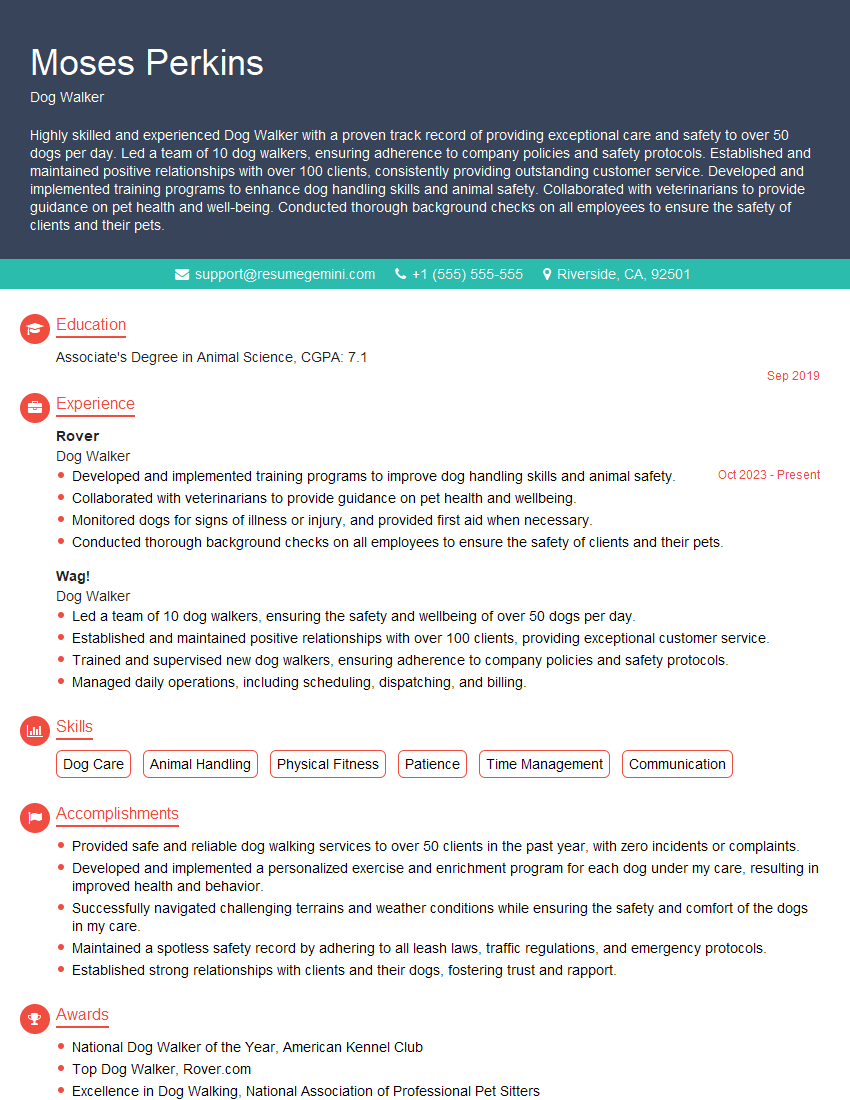
Mastering the art of dog walking and exercise opens doors to a fulfilling and rewarding career. It’s a field that values compassion, responsibility, and a genuine love for animals. To maximize your job prospects, creating an ATS-friendly resume is crucial. This ensures your application gets noticed by potential employers. We highly recommend using ResumeGemini to build a professional and impactful resume. ResumeGemini offers a streamlined process and provides examples of resumes tailored to the Dog Walking and Exercise industry, giving you a head start in your job search.
Explore more articles
Users Rating of Our Blogs
Share Your Experience
We value your feedback! Please rate our content and share your thoughts (optional).
What Readers Say About Our Blog
Very informative content, great job.
good