The right preparation can turn an interview into an opportunity to showcase your expertise. This guide to Blinds Installation interview questions is your ultimate resource, providing key insights and tips to help you ace your responses and stand out as a top candidate.
Questions Asked in Blinds Installation Interview
Q 1. What types of blinds are you experienced installing?
Over the years, I’ve gained extensive experience installing a wide variety of blinds. My expertise covers the most common types, including Venetian blinds (both aluminum and wood), roller blinds (with various fabric options and functionalities like blackout or light-filtering), vertical blinds (ideal for large windows and patio doors), Roman blinds (adding an elegant, fabric-draped look), cellular shades (providing excellent insulation), and even some less common types like bamboo blinds and pleated shades. I’m comfortable working with both standard and custom-sized blinds, ensuring a perfect fit for any window.
Q 2. Describe your experience with measuring windows for blinds.
Accurate measuring is crucial for a flawless blind installation. My process begins with a thorough assessment of the window. I always measure the width and height at multiple points, accounting for any irregularities or obstructions. For inside mount installations (where the blinds are mounted within the window frame), I measure the width at the top, middle, and bottom, choosing the narrowest measurement to ensure a precise fit. Outside mount installations (where the blinds are mounted on the wall or casing outside the window frame) require measuring the width and height of the area where the blinds will be installed. I also check for any obstructions like window cranks or ledges. I always record these measurements meticulously, noting any special considerations, and double-check before ordering. A simple error in measuring can lead to a costly mistake, so precision is paramount.
Q 3. How do you handle difficult window shapes or sizes?
Dealing with unusual window shapes or sizes is a regular part of my work. Arched windows, angled windows, or uniquely shaped skylights require custom solutions. For arched windows, I often use flexible blinds or custom-made blinds to perfectly follow the curve. Angled windows usually need precisely cut blinds and potentially custom brackets for secure mounting. For skylights, specialized blinds designed for angled surfaces are essential. In each of these instances, meticulous planning, precise measurement, and sometimes even on-site adjustments are necessary. I’ll often take detailed photos and measurements and may even create a template to ensure a perfect fit. It’s all about finding creative solutions to achieve a professional and aesthetically pleasing result.
Q 4. Explain your process for installing different types of blinds (e.g., vertical, roller, Venetian).
The installation process varies depending on the type of blind. For Venetian blinds, I typically mount the headrail using screws or brackets, then carefully insert the slats and adjust the tilt mechanism. Roller blinds are usually simpler, involving attaching the roller mechanism to the bracket and then unrolling the fabric to fit. Vertical blinds require more steps, involving mounting the headrail, carefully inserting the slats into the carrier, and connecting the control mechanism for opening and closing the blinds. For each type, I always check the manufacturer’s instructions to ensure proper installation and functionality. I take my time and prioritize accuracy to avoid damaging the blinds or the window frame. For example, ensuring the brackets are level before screwing them in prevents uneven hanging.
Q 5. What safety precautions do you take during installation?
Safety is my top priority. I always wear safety glasses to protect my eyes from debris. When working at heights, I use a sturdy ladder and ensure it’s placed on a stable, level surface. I use appropriate tools and make sure they’re in good condition to avoid accidents. I also always be mindful of the surrounding environment, ensuring electrical cords and other potential hazards are clear from my work area. Before starting any installation, I survey the area and identify and mitigate any potential risks. I explain the process to the client and answer any questions to create a safe and collaborative environment.
Q 6. How do you troubleshoot common installation problems?
Troubleshooting is an important skill. A common problem is blinds not operating smoothly. This might be due to a faulty mechanism, bent slats, or an improperly installed headrail. I systematically check each component, starting with the simplest solutions, such as adjusting the cord tension or cleaning the tracks. If the issue persists, I might need to replace a broken part. Another issue is uneven hanging. This typically indicates improperly installed brackets or a problem with the headrail. I would carefully check the bracket alignment and ensure the headrail is securely mounted. I always use a combination of experience, logical deduction, and if needed, consult the manufacturer’s instructions to address any problems.
Q 7. What are the different types of mounting hardware used for blinds?
Several mounting hardware options exist for blinds, each chosen based on the window type and blind style. Inside mount brackets are designed to attach blinds inside the window frame. They’re typically small and discreet, offering a clean look. Outside mount brackets are larger and are used to attach blinds to the wall or window casing. These are often necessary for wider windows or when an inside mount isn’t feasible. Some blinds use specialized brackets, such as surface mount brackets for mounting directly to the wall without drilling into the frame. Finally, there are tension rods, which provide a no-drill, simpler mounting solution but typically only for smaller windows.
Q 8. How do you ensure a precise and professional finish?
Achieving a precise and professional finish in blinds installation is paramount. It’s about attention to detail at every stage, from meticulous measurements to the final adjustments. Think of it like building with tiny LEGOs – each piece needs to fit perfectly to create a strong, beautiful structure.
- Accurate Measurements: I always double-check measurements, using laser measuring tools for precision. Incorrect measurements are the biggest source of errors. A millimeter off can lead to gaps or misalignment.
- Proper Mounting: The type of mounting (inside recess, outside recess, or face mount) dictates the installation process. I select the appropriate brackets and ensure they’re securely fastened to the window frame or wall. I use shims if necessary to ensure perfectly level blinds.
- Clean Cut and Finishing: When cutting materials, I use sharp tools to prevent fraying or damage. Careful attention is paid to ensure the blind operates smoothly and aligns correctly, with even gaps between slats or vanes. Any visible hardware is carefully positioned and aligned.
- Final Inspection: I always perform a thorough inspection. This includes checking for levelness, smooth operation of the mechanism (cord, tilt, motor), and the overall aesthetic appeal. This ensures client satisfaction and professional standards are met.
Q 9. What is your experience with motorized or automated blinds?
I have extensive experience with motorized and automated blinds, including various brands and control systems. This includes installation, programming, troubleshooting, and repair. Motorized blinds add a level of convenience and sophistication, but also require a deeper understanding of electrical systems and integration with home automation systems.
- Installation: This involves wiring the motor correctly, ensuring proper power supply and integration with the wall switch or smart home system. Proper cable management is crucial for aesthetics and functionality.
- Programming: Different systems have different programming methods, but I’m proficient in setting timers, schedules, and linking them to other smart devices.
- Troubleshooting: I can quickly diagnose and resolve issues such as power supply problems, motor malfunctions, and connectivity issues.
- Repair: I can repair or replace faulty motors, remotes, and other components.
For instance, I recently installed a Lutron Serena system in a client’s home, integrating it seamlessly with their existing smart home setup. This involved careful planning and precise wiring to ensure a smooth, flawless operation.
Q 10. Describe your experience with repairing damaged blinds.
Repairing damaged blinds requires patience, attention to detail, and a good understanding of how different types of blinds are constructed. It’s about identifying the problem and finding a cost-effective solution. This could involve replacing broken slats, fixing a damaged cord mechanism, or even re-stitching fabric.
- Diagnosis: First, I carefully examine the damage to identify the cause and extent of the problem. This includes inspecting the slats, cords, headrail, and any other components.
- Part Replacement: If a slat is broken, I’ll source a replacement matching the existing blinds. In many cases, I can match the color and material precisely. If a more extensive repair is needed I might need to source parts from the blind’s manufacturer.
- Mechanism Repair: I have the skills to repair or replace broken cords, chains, tilt mechanisms, or motors. This often involves carefully dismantling and reassembling the mechanism.
- Fabric Repair: In some instances, minor fabric tears or damage can be repaired by hand-sewing or using fabric adhesive. For larger damage, replacement of the fabric may be the only option.
For example, I once successfully repaired a set of Venetian blinds where a child had accidentally broken several slats. By carefully matching the color and replacing the broken pieces, I restored the blinds to their original condition, saving the client the cost of a complete replacement.
Q 11. How do you handle customer complaints or unexpected issues during installation?
Handling customer complaints or unexpected issues is a crucial part of the job. My approach is always to be professional, empathetic, and solution-oriented. I strive to build trust and ensure the customer feels heard and valued.
- Active Listening: I begin by actively listening to the customer’s concerns, asking clarifying questions to fully understand the problem. This helps in accurately identifying the root cause.
- Problem Assessment: I assess the situation thoroughly, identifying the cause of the issue (e.g., faulty product, incorrect installation, unforeseen circumstances). This may involve re-examining measurements or checking the functionality of the components.
- Solution Implementation: I then propose a solution, which may involve repair, replacement, adjustment, or a combination of these. I clearly explain my recommendations and their implications, ensuring transparency.
- Follow-up: After addressing the issue, I follow up with the customer to ensure their satisfaction and address any lingering concerns.
For example, I once encountered a situation where a window frame was unexpectedly warped, causing the blinds to not align perfectly. I worked with the client to find the best solution, which involved using additional shims and slightly adjusting the mounting brackets to compensate for the warped frame. Open communication and problem-solving led to a positive outcome.
Q 12. What materials are commonly used in blind construction?
Blinds are constructed from a variety of materials, each with its own properties and benefits. The choice of material depends on factors like style, budget, durability, and light control.
- Aluminum: A common and versatile material, aluminum slats are durable, easy to clean, and relatively inexpensive. They’re good for both light filtering and privacy.
- Wood: Wooden blinds offer a classic and elegant look. They are more expensive than aluminum but provide excellent insulation and can enhance the aesthetic of a room. Different wood types (e.g., basswood, bamboo) offer different properties.
- Faux Wood: Faux wood blinds offer the appearance of real wood at a more affordable price. They’re resistant to moisture and are a good option for bathrooms and kitchens.
- Vinyl: Vinyl is a very affordable and easy to maintain material that is particularly well suited to humid environments.
- Fabric: Fabric blinds, such as roller shades, cellular shades, and Roman shades, are available in a wide variety of colors, patterns, and opacities. They provide excellent light control and can add a touch of elegance or personality to a room.
Q 13. How familiar are you with different fabrics and their suitability for various environments?
Familiarity with different fabrics and their suitability for various environments is essential for recommending the right blinds to my clients. Factors to consider include light filtration, durability, ease of cleaning, and resistance to fading and moisture.
- Light Filtration: Sheer fabrics allow light to filter through while maintaining privacy. Blackout fabrics block out almost all light, ideal for bedrooms. In-between options provide varying degrees of light control.
- Durability: Some fabrics are more durable than others. Consider factors such as fabric weight, weave, and treatment for stain and fade resistance.
- Cleanability: Some fabrics are easily cleaned with a damp cloth, while others may require professional cleaning. Consider the lifestyle of the client when selecting fabrics.
- Moisture Resistance: For bathrooms or kitchens, fabrics with moisture-resistant treatments are necessary to prevent mold and mildew growth.
For example, a client with young children might benefit from durable, easy-to-clean fabrics, while a client who values light control in a bedroom might opt for blackout fabrics.
Q 14. Explain your understanding of child safety mechanisms in blinds.
Child safety is paramount in blind installation. Corded blinds pose a strangulation hazard to young children. I’m very familiar with the safety standards and regulations concerning blinds, and always prioritize the installation of child-safe mechanisms.
- Cordless Blinds: Cordless blinds eliminate the risk of strangulation associated with traditional corded blinds. Many manufacturers offer cordless options, and I often recommend these for homes with young children.
- Safety Devices: For corded blinds, I install safety devices such as cord cleats, tension devices, or wand-controlled systems that meet current safety standards. These devices keep the cords out of reach of children.
- Education: I educate my clients on the importance of child safety concerning blinds and how to use safety devices effectively.
- Inspection: During installations, I always thoroughly check all cords, making sure they’re properly secured and inaccessible to young children. I ensure all components are correctly installed and functioning.
I believe that proactive safety measures are paramount, and I always take the time to discuss and implement child-safe solutions with my clients. The safety of children should always be a top priority.
Q 15. How do you maintain a clean and organized work area?
Maintaining a clean and organized work area is paramount for efficiency and safety in blinds installation. Think of it like a surgeon’s operating room – a cluttered space increases the risk of errors and accidents. My approach involves a multi-step process:
- Pre-job Preparation: Before arriving at a job site, I meticulously organize my tools and materials. This includes sorting screws, brackets, and blind components into labeled containers. I use a rolling toolbox with dedicated compartments for everything, preventing unnecessary searching during installation.
- On-site Organization: At the job site, I establish a designated workspace, keeping it clear of debris and unused materials. Drop cloths protect the floor and surfaces. Tools are kept within easy reach but not scattered haphazardly.
- Post-job Clean-up: Thorough clean-up is essential. This involves removing all debris, leftover materials, and packaging. I sweep or vacuum the area and ensure the client’s space is left cleaner than I found it. This leaves a positive lasting impression.
For example, on a recent installation of cellular shades in a high-end apartment, meticulous organization allowed me to complete the job swiftly and without incident, even with limited space. The client was incredibly impressed by the cleanliness and professionalism.
Career Expert Tips:
- Ace those interviews! Prepare effectively by reviewing the Top 50 Most Common Interview Questions on ResumeGemini.
- Navigate your job search with confidence! Explore a wide range of Career Tips on ResumeGemini. Learn about common challenges and recommendations to overcome them.
- Craft the perfect resume! Master the Art of Resume Writing with ResumeGemini’s guide. Showcase your unique qualifications and achievements effectively.
- Don’t miss out on holiday savings! Build your dream resume with ResumeGemini’s ATS optimized templates.
Q 16. What is your experience working from blueprints or diagrams?
Working from blueprints or diagrams is a crucial part of my job, especially for complex installations involving multiple windows or unusual configurations. I’m highly proficient in interpreting architectural drawings and translating them into a practical installation plan. My process includes:
- Careful Review: I meticulously review the blueprints, noting window dimensions, types of blinds specified, and any special instructions or notes. I check for potential challenges or inconsistencies.
- Measurement Verification: I always double-check the measurements provided on the blueprints by taking my own on-site measurements. This avoids costly mistakes caused by discrepancies between the plan and the reality of the space.
- Material Calculation: Accurate measurements are critical for calculating the required materials, ensuring I have enough components and avoiding unnecessary waste. This includes considering factors such as headrail lengths, fabric widths, and mounting hardware.
For instance, during a recent commercial installation involving Venetian blinds in a large office building, I used the blueprints to map out the entire installation, identifying potential obstacles such as recessed windows or unusual window frames, ensuring a smooth and efficient process.
Q 17. Describe your process for calculating the required materials for a job.
Calculating the required materials accurately is critical to avoid delays and cost overruns. My process begins with precise measurements. I measure each window’s width and height multiple times using a measuring tape and level, noting any unusual angles or shapes. Then, I factor in the following:
- Blind Type: Different blind types have different material requirements. For example, Roman shades require more fabric than Venetian blinds.
- Fabric Widths: Fabric comes in standard widths, meaning we often need multiple pieces to cover wider windows. I factor in seam allowances.
- Hardware: I calculate the number of brackets, screws, and other hardware needed based on the number of blinds and their mounting style.
- Overage: I always add a small percentage of overage to account for potential cutting errors or unforeseen needs.
For example, when calculating materials for a set of roller shades, I would measure the width and height, account for any overlaps or mechanisms needed, add a slight overage for any cutting mistakes, and then add in the appropriate number of brackets and screws.
Q 18. What software or tools do you use to assist in the installation process?
While I primarily rely on my experience and precision tools for installation, I do utilize software and tools to enhance efficiency and accuracy. These include:
- Measuring Apps: Smartphones with measuring apps can provide a quick digital record of measurements and help ensure consistency.
- Blind Manufacturing Software (occasionally): Some manufacturers offer software for creating custom-made blinds; I use this when required to confirm specifications and materials needed.
- Level and Measuring Tape: These are the most basic yet essential tools. A quality level is crucial for precise and straight installations.
- Drill with various bits: A drill with a variety of bits, including those appropriate for different materials and screws, is essential for efficient and safe installation.
These tools, combined with my expertise, allow me to undertake both simple and complex projects with high precision and consistency.
Q 19. How do you ensure the correct operation of blinds after installation?
Ensuring the correct operation of blinds after installation is critical for client satisfaction and reflects my commitment to quality workmanship. My process includes:
- Functionality Test: After installation, I thoroughly test each blind’s operation, raising, lowering, and tilting (if applicable) multiple times to check for smooth, effortless movement and proper alignment.
- Mechanism Check: I examine the internal mechanisms of the blinds, checking for any binding or obstructions. I also verify that the cords or wand are correctly installed and operate smoothly.
- Child Safety Check (if applicable): For blinds with cords, I verify that any child safety devices are properly installed and function as intended, adhering to all safety regulations.
- Client Demonstration: I demonstrate the operation of the blinds to the client, explaining any unique features or maintenance requirements.
For example, if I notice any resistance during operation, I immediately troubleshoot the problem, adjusting any misalignments or addressing any potential issues before leaving the job site. This proactive approach prevents callbacks and ensures client satisfaction.
Q 20. What is your experience with different types of window treatments?
I have extensive experience with a wide variety of window treatments. My expertise spans various styles and functionalities:
- Venetian Blinds: I’m proficient in installing both horizontal and vertical Venetian blinds, including those made of wood, aluminum, or faux wood.
- Roller Shades: I install various roller shades, including those made of blackout fabric, sheer fabrics, or specialized materials.
- Cellular Shades (Honeycomb): I have experience with different cell sizes and fabrics, understanding their insulating properties and how to install them efficiently.
- Roman Shades: I can install and properly adjust Roman shades, ensuring the folds are even and the fabric hangs correctly.
- Wood Blinds: I handle the installation of various wood blinds with different slat sizes, paying close attention to proper alignment and finish.
- Bamboo Blinds: I am experienced in the nuances of installing natural materials like bamboo blinds, understanding how to handle them carefully.
My experience enables me to advise clients on the best window treatment options for their needs and budget, considering factors like light control, privacy, and insulation. This ensures the best outcome for their specific requirements.
Q 21. Describe your experience with commercial vs. residential installations.
My experience encompasses both residential and commercial installations, and I’ve found that while the core skills are similar, the scale and demands differ significantly:
- Residential Installations: These projects often involve a smaller number of windows with a focus on aesthetics and personalized client preferences. The emphasis is on precision, attention to detail, and creating a pleasing and functional environment. I work closely with homeowners, carefully explaining the process and answering questions.
- Commercial Installations: These are usually larger-scale projects involving numerous windows, sometimes in high-rise buildings or other demanding environments. Time management and efficiency are crucial. Collaboration with contractors and adherence to strict deadlines are key elements. Safety regulations and compliance are also more prominent in commercial projects.
While both types of installations require precision, commercial jobs often demand more logistical planning, coordination, and adherence to schedules and potentially stricter safety protocols.
Q 22. How do you manage your time and prioritize tasks on a job site?
Efficient time management on a job site is crucial for meeting deadlines and maintaining customer satisfaction. My approach involves a three-step process: Planning, Prioritization, and Execution.
Planning: Before arriving, I thoroughly review the job details, including measurements, type of blinds, and any special instructions. This allows me to pre-assemble components where possible, saving valuable on-site time.
Prioritization: I prioritize tasks based on their dependency. For example, installing the brackets before attaching the blinds themselves is essential. I also consider factors like potential disruptions (e.g., waiting for the customer to move furniture) and plan accordingly.
Execution: I maintain a consistent workflow, moving methodically through each step. I use checklists to ensure I haven’t missed anything and to keep myself accountable. This disciplined approach helps me stay focused and avoid unnecessary delays.
For example, on a recent job installing Venetian blinds in a large office, I pre-assembled all the brackets and weighted the bottom rails before arriving. This allowed me to quickly install the blinds, minimizing disruption to the office workers and staying within the allotted timeframe.
Q 23. How do you interact with customers and maintain professional communication?
Professional communication is paramount in building trust with clients. I always aim for clear, concise, and respectful interaction. This begins with a friendly introduction and explaining the installation process in simple, understandable terms, avoiding technical jargon.
Active Listening: I actively listen to the customer’s needs and concerns, addressing any questions or anxieties they may have. This ensures the installation meets their expectations.
Clear Communication: I use clear and concise language to explain the process, materials, and any potential issues. I keep them updated throughout the installation process.
Professionalism: I maintain a respectful and courteous demeanor throughout the interaction, showing respect for their property and time. I always clean up after myself.
For instance, I once had a client nervous about the impact of the installation on their newly painted walls. By carefully explaining my protective measures and demonstrating my careful technique, I eased their concerns, resulting in a positive experience.
Q 24. What is your understanding of relevant building codes and regulations?
Understanding building codes and regulations is crucial for safe and compliant installations. I am familiar with local and national codes concerning window treatments, particularly those related to:
Window coverings in emergency exits: Blinds must not impede emergency egress routes.
Child safety: I’m aware of regulations regarding cord lengths and mechanisms to prevent strangulation hazards, often involving cordless options or specific safety devices.
Fire safety: Certain materials may have fire-retardant requirements. I ensure that the blinds used comply with these standards.
Accessibility: I understand regulations related to accessibility for people with disabilities, ensuring that window treatments do not obstruct access to controls or pathways.
I regularly update my knowledge on these codes through professional development courses and by consulting relevant resources.
Q 25. How familiar are you with different types of lift systems for blinds?
My experience encompasses a wide range of lift systems for blinds, including:
Cordless systems: These are becoming increasingly popular due to their enhanced safety features, especially for households with young children or pets. I’m proficient in installing various cordless mechanisms, including those utilizing spring tension, wands, and motorized options.
Corded systems: I am experienced in installing traditional corded blinds, ensuring correct cord tension and loop management to minimize safety hazards. I am also familiar with different cord routing methods to accommodate different window configurations.
Motorized systems: I have experience integrating motorized blinds that can be controlled remotely or via smart home systems. This includes understanding the electrical connections and programming aspects of these systems.
Understanding the nuances of each system allows me to select the appropriate lift system based on the client’s needs, window type, and safety considerations.
Q 26. Explain your process for cleaning and maintaining various types of blinds.
Cleaning and maintenance vary depending on the type of blinds. I always advise customers on the appropriate methods to maintain the longevity and appearance of their blinds.
Venetian blinds: These can be dusted regularly with a feather duster or soft cloth. For more thorough cleaning, they can be carefully wiped with a damp cloth (not soaking wet) and a mild detergent.
Roller blinds: These usually just require dusting with a soft cloth. For stubborn marks, a slightly damp cloth can be used, always testing in an inconspicuous area first.
Cellular shades (honeycomb): These are often delicate. Dusting with a brush attachment on a vacuum cleaner or using a compressed air duster is recommended. Spot cleaning can be done with a very slightly damp cloth.
Vertical blinds: These can be dusted or wiped down with a damp cloth, ensuring they are allowed to dry completely before being repositioned.
I always provide clients with specific cleaning instructions tailored to the type of blinds installed, emphasizing the importance of gentle handling to avoid damage.
Q 27. What is your experience with working at heights?
Safety is my top priority. I have extensive experience working at heights and possess all necessary safety equipment and training. This includes:
Appropriate safety harnesses and fall protection equipment: I always use appropriate equipment when working at significant heights, adhering to all safety regulations.
Stable ladders and scaffolding: I ensure that all ladders and scaffolding are securely positioned and in good working order before commencing work at heights.
Risk assessment: Before starting any job involving height, I conduct a thorough risk assessment to identify and mitigate potential hazards.
My experience includes working on multi-story buildings and other high-reach scenarios, always prioritizing safety and following all relevant industry best practices.
Q 28. How would you handle a situation where a customer is unhappy with the installation?
Customer satisfaction is paramount. If a customer is unhappy, my immediate response is to actively listen and understand their concerns without interruption. I then work systematically to resolve the issue.
Identify the Problem: I ask clarifying questions to pinpoint the exact nature of their dissatisfaction (e.g., faulty installation, damaged blinds, or unmet expectations).
Offer Solutions: Depending on the problem, I may offer solutions such as immediate repair, replacement of faulty components, or a partial refund. I always aim for a mutually agreeable solution.
Follow Up: Once the issue is resolved, I follow up with the customer to ensure they are satisfied with the outcome and to gather feedback for future improvements.
For instance, I once had a client complain about a slight misalignment in a set of blinds. While minor, I understood their concern about aesthetics. I returned promptly, corrected the alignment, and even offered a small discount as a gesture of goodwill. This proactive approach turned a potentially negative experience into a positive one.
Key Topics to Learn for Blinds Installation Interview
- Measuring and Calculating: Accurately measuring window dimensions for precise blind fitting, understanding different measurement techniques (inside mount vs. outside mount), and calculating the necessary materials.
- Installation Techniques: Mastering various installation methods for different blind types (e.g., roller shades, Venetian blinds, cellular shades), understanding the use of various tools and hardware, and adhering to safety protocols.
- Troubleshooting Common Issues: Identifying and resolving common problems during installation (e.g., uneven blinds, faulty mechanisms, incorrect measurements), demonstrating problem-solving skills and resourcefulness.
- Understanding Blind Types and Mechanisms: Familiarity with various blind materials (e.g., wood, fabric, vinyl), operating mechanisms (cord, cordless, motorized), and their suitability for different environments.
- Customer Service and Communication: Effectively communicating with customers, addressing concerns, and ensuring customer satisfaction throughout the installation process. Understanding the importance of professionalism and respect.
- Safety Procedures and Regulations: Adhering to safety regulations during installation, proper use of tools and equipment, and awareness of potential hazards.
- Maintenance and Repair: Basic understanding of blind maintenance and minor repairs, demonstrating knowledge of common issues and solutions.
Next Steps
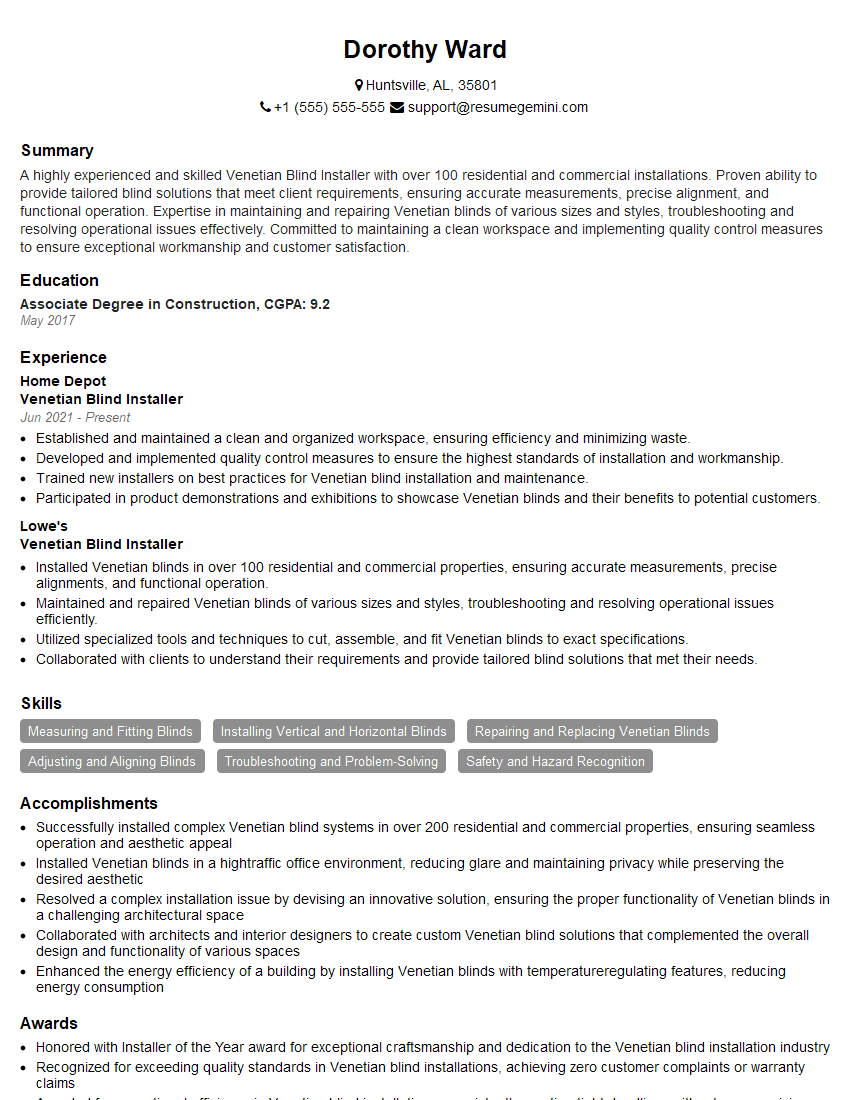
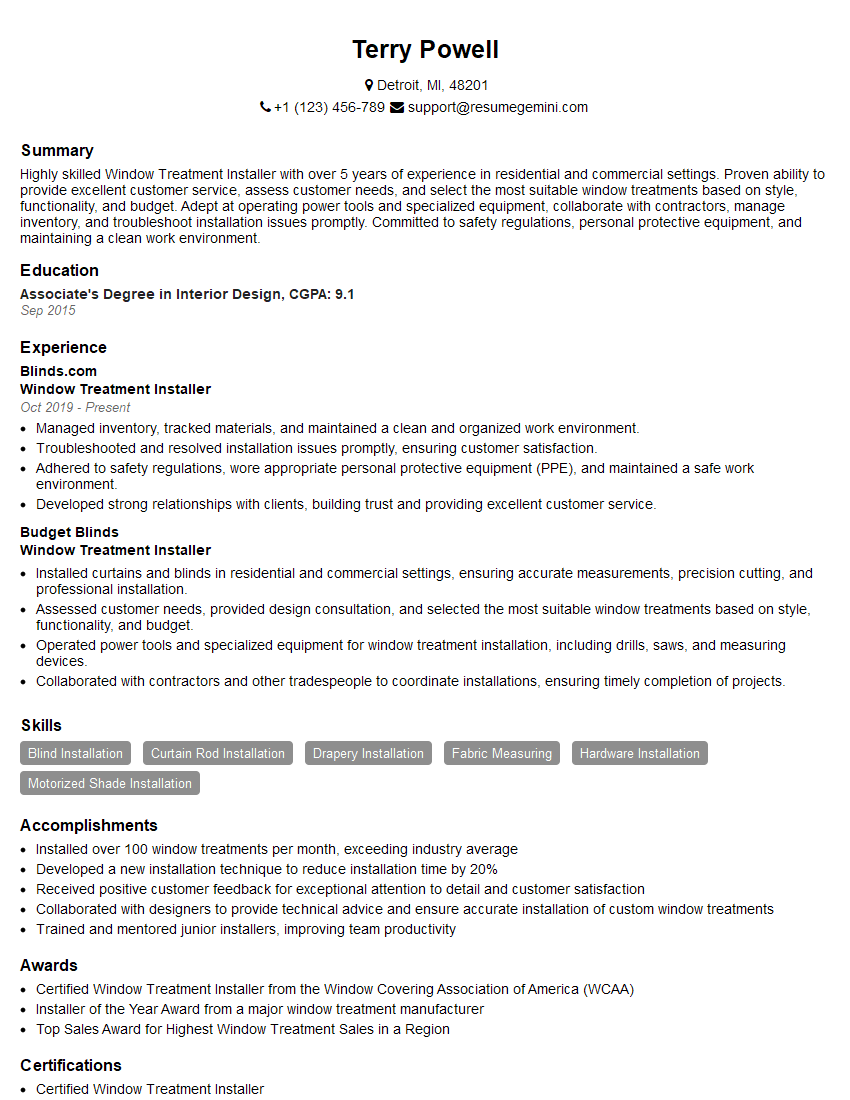
Mastering blinds installation opens doors to a rewarding career with opportunities for growth and specialization. A strong resume is crucial for showcasing your skills and experience to potential employers. Creating an ATS-friendly resume significantly increases your chances of getting noticed by recruiters. ResumeGemini is a trusted resource that can help you build a professional and impactful resume tailored to the blinds installation industry. Examples of resumes tailored specifically to Blinds Installation are available to help guide you.
Explore more articles
Users Rating of Our Blogs
Share Your Experience
We value your feedback! Please rate our content and share your thoughts (optional).
What Readers Say About Our Blog
Very informative content, great job.
good