Feeling uncertain about what to expect in your upcoming interview? We’ve got you covered! This blog highlights the most important Equine Dentistry and Oral Examination interview questions and provides actionable advice to help you stand out as the ideal candidate. Let’s pave the way for your success.
Questions Asked in Equine Dentistry and Oral Examination Interview
Q 1. Describe the different types of equine dental abnormalities you’ve encountered.
Equine dental abnormalities are surprisingly common and range from minor irregularities to severe conditions impacting a horse’s health and performance. I’ve encountered a wide spectrum, including:
- Wave mouth: This is characterized by an uneven, wave-like alignment of the incisors, often making it difficult for the horse to properly grasp feed.
- Overbites (prognathism) and underbites (brachygnathism): These are malocclusions where the upper and lower incisors don’t align correctly. Severe cases can prevent efficient grazing.
- Sharp enamel points and hooks: These develop on the cheek teeth as the teeth wear unevenly. They can cause lacerations to the cheeks and tongue, leading to discomfort and reduced feed intake. This is perhaps the most common abnormality I see.
- Retained caps: These are remnants of the enamel covering the adult teeth that fail to shed, creating sharp edges that can injure the soft tissues.
- Dental cysts and abscesses: Infections within the tooth or surrounding structures can cause significant pain and swelling. Often these require radiography to diagnose fully.
- Broken teeth: Trauma, such as a fall or impact, can result in fractured teeth, requiring extraction or repair.
- Periodontal disease: Gum inflammation and infection can lead to tooth loss if not addressed early. This often develops alongside other problems, such as malocclusion.
Each abnormality requires a different approach for management, emphasizing the importance of a thorough oral examination.
Q 2. Explain the process of performing a complete oral examination on a horse.
A complete equine oral examination is a systematic process requiring both skill and patience. It typically involves:
- Visual inspection: Observing the horse’s overall demeanor and assessing any signs of discomfort, such as quidding (dropping food), weight loss, or difficulty chewing.
- External examination: Checking the lips, gums, and the visible portions of the teeth for any signs of inflammation, injury, or abnormalities.
- Intraoral examination: This requires a speculum to open the horse’s mouth and a good light source. I carefully examine each tooth for wear patterns, sharp edges, malocclusions, and any evidence of disease. Palpation of the jaw and lymph nodes is also important.
- Assessment of TMJ (temporomandibular joint): Assessing for symmetry and range of motion to rule out joint issues impacting chewing.
- Assessment of the tongue and soft tissues: Looking for lesions, inflammation, or foreign bodies.
Throughout the examination, I pay close attention to the horse’s response to each step, adapting my approach as needed to ensure its comfort and safety. For example, a nervous horse might require more gentle handling and a slower examination.
Q 3. How do you identify and manage wolf teeth in horses?
Wolf teeth are small, rudimentary premolars located rostral to the first upper premolars. They are not always present and are more commonly found in stallions. Identification is usually straightforward during a routine oral examination. They are often identified visually, being small, pointed, and usually erupting at a slightly different angle compared to the other teeth. They can sometimes be difficult to see within the mucous membrane, however.
Management depends on their presence, and whether they cause interference with the bit or discomfort. If they are causing problems, extraction is the typical solution, performed using appropriate dental extraction tools. If not causing problems, monitoring their eruption and impact on the bit is usually sufficient.
Q 4. What are the common signs of equine dental disease?
Many signs can indicate equine dental disease, often subtle at first. Common signs include:
- Quidding: Dropping partially chewed food from the mouth.
- Weight loss: Difficulty chewing can reduce feed intake.
- Head tossing or shaking: Pain during chewing can cause the horse to exhibit these behaviors.
- Drooling: Excessive salivation can result from oral discomfort or inflammation.
- Bad breath (Halitosis): A strong, unpleasant odor from the mouth can be a sign of infection or disease.
- Difficulty eating: Selectivity of food choices, eating slowly, or avoiding hard feed.
- Facial swelling: Can indicate an abscess or infection around the teeth.
- Abnormal wear patterns: Uneven wear of the teeth can indicate malocclusion or other dental issues.
It’s crucial to remember that these signs are not always specific to dental disease, so a thorough examination is essential to reach a proper diagnosis.
Q 5. Discuss different techniques for floating equine teeth.
Floating equine teeth is a procedure to remove sharp points and hooks from the cheek teeth, restoring proper occlusion and preventing oral injuries. There are a few techniques, all requiring specialized instruments, such as:
- Manual floating: Uses hand-held dental files and rasps to carefully file down sharp edges. This is the most common method and requires skill and experience to ensure proper tooth contour and prevent damage to the teeth.
- Power floating: Uses a powered dental instrument (with a variety of bits and heads) for greater efficiency. This reduces the time spent in a horse’s mouth but demands precise control to avoid excessive removal of tooth structure.
The choice of technique depends on several factors, including the horse’s temperament, the extent of the dental work needed, and the experience of the dental practitioner. Regardless of the technique, proper anesthesia (using local analgesia) or sedation is crucial to ensure the horse’s comfort and safety throughout the procedure. Proper aftercare and observation is also critical for the next 24-48 hours.
Q 6. How do you address sharp points and hooks on equine teeth?
Sharp points and hooks are addressed by ‘floating’ the teeth. This involves using specialized dental files or a power floating tool to carefully smooth down the irregular surfaces. The goal is to create a smooth, even occlusal surface, restoring proper alignment and reducing the risk of soft tissue injury. The process is similar for both upper and lower teeth, however the techniques applied can vary given the specifics of each tooth and the surrounding structures. The process requires a practiced eye to avoid damage to the healthy parts of the tooth.
The severity of the issue dictates the extent of floating required. Sometimes, only minor adjustments are needed. In severe cases, more extensive work may be necessary to correct misalignment or severe hook formation. Post-procedure monitoring is essential to check for any complications, such as inflammation or infection.
Q 7. Describe your experience with equine dental radiography.
Equine dental radiography is an invaluable diagnostic tool that provides detailed images of the teeth and surrounding structures. My experience with dental radiography is extensive, and it’s indispensable for identifying conditions not visible during a visual examination. This includes:
- Identifying root fractures or abscesses: Radiographs reveal underlying damage invisible to the naked eye.
- Assessing the extent of periodontal disease: Imaging shows the degree of bone loss and infection.
- Diagnosing retained roots: Confirming whether a root fragment remains after a tooth extraction.
- Evaluating tooth development: Helpful in cases of malocclusion or delayed eruption of teeth.
I use both digital and traditional radiographic techniques, carefully selecting the appropriate views to obtain optimal image quality. Proper positioning of the film or sensor is crucial to obtaining diagnostically useful images. Patient safety, including the use of appropriate safety measures for both myself and the horse, is of paramount importance during all radiographic procedures.
Q 8. What are the different types of dental instruments used in equine dentistry?
Equine dentistry requires a specialized set of instruments to address the unique anatomy of a horse’s mouth. These instruments are designed for both examination and treatment. They can be broadly categorized into:
- Examination instruments: These include mouth speculums (to keep the mouth open), various types of dental mirrors for visualization, and dental probes for assessing tooth surfaces and exploring pockets.
- Cutting and shaping instruments: These are crucial for addressing dental problems. Examples include equine dental files (various shapes and sizes to remove sharp points and hooks), dental rasps (for smoothing tooth surfaces), and specialized tungsten carbide burs used with a high-speed handpiece (for more precise removal of enamel or dentine, or for extractions).
- Extraction instruments: These are used when a tooth needs to be removed. They include specialized forceps (designed for different teeth) and elevators to loosen and remove teeth.
- Other instruments: This category includes items like dental elevators, forceps, and extraction tools for removing loose teeth, as well as hoof knives for cleaning around the mouth, and dental radiography equipment.
The choice of instrument depends entirely on the specific dental issue. For instance, a simple rasp is sufficient for removing a minor hook, but a dental bur might be needed for a fractured tooth. A skilled equine dentist knows how to select and utilize each of these instruments to perform the procedure safely and efficiently.
Q 9. How do you manage a fractious or difficult horse during a dental procedure?
Managing a fractious horse during a dental procedure requires a combination of skill, patience, and appropriate safety measures. Prioritizing safety for both the horse and the veterinarian is paramount.
- Experienced handling: A skilled equine handler is crucial. They should be able to restrain the horse safely and calmly, minimizing stress and movement during the procedure. Techniques vary based on the horse’s temperament and the available resources. A well-trained horse is obviously easier to manage.
- Adequate sedation: In most cases, some form of sedation is essential for safe and efficient dental work. The type and level of sedation will vary depending on the horse’s temperament, the complexity of the procedure, and the vet’s experience.
- Appropriate equipment: Using appropriate twitches (nose or lip twitches) and possibly even head and neck restraints can help control head movement. However, it’s crucial to know that these measures should be used with care and only by someone skilled in their correct application.
- Positive reinforcement: Throughout the process, positive reinforcement can aid in keeping the horse calm and less resistant. Simple rewards such as soothing talking, scratching, and offering treats after a stage of the procedure can drastically help.
- Teamwork: Having a well-coordinated team of a veterinarian, an assistant, and an experienced horse handler is essential for a smooth procedure. Clear communication among team members is key.
Remember, forcing a procedure on a resistant horse is dangerous. Patient, strategic management leads to a successful outcome for all involved.
Q 10. What are the indications for dental extractions in horses?
Dental extractions in horses are considered a last resort, but sometimes necessary to alleviate pain and restore functionality. Indications include:
- Severe tooth fractures or damage: Where the tooth is beyond repair and causing pain or infection.
- Persistent infections: Root abscesses or periodontal disease that don’t respond to other treatments.
- Tooth malocclusion (misalignment): Where severe misalignment results in constant trauma and pain.
- Retained deciduous teeth (baby teeth): If these fail to shed naturally and interfere with the eruption of permanent teeth.
- Severe periodontal disease: Extensive loss of supporting structures around the tooth.
A thorough oral examination, radiographs, and careful consideration are required before deciding on extraction. The decision is always made to maximize the horse’s comfort and well-being.
Q 11. How do you assess the need for sedation or anesthesia during equine dental procedures?
The decision regarding sedation or anesthesia for equine dental procedures is crucial for both animal welfare and the safety of the veterinary team. The assessment involves considering several factors:
- The horse’s temperament: A fractious or nervous horse will almost certainly require sedation, potentially even general anesthesia for more extensive procedures.
- The complexity of the procedure: Minor procedures such as floating (removing sharp points) might only need mild sedation, whereas complex extractions or surgeries usually require more extensive anesthesia.
- The experience of the veterinarian: A more experienced dentist might feel confident performing simpler procedures with less sedation in calmer horses, while less experienced ones might choose to sedate even for less complex procedures to improve the safety of their work.
- The availability of resources: Access to appropriately skilled personnel and proper equipment for administering and monitoring anesthesia is essential. A lack of resources might necessitate modifying the approach to accommodate the circumstances.
- The horse’s overall health: Any pre-existing medical conditions will influence the choice of anesthetic agents and necessitate closer monitoring during the procedure.
Thorough consultation and a tailored plan considering the above factors guarantee a safe and effective procedure.
Q 12. Describe your experience with different types of dental sedation techniques.
My experience encompasses various sedation techniques, tailored to the individual horse and procedure. These range from:
- Mild Sedation: This often involves using alpha-2 agonists like xylazine or detomidine. They offer a degree of relaxation and analgesia (pain relief) without causing significant loss of consciousness. This approach is suitable for less stressful procedures in relatively calm horses.
- Moderate Sedation: This may involve combining alpha-2 agonists with butorphanol, an opioid analgesic. It provides deeper sedation and better analgesia than alpha-2 agonists alone, making it suitable for more involved procedures or for horses that are more sensitive.
- General Anesthesia: Reserved for complex procedures or horses with high risks of struggling, general anesthesia provides complete loss of consciousness and insensitivity to pain. Commonly used agents include ketamine, often combined with other drugs to provide a balanced anesthetic effect. Close monitoring by a veterinary anesthetist is essential.
- Regional Blocks: In some cases, regional nerve blocks may be used to reduce pain in specific parts of the mouth, particularly useful during extractions.
The choice depends on a thorough risk assessment and considerations for each patient and situation. I always prioritize the safest and most appropriate approach.
Q 13. How do you prevent complications during and after equine dental procedures?
Preventing complications during and after equine dental procedures is paramount. Key strategies include:
- Thorough pre-operative assessment: This includes a complete medical history, physical examination, and potentially blood work to assess the horse’s overall health.
- Careful selection of sedation or anesthesia: The choice of technique and agents must be appropriate for the horse and the procedure, considering pre-existing health conditions.
- Meticulous surgical technique: Precision and sterility throughout the procedure are essential to avoid causing trauma or introducing infections.
- Appropriate post-operative care: This includes providing appropriate pain relief, monitoring vital signs (temperature, heart rate, respiratory rate), ensuring adequate hydration, and monitoring for complications. Observing diet and offering soft feed post-procedure is beneficial.
- Strict asepsis (sterility): Maintaining a clean and sterile environment throughout the procedure minimizes the risk of infection.
- Patient aftercare instructions: Providing clear, concise instructions to the horse’s owner on how to best take care of the horse post-procedure is crucial for the prevention of complications.
Proactive measures to address potential problems greatly enhance the chances of a smooth and uncomplicated recovery.
Q 14. What are the common post-operative complications associated with equine dental procedures?
Despite careful planning and execution, post-operative complications can still occur. Common issues include:
- Pain and discomfort: Inadequate pain management is a significant concern. Clinical signs might include reluctance to eat, excessive salivation, and facial swelling.
- Infection: This can manifest as swelling, redness, pus discharge, and fever. Prompt antibiotic therapy is crucial to prevent widespread infection.
- Bleeding: Excessive bleeding can occur following extractions or injuries during the procedure. Controlling bleeding is crucial to manage this risk.
- Sinus involvement: Extractions, especially in the upper cheek teeth, carry a risk of penetrating the maxillary sinus. This can result in an infection or swelling of the sinus cavity.
- Trauma to adjacent teeth or soft tissues: Inadvertent damage to adjacent teeth or the gums may occur during the procedure. These injuries often need attention to prevent further complications.
- Delayed healing: In some cases, healing may be delayed, which often requires additional intervention.
Regular post-operative checks and prompt veterinary attention to any signs of complication is necessary to ensure a full recovery for the horse.
Q 15. How do you manage a dental emergency in a horse?
Managing a dental emergency in a horse requires swift action and a calm approach. The first priority is to assess the situation and stabilize the horse. This might involve controlling bleeding, if present, and providing pain relief. Common equine dental emergencies include severe fractures, infections (abscesses), and significant trauma to the mouth.
For example, if a horse has a severely fractured tooth, immediate attention is crucial to prevent further damage and infection. This often involves contacting a veterinary surgeon specializing in equine dentistry for immediate extraction or other necessary procedures. In cases of significant bleeding, direct pressure application to the bleeding site may be necessary before veterinary intervention. Pain relief can be administered via intramuscular or intravenous analgesics, depending on the severity of the situation and the advice of your veterinarian.
Remember, always prioritize the safety of both the horse and yourself. Use appropriate handling techniques and consider using sedation or restraint where necessary, but only as advised by your veterinarian. Delaying professional veterinary care can lead to significant complications, even death, so calling an equine vet immediately is paramount.
Career Expert Tips:
- Ace those interviews! Prepare effectively by reviewing the Top 50 Most Common Interview Questions on ResumeGemini.
- Navigate your job search with confidence! Explore a wide range of Career Tips on ResumeGemini. Learn about common challenges and recommendations to overcome them.
- Craft the perfect resume! Master the Art of Resume Writing with ResumeGemini’s guide. Showcase your unique qualifications and achievements effectively.
- Don’t miss out on holiday savings! Build your dream resume with ResumeGemini’s ATS optimized templates.
Q 16. Explain the importance of proper record-keeping in equine dentistry.
Proper record-keeping in equine dentistry is essential for several reasons: it ensures continuity of care, aids in effective treatment planning, and provides a legal record of procedures performed. A comprehensive record should include the horse’s identification (name, registration number, microchip number), date of examination, a detailed description of the findings (including photos and diagrams), a treatment plan, and the materials used.
For instance, documenting the presence of sharp points, hooks, or wave mouth will allow for targeted treatment plans in subsequent examinations. This ensures consistent care, as other dental professionals can review the records and build upon the existing plan rather than restarting the assessment. Tracking the dates and types of dental procedures is particularly crucial for managing long-term conditions and following the horse’s progress.
Furthermore, detailed records protect both the veterinarian and the horse owner. Accurate documentation is vital should any disputes arise or insurance claims need to be made. Finally, thorough records assist in long-term research and contribute to a better understanding of equine dental health issues.
Q 17. Describe your experience with equine dental prosthetics.
My experience with equine dental prosthetics is limited to specific cases requiring advanced restorative techniques. The use of prosthetics is relatively uncommon compared to routine dental procedures like floating. However, I have been involved in a few cases involving significant tooth loss or fracture where a custom-made acrylic prosthesis was used to restore function and improve chewing ability.
For example, I recall a case involving an older horse who had lost several incisors due to age and wear. The client opted for a custom-made acrylic prosthesis to replace these teeth, improving the horse’s ability to graze and reducing the risk of further oral complications. The fabrication of these prosthetics is often done by specialized dental labs, and meticulous fitting and adjustment are crucial for both success and comfort. The success of prosthetic placement relies on careful planning, precise measurements, proper preparation of the underlying structure, and ongoing monitoring of the prosthesis’s fit and function.
Q 18. How do you handle difficult or unusual cases?
Difficult or unusual cases require a multi-faceted approach. It starts with a thorough and detailed examination, using all available tools and techniques (including radiographs when necessary). This allows me to create a comprehensive understanding of the problem. I then consult relevant literature and, when appropriate, colleagues or specialists to ensure I have considered all options.
For example, if encountering an unusual tooth fracture pattern or a challenging infection, I might consult with a veterinary surgeon specializing in oral surgery or a veterinary radiologist for further advice or to conduct advanced imaging techniques such as computed tomography (CT). I might also seek out published case studies or research papers discussing similar situations. I always prioritize the well-being of the horse and will proceed only with treatments that I am confident in performing effectively and safely. Sometimes, the best approach is to refer the case to a specialist better equipped to handle the specific challenge.
Q 19. How do you stay up-to-date with the latest advancements in equine dentistry?
Staying current in equine dentistry requires continuous learning. I actively participate in professional continuing education courses and workshops, focusing on recent advances in techniques, materials, and diagnostic technologies. I also subscribe to professional journals, such as the Journal of Veterinary Dentistry, and attend conferences regularly.
Furthermore, I maintain a network of colleagues, specialists, and researchers in the field, facilitating the exchange of information and experiences. Networking allows me to learn about new approaches, share knowledge, and seek expert opinions for particularly complex cases. This proactive approach ensures I stay informed about the latest best practices and provide the highest level of care to my patients.
Q 20. What is your experience with different types of dental materials?
My experience encompasses a range of dental materials, each with its own properties and applications. For instance, I routinely use carbide burs for tooth rasping and shaping. These are durable and efficient for removing excess tooth material. For filling cavities or repairing minor fractures, composite resin materials have proven effective, offering strength and aesthetics. For certain procedures, I might also use stainless steel crowns or other materials to reinforce damaged teeth.
The choice of material depends on several factors, including the specific problem, the location of the damage, the horse’s age and overall health, and cost considerations. It’s important to select materials biocompatible with the horse’s oral tissues and that meet the mechanical demands of the horse’s powerful chewing muscles. Selecting the correct material is critical to the successful and long-lasting outcome of the procedure.
Q 21. Explain the relationship between equine dental health and overall health.
Equine dental health is intrinsically linked to overall health. Problems such as sharp points, hooks, or fractured teeth can cause discomfort, leading to reduced feed intake, weight loss, and poor performance. This impacts the horse’s general well-being. Furthermore, chronic dental issues can lead to infections, which may spread to other parts of the body.
For example, untreated dental disease can result in sinus infections, temporomandibular joint problems (TMJ), and even sepsis in severe cases. Conversely, improving dental health can result in substantial benefits, such as increased food intake, improved digestion, increased weight, better performance, and better temperament. Regular dental examinations and preventative care are crucial for maintaining overall equine health and well-being. Just as in humans, a healthy mouth contributes significantly to a healthy body.
Q 22. How do you communicate effectively with horse owners regarding dental findings and treatment plans?
Effective communication with horse owners is paramount. I begin by explaining my findings in clear, non-technical language, avoiding veterinary jargon. I use visual aids like photos or diagrams of the horse’s mouth to illustrate dental problems. For example, if a horse has a sharp point on a tooth, I’ll show them a picture and explain how it can cause discomfort and lead to cheek injuries. I then collaboratively develop a treatment plan, outlining the procedures, associated costs, and potential risks and benefits. I always encourage questions and answer them patiently, ensuring the owner feels heard and understood. Post-procedure, I provide clear instructions for aftercare and follow-up appointments, often providing written summaries. Open communication builds trust and ensures the horse receives the best possible care.
Q 23. What is your approach to preventative equine dentistry?
Preventative equine dentistry focuses on regular oral examinations to identify and address minor issues before they escalate into significant problems. This typically involves a thorough examination at least once a year, or more frequently for young horses or those with known dental issues. Early detection of problems like hooks, waves, or excessive wear allows for less invasive treatments. For example, gently floating (rasping) sharp points prevents cheek and tongue injuries. Regular dental care also helps maintain optimal chewing function, ensuring the horse receives adequate nutrition and avoids weight loss. I emphasize dietary modifications as part of preventative dentistry, such as providing appropriate hay and avoiding hard, abrasive feed. This holistic approach significantly improves the horse’s overall health and well-being.
Q 24. How do you determine the appropriate treatment plan for a specific dental condition?
Developing an appropriate treatment plan requires a comprehensive assessment. This starts with a thorough oral examination, including a visual inspection and palpation, using specialized instruments like dental mirrors and probes. Radiographs (X-rays) are crucial for diagnosing underlying conditions such as abscesses or root fractures. Once the diagnosis is confirmed, the plan is tailored to the specific needs of the horse, considering the severity of the condition, the horse’s age and overall health, and the owner’s preferences and budget. For example, a horse with mild hooks might only require floating, whereas a horse with severe dental disease may require extractions under anesthesia. The plan is always discussed and agreed upon with the owner before proceeding.
Q 25. Describe your experience with different types of dental anesthesia machines and techniques.
My experience encompasses a range of anesthesia machines and techniques, from basic sedation with intravenous drugs (like xylazine) to more advanced techniques involving inhalant anesthesia with isoflurane delivered through a specialized equine mask. I’m proficient in administering local anesthetic blocks, such as buccal and infraorbital nerve blocks, for procedures that don’t require general anesthesia. The choice of technique depends on factors such as the complexity of the procedure, the horse’s temperament, and its overall health. I prioritize safety and always monitor vital signs (heart rate, respiratory rate, oxygen saturation) throughout any procedure. Safety and proper training are paramount when handling anesthesia equipment.
Q 26. How do you assess and manage pain in horses during and after dental procedures?
Pain management is a core aspect of responsible equine dentistry. Preemptive analgesia (pain relief before the procedure) using non-steroidal anti-inflammatory drugs (NSAIDs) such as phenylbutazone is routine. During the procedure, local anesthetic blocks minimize discomfort. Post-procedure pain management continues with NSAIDs and, in some cases, stronger analgesics if necessary. I carefully observe the horse for signs of pain, such as reluctance to eat, headshaking, or increased sensitivity to touch. I regularly check the incision sites (if any) for infection or inflammation. Providing clear post-operative instructions to owners, emphasizing the importance of pain medication and dietary changes, ensures effective pain control and quicker recovery.
Q 27. Explain your understanding of equine oral anatomy and physiology.
Equine oral anatomy is complex. Horses have hypsodont teeth, meaning their teeth continuously erupt throughout their lives. This is crucial for understanding wear patterns and the development of dental problems. The upper and lower incisors are used for grazing, while the premolars and molars are responsible for grinding the fibrous plant matter. The unique arrangement of the teeth, with their curved surfaces and lack of precise occlusion (alignment), creates challenges in maintaining proper mastication (chewing). Physiological processes, such as the continuous eruption of teeth and the intricate relationship between the temporomandibular joint (TMJ) and the masticatory muscles, impact dental health. Understanding this intricate anatomy is essential for effective diagnosis and treatment.
Q 28. What safety measures do you employ during equine dental procedures?
Safety during equine dental procedures is paramount. This starts with proper preparation, including securing the horse appropriately (using a twitch, stocks, or sedation as needed) and ensuring the area is well-lit and organized. I always wear appropriate personal protective equipment (PPE), including gloves, eye protection, and a mask. I use specialized dental instruments designed for equine dentistry. Careful attention is paid to the horse’s reactions, and any signs of distress are addressed immediately. I maintain a calm and controlled demeanor to minimize stress on the horse. Using appropriate sedation and analgesia enhances safety by reducing the risk of injury to both the horse and myself. Regular maintenance of equipment, including sterilization and sharpening of instruments, ensures both safety and hygiene.
Key Topics to Learn for Equine Dentistry and Oral Examination Interview
- Equine Anatomy and Physiology of the Oral Cavity: Understanding the unique structures of the equine mouth, including teeth, gums, and related tissues. This includes knowledge of age-related changes and breed variations.
- Common Equine Dental Problems: Diagnosis and treatment of issues like wave mouth, hooks, sharp points, periodontal disease, and fractured teeth. Consider practical applications like case studies and treatment planning.
- Dental Examination Techniques: Mastering both the physical examination process (including proper restraint techniques) and the use of specialized instruments. Explore the interpretation of findings and record-keeping.
- Dental Radiography and Interpretation: Understanding the principles of equine dental radiography, including proper technique, image interpretation, and the use of radiographs in diagnosis and treatment planning.
- Anesthesia and Pain Management in Equine Dentistry: Safe and effective techniques for sedation and anesthesia, considering patient safety and the specific needs of equine dentistry.
- Dental Procedures and Instrumentation: Familiarity with various dental procedures, including floating, extractions, and restorative techniques. Thorough knowledge of the tools and equipment used is crucial.
- Oral Pathology and Disease Recognition: Identifying and differentiating between various oral diseases and pathologies affecting horses. This includes understanding their causes, clinical signs, and treatment approaches.
- Client Communication and Case Management: Effective communication skills are vital. This includes explaining procedures, treatment plans, and prognoses to clients clearly and compassionately.
Next Steps
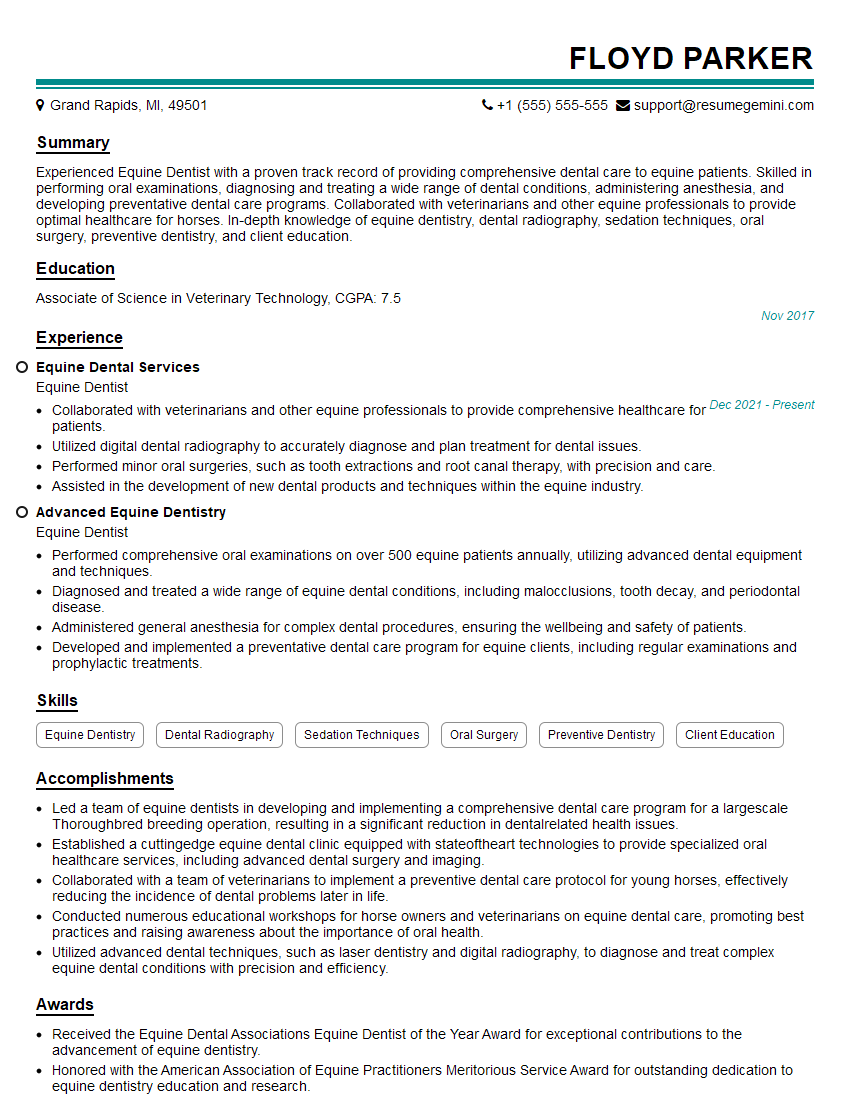
Mastering Equine Dentistry and Oral Examination is crucial for career advancement in the veterinary field, opening doors to specialized practices and leadership roles. A strong, ATS-friendly resume is your key to unlocking these opportunities. ResumeGemini can significantly enhance your resume-building experience, helping you craft a document that showcases your skills and experience effectively. Take advantage of our resources and examples of resumes tailored specifically to Equine Dentistry and Oral Examination to present yourself in the best possible light. Remember, a well-crafted resume is your first impression – make it count!
Explore more articles
Users Rating of Our Blogs
Share Your Experience
We value your feedback! Please rate our content and share your thoughts (optional).
What Readers Say About Our Blog
Very informative content, great job.
good