Interviews are more than just a Q&A session—they’re a chance to prove your worth. This blog dives into essential Basic Acrobatics interview questions and expert tips to help you align your answers with what hiring managers are looking for. Start preparing to shine!
Questions Asked in Basic Acrobatics Interview
Q 1. Describe your experience with basic acrobatic movements like forward rolls and cartwheels.
My experience with fundamental acrobatic movements like forward rolls and cartwheels is extensive. I’ve practiced and taught these techniques for over ten years. A forward roll, for instance, involves a smooth, controlled rotation from a standing position, using the hands to support the weight as the body moves over. Proper technique necessitates a tucked position to protect the head and neck, engaging core muscles for stability. The cartwheel, on the other hand, requires a more dynamic sequence: placing one hand on the ground, followed by the other, kicking one leg over, then bringing the other leg over to land in a standing position. Both require strength, flexibility, and coordination. I’ve honed my skills through constant practice and by refining my technique to improve efficiency and minimize risk of injury. I understand the biomechanics of each movement deeply, allowing me to efficiently assess and correct students’ form.
I’ve found that breaking down these movements into smaller, manageable steps makes them easier to learn for beginners. For example, teaching a forward roll, we start with practicing the tuck position, then the rolling motion on a mat, gradually progressing to a full roll on the floor. For cartwheels, I often begin by focusing on the hand placement and leg extension, one part at a time before combining them. This step-by-step approach allows me to ensure students build a solid foundation before moving on.
Q 2. Explain the importance of proper warm-up and cool-down routines in acrobatics.
Proper warm-up and cool-down routines are crucial in acrobatics, much like in any physical activity, to prevent injuries and enhance performance. A warm-up prepares the body for strenuous activity by gradually increasing heart rate and blood flow to the muscles, improving flexibility and range of motion. This typically involves light cardio, like jogging or jumping jacks, followed by dynamic stretching, such as leg swings and arm circles. Think of it like warming up your car engine before a long drive – you wouldn’t just jump in and floor it!
The cool-down, on the other hand, helps the body gradually return to its resting state. It focuses on static stretching, holding each stretch for 20-30 seconds, promoting muscle relaxation and reducing stiffness. This helps improve flexibility and reduce muscle soreness. A neglected cool-down can leave your muscles tight and increase the risk of injury the next day.
I always emphasize the importance of a proper warm-up and cool-down with my students, providing detailed routines tailored to their individual needs and fitness levels. I’ve seen firsthand how neglecting this crucial step can lead to pulled muscles and other injuries, hindering progress.
Q 3. What safety precautions do you take when performing basic acrobatic exercises?
Safety is paramount in acrobatics. I always prioritize a safe environment for my students and myself. This includes using properly padded mats to cushion falls, ensuring the exercise space is clear of obstacles, and wearing appropriate attire, such as comfortable, flexible clothing. Before starting any exercise, I carefully inspect the equipment and the training area for potential hazards. During practice, I always supervise my students closely, offering guidance and support to help prevent injury. Spotting, which I’ll discuss later, is also a crucial safety measure I utilize extensively.
For example, during forward rolls, I ensure students tuck their chins to their chests to protect their necks. In cartwheels, I guide them to maintain proper hand placement and body alignment to avoid falls. I firmly believe that safety is not just a rule but an integral part of a successful and fulfilling acrobatic practice.
Q 4. How do you assess a student’s readiness for more advanced acrobatic movements?
Assessing a student’s readiness for advanced movements involves a holistic evaluation of their physical capabilities and skill level. I first evaluate their mastery of fundamental skills. Can they execute basic movements like forward rolls and cartwheels consistently and safely? Do they demonstrate sufficient strength, flexibility, and balance? I also observe their understanding of safety procedures and their ability to follow instructions carefully. Beyond physical skills, their mental preparedness is equally important. Are they confident in their abilities? Do they exhibit appropriate levels of focus and discipline?
I often use a combination of observation and formal assessments, including tests of strength, flexibility, and balance to gauge their preparedness. I would only advance a student to more complex movements once they have demonstrated a strong foundation in the basics and exhibit a clear understanding of the safety protocols involved. For example, before introducing handstands, I ensure the student can hold a plank position comfortably and can confidently perform a forward roll. Rushing the process can lead to injury and frustration.
Q 5. Explain the concept of spotting in acrobatics and its importance.
Spotting in acrobatics is the practice of providing physical support and guidance to a student performing a potentially risky movement. It’s a crucial safety precaution. A spotter positions themselves appropriately to provide support and assistance, reducing the risk of injury. For example, when spotting a handstand, the spotter places their hands under the student’s hips, ready to prevent a fall. The spotter’s role is not simply to catch the student if they fall, but to guide them through the movement, offering balance and encouragement. Effective spotting requires a great deal of skill, understanding of the exercise, and an awareness of the student’s capabilities.
The importance of spotting cannot be overstated. It instills confidence in the student, allowing them to focus on perfecting the movement without the fear of falling. It also allows the instructor to correct any errors in form in real-time, improving the student’s technique. Effective spotting can be the difference between success and failure, confidence and fear, and ultimately, a safe and effective training session.
Q 6. How do you correct common errors in basic acrobatic techniques?
Correcting common errors in basic acrobatic techniques requires careful observation and a patient approach. I typically start by identifying the specific error—is the student’s body alignment incorrect? Are they lacking sufficient strength? Or is there a lack of proper technique execution? Once the error is pinpointed, I break down the movement into smaller, more manageable steps, focusing on correcting the specific flaw. This often involves demonstrating the correct technique, using verbal cues, and providing physical adjustments, always prioritizing safety.
For example, if a student is struggling with a forward roll because they are not tucking their chin, I would work with them on practicing the tuck position separately, then gradually integrating it into the roll. If they are falling during a cartwheel due to a lack of strength or balance, we’d focus on strengthening exercises and balance drills before returning to the cartwheel. I always tailor my correction methods to the individual student’s needs and learning style, using positive reinforcement and encouragement throughout the process.
Q 7. Describe your experience teaching basic acrobatics to beginners.
I’ve had extensive experience teaching basic acrobatics to beginners of all ages and fitness levels. My approach is always patient, encouraging, and safety-focused. I start by building a strong rapport with my students, creating a comfortable and supportive learning environment. I emphasize the importance of proper warm-up and cool-down routines, and I always demonstrate the correct technique before allowing students to attempt it. I break down complex movements into smaller, manageable steps and use positive reinforcement to help students build confidence.
I’ve taught both group classes and individual lessons, tailoring my approach to meet the needs of each student. My aim is not just to teach the technical aspects of acrobatics, but also to instill a love for the activity, fostering creativity, strength, and confidence. I’ve seen countless beginners, initially hesitant and unsure, blossom into confident and skillful acrobats through consistent practice and personalized guidance. Seeing their progress is incredibly rewarding.
Q 8. How do you modify basic acrobatic exercises for individuals with different physical abilities?
Modifying basic acrobatic exercises for individuals with different physical abilities is crucial for inclusivity and safety. It’s about adapting, not eliminating, the challenge. We need to consider limitations arising from factors such as strength, flexibility, balance, and any pre-existing conditions.
- Reduced Strength: For individuals with reduced upper body strength, we might modify a handstand progression by starting with wall walks, gradually reducing the wall support as strength improves. Instead of a full cartwheel, we might focus on individual components like a handstand to forearm support progression.
- Limited Flexibility: Hamstring tightness often limits flexibility. Instead of demanding a full split, we’ll work on stretches and progressive exercises, like forward folds and lunges, focusing on gradual improvement. We might replace a high-flying back handspring with a simpler movement sequence that doesn’t require as much flexibility.
- Balance Issues: Exercises that emphasize balance, like single-leg stances, are important but may need modification. We can use assistive devices such as a balance beam or a wall for added stability, before progressing to solo attempts.
- Pre-existing Conditions: Any medical conditions need thorough consideration. For example, students with back problems may need modifications to avoid movements that put strain on their spines. We may need to focus on core strengthening and postural exercises.
The key is to provide a safe and positive learning environment that allows everyone to participate and progress at their own pace. We must always prioritize safety and listen to the student’s feedback. Regular communication is crucial, adjusting the exercises based on observed progress and any limitations expressed.
Q 9. What are the key components of a successful acrobatic routine?
A successful acrobatic routine hinges on three key components: Skill, Choreography, and Performance.
- Skill: This encompasses the technical proficiency of the acrobatic movements. It involves mastering fundamental skills like handstands, cartwheels, backbends, and transitions between movements with precision, control, and power. Strong foundational skills are the building blocks of more advanced techniques. A well-executed back handspring, for instance, requires the perfect combination of power, balance, and control.
- Choreography: This aspect is all about the artistic arrangement of the movements. It involves creating a flow that’s visually appealing and tells a story. Transitions should be smooth and well-timed. A successful routine is more than just a collection of skills; it’s a seamless narrative expressed through movement. The choreography might incorporate changes in tempo, levels, and dynamics, making it engaging for the audience.
- Performance: This is the delivery – the energy, expression, and confidence with which the routine is executed. It involves connecting with the audience through body language, facial expressions, and conveying emotion through movement. A strong performance elevates a technically sound routine to an unforgettable experience. Even with perfect skills and choreography, a lack of energy or expression can detract from the overall impact.
The perfect blend of these three elements is what separates an average acrobatic routine from a truly outstanding one. The best routines seamlessly integrate skill, choreography, and performance to captivate an audience.
Q 10. How do you maintain your own physical fitness and flexibility for teaching acrobatics?
Maintaining my own physical fitness and flexibility is paramount for effectively teaching acrobatics. It’s not just about demonstrating the movements; it’s about understanding the physical demands and being able to empathize with my students’ experiences.
- Regular Exercise: I maintain a consistent exercise routine focused on strength training (particularly core and upper body), flexibility (yoga, Pilates), and cardiovascular health (running, swimming). This ensures I’m physically capable of demonstrating, correcting postures, and even spotting students safely.
- Flexibility Training: I prioritize daily stretching and flexibility exercises like yoga and Pilates. This maintains the range of motion necessary to model proper form and show students a wide variety of stretches for improved flexibility.
- Injury Prevention: I focus on injury prevention techniques, using proper warm-up and cool-down routines and being mindful of my body’s limits during training and teaching. I emphasize safe exercise practices to my students and model that behavior.
- Self-Care: Adequate rest, proper nutrition, and stress management are crucial aspects of my self-care. This ensures I’m both physically and mentally prepared to teach effectively and avoid burnout.
Teaching acrobatics demands physical stamina and flexibility, so maintaining my fitness is an ongoing commitment. It’s not just about personal well-being but also about setting a positive example for my students and ensuring their safety.
Q 11. Describe your knowledge of basic acrobatic terminology.
Basic acrobatic terminology is crucial for clear communication and effective instruction. Here are some key terms:
- Handstand: A body position balanced on the hands with the body upright.
- Cartwheel: An acrobatic movement where the body rotates sideways over the hands.
- Backbend: A backward bend of the spine, often done as a bridge or with the hands on the floor.
- Tuck: Drawing the knees toward the chest, often used in tumbling movements.
- Pike: Bending the body at the hips, with the legs straight and the upper body parallel to the floor.
- Spotting: Guiding and supporting a student performing an acrobatic movement to prevent injury.
- Bridge: A backward bend supported by the hands and feet.
- Forward Roll: A gymnastic movement involving rolling forward on the ground.
- Back Handspring: An acrobatic move where the body rotates backward over the hands.
Understanding these terms allows for clear instruction and facilitates a safe and efficient learning process. I also emphasize practical demonstrations to reinforce the terminology.
Q 12. How do you address fear and anxiety in students learning acrobatics?
Addressing fear and anxiety in students learning acrobatics requires a sensitive and patient approach. It’s crucial to create a safe, encouraging, and supportive environment where students feel comfortable taking risks.
- Building Trust: Establishing a strong rapport with students based on trust and respect is paramount. This involves active listening, recognizing their anxieties, and validating their feelings.
- Progressive Skill Development: Introducing acrobatic skills gradually and progressively helps build confidence. Starting with simpler movements and gradually building towards more complex ones, breaking down the skills into smaller, achievable steps, reduces the intimidation factor.
- Positive Reinforcement: Encouraging positive self-talk and celebrating successes, no matter how small, builds self-esteem and confidence.
- Spotting and Safety: Providing adequate spotting ensures safety, reduces fear of falling, and instills confidence in the student.
- Visualization Techniques: Guided visualization and mental rehearsal can help students mentally prepare for performing the movements, reducing anxiety and building self-efficacy.
- Non-judgmental Environment: Creating a judgment-free zone where mistakes are seen as learning opportunities rather than failures is crucial for reducing anxiety and encouraging risk-taking.
Addressing fear is a process, not a quick fix. Patience, understanding, and a focus on building confidence are key to helping students overcome their anxieties and enjoy the learning process.
Q 13. Explain the importance of proper body alignment in basic acrobatic movements.
Proper body alignment is fundamental to safe and effective acrobatic movements. It’s the foundation upon which strength, balance, and efficiency are built. Misalignment can lead to injury and hinder progress.
- Reduced Risk of Injury: Correct alignment distributes weight evenly across the body, reducing stress on joints and muscles. This significantly lowers the risk of strains, sprains, and other injuries.
- Improved Balance and Stability: A properly aligned body provides a stable base, improving balance and control, especially crucial in skills like handstands and cartwheels.
- Enhanced Efficiency of Movement: Efficient movement requires minimal effort to achieve maximum results. Proper alignment facilitates fluid, powerful, and controlled movements.
- Aesthetically Pleasing Movements: Correct alignment leads to more aesthetically pleasing movements, contributing to a stronger overall performance.
For example, in a handstand, proper alignment involves a straight line from the head to the heels, with the shoulders stacked directly over the wrists. Any deviation from this alignment places unnecessary stress on the body, impacting balance and increasing the risk of injury. I constantly emphasize and correct posture, using analogies and visual aids to ensure students understand and maintain proper alignment during every movement.
Q 14. How do you create a positive and encouraging learning environment for acrobatic students?
Creating a positive and encouraging learning environment is crucial for successful acrobatic training. It’s about fostering a sense of community, promoting self-esteem, and making learning fun.
- Positive Reinforcement and Feedback: I consistently offer positive reinforcement, focusing on achievements rather than mistakes. Feedback is constructive and focused on improvement, always delivered in a supportive and encouraging manner.
- Encouraging Participation and Collaboration: I create opportunities for students to participate actively, collaborating on exercises and sharing experiences. Peer support and learning are invaluable in building a supportive environment.
- Fun and Engaging Activities: I incorporate games and playful activities into training sessions to make learning enjoyable and reduce pressure.
- Safe and Supportive Space: The learning space is safe and comfortable, encouraging risk-taking in a controlled setting. This includes ensuring proper equipment and spotting techniques.
- Individualized Attention: I recognize that each student learns at a different pace and adapts learning strategies to accommodate individual needs and learning styles.
By creating a positive atmosphere, I encourage students to embrace challenges, build confidence, and develop a lifelong love for acrobatics.
Q 15. Describe your experience with different acrobatic training methods.
My acrobatic training experience encompasses a diverse range of methods, focusing on a holistic approach to skill development. I’ve worked extensively with the traditional methods emphasizing foundational strength and flexibility training. This includes regular routines involving calisthenics, plyometrics (jump training), and targeted flexibility exercises like stretching and yoga. For instance, I incorporate daily routines focusing on core strengthening exercises like planks and Russian twists to build the essential base for acrobatic maneuvers.
Beyond the basics, I’ve also incorporated contemporary techniques, such as using resistance bands and specialized equipment like balance boards to refine control and precision. I believe in understanding the biomechanics of movement. Analyzing videos of successful acrobatic performances helps me understand how to translate this knowledge into more effective training. Finally, I strongly advocate for a progressive overload approach; gradually increasing the difficulty of exercises to continually challenge the body and promote adaptation. For example, progressing from basic cartwheels to handsprings and eventually to more complex tumbling sequences.
Career Expert Tips:
- Ace those interviews! Prepare effectively by reviewing the Top 50 Most Common Interview Questions on ResumeGemini.
- Navigate your job search with confidence! Explore a wide range of Career Tips on ResumeGemini. Learn about common challenges and recommendations to overcome them.
- Craft the perfect resume! Master the Art of Resume Writing with ResumeGemini’s guide. Showcase your unique qualifications and achievements effectively.
- Don’t miss out on holiday savings! Build your dream resume with ResumeGemini’s ATS optimized templates.
Q 16. What are the common injuries associated with basic acrobatics, and how do you prevent them?
Common injuries in basic acrobatics often stem from improper technique, insufficient warm-up, or overexertion. These can include sprains (ankle, wrist, knee), strains (muscle pulls), and bruises. More serious injuries, while less common, can involve fractures or concussions. Prevention is paramount. A comprehensive warm-up, including dynamic stretches (movements like arm circles and leg swings), is crucial before any activity. Proper spotting and a safe training environment are also key. Spotting, the act of physically assisting a student during a potentially risky maneuver, minimizes injury risk during learning stages. In my classes, I teach students correct form, emphasizing alignment and proper execution. This involves breaking down complex movements into smaller, manageable steps, gradually building skill. We pay close attention to landing techniques, which are crucial for preventing knee and ankle injuries. Regular rest and listening to your body are also vital for injury prevention.
Q 17. How do you adapt your teaching style to different learning styles?
Adapting my teaching style to different learning styles is fundamental to effective instruction. I recognize that learners process information differently; some are visual, some are kinesthetic (learn by doing), and others are auditory. For visual learners, I use clear demonstrations and visual aids like diagrams and videos. For kinesthetic learners, I emphasize hands-on practice and provide plenty of opportunities for repetition. Auditory learners benefit from clear verbal explanations and instructions. I incorporate a diverse range of teaching methodologies, such as games, drills, and individual feedback, to cater to this variety. For example, teaching a backflip can involve demonstrating the technique, guiding students through the motion step by step, and letting them practice with spotting, until they have complete understanding of body movements and achieve the correct form.
Q 18. What are your strategies for motivating students to improve their acrobatic skills?
Motivating students is about fostering a positive and encouraging learning environment. I achieve this by celebrating small victories and focusing on progress rather than perfection. This positive reinforcement builds confidence and keeps students motivated. Setting achievable goals, starting small and building to more challenging feats, prevents discouragement. I also foster a sense of community in the class, creating an environment where students support and encourage each other. Gamifying learning, using challenges and competitions, helps maintain engagement and enjoyment. Finally, personalized feedback, acknowledging individual strengths and areas for improvement, keeps students motivated to improve their skills.
Q 19. Describe your experience with evaluating a student’s progress in acrobatics.
Evaluating student progress involves a multifaceted approach. I use a combination of objective and subjective assessments. Objective assessments involve tracking measurable improvements, such as the number of successful attempts at a specific skill or improvement in strength and flexibility as measured by testing. Subjective assessments involve observations of technique, form, consistency, and overall performance. I record detailed notes on each student’s progress, using standardized evaluation forms for consistent documentation. This ongoing monitoring allows for personalized feedback and adjustments to the training program. Regular feedback sessions involving discussions of what worked well, the challenges, and plans for improvement, help guide students towards their full potential.
Q 20. How do you handle unexpected situations or accidents during an acrobatics class?
Handling unexpected situations, like falls or minor injuries, requires a calm and efficient response. My primary focus is always on student safety. First aid training is essential, and I ensure that a first-aid kit is readily available. In the case of a fall, I assess the situation quickly and provide immediate first aid if necessary. I emphasize the importance of a safe environment from the beginning of the class and reinforce safety protocols throughout the session. We discuss and practice proper spotting procedures before ever attempting risky maneuvers. Communication with parents/guardians is vital in case of any injury, providing them with information about what occurred and the necessary next steps.
Q 21. What resources do you use to stay updated on current trends and best practices in acrobatics?
Staying updated in acrobatics involves utilizing a variety of resources. I regularly attend workshops and conferences organized by professional acrobatic organizations. I subscribe to relevant journals and online publications that publish articles and research on acrobatic techniques, safety, and injury prevention. I also actively participate in online forums and communities dedicated to acrobatics, connecting with other instructors and professionals in the field. Analyzing videos of elite acrobatic performances and researching new training methods keep my knowledge and teaching style current and effective. Continuous learning and a willingness to adapt are key to maintaining a high standard of instruction.
Q 22. Describe your experience working with acrobatic equipment (e.g., mats, safety harnesses).
Proper equipment is paramount in acrobatics for safety and effective training. My experience encompasses extensive use of various mats, from standard gymnastics mats providing basic cushioning to thicker, specialized mats designed for high-impact landings. I’m also proficient in using safety harnesses, spotter belts, and other safety equipment. I understand the importance of regular equipment checks for wear and tear, ensuring they are appropriately inflated (where applicable) and properly positioned to create a safe training environment. For instance, I’ve implemented a system where I visually inspect all mats before each class and replace any showing signs of significant wear. Similarly, I always ensure harnesses are properly fitted and adjusted to each student’s body size and the specific exercise. The correct use and maintenance of equipment directly influence the safety and success of acrobatic training.
Q 23. How do you assess the risk of injury for different acrobatic exercises?
Assessing risk in acrobatics involves a multi-faceted approach. Firstly, I consider the inherent risks associated with each exercise. For example, a cartwheel carries a lower risk than a back handspring due to the simpler movement and lower height involved. Secondly, I assess the student’s skill level and physical capabilities. A beginner attempting an advanced move presents a significantly higher risk than an experienced student performing the same move. Thirdly, I account for environmental factors such as the quality of the training surface, adequate space, and the presence of any obstacles. Finally, I always consider the student’s physical and mental readiness on that day – fatigue or lack of focus can also increase risk. This holistic risk assessment allows me to create safe training plans, utilize proper spotting techniques, and progressively challenge students at a rate appropriate for their abilities. I often utilize risk assessment checklists to document and monitor this process.
Q 24. What are the ethical considerations related to teaching acrobatics to children?
Ethical considerations in teaching acrobatics to children are crucial. Prioritizing safety is paramount; this includes obtaining parental consent, ensuring appropriate supervision ratios, and teaching skills progressively to avoid injury. It’s also vital to create a positive and inclusive learning environment, where children feel comfortable voicing concerns and asking questions. Building trust and open communication is essential. Avoiding any form of physical or verbal abuse, and ensuring fairness in the way I praise and correct students are top priorities. I also believe in fostering a love for the sport and celebrating effort as much as achievement, rather than solely focusing on competition or elite performance. Respecting each child’s individuality and acknowledging differences in learning styles and abilities is critical. I actively work to avoid creating a culture of comparison or pressure to achieve unrealistic goals.
Q 25. Describe your understanding of the principles of balance and coordination in acrobatics.
Balance and coordination are fundamental to acrobatics. Balance involves maintaining equilibrium, whether statically (holding a pose) or dynamically (moving). It relies on proprioception (awareness of body position) and the ability to adjust body weight distribution to counteract external forces. Coordination involves the smooth and efficient integration of various muscle groups to produce controlled movements. Think of a handstand – maintaining balance involves subtle adjustments of hand position and body alignment, and coordination ensures all muscle groups work together seamlessly to smoothly execute the pose and transitions. I teach these principles through a variety of exercises, starting with simple balance drills and progressing to more complex coordinated movements. I use visual aids, verbal cues, and physical demonstrations to help students understand and apply these concepts. Improving balance and coordination is a continuous process, requiring consistent practice and attention to detail.
Q 26. How do you develop a lesson plan for teaching basic acrobatics?
Developing a lesson plan for basic acrobatics involves a structured approach. I start by identifying the learning objectives; what specific skills will students learn? Next, I select appropriate exercises and drills, starting with fundamental movements and gradually progressing in complexity. I ensure there is a warm-up, focusing on mobility and dynamic stretching to prepare the body. The main lesson involves teaching the skills through a combination of demonstration, explanation, and practice, with a clear progression of steps. I incorporate safety drills to reinforce proper techniques and emphasize safe practices. The lesson also includes a cool-down with static stretching, ensuring the students’ bodies have time to recover. Finally, I plan for assessment methods to track student progress and adapt instruction accordingly. For example, a lesson plan for beginners might focus on forward rolls, cartwheels, and basic balances, while a more advanced class might introduce handstands and backbends.
Q 27. What are your preferred methods for providing feedback to acrobatic students?
I use a combination of methods for providing feedback. Firstly, I use descriptive language to explain what the student did well and where improvements are needed, avoiding vague terms like ‘good’ or ‘bad’. I focus on specific body alignment, technique and timing issues. For example, instead of saying ‘your cartwheel was good’, I might say ‘your hands were placed well, but you could improve your leg extension during the rotation.’ Secondly, I use visual demonstrations and corrections, showing the student the correct movement directly. I also use video analysis for a more detailed assessment of technique and progress over time. I involve students actively in the feedback process by asking them for self-assessment and allowing them to articulate their challenges. Creating a safe and supportive environment where students feel comfortable receiving constructive criticism is key to effective feedback. I always end feedback sessions on a positive note, highlighting progress and setting clear goals for future practice.
Q 28. Explain your approach to incorporating games and activities into basic acrobatics lessons.
Incorporating games and activities makes learning fun and engaging. Simple games like ‘red light, green light’ can improve balance and listening skills. Obstacle courses combining movement and balance challenges can enhance coordination and agility. Partner activities, such as assisting each other in practicing specific moves, build trust and improve collaborative learning. I design games that align with lesson objectives. For example, a game involving rolling across the mat can reinforce forward roll technique, while a game of tag involving handstands can encourage balance and handstand practice. The key is to ensure the games are safe and relevant to the skills being taught, maintaining a balance between fun and productive learning. I frequently use these games to reinforce skills learned or provide a break from repetitive drills, keeping the students enthusiastic and actively participating.
Key Topics to Learn for Basic Acrobatics Interview
- Body Conditioning & Strength: Understanding the fundamental exercises and training regimens crucial for building the necessary strength, flexibility, and endurance for basic acrobatic movements. Practical application includes explaining your training routine and how it addresses specific physical demands.
- Spotting & Safety Techniques: Mastering safe spotting techniques for various acrobatic maneuvers, including partner work and solo exercises. This includes understanding the importance of communication and risk assessment. Practical application includes describing your experience spotting others and being spotted, highlighting safety protocols followed.
- Fundamental Acrobatics Movements: Thorough knowledge of basic acrobatic elements such as forward and backward rolls, cartwheels, handstands, bridges, and basic tumbling passes. Practical application involves demonstrating understanding of proper form, technique, and progressions for each movement.
- Partnering & Teamwork: Understanding the dynamics of working with a partner, including trust, communication, and coordination. Practical application includes explaining your experience in group settings and how you contribute to a safe and productive training environment.
- Fall Management & Recovery: Developing strategies for safe falls and efficient recovery techniques to prevent injuries. This requires understanding the biomechanics of falls and implementing protective measures. Practical application includes discussing your understanding of fall prevention and safe landing techniques.
- Progression & Adaptation: Demonstrating an understanding of how basic acrobatic skills form the foundation for more advanced techniques. This shows your ability to learn and adapt, and plan for future skill development.
Next Steps
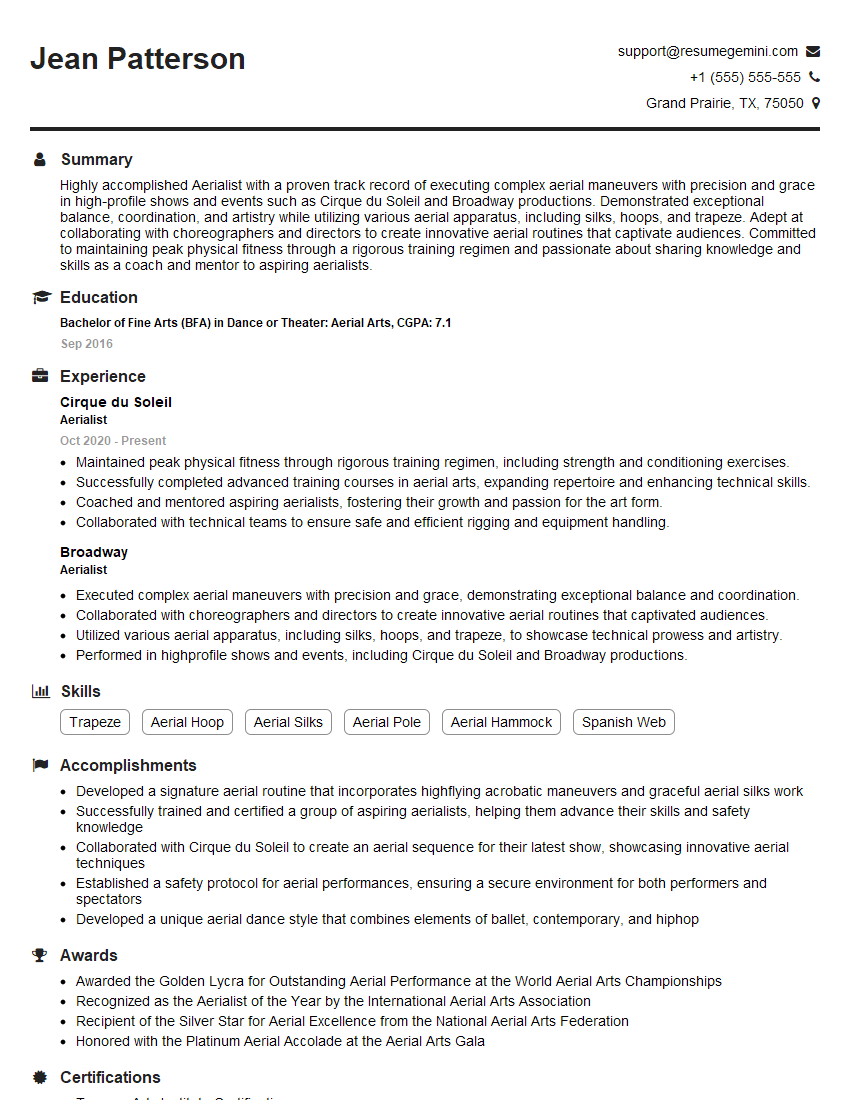
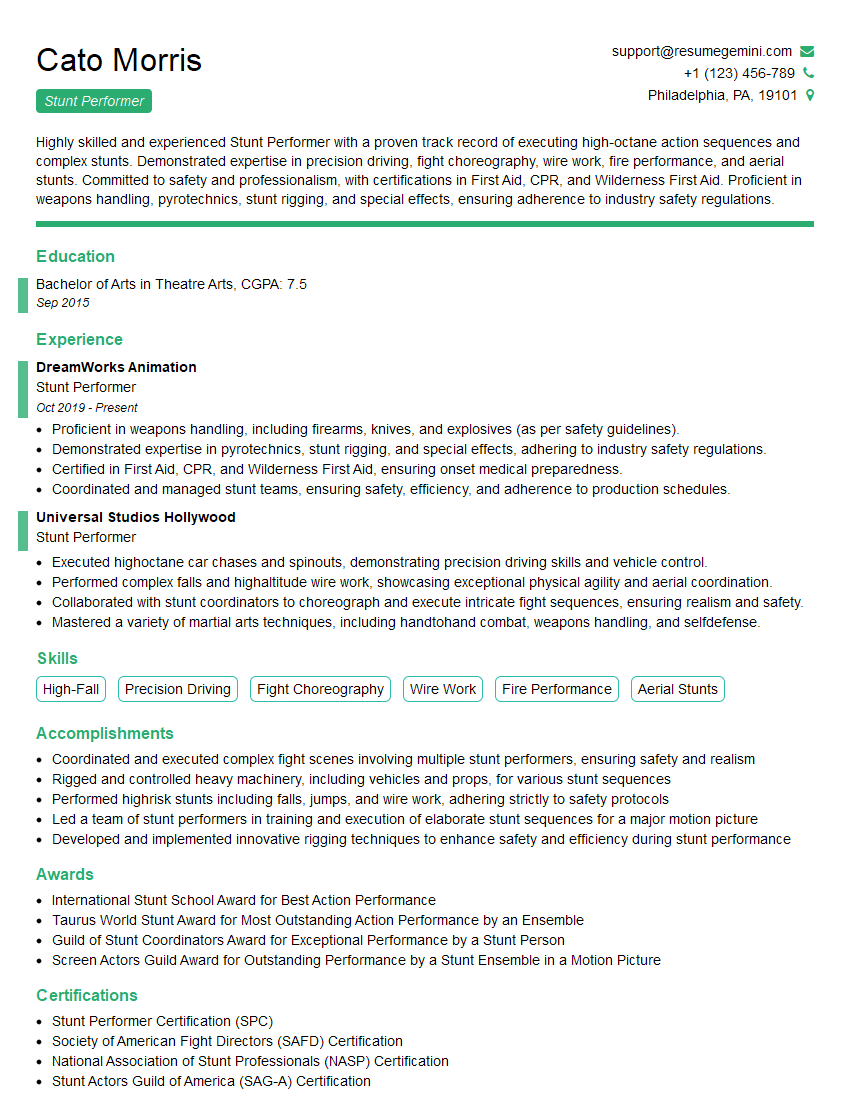
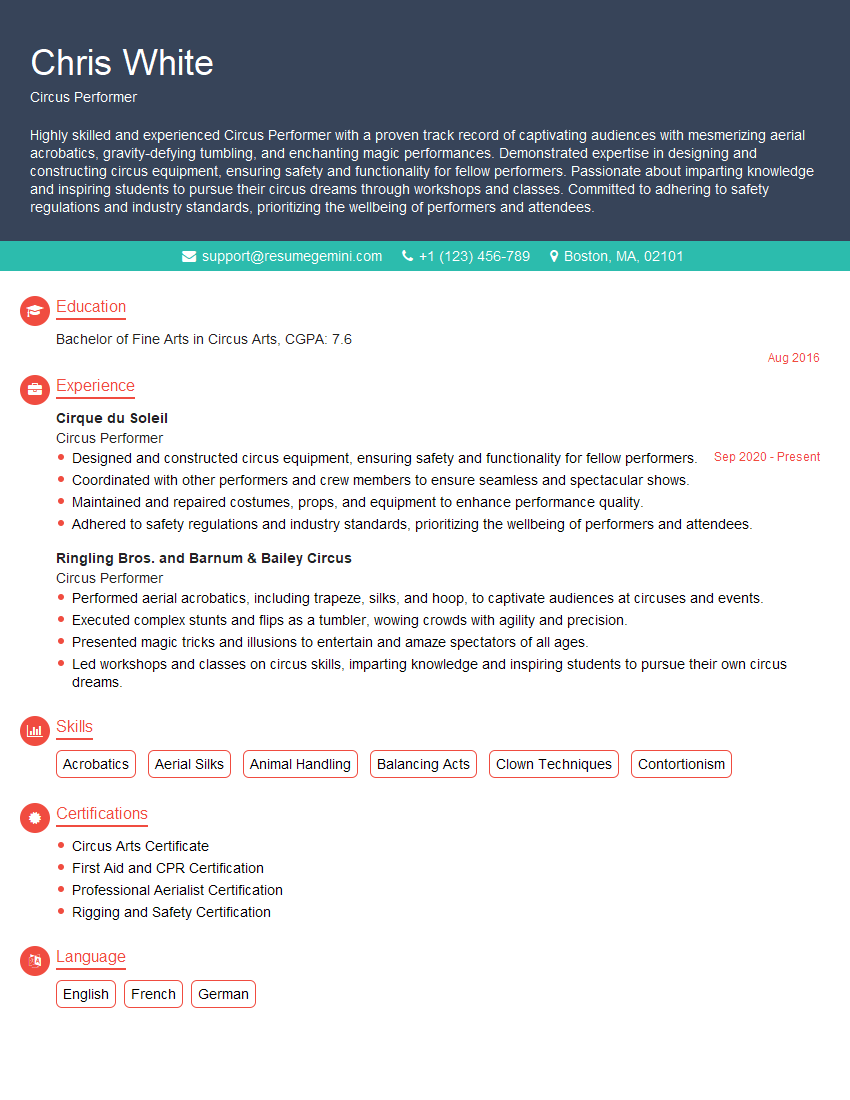
Mastering Basic Acrobatics opens doors to exciting career opportunities in fitness instruction, physical therapy, performing arts, and more. A strong foundation in these skills demonstrates dedication, discipline, and a commitment to safety—all highly valued attributes in the workplace. To maximize your job prospects, create an ATS-friendly resume that highlights your abilities and experience effectively. Use ResumeGemini to build a professional resume that showcases your skills and achievements in the best possible light. ResumeGemini provides examples of resumes tailored to Basic Acrobatics, helping you craft a compelling document that gets noticed by potential employers.
Explore more articles
Users Rating of Our Blogs
Share Your Experience
We value your feedback! Please rate our content and share your thoughts (optional).
What Readers Say About Our Blog
Very informative content, great job.
good