Interviews are opportunities to demonstrate your expertise, and this guide is here to help you shine. Explore the essential Social Media Command and Control interview questions that employers frequently ask, paired with strategies for crafting responses that set you apart from the competition.
Questions Asked in Social Media Command and Control Interview
Q 1. Explain your experience managing social media during a crisis.
Managing social media during a crisis requires swift, decisive action and a calm, measured approach. My experience involves establishing a dedicated crisis communication team, activating pre-defined protocols, and leveraging social listening tools to understand the situation’s scope and sentiment in real-time. For instance, during a product recall, we immediately identified affected customers via social media mentions, proactively addressed concerns, and provided clear instructions for returns or replacements. This involved crafting consistent messaging across all platforms, monitoring for misinformation, and collaborating with PR and legal teams to ensure accuracy and compliance. We used a tiered response strategy, with automated responses for common inquiries and manual intervention for complex or sensitive issues. Transparency and empathy were paramount; we acknowledged the situation directly, apologized where necessary, and committed to resolving problems promptly.
This systematic approach minimizes reputational damage and strengthens customer loyalty. Post-crisis, we conducted a thorough review of our performance, identifying areas for improvement in our crisis communication plan and social media protocols.
Q 2. Describe your process for monitoring social media for brand mentions.
My process for monitoring brand mentions involves a multi-faceted approach leveraging both automated and manual methods. We use social listening tools like Brandwatch and Talkwalker to track mentions across various platforms, including Twitter, Facebook, Instagram, and relevant forums. These tools allow for keyword tracking, sentiment analysis, and the identification of influencers or key conversations. Beyond automated tools, we also dedicate resources to manual searches, especially for less quantifiable signals like tone and context that algorithms sometimes miss. This ensures we don’t miss nuanced conversations or subtle shifts in public perception. For example, if our brand is associated with a particular hashtag, we’ll track that hashtag closely for any negative mentions or shifting trends. We also use Google Alerts to track mentions across news articles and blogs.
The data collected feeds into a centralized dashboard, providing a holistic view of brand sentiment and allowing for swift identification of emerging issues. This real-time monitoring facilitates proactive engagement and rapid responses to potential crises.
Q 3. How do you measure the success of a social media campaign?
Measuring the success of a social media campaign goes beyond simply looking at vanity metrics like likes and shares. We employ a comprehensive approach that considers both quantitative and qualitative data. Key Performance Indicators (KPIs) include reach, engagement (likes, comments, shares), website traffic driven from social media, lead generation, and conversion rates. For example, if the campaign goal was to increase brand awareness, we’d analyze reach and engagement metrics, and correlate them with an increase in website traffic or brand searches. If the goal was lead generation, we’d focus on conversion rates and the number of qualified leads generated.
Beyond numbers, we conduct qualitative analysis, reviewing the nature of comments and engagement to gauge audience sentiment. We also track brand mentions and sentiment changes following the campaign to assess the long-term impact. A successful campaign demonstrates not only a boost in quantitative metrics, but also a positive shift in public perception and a strengthened brand image.
Q 4. What tools and technologies are you familiar with for social media command and control?
My experience encompasses a wide range of social media command and control tools and technologies. I’m proficient in social listening platforms like Brandwatch, Talkwalker, and Sprinklr. These provide comprehensive social media monitoring, sentiment analysis, and competitive intelligence. I also utilize social media management tools such as Hootsuite and Buffer for scheduling posts, managing multiple accounts, and tracking campaign performance. For crisis management, we often use collaboration platforms such as Slack and Microsoft Teams to facilitate communication and coordination across different teams. Data visualization tools such as Tableau or Power BI are crucial for presenting key insights to stakeholders.
Beyond these, I’m familiar with various API integrations that allow for the automation of reporting and response processes, enhancing efficiency and scalability. My technical skills extend to using programming languages like Python for data analysis and automation tasks related to social media data.
Q 5. How do you identify and prioritize social media threats?
Identifying and prioritizing social media threats involves a structured approach. We leverage social listening tools to detect negative sentiment, escalating threats, misinformation campaigns, or coordinated attacks targeting our brand. We use a threat matrix to prioritize threats based on severity (impact and likelihood) and urgency. Factors considered include the volume of negative comments, the influence of individuals or groups spreading misinformation, and the potential impact on the brand’s reputation or operations. For example, a coordinated disinformation campaign would be considered a high-severity, high-urgency threat, requiring an immediate and comprehensive response. A few isolated negative comments, on the other hand, might be of lower priority, though still requiring attention.
This prioritization allows us to allocate resources effectively, focusing on the most critical threats first while addressing other issues in a systematic manner. The process involves regular review and reassessment of identified threats, enabling us to adapt our strategies as the situation unfolds.
Q 6. What is your approach to responding to negative comments or feedback on social media?
My approach to responding to negative comments or feedback is based on empathy, transparency, and proactive engagement. The first step involves carefully reading the comment to understand the user’s concern. We acknowledge the feedback, showing that we value their opinion. If the criticism is valid, we apologize sincerely and outline the steps we’re taking to address the issue. For example, if a customer complains about a faulty product, we offer a solution such as a replacement or refund. We make sure our response is public, showing transparency and accountability to other users.
However, if the comment is abusive or irrelevant, we may choose to delete it but avoid escalating the situation. In all cases, maintaining a professional and respectful tone is crucial. This approach demonstrates our commitment to customer satisfaction and reinforces the brand’s positive image. In handling negative comments, speed and consistency are key—responding promptly demonstrates attentiveness and mitigates the spread of negative sentiment.
Q 7. Describe your experience using social listening tools.
My experience with social listening tools is extensive. I’ve used tools like Brandwatch and Talkwalker to gain insights into customer sentiment, identify emerging trends, monitor brand mentions, and track competitor activity. These tools allow for real-time monitoring of social media conversations, enabling us to proactively address potential crises or capitalize on opportunities. For example, using sentiment analysis features, we can identify spikes in negative sentiment and then delve deeper to understand the root cause. We can also track the reach and influence of specific conversations and identify key influencers who might be affecting brand perception.
Beyond basic monitoring, I’m adept at using advanced features such as demographic analysis, topic clustering, and competitor benchmarking. The data collected helps inform strategic decision-making, allowing us to tailor our social media strategy for optimal impact. Social listening is not merely about monitoring; it’s about transforming data into actionable insights that improve brand engagement and mitigate risks.
Q 8. How do you ensure compliance with social media policies and regulations?
Ensuring compliance with social media policies and regulations is paramount. It involves a multi-faceted approach encompassing proactive policy development, rigorous training, and consistent monitoring. First, we create clear, comprehensive social media policies that align with relevant laws and industry best practices – think GDPR, CCPA, and FTC guidelines on advertising disclosures. These policies cover everything from employee conduct to content creation and brand representation. Second, we conduct regular training sessions for all employees who interact with social media, emphasizing the importance of policy adherence and the potential consequences of non-compliance. We use interactive scenarios and case studies to make the training engaging and memorable. Finally, we employ social media monitoring tools to track brand mentions, identify potential compliance issues, and proactively address any violations. For example, if we detect a post violating our policy on disclosing sponsored content, we immediately take action – this could involve editing the post, issuing a correction, or even removing the content altogether. Regular audits of our social media presence ensure continuous compliance.
Q 9. How do you build and manage a social media response team?
Building and managing a robust social media response team requires careful planning and execution. It begins with identifying individuals with the necessary skills – excellent communication, quick thinking, problem-solving abilities, and a deep understanding of the brand’s voice and values. We usually assemble a team with diverse skills, encompassing individuals experienced in customer service, public relations, and social media analytics. Team structure depends on the organization’s size and social media presence; it can range from a dedicated team to individuals cross-trained to handle social media responsibilities. We establish clear roles and responsibilities, define escalation paths for critical issues, and provide ongoing training on handling various social media scenarios. Regular team meetings, performance evaluations, and feedback sessions are crucial to maintaining high performance and adapting to changing social media landscapes. Think of it like a well-oiled machine, each part working in harmony to deliver effective and consistent responses.
Q 10. How do you develop and implement a social media crisis communication plan?
A social media crisis communication plan is a vital element of any comprehensive social media strategy. It’s essentially a playbook for navigating negative situations on social media. The first step is identifying potential crises – everything from product recalls to negative publicity. Next, we define roles and responsibilities within the response team, outlining who handles communication, monitors social channels, and updates internal stakeholders. The plan details communication protocols – including pre-approved messaging, tone of voice, and response timelines. We develop a set of pre-written templates for common scenarios, saving precious time during a crisis. Regular drills and simulations are crucial – practicing responses to different crises enables the team to react efficiently and confidently when a real crisis arises. For example, we might simulate a product defect situation and practice how to respond, ensuring the message is empathetic, informative, and consistent across all channels. The plan needs to be regularly reviewed and updated to adapt to changing circumstances and feedback.
Q 11. What metrics do you use to track the effectiveness of your social media command and control efforts?
Tracking the effectiveness of social media command and control efforts relies on a blend of qualitative and quantitative metrics. Quantitative metrics include things like reach, engagement (likes, comments, shares), website traffic driven from social media, brand mentions, and sentiment analysis (positive, negative, neutral). These provide measurable insights into the campaign’s reach and impact. We also track key performance indicators (KPIs) such as customer satisfaction scores derived from social media interactions. Qualitative metrics involve analyzing the tone and nature of comments, assessing public perception of the brand, and identifying emerging trends or themes. These provide valuable insights that quantitative data alone might miss. A dashboard combining these metrics offers a holistic view of performance. For example, we might track a decrease in negative sentiment alongside an increase in positive mentions to assess the effectiveness of a crisis response initiative.
Q 12. How do you utilize social media analytics to inform your strategies?
Social media analytics are indispensable for informing social media strategies. We use tools like Google Analytics, Sprout Social, or Hootsuite to analyze audience demographics, engagement patterns, and content performance. This data helps refine targeting, optimize content strategy, and measure campaign ROI. For example, if analytics show high engagement with video content featuring user-generated stories, we allocate more resources to this type of content. Similarly, understanding audience demographics allows us to tailor messaging and choose appropriate platforms for specific target segments. By continuously monitoring analytics and adapting our strategies accordingly, we ensure our social media efforts remain relevant, effective, and aligned with business objectives. Think of it as a feedback loop, constantly refining our approach based on data-driven insights.
Q 13. Explain your experience with social media automation tools.
My experience with social media automation tools is extensive. I’ve used a wide range of tools, from scheduling platforms like Hootsuite and Buffer to social listening tools like Brandwatch and Mention. These tools automate repetitive tasks such as scheduling posts, monitoring brand mentions, and engaging with followers. Automation increases efficiency, saves time, and allows for consistent brand messaging across platforms. However, it’s crucial to balance automation with human oversight. While tools can automate scheduling, they cannot replace the human element in responding to critical issues or creating engaging, authentic content. A purely automated approach can lead to impersonal, robotic interactions. I always integrate automation strategically, using it to amplify human efforts, not to replace them entirely. It’s about finding that optimal balance – utilizing automation for efficiency but retaining the human touch for authenticity.
Q 14. Describe your process for escalating critical social media issues.
Escalating critical social media issues requires a clear and well-defined process. Our protocol prioritizes speed and accuracy. The first step involves identifying the severity of the issue. Minor issues are handled by the frontline response team; major crises require escalation to senior management. We have a pre-defined escalation matrix, outlining who is notified at each stage and their specific responsibilities. This matrix ensures swift and appropriate responses. Key aspects include documenting every step of the escalation process, maintaining clear communication with all stakeholders, and keeping a detailed record of the actions taken. We always strive to resolve the issue transparently and communicate the resolution to the affected audience. Imagine a situation where a false rumour about a product defect goes viral. Our escalation procedure would involve quickly assessing the situation, informing senior management, and immediately deploying a coordinated response strategy across all social media platforms, clarifying the misinformation and protecting the brand’s reputation.
Q 15. How do you collaborate with other teams (e.g., PR, marketing) in managing social media?
Collaboration with PR and marketing is crucial for a cohesive brand voice and effective social media strategy. I approach this through proactive communication and integrated planning. We typically begin with a shared calendar of upcoming campaigns and events. This allows PR to align messaging and media outreach with our social media activities, ensuring consistent branding and maximizing impact. Marketing provides valuable data on target audiences, informing our content strategy and ad targeting.
For instance, if Marketing identifies a significant interest in a particular product feature, we can develop social media content highlighting that feature. Then, PR can use that same messaging in press releases. Regular team meetings, shared documents, and project management tools ensure transparency and prevent duplication of effort. I also actively seek feedback from PR and marketing teams to continuously improve our strategy based on performance data and industry trends.
Career Expert Tips:
- Ace those interviews! Prepare effectively by reviewing the Top 50 Most Common Interview Questions on ResumeGemini.
- Navigate your job search with confidence! Explore a wide range of Career Tips on ResumeGemini. Learn about common challenges and recommendations to overcome them.
- Craft the perfect resume! Master the Art of Resume Writing with ResumeGemini’s guide. Showcase your unique qualifications and achievements effectively.
- Don’t miss out on holiday savings! Build your dream resume with ResumeGemini’s ATS optimized templates.
Q 16. How familiar are you with different social media platforms and their unique features?
I possess extensive experience across a range of social media platforms, understanding their nuances and tailoring my approach accordingly. This includes:
- Facebook: Leveraging its extensive targeting capabilities for advertising and community building. I understand the intricacies of Facebook Groups for nurturing engagement and building brand loyalty.
- Twitter: Utilizing its real-time nature for newsjacking, crisis communication, and rapid response to customer inquiries. I’m proficient in using Twitter analytics to track conversation trends.
- Instagram: Focusing on visually compelling content and utilizing Instagram Stories and Reels for increased reach. I’m adept at identifying relevant hashtags and collaborating with influencers for promotional campaigns.
- LinkedIn: Concentrating on professional networking and B2B engagement. This platform requires a different approach, focusing on industry insights and thought leadership content.
- TikTok: Understanding the platform’s unique algorithm and leveraging short-form video content to reach younger audiences. I stay updated on trending sounds and challenges to create engaging content.
My familiarity extends beyond just posting content; I am skilled in managing each platform’s ad manager, analyzing engagement metrics, and using platform-specific features to maximize reach and impact.
Q 17. How do you identify and engage with key influencers on social media?
Identifying and engaging key influencers involves a multi-step process. First, I define clear criteria based on audience demographics, relevance to our brand, engagement rate, and authenticity. Tools like BuzzSumo or similar influencer marketing platforms are invaluable for identifying potential influencers aligned with those criteria.
Second, I conduct thorough due diligence, reviewing their content for quality, consistency, and alignment with our brand values. This includes assessing their audience engagement and scrutinizing their past collaborations. I avoid working with influencers who lack authenticity or have a history of negative publicity.
Third, I craft personalized outreach messages to influencers. A generic pitch rarely works. I demonstrate why a collaboration would benefit them and highlight mutual benefits. Once a relationship is established, I maintain ongoing communication to nurture the partnership and ensure long-term success. A successful influencer marketing campaign relies on building genuine relationships.
Q 18. Describe your experience with social media advertising and campaign management.
My experience in social media advertising and campaign management encompasses strategy development, budget allocation, campaign execution, and performance analysis. I start by defining clear campaign objectives (e.g., brand awareness, lead generation, website traffic). This is followed by identifying the target audience, selecting the most appropriate platforms, and choosing the right ad formats.
For example, if the goal is brand awareness, I might utilize video ads on YouTube or Instagram. If the objective is lead generation, I would focus on targeted ads on LinkedIn or Facebook, incorporating lead capture forms. I meticulously track key performance indicators (KPIs) such as click-through rates (CTR), cost-per-click (CPC), conversion rates, and return on ad spend (ROAS) to optimize campaign performance in real-time. A/B testing of different ad creatives and targeting parameters is crucial for maximizing results. I leverage platform-specific analytics dashboards and utilize external tools for more in-depth reporting and analysis.
Q 19. How do you handle conflicting information or rumors circulating on social media?
Handling conflicting information or rumors requires a swift and measured response. My approach starts with verification. I cross-reference information from multiple reliable sources to determine the accuracy of the claims. If the information is false, I develop a clear, concise, and factual response to correct the misinformation. This often involves a combination of social media posts and engagement with commenters. Transparency is key – acknowledging concerns and addressing them directly.
For example, if a false rumor about a product defect circulates, I would post a statement on all relevant platforms confirming the facts and providing evidence to refute the rumor. I would engage with users who have shared the false information, explaining the situation and providing accurate information in a calm and professional tone. Ignoring rumors rarely works; a proactive and transparent approach is far more effective.
Q 20. What is your process for identifying and addressing fake accounts or bots on social media?
Identifying and addressing fake accounts or bots involves a layered approach. I use a combination of manual review and automated tools. Manual review involves carefully examining suspicious profiles for inconsistencies in profile pictures, follower counts, engagement patterns, and content quality. Automated tools, such as those offered by social media platforms themselves or third-party social listening platforms, can identify suspicious activity patterns indicative of bot networks.
If fake accounts or bots are identified spreading misinformation or engaging in malicious activity, I report them to the platform following their reporting guidelines. For instances where bots are less harmful, but still negatively impacting engagement, adjustments to content strategy and audience targeting may be necessary to mitigate their effects. Prevention is equally important. This involves regularly reviewing engagement metrics and implementing robust security measures.
Q 21. How do you track and analyze social media sentiment?
Tracking and analyzing social media sentiment is crucial for understanding public perception of a brand or product. I utilize a combination of social listening tools and platform-native analytics to monitor mentions, comments, and overall sentiment expressed towards the brand. These tools typically allow for keyword tracking and sentiment scoring (positive, negative, or neutral).
For example, using a social listening tool, I can track mentions of our brand name and relevant keywords to identify trends and patterns in customer feedback. This data helps us understand what aspects of our brand are resonating positively, and what areas need improvement. The insights gained from sentiment analysis inform strategic decisions relating to product development, customer service, and marketing campaigns, allowing for proactive adjustments to address concerns and capitalize on positive feedback.
Q 22. How do you maintain a consistent brand voice across all social media platforms?
Maintaining a consistent brand voice across all social media platforms is crucial for building a strong brand identity and fostering trust with your audience. It’s about ensuring your messaging, tone, and style remain unified, regardless of the platform.
- Develop a Brand Voice Guide: This document outlines your brand’s personality (e.g., friendly, professional, humorous), tone (e.g., formal, informal, playful), and preferred language style. It serves as a reference point for all team members.
- Define Key Messaging Pillars: Identify 3-5 core messages that consistently communicate your brand’s values and offerings. These messages should be adaptable to different platforms but retain their core meaning.
- Use Consistent Visuals: Maintain a uniform visual identity across all platforms, including logos, color palettes, and image styles. This reinforces brand recognition and creates a cohesive experience for users.
- Centralized Content Creation: Develop content in one central location and then adapt it to the specific requirements of each platform. For example, a blog post could be repurposed into shorter tweets and Instagram captions.
- Regular Audits and Training: Periodically review your social media presence to ensure consistency. Provide training to team members to reinforce best practices and the brand voice guide.
For example, a luxury watch brand might maintain a sophisticated and formal tone across all platforms, while a sportswear brand might adopt a more energetic and informal approach. The key is to remain consistent within the defined brand voice guidelines.
Q 23. Describe your experience with social media content moderation.
My experience with social media content moderation involves implementing and overseeing strategies to manage potentially harmful or inappropriate content. This includes proactive monitoring, reactive responses, and the development of clear community guidelines.
- Community Guidelines Development: I’ve created and implemented comprehensive community guidelines that clearly outline acceptable and unacceptable behavior on our social media channels, covering issues like hate speech, harassment, misinformation, and spam. These guidelines are essential for setting expectations and managing user interactions.
- Proactive Monitoring: I leverage social listening tools and automated systems to proactively scan for potentially problematic content. This allows for faster identification and removal of harmful posts, minimizing their impact.
- Reactive Response: We have established a process for responding to reported content, including investigating reports, determining violations of community guidelines, and taking appropriate action (e.g., removing comments, blocking users).
- Escalation Procedures: For serious violations or complex situations, we have clearly defined escalation procedures to involve legal or security teams as needed.
- Data Analytics: I track and analyze moderation data to identify trends, assess the effectiveness of our strategies, and refine our approaches to improve content moderation efficiency and effectiveness.
In one instance, I managed a significant increase in hateful comments on a client’s page following a controversial news story. By quickly implementing stricter moderation rules and communicating directly with the community, we were able to mitigate the situation and restore a positive environment.
Q 24. How do you ensure the accuracy and timeliness of information shared on social media?
Ensuring accuracy and timeliness of information on social media is paramount for maintaining credibility and trust. This requires a multi-faceted approach.
- Fact-Checking and Verification: All information shared should be rigorously fact-checked using reliable sources before publication. This includes cross-referencing information and verifying the credibility of sources.
- Timely Updates: Develop a clear process for disseminating updates promptly. This may involve assigning specific roles and responsibilities for monitoring and disseminating information. Consider using scheduling tools for planned posts and a streamlined approval process for urgent updates.
- Clear Sourcing and Attribution: Always clearly attribute sources of information. Linking to original sources allows users to verify the information themselves, enhancing transparency and trust.
- Corrections and Retractions: Establish a protocol for correcting errors or retracting inaccurate information. A transparent approach to correcting mistakes is crucial for maintaining credibility.
- Internal Communication: Ensure seamless communication between different teams (e.g., marketing, PR, customer service) to maintain a consistent message and avoid conflicting information.
For instance, if breaking news affects a company, a pre-determined communication plan will ensure that all social media updates are consistent, accurate, and timely. Using a communication matrix that details who is responsible for what aspect of a response will help make sure that nothing is missed.
Q 25. Explain your experience with social media reporting and analytics dashboards.
My experience with social media reporting and analytics dashboards encompasses utilizing various tools to track key performance indicators (KPIs), identify trends, and inform strategic decision-making.
- Dashboard Selection: I’ve worked with various platforms, including native platform analytics (like those offered by Facebook, Twitter, and Instagram) as well as third-party tools offering broader social listening and competitive analysis capabilities.
- KPI Tracking: I regularly track essential KPIs such as engagement rate (likes, comments, shares), reach, impressions, website traffic from social media, brand mentions, sentiment analysis, and follower growth. This data informs strategic adjustments and content planning.
- Report Generation: I create regular reports summarizing key findings, visualizing data through charts and graphs, and presenting insights to stakeholders. This clear presentation allows for easy understanding of performance and needed improvements.
- Trend Identification: I use the data collected to identify emerging trends, understand audience preferences, and anticipate changes in the social media landscape. This proactive analysis allows us to adapt our strategies to maintain relevance and engagement.
- Competitive Analysis: I use social media analytics to track competitor activity, identify best practices, and inform our competitive strategy. This competitive benchmarking helps us continuously improve our performance.
For example, by analyzing engagement rates across different types of content, I determined that video content performed significantly better than static images. This insight allowed us to allocate more resources to video creation and optimize our overall social media strategy.
Q 26. How do you adapt your social media strategies to different audiences and platforms?
Adapting social media strategies to different audiences and platforms is crucial for maximizing reach and engagement. It’s about understanding the unique characteristics of each platform and tailoring your content and approach accordingly.
- Audience Segmentation: I begin by identifying and segmenting target audiences based on demographics, interests, and online behavior. This understanding informs the creation of targeted content and messaging.
- Platform-Specific Content: Each platform has its own unique characteristics and audience expectations. For example, Instagram emphasizes visuals, while Twitter prioritizes concise and timely updates. I tailor content format, length, and style to suit each platform’s strengths.
- Content Format Optimization: Different platforms support various content formats (images, videos, text, stories, live streams). I select the optimal format for each platform to maximize engagement. For example, short, engaging videos work best on TikTok, while in-depth blog posts might be suitable for LinkedIn.
- Community Engagement: I actively engage with communities on each platform by responding to comments and messages, participating in relevant conversations, and using platform-specific features (e.g., polls, Q&As, stories). This fosters interaction and strengthens brand loyalty.
- A/B Testing: I conduct A/B tests to compare the performance of different content formats, posting times, and call-to-actions. This data-driven approach helps to continually optimize our strategies for each platform and audience segment.
For instance, a B2B company might use LinkedIn to share industry insights and thought leadership, while utilizing Instagram to showcase company culture and build relationships.
Q 27. Describe a time you had to make a difficult decision related to social media management.
One challenging decision involved responding to a negative customer review on social media that contained false and defamatory claims. While our initial instinct was to immediately refute the accusations, I realized that a hasty response could escalate the situation and damage our brand reputation further.
Instead, we followed a more measured approach:
- Private Communication: We privately contacted the customer to understand their concerns and attempt to resolve the issue directly. This showed empathy and a willingness to address the problem.
- Legal Review: We sought legal counsel to assess the severity of the defamatory statements and determine the best course of action.
- Public Response (if necessary): After careful consideration, we issued a public response acknowledging the customer’s experience but refraining from engaging in a public argument. We emphasized our commitment to resolving the issue and upholding our high standards of customer service.
This measured approach allowed us to address the situation professionally, protecting our brand image while resolving the customer’s concerns, demonstrating that sometimes a considered response is more powerful than an immediate one.
Q 28. How do you stay up-to-date with the latest trends and best practices in social media?
Staying current with social media trends and best practices is crucial for maintaining a competitive edge. My approach involves a multi-pronged strategy:
- Industry Publications and Blogs: I regularly read industry publications and blogs to stay informed about emerging trends, new platform features, and best practices. This provides a broad overview of the social media landscape.
- Social Media Monitoring Tools: I use social listening tools to track trending topics, identify emerging hashtags, and analyze competitor strategies. This provides valuable insights into real-time trends.
- Industry Events and Webinars: I attend industry conferences, webinars, and workshops to learn from experts and network with peers. This provides opportunities for professional development and knowledge exchange.
- Continuous Learning Platforms: I utilize online courses and learning platforms to deepen my understanding of social media marketing, analytics, and emerging technologies. This ensures that my skills remain sharp and up-to-date.
- Experimentation and Testing: I believe in testing different approaches and strategies on a small scale before implementing them broadly. This allows us to learn from our mistakes and refine our techniques over time.
This multi-faceted approach allows me to adapt to a constantly evolving digital landscape and implement the most effective strategies for my clients.
Key Topics to Learn for Social Media Command and Control Interview
- Social Listening and Monitoring: Understanding tools and techniques for tracking brand mentions, sentiment analysis, and identifying emerging trends. Practical application: Demonstrate your ability to analyze social media data to inform strategic decision-making.
- Crisis Communication Management: Developing and implementing strategies for responding to negative events or online controversies. Practical application: Outline a step-by-step process for handling a social media crisis, including escalation procedures and stakeholder communication.
- Content Strategy and Planning: Creating and scheduling engaging content aligned with brand objectives. Practical application: Describe your experience in developing and executing content calendars across multiple social media platforms.
- Community Management and Engagement: Building and maintaining positive relationships with online audiences. Practical application: Explain your approach to fostering authentic engagement and addressing customer concerns.
- Social Media Analytics and Reporting: Measuring the effectiveness of social media campaigns and identifying areas for improvement. Practical application: Discuss key performance indicators (KPIs) and how you use data to optimize social media strategies.
- Social Media Advertising and Paid Media: Utilizing paid social media channels to reach target audiences. Practical application: Explain your experience with campaign management, budget allocation, and A/B testing.
- Legal and Ethical Considerations: Understanding and adhering to relevant regulations and best practices. Practical application: Discuss your understanding of copyright, privacy, and brand safety guidelines.
- Workflow and Collaboration: Effectively working with teams to manage social media activity. Practical application: Describe your experience using project management tools and collaborating with cross-functional teams.
Next Steps
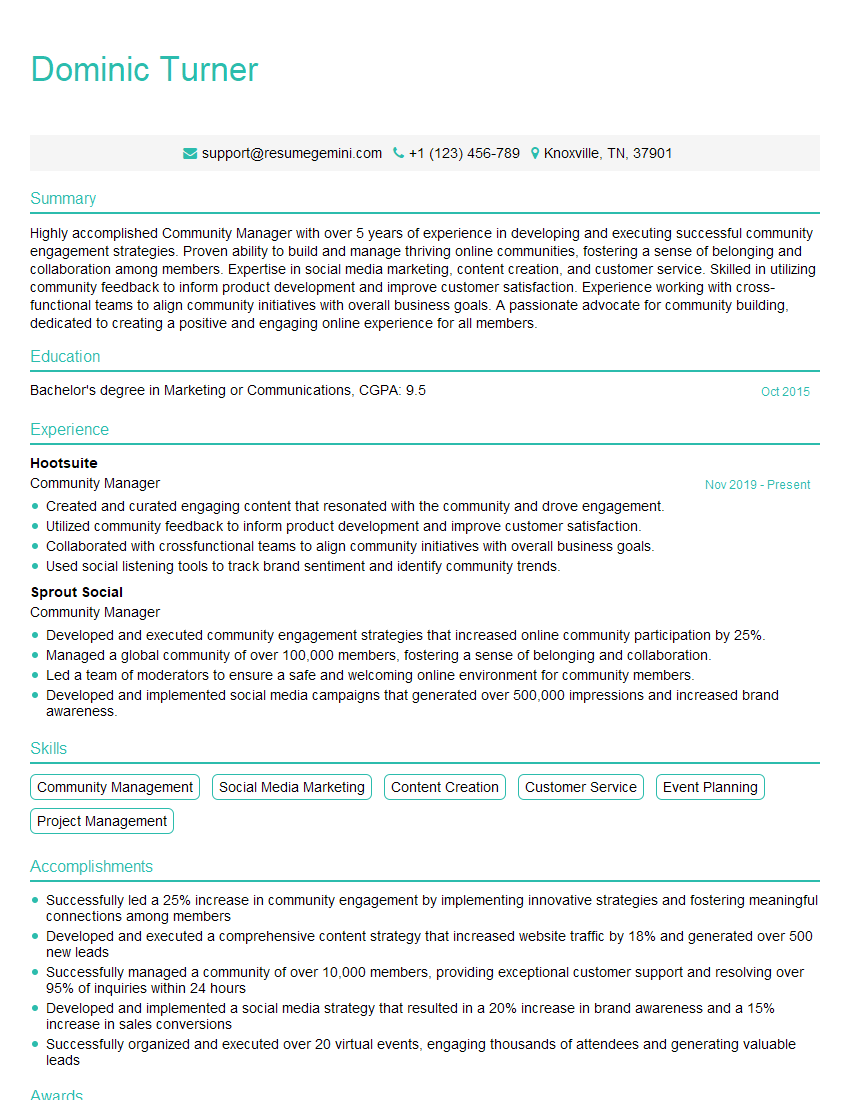
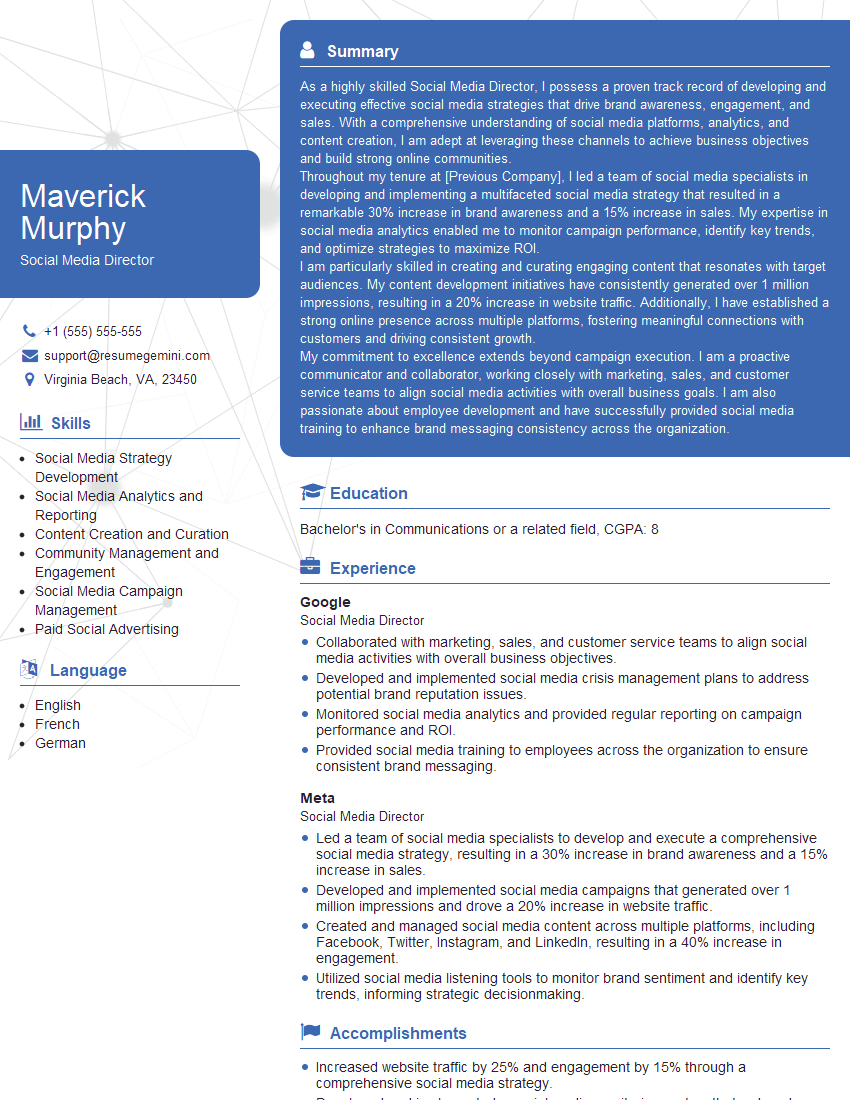
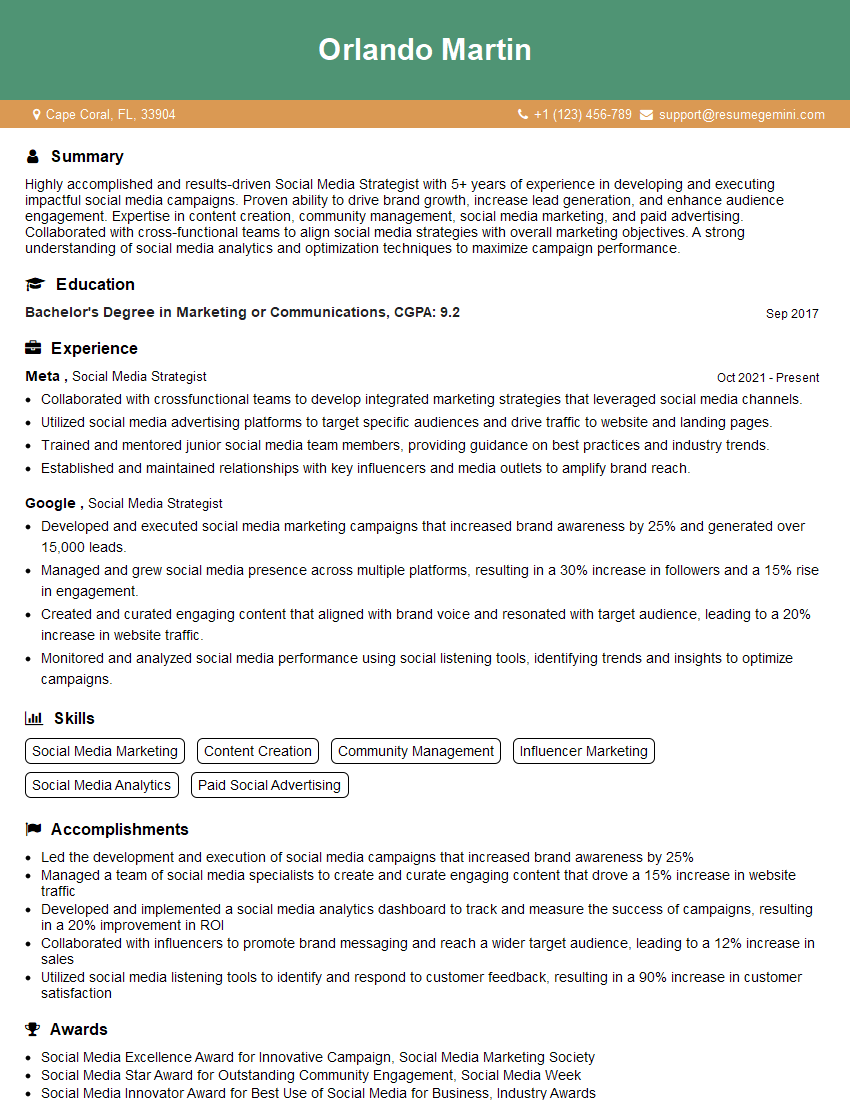
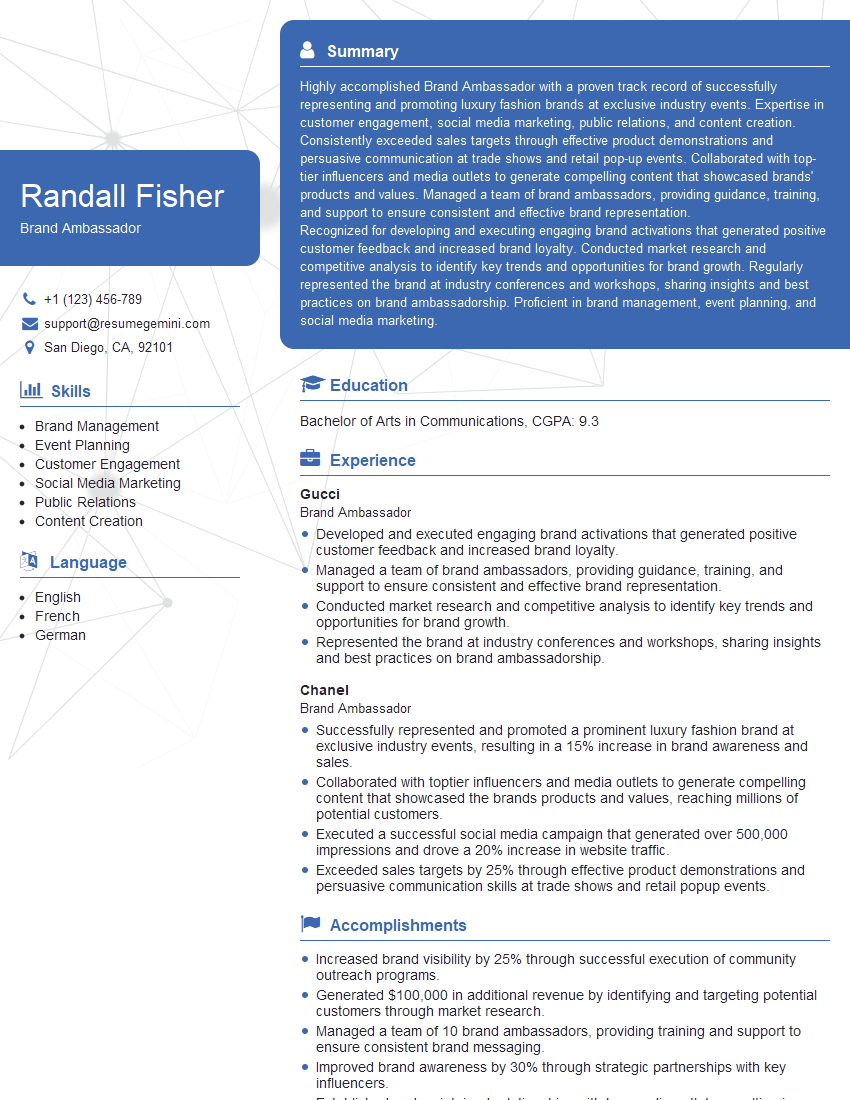
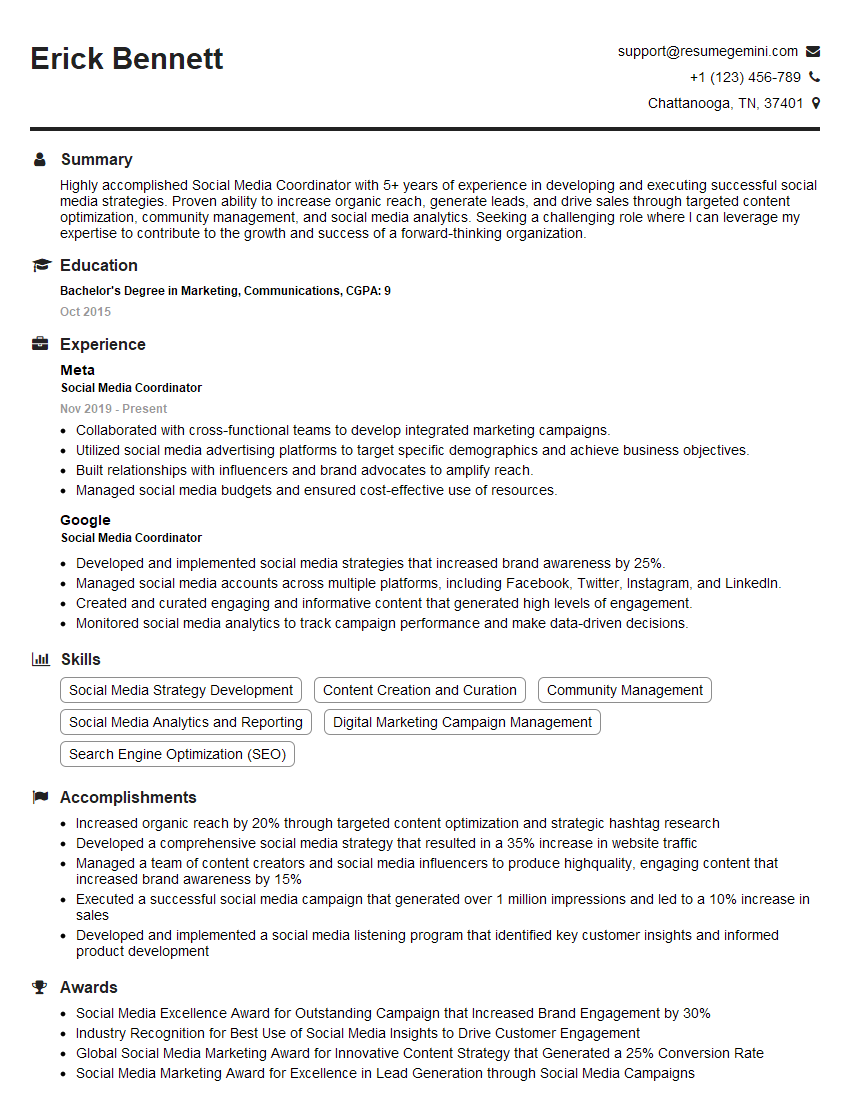
Mastering Social Media Command and Control is crucial for a successful career in today’s digital landscape. It opens doors to exciting roles with significant impact on brand reputation and business growth. To maximize your job prospects, crafting a compelling and ATS-friendly resume is essential. ResumeGemini is a trusted resource that can help you build a professional resume that showcases your skills and experience effectively. We provide examples of resumes tailored specifically to Social Media Command and Control roles to guide you. Take the next step towards your dream job – build a standout resume with ResumeGemini!
Explore more articles
Users Rating of Our Blogs
Share Your Experience
We value your feedback! Please rate our content and share your thoughts (optional).
What Readers Say About Our Blog
Very informative content, great job.
good