Interviews are opportunities to demonstrate your expertise, and this guide is here to help you shine. Explore the essential Proficient in quality control and inspection techniques interview questions that employers frequently ask, paired with strategies for crafting responses that set you apart from the competition.
Questions Asked in Proficient in quality control and inspection techniques Interview
Q 1. Describe your experience with different quality control methodologies (e.g., Six Sigma, ISO 9001).
My experience encompasses a wide range of quality control methodologies. Six Sigma, for instance, is a data-driven approach focusing on minimizing defects and maximizing efficiency. I’ve utilized its DMAIC (Define, Measure, Analyze, Improve, Control) cycle in several projects, such as streamlining a manufacturing process that reduced error rates by 40%. This involved collecting and analyzing data to pinpoint bottlenecks, implementing process improvements, and establishing control charts to monitor ongoing performance. ISO 9001, on the other hand, provides a framework for establishing, implementing, and maintaining a quality management system. In my previous role, I was instrumental in our company’s successful ISO 9001 certification. This involved developing and documenting procedures, conducting internal audits, and ensuring compliance with all relevant standards. Beyond these two, I’m also familiar with other methodologies like Lean manufacturing, which emphasizes waste reduction, and Total Quality Management (TQM), a holistic approach to quality improvement involving all levels of the organization.
Q 2. Explain your understanding of statistical process control (SPC).
Statistical Process Control (SPC) is a powerful method for monitoring and controlling process variation. Think of it as a system of early warning signals for potential quality problems. It uses statistical techniques, such as control charts, to analyze data collected from a process over time. Control charts visually display the process data, with control limits set to identify when a process is behaving as expected or exhibiting unusual variation. For example, a control chart tracking the weight of a product might show points consistently within the control limits, indicating stability. However, if several points fall outside the limits or display a clear trend, it signals potential issues that need investigation. I’ve used SPC extensively to monitor various parameters in manufacturing, from product dimensions to chemical concentrations, helping identify and prevent defects before they impact the final product.
Q 3. How do you identify and document quality issues?
Identifying quality issues starts with a vigilant approach, combining proactive monitoring with reactive responses to detected problems. Proactive methods include regular inspections, using checklists and standardized procedures, and reviewing process data. Reactive identification involves addressing customer complaints, investigating production errors reported by workers, and analyzing failure data. Documentation is crucial, and I typically use a standardized format including a detailed description of the issue, date, location, affected parts, potential root causes (initial assessment), and any immediate corrective actions taken. I use a combination of digital and physical documentation—a digital database allows for easy searching and analysis while physical copies are important for audit trails and easy access when digital systems are unavailable. For example, if a batch of products fails a quality check, I meticulously document the specifics, collect samples, and initiate a thorough investigation using a nonconformance report.
Q 4. Describe your experience with different inspection tools and techniques.
My experience with inspection tools is quite diverse. I’m proficient in using various measuring instruments, such as calipers, micrometers, and optical comparators, for precise dimensional measurements. I also utilize advanced techniques like 3D scanning for complex geometries and non-destructive testing methods such as ultrasonic testing (UT) or X-ray inspection to detect internal flaws without damaging the product. Beyond physical tools, I’m adept at employing software-based inspection methods like computer vision systems and image analysis for automated defect detection, which improves efficiency and consistency. Each inspection tool is selected based on the specific requirements of the product and the nature of the potential defects. For example, when inspecting microchips, I’d use a microscope and specialized probes, whereas when inspecting large welded structures, I might opt for non-destructive testing techniques.
Q 5. How do you prioritize quality control tasks in a high-pressure environment?
Prioritizing quality control tasks in a high-pressure environment requires a strategic approach. I utilize a risk-based prioritization system, focusing first on tasks that pose the highest risk to product quality, safety, or regulatory compliance. This often involves assessing the potential impact of a defect and its likelihood of occurrence. For example, a critical safety component would receive higher priority than a cosmetic flaw. I also employ time-management techniques like task scheduling and delegation, breaking down complex tasks into smaller, more manageable units and ensuring that personnel are assigned appropriately. Clear communication and effective teamwork are crucial for efficient task management in such situations.
Q 6. How do you handle disagreements with other departments regarding quality issues?
Disagreements regarding quality issues are inevitable, but handling them effectively is key. My approach centers on professional communication and collaboration. I start by actively listening to opposing viewpoints, understanding their perspectives, and gathering all relevant data. I present my findings and rationale clearly and objectively, supported by evidence. If necessary, I escalate the issue to a higher level, involving management to help reach a consensus through mediation or a formal dispute resolution process. Maintaining a professional and respectful manner is crucial throughout this process, even when dealing with challenging situations. Ultimately, the goal is to find a mutually agreeable solution that upholds quality standards while respecting all parties involved.
Q 7. What is your experience with root cause analysis?
Root cause analysis is a crucial part of my quality control work. It’s not enough to just identify a problem; we need to understand why it occurred to prevent recurrence. I’m experienced in using various techniques, including the 5 Whys (asking ‘why’ repeatedly to drill down to the root cause), Fishbone diagrams (identifying potential contributing factors), and Pareto analysis (identifying the most significant contributors to the problem). For example, if a product consistently fails a certain test, I wouldn’t stop at identifying the failure. I’d use root cause analysis to determine if it’s due to faulty materials, incorrect process parameters, or operator error. This investigation might uncover issues like poorly maintained equipment or inadequate training, which can then be addressed to solve the problem permanently.
Q 8. Describe your experience with corrective and preventive actions (CAPA).
Corrective and Preventive Actions (CAPA) is a systematic process used to identify, investigate, and correct quality problems. It aims not only to fix immediate issues but also to prevent their recurrence. Think of it as a two-pronged approach: correcting what went wrong and preventing it from happening again.
In my experience, I’ve been involved in numerous CAPA investigations, from minor deviations in manufacturing processes to more significant events impacting product quality. For example, during a project involving the production of precision medical instruments, we discovered a recurring issue with instrument calibration. We initiated a CAPA process. This involved:
- Identifying the problem: We carefully documented instances of inaccurate calibration.
- Investigating the root cause: Through data analysis and operator interviews, we pinpointed a faulty calibration tool as the primary cause.
- Implementing corrective actions: We immediately replaced the faulty tool with a new, certified one, and recalibrated all affected instruments.
- Implementing preventive actions: We implemented a more rigorous calibration schedule, including regular preventative maintenance checks on the calibration tool, and provided additional training to operators.
- Verifying effectiveness: We monitored calibration data after implementing changes to confirm the effectiveness of the corrective and preventive actions. This involved trend analysis and ongoing monitoring to ensure the problem was resolved and remained resolved.
This CAPA process not only rectified the immediate problem but also implemented systemic changes to prevent similar issues in the future, significantly improving the reliability and quality of our products.
Q 9. Explain your understanding of quality control charts (e.g., control charts, Pareto charts).
Quality control charts are powerful visual tools used to monitor and analyze process variations. They help identify trends, detect anomalies, and assess process stability. Control charts, such as X-bar and R charts, track the average and range of measurements to determine if a process is in control. A process is considered ‘in control’ if the variation is due to common causes, which is inherent and expected in the process.
Pareto charts are another vital tool; they display the frequency of different types of defects or problems in descending order. This helps prioritize issues based on their impact, allowing us to focus on solving the most significant problems first. The 80/20 rule, often applied to Pareto charts, suggests that 80% of the problems likely stem from 20% of the causes.
For instance, in a manufacturing setting, we might use X-bar and R charts to monitor the diameter of a manufactured part. If the data points consistently fall within the control limits, the process is considered stable. If the data exceeds the limits, we investigate and address the special cause variations causing the outliers.
Simultaneously, a Pareto chart could be used to analyze various defect types, showing that perhaps 60% of defects stem from incorrect material handling, 25% from machine malfunction, and the remaining 15% from other causes. This insight informs resource allocation, directing efforts toward improving material handling practices.
Q 10. How do you ensure compliance with relevant industry standards and regulations?
Ensuring compliance with industry standards and regulations is paramount in quality control. This involves a multi-faceted approach combining proactive measures and reactive adjustments. We begin by thoroughly understanding the applicable standards, whether it’s ISO 9001, FDA regulations, or industry-specific guidelines.
This understanding translates into creating and adhering to Standard Operating Procedures (SOPs) that meticulously detail every step of our processes. Regular audits, both internal and external, serve as validation that our processes meet these standards. Any deviations are immediately documented, investigated using a CAPA framework and corrective actions are implemented and documented. Training programs for staff ensure everyone understands the standards and their role in maintaining compliance. We maintain updated documentation to ensure all processes and procedures are documented, version controlled and traceable. Finally, regular calibration of equipment and traceability of materials are critical for compliance.
For instance, if working with medical devices, we would strictly adhere to FDA guidelines, ensuring traceability of components throughout the manufacturing process and maintaining comprehensive records of every step. We’d conduct regular testing, validation and sterilization processes to prove our device meets the required safety and efficacy standards.
Q 11. Describe your experience with auditing quality systems.
My experience with auditing quality systems involves performing both internal and external audits to assess the effectiveness of quality management systems. Internal audits identify areas for improvement within our own processes and help ensure we are adhering to established procedures and compliance guidelines. External audits are conducted by independent third-party organizations or clients to verify our compliance with external standards and regulations.
I’ve been involved in many audits, both leading and participating. During an audit, I employ a systematic approach. This involves reviewing documentation, interviewing personnel, observing processes in action, and assessing the effectiveness of corrective and preventive actions. The audit report thoroughly documents findings, including areas of compliance and areas needing improvement. I aim for a collaborative approach with auditees, focusing on constructive feedback and building a path to improvements. Ultimately, the goal is to improve quality and build confidence in our systems and procedures.
Q 12. How do you measure the effectiveness of your quality control efforts?
Measuring the effectiveness of quality control efforts requires a combination of quantitative and qualitative metrics. Quantitatively, we track key performance indicators (KPIs) like defect rates, customer complaints, rework percentages, and process capability indices (e.g., Cp, Cpk). These metrics provide concrete data on performance.
Qualitatively, we assess customer satisfaction through surveys and feedback, analyze root cause analysis reports from CAPAs and conduct regular internal reviews. These qualitative assessments provide valuable context and highlight areas for procedural improvements that may not be immediately apparent in the quantitative data. We often use a balanced scorecard approach, which incorporates financial, customer, internal processes, and learning & growth perspectives to get a holistic understanding of how effective our quality control program is.
For example, a consistent decrease in defect rates over time indicates successful quality control efforts. However, if customer complaints remain high despite low defect rates, it might suggest a need to improve aspects of customer service or product design, revealing gaps in our quality management system.
Q 13. How do you utilize data analysis to improve quality control processes?
Data analysis is fundamental to improving quality control processes. We utilize various statistical methods and tools to extract meaningful insights from collected data. This data includes defect rates, process parameters, customer feedback, and results from tests and audits.
For example, we use control charts to monitor process stability, identifying trends and potential sources of variation. Pareto charts are utilized to prioritize problem areas based on their impact. Regression analysis may help us identify relationships between process parameters and product quality, and root cause analysis helps us determine the underlying causes of defects. Data mining techniques can reveal patterns and anomalies that may not be apparent through simple observation.
By using these tools, we don’t just react to problems; we proactively identify potential problems before they occur. In a recent project, data analysis revealed a correlation between ambient temperature fluctuations and the frequency of a particular type of defect. This allowed us to implement temperature controls in our production environment, proactively reducing the occurrence of that specific defect.
Q 14. What is your experience with non-destructive testing (NDT) methods?
Non-destructive testing (NDT) methods are crucial for evaluating the integrity of materials and components without causing damage. My experience encompasses various NDT techniques, including visual inspection, liquid penetrant testing, magnetic particle testing, ultrasonic testing, and radiographic testing.
Visual inspection is a fundamental technique involving careful visual examination for surface flaws. Liquid penetrant testing is used to detect surface cracks and discontinuities in non-porous materials. Magnetic particle testing is employed to identify surface and near-surface flaws in ferromagnetic materials. Ultrasonic testing uses high-frequency sound waves to detect internal flaws, while radiographic testing uses X-rays or gamma rays to create images revealing internal structures and defects.
The selection of the appropriate NDT method depends on the material, the type of flaw being sought, and other factors. For instance, ultrasonic testing is often used for inspecting welds in pressure vessels, while liquid penetrant testing is effective for finding cracks in metallic components. In my experience, I’ve used a combination of NDT methods on diverse projects to ensure the quality and safety of the end products.
Q 15. Describe a situation where you identified a critical quality issue. What steps did you take?
During a production run of precision-engineered components, I noticed a subtle but consistent deviation in the dimensional accuracy of a critical part. Initial inspection using our standard calibrated micrometers showed measurements slightly outside the specified tolerance range. This was a critical issue because these components are used in a safety-critical aerospace application, where even minor deviations could compromise structural integrity.
My immediate steps were as follows:
- Immediate Stoppage: I halted the production line to prevent further defective parts from being produced.
- Root Cause Analysis: I initiated a thorough investigation, involving a review of the machining process, examination of tooling condition (including verification of calibration dates), and a check of raw material specifications. This involved data collection through measuring equipment, and also interviewing the machine operators.
- Data Analysis and Documentation: I meticulously documented all findings, including detailed measurements, photos of the defective components, and process parameters. Statistical process control (SPC) charts were used to visualise the trend of the defect.
- Corrective Actions: The root cause was traced to a gradual wear in a critical component of the CNC milling machine. We immediately replaced the worn part and recalibrated the machine.
- Preventive Measures: To prevent recurrence, we implemented a more frequent calibration schedule for the milling machine and incorporated a process monitoring system with automated alerts for deviations beyond predetermined limits.
- Verification and Validation: After implementing the corrective actions, I conducted a comprehensive inspection of a new batch of components to verify the effectiveness of the implemented changes.
This systematic approach ensured that the quality issue was resolved promptly and effectively, minimizing potential risks and downtime.
Career Expert Tips:
- Ace those interviews! Prepare effectively by reviewing the Top 50 Most Common Interview Questions on ResumeGemini.
- Navigate your job search with confidence! Explore a wide range of Career Tips on ResumeGemini. Learn about common challenges and recommendations to overcome them.
- Craft the perfect resume! Master the Art of Resume Writing with ResumeGemini’s guide. Showcase your unique qualifications and achievements effectively.
- Don’t miss out on holiday savings! Build your dream resume with ResumeGemini’s ATS optimized templates.
Q 16. How do you develop and implement quality control procedures?
Developing and implementing quality control procedures involves a structured approach focusing on prevention rather than detection. I typically follow these steps:
- Define Quality Standards: Clearly establish the quality standards, specifications, and tolerances for each product or process. This often involves referencing industry standards (e.g., ISO 9001) and client requirements.
- Identify Critical Control Points (CCPs): Determine the stages of the production process where critical quality attributes are most likely to be affected. These are points needing rigorous control.
- Develop Inspection Procedures: Design detailed procedures for inspection, testing, and measurement at each CCP. These procedures should specify the methods, tools, and acceptance criteria.
- Select Appropriate Techniques: This might involve visual inspection, dimensional measurements, functional testing, destructive testing, etc., depending on the product and process.
- Documentation: All procedures and acceptance criteria must be thoroughly documented in a format accessible to all relevant personnel (work instructions, check sheets etc.).
- Training and Implementation: Train personnel on the proper use of the quality control procedures and equipment.
- Monitoring and Review: Continuously monitor the effectiveness of the procedures using quality metrics and feedback. Regular reviews and audits ensure procedures remain relevant and effective.
For example, in a pharmaceutical setting, the CCP might be during the mixing or filling stage, where precise measurement and sterility are crucial. The inspection procedure would involve weight checks, visual inspection for contamination, and sterility testing. I’ve used similar principles across diverse industries, including manufacturing and construction.
Q 17. What are your experiences with calibration and validation of equipment?
Calibration and validation are essential for ensuring the accuracy and reliability of equipment used in quality control. Calibration verifies that a measuring instrument provides accurate readings by comparing it to a traceable standard. Validation confirms that a process, procedure, or equipment consistently produces the desired results.
My experience includes:
- Calibration: I’ve routinely overseen the calibration of various equipment, including micrometers, calipers, scales, pressure gauges, and temperature sensors. I am familiar with using different calibration techniques depending on the instrument such as two point calibration and multi point calibration. I understand the importance of using traceable standards and maintaining calibration records.
- Validation: I’ve been involved in validating analytical instruments (HPLC, GC), automated production equipment, and cleaning processes. Validation protocols involve meticulous documentation, statistical analysis, and rigorous testing to demonstrate that the equipment or process meets predetermined specifications.
- Calibration Software: I’ve worked with calibration management software to track calibration schedules, maintain records, and generate reports. This improves efficiency and ensures compliance with regulations.
For instance, in a food manufacturing environment, the calibration of weighing scales is critical for ensuring product consistency and adherence to labeling requirements. Failure to calibrate these scales regularly would lead to incorrect measurements, impacting product quality and potentially consumer safety.
Q 18. How do you manage quality control documentation?
Effective management of quality control documentation is vital for traceability, regulatory compliance, and continuous improvement. I typically employ these strategies:
- Centralized System: Using a centralized system (physical or digital) to store all quality control records. This system should be easily accessible and organized to allow rapid retrieval.
- Version Control: Implement version control for procedures and documents to ensure that everyone is using the most up-to-date information. Clearly indicate revisions and changes.
- Secure Storage: Ensure that documentation is stored securely and protected from unauthorized access or damage. Consider both physical and digital security measures.
- Data Integrity: Maintain the integrity of the data in the documentation. Ensure that all entries are accurate, complete, and legible.
- Retention Policy: Establish a clear document retention policy compliant with relevant regulations and internal requirements.
- Auditing Procedures: Regularly audit the documentation system to ensure its effectiveness and compliance.
I’ve used both paper-based systems and electronic document management systems (EDMS) effectively. The choice depends on the scale of operation and regulatory requirements. For example, a paper-based system might suffice for smaller businesses, but a larger manufacturing company with numerous products and regulatory mandates would benefit from a comprehensive EDMS.
Q 19. What is your experience with different sampling methods?
Different sampling methods are crucial for obtaining representative samples for quality control testing. The optimal method depends on the characteristics of the material, the size of the batch, and the purpose of the inspection. I am familiar with several sampling methods, including:
- Random Sampling: Each item in the population has an equal chance of being selected. This is useful for large batches where complete inspection is impractical.
- Stratified Sampling: The population is divided into subgroups (strata), and samples are randomly selected from each stratum. This is beneficial when the population has significant variation.
- Systematic Sampling: Items are selected at fixed intervals (e.g., every 10th item). This is simple but might not be appropriate if there is a pattern or cycle in the production process.
- Acceptance Sampling: Involves inspecting a sample from a batch to determine whether to accept or reject the entire batch. It uses statistical tables to determine acceptance criteria.
For instance, in textile manufacturing, stratified sampling is used to check for variations in fabric quality across different production lots. In pharmaceutical manufacturing, random sampling is essential to ensure batch consistency and regulatory compliance.
Q 20. Explain your understanding of tolerance and specification limits.
Tolerance and specification limits are critical concepts in quality control. Specifications define the desired or acceptable characteristics of a product or process. Tolerance represents the permissible variation from the specified value. A value outside the tolerance is considered a defect.
Imagine a bolt with a specified diameter of 10mm. The specification is 10mm. If the tolerance is ±0.1mm, then any bolt with a diameter between 9.9mm and 10.1mm is acceptable. Bolts outside this range are considered defective.
Understanding and effectively using tolerances and specification limits is crucial for:
- Product design: To ensure that the design is manufacturable and meets performance requirements.
- Manufacturing process control: To identify and correct variations that may lead to defective products.
- Inspection and testing: To determine whether products meet the required standards.
In practice, the tighter the tolerances, the higher the precision and quality of the product, but also potentially higher manufacturing costs.
Q 21. How do you use quality control metrics to track progress and identify areas for improvement?
Quality control metrics are used to track performance, identify trends, and pinpoint areas for improvement. Common metrics include:
- Defect Rate: The percentage of defective items in a sample or batch.
- Yield: The percentage of acceptable items produced.
- Process Capability Index (Cpk): Measures how well a process is centered and capable of meeting specifications.
- Mean Time Between Failures (MTBF): Measures the reliability of equipment.
- Customer Complaints: A critical indicator of overall product quality.
I regularly use control charts (e.g., Shewhart charts, X-bar and R charts) to visualize process performance and detect shifts or trends that indicate potential problems. By analyzing these metrics, I can identify patterns, prioritize corrective actions, and demonstrate improvement over time. Data visualization techniques such as histograms and Pareto charts are also used to help illustrate these findings clearly and concisely to management.
For example, a consistently high defect rate in a particular process might signal the need for process optimization or operator retraining. Tracking customer complaints helps in identifying recurring issues and implementing product improvements.
Q 22. How familiar are you with various quality management systems (QMS)?
I’m very familiar with various Quality Management Systems (QMS). My experience encompasses ISO 9001, IATF 16949 (automotive), and AS9100 (aerospace), among others. I understand that each QMS provides a framework for establishing, implementing, maintaining, and continually improving a quality management system. They differ slightly in their specific requirements, reflecting the unique needs of various industries. For example, IATF 16949 places a strong emphasis on risk-based thinking within the automotive supply chain, whereas AS9100 focuses heavily on safety and reliability critical to aerospace applications. My understanding extends beyond simply knowing the standards; I’ve been actively involved in implementing and auditing these systems in diverse manufacturing environments. This includes developing and maintaining documentation, conducting internal audits, and participating in management reviews to ensure continuous improvement.
Q 23. Explain your understanding of risk assessment and mitigation in quality control.
Risk assessment and mitigation are crucial components of effective quality control. It’s about proactively identifying potential problems before they impact product quality or customer satisfaction. My approach involves a structured process: first, identifying potential hazards through methods like Failure Mode and Effects Analysis (FMEA). FMEA systematically analyzes potential failure modes in a process, evaluating their severity, occurrence, and detection, assigning a Risk Priority Number (RPN). Higher RPN scores indicate higher-risk areas requiring immediate attention. Next, we analyze the likelihood and potential impact of each risk. Then, we develop and implement mitigation strategies to reduce or eliminate these risks. For example, if FMEA reveals a high risk of contamination during a specific manufacturing step, mitigation might involve implementing stricter cleaning protocols, improved worker training, or investing in new equipment. Regular monitoring and review are vital to ensure the effectiveness of these mitigation strategies.
Q 24. Describe your experience with working with suppliers to ensure quality.
Collaborating with suppliers to ensure quality is paramount. My experience involves establishing clear quality requirements and expectations upfront, through detailed specifications and quality agreements. This includes specifying materials, processes, and testing requirements. I leverage supplier audits – both on-site and document-based – to assess their capabilities and compliance. A strong emphasis is placed on building collaborative relationships. Open communication and regular performance reviews are essential for proactive problem-solving and continuous improvement. If issues arise, I work closely with the supplier to identify root causes, implement corrective actions, and prevent recurrence. For instance, if a supplier consistently delivers non-conforming materials, I’ll initiate a corrective action process, working with them to pinpoint the root cause, whether it’s equipment malfunction, training deficiencies, or inadequate raw materials. This might involve providing technical assistance or suggesting process improvements.
Q 25. How do you handle customer complaints related to quality issues?
Handling customer complaints related to quality issues requires a systematic and empathetic approach. My first step is to acknowledge the complaint promptly and empathize with the customer’s frustration. Then, I thoroughly investigate the issue, gathering all relevant information – including photos, videos, and production records. Once the root cause is identified, I determine the appropriate corrective action, which might include a product replacement, refund, or process improvement. The goal is not only to resolve the immediate issue but also to prevent similar issues from occurring in the future. For instance, if multiple customers complain about a specific product defect, we conduct a thorough investigation to identify the underlying cause, and we may implement preventive actions such as tightening quality control checks at the manufacturing stage, improving employee training, or modifying the product design.
Q 26. What is your approach to continuous improvement in quality control?
My approach to continuous improvement in quality control is data-driven and relies on several key methodologies. I utilize tools such as Six Sigma, Lean manufacturing, and Kaizen events. Six Sigma employs statistical methods to reduce variation and defects. Lean manufacturing focuses on eliminating waste and improving efficiency. Kaizen events involve short bursts of focused improvement initiatives. Regular data analysis helps us identify trends, patterns, and areas needing attention. This analysis often leads to implementing corrective and preventive actions (CAPA) to continuously improve the quality control processes. We use control charts to monitor key quality parameters and identify any deviations from expected performance, allowing for prompt intervention.
Q 27. Describe your experience with implementing quality control programs in a manufacturing environment.
I have extensive experience implementing quality control programs in manufacturing, including developing and implementing quality plans, establishing inspection procedures, and training personnel. This has involved designing and implementing Statistical Process Control (SPC) charts to monitor key process variables and identify areas of variation. I’ve also been responsible for creating and managing inspection checklists and documentation, ensuring traceability and compliance with regulatory requirements. In one instance, I implemented a new SPC system for a manufacturing line producing precision components, resulting in a significant reduction in defects and improved yield. This involved training operators on the use of SPC charts, implementing real-time data collection, and establishing clear action plans for addressing out-of-control situations.
Q 28. How comfortable are you using statistical software for quality control analysis?
I’m highly comfortable using statistical software for quality control analysis. My proficiency includes Minitab, JMP, and R. I regularly use these tools to perform statistical process control (SPC), analyze capability studies, conduct hypothesis testing, and generate various reports. For example, I frequently use Minitab to create control charts (X-bar and R charts, p-charts, c-charts) to monitor process stability and identify potential issues. I also use JMP for more complex analyses, such as design of experiments (DOE) to optimize processes and reduce variability. My skills extend to interpreting the results of these analyses and communicating the findings to both technical and non-technical audiences.
Key Topics to Learn for Proficient in Quality Control and Inspection Techniques Interview
- Statistical Process Control (SPC): Understanding control charts (e.g., X-bar and R charts, p-charts, c-charts), process capability analysis (Cp, Cpk), and the application of SPC techniques to monitor and improve processes.
- Inspection Methods and Techniques: Familiarize yourself with various inspection methods like visual inspection, dimensional inspection (using calipers, micrometers, etc.), functional testing, and destructive/non-destructive testing (NDT) methods. Be prepared to discuss practical applications of these methods in different contexts.
- Quality Standards and Regulations: Demonstrate knowledge of relevant industry standards (e.g., ISO 9001, AS9100) and regulatory compliance requirements. Be ready to discuss how these standards impact quality control processes.
- Root Cause Analysis (RCA): Master techniques like the 5 Whys, fishbone diagrams, and Pareto analysis to effectively identify and address the root causes of quality issues. Practice explaining your approach to RCA using real-world examples.
- Corrective and Preventive Actions (CAPA): Understand the process of implementing CAPA to prevent recurrence of identified quality problems. This includes documenting, implementing, and verifying the effectiveness of corrective actions.
- Documentation and Reporting: Be prepared to discuss your experience with creating and maintaining accurate quality control documentation, including inspection reports, test results, and non-conformance reports.
- Problem-Solving and Decision-Making: Highlight your ability to analyze complex quality issues, identify potential solutions, and make informed decisions based on data and available information. Prepare examples demonstrating your analytical and problem-solving skills.
- Auditing and Internal Quality Systems: Discuss your understanding of internal audits, their purpose, and how they contribute to continuous improvement within a quality management system.
Next Steps
Mastering Proficient in quality control and inspection techniques is crucial for career advancement in various industries. A strong understanding of these techniques opens doors to higher-level roles and increased earning potential. To maximize your job prospects, create an ATS-friendly resume that highlights your skills and experience effectively. ResumeGemini is a trusted resource to help you build a professional resume that stands out. Examples of resumes tailored to showcasing proficiency in quality control and inspection techniques are available to help you craft the perfect application.
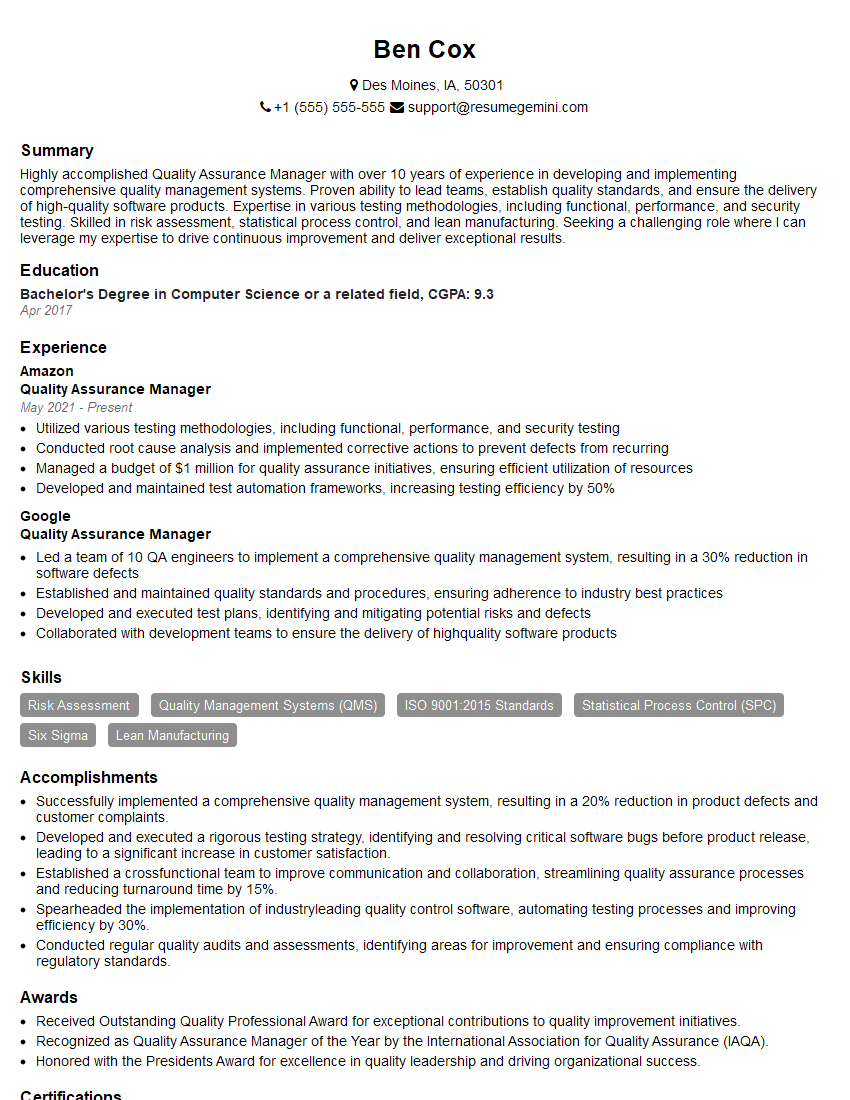
Quality Assurance Manager Resume Sample
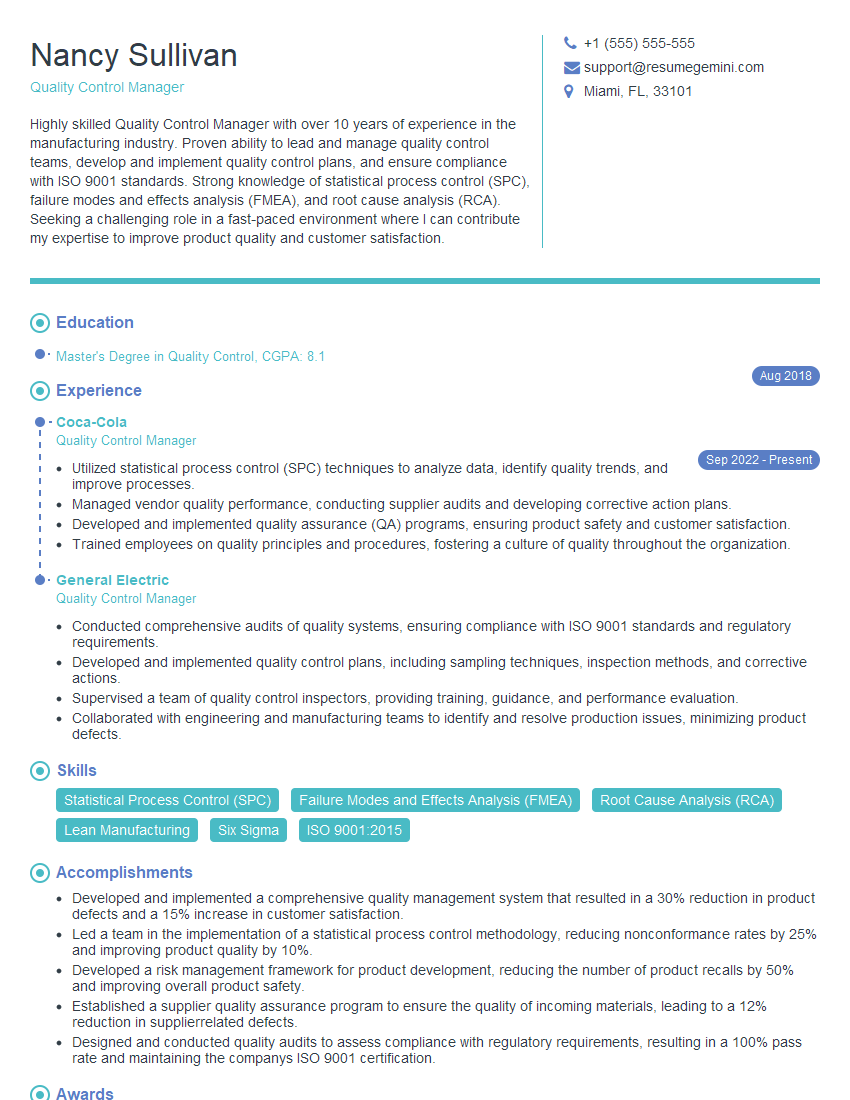
Quality Control Manager Resume Sample
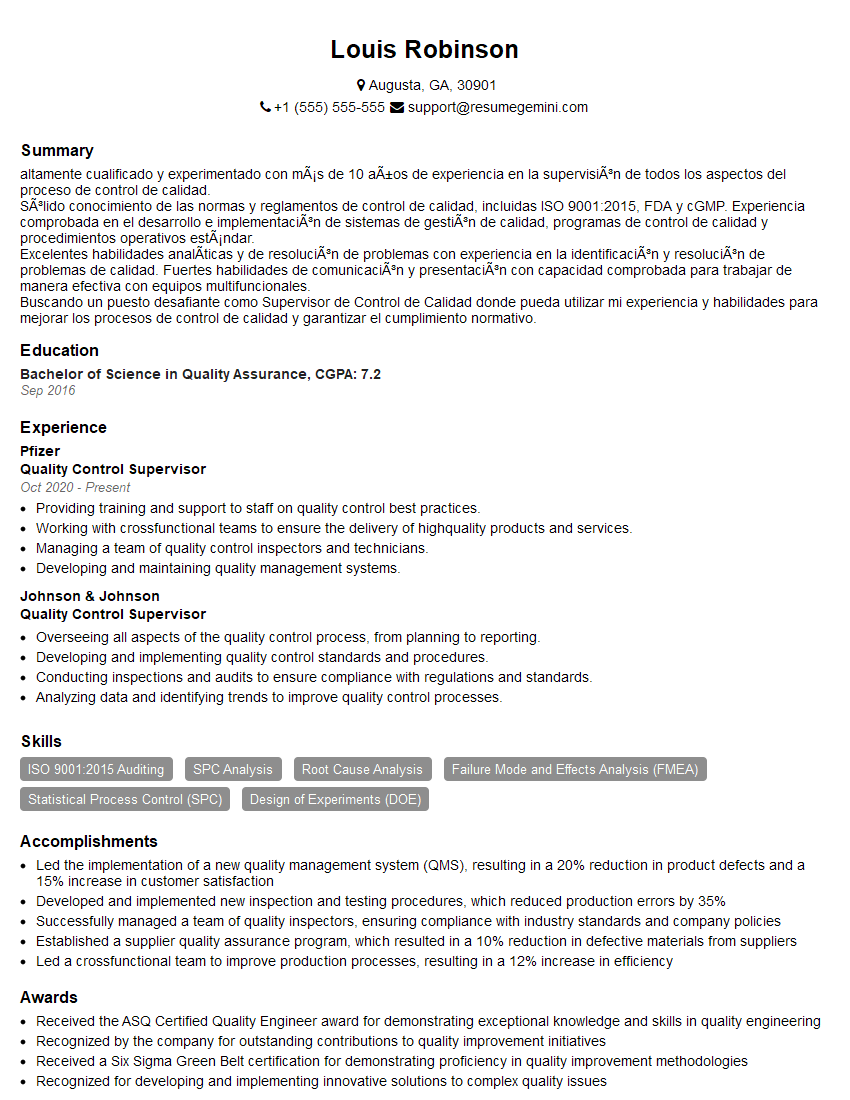
Quality Control Supervisor Resume Sample
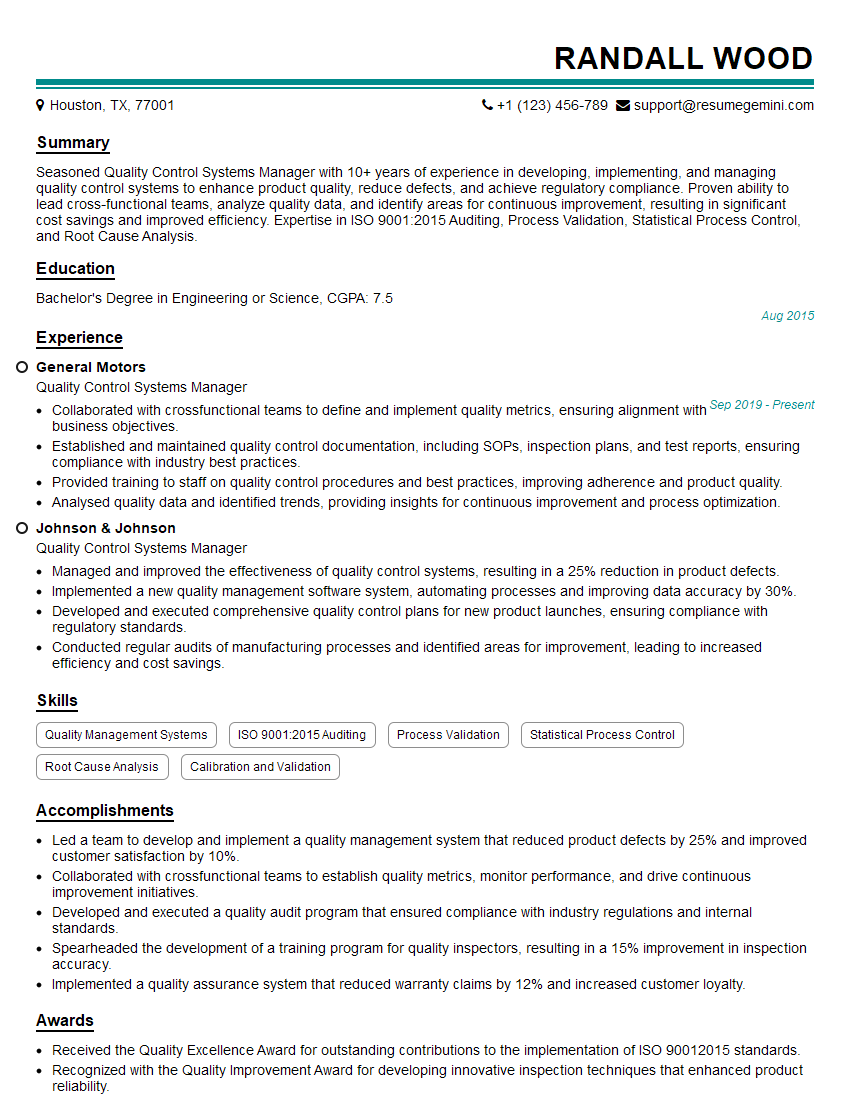
Quality Control Systems Manager Resume Sample
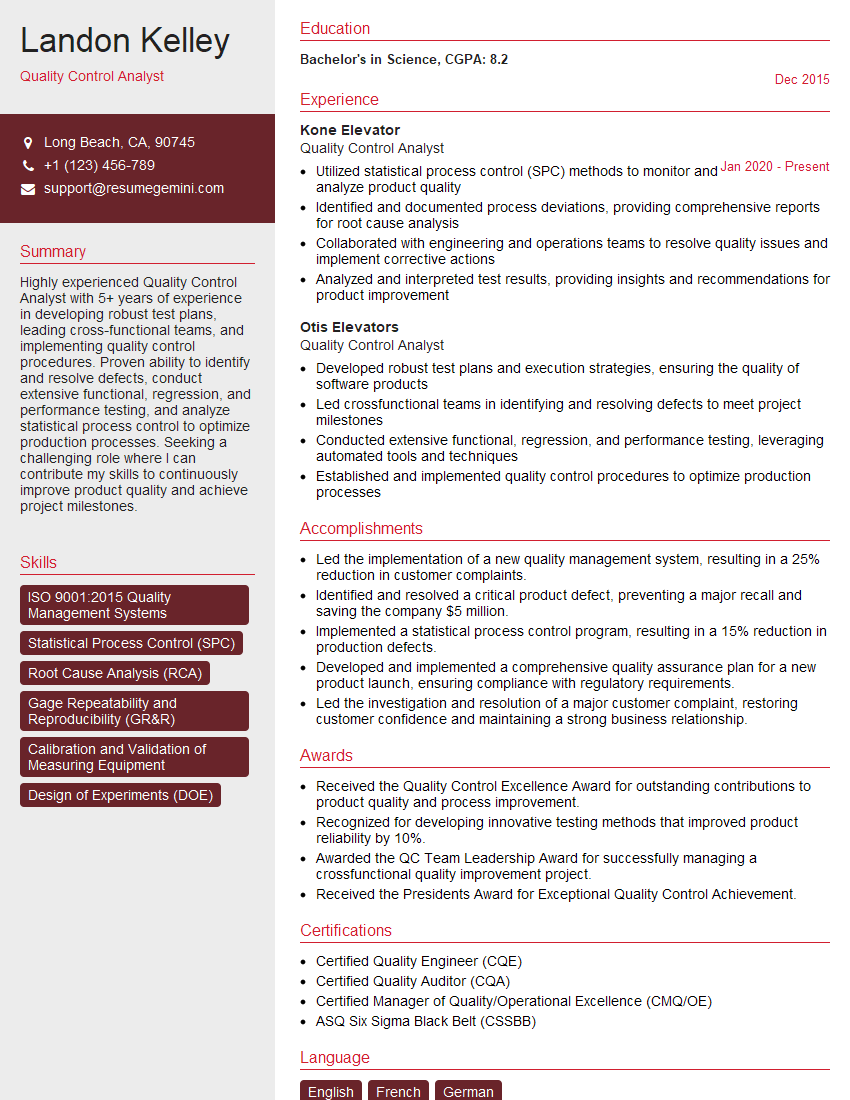
Quality Control Analyst Resume Sample
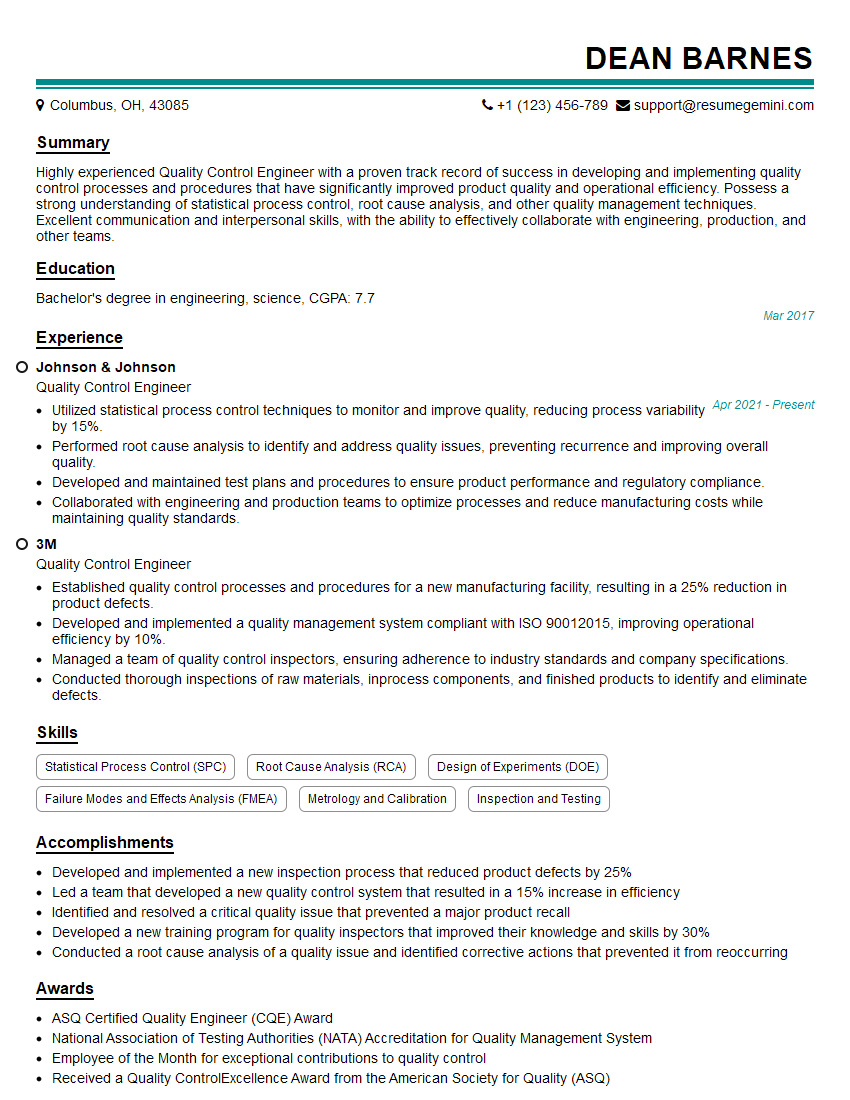
Quality Control Engineer Resume Sample
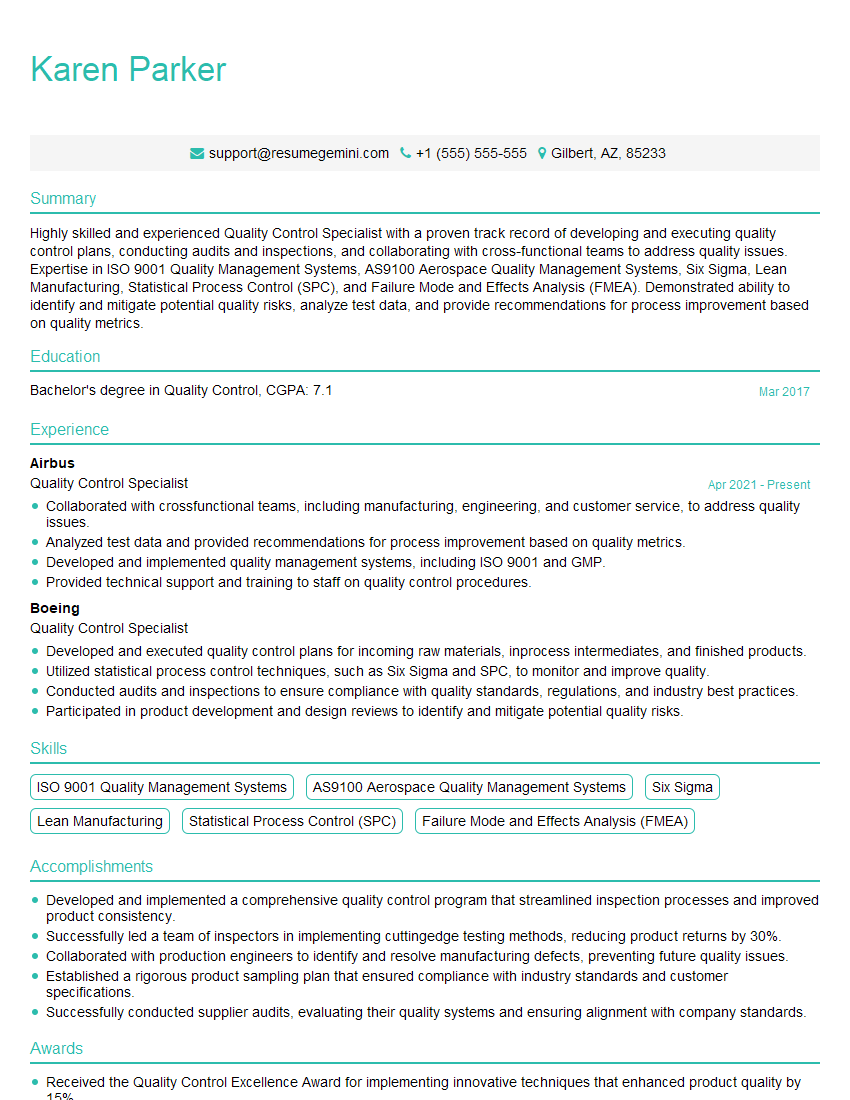
Quality Control Specialist Resume Sample
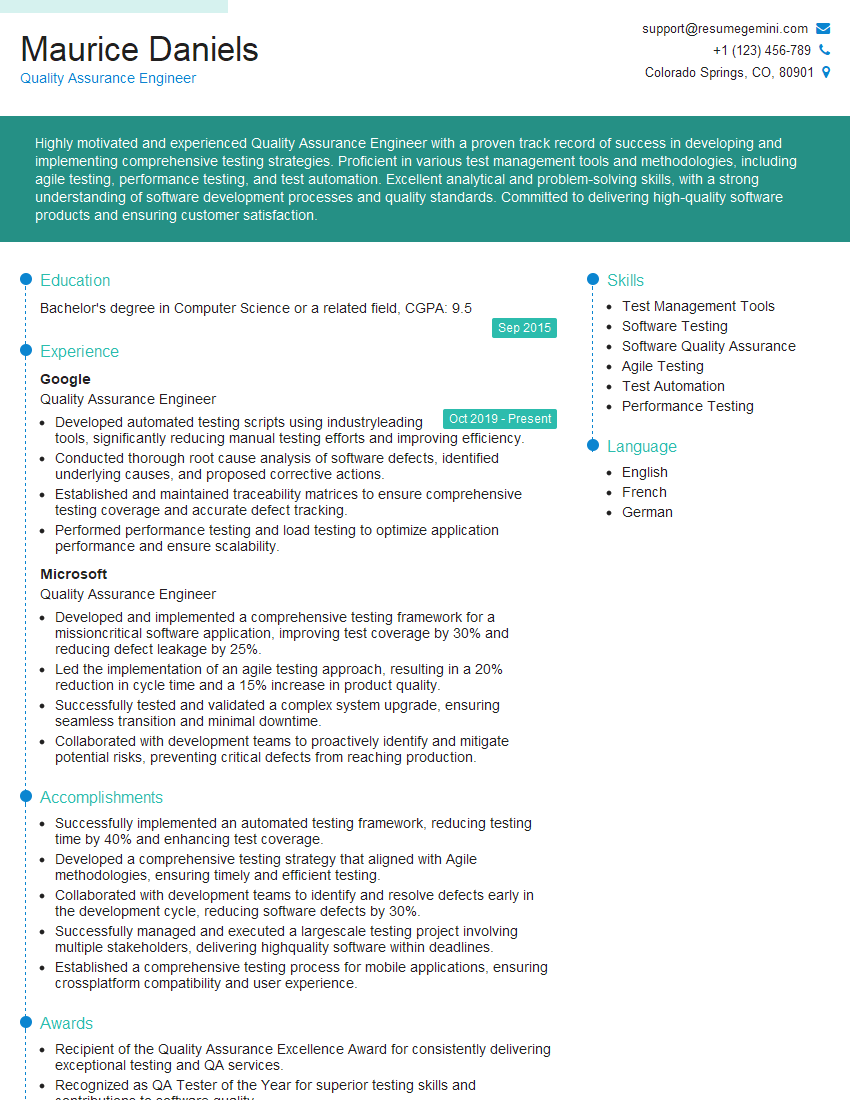
Quality Assurance Engineer Resume Sample
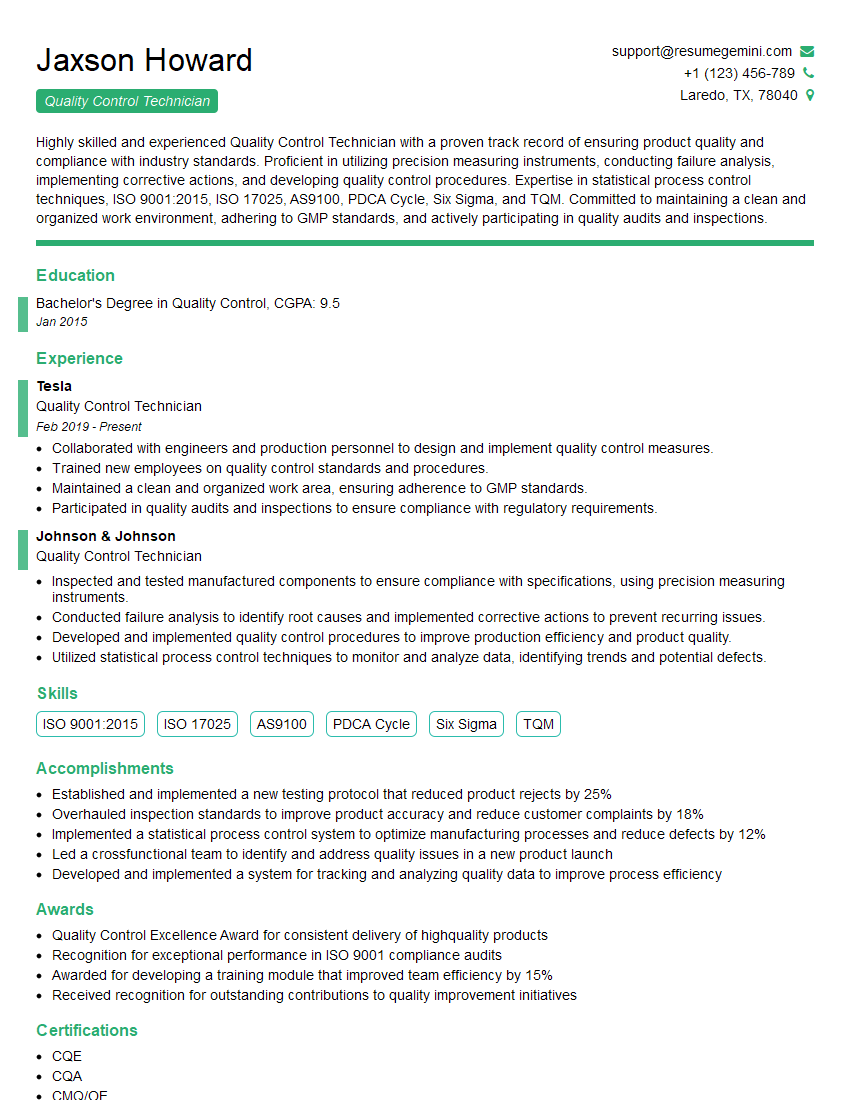
Quality Control Technician Resume Sample
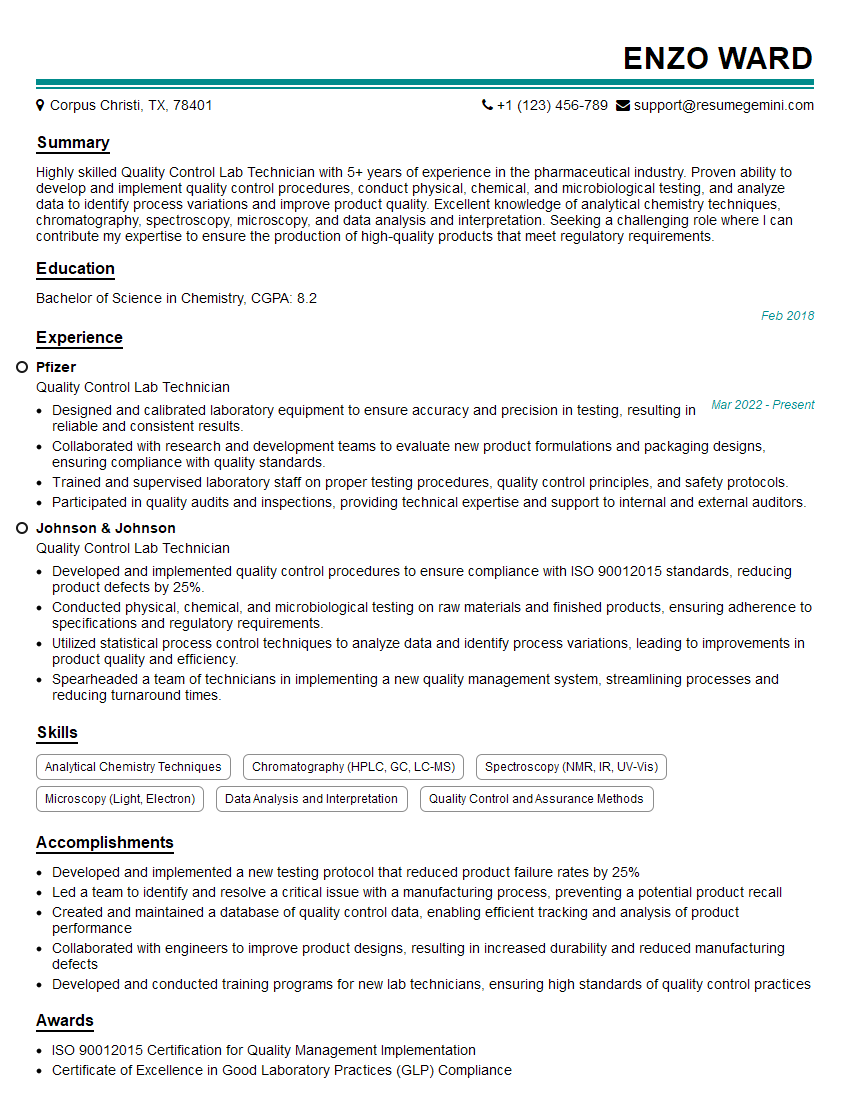
Quality Control Lab Technician Resume Sample
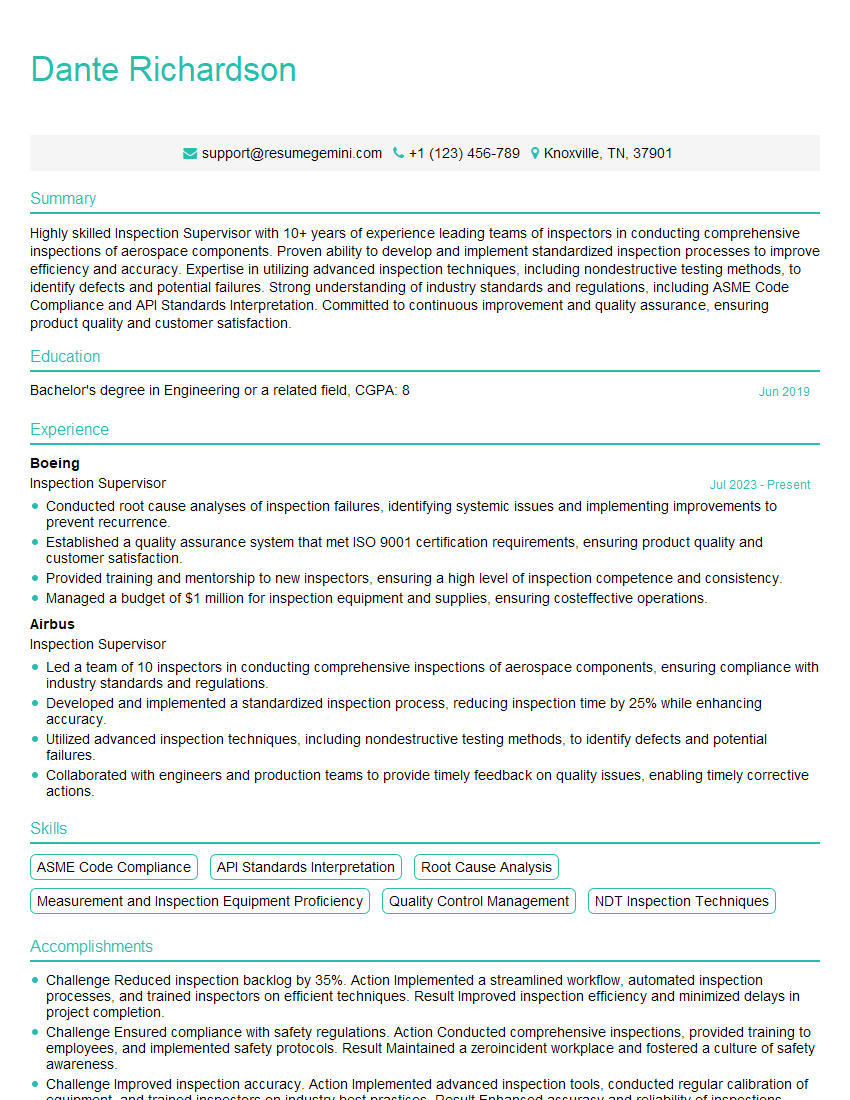
Inspection Supervisor Resume Sample
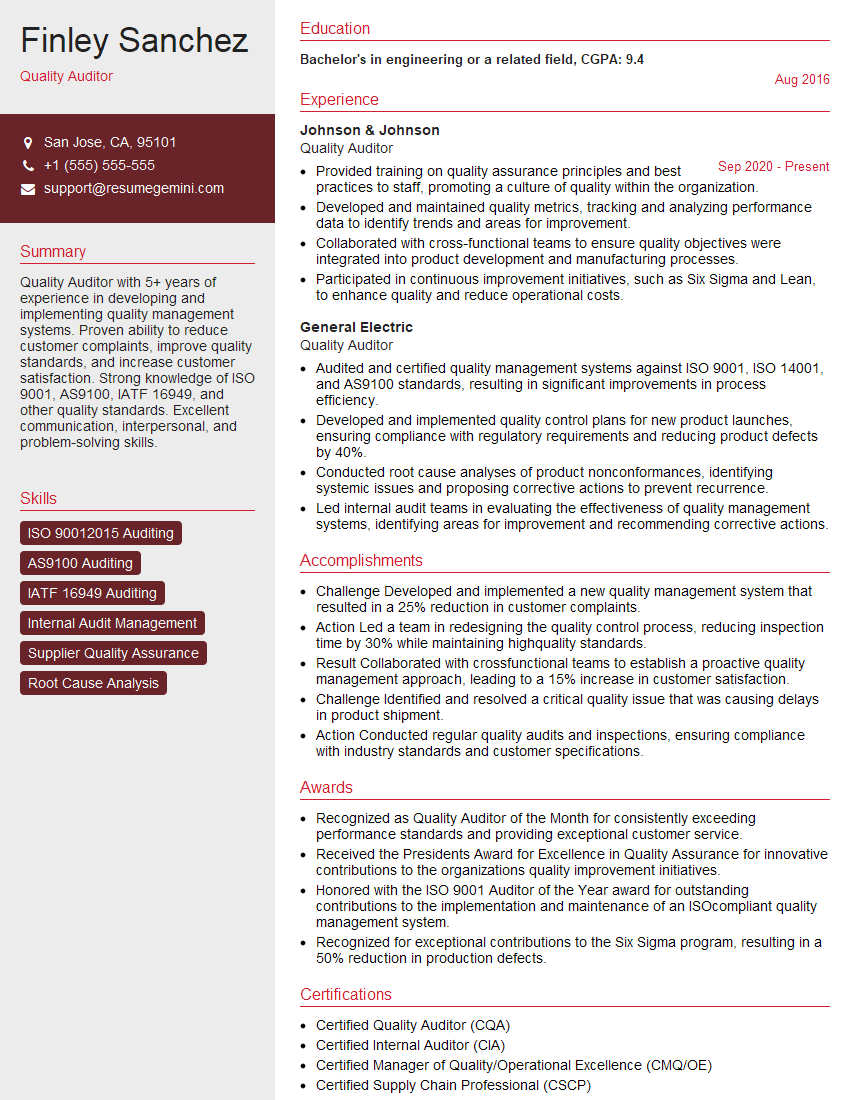
Quality Auditor Resume Sample

Quality Control Inspector Resume Sample
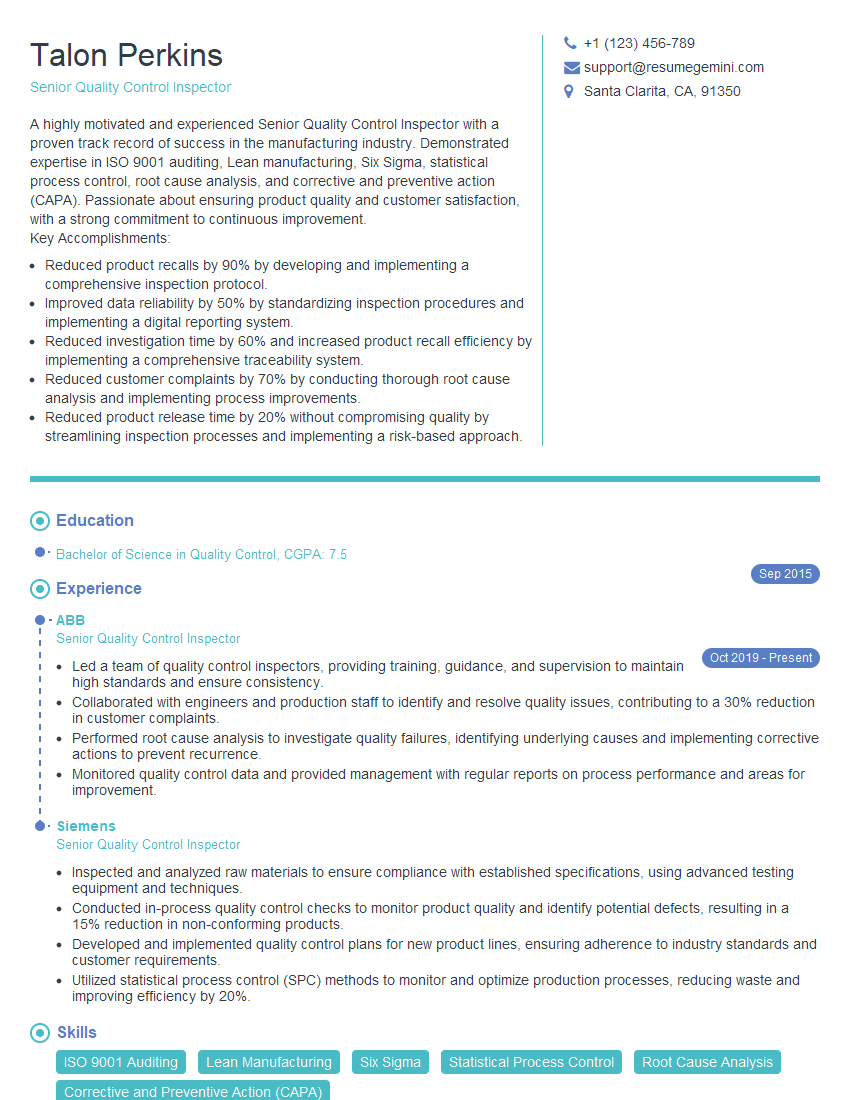
Senior Quality Control Inspector Resume Sample
- Quality Assurance Manager
- Quality Control Manager
- Quality Control Supervisor
- Quality Control Systems Manager
- Quality Control Analyst
- Quality Control Engineer
- Quality Control Specialist
- Quality Assurance Engineer
- Quality Control Technician
- Quality Control Lab Technician
- Inspection Supervisor
- Quality Auditor
- Quality Control Inspector
- Senior Quality Control Inspector
Explore more articles
Users Rating of Our Blogs
Share Your Experience
We value your feedback! Please rate our content and share your thoughts (optional).
What Readers Say About Our Blog
Very informative content, great job.
good