Are you ready to stand out in your next interview? Understanding and preparing for Continuity of Operations Planning interview questions is a game-changer. In this blog, we’ve compiled key questions and expert advice to help you showcase your skills with confidence and precision. Let’s get started on your journey to acing the interview.
Questions Asked in Continuity of Operations Planning Interview
Q 1. Describe the key components of a comprehensive Continuity of Operations Plan (COOP).
A comprehensive Continuity of Operations Plan (COOP) ensures an organization can continue essential functions during a disruption. Think of it as a detailed roadmap guiding the organization through a crisis. Key components include:
- Mission Essential Functions (MEFs): Identifying the core functions absolutely vital for the organization to survive and continue its mission. For example, for a hospital, this would include emergency room services and critical care. For a government agency, it might include maintaining national security or emergency response.
- Recovery Strategies: Outlining how each MEF will be restored. This involves choosing from various recovery strategies (discussed later) and determining resource allocation. A hospital might use a backup generator for power, while a government agency might leverage redundant communication systems.
- Activation Procedures: Detailed steps on how to activate the COOP plan. This includes communication protocols, notification chains, and roles and responsibilities of personnel. A clear chain of command is crucial here.
- Facilities and Resources: Identifying and securing alternative locations, communication systems, technology, and personnel needed to maintain operations. This could involve pre-negotiated contracts for backup facilities or securing mobile communication devices.
- Communication Plan: Ensuring effective communication among personnel, stakeholders, and the public during and after a disruption. This should include various channels and methods to reach everyone, even in a degraded communication environment. For example using satellite phones or shortwave radios.
- Training and Exercises: Regular training and exercises to ensure personnel are familiar with the plan and know how to execute it effectively. This is critical to preventing confusion and ensuring readiness.
- Testing and Evaluation: Regularly reviewing and updating the plan based on lessons learned from exercises and real-world events. This is a continuous improvement process.
Q 2. What are the critical elements of a successful COOP exercise?
Successful COOP exercises are critical for validating the plan and identifying weaknesses. A well-designed exercise should:
- Simulate Realistic Scenarios: The exercise should mirror potential disruptions as realistically as possible, including various levels of severity. This might include a simulated cyberattack, a natural disaster, or a pandemic.
- Involve Key Personnel: All personnel with roles and responsibilities in the COOP plan should participate. This includes leadership, technical staff, and communication personnel.
- Measure Performance: Track how effectively the plan is executed. This includes measuring response times, communication effectiveness, resource allocation, and overall success in maintaining essential functions.
- Capture Lessons Learned: Document any successes, failures, or areas for improvement identified during the exercise. This information is crucial for plan updates.
- Use After-Action Reports: Conduct a thorough after-action review to analyze the exercise’s results. This review should lead to specific, actionable improvements to the COOP plan.
- Include Diverse Scenarios: Test the plan’s resilience against various types of disruptions, not just the most likely ones. This ensures comprehensive preparedness.
Think of a fire drill – it’s not just about getting out of the building; it’s about understanding the evacuation routes, verifying everyone’s accounted for, and learning from any issues encountered. COOP exercises function similarly, testing the organization’s ability to respond effectively to a variety of crises.
Q 3. Explain the difference between Business Continuity Planning (BCP) and Continuity of Operations Planning (COOP).
While both BCP and COOP address organizational resilience, they differ in scope and focus:
- Business Continuity Planning (BCP) is a broader concept encompassing all aspects of keeping the business running, including financial aspects, customer relations, and supply chain management. It focuses on minimizing disruption to all business operations.
- Continuity of Operations Planning (COOP) is more narrowly focused on maintaining essential government or mission-critical functions during a disruption. It prioritizes the continuation of vital services to the public or the completion of critical national security objectives.
Imagine a bank: BCP would cover everything from ensuring ATMs remain functional to managing customer accounts and financial transactions. COOP, in a government context, would focus solely on those operations that ensure the essential services of the organization remain running and are critical to maintaining order and operations. For example, the ability to continue disbursing emergency funds or the ability to continue functioning emergency communication channels.
Q 4. How do you assess the risks to an organization’s ability to continue operations?
Risk assessment is a crucial step in COOP development. It involves identifying potential threats and vulnerabilities that could disrupt operations. This typically uses a structured approach, such as:
- Identify Threats: Brainstorming potential disruptions like natural disasters (hurricanes, earthquakes), technological failures (cyberattacks, power outages), human factors (terrorist attacks, pandemics), and other potential threats.
- Identify Vulnerabilities: Assessing the organization’s susceptibility to each threat. For example, reliance on a single data center makes the organization vulnerable to data center failures.
- Assess Likelihood and Impact: Determining the probability of each threat occurring and its potential impact on the organization’s ability to continue operations. This often involves quantitative or qualitative scoring.
- Prioritize Risks: Focusing on the most likely and impactful threats. This helps to allocate resources effectively and to prioritize the development of mitigation strategies.
- Develop Mitigation Strategies: Identifying steps to reduce the likelihood or impact of each risk. This could involve redundancy, backups, insurance, and disaster recovery.
A useful tool here is a risk matrix, which visually represents the likelihood and impact of different risks, allowing for easy prioritization.
Q 5. What are the different recovery strategies used in COOP?
COOP employs several recovery strategies to restore essential functions:
- Alternate Site: Relocating operations to a pre-designated backup location with necessary equipment and infrastructure. This could be a temporary or permanent location.
- Redundancy: Having duplicate systems or infrastructure in place to instantly take over if the primary system fails. This might involve having a backup server farm or a second communication network.
- Mobile Capabilities: Utilizing portable equipment and mobile communication technology to maintain operations remotely. This could be using laptops and satellite phones.
- Mutual Aid Agreements: Partnering with other organizations to share resources and support during a disruption. This is particularly useful for smaller organizations that may lack the resources to fully self-recover.
- Phased Restoration: Recovering essential functions in stages, prioritizing those that are most critical. This minimizes workload and allows for a more controlled recovery process.
The choice of strategy depends on the specific MEFs, the nature of the disruption, and available resources. A hospital might use a combination of alternate sites and redundant power systems, while a government agency might rely on mobile communication and mutual aid agreements.
Q 6. How do you prioritize critical business functions during a crisis?
Prioritizing critical business functions during a crisis is essential to ensure effective resource allocation. This involves:
- Define Essential Functions: Clearly identify the MEFs that are absolutely necessary to maintain the organization’s core mission. This should be done in normal operations and before a crisis event.
- Impact Analysis: Assess the potential impact of disruptions on each function, considering factors like public safety, financial stability, and legal compliance.
- Dependency Analysis: Identify interdependencies between different functions. Some functions may depend on others, requiring a prioritized recovery approach.
- Resource Allocation: Allocate resources (personnel, equipment, funds) based on the priority of each function. This should be a structured approach with clear guidelines and approvals.
- Decision-Making Framework: Develop a framework for making quick and informed decisions during a crisis. This might involve a decision matrix or a predefined prioritization scheme.
Consider a hospital: patient care is the highest priority, followed by critical life support systems, then other essential services. A clearly defined priority list helps to ensure a smooth recovery process and effective resource allocation.
Q 7. How do you develop and maintain a COOP plan?
Developing and maintaining a COOP plan is an iterative process requiring ongoing commitment and collaboration. The steps include:
- Planning Team Formation: Assemble a cross-functional team with representatives from different departments and levels of the organization. This ensures comprehensive input and buy-in.
- Risk Assessment: Conduct a thorough risk assessment to identify potential disruptions and vulnerabilities (as described previously).
- MEF Identification: Identify and prioritize Mission Essential Functions and their dependencies.
- Recovery Strategy Development: Develop recovery strategies for each MEF, outlining the actions and resources needed to restore operations.
- Plan Documentation: Clearly document the entire plan, including activation procedures, communication protocols, and roles and responsibilities. The plan must be easily understood by all personnel.
- Training and Exercises: Conduct regular training and exercises to test the plan and ensure personnel are familiar with their roles.
- Plan Maintenance: Regularly review and update the plan, incorporating lessons learned from exercises and real-world events. The plan must be a “living document,” constantly updated and adapted to reflect changes within the organization and evolving threats.
- Communication and Dissemination: Ensure the COOP plan is readily accessible to all relevant personnel, and regularly communicate updates and changes.
Think of building a house: you need a solid foundation (risk assessment), a detailed blueprint (plan documentation), regular inspections during construction (exercises), and ongoing maintenance to keep it in good condition (plan maintenance). COOP plan development is a similar long-term commitment.
Q 8. Describe your experience with COOP testing and validation.
COOP testing and validation are crucial for ensuring the plan’s effectiveness in a real-world crisis. It’s not just about creating a document; it’s about verifying its practicality and identifying potential weaknesses. My approach involves a multi-phased process. First, we conduct tabletop exercises, simulating various scenarios to test the plan’s response mechanisms. This involves key personnel walking through the plan’s procedures and decision-making processes. Next, we move to functional exercises, which involve a more hands-on approach, perhaps utilizing some actual systems or communications infrastructure. Finally, a full-scale exercise might be conducted, simulating a significant disruption and involving many team members and stakeholders. Following each exercise, a thorough after-action review (AAR) is critical, identifying areas of strength, weakness, and opportunity for improvement. These reviews inform updates to the plan and training materials. For instance, in a previous role, we discovered a critical communication bottleneck during a functional exercise, leading to a complete revision of our notification protocols and the acquisition of additional communication equipment.
Q 9. What are the key performance indicators (KPIs) for measuring the effectiveness of a COOP plan?
Key Performance Indicators (KPIs) for COOP effectiveness aren’t solely about speed of recovery; they encompass the entire continuity process. We need to measure the plan’s ability to minimize disruption, maintain essential functions, and ensure a rapid recovery. Some vital KPIs include:
- Recovery Time Objective (RTO): The maximum tolerable time to restore a critical function after a disruption. A shorter RTO indicates a more effective plan.
- Recovery Point Objective (RPO): The maximum acceptable data loss in case of a disruption. A lower RPO shows better data protection.
- Mean Time To Recovery (MTTR): The average time taken to restore a system or function after a failure. Lower MTTR points to efficient recovery processes.
- Employee preparedness rating: Measuring how well-trained and ready staff are to execute the COOP plan. This is often assessed through tests and simulations.
- Stakeholder satisfaction: Gauging how satisfied stakeholders are with the organization’s response to the crisis.
Regular monitoring of these KPIs provides insight into the plan’s performance and areas needing improvement. It’s important to set realistic and measurable targets for each KPI.
Q 10. How do you ensure COOP plans are kept up-to-date and relevant?
Maintaining a relevant COOP plan requires a proactive, ongoing approach, not just a one-time creation. I use a system of regular reviews and updates to ensure our plan remains current. This involves:
- Annual reviews: At a minimum, the COOP plan is comprehensively reviewed annually, often linked to the organization’s strategic planning cycle. This involves updating contact information, revising procedures based on lessons learned, and adjusting to changes in technology and regulations.
- Triggered updates: Significant changes, such as new technologies, mergers & acquisitions, major personnel changes, or even changes in the threat landscape, trigger immediate revisions. For example, implementing a new cloud-based system would necessitate a review of the data backup and recovery sections of the plan.
- Regular training and exercises: Employees should regularly participate in training and exercises to ensure their familiarity and competence. This helps identify gaps in the plan and update processes.
- Version control: Using a version control system to track changes ensures everyone is working with the most current and approved version of the plan.
By using this integrated approach, the COOP plan is more than a document; it is a dynamic tool, constantly adapted to the changing realities of the organization and its environment.
Q 11. What is the role of communication in a COOP?
Communication is the lifeblood of any successful COOP. Effective communication before, during, and after a crisis is vital for minimizing damage and ensuring a swift recovery. My approach centers around establishing clear communication channels, protocols, and responsibilities. This includes:
- Pre-defined communication channels: Identifying and documenting primary and secondary communication channels (email, phone, text messaging, satellite communication, etc.) for different scenarios. Redundancy is key.
- Designated communicators: Assigning specific individuals responsible for disseminating information to different stakeholders (employees, customers, media, government agencies).
- Regular communication updates: Providing frequent and consistent updates to stakeholders about the situation, the organization’s response, and next steps.
- Crisis communication plan: A dedicated plan outlining how to handle media inquiries, public announcements, and internal messaging during a crisis.
For example, a clear communication protocol during a severe weather event might include pre-recorded messages for automated phone systems, regular updates to the company website, and designated social media accounts for updates and Q&A sessions.
Q 12. How do you integrate COOP with other organizational plans?
COOP shouldn’t exist in isolation; it needs to be seamlessly integrated with other organizational plans, including business continuity planning (BCP), disaster recovery planning (DRP), and incident response planning. These plans share common goals but address different aspects of organizational resilience. Integration ensures a coordinated and unified response to crises. For instance:
- BCP provides the overall framework: COOP is a subset of BCP, focusing specifically on the continuity of government functions. BCP addresses business operations as a whole, whereas COOP is a more specialized subset.
- DRP focuses on IT recovery: DRP outlines how to recover IT systems and data after a disruption. COOP must incorporate DRP procedures to ensure the availability of essential IT resources.
- Incident response addresses immediate events: Incident response plans handle immediate threats and emergencies, while COOP focuses on the organization’s sustained operations during prolonged disruptions.
By aligning these plans, we avoid duplication of effort, ensure consistency in messaging and actions, and strengthen the organization’s overall resilience. For example, the IT systems recovery timeline in the DRP should directly feed into the operational timelines within the COOP plan.
Q 13. How do you handle stakeholder expectations during a crisis?
Managing stakeholder expectations during a crisis is paramount. Transparency, honesty, and consistent communication are crucial. My approach involves:
- Proactive communication: Before a crisis, establish clear communication channels and expectations with stakeholders. This fosters trust and understanding.
- Honest and timely updates: During a crisis, provide regular and truthful updates to stakeholders, even if the news isn’t positive. Transparency builds confidence.
- Empathy and understanding: Acknowledge the anxieties and concerns of stakeholders. Show empathy and assure them that the organization is doing everything possible to address the situation.
- Clear roles and responsibilities: Ensure clear roles and responsibilities for addressing stakeholder inquiries and concerns.
For example, during a product recall, open communication with customers, including honest explanations and clear instructions on how to return the product, would be crucial in managing their expectations. This prevents rumors and maintains trust in the organization.
Q 14. What are some common challenges in implementing a COOP plan?
Implementing a COOP plan presents several common challenges:
- Lack of buy-in from stakeholders: Gaining support and commitment from all stakeholders, including upper management, employees, and external partners, can be difficult. This often stems from a lack of understanding or prioritization of COOP’s importance.
- Insufficient resources: Developing and implementing a robust COOP plan requires resources such as funding, personnel, and technology. Limited resources can hinder effectiveness.
- Keeping the plan up-to-date: Maintaining an accurate and relevant plan requires constant monitoring, testing, and revisions. This requires ongoing commitment and effort.
- Defining critical functions: Accurately identifying and prioritizing the organization’s essential functions that must continue operating during a crisis can be challenging. This requires careful analysis and stakeholder involvement.
- Technology limitations: Reliance on technology for communication and operations increases vulnerabilities. Ensuring reliable backup systems and alternative communication channels are in place is crucial.
Addressing these challenges involves strong leadership, consistent communication, proactive planning, and securing adequate resources and training. Overcoming these hurdles requires a dedication to comprehensive planning and continual improvement.
Q 15. Describe your experience with COOP training and awareness programs.
My experience with COOP training and awareness programs is extensive. I’ve led and participated in numerous workshops, tabletop exercises, and full-scale drills, covering various disruptive events from natural disasters to cyberattacks. I’ve developed and delivered training materials focusing on risk assessment, plan development, and crisis communication. For instance, I recently developed a training program for a financial institution that simulated a ransomware attack, walking participants through incident response and recovery procedures. This hands-on approach ensured a strong understanding of their roles and responsibilities during a crisis. Beyond formal training, I’ve implemented regular awareness campaigns using newsletters, briefings, and interactive scenarios to keep employees engaged and updated on COOP procedures and best practices.
My experience also includes participating in external COOP training and certifications, keeping my knowledge current on industry best practices and emerging threats. This continual professional development ensures I stay at the forefront of COOP methodologies and techniques.
Career Expert Tips:
- Ace those interviews! Prepare effectively by reviewing the Top 50 Most Common Interview Questions on ResumeGemini.
- Navigate your job search with confidence! Explore a wide range of Career Tips on ResumeGemini. Learn about common challenges and recommendations to overcome them.
- Craft the perfect resume! Master the Art of Resume Writing with ResumeGemini’s guide. Showcase your unique qualifications and achievements effectively.
- Don’t miss out on holiday savings! Build your dream resume with ResumeGemini’s ATS optimized templates.
Q 16. How do you manage resources during a crisis to support COOP?
Managing resources during a crisis to support COOP requires a strategic and prioritized approach. Think of it like triage in a hospital—you focus on the most critical needs first. My approach involves a three-step process:
- Assessment: Quickly assess the impact of the event and identify critical resources required for essential functions. This includes assessing staff availability, technology infrastructure, financial resources, and physical locations.
- Prioritization: Prioritize resource allocation based on the criticality of business functions. Essential functions, those that directly impact public safety or financial stability, get top priority. Less critical functions might be temporarily suspended.
- Activation: Activate pre-identified resources and contingency plans. This might involve deploying backup systems, activating recovery sites, or reassigning staff to critical tasks. Regular communication updates are essential during this phase to ensure everyone remains informed.
For example, during a severe weather event impacting a large data center, my priority would be securing data, ensuring staff safety, and activating a warm or hot site to maintain essential services, before addressing less critical applications.
Q 17. What is your experience with different recovery site options (hot, warm, cold)?
I have extensive experience working with different recovery site options: hot, warm, and cold sites. Each offers a different level of readiness and cost.
- Hot sites: These are fully operational, mirroring the primary site’s infrastructure and data. Recovery time is minimal, typically measured in minutes to hours. They are ideal for organizations with high availability requirements, such as financial institutions. The downside is their significantly higher cost due to ongoing maintenance and infrastructure.
- Warm sites: These offer a partially configured environment. Essential hardware and software are in place, but data isn’t fully mirrored. Recovery time is longer than hot sites, typically measured in hours to days. They strike a balance between cost and recovery time.
- Cold sites: These are essentially empty shells, offering only basic infrastructure. Recovery time is the longest, requiring days to weeks to fully configure and restore data. They are the most cost-effective but least responsive option, suitable for organizations with lower recovery time objectives (RTOs).
Choosing the right option depends on factors like RTO, Recovery Point Objective (RPO), budget, and the nature of the organization’s business processes. I always conduct a thorough risk assessment to determine the optimal recovery site strategy.
Q 18. Explain your understanding of succession planning within COOP.
Succession planning is crucial to COOP, ensuring business continuity even when key personnel are unavailable. It’s not just about identifying replacements; it’s about developing individuals to assume responsibilities seamlessly. This involves:
- Identifying Critical Roles: Pinpoint roles vital for essential functions.
- Identifying Potential Successors: Identify individuals with the skills and potential to fill those roles. This often requires thorough skills assessments and performance evaluations.
- Developing Successors: Provide training, mentoring, and cross-training to ensure backups are fully prepared. This might involve shadowing, special projects, or participation in tabletop exercises.
- Documentation: Clearly document roles, responsibilities, and succession plans. This documentation should be regularly reviewed and updated.
For example, we might create a detailed handover document for a critical IT manager, outlining key systems, contact information, and decision-making procedures. This ensures a smooth transition if the manager is unavailable.
Q 19. How do you incorporate technology considerations into your COOP plan?
Technology is the backbone of most organizations, making its considerations paramount in COOP planning. It’s about more than just hardware; it’s about data security, access, and resilience. My approach involves:
- Technology Risk Assessment: Identify potential technology failures and their impact on business operations.
- Redundancy and Failover: Implement redundant systems, failover mechanisms, and disaster recovery solutions for critical applications and data.
- Data Backup and Recovery: Establish robust data backup and recovery procedures, including offsite backups and regularly tested recovery processes. Consider using cloud-based backup solutions for added resilience.
- Cybersecurity Measures: Integrate robust cybersecurity measures to mitigate the risk of cyberattacks and data breaches. This includes strong access controls, security awareness training, and incident response plans.
- Remote Work Capabilities: Ensure the ability to maintain operations remotely, using tools like VPNs and cloud-based collaboration platforms.
For example, I would recommend a multi-layered approach to data protection, utilizing both on-site and cloud backups, with regular testing and validation. This ensures business continuity even during significant data center outages.
Q 20. What is the importance of data backups and recovery in COOP?
Data backups and recovery are absolutely fundamental to COOP. They represent the lifeline for many organizations after a disruptive event. Without a well-defined strategy, a seemingly minor incident can result in catastrophic data loss, halting operations indefinitely. This includes:
- Regular Backups: Implementing a regular schedule for backups, based on the frequency of data changes and recovery time objectives. The 3-2-1 rule (3 copies of data, 2 different media types, 1 offsite location) is a standard.
- Backup Verification: Regularly testing backups to ensure their integrity and recoverability. This involves restoring data from backups to a test environment.
- Recovery Procedures: Clearly defined and tested procedures for recovering data from backups in case of an incident. This includes the identification of responsible personnel and steps for recovery.
- Secure Storage: Storing backups in a secure location, protected from physical damage, theft, and unauthorized access. This can involve offsite storage in a geographically separate location.
Imagine a hospital losing patient records in a fire—data backups are not just about business continuity, they’re about patient safety and legal compliance.
Q 21. How do you ensure business continuity during a cyberattack?
Ensuring business continuity during a cyberattack requires a multi-faceted approach that goes beyond just having a COOP plan. It involves proactive measures, incident response planning, and robust recovery strategies:
- Proactive Security Measures: Implementing strong cybersecurity protocols such as multi-factor authentication, intrusion detection systems, regular security audits, and employee security awareness training.
- Incident Response Plan: Developing a detailed incident response plan outlining steps to take in case of a cyberattack. This should include communication protocols, containment strategies, and recovery procedures.
- Data Backup and Recovery: Maintaining regularly tested and secure backups of critical data, allowing for rapid restoration in case of data corruption or deletion.
- Recovery Site: Having a recovery site readily available to quickly switch to in case of a major cyberattack that impacts primary systems.
- Communication Strategy: Establishing a clear communication strategy to keep stakeholders informed during and after an incident.
For example, if a ransomware attack encrypts crucial data, a well-defined incident response plan will dictate steps to isolate the infected systems, restore data from backups, and communicate the situation to relevant authorities. The organization would then leverage its recovery site and communication plan to minimize the impact.
Q 22. How do you address legal and regulatory compliance within COOP?
Legal and regulatory compliance is paramount in COOP. It’s not just about having a plan; it’s about ensuring the plan adheres to all applicable laws, regulations, and industry best practices. This involves a multi-faceted approach.
- Identification: First, we meticulously identify all relevant legal and regulatory requirements. This might include HIPAA for healthcare organizations, Sarbanes-Oxley for financial institutions, or sector-specific regulations like those governing critical infrastructure.
- Integration: Next, we integrate these requirements directly into the COOP plan. For instance, data backup and recovery procedures must align with data privacy regulations. Business continuity processes must consider legal obligations regarding employee notification and communication during disruptions.
- Testing and Auditing: Regular testing and auditing are crucial. We conduct tabletop exercises and simulations to ensure the plan’s compliance. Internal and, potentially, external audits verify adherence to legal and regulatory frameworks.
- Documentation: Thorough documentation is key. This includes maintaining records of compliance activities, training records, and audit reports. This documentation not only demonstrates adherence but also facilitates continuous improvement.
For example, in a financial institution, COOP must comply with regulations like the Dodd-Frank Act, ensuring the institution can continue critical financial operations even during a significant disruption. Failure to comply could lead to severe penalties and reputational damage.
Q 23. Describe your experience with using COOP software or tools.
I’ve extensively used several COOP software tools throughout my career. My experience ranges from simple spreadsheet-based systems for smaller organizations to sophisticated enterprise-level platforms managing complex continuity plans for large multinational corporations. I’m proficient with tools that support various aspects of COOP, including:
- Plan Development and Management: Software that allows for collaborative plan creation, version control, and easy dissemination of updated plans.
- Risk Assessment and Analysis: Tools that facilitate risk identification, analysis, and prioritization, feeding directly into the COOP plan’s development.
- Communication and Notification: Systems enabling timely communication and notification to stakeholders during and after an incident.
- Incident Management: Platforms that track incident progress, manage response teams, and facilitate communication during an event.
In a recent project, we implemented a software solution that integrated with our organization’s existing CRM system. This enabled us to automatically send notifications to affected stakeholders based on their predefined roles and responsibilities within the COOP plan. This significantly improved our response time and communication efficiency during a simulated cyberattack scenario. Choosing the right tool depends heavily on organizational size, complexity, and budget.
Q 24. What is your experience with incident command systems (ICS)?
Incident Command Systems (ICS) are essential for managing incidents effectively, including those requiring COOP activation. My experience with ICS encompasses both training and practical application in various emergency situations. I’m familiar with the ICS organizational structure, including the roles of the Incident Commander, Operations Section Chief, Planning Section Chief, Logistics Section Chief, and Finance/Administration Section Chief. I understand the importance of clear communication, resource management, and accountability within the ICS framework.
In a previous role, I led the integration of ICS principles into our organization’s COOP plan, resulting in a more structured and efficient response during a major power outage. By utilizing ICS, we effectively coordinated resources, tracked progress, and maintained clear communication channels, minimizing downtime and ensuring business continuity.
Understanding ICS is crucial for COOP because it provides a standardized framework for managing resources, personnel, and information during a crisis. This ensures a coordinated and effective response, which is critical for successful business continuity.
Q 25. How do you ensure the plan integrates with the organization’s overall risk management framework?
A COOP plan must seamlessly integrate with the organization’s overall risk management framework. It should not exist in isolation. This integration ensures that the COOP plan addresses the most critical risks identified within the broader risk assessment process.
- Risk Assessment Alignment: The COOP plan should directly reflect the findings of the organization’s risk assessment. The highest-priority risks identified in the risk assessment should be prioritized in the COOP plan.
- Mitigation Strategies: COOP should outline strategies to mitigate the impact of high-risk events identified through risk assessments. These strategies might involve redundancy, backup systems, alternative work locations, or robust communication plans.
- Regular Review and Updates: Both the risk assessment and COOP plan should be reviewed and updated regularly to account for changes in the organization’s environment, new threats, or lessons learned from past incidents.
- Key Risk Indicators (KRIs): KRIs should be incorporated into the COOP plan’s monitoring process to provide early warnings of potential disruptions and guide timely responses.
For example, if a risk assessment identifies a high probability of a cyberattack, the COOP plan would include specific procedures for data recovery, system restoration, and communication during the incident. This integrated approach ensures a comprehensive and proactive response to organizational risks.
Q 26. What is your experience in developing metrics for COOP effectiveness?
Developing metrics for COOP effectiveness is vital for measuring the plan’s success and identifying areas for improvement. These metrics should be both qualitative and quantitative, covering various aspects of the plan’s implementation and execution.
- Recovery Time Objective (RTO): Measures the time it takes to restore critical business functions after a disruption.
- Recovery Point Objective (RPO): Measures the acceptable data loss in the event of a disruption.
- Mean Time To Recovery (MTTR): Measures the average time it takes to recover from a specific incident.
- Uptime Percentage: Measures the percentage of time business functions are operational.
- Stakeholder Satisfaction: Assesses the satisfaction of stakeholders with the COOP plan’s implementation and effectiveness through surveys or feedback sessions.
I use a balanced scorecard approach incorporating these and other key performance indicators (KPIs). For instance, after a recent simulated disaster, we measured our RTO for critical systems, comparing actual recovery time to our pre-defined targets. This helped us refine our procedures and allocate resources more effectively. Regular monitoring and analysis of these metrics ensure the COOP plan remains effective and efficient.
Q 27. Explain your understanding of the National Continuity Policy.
The National Continuity Policy (NCP) provides a framework for ensuring the continuity of essential government functions during national emergencies. My understanding of the NCP includes its emphasis on:
- Essential Functions: Identifying and prioritizing essential government functions that must continue during a crisis.
- Continuity Planning: Developing and implementing continuity plans for these essential functions.
- Coordination and Collaboration: Establishing mechanisms for coordination and collaboration among various government agencies.
- Resource Management: Effective management and allocation of resources during a crisis.
- Communication: Maintaining clear and effective communication channels.
The NCP provides a guiding framework for organizations in the public and private sectors. While not directly mandatory for private businesses, its principles—particularly around risk assessment, plan development, and testing—are highly relevant and often adopted as best practice. Understanding the NCP allows for a more comprehensive and resilient approach to COOP, ensuring alignment with national priorities in emergency situations.
Q 28. How do you ensure COOP plan alignment with business objectives?
Aligning the COOP plan with business objectives is crucial. The plan should not be a separate entity but an integral part of the organization’s overall strategic goals. This ensures that COOP efforts support the organization’s mission and protect its long-term viability.
- Critical Business Functions: The COOP plan should focus on protecting the organization’s most critical business functions, those directly linked to its strategic goals and revenue generation.
- Resource Allocation: Resource allocation for COOP should align with business priorities. Resources should be directed to protect the functions most critical to achieving the organization’s objectives.
- Recovery Prioritization: The COOP plan should prioritize the recovery of critical functions based on their contribution to achieving the organization’s objectives.
- Regular Review and Updates: The COOP plan should be reviewed and updated regularly to ensure it continues to support the organization’s evolving business objectives.
For example, a company heavily reliant on e-commerce would prioritize the recovery of its online sales platform in its COOP plan. This aligns directly with its core business objectives and ensures its continued revenue generation during a disruption. Without this alignment, the COOP plan would be less effective and potentially jeopardize the organization’s success.
Key Topics to Learn for Continuity of Operations Planning Interview
- Risk Assessment and Analysis: Understanding methodologies for identifying potential threats and vulnerabilities impacting organizational operations.
- Business Impact Analysis (BIA): Conducting a BIA to determine critical business functions and their recovery time objectives (RTO) and recovery point objectives (RPO).
- Continuity of Operations Plan (COOP) Development: Creating a comprehensive COOP plan encompassing strategies for restoring essential services during disruptions.
- Crisis Communication and Coordination: Developing and implementing effective communication strategies for internal and external stakeholders during a crisis.
- Recovery Strategies and Procedures: Designing and testing recovery strategies for various scenarios, including data backup and recovery, alternate worksite procedures, and technology failover mechanisms.
- Testing and Exercising the COOP Plan: Conducting regular drills and simulations to validate the plan’s effectiveness and identify areas for improvement.
- Technology and Infrastructure Considerations: Understanding the role of technology in COOP, including disaster recovery solutions, cloud computing, and cybersecurity.
- Legal and Regulatory Compliance: Adhering to relevant legal and regulatory frameworks related to business continuity and disaster recovery.
- Resource Management and Allocation: Effectively managing resources (personnel, financial, technological) during a crisis situation.
- Post-Incident Review and Improvement: Analyzing past incidents to identify lessons learned and refine the COOP plan for future resilience.
Next Steps
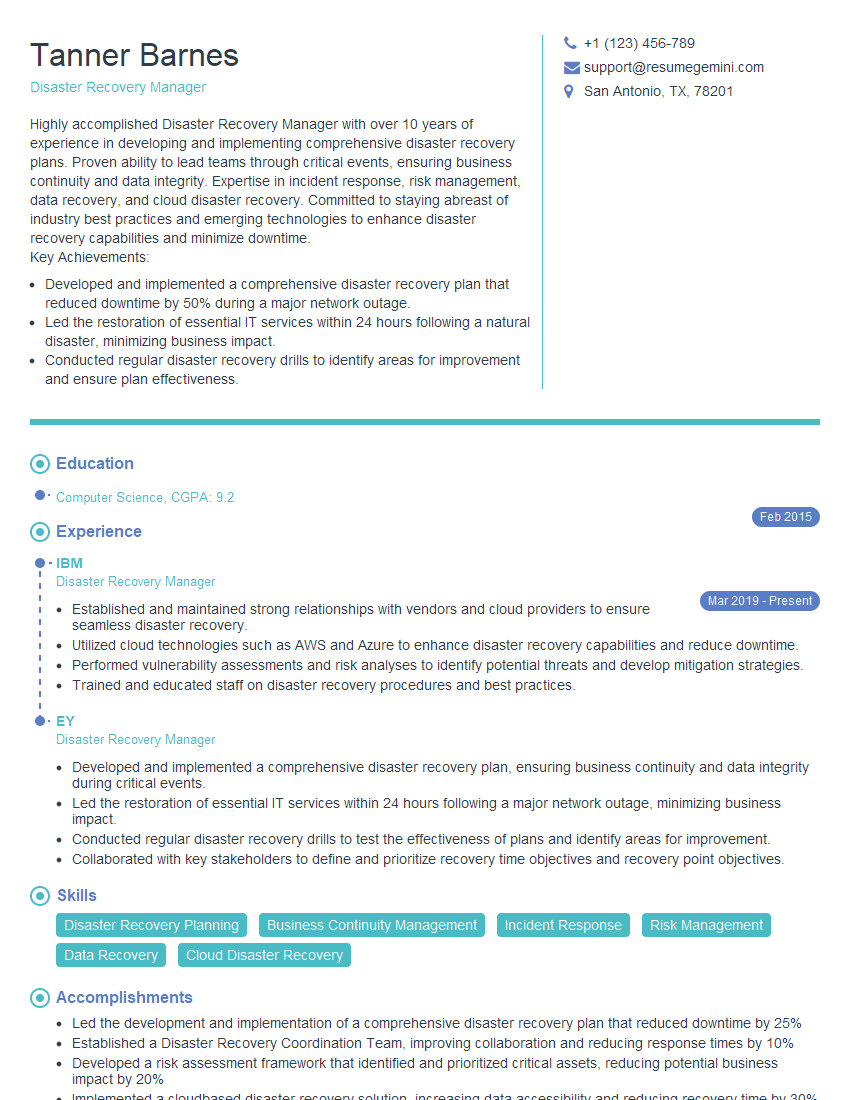
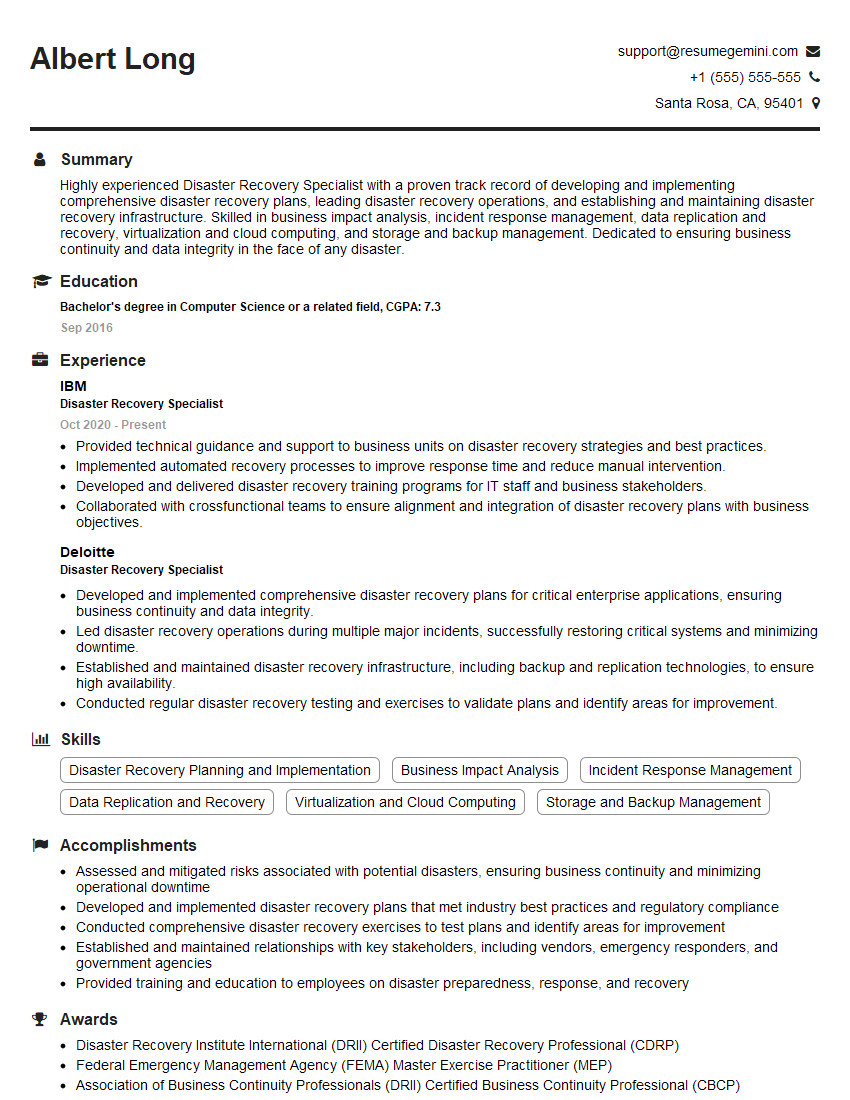
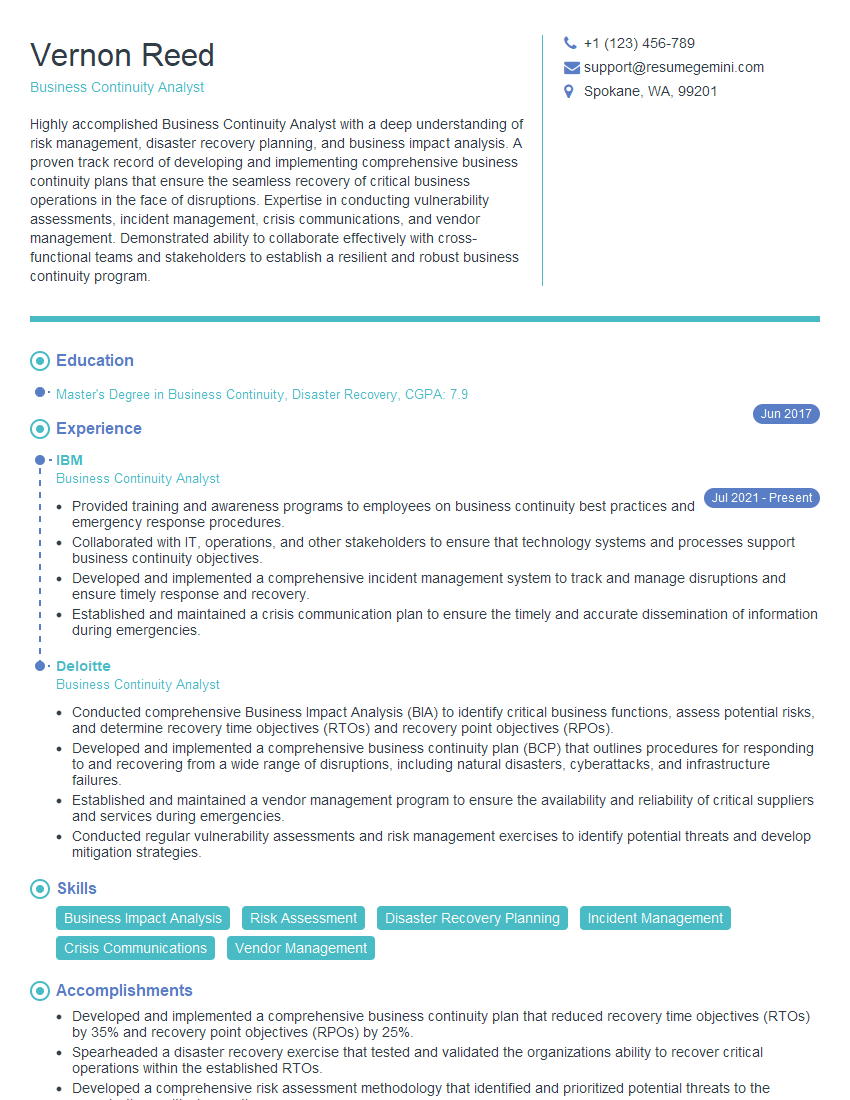
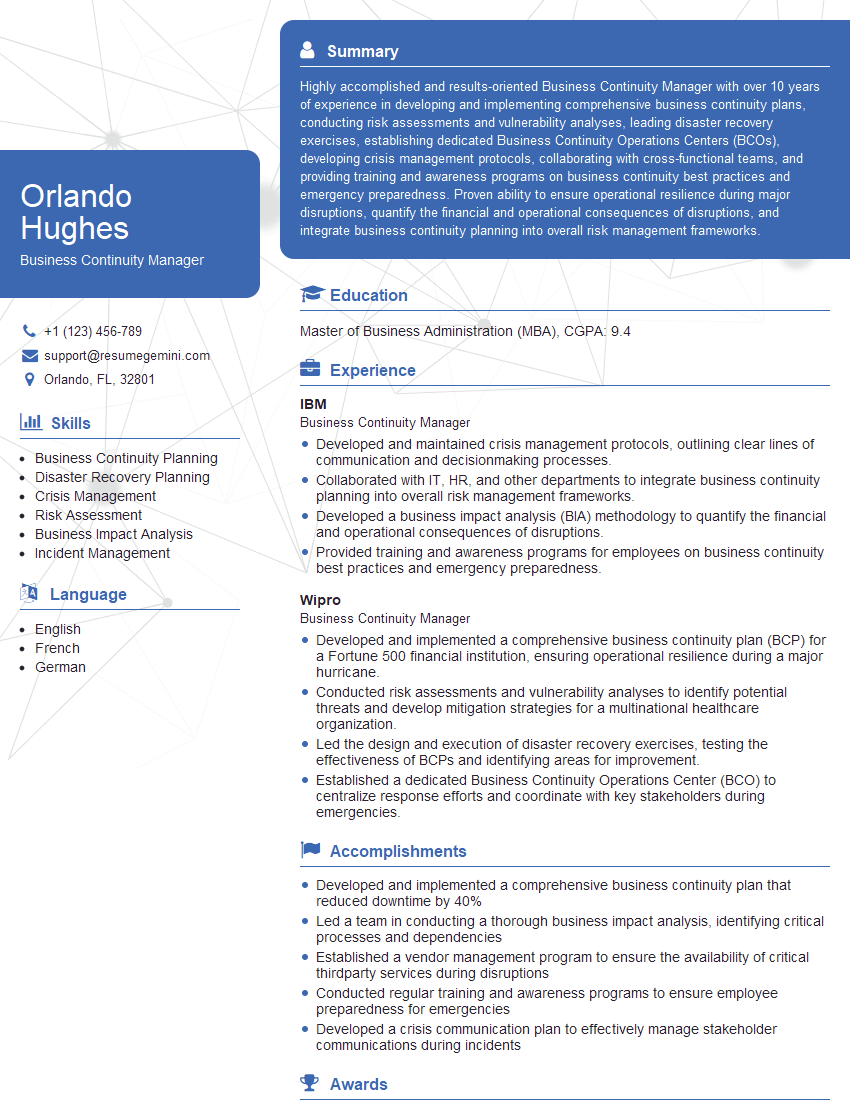
Mastering Continuity of Operations Planning is crucial for career advancement in today’s complex and ever-changing business environment. Demonstrating expertise in COOP showcases your preparedness for handling critical situations and safeguarding organizational resilience – skills highly valued by employers. To maximize your job prospects, create an ATS-friendly resume that effectively highlights your relevant skills and experience. ResumeGemini is a trusted resource that can help you build a professional and impactful resume. We provide examples of resumes tailored to Continuity of Operations Planning to guide you in showcasing your qualifications effectively. Take the next step towards your dream job – invest in a standout resume today.
Explore more articles
Users Rating of Our Blogs
Share Your Experience
We value your feedback! Please rate our content and share your thoughts (optional).
What Readers Say About Our Blog
Very informative content, great job.
good