Are you ready to stand out in your next interview? Understanding and preparing for Log Truck Driver interview questions is a game-changer. In this blog, we’ve compiled key questions and expert advice to help you showcase your skills with confidence and precision. Let’s get started on your journey to acing the interview.
Questions Asked in Log Truck Driver Interview
Q 1. Describe your experience operating various types of log trucks.
Throughout my career, I’ve operated a variety of log trucks, from single-axle units ideal for smaller loads and tighter spaces to heavy-duty, tandem-axle trucks capable of hauling massive quantities of logs. I’m experienced with both conventional and grapple trucks. Conventional trucks utilize a trailer with bunks, where logs are manually loaded and secured. Grapple trucks, on the other hand, are equipped with a mechanical grapple, allowing for faster, more efficient loading and unloading. I’ve also driven log trucks with various configurations of trailers, including those with drop decks for oversized loads and specialized trailers for handling different log sizes and species. For example, one particularly challenging experience involved using a drop-deck trailer to transport exceptionally long logs through mountainous terrain. Careful planning and precise maneuvering were essential to navigate the tight turns and steep inclines safely.
Q 2. What is your experience with different types of logging equipment?
My experience with logging equipment extends beyond just the trucks themselves. I’m proficient in operating feller bunchers, skidders, and loaders, all essential pieces of equipment in the logging process. Feller bunchers, for instance, are crucial for cutting down trees and gathering them into bundles. My understanding of their operation allows me to efficiently plan log truck loading and anticipate any potential issues related to the size or shape of the bundled logs. Similarly, I’m familiar with the different types of skidders and how their capabilities impact log extraction from the logging site to the roadside landing. I’ve used loaders to load logs onto the trucks, ensuring proper weight distribution and securement. This broad experience allows me to understand the entire logging operation and work effectively with other crew members.
Q 3. Explain your understanding of load securement regulations and best practices.
Load securement is paramount for safety and legal compliance. I’m thoroughly familiar with all applicable regulations, including those related to the proper use of binders, chains, and dunnage. I understand the importance of distributing weight evenly across the trailer and ensuring that logs are tightly secured to prevent shifting during transit. This is especially crucial on uneven terrain or during sharp turns. Best practices involve using multiple securement points, checking all connections frequently, and always having the right equipment for the load size. Think of it like building a strong foundation – each log is a building block that needs to be supported properly to avoid a collapse. I regularly inspect my loads before and during transit to ensure securement, and I know the procedures for dealing with any issues that may arise.
Q 4. How do you ensure the safety of yourself and others while operating a log truck?
Safety is my top priority. I always perform a thorough pre-trip inspection before each haul, checking all lights, brakes, tires, and securement devices. During operation, I maintain a defensive driving style, anticipating potential hazards and adjusting my speed according to weather and road conditions. I always wear appropriate personal protective equipment (PPE), including safety glasses, gloves, and high-visibility clothing. I also understand the importance of communicating with others on the logging site, including fellow drivers, ground crews, and spotters, to prevent accidents. For example, I will always use hand signals or radios to communicate with loaders during the loading process to ensure logs are properly placed. Regular training and staying up-to-date on safety regulations are essential for maintaining a safe working environment.
Q 5. What is your experience with pre-trip inspections and maintenance?
Pre-trip inspections are a crucial part of my daily routine. I follow a checklist to examine everything from tire pressure and tread depth to brake function, fluid levels, lights, and securement equipment. Any issues are immediately reported and addressed before operation. I’m also familiar with basic vehicle maintenance and can perform tasks like checking oil and coolant levels. Knowing the basics of preventative maintenance ensures that the truck is always in optimal condition, reducing the risk of breakdowns and maximizing uptime. This extends beyond just checking fluids; it includes knowing how to identify potential issues like worn-out parts and addressing them promptly to prevent bigger problems down the road. I meticulously document all inspections and maintenance tasks to ensure a clear record.
Q 6. Describe your experience with navigating challenging terrain and weather conditions.
Navigating challenging terrain and weather conditions is a regular part of this job. I’m skilled in operating log trucks on steep grades, rough roads, and in muddy or snowy conditions. This involves using appropriate speeds, selecting the correct gears, and utilizing techniques to maintain control, such as utilizing engine braking and avoiding sudden movements. My experience includes navigating logging roads in various weather conditions – from heavy rain and snow to fog and extreme temperatures. I understand how changing weather conditions affect traction and visibility and adjust my driving accordingly, prioritizing safety. Precise route planning and familiarity with the terrain are crucial in these circumstances. For example, I’ll check weather reports before starting a haul and select alternate routes if necessary.
Q 7. Explain your understanding of hours of service regulations (HOS).
I have a thorough understanding of Hours of Service (HOS) regulations. These regulations are critical to driver safety and well-being. I meticulously track my driving time, rest periods, and on-duty time, ensuring strict adherence to all applicable rules. I understand the different categories of on-duty time and how they impact my available driving hours. I use electronic logging devices (ELDs) to accurately record my hours and ensure compliance. I know the importance of getting adequate rest to avoid fatigue and make safe driving decisions. My familiarity with HOS regulations is not merely about compliance; it’s about responsible work practices and maintaining my own well-being. Understanding these regulations helps me make smart decisions about my routes and rest stops to prevent exceeding my allowed driving time.
Q 8. How do you handle unexpected mechanical issues on the road?
Handling unexpected mechanical issues on the road is a critical skill for a log truck driver. My approach is methodical and prioritizes safety above all else. First, I ensure the safety of myself and others by activating hazard lights, assessing the immediate surroundings for safe stopping and potential hazards, and if necessary, setting warning devices to alert other drivers.
Then, I conduct a preliminary assessment of the problem. Is it something minor I can address myself, like a flat tire (which I am trained to change), or is it a more significant issue requiring professional assistance? I always carry a comprehensive roadside emergency kit containing tools, spare parts (where feasible given the variety of potential issues with a log truck), and communication devices. If I suspect the problem is beyond my expertise or might compromise the integrity of the load, I immediately contact my dispatcher to report the issue and arrange for roadside assistance.
For example, once, I experienced a sudden loss of braking power on a steep, winding mountain road. Following my safety protocol, I safely steered the truck to the side of the road. The immediate concern was the extremely hazardous situation and the large load of logs, so I stayed with the truck until a tow truck arrived, directing traffic and taking all necessary safety measures. This instance highlighted the importance of both pre-trip inspections and the critical need to never push a vehicle beyond its safe operating limits.
Q 9. Describe your experience with log loading and unloading procedures.
Log loading and unloading procedures require precision and adherence to safety regulations to prevent accidents and damage. My experience involves working with various loading equipment, including loaders, grapple skidders, and cranes. The process begins with a thorough inspection of the loading area to identify any potential hazards and ensure the stability of the ground.
Loading involves strategically positioning logs on the trailer to achieve optimal weight distribution and prevent shifting during transit. This includes using binders and chains to secure the load properly. The process is carefully monitored to ensure that the load does not exceed the truck’s weight capacity and remains within legal limits. Unloading follows a similar careful approach, with the logs carefully removed in a controlled manner. Throughout this process, I maintain awareness of my surroundings, keeping a safe distance from the equipment and avoiding any potentially dangerous situations. Safety is always my number one priority.
For instance, on one job, I had to load a particularly heavy and unevenly sized assortment of logs. Careful planning and collaboration with the loading crew were crucial. We prioritized balancing the load and used extra chains for reinforcement to ensure a stable and secure transportation for the duration of the journey.
Q 10. What is your knowledge of forestry regulations and practices?
My knowledge of forestry regulations and practices is extensive. I am familiar with all relevant federal, state, and local regulations pertaining to logging operations. These encompass safe operating procedures, environmental protection, including measures to minimize soil erosion and protect water quality, and adherence to harvest plans. I understand the importance of responsible forest management and the role of sustainable logging practices.
I’m aware of regulations concerning road use, load limits, and transportation of timber. This includes proper documentation, permits, and reporting requirements. I understand the importance of complying with all safety guidelines and environmental regulations to prevent damage to the forest ecosystem and uphold responsible practices. For instance, I know that certain logging areas might have restrictions on the time of year during which logging operations are permitted.
I am also familiar with best practices related to minimizing environmental impact, for example, respecting designated areas to prevent damage to sensitive habitats, such as wetlands or endangered species habitats. I regularly participate in safety training to ensure my skills are up-to-date and to stay informed of changes in regulations and practices.
Q 11. Explain your experience with different types of logging roads and trails.
My experience encompasses a wide variety of logging roads and trails, ranging from well-maintained paved roads to rough, unpaved forest tracks and steep mountain grades. I am adept at navigating different terrains and conditions, adjusting my driving technique to match the challenges presented by each route. I understand the importance of selecting appropriate routes based on road conditions, load weight, and weather conditions. I understand how to identify potential hazards such as washouts, deep ruts, and obstacles.
I am accustomed to driving in various weather conditions, including rain, snow, and ice, and I take necessary precautions when working in challenging environments. This includes using appropriate gear such as chains or other traction devices when needed and reducing speed for safety.
For example, I’ve had experience driving on narrow, winding mountain roads with steep inclines and declines, requiring precise control and awareness of the vehicle’s weight distribution. In other instances, I have navigated muddy, rutted trails, which required specialized techniques and equipment to ensure safe and efficient transit of the logs.
Q 12. How do you manage your time effectively to meet delivery deadlines?
Effective time management is crucial in this profession. My approach involves meticulous planning and proactive problem-solving. I begin by thoroughly reviewing the delivery schedule, assessing the distance, anticipated road conditions, and potential delays. I factor in loading and unloading times and allocate additional time for unexpected events. I communicate regularly with the dispatcher to provide updates on my progress and address any issues that might affect delivery timelines. Effective communication is key.
I maintain a consistent driving pace, while always prioritizing safety, ensuring that I adhere to speed limits and other traffic regulations. I avoid unnecessary stops, but also prioritize rest breaks to maintain focus and alertness throughout the long hauls. I also practice preventative maintenance on the truck, reducing the likelihood of mechanical breakdowns that could cause delays.
For instance, if I anticipate heavy traffic during peak hours, I plan my routes accordingly, leaving earlier to compensate. Or, if I see weather forecasts predicting heavy rain in a particular area, I adapt my schedule to avoid potential delays. Using GPS and route optimization software are key elements of my strategy for time management.
Q 13. What is your experience with GPS navigation and route planning?
GPS navigation and route planning are integral to my daily operations. I utilize GPS systems to navigate unfamiliar routes, find the most efficient paths, and track my progress. I’m proficient in using various GPS applications and devices, and I understand how to interpret map data, identify potential road closures or construction zones, and adapt my route accordingly. Route planning involves considering factors such as road conditions, weight restrictions, and bridge clearances.
I often use specialized mapping software designed for heavy vehicles, which accounts for the unique challenges of transporting heavy loads, such as weight limits on bridges or low clearances on certain roads. I regularly update my GPS maps to ensure I have the most current information available.
For instance, I once had to deliver a load of logs to a remote location with limited road access. By using a specialized GPS mapping system and carefully studying the route beforehand, I was able to navigate successfully to the destination without encountering any significant delays or difficulties.
Q 14. Explain your knowledge of weight limits and load distribution.
Understanding weight limits and load distribution is paramount for safety and legal compliance. I meticulously check the weight of the logs before loading, ensuring that the total weight of the load, including the truck, does not exceed the legally permitted limits and the truck’s rated capacity. Proper load distribution is critical; logs must be balanced across the trailer to prevent instability and potential rollovers. I use various methods to achieve even weight distribution, such as strategic placement of logs and appropriate use of securing equipment.
I am familiar with regulations regarding axle weights and gross vehicle weight ratings (GVWR). I regularly check the weight of the load using scales and make adjustments where needed to comply with all legal requirements. Failure to do so can result in significant fines and potential safety hazards.
For example, if I find that my load is close to the weight limit, I might consult with the dispatcher to see if it is possible to divide the load into two shipments to stay within legal and safe limits. My experience has taught me the importance of meticulous planning and precise execution to minimize risks associated with overloading.
Q 15. How do you communicate effectively with dispatchers and other team members?
Effective communication with dispatchers and team members is crucial for a log truck driver. It ensures smooth operations, safety, and timely delivery. My approach involves clear, concise, and timely communication, utilizing various methods.
- Clear and Concise Messaging: I avoid jargon and use plain language when reporting my location, estimated time of arrival (ETA), and any issues encountered. For example, instead of saying ‘Experiencing significant haul road degradation,’ I’d say ‘The haul road is heavily rutted and needs immediate attention.’
- Utilizing Multiple Communication Channels: I use two-way radios for immediate updates and contact dispatchers via phone for more detailed information or reporting issues requiring immediate attention. Email is used for scheduling and documentation.
- Active Listening: I pay close attention to instructions, confirming them to avoid misunderstandings. If I’m unsure, I ask clarifying questions.
- Proactive Reporting: I report delays, potential hazards, or equipment issues promptly to prevent complications and allow for proactive problem-solving.
- Professionalism: Maintaining a respectful and professional tone ensures clear and productive communication across all channels.
Career Expert Tips:
- Ace those interviews! Prepare effectively by reviewing the Top 50 Most Common Interview Questions on ResumeGemini.
- Navigate your job search with confidence! Explore a wide range of Career Tips on ResumeGemini. Learn about common challenges and recommendations to overcome them.
- Craft the perfect resume! Master the Art of Resume Writing with ResumeGemini’s guide. Showcase your unique qualifications and achievements effectively.
- Don’t miss out on holiday savings! Build your dream resume with ResumeGemini’s ATS optimized templates.
Q 16. Describe your experience working independently and as part of a team.
My experience encompasses both independent work and collaborative teamwork. As a log truck driver, significant portions of my day involve independent operation, requiring self-reliance and strong problem-solving skills. However, successful logging operations depend heavily on team coordination.
- Independent Work: I’m proficient in pre-trip inspections, route planning (considering weather, road conditions, and load weight), safe driving practices, load securing, and efficient time management during long hauls. For example, I once had to reroute myself due to unexpected flooding – a situation requiring independent decision-making and quick thinking.
- Teamwork: I collaborate with loaders, fallers (who fell the trees), and other truck drivers to ensure efficient loading and unloading processes and to share information about road conditions and potential hazards. Effective teamwork reduces delays and ensures overall safety. During a particularly challenging storm, sharing information with other drivers about road closures enabled us to all complete our journeys safely.
Q 17. What is your experience with handling hazardous materials?
My experience with hazardous materials is limited to the potential hazards associated with logging operations, such as fuel, lubricants, and potentially contaminated soil in certain areas. I’ve received specialized training in handling these materials safely.
- Safe Handling Procedures: I’m well-versed in proper fuel handling procedures and the use of Personal Protective Equipment (PPE), such as gloves and eye protection when handling oils and lubricants.
- Spill Response: I am trained in basic spill response procedures, including containing, reporting, and cleaning up small spills of fuel or oil. For larger spills, I know to contact emergency services immediately.
- Awareness of Regulations: I understand the importance of complying with all relevant transportation regulations regarding hazardous materials and maintain accurate paperwork related to fuel usage.
Q 18. Explain your knowledge of emergency procedures in case of accidents.
Emergency procedures are paramount in this profession. My training covers various accident scenarios and emphasizes swift and decisive actions.
- Accident Response: In case of an accident, my immediate priority is securing the scene, ensuring personal safety, and assessing injuries. I’ll call emergency services (911 or the company’s emergency number) and follow their instructions.
- First Aid and CPR: I possess a valid First Aid and CPR certification and can provide basic medical assistance until professional help arrives.
- Communication: I communicate clearly and accurately with emergency services, providing location details, the number of injured, and the nature of the accident.
- Post-Accident Procedures: I understand the importance of complying with post-accident procedures, including filing accident reports and cooperating fully with investigations.
Q 19. How do you maintain accurate logs and records?
Maintaining accurate logs and records is crucial for compliance and efficient operations. I utilize electronic logging devices (ELDs) and paper logs (as backup) to ensure accurate records of hours of service (HOS), vehicle maintenance, loads transported, and deliveries made.
- ELD Usage: I’m proficient in using ELDs to record my driving hours, duty status, and vehicle information, ensuring compliance with federal regulations.
- Paper Log Backup: I maintain a paper log as a backup in case of ELD malfunction. This ensures continuous record-keeping and compliance.
- Data Accuracy: I meticulously record all information accurately and promptly to avoid discrepancies and potential penalties.
- Regular Maintenance Logs: I carefully maintain detailed logs of all vehicle maintenance and repairs, documenting dates, service performed, and any issues encountered.
Q 20. Describe your experience with different types of trailers and their limitations.
My experience includes operating various types of trailers commonly used in logging, each with its own characteristics and limitations. Understanding these differences is essential for safe and efficient transportation.
- Log Trailers: I am experienced with various log trailer types, including bunk trailers (for shorter logs), and pole trailers (for longer logs). I understand their weight capacities and the importance of proper load distribution and securing to prevent shifting during transport.
- Lowboy Trailers: I’ve also operated lowboy trailers for moving heavier equipment or machinery used in logging operations. These trailers have height limitations and require careful route planning to avoid bridges or other low clearances.
- Understanding Limitations: I’m acutely aware of each trailer’s weight capacity, turning radius, and overall dimensions. This knowledge allows me to plan routes effectively, choose appropriate roads, and avoid situations that could lead to accidents or damage. For instance, a sharp turn with a long log trailer might require backing and maneuvering.
Q 21. What is your knowledge of different types of wood and their characteristics?
Knowledge of different types of wood is essential for safe and efficient logging operations. This includes understanding their weight, density, and characteristics that influence handling, transportation, and load distribution.
- Softwoods vs. Hardwoods: I can differentiate between softwoods (like pine and fir) and hardwoods (like oak and maple), understanding their relative densities and the implications for load weight and securing. Hardwoods are denser and weigh more for the same volume.
- Species Identification: While not an expert botanist, I can identify common commercial species in my region and understand their typical characteristics. This is crucial for proper load balancing and ensuring I’m not exceeding weight limits based on species density.
- Moisture Content: I understand the impact of moisture content on wood weight and the potential for shifting or damage during transport. Wetter wood is heavier and more prone to shifting.
- Wood Strength and Properties: I understand the implications of wood’s strength and flexibility on how to properly secure loads on trailers to prevent damage during transport.
Q 22. Explain your understanding of chain saw safety and operation.
Chainsaw safety is paramount in logging. It’s not just about knowing how to start and operate the saw; it’s about a comprehensive understanding of safe practices to prevent injury. This includes proper PPE (Personal Protective Equipment), pre-use checks, and safe cutting techniques.
- PPE: Always wear chaps, safety glasses, hearing protection, and a hard hat. Gloves are also essential. Chaps are crucial as they protect your legs from kickback – a dangerous situation where the saw suddenly recoils.
- Pre-use Checks: Before each use, I meticulously inspect the chain for sharpness and damage, ensure the chain brake is functioning correctly, and check the fuel and oil levels. A dull chain requires more force, increasing the risk of kickback.
- Safe Cutting Techniques: Never cut above shoulder height. Always maintain a firm grip and avoid reaching or overextending. Understand the different cutting techniques (e.g., felling, bucking, limbing) and apply them appropriately. I always make sure there’s a clear escape route before starting a cut.
For example, when felling a large tree, I carefully assess the lean, wind direction, and potential obstacles before making the initial cut. I use wedges to control the fall direction and ensure the tree falls in a safe and controlled manner. Failing to do so could result in the tree falling in an unexpected direction, causing serious injury or damage.
Q 23. How do you handle challenging customers or difficult situations?
Handling challenging customers or difficult situations requires patience, clear communication, and a problem-solving approach. I start by actively listening to understand their concerns. Then, I calmly explain the situation from my perspective, highlighting any constraints or safety regulations involved.
For instance, if a customer wants a delivery made on an unrealistic schedule, I’ll explain the logistical challenges and propose alternative solutions while emphasizing safety. If a customer is upset about a delay, I’ll apologize for the inconvenience and clearly explain the reason for the delay, providing an estimated time of arrival. It’s about finding a solution that works for both parties while maintaining professionalism and safety.
I also know when to escalate issues to my supervisor if I’m unable to resolve them independently. Maintaining a professional and respectful demeanor is key, even in stressful situations.
Q 24. What is your experience with using communication devices?
I have extensive experience using two-way radios for communication with dispatch, fellow drivers, and logging crews. This includes clear and concise reporting of location, load status, and any potential hazards encountered. It is crucial to communicate effectively to maintain efficiency and safety. My experience encompasses using both standard VHF radios and more advanced communication systems in remote areas with limited cellular service.
For example, if I encounter a road blockage, I immediately report this to dispatch, providing details about the location and the nature of the blockage. This allows them to reroute other drivers and potentially arrange for assistance.
Q 25. Describe your experience with managing fatigue and stress.
Managing fatigue and stress in this physically demanding job is crucial for safety and efficiency. I prioritize sufficient sleep, maintain a healthy diet, and stay hydrated throughout the day. I also incorporate regular exercise into my routine to help manage stress and boost energy levels.
Recognizing the signs of fatigue is equally important. If I feel excessively tired or sluggish, I take breaks, and if necessary, I will delay my work until I’m sufficiently rested. Ignoring fatigue can lead to serious accidents. I make sure to report any concerns about fatigue or stress to my supervisor to seek support and prevent burnout.
Q 26. What steps do you take to prevent accidents?
Preventing accidents requires a multifaceted approach centered around proactive measures and adherence to safety protocols. This includes pre-trip inspections of my vehicle, ensuring all lights and signals are functioning correctly, checking tire pressure and tread depth, and verifying the securement of the load.
- Defensive Driving: I practice defensive driving, anticipating potential hazards, and adjusting my driving to accommodate weather conditions and traffic.
- Load Securement: Proper load securement is crucial. I use appropriate chains, binders, and other equipment to ensure the load is stable and secure throughout transit.
- Regular Maintenance: Regular vehicle maintenance helps prevent mechanical failures. I report any issues immediately.
- Following Regulations: Strict adherence to all traffic laws and regulations is non-negotiable. Knowing and obeying weight limits and speed restrictions is paramount.
For example, before starting my day, I always conduct a thorough vehicle inspection. This isn’t just a checklist; it’s a critical step to identify and address any potential issues before they become a safety hazard. I treat every trip as an opportunity to practice safe driving and demonstrate a commitment to safety for myself and others.
Q 27. What is your understanding of different types of logging techniques?
My experience encompasses various logging techniques, each with its own advantages and disadvantages depending on the terrain, tree species, and desired outcome.
- Clearcutting: Removing all trees from a designated area. This is efficient for large-scale operations but can have significant environmental impacts.
- Selective Logging: Harvesting specific trees while leaving others to maintain forest biodiversity. This is more sustainable but can be less efficient.
- Shelterwood Logging: Gradually removing trees over time, leaving some mature trees to provide shade and shelter for younger trees. This promotes regeneration.
- Seed-Tree Logging: Leaving a few seed trees to naturally regenerate the forest. This method requires careful planning and monitoring.
Understanding these techniques is crucial for choosing the most appropriate method for a given situation, maximizing efficiency while minimizing environmental impact. I’m familiar with the environmental regulations and best practices associated with each technique.
Q 28. Describe your experience with maintaining a clean and organized work environment.
Maintaining a clean and organized work environment is essential for both safety and efficiency. A cluttered workspace increases the risk of accidents and makes it difficult to locate equipment quickly. My routine includes cleaning the cab of my truck after each shift, removing any debris or loose items. I also keep my tools organized and easily accessible.
At the logging site, I help maintain a clean and organized workspace by properly stacking logs and keeping the area free of debris. This not only improves safety but also makes the job more efficient. A clean and organized environment contributes to a safer and more productive work atmosphere for everyone.
Key Topics to Learn for Log Truck Driver Interview
- Vehicle Operation & Maintenance: Understanding the intricacies of operating heavy-duty log trucks, including pre-trip inspections, safety procedures, and basic maintenance checks. Practical application: Describe your experience with preventative maintenance and troubleshooting minor mechanical issues.
- Log Loading & Securing: Mastering safe and efficient log loading techniques, ensuring proper weight distribution, and utilizing appropriate securing methods to prevent accidents. Practical application: Detail your experience with different loading techniques and how you ensure load stability.
- Navigation & Route Planning: Familiarity with GPS systems, map reading, and route optimization for efficient and safe delivery of logs. Practical application: Explain your approach to planning a route, considering factors like road conditions and weight restrictions.
- Regulations & Compliance: Thorough knowledge of all relevant trucking regulations, including hours of service, weight limits, and safety standards. Practical application: Discuss your understanding of these regulations and how you ensure compliance in your daily operations.
- Safety Procedures & Emergency Response: Proficiency in various safety procedures, including defensive driving techniques, emergency response protocols, and hazard awareness. Practical application: Describe your experience handling unexpected situations, such as equipment malfunctions or adverse weather conditions.
- Communication & Teamwork: Effective communication with dispatchers, supervisors, and other team members. Practical application: Explain your communication style and how you contribute to a positive and efficient work environment.
Next Steps
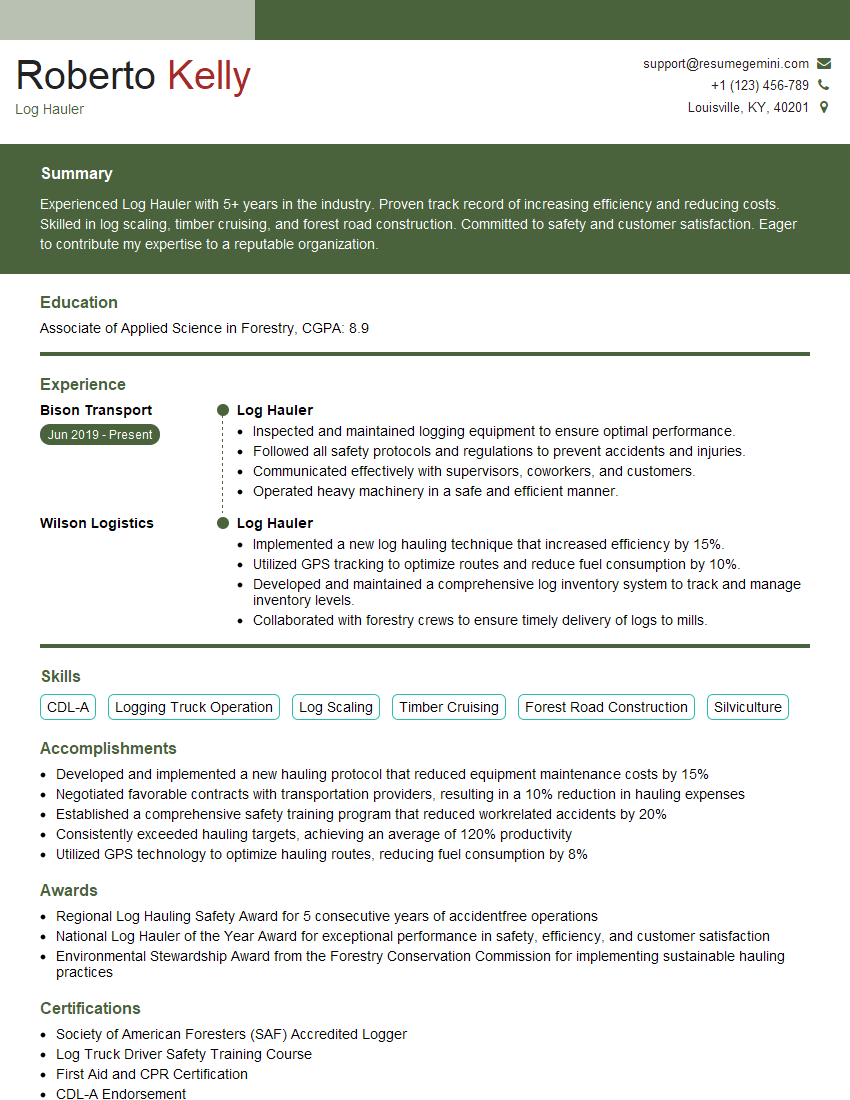
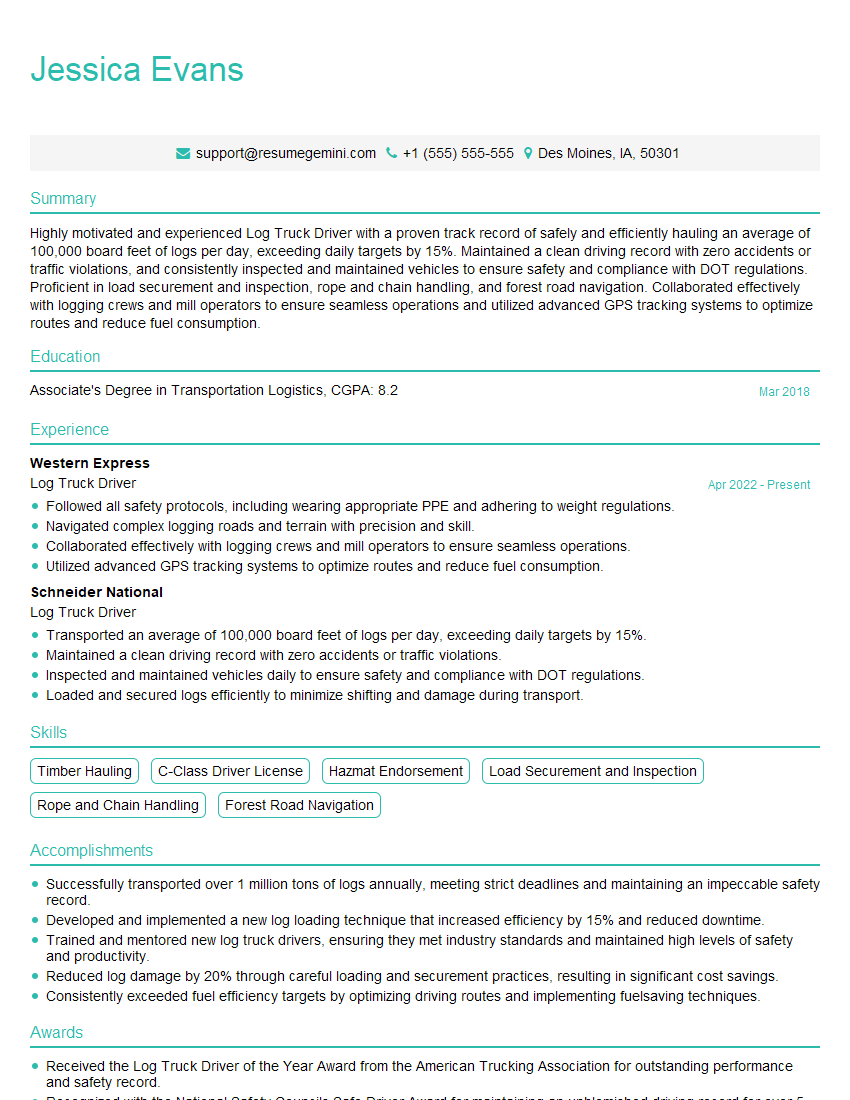
Mastering the skills and knowledge required for a Log Truck Driver position opens doors to a rewarding career with opportunities for advancement and increased earning potential. A strong resume is crucial for showcasing your qualifications to potential employers. Creating an ATS-friendly resume significantly improves your chances of getting noticed by recruiters. We highly recommend using ResumeGemini to build a professional and impactful resume. ResumeGemini offers a user-friendly platform and provides examples of resumes tailored to the Log Truck Driver profession, helping you stand out from the competition.





Explore more articles
Users Rating of Our Blogs
Share Your Experience
We value your feedback! Please rate our content and share your thoughts (optional).
What Readers Say About Our Blog
Very informative content, great job.
good