Cracking a skill-specific interview, like one for Rhythmic Coordination, requires understanding the nuances of the role. In this blog, we present the questions you’re most likely to encounter, along with insights into how to answer them effectively. Let’s ensure you’re ready to make a strong impression.
Questions Asked in Rhythmic Coordination Interview
Q 1. Explain the concept of temporal accuracy in rhythmic coordination.
Temporal accuracy in rhythmic coordination refers to the precision with which movements are timed relative to a rhythmic pattern. It’s essentially how accurately you can hit the beat. A high degree of temporal accuracy means your actions precisely match the intended rhythm, while low accuracy indicates timing errors and inconsistencies.
Think of playing a drum solo. High temporal accuracy means each drum hit lands perfectly on the beat, creating a tight, precise sound. Low temporal accuracy would result in a sloppy, uneven performance. The same principle applies to any rhythmic activity, from dancing to playing a musical instrument to even coordinating movements in sports like swimming or running.
Assessing temporal accuracy often involves measuring the timing deviations from the ideal rhythm, either through visual observation or with the use of motion capture technology. These deviations are often expressed in milliseconds.
Q 2. Describe the role of the cerebellum in rhythmic motor control.
The cerebellum plays a crucial role in rhythmic motor control, acting as a timing and coordination center. It doesn’t initiate movement, but it’s essential for refining and smoothing the execution of movements, ensuring accurate timing and coordination. Think of it as the conductor of a rhythm orchestra, making sure all the different parts come together smoothly and on time.
The cerebellum receives input from various brain areas involved in motor planning and sensory feedback. It then uses this information to compare the intended movement with the actual movement, correcting any errors in timing and sequencing. Damage to the cerebellum often leads to impairments in rhythmic performance, such as dysmetria (inaccurate movement amplitude) and dysrhythmia (difficulty maintaining a steady rhythm).
For example, imagine someone trying to tap their fingers rhythmically. The cerebellum ensures the taps are evenly spaced in time, adjusting the speed and force as needed based on sensory feedback from the fingers and other parts of the body. Without a functioning cerebellum, this task would become significantly more challenging.
Q 3. How do auditory and visual cues influence rhythmic performance?
Auditory and visual cues are powerful tools for influencing rhythmic performance. They act as external references that help individuals maintain timing and accuracy. Imagine a musician relying on a metronome (auditory cue) or watching a conductor’s baton (visual cue) to stay in sync.
Auditory cues, such as a metronome or music, provide a clear temporal reference. They help establish the tempo and rhythm, guiding the timing of movements. The brain processes these auditory signals to synchronize motor actions. Studies show that even implicit auditory cues, such as a faint background rhythm, can affect motor timing.
Visual cues, such as a moving light or a video of a rhythmic movement, offer a spatial-temporal reference. They provide information about the timing and sequence of movements. For example, watching a dancer can help someone synchronize their steps, while observing a metronome’s visual indication improves timing accuracy.
The effectiveness of these cues depends on factors like their clarity, predictability, and the individual’s ability to process them. For example, someone with good auditory processing skills may benefit more from a metronome, while someone with strong visual skills might rely more heavily on visual cues.
Q 4. Differentiate between internal and external pacing in rhythmic tasks.
Internal pacing refers to the generation of a rhythmic pattern from within, relying on an internal representation of the rhythm. It’s like having a built-in metronome in your brain. This requires a strong sense of rhythm and the ability to generate and maintain a steady tempo without external guidance.
External pacing, on the other hand, relies on an external source to establish and maintain the rhythm. Examples include tapping along to music, following a metronome, or coordinating movements with a visual stimulus. External cues provide a temporal framework, reducing the demands on internal timing mechanisms.
The choice between internal and external pacing depends on the task’s complexity and the individual’s skills. Simple rhythmic tasks can be performed using internal pacing, while complex rhythms may require external cues for accuracy. For example, a seasoned drummer might perform a complex drum solo with internal pacing, while a beginner might rely on a metronome (external pacing).
Q 5. What are the common challenges faced when assessing rhythmic coordination?
Assessing rhythmic coordination presents several challenges. One key difficulty is the subjective nature of rhythm perception. What sounds rhythmic to one person might not be perceived as such by another. This makes objective measurement crucial but also complex. The choice of assessment tools must account for the specific rhythmic task and the age and abilities of the individual being assessed.
- Subjectivity in judging rhythm: Different assessors might have slightly different interpretations of what constitutes accurate rhythm.
- Influence of extraneous factors: Factors like fatigue, motivation, and attention can significantly impact performance, making it hard to isolate rhythmic ability.
- Variability in rhythmic performance: Even skilled individuals may show some variability in their rhythmic performance due to motor noise or fatigue.
- Choosing appropriate assessment tools: The complexity of the tools must match the complexity of the rhythmic tasks, and they must also be appropriate for the developmental level of the participant.
Overcoming these challenges requires a combination of standardized assessment procedures, objective measures (like timing error analysis from motion tracking), and consideration of individual variability.
Q 6. Explain how you would assess rhythmic accuracy in a child.
Assessing rhythmic accuracy in a child requires age-appropriate methods that are engaging and fun. It’s important to avoid making it a formal test, as this can increase anxiety and influence performance.
I would begin with simple tasks, such as clapping along to a familiar song or tapping a beat on a drum or other percussion instrument. Observation is key. I’d look for consistent timing and accurate replication of the rhythm. More complex assessments could involve tasks like copying rhythmic patterns (e.g., using blocks or clapping sequences). I’d measure accuracy by comparing the child’s performance to the target rhythm using timing metrics.
For younger children, using games like rhythmic movement activities (e.g., dancing or playing rhythm sticks) can be incorporated to create a more playful evaluation. For older children, more complex rhythmic patterns, even using simple musical notation, can be introduced. Throughout the assessment, it is crucial to create a positive environment to reduce pressure and foster natural rhythmic expression.
Q 7. Describe the difference between simple and complex rhythmic patterns.
The difference between simple and complex rhythmic patterns lies in their complexity of structure and the number of simultaneous rhythmic streams involved.
Simple rhythmic patterns usually involve a single rhythmic stream with a straightforward, easily predictable sequence of beats or notes. For example, a simple marching beat or a repeated sequence like ‘long-short-long-short’ would qualify as a simple rhythmic pattern. These patterns are typically characterized by regular intervals between beats and a limited range of rhythmic durations.
Complex rhythmic patterns, on the other hand, involve multiple rhythmic streams, syncopation (accents on unexpected beats), irregular subdivisions of beats, and varied durations. Examples include polyrhythms (simultaneous use of different rhythmic patterns), complex musical phrases, and intricate dance steps. These patterns demand a high degree of coordination and internal timing precision.
The level of complexity influences the cognitive and motor demands placed on the performer. Simple rhythms rely more heavily on basic timing mechanisms, whereas complex rhythms demand a higher level of executive function, motor control, and auditory processing.
Q 8. How do you measure the tempo variability in a rhythmic sequence?
Tempo variability in rhythmic sequences refers to the fluctuations in the time intervals between successive events. We measure this using various techniques, depending on the context. For instance, in music performance, we might use acoustic analysis software to measure the intervals between note onsets. This software can calculate the standard deviation of inter-onset intervals (IOIs), providing a quantifiable measure of tempo variability. A smaller standard deviation indicates greater rhythmic precision, while a larger standard deviation signifies more variability.
In movement studies, we might use motion capture technology to track joint angles or limb positions over time. The time intervals between specific movement phases can then be analyzed similarly to musical note onsets, yielding a measure of tempo variability. Another approach involves using electromyography (EMG) to assess the timing of muscle activations. This can provide a more fine-grained measure, reflecting underlying neural control processes.
Consider a drummer playing a simple beat. If the intervals between each beat are consistently 0.5 seconds, the tempo variability is low. However, if the intervals fluctuate between 0.4 and 0.6 seconds, the variability is higher, potentially impacting the perceived rhythm.
Q 9. How does practice affect the neural mechanisms of rhythmic coordination?
Practice dramatically alters the neural mechanisms underlying rhythmic coordination. Initially, rhythmic tasks rely heavily on conscious processing, engaging cortical areas responsible for planning and execution. However, with extensive practice, these tasks become more automatized. This shift involves a redistribution of neural activity, with a decrease in cortical involvement and an increase in subcortical structures like the cerebellum and basal ganglia. The cerebellum, crucial for motor timing and coordination, plays an increasingly dominant role.
Neuroimaging studies using techniques like fMRI have shown that repeated rhythmic practice leads to structural changes in the brain, including increased grey matter density in areas involved in motor control and timing. Furthermore, functional changes are observed, with improved efficiency in neural communication between relevant brain regions. This leads to enhanced precision, speed, and automaticity in rhythmic performance. Imagine a pianist learning a complex piece; initial practice requires intense concentration, but with repetition, the piece becomes almost second nature, requiring less conscious effort.
Q 10. Explain the role of feedback in improving rhythmic performance.
Feedback is crucial for improving rhythmic performance, acting as a guiding force for motor learning. Feedback can be either intrinsic (internal sensory information, like proprioception) or extrinsic (external information, like visual or auditory cues). Both types play essential roles in refining rhythmic accuracy and precision.
Intrinsic feedback, such as the feeling of a movement, helps the performer monitor their own actions and make subtle adjustments. Extrinsic feedback, like a metronome or a coach’s comments, provides external references for comparison and correction. Knowledge of results (KR) feedback, informing the performer about the outcome of their actions (e.g., ‘your tempo was too fast’), and knowledge of performance (KP) feedback, providing information about the quality of movement execution (e.g., ‘your wrist movement was too jerky’), are both valuable.
Effective feedback should be specific, timely, and actionable. For example, instead of simply saying ‘play better’, providing feedback like ‘try to maintain a consistent interval between beats 2 and 3’ facilitates targeted improvement. This targeted feedback allows performers to identify and correct errors, leading to more efficient learning and higher levels of performance.
Q 11. How does fatigue affect rhythmic accuracy?
Fatigue significantly impairs rhythmic accuracy. As fatigue sets in, various factors contribute to performance decline. These include decreased motor unit recruitment, reduced muscle force production, and altered sensory processing. The consequences are often manifested as increased tempo variability, decreased coordination, and an increase in timing errors.
For example, a musician playing a long concert might experience increasing tempo fluctuations and inaccuracies as fatigue builds. Similarly, a sportsperson performing repetitive actions will likely show a decline in accuracy and coordination towards the end of a game or training session. The central nervous system is also affected by fatigue, leading to difficulties in maintaining precise timing and coordination. This is likely due to reduced cognitive resources available for complex motor control.
Q 12. Describe the effect of stress on rhythmic coordination.
Stress negatively impacts rhythmic coordination. Under stress, the body releases stress hormones like cortisol and adrenaline, which can disrupt various physiological systems affecting motor control. This can lead to increased muscle tension, impaired sensory processing, and altered attentional focus. These factors can significantly compromise rhythmic precision, often resulting in increased tempo variability and errors in timing and coordination.
For instance, a musician performing under pressure might experience increased tension, leading to stiff movements and inaccurate note timing. Similarly, an athlete competing in a high-stakes event might exhibit impaired coordination and performance due to stress-induced changes in motor control. The precise nature of the effects of stress can vary depending on individual factors and the type of rhythmic task, but the general trend is towards reduced accuracy and control.
Q 13. What are the common neurological conditions affecting rhythmic coordination?
Several neurological conditions can impair rhythmic coordination. Parkinson’s disease, for example, often leads to bradykinesia (slowness of movement) and rigidity, directly affecting the ability to maintain a consistent tempo and execute precise movements. Cerebellar disorders can cause ataxia, characterized by impaired coordination and balance, profoundly impacting rhythmic accuracy. Stroke, depending on the location of brain damage, can also lead to rhythmic deficits, particularly affecting timing and coordination of movements on the affected side.
Other conditions, such as multiple sclerosis and Huntington’s disease, can also manifest with rhythmic impairments, reflecting the complex interplay between neurological function and motor control. The specific nature and severity of rhythmic deficits vary widely depending on the underlying condition, the extent of neurological damage, and the individual’s compensatory abilities.
Q 14. How do you adapt rhythmic training for individuals with motor impairments?
Adapting rhythmic training for individuals with motor impairments requires a highly individualized approach. The key is to tailor the training to the specific needs and abilities of the individual, focusing on achievable goals and gradually increasing the challenge. This might involve simplifying the rhythmic task, using assistive devices, or employing alternative methods of input and feedback.
For example, for someone with Parkinson’s disease, training might begin with simple rhythmic tasks, gradually increasing complexity and speed as tolerance improves. Visual cues, auditory cues, and tactile feedback can be particularly helpful. Assistive devices, like metronomes or rhythm-generating software, can support consistent timing. For individuals with limb impairments, alternative rhythmic movements using non-affected limbs or body parts might be explored. The emphasis should always be on promoting engagement, fostering a sense of achievement, and maximizing functional improvements.
Q 15. Explain the concept of motor imagery in enhancing rhythmic skills.
Motor imagery, also known as mental rehearsal, is a powerful technique for enhancing rhythmic skills. It involves mentally simulating the execution of a rhythmic pattern without any physical movement. This mental practice activates similar brain areas as actual physical practice, leading to improvements in performance.
Imagine a musician practicing a complex drum solo. Instead of hitting the drums, they mentally ‘play’ the solo, visualizing their hand movements, feeling the rhythm, and even hearing the sounds in their mind. This mental practice strengthens neural pathways associated with the rhythmic sequence, leading to improved timing, accuracy, and coordination when they actually perform the solo.
The benefits extend beyond just performance. Motor imagery can be used for rehabilitation after injury, improving the recovery of rhythmic motor skills. For example, a stroke patient regaining the ability to walk could use motor imagery to mentally rehearse the gait cycle, improving their physical rehabilitation.
Career Expert Tips:
- Ace those interviews! Prepare effectively by reviewing the Top 50 Most Common Interview Questions on ResumeGemini.
- Navigate your job search with confidence! Explore a wide range of Career Tips on ResumeGemini. Learn about common challenges and recommendations to overcome them.
- Craft the perfect resume! Master the Art of Resume Writing with ResumeGemini’s guide. Showcase your unique qualifications and achievements effectively.
- Don’t miss out on holiday savings! Build your dream resume with ResumeGemini’s ATS optimized templates.
Q 16. What are the benefits of rhythmic activities for cognitive function?
Rhythmic activities significantly benefit cognitive function. Engaging in activities requiring precise timing and coordination strengthens various cognitive processes.
- Improved Attention and Focus: Maintaining a rhythm demands sustained attention and concentration, thereby improving these cognitive skills.
- Enhanced Memory: Learning and recalling rhythmic patterns necessitates memory encoding and retrieval, thus boosting memory function. Think about learning a dance routine – you need to remember the sequence of steps and the rhythm.
- Increased Executive Function: Planning, sequencing, and inhibiting inappropriate responses are all crucial for successful rhythmic performance. These are core aspects of executive function.
- Better Processing Speed: Responding accurately to rhythmic cues requires quick processing of information, leading to improved speed and efficiency of cognitive processing.
For example, studies show that musical training, which heavily involves rhythmic coordination, is linked to improved cognitive performance in various domains.
Q 17. How can you use technology to assess and improve rhythmic coordination?
Technology plays a vital role in assessing and improving rhythmic coordination. Several tools can provide objective measurements and personalized feedback.
- Motion Capture Systems: These systems track body movements, providing detailed data on timing, accuracy, and range of motion during rhythmic activities. This objective data allows for precise identification of areas needing improvement.
- Rhythm-Based Software and Apps: Many apps and software programs provide interactive rhythmic exercises with immediate feedback on performance. They often feature games or challenges to maintain engagement and motivation.
- Biofeedback Devices: These devices measure physiological signals like heart rate variability, which can be linked to rhythmic performance. Biofeedback can help individuals learn to self-regulate their physiological state to optimize rhythmic control.
- Virtual Reality (VR): VR can create immersive and engaging environments for rhythmic training. For instance, a dancer could practice a routine in a virtual setting, receiving feedback on their timing and accuracy in a realistic yet controlled environment.
These technologies offer personalized training programs based on individual needs and progress, maximizing the effectiveness of rhythmic skill development.
Q 18. Describe different methods for teaching rhythmic patterns.
Teaching rhythmic patterns involves a multifaceted approach, adapting to different learning styles and needs.
- Verbal Instruction: Clear, concise instructions using terminology like ‘beat’, ‘measure’, ‘accent’, and ‘rhythm’ are crucial. Demonstrating the rhythm alongside verbal instructions enhances understanding.
- Auditory Methods: Using music, clapping, or other auditory cues helps learners internalize the rhythm. This is particularly effective for kinesthetic learners.
- Visual Aids: Notation (e.g., musical scores, diagrams) can be used to visualize the rhythmic structure. Visual learners often benefit from these tools.
- Kinesthetic Learning: Hands-on activities like clapping, tapping, and using body percussion are essential for experiencing the rhythm physically. This approach is vital for kinesthetic learners.
- Combination Approach: The most effective approach is usually a combination of all these methods, catering to diverse learning styles.
For example, when teaching a simple 4/4 rhythm, I might start by clapping it out, then introduce visual notation, and finally have students tap it out on their knees before moving to more complex instruments.
Q 19. How do you handle discrepancies between internal and external timing cues?
Discrepancies between internal (subjective feeling of rhythm) and external (objective measurement of rhythm) timing cues are common. Addressing these discrepancies requires a multi-pronged approach.
- Identify the Source: Determine whether the discrepancy stems from inaccurate internal timing, misinterpretation of external cues, or a combination of both.
- Use Objective Feedback: Employ technology (e.g., metronome, rhythm tracking software) to provide accurate external feedback on timing. This helps to bridge the gap between perception and reality.
- Focus on Sensory Integration: Combine auditory and visual cues with kinesthetic experiences to improve the integration of rhythmic information across different sensory modalities.
- Progressive Practice: Start with simpler rhythms and gradually increase complexity. This allows for mastery of fundamental timing before tackling more challenging patterns.
- Mental Rehearsal: Incorporate motor imagery to improve the accuracy of internal timing cues.
For instance, a dancer might perceive their steps as perfectly timed, but a video recording reveals slight inconsistencies. Using the video feedback, combined with metronome practice, helps adjust their internal timing to match the objective measurement.
Q 20. Explain your understanding of rhythmic entrainment.
Rhythmic entrainment is the process by which our internal biological rhythms synchronize with external rhythmic stimuli. This synchronization is a fundamental aspect of our interaction with the environment.
Imagine listening to music with a strong beat. You might find yourself tapping your foot or bobbing your head along to the rhythm. This is a clear example of rhythmic entrainment – your body’s natural rhythms are aligning with the external rhythmic pattern of the music. This synchronization is not limited to obvious motor responses; it affects various physiological processes, including brainwave activity, heart rate, and respiration.
Rhythmic entrainment has significant implications for therapeutic applications. It’s used in music therapy to improve motor control, reduce stress, and enhance cognitive functions in various populations.
Q 21. How does age impact rhythmic coordination abilities?
Age significantly impacts rhythmic coordination abilities. While young children are naturally adept at learning rhythms, their skills are still developing. As we age, several factors can affect rhythmic abilities.
- Developmental Stage (Childhood): Young children gradually develop their sense of rhythm and timing through play and exposure to rhythmic stimuli. Their motor skills and cognitive abilities mature, enabling increasingly complex rhythmic performance.
- Adulthood: In adulthood, rhythmic abilities are generally well-established, but maintaining these skills requires consistent practice. Reduced physical activity or neurological changes can negatively affect rhythmic precision.
- Older Adulthood: Age-related changes in cognitive function, motor control, and sensory perception can impact rhythmic coordination. However, regular engagement in rhythmic activities can help maintain and even improve these skills, demonstrating neuroplasticity even in later life.
For example, a study might compare the rhythmic accuracy of young adults versus older adults in a tapping task, demonstrating a decline in performance in older adults. However, further research could show that interventions involving rhythmic training can mitigate age-related decline in rhythmic coordination.
Q 22. Describe the relationship between rhythmic coordination and musicality.
Rhythmic coordination and musicality are deeply intertwined. Musicality, broadly defined, is the expressive quality of a musical performance. It encompasses aspects like phrasing, dynamics, and articulation, all of which rely heavily on precise rhythmic coordination. Think of it like this: you can have a perfect understanding of the notes on a page (the rhythm), but without the nuanced timing and feel (musicality), the performance lacks life and emotional depth. Rhythmic coordination provides the fundamental framework upon which musical expression is built. Without accurate rhythm, the intended musical message is lost. A musician’s ability to internalize and execute rhythmic patterns accurately and expressively is the cornerstone of their musicality.
For instance, a skilled drummer not only hits the drums at the right times but also employs subtle variations in timing (rubato) to create a feeling of swing or groove, enhancing the musicality of the piece. This subtle control demonstrates mastery of both rhythmic coordination and musical expression.
Q 23. What are some common errors in rhythmic performance and how can they be corrected?
Common rhythmic errors in performance often stem from difficulties in accurately perceiving and reproducing temporal patterns. These can include:
- Anticipation: Playing notes or beats slightly too early.
- Lagging: Playing notes or beats slightly too late.
- Uneven Rhythms: Inconsistent durations between notes, resulting in a choppy or unsteady feel.
- Difficulty with Syncopation: Problems with accurately placing off-beat accents.
- Meter Problems: Failing to maintain a steady pulse or losing track of the underlying meter.
Corrective strategies involve a multifaceted approach. This begins with improving rhythmic perception through listening exercises (e.g., clapping along to complex rhythms, identifying rhythmic variations in recordings). Next, practice focuses on controlled rhythmic execution, often using a metronome or other rhythmic aids to establish accuracy. Gradually increasing complexity, starting with simpler rhythms and progressing to more challenging ones, is crucial. Finally, incorporating movement and kinesthetic learning can be particularly effective; for example, practicing rhythms by tapping feet or body percussion helps internalize the timing.
Q 24. Explain the principles of rhythmic rehabilitation following neurological injury.
Rhythmic rehabilitation following neurological injury, such as stroke or traumatic brain injury, focuses on restoring or improving impaired rhythmic motor control. It leverages principles of neuroplasticity, the brain’s ability to reorganize itself and form new neural pathways. The process is highly individualized and tailored to the patient’s specific deficits.
Rehabilitation typically involves:
- Assessment: A thorough evaluation of rhythmic abilities using standardized tests to identify specific weaknesses.
- Goal Setting: Collaborative establishment of realistic, achievable goals based on the assessment.
- Targeted Interventions: Employing a variety of therapeutic approaches, including:
- Rhythmic Auditory Stimulation (RAS): Using rhythmic sounds to cue movement.
- Metronome-guided Practice: Practicing rhythmic tasks with a metronome to improve timing accuracy.
- Music-supported Therapy (MST): Using music as a motivational and engaging tool.
- Constraint-Induced Movement Therapy (CIMT): Focusing practice on the affected limb to enhance its recovery.
- Gradual Progression: Starting with simple rhythmic tasks and progressively increasing complexity and challenge.
- Functional Application: Integrating rhythmic tasks into activities of daily living (ADLs) to improve real-world function.
The process is iterative, with regular reassessment and adjustment of interventions as the patient progresses.
Q 25. How would you assess the effectiveness of an intervention designed to improve rhythmic coordination?
Assessing the effectiveness of an intervention aimed at improving rhythmic coordination requires a combination of quantitative and qualitative measures. Quantitative measures might include:
- Standardized Tests: Using validated rhythmic assessment tools to track changes in performance over time.
- Performance Metrics: Measuring aspects like accuracy, speed, and consistency of rhythmic movements.
Qualitative measures offer a richer understanding of the patient’s experience and progress:
- Clinical Observation: Observing the patient’s performance during therapy sessions, noting improvements in smoothness, fluidity, and timing.
- Patient Self-Report: Gathering feedback from the patient on their perceived improvements in rhythmic abilities and functional outcomes.
- Caregiver Report: Obtaining feedback from caregivers on observed changes in the patient’s daily life.
A combination of these methods provides a comprehensive evaluation of intervention effectiveness.
Q 26. Describe your experience using specific assessment tools for rhythmic coordination.
My experience encompasses the use of several assessment tools, including the Purdue Pegboard Test (although primarily for fine motor dexterity, it can indirectly reflect rhythmic precision in repetitive tasks), the Motor Assessment Scale (MAS) which assesses several aspects of motor function, including rhythmic aspects, and various researcher-developed rhythmic tapping tasks involving both hands and feet, timed to a metronome and scored for accuracy and consistency. I also use observation scales developed specifically for rhythmic deficits related to neurological conditions. The selection of the appropriate tool always depends on the specific needs of the patient and the nature of the impairment. For example, with a patient experiencing Parkinson’s disease, I would favor assessments focused on bradykinesia (slow movement) and rigidity’s impact on rhythmic timing. In contrast, for a patient with a focal brain injury, the focus might be on unilateral weakness impacting rhythmic coordination.
Q 27. How do you identify and address individual differences in learning styles when teaching rhythmic skills?
Addressing individual learning styles in rhythmic skill acquisition is crucial for effective teaching. I employ a multimodal approach, catering to visual, auditory, and kinesthetic learners:
- Visual Learners: Utilizing visual aids like diagrams, rhythmic notation, or videos demonstrating the desired rhythmic patterns.
- Auditory Learners: Focusing on auditory cues like rhythmic sounds, clapping, or musical accompaniment.
- Kinesthetic Learners: Incorporating movement activities like body percussion, tapping, or playing instruments. I would use physical cues and real-time feedback.
Beyond these modalities, I consider individual preferences, learning pace, and prior experience to adapt my teaching methods accordingly. For example, a student who struggles with complex rhythms might benefit from a gradual progression through simpler patterns, while a highly motivated student might thrive with more challenging material. Frequent feedback and adjustments are crucial throughout the process. I would often use positive reinforcement to build confidence and motivation.
Q 28. Explain the role of proprioception in rhythmic motor control.
Proprioception, the body’s sense of its position and movement in space, plays a vital role in rhythmic motor control. Accurate rhythmic performance requires precise awareness of limb position and movement, particularly the timing and coordination of different body parts. For example, a dancer requires precise proprioception to execute complex steps in time with music. Without it, movements would be clumsy and uncoordinated, disrupting the rhythmic flow.
Proprioceptive information, received from muscle spindles, Golgi tendon organs, and joint receptors, is integrated with auditory and visual input to create a coherent internal representation of the rhythmic task. This integrated information guides the precise timing and execution of movements. Damage to proprioceptive pathways can lead to significant impairments in rhythmic coordination, resulting in inaccurate timing and reduced movement fluidity. Rehabilitation strategies often focus on improving proprioceptive awareness through exercises that challenge the body’s ability to sense its position and movement. For instance, rhythmic tasks performed with eyes closed or with varying surfaces can help enhance proprioceptive input and refine motor control.
Key Topics to Learn for Rhythmic Coordination Interview
- Fundamental Rhythmic Concepts: Understanding tempo, meter, rhythm notation, and rhythmic subdivisions. This forms the bedrock of your knowledge.
- Polyrhythms and Cross-rhythms: Explore the intricacies of multiple rhythmic patterns occurring simultaneously. Be prepared to discuss how to analyze and perform them.
- Syncopation and Groove: Mastering the art of syncopation and creating compelling grooves is crucial. Consider examples from various musical genres.
- Rhythmic Improvisation: Discuss techniques for improvising rhythmically, including call-and-response, rhythmic variations, and ornamentation.
- Notation and Transcription: Demonstrate your ability to accurately notate and transcribe complex rhythmic patterns.
- Practical Applications: Be prepared to discuss how rhythmic coordination is applied in your chosen field (e.g., music performance, music technology, dance, etc.). Highlight specific projects or experiences.
- Problem-Solving in Rhythm: Discuss your approach to resolving rhythmic challenges, such as coordinating complex rhythmic patterns or adapting to unexpected changes in tempo or meter.
- Analysis of Rhythmic Structures: Demonstrate your ability to analyze complex rhythmic structures from various musical styles and identify key elements.
Next Steps
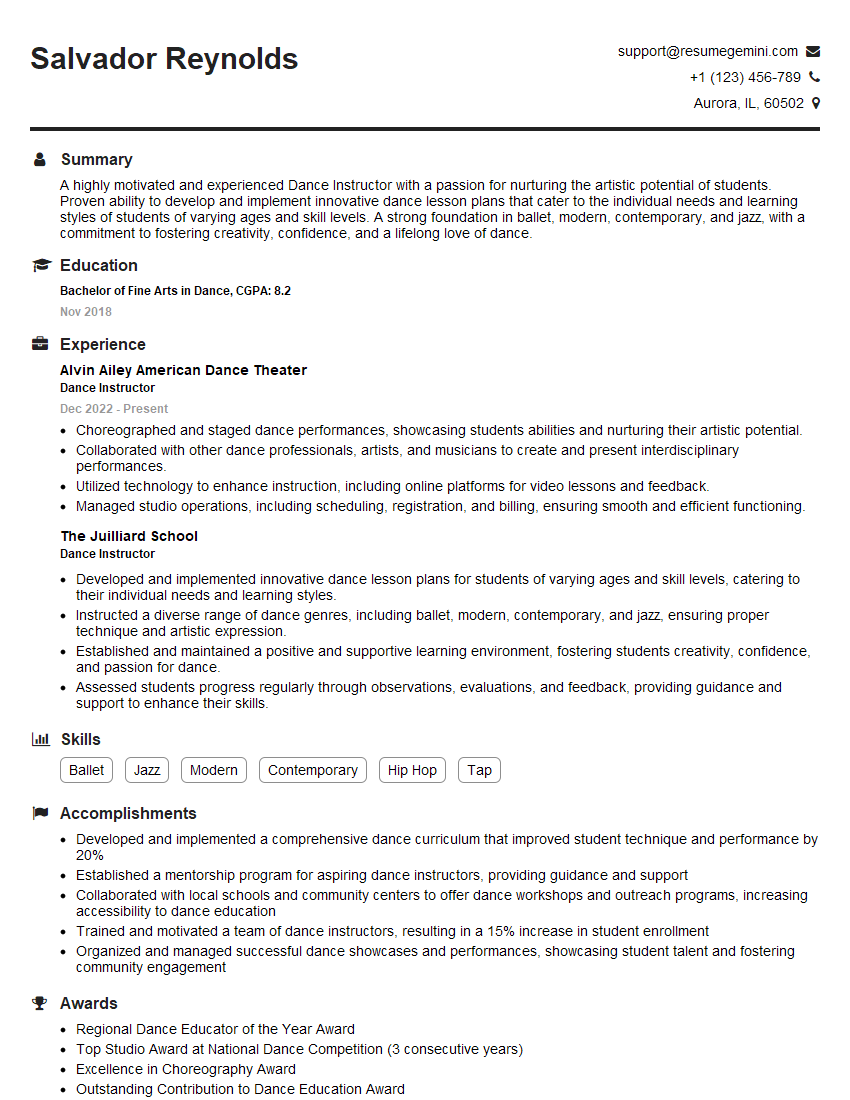
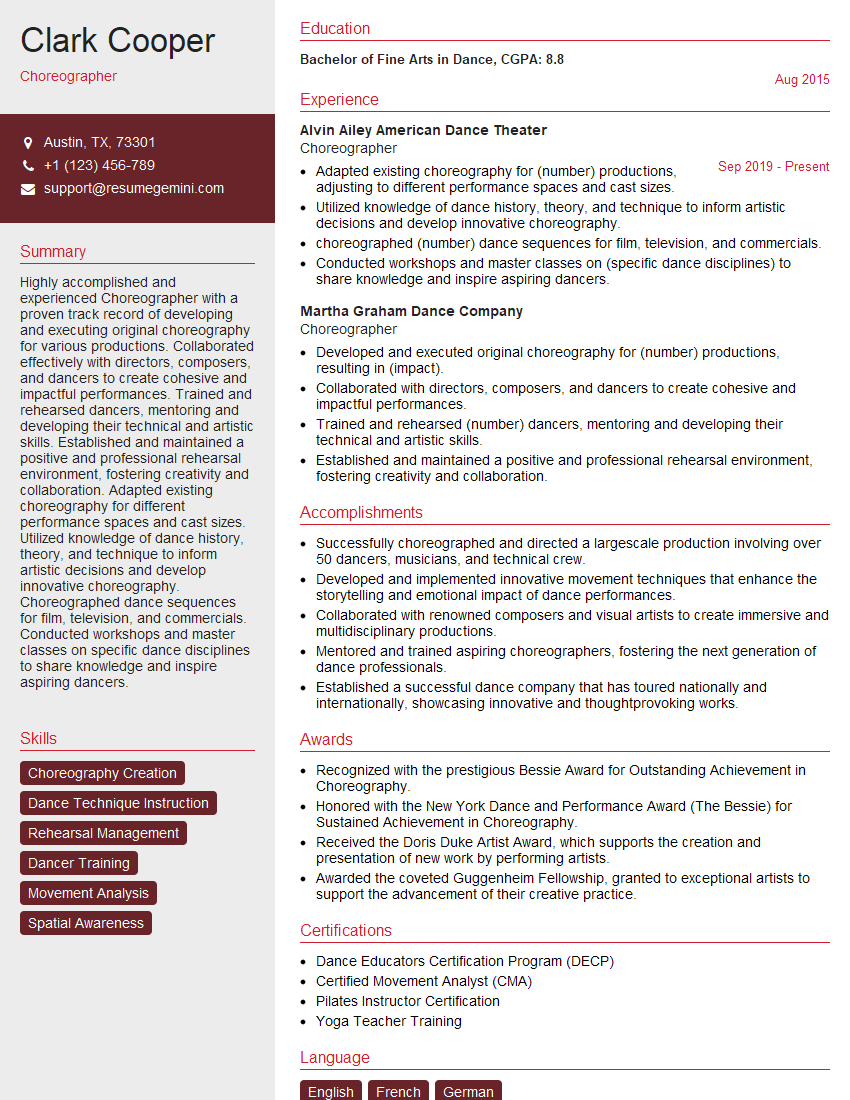
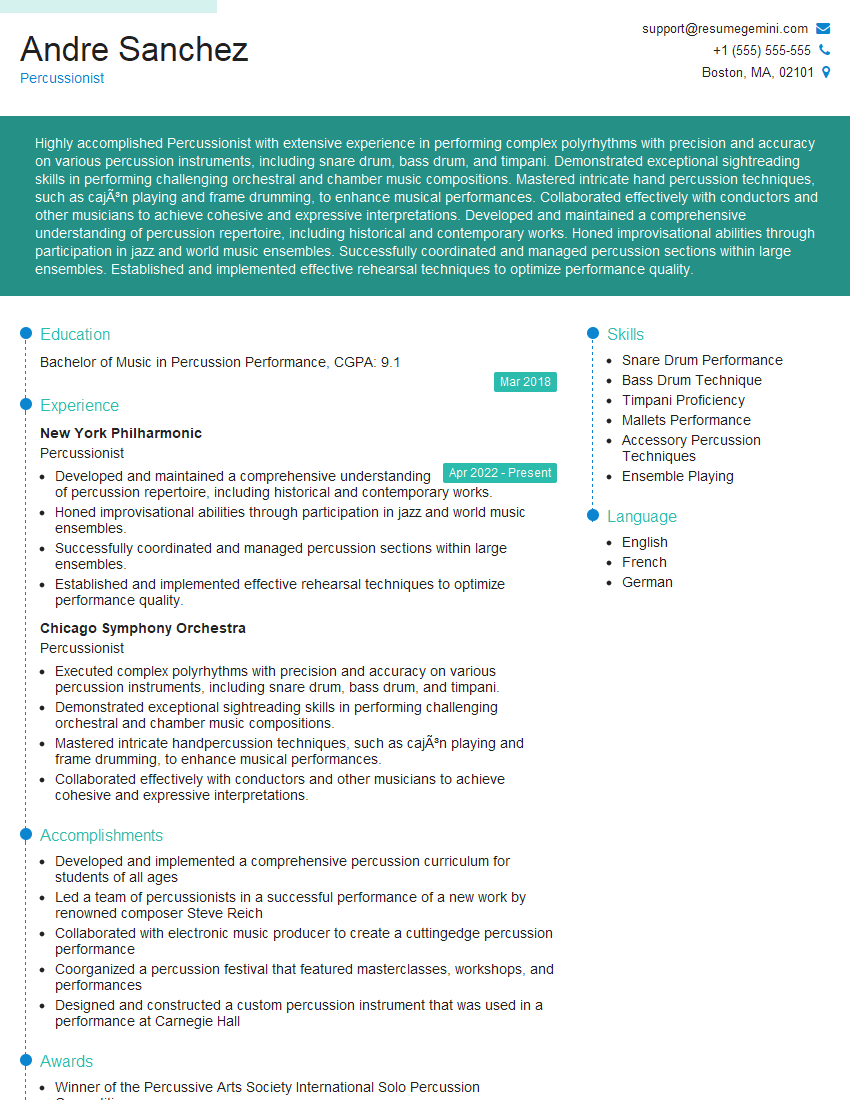
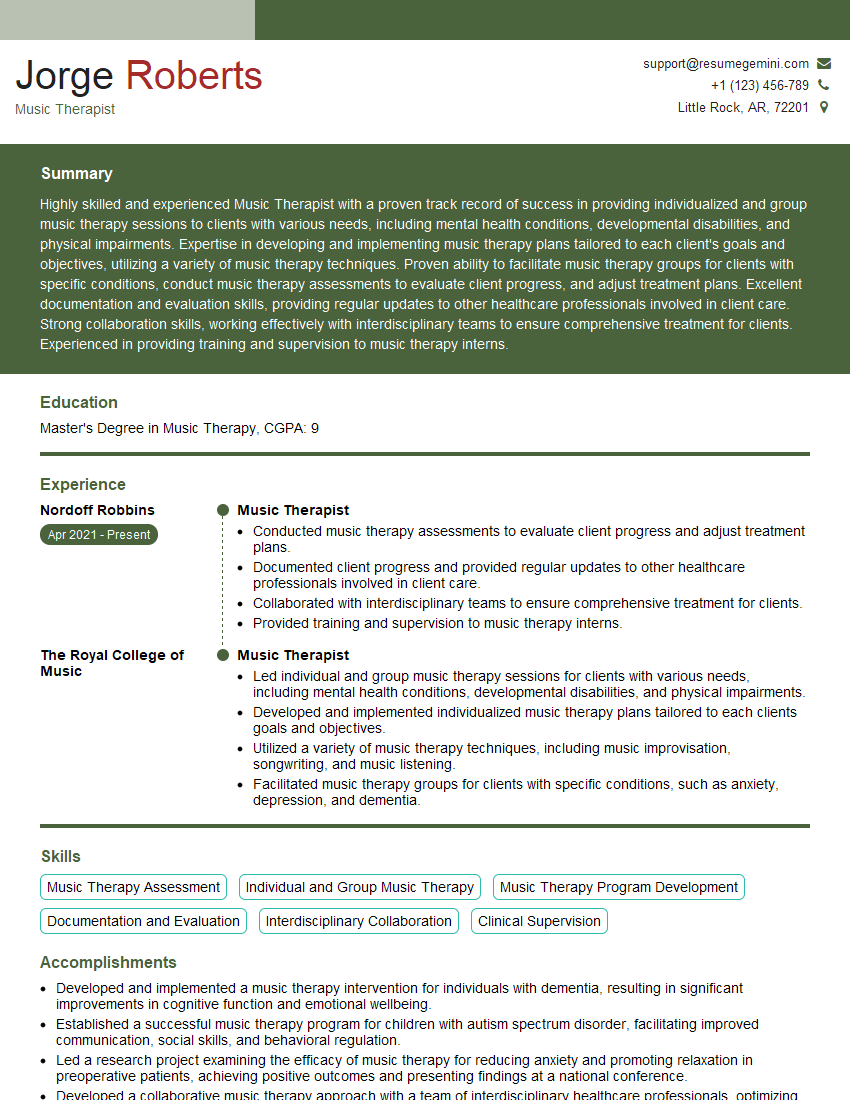
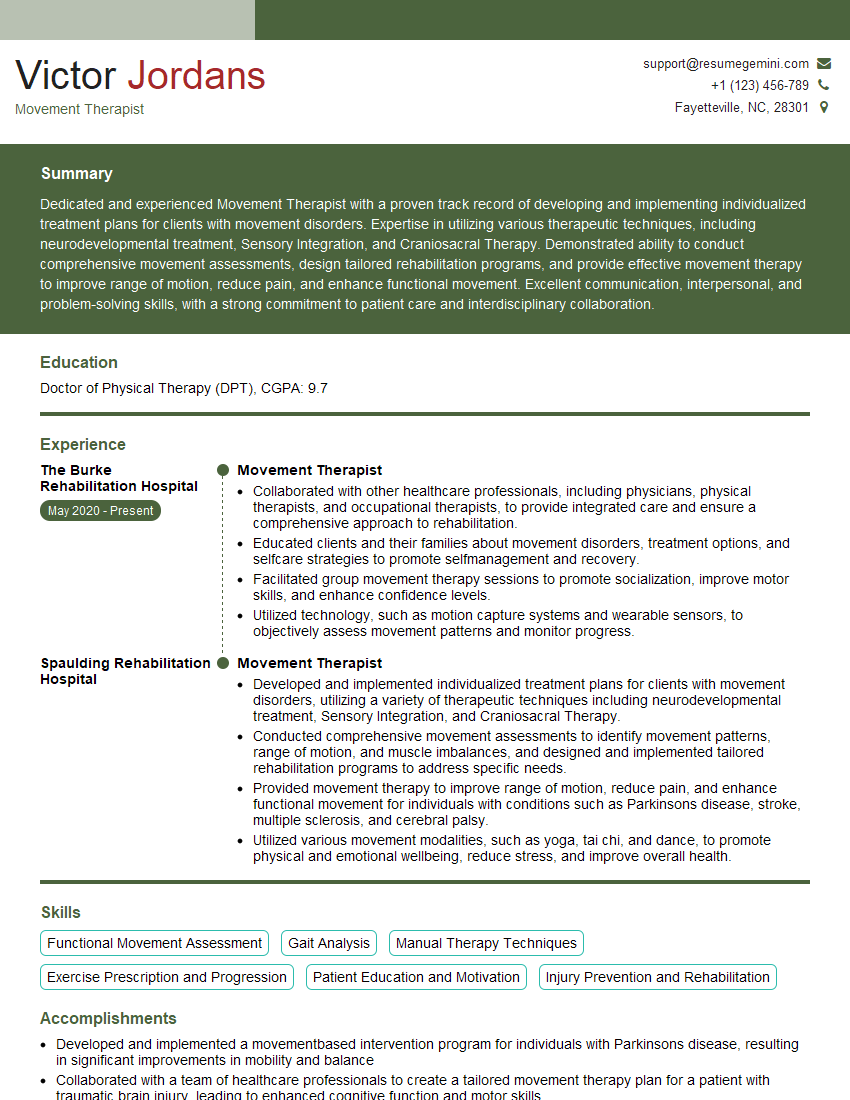
Mastering rhythmic coordination is essential for career advancement in many creative fields. A strong understanding of rhythmic concepts opens doors to exciting opportunities and allows you to excel in collaborative environments. To maximize your job prospects, it’s vital to create a professional and ATS-friendly resume that effectively showcases your skills and experience. We strongly recommend using ResumeGemini to build a compelling resume that highlights your rhythmic coordination expertise. ResumeGemini provides tools and resources to create a polished document, and we even offer examples of resumes tailored to Rhythmic Coordination to help guide you.
Explore more articles
Users Rating of Our Blogs
Share Your Experience
We value your feedback! Please rate our content and share your thoughts (optional).
What Readers Say About Our Blog
Very informative content, great job.
good