Interviews are more than just a Q&A session—they’re a chance to prove your worth. This blog dives into essential Operation and Maintenance of Wind Farms interview questions and expert tips to help you align your answers with what hiring managers are looking for. Start preparing to shine!
Questions Asked in Operation and Maintenance of Wind Farms Interview
Q 1. Describe your experience with troubleshooting wind turbine mechanical issues.
Troubleshooting mechanical issues in wind turbines requires a systematic approach. I begin by thoroughly reviewing the turbine’s SCADA data to pinpoint the malfunction’s origin. This could be anything from unusual vibrations indicated by accelerometers to variations in yaw or pitch control. Then, I conduct a visual inspection, checking for obvious signs of damage, such as loose bolts, cracked components, or hydraulic leaks. For example, I once identified a failing main bearing by noticing unusual high-frequency vibrations detected by the SCADA system and confirmed it during a subsequent visual inspection that revealed traces of excessive grease and metal particles. Following the visual inspection, I might utilize advanced diagnostic tools like infrared cameras to detect overheating components or ultrasonic sensors to locate bearing defects before they escalate into catastrophic failure. Based on the collected data, I formulate a hypothesis, order the necessary parts (if needed), and execute the repair, ensuring thorough documentation of each step and the implementation of corrective measures to prevent recurrence. This process is crucial for minimizing downtime and extending the lifespan of the turbine.
Q 2. Explain the process of a wind turbine gearbox inspection and maintenance.
Gearbox inspection and maintenance are critical for wind turbine reliability. It’s typically done as part of a planned preventative maintenance (PPM) schedule, usually annually or as determined by the manufacturer’s recommendations and operational data. The process starts with a thorough visual inspection for external leaks, damage, and corrosion. This includes checking oil levels and quality. Next, the gearbox oil is sampled and analyzed for contaminants like metal particles, indicating wear. This analysis dictates the frequency and necessity of further actions. Advanced diagnostic techniques such as oil particle counters, vibration analysis and thermography are often used to assess the internal health of the gearbox. If necessary, the gearbox is opened for internal inspection, replacing worn bearings, gears, or seals as needed. The whole process requires careful documentation and strict adherence to safety protocols because of the high-risk nature of working within the gearbox housing, and always with the turbine properly locked-out and tagged-out.
Q 3. How familiar are you with different types of wind turbine generators (e.g., permanent magnet synchronous generators, doubly fed induction generators)?
I’m very familiar with various wind turbine generator types. Permanent Magnet Synchronous Generators (PMSGs) are known for their high efficiency and reliability due to the absence of slip rings and brushes but can be more expensive. Doubly Fed Induction Generators (DFIGs) offer good efficiency and variable-speed operation with reduced power electronic needs, making them cost-effective for many applications. I understand the operational characteristics, control strategies, and common failure modes for each. My experience includes working on wind farms utilizing both PMSGs and DFIGs, allowing me to troubleshoot and maintain these systems effectively. For instance, I have extensive experience diagnosing issues with PMSG cooling systems which are critical for the operational performance and lifespan of the generator and can lead to significant downtime.
Q 4. What safety procedures do you follow when working at heights on a wind turbine?
Safety is paramount when working at heights on a wind turbine. All work is performed under a comprehensive permit-to-work system, ensuring all personnel are properly trained and have the necessary certifications (e.g., working at height, confined space, electrical safety). We always use appropriate Personal Protective Equipment (PPE), including harnesses, fall arrest systems, and hard hats. Detailed risk assessments are conducted prior to any work, identifying potential hazards and mitigating them with specific safety measures. The turbine is always properly locked out and tagged out to prevent unexpected movements or energization. Regular communication is maintained amongst the team, and emergency rescue plans are in place. We frequently conduct refresher training to maintain our safety standards and skills. Furthermore, wind speed and weather conditions are constantly monitored before and during any work at height activities. Safety is not just a protocol—it is a fundamental part of our work culture.
Q 5. Explain your experience with SCADA systems in wind farm operations.
I have extensive experience using SCADA (Supervisory Control and Data Acquisition) systems in wind farm operations. My expertise includes monitoring turbine performance parameters, identifying anomalies, and generating reports for preventative maintenance. I’m proficient in analyzing data from various SCADA platforms, including data visualization and alarm management. For example, I’ve used SCADA data to identify a pattern of increased vibration on a specific turbine that eventually led to the early detection and resolution of a gearbox bearing fault, preventing a major breakdown. My work involves configuring SCADA parameters, troubleshooting system errors, and integrating new turbines into existing SCADA networks. Strong SCADA system knowledge helps in predictive maintenance and overall optimization of wind farm operations by identifying trends and patterns that suggest potential problems.
Q 6. How do you diagnose and resolve issues related to wind turbine blade damage?
Diagnosing and resolving wind turbine blade damage involves a multi-step process. It starts with a visual inspection using binoculars or drones to assess the extent of the damage – cracks, delamination, leading-edge erosion, or foreign object damage. High-resolution cameras and infrared thermography can detect deeper damage not visible to the naked eye. The severity of the damage determines the course of action. Minor damage might be repaired in situ with specialized resins and composites. More extensive damage necessitates blade repair by specialized teams or, in severe cases, blade replacement. The root cause of the damage must also be identified to prevent recurrence. This could involve investigating lightning strikes, bird strikes, or issues related to blade manufacturing or design flaws. Detailed documentation is crucial, including photographic evidence and thorough records of the repair work. This careful, methodical approach ensures the long-term integrity and safety of the wind turbine.
Q 7. What is your experience with preventative maintenance schedules for wind turbines?
Preventative maintenance schedules are critical for maximizing wind turbine uptime and extending their lifespan. These schedules are typically based on manufacturer recommendations, but we tailor them based on operational data from SCADA systems and the specific conditions of the wind farm. This includes a combination of time-based and condition-based maintenance. Time-based maintenance involves regularly scheduled tasks such as oil changes, filter replacements, and visual inspections. Condition-based maintenance uses data from sensors, vibration analysis, and oil analysis to determine the actual condition of components and schedule maintenance only when necessary, optimizing resource allocation. We utilize specialized software to manage and track maintenance activities, ensuring compliance with all safety and regulatory requirements and optimizing the overall wind farm performance. Continuous monitoring, analysis, and refinement of the schedules are crucial to achieve optimal efficiency and to address issues before they lead to costly downtime.
Q 8. Describe your experience with the repair and replacement of wind turbine components.
My experience encompasses the full lifecycle of wind turbine component repair and replacement, from initial diagnosis to final commissioning. This includes everything from minor repairs like replacing a faulty bearing on a gearbox to major overhauls involving blade replacements or complete nacelle refurbishments. I’ve worked on various turbine models, from 1MW to 5MW capacity, across different manufacturers. For instance, I once led a team that successfully replaced a damaged main bearing on a 3MW turbine within a tight timeframe, minimizing downtime and avoiding significant financial losses for the wind farm operator. The process involved meticulous planning, safe crane operations, precision component handling, and thorough post-replacement testing to ensure proper functionality. Another example involves troubleshooting blade cracks: this requires a detailed visual inspection, sometimes using drones for high-altitude access, followed by non-destructive testing (NDT) to assess the extent of the damage before determining if repair or replacement is necessary. We always prioritize safety and follow stringent procedures laid out in the manufacturer’s documentation and relevant safety regulations.
- Diagnosis: Thorough visual inspection, NDT (ultrasonic, infrared thermography), vibration analysis.
- Repair/Replacement: Utilizing specialized tools and equipment (cranes, lifting systems, specialized hand tools), adhering to manufacturer’s guidelines and safety protocols.
- Commissioning: Rigorous testing and validation to ensure proper functionality and safety before returning the turbine to operation.
Q 9. How familiar are you with different types of wind turbine control systems?
I’m highly familiar with various wind turbine control systems, including both pitch and yaw control mechanisms. My experience spans different control system architectures, from older, simpler systems to modern, sophisticated systems that incorporate advanced algorithms for maximizing energy capture and minimizing wear and tear. I’ve worked with both SCADA (Supervisory Control and Data Acquisition) systems and PLC (Programmable Logic Controller) based systems. I understand the role of each component within the control system—sensors (wind speed, direction, blade pitch), actuators (hydraulic or electric pitch systems, yaw drives), and the control algorithms that govern them. One particular challenge involved troubleshooting a faulty pitch control system causing erratic blade movements. Through systematic analysis of SCADA data, I was able to isolate the issue to a malfunctioning pitch angle sensor. Replacing the sensor restored the system’s proper functionality. I am comfortable working with various communication protocols used within these systems such as Profibus, Modbus, and Ethernet IP.
Q 10. Explain your experience with hydraulic and pneumatic systems in wind turbines.
I have extensive experience with both hydraulic and pneumatic systems in wind turbines. Hydraulic systems are predominantly used in the yaw and pitch systems of larger turbines. These systems are crucial for the precise positioning of the nacelle and blades. My experience includes maintaining and repairing hydraulic pumps, valves, cylinders, and accumulators. Troubleshooting hydraulic leaks is a critical skill, demanding both technical expertise and safety awareness. For example, I once identified a leak in a hydraulic actuator causing sluggish yaw response. By carefully tracing the hydraulic lines and replacing the damaged seal, we restored optimal yaw control. Pneumatic systems are less common but can be found in some braking systems or auxiliary equipment. Understanding the pressures, air quality, and potential issues with pneumatic components is equally important. Regular maintenance, including monitoring air pressure and checking for leaks and corrosion, is crucial to prevent system failure.
Q 11. How do you ensure compliance with safety regulations and permits during wind farm maintenance?
Safety is paramount in wind farm maintenance. We strictly adhere to all relevant safety regulations, including OSHA (Occupational Safety and Health Administration) guidelines and any specific local or national regulations applicable to the site. Before any work commences, a thorough risk assessment is performed, identifying potential hazards and implementing control measures. This includes Permit-to-Work systems, Lockout/Tagout procedures for isolating electrical systems, and detailed safety briefings for all personnel involved. We also meticulously document all maintenance activities, ensuring compliance with record-keeping requirements. Working at heights requires specific training and the use of specialized equipment like harnesses, fall arrest systems, and elevated work platforms. The use of Personal Protective Equipment (PPE) including hard hats, safety glasses, and high-visibility clothing is mandated at all times. All our personnel hold the necessary safety certifications and undergo regular refresher training. In case of emergency, we have well-defined procedures and clear communication channels to ensure a swift and efficient response.
Q 12. Describe your experience with electrical troubleshooting and repair in wind turbines.
My electrical troubleshooting skills are essential to my role. I possess a deep understanding of high-voltage systems, low-voltage control circuits, and electrical safety procedures. This includes diagnosing faults in generators, transformers, cabling, and other electrical components. I’m proficient in using diagnostic tools like multimeters, insulation resistance testers, and motor testers. I’m also familiar with interpreting electrical schematics and wiring diagrams. One memorable case involved a sudden generator trip. Using specialized diagnostic tools and my understanding of the turbine’s electrical system, I quickly isolated the fault to a faulty connection in the high-voltage switchgear, preventing a lengthy downtime and potential damage to other equipment.
Q 13. Explain your experience with interpreting and using diagnostic data from wind turbines.
Interpreting and using diagnostic data is crucial for proactive maintenance and troubleshooting. I’m skilled at analyzing data from SCADA systems, vibration monitoring systems, and other diagnostic tools to identify potential problems before they lead to major failures. This involves understanding trends in data, identifying anomalies, and correlating different data points to pinpoint the root cause of a problem. For example, using vibration data analysis, I can detect early signs of bearing wear, allowing for timely replacement and preventing catastrophic failure. Similarly, monitoring temperature data can identify hotspots indicating potential electrical faults or overheating components. This proactive approach minimizes downtime and extends the lifespan of the turbines. I utilize data analytics software and tools to help in trend analysis and predicting potential failures.
Q 14. What is your experience with the use of specialized tools and equipment for wind turbine maintenance?
Wind turbine maintenance requires specialized tools and equipment. I’m experienced in using a wide range of tools, including:
- Lifting equipment: Cranes, hoists, and lifting slings for accessing and handling heavy components.
- Specialized hand tools: Torque wrenches, socket sets, and specialized tools for working on specific turbine components.
- Diagnostic tools: Multimeters, insulation resistance testers, vibration analyzers, infrared cameras, and data acquisition systems.
- Safety equipment: Fall arrest systems, harnesses, and other PPE.
- Access equipment: Elevated work platforms, climbing gear, and drones for inspecting hard-to-reach areas.
Q 15. How familiar are you with different types of wind turbine towers (e.g., lattice towers, tubular towers)?
Wind turbine towers are the vertical structures supporting the nacelle and rotor. Two primary types exist: tubular and lattice towers. Tubular towers are essentially large, hollow cylinders, often made of steel, offering high strength-to-weight ratios and a streamlined design. These are common in offshore wind farms due to their resistance to bending forces. Lattice towers, on the other hand, are constructed from a framework of interconnected steel beams, resembling a giant scaffold. They are often favored for onshore applications where weight is less of a concern, and they can be easily transported and assembled on-site.
My experience encompasses both types extensively. I’ve worked on projects involving the maintenance of both tubular towers, requiring specialized climbing equipment and rigging techniques, and lattice towers, where inspection often involves detailed visual examination of each structural member for signs of corrosion or damage. I understand the specific maintenance challenges associated with each type, including the different inspection methods, the use of specialized tools, and the need for detailed documentation for compliance with safety regulations.
- Tubular Towers: Focus on corrosion protection, base inspections for settling, and the integrity of the welds.
- Lattice Towers: Detailed bolt inspections, checking for looseness or fatigue, and attention to potential galvanization issues.
Career Expert Tips:
- Ace those interviews! Prepare effectively by reviewing the Top 50 Most Common Interview Questions on ResumeGemini.
- Navigate your job search with confidence! Explore a wide range of Career Tips on ResumeGemini. Learn about common challenges and recommendations to overcome them.
- Craft the perfect resume! Master the Art of Resume Writing with ResumeGemini’s guide. Showcase your unique qualifications and achievements effectively.
- Don’t miss out on holiday savings! Build your dream resume with ResumeGemini’s ATS optimized templates.
Q 16. Describe your experience with working with nacelle components.
The nacelle houses the gearbox, generator, and other vital components of a wind turbine. My experience with nacelle components spans a broad range, from routine inspections and lubrication to complex repairs and component replacements. I’m proficient in working with high-voltage systems, hydraulic and pneumatic systems, and various types of sensors and control systems within the nacelle. For instance, I’ve overseen the replacement of faulty pitch systems in several turbines, requiring careful planning, sequencing, and safety precautions due to the heavy components and hazardous energy sources involved.
A memorable experience involved diagnosing a recurring fault in a generator bearing. Initially, vibration analysis indicated a potential bearing issue, but further investigation, using thermal imaging and oil analysis, revealed a subtle misalignment in the gearbox that was putting extra stress on the bearing. Correcting the gearbox alignment resolved the problem, saving the cost and time of a complete bearing replacement. This highlights the importance of a systematic approach to troubleshooting and the integration of different diagnostic techniques.
Q 17. Explain your understanding of yaw systems and their maintenance.
The yaw system is responsible for orienting the wind turbine to face directly into the wind, maximizing energy capture. It consists of a motor, gearbox, and a large ring gear attached to the base of the nacelle. Regular maintenance is crucial for its efficient operation. This includes regular lubrication of the yaw bearing, gear inspections for wear and tear, and the monitoring of the yaw drive motor for any signs of overheating or malfunction.
Maintenance often involves detailed inspections of the yaw drive system’s components for signs of wear, such as scoring on gears or damage to the motor. We also perform regular lubrication and check the hydraulic system (if present) for leaks or pressure loss. Sometimes, precision alignment checks are required to ensure the yaw system operates smoothly and efficiently. Problems in the yaw system can manifest as inefficient energy capture or even complete turbine shutdown, highlighting the importance of regular and thorough maintenance.
Q 18. How do you perform a thorough assessment of wind turbine performance data?
Assessing wind turbine performance involves a multi-faceted approach combining data analysis, visual inspections, and an understanding of meteorological conditions. We start by collecting data from the Supervisory Control and Data Acquisition (SCADA) system, which provides real-time information on power output, wind speed, and other key parameters. This data is then analyzed to identify any deviations from expected performance, such as reduced power output or increased downtime.
I use several techniques for analysis. This includes creating comparative graphs plotting power output versus wind speed to identify performance gaps against predicted performance curves and examining historical data to identify trends and patterns. For example, a consistent drop in power output at certain wind speeds may indicate problems with the blades or the generator. Following data analysis, we would conduct on-site inspections to validate the findings and identify potential causes. Finally, detailed records of all maintenance activities are crucial for trend analysis and predictive maintenance planning, allowing for more efficient resource allocation and optimized turbine performance.
Q 19. What is your experience with condition monitoring techniques for wind turbines?
Condition monitoring is crucial for proactive maintenance and maximizing wind turbine uptime. A range of techniques is employed, including vibration analysis, oil analysis, thermal imaging, and acoustic emission monitoring. Vibration analysis detects irregularities in the rotating components, such as bearings or gearboxes, that might indicate early signs of wear or damage. Oil analysis examines the condition of the lubricating oil for contaminants or degradation products that may signal bearing wear, gear damage, or overheating.
Thermal imaging helps identify hotspots in electrical connections, bearings, or other components that might indicate excessive heat generation due to electrical resistance or friction. Acoustic emission monitoring detects high-frequency sounds generated by the propagation of cracks or other mechanical failures. We combine data from different methods to build a comprehensive picture of the turbine’s health, aiding in decision-making regarding maintenance scheduling. For example, a combination of high vibration levels and elevated temperatures in a gearbox would indicate an urgent need for inspection and repair.
Q 20. How familiar are you with different types of lubricating oils used in wind turbines?
Wind turbines utilize specialized lubricating oils formulated to withstand extreme conditions, such as wide temperature variations and high loads. The choice of oil depends on the specific application and component. Common types include synthetic oils, which offer superior performance at both high and low temperatures and enhanced oxidation resistance, and mineral oils, which are often used in less demanding applications. Some oils incorporate additives to improve performance under specific conditions, such as extreme-pressure additives for gearboxes or anti-wear additives for bearings.
My experience involves selecting the appropriate oil based on the manufacturer’s recommendations and the operational conditions. This includes verifying the oil’s viscosity, and ensuring that the oil is compatible with the seals and other materials used in the equipment. Regular oil sampling and analysis is vital to monitor its condition and to detect any signs of contamination or degradation. We follow strict procedures for oil changes, ensuring that the correct oil quantity and type are used and that all safety precautions are followed.
Q 21. Explain your experience with the use of thermal imaging cameras in wind turbine maintenance.
Thermal imaging cameras are indispensable tools in wind turbine maintenance. They allow for non-invasive detection of temperature anomalies that can indicate potential problems. By capturing infrared radiation, they generate images where different colors represent varying temperatures. Hotspots, often invisible to the naked eye, can signal overheating components such as faulty bearings, loose connections, or developing electrical faults.
I use thermal imaging routinely. A common application is inspecting electrical connections in the nacelle and the tower base. Overheating connections can lead to fire hazards or premature component failure. Another application is inspecting the condition of bearings. Elevated temperatures in a bearing can indicate an impending failure, allowing for proactive maintenance and preventing costly downtime. The data generated by the thermal camera is documented and included in the turbine’s maintenance records, providing a valuable historical record of the turbine’s condition.
Q 22. Describe your experience with vibration analysis for predictive maintenance.
Vibration analysis is crucial for predictive maintenance in wind farms. It involves monitoring the vibrations produced by various components of a wind turbine, such as the gearbox, main bearing, and generator. These vibrations, measured using accelerometers, provide insights into the health of the equipment. Changes in vibration patterns – an increase in amplitude or a shift in frequency – can indicate developing faults like imbalance, misalignment, or bearing wear, allowing us to schedule maintenance before a catastrophic failure occurs.
In my experience, I’ve used both portable data collectors and online monitoring systems to collect vibration data. The data is then analyzed using specialized software, often employing techniques like Fast Fourier Transforms (FFT) to identify specific frequencies associated with different faults. For example, a high amplitude at a specific gear mesh frequency might indicate gear damage. I then use this information to prioritize maintenance activities, focusing on turbines showing signs of developing problems. This proactive approach significantly reduces downtime and expensive repairs.
One specific example involved a turbine showing increased vibration in the high-frequency range. Analysis revealed bearing wear. By scheduling preventative maintenance and replacing the bearing, we prevented a major failure that could have resulted in significant downtime and costly repairs.
Q 23. How do you handle emergency situations during wind turbine maintenance?
Handling emergencies during wind turbine maintenance requires a structured approach that prioritizes safety and minimizing downtime. Our standard operating procedures (SOPs) outline specific steps for various scenarios, including fire, electrical faults, or personnel injuries.
First, safety is paramount. We immediately secure the area, evacuate personnel if necessary, and contact emergency services if required. Then, we assess the situation, determining the nature and severity of the emergency. For example, a fire necessitates immediate fire suppression while a minor electrical fault may just require isolation of the affected circuit.
Communication is key. We use designated communication channels to keep all relevant parties informed of the situation, including the wind farm control room, maintenance supervisors, and emergency services. We also implement a detailed incident reporting process, documenting the event, the actions taken, and the lessons learned for future reference and preventing similar incidents.
We conduct regular safety training and drills to prepare the team for emergency situations. This ensures everyone understands their roles and responsibilities, improving our response time and effectiveness.
Q 24. What is your understanding of grid connection and its impact on wind farm operation?
Grid connection is fundamental to wind farm operation, as it’s how we deliver the generated electricity to the power grid. A wind farm’s connection involves a complex system of transformers, cables, and protective relaying equipment that ensures the safe and efficient transfer of power. The grid operator sets specific requirements, including voltage and frequency tolerances, which the wind farm must meet.
The quality of the grid connection significantly impacts operation. For example, grid instability, voltage fluctuations, or frequency deviations can impact wind turbine performance and even lead to shutdowns. Similarly, faults on the grid can propagate back to the wind farm, posing safety risks.
Therefore, we work closely with the grid operator to ensure seamless integration and reliable operation. This includes regular monitoring of grid parameters, compliance with grid codes, and effective fault management. We utilize SCADA (Supervisory Control and Data Acquisition) systems to monitor real-time data and proactively manage potential issues.
Q 25. How familiar are you with the process of decommissioning a wind turbine?
Decommissioning a wind turbine is a multi-stage process that requires careful planning and execution to minimize environmental impact and ensure worker safety. It begins with a detailed assessment of the turbine’s condition, identifying any potential hazards, and planning for safe dismantling and disposal of components.
The process typically involves disconnecting the turbine from the grid, lowering the nacelle and rotor blades, and then systematically dismantling the tower section by section. All components are carefully documented and tagged. Hazardous materials, such as oil and lubricants, are handled and disposed of according to environmental regulations.
We follow strict safety procedures during decommissioning, including risk assessments, permits, and the use of specialized equipment. We also ensure compliance with all applicable environmental regulations, properly disposing of or recycling components to minimize waste and environmental impact. The final step involves site restoration to return the land to its original condition or a pre-agreed state.
Q 26. Explain your experience with documentation and reporting of wind turbine maintenance activities.
Comprehensive documentation and reporting are vital for efficient wind farm operation and maintenance. We use a Computerized Maintenance Management System (CMMS) to track all maintenance activities, from scheduled preventative maintenance to unplanned repairs. This system allows us to record detailed information about each task, including the date, time, personnel involved, parts used, and the work performed.
Our reporting process generates various reports, such as maintenance summaries, equipment performance reports, and cost analysis reports. These reports are used for performance monitoring, identifying trends, optimizing maintenance schedules, and making informed decisions about future investments. We also generate reports for regulatory compliance and internal audits.
Accuracy and completeness are crucial. We implement strict quality control procedures to ensure the accuracy of data input into the CMMS. All maintenance personnel are trained on the system and our reporting procedures.
Q 27. Describe your experience working with remote monitoring and diagnostics tools for wind turbines.
Remote monitoring and diagnostic tools are increasingly important for efficient wind farm management. These tools allow us to monitor the performance and health of turbines remotely, reducing the need for frequent on-site visits and allowing for early detection of potential issues.
We utilize SCADA systems that provide real-time data on various parameters, including power output, wind speed, vibration levels, and temperature. These systems generate alerts if any parameter exceeds predefined thresholds, enabling proactive intervention. Advanced diagnostic tools, such as those utilizing artificial intelligence (AI), provide deeper analysis of data, identifying patterns indicative of developing faults, allowing for predictive maintenance planning.
For instance, we can use remote diagnostics to detect anomalies in the generator’s performance, even before they impact power output. This enables us to schedule preventative maintenance, saving time and costs associated with major repairs. The data collected through these systems is also invaluable for optimizing turbine performance and reducing downtime.
Q 28. How would you prioritize maintenance tasks in a wind farm with multiple turbines needing attention?
Prioritizing maintenance tasks in a wind farm with multiple turbines requiring attention necessitates a systematic approach. We use a risk-based prioritization system, considering factors like the severity of the fault, the potential impact on power production, and the urgency of the repair.
- Criticality: Faults posing immediate safety risks or causing significant power loss are prioritized first.
- Urgency: Issues likely to lead to catastrophic failures if left unattended are given higher priority.
- Impact: The potential financial impact of a fault (lost production, repair costs) influences the priority.
We employ a CMMS to track the status of each turbine and its reported faults. This system helps us to categorize and rank the tasks based on the factors mentioned above. Furthermore, we consider the availability of resources, such as technicians and spare parts, when scheduling maintenance activities. This ensures efficient allocation of resources and minimizes overall downtime.
For example, a turbine experiencing a complete shutdown takes precedence over a turbine showing minor vibration issues. A systematic approach, combined with a robust CMMS and skilled technicians, allows for the optimal allocation of resources and prioritization of maintenance tasks to maximize efficiency and reliability.
Key Topics to Learn for Operation and Maintenance of Wind Farms Interview
- Turbine Systems: Understanding the mechanical, electrical, and hydraulic components of wind turbines; diagnosing and troubleshooting common issues; preventative maintenance schedules.
- Electrical Systems: Knowledge of power generation, grid connection, and safety protocols; experience with high-voltage systems and fault detection; understanding of SCADA systems and data analysis.
- Predictive Maintenance: Implementing data-driven strategies to predict failures and optimize maintenance schedules; utilizing sensor data and diagnostic tools for early problem identification; implementing condition-based maintenance strategies.
- Safety Procedures & Regulations: Adherence to safety regulations and best practices; working at heights and confined spaces; risk assessment and mitigation; emergency response protocols.
- Troubleshooting & Problem Solving: Systematic approaches to diagnosing and resolving complex technical issues; utilizing diagnostic tools and technical documentation; effectively communicating findings and solutions.
- Health, Safety, and Environmental (HSE) Compliance: Understanding and implementing HSE regulations specific to wind farms; environmental impact considerations; waste management and disposal.
- Remote Monitoring & Control: Experience with remote monitoring systems; understanding of data acquisition and analysis; ability to remotely diagnose and troubleshoot issues.
- Teamwork & Communication: Collaborating effectively with team members; clear and concise communication of technical information; ability to work independently and as part of a team.
Next Steps
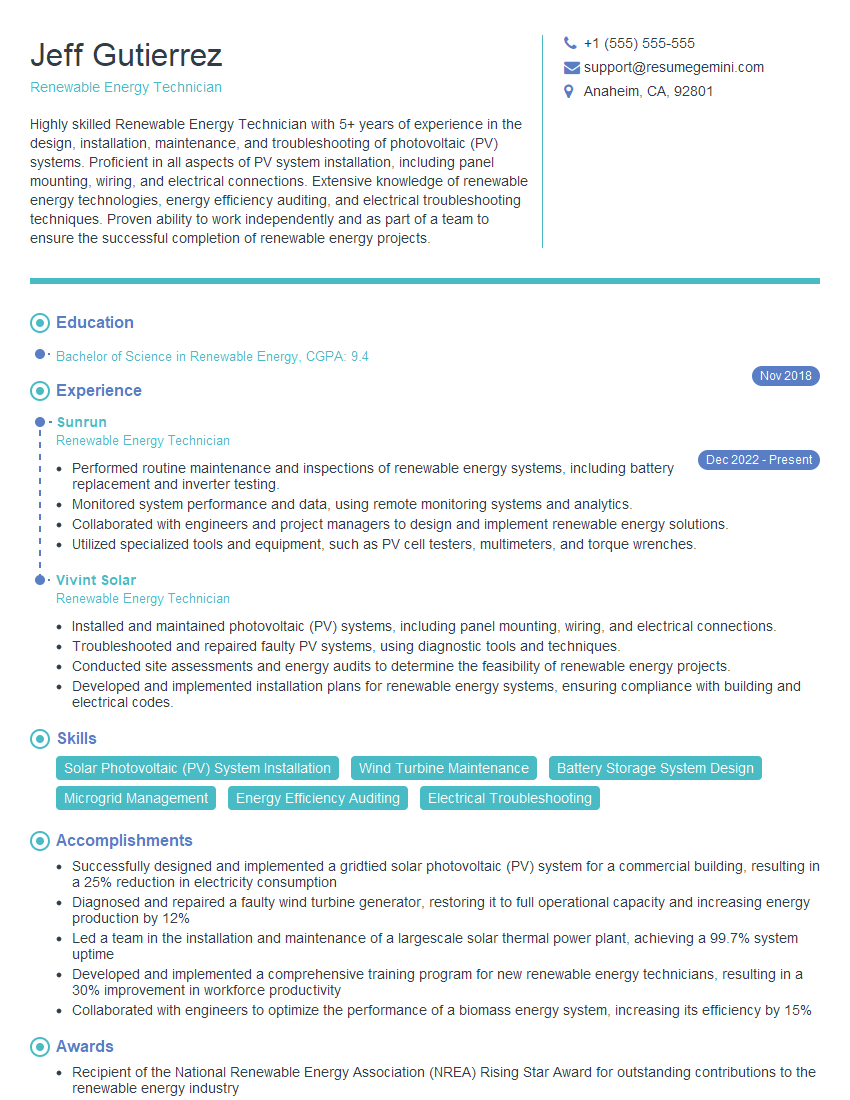
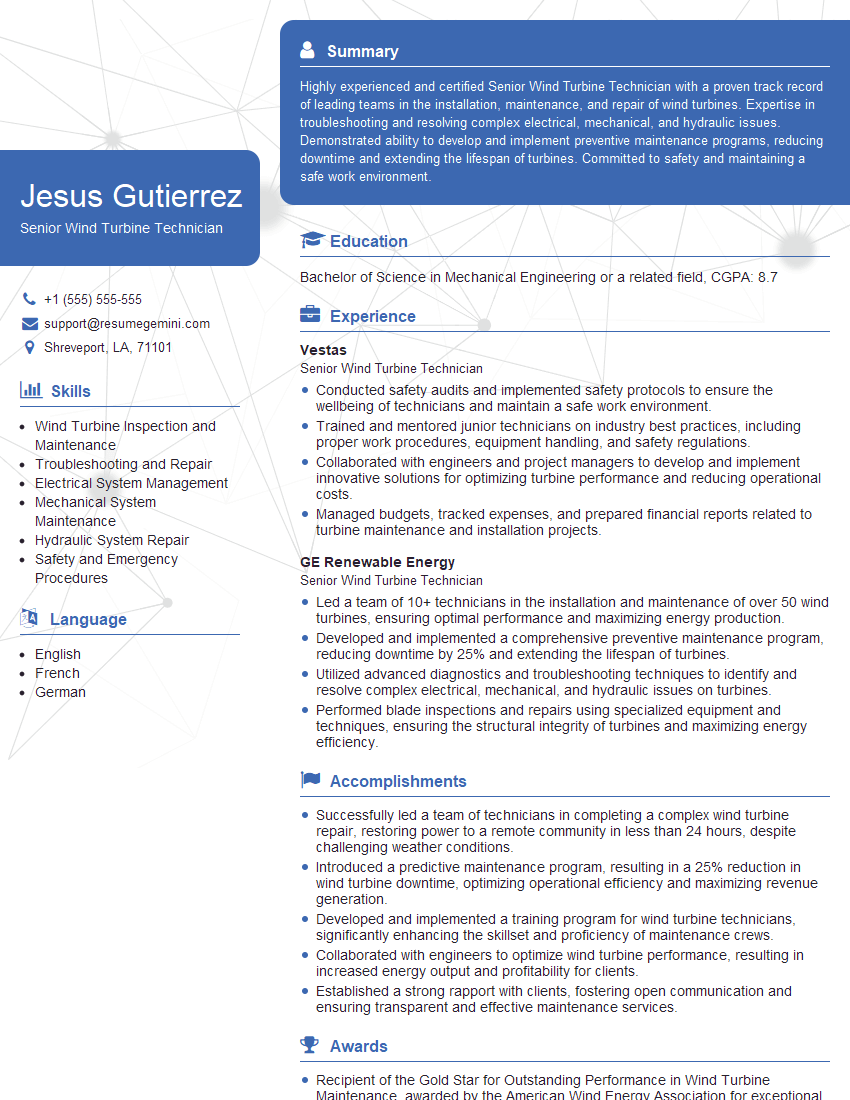
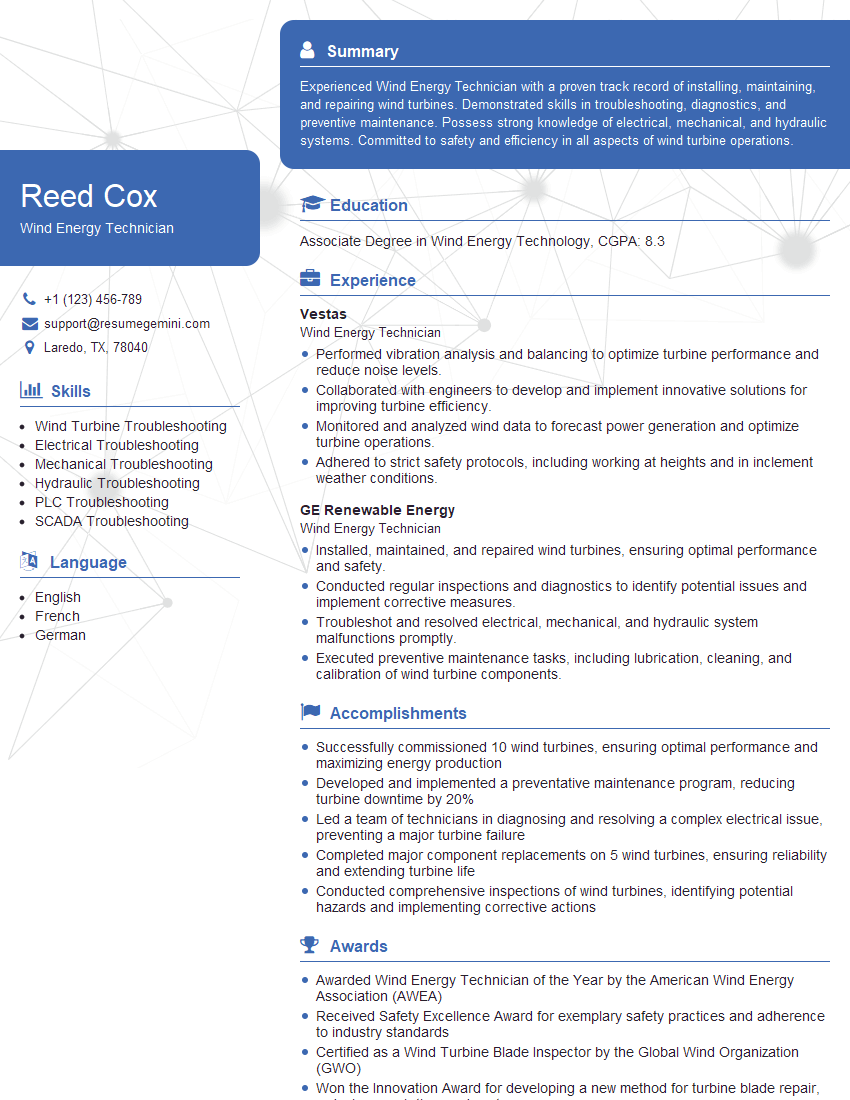
Mastering the operation and maintenance of wind farms opens doors to a rewarding and in-demand career in a rapidly growing industry. A strong understanding of these key areas will significantly enhance your interview performance and job prospects. To further strengthen your application, create an ATS-friendly resume that highlights your skills and experience effectively. ResumeGemini is a trusted resource for building professional and impactful resumes, designed to get noticed by recruiters. Examples of resumes tailored specifically to Operation and Maintenance of Wind Farms are available through ResumeGemini, helping you present your qualifications in the best possible light.

Explore more articles
Users Rating of Our Blogs
Share Your Experience
We value your feedback! Please rate our content and share your thoughts (optional).
What Readers Say About Our Blog
Very informative content, great job.
good