Preparation is the key to success in any interview. In this post, we’ll explore crucial Renewable Energy Technology Evaluation interview questions and equip you with strategies to craft impactful answers. Whether you’re a beginner or a pro, these tips will elevate your preparation.
Questions Asked in Renewable Energy Technology Evaluation Interview
Q 1. Explain the Levelized Cost of Energy (LCOE) and its significance in renewable energy project evaluation.
Levelized Cost of Energy (LCOE) is a critical metric used to compare the overall cost of electricity generation from different sources, including renewable energy. It represents the average cost per unit of electricity generated over the entire lifetime of a power plant, considering all capital, operating, maintenance, and fuel costs, discounted to a present value. Think of it like the average price per kilowatt-hour (kWh) over the plant’s lifespan.
Significance in Renewable Energy Project Evaluation: LCOE is crucial for renewable energy project evaluation because it allows for a direct comparison between different renewable technologies (solar, wind, hydro) and even with conventional sources like fossil fuels. Lower LCOE indicates a more economically competitive project. Investors, policymakers, and developers use LCOE to assess project viability and make informed decisions about energy investments. For instance, comparing the LCOE of a solar farm with that of a natural gas plant helps determine which option is more cost-effective for a given location and timeframe.
Calculation: While the exact formula can be complex, the basic principle is to sum all discounted costs (capital, operational, maintenance, fuel, etc.) and divide by the total discounted energy produced over the project lifetime.
Q 2. Describe different methods for evaluating the environmental impact of renewable energy projects.
Evaluating the environmental impact of renewable energy projects requires a multi-faceted approach, considering both the direct and indirect effects. Several methods are employed:
- Life Cycle Assessment (LCA): LCA analyzes the environmental burdens associated with a project throughout its entire lifecycle, from raw material extraction and manufacturing to operation, decommissioning, and waste management. It quantifies impacts across various environmental categories, including greenhouse gas emissions, water consumption, land use, and biodiversity loss.
- Environmental Impact Assessment (EIA): EIA is a regulatory process that identifies, predicts, and evaluates the environmental consequences of proposed projects. It often involves public consultations and considers potential mitigation measures.
- Ecological Footprint Analysis: This method assesses the land and water area required to support a project’s resource consumption and waste assimilation. This helps understand the project’s overall ecological impact.
- Social Life Cycle Assessment (SLCA): This relatively newer method complements LCA by assessing the social impacts of a project across its lifecycle, including impacts on human health, employment, and equity.
Example: An EIA for a wind farm would assess its impact on bird populations (direct impact), habitat fragmentation (indirect impact), and potential noise pollution affecting nearby communities. The LCA would also consider the greenhouse gas emissions associated with manufacturing turbine components and transporting them to the site.
Q 3. Compare and contrast the performance characteristics of different solar PV technologies (e.g., monocrystalline, polycrystalline, thin-film).
Different solar PV technologies exhibit varying performance characteristics:
- Monocrystalline Silicon: These cells are made from a single silicon crystal, resulting in the highest efficiency (typically 18-22%), best temperature coefficient, and longest lifespan. They are also generally the most expensive.
- Polycrystalline Silicon: Made from multiple silicon crystals, these cells are less efficient (typically 15-17%) and have a slightly lower temperature coefficient than monocrystalline cells, but are less costly.
- Thin-Film Solar Cells: These cells are made by depositing thin layers of photovoltaic material onto a substrate. They offer flexibility, lower manufacturing costs, and can be integrated into building materials. However, they generally have lower efficiencies (typically 8-13%) compared to crystalline silicon cells and shorter lifespans.
Comparison Table:
| Technology | Efficiency | Cost | Lifespan | Temperature Coefficient |
|---|---|---|---|---|
| Monocrystalline | High | High | Long | Best |
| Polycrystalline | Medium | Medium | Medium | Good |
| Thin-Film | Low | Low | Shorter | Fair |
Practical Application: The choice of technology depends on factors like budget, available space, environmental considerations, and desired performance. Monocrystalline is ideal for maximizing energy output per unit area, while thin-film may be more suitable for large-scale projects with cost constraints.
Q 4. Discuss the challenges of integrating renewable energy sources into existing power grids.
Integrating renewable energy sources into existing power grids presents several challenges:
- Intermittency: Solar and wind power are intermittent, meaning their output fluctuates depending on weather conditions. This variability makes it difficult to maintain grid stability and requires sophisticated forecasting and grid management strategies.
- Voltage and Frequency Regulation: The fluctuating nature of renewable energy sources can cause voltage and frequency deviations on the grid, requiring additional control mechanisms to ensure stable operation. Battery storage, demand-side management, and fast-responding conventional power plants help mitigate these issues.
- Transmission and Distribution Infrastructure: Renewable energy resources are often located far from load centers, necessitating upgrades to transmission and distribution infrastructure to accommodate the increased power flow.
- Grid Integration Costs: Integrating renewable energy sources requires investments in smart grid technologies, advanced metering infrastructure, and grid modernization to manage the increased complexity and variability.
- System Protection: The distributed nature of renewable energy generation necessitates improved protection schemes to handle faults and maintain system reliability.
Example: A large solar farm’s sudden output drop due to cloud cover can cause a voltage dip on the grid unless appropriate measures are in place. This emphasizes the need for sophisticated grid management systems and potentially energy storage solutions.
Q 5. What are the key factors to consider when assessing the economic feasibility of a wind energy project?
Assessing the economic feasibility of a wind energy project requires careful consideration of several key factors:
- Wind Resource Assessment: Accurate assessment of wind speed and direction at the proposed site is crucial. Insufficient wind resources can render the project uneconomical.
- Capital Costs: These include turbine costs, land acquisition, infrastructure development (roads, grid connections), and permitting fees. A detailed cost breakdown is needed for accurate LCOE calculations.
- Operating and Maintenance Costs: These costs cover routine maintenance, repairs, and insurance. Turbine technology and maintenance contracts significantly influence these expenses.
- Energy Production and Revenue: Accurate prediction of annual energy production based on wind resource data is vital to project revenue estimation. Power purchase agreements (PPAs) or feed-in tariffs define the revenue streams.
- Financial Modeling and Risk Assessment: A robust financial model that incorporates various uncertainties (wind resource variability, equipment failures, regulatory changes) is necessary to assess the project’s financial viability and risk profile.
- Government Incentives and Subsidies: Tax credits, investment incentives, and other governmental support can significantly impact the project’s overall economics.
Example: A project with low wind speeds may require more turbines to achieve the target energy output, increasing capital costs and potentially making the project unprofitable.
Q 6. Explain your understanding of energy storage technologies and their role in renewable energy systems.
Energy storage technologies play a vital role in mitigating the intermittency of renewable energy sources, enhancing grid stability, and enabling greater penetration of renewables.
- Battery Storage: Lithium-ion batteries are currently the dominant technology, offering high energy density, relatively fast charging and discharging rates, and a long lifespan. Other battery chemistries, such as flow batteries, are emerging for large-scale applications.
- Pumped Hydro Storage: This mature technology uses excess electricity to pump water uphill, storing potential energy, which is later released to generate electricity during periods of high demand or low renewable generation. It is cost-effective for large-scale applications but geographically limited.
- Thermal Storage: This involves storing energy as heat (e.g., molten salt) or cold (e.g., ice) and later using it to generate electricity or provide heating/cooling services.
- Compressed Air Energy Storage (CAES): This technology stores energy by compressing air, which is later released to drive a turbine. It offers long durations of storage but has limitations in efficiency and scalability.
Role in Renewable Energy Systems: Energy storage systems can address the intermittency of solar and wind power, providing grid services such as frequency regulation and peak shaving, and enhancing the reliability and security of the power system. They enable a more efficient integration of renewable energy sources and contribute to a more sustainable and resilient energy future.
Q 7. How do you evaluate the reliability and availability of renewable energy technologies?
Evaluating the reliability and availability of renewable energy technologies requires a comprehensive approach that combines statistical analysis, historical data, and performance modeling.
- Capacity Factor: This metric represents the actual energy output of a renewable energy facility as a percentage of its maximum possible output over a given period. A higher capacity factor signifies greater reliability and availability.
- Availability Analysis: This involves analyzing historical data on equipment failures, maintenance schedules, and downtime to determine the percentage of time a system is operational. Failure rate analysis, mean time between failures (MTBF), and mean time to repair (MTTR) are key metrics.
- Performance Modeling and Simulation: Sophisticated models, incorporating weather data and system characteristics, can predict future performance and estimate reliability and availability under various operating conditions.
- Data Acquisition and Monitoring Systems: Real-time monitoring systems collect performance data from renewable energy facilities, providing valuable insights into equipment health and enabling proactive maintenance.
Example: A wind farm with a high capacity factor (e.g., 40%) indicates a consistently reliable power output, while a low capacity factor may suggest issues related to wind resource variability, equipment reliability, or maintenance practices. Regularly analyzing availability data helps optimize maintenance schedules and minimize downtime.
Q 8. Describe the process of conducting a life-cycle assessment (LCA) for a renewable energy system.
A Life Cycle Assessment (LCA) is a comprehensive analysis of the environmental impacts of a product or system throughout its entire life, from cradle to grave. For a renewable energy system, this includes material extraction, manufacturing, transportation, installation, operation, maintenance, and eventual decommissioning and disposal.
The process typically involves these steps:
- Goal and Scope Definition: Clearly defining the system boundaries, functional unit (e.g., kWh of electricity produced), and impact categories (e.g., global warming potential, resource depletion).
- Inventory Analysis: Quantifying all inputs and outputs of energy, materials, and emissions associated with each life cycle stage. This often involves data collection from various sources, including manufacturers, suppliers, and databases.
- Impact Assessment: Evaluating the environmental impacts of the identified inputs and outputs using standardized methodologies and impact assessment models. This involves translating the inventory data into meaningful environmental indicators.
- Interpretation: Analyzing the results to identify the ‘hotspots’ – stages with the most significant environmental impacts. This informs design improvements and decision-making.
Example: An LCA of a wind turbine would consider the impacts of steel and concrete production for the tower, rare earth element mining for magnets in the generator, transportation to the site, operational emissions from lubrication, and eventual blade disposal.
Q 9. What are the key performance indicators (KPIs) you would use to monitor the performance of a solar farm?
Key Performance Indicators (KPIs) for a solar farm are crucial for monitoring efficiency, profitability, and environmental impact. Some key KPIs include:
- Energy Yield: Total energy produced (kWh) over a specific period, often compared to the expected yield based on resource assessment. This is fundamental to assess the farm’s performance against projections.
- Capacity Factor: The ratio of actual energy generated to the maximum possible energy output (based on installed capacity). This indicates how effectively the system utilizes available sunlight.
- Performance Ratio (PR): A comprehensive metric considering factors influencing yield, such as solar irradiance, temperature, and system losses. It provides a holistic view of system efficiency.
- Specific Yield: Energy production per kWp (kilowatt-peak) of installed capacity. This helps standardize performance comparisons across farms of different sizes.
- System Availability: Percentage of time the system is operational, excluding planned maintenance. Downtime due to malfunctions affects overall yield.
- O&M Costs: Operational and maintenance expenses per kWh, showing the cost-effectiveness of the farm’s operation.
- Degradation Rate: Annual decrease in energy production, indicating the aging effect on panels and overall system performance. This is important for long-term planning and maintenance.
Regular monitoring of these KPIs allows for timely identification of performance issues and facilitates informed decision-making for optimization and maintenance strategies.
Q 10. How do you assess the suitability of a specific site for a renewable energy project?
Site suitability assessment for renewable energy projects is crucial for maximizing project viability and minimizing risks. It involves a multi-faceted approach encompassing:
- Resource Assessment: Quantifying the available renewable resource (e.g., solar irradiance, wind speed, geothermal heat flow). This involves using meteorological data, remote sensing, and potentially on-site measurements.
- Environmental Impact Assessment: Identifying potential ecological impacts, such as habitat disruption, wildlife impacts, and water resource use. This includes surveys, assessments, and potential mitigation strategies.
- Grid Connectivity and Infrastructure: Evaluating the proximity to existing transmission lines and the capacity of the grid to accommodate the new generation. Transmission costs can significantly impact project economics.
- Regulatory and Permitting: Understanding and navigating local, regional, and national regulations pertaining to land use, environmental protection, and construction.
- Land Ownership and Access: Ensuring clear title and access rights to the land are secured.
- Social Acceptability: Assessing potential social impacts on local communities, including noise pollution, visual impact, and property values. Public engagement and consultation are essential.
- Geological and Geotechnical Surveys: Particularly important for wind, solar, and geothermal projects to assess soil conditions, stability, and potential foundation issues.
Example: For a wind farm, assessing average annual wind speeds, turbine spacing constraints, proximity to residential areas (noise concerns), and grid connection capacity are critical considerations.
Q 11. Explain your experience with different renewable energy modeling and simulation software.
My experience encompasses various renewable energy modeling and simulation software packages, including:
- HOMER Pro: Used extensively for microgrid design and optimization, considering various renewable energy sources and load profiles. I’ve used it to assess the economic and technical feasibility of off-grid and grid-connected systems.
- PVsyst: A specialized software for detailed performance simulation of photovoltaic systems, allowing for accurate yield predictions based on site-specific data and system configurations. I’ve utilized it for sizing solar farms and optimizing their layout.
- SAM (System Advisor Model): Developed by NREL, SAM provides comprehensive system-level modeling capabilities for diverse renewable technologies, including solar, wind, and geothermal. I’ve used it for energy yield estimations, financial analysis, and performance simulations of large-scale projects.
- Open-source tools such as RETScreen: These provide valuable tools for life-cycle cost analysis and environmental impact assessments of various renewable energy projects. Their flexibility and accessibility are advantageous.
Proficiency in these tools allows for accurate predictions of system performance, economic viability, and environmental impacts, which are crucial for informed decision-making.
Q 12. Describe your understanding of different renewable energy policy mechanisms (e.g., feed-in tariffs, renewable portfolio standards).
Renewable energy policy mechanisms are essential for driving the adoption of renewable technologies. Key mechanisms include:
- Feed-in Tariffs (FITs): Government-mandated payments to renewable energy producers for the electricity they generate, providing price stability and encouraging investment. This ensures a guaranteed revenue stream for project developers.
- Renewable Portfolio Standards (RPS): Regulations requiring electricity suppliers to meet a minimum percentage of their electricity sales from renewable sources by a specific date. This incentivizes renewable energy generation through market demand.
- Tax Credits and Incentives: Financial incentives, such as tax breaks and investment tax credits, can significantly reduce the capital costs of renewable energy projects, making them more attractive to investors.
- Renewable Energy Certificates (RECs): Tradable certificates representing the environmental attributes of renewable energy generation. They allow companies to meet their sustainability goals and create a market for renewable energy.
- Carbon Pricing Mechanisms: Putting a price on carbon emissions (e.g., carbon tax or emissions trading scheme) makes fossil fuels more expensive, thus increasing the competitiveness of renewable energy.
Understanding these policy mechanisms is essential for evaluating the regulatory environment, assessing project risks, and planning for long-term project viability.
Q 13. What are the potential risks and mitigation strategies associated with investing in renewable energy projects?
Investing in renewable energy projects carries both opportunities and risks. Potential risks include:
- Resource Uncertainty: Variability in solar irradiance, wind speed, or geothermal resource availability can affect project yield and profitability. Accurate resource assessments are crucial for risk mitigation.
- Technological Risks: Technological advancements can lead to obsolescence of equipment and unforeseen maintenance costs. Careful technology selection and long-term maintenance planning are essential.
- Financial Risks: High upfront capital costs, fluctuating energy prices, and potential financing difficulties pose significant challenges. Robust financial modeling and risk assessment are critical.
- Regulatory and Policy Risks: Changes in government policies, permitting processes, and regulatory frameworks can impact project viability. Thorough due diligence and engagement with regulators are needed.
- Environmental Risks: Potential impacts on ecosystems, land use, and water resources must be carefully assessed and mitigated.
Mitigation strategies involve thorough due diligence, comprehensive risk assessments, diversification of investment portfolios, securing long-term power purchase agreements (PPAs), and implementing robust risk management plans.
Q 14. How do you evaluate the technical and economic viability of a geothermal energy project?
Evaluating the technical and economic viability of a geothermal energy project requires a multidisciplinary approach involving geological surveys, resource assessment, engineering design, and financial modeling.
Technical Viability:
- Resource Assessment: Detailed geological surveys, including geophysical methods (e.g., seismic surveys, magnetotellurics) and exploration drilling to determine the temperature, flow rate, and chemistry of the geothermal reservoir. This is fundamental to understand the resource potential.
- Reservoir Engineering: Modeling the reservoir behavior and evaluating its long-term productivity. This involves numerical simulation to predict energy extraction rates and assess the sustainability of the resource.
- Power Plant Design: Selecting an appropriate power plant technology (e.g., flash steam, binary cycle) based on reservoir characteristics and project requirements. This involves detailed engineering design, considering factors such as efficiency and environmental impacts.
- Environmental Impact Assessment: Evaluating potential impacts on groundwater resources, land subsidence, and induced seismicity. Mitigation strategies are crucial.
Economic Viability:
- Capital Costs: Estimating the costs of exploration, drilling, well completion, power plant construction, and transmission lines. This forms the basis of the project’s investment requirements.
- Operating Costs: Projecting costs associated with reservoir management, power plant operation, and maintenance. Accurate estimation of these recurring costs is essential.
- Revenue Projections: Estimating long-term electricity production based on resource assessment and plant design, and determining expected revenue streams through power purchase agreements or electricity market participation.
- Financial Modeling: Using discounted cash flow (DCF) analysis to determine the Net Present Value (NPV), Internal Rate of Return (IRR), and Payback Period of the project. This allows for comparison with other investment opportunities.
A project is considered technically and economically viable if the resource is sufficient, the power plant design is feasible, and the financial projections indicate a positive return on investment over the project’s lifespan.
Q 15. Describe your experience with analyzing renewable energy data and identifying trends.
Analyzing renewable energy data involves more than just number crunching; it’s about uncovering hidden patterns and predicting future performance. My experience encompasses working with diverse datasets – from solar irradiance and wind speed measurements to energy production figures from operational plants. I utilize statistical methods like time series analysis and regression modeling to identify trends, seasonality, and intermittency patterns. For example, I once worked on a project where we analyzed historical solar irradiance data for a specific region, identifying a clear correlation between cloud cover and energy production. This allowed us to improve the accuracy of our energy yield forecasts by incorporating weather forecasting models.
Furthermore, I leverage data visualization tools to communicate complex findings effectively. Creating clear and informative charts and graphs allows stakeholders to easily understand the key trends and make informed decisions. This includes presenting data on capacity factors, energy yield, and operational performance of different renewable energy technologies.
Career Expert Tips:
- Ace those interviews! Prepare effectively by reviewing the Top 50 Most Common Interview Questions on ResumeGemini.
- Navigate your job search with confidence! Explore a wide range of Career Tips on ResumeGemini. Learn about common challenges and recommendations to overcome them.
- Craft the perfect resume! Master the Art of Resume Writing with ResumeGemini’s guide. Showcase your unique qualifications and achievements effectively.
- Don’t miss out on holiday savings! Build your dream resume with ResumeGemini’s ATS optimized templates.
Q 16. What is your experience with conducting due diligence on renewable energy projects?
Due diligence on renewable energy projects is crucial to mitigate risks and ensure successful investment. My experience includes performing technical, financial, and environmental due diligence. Technical due diligence involves verifying the technical feasibility of the project, assessing the quality of equipment, and reviewing the design and engineering plans. This often involves on-site inspections and detailed reviews of technical reports.
Financial due diligence focuses on analyzing project economics, including revenue projections, operating costs, and financing structures. I assess the financial viability of the project by building detailed financial models and conducting sensitivity analysis to identify key risks and uncertainties. Environmental due diligence involves evaluating potential environmental impacts and ensuring compliance with all relevant regulations. This may involve conducting environmental impact assessments and reviewing permits and licenses.
For instance, in a recent project, my due diligence revealed a critical flaw in the initial design of a wind farm’s grid connection, potentially leading to significant delays and cost overruns. By identifying this issue early, we were able to renegotiate the contract and mitigate the risk.
Q 17. Explain your understanding of different types of energy storage technologies and their applications in renewable energy systems.
Energy storage is becoming increasingly important for integrating intermittent renewable energy sources like solar and wind into the grid. Different technologies offer various advantages and disadvantages.
- Pumped hydro storage (PHS): This mature technology is cost-effective for large-scale applications, utilizing excess energy to pump water uphill, then releasing it to generate electricity when needed. However, it’s geographically limited.
- Battery storage (Lithium-ion, flow batteries, etc.): Batteries offer flexibility in size and location, making them suitable for various applications, from residential to grid-scale. Lithium-ion batteries are currently dominant but face challenges regarding cost, lifespan, and environmental impact. Flow batteries offer longer lifespans but are currently more expensive.
- Thermal storage: This technology stores energy as heat (e.g., molten salt) or cold, useful for concentrating solar power (CSP) plants, improving their efficiency and dispatch ability.
- Compressed air energy storage (CAES): This technology stores energy by compressing air, which is then used to drive turbines when needed. It’s a large-scale option with potential for long duration storage.
The choice of technology depends on factors like project scale, cost, energy duration requirements, and environmental impact considerations. For example, a large-scale solar farm might integrate pumped hydro storage, while a residential solar system would likely use lithium-ion batteries.
Q 18. How do you assess the social and environmental impacts of renewable energy projects?
Assessing the social and environmental impacts of renewable energy projects is crucial for ensuring sustainable development. My approach involves a multi-faceted analysis, starting with identifying potential impacts. These impacts can be categorized into direct and indirect effects.
Environmental impacts include habitat loss, visual impacts, noise pollution, and water use. I use tools like Life Cycle Assessment (LCA) to quantify the environmental footprint of projects, comparing them to fossil fuel alternatives. Mitigation strategies such as habitat restoration or noise reduction measures are incorporated into project designs to minimize negative impacts.
Social impacts include job creation, community benefits, and potential displacement of local populations. We engage with local communities through public consultations and stakeholder engagement exercises to address concerns and ensure project acceptance. This often involves developing community benefit agreements to address social equity issues. For example, in one project, we worked closely with a local community to ensure that a significant portion of the jobs created by the wind farm were filled by local residents. Proper mitigation strategies and stakeholder engagement are vital for ensuring the long-term success of the project and fostering a positive relationship with the community.
Q 19. What are some of the emerging technologies in renewable energy that you find most promising?
The renewable energy sector is constantly evolving, and several emerging technologies hold immense promise.
- Perovskite solar cells: These offer the potential for higher efficiency and lower manufacturing costs compared to traditional silicon-based solar cells.
- Floating offshore wind turbines: These allow harnessing wind resources in deeper waters, significantly expanding the potential capacity for offshore wind power.
- Advanced geothermal technologies: Enhanced geothermal systems (EGS) unlock the potential of geothermal energy in areas without readily available hydrothermal resources.
- Wave and tidal energy: These technologies are still in early stages of development but hold significant potential for harnessing the power of oceans.
These technologies represent significant advancements in energy efficiency, cost reduction, and resource accessibility. The successful implementation of these technologies will play a pivotal role in the global transition towards a sustainable energy future.
Q 20. How do you determine the appropriate scale of a renewable energy project for a given location?
Determining the appropriate scale of a renewable energy project is a complex process involving several factors.
- Resource availability: The amount of solar irradiance, wind speed, or other renewable resources available in a given location dictates the potential capacity.
- Grid capacity: The existing transmission and distribution infrastructure limits the amount of power that can be injected into the grid. Connecting a large-scale project to a weak grid can be challenging and expensive.
- Land use and environmental constraints: Availability of suitable land, environmental regulations, and the presence of sensitive ecosystems influence the project size.
- Economic factors: Project financing, market demand, and feed-in tariffs influence the economic viability of different project scales.
- Social acceptance: Community acceptance and support are crucial for project success, and large-scale projects can sometimes face greater opposition.
A thorough site assessment considering all these factors is essential before determining the optimal project scale. This often involves detailed simulations and modeling, taking into account the technical and economic viability of different options. For example, a community might prefer a smaller-scale solar farm integrated with local energy storage solutions rather than a large-scale project connected to a distant grid.
Q 21. Describe your experience with using GIS software for renewable energy site assessment.
Geographic Information Systems (GIS) software is an invaluable tool for renewable energy site assessment. My experience encompasses using GIS for various applications, from identifying suitable locations for wind farms and solar parks to analyzing transmission line corridors and assessing environmental impacts.
I utilize GIS to overlay various data layers, including terrain elevation, wind speed data, solar irradiance maps, land use data, and environmental sensitivity maps. This allows for a comprehensive analysis of the suitability of different sites. Furthermore, GIS enables the calculation of key parameters such as energy yield, capacity factors, and project footprints.
For example, in one project, we used GIS to identify areas with optimal wind speeds while avoiding sensitive ecological areas. This resulted in selecting a site that maximized energy production while minimizing environmental impacts. GIS is a powerful tool for visualizing and analyzing complex spatial data, crucial for making informed decisions throughout the renewable energy project lifecycle.
Q 22. How do you account for intermittency in renewable energy generation when evaluating project feasibility?
Intermittency, the unpredictable nature of renewable energy sources like solar and wind, is a major challenge in project feasibility. We account for it through a multifaceted approach involving detailed resource assessment, sophisticated modeling, and risk mitigation strategies.
Resource Assessment: We use high-resolution meteorological data and advanced software to predict the energy output of the renewable resource over a long period, considering historical trends and seasonal variations. This allows us to estimate the average annual energy production, but also the variability and potential downtime.
Capacity Factor Analysis: This metric (expressed as a percentage) represents the actual energy produced compared to the maximum possible output if the system ran constantly at full capacity. A lower capacity factor highlights higher intermittency. We use this to determine the size of the renewable energy system needed to meet the target energy demand, accounting for periods of low generation.
Energy Storage Integration: Incorporating energy storage systems like batteries or pumped hydro is crucial for mitigating intermittency. We evaluate the economic viability and technical feasibility of different storage solutions, considering factors like cost, lifespan, charging/discharging rates, and overall system efficiency. For example, in a solar project in a sunny location with high daytime generation but low evening demand, batteries can store excess daytime energy for later use, smoothing out the output.
Grid Integration Studies: We analyze how the intermittent renewable energy output will impact the stability and reliability of the existing electricity grid. This might involve power flow studies and grid impact assessments, guiding decisions on grid reinforcement measures or the need for advanced control systems.
Financial Modeling: We incorporate probabilistic approaches to model revenue streams and costs under various intermittency scenarios. This enables us to assess the project’s financial viability and quantify the risks associated with fluctuations in energy production.
Q 23. What are your preferred methods for evaluating the long-term performance and durability of renewable energy components?
Evaluating the long-term performance and durability of renewable energy components relies heavily on a combination of accelerated testing, field monitoring, and data analysis. We use a multi-pronged approach:
Accelerated Life Testing: This involves subjecting components to more intense conditions than they would typically experience in the field, allowing us to simulate years of operation in a shorter timeframe. Examples include cyclical temperature changes for solar panels or simulated wind loads for wind turbine blades.
Field Monitoring: We deploy sensors and monitoring systems to continuously collect data on component performance in real-world conditions. This provides valuable insights into degradation rates, failure modes, and the impact of environmental factors. For instance, we may monitor the power output of solar panels over time to detect any efficiency losses due to aging or soiling.
Data Analysis and Predictive Modeling: The collected data from accelerated testing and field monitoring is analyzed using statistical methods and predictive models. This allows us to estimate the remaining useful life of components and assess the need for maintenance or replacement. This analysis is critical for optimizing maintenance schedules and predicting future maintenance costs.
Material Characterization: We often use advanced material characterization techniques (like scanning electron microscopy or X-ray diffraction) to understand the microstructural changes that occur in components during operation, providing insights into the mechanisms of degradation and informing design improvements.
By combining these methods, we can provide a robust assessment of component lifespan and minimize unexpected failures, leading to better project planning and reduced operational costs.
Q 24. Explain your understanding of the different types of renewable energy financing mechanisms.
Renewable energy projects utilize a diverse range of financing mechanisms, each with its own advantages and disadvantages. They often involve a combination of several methods.
Debt Financing: This involves obtaining loans from banks, government agencies, or private investors. Traditional bank loans, green bonds, and project finance loans are common examples. The repayment terms and interest rates depend on various factors, including the project’s risk profile and the lender’s appetite for renewable energy investments.
Equity Financing: This entails raising capital by selling ownership shares in the project to investors. This can be done through private equity firms, crowdfunding platforms, or initial public offerings (IPOs). Equity financing is usually favored for projects with high growth potential but may dilute the ownership of the original developers.
Government Grants and Subsidies: Many governments offer grants, tax credits, and other incentives to support the development of renewable energy projects. These can significantly reduce the upfront investment costs and improve the project’s financial viability. Incentive programs vary greatly depending on the country and region.
Power Purchase Agreements (PPAs): These are contracts where a developer agrees to sell the electricity generated from the renewable energy project to a buyer (e.g., a utility company or a large industrial consumer) for a fixed price over a specified period. PPAs provide long-term revenue streams, reducing the financial risk for the project developer.
Feed-in Tariffs (FITs): These are government-mandated payments made to renewable energy generators for the electricity they inject into the grid. FITs provide a guaranteed revenue stream, incentivizing investment in renewable energy technologies. However, they are not always available and may vary over time.
The optimal financing strategy depends on the specific project, the available funding sources, and the regulatory environment.
Q 25. How do you evaluate the efficiency of a renewable energy system?
Evaluating the efficiency of a renewable energy system requires a holistic approach, considering different aspects of the system’s performance.
Energy Conversion Efficiency: This assesses how effectively the renewable resource (sunlight, wind, etc.) is converted into usable electricity. For solar panels, it’s the percentage of sunlight converted into electricity; for wind turbines, it’s the percentage of wind energy captured and transformed. This is usually expressed as a percentage and is a key parameter for comparing different technologies.
System Efficiency: This takes into account losses across the entire system, including energy losses in inverters, transformers, transmission lines, and other components. It’s crucial to consider the overall energy delivered to the grid or the end-user, not just the conversion efficiency of the primary energy source. System losses can be significant and must be accounted for in project design and performance evaluation.
Capacity Factor: As mentioned before, this reflects the actual energy output relative to the maximum possible output under ideal conditions. A higher capacity factor indicates better system utilization and higher energy yield.
Specific Yield: This is often used for solar projects and represents the energy generated per unit area (kWh/kWp/year or similar). It factors in the solar resource and the overall system performance, giving a better measure of the actual output per installed capacity.
Levelized Cost of Energy (LCOE): This metric accounts for the total cost of generating electricity over the project’s lifetime, including capital costs, operating costs, and maintenance costs. LCOE helps compare the economic competitiveness of different renewable energy technologies and projects.
A comprehensive efficiency evaluation uses several metrics and considers the specific context of the project. For example, a high energy conversion efficiency might be less important if high system losses offset the benefits.
Q 26. Describe your experience with evaluating the grid connection requirements for renewable energy projects.
Evaluating grid connection requirements for renewable energy projects is a critical aspect of project feasibility and requires a detailed understanding of grid codes, regulations, and technical specifications. My experience involves:
Grid Code Compliance: We meticulously review the applicable grid codes and standards to ensure the renewable energy system meets all technical requirements for connection, including voltage, frequency, power quality, and protection settings. Grid codes often specify limits on voltage fluctuations, harmonic distortion, and fault current contributions from renewable energy sources.
Impact Studies: We conduct power flow studies and stability analyses to assess the impact of the renewable energy system on the grid. This helps identify potential stability issues and determine the need for grid upgrades or reactive power compensation measures. The goal is to ensure seamless integration and maintain grid stability.
Protection System Design: We design appropriate protection systems to safeguard the renewable energy system and the grid from faults and abnormal operating conditions. This often involves the selection and coordination of relays, circuit breakers, and other protective devices to isolate faults quickly and prevent cascading failures.
Communication with Grid Operators: Effective communication and collaboration with the grid operator (utility company) are essential throughout the process. We submit detailed connection requests, technical studies, and other documentation to obtain the necessary permits and approvals for grid connection.
Permitting and Approvals: We navigate the permitting and approval process, working with relevant authorities to ensure compliance with all regulations and obtain the necessary licenses for grid connection. This often includes obtaining interconnection agreements, specifying metering points, and handling other administrative tasks.
A successful grid connection involves careful planning, detailed technical analysis, and close collaboration with grid operators to ensure a safe and reliable integration of the renewable energy system.
Q 27. What are the key considerations when assessing the potential for energy storage in a renewable energy system?
Assessing the potential for energy storage in a renewable energy system involves several key considerations:
Resource Characteristics: The intermittency and variability of the renewable energy resource significantly influence the need for and size of energy storage. Highly intermittent resources like solar and wind often benefit most from storage.
Load Profile: Matching the energy storage capacity and discharge rates to the load profile is essential. If energy demand peaks at times when renewable energy generation is low, storage can help to bridge the gap and ensure reliable electricity supply.
Cost-Benefit Analysis: The economic feasibility of incorporating energy storage depends on factors like the cost of storage technology, the value of avoided grid penalties or backup power, and the potential for arbitrage (buying energy at low prices and selling at high prices). A detailed cost-benefit analysis is crucial for making informed decisions.
Technology Selection: Different storage technologies (batteries, pumped hydro, compressed air, etc.) have varying characteristics in terms of cost, efficiency, lifespan, scalability, and environmental impact. The optimal technology choice depends on the specific application and project requirements.
Grid Integration: The interaction between the energy storage system and the electricity grid needs to be carefully evaluated. This includes considerations like grid stability, frequency regulation, and power quality. The storage system may need to provide ancillary services to the grid, enhancing its stability.
Lifecycle Considerations: The environmental impact and end-of-life management of the storage system must be considered. Factors like material sourcing, manufacturing processes, and disposal methods affect the overall sustainability of the project.
For instance, in a remote microgrid powered by solar, battery storage is crucial to provide reliable electricity during nighttime hours, while for a large utility-scale wind farm, a pumped hydro system might be more economically viable due to its large storage capacity.
Q 28. How do you quantify the uncertainty associated with renewable energy resource assessments?
Quantifying uncertainty in renewable energy resource assessments is crucial for accurate project planning and risk management. We utilize several methods to address this:
Statistical Analysis: We use statistical techniques to analyze historical meteorological data (wind speed, solar irradiance, etc.) and determine the probability distribution of the resource. This enables us to establish confidence intervals for key parameters like average annual energy production, helping to understand the range of possible outcomes.
Scenario Planning: We develop different scenarios representing various levels of resource availability, considering factors like climate change impacts, seasonal variations, and extreme weather events. Analyzing the project’s performance under these different scenarios helps to identify potential risks and develop contingency plans.
Monte Carlo Simulation: This powerful technique involves running many simulations of the project under different randomly generated resource scenarios. By analyzing the results of these simulations, we can obtain a probability distribution of key project performance indicators, such as energy production and economic returns, quantifying the uncertainty associated with the resource assessment.
Sensitivity Analysis: We assess the sensitivity of key project parameters to changes in the resource estimates. This highlights which parameters are most critical and where more detailed data acquisition or risk mitigation strategies are most needed. For example, understanding how sensitive the project’s profitability is to variations in wind speed allows for more informed decision-making.
Uncertainty Propagation: This involves systematically incorporating uncertainties in resource estimates and other project parameters into the overall project assessment, providing a more realistic picture of the overall risk profile.
Through these methods, we generate not just point estimates but probability distributions for key project parameters, offering a much richer and more useful picture for informed decision-making under uncertainty.
Key Topics to Learn for Renewable Energy Technology Evaluation Interview
- Life Cycle Assessment (LCA) of Renewable Energy Technologies: Understand the environmental impacts, from resource extraction to end-of-life disposal, of various renewable energy sources (solar, wind, hydro, biomass, geothermal).
- Technical Performance Metrics: Learn to analyze and interpret key performance indicators (KPIs) like capacity factor, energy yield, efficiency, and reliability for different renewable energy systems. Be prepared to discuss the trade-offs between these metrics.
- Economic Evaluation Methods: Master the application of discounted cash flow analysis (DCF), levelized cost of energy (LCOE), and net present value (NPV) calculations to assess the financial viability of renewable energy projects.
- Grid Integration and Intermittency: Understand the challenges posed by the intermittent nature of renewable energy sources (solar and wind) and the solutions employed for effective grid integration, such as energy storage and demand-side management.
- Policy and Regulatory Frameworks: Familiarize yourself with relevant policies, incentives, and regulations impacting the renewable energy sector at local, national, and international levels. Discuss their influence on project development and technology adoption.
- Site Assessment and Resource Evaluation: Understand the methodologies used to evaluate the suitability of a location for a specific renewable energy project, including resource mapping, environmental impact assessments, and permitting processes.
- Emerging Technologies and Future Trends: Stay updated on advancements in renewable energy technologies, such as advanced solar cells, next-generation wind turbines, and innovative energy storage solutions. Be ready to discuss their potential impact on the industry.
- Risk Assessment and Mitigation: Understand the various risks associated with renewable energy projects (technical, financial, environmental) and the strategies used to mitigate these risks.
Next Steps
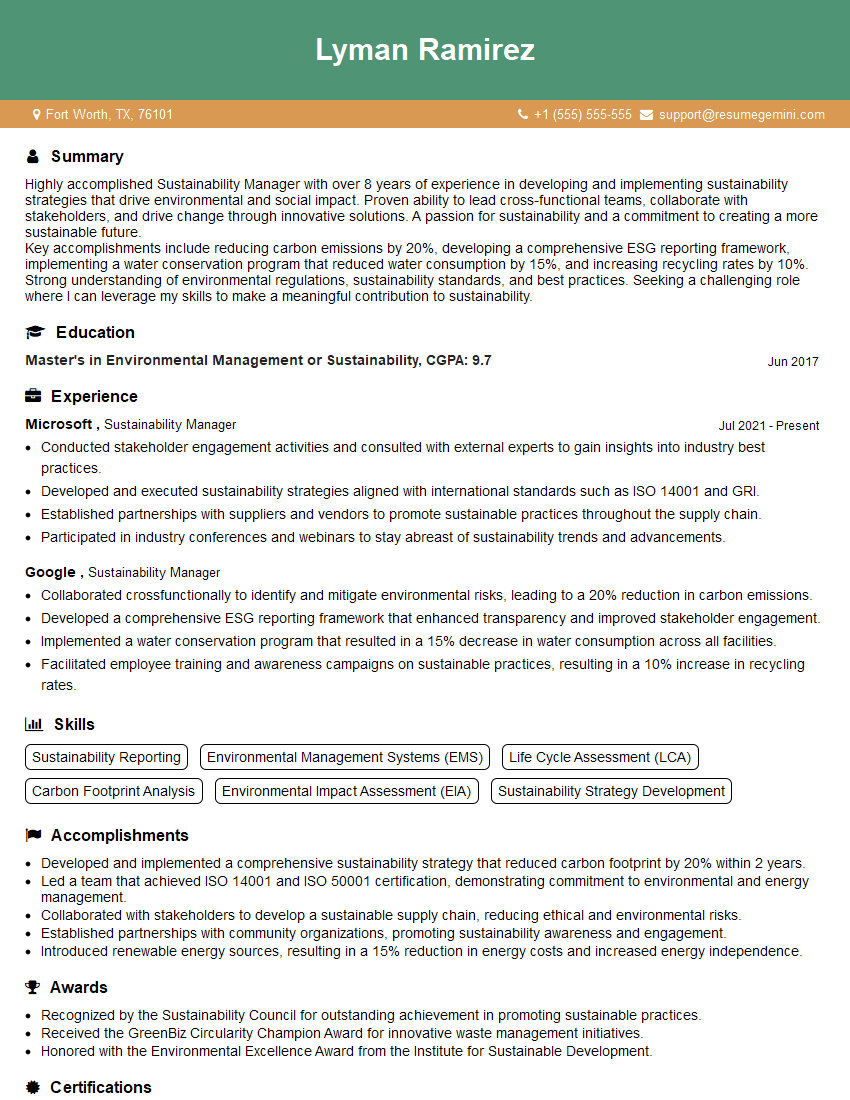
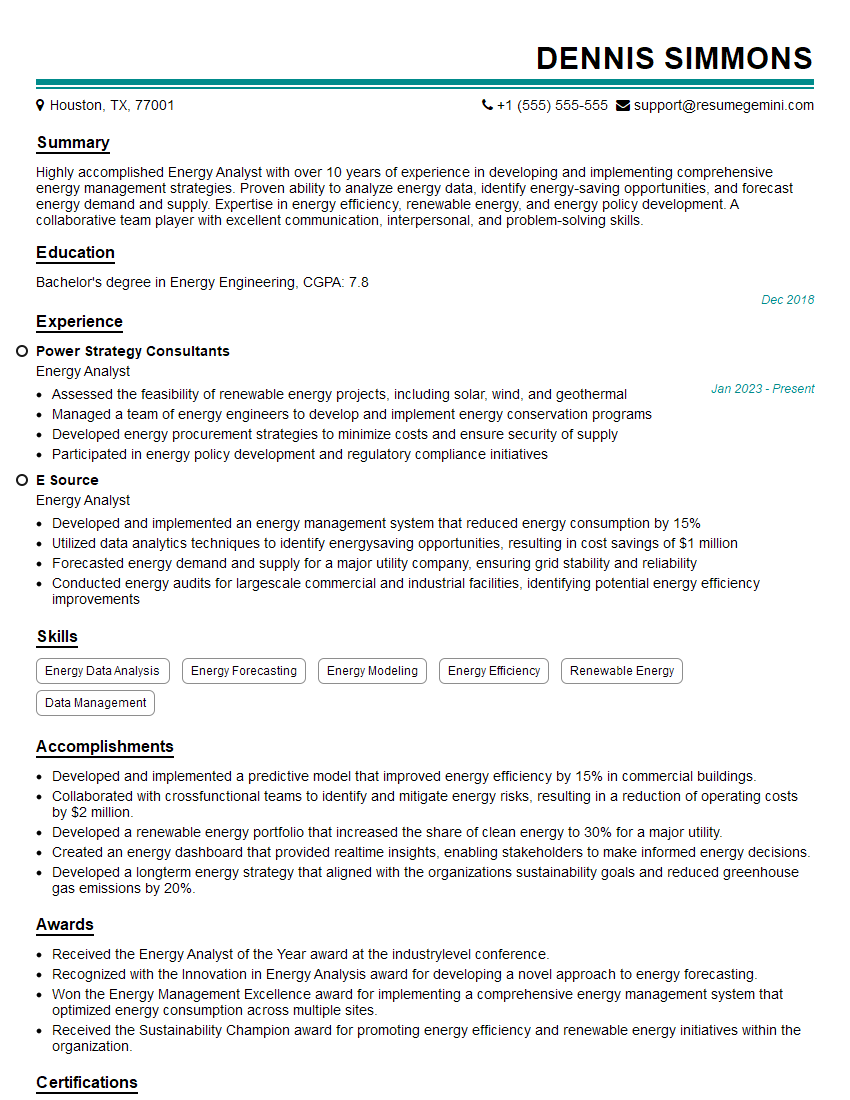
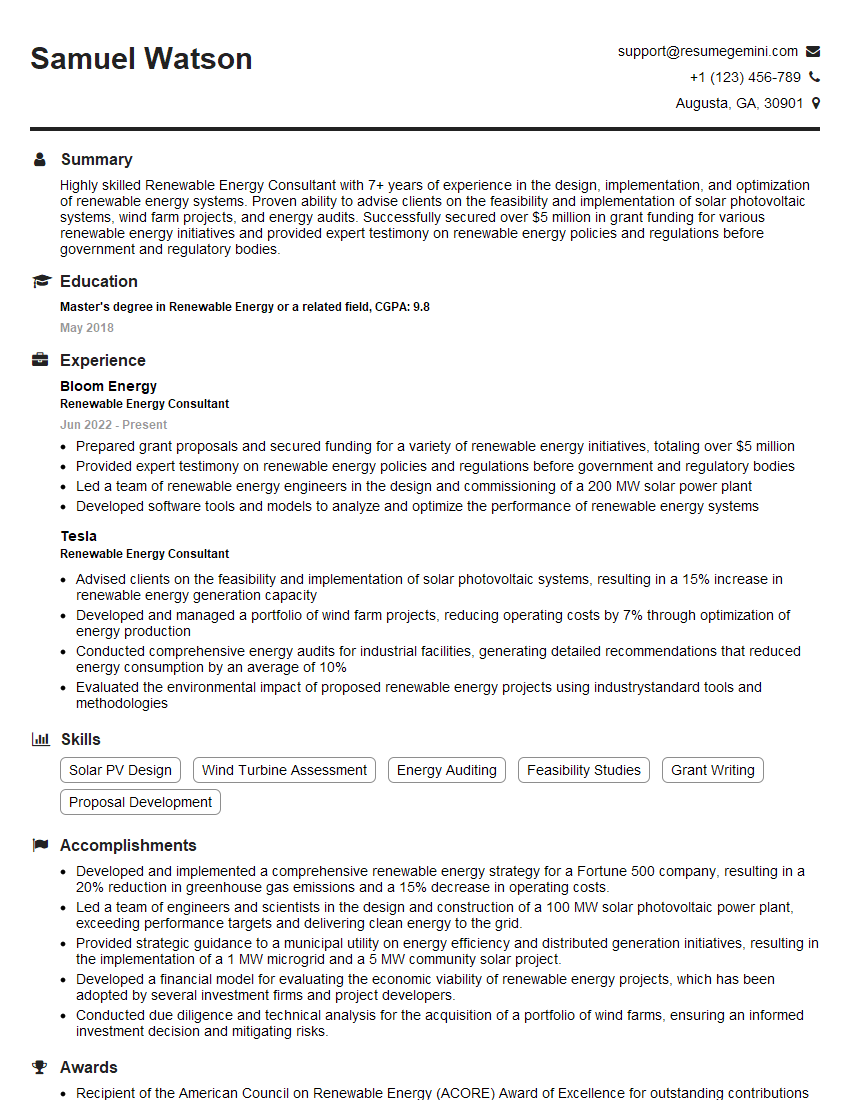
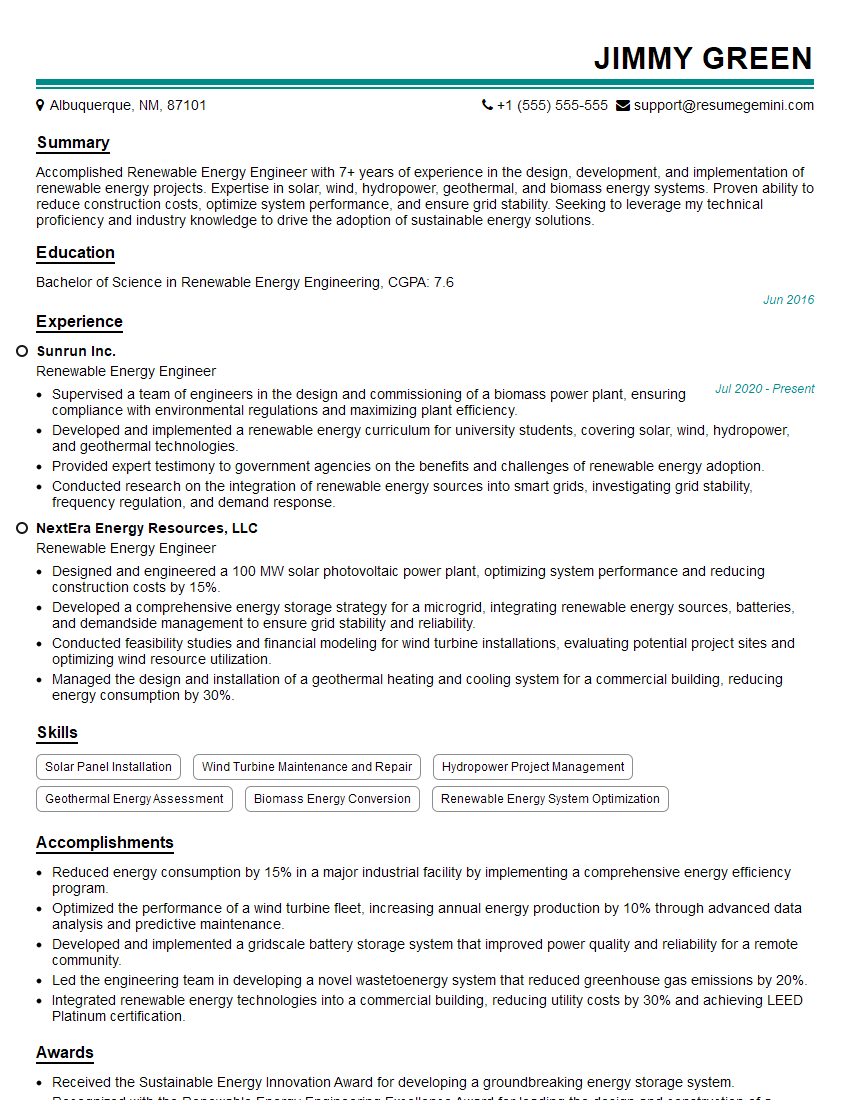
Mastering Renewable Energy Technology Evaluation is crucial for career advancement in this rapidly growing sector. A strong understanding of these concepts will significantly enhance your interview performance and open doors to exciting opportunities. To maximize your job prospects, creating an ATS-friendly resume is essential. ResumeGemini is a trusted resource that can help you build a professional and impactful resume tailored to your skills and experience. Examples of resumes specifically tailored to Renewable Energy Technology Evaluation are available to guide you through the process.

Explore more articles
Users Rating of Our Blogs
Share Your Experience
We value your feedback! Please rate our content and share your thoughts (optional).
What Readers Say About Our Blog
Very informative content, great job.
good