Are you ready to stand out in your next interview? Understanding and preparing for Combat Operations Planning interview questions is a game-changer. In this blog, we’ve compiled key questions and expert advice to help you showcase your skills with confidence and precision. Let’s get started on your journey to acing the interview.
Questions Asked in Combat Operations Planning Interview
Q 1. Describe the military decision-making process (MDMP).
The Military Decision-Making Process (MDMP) is a systematic and iterative planning methodology used by military commanders to develop and refine operational plans. Think of it as a structured problem-solving approach, ensuring all aspects of an operation are thoroughly considered before action is taken. It’s not a rigid, linear process; it’s adaptable to the specific situation.
- Receipt of Mission: The process begins with receiving the mission from a higher command, clearly defining the objectives and constraints.
- Mission Analysis: The commander and staff analyze the mission, enemy, terrain, troops, time available (METT-TC), and other relevant factors to understand the operational environment and potential challenges.
- Course of Action (COA) Development: Multiple potential COAs are developed, each outlining a different approach to achieving the mission objective. This is a brainstorming phase, encouraging creative solutions.
- COA Analysis: Each COA is rigorously analyzed against the mission requirements and potential risks. This often involves wargaming – simulating the operation to identify potential weaknesses and opportunities.
- COA Comparison: The commander and staff compare the COAs, weighing the advantages and disadvantages of each to select the best option.
- COA Approval: The commander approves the chosen COA, ensuring alignment with higher command intent and overall strategic goals.
- Orders Production: The plan is translated into clear, concise orders that are disseminated to subordinate units. This includes detailed instructions, timelines, and responsibilities.
Example: Imagine planning an assault on an enemy stronghold. The MDMP would guide the planning team through assessing the enemy’s defenses, identifying vulnerabilities, developing different assault plans (e.g., frontal assault, flanking maneuver), analyzing the risks and benefits of each, and ultimately selecting the most effective plan before executing the operation.
Q 2. Explain the concept of Commander’s Intent.
Commander’s Intent is a concise expression of the purpose of the operation and the desired end state. It’s what the commander wants to achieve, not necessarily *how* they want to achieve it. It provides subordinates with the flexibility to adapt to changing circumstances while remaining aligned with the overall mission. Think of it as the ‘why’ behind the operation.
A well-articulated Commander’s Intent should be:
- Clear and Concise: Easily understood by all involved.
- Purposeful: States the overall goal.
- Flexible: Allows for adaptation based on unforeseen events.
- End State Focused: Describes the desired outcome.
Example: Instead of saying “Attack objective Alpha at 0600 hours,” a Commander’s Intent might be: “Seize control of Objective Alpha to disrupt the enemy’s supply lines and secure the high ground, thereby isolating their main force.” This gives subordinate commanders the latitude to adjust their tactics as needed while maintaining the operational objective.
Q 3. What are the key elements of a successful combat operations plan?
A successful combat operations plan needs several key elements:
- Clear Objectives: Precisely defined goals that are achievable and measurable. What are you trying to accomplish?
- Detailed Enemy Analysis: A thorough understanding of the enemy’s capabilities, intentions, and weaknesses. Knowing your opponent is crucial.
- Comprehensive Risk Assessment: Identifying and mitigating potential risks, both anticipated and unforeseen.
- Feasible Courses of Action (COAs): Developing realistic and adaptable plans that consider available resources and constraints.
- Effective Synchronization: Coordinating the actions of different units and elements to achieve synergy. All parts must work together.
- Robust Communication Plan: Ensuring clear and reliable communication throughout the operation.
- Contigency Planning: Having backup plans in place to address unexpected situations.
- Assessment and Feedback Mechanisms: Evaluating the effectiveness of the plan during and after execution to learn and improve.
Example: A successful plan to retake a city would incorporate detailed intelligence on enemy positions and defenses, multiple COAs for various scenarios (e.g., urban warfare, air support), a robust communication plan to coordinate units, and contingency plans for unexpected resistance or civilian casualties.
Q 4. How do you assess risk in combat operations planning?
Risk assessment in combat operations planning involves systematically identifying, analyzing, and mitigating potential threats and hazards that could impact mission success. It’s a crucial step in reducing the probability and impact of negative outcomes.
The process generally involves these steps:
- Identify Hazards: Brainstorming potential risks, both operational (e.g., enemy action, equipment failure) and environmental (e.g., weather, terrain).
- Analyze Risks: Assessing the likelihood and severity of each hazard, often using a matrix combining probability and impact.
- Evaluate Risks: Determining the overall level of risk for each hazard and the mission as a whole.
- Develop Mitigation Strategies: Implementing actions to reduce the likelihood or severity of the identified hazards.
- Monitor and Reassess: Continuously monitoring the situation and reassessing risks throughout the operation.
Example: In planning a night raid, risks might include enemy patrols, poor visibility, and equipment malfunctions. Mitigation strategies could include reconnaissance patrols to identify enemy patrols, using night vision equipment, and ensuring equipment is properly maintained and tested.
Q 5. What are the different types of military operations?
Military operations are broadly categorized, but the specifics can vary based on the context. Here are some key types:
- Offensive Operations: Designed to seize, retain, or exploit territory, resources, or enemy positions. Examples include attacks, raids, and exploitation operations.
- Defensive Operations: Focused on preventing the enemy from achieving their objectives, usually involving delaying actions, delaying actions, and holding actions.
- Stability Operations: Aimed at establishing a secure and stable environment, often including peacekeeping, nation-building, and counter-insurgency efforts.
- Special Operations: Unconventional warfare employing small, highly trained units to accomplish specific objectives, often behind enemy lines. Think covert operations, hostage rescue, or direct action.
- Civil Affairs Operations: Supporting civil authorities and populations in times of crisis or conflict.
- Information Operations: Using information and communication technologies to influence the perceptions, behaviors, and capabilities of adversaries and other actors.
These types are not mutually exclusive; operations often blend aspects of multiple categories. For instance, a counterinsurgency operation might involve offensive actions, defensive measures, and extensive stability operations.
Q 6. Explain the concept of maneuver warfare.
Maneuver warfare emphasizes achieving victory through speed, flexibility, and deception. It seeks to avoid direct, attritional combat by exploiting enemy weaknesses and creating opportunities for decisive actions. Think of it as a chess game, rather than a brawl.
Key principles of maneuver warfare:
- Focus on the Enemy’s Center of Gravity: Identifying and attacking the enemy’s most vulnerable points, disrupting their ability to function effectively.
- Tempo and Surprise: Using speed and unexpected actions to overwhelm the enemy and disrupt their decision-making process.
- Decisive Actions: Concentrating forces at critical points to achieve decisive victories, avoiding protracted battles of attrition.
- Exploitation of Success: Quickly capitalizing on advantages and pressing the attack to achieve maximum impact.
- Flexibility and Adaptability: Adjusting plans based on changes in the operational environment.
Example: Instead of a frontal assault on a heavily fortified position, a maneuver warfare approach might involve flanking maneuvers, feint attacks to distract the enemy, and a rapid exploitation of any breakthrough to disrupt the enemy’s defensive positions and achieve a decisive victory.
Q 7. How do you integrate intelligence into combat operations planning?
Integrating intelligence into combat operations planning is paramount. It provides the critical information needed to understand the enemy, the operational environment, and potential risks. This involves a continuous loop of information gathering, analysis, and dissemination.
The process generally involves:
- Intelligence Requirements: Defining what intelligence is needed to support the planning process. This is closely tied to the mission objectives and potential threats.
- Intelligence Collection: Gathering information from various sources, including human intelligence (HUMINT), signals intelligence (SIGINT), imagery intelligence (IMINT), and open-source intelligence (OSINT).
- Intelligence Analysis: Processing and interpreting the collected information to create an accurate picture of the operational environment, enemy capabilities, and potential threats.
- Intelligence Dissemination: Sharing the analyzed intelligence with relevant personnel to inform decision-making and execution of the plan.
- Intelligence Feedback: Gathering feedback from the field to update the intelligence picture and refine the plan as needed.
Example: In planning an operation against a terrorist organization, intelligence would be crucial to identify the group’s leadership, locations, and operational patterns. This information would be used to develop effective COAs, targeting plans, and risk mitigation strategies.
Q 8. What are the key considerations for planning a logistical support plan?
A robust logistical support plan is the backbone of any successful combat operation. It ensures the timely delivery of essential resources – from ammunition and food to medical supplies and fuel – to troops in the field. Key considerations include:
- Demand Forecasting: Accurately predicting the quantity and type of supplies needed based on the mission’s duration, intensity, and the number of troops involved. This often involves detailed analysis of past operations and simulations.
- Supply Chain Management: Establishing efficient supply routes, transportation methods, and storage facilities. This includes considering terrain, potential threats, and the availability of infrastructure. For instance, using a combination of air, land, and sea transport might be necessary depending on the operational environment.
- Resource Allocation: Determining the optimal distribution of resources among different units and locations based on their priorities and needs. This might involve prioritizing the delivery of critical supplies to units engaged in intense combat.
- Maintenance and Repair: Planning for the maintenance and repair of equipment, vehicles, and weapons systems. This includes establishing maintenance depots and ensuring the availability of spare parts.
- Security: Protecting supply lines and storage facilities from enemy attacks or sabotage. This requires robust security measures and potentially dedicated security personnel.
- Contingency Planning: Developing plans to address potential disruptions to the supply chain, such as natural disasters, enemy actions, or logistical bottlenecks. This might involve establishing alternate supply routes or pre-positioning supplies in key locations.
For example, during Operation Desert Storm, the sheer scale of the logistical undertaking – supplying hundreds of thousands of troops in a harsh desert environment – was a crucial factor in the coalition’s success. Meticulous planning ensured a steady flow of supplies, despite the challenges.
Q 9. How do you account for unforeseen circumstances in your plans?
Unforeseen circumstances are inevitable in combat operations. We mitigate this through robust contingency planning, which involves identifying potential risks and developing alternative courses of action. This process is often iterative and involves:
- Risk Assessment: Identifying potential threats and challenges, such as unexpected enemy actions, weather events, or equipment failures. This often involves brainstorming sessions and utilizing intelligence data.
- Scenario Planning: Developing different scenarios based on potential risks and their likelihood. This helps to anticipate how different events might affect the operation and allows us to develop tailored responses.
- Contingency Plans: Creating alternative plans to address potential disruptions or failures in the primary plan. For example, having backup supply routes or alternative communication systems.
- Flexibility and Adaptability: Designing plans that are adaptable and flexible enough to respond to unexpected events. This requires clear communication channels and empowered decision-making at all levels.
- Regular Reviews and Updates: Continuously monitoring the situation and updating plans based on new information and evolving circumstances. This iterative process ensures plans remain relevant and effective.
For instance, a contingency plan might involve re-routing a convoy if a primary route is blocked by enemy activity, or deploying reserve forces if a friendly unit suffers unexpected losses.
Q 10. Describe your experience with different planning tools and software.
My experience spans several planning tools and software. I’m proficient in using military-specific software such as Joint Operations Planning and Execution System (JOPES) and Command and Control Personal Computer (C2PC). These systems aid in collaborative planning, visualizing the operational environment, and managing resources. I’ve also worked extensively with commercial Geographic Information System (GIS) software like ArcGIS, which is crucial for analyzing terrain, identifying potential obstacles, and optimizing routes. Furthermore, I have experience using project management software such as MS Project for task scheduling and resource allocation.
Each tool has its strengths. JOPES, for example, facilitates detailed order generation and synchronization across multiple units. ArcGIS excels in spatial analysis and visualization. The effective use of these tools depends on understanding their capabilities and limitations, and knowing when to employ one over another.
Q 11. How do you coordinate with allied forces during planning?
Coordination with allied forces is paramount. Effective collaboration requires established communication protocols, shared situational awareness, and a clear understanding of each force’s capabilities and limitations. This typically involves:
- Joint Planning Sessions: Participating in joint planning sessions with representatives from allied forces to develop a unified operational plan. This involves harmonizing different doctrines, procedures, and communication systems.
- Liaison Officers: Deploying liaison officers to allied units to facilitate communication and coordination. This ensures seamless information flow and prevents misunderstandings.
- Standardized Procedures: Using standardized procedures and communication protocols to ensure interoperability between different forces. This minimizes confusion and ensures clear communication.
- Information Sharing: Establishing mechanisms for sharing critical information with allied forces, such as intelligence, logistical data, and operational updates. This enables informed decision-making and synchronized actions.
- Combined Training Exercises: Conducting combined training exercises to practice joint operations and refine coordination procedures. This builds trust and improves interoperability.
A successful example of this is the coordination between the US and UK forces during Operation Iraqi Freedom, where strong collaborative planning and well-established communication channels enabled efficient coordination of diverse forces.
Q 12. What is your understanding of the Law of Armed Conflict (LOAC)?
The Law of Armed Conflict (LOAC), also known as International Humanitarian Law (IHL), is a body of international law that regulates the conduct of armed conflict. It aims to limit the suffering caused by war by protecting civilians, wounded combatants, and prisoners of war. My understanding encompasses its core principles:
- Distinction: Differentiating between combatants and civilians and directing attacks only against military objectives.
- Proportionality: Ensuring that the anticipated military advantage of an attack is not excessive in relation to the expected civilian harm.
- Military Necessity: Attacking only military objectives and using only necessary force.
- Precaution: Taking feasible precautions to avoid civilian casualties and damage to civilian objects.
- Prohibition of Certain Weapons: The prohibition of weapons that cause unnecessary suffering or indiscriminate harm.
LOAC compliance is crucial for maintaining international legitimacy, minimizing civilian casualties, and ensuring accountability. Failing to adhere to LOAC can lead to war crimes prosecutions.
Q 13. Explain the importance of effective communication in combat operations.
Effective communication is the lifeblood of any successful combat operation. Clear, concise, and timely communication ensures coordinated actions, prevents misunderstandings, and enables rapid response to changing circumstances. This involves:
- Clear Communication Channels: Establishing secure and reliable communication channels that allow for seamless information flow between different units and levels of command. This might involve using a combination of radio, satellite, and secure messaging systems.
- Standardized Procedures: Using standardized communication procedures and terminology to ensure clear and unambiguous communication. This minimizes confusion and prevents misinterpretations.
- Situational Awareness: Ensuring that all units have a shared understanding of the operational environment and the current situation. This requires continuous sharing of intelligence and operational updates.
- Feedback Mechanisms: Establishing mechanisms for feedback to ensure that all units understand the commander’s intent and can provide updates on their progress and challenges. This allows for timely adjustments to the plan.
- Communication Security: Protecting communication channels from enemy interception and disruption. This requires the use of encryption and secure communication protocols.
The Battle of Normandy provides a stark example: the lack of clear communication between Allied units at times led to confusion and unnecessary casualties. Effective communication is not just about sending messages, but also about receiving and interpreting them accurately and quickly.
Q 14. How do you manage conflicts between competing priorities during planning?
Conflicts between competing priorities are common during planning. Resolution requires a structured approach focused on prioritization, trade-offs, and clear communication. I typically use a process like this:
- Prioritization Matrix: Creating a prioritization matrix that ranks competing priorities based on their importance and urgency. This might involve assigning weights to different factors based on mission objectives and risk assessment.
- Resource Allocation: Determining how available resources will be allocated among competing priorities based on their ranking in the prioritization matrix. This often involves making difficult trade-offs and accepting some level of risk.
- Trade-off Analysis: Evaluating the potential consequences of different trade-offs and selecting the option that best balances competing priorities while minimizing risks. This includes considering the opportunity cost of choosing one option over another.
- Negotiation and Collaboration: Engaging in open communication and collaboration with stakeholders to reach a consensus on the prioritization and resource allocation plan. This ensures that all parties understand the rationale behind the decisions and support the final plan.
- Flexibility and Adaptability: Building flexibility into the plan to accommodate changes in priorities or unforeseen circumstances. This allows for adjustments without compromising the overall mission objectives.
For example, I might need to balance the need for rapid advancement with the need for troop safety. A detailed analysis might lead to prioritizing securing flanks, even if it slows overall advance, to reduce risks and maintain operational effectiveness.
Q 15. Describe a time you had to adapt a plan due to changing circumstances.
Adaptability is paramount in combat operations planning. A rigid plan is almost guaranteed to fail in the face of unexpected events. During a counter-insurgency operation in a mountainous region, our initial plan relied on a predictable enemy pattern of movement along established routes. However, the enemy unexpectedly shifted tactics, utilizing a network of hidden caves and tunnels. We immediately convened a planning cell, analyzing the new intelligence using GIS mapping and updated enemy activity reports. Our revised plan incorporated air reconnaissance to identify new enemy positions and adjusted the ground troop deployment to use specialized teams capable of cave operations. We prioritized securing key choke points instead of focusing solely on the initial routes. This adaptation, while requiring a rapid shift in resources, ensured mission success and minimized casualties.
Career Expert Tips:
- Ace those interviews! Prepare effectively by reviewing the Top 50 Most Common Interview Questions on ResumeGemini.
- Navigate your job search with confidence! Explore a wide range of Career Tips on ResumeGemini. Learn about common challenges and recommendations to overcome them.
- Craft the perfect resume! Master the Art of Resume Writing with ResumeGemini’s guide. Showcase your unique qualifications and achievements effectively.
- Don’t miss out on holiday savings! Build your dream resume with ResumeGemini’s ATS optimized templates.
Q 16. How do you conduct a risk assessment for a specific operation?
Risk assessment is a systematic process of identifying potential hazards, analyzing their likelihood and potential impact, and developing mitigation strategies. For a specific operation, I would follow a structured approach, starting with identifying all potential threats. This includes enemy actions (ambushes, IEDs, etc.), environmental factors (weather, terrain), and friendly actions (accidental fire, equipment malfunctions). Then, we would analyze the likelihood and impact of each threat using a matrix or scoring system. High-likelihood, high-impact threats demand immediate attention and robust mitigation strategies. For example, if an area is known for IEDs, we’d allocate resources for route clearance and enhanced vehicle protection. A crucial step is documenting the risk assessment, which is continually updated based on intelligence and the operational context. This ensures a dynamic approach to risk management throughout the operation.
Q 17. Explain your understanding of different types of terrain and their impact on operations.
Understanding terrain is fundamental to successful operations. Different types of terrain significantly impact movement, communication, visibility, and cover and concealment. For example, urban environments present unique challenges with complex structures, dense populations, and limited maneuver space. Conversely, mountainous terrain limits visibility and restricts movement, potentially necessitating specialized equipment and training. Desert environments pose challenges due to extreme temperatures and the lack of cover, while jungle environments impact visibility and movement due to dense vegetation. We use various tools, including topographic maps, satellite imagery, and terrain analysis software, to assess the impact of terrain on all aspects of an operation. A well-executed plan incorporates terrain analysis to select appropriate routes, establish observation posts, and exploit tactical advantages.
Q 18. How do you ensure your plan is feasible and executable?
Feasibility and executability are ensured through a rigorous planning process involving multiple phases. First, a thorough mission analysis identifies the objective, constraints, and available resources. This is followed by course of action (COA) development and analysis, where various approaches are evaluated against feasibility criteria. These criteria include time, resources, personnel, and environmental considerations. For example, a plan requiring specialized equipment unavailable within the given timeframe is inherently infeasible. A crucial step is conducting rehearsals or simulations to test the plan’s executability. This identifies potential bottlenecks, clarifies communication protocols, and ensures coordination between different elements. Detailed planning, careful resource allocation, and thorough rehearsals are essential in creating feasible and executable plans that maximize success and minimize risk.
Q 19. What are the key performance indicators (KPIs) you use to measure success?
Key performance indicators (KPIs) for combat operations are mission-specific but generally focus on effectiveness and efficiency. Some common KPIs include the successful accomplishment of the primary mission objective (e.g., capture of a target, securing an area), casualties sustained (friendly and enemy), collateral damage (civilian casualties and property damage), time to objective, and resource consumption (ammunition, fuel). Success is not solely about accomplishing the mission; it’s also about minimizing casualties and collateral damage. We use these KPIs to assess performance, identify areas for improvement, and inform future planning. Post-operation analysis using these metrics helps us understand what worked well and what needs refinement.
Q 20. How do you incorporate lessons learned from past operations into planning?
Lessons learned are crucial for continuous improvement in combat operations planning. After each operation, a thorough after-action review (AAR) is conducted, gathering input from all participants. The AAR identifies successes, failures, and areas for improvement. This information is documented and disseminated to relevant personnel, incorporated into training programs, and utilized in future planning. For example, if an operation revealed communication challenges due to terrain, future plans would incorporate alternative communication systems or strategies. This iterative process of learning from past experiences builds organizational knowledge, enhances operational effectiveness, and ultimately improves mission success rates.
Q 21. What is your experience with using terrain analysis tools?
I have extensive experience using various terrain analysis tools, including GIS software (ArcGIS, QGIS), digital elevation models (DEMs), and satellite imagery. These tools allow for detailed analysis of terrain features, enabling identification of optimal routes, potential obstacles, and advantageous positions. For instance, using DEMs, we can analyze slope gradients to assess the suitability of routes for different types of vehicles or determine the visibility from specific locations. Satellite imagery provides crucial information on infrastructure, vegetation, and potential enemy positions. The combination of these tools enhances situational awareness, informing decisions that improve the safety and efficiency of military operations.
Q 22. Explain your understanding of the operational environment.
The operational environment (OE) is the composite of the conditions, circumstances, and influences that affect the employment of capabilities and bear on the decisions of the commander. It’s not just the physical terrain, but a complex interplay of factors that shape the mission’s success or failure. Think of it like a chessboard – the pieces are your forces and the enemy, but the board itself (the OE) dictates the rules of engagement and the available moves.
- Physical factors: Terrain, weather, infrastructure, resources.
- Human factors: Population density, culture, political landscape, local governance, presence of non-state actors.
- Informational factors: Availability of intelligence, communication systems, media influence, cyber threats.
- Time factors: Urgency of the mission, available time for planning and execution.
Understanding the OE is paramount. For example, in a desert operation, water scarcity profoundly impacts logistical planning, while in an urban environment, civilian casualties become a major concern, requiring a fundamentally different approach to combat operations.
Q 23. How do you develop contingency plans?
Developing contingency plans is about preparing for the unexpected. It involves identifying potential threats, vulnerabilities, and opportunities, then developing courses of action to address each. I typically use a structured approach:
- Identify potential contingencies: Brainstorming sessions with subject matter experts (SMEs) covering everything from equipment failure to enemy actions.
- Assess the likelihood and impact of each contingency: We use risk assessment matrices to prioritize those most likely to disrupt the mission.
- Develop courses of action (COAs) for each high-priority contingency: These COAs should detail specific actions, timelines, and resource requirements.
- Rehearse the COAs: Through simulations and wargames, we test the feasibility and effectiveness of our plans.
- Document and disseminate the plans: Clear, concise documentation ensures everyone understands their role and responsibilities.
For example, during a humanitarian relief operation, a contingency plan might address the sudden arrival of a large refugee population, outlining how to allocate resources, establish camps, and provide medical assistance.
Q 24. How do you brief your plans to senior leadership?
Briefing senior leadership requires clarity, conciseness, and a focus on the key decisions they need to make. I typically follow this structure:
- Executive Summary: A very brief overview of the situation, the recommended course of action, and its potential outcomes.
- Problem Statement: Clearly defining the challenges and risks involved.
- Proposed Solution: Detailed explanation of the recommended plan, including objectives, tasks, and timelines.
- Risk Assessment: Identifying potential problems and outlining mitigation strategies.
- Resource Requirements: Specifying the personnel, equipment, and funding needed.
- Decision Points: Clearly highlighting where senior leadership input is required.
Visual aids like maps, charts, and timelines are crucial to enhance understanding. The key is to tailor the briefing to the audience’s level of expertise and their decision-making needs. Keep it focused, and be ready to answer tough questions.
Q 25. What are the challenges of planning complex, multi-national operations?
Planning complex, multinational operations presents unique challenges, primarily stemming from differences in:
- Doctrine and procedures: Harmonizing operational concepts, tactics, techniques, and procedures (TTPs) across multiple nations is vital.
- Command and control structures: Establishing clear lines of authority and communication between participating nations can be complex.
- Interoperability: Ensuring equipment and communication systems are compatible across national forces.
- Language and cultural barriers: Clear communication is essential, and cultural sensitivity is crucial to avoiding misunderstandings.
- Political considerations: Balancing national interests and political sensitivities can significantly impact operational decisions.
Effective communication and collaboration, coupled with pre-operational training exercises, are key to mitigating these challenges. A well-defined command structure with clear roles and responsibilities is essential for success.
Q 26. Describe your experience with different types of military simulations.
I have extensive experience with various military simulations, including:
- Command Post Exercises (CPXs): These focus on staff planning and decision-making under pressure, often involving map exercises and simulated intelligence updates.
- Computer-assisted exercises (CAX): These utilize computer-based simulation tools to model complex scenarios, offering a more realistic and detailed representation of the operational environment.
- Live, virtual, and constructive (LVC) simulations: Combining live field exercises with virtual simulations and constructive models (computer simulations) for a comprehensive and immersive training experience.
These simulations provide invaluable opportunities to test plans, refine procedures, and train personnel before real-world deployment. The feedback gained is essential for improving operational effectiveness and reducing risks.
Q 27. How do you prioritize tasks during a high-pressure planning environment?
Prioritizing tasks in a high-pressure environment requires a structured approach. I typically use a combination of techniques:
- Prioritization matrices: Using a matrix that considers urgency and importance helps rank tasks effectively.
- Timeboxing: Allocating specific time blocks for each task to ensure efficient use of time.
- Delegation: Assigning tasks to others based on their expertise and availability.
- Regular progress checks: Maintaining awareness of progress and making adjustments as needed.
- Maintaining a calm and focused demeanor: Effective leadership under pressure is critical to maintaining team morale and productivity.
Remember, even under immense pressure, clear communication and efficient task management are essential for successful planning.
Q 28. Explain your understanding of force protection principles.
Force protection principles aim to minimize risks to friendly forces while maximizing operational effectiveness. It’s a multi-layered approach involving:
- Risk assessment: Identifying potential threats and vulnerabilities.
- Layered security: Employing multiple layers of defense to create redundancy and increase resilience.
- Intelligence and surveillance: Gathering information about potential threats and monitoring the operational environment.
- Force protection measures: Employing physical security measures, such as barriers, checkpoints, and patrols, as well as personnel protection measures.
- Communication and coordination: Maintaining clear communication between all elements of the force.
- Continuous improvement: Regularly reviewing and updating force protection measures based on lessons learned.
Consider a convoy operation: force protection includes route reconnaissance, armed escorts, vehicle hardening, and communication protocols to ensure timely responses to threats. It’s a constant cycle of assessment, adaptation, and refinement to safeguard personnel and equipment.
Key Topics to Learn for Combat Operations Planning Interview
- Mission Analysis: Understanding the operational environment, defining objectives, and identifying constraints. Practical application includes analyzing intelligence reports and developing a clear understanding of the mission’s context.
- Course of Action Development: Generating, evaluating, and comparing multiple potential plans to achieve mission objectives. This involves creative problem-solving and strategic thinking, considering various factors like time, resources, and risk.
- Plan Assessment & Refinement: Critically evaluating the chosen course of action for strengths and weaknesses, and iteratively refining it based on feedback and potential challenges. This demonstrates adaptability and a proactive approach to problem-solving.
- Orders Production & Dissemination: Creating clear, concise, and unambiguous orders for subordinate units, ensuring effective communication and understanding of the plan. This highlights communication and leadership skills.
- Synchronization & Coordination: Understanding how different elements of the plan interact and ensuring their coordinated execution. This includes managing timing, resources, and communication between various units.
- Contingency Planning: Developing plans for unexpected events or changes in the operational environment. This demonstrates foresight and preparedness for unforeseen circumstances.
- Risk Management: Identifying, assessing, and mitigating potential risks throughout the operational planning process. This showcases a practical understanding of risk assessment and mitigation strategies.
Next Steps
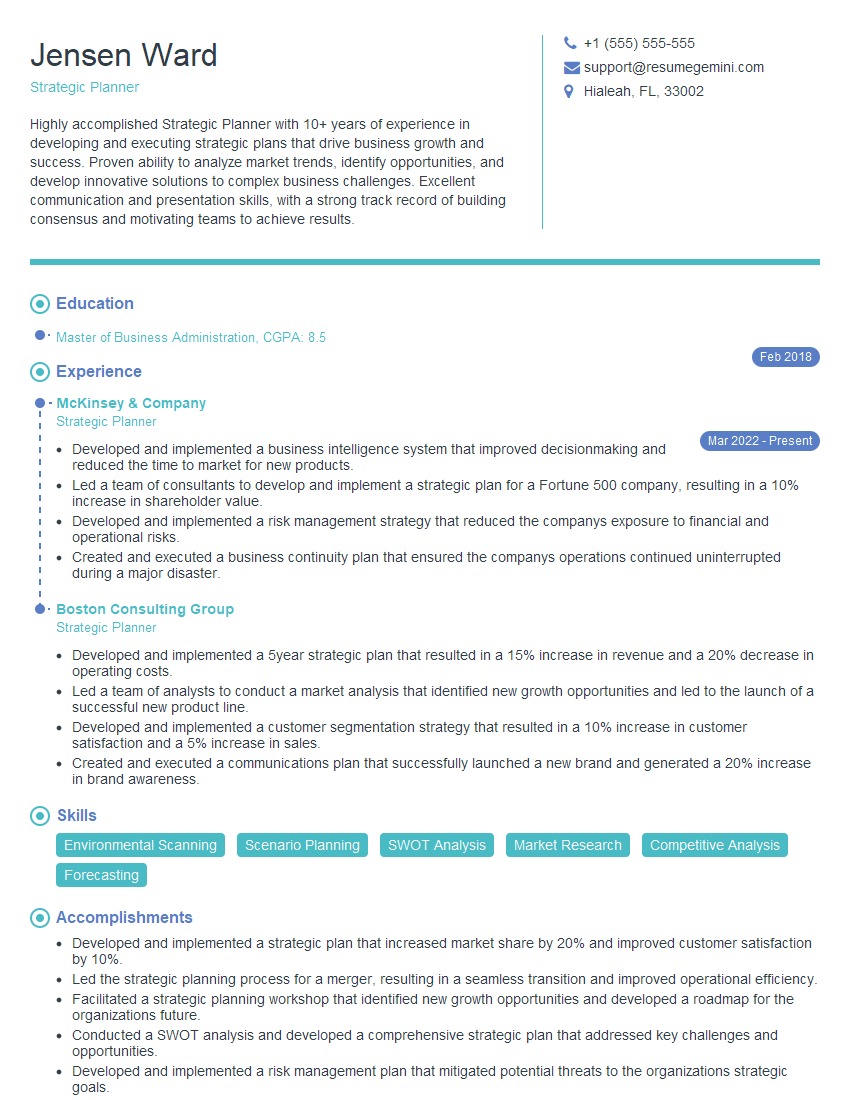
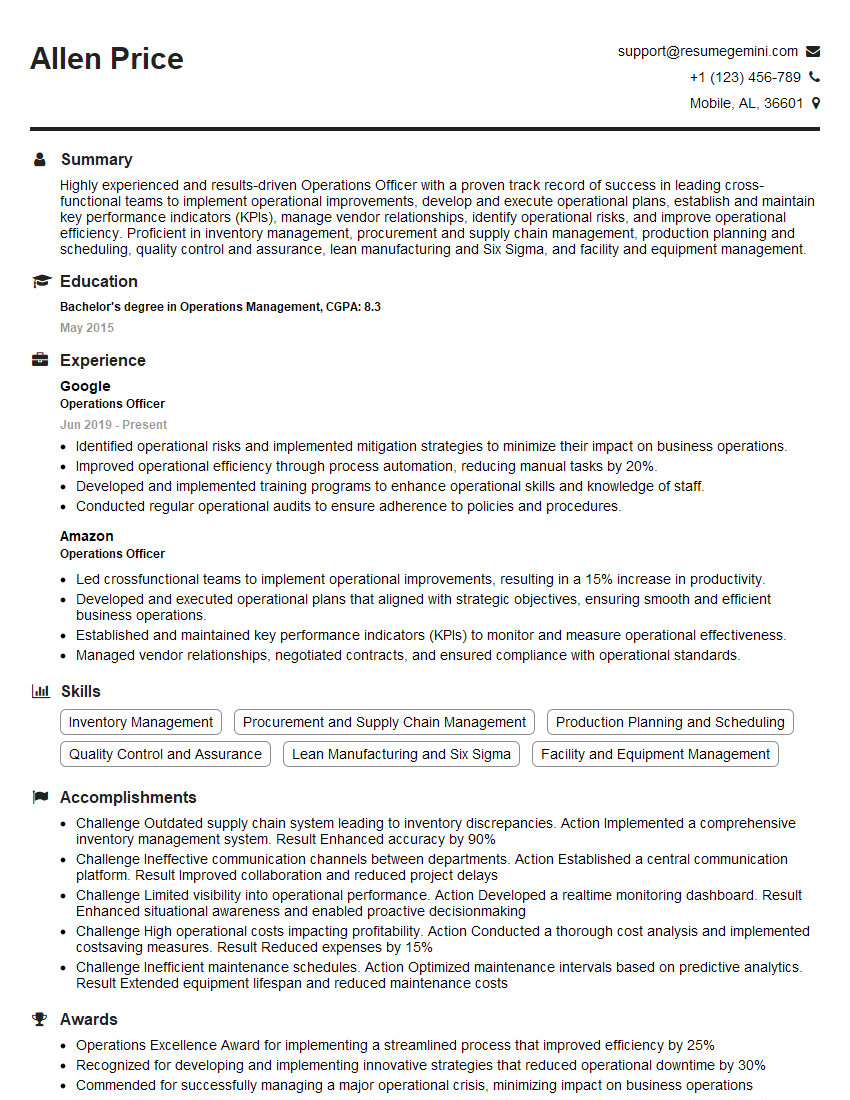
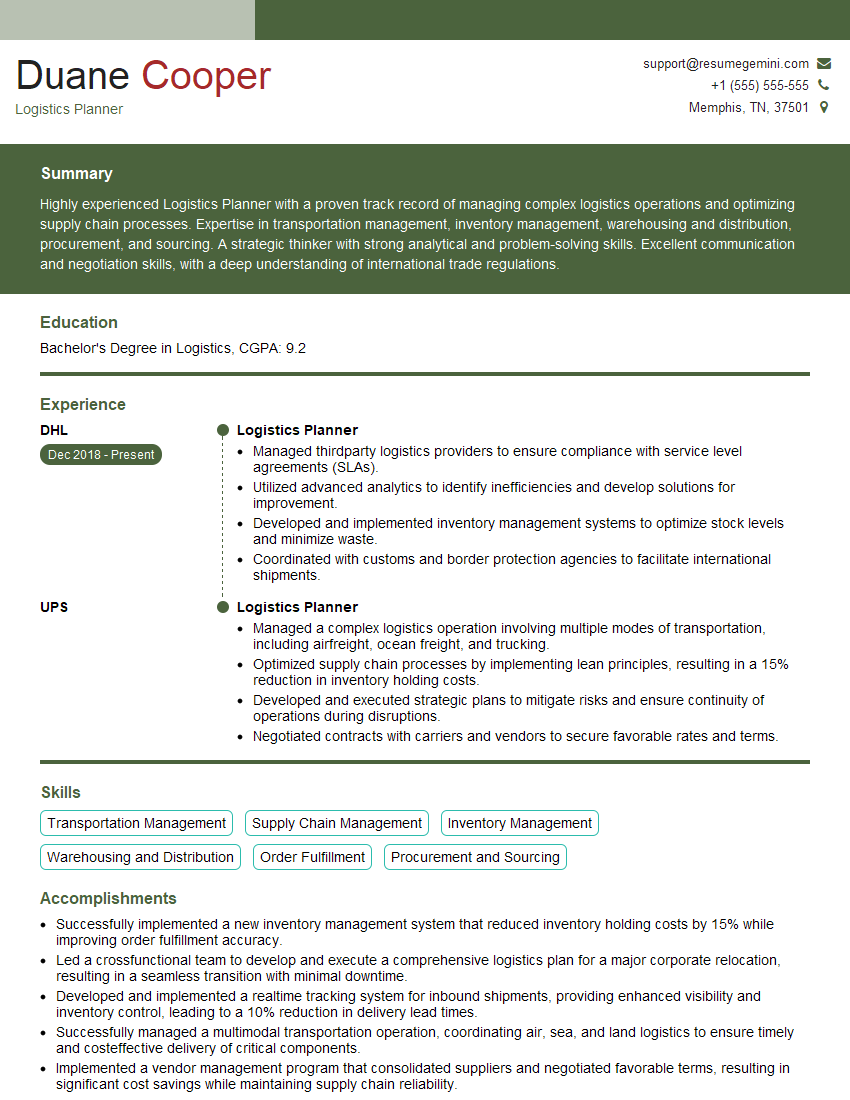
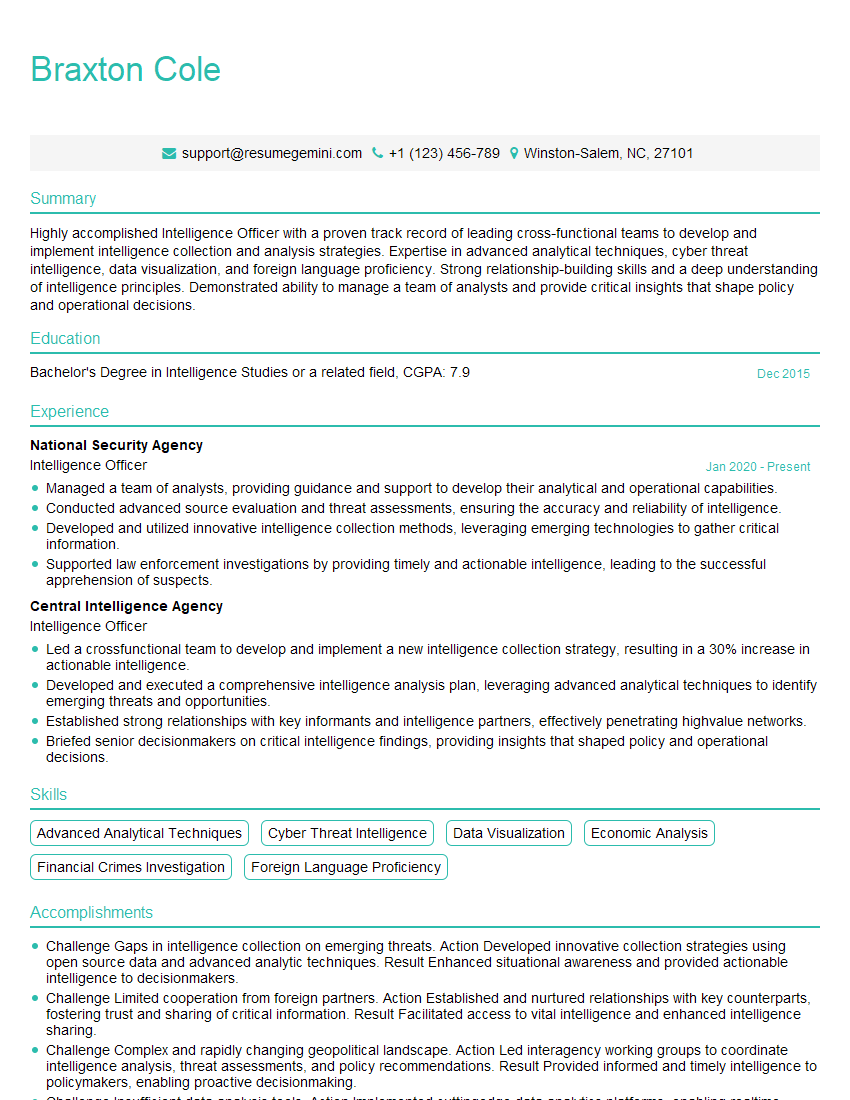
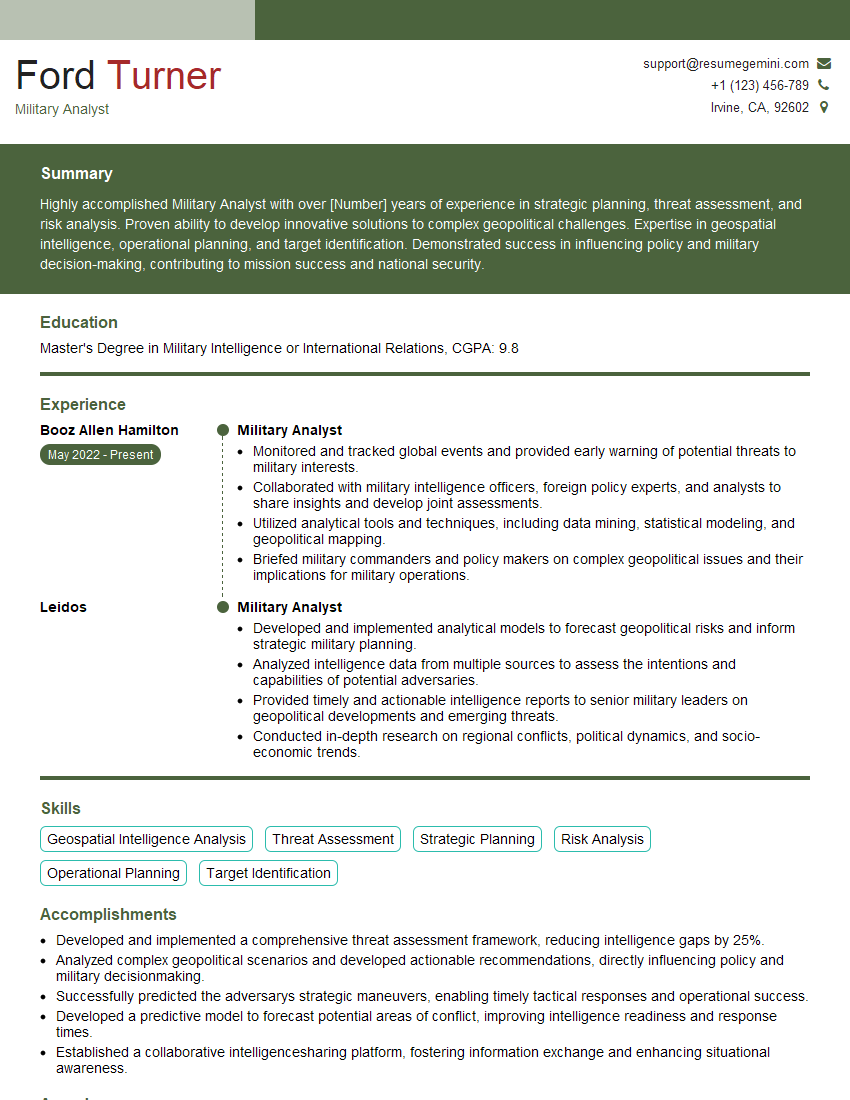
Mastering Combat Operations Planning is crucial for career advancement in the military and related fields, opening doors to leadership roles and specialized assignments. To significantly boost your job prospects, it’s essential to have an ATS-friendly resume that highlights your skills and experience effectively. ResumeGemini is a trusted resource for creating professional, impactful resumes. We provide examples of resumes tailored to Combat Operations Planning to help you showcase your expertise and secure your dream job. Take the next step and build a resume that commands attention.
Explore more articles
Users Rating of Our Blogs
Share Your Experience
We value your feedback! Please rate our content and share your thoughts (optional).
What Readers Say About Our Blog
Very informative content, great job.
good