The right preparation can turn an interview into an opportunity to showcase your expertise. This guide to Solar Industry Trends interview questions is your ultimate resource, providing key insights and tips to help you ace your responses and stand out as a top candidate.
Questions Asked in Solar Industry Trends Interview
Q 1. What are the current major trends shaping the solar industry?
The solar industry is experiencing explosive growth, driven by several key trends. One major trend is the increasing affordability of solar technology, making it a competitive energy source even without subsidies. This is coupled with a global push towards renewable energy transition, spurred by climate change concerns and the desire for energy independence. We’re also seeing a significant rise in large-scale solar farms, providing power to entire grids. Furthermore, innovation in solar technology, including advancements in perovskite solar cells and tandem solar cells, is constantly improving efficiency and lowering costs. Finally, smart grid integration and the incorporation of energy storage solutions are becoming increasingly crucial aspects of the solar energy landscape.
- Affordability: Solar panel prices have drastically decreased over the last decade, making solar energy accessible to more people and businesses.
- Renewable Energy Transition: Many countries are implementing policies to phase out fossil fuels and increase reliance on renewable energy sources.
- Large-Scale Solar Farms: These projects generate significant amounts of electricity and contribute substantially to national renewable energy targets.
- Technological Innovation: Research and development are constantly pushing the boundaries of solar cell efficiency and performance.
- Smart Grid Integration: Advanced grid management systems help integrate intermittent solar power sources reliably.
Q 2. Discuss the impact of government policies on solar energy adoption.
Government policies play a pivotal role in shaping solar energy adoption. Subsidies and tax incentives, such as investment tax credits (ITCs) and feed-in tariffs (FITs), directly reduce the upfront cost of solar installations, making them more attractive to consumers and businesses. Renewable portfolio standards (RPS) mandate a certain percentage of electricity generation from renewable sources, creating a guaranteed market for solar energy. Net metering policies allow homeowners and businesses to sell excess solar energy back to the grid, incentivizing solar adoption and mitigating the risks associated with intermittent generation. Conversely, lack of supportive policies or even the introduction of tariffs and taxes on imported solar panels can significantly hinder growth. For example, the significant growth in the US solar market in recent years is heavily linked to the extension of the ITC.
Different countries have adopted diverse approaches, with some seeing remarkable success and others lagging behind. The effectiveness of these policies depends on factors such as their design, implementation, and overall economic climate. A well-structured policy framework can greatly accelerate the transition to a solar-powered future.
Q 3. Explain the different types of solar technologies and their respective advantages and disadvantages.
Several solar technologies exist, each with its own strengths and weaknesses. Crystalline silicon solar panels are the most common type, known for their relatively high efficiency, maturity, and affordability. They come in monocrystalline and polycrystalline variations, with monocrystalline generally being more efficient but slightly more expensive. Thin-film solar cells, including cadmium telluride (CdTe) and copper indium gallium selenide (CIGS), are lighter, more flexible, and can be manufactured at lower temperatures. However, their efficiency is generally lower than crystalline silicon. Perovskite solar cells are a rapidly emerging technology with the potential to surpass silicon in efficiency and cost-effectiveness, but they are still in the early stages of commercialization and face challenges regarding long-term stability. Finally, Concentrated solar power (CSP) systems use mirrors or lenses to focus sunlight onto a receiver, generating heat that drives a turbine to produce electricity. CSP is advantageous for large-scale deployment and energy storage, but it’s typically more expensive than photovoltaic systems.
- Crystalline Silicon: High efficiency, mature technology, relatively affordable.
- Thin-Film: Lower cost, flexible, but lower efficiency.
- Perovskite: High potential efficiency and low cost, but stability issues need to be addressed.
- CSP: Suitable for large-scale projects and energy storage, but higher initial cost.
Q 4. How is the solar industry addressing grid integration challenges?
Integrating solar power into existing grids presents significant challenges due to the intermittent nature of solar energy. Solar power generation fluctuates depending on weather conditions, requiring sophisticated grid management techniques to maintain stability. Advanced forecasting models predict solar energy output based on weather data and historical patterns, enabling grid operators to anticipate supply variations. Smart inverters provide real-time information on solar energy generation, facilitating seamless integration and control. Demand-side management (DSM) strategies encourage energy consumption during peak solar production periods, improving grid balancing. Furthermore, energy storage systems, such as batteries, can store excess solar energy during periods of high generation and release it when demand is high, helping to mitigate intermittency issues. The deployment of these sophisticated technologies, along with improved grid infrastructure, is crucial for ensuring the smooth and reliable integration of solar power.
Q 5. Describe the current state of solar energy storage solutions and their future potential.
Solar energy storage is undergoing rapid development, playing a vital role in enhancing the reliability and value of solar power systems. Lithium-ion batteries are currently the dominant technology due to their high energy density, relatively long lifespan, and relatively rapid charge/discharge rates. However, other technologies, such as flow batteries and pumped hydro storage, are also being explored for large-scale energy storage applications. Flow batteries offer longer lifespans and better scalability, while pumped hydro is cost-effective but requires specific geographical conditions. The future of solar energy storage lies in improved battery technology, reduced costs, and enhanced grid integration capabilities. The development of more efficient and cost-effective storage solutions will unlock the full potential of solar energy, allowing for increased solar penetration and facilitating a more reliable and sustainable energy system.
Q 6. What are the key factors driving the cost reduction of solar energy?
Several key factors have contributed to the significant cost reduction of solar energy over the past decade. Economies of scale have played a crucial role, with increased manufacturing capacity leading to lower production costs. Technological advancements in solar cell materials and manufacturing processes have improved efficiency and reduced material usage. Increased competition among solar panel manufacturers has driven down prices. Government support through subsidies, tax credits, and other policies has created a favorable market environment, stimulating innovation and reducing costs. Finally, improved financing options have made solar investments more accessible to consumers and businesses. This combination of factors has made solar energy increasingly competitive with traditional energy sources, driving its widespread adoption.
Q 7. Discuss the role of artificial intelligence and machine learning in optimizing solar power generation.
Artificial intelligence (AI) and machine learning (ML) are transforming solar power generation and optimization. Predictive maintenance algorithms analyze sensor data from solar panels and inverters to anticipate equipment failures, minimizing downtime and maintenance costs. Real-time performance monitoring tools use ML to identify and address inefficiencies in solar power systems, maximizing energy output. Optimized energy dispatch strategies leverage AI to predict energy demand and adjust solar energy production accordingly, improving grid stability and reliability. AI-powered forecasting provides more accurate predictions of solar energy generation, enabling better grid management and reducing the need for backup power sources. These applications are enhancing the efficiency, reliability, and profitability of solar power systems, paving the way for a smarter and more sustainable energy future.
Q 8. What are the emerging trends in solar financing and investment?
Emerging trends in solar financing and investment are driven by the need for faster deployment and reduced costs. We’re seeing a significant shift towards more innovative models beyond traditional loans and equity investments.
Green bonds and Sustainability-Linked Loans: These instruments attract investors focused on ESG (Environmental, Social, and Governance) criteria, providing capital specifically for renewable energy projects. For example, a large utility company might issue a green bond to finance the construction of a large-scale solar farm, with the proceeds earmarked specifically for that project.
Power Purchase Agreements (PPAs): PPAs are increasingly common, especially for commercial and industrial clients. Instead of investing upfront, businesses can purchase solar power from a third-party developer at a fixed price, eliminating upfront capital costs and reducing risk. This allows companies to benefit from lower energy bills without the burden of project ownership.
Crowdfunding and Community Solar: These models democratize access to solar investments by allowing individuals to participate in projects, even on a small scale. Community solar farms, for example, allow residents to subscribe to a portion of the power generated, regardless of whether they have suitable rooftops for solar panels.
Securitization: This involves bundling multiple solar loans or leases into investment-grade securities, which are then sold to institutional investors. This helps increase liquidity in the market and reduce financing costs for solar developers.
Increased Role of Insurance and Risk Mitigation: As solar becomes more mainstream, innovative insurance products are emerging to cover project risks like performance guarantees and weather-related damage, making investments more attractive to a wider range of investors.
Q 9. How is the solar industry addressing the challenges of land use and environmental impact?
The solar industry is actively tackling land use and environmental concerns through a multi-pronged approach focused on minimizing impact and maximizing efficiency.
Agrivoltaics: This innovative approach combines solar panel installations with agricultural land use, allowing farmers to generate clean energy while continuing to cultivate crops underneath the panels. This significantly reduces the land footprint of solar farms.
Floating Solar (Floatovoltaics): Installing solar panels on bodies of water like reservoirs and lakes utilizes otherwise unusable land and reduces water evaporation. This is a particularly attractive option in water-rich regions with limited suitable land.
Brownfield Redevelopment: Solar projects can revitalize previously contaminated or underutilized land, such as former industrial sites. This approach reduces environmental impact by cleaning up polluted areas while generating clean energy.
Improved Panel Recycling and Manufacturing: The industry is investing heavily in research and development to create more efficient and recyclable solar panels, reducing the environmental impact at the end of their lifespan. This addresses concerns about the disposal of older panels.
Life Cycle Assessments (LCAs): Companies are increasingly conducting LCAs to evaluate the environmental impact of solar projects across their entire lifecycle, from manufacturing to disposal, enabling informed decisions and continuous improvement.
Q 10. Explain the concept of solar power forecasting and its importance.
Solar power forecasting uses weather data, historical performance, and advanced algorithms to predict the amount of energy a solar power system will generate. This is crucial for grid stability and efficient energy management.
Think of it as weather forecasting, but specifically for solar energy. Accurate predictions allow grid operators to better manage energy supply and demand, preventing blackouts and optimizing the integration of solar power into the electricity grid.
Importance: Accurate forecasts are essential for:
- Grid Integration: Helps balance supply and demand, ensuring grid stability.
- Energy Trading: Enables better market participation and price optimization.
- Operations and Maintenance: Allows for proactive maintenance scheduling and resource allocation.
- Energy Storage Management: Optimizes the use of battery storage systems to maximize solar energy utilization.
Methods: Forecasting relies on a combination of techniques, including:
- Numerical Weather Prediction (NWP): Uses complex atmospheric models to predict weather patterns.
- Statistical Methods: Analyzes historical solar power generation data to identify patterns and trends.
- Machine Learning: Advanced algorithms learn from historical data and weather patterns to improve forecast accuracy.
Q 11. Discuss the different business models in the solar industry.
The solar industry encompasses a variety of business models, each catering to different market segments and customer needs.
Independent Power Producers (IPPs): These developers own and operate large-scale solar farms, selling the generated electricity to utilities or directly to customers under PPAs.
Residential Solar Installers: These companies specialize in installing solar panels on residential rooftops, often offering financing options like leases or PPAs.
Commercial and Industrial (C&I) Solar Developers: These companies focus on developing and installing solar systems for businesses, often utilizing larger-scale projects and customized solutions.
Utility-Scale Solar Developers: These large companies develop and manage massive solar farms, often connecting them directly to the power grid.
Energy Service Companies (ESCOs): ESCOs provide energy efficiency solutions, often incorporating solar power as a key component, typically funded through performance contracts.
Solar Component Manufacturers: These companies produce various solar components, including panels, inverters, and mounting systems.
Q 12. What are the key performance indicators (KPIs) for solar projects?
Key Performance Indicators (KPIs) for solar projects are crucial for monitoring performance, identifying areas for improvement, and demonstrating investment returns. They can be broadly categorized into financial and operational metrics.
Financial KPIs:
- Return on Investment (ROI): Measures the profitability of the project over its lifespan.
- Internal Rate of Return (IRR): Determines the discount rate at which the net present value (NPV) of the project equals zero.
- Payback Period: Indicates the time it takes for the project to recover its initial investment.
- Levelized Cost of Energy (LCOE): Represents the average cost of electricity over the project’s lifetime.
Operational KPIs:
- Capacity Factor: Measures the actual energy produced compared to the maximum possible output (based on nameplate capacity).
- Performance Ratio (PR): Reflects the overall efficiency of the system, taking into account various factors like irradiance and temperature.
- Availability Factor: Measures the percentage of time the system is operational and producing energy.
- Specific Yield: Measures energy produced per kWp (kilowatt-peak) of installed capacity.
- O&M Costs: Represents the ongoing operational and maintenance expenses.
Q 13. Describe the process of solar project development from inception to completion.
Solar project development follows a structured process, from initial concept to operational status. The stages can vary slightly depending on the project’s scale and complexity but typically include:
Site Selection and Assessment: Identifying suitable locations considering factors like solar irradiance, land availability, grid connection, and environmental impacts.
Feasibility Study: Analyzing the technical, financial, and environmental aspects of the project to determine its viability.
Permitting and Approvals: Obtaining necessary permits and approvals from relevant authorities, including environmental agencies and utility companies.
Financing and Investment: Securing funding for the project through loans, equity investments, or other financing mechanisms.
Engineering, Procurement, and Construction (EPC): Designing, procuring, and constructing the solar power plant. This includes detailed engineering, equipment sourcing, and on-site construction management.
Commissioning and Testing: Thoroughly testing the system to ensure its proper functionality and compliance with technical specifications.
Operation and Maintenance (O&M): Ongoing monitoring, maintenance, and repair of the solar power plant to ensure optimal performance and longevity.
Q 14. How are blockchain technologies impacting the solar industry?
Blockchain technology is increasingly impacting the solar industry, offering solutions to challenges related to transparency, security, and efficiency.
Improved Tracking and Transparency: Blockchain can create a secure and immutable record of solar energy generation, consumption, and transactions, enhancing transparency for all stakeholders.
Streamlined Energy Trading: Blockchain-based platforms can facilitate peer-to-peer energy trading, allowing individuals and businesses to buy and sell solar energy directly, bypassing intermediaries and reducing transaction costs.
Enhanced Security and Data Integrity: The decentralized nature of blockchain enhances the security of energy data, reducing the risk of fraud and manipulation.
Simplified Renewable Energy Certificates (REC) Tracking: Blockchain can provide a transparent and secure system for tracking RECs, making it easier to verify the origin and authenticity of renewable energy credits.
Microgrids and Distributed Generation Management: Blockchain can be utilized in managing complex microgrids, optimizing energy distribution and improving the integration of distributed solar generation.
For example, a community solar project could use blockchain to track individual members’ energy consumption and allocate credits accordingly, ensuring fair and transparent distribution of benefits.
Q 15. Explain the concept of solar energy auctions and their role in market development.
Solar energy auctions are competitive bidding processes where developers submit proposals to build and operate solar power plants. Governments or utilities often organize these auctions to procure renewable energy at the most competitive prices. They play a crucial role in market development by driving down the cost of solar energy, stimulating investment, and accelerating the deployment of solar projects. Think of it like an eBay for solar farms – the lowest bidder wins, incentivizing efficiency and innovation.
For example, a government might announce an auction for 100 MW of solar capacity. Developers then submit bids detailing the price per megawatt-hour (MWh) of electricity they’ll produce, alongside project details. The winning bidders secure contracts to build and operate their solar projects, guaranteeing them a revenue stream. This process ensures that taxpayers get the best value for their investment in renewable energy and fosters competition within the industry.
- Increased Competition: Auctions encourage developers to optimize project designs and operations to offer the most competitive pricing.
- Cost Reduction: The competitive bidding drives down the cost of solar power, making it more accessible to consumers and businesses.
- Market Transparency: The auction process provides transparency in the pricing and development of solar projects.
Career Expert Tips:
- Ace those interviews! Prepare effectively by reviewing the Top 50 Most Common Interview Questions on ResumeGemini.
- Navigate your job search with confidence! Explore a wide range of Career Tips on ResumeGemini. Learn about common challenges and recommendations to overcome them.
- Craft the perfect resume! Master the Art of Resume Writing with ResumeGemini’s guide. Showcase your unique qualifications and achievements effectively.
- Don’t miss out on holiday savings! Build your dream resume with ResumeGemini’s ATS optimized templates.
Q 16. What are the challenges associated with recycling and disposal of solar panels?
Recycling and disposal of solar panels present significant challenges. While solar panels are predominantly made of recyclable materials like silicon, aluminum, and glass, the current recycling infrastructure is inadequate to handle the growing volume of end-of-life panels. The main challenges include:
- Cost-Effectiveness: The current cost of recycling solar panels often exceeds the value of the recovered materials, making it economically unfeasible for many operators.
- Technological Limitations: Efficient and scalable technologies for separating and processing the different components of solar panels are still under development.
- Hazardous Waste: Some components contain toxic materials like cadmium and lead, requiring careful handling and specialized disposal methods to prevent environmental contamination.
- Logistics and Collection: Collecting and transporting used panels from diverse geographical locations adds to the complexity and cost.
Addressing these challenges requires a multi-pronged approach, including developing more efficient and cost-effective recycling technologies, creating robust collection and transportation systems, implementing stricter regulations for the disposal of hazardous materials, and incentivizing panel recycling through government policies and extended producer responsibility schemes.
Q 17. Discuss the role of community solar programs in promoting renewable energy adoption.
Community solar programs allow multiple subscribers to share the benefits of a single solar installation, typically located within their community. This is particularly beneficial for individuals who cannot install solar panels on their own roofs due to shading, unsuitable roofs, or rental agreements. They offer an accessible pathway to renewable energy adoption, fostering a sense of shared responsibility and promoting environmental sustainability.
These programs usually work through a subscription model, where participants purchase a portion of the solar energy generated, receiving credits on their electricity bills. This lowers their electricity costs and reduces their carbon footprint. The success of community solar lies in its inclusivity and its ability to unlock solar energy access to a wider range of people, including low-income households and renters.
- Increased Access: Opens solar energy benefits to renters and homeowners who lack suitable roofs or other constraints.
- Reduced Costs: Shared ownership reduces initial investment costs for individuals.
- Community Engagement: Fosters a sense of shared responsibility for environmental sustainability.
- Economic Development: Creates local jobs and stimulates local investment.
Q 18. How is the solar industry adapting to the increasing demand for renewable energy?
The solar industry is rapidly adapting to meet the surging global demand for renewable energy through several key strategies:
- Technological Advancements: The industry is constantly innovating to improve solar panel efficiency, reduce manufacturing costs, and develop new solar technologies like perovskites.
- Increased Manufacturing Capacity: Significant investments are being made in expanding manufacturing capacity to meet the growing demand for solar panels and related components.
- Supply Chain Diversification: Efforts are underway to diversify supply chains to reduce reliance on single sourcing and mitigate geopolitical risks.
- Improved Energy Storage Solutions: Integration of battery storage systems with solar installations is becoming increasingly common to address intermittency issues and enhance grid stability.
- Digitalization and Automation: Advanced digital tools and automation are being implemented to optimize solar plant operations and improve efficiency.
For instance, the rise of gigafactories is drastically increasing the production volume of solar panels, driving down costs and making solar energy more competitive.
Q 19. What are the major advancements in solar panel technology?
Significant advancements in solar panel technology are continuously improving efficiency and reducing costs. Some major advancements include:
- Perovskite Solar Cells: These offer the potential for higher efficiency and lower manufacturing costs compared to traditional silicon-based cells, though challenges remain regarding stability and scalability.
- Bifacial Solar Panels: These panels capture sunlight from both sides, increasing energy generation by up to 30% compared to traditional monofacial panels. This is particularly effective in areas with high albedo (reflectivity).
- Higher Efficiency Silicon Cells: Continuous improvements in silicon wafer production and cell design have led to higher efficiency rates, reducing the land area required for a given power output.
- Tandem Solar Cells: Combining different semiconductor materials in a single cell, such as perovskite and silicon, can achieve even higher efficiencies than single-junction cells.
- Flexible Solar Cells: These cells are lightweight and adaptable, opening up possibilities for integration into building materials and other applications.
These advancements are not only making solar energy more efficient but also broadening its applications and making it a more viable option for various sectors.
Q 20. Discuss the impact of climate change on solar energy resource availability.
Climate change presents a complex interplay of impacts on solar energy resource availability. While increased temperatures can slightly enhance solar energy production in some regions, other effects could be detrimental:
- Increased Cloud Cover and Precipitation: Changes in weather patterns, including more frequent and intense cloud cover and precipitation events, can reduce the amount of sunlight reaching solar panels, thereby decreasing energy generation.
- Extreme Weather Events: More frequent and severe weather events, such as hurricanes, hailstorms, and wildfires, can damage solar installations, leading to production losses and increased maintenance costs.
- Dust and Aerosol Accumulation: Increased dust and aerosol concentrations in the atmosphere due to desertification and pollution can reduce solar irradiance and the efficiency of solar panels.
- Changes in Solar Irradiance: Subtle changes in the Earth’s climate and atmosphere can affect the overall amount of solar radiation reaching the surface.
Therefore, accurate and detailed climate projections are crucial for designing and siting solar projects to maximize efficiency and minimize risks associated with extreme weather events and changes in solar resource availability. Careful site selection, robust panel design, and effective maintenance strategies are all essential to mitigate these impacts.
Q 21. What are the ethical considerations related to solar energy development?
Ethical considerations in solar energy development are multifaceted and significant. They encompass:
- Environmental Impacts: The manufacturing of solar panels involves the use of resources and energy, potentially causing environmental harm. Careful consideration of life-cycle environmental impacts, including material sourcing, manufacturing processes, and end-of-life management, is paramount.
- Social Impacts: Large-scale solar projects can impact local communities and ecosystems. Careful planning is necessary to minimize land use conflicts, displacement, and disruption of local livelihoods. Transparent and inclusive community engagement processes are essential.
- Resource Extraction: Solar panel manufacturing requires the extraction of raw materials such as silicon, which can have negative consequences on the environment and local communities if not managed responsibly.
- Labor Practices: Ensuring fair labor practices and safe working conditions throughout the supply chain is crucial to avoid exploitation and promote ethical sourcing.
- Energy Justice: Addressing the uneven distribution of benefits and burdens of solar energy development is essential to ensure equitable access to clean energy and prevent the marginalization of vulnerable populations.
Addressing these ethical considerations requires a commitment to sustainability, transparency, and social responsibility throughout the entire lifecycle of solar energy projects, from resource extraction to end-of-life management.
Q 22. How is the solar industry promoting energy equity and access?
The solar industry is actively working to promote energy equity and access, primarily by focusing on affordability and accessibility in underserved communities. This involves several key strategies.
- Targeted financial incentives: Many programs offer subsidies, tax credits, and low-interest loans specifically for low- and moderate-income households to make solar adoption more feasible. For example, some states have community solar programs allowing individuals to subscribe to a shared solar facility even if they can’t install panels on their own roofs.
- Community solar initiatives: These projects allow multiple subscribers to share the benefits of a large solar installation, reducing the upfront cost and making solar accessible to renters or homeowners with unsuitable roofs.
- Partnerships with non-profits and community organizations: Collaborations with local groups help navigate the complexities of solar installation and financing, providing education and support to underserved populations. This approach builds trust and ensures equitable access to information and resources.
- Addressing systemic barriers: Efforts are underway to tackle issues like permitting delays and complex regulatory processes that disproportionately affect low-income communities and communities of color. Simplifying these processes fosters inclusivity.
Ultimately, the goal is to create a truly equitable energy landscape where everyone, regardless of income or location, has access to the benefits of clean, affordable solar energy.
Q 23. Describe the role of international cooperation in the growth of solar energy.
International cooperation is absolutely crucial for the growth of solar energy. It drives innovation, reduces costs, and accelerates deployment on a global scale. Here’s how:
- Technology transfer and knowledge sharing: Developed nations with advanced solar technologies share their expertise and resources with developing countries, fostering innovation and local capacity building. This collaborative approach accelerates progress for all.
- Reduced costs through economies of scale: Global collaborations lead to larger-scale manufacturing and deployment of solar technologies, driving down costs for everyone involved. Think of it as a global supply chain effect.
- Harmonized standards and regulations: International agreements and collaborations help create consistent standards for solar equipment and projects, facilitating smoother cross-border trade and investment.
- Joint research and development: International collaborations pool resources and expertise to drive innovation in areas like solar cell efficiency, energy storage, and grid integration.
- Financial mechanisms and investments: International organizations and governments provide funding and investment for solar projects in developing countries, fostering capacity building and sustainable growth.
Examples include initiatives like the International Solar Alliance, which aims to promote solar energy adoption among sun-rich nations. This kind of international collaboration is essential to truly harness the vast potential of solar energy globally.
Q 24. What are the potential future trends in the solar industry for the next 5-10 years?
The next 5-10 years will see significant transformation in the solar industry. We can expect to see:
- Increased efficiency and lower costs of solar panels: Continuous advancements in materials science and manufacturing processes will lead to more efficient solar cells at lower prices, making solar even more competitive.
- Growth of energy storage: Battery technology is improving rapidly, making it more affordable and efficient to store solar energy for use at night or during periods of low sunlight. This addresses the intermittency issue associated with solar power.
- Integration of AI and machine learning: Artificial intelligence will be used to optimize solar farm performance, predict energy production, and improve grid management, leading to greater efficiency and reliability.
- Rise of floating solar farms: These innovative installations utilize water bodies to deploy solar panels, conserving land and offering potential in water-rich regions.
- Increased adoption of agrivoltaics: Combining agriculture and solar power by placing solar panels above crops or integrating them into agricultural landscapes can optimize land use and support both food production and renewable energy generation.
- Improved grid integration: Smart grid technologies and advanced grid management systems will ensure seamless integration of solar power into the electricity grid, enhancing reliability and stability.
The future of solar is bright, driven by continuous technological innovation, decreasing costs, and growing environmental awareness.
Q 25. Explain the concept of Net Metering and its impact on solar adoption.
Net metering is a billing mechanism that allows solar energy system owners to send excess electricity generated by their system back to the grid and receive credits on their electricity bill. Essentially, you’re selling your excess power to the utility company.
How it works: A bi-directional meter measures both the electricity your home consumes from the grid and the electricity your solar panels produce and feed back into the grid. The net difference between these two amounts determines your final bill. If your solar system produces more electricity than you consume, you receive credits that can be used to offset future electricity bills.
Impact on solar adoption: Net metering significantly boosts solar adoption because it provides a financial incentive for homeowners to install solar panels. It helps reduce the payback period for solar investments, making it a more attractive option. However, net metering policies vary across regions, and changes in these policies can impact solar adoption rates.
Example: Let’s say your solar panels generate 1000 kWh of electricity in a month, and you consume 700 kWh. Under net metering, you receive credits for the remaining 300 kWh, reducing or eliminating your electricity bill for that month.
Q 26. What are the key differences between utility-scale, commercial, and residential solar projects?
The solar industry encompasses three main project types: utility-scale, commercial, and residential. They differ significantly in size, cost, and application.
- Utility-scale solar: These are large-scale solar power plants, typically ranging from megawatts to gigawatts, designed to feed electricity directly into the grid. They require significant land area, large upfront investments, and specialized expertise for development and operation. They are usually owned and operated by utilities or independent power producers.
- Commercial solar: These projects are installed on the rooftops or land of businesses, schools, or other commercial buildings. They’re generally smaller than utility-scale projects but larger than residential systems. The size varies widely depending on the building’s energy consumption and available space. They often involve power purchase agreements (PPAs), where the business buys the electricity generated by the system without owning the equipment.
- Residential solar: These systems are installed on the rooftops of individual homes and are typically the smallest in terms of capacity. They are designed to meet the household’s energy needs, and homeowners typically own and operate the systems. The installation process is usually less complex and involves smaller financial investments compared to utility-scale or commercial projects.
Each project type serves a specific purpose and has its own set of challenges and benefits. The choice depends on factors like energy needs, available space, financial resources, and applicable regulations.
Q 27. How do you stay updated on the latest developments in solar technology and market trends?
Staying updated in the rapidly evolving solar industry requires a multi-faceted approach.
- Industry publications and journals: I regularly read publications like Solar Power World, PV Magazine, and Greentech Media to stay informed about the latest technologies, market trends, and policy changes.
- Industry conferences and webinars: Attending conferences like Intersolar and SPI provides opportunities to network with industry experts and learn about cutting-edge developments. Webinars offer a convenient way to access expert insights on specific topics.
- Government reports and agency websites: Organizations like the International Energy Agency (IEA) and the National Renewable Energy Laboratory (NREL) publish valuable data and analyses on solar energy trends and technologies.
- Online databases and market research: Accessing market research reports from firms like Wood Mackenzie and IHS Markit provides comprehensive data on solar market dynamics.
- Networking with industry professionals: Participating in industry forums and engaging with colleagues and experts expands my knowledge base and provides valuable insights.
This combination of resources allows me to maintain a thorough understanding of both the technological advancements and the market dynamics shaping the future of solar energy.
Q 28. Describe a time you had to solve a challenging problem related to solar energy.
One challenging problem I encountered involved a large commercial solar project where we experienced significant performance issues after installation. The system was underperforming significantly compared to projections. We initially suspected shading issues, but after thorough analysis, including drone surveys and detailed performance data analysis, we discovered the problem wasn’t shading, but rather a faulty batch of inverters. These inverters were converting DC power from the panels to AC power for the grid, and a manufacturing defect in that batch was causing substantial energy loss.
Problem-solving steps:
- Data collection and analysis: We meticulously gathered performance data from the inverters, weather data, and panel readings to pinpoint the cause of the underperformance.
- Troubleshooting and testing: We systematically tested each component of the system, isolating the faulty inverters as the source of the problem. This involved replacing a sample of inverters from different sections of the array to identify the faulty batch.
- Manufacturer communication and warranty claim: We contacted the inverter manufacturer, presented our findings, and successfully filed a warranty claim for the faulty batch of inverters.
- Replacement and system optimization: The faulty inverters were promptly replaced with new ones. After the replacement, we optimized the system’s performance through software updates and minor adjustments to maximize energy output.
This experience highlighted the importance of thorough system design, rigorous testing, and clear communication with manufacturers to ensure successful project deployment and performance. The meticulous data analysis was essential to effectively pinpoint and solve the issue.
Key Topics to Learn for Solar Industry Trends Interview
- Technological Advancements: Understand the latest innovations in solar panel technology (e.g., perovskites, tandem cells), energy storage solutions (e.g., battery technology advancements), and smart grid integration.
- Policy and Regulatory Landscape: Familiarize yourself with government incentives, renewable energy mandates, and evolving regulations impacting solar installations and financing.
- Market Growth and Demand: Analyze current market trends, including growth projections, geographical variations in solar adoption, and factors driving market expansion (e.g., decreasing costs, environmental concerns).
- Project Development and Finance: Explore the lifecycle of solar projects, from site assessment and permitting to financing options, risk mitigation strategies, and project management best practices.
- Sustainability and Environmental Impact: Discuss the environmental benefits of solar energy, including carbon emission reduction, land use considerations, and the circular economy aspects of solar panel manufacturing and disposal.
- Grid Integration and Transmission: Understand challenges and solutions related to integrating large-scale solar power generation into existing electricity grids, focusing on stability, reliability, and efficiency.
- Data Analytics and Optimization: Explore the use of data analytics in optimizing solar system performance, predictive maintenance, and improving energy forecasting accuracy.
- Emerging Technologies: Research areas like solar fuels, floating solar farms, and building-integrated photovoltaics (BIPV) to showcase your forward-thinking approach.
- Practical Application: Be prepared to discuss how these trends translate into real-world scenarios – for example, designing cost-effective solar installations, proposing solutions to grid integration challenges, or analyzing the financial viability of a solar project.
Next Steps
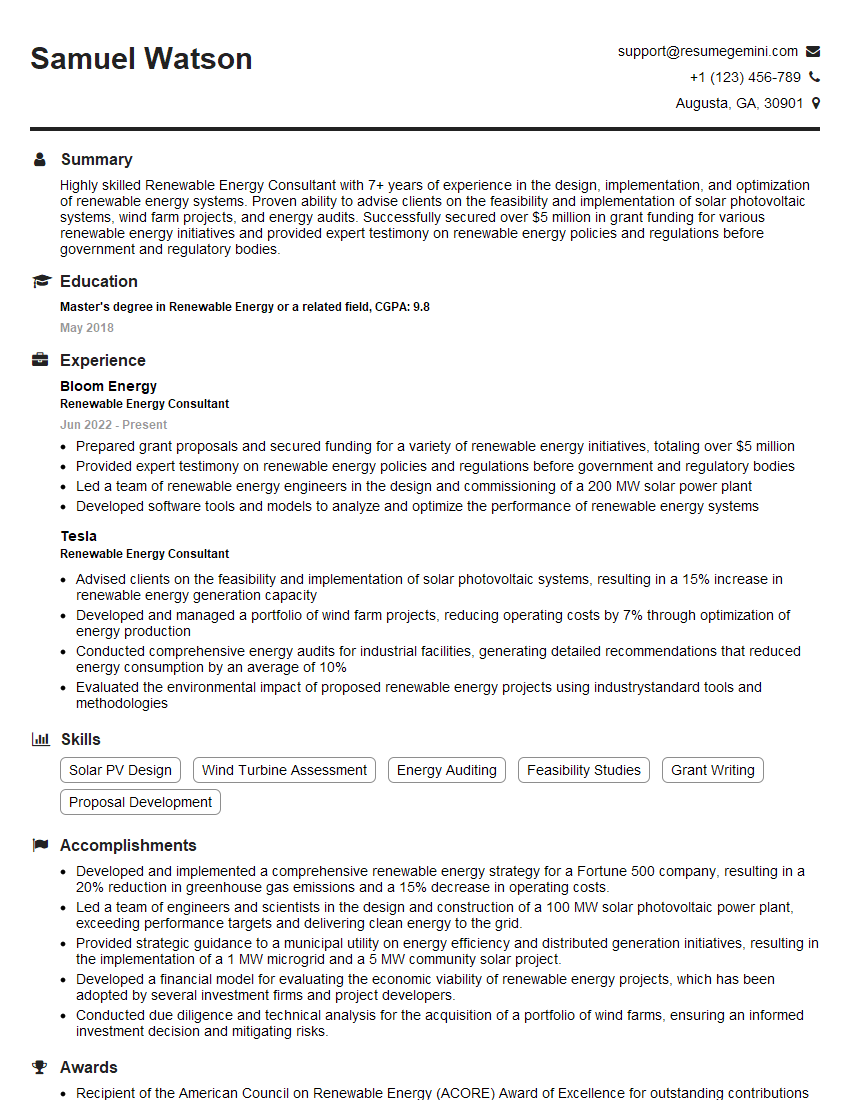
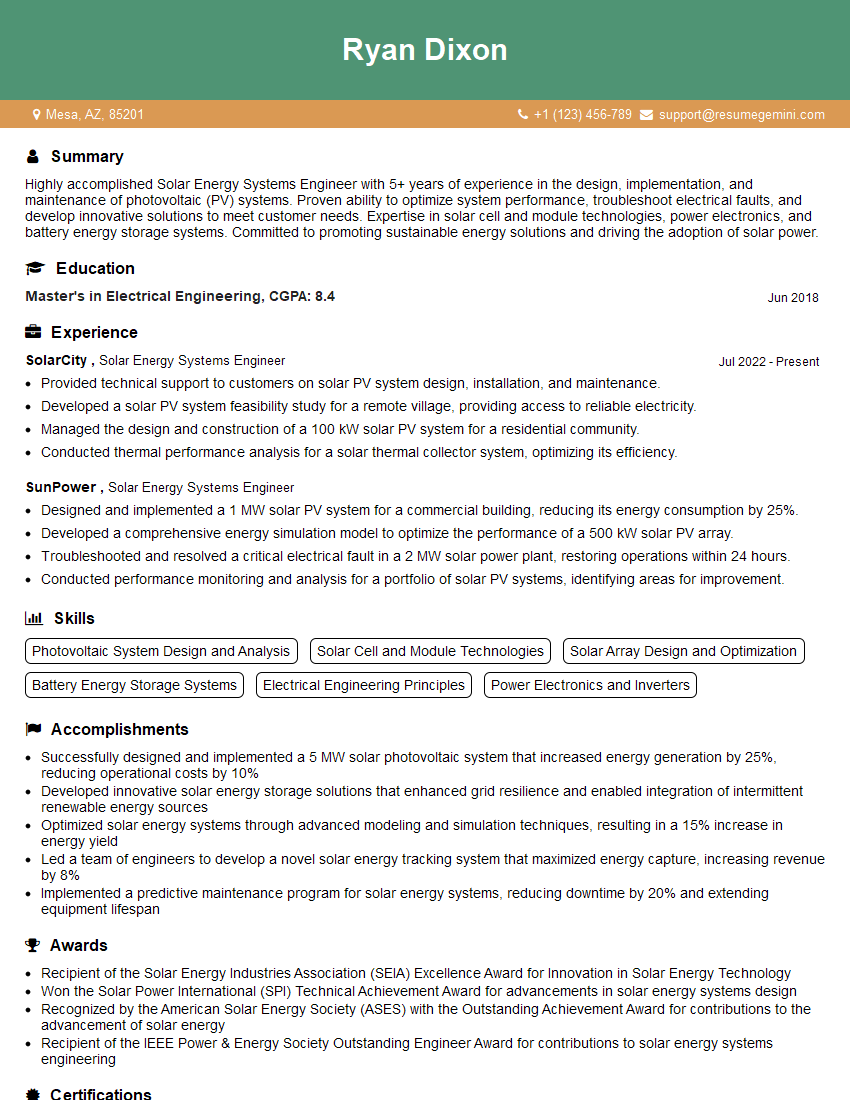
Mastering Solar Industry Trends is crucial for career advancement. A deep understanding of these topics demonstrates your expertise and adaptability, making you a highly competitive candidate. To maximize your job prospects, focus on building an ATS-friendly resume that effectively highlights your skills and experience. ResumeGemini is a trusted resource to help you create a professional and impactful resume. We provide examples of resumes tailored to the Solar Industry Trends to help you get started. Use these resources to build a resume that captures the attention of recruiters and lands you your dream job.
Explore more articles
Users Rating of Our Blogs
Share Your Experience
We value your feedback! Please rate our content and share your thoughts (optional).
What Readers Say About Our Blog
Very informative content, great job.
good