Feeling uncertain about what to expect in your upcoming interview? We’ve got you covered! This blog highlights the most important Aircrew Coordination and Teamwork interview questions and provides actionable advice to help you stand out as the ideal candidate. Let’s pave the way for your success.
Questions Asked in Aircrew Coordination and Teamwork Interview
Q 1. Describe your experience in managing aircrew communication during critical phases of flight.
Managing aircrew communication during critical phases of flight, such as takeoff, landing, or emergencies, requires a structured approach built on clear communication protocols and a shared understanding of roles and responsibilities. It’s about ensuring every instruction, confirmation, and observation is crisp, unambiguous, and timely.
My experience involves utilizing standardized phraseology, emphasizing active listening and using callouts to announce significant events or deviations from the plan. For example, during a low-visibility approach, I’d ensure clear callouts of altitude, airspeed, and runway in sight, using standardized terminology to avoid any confusion. Similarly, during an emergency, my focus would be on concise, prioritized communication, using clear and concise language to convey essential information to each crew member efficiently.
I’ve also employed techniques like ‘sterile cockpit’ rules, where non-essential communication is minimized during critical phases to maintain maximum focus on the flight task. This ensures that the crew is fully attentive to the task at hand, without unnecessary distractions. Finally, post-flight debriefs are essential for analyzing communication effectiveness and identifying areas for improvement.
Q 2. Explain your understanding of Crew Resource Management (CRM) principles.
Crew Resource Management (CRM) is a systemic approach to optimizing the utilization of all resources—human, technical, and procedural—available to flight crews to enhance safety and operational efficiency. It’s not just about technical skills; it’s about fostering a culture of teamwork, mutual respect, and proactive communication.
My understanding of CRM principles encompasses several key elements:
- Leadership: Effective leaders create an environment where all crew members feel comfortable contributing, voicing concerns, and challenging decisions.
- Communication: Clear, concise, and assertive communication is paramount, avoiding jargon and using standardized phraseology. Active listening ensures everyone understands each other.
- Decision-Making: Decisions are based on available information, using a systematic approach to assess risks and benefits. This often involves shared situational awareness and collaboration.
- Situational Awareness: Maintaining a clear understanding of the aircraft’s state, environment, and the overall mission goals is essential. This involves constant monitoring and information sharing.
- Workload Management: Effective workload distribution ensures that no crew member is overloaded, contributing to fatigue or errors.
- Error Management: Anticipating and mitigating potential errors is crucial. CRM emphasizes the importance of learning from mistakes and adopting a ‘just culture’ where reporting errors without fear of retribution is encouraged.
CRM principles are not simply a set of rules; they are a philosophy for operating as a high-performing team.
Q 3. How would you handle a situation where a crew member displays signs of fatigue or stress?
Recognizing signs of fatigue or stress in a crew member is vital for safety. These can manifest as irritability, decreased performance, lapses in concentration, or even physical symptoms like yawning or rubbing eyes.
My approach involves a combination of direct observation and indirect questioning. I would first privately address the crew member, expressing genuine concern and offering support. I’d then subtly assess their workload and see if adjustments could be made to alleviate some of the pressure. If the issue persists or worsens, I would not hesitate to suggest a break, re-distribution of tasks, or even, if necessary, seek assistance from ground control or company authorities to arrange for a crew change. It’s all about prioritizing safety and well-being.
Open communication and a supportive environment are key; creating an atmosphere where crew members feel comfortable discussing their physical or mental state is crucial for preventing incidents caused by fatigue or stress.
Q 4. Detail your experience with conflict resolution within an aircrew.
Conflict resolution within an aircrew requires a calm and professional approach, prioritizing safety and maintaining operational effectiveness. It’s about addressing the root cause of the disagreement, not just the symptoms.
My experience includes employing several strategies:
- Active Listening: Allowing each crew member to fully express their perspective without interruption is critical. This demonstrates respect and encourages open dialogue.
- Empathy: Understanding the other person’s point of view, even if you don’t agree with it, facilitates productive discussion.
- Collaborative Problem-Solving: Focusing on finding a solution that works for everyone involved is essential. This often entails brainstorming and compromise.
- Professional Demeanor: Maintaining a calm and respectful tone throughout the conflict resolution process is critical. Avoid emotional outbursts or personal attacks.
- Seeking Mediation (if necessary): If the conflict cannot be resolved within the crew, seeking guidance from a senior pilot or supervisor can be helpful.
The goal is not to win the argument but to maintain a safe and effective working relationship.
Q 5. Describe a time you had to make a quick decision impacting aircrew safety.
During a flight in challenging weather conditions, we experienced a sudden and unexpected loss of an engine. The decision to divert to the nearest suitable airport versus continuing the flight to our original destination was critical and had to be made quickly.
My approach was to follow a structured decision-making process, which prioritized safety above all else. I quickly assessed the situation: aircraft performance capabilities, weather conditions at the alternate airports, fuel reserves, and passenger safety. I consulted with my co-pilot and flight engineers to gather all necessary information and leverage their expertise. We weighed the risks and benefits of each option, communicating clearly and efficiently. The decision to divert was unanimous and based on a comprehensive risk assessment that ensured the safest outcome for everyone onboard.
This experience highlighted the importance of training, teamwork, and decisive leadership under pressure.
Q 6. How do you ensure effective information sharing within the cockpit?
Effective information sharing in the cockpit is paramount for safe and efficient operations. This involves using a combination of standardized procedures, communication techniques, and technology.
We use standardized phraseology to avoid misunderstandings, particularly during critical phases of flight. For instance, ‘cleared for takeoff’ or ‘flaps 15’ leave no room for interpretation. We also regularly conduct briefings before and during the flight, sharing key information such as weather updates, route changes, and any potential issues. Moreover, active listening and confirmation checks (e.g., repeating back instructions to ensure understanding) are employed consistently.
Technology plays a role too. Flight management systems, electronic checklists, and shared displays all contribute to information transparency. Finally, a culture of open communication, where all crew members feel comfortable sharing information, is fundamental.
Q 7. Explain your approach to monitoring aircrew performance and workload.
Monitoring aircrew performance and workload involves a combination of direct observation, indirect assessment, and utilization of available tools.
Direct observation includes observing crew members’ actions, communication, and overall demeanor. Indirect assessment involves considering factors like completion times for tasks, frequency of errors, and any noticeable changes in their behavior. This also includes considering factors outside the immediate flight environment, such as crew rest times and any personal stressors that might impact performance.
Tools such as flight data recorders and cockpit voice recorders provide valuable post-flight data that can be used for performance analysis. Furthermore, regular crew briefings, including post-flight debriefs, allow for open discussions about workload management and any potential improvements. The ultimate goal is to maintain a safe and efficient operation by identifying and addressing workload imbalances promptly, preventing fatigue and minimizing errors.
Q 8. Describe your understanding of human factors and their impact on aircrew performance.
Human factors encompass the physical and psychological characteristics of aircrew, their interactions with the aircraft systems, and the operational environment. These factors significantly influence aircrew performance, impacting safety, efficiency, and overall mission success. For example, fatigue can lead to reduced vigilance and decision-making errors, while poor cockpit design can increase workload and stress levels. Conversely, a well-designed cockpit, clear communication protocols, and proper crew resource management (CRM) techniques can mitigate these risks and optimize performance.
- Physiological Factors: Fatigue, stress, sleep deprivation, illness, and the effects of altitude.
- Psychological Factors: Workload, stress, decision-making, situational awareness, communication styles, and interpersonal dynamics.
- Environmental Factors: Noise, vibration, temperature, lighting, and the overall operational context.
- Technological Factors: Cockpit design, automation systems, displays, controls, and the reliability and usability of technological aids.
Understanding these factors is crucial for designing effective training programs, improving cockpit ergonomics, and implementing safety measures that help to reduce human error and improve aircrew performance.
Q 9. How would you address a disagreement between crew members regarding flight procedures?
Disagreements between crew members are inevitable, and addressing them constructively is vital for safety. My approach follows a structured framework:
- Active Listening: Firstly, I ensure each member feels heard by actively listening to their concerns and perspectives without interruption. I aim to understand the reasoning behind their differing opinions.
- Neutral Facilitation: I act as a neutral facilitator, guiding the discussion toward a shared understanding of the situation and the potential implications of different actions.
- Focus on the Issue, Not the Person: The discussion should remain focused on the procedural issue at hand, avoiding personal attacks or blame. I would use phrases like, “I understand your concern about…, let’s look at the procedure together.”
- Review Relevant Procedures: We’d jointly review the relevant flight manuals, checklists, or Standard Operating Procedures (SOPs) to identify the correct procedure and clarify any ambiguities. Often, a misunderstanding of the procedures is the root cause of the disagreement.
- Collaborative Decision-Making: Together, we’d explore various options and, using the information at hand, collaboratively arrive at a decision that aligns with safety and operational guidelines. If a consensus can’t be reached, the captain makes the final decision, which is clearly communicated to the crew.
Ultimately, the goal is to resolve the conflict professionally and respectfully, ensuring a safe and effective flight operation. It’s important to document any disagreements and actions taken for future review.
Q 10. What strategies do you employ to maintain situational awareness during complex flight operations?
Maintaining situational awareness (SA) during complex flight operations is paramount. My strategy is multifaceted and involves:
- Cross-Checking Information: I consistently cross-check information from multiple sources, including flight instruments, navigation systems, weather reports, air traffic control communications, and the crew’s observations.
- Mental Workload Management: I prioritize tasks, delegating responsibilities effectively to reduce individual workload and prevent cognitive overload. This allows each crew member to focus on specific aspects of the operation.
- Proactive Communication: I encourage open and frequent communication among the crew, sharing information and perspectives to maintain a shared understanding of the situation. We actively brief and debrief each phase of flight.
- Regular Scanning: Continuous scanning of the instruments and the external environment, combined with mental rehearsal and anticipating potential scenarios, improves preparedness and quick reaction times.
- Use of Technology: Effective use of flight management systems, weather radar, and other technological tools significantly enhances our understanding of the overall flight context.
- Contingency Planning: We regularly develop and discuss contingency plans for different scenarios, ensuring that we’re prepared to handle unexpected events.
These measures, used collaboratively, help to maintain a robust shared SA, which is essential for safe and effective flight operations, particularly in complex situations.
Q 11. Explain your experience in using checklists and standard operating procedures effectively.
Checklists and SOPs are cornerstones of safe and efficient flight operations. My experience involves:
- Strict Adherence: I strictly adhere to checklists and SOPs, understanding that they represent best practices developed through experience and risk analysis. Each step is performed diligently, without shortcuts or omissions.
- Understanding the Rationale: I don’t treat checklists as mere lists of tasks. I understand the rationale behind each item, which helps in decision-making during unusual or unexpected circumstances. For example, knowing why a specific pre-flight check is critical helps to address potential deviations and ensures safety is not compromised.
- Challenging Procedures Where Appropriate: If I encounter a potential safety hazard or inefficiency in a procedure, I’ll follow standard communication protocols to raise a question and initiate a discussion with the appropriate authorities to review and potentially revise procedures.
- Adaptive Checklists: I’m proficient in using both paper and electronic checklists and understand how to adapt and modify them as needed, particularly during unusual or emergency procedures, without compromising safety.
- Teamwork and Verification: I ensure that checklists are read and verified by all relevant crew members, fostering shared responsibility and reducing the risk of human error.
My use of checklists and SOPs reflects not merely compliance but an active commitment to maintaining a robust safety culture.
Q 12. How would you handle a communication breakdown between the flight crew and air traffic control?
Communication breakdowns between flight crew and ATC can be extremely dangerous. My approach prioritizes clarity, verification, and escalation:
- Read Back and Clarification: I always read back all ATC instructions verbatim, ensuring complete understanding. If there’s any ambiguity, I immediately request clarification using clear and concise language, avoiding jargon or slang. For example, instead of saying “Roger that,” I might say, “Confirmed, Runway 27, cleared for takeoff.”
- Repetition and Confirmation: If the communication problem persists, I’ll repeat the message and confirm the ATC’s understanding. I might use phrases like, “ATC, can you confirm you received my request for…?”
- Alternative Communication Methods: If voice communication fails, I’ll explore alternative methods like emergency frequencies or written communication, if feasible and applicable.
- Escalation: If the communication breakdown poses an immediate threat to safety, I’ll escalate the issue to senior management or other appropriate authorities.
- Documentation: All communication, including attempts to clarify and instances of failure, would be meticulously documented, including timestamps and relevant details. This documentation helps in subsequent investigations and prevents similar incidents.
Addressing communication breakdowns promptly and effectively is essential for ensuring the safety of the flight and preventing accidents.
Q 13. Describe a time you successfully resolved a safety-critical incident due to effective teamwork.
During a night flight in challenging weather conditions, we experienced a sudden and significant loss of altitude. Initial assessments indicated a possible instrument malfunction. The situation was highly stressful, and it was critical to act quickly and decisively.
Effective teamwork was crucial in mitigating this safety-critical incident. The first officer immediately initiated troubleshooting while I confirmed the altitude loss and the integrity of the aircraft. We collaborated using clear and concise communication, cross-checking information from various sources to diagnose the issue. We discovered that a combination of icing and an unexpected wind shear had significantly impacted our instruments and our control.
By working together, calmly assessing the situation, and applying the appropriate emergency procedures, we successfully recovered control of the aircraft and landed safely. The success of our response was directly attributed to our proactive training and to the crew’s ability to maintain situational awareness, manage workload, and communicate effectively under extreme pressure. This experience reinforced the importance of well-coordinated teamwork and thorough preparation for unexpected events.
Q 14. How do you adapt your communication style to different personality types within the aircrew?
Adapting communication style to different personality types is vital for effective teamwork in the cockpit. I employ several strategies:
- Active Observation: I first carefully observe each crew member’s communication style and personality. Some individuals might be more direct and assertive, while others might be more reserved and contemplative.
- Tailored Communication: I tailor my communication to match the individual’s style. With direct individuals, I use clear, concise instructions. With more reserved individuals, I take extra time to explain situations fully, encouraging questions and feedback.
- Empathetic Communication: I utilize active listening and empathetic communication to show understanding of their perspectives, regardless of their communication style. I ensure everyone feels valued and heard.
- Respectful Differences: I respect and value differences in personalities, recognizing that a diversity of perspectives can contribute to a strong team. I foster an environment of mutual respect where everyone feels comfortable contributing their expertise.
- Clear and Concise Instructions: This is vital for all personality types to ensure everyone understands the information correctly and can execute tasks without ambiguity.
By adapting my communication style, I ensure clear and effective information exchange, leading to improved teamwork and safety.
Q 15. Explain your understanding of the importance of assertive communication in aviation.
Assertive communication in aviation is paramount because it ensures clear, concise, and unambiguous information exchange among crew members, regardless of the situation. It’s about expressing your needs and concerns directly and respectfully, without being aggressive or passive. In a high-pressure environment like a cockpit, misinterpretations can have catastrophic consequences.
Imagine a scenario where a First Officer notices a problem with the aircraft’s systems. Assertive communication would involve stating the issue clearly: “Captain, I’ve noticed a fluctuation in the number two engine oil pressure. I suggest we investigate further.” This contrasts with a passive statement like, “Um, maybe the oil pressure seems a bit… off?” or an aggressive statement like, “The engine is about to fail!” The assertive approach facilitates immediate problem-solving.
Assertive communication relies on using ‘I’ statements (e.g., “I’m concerned about…”), active listening, and seeking clarification when needed. This helps build trust and mutual respect amongst the crew, strengthening teamwork under pressure. It’s about prioritising safety without creating conflict.
Career Expert Tips:
- Ace those interviews! Prepare effectively by reviewing the Top 50 Most Common Interview Questions on ResumeGemini.
- Navigate your job search with confidence! Explore a wide range of Career Tips on ResumeGemini. Learn about common challenges and recommendations to overcome them.
- Craft the perfect resume! Master the Art of Resume Writing with ResumeGemini’s guide. Showcase your unique qualifications and achievements effectively.
- Don’t miss out on holiday savings! Build your dream resume with ResumeGemini’s ATS optimized templates.
Q 16. How do you contribute to a positive and supportive team environment in the cockpit?
Contributing to a positive and supportive team environment involves cultivating mutual respect, open communication, and shared responsibility. This starts before the flight even begins—with pre-flight briefings where each member’s role is clearly defined and understood. During the flight, this means actively listening to colleagues, valuing their input, and offering assistance where needed. It’s also about recognizing and celebrating successes, both big and small.
For example, during a challenging approach in turbulent weather, I might offer words of encouragement to my co-pilot: “Good job managing the workload, we’re doing great.” Conversely, if I make a mistake, I’d readily acknowledge it and learn from it, thereby modeling a culture of continuous improvement. This transparency builds trust, showing vulnerability is not weakness but an opportunity for shared learning.
Furthermore, I actively foster a culture of error reporting without blame. We use these events as opportunities for improvement, focusing on the underlying causes, not personal fault. This proactive approach promotes a safer and more supportive atmosphere for everyone.
Q 17. Describe your experience with emergency procedures and your role in coordinating the response.
My experience with emergency procedures encompasses both simulator training and real-world scenarios. During training, we regularly practice various emergencies, from engine failures to decompression events. This practice ensures we are prepared to respond effectively, quickly, and calmly when an emergency arises. In a real-world situation, my role is to assist the Captain in managing the emergency, following the established procedures, and keeping the other crew informed.
In one particular scenario (during simulation), we experienced a sudden decompression. My role involved immediately securing the cabin, assisting passengers with oxygen masks, and relaying information to the Captain as efficiently as possible. Effective communication was crucial to coordinate actions quickly. This involved using standardized phraseology as well as clarifying any uncertainties to avoid misunderstandings, ensuring all actions were synchronized and safe. Our structured training provided the framework for a coordinated and effective response.
Post-emergency, there’s a debriefing to analyze what went well and where improvements could be made. This continuous learning from both successes and near misses is essential for maintaining and improving emergency response capabilities.
Q 18. How do you maintain professional composure under pressure and during high-stress situations?
Maintaining professional composure under pressure involves a combination of training, experience, and self-regulation. My training emphasizes methodical problem-solving and adhering to established procedures, which helps me focus on the task at hand rather than succumbing to panic.
Techniques such as deep breathing and mental rehearsal—visualizing successful outcomes—help manage stress levels. Prioritizing tasks, focusing on what is immediately critical and delegating efficiently, streamlines the process. I also believe in recognizing my own limitations—if I feel overwhelmed, I’ll communicate this to the crew and seek support.
In high-stress situations, clear and concise communication is key. Calmly and deliberately directing crew actions avoids unnecessary confusion and maintains order, increasing the chances of a successful outcome. Essentially, it’s about preparing for the worst-case scenarios so that when they happen, the responses are less reactive and more controlled. The experience gained over time builds resilience and adaptability under extreme conditions.
Q 19. Explain your understanding of the limitations of human performance in aviation.
Understanding the limitations of human performance in aviation is critical for safety. Human factors such as fatigue, stress, workload, and situational awareness significantly impact decision-making and performance. Fatigue, for instance, impairs cognitive function, leading to errors in judgment and increased reaction times. Similarly, high workload can overwhelm the crew, leading to missed cues or inefficient task management.
Situational awareness, the understanding of your surroundings and your aircraft’s condition, is paramount. Loss of situational awareness is often a precursor to accidents. Other factors include the effects of hypoxia (lack of oxygen), spatial disorientation, and the influence of circadian rhythms (our body’s internal clock).
Crew Resource Management (CRM) training directly addresses these limitations by teaching crewmembers how to recognize and mitigate the effects of these factors. For instance, we are trained to recognize signs of fatigue in ourselves and colleagues, and we have procedures to manage workload effectively. Recognising these limitations is crucial for safer operations.
Q 20. How would you delegate tasks effectively within an aircrew?
Effective task delegation within an aircrew hinges on understanding each member’s strengths, limitations, and current workload. It’s not just about assigning tasks; it’s about ensuring the right person is given the right task at the right time. This requires open communication and trust between the crew members.
Before assigning tasks, I would consider several factors: the complexity of the task, the time constraints, and the individual’s proficiency and experience level. For example, if we’re approaching a challenging airport, I may assign a less experienced co-pilot to manage the radio while I focus on navigation. If the workload becomes overwhelming, I will always step in to assist or redistribute tasks to optimize the overall efficiency and safety of the flight.
Clear communication is essential. The task must be clearly defined, with a precise description of what needs to be done, expected results, and any potential challenges. Confirming understanding ensures everyone is on the same page.
Q 21. Describe your experience with the use of flight planning tools and their contribution to teamwork.
Flight planning tools are indispensable for effective teamwork and safe flight operations. They enhance situational awareness, improve communication, and facilitate efficient workload management. Tools such as flight planning software, weather radar, and navigation systems provide crucial information that helps the crew make informed decisions.
For instance, I collaborate with my crew to input all necessary flight parameters into the flight planning software, including routing, fuel calculations, and performance data. This shared effort ensures everyone understands the flight plan and their individual responsibilities. This ensures a common understanding of the flight’s parameters. Discrepancies are noted and discussed, further enhancing communication and shared understanding.
Real-time weather updates accessed through the flight planning tools allow us to adapt to changing conditions, ensuring a safer and more efficient flight. The tools also provide a shared platform for problem-solving, and the collective interpretation of data supports well-informed decision-making, improving both safety and efficiency.
Q 22. How do you ensure that all crew members understand their roles and responsibilities?
Ensuring all crew members understand their roles and responsibilities is paramount to safe and efficient flight operations. This starts with a robust and clearly defined Standard Operating Procedure (SOP) manual, outlining each crew member’s duties and responsibilities in various flight phases and emergency situations. Beyond the SOP, we utilize several strategies:
- Pre-flight briefings: These are crucial for clarifying roles, reviewing the flight plan, discussing potential challenges (weather, ATC procedures), and establishing communication protocols. We encourage open dialogue during these briefings to ensure everyone understands their tasks and how they contribute to the overall mission.
- Regular training and recurrent training: We participate in regular simulator training and recurrent training sessions that reinforce procedural knowledge and address potential scenarios. This ensures proficiency and a common understanding of best practices amongst the crew.
- Cross-training: This allows crew members to gain familiarity with each other’s roles, fostering a deeper understanding of the overall operational picture and enhancing situational awareness. If someone is unexpectedly unavailable, this cross-training allows for greater flexibility.
- Role-playing exercises: These exercises simulate various scenarios, enabling crew members to practice their roles and responses within a safe training environment. It helps them to develop teamwork and decision-making skills under pressure.
For example, in a recent pre-flight briefing for a transatlantic flight, we explicitly discussed contingency plans for potential engine failure at different flight phases, assigning roles and responsibilities for each crew member. This proactive approach builds confidence and preparedness within the crew.
Q 23. Explain your experience in using decision-making frameworks in challenging situations.
In challenging situations, a structured decision-making framework is essential. I frequently utilize the DECIDE model: Detect, Estimate, Choose, Identify, Do, Evaluate. This provides a systematic approach to problem-solving under pressure.
For instance, during a flight experiencing unexpected severe turbulence, I used the DECIDE model:
- Detect: We detected a rapid increase in turbulence and aircraft movement.
- Estimate: We assessed the severity of the turbulence and potential impact on the aircraft and passengers.
- Choose: We chose to slow the aircraft, adjust altitude, and instruct passengers to remain seated with seatbelts fastened.
- Identify: We identified the most likely cause of turbulence (a weather system).
- Do: We executed the chosen course of action.
- Evaluate: After the turbulence subsided, we assessed the situation, checked aircraft systems, and briefed the passengers.
Another framework I find valuable is the CRM (Crew Resource Management) approach, which emphasizes communication, leadership, and situational awareness, facilitating collaborative problem-solving within the cockpit.
Q 24. How do you proactively identify and mitigate potential risks to aircrew safety?
Proactive risk mitigation is a cornerstone of aircrew safety. We utilize several methods:
- Pre-flight risk assessments: Before each flight, we conduct a thorough risk assessment, considering factors such as weather conditions, route complexity, aircraft condition, and crew fatigue. This allows us to identify potential hazards and develop mitigation strategies.
- Regular maintenance checks: Ensuring aircraft maintenance is up-to-date minimizes mechanical failures. We actively participate in pre-flight checks and report any irregularities immediately.
- Weather monitoring: We continuously monitor weather updates throughout the flight, adjusting our plans as needed to avoid hazardous conditions. This includes using weather radar and consulting weather briefings.
- Fatigue management: Adequate rest and sleep are crucial. We adhere to strict flight time limitations and report any signs of fatigue to management.
- Emergency procedures training: Regular training in emergency procedures ensures the crew is prepared to handle unexpected events effectively and safely. This includes fire, engine failure, and other potential emergencies.
For example, during a flight planning session, if we anticipate severe crosswinds at the destination, we would adjust our approach speed, consider a different approach technique, and possibly even choose an alternate airport if the risks are too high. This proactive approach significantly reduces the likelihood of incidents.
Q 25. How would you train a new crew member on effective aircrew coordination techniques?
Training a new crew member involves a phased approach emphasizing both theoretical and practical skills:
- Classroom training: This covers the theoretical aspects of aircrew coordination, CRM principles, SOPs, emergency procedures, and communication protocols. This includes presentations, interactive workshops, and case studies.
- Simulator training: Provides a safe environment to practice real-world scenarios, reinforcing classroom learning and enabling the new crew member to build confidence and practical experience in handling various situations.
- On-the-job training (OJT): Mentorship from experienced crew members allows the new crew member to observe and participate in actual flight operations, gradually assuming more responsibility under supervision. This includes detailed feedback and debriefs after each flight segment.
- Focus on communication techniques: This includes practicing clear, concise, and unambiguous communication using standardized terminology. Role-playing exercises are very useful here.
- Emphasis on situational awareness: This teaches the new crew member to maintain a thorough understanding of the overall operational context and to anticipate potential problems.
Throughout the training, regular feedback and assessment are critical, ensuring the new crew member is progressing effectively and meeting the required proficiency standards.
Q 26. Describe your experience in conducting post-flight debriefings to improve teamwork.
Post-flight debriefings are crucial for continuous improvement in teamwork. We follow a structured approach:
- Review of the flight: We begin by reviewing the flight from start to finish, noting any significant events or challenges encountered.
- Open discussion: We encourage open and honest feedback from all crew members, focusing on both successes and areas for improvement. Constructive criticism is welcomed and encouraged.
- Identify areas for improvement: We collaboratively identify areas where communication, coordination, or decision-making could be enhanced.
- Action planning: We develop specific, measurable, achievable, relevant, and time-bound (SMART) actions to address identified shortcomings. This might include additional training, revised procedures, or changes to communication protocols.
- Documentation: We document the key findings and action items from each debriefing for future reference.
For example, after a flight with a slightly delayed departure, we discussed the causes of the delay during the debriefing and explored ways to improve our pre-flight preparations to minimize such delays in the future. This ensures that our lessons learned contribute to continuous improvement in our teamwork and operational efficiency.
Q 27. How do you balance safety considerations with operational efficiency within the aircrew?
Balancing safety and operational efficiency requires a delicate yet crucial equilibrium. Safety should always be the paramount consideration; however, efficiency is equally important within the constraints of safety.
We achieve this balance by:
- Prioritizing safety over speed: While efficiency is desirable, shortcuts that compromise safety are unacceptable. We always prioritize safe procedures even if it means slightly longer flight times or additional fuel consumption.
- Proactive risk management: Identifying and mitigating potential risks before they materialize is far more efficient than dealing with consequences after an incident.
- Optimized flight planning: Proper flight planning considers both the shortest and safest route, taking into account weather, air traffic, and potential fuel consumption.
- Efficient communication: Clear and concise communication amongst crew members reduces misunderstandings and potential delays.
- Effective workload management: Distributing tasks efficiently amongst crew members ensures that everyone’s workload remains manageable and prevents overload and potential errors.
For instance, if we encounter unexpected headwinds, we might need to adjust our flight plan slightly to consume less fuel and still reach our destination safely. This is a balance of efficiency and safety.
Q 28. How would you utilize technology to enhance aircrew coordination and communication?
Technology plays a vital role in enhancing aircrew coordination and communication. We leverage several technological advancements:
- Electronic Flight Bags (EFBs): These replace paper charts and manuals with digital versions, providing real-time access to updated information, weather reports, and navigational data. They also enhance data sharing amongst crew members.
- Enhanced communication systems: Advanced communication systems (like ACARS and satellite communication) provide uninterrupted communication with air traffic control and ground support, even during remote flights.
- Integrated cockpit displays: Modern cockpits feature integrated displays that provide pilots with a comprehensive overview of the aircraft’s systems and flight parameters, improving situational awareness and decision-making.
- Data analytics: Analyzing flight data can identify potential areas for improvement in operational efficiency and safety, facilitating data-driven decision-making.
- Real-time weather information systems: These systems provide up-to-the-minute weather updates, allowing for quick and informed decisions concerning rerouting or alternate approaches.
The use of these technologies contributes to safer, more efficient, and better coordinated flight operations, creating a more proactive and responsive team.
Key Topics to Learn for Aircrew Coordination and Teamwork Interview
- Crew Resource Management (CRM): Understanding CRM principles, including decision-making, communication, and leadership within a team environment. Practical application: Describe how you’ve applied CRM principles to overcome a challenging situation requiring collaborative problem-solving.
- Communication Strategies: Mastering effective communication techniques, both verbal and non-verbal, under pressure. Practical application: Explain how you would handle a critical communication breakdown during a simulated emergency.
- Situational Awareness: Maintaining a shared understanding of the operational environment and potential threats. Practical application: Detail your process for assessing and mitigating risks in a dynamic operational setting, emphasizing collaborative risk management.
- Conflict Resolution: Developing strategies for addressing disagreements and resolving conflicts constructively within the crew. Practical application: Describe a time you successfully mediated a disagreement within a team, highlighting the steps you took to achieve a positive outcome.
- Workload Management: Efficiently distributing tasks and managing workload amongst crew members to avoid overload and maintain optimal performance. Practical application: Explain how you would prioritize tasks and delegate responsibilities during a high-pressure situation.
- Leadership and Followership: Understanding the roles and responsibilities of both leaders and followers within a team, and adapting your approach accordingly. Practical application: Describe a scenario where you demonstrated effective leadership or followership within a team context.
- Emergency Procedures and Protocols: Thorough understanding of emergency procedures and protocols and how to effectively collaborate during emergencies. Practical application: Discuss your approach to maintaining composure and coordinating actions during a simulated emergency.
Next Steps
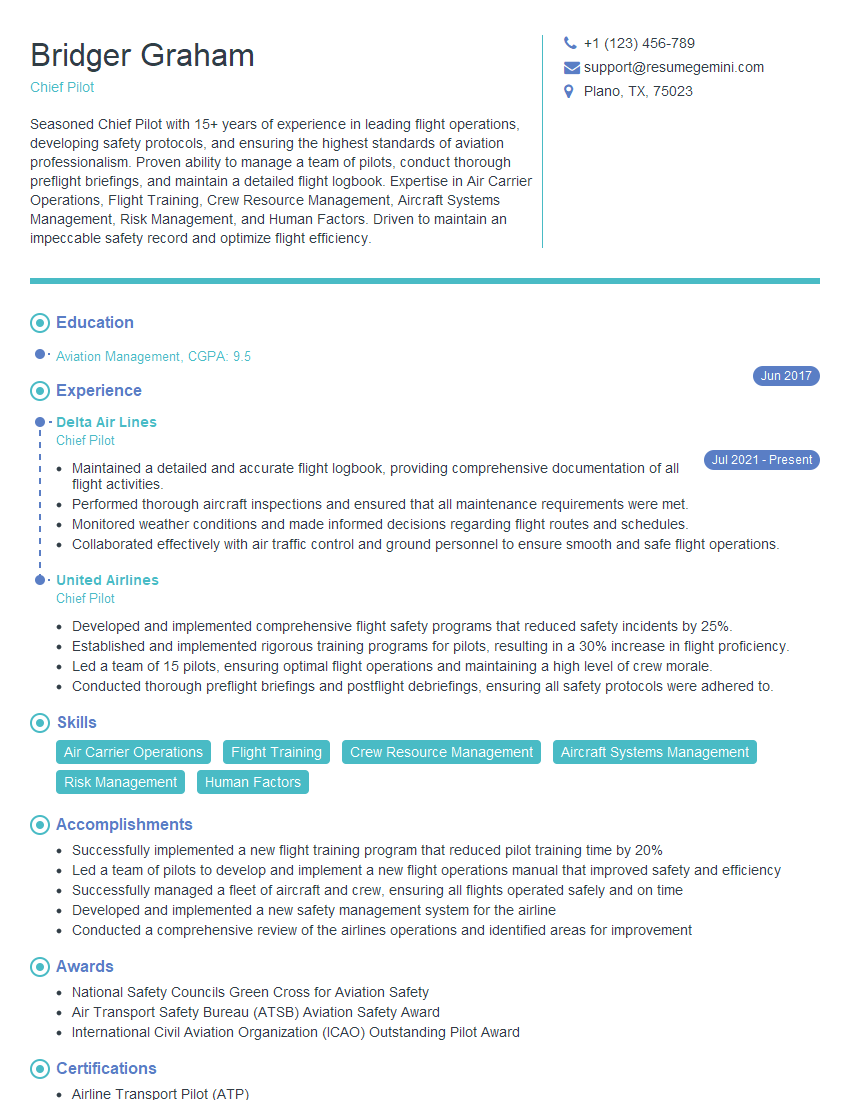
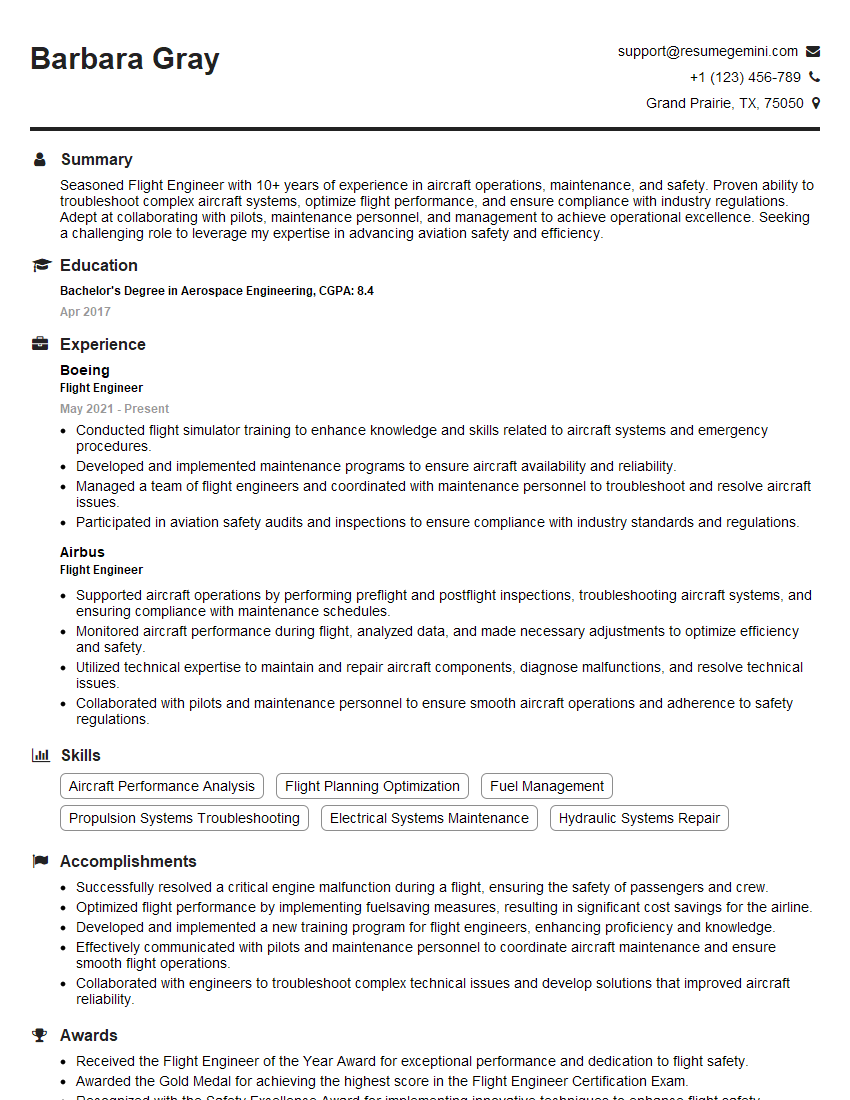
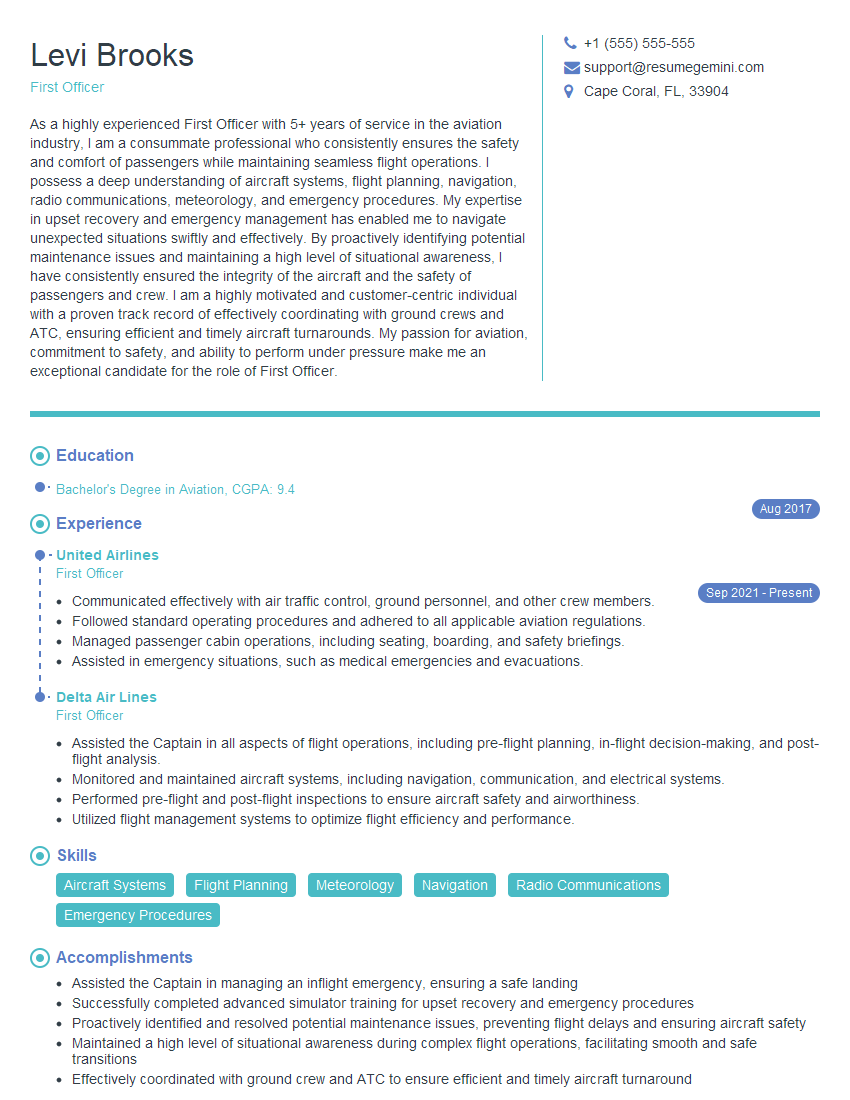
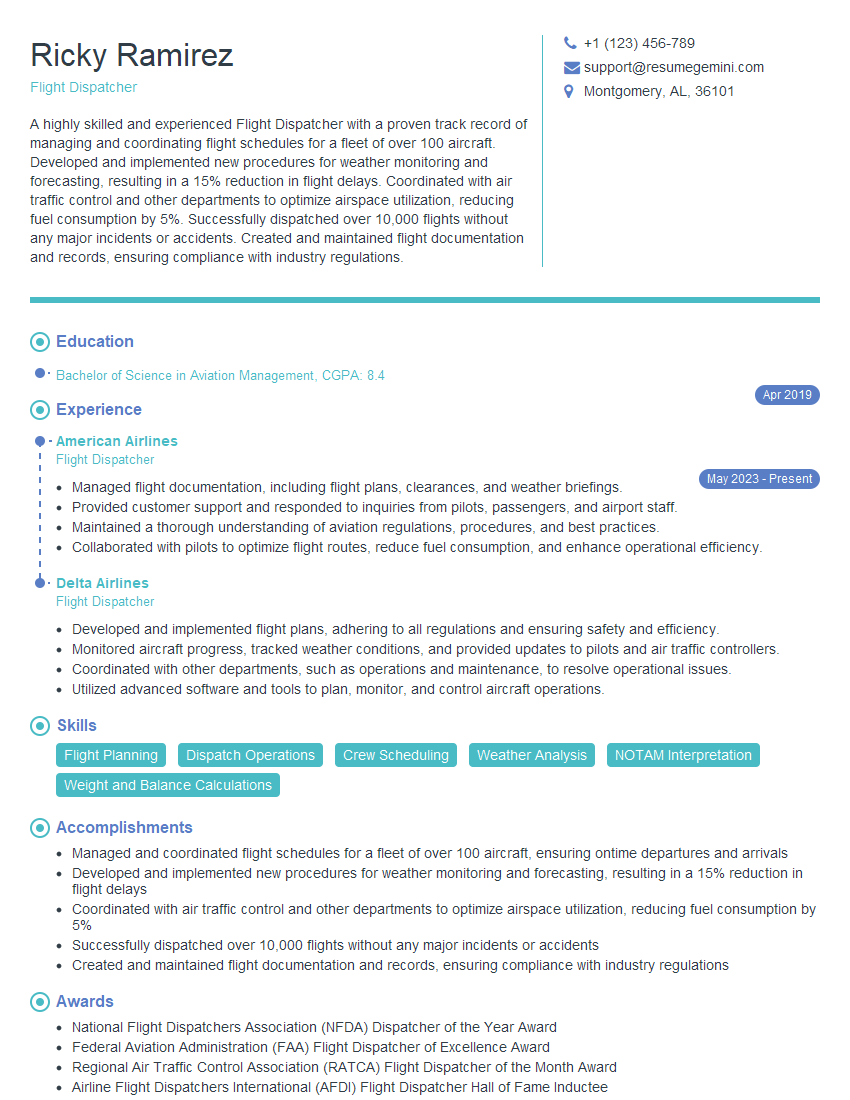
Mastering Aircrew Coordination and Teamwork is crucial for career advancement in aviation. It demonstrates your ability to work effectively under pressure, contribute to a safe and efficient operation, and collaborate effectively with colleagues. To increase your job prospects, create an ATS-friendly resume that highlights your skills and experience in these critical areas. ResumeGemini is a trusted resource for building professional and effective resumes. We provide examples of resumes tailored to Aircrew Coordination and Teamwork to help you showcase your qualifications. Take advantage of these resources and build a resume that reflects your expertise and secures your dream role.

Explore more articles
Users Rating of Our Blogs
Share Your Experience
We value your feedback! Please rate our content and share your thoughts (optional).
What Readers Say About Our Blog
Very informative content, great job.
good