The right preparation can turn an interview into an opportunity to showcase your expertise. This guide to Experience in Arranging for Music Education and Performance interview questions is your ultimate resource, providing key insights and tips to help you ace your responses and stand out as a top candidate.
Questions Asked in Experience in Arranging for Music Education and Performance Interview
Q 1. Explain your experience arranging music for different ensembles.
Arranging music for different ensembles requires a deep understanding of each instrument’s capabilities and limitations. My experience spans a wide range, from small chamber groups to full orchestras and even vocal ensembles. I begin by analyzing the original composition, considering its harmonic structure, melodic lines, and overall style. Then, I carefully distribute the parts, ensuring that each instrument plays within its comfortable range and contributes effectively to the overall texture.
For example, when arranging a piece for a string quartet, I might focus on creating interesting counterpoint between the violins, while assigning the viola and cello richer, more foundational harmonies. Conversely, arranging for a wind ensemble requires careful consideration of voicing and balance, since each instrument projects differently. I often employ techniques like doubling certain melodic lines across different instruments to enhance clarity and sonic richness. My approach emphasizes both musicality and practicality, ensuring that the arrangement is both aesthetically pleasing and playable for the ensemble.
A specific example involves a recent project where I adapted a piano sonata for a brass quintet. I had to carefully consider the timbre of each brass instrument and re-harmonize sections to make them idiomatic to the brass quintet’s tone. This required a thorough understanding of voice leading and a sensitivity to the unique expressive capacities of each instrument within the ensemble.
Q 2. Describe your approach to teaching music theory.
My approach to teaching music theory is rooted in the belief that it should be engaging and relevant to students’ experiences. I avoid rote memorization and instead focus on building a conceptual understanding. We start with foundational concepts like rhythm and melody, gradually progressing to more complex topics like harmony and counterpoint. I incorporate a variety of teaching methods, including interactive exercises, listening activities, and composition projects.
For instance, when introducing harmony, I often use simple songs that students already know, analyzing their chord progressions and identifying the underlying harmonic structures. We then explore how different chord changes create different moods and emotions. This hands-on, practical approach allows students to connect abstract concepts to concrete musical experiences, leading to deeper understanding and retention. This also encourages exploration and experimentation with music creating.
Q 3. How do you adapt your teaching methods for students with diverse learning styles?
Catering to diverse learning styles is paramount in music education. I employ a multi-sensory approach, incorporating visual, auditory, and kinesthetic learning methods. For visual learners, I use diagrams, charts, and notation software to illustrate concepts. Auditory learners benefit from listening exercises and analyses of musical examples. Kinesthetic learners engage best through hands-on activities like improvisation, composing, and playing instruments.
For example, when explaining rhythmic concepts, I might use visual aids like clapping patterns or rhythmic notation alongside verbal explanations. For students who struggle with written notation, I would focus on aural training, emphasizing listening and recognizing rhythms and melodies. Furthermore, I regularly assess students’ learning preferences and adapt my teaching accordingly, offering flexibility in assignment formats and learning materials to cater to their unique strengths.
Q 4. What software or tools do you use for music arrangement and notation?
My primary tools for music arrangement and notation are Sibelius and Finale, two industry-standard software packages. These programs allow me to input and edit musical notation with precision, create scores for various ensembles, and generate parts for individual musicians. I also use Audacity for audio editing and recording, which is particularly useful for creating demos or recording student performances. Furthermore, I frequently utilize online resources and libraries for reference materials and educational tools.
Q 5. How do you assess student progress in music performance?
Assessing student progress in music performance involves a holistic approach that goes beyond simply judging technical proficiency. I use a combination of methods, including formal assessments, informal observations, and self-evaluation. Formal assessments might involve recitals, performances, or exams where students demonstrate their skills in a structured setting.
Informal observations, such as listening to practice sessions or observing their participation in ensemble rehearsals, provide valuable insights into their progress and identify areas for improvement. I also encourage students to engage in self-reflection, keeping a performance journal to document their practice habits and reflect on their strengths and weaknesses. Through combining these methods I get a comprehensive understanding of their development, allowing for tailored feedback and support.
Q 6. Describe your experience conducting or leading musical groups.
My experience conducting and leading musical groups spans various settings, from school ensembles to community orchestras. Leading a group effectively requires strong communication skills, musical understanding, and the ability to inspire and motivate others. My approach involves creating a positive and collaborative learning environment where students feel comfortable taking risks and expressing their creativity. I emphasize careful rehearsal techniques, clear communication, and a focus on achieving musical excellence while fostering teamwork and musical understanding.
A memorable experience involved preparing a youth orchestra for a challenging orchestral work. Through collaborative rehearsals, we broke down the piece section-by-section, focusing on individual parts, sectionals, and the overall ensemble sound. By combining detailed technical instruction with emotional connection to the music, I was able to help the young musicians develop both their technical proficiency and their musical interpretations. This resulted in a truly stunning performance.
Q 7. How do you handle difficult or challenging students?
Handling challenging students requires patience, understanding, and a proactive approach. I begin by trying to understand the root cause of the difficulty. Is it a lack of understanding, behavioral issues, or something else? Once I identify the cause, I can tailor my approach accordingly. Sometimes, it involves adjusting teaching methods, offering additional support or resources, or having a conversation to address any underlying issues.
For example, a student might be struggling because they lack confidence. In this case, I would focus on building their self-esteem through positive reinforcement and providing opportunities for them to succeed. If the issue is behavioral, I would work with the student and their parents to develop strategies to manage their behavior and create a more positive learning environment. Communication is key – maintaining open dialogue between the student, parents and myself is important in finding solutions that work for everyone.
Q 8. Explain your understanding of copyright laws related to music arrangement.
Copyright law in music arrangement is complex, encompassing several key aspects. It protects the original composition (the melody, harmony, and rhythm) and any unique arrangement of that composition. This means that while you can arrange a pre-existing piece, you don’t automatically own the rights to that arrangement. The copyright of the original composition remains with the composer or their assignee. You need permission (a license) to arrange and publish or publicly perform your arrangement, often involving negotiating fees with the copyright holder. For instance, arranging a Mozart piano sonata for string quartet requires securing a license from the rights holder before any public performance or recording. Failure to obtain permission can lead to copyright infringement, resulting in legal action and potentially significant financial penalties. It’s crucial to thoroughly research the copyright status of any piece before undertaking an arrangement, and to consult with legal professionals specializing in copyright law if you have any doubts. Using a reputable licensing agency can simplify the process significantly.
Q 9. How do you create engaging and effective lesson plans for music education?
Effective music lesson plans are built around clear learning objectives, age-appropriate activities, and a balance of theory and practical application. I begin by identifying the specific skills I want students to acquire (e.g., understanding time signatures, mastering a specific technique). Then, I design engaging activities that cater to different learning styles. This might involve games like rhythmic dictation, collaborative composition exercises, or listening activities to enhance musical awareness. For younger students, I use visual aids, storytelling, and movement to make learning fun and memorable. For older students, I incorporate more complex theoretical concepts and encourage independent exploration. Regular formative assessments, such as short quizzes or informal performances, help me track student progress and adjust my teaching accordingly. A successful lesson plan also incorporates opportunities for student creativity and self-expression, fostering a love for music beyond technical proficiency. For example, a lesson on improvisation might include a ‘jam session’ where students experiment freely, guided by basic harmonic structures.
Q 10. What strategies do you use to motivate students in music performance?
Motivating students in music performance hinges on creating a positive and supportive learning environment. I focus on building student confidence by celebrating successes, no matter how small. I use positive reinforcement and encouraging feedback, focusing on effort and improvement rather than solely on perfection. Setting achievable goals, breaking down complex pieces into smaller, manageable sections, and providing regular opportunities for performance (even informal ones) boost their self-esteem. I also involve students in the selection of repertoire, allowing them to choose pieces they genuinely connect with. This intrinsic motivation significantly enhances their engagement and practice habits. Moreover, fostering a sense of camaraderie and teamwork, perhaps through ensemble work, creates a supportive environment where students feel encouraged to learn from one another. For example, organizing informal student concerts or creating opportunities for students to teach each other simple musical concepts creates a sense of ownership and accomplishment.
Q 11. Describe your experience in developing music curricula.
My experience in developing music curricula spans various age groups and musical styles. I begin by clearly defining the overall aims and objectives, considering the students’ developmental stages and learning needs. The curriculum is carefully structured, progressing logically from basic concepts to more advanced skills. I incorporate a diverse range of musical genres and styles, exposing students to different cultures and musical traditions. Practical application is central to my curriculum design; I balance theoretical study with ample opportunities for performance and composition. Assessment strategies are integrated throughout the curriculum, allowing for continuous monitoring of student progress and timely adjustments to the learning process. For example, a curriculum for elementary school might focus on developing fundamental skills like rhythm, melody, and basic music notation, with creative activities and simple performance opportunities integrated. A high school curriculum might include more in-depth theoretical study, analysis of musical scores, and the exploration of advanced performance techniques, culminating in a major performance at the end of the year.
Q 12. How do you incorporate technology into your music education approach?
Technology has become an indispensable tool in music education. I use digital audio workstations (DAWs) like GarageBand or Logic Pro for composition, recording, and editing. These tools allow students to experiment with sounds, create their own music, and develop their technical skills in a digital environment. Interactive music software and apps provide engaging and effective ways to practice rhythm, theory, and ear training. Video conferencing platforms facilitate online lessons and collaborative projects, enabling students to connect and learn from each other irrespective of geographical limitations. Furthermore, I utilize educational music websites and online resources to supplement my lessons and offer students access to a broader range of musical materials. For instance, using a collaborative platform allows students to work on a piece remotely, allowing them to add their part to a larger arrangement – creating a shared musical experience.
Q 13. How do you manage the logistics of a large-scale musical performance?
Managing the logistics of a large-scale musical performance requires meticulous planning and coordination. First, I create a detailed timeline outlining all tasks and deadlines. This includes securing a suitable venue, arranging for sound and lighting equipment, managing program printing and distribution, and handling ticket sales (if applicable). I delegate responsibilities to a team of assistants or volunteers, ensuring clear communication and accountability. Rehearsals are meticulously planned, progressively building towards the final performance. I address any technical issues promptly and make contingency plans to mitigate potential problems. Collaboration with the venue staff and other stakeholders is essential to ensure a smooth and successful performance. This also includes coordinating the schedule and backstage needs of performers, ensuring easy transitions and minimizing any stage anxieties. For example, a detailed seating chart for the audience and backstage areas would be essential, minimizing any potential logistical chaos on the day of the performance.
Q 14. What are your preferred methods for providing constructive feedback to students?
My approach to providing constructive feedback is based on the principle of being both specific and encouraging. Instead of generalized comments, I focus on precise observations about the student’s performance, identifying both strengths and areas for improvement. For example, instead of saying ‘your performance was good,’ I would say, ‘Your phrasing in the second movement was particularly expressive, but you might want to work on the clarity of your articulation in the triplets.’ I tailor my feedback to the student’s individual needs and learning style, using language that is easy to understand and encouraging. I always emphasize effort and progress, celebrating their achievements and offering support and guidance for improvement. I encourage open communication, creating a safe space where students feel comfortable asking questions and sharing their thoughts and concerns. Regular check-ins and one-on-one discussions are incorporated to allow for individualized guidance and support. Active listening is paramount, allowing for students to feel heard and understood.
Q 15. How do you foster a positive and supportive learning environment in your music classes?
Creating a positive and supportive learning environment in music is paramount. It’s about building a classroom where students feel safe to experiment, make mistakes, and celebrate their progress. I achieve this through several key strategies:
- Individualized Attention: I believe in getting to know each student’s learning style, strengths, and weaknesses. This allows me to tailor my teaching approach to meet their individual needs, fostering confidence and preventing frustration.
- Positive Reinforcement: I focus on praising effort and progress, not just perfection. A simple ‘well done’ or specific feedback on improvement can go a long way in boosting morale. I celebrate both individual and group achievements through small class concerts or informal performances.
- Collaborative Learning: I encourage teamwork through ensemble playing and group projects. Learning together creates a sense of camaraderie and shared responsibility, making the learning process more enjoyable.
- Open Communication: I foster a culture of open communication where students feel comfortable asking questions and sharing their concerns. I actively listen to their feedback and address any issues promptly.
- Respectful Environment: I establish clear expectations for classroom behavior and ensure that all students feel respected and valued, regardless of their skill level.
For example, I once had a student who was initially shy and hesitant to participate. By providing consistent positive reinforcement and offering opportunities for small group collaborations, I helped build their confidence, eventually leading them to participate in a school concert.
Career Expert Tips:
- Ace those interviews! Prepare effectively by reviewing the Top 50 Most Common Interview Questions on ResumeGemini.
- Navigate your job search with confidence! Explore a wide range of Career Tips on ResumeGemini. Learn about common challenges and recommendations to overcome them.
- Craft the perfect resume! Master the Art of Resume Writing with ResumeGemini’s guide. Showcase your unique qualifications and achievements effectively.
- Don’t miss out on holiday savings! Build your dream resume with ResumeGemini’s ATS optimized templates.
Q 16. Describe your experience with different musical genres and styles.
My experience spans a wide range of musical genres and styles, encompassing classical, jazz, pop, folk, and world music. This broad exposure allows me to cater to diverse student interests and provides me with a rich perspective to draw upon in my teaching.
- Classical: Proficient in teaching foundational music theory, sight-reading, and instrumental techniques within the classical tradition.
- Jazz: Experienced in improvisation, harmony, and rhythm techniques specific to jazz, including styles like swing, bebop, and fusion.
- Pop/Rock: Familiar with contemporary song structures, chord progressions, and popular instrumentation techniques.
- Folk/World: Appreciation and teaching experience in diverse folk styles, including understanding rhythmic and melodic nuances.
This diverse background enables me to introduce students to different musical cultures and inspire them to explore their own creative potential. For instance, I recently incorporated elements of Brazilian samba into a classroom project, exposing students to a new rhythm and enriching their musical understanding.
Q 17. How do you balance teaching theory with practical application in music instruction?
Balancing music theory and practical application is crucial for holistic musical development. I believe in a hands-on approach where theory informs practice and practice reinforces theory. My teaching incorporates the following strategies:
- Integrated Approach: I don’t teach theory in isolation. Instead, I introduce theoretical concepts within the context of practical musical activities. For example, when teaching about major and minor scales, we immediately apply that knowledge by playing simple melodies or improvising within those scales.
- Real-World Application: I use real-world examples and musical pieces to illustrate theoretical concepts. This makes the theory relatable and relevant to the student’s experience.
- Active Learning: I encourage active participation through exercises, group work, and composition activities. This makes the learning process engaging and ensures students internalize the concepts.
- Assessment of both theory and practical skills: This involves written tests for music theory and performance assessments for practical skills ensuring a balanced understanding.
For instance, when teaching about harmony, I might analyze a pop song’s chord progression, showing how theoretical concepts create the emotional impact of the music.
Q 18. How do you address performance anxiety in your students?
Performance anxiety is a common challenge for many musicians. I address it through a multifaceted approach:
- Building Confidence: I create a supportive and encouraging environment where students feel comfortable taking risks and making mistakes. Regular, low-pressure performance opportunities, such as informal class recitals, help build confidence gradually.
- Preparation and Practice: Thorough preparation is key to reducing anxiety. I help students develop effective practice strategies and provide constructive feedback to ensure they feel prepared and confident in their abilities.
- Relaxation Techniques: I introduce students to relaxation techniques, such as deep breathing exercises and visualization, to help them manage their anxiety before performances.
- Positive Self-Talk: I encourage students to develop positive self-talk, focusing on their strengths and achievements rather than dwelling on their fears.
- Mindfulness and Meditation: Introducing basic mindfulness techniques can greatly assist students in managing pre-performance nerves.
I might help a student struggling with performance anxiety by working with them on a shorter, easier piece initially, gradually building their confidence to tackle more challenging repertoire.
Q 19. Describe your process for selecting repertoire for student performances.
Selecting repertoire for student performances involves careful consideration of several factors:
- Student Skill Level: The chosen pieces must be appropriate for the student’s technical abilities and musical maturity. It’s crucial to select pieces that challenge them without overwhelming them.
- Student Interests: I consider the student’s personal preferences and musical tastes. Selecting pieces they enjoy will increase their motivation and engagement.
- Performance Context: The repertoire should be suitable for the specific performance venue and audience. A piece appropriate for a school recital may not be suitable for a professional concert.
- Pedagogical Value: The piece should offer opportunities for learning and growth, providing challenges in areas like technique, expression, and musicality.
- Variety and Balance: A balanced program featuring a variety of styles and forms enhances the overall performance.
I always discuss repertoire options with my students, ensuring they feel involved in the selection process. This fosters ownership and increases their commitment to the performance.
Q 20. How do you collaborate effectively with other teachers or staff members?
Collaboration is essential for creating a rich and supportive learning environment. I actively seek opportunities to collaborate with other teachers and staff members:
- Shared Planning: I participate in curriculum planning with colleagues, ensuring alignment across different subjects and grade levels. This might involve coordinating music projects with drama or language arts.
- Resource Sharing: I share resources, such as instructional materials and technology, with other teachers. This creates a more efficient and effective learning environment.
- Co-teaching: I am open to co-teaching opportunities, combining my expertise with that of colleagues in other disciplines.
- Communication and Feedback: I maintain open communication with other staff members, sharing information about student progress and addressing any concerns promptly.
For example, I have collaborated with a drama teacher to create a combined musical theatre production, where students from both classes had the opportunity to showcase their talents and learn from each other.
Q 21. How do you maintain your own musical skills and knowledge?
Maintaining my own musical skills and knowledge is crucial for effective teaching. I utilize several strategies to ensure I remain current and proficient:
- Regular Practice: I dedicate time to my own musical practice, maintaining my instrumental or vocal skills and exploring new repertoire.
- Continuing Education: I participate in professional development workshops, conferences, and masterclasses to stay abreast of new teaching methodologies and musical trends.
- Networking with Colleagues: I actively engage with other music educators, sharing best practices and learning from their experiences.
- Self-Study: I regularly engage in self-study through reading, listening, and attending concerts.
- Mentorship: I actively seek mentorship from experienced music educators, learning from their vast experiences.
Recently, I attended a workshop on incorporating technology into music education, which has significantly enhanced my teaching methods and student engagement.
Q 22. What are your goals for professional development in music education?
My professional development goals in music education center around expanding my expertise in diverse musical styles and pedagogical approaches. I aim to deepen my understanding of contemporary music theory and its application in arranging, particularly for diverse instrumental combinations. This includes exploring new technologies such as music notation software and digital audio workstations (DAWs) to enhance my arranging and teaching capabilities. Furthermore, I’m committed to ongoing professional development through workshops, conferences, and advanced coursework focusing on inclusive music education practices and culturally responsive teaching strategies. Specifically, I’m interested in learning more about trauma-informed teaching methods and incorporating them into my classroom to create a supportive and safe learning environment for all students.
Q 23. Describe your experience with music assessment and evaluation methods.
My experience with music assessment and evaluation is multifaceted. I employ a range of methods, including formal assessments like written exams covering music theory, aural skills, and music history; practical performance evaluations where I assess technical proficiency, musicality, and interpretive skills; and informal assessments like observation during rehearsals and class participation. For performance assessments, I utilize a rubric that clearly outlines the criteria, such as intonation, rhythm, phrasing, dynamics, and overall musicianship, allowing for objective and fair evaluation. I also incorporate self and peer assessments to encourage student reflection and collaboration. For younger students, I use more creative methods, such as journaling, portfolio creation, and musical games to gauge their understanding and progress. I always provide constructive feedback, focusing on both strengths and areas for improvement, and use these assessments to inform my future teaching and arranging decisions. For example, if I notice a majority of students struggle with a particular rhythmic concept, I’ll adjust my future lessons to focus more on that skill.
Q 24. How do you adapt your arranging style to suit the capabilities of different ensembles?
Adapting my arranging style to suit different ensembles requires a deep understanding of each instrument’s capabilities and limitations. For instance, arranging a piece for a string quartet demands a different approach than arranging for a brass band. I carefully consider the range, timbre, and technical dexterity of each instrument within the ensemble. For a beginner’s ensemble, I’ll simplify the melodic lines, harmonies, and rhythms, focusing on manageable sections and repetitive patterns. For a more advanced ensemble, I can incorporate complex harmonies, counterpoint, and extended techniques, pushing their boundaries while staying within their capabilities. I also consider the overall balance of the ensemble, ensuring that no single instrument overshadows others. If I’m arranging for a group with a weak section, I might use strategic doubling or adjust the arrangement to minimize their challenges and highlight the strengths of other sections. For example, if a wind ensemble lacks strong bass instruments, I might reinforce the low register with piano or percussion. The key is flexibility and a keen ear for balancing the overall sound.
Q 25. How do you incorporate elements of improvisation into your teaching?
Improvisation is a vital element in my teaching, fostering creativity and musical expression. I introduce improvisation gradually, beginning with simple melodic exercises, such as call-and-response patterns or exploring pentatonic scales. Gradually, I increase the complexity by introducing rhythmic variations, harmonic progressions, and stylistic elements. For example, I might encourage students to improvise a melody based on a specific chord progression or create their own accompaniments for a pre-composed melody. I also incorporate improvisation into ensemble settings, where students are encouraged to experiment with embellishments, rhythmic variations, and dynamic contrasts within a given framework. I create a safe and supportive environment, emphasizing the process of exploration rather than perfection. Constructive feedback focuses on encouraging musical ideas and building confidence. I often use games and challenges to make improvisation fun and engaging.
Q 26. How do you manage student discipline issues in a music setting?
Managing student discipline in a music setting requires a proactive and positive approach. I establish clear expectations and rules from the outset, emphasizing respect for oneself, others, and the instruments. I build a strong classroom community based on mutual respect and trust, creating a positive learning environment where students feel valued and heard. When disciplinary issues arise, I address them calmly and consistently, using restorative justice practices wherever possible. This involves focusing on understanding the root cause of the behavior rather than just punishing the student. I might engage the student in a conversation to understand their perspective and collaborate on a solution. Involving parents or guardians can also be helpful. For more serious infractions, I follow school policies and procedures, documenting everything thoroughly. However, my priority is always to create a positive and supportive learning environment where students can thrive musically and personally.
Q 27. Describe your understanding of different musical forms and structures.
My understanding of musical forms and structures encompasses a broad range, from simple song forms (verse-chorus) to complex sonata forms, rondo forms, and through-composed structures. I understand the principles of melody, harmony, rhythm, and form, and how they interact to create musical meaning. This knowledge allows me to analyze scores, understand the compositional choices of composers, and effectively teach these concepts to my students. I’m familiar with various genres, including classical, jazz, pop, and world music, and I can identify the characteristic structural elements of each. For example, I can explain the difference between a ternary (ABA) form and a binary (AB) form, or analyze the harmonic progression of a jazz standard. This comprehensive understanding is crucial for arranging music effectively, as it allows me to adapt and manipulate musical structures to suit the needs of a specific ensemble and its capabilities.
Q 28. What are your thoughts on the integration of music education with other subjects?
I believe strongly in the integration of music education with other subjects. Music provides a powerful lens through which to explore mathematics (rhythm, fractions, ratios), language arts (lyrics, storytelling), history (cultural context of music), and even science (acoustics, physics of sound). For example, students can analyze the mathematical ratios in musical intervals, write poems inspired by musical pieces, or research the historical context of a particular musical style. I often incorporate interdisciplinary projects into my curriculum, such as composing music based on historical events or creating multimedia presentations that combine music with visual arts. Such integration enhances students’ learning experience by making the learning process more engaging, relevant, and holistic, fostering critical thinking and creativity across multiple domains. This interdisciplinary approach enriches their overall education and strengthens their understanding of various subjects.
Key Topics to Learn for Experience in Arranging for Music Education and Performance Interview
- Arranging Techniques: Understanding different arranging styles (e.g., classical, jazz, pop), voice leading, chord voicings, and orchestration principles.
- Pedagogical Approaches: Discuss effective methods for teaching arranging concepts to students of varying skill levels and ages. Consider how to adapt arrangements for different instrumental combinations or vocal ranges.
- Software Proficiency: Demonstrate familiarity with music notation software (Sibelius, Finale, Dorico) and digital audio workstations (DAWs) relevant to arranging and music production.
- Copyright and Licensing: Explain your understanding of music copyright and licensing, particularly concerning educational uses of arranged material.
- Practical Application: Be prepared to discuss specific examples from your experience where you arranged music for educational or performance contexts. Highlight challenges overcome and creative solutions implemented.
- Performance Considerations: Articulate your understanding of balancing musicality, technical feasibility, and pedagogical goals when creating arrangements for performance.
- Assessment and Feedback: Explain your approach to providing constructive feedback to students on their arranging work, and how you assess their progress.
- Collaboration and Teamwork: Discuss experiences working collaboratively with musicians, educators, or other professionals in arranging and performance projects.
Next Steps
Mastering experience in arranging for music education and performance opens doors to diverse and rewarding career paths, from teaching and composing to conducting and music production. A strong resume is crucial for showcasing your skills and experience to potential employers. Crafting an ATS-friendly resume is key to maximizing your job prospects. ResumeGemini is a trusted resource that can help you build a professional and impactful resume, tailored to highlight your unique qualifications. Examples of resumes tailored to experience in arranging for music education and performance are available to guide you.
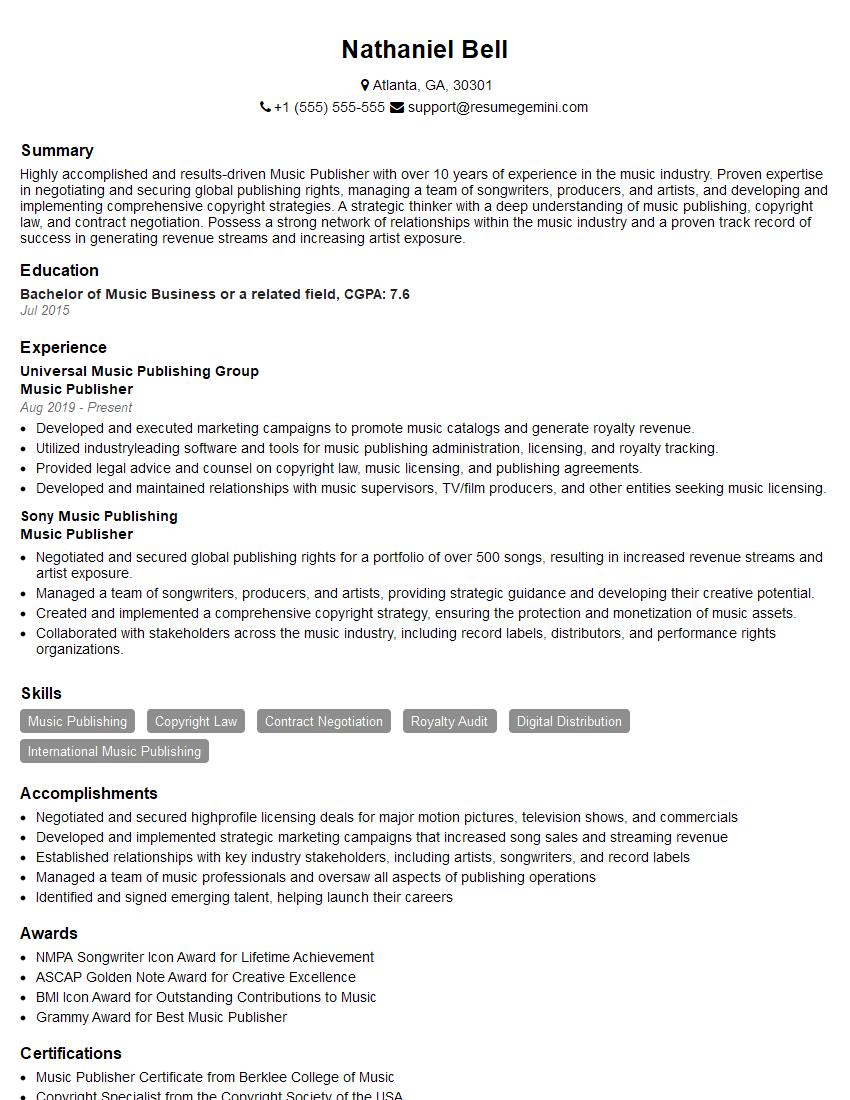
Music Publisher Resume Sample
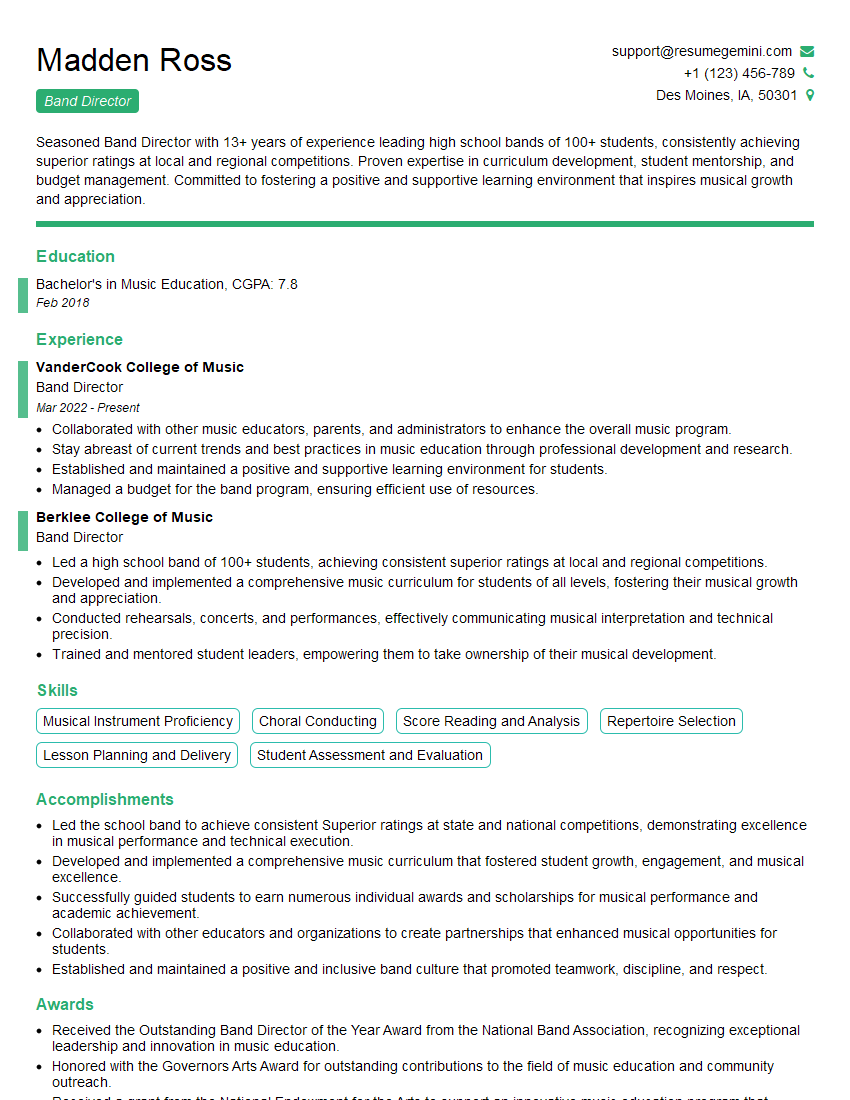
Band Director Resume Sample
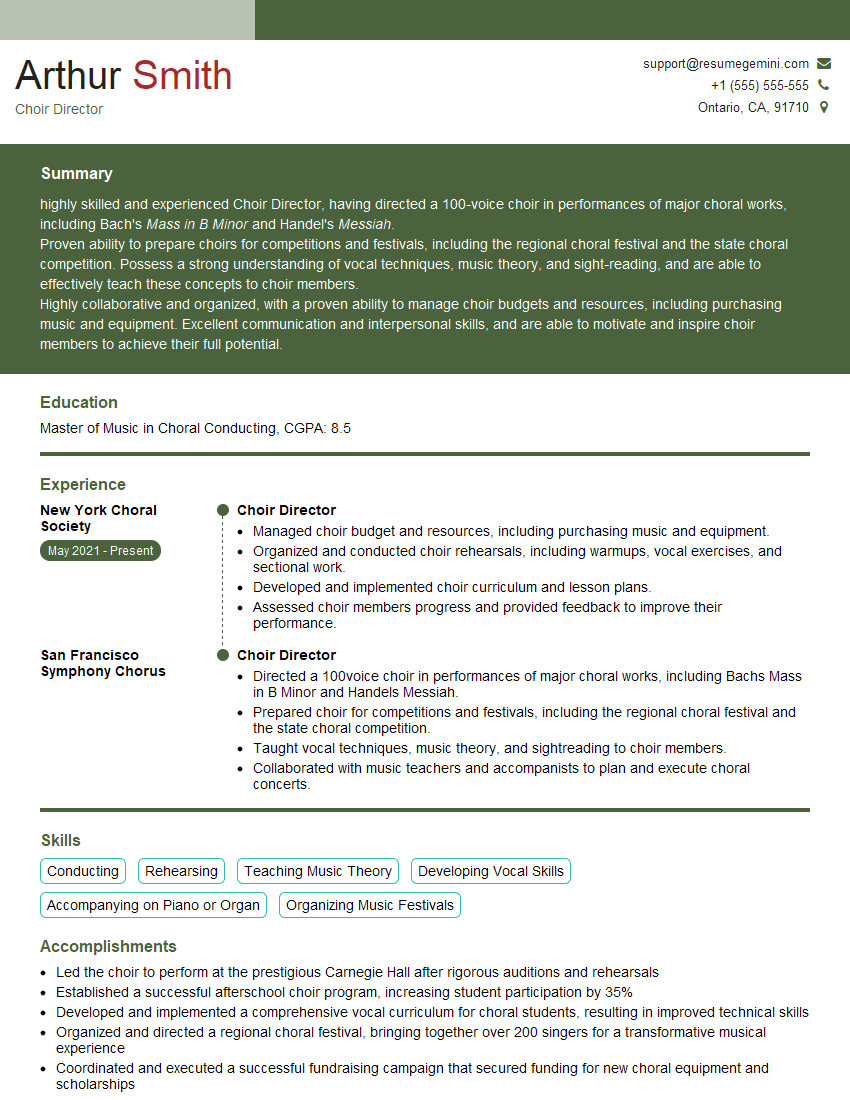
Choir Director Resume Sample
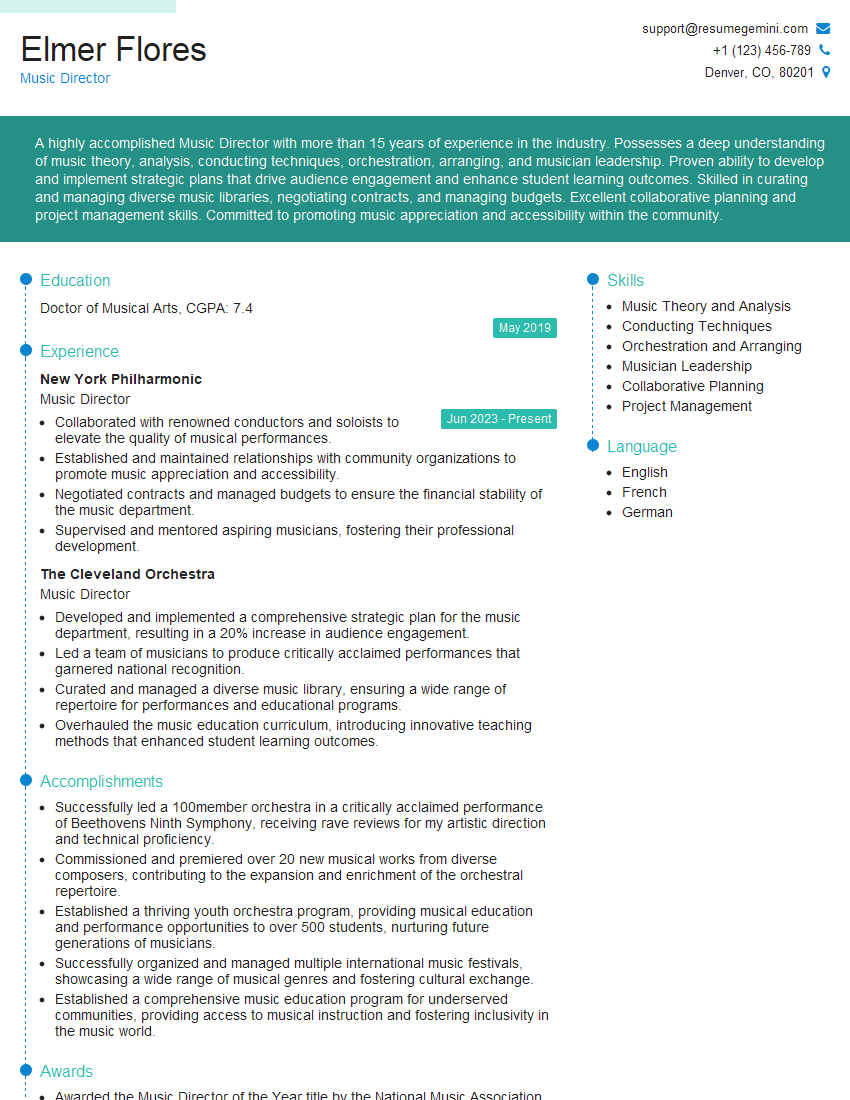
Music Director Resume Sample
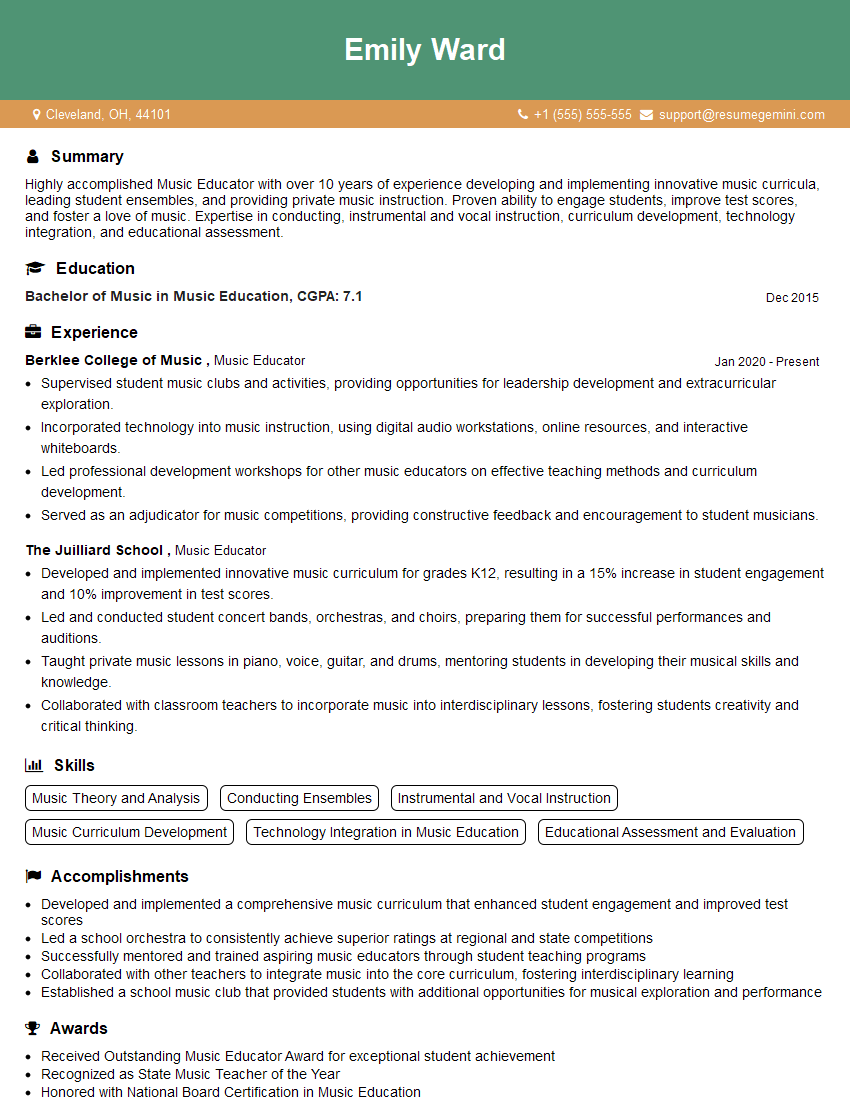
Music Educator Resume Sample
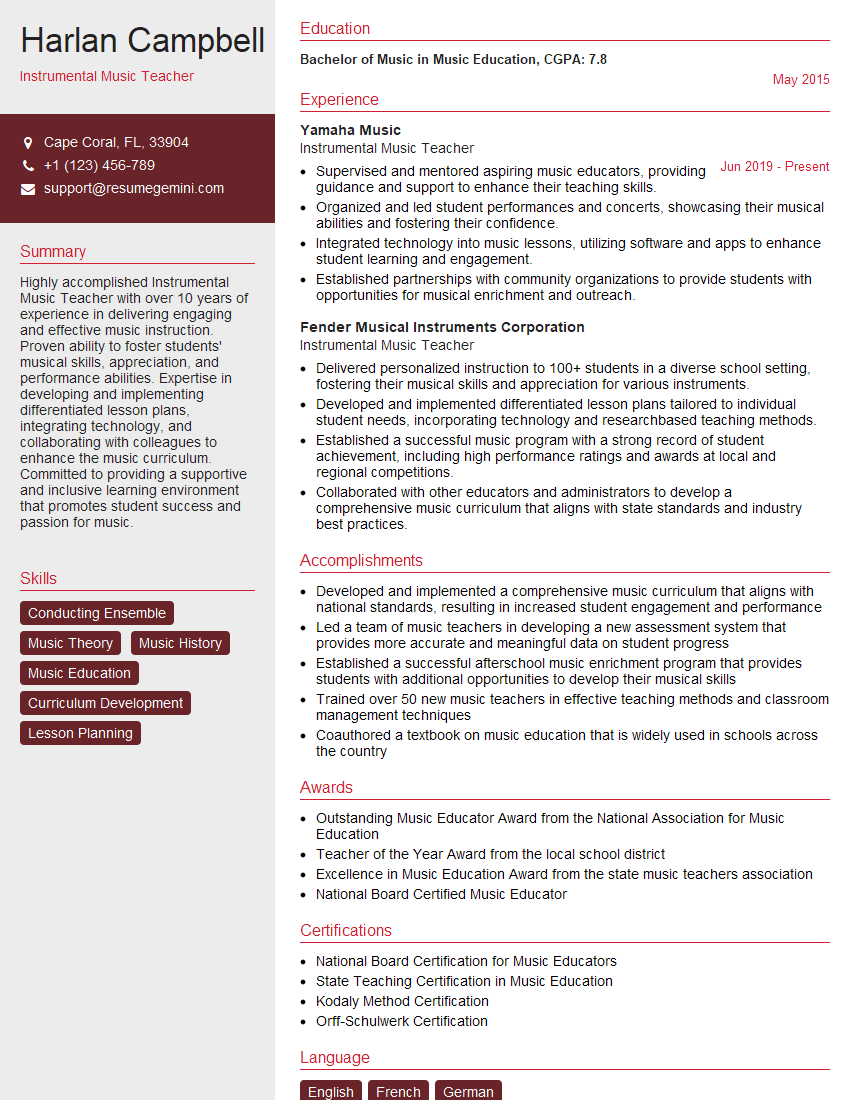
Instrumental Music Teacher Resume Sample
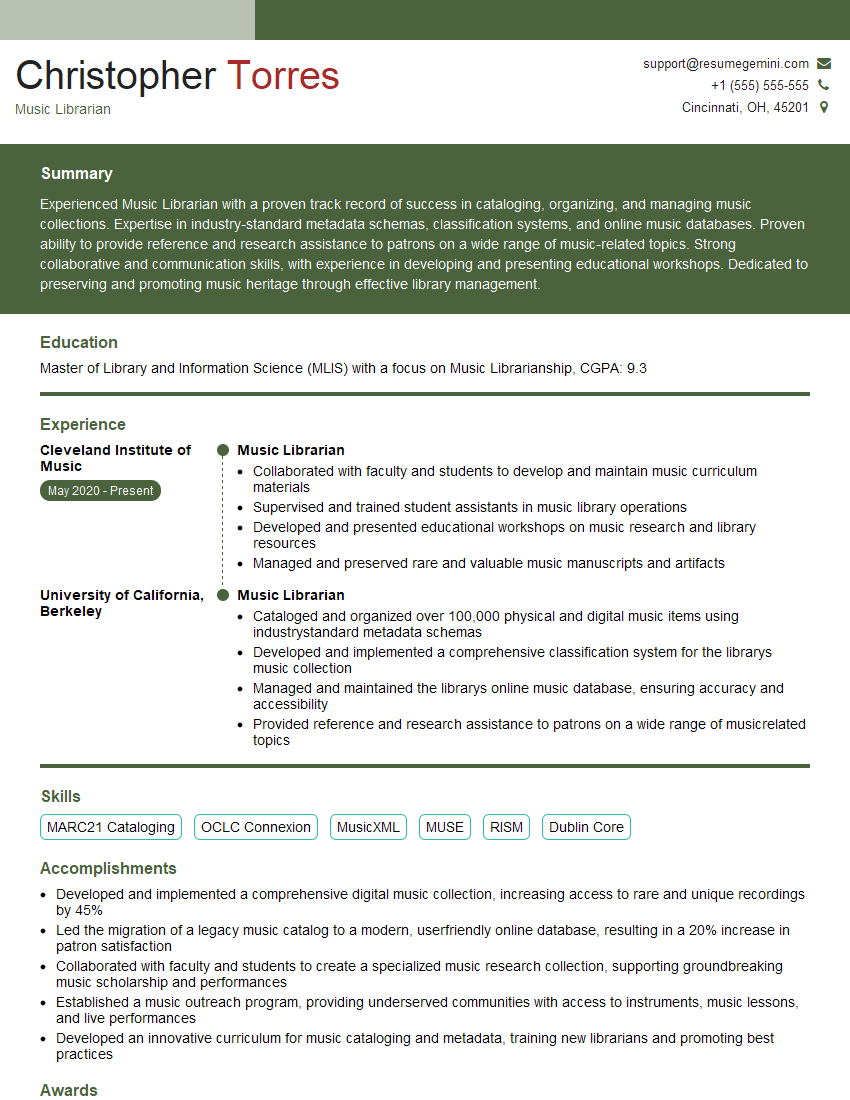
Music Librarian Resume Sample
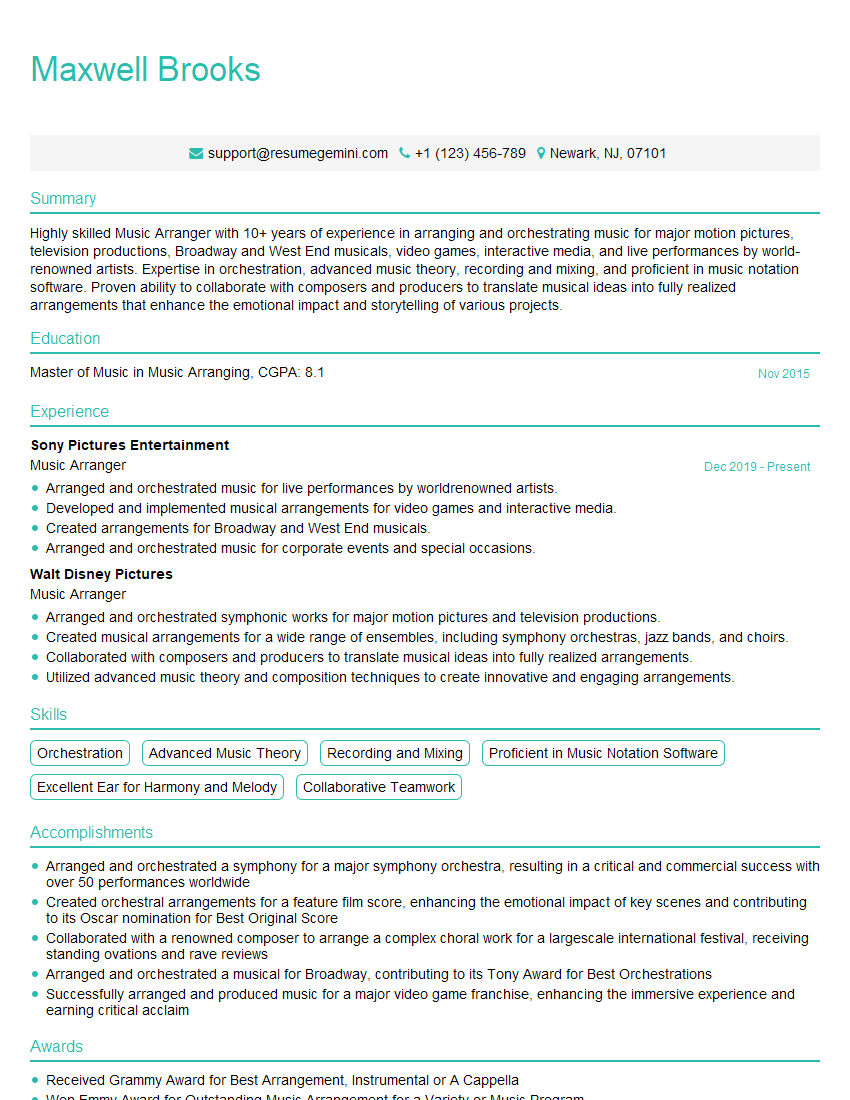
Music Arranger Resume Sample
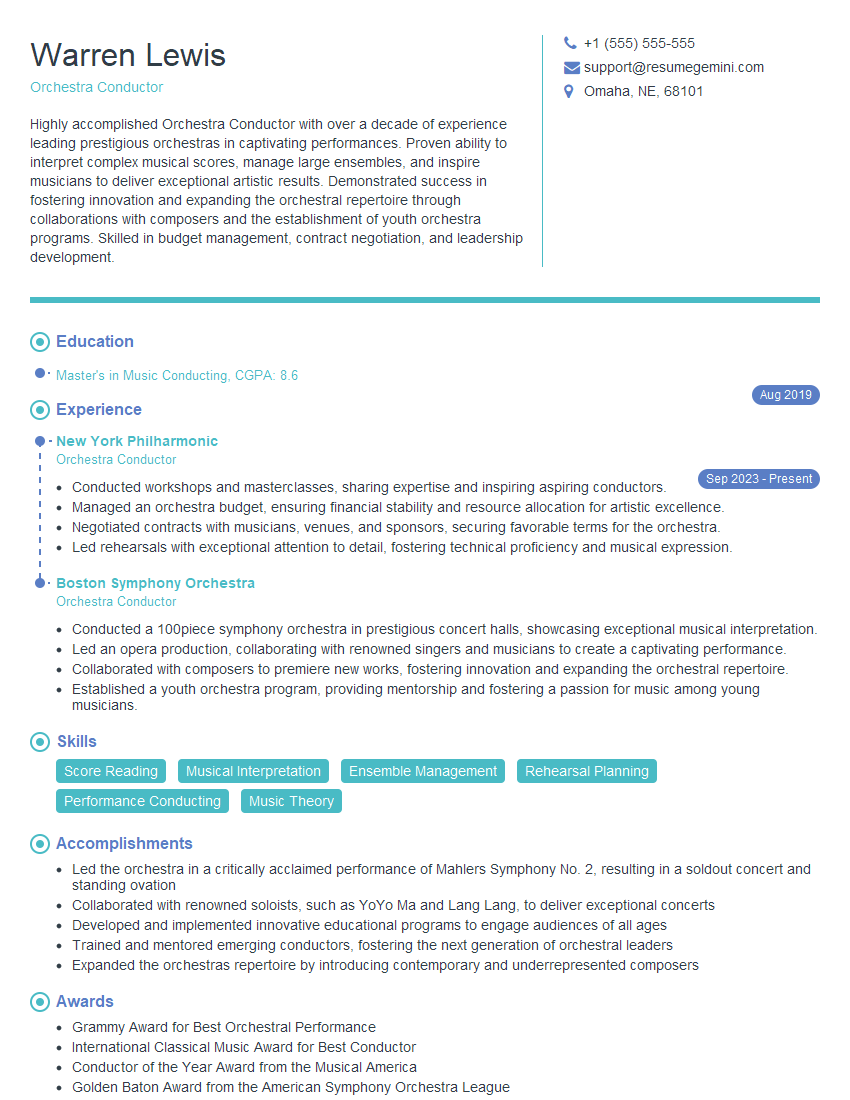
Orchestra Conductor Resume Sample
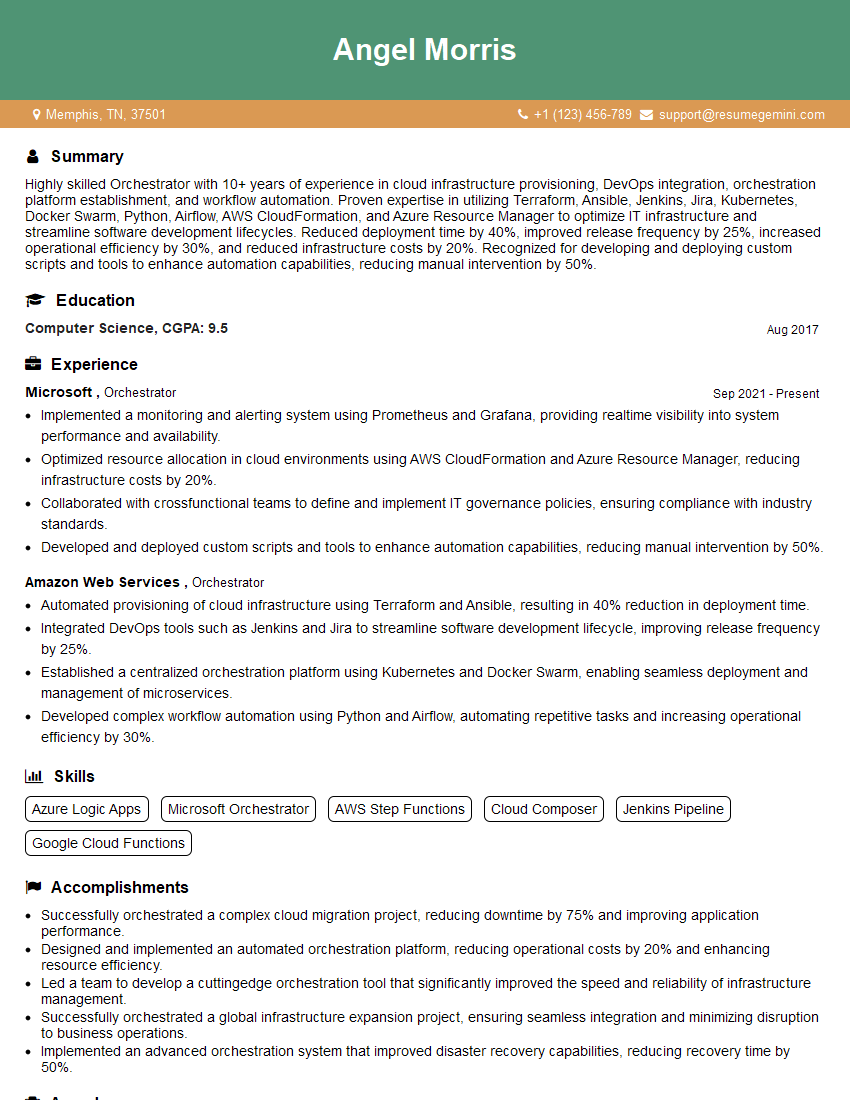
Orchestrator Resume Sample
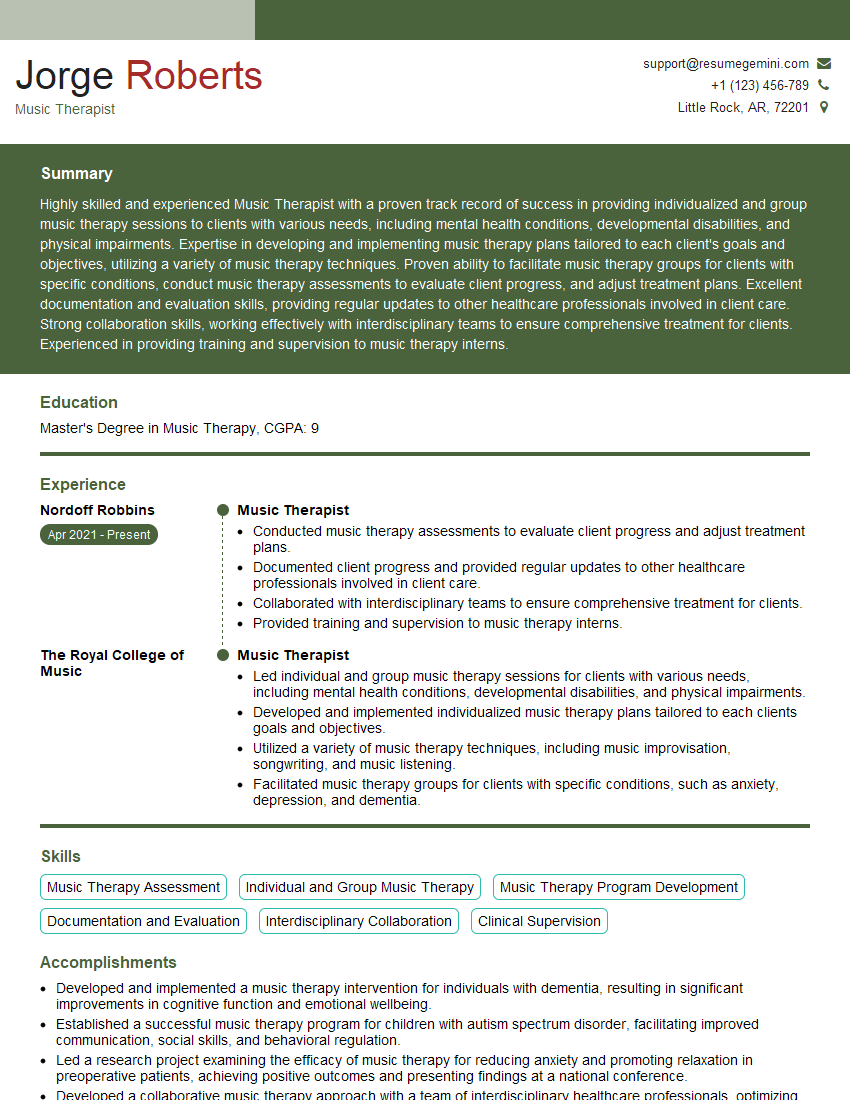
Music Therapist Resume Sample
Explore more articles
Users Rating of Our Blogs
Share Your Experience
We value your feedback! Please rate our content and share your thoughts (optional).
What Readers Say About Our Blog
Very informative content, great job.
good