Are you ready to stand out in your next interview? Understanding and preparing for Patterned Sewing interview questions is a game-changer. In this blog, we’ve compiled key questions and expert advice to help you showcase your skills with confidence and precision. Let’s get started on your journey to acing the interview.
Questions Asked in Patterned Sewing Interview
Q 1. Explain the difference between a sloper and a block.
Both slopers and blocks are foundational pattern pieces used as the starting point for garment design, but they differ significantly in their purpose and construction. A sloper, also known as a basic block or a foundation pattern, is a personalized, two-dimensional representation of your own body measurements. It’s a highly accurate pattern made by taking precise body measurements and transferring them onto paper. Think of it as a tailor-made blueprint of your unique shape. In contrast, a block is a more generic, standardized pattern based on average body measurements for a particular size and style. It’s like a template that can be adapted for different designs. While both can be used as a base for further design, slopers offer superior fit because of their individualized nature, whereas blocks require more adjustments for accurate fit.
In essence: A sloper is your unique body shape on paper, while a block is a generalized shape representing an average body type within a particular size range.
Q 2. Describe your experience with various pattern drafting methods (e.g., draping, flat pattern making).
My experience encompasses both draping and flat pattern making, each with its own strengths. Draping, a more hands-on method, involves manipulating fabric directly on a dress form to create a three-dimensional pattern. This is invaluable for creating unique, flowing silhouettes and understanding how fabric behaves. I’ve used draping extensively for designing evening gowns and other garments requiring sculptural shapes. It allows for intuitive design adjustments and a better feel for the final garment drape. However, it can be time-consuming and lacks the reproducibility of flat pattern making.
Flat pattern making, on the other hand, uses mathematical calculations and drafting techniques on paper to create a pattern. It’s more precise and allows for easier replication and grading. I find it particularly useful for mass production scenarios and for creating consistent sizing across different garments. I’m proficient in creating various blocks – for blouses, skirts, pants – using both traditional drafting methods and software.
I often combine both methods. For example, I might drape a complex sleeve design and then use flat pattern techniques to refine and reproduce the pattern for accuracy and consistency.
Q 3. How do you adjust patterns for different body types and sizes?
Adjusting patterns for different body types involves a nuanced understanding of body measurements and how they affect garment fit. The primary adjustments are made to the sloper or block, which then serves as the base for the final garment pattern. Common adjustments include:
- Full Bust/Waist/Hip Adjustments: Adding or removing fullness at the bust, waist, or hip to accommodate different body shapes.
- Shoulder Adjustments: Adjusting the shoulder slope and width to fit varied shoulder structures.
- Armhole Adjustments: Adjusting the armhole depth and circumference for comfort and fit.
- Length Adjustments: Altering the length of the garment to accommodate height differences.
- High/Low Bust Adjustments: Account for differences in the vertical distance between the high bust and the waist.
These adjustments are often made through a combination of spreading or pinching the pattern pieces, adding or subtracting seam allowances, and redrawing pattern lines to maintain the design integrity. For example, to accommodate a larger bust, I might add a dart or increase the width of the bust area. For a sway back, I’d adjust the curve of the back waistline. A crucial part of this process is understanding how the adjustments impact other areas of the garment.
Q 4. What software are you proficient in for pattern making (e.g., Gerber, Optitex)?
I am proficient in several pattern-making software programs, including Gerber Accumark and Optitex. My experience with Gerber Accumark includes creating and grading patterns, generating markers, and managing pattern libraries. I’m also skilled in using Optitex for 3D pattern design and visualization, which aids in prototyping and problem-solving before physical production. Both programs allow for precise manipulation of patterns, automation of grading, and efficient marker making. These skills are crucial for delivering efficient and high-quality pattern designs, and are significantly helpful during the production stage for a more streamlined workflow.
Q 5. How do you create a pattern from a garment?
Creating a pattern from an existing garment involves a process of deconstruction and reconstruction. First, the garment is carefully disassembled at the seams. Each piece is then laid flat, pressed, and traced onto paper, paying close attention to seam allowances. Any darts or pleats are carefully marked. The resulting pieces are then checked for accuracy and completeness. Often, adjustments are necessary to improve fit, clarify design details, and correct any imperfections during the initial deconstruction. Once all the pieces are complete and accurately mapped, you can then test the new pattern, and make adjustments from there.
This process requires a keen eye for detail and an understanding of garment construction techniques. For example, I would carefully analyze the placement of darts or seams to understand their function and replicate them in the new pattern. The knowledge gained is invaluable for improving my skills as a designer and gives a tangible insight into the work of other designers.
Q 6. How familiar are you with grading patterns?
I am very familiar with grading patterns. Grading is the process of scaling a base pattern to create multiple sizes. It goes beyond simply enlarging the pattern; it requires understanding how different body proportions change across size ranges. For example, simply enlarging a sleeve for a larger size will result in a poorly fitting sleeve. Therefore, the proportions of each pattern component need careful adjustment. It demands precision, as inconsistent grading can lead to ill-fitting garments. I’m experienced with both manual and computer-aided grading using software like Gerber Accumark and Optitex. These software programs are vital in industrial pattern making, as they can automate grading and greatly improve speed and accuracy. Manual grading necessitates a high level of technical skill and careful measurement.
Q 7. Describe your experience with marker making and nesting.
Marker making and nesting are crucial for efficient fabric utilization in garment production. Marker making is the process of arranging pattern pieces on a fabric layout to minimize fabric waste. Nesting involves strategically placing the pattern pieces to optimize the use of the fabric width and length. My experience encompasses both manual and computer-aided marker making. Manual marker making involves arranging paper patterns directly on a large sheet of paper representing the fabric roll; a time-consuming process that requires experience and intuition. Computer-aided marker making, using software like Gerber Accumark, automates this process significantly, resulting in reduced waste and increased efficiency, especially for larger production runs. Efficient marker making saves significant costs and is essential for any large-scale sewing operation. The process improves both speed and efficiency in comparison to manual processes.
Q 8. Explain the importance of accurate seam allowances.
Accurate seam allowances are fundamental to achieving a well-fitting and professionally finished garment. They’re the consistent amount of fabric added to each pattern piece beyond the actual garment measurement, providing the necessary fabric for stitching. Inconsistent seam allowances lead to ill-fitting garments, distorted shapes and difficulty in assembling the project.
For instance, a 5/8” seam allowance is a standard in many patterns, but this may vary based on the type of garment and the designer’s preference. Using a different allowance than what the pattern dictates can throw off the entire garment. Imagine making a shirt with 1/4” seam allowances instead of 5/8”. The shirt would be considerably smaller and likely unwearable! Maintaining consistent seam allowances ensures the final garment dimensions match the pattern’s intended size and shape.
In practice, I always mark my seam allowances precisely using a rotary cutter and a ruler, or a marking tool and my tailor’s shears, to guarantee consistency throughout the construction process. This commitment to accuracy is crucial for achieving professional results.
Q 9. How do you handle fabric grainlines when drafting or cutting patterns?
Fabric grainlines – the lengthwise and crosswise yarns in a fabric – are crucial for ensuring the final garment hangs and drapes correctly. Ignoring them can result in a garment that looks distorted and feels uncomfortable. The lengthwise grain usually has the greatest strength and least stretch, providing shape and stability to the garment.
When drafting or cutting patterns, I meticulously align the pattern pieces with the fabric’s grainlines. For example, the center-front or center-back should always be aligned with the lengthwise grain, while important design lines (like princess seams or darts) should also be aligned with either the lengthwise or crosswise grain, depending on the design. This precise alignment prevents distortion and ensures a professional finish. I always double-check before cutting to avoid mistakes. Failure to do so can result in a garment that stretches unevenly, puckers, or hangs awkwardly.
Q 10. Describe your process for creating a toile or muslin.
A toile, or muslin, is a test garment made from inexpensive fabric (usually muslin) to check the fit and construction of a pattern before cutting into the expensive final fabric. It’s like a dress rehearsal for your garment!
My process begins with selecting a suitable inexpensive fabric that mimics the drape and weight of the final fabric as much as possible. I then cut the pattern pieces using the same seam allowances as the final garment, following the same cutting layout. I sew the toile together, paying close attention to details like dart placement, ease, and zipper insertion. Once it is constructed, I try it on and carefully assess the fit. I mark any needed adjustments directly on the toile and then transfer these changes to the original pattern pieces. This saves valuable time and avoids wasting expensive fabric.
Q 11. How do you identify and correct pattern fitting issues?
Identifying and correcting pattern fitting issues is a crucial skill in patterned sewing. It involves careful observation and understanding of body mechanics and how fabric behaves.
My approach involves systematically checking the toile or muslin for several fitting issues. For example, tightness across the bust could indicate needing to add width to the bust area; pulling at the shoulders might mean adjusting the shoulder seams and neckline; and gaping at the neckline may necessitate adjusting the neckline curve. I typically use a combination of techniques to correct these issues. This may involve adding or removing fabric, adjusting seam lines, or modifying the pattern’s shaping, such as by adjusting darts or adding curves. I document each adjustment carefully, ensuring the corrections are consistent and accurate to avoid further issues.
Q 12. What are your preferred methods for documenting pattern changes?
Precise documentation of pattern changes is crucial for reproducibility and future projects. I use a combination of methods to ensure accuracy.
Firstly, I annotate the pattern pieces directly, using tailor’s chalk or a fabric pen to indicate all alterations including seam adjustments, dart adjustments and the placement and size of added or removed fabric sections. I also maintain a detailed written record, noting the specific adjustments made, the reason behind them, and the date of the alteration. I may even take photos of the fitting issues and corrected toiles to visually capture the process. For complex alterations, I’ll sometimes create a new, corrected pattern piece.
Q 13. Explain your experience working with different fabric types and their impact on pattern design.
Different fabrics have distinct properties that significantly influence pattern design. Working with various fabrics is an integral part of my skillset.
For instance, a lightweight silk will drape very differently compared to a heavy wool. Silk will need more ease to accommodate its drape, and a smaller seam allowance to avoid bulk. Meanwhile, a heavy wool requires more shaping and may not drape as well as other fabric. Understanding the drape, weight, stretch, and other characteristics of each fabric allows me to modify pattern designs to work with the fabric’s properties. This is especially important when working with patterned fabrics, where the pattern placement is crucial. It is important to plan for pattern matching and ensure the pattern pieces are cut to maximize pattern alignment. This requires a thorough understanding of the fabric’s properties and how to adapt the pattern to achieve the desired result.
Q 14. How do you incorporate ease into a pattern?
Ease is the extra fabric added to a garment pattern to allow for comfortable movement and fit. It’s crucial for ensuring the garment isn’t too tight or restrictive. Without sufficient ease, a garment will be uncomfortable, and potentially even difficult to put on.
I incorporate ease into patterns by adding it to the pattern pieces before cutting the fabric. The amount of ease varies greatly depending on the garment type, fabric type and personal preference. For example, a dress might need more ease in the bust and hip areas compared to a tailored jacket. The ease is distributed strategically, added to the pattern’s basic measurements depending on the desired fit. Accurate ease is critical to creating well-fitting garments that are both comfortable and stylish.
Q 15. Describe your experience with pattern adjustments for different styles (e.g., princess seams, darts).
Pattern adjustments are crucial for achieving a perfect fit. My experience encompasses a wide range of styles, including those utilizing princess seams and darts. Princess seams, which run from the shoulder to the hem, often require adjustments to accommodate bust size and body shape. I’ve extensively worked on adjusting princess seam patterns by making alterations to the seam lines themselves, adding or removing fullness at the bust, and even modifying the neckline and shoulder slopes to achieve optimal fit. Similarly, darts, which are used to shape fabric and create curves, require precise adjustments. I’ve adjusted dart placement, length, and depth to accommodate various body types. For example, I might move a bust dart slightly higher or lower, depending on the client’s shape, or adjust its depth to accommodate a larger or smaller bust. The key to successful pattern adjustments is a deep understanding of how the body interacts with the garment, coupled with experience in manipulating pattern pieces to account for these interactions.
For example, I once worked on a client who needed a significant bust adjustment. Instead of just increasing the seam allowance, I carefully graded the pattern pieces to create a smooth curve. This involved widening the pattern at the bust point while maintaining the integrity of the other pattern elements. The result was a garment that fit perfectly without any unwanted puckering or gaping.
Career Expert Tips:
- Ace those interviews! Prepare effectively by reviewing the Top 50 Most Common Interview Questions on ResumeGemini.
- Navigate your job search with confidence! Explore a wide range of Career Tips on ResumeGemini. Learn about common challenges and recommendations to overcome them.
- Craft the perfect resume! Master the Art of Resume Writing with ResumeGemini’s guide. Showcase your unique qualifications and achievements effectively.
- Don’t miss out on holiday savings! Build your dream resume with ResumeGemini’s ATS optimized templates.
Q 16. How familiar are you with the different types of pattern pieces?
My familiarity with pattern pieces is extensive. I understand the function and construction of all major pattern components, including:
- Bodice pieces: Front, back, and sleeve patterns, which form the main body of a garment.
- Skirt pieces: Front, back, and side panels that make up the skirt. These can vary drastically depending on the skirt style, from simple A-lines to complex tiered or gathered skirts.
- Collar pieces: These define the neckline, and can range from simple to highly ornate depending on design.
- Cuffs and facings: These are smaller pieces used to finish and refine the garment’s edges. Facings, for example, are used to create clean finishes on hems and necklines, whereas cuffs are used for sleeves and trousers.
- Pocket pieces: These pieces come in a variety of forms, requiring different sewing techniques depending on the overall design.
- Interfacing pieces: These are not visible in the final garment, but are crucial for providing structure and support.
Understanding the relationship between these pieces and how they interact is critical to successful pattern making and garment construction. A subtle alteration to one piece can have a significant impact on the fit and drape of the entire garment. My experience allows me to easily identify and rectify pattern issues originating from improper construction or proportions.
Q 17. Describe your experience with industrial sewing equipment.
I’m highly proficient with industrial sewing equipment, including various types of sewing machines (e.g., flatlock, coverstitch, serger, overlock), industrial cutting equipment, and pressing equipment (such as steam presses). My experience spans machine maintenance, troubleshooting, and efficient operation. I understand the specific applications of each machine and choose them appropriately based on the fabric and construction technique. For example, I’d use a serger for seams requiring durability and stretch, a coverstitch for professional-looking hems, and a flatlock stitch for clean, athletic-style seams. This includes maintaining proper tension and needle adjustments to ensure high-quality stitching, consistent seam allowances, and efficient production. My understanding extends to safety protocols and preventative maintenance procedures associated with all equipment.
One particular project involved a large production run using heavy-duty denim. I was able to optimize the sewing machine settings to efficiently handle the thick fabric, preventing needle breakage and ensuring consistent stitch quality. My expertise in this area reduced production time significantly and improved the overall quality of the finished garments.
Q 18. Explain the steps involved in creating a production pattern.
Creating a production pattern is a multi-step process that ensures consistency and efficiency in garment manufacturing. The process typically includes:
- Drafting a base pattern: This is the foundation of the pattern, and is often created using a sloper or block pattern, which reflects the basic body measurements.
- Creating a prototype: A sample garment is sewn using the initial pattern to assess fit and design details.
- Grading the pattern: The pattern is adjusted for different sizes, ensuring proportional scaling.
- Making adjustments: Based on feedback from fitting the prototype, necessary alterations are made to the pattern, refining the fit and improving the overall aesthetic.
- Creating a marker: This is a layout plan used to efficiently cut multiple patterns from fabric.
- Testing the production pattern: Several garments are made using the finalized pattern to evaluate any last-minute issues.
- Finalizing the pattern: This is the final pattern that is distributed to the production team.
Throughout this process, meticulous record-keeping is essential, documenting all alterations, adjustments, and decisions. This ensures that the production team has a clear, well-defined process for producing the garments consistently.
Q 19. How do you manage your time effectively when working on multiple patterns simultaneously?
Managing multiple patterns simultaneously requires a well-organized and systematic approach. I utilize project management techniques such as prioritizing tasks based on deadlines and urgency. I often break down complex projects into smaller, manageable tasks, ensuring I can focus on one pattern at a time without feeling overwhelmed. I use a digital calendar and task-management system to track progress and identify potential bottlenecks. This allows for a proactive approach to address any challenges or potential delays. This clear visual overview helps in efficiently allocating my time and effort to each project, ensuring deadlines are met while maintaining quality of work.
For instance, if I’m working on three patterns—a dress, a jacket, and a pair of pants—I might dedicate a specific block of time to each project, rotating between them to maintain focus and avoid burnout. This approach prevents me from getting bogged down in a single pattern and helps maintain a steady workflow.
Q 20. Describe a time you had to troubleshoot a complex pattern issue.
I once encountered a complex issue with a tailored jacket pattern. The sleeve cap was consistently fitting poorly, resulting in puckering and wrinkles along the shoulder. After carefully reviewing the pattern, I realized the issue stemmed from an inaccurate sleeve cap easing calculation. The solution involved revising the sleeve cap by recalculating the easing based on both the armhole circumference and the sleeve cap circumference. It needed a deeper understanding of sleeve cap shaping techniques. I utilized a combination of pattern design software and physical adjustments to the pattern until the sleeve cap fit perfectly, eliminating the wrinkles. The issue highlighted the importance of accurate calculations in pattern making and the need to always critically review pattern elements before production. This experience significantly enhanced my skills in troubleshooting complex fitting problems and reinforced the necessity of a thorough understanding of the underlying mathematical principles that guide pattern making.
Q 21. How do you stay current with the latest trends in pattern making?
Staying current with the latest trends in pattern making requires a multi-faceted approach. I regularly attend industry conferences and workshops to gain insights into new techniques and technologies. I actively follow prominent designers and pattern makers on social media and subscribe to relevant industry publications. Reading industry publications and attending workshops allow me to learn about innovative materials, construction techniques and software updates. I also engage with online communities and forums dedicated to pattern making and sewing, where I can share knowledge and learn from others. Finally, I always experiment with new techniques and ideas in my personal projects. This ensures I remain at the forefront of my field, adapting my knowledge and skills to consistently meet industry standards.
Q 22. How do you handle constructive criticism on your pattern designs?
Constructive criticism is invaluable in pattern design. I approach it as an opportunity for growth, not a personal attack. My process involves actively listening to the feedback, separating valid points from subjective opinions, and then analyzing how the criticism relates to the overall design goals. For example, if feedback points to a poorly drafted sleeve cap causing puckering, I wouldn’t take it personally; instead, I’d meticulously examine the sleeve cap’s construction, perhaps checking for errors in the ease calculation or the curve of the cap itself. I then carefully rework the pattern, testing and refining until the issue is resolved. Documenting these revisions is crucial for future reference and helps avoid repeating the same mistakes.
I find it helpful to visualize the garment on different body types to understand the potential impact of the critique. Sometimes, a ‘flaw’ might only appear on certain body shapes and may not require a complete overhaul. Prioritizing the most impactful feedback, considering the target audience, and maintaining a balanced perspective is vital in ensuring the improved pattern is both functional and aesthetically pleasing.
Q 23. What is your experience with digital pattern making software?
I’m proficient in several digital pattern making software programs, including (mention specific software like Adobe Illustrator, Pattern Design, etc.) My experience encompasses all stages of the process, from initial design sketching and grading to generating print-ready files. I’m comfortable using tools to manipulate points, curves, and grading rules for creating accurate patterns across a range of sizes. For example, I frequently use the grading tools in (mention software name) to efficiently generate a full size range from a base pattern, reducing the time and effort required compared to manual methods. Beyond technical proficiency, I understand the importance of using these tools in conjunction with sound pattern-making principles. It’s not just about the software; it’s about applying my knowledge of garment construction to create high-quality, well-fitting patterns.
Q 24. How do you ensure the accuracy and consistency of your patterns?
Accuracy and consistency are paramount. My approach involves a multi-layered system of checks and balances. This starts with meticulously detailed initial sketches and measurements, using precise drafting techniques. I always double-check all calculations and measurements at every stage. I use digital pattern-making software to ensure accuracy in grading and manipulation of pattern pieces, leveraging its capabilities for consistent scaling across sizes. Finally, I create test garments to physically evaluate the pattern. This allows me to identify any inconsistencies or issues that might have been missed during the digital phase. For example, a slight asymmetry in a dart placement might be subtle on screen, but very noticeable in the finished garment. The muslin test garment helps me catch such errors before committing to the final production fabric. Thorough documentation throughout the entire process aids in ensuring consistency across projects.
Q 25. What are some common mistakes to avoid when creating patterns?
Several common pitfalls can lead to poorly fitting or dysfunctional garments. One major mistake is neglecting proper ease calculations. Ease is the extra fabric added to the pattern to account for comfort and movement, and incorrect calculations can result in a garment that’s too tight or too loose. Another frequent error is neglecting grainlines. Not properly aligning the pattern pieces with the fabric’s grain can affect drape and the overall fit. Inadequate understanding of ease curves can cause problems in areas like armholes and necklines, resulting in pulling or gaps. Forgetting to account for seam allowances can significantly alter the final dimensions, and using incorrect seam allowances leads to inconsistencies in fitting. Finally, not creating test garments and relying solely on digital methods increases the risk of encountering surprises during final production. Addressing these potential issues with careful planning and a systematic approach prevents many problems.
Q 26. How do you incorporate sustainability into your pattern making process?
Sustainability is a core value in my pattern making. This starts with mindful fabric selection, opting for natural, ethically sourced, and low-impact fabrics whenever possible. I prioritize minimizing fabric waste by creating patterns that are efficient in their layout, reducing the need for extra fabric. Digital pattern making plays a crucial role as it allows for virtual testing and refinement, reducing the need for physical prototypes. I encourage clients to use leftover fabric scraps creatively, perhaps for smaller accessories or to create samples to show different fabric types. I also strive to create timeless designs that don’t quickly go out of style and which can be reused for years to come. Creating patterns that are versatile enough to be adapted and altered ensures longevity and reduces the need for constant new purchases. By minimizing waste and promoting conscious consumption, we can contribute to a more sustainable fashion industry.
Q 27. Explain your understanding of different fitting techniques.
Fitting techniques are crucial for achieving a perfect fit. I utilize a variety of methods, depending on the garment and client needs. Basic fitting involves making adjustments to the muslin based on visual assessment and physical fitting on a dress form or a live model. This includes adjusting darts, altering seam allowances, and making adjustments to the ease and shaping of the garment. More advanced techniques such as Full Figure Fitting systems can be employed, where a full body scan is used to generate a custom 3D avatar for precise pattern development and fitting. I’m also experienced in using sloper techniques, which involve adjusting a basic sloper block to create various garments. The choice of method depends on the desired level of precision and the complexity of the garment. Documenting these adjustments is crucial to help improve patterns over time.
Q 28. Describe your experience with working in a team environment on pattern making projects.
Teamwork is essential in larger pattern-making projects. My experience includes collaborating with designers, graders, and sample machinists. Effective communication and clearly defined roles are vital. In a recent project, for example, I worked with a designer to refine the initial sketches and translate them into technical drawings. The grader then used my base pattern to create a full size range. Finally, the sample machinists constructed the test garments and provided crucial feedback on construction and fit. Regular meetings and collaborative reviews of progress throughout the development process helped resolve issues promptly. Successful teamwork relies on clear communication, respect for each team member’s expertise, and a shared vision for the final product. My ability to work as part of a team while contributing my specialized skills ensures we can work towards the same objective seamlessly.
Key Topics to Learn for Patterned Sewing Interview
- Pattern Drafting & Design: Understanding the principles of creating basic and complex patterns, including various drafting methods and pattern adaptations.
- Fabric Selection & Properties: Knowing how different fabrics drape, behave during construction, and impact the final garment’s fit and appearance. Practical application includes selecting appropriate fabrics for specific patterns and designs.
- Sewing Techniques: Mastering fundamental sewing techniques such as seam finishing, darts, zippers, buttonholes, and various closures. This includes understanding the tools and equipment necessary and their proper usage.
- Grading & Sizing: Ability to adjust pattern pieces to accommodate different body sizes and shapes, ensuring a proper fit. This includes understanding standard sizing charts and making necessary adjustments.
- Pattern Alterations & Adjustments: Understanding how to modify existing patterns to achieve desired fit and style changes. Practical application includes adapting patterns for individual client needs.
- Understanding Sewing Machine Mechanics: Familiarity with different sewing machine types, their functionalities, and troubleshooting common issues. This will also include knowledge of different stitch types and their applications.
- Industry Standards & Best Practices: Awareness of industry standards and best practices in patterned sewing, ensuring quality and efficiency in production.
- Problem-Solving & Troubleshooting: Ability to identify and resolve common sewing challenges, such as fitting issues, fabric manipulation difficulties, and equipment malfunctions. This involves critical thinking and practical application of acquired skills.
Next Steps
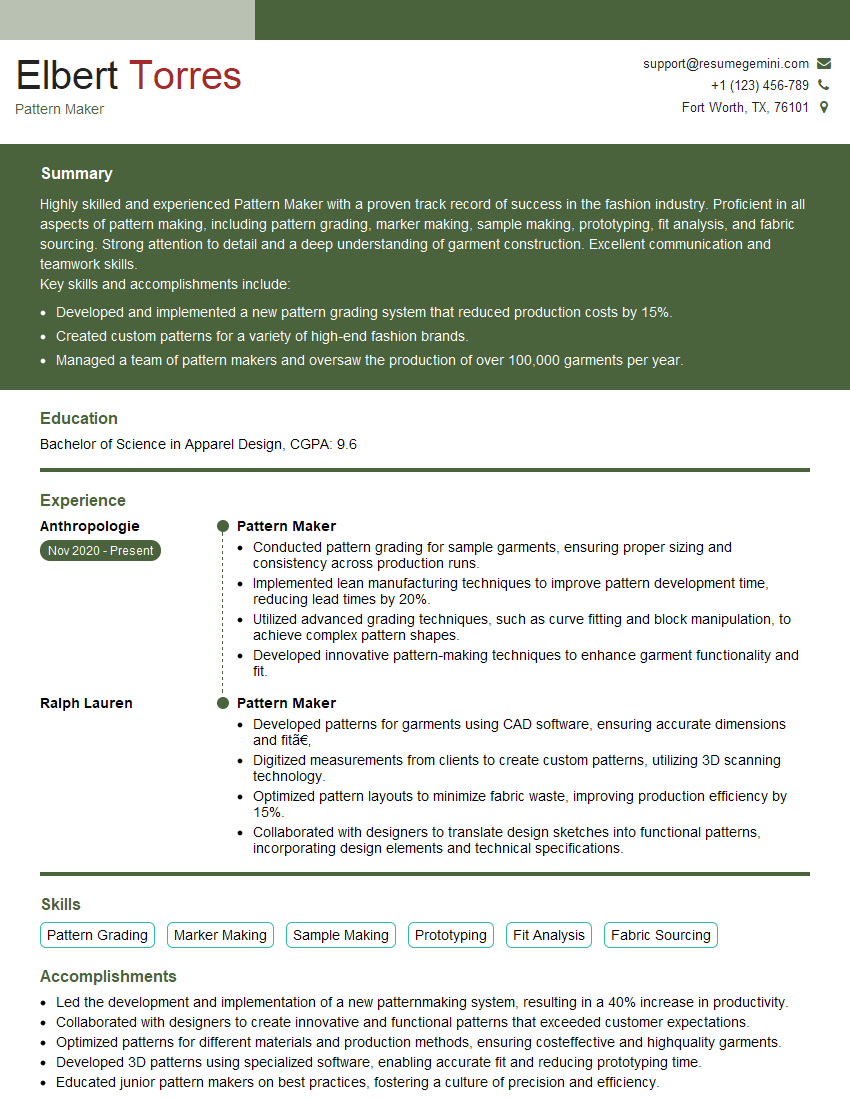
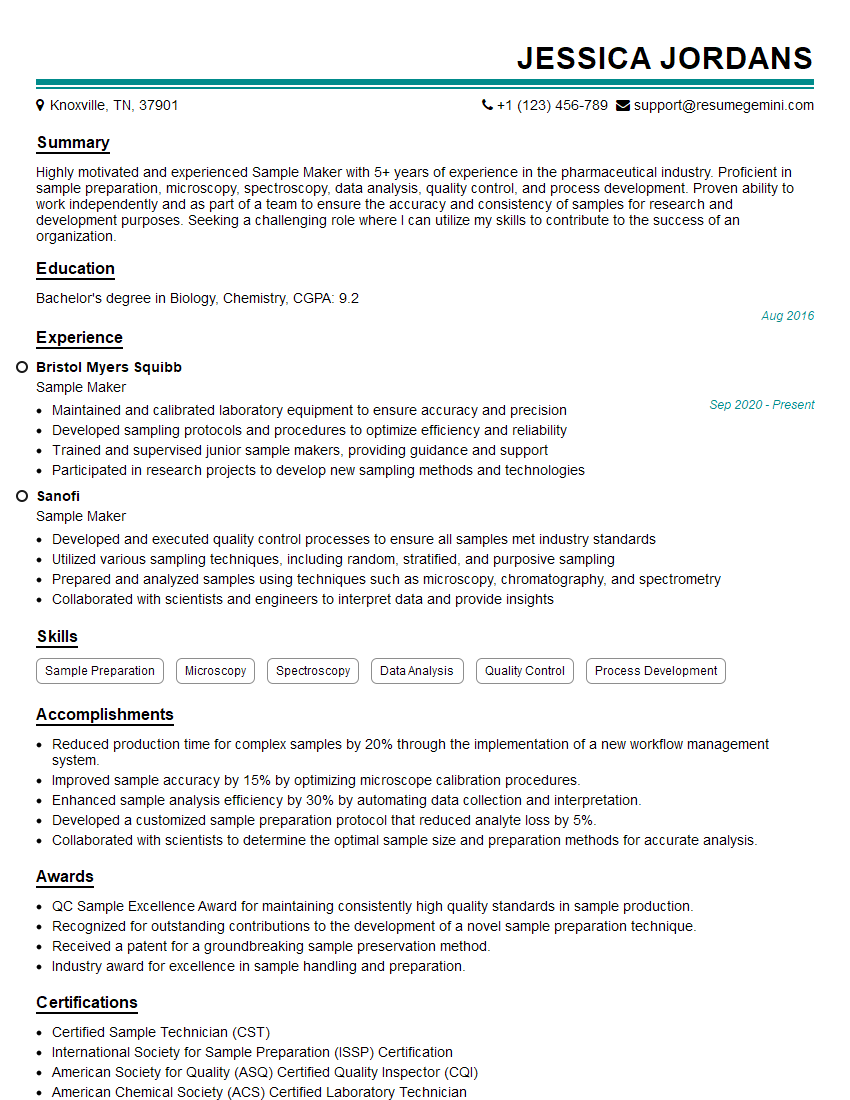
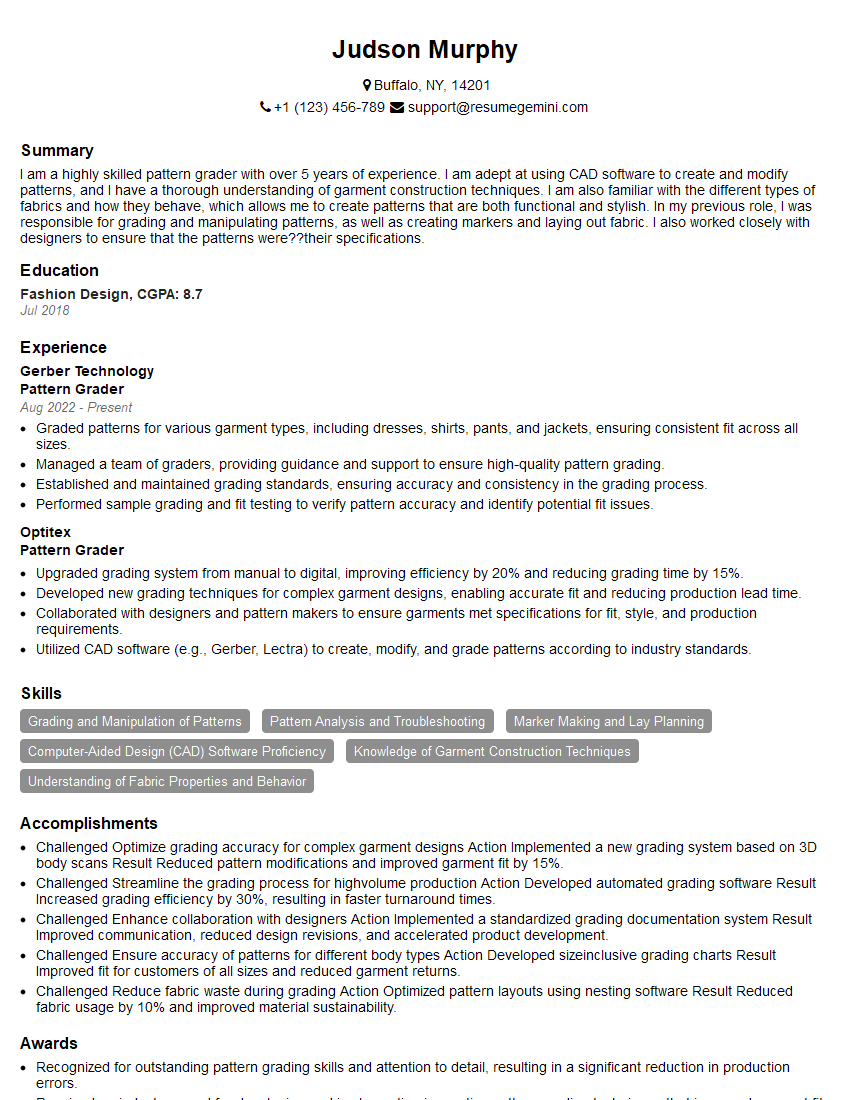
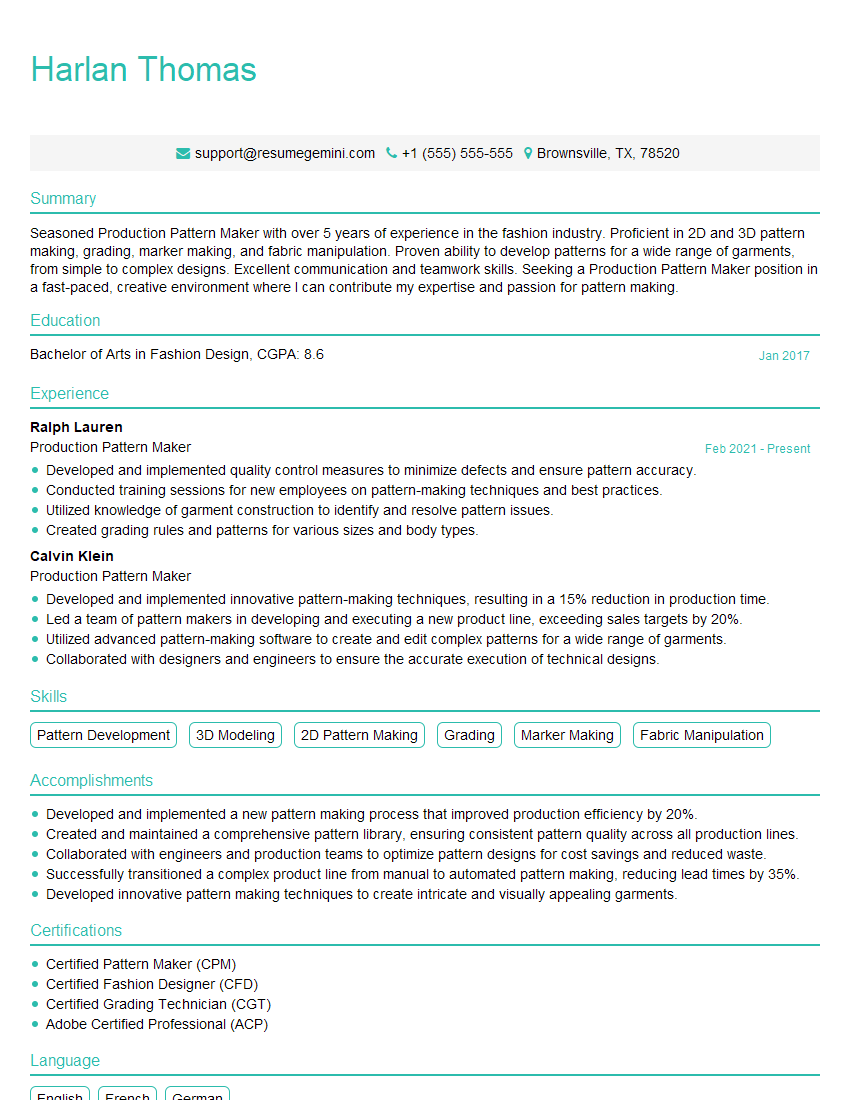
Mastering patterned sewing opens doors to exciting career opportunities in fashion design, garment construction, and bespoke tailoring. A strong understanding of these techniques is highly valued by employers. To maximize your chances of landing your dream job, invest time in crafting a professional, ATS-friendly resume that highlights your skills and experience. ResumeGemini is a trusted resource that can help you build a compelling resume, ensuring your application stands out. Examples of resumes tailored to Patterned Sewing are available to further guide you in showcasing your expertise effectively.
Explore more articles
Users Rating of Our Blogs
Share Your Experience
We value your feedback! Please rate our content and share your thoughts (optional).
What Readers Say About Our Blog
Very informative content, great job.
good