Interviews are opportunities to demonstrate your expertise, and this guide is here to help you shine. Explore the essential Smart Grid and Microgrid Systems interview questions that employers frequently ask, paired with strategies for crafting responses that set you apart from the competition.
Questions Asked in Smart Grid and Microgrid Systems Interview
Q 1. Explain the key differences between a smart grid and a microgrid.
Think of the power grid as a vast, interconnected network. A smart grid is like upgrading that network with advanced technology – it’s the overall electricity system enhanced with digital communication, automation, and sophisticated control systems. This allows for better monitoring, management, and optimization of electricity flow. A microgrid, on the other hand, is a smaller, localized grid that can operate independently or be connected to the main grid. It’s like a mini version of the smart grid, often incorporating renewable energy sources and energy storage. The key difference lies in scale and independence. A smart grid is a large-scale system, while a microgrid is designed to operate autonomously, enhancing resilience and reliability at a local level.
- Scale: Smart grids encompass entire regions or even countries; microgrids are localized to a specific area like a campus, community, or military base.
- Independence: Microgrids can operate independently from the main grid during outages, whereas smart grids rely on the broader network.
- Focus: Smart grids focus on overall system efficiency and stability; microgrids prioritize localized reliability and resilience.
Q 2. Describe the role of advanced metering infrastructure (AMI) in a smart grid.
Advanced Metering Infrastructure (AMI) is the backbone of a smart grid’s communication and data collection capabilities. Imagine it as the nervous system of the grid, providing real-time information about electricity consumption and grid conditions. AMI replaces traditional electromechanical meters with smart meters that communicate usage data wirelessly to a central utility system. This two-way communication enables a wide range of improvements.
- Real-time monitoring: Utilities can monitor electricity usage in real-time, identifying patterns and anomalies.
- Improved billing accuracy: More accurate readings eliminate estimated bills and billing disputes.
- Demand-side management: Enables utilities to implement time-of-use pricing and other demand response programs.
- Fault detection and isolation: Helps pinpoint and isolate power outages more quickly.
For example, imagine a sudden spike in electricity consumption in a specific area. AMI would instantly alert the utility, potentially indicating a problem before a widespread outage occurs. This proactive approach to grid management is a core benefit of AMI.
Q 3. What are the main challenges in integrating renewable energy sources into a smart grid?
Integrating renewable energy sources (RES), like solar and wind, into a smart grid presents significant challenges due to their intermittent and unpredictable nature. Unlike traditional power plants, RES don’t generate power consistently.
- Intermittency: Solar power is only generated during daylight hours, and wind power depends on wind speed. This variability makes it difficult to predict power generation accurately.
- Grid stability: The fluctuating nature of RES can destabilize the grid’s frequency and voltage, requiring sophisticated balancing mechanisms.
- Capacity planning: Determining the optimal capacity of renewable energy sources while ensuring reliable grid operation requires complex forecasting and planning.
- Infrastructure upgrades: Integrating RES often requires upgrades to existing transmission and distribution infrastructure.
For example, a sudden drop in solar power due to cloud cover might necessitate quick adjustments to compensate from other sources. This requires sophisticated grid management systems and, often, energy storage solutions to buffer the fluctuations.
Q 4. Explain the concept of demand-side management (DSM) and its benefits.
Demand-side management (DSM) is a set of strategies aimed at influencing electricity consumption to better match the supply. Instead of solely focusing on increasing generation capacity, DSM emphasizes shaping electricity demand to optimize grid operation and reduce costs. Think of it as managing the demand side of the equation, rather than just the supply.
- Time-of-use pricing: Charging different rates for electricity at different times of the day or year to encourage consumption during off-peak hours.
- Demand response programs: Incentives to consumers to reduce their electricity use during periods of high demand.
- Energy efficiency programs: Promoting the use of energy-efficient appliances and technologies.
For instance, during peak hours, utilities can offer incentives to consumers to shift their energy usage to off-peak periods, thereby reducing strain on the grid and preventing blackouts. This is a win-win situation; consumers save money, and the grid operates more efficiently.
Q 5. Describe different types of energy storage systems used in microgrids.
Microgrids often employ various energy storage systems to enhance their resilience and reliability. The choice of system depends on factors like cost, lifespan, power capacity, and application.
- Batteries: Lithium-ion batteries are commonly used due to their high energy density and relatively fast charging/discharging rates. They are ideal for short-term energy storage and frequency regulation.
- Pumped hydro storage: This method involves pumping water uphill during off-peak hours and releasing it to generate electricity during peak demand. It’s suitable for large-scale energy storage, but requires significant infrastructure.
- Flywheels: These store energy by spinning a rotor at high speed. They provide fast response times but typically have lower energy capacity compared to batteries.
- Thermal energy storage: This can involve storing heat or cold in tanks or other storage media. This is particularly useful for integrating solar thermal energy or providing heating/cooling services.
For example, a microgrid powered by solar panels might use a battery bank to store excess energy generated during the day and release it at night or during periods of low solar irradiance.
Q 6. How does a microgrid operate during an islanding event?
An islanding event occurs when a microgrid automatically disconnects from the main grid, usually due to a fault or outage on the main grid. The microgrid’s control system detects the grid failure and seamlessly switches to island mode, supplying power to its local loads.
During an islanding event, the microgrid’s control system assumes responsibility for maintaining frequency and voltage stability within the microgrid. It dynamically manages the available generation sources (renewable sources, generators) and energy storage to meet the local demand. This seamless transition ensures continuous power supply to critical loads, preventing disruptions to essential services.
The ability to successfully island and operate independently is a critical feature of microgrids, showcasing their resilience to grid disturbances.
Q 7. What are the key communication protocols used in smart grids?
Smart grids rely on a variety of communication protocols to ensure reliable data exchange between various components. The choice of protocol depends on factors such as range, bandwidth, security, and cost.
- Advanced Metering Infrastructure (AMI) protocols: These protocols facilitate communication between smart meters and the utility’s data center. Examples include:
IEEE 802.15.4(Zigbee, WirelessHART): Low-power, short-range wireless communication for smart meters.Cellular (3G/4G/5G): Wide-area communication for larger geographical coverage.Power line communication (PLC): Communication over existing power lines, providing a cost-effective alternative.- Wide Area Network (WAN) protocols: Used for communication over larger distances, including data exchange between substations and control centers. Examples include:
IP-based networks (TCP/IP): Standard internet protocols widely used for data exchange.- Supervisory Control and Data Acquisition (SCADA) protocols: Used for monitoring and control of grid assets. Examples include:
IEC 61850: A standardized protocol for communication in substations.DNP3: A widely used protocol in the utility industry for remote monitoring and control.
The selection of appropriate protocols is crucial for the efficient and reliable operation of the smart grid, ensuring seamless integration of various devices and systems.
Q 8. Explain the role of phasor measurement units (PMUs) in grid monitoring and control.
Phasor Measurement Units (PMUs) are sophisticated devices that revolutionize grid monitoring and control by providing synchronized measurements of voltage and current phasors across the power system. Unlike traditional measurements which are often unsynchronized, PMUs use GPS to synchronize their clocks, enabling real-time visualization of the entire grid’s dynamic state.
Imagine the grid as a vast network of interconnected pipes carrying water (electricity). Traditional methods only tell you the water pressure (voltage) and flow (current) at individual points, and not necessarily simultaneously. PMUs, however, are like strategically placed sensors providing a synchronized snapshot of water pressure and flow throughout the entire network, allowing for a comprehensive understanding of how the system is behaving at any given moment.
This synchronized data allows for:
- Enhanced State Estimation: Accurate, real-time monitoring of voltage and current across the grid, enabling faster identification of faults and abnormal operating conditions.
- Improved Protection: Faster and more accurate fault detection and isolation, minimizing downtime and enhancing grid stability. PMUs allow for advanced protection schemes, such as wide-area protection, which can protect against cascading failures across large geographical areas.
- Advanced Control: Real-time control actions for dynamic optimization of power flow and voltage regulation, ensuring efficient and reliable grid operation. This includes things like advanced power oscillation damping and dynamic voltage restoration.
For example, during a fault event, PMUs can rapidly pinpoint its location and magnitude, enabling protective relays to isolate the fault much faster than traditional methods, minimizing disruptions to power supply.
Q 9. What are the cybersecurity threats to smart grids and how can they be mitigated?
Smart grids, while offering numerous benefits, are vulnerable to various cybersecurity threats due to their increased reliance on digital communication and control systems. These threats can range from simple denial-of-service attacks to sophisticated, targeted intrusions aimed at manipulating grid operations.
Some major threats include:
- Data breaches: Unauthorized access to sensitive grid data, potentially revealing operational strategies and compromising grid security.
- Malware attacks: Malicious software infecting grid components, potentially disrupting operations or causing damage.
- Phishing attacks: Tricking employees into revealing credentials or installing malware.
- Denial-of-service attacks: Overwhelming grid communication systems, preventing legitimate access and disrupting operations.
- Advanced Persistent Threats (APTs): Sophisticated, long-term attacks aimed at gaining persistent access to grid systems for espionage or sabotage.
Mitigation strategies involve a multi-layered approach encompassing:
- Strong authentication and access control: Implementing robust security protocols to restrict access to critical grid components and data.
- Intrusion detection and prevention systems: Deploying advanced security technologies to detect and respond to cyber threats in real-time.
- Network segmentation: Isolating different parts of the grid network to limit the impact of potential breaches.
- Regular security audits and penetration testing: Identifying vulnerabilities and strengthening grid defenses proactively.
- Employee training and awareness programs: Educating employees about cybersecurity threats and best practices.
- Data encryption and integrity checks: Ensuring the confidentiality and integrity of grid data.
Think of it like a fortress: multiple layers of defense – strong walls (hardware security), guards (intrusion detection), secure gates (access control), and trained personnel (employee awareness) – all working together to protect the valuable assets (grid infrastructure and data) within.
Q 10. Describe the different control strategies used in microgrid operation.
Microgrids operate autonomously or in conjunction with the main grid, requiring diverse control strategies to ensure stable and reliable operation. The choice of strategy depends on factors like microgrid size, generation mix, and load characteristics.
Common control strategies include:
- Centralized Control: A central controller manages all microgrid resources, including generation, storage, and loads. This approach offers efficient coordination but is vulnerable to single points of failure.
- Decentralized Control: Individual components or clusters of components manage themselves based on local measurements and communication with neighbors. This approach offers robustness and scalability, but coordinating actions across the entire microgrid can be challenging.
- Hierarchical Control: A hybrid approach combining centralized and decentralized aspects. Higher-level controllers manage overall objectives, while lower-level controllers handle local operations. This balances efficiency and robustness.
- Droop Control: A common technique for frequency and voltage regulation in islanded mode. Generators adjust their output based on deviations from nominal frequency and voltage. It’s simple and reliable, but accuracy may be limited.
- Model Predictive Control (MPC): Advanced control technique that uses a model of the microgrid to predict future behavior and optimize control actions. This approach can handle complex dynamics and optimize microgrid performance but requires computationally powerful systems.
For example, during a grid outage, a microgrid might employ droop control to maintain frequency and voltage within acceptable limits, allowing critical loads to continue operating. If it’s connected to the main grid, it may use a hierarchical control strategy to seamlessly switch between grid-connected and islanded modes.
Q 11. Explain the concept of grid stability and its importance.
Grid stability refers to the power system’s ability to maintain a steady-state operating condition despite disturbances. It encompasses frequency stability, voltage stability, and rotor angle stability. Maintaining grid stability is crucial for reliable electricity supply.
Frequency stability refers to the system’s ability to maintain frequency near the nominal value (e.g., 50Hz or 60Hz). Large imbalances between generation and load can cause frequency deviations, potentially leading to cascading outages.
Voltage stability relates to the system’s ability to maintain voltage magnitudes within acceptable limits. Voltage collapses can occur due to insufficient reactive power support or excessive load.
Rotor angle stability, relevant to synchronous generators, addresses the ability of generators to maintain synchronism. Loss of synchronism can lead to generators disconnecting from the grid, further destabilizing the system.
Imagine a giant clock: the frequency is the speed of the clock’s hands, and the voltage is the strength of the clock’s spring. If the spring weakens (voltage instability), or the clock mechanism malfunctions (frequency instability), the clock (grid) will stop working reliably.
Maintaining grid stability is paramount because instability can lead to widespread blackouts, economic losses, and safety hazards. Strategies for enhancing grid stability include advanced control systems, flexible AC transmission systems (FACTS), energy storage systems, and robust protection schemes.
Q 12. What are the economic benefits of implementing a smart grid?
Implementing a smart grid offers numerous economic benefits, including reduced operational costs, improved efficiency, and enhanced revenue streams.
Some key economic benefits are:
- Reduced operational and maintenance costs: Smart grid technologies improve monitoring, diagnostics, and automation, reducing the need for manual interventions and minimizing operational expenses.
- Increased energy efficiency: Smart grids optimize energy distribution and consumption, reducing energy losses and improving overall system efficiency.
- Improved grid reliability and resilience: Reduced outages and faster restoration times translate into fewer economic losses for businesses and consumers.
- Enhanced integration of renewable energy sources: Facilitates the integration of distributed renewable energy resources, potentially leading to lower electricity costs.
- New revenue streams: Smart grids enable the development of new services, such as demand-side management programs and advanced metering infrastructure (AMI), creating opportunities for revenue generation.
- Improved grid planning and expansion: More efficient use of existing infrastructure, optimized investments, and reduced need for costly grid expansions.
For example, AMI allows for real-time monitoring of energy consumption, enabling utilities to implement time-of-use pricing, encouraging customers to shift energy usage to off-peak hours and thus reducing peak demand.
Q 13. How does a smart grid improve grid reliability and resilience?
Smart grids significantly improve grid reliability and resilience through several key mechanisms.
Enhanced reliability and resilience stem from:
- Advanced monitoring and control systems: Real-time monitoring enables proactive identification and mitigation of potential problems, preventing outages and minimizing their duration. Advanced control strategies help automatically restore power after disturbances.
- Improved fault detection and isolation: Smart grids use sophisticated algorithms to detect faults quickly and isolate them from the rest of the system, preventing cascading failures.
- Self-healing capabilities: Automated systems can reroute power around faults, minimizing service disruptions.
- Enhanced situational awareness: Comprehensive data from sensors and smart meters provides a clear picture of the grid’s operating state, enabling faster response to emergencies.
- Integration of distributed energy resources (DERs): DERs like solar panels and batteries provide backup power during outages, increasing grid resilience.
- Demand-side management (DSM) programs: DSM programs reduce peak demand, lessening the strain on the grid and making it more resilient to disturbances.
Consider a scenario where a tree falls on a power line. In a traditional grid, it might take hours to locate and repair the fault, causing widespread outages. A smart grid would automatically detect the fault, isolate it quickly, potentially reroute power through alternative pathways, and notify utility crews about the precise location, significantly reducing outage duration.
Q 14. Describe the role of power electronics converters in renewable energy integration.
Power electronics converters are essential for integrating renewable energy sources, such as solar and wind power, into the grid. These converters act as interfaces between the renewable energy generators and the grid, performing critical functions like voltage and frequency regulation, power quality improvement, and grid synchronization.
Key roles of power electronics converters in renewable energy integration include:
- DC/AC conversion: Many renewable energy sources, such as solar panels and fuel cells, produce direct current (DC) electricity. Power electronics converters convert this DC power into alternating current (AC) power suitable for the grid.
- Voltage and frequency regulation: Renewable energy sources have inherently variable output. Converters regulate voltage and frequency to match grid requirements, ensuring stable grid operation.
- Power quality improvement: Converters filter out harmonics and other power quality issues associated with renewable energy generators, ensuring clean power delivery to the grid.
- Grid synchronization: Converters synchronize the output of renewable energy generators with the grid frequency and phase, enabling seamless integration.
- Maximum power point tracking (MPPT): Solar power converters use MPPT algorithms to maximize energy harvesting from solar panels by constantly adjusting their operating point to match changing solar irradiance.
For example, a solar inverter converts the DC power generated by solar panels into AC power, adjusts its voltage and frequency to match the grid, and filters out harmonics, ensuring clean and reliable power delivery to the grid. Without power electronics converters, the integration of renewable energy sources would be significantly more challenging, if not impossible.
Q 15. What are the advantages and disadvantages of different renewable energy sources?
Renewable energy sources offer a cleaner alternative to fossil fuels, but each has its strengths and weaknesses. Let’s consider some key players:
- Solar Power:
- Advantages: Abundant, readily available in sunny areas, decreasing costs, low maintenance.
- Disadvantages: Intermittency (sunlight dependent), land use requirements, manufacturing impacts, energy storage needs.
- Wind Power:
- Advantages: Relatively mature technology, cost-effective in windy locations, minimal land use compared to solar (turbines themselves take up little space).
- Disadvantages: Intermittency (wind dependent), visual impact, noise pollution, potential impact on wildlife.
- Hydropower:
- Advantages: Reliable, high efficiency, long lifespan, potential for pumped hydro storage.
- Disadvantages: Environmental impact on ecosystems (damming rivers), high upfront capital costs, geographic limitations.
- Geothermal Power:
- Advantages: Reliable, consistent energy source, low greenhouse gas emissions.
- Disadvantages: Geographic limitations, potential for induced seismicity (earthquakes), high upfront costs.
- Biomass Energy:
- Advantages: Uses organic waste, potentially carbon-neutral (if sustainably managed).
- Disadvantages: Air pollution if not managed properly, competition with food production, transportation costs.
The best choice depends on location-specific factors, environmental considerations, and economic feasibility. For instance, a sunny desert region might favor solar, while a windy coastal area might be more suitable for wind power. A comprehensive energy strategy often involves a mix of renewable sources to mitigate intermittency and optimize overall energy production.
Career Expert Tips:
- Ace those interviews! Prepare effectively by reviewing the Top 50 Most Common Interview Questions on ResumeGemini.
- Navigate your job search with confidence! Explore a wide range of Career Tips on ResumeGemini. Learn about common challenges and recommendations to overcome them.
- Craft the perfect resume! Master the Art of Resume Writing with ResumeGemini’s guide. Showcase your unique qualifications and achievements effectively.
- Don’t miss out on holiday savings! Build your dream resume with ResumeGemini’s ATS optimized templates.
Q 16. Explain the concept of distributed generation (DG) and its impact on the grid.
Distributed generation (DG) refers to the integration of smaller, decentralized power sources, like solar panels on rooftops or small wind turbines, directly into the electricity grid. This contrasts with the traditional centralized model of large power plants.
Impact on the grid: DG significantly alters grid operation by:
- Improving Reliability: DG reduces dependence on a single point of failure. If a large power plant fails, local DG can keep essential services running.
- Enhancing Efficiency: Reduces transmission and distribution losses as power is generated closer to consumption points.
- Increasing Resilience: Makes the grid more resistant to extreme weather events and natural disasters. Localized generation can continue operating even when the main grid is disrupted.
- Enabling Grid Modernization: DG necessitates advanced grid management systems to monitor and integrate diverse power sources effectively. This promotes smart grid technologies.
- Facilitating Renewable Energy Integration: DG provides a pathway for greater integration of renewable energy sources like solar and wind, contributing to a greener energy landscape.
However, challenges exist, including voltage regulation, protection coordination, and grid stability. Advanced grid management systems and smart inverters are crucial to address these challenges and ensure seamless integration of DG.
Q 17. What are the key performance indicators (KPIs) for evaluating a smart grid’s performance?
Key Performance Indicators (KPIs) for evaluating a smart grid’s performance are multifaceted and cover several aspects:
- Reliability: Measured by metrics like System Average Interruption Duration Index (SAIDI), System Average Interruption Frequency Index (SAIFI), and Customer Average Interruption Duration Index (CAIDI). Lower values indicate higher reliability.
- Resilience: Assessed through the grid’s ability to withstand and recover from disturbances. KPIs could include the speed of restoration after outages and the duration of blackouts.
- Efficiency: Measured by reducing transmission and distribution losses, improving energy efficiency in homes and businesses through smart meters and appliances. KPIs include line loss reduction percentage and energy efficiency improvements.
- Security: Assessed through cybersecurity measures and the ability to detect and respond to cyberattacks. KPIs include the number of security incidents, response time, and prevention success rate.
- Integration of Renewables: Monitored through the percentage of renewable energy integrated into the grid and the impact on grid stability. KPIs include the renewable energy penetration rate and the frequency and duration of voltage deviations.
- Cost-Effectiveness: Analyzed by comparing the costs of smart grid investments with the benefits achieved. KPIs include the return on investment (ROI) for smart grid upgrades and the reduction in operational costs.
It’s important to note that a balanced approach is necessary. Focusing solely on one KPI may negatively impact others. For example, maximizing renewable energy integration might initially increase costs or affect grid stability if not managed properly.
Q 18. Describe different types of protection schemes used in smart grids.
Smart grids employ advanced protection schemes to ensure safety and reliability. Traditional protection systems are augmented with enhanced features:
- Adaptive Protection Systems: These systems dynamically adjust protection settings based on real-time grid conditions, improving the speed and accuracy of fault detection and isolation.
- Wide-Area Monitoring Systems (WAMS): WAMS collect data from various points across the grid to provide a comprehensive view of the system’s state. This allows for more effective fault detection and preventive actions.
- Intelligent Electronic Devices (IEDs): IEDs, such as intelligent circuit breakers and relays, incorporate advanced algorithms and communication capabilities to enhance protection performance. They can perform faster fault detection and isolation, leading to quicker restoration of power.
- Phasor Measurement Units (PMUs): PMUs provide high-precision measurements of voltage and current phasors, enabling real-time monitoring and advanced fault analysis. This enhances the situational awareness for quicker response to faults.
- Cybersecurity Enhancements: Protecting the communication infrastructure and data integrity is critical. Advanced encryption and authentication mechanisms are employed to prevent unauthorized access and manipulation of the protection system.
These sophisticated protection schemes enable faster fault clearing, enhanced situational awareness, and improved grid stability, especially crucial in the context of increasing distributed generation and renewable energy sources.
Q 19. How does a microgrid improve energy efficiency?
Microgrids improve energy efficiency in several ways:
- Reduced Transmission and Distribution Losses: By generating electricity closer to the point of consumption, transmission and distribution losses are significantly reduced. This is because electricity doesn’t need to travel long distances through power lines, minimizing energy loss during transmission.
- Optimized Energy Use: Microgrids can manage energy resources more efficiently through intelligent control systems. They can prioritize local generation, store excess energy, and shed loads during peak demand, thereby reducing overall energy consumption.
- Improved Load Balancing: Microgrids enable better load balancing within their boundaries, reducing strain on the main grid and improving efficiency. They are adept at managing fluctuating energy supplies from intermittent renewable energy sources.
- Demand-Side Management: Microgrids can employ demand-side management strategies, such as time-of-use pricing and smart appliances, to optimize energy consumption patterns within the microgrid.
- Energy Storage Integration: Microgrids often include energy storage systems, such as batteries, to store excess energy generated during periods of low demand and release it during peak periods. This helps to smooth out energy fluctuations and improve overall efficiency.
For example, a university campus with its own solar panels and battery storage can significantly reduce its reliance on the main grid and its associated energy losses, while also utilizing its renewable energy generation more effectively.
Q 20. Explain the concept of microgrid control architectures.
Microgrid control architectures determine how different components of a microgrid interact and coordinate to achieve optimal performance. Several architectures exist:
- Centralized Control: A central controller manages all microgrid components, overseeing generation, load balancing, and energy storage. This approach simplifies control but creates a single point of failure.
- Decentralized Control: Individual components or groups of components have their own controllers, coordinating their actions through communication protocols. This approach is more robust to failures but requires more complex coordination mechanisms.
- Hierarchical Control: Combines elements of both centralized and decentralized control, often with a higher-level controller overseeing lower-level controllers. This approach provides a balance between robustness and simplicity.
- Distributed Control: A distributed architecture uses intelligent agents that can communicate with each other and coordinate actions without a central controller, making it very resilient to failures but requiring more sophisticated algorithms.
The choice of architecture depends on the size, complexity, and requirements of the microgrid. For smaller, simpler microgrids, a centralized approach might be sufficient. Larger, more complex microgrids might benefit from a hierarchical or distributed architecture to enhance resilience and scalability.
Q 21. What are the regulatory challenges associated with smart grid deployment?
Smart grid deployment faces significant regulatory challenges:
- Data Privacy and Security: Smart meters and other smart grid devices collect substantial amounts of consumer data, raising concerns about privacy and security. Regulations are needed to ensure data protection and prevent unauthorized access.
- Interoperability: Ensuring different smart grid components from various vendors can communicate and operate seamlessly is crucial. Standardization and interoperability regulations are necessary to prevent vendor lock-in and ensure a competitive market.
- Grid Modernization Costs: The significant upfront costs of upgrading the grid pose a challenge. Regulatory frameworks need to incentivize investment and facilitate financing mechanisms for grid modernization projects. This may include regulatory approval processes and streamlined permitting.
- Regulatory Frameworks for Distributed Generation: The increasing integration of distributed generation necessitates clear regulatory frameworks for connecting and managing these resources effectively. This includes grid codes and interconnection standards to ensure safety and reliability.
- Rate Design and Market Structures: Traditional rate designs may not be suitable for the changing dynamics of a smart grid with increasing distributed generation and renewable energy. New rate designs and market mechanisms are needed to incentivize efficiency and innovation.
- Liability and Insurance: Clear liability frameworks are needed to address potential risks associated with smart grid operations. This involves defining responsibilities and liabilities for different stakeholders in case of disruptions or failures.
Addressing these regulatory challenges is crucial for successful smart grid deployment. Effective policies and regulations can promote innovation, attract investment, and ensure the safe and reliable operation of the modernized grid.
Q 22. Describe the role of artificial intelligence (AI) and machine learning (ML) in smart grids.
Artificial intelligence (AI) and machine learning (ML) are revolutionizing smart grids by enabling more efficient, reliable, and resilient power systems. Think of them as the brains of the operation, constantly analyzing vast amounts of data to optimize grid performance.
AI/ML algorithms can predict power demand fluctuations based on weather patterns, time of day, and even social media trends. This predictive capability allows grid operators to proactively manage resources, preventing outages and reducing the need for costly reserve power.
- Fault Detection and Isolation: AI can quickly identify and locate faults in the grid, minimizing downtime and improving system reliability. Imagine a self-diagnosing system that pinpoints the exact location of a power outage, allowing for faster repairs.
- Demand-Side Management: ML models can analyze consumer energy usage patterns and incentivize shifting energy consumption to off-peak hours, reducing strain on the grid. For example, automatically adjusting smart thermostats during peak demand periods.
- Renewable Energy Integration: AI/ML assists in integrating intermittent renewable energy sources, such as solar and wind power, by predicting their output and optimizing grid operations to accommodate their variability. This helps to make the grid greener and more sustainable.
In essence, AI/ML algorithms transform massive datasets into actionable insights, empowering grid operators to make informed decisions and optimize grid performance in real-time. This leads to cost savings, improved reliability, and a more environmentally friendly energy system.
Q 23. Explain how smart grids facilitate the integration of electric vehicles (EVs).
Smart grids are crucial for facilitating the integration of electric vehicles (EVs). The mass adoption of EVs poses significant challenges to the existing power grid due to increased demand, especially during peak charging hours. Smart grids address this challenge through various mechanisms.
- Smart Charging: Smart grids allow for intelligent charging scheduling, coordinating EV charging to off-peak hours when electricity demand is lower. This avoids overloading the grid and minimizes the strain on power generation resources. Imagine a scenario where your EV automatically starts charging late at night when electricity prices are lower.
- Vehicle-to-Grid (V2G) Technology: Smart grids enable V2G technology, where EVs can feed excess power back into the grid during periods of high demand. Essentially, your EV can become a distributed energy resource, contributing to grid stability and reliability. This is like having a small, mobile power plant in your garage.
- Real-time Monitoring and Control: Smart grids provide real-time monitoring of EV charging patterns, allowing grid operators to manage load effectively and prevent potential overloads. This helps to balance energy supply and demand dynamically.
- Demand Response Programs: Smart grids can incentivize EV owners to participate in demand response programs, shifting charging times based on real-time grid conditions and rewarding them for their contribution to grid stability.
By enabling these features, smart grids ensure the seamless integration of EVs without compromising the grid’s stability and reliability. It’s a win-win situation: EV owners enjoy convenient charging, and the grid remains robust and sustainable.
Q 24. What are the environmental benefits of smart grids and microgrids?
Smart grids and microgrids offer significant environmental benefits by promoting the use of renewable energy sources and improving energy efficiency.
- Reduced Carbon Footprint: Smart grids facilitate the integration of renewable energy sources like solar and wind power, significantly reducing reliance on fossil fuels and decreasing greenhouse gas emissions. This helps to mitigate climate change.
- Improved Energy Efficiency: Smart grids optimize energy distribution and consumption, minimizing energy losses during transmission and distribution. Advanced metering infrastructure (AMI) enables better monitoring of energy consumption, empowering consumers to make informed decisions about their energy usage.
- Enhanced Grid Resilience: Microgrids, which are localized grids that can operate independently from the main grid, improve grid resilience and reduce the impact of large-scale power outages. This resilience is particularly important in areas prone to natural disasters.
- Waste Reduction: Smart grids optimize energy usage and reduce energy waste, contributing to a circular economy.
These factors contribute to a cleaner, more sustainable energy system, minimizing environmental impact and promoting a healthier planet. Think of it as a giant step towards a greener, more responsible energy future.
Q 25. Describe different types of smart grid communication networks.
Smart grids rely on a variety of communication networks to facilitate data exchange between various grid components. These networks can be categorized as:
- Power Line Carrier Communication (PLC): PLC uses existing power lines for data transmission, offering a cost-effective solution for wide-area communication. However, it can be susceptible to noise and signal attenuation.
- Wireless Communication Networks: These include technologies like Wi-Fi, cellular networks (3G/4G/5G), and specialized wireless protocols like ZigBee and LoRaWAN. Wireless communication provides flexibility but can be challenged by range limitations and security concerns.
- Fiber Optic Communication: Fiber optic cables offer high bandwidth and reliable data transmission, ideal for critical grid infrastructure. They are robust but can be expensive to install and maintain.
- Satellite Communication: Satellite communication is useful for remote areas with limited access to terrestrial networks. It offers wide coverage but can be susceptible to delays and weather conditions.
The choice of communication network depends on several factors including cost, reliability, bandwidth requirements, and geographic location. Often, a hybrid approach combining multiple communication technologies is employed to ensure robust and reliable data exchange across the entire grid.
Q 26. How does a microgrid ensure grid stability during grid disturbances?
Microgrids enhance grid stability during disturbances by acting as localized islands of power. When the main grid experiences a fault or outage, a microgrid can seamlessly disconnect from the main grid and continue operating autonomously, supplying power to its connected loads.
This islanding capability is achieved through sophisticated control systems that monitor grid conditions and automatically initiate the disconnection and restoration processes. Microgrids typically incorporate distributed generation resources like solar panels, wind turbines, and backup generators, providing redundancy and resilience.
Furthermore, microgrids can help to mitigate the cascading effects of grid failures. By isolating the fault within the microgrid, they prevent widespread outages affecting a larger region. This is like having a backup power supply for your home, but on a much larger scale.
The ability of microgrids to quickly isolate and re-connect enhances the overall reliability and resilience of the entire power system, minimizing the impact of disturbances and ensuring continuous power supply to critical loads.
Q 27. What are the future trends in smart grid and microgrid technologies?
The future of smart grid and microgrid technologies is marked by ongoing innovation and advancements in several key areas:
- Increased use of AI/ML: AI and ML will play an even greater role in optimizing grid operations, predicting and preventing outages, and facilitating the integration of renewable energy sources.
- Advanced Metering Infrastructure (AMI): The deployment of AMI will continue to improve energy efficiency and consumer engagement through real-time energy usage monitoring and feedback.
- Blockchain Technology: Blockchain can enhance the security and transparency of grid transactions, particularly in peer-to-peer energy trading.
- Enhanced Cybersecurity: Protecting grid infrastructure from cyber threats will be paramount, necessitating advanced cybersecurity measures and protocols.
- Integration of EVs and V2G: The increasing adoption of EVs and the development of V2G technology will transform the grid into a dynamic, bidirectional system.
- Microgrid Expansion: Microgrids will become increasingly prevalent, enhancing grid resilience and supporting the integration of distributed generation resources.
- Edge Computing: Processing data closer to its source (the edge of the network) will improve efficiency and responsiveness in grid operations.
These trends are shaping the future of energy, paving the way for a more efficient, reliable, resilient, and sustainable energy system.
Q 28. Explain the concept of power flow analysis and its applications in grid management.
Power flow analysis is a crucial technique used in grid management to determine the steady-state flow of power through the network under various operating conditions. It involves solving a set of equations that describe the power balance at each node (bus) in the grid.
The analysis uses a simplified model of the power system, representing components like generators, transformers, and transmission lines with their respective parameters (impedance, voltage, etc.). This model allows us to calculate voltage magnitudes, phase angles, and real and reactive power flows at each point in the system.
- Applications in Grid Management:
- Planning and Design: Power flow analysis helps in planning new transmission lines, substations, and generation capacity to meet future demand while ensuring grid stability.
- Operational Optimization: It assists in optimal power dispatch, ensuring efficient use of generation resources and minimizing losses.
- Fault Analysis: Analyzing power flow during fault conditions helps to identify critical points and develop effective protection strategies.
- State Estimation: Using real-time measurements and power flow analysis, grid operators can estimate the state of the system, providing crucial information for decision-making.
Software packages like PowerWorld Simulator and ETAP use sophisticated algorithms to perform these analyses, providing grid operators with valuable insights into the grid’s behavior under various operating scenarios. This ensures the grid’s reliable and efficient operation.
Key Topics to Learn for Smart Grid and Microgrid Systems Interview
Ace your next interview by mastering these key areas within Smart Grid and Microgrid Systems. We’ve broken down the essentials to help you shine!
- Smart Grid Fundamentals: Understanding the architecture, components (e.g., AMI, SCADA, renewable energy integration), and communication protocols (e.g., IEC 61850).
- Microgrid Technologies: Exploring different microgrid topologies (e.g., islanding, grid-connected), control strategies (e.g., droop control, centralized control), and protection schemes.
- Renewable Energy Integration: Analyzing the challenges and solutions related to integrating renewable sources (solar, wind) into both smart grids and microgrids, including forecasting and energy storage.
- Power Electronics and Control: Familiarity with power electronic converters, their applications in grid management, and advanced control techniques for optimal operation.
- Cybersecurity in Smart Grids: Understanding the vulnerabilities and security threats associated with smart grid infrastructure and the measures to mitigate them.
- Grid Stability and Reliability: Knowledge of power system stability concepts, fault analysis, and methods for maintaining grid reliability in both smart grids and microgrids.
- Economic and Policy Aspects: Understanding the regulatory landscape, economic incentives, and market mechanisms related to smart grid and microgrid development.
- Practical Applications and Case Studies: Being able to discuss real-world examples of smart grid and microgrid deployments and their impact on energy efficiency, reliability, and sustainability.
- Problem-Solving and Analytical Skills: Demonstrating your ability to analyze complex problems, propose solutions, and evaluate their effectiveness.
Next Steps
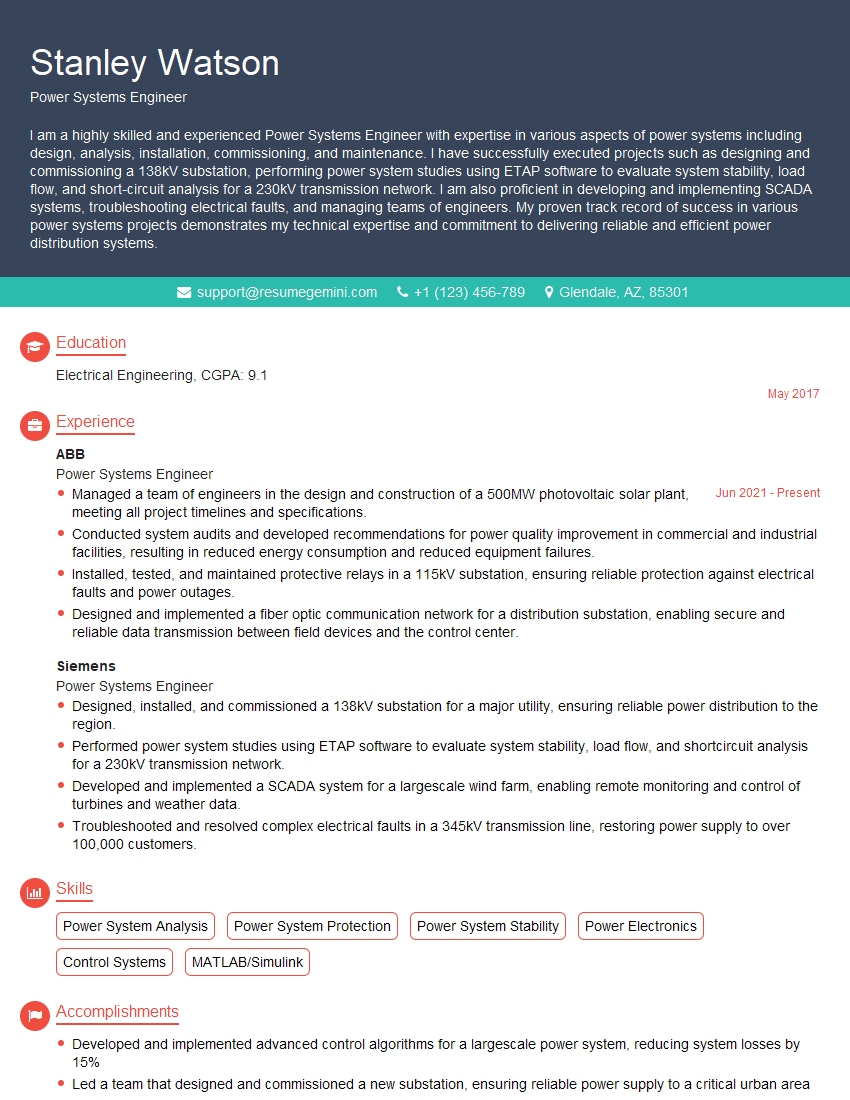
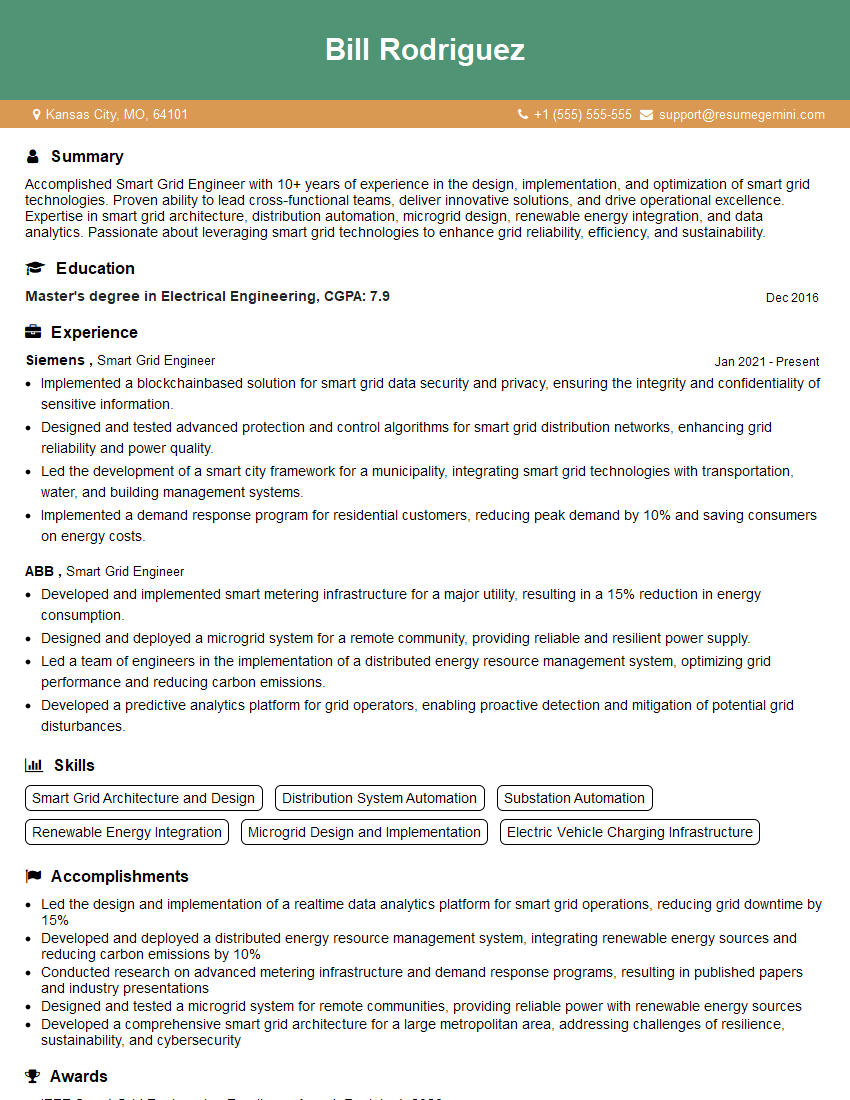
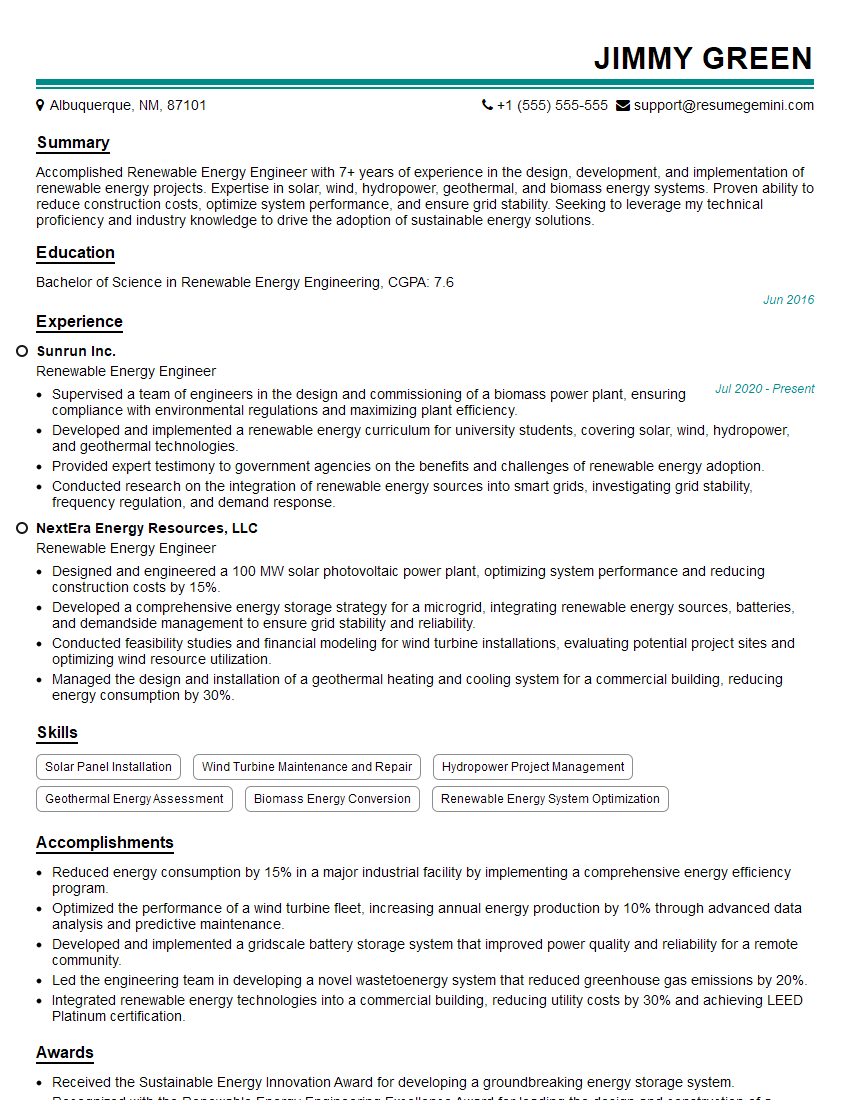
Mastering Smart Grid and Microgrid Systems opens doors to exciting and impactful careers in the energy sector. To maximize your job prospects, a well-crafted resume is crucial. An ATS-friendly resume ensures your qualifications are effectively communicated to hiring managers. We strongly encourage you to leverage ResumeGemini to build a professional and impactful resume. ResumeGemini provides valuable tools and resources, including examples of resumes tailored to Smart Grid and Microgrid Systems, to help you present yourself effectively to potential employers.
Explore more articles
Users Rating of Our Blogs
Share Your Experience
We value your feedback! Please rate our content and share your thoughts (optional).
What Readers Say About Our Blog
Very informative content, great job.
good