Every successful interview starts with knowing what to expect. In this blog, we’ll take you through the top Understanding of music industry trends and best practices interview questions, breaking them down with expert tips to help you deliver impactful answers. Step into your next interview fully prepared and ready to succeed.
Questions Asked in Understanding of music industry trends and best practices Interview
Q 1. Explain the current trends in music streaming.
The music streaming landscape is constantly evolving. Currently, we see several key trends:
- The Rise of Podcasts and Audiobooks within Streaming Platforms: Streaming services are no longer just about music; they’re becoming comprehensive audio entertainment hubs. This diversification attracts a broader audience and increases user engagement. Spotify and Apple Music are prime examples of this, integrating podcasts seamlessly into their apps.
- Hyper-Personalization and AI-Driven Recommendations: Algorithms are becoming increasingly sophisticated in predicting user preferences. This leads to more targeted playlists and recommendations, boosting user satisfaction and discovery of new artists. Think of Spotify’s ‘Discover Weekly’ or Apple Music’s ‘For You’ section.
- Focus on Interactive Features and Social Engagement: Features like collaborative playlists, live listening parties, and direct artist-fan interactions are gaining traction. This fosters a sense of community and boosts artist engagement. TikTok’s impact on music discovery is a perfect case in point.
- Growth of Lossless Audio and High-Fidelity Streaming: While compressed audio remains dominant, there’s a growing demand for higher-quality sound experiences, leading to the expansion of lossless audio tiers on services like Tidal and Amazon Music HD. This caters to audiophiles and those who prioritize sound quality.
- Expansion into Live Streaming and Virtual Concerts: The pandemic accelerated the adoption of online live performances, and this trend continues. Streaming platforms are increasingly integrating live events, offering artists new revenue streams and engaging fans remotely.
Q 2. What are the major challenges facing the music industry today?
The music industry faces numerous challenges:
- Low Streaming Royalties: Artists receive relatively low payouts per stream, making it difficult to earn a sustainable living solely from streaming revenue. This is a major point of contention between artists and streaming platforms.
- Copyright Infringement and Piracy: Illegal downloads and unauthorized streaming continue to rob artists and labels of revenue. Combating this requires robust copyright protection measures and technological solutions.
- Discovery and Competition: The sheer volume of music available makes it incredibly difficult for emerging artists to stand out. This necessitates creative marketing strategies and effective promotion.
- The Impact of Artificial Intelligence: AI-generated music raises concerns about originality, copyright, and the potential displacement of human artists. Navigating these ethical and legal implications is a significant challenge.
- Maintaining Fan Engagement in a Digital World: Building and maintaining meaningful connections with fans requires constant innovation and adaptation to the ever-changing digital landscape. Strategies need to be carefully crafted to maintain engagement beyond algorithms.
Q 3. Discuss the impact of social media on music marketing.
Social media has revolutionized music marketing. It offers unparalleled opportunities for direct artist-fan interaction, cost-effective promotion, and data-driven insights.
- Targeted Advertising: Platforms like Facebook and Instagram allow for precise targeting of specific demographics, ensuring marketing budgets are used efficiently.
- Organic Reach and Viral Marketing: A single viral video or post can catapult an artist to fame, offering a powerful organic marketing channel that traditional methods can’t match.
- Direct Engagement: Artists can directly communicate with fans, building communities and fostering loyalty through regular updates, live streams, and Q&A sessions.
- Data Analytics: Social media provides valuable data on audience engagement, preferences, and campaign effectiveness, allowing for data-driven adjustments to marketing strategies.
- Collaboration and Cross-Promotion: Social media facilitates collaborations between artists, opening avenues for cross-promotion and reaching new audiences.
Think of how Drake’s use of Instagram stories cultivated his image and connected him with fans, while Billie Eilish’s unique brand on TikTok secured her massive success. These platforms are powerful tools, but require thoughtful and strategic utilization.
Q 4. How has the rise of independent artists changed the music landscape?
The rise of independent artists has significantly reshaped the music landscape, democratizing the creative process and distribution.
- Direct-to-Fan Connections: Independent artists can build direct relationships with their fans, bypassing traditional gatekeepers like record labels.
- Creative Freedom: Without the constraints of label contracts, independent artists have greater control over their artistic vision and creative direction.
- New Revenue Streams: Independent artists can leverage platforms like Patreon and Bandcamp to diversify their revenue streams and gain financial independence.
- Increased Competition: The influx of independent artists has increased competition, making it more challenging for both independent and major label artists to stand out.
- Innovation and Experimentation: Independent artists are often at the forefront of musical innovation, pushing boundaries and experimenting with new sounds and styles.
Artists like Chance the Rapper and Sufjan Stevens, who built successful careers largely outside the traditional label system, are prime examples of this shift.
Q 5. Describe the process of securing music licensing for film or television.
Securing music licensing for film or television involves several steps:
- Identify the Music: Determine which songs or compositions best fit the project’s mood and narrative.
- Locate the Rights Holders: Find the copyright owners of the music—this could be the composer, songwriter, publisher, or record label.
- Negotiate a License: Contact the rights holders to negotiate a license agreement, specifying usage terms, territory, duration, and fees. This often involves lawyers specializing in music licensing.
- Secure the Necessary Clearances: Obtain master use licenses (covering the recording) and synchronization licenses (covering the synchronization of music with visuals).
- Execute the Agreement: Formalize the agreement in writing, outlining all terms and conditions.
- Pay Royalties: Make royalty payments to the rights holders as stipulated in the license agreement.
The complexity of this process varies considerably, depending on the music’s popularity and the scope of its usage in the film or television production. It’s crucial to have legal counsel with experience in music licensing to ensure all legal requirements are met.
Q 6. What are the key metrics you would use to measure the success of a music marketing campaign?
Key metrics for measuring music marketing campaign success include:
- Streams and Downloads: Tracking the number of streams and downloads of the music directly reflects the campaign’s impact on audience engagement.
- Social Media Engagement: Analyzing metrics like likes, shares, comments, and follower growth across different platforms reveals audience interaction and brand awareness.
- Website Traffic and Conversions: Monitoring website visits, email sign-ups, and merchandise sales offers insights into campaign effectiveness in driving targeted actions.
- Playlist Additions: Placement on popular playlists significantly impacts visibility and reach, so tracking these placements is crucial.
- Brand Awareness and Sentiment: Monitoring brand mentions and sentiment analysis across social media and other online platforms helps gauge public perception of the artist and their music.
- Return on Investment (ROI): Calculating the ROI of the marketing campaign, comparing the costs against the revenue generated, is essential for evaluating overall efficiency and return.
Analyzing these metrics together provides a comprehensive understanding of the campaign’s success and allows for data-driven optimization.
Q 7. Explain the difference between mechanical and performance royalties.
Mechanical and performance royalties are both types of music royalties, but they apply to different uses of the music:
- Mechanical Royalties: These are paid to songwriters and publishers whenever their music is reproduced in physical or digital formats, such as CDs, downloads, or streaming services. It’s essentially payment for the right to reproduce the musical composition.
- Performance Royalties: These are paid to songwriters and publishers whenever their music is publicly performed, whether it’s live on stage, broadcast on radio, or streamed online. It’s compensation for the public performance of the composition.
A simple analogy: imagine a book. Mechanical royalties are akin to paying the author for the right to print and sell copies of the book. Performance royalties would be like paying the author for a public reading of their book at a library or book store.
Q 8. How do you stay up-to-date on the latest music industry trends?
Staying current in the dynamic music industry requires a multi-faceted approach. I leverage a combination of resources to ensure I’m always informed about the latest trends.
- Industry Publications and Websites: I regularly read publications like Billboard, Music Business Worldwide, and Variety, as well as specialized blogs and websites focused on music tech, streaming analytics, and legal updates. This gives me a broad overview of market shifts, technological advancements, and emerging business models.
- Conferences and Workshops: Attending industry events like South by Southwest (SXSW), MIDEM, and various music tech conferences provides invaluable networking opportunities and exposes me to cutting-edge innovations directly from the source. I actively participate in Q&A sessions and workshops to deepen my understanding.
- Data Analytics Platforms: I utilize music data analytics platforms like Spotify for Artists, Apple Music for Artists, and others to track performance metrics, understand audience demographics, and identify emerging trends in listener behavior. This provides concrete, data-driven insights.
- Podcasts and Interviews: Listening to podcasts featuring industry leaders, artists, and executives allows me to gain diverse perspectives and learn about their experiences navigating current challenges and opportunities.
- Networking: Maintaining a strong professional network of artists, managers, labels, and tech professionals is crucial. Regular communication and informal discussions offer valuable insights and early warnings about emerging trends.
This holistic approach ensures I’m not just passively receiving information but actively engaging with the industry and shaping my understanding based on multiple perspectives and real-world data.
Q 9. What are the ethical considerations in music streaming and digital distribution?
Ethical considerations in music streaming and digital distribution are multifaceted and crucial for a healthy industry ecosystem. Key concerns include:
- Fair Compensation for Artists: The most pressing issue is ensuring artists receive fair compensation for their work. The current streaming model’s low per-stream payouts have led to much debate about whether it adequately values artists’ contributions. Transparency in royalty calculations and fairer revenue-sharing models are essential.
- Data Privacy and User Consent: Streaming platforms collect vast amounts of user data. Ethical practices require transparency about data collection, clear user consent procedures, and robust data security measures to protect user privacy. The use of this data for personalized recommendations must be balanced with user autonomy.
- Copyright Infringement: Preventing copyright infringement remains a challenge. Platforms must have effective mechanisms to detect and remove unauthorized content, while respecting fair use principles and balancing the needs of copyright holders with user access to content.
- Content Moderation and Platform Responsibility: Platforms have a responsibility to moderate content, addressing issues like hate speech, misinformation, and potentially harmful material. Finding the right balance between freedom of expression and protecting users and artists from harm is critical.
- Algorithmic Bias: Algorithms used to curate content and recommend music can inadvertently perpetuate biases, limiting exposure for certain artists or genres. Addressing this requires careful algorithm design and ongoing monitoring.
Addressing these ethical concerns requires collaboration among artists, platforms, labels, and policymakers to develop fairer, more sustainable, and transparent systems that benefit all stakeholders.
Q 10. What are some common revenue streams for musicians today?
Musicians today have access to a diverse range of revenue streams, moving beyond traditional album sales:
- Streaming Royalties: Revenue from platforms like Spotify, Apple Music, and Amazon Music is a significant source of income, though often small per stream.
- Digital Downloads and Merchandise Sales: Selling music directly through their websites or online stores, alongside merchandise like t-shirts, posters, and exclusive content, allows artists to maintain higher profit margins.
- Live Performances: Concerts, tours, and smaller gigs remain a crucial income source, especially for established acts. This includes online concerts and virtual events.
- Sync Licensing: Licensing music for use in film, television, commercials, and video games can generate significant income, particularly if the music gains popularity through the media placement.
- Brand Partnerships and Sponsorships: Collaborating with brands on sponsored content, endorsements, and product placements provides another avenue for revenue generation.
- Crowdfunding and Patronage Platforms: Platforms like Patreon allow artists to receive direct financial support from fans on a recurring basis.
- Publishing Royalties: If the artist writes their own music, they can receive royalties from the performance and mechanical licensing of their compositions.
- NFT Sales: Non-fungible tokens (NFTs) offer artists a way to sell unique digital assets of their music, providing another income stream and connecting directly with fans.
A successful modern musician often strategically combines several of these revenue streams to create a robust and diversified income portfolio.
Q 11. Describe your understanding of music copyright law.
Music copyright law protects the rights of creators over their musical works. It grants exclusive rights to the copyright holder, typically the composer and/or lyricist, to control how their work is used. These rights include:
- Reproduction: The right to make copies of the musical work.
- Distribution: The right to distribute copies to the public.
- Derivative Works: The right to create new works based on the original (e.g., a remix).
- Public Performance: The right to perform the work publicly.
- Public Display: The right to display the work publicly.
Copyright protection is automatic upon creation of a work, but registering the copyright with the relevant copyright office (like the U.S. Copyright Office) provides additional legal benefits, including the ability to sue for infringement. Copyright infringement occurs when someone uses a copyrighted work without permission. Fair use is a crucial exception, allowing limited use of copyrighted material for purposes like criticism, commentary, news reporting, teaching, or research. However, determining fair use can be complex and depends on several factors. Licenses, like Creative Commons, provide alternative ways for creators to share their work while maintaining some control over its use.
Understanding copyright law is crucial for musicians, labels, and streaming platforms to ensure they operate within legal boundaries and protect their intellectual property.
Q 12. Explain the role of A&R in the music industry.
A&R (Artists and Repertoire) is a vital function in the music industry, responsible for talent scouting, artist development, and repertoire management. A&R professionals play a crucial role in identifying and nurturing new artists, shaping their musical direction, and ultimately ensuring their success.
- Talent Scouting: A&R representatives actively seek out promising new artists through various channels, including attending live performances, reviewing online submissions, and networking within the industry.
- Artist Development: Once an artist is signed, A&R works closely with them to develop their sound, refine their image, and guide their career trajectory. This might involve collaborations with songwriters, producers, and other creative professionals.
- Repertoire Management: A&R manages the overall musical catalog of an artist or label, overseeing album production, song selection, and ensuring the artist’s work aligns with their overall artistic vision and market trends.
- Strategic Partnerships: A&R professionals build and maintain relationships with producers, songwriters, managers, and other key players in the music industry to create opportunities for the artists they represent.
A successful A&R team is crucial in identifying and developing artists who have both commercial potential and artistic integrity. They act as creative guides and business strategists, ensuring artists’ voices are heard and their careers flourish.
Q 13. What are the benefits and drawbacks of using music data analytics?
Music data analytics offers valuable insights into listener behavior, market trends, and artist performance. However, it’s crucial to understand both the benefits and drawbacks:
- Benefits:
- Improved Artist Development: Data helps understand which songs resonate most with fans, guiding artistic decisions and optimizing future releases.
- Targeted Marketing: Demographics and listening habits reveal ideal audience segments, enabling more effective marketing campaigns.
- Performance Monitoring: Real-time tracking of streams, plays, and downloads provides immediate feedback on campaign success and allows for adjustments.
- Trend Identification: Analyzing large datasets reveals emerging genres, sounds, and audience preferences, informing strategic decisions.
- Enhanced Playlist Placement: Data can identify playlists where an artist’s music would find a receptive audience, improving discoverability.
- Drawbacks:
- Data Bias: Algorithms can reinforce existing biases, potentially limiting exposure for artists outside dominant trends.
- Over-reliance on Metrics: Focusing solely on numbers can overshadow artistic integrity and creativity.
- Data Privacy Concerns: Collecting and using listener data raises ethical considerations regarding privacy and transparency.
- Cost and Complexity: Sophisticated analytics tools and expertise require financial investment and technical skill.
- Interpretation Challenges: Data alone isn’t sufficient; human interpretation and strategic thinking are crucial to leverage its insights fully.
Successful use of music data analytics requires a balanced approach. Data should be viewed as a tool to inform and enhance creative decisions, not dictate them. Ethical considerations and a critical eye are essential to avoid pitfalls.
Q 14. How would you develop a marketing strategy for a new artist?
Developing a marketing strategy for a new artist requires a holistic approach that considers their unique strengths, target audience, and available resources. Here’s a phased strategy:
- Define Target Audience: Identify the ideal listener demographics, musical tastes, and online behavior to tailor the message and channels effectively.
- Craft a Strong Brand Identity: Develop a cohesive brand image including a logo, visual style, and narrative that reflects the artist’s musical personality and unique selling proposition.
- Content Strategy: Create compelling content such as high-quality music videos, engaging social media posts, behind-the-scenes footage, and live performance recordings to build excitement and engagement.
- Digital Marketing: Utilize social media platforms (Instagram, TikTok, YouTube, etc.) to reach target audiences, running targeted ad campaigns and engaging with followers directly. Build an email list for direct communication and updates.
- Public Relations: Seek media coverage through press releases, interviews with relevant blogs and podcasts, and collaborations with influencers.
- Playlist Pitching: Identify relevant playlists on major streaming platforms and submit the music to increase visibility and reach a wider audience.
- Live Performances: Schedule showcases, open mic nights, and other performances to build a local following and gain experience.
- Collaborations: Collaborate with other artists and influencers to cross-promote and reach new audiences.
- Data Analysis and Optimization: Track key metrics, analyzing what works and what doesn’t, making adjustments to the strategy based on real-time data.
This strategy should be adaptable and iterative, adjusting based on the artist’s progress and market feedback. Consistency and authentic engagement are crucial for building a loyal fanbase and achieving long-term success.
Q 15. Discuss the impact of artificial intelligence on music creation and distribution.
Artificial intelligence (AI) is revolutionizing the music industry, impacting both creation and distribution. On the creative side, AI tools can generate melodies, harmonies, and even entire song structures. Think of it like having a highly skilled, tireless collaborator. These tools can assist songwriters experiencing creative blocks or help explore new sonic territories. However, it’s crucial to remember that AI is a tool, not a replacement for human creativity. The best results come from a collaborative approach where artists use AI to enhance their artistic vision, not dictate it.
In distribution, AI powers personalized recommendation algorithms on streaming platforms like Spotify and Apple Music. This means your music has a better chance of reaching listeners who might genuinely appreciate it, increasing your chances of discovery. AI also analyzes data to predict trends, helping artists and labels make informed decisions about marketing and release strategies. For example, AI can identify optimal release dates based on listening patterns and competitor activity.
However, ethical considerations remain. Issues around copyright and ownership of AI-generated music are still being debated. The potential for homogenization of sound, where all music starts to sound similar due to reliance on similar AI tools, is a concern. The future likely involves a careful balance between leveraging AI’s power and preserving the human element at the heart of music.
Career Expert Tips:
- Ace those interviews! Prepare effectively by reviewing the Top 50 Most Common Interview Questions on ResumeGemini.
- Navigate your job search with confidence! Explore a wide range of Career Tips on ResumeGemini. Learn about common challenges and recommendations to overcome them.
- Craft the perfect resume! Master the Art of Resume Writing with ResumeGemini’s guide. Showcase your unique qualifications and achievements effectively.
- Don’t miss out on holiday savings! Build your dream resume with ResumeGemini’s ATS optimized templates.
Q 16. What are the key elements of a successful music publishing deal?
A successful music publishing deal protects the songwriter’s intellectual property (copyright) and ensures they receive royalties for their work. Key elements include:
- Copyright ownership: Clearly defining who owns the copyright (usually the songwriter, but sometimes a co-publisher is involved).
- Territory: Specifying the geographical areas where the song can be used.
- Term: The length of the agreement (typically long-term, often exceeding the songwriter’s lifetime).
- Royalty rate: The percentage of income the songwriter receives from each use of their song (this varies greatly depending on the songwriter’s standing and the deal’s terms). Common splits are 50/50 between the songwriter and publisher.
- Administration: The publisher’s responsibilities, including licensing the song for use in various media (films, TV, commercials, etc.), collecting royalties, and accounting to the songwriter.
- Advances: An upfront payment made to the songwriter, which is typically recouped from future royalties.
Think of it like this: the publisher is the marketing and sales arm for your song’s copyright. They actively seek opportunities to get your song used and handle the complex process of collecting payments. A well-negotiated deal ensures a fair return for the songwriter’s creative work, protecting their financial interests now and into the future.
Q 17. How would you handle a dispute between an artist and a record label?
Disputes between artists and record labels are unfortunately common. Effective handling requires a multifaceted approach:
- Attempt amicable resolution: The first step is always to try and resolve the issue through open communication and negotiation. Often, a misunderstanding can be cleared up with a frank discussion.
- Mediation: If direct negotiation fails, mediation can be a valuable tool. A neutral third party helps facilitate communication and find common ground.
- Arbitration: If mediation is unsuccessful, arbitration provides a more formal process. A neutral arbitrator hears both sides and makes a binding decision.
- Litigation: As a last resort, litigation is an option, but it can be expensive, time-consuming, and damage relationships. This typically involves filing a lawsuit.
Understanding the contract is paramount. Each point, from royalty payments to marketing obligations, needs careful consideration. Having a good lawyer who specializes in music industry contracts is crucial in navigating any dispute. Prevention is better than cure; having a clear and comprehensive contract is the best way to avoid disputes in the first place.
Q 18. What strategies can be used to combat music piracy?
Combating music piracy is a constant battle, requiring a multi-pronged strategy:
- Technological solutions: Digital Rights Management (DRM) technologies attempt to restrict unauthorized copying. However, these technologies are often circumvented.
- Legal action: Taking legal action against individuals and websites that engage in widespread piracy is costly but serves as a deterrent.
- Education: Raising awareness about the legal and ethical implications of piracy is important. Educating consumers on the value of supporting artists through legitimate channels.
- Affordable legal access: Making music legally available through affordable streaming services and downloads encourages consumers to opt for legitimate options.
- Collaboration: Industry bodies, internet service providers, and governments must cooperate to tackle piracy effectively.
Ultimately, offering a compelling and convenient legal alternative is the most effective long-term solution. By providing high-quality music at a fair price and making access easy, the need for piracy is reduced.
Q 19. What is the importance of building relationships within the music industry?
Building strong relationships in the music industry is paramount. It’s not just about who you know, but about building trust and mutual respect. These relationships can lead to:
- Collaboration opportunities: Working with other musicians, producers, songwriters, and managers can open up creative and professional avenues.
- Access to resources: Strong connections can provide access to valuable resources like studios, equipment, and industry professionals.
- Mentorship: Learning from more experienced individuals can accelerate your career trajectory.
- Enhanced reputation: A positive reputation within the industry opens doors to greater opportunities.
- Support during challenging times: A strong network of peers can be invaluable during difficult moments in your career.
Networking events, online forums, and even casual encounters at industry gatherings all provide opportunities to connect. Remember, genuine connection built on mutual respect and collaboration is key.
Q 20. Explain the role of digital distribution platforms in the music industry.
Digital distribution platforms like Spotify, Apple Music, Amazon Music, and YouTube Music are the lifeblood of the modern music industry. They provide artists and labels with:
- Global reach: Distributing music through these platforms allows artists to reach listeners worldwide, regardless of their location.
- Direct-to-consumer access: Artists can connect directly with their fans without relying on traditional intermediaries like record stores.
- Data analytics: Platforms provide valuable data on listening habits, geographic location, and more, enabling targeted marketing and strategic decision-making.
- Revenue generation: Royalties are generated from streams, downloads, and other forms of engagement.
- Ease of distribution: Uploading and managing music on these platforms is relatively straightforward.
However, competition is fierce, and algorithms play a significant role in music discovery. Artists must adopt effective strategies to promote their music within these platforms to maximize their visibility and revenue streams.
Q 21. How do you assess the potential success of a new music release?
Assessing the potential success of a new music release is a complex process, but several factors can be considered:
- Song quality: Is the music well-written, catchy, and unique? Does it have potential for broad appeal or niche success?
- Artist profile: What is the artist’s existing fanbase and their engagement level? Are they actively promoting their music?
- Marketing strategy: Is a strong marketing plan in place? How will the music be promoted to the target audience?
- Timing and trends: Does the release align with current trends in the music industry? Is the timing optimal for maximum impact?
- Genre and target audience: How large is the potential audience for this genre of music? Is the target audience being effectively reached?
Analyzing similar releases’ success, pre-save campaigns, and early feedback are valuable indicators. Remember, music success is never guaranteed, but a well-thought-out strategy that considers all these factors increases the odds.
Q 22. Discuss the importance of music synchronization licensing.
Music synchronization licensing, often shortened to “sync licensing,” is the process of legally obtaining permission to use a musical composition in a visual media project like a film, television show, advertisement, or video game. It’s crucial because the copyright of the music belongs to the songwriter(s) and publisher(s), and using it without permission constitutes infringement. Think of it like this: you wouldn’t use someone’s photo without their consent; similarly, you can’t just use someone’s music.
The importance stems from several factors: it protects the rights of the creators, ensuring they are fairly compensated for their work. It also safeguards the users from legal repercussions and potential financial liabilities. The sync license itself outlines the usage terms: where the music will be used, the duration of the license, the geographical area covered, and the fee payable. A well-negotiated sync license is vital for both the rights holders and the media project to succeed.
For example, a major film studio needs to acquire sync licenses for any song featured in its movie. This involves contacting the relevant publishing houses and negotiating a fee based on factors such as the song’s popularity, the film’s budget, and the length of the usage. Failure to do so could lead to costly lawsuits and reputational damage.
Q 23. What are the latest developments in music technology?
The music technology landscape is constantly evolving. Some of the most significant recent developments include:
- AI-powered music creation tools: Software that can compose, arrange, and even generate entirely new musical pieces is becoming increasingly sophisticated. This opens up exciting possibilities for both professional musicians and amateurs, but also raises important questions about copyright and authorship.
- Improved audio mastering and mixing techniques: Advances in digital audio workstations (DAWs) and plug-ins allow for incredibly precise and efficient audio processing, resulting in higher-quality recordings and a more streamlined workflow.
- Immersive audio technologies: Spatial audio formats like Dolby Atmos and Sony 360 Reality Audio are gaining traction, providing listeners with a more realistic and engaging sound experience, especially in virtual reality (VR) and augmented reality (AR) applications.
- Blockchain technology for music rights management: Blockchain offers the potential to streamline the complex process of tracking and managing music copyrights and royalties, making it more transparent and efficient.
- Metaverse and NFT integration: The metaverse offers new avenues for music distribution and fan engagement. NFTs (Non-Fungible Tokens) can provide artists with new ways to monetize their work and connect with fans directly.
These advancements are transforming how music is created, distributed, and experienced, impacting artists, producers, labels, and listeners alike.
Q 24. How would you evaluate the performance of a music marketing campaign?
Evaluating the success of a music marketing campaign requires a multifaceted approach, going beyond just superficial metrics. I’d focus on both quantitative and qualitative data.
Quantitative metrics include:
- Streaming numbers: Growth in streams across platforms like Spotify and Apple Music.
- Social media engagement: Likes, shares, comments, and follower growth across relevant platforms.
- Sales figures: Physical and digital album/single sales.
- Website traffic: Visits to the artist’s official website.
- Radio play: Number of spins on radio stations.
Qualitative metrics are equally important:
- Brand awareness: Measuring the increase in public recognition of the artist and their music.
- Fan engagement: Assessing the level of interaction and connection between the artist and their audience.
- Media coverage: Monitoring the amount and tone of press coverage.
- Sentiment analysis: Tracking public opinion and sentiment toward the artist and their music.
A holistic assessment integrates these data points, considering the campaign’s objectives and the artist’s overall goals. For example, a campaign focused on building brand awareness might prioritize social media engagement and media coverage over immediate sales figures.
Q 25. What are the key components of a strong artist management plan?
A strong artist management plan is built on several key components, all working in synergy:
- Clear artist goals and vision: Understanding the artist’s aspirations, musical style, and target audience is paramount. This forms the foundation of the entire plan.
- Strategic marketing and promotion: Developing a comprehensive marketing strategy that leverages various channels (social media, PR, radio, etc.) to reach the target audience.
- Financial management: Careful budgeting, tracking income and expenses, and exploring diverse revenue streams (live performances, merchandise, publishing, etc.) are crucial.
- Legal and business affairs: Navigating contracts, protecting intellectual property, and ensuring the artist’s legal rights are safeguarded.
- Networking and industry relationships: Cultivating strong relationships with industry professionals, including record labels, publishers, promoters, and other key players.
- Performance and career development: Focusing on continuous improvement, enhancing vocal skills, stage presence, and overall artistry.
- Regular evaluation and adjustment: Monitoring the plan’s progress, analyzing results, and making necessary adjustments based on performance and market trends.
Think of it as a roadmap, guiding the artist’s career toward sustainable success. Consistent communication and collaboration between the artist and their management team are vital for its successful execution.
Q 26. Describe your experience with music budgeting and financial planning.
My experience with music budgeting and financial planning involves creating detailed budgets for recording projects, tours, marketing campaigns, and overall artist management. This includes forecasting income from various sources (album sales, streaming royalties, merchandise, live performances, endorsements), projecting expenses (studio time, musicians’ fees, marketing costs, travel, legal fees), and maintaining accurate financial records.
I utilize various financial modeling tools and techniques to create realistic budgets and financial projections. This helps to identify potential risks, optimize resource allocation, and ensure financial sustainability. I also advise artists on effective cost-saving measures without compromising artistic quality. For instance, I might explore alternative strategies for recording to minimize studio costs or collaborate with independent marketers for more cost-effective campaigns.
My experience also extends to negotiating contracts and ensuring transparency and fairness in financial dealings between artists, labels, and other stakeholders. Understanding the nuances of royalty structures, accounting practices, and relevant legal frameworks is essential in this context.
Q 27. Explain the different types of music contracts.
Music contracts can be complex, varying significantly depending on the specific situation. However, some common types include:
- Record label contracts: These agreements govern the relationship between an artist and a record label. They typically cover recording, distribution, marketing, and royalties.
- Publishing contracts: These contracts deal with the rights to a musical composition, assigning ownership and determining the distribution of royalties among songwriters and publishers.
- Artist management agreements: These outline the terms of the relationship between an artist and their management team, defining responsibilities, compensation, and the duration of the agreement.
- Synchronization licenses (sync licenses): These grant permission to use a musical composition in visual media projects (films, TV shows, commercials).
- Merchandising agreements: These agreements govern the use of an artist’s image, likeness, and branding on merchandise.
- Live performance contracts: These outline the terms of an artist’s live performances, specifying the venue, date, compensation, and other relevant details.
It’s vital for artists to understand the implications of each contract clause and seek legal counsel when necessary. Each contract is unique and needs careful review to protect the artist’s rights and interests.
Q 28. How would you approach building a brand for a new music artist?
Building a brand for a new music artist requires a strategic approach that blends creative vision with data-driven decision-making. It’s about creating a unique and compelling identity that resonates with the target audience.
My approach would involve these steps:
- Defining the artist’s brand identity: This includes identifying the artist’s unique selling proposition (USP), musical style, target audience, and overall brand values. What makes this artist stand out?
- Developing a consistent brand aesthetic: This encompasses visual elements like logo design, color palette, typography, and photography, reflecting the artist’s personality and musical style.
- Creating engaging content: This involves producing high-quality music videos, social media posts, blog content, and other materials that capture the artist’s essence and connect with the audience.
- Leveraging social media platforms: Building a strong presence on platforms like Instagram, TikTok, YouTube, and Twitter is crucial for reaching the target audience and fostering community engagement.
- Collaborating with influencers and industry professionals: Partnering with relevant influencers and other industry professionals can significantly amplify the artist’s reach and credibility.
- Monitoring brand performance and making data-driven adjustments: Tracking key metrics like social media engagement, website traffic, and streaming numbers, and making adjustments to the brand strategy based on these insights.
Think of it like crafting a compelling narrative. Each piece of content, each social media post, each performance contributes to a larger story that tells the artist’s unique tale and captivates their audience. Consistency and authenticity are key to building lasting brand recognition and loyalty.
Key Topics to Learn for Understanding of Music Industry Trends and Best Practices Interview
- Streaming and Digital Distribution: Understanding the impact of streaming services on artist revenue, royalty structures, and marketing strategies. Explore the role of digital distribution platforms and their influence on music consumption.
- Music Licensing and Copyright: Grasp the complexities of music licensing, including mechanical, synchronization, and performance rights. Understand copyright law and its implications for artists, labels, and users.
- Social Media Marketing and Promotion: Analyze the role of social media in artist discovery, fan engagement, and building a strong online presence. Learn best practices for utilizing platforms like TikTok, Instagram, and YouTube for music promotion.
- Data Analytics in the Music Industry: Explore how data analytics are used to inform marketing decisions, track music consumption patterns, and identify emerging trends. Understand the value of using data to optimize marketing campaigns and reach target audiences.
- Artist Management and Development: Learn about the various roles and responsibilities within artist management, including career planning, brand building, and financial management. Understand the importance of artist development and long-term career strategies.
- Music Industry Business Models: Analyze the different business models utilized by artists, labels, and streaming platforms. Understand the evolution of these models and their impact on the industry’s ecosystem.
- A&R (Artists and Repertoire): Explore the crucial role of A&R in artist discovery, talent development, and record label operations. Understand the processes involved in signing and developing artists.
- Current Trends and Challenges: Stay updated on current trends such as the rise of NFTs, the metaverse’s impact on music, and challenges related to fair compensation for artists in the digital age.
- Problem-Solving Applications: Practice analyzing case studies and formulating solutions related to issues like revenue generation, copyright infringement, and marketing challenges in the digital landscape.
Next Steps
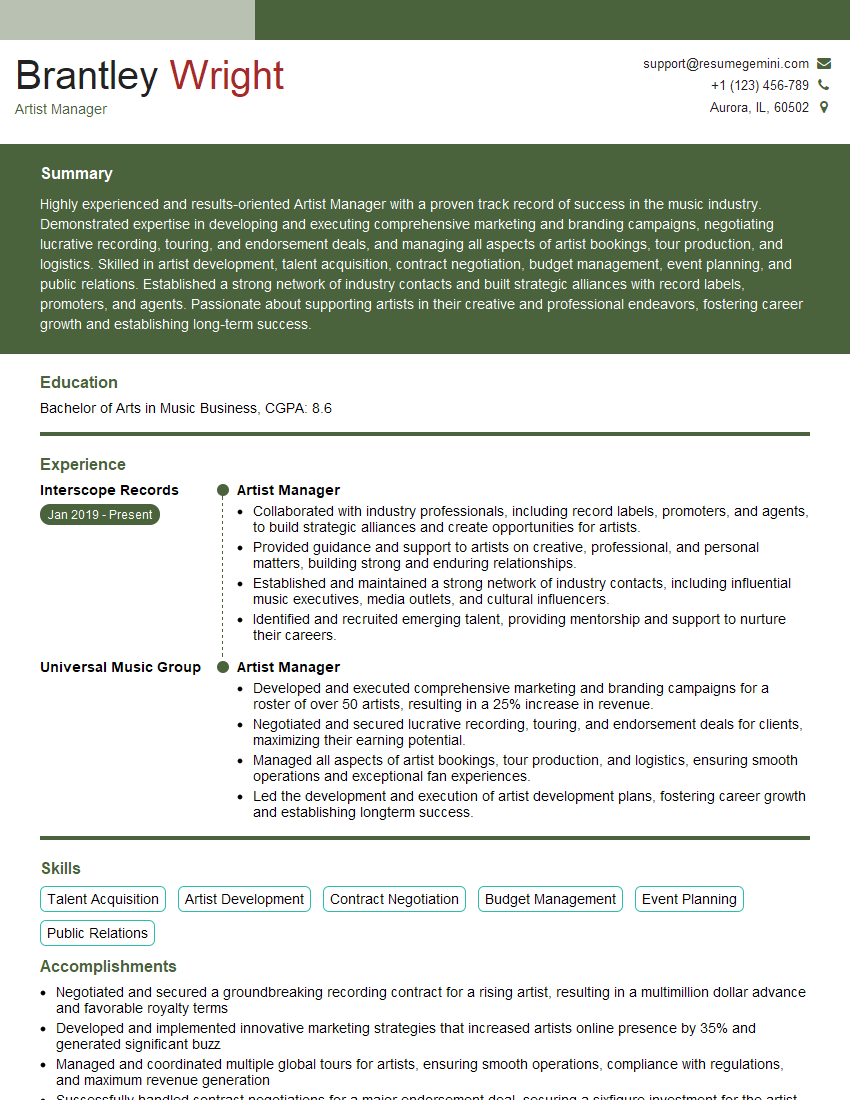
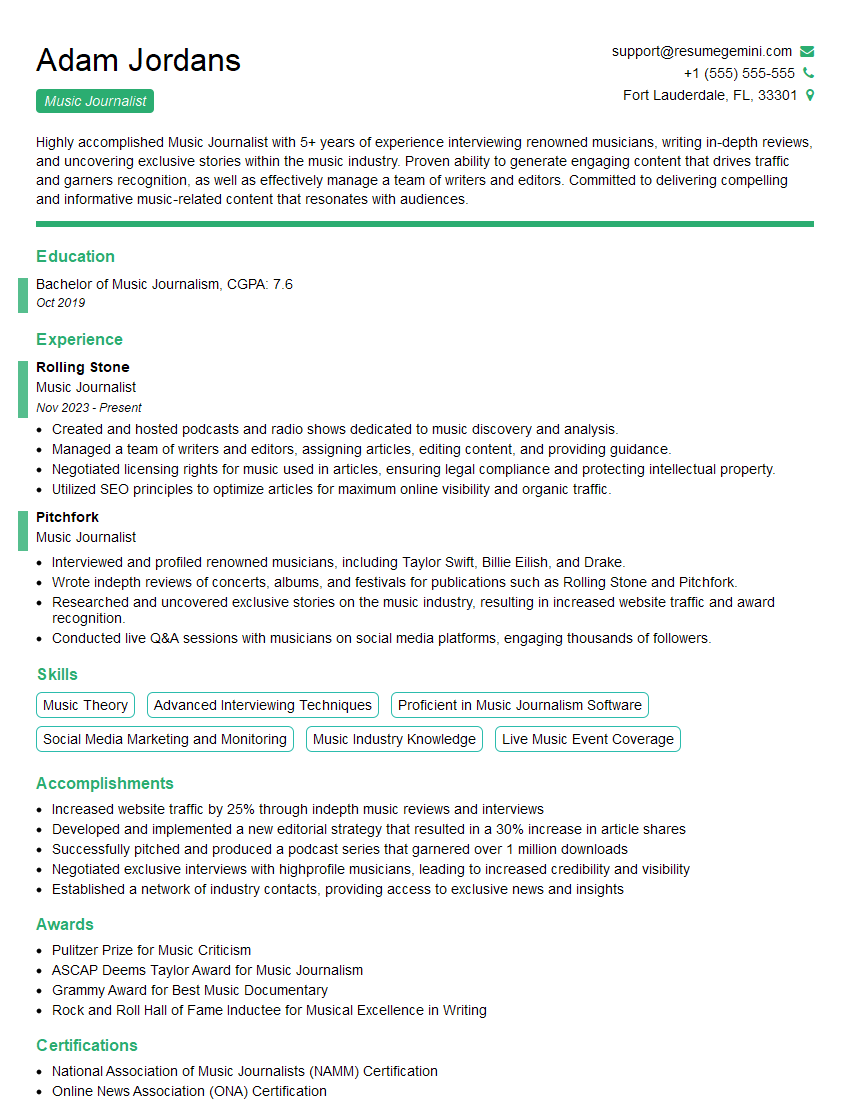
Mastering your understanding of music industry trends and best practices is crucial for career advancement. It demonstrates your adaptability, foresight, and knowledge of the dynamic environment you’ll be working in. To significantly boost your job prospects, create an ATS-friendly resume that highlights your relevant skills and experience. ResumeGemini is a trusted resource that can help you build a professional and impactful resume, ensuring your application stands out. Examples of resumes tailored to showcasing expertise in music industry trends and best practices are available to guide you.
Explore more articles
Users Rating of Our Blogs
Share Your Experience
We value your feedback! Please rate our content and share your thoughts (optional).
What Readers Say About Our Blog
Very informative content, great job.
good