Feeling uncertain about what to expect in your upcoming interview? We’ve got you covered! This blog highlights the most important Basic Mechanical Maintenance interview questions and provides actionable advice to help you stand out as the ideal candidate. Let’s pave the way for your success.
Questions Asked in Basic Mechanical Maintenance Interview
Q 1. What are the common types of preventative maintenance?
Preventative maintenance (PM) aims to avoid equipment failure before it happens, saving time, money, and potential safety hazards. There are several common types:
- Scheduled Maintenance: This involves performing maintenance tasks at regular intervals, based on time (e.g., lubricating a motor every month) or operating hours (e.g., changing the oil in a generator after 500 hours). This is proactive and crucial for many systems.
- Condition-Based Maintenance: This approach uses sensors and data analysis to monitor the condition of equipment in real-time. Maintenance is only performed when data indicates a need, optimizing resource allocation. For example, vibration sensors on a pump can detect bearing wear before it causes failure.
- Predictive Maintenance: This is a more advanced form of condition-based maintenance that uses data analysis and algorithms to predict when failure is likely to occur. This allows for scheduling maintenance before a problem arises, minimizing downtime.
- Time-Based Maintenance: This focuses on replacing components after a specific amount of time, irrespective of their current condition. Think replacing belts or filters every six months, regardless of wear.
- Run-to-Failure Maintenance: This is a reactive approach where maintenance is only performed when equipment fails. While cheaper in the short term, it can lead to significant downtime and repair costs. Only used when the cost of PM exceeds the cost of failure.
The choice of PM strategy depends on factors like equipment criticality, cost of downtime, and available monitoring technologies. A well-designed PM program typically incorporates a mix of these approaches.
Q 2. Explain the importance of lubrication in mechanical systems.
Lubrication is absolutely critical in mechanical systems. It acts as a protective layer between moving parts, reducing friction and wear. Think of it like oiling a bicycle chain – without it, the chain would wear out quickly and the bike wouldn’t function smoothly.
The importance of lubrication can be broken down into several key areas:
- Reduced Friction: Lubricants create a film that separates surfaces, reducing friction and the resulting heat and wear.
- Wear Prevention: By minimizing contact between surfaces, lubrication significantly extends the lifespan of mechanical components.
- Corrosion Prevention: Many lubricants contain additives that protect metal surfaces from rust and corrosion.
- Improved Efficiency: Reduced friction translates to improved energy efficiency and reduced power consumption.
- Cooling: Lubricants can help dissipate heat generated by friction, preventing overheating and damage.
Insufficient lubrication can lead to premature wear, increased energy consumption, overheating, component failure, and even catastrophic damage. Proper lubrication practices, including selecting the correct lubricant and applying it appropriately, are essential for maintaining the reliability and efficiency of mechanical equipment.
Q 3. Describe your experience with troubleshooting mechanical equipment malfunctions.
Throughout my career, I’ve tackled numerous troubleshooting challenges. For instance, I once worked on a conveyor system that experienced frequent stoppages. My systematic approach began with observation – I watched the system operate, noting unusual noises, vibrations, or behaviors. This revealed a recurring stall at a specific point. I then checked the system’s logs for error codes and consulted the manufacturer’s documentation. This led me to suspect a problem with the motor’s drive system.
After careful inspection, I found that loose cabling was causing intermittent shorts. A simple tightening of the connections resolved the issue. Another time, a machine exhibited unusual vibrations. Through a combination of vibration analysis and visual inspection, I pinpointed the source as a worn bearing. Replacing the bearing restored the machine’s performance. This highlights the importance of a methodical approach: observation, data analysis, and systematic elimination of potential causes. I always prioritize safety procedures during troubleshooting.
Q 4. How do you identify and address common mechanical issues?
Identifying and addressing mechanical issues requires a combination of skills and tools. A methodical approach is key:
- Identify the Problem: Observe the equipment carefully for any unusual sounds, vibrations, leaks, or performance issues. Collect data from any available monitoring systems.
- Gather Information: Consult operating manuals, maintenance logs, and any available schematics to understand the equipment’s design and operation.
- Diagnose the Cause: Use appropriate tools and techniques to diagnose the root cause. This might involve using multimeters to check electrical circuits, vibration analyzers to detect bearing wear, or pressure gauges to check hydraulic systems.
- Develop a Solution: Based on the diagnosis, develop a plan to repair or replace the faulty component. This might involve ordering replacement parts or consulting with specialized technicians.
- Implement the Solution: Carefully implement the repair, ensuring that all safety procedures are followed.
- Verify the Solution: After the repair is complete, test the equipment to ensure that the problem is resolved and the system is operating correctly.
- Document the Process: Maintain detailed records of the issue, the diagnosis, and the solution. This helps prevent future issues and improves the overall maintenance process.
For example, if a pump isn’t pumping efficiently, I’d check for leaks, low fluid levels, clogged filters, or a failing impeller. Each issue requires a different solution.
Q 5. What safety procedures do you follow during mechanical maintenance?
Safety is paramount during mechanical maintenance. My approach always starts with a thorough risk assessment. This involves identifying potential hazards, such as moving parts, electrical hazards, and exposure to chemicals.
I always follow these key procedures:
- Lockout/Tagout (LOTO): Before commencing any work on equipment, I always perform LOTO procedures to isolate the power source and prevent accidental start-up.
- Personal Protective Equipment (PPE): I use appropriate PPE, such as safety glasses, gloves, hearing protection, and steel-toe boots, to protect myself from injury.
- Proper Lifting Techniques: When lifting heavy components, I use proper lifting techniques and, if necessary, utilize lifting equipment like hoists or cranes.
- Confined Space Entry Procedures: If working in confined spaces, I follow established confined space entry procedures.
- Emergency Procedures: I am familiar with emergency procedures and know how to use fire extinguishers and other safety equipment.
- Communication: Clear communication with colleagues is vital; I always inform others about my work and any potential hazards.
Safety is not just a set of rules, it’s a mindset. Every task is approached with caution and a focus on minimizing risk.
Q 6. What are the different types of bearings and their applications?
Bearings are essential mechanical components that reduce friction and support rotating shafts. There are several types, each with specific applications:
- Ball Bearings: These use rolling balls to reduce friction. They are widely used in various applications due to their relatively low cost and high speed capabilities. Think of the bearings in a bicycle wheel.
- Roller Bearings: These use cylindrical or tapered rollers, providing higher load-carrying capacity than ball bearings, ideal for heavy-duty applications like conveyor systems or large motors.
- Sleeve Bearings (Journal Bearings): These are simpler bearings made from a lubricated sleeve that surrounds a rotating shaft. They are often used in low-speed applications and where lubrication is readily available.
- Thrust Bearings: These bearings are designed to handle axial loads (forces pushing along the shaft’s axis). They are essential in applications where shafts experience significant axial movement.
- Tapered Roller Bearings: These combine the properties of ball and roller bearings, excelling in applications with both radial and axial loads, like car wheels.
The selection of the appropriate bearing depends on factors such as load, speed, operating environment, and cost. Improper bearing selection can result in premature failure and costly downtime.
Q 7. Explain the principles of hydraulic and pneumatic systems.
Hydraulic and pneumatic systems are both fluid power systems used to transmit power and motion. They differ primarily in the type of fluid used:
Hydraulic Systems: These systems use incompressible liquids, typically oil, to transmit power. The pressure generated by a pump is transmitted through pipes and actuators (like hydraulic cylinders) to perform work. Hydraulic systems are known for their high power-to-weight ratio and ability to generate significant force.
Pneumatic Systems: These systems use compressible gases, typically air, to transmit power. The compressed air is stored in tanks and used to drive pneumatic actuators (like air cylinders) or rotary tools. Pneumatic systems are often safer than hydraulic systems because air is less likely to cause injury in leaks.
Key Principles of Both:
- Pascal’s Law: Pressure applied to a confined fluid is transmitted equally in all directions. This principle is fundamental to both hydraulic and pneumatic systems.
- Fluid Dynamics: The flow and behavior of fluids are governed by the principles of fluid mechanics, which includes understanding pressure drops, flow rates, and frictional losses.
- Actuators: Actuators (cylinders or motors) convert the fluid pressure into linear or rotary motion.
- Valves: Valves control the flow and direction of the fluid, allowing precise control of the system’s operation.
Applications range from heavy machinery in construction (hydraulic excavators) to automated processes in manufacturing (pneumatic robots) and braking systems in vehicles.
Q 8. How do you use measuring tools like calipers and micrometers?
Calipers and micrometers are precision measuring instruments crucial for accurate measurements in mechanical maintenance. Calipers, available in various types (vernier, digital), measure internal, external, and depth dimensions. Micrometers offer even higher precision, measuring extremely small distances.
Using Calipers: To measure the external diameter of a shaft, for instance, I would carefully place the shaft between the jaws of the caliper, ensuring a snug fit without applying excessive pressure. Then, I would read the measurement from the scale (vernier or digital display). For internal measurements (e.g., bore diameter), I’d use the inside jaws in the same manner.
Using Micrometers: Micrometers require more finesse. I’d carefully position the object between the anvil and spindle, rotating the thimble until a slight resistance is felt. The measurement is read by combining the readings on the sleeve and thimble. It’s essential to zero the micrometer before each measurement and ensure proper handling to avoid damage.
Example: When repairing a gear assembly, I once used both a caliper to measure the overall dimensions of the casing and a micrometer to precisely measure the shaft diameter to ensure correct gear spacing for smooth operation. A slight deviation could have led to premature wear or failure.
Q 9. Describe your experience with basic welding or soldering techniques.
My experience with welding and soldering encompasses both basic techniques and practical application. I am proficient in both MIG (Metal Inert Gas) and TIG (Tungsten Inert Gas) welding for ferrous and non-ferrous metals, and I can also execute various soldering techniques depending on the material.
Welding: MIG welding is my go-to for quick, robust joints on thicker materials. I’m comfortable setting the voltage and wire feed speed appropriately based on the metal thickness and type. TIG welding allows for more precise control and cleaner welds, particularly on thinner materials or where cosmetic appearance is important. I’ve used both in repairing equipment frames, fixing broken parts, and creating custom brackets.
Soldering: I regularly use soldering to connect electrical components and small metal parts. I’m familiar with different solder types (lead-free, leaded) and fluxes, choosing the right combination for the specific application. I understand the importance of proper heat application to avoid damaging sensitive components.
Example: During a recent maintenance task, I used TIG welding to repair a crack in a thin stainless steel component of a food processing machine. The precise control of TIG welding ensured a strong, clean weld without warping the surrounding material, minimizing downtime.
Q 10. What is your experience with different types of fasteners?
My experience with fasteners is extensive, ranging from basic screws and bolts to specialized fasteners like rivets, cotter pins, and locking devices. I understand the importance of selecting the correct fastener for the specific application, considering factors like material, strength, size, and environmental conditions.
Types of Fasteners: I’m familiar with different screw drives (Phillips, flathead, hex), bolt types (carriage bolts, machine bolts), nut types (hex nuts, wing nuts), and various locking mechanisms (lock washers, threadlocking compounds). Each type has its advantages and disadvantages; for instance, machine screws are ideal for precision applications, while carriage bolts are suitable for wooden structures.
Material Considerations: I carefully choose fasteners based on the materials being joined. Stainless steel fasteners are preferred in corrosive environments, while high-strength steel is used for applications requiring greater load-bearing capacity. I also take into consideration the required torque specification.
Example: In one instance, I had to repair a conveyor system. Instead of using standard bolts which previously failed due to vibration, I implemented high-strength bolts with lock washers to prevent loosening and ensure safe operation.
Q 11. How do you interpret mechanical drawings and schematics?
Interpreting mechanical drawings and schematics is fundamental to my work. I’m proficient in reading various types of drawings, including orthographic projections, isometric views, and electrical schematics. Understanding these drawings is crucial for diagnosing problems, planning repairs, and fabricating components.
Reading Drawings: I systematically examine each view of an orthographic projection to understand the three-dimensional shape of a component. I can interpret dimensions, tolerances, materials specifications, and surface finishes indicated on the drawing. Isometric views give a three-dimensional perspective, aiding in visualizing the assembled part. I carefully study electrical schematics to trace the flow of power and identify components and connections.
Understanding Symbols and Annotations: I’m fluent in understanding common symbols and annotations used in mechanical drawings, such as those indicating threads, tolerances, and surface finishes. I pay close attention to dimensions and tolerances to ensure accuracy in my repairs or replacements.
Example: During a pump repair, I relied on both mechanical and electrical schematics. The mechanical drawings showed me the internal components and their relative positions, while the electrical schematic guided me in tracing the wiring to identify a faulty switch causing the pump malfunction.
Q 12. Explain your understanding of different types of pumps.
Pumps are essential in various industrial applications, and understanding their different types is crucial for effective maintenance. I’m familiar with several types, each with its own operational principles and applications.
Types of Pumps: These include centrifugal pumps (using rotating impellers to increase fluid velocity), positive displacement pumps (displacing a fixed volume of fluid per revolution – examples include gear pumps, piston pumps, and diaphragm pumps), and rotary pumps (using rotating elements to move the fluid). Each type is suited to different fluid types, pressures, and flow rates.
Application Considerations: When choosing a pump for a particular application, I consider the fluid viscosity, required flow rate, pressure head, and potential for cavitation (formation of vapor bubbles in the fluid). The choice of pump type significantly affects efficiency and lifespan.
Example: In a wastewater treatment plant, I would likely encounter centrifugal pumps for their ability to handle large volumes of relatively low-viscosity fluids. For higher-viscosity fluids or precise flow control, a positive displacement pump might be more suitable.
Q 13. Describe your experience working with power tools.
I have extensive experience using a variety of power tools, both hand-held and stationary. Safety is paramount, and I always adhere to strict safety protocols when using these tools.
Hand-held Power Tools: I’m proficient with drills, impact wrenches, grinders, saws (reciprocating, circular, and angle grinders), and sanders. I understand the importance of selecting the right bit, blade, or abrasive for the specific material and application. I’m adept at using various attachments to adapt the tools for different tasks.
Stationary Power Tools: My experience also includes using stationary tools such as lathes, milling machines (though limited experience in complex operations), and presses, though these are typically used under more supervised conditions due to their potential risk.
Safety Practices: Before operating any power tool, I inspect it for damage, ensure it’s properly maintained and lubricated, and use appropriate personal protective equipment (PPE) such as safety glasses, gloves, hearing protection, and dust masks. I also take necessary precautions to avoid injury or property damage.
Example: During a recent repair job, I used a reciprocating saw to cut through a rusted pipe and then a drill to create pilot holes for installing replacement pipes. Careful use of the correct tools and PPE ensured a safe and efficient repair.
Q 14. What is your experience with preventative maintenance schedules?
Preventative maintenance (PM) schedules are crucial for maximizing equipment lifespan and minimizing downtime. My experience involves developing, implementing, and adhering to PM schedules for various types of machinery.
Developing PM Schedules: Creating an effective PM schedule involves considering factors such as the equipment type, manufacturer’s recommendations, operating conditions, and potential failure points. I typically create a schedule that includes regular inspections, lubrication, cleaning, and component replacements, spaced at appropriate intervals.
Implementing PM Schedules: Once the schedule is developed, I ensure it’s implemented consistently and documented meticulously. This includes recording all maintenance activities, component replacements, and any identified issues. I use work order systems for scheduling and tracking.
Analyzing and Adjusting Schedules: Regularly reviewing the PM schedule’s effectiveness is crucial. Analyzing maintenance records helps in identifying patterns, predicting potential failures, and optimizing the schedule to be more proactive and efficient. For instance, if a particular component fails frequently, the PM schedule might be revised to increase its inspection and replacement frequency.
Example: In a previous role, I implemented a PM schedule for a complex assembly line. By regularly lubricating bearings, replacing worn parts proactively, and cleaning the system, we reduced unscheduled downtime significantly and improved the overall equipment effectiveness.
Q 15. How do you document maintenance activities and repairs?
Accurate and thorough documentation is crucial for effective maintenance. I typically use a combination of methods, depending on the complexity of the task and company policy. This often includes:
Computerized Maintenance Management System (CMMS): Most modern facilities utilize a CMMS, a software program that tracks all maintenance activities, from scheduled inspections to emergency repairs. I record details such as date, time, equipment involved, work performed, parts used, labor hours, and any relevant observations. This ensures traceability and facilitates analysis of maintenance trends.
Work Orders: For each task, I generate a work order detailing the problem, the required actions, and the materials needed. This serves as a checklist and ensures nothing is overlooked. I update the work order as the work progresses and sign it off upon completion.
Photographs and Videos: Visual documentation is invaluable, especially for complex repairs. I use photos or short videos to capture the before, during, and after stages of a repair, providing a clear record of the work and any unusual conditions discovered.
Written Reports: For significant repairs or complex issues, I prepare a detailed written report summarizing the problem, the repair process, and any recommendations for future preventative maintenance. This often includes diagrams or sketches.
For example, during a recent pump repair, I used our CMMS to log the work order, detailing the worn seals requiring replacement. I took photographs of the damaged seals before and after replacement, and added a note in the CMMS regarding the potential need for future preventative maintenance on the pump’s seals based on operational patterns.
Career Expert Tips:
- Ace those interviews! Prepare effectively by reviewing the Top 50 Most Common Interview Questions on ResumeGemini.
- Navigate your job search with confidence! Explore a wide range of Career Tips on ResumeGemini. Learn about common challenges and recommendations to overcome them.
- Craft the perfect resume! Master the Art of Resume Writing with ResumeGemini’s guide. Showcase your unique qualifications and achievements effectively.
- Don’t miss out on holiday savings! Build your dream resume with ResumeGemini’s ATS optimized templates.
Q 16. Describe your experience with various types of motors.
My experience encompasses a wide range of motors, including:
AC Induction Motors: These are the workhorses of industry, known for their robustness and reliability. I’m proficient in diagnosing and repairing common issues like bearing failures, stator winding problems, and capacitor malfunctions. I understand the importance of proper motor alignment and the impact of unbalanced loads on their lifespan.
DC Motors: I have experience with both brushed and brushless DC motors, understanding the nuances of their commutation systems. Troubleshooting issues like brush wear, armature damage, and speed control problems is part of my expertise.
Servo Motors: These precise motors, often used in automation systems, require a more specialized approach. My experience includes troubleshooting feedback loops, encoder issues, and power supply problems.
Stepper Motors: These motors are commonly used in precise positioning applications. My knowledge extends to diagnosing issues like loss of steps, resonance issues, and driver problems.
For instance, I once resolved a production line slowdown caused by a faulty AC induction motor. By systematically checking voltage, current, and insulation resistance, I identified a shorted stator winding, prompting a timely replacement and minimizing downtime.
Q 17. How do you maintain a clean and organized work area?
A clean and organized workspace is paramount for safety and efficiency. My approach to maintaining a clean and organized work area includes:
5S Methodology: I apply the 5S principles – Sort, Set in Order, Shine, Standardize, and Sustain – to keep my workspace meticulously organized. This ensures easy access to tools and materials and reduces the risk of accidents.
Regular Cleaning: I clean my work area at the end of each shift, removing debris, oil spills, and any hazardous materials. This includes sweeping or vacuuming the floor and wiping down surfaces.
Tool Organization: Tools are stored in designated locations and are returned immediately after use. I use shadow boards and tool chests to keep them organized and easily accessible.
Proper Waste Disposal: Hazardous materials are disposed of according to safety regulations. I ensure proper segregation and labeling of waste, preventing environmental damage and ensuring employee safety.
Think of it like a well-organized kitchen – everything has its place, and cleaning up regularly prevents chaos and promotes efficiency.
Q 18. What is your experience with belt drives and chain drives?
Belt and chain drives are common power transmission mechanisms. I have extensive experience with both, understanding their strengths and weaknesses.
Belt Drives: I’m familiar with various belt types, such as V-belts, flat belts, and timing belts, and their applications. My experience includes tensioning belts correctly, identifying wear and tear (such as cracks or glazing), and replacing worn or damaged belts. I understand the importance of proper alignment to prevent premature wear and slippage.
Chain Drives: I’m proficient in inspecting chain drives for wear, lubrication, and proper tension. I can identify issues such as stretched chains, worn sprockets, and improper lubrication that lead to premature wear. I know the importance of correct chain slack and the potential hazards of loose or excessively tight chains.
For instance, I recently resolved a production line issue where a V-belt was slipping, causing inconsistent operation. By checking the belt tension and alignment, I discovered misalignment which was promptly corrected, restoring optimal performance.
Q 19. Explain your understanding of basic gear mechanisms.
Gear mechanisms are fundamental in many mechanical systems, enabling efficient power transmission and speed changes. My understanding covers various gear types, including:
Spur Gears: These are the simplest type, with teeth parallel to the axis of rotation. I understand their design parameters, including module, pressure angle, and number of teeth, and know how to identify wear and damage.
Helical Gears: These offer smoother operation and higher load-carrying capacity compared to spur gears. I can recognize and address issues associated with helical gears, such as noise and wear patterns.
Bevel Gears: Used for transmitting power between intersecting shafts, bevel gears require careful attention to alignment. I understand the importance of proper meshing and can identify wear and damage patterns.
Understanding gear ratios is critical. For example, a gear ratio of 2:1 means that the output shaft rotates at half the speed of the input shaft but with twice the torque. I can calculate gear ratios and select appropriate gears for specific applications.
Q 20. How do you perform routine inspections on machinery?
Routine inspections are preventive maintenance at its best. My inspection process is systematic and comprehensive, and typically includes:
Visual Inspection: This involves a thorough visual check of the machinery for obvious signs of wear, damage, leaks, or loose components. I check for cracks, corrosion, excessive vibration, unusual noises, and any other abnormalities.
Functional Testing: I operate the machinery to assess its performance and identify any malfunctions. This could involve checking parameters such as speed, pressure, temperature, and output.
Lubrication Check: I inspect lubrication points to ensure proper lubrication levels and condition. I check for leaks and replenish lubricants as needed.
Tightness Checks: I verify the tightness of all bolts, screws, and other fasteners, ensuring that components are securely fastened.
Documentation: All findings from the inspection, including any necessary repairs or adjustments, are meticulously documented using the CMMS or work orders.
Imagine inspecting a car – you check the tires, fluids, lights, and overall condition. It’s the same principle applied to machinery, ensuring everything is in optimal working order.
Q 21. What are your troubleshooting skills for electrical components in machinery?
Troubleshooting electrical components requires a systematic approach and safety precautions. My troubleshooting process typically involves:
Safety First: Always disconnect power before working on electrical components. Lockout/Tagout procedures are strictly followed.
Visual Inspection: I carefully examine wires, connections, and components for signs of damage, such as burns, loose connections, or corrosion.
Testing with Multimeter: I use a multimeter to check voltage, current, and resistance in circuits. This helps identify shorts, open circuits, and other electrical faults.
Schematic Diagrams: I use wiring diagrams and schematics to trace circuits and understand the functions of various components.
Process of Elimination: I systematically check each component and circuit, eliminating potential causes one by one until the fault is found.
For instance, I recently diagnosed a faulty proximity sensor causing a robotic arm to malfunction. Using a multimeter, I confirmed a faulty sensor, and after a simple replacement, the robot functioned perfectly.
Q 22. Explain your experience with vibration analysis or diagnostics.
Vibration analysis is a crucial predictive maintenance technique used to detect mechanical problems in equipment before they lead to catastrophic failures. It involves measuring the vibrations produced by machinery and analyzing their frequency, amplitude, and phase to identify potential issues like imbalance, misalignment, looseness, or bearing defects.
My experience involves using handheld vibration meters and more sophisticated data collectors with spectral analysis capabilities. I’ve worked on various equipment, from pumps and motors to large industrial fans. For instance, I once identified a developing bearing failure in a high-speed centrifugal pump by analyzing the increased amplitude of high-frequency vibrations. This allowed for a scheduled repair, preventing unexpected downtime and costly repairs.
I’m proficient in interpreting vibration spectra, identifying characteristic frequencies associated with specific faults, and using trend analysis to monitor the health of equipment over time. This allows for proactive maintenance scheduling and reduces the risk of unexpected breakdowns.
Q 23. Describe your experience with using Computerized Maintenance Management Systems (CMMS).
Computerized Maintenance Management Systems (CMMS) are software solutions that streamline and optimize maintenance processes. My experience encompasses using CMMS software to manage work orders, schedule preventive maintenance, track inventory, and analyze maintenance costs. I’m familiar with several CMMS platforms, including [mention specific CMMS software if comfortable, otherwise omit].
In a previous role, I implemented a new CMMS system, migrating data from our old paper-based system. This involved training colleagues on the new system, customizing workflows, and creating a comprehensive database of our equipment. The result was a significant improvement in maintenance efficiency and a reduction in unscheduled downtime. We were able to better track spare parts inventory, which reduced lead times for repairs.
The ability to generate reports on maintenance costs, equipment uptime, and work order completion times provided valuable data for making informed decisions regarding maintenance strategies and resource allocation.
Q 24. How do you prioritize maintenance tasks based on urgency and impact?
Prioritizing maintenance tasks involves a systematic approach that considers both urgency (how quickly something needs to be fixed) and impact (the consequences of failure). I typically use a matrix or scoring system, where each task is assigned a score based on its urgency and impact. Tasks with high urgency and high impact are prioritized first.
For example, a critical piece of equipment that has completely failed (high urgency, high impact) would take precedence over a minor issue that doesn’t significantly affect operations (low urgency, low impact). A leaking valve that could lead to a safety hazard would be prioritized higher than a minor cosmetic issue. I often use a simple matrix:
- High Urgency/High Impact: Immediate action required.
- High Urgency/Low Impact: Action required soon.
- Low Urgency/High Impact: Schedule maintenance soon.
- Low Urgency/Low Impact: Schedule as resources allow.
This framework ensures that the most critical tasks are addressed promptly, minimizing downtime and potential risks.
Q 25. What is your understanding of root cause analysis in mechanical maintenance?
Root cause analysis (RCA) is a systematic process used to identify the underlying cause of a problem, rather than just addressing its symptoms. This is critical in mechanical maintenance to prevent recurring failures. Various techniques can be employed, including the ‘5 Whys,’ fault tree analysis, and fishbone diagrams.
In the ‘5 Whys’ method, you repeatedly ask ‘why’ to drill down to the root cause. For example, if a pump fails, the initial response might be ‘because the motor burned out.’ Asking ‘why’ repeatedly might reveal a lack of lubrication as the root cause of the motor failure, ultimately due to a faulty lubrication system.
A fishbone diagram helps visualize potential causes and their relationships. Fault tree analysis is more complex and useful for sophisticated systems where multiple failure modes can exist. Effective RCA leads to targeted corrective actions, minimizing the likelihood of recurrence and improving overall equipment reliability.
Q 26. Describe a time you had to fix a complex mechanical problem.
In a previous role, we experienced a complete shutdown of a production line due to a failure in a complex robotic arm used for welding. The initial diagnosis pointed towards a faulty motor, but replacing it didn’t solve the problem. This led me to employ a systematic troubleshooting approach.
I started by carefully examining all components of the robotic arm, including its control system, sensors, and power supply. Using diagnostic tools, I traced the problem to a faulty encoder in one of the arm’s joints. This encoder, responsible for providing position feedback to the control system, was providing inaccurate readings. Because this was a specialized component, it required a specialized repair which was performed by an outside specialist.
The problem was quickly solved and production resumed only with a minor delay. This experience highlighted the importance of a methodical approach to troubleshooting and the need to consider all potential causes before jumping to conclusions.
Q 27. How do you handle unexpected equipment failures?
Unexpected equipment failures require a swift and decisive response. My approach involves a three-stage process:
- Immediate Action: First, secure the area, ensuring the safety of personnel and preventing further damage. Then, identify the problem and take immediate steps to mitigate its effects (e.g., shutting down the affected equipment, implementing a temporary workaround).
- Diagnosis and Repair: Once the immediate threat is addressed, I begin a thorough diagnosis of the root cause. This might involve inspecting the equipment, reviewing logs and historical data, and using diagnostic tools. The repair strategy depends on the nature of the problem, ranging from simple fixes to complex repairs or part replacements. This step frequently involves the use of RCA to avoid future occurrences.
- Post-Incident Review: After the repair, I conduct a post-incident review to document the failure, the repair process, and the root cause. This information is used to prevent similar failures in the future, potentially updating maintenance schedules or procedures.
This process helps to minimize downtime, ensure the safety of operations, and learn from incidents to improve the overall reliability of the equipment.
Q 28. What are your strengths and weaknesses regarding mechanical maintenance?
My strengths lie in my methodical troubleshooting approach, my proficiency in using diagnostic tools, and my ability to effectively prioritize maintenance tasks. I’m also a quick learner and adapt easily to new technologies and equipment. I’m a strong team player and have excellent communication skills, enabling effective collaboration with colleagues and other departments.
One area for improvement is my knowledge of advanced vibration analysis techniques and specialized software. While I can perform basic vibration analysis, further training in advanced techniques would enhance my capabilities and allow for more in-depth predictive maintenance strategies. I am actively seeking opportunities to increase my expertise in this area through professional development.
Key Topics to Learn for Basic Mechanical Maintenance Interview
- Preventive Maintenance: Understanding scheduled maintenance procedures, lubrication techniques, and inspection methods to prevent equipment failures. Practical application: Explaining your experience with routine checks and preventative measures on machinery.
- Troubleshooting & Diagnostics: Identifying and resolving common mechanical issues using diagnostic tools and systematic problem-solving. Practical application: Describing a situation where you successfully diagnosed and repaired a malfunctioning piece of equipment.
- Safety Procedures & Regulations: Demonstrating knowledge of relevant safety protocols, lockout/tagout procedures, and hazard identification. Practical application: Explaining how you prioritize safety in your daily tasks.
- Basic Hydraulics & Pneumatics: Understanding the principles of fluid power systems, including pressure, flow, and components. Practical application: Describing your experience working with hydraulic or pneumatic systems.
- Mechanical Drawings & Schematics: Interpreting blueprints, schematics, and technical documentation to understand equipment functionality and maintenance requirements. Practical application: Explaining your ability to read and understand technical drawings.
- Hand Tools & Equipment: Demonstrating proficiency in using various hand tools, power tools, and measuring instruments. Practical application: Describing your experience with different types of tools and their appropriate uses.
- Basic Welding & Fabrication (if applicable): Understanding basic welding techniques and metal fabrication processes relevant to the role. Practical application: Describing any experience you have in welding or fabrication.
Next Steps
Mastering Basic Mechanical Maintenance opens doors to numerous exciting career opportunities and provides a strong foundation for advancement within the field. To maximize your chances of landing your dream job, creating an ATS-friendly resume is crucial. A well-crafted resume helps recruiters quickly identify your skills and experience, significantly increasing your interview prospects. We highly recommend using ResumeGemini to build a professional and impactful resume. ResumeGemini offers a user-friendly platform and provides examples of resumes tailored to Basic Mechanical Maintenance, helping you present yourself effectively to potential employers.

Maintenance Planner Resume Sample

Maintenance Supervisor Resume Sample
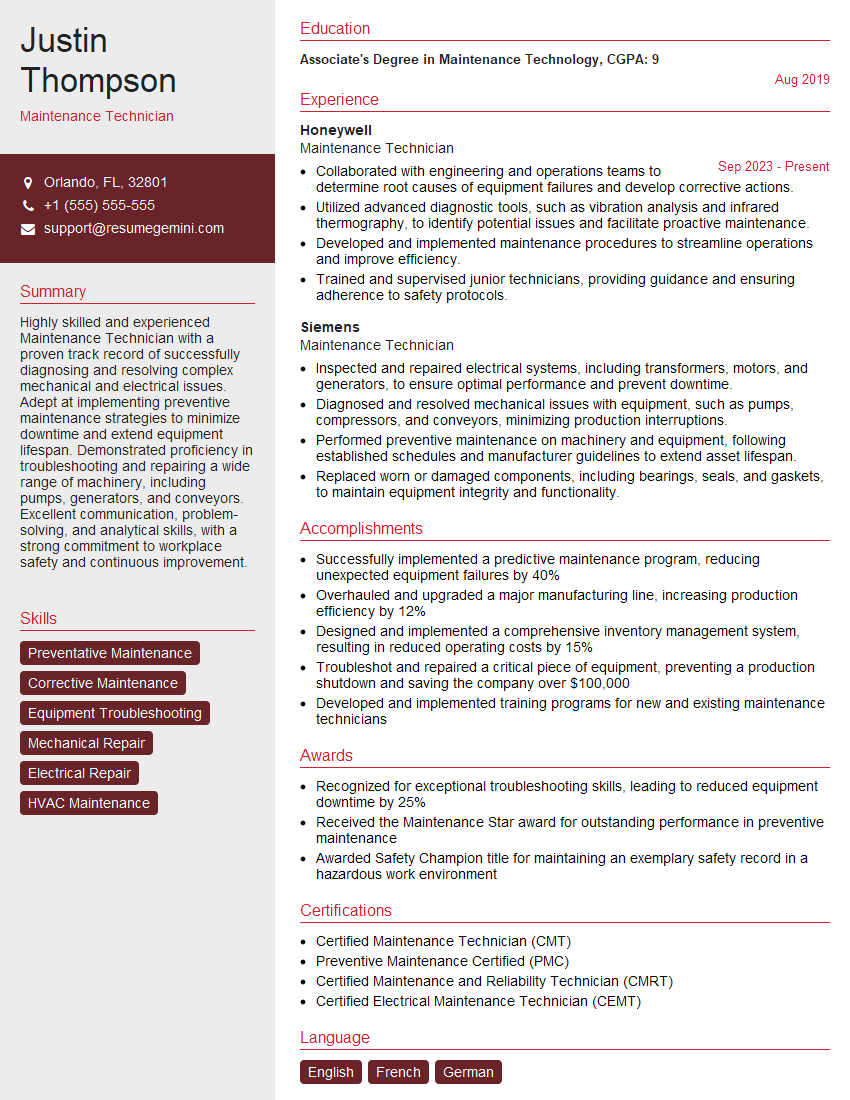
Maintenance Technician Resume Sample

Maintenance Engineer Resume Sample

Field Service Technician Resume Sample

Maintenance Associate Resume Sample
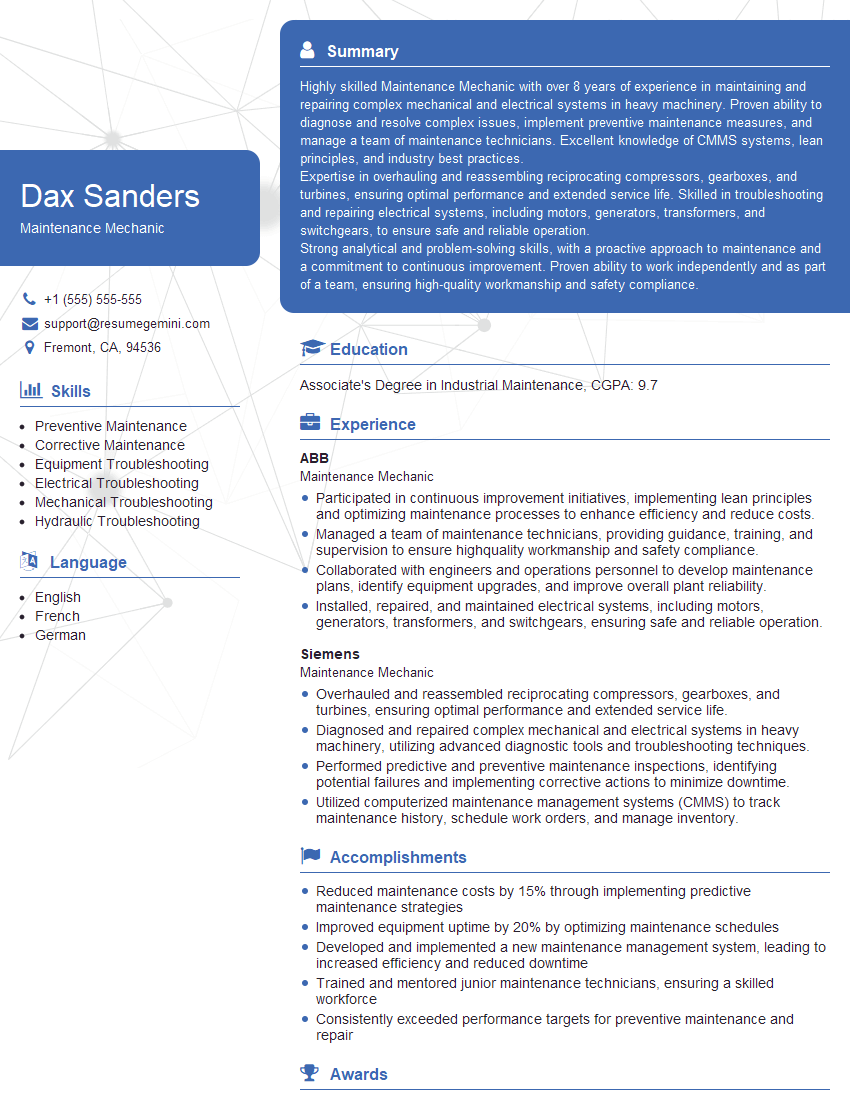
Maintenance Mechanic Resume Sample

Facilities Maintenance Manager Resume Sample
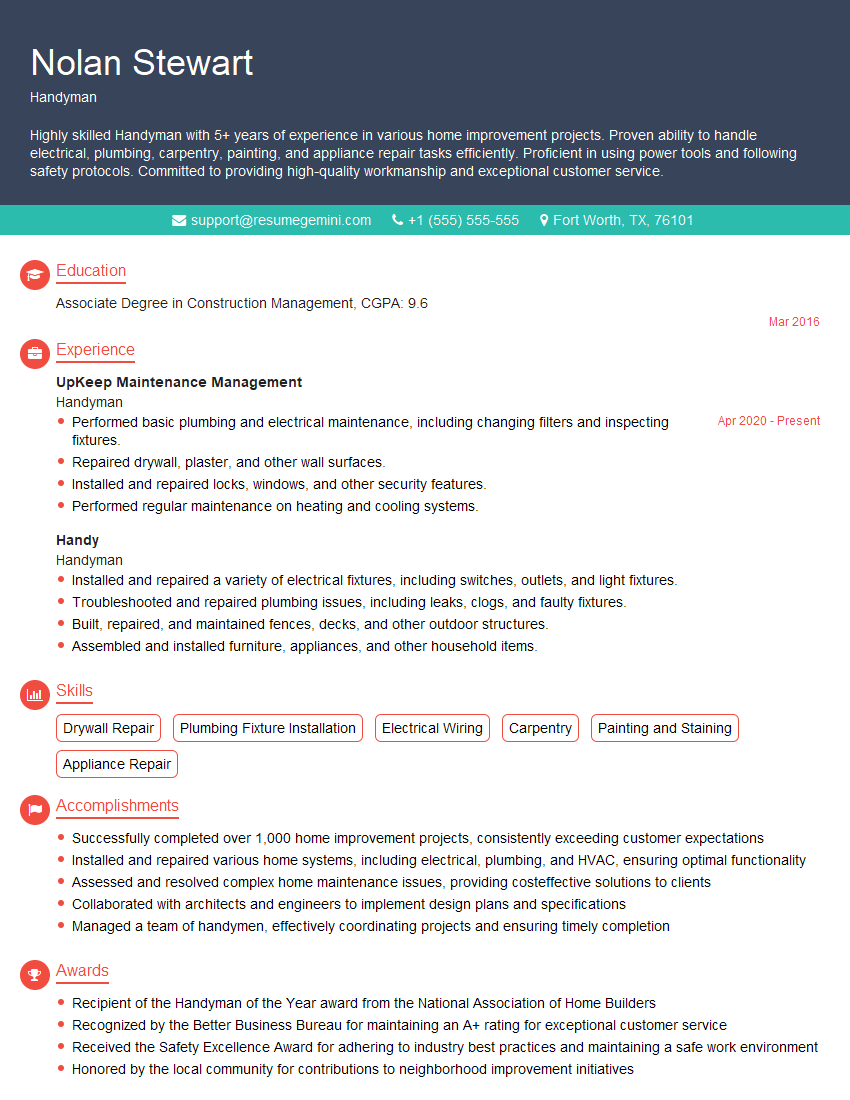
Handyman Resume Sample
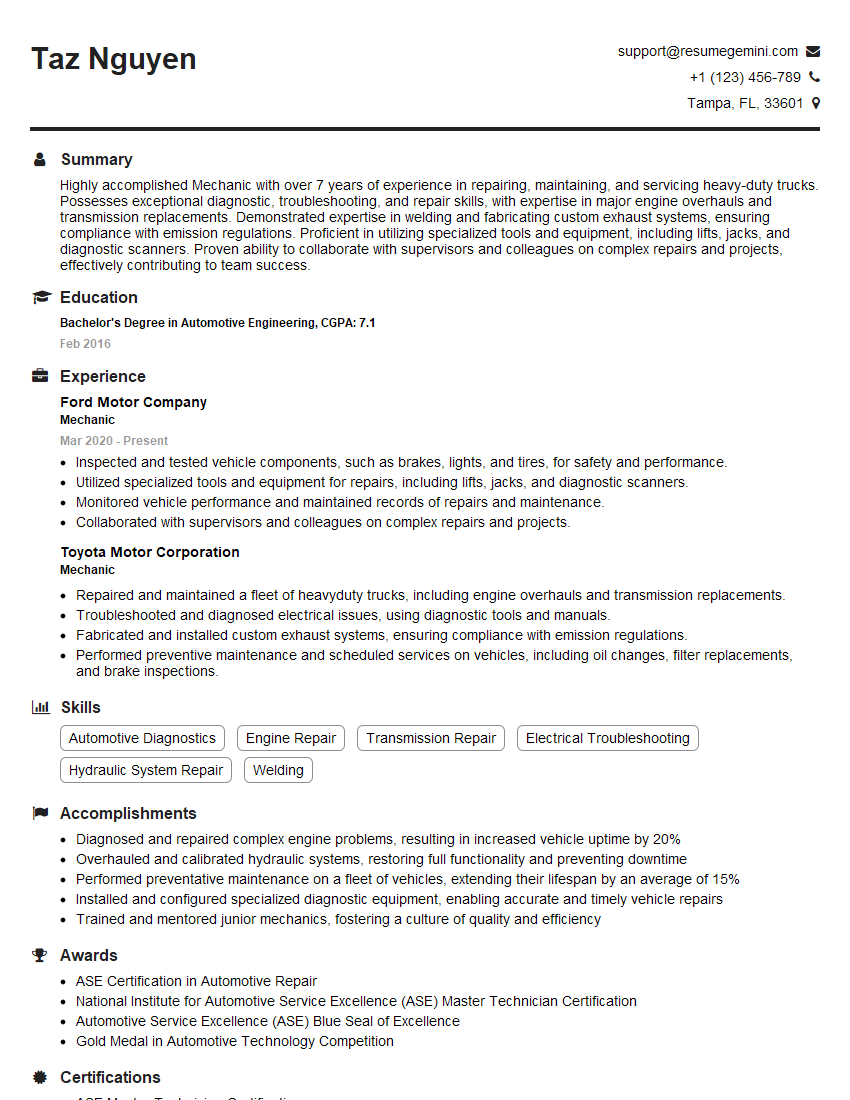
Mechanic Resume Sample

Maintenance Coordinator Resume Sample

Repair Technician Resume Sample

Facility Maintenance Technician Resume Sample
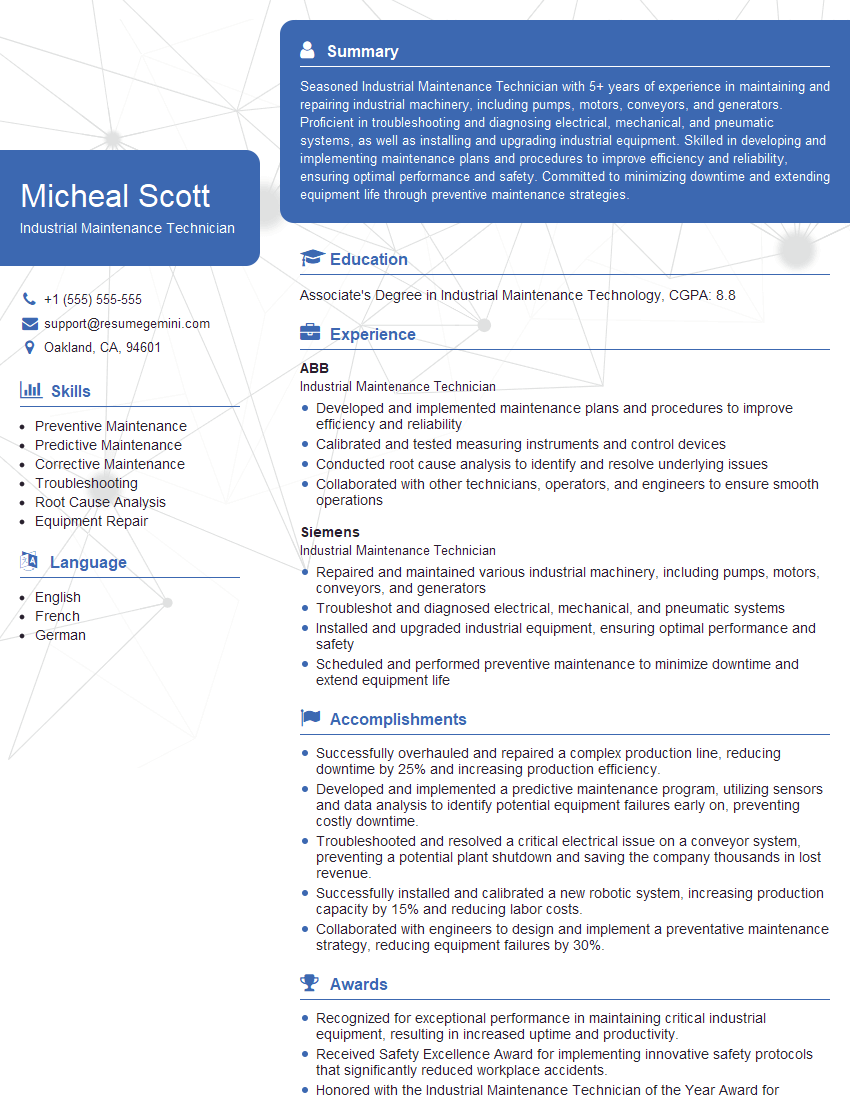
Industrial Maintenance Technician Resume Sample

Plant Maintenance Technician Resume Sample

Maintenance Helper Resume Sample
- Maintenance Planner
- Maintenance Supervisor
- Maintenance Technician
- Maintenance Engineer
- Field Service Technician
- Maintenance Associate
- Maintenance Mechanic
- Facilities Maintenance Manager
- Handyman
- Mechanic
- Maintenance Coordinator
- Repair Technician
- Facility Maintenance Technician
- Industrial Maintenance Technician
- Plant Maintenance Technician
- Maintenance Helper
Explore more articles
Users Rating of Our Blogs
Share Your Experience
We value your feedback! Please rate our content and share your thoughts (optional).
What Readers Say About Our Blog
Very informative content, great job.
good