Feeling uncertain about what to expect in your upcoming interview? We’ve got you covered! This blog highlights the most important Proficient in various musical styles interview questions and provides actionable advice to help you stand out as the ideal candidate. Let’s pave the way for your success.
Questions Asked in Proficient in various musical styles Interview
Q 1. Describe your proficiency in different musical genres (e.g., classical, jazz, pop, rock).
My musical proficiency spans a wide range of genres, each demanding a unique skill set. In classical music, I’m comfortable with intricate counterpoint, orchestration, and the nuances of period performance practice. My experience includes performing works from Bach to contemporary composers. In jazz, I’m adept at improvisation, understanding complex chord progressions, and applying various harmonic and rhythmic concepts like bebop scales and swing feel. I’ve performed in jazz combos and big bands, focusing on styles from swing to modal jazz. My pop and rock experience centers around songwriting, arranging, and production. This includes understanding contemporary recording techniques, working with various instruments and vocal styles, and producing commercially viable tracks. I am proficient in using DAWs like Logic Pro X and Ableton Live for recording and mixing. I also have a background in music theory that underpins my abilities across all genres.
Q 2. Explain the theoretical differences between major and minor keys.
The difference between major and minor keys lies primarily in their characteristic intervals. A major key is built on a major scale, characterized by a pattern of whole and half steps: W-W-H-W-W-W-H (W = whole step, H = half step). This creates a bright, uplifting sound. For example, C major uses the notes C-D-E-F-G-A-B-C. A minor key, in contrast, uses a minor scale, with the pattern W-H-W-W-H-W-W. This produces a darker, often more melancholic or introspective sound. The relative minor of C major is A minor (A-B-C-D-E-F-G-A). The third degree is crucial: a major third creates a major key, while a minor third creates a minor key. This difference in the third interval fundamentally alters the emotional character of the music.
Q 3. How would you arrange a simple melody for a string quartet?
Arranging a simple melody for a string quartet involves considering the unique timbral qualities of each instrument – violin I, violin II, viola, and cello. I’d start by assigning the melody to the violin I, given its higher range and brighter tone. Violin II could play a supporting harmony, possibly an octave lower or a countermelody that complements the main line. The viola, with its richer, mellower tone, could provide a harmonic foundation, playing chords or a bass line. Finally, the cello, with its deep resonant sound, could anchor the harmony, providing a solid bassline and low-register harmonies. The arrangement would need to account for the range of each instrument, ensuring that the parts are comfortable and idiomatic. I might introduce some contrapuntal textures in sections to add complexity. The specific arrangement would depend on the style and character of the melody itself; a simple folk tune might require a different approach than a more complex classical melody.
Q 4. What are the common characteristics of Baroque music?
Baroque music (roughly 1600-1750) is characterized by several key features. One is the prevalence of elaborate ornamentation and counterpoint. Composers often used multiple independent melodic lines interwoven together to create complex textures. Think of Bach’s fugues, where multiple voices enter sequentially, stating and developing the same theme. Another characteristic is the use of basso continuo, a continuous bass line usually played by a cello or bassoon, accompanied by a harpsichord that provided harmony and rhythmic drive. The style also features terraced dynamics (sudden shifts between loud and soft) rather than gradual changes in volume and a preference for elaborate ornamentation, often added to the main melodic lines. Finally, a sense of grandeur and formality is typical of much Baroque music, reflecting the aristocratic patronage of the era.
Q 5. Explain the rhythmic complexities of Afro-Cuban music.
Afro-Cuban music features a complex interplay of rhythms, often employing syncopation (accents on off-beats) and polyrhythms (multiple rhythmic patterns played simultaneously). The clave, a rhythmic pattern typically played on percussion instruments like claves or congas, serves as the foundational rhythmic structure, shaping the phrasing and rhythmic interactions of other instruments. Common polyrhythmic combinations include 3 against 2, 2 against 3, and various combinations involving hemiolas (a rhythmic displacement where a grouping of three beats is perceived as two, or vice versa). These polyrhythmic patterns create a sense of rhythmic complexity and drive that is central to the style. For example, the rhythmic interaction between the tresillo (a three-note rhythmic figure) and the clave is a fundamental element in many Afro-Cuban rhythms.
Q 6. How would you approach composing music for a specific film scene?
Composing music for a specific film scene requires a close collaboration with the director and understanding the emotional tone and narrative arc of the scene. I would begin by carefully reviewing the scene, identifying key moments and emotions that need to be underscored musically. I might consider the visual elements, such as lighting, camera angles, and the actors’ performances to gauge the desired atmosphere. My compositional choices would reflect the scene’s mood— a suspenseful scene might call for dissonant harmonies and a gradual crescendo, while a romantic scene might demand a lyrical melody with soft dynamics. I would experiment with instrumentation and tempo to create the most effective emotional impact. The music should work seamlessly with the visual elements to enhance and elevate the narrative, avoiding being intrusive or overshadowing the dialogue or visuals. Ultimately, the goal is to create a cohesive and effective musical experience that strengthens the scene’s overall impact.
Q 7. Discuss the role of harmony in various musical styles.
Harmony plays a crucial role in shaping the character and emotional impact of music across all styles. In classical music, harmony is often complex and sophisticated, with extensive use of counterpoint and chromaticism (notes outside the key) to create dramatic tension and resolution. In jazz, harmony is extremely important. It often involves complex chord progressions, alterations, and substitutions, providing a foundation for improvisation. Pop music frequently uses simpler, more diatonic harmonies, relying on strong chord progressions and catchy melodies to create appeal. In rock music, harmony plays a similar role but often incorporates power chords (chords built on the root, fifth, and octave) to achieve a heavier, more driving sound. In each instance, harmony provides both structural organization and expressive power, guiding the listener’s emotional response and creating a coherent musical experience. The specific harmonic techniques used depend heavily on the style and desired aesthetic.
Q 8. What are your preferred music notation software and hardware?
My preferred notation software is Sibelius, for its powerful score editing capabilities and intuitive interface. It excels at handling complex orchestral scores and offers a wide array of customization options. For simpler projects or quick sketches, I also use Dorico, known for its efficient workflow and excellent engraving features. In terms of hardware, a high-resolution monitor is essential for detailed score viewing, and a comfortable, ergonomic keyboard and mouse are crucial for prolonged work sessions. A graphics tablet can be beneficial for more nuanced input and creating custom notation elements.
Q 9. Describe your experience with music production techniques.
My music production experience spans a variety of techniques. I’m proficient in digital audio workstations (DAWs) such as Ableton Live and Logic Pro X, utilizing them for multitrack recording, mixing, mastering, and sound design. I’m comfortable with various techniques, including:
- Multitrack Recording: Simultaneously recording multiple instruments or vocal parts to create layered soundscapes.
- Mixing: Balancing levels, EQing, compression, and applying effects to create a cohesive and professional-sounding mix.
- Mastering: The final stage of production where the overall dynamics and loudness are optimized for different playback systems.
- Sound Design: Creating unique sounds using synthesizers, samplers, and other digital tools, often employing techniques like granular synthesis and wavetable manipulation.
- Audio Restoration: Cleaning up recordings, reducing noise and hiss, and enhancing the audio quality of older recordings.
For example, in a recent project, I used Ableton Live’s session view to experiment with different arrangements before committing to a final structure. Then, I used Logic Pro X’s advanced mixing tools to create a polished and balanced final product.
Q 10. How do you approach troubleshooting technical issues during a recording session?
Troubleshooting technical issues during a recording session requires a systematic approach. My first step is to isolate the problem. Is it a hardware issue, a software glitch, or a problem with the signal chain? I’ll then follow these steps:
- Check connections: Make sure all cables are securely connected and that any necessary power supplies are functioning correctly.
- Restart equipment: A simple reboot can often resolve minor software or hardware glitches.
- Check signal levels: Ensure that input and output levels are within the appropriate range, avoiding clipping or excessive noise.
- Test individual components: If a problem persists, I’ll isolate each component in the signal chain—microphone, preamp, interface, DAW—to pinpoint the source of the issue.
- Consult documentation or online resources: If the problem seems complex, consulting manuals or online forums can often provide solutions.
- Seek external help: If all else fails, contacting technical support or seeking assistance from a colleague can resolve difficult issues.
For example, once I encountered a persistent hum during recording, tracing the problem back to a faulty power supply on a microphone preamp.
Q 11. Explain your understanding of music theory and its practical application.
Music theory is fundamental to my work. My understanding encompasses:
- Harmony: Understanding chord progressions, voice leading, and how to create satisfying and expressive harmonic structures. I can analyze and compose using various harmonic styles, from simple diatonic progressions to complex chromaticism.
- Melody: Understanding melodic contour, phrasing, and rhythm, and how to create memorable and engaging melodies. I utilize various melodic techniques including sequence, variation and imitation.
- Rhythm and Meter: A solid grasp of rhythmic notation and meter changes allows me to create dynamic and interesting rhythmic patterns.
- Form and Structure: I’m proficient in various musical forms, such as sonata form, rondo, and through-composed forms, and understand how to create well-structured and compelling compositions.
The practical application is extensive. For instance, understanding harmony enables me to arrange music effectively, crafting interesting parts for individual instruments while maintaining overall balance and coherence. A strong foundation in rhythm helps me create grooves that are both engaging and technically sound. Knowledge of form ensures my compositions have a satisfying arc and build to meaningful climaxes.
Q 12. Describe your experience with different musical instruments.
My instrumental experience is quite diverse. I’m a proficient pianist, having studied classical piano for many years. This provides a strong foundation for understanding harmony, counterpoint, and overall musical structure. I also play guitar, both acoustic and electric, allowing for a more immediate approach to songwriting and improvisation. My experience extends to basic proficiency with bass guitar and drums, enabling effective collaboration and arrangement in band settings. Additionally, I have a working knowledge of various woodwind instruments, which enhances my ability to understand and write parts for a wider range of instrumentation.
Q 13. How would you adapt your musical style to suit a particular audience?
Adapting my musical style to a particular audience requires careful consideration of several factors including the audience’s age, musical preferences, and the context of the performance. This might involve adjusting several elements:
- Tempo and Dynamics: A more energetic tempo might be suitable for a younger audience, whereas a slower, more nuanced approach might be preferred for a more mature audience.
- Instrumentation and Arrangement: Simplifying arrangements or using more accessible instruments can make the music more approachable for a broader audience.
- Genre and Style: Incorporating elements of the audience’s preferred genre into my music can make it more relatable and enjoyable.
- Lyrics and Themes: Choosing lyrics and themes that resonate with the audience’s interests and experiences increases engagement.
For example, when performing for children, I might incorporate playful melodies and simple rhythms, whereas a more sophisticated and nuanced style would be appropriate for a classical music concert.
Q 14. What are some of your favorite musical influences and how have they shaped your style?
My musical influences are vast and varied. Early exposure to classical composers like Bach and Beethoven instilled a deep appreciation for structure and form. Later, I discovered jazz artists like Miles Davis and John Coltrane, who showed me the expressive potential of improvisation. Contemporary artists such as Radiohead and Bon Iver have broadened my horizons, showing me how to blend genres and create innovative soundscapes. These influences have combined to shape my style, allowing me to incorporate the elegance of classical composition, the improvisation of jazz, and the experimental spirit of modern music into my own unique voice.
Q 15. Discuss your experience with music copyright and licensing.
Music copyright and licensing are crucial aspects of the music industry, protecting creators’ rights and allowing for legal use of their work. Copyright protects the original composition, arrangement, and recording of a musical work. Licensing grants permission to use copyrighted music under specific terms, often involving fees or royalties. My experience encompasses understanding various licensing types, such as mechanical licenses (for reproducing and distributing recordings), synchronization licenses (for using music in film or video), and performance licenses (for public performances). I’m familiar with navigating organizations like ASCAP, BMI, and SESAC, understanding their processes and ensuring compliance with copyright law. For instance, I recently secured a synchronization license for a client’s original composition to be used in a national advertising campaign, carefully negotiating terms to protect both the client’s and the composer’s interests.
I understand the nuances of different licensing agreements, including royalty structures, territorial restrictions, and duration of use. I also have experience navigating the complexities of sample clearances, which involves securing permission to use pre-existing recordings in a new composition. This often includes researching copyright holders and negotiating appropriate compensation. Understanding these legal frameworks ensures that all music projects are ethically and legally sound.
Career Expert Tips:
- Ace those interviews! Prepare effectively by reviewing the Top 50 Most Common Interview Questions on ResumeGemini.
- Navigate your job search with confidence! Explore a wide range of Career Tips on ResumeGemini. Learn about common challenges and recommendations to overcome them.
- Craft the perfect resume! Master the Art of Resume Writing with ResumeGemini’s guide. Showcase your unique qualifications and achievements effectively.
- Don’t miss out on holiday savings! Build your dream resume with ResumeGemini’s ATS optimized templates.
Q 16. Explain your familiarity with music publishing and distribution.
Music publishing involves the administration and management of the copyright for a musical composition. This encompasses securing performance and mechanical licenses, collecting royalties, and promoting the use of the work. Distribution, on the other hand, focuses on making the music available to consumers through various channels, such as streaming platforms, physical media, and digital downloads. My familiarity spans both sides. I understand the publishing process from securing a songwriter’s agreement to distributing their work to various platforms. I have worked with publishers to develop marketing strategies for published works, and I’ve used digital distribution platforms to release my own music. For example, I helped an artist navigate the complexities of signing a publishing deal, ensuring fair terms and understanding the implications of different contract clauses. This included overseeing royalty accounting and managing the overall usage of their catalogue.
In terms of distribution, I’m proficient in utilizing platforms like DistroKid, TuneCore, and CD Baby to maximize an artist’s reach and ensure efficient royalty collection. Understanding metadata optimization and digital marketing is key to successful distribution. I have helped artists reach new listeners through strategic placement on playlists, social media campaigns, and collaborations with other artists.
Q 17. How would you create a compelling music arrangement for a commercial?
Creating a compelling arrangement for a commercial requires a deep understanding of both the product being advertised and the target audience. It starts with carefully analyzing the commercial’s script and visuals, identifying the emotional tone and message. The music should amplify this message, not compete with it. I’d begin by defining the overall mood – is it upbeat and energetic, or sophisticated and calm? Then, I would choose instrumentation that suits this mood and the overall visual aesthetic. For instance, a commercial for a rugged outdoor brand might use acoustic guitars and banjos, while a luxury car advertisement might feature a string orchestra and piano.
The arrangement itself needs to be memorable and concise. Commercial music often needs to be short, impactful, and instantly recognizable. I would focus on creating a strong melodic hook and incorporating sonic elements that reflect the brand identity. Finally, I would meticulously ensure the arrangement seamlessly integrates with the visuals, complementing the pacing and flow of the commercial. This may involve creating custom cues or editing existing compositions to precisely fit the timeline.
For example, if the commercial shows a fast-paced action sequence, the music would use driving rhythms and fast tempos, possibly incorporating percussion and brass. Conversely, if the commercial is showcasing a tranquil scene, a slow tempo with gentle melodies played by strings and woodwinds would be more appropriate.
Q 18. Describe your process for composing a piece of music from start to finish.
My composition process is iterative and often begins with an idea, perhaps a melody, rhythm, or a specific emotional concept. This initial spark can come from anywhere – a conversation, a piece of art, or even a dream. I then develop this idea further using various techniques. This might involve sketching melodic phrases on a piano or guitar, experimenting with different harmonic progressions, or recording basic rhythmic ideas on a drum machine. I often utilize digital audio workstations (DAWs) like Logic Pro X or Ableton Live to capture and arrange these initial ideas.
The next stage involves shaping the overall structure and form of the piece. This is a crucial step where the initial sketches are refined and organized into a cohesive whole. I might use traditional musical forms, like sonata form or rondo, or create a more free-flowing structure based on the emotional arc of the piece. During this process, experimentation is key. I might try different instrumentation, timbres, or textures to find the soundscape that best expresses the underlying concept. Once the structure and instrumentation are finalized, I’ll focus on fine-tuning details, such as dynamics, articulation, and orchestration, to bring the piece to life. The final stage includes mixing and mastering to ensure the highest possible audio quality.
For example, if I were composing a melancholic piece, I might start with a simple piano melody in a minor key. I’d then build on this melody, adding layers of harmony and countermelody. I might introduce strings to create a sense of depth and emotion, and incorporate subtle percussion to create rhythmic interest without overpowering the main melodic ideas. The entire process is highly subjective and involves significant experimentation and revision.
Q 19. What are some common challenges in music production and how do you overcome them?
Music production presents numerous challenges. One common issue is creative block, where inspiration seems to dry up. To overcome this, I often step away from the project, engage in other creative pursuits, or actively seek inspiration from diverse sources like nature, literature, or other art forms. Another challenge is technical difficulties, such as computer crashes, software glitches, or equipment malfunctions. Having backup systems and a thorough understanding of the technology I use helps minimize downtime and maintain momentum. Balancing artistic vision with technical limitations can also be difficult. Sometimes, a desired sonic effect is not technically feasible. In such cases, I explore creative workarounds, utilizing various mixing and mastering techniques to achieve the desired outcome.
Another major hurdle is budget constraints. The need to balance quality with cost is frequent, therefore, resource management and efficient workflow are essential. I achieve this through careful planning, prioritizing tasks, and leveraging efficient production techniques. Finally, collaboration difficulties can arise when working with multiple artists. Clear communication, setting realistic expectations, and fostering mutual respect are crucial to smooth collaboration.
Q 20. How do you maintain accuracy and efficiency in a fast-paced music environment?
Maintaining accuracy and efficiency in a fast-paced environment requires a combination of strong organizational skills, meticulous planning, and effective time management. I use project management tools to track deadlines, prioritize tasks, and allocate resources effectively. For example, I might use a Kanban board or a Gantt chart to visualize my workflow and ensure that tasks are completed on time. I also prioritize tasks based on their importance and urgency, ensuring that critical elements are addressed first. Automation plays a role too; I use automation tools to streamline repetitive tasks and free up time for creative work.
Proactive planning is crucial. This involves creating detailed production schedules that account for potential delays or unforeseen circumstances. I carefully estimate the time needed for each stage of the production process and build in buffer time to handle unexpected issues. Furthermore, attention to detail is paramount. This includes meticulous checking of audio levels, timing, and other technical aspects to ensure accuracy and prevent errors. Constant self-reflection and evaluation of my workflow helps me identify areas for improvement and refine my processes over time.
Q 21. How would you collaborate effectively with musicians from diverse backgrounds?
Collaborating effectively with musicians from diverse backgrounds requires a high level of cultural sensitivity, open-mindedness, and respect. I begin by actively listening to and valuing each musician’s unique perspectives and contributions. I recognize that diverse musical backgrounds bring a rich tapestry of sounds and ideas. I actively encourage open communication channels, creating an environment where everyone feels comfortable expressing their ideas and concerns. I strive to understand each musician’s artistic vision and integrate it with the overall project goals. This involves engaging in open dialogue to find common ground and build consensus.
Respecting individual work styles is paramount. This means adapting my approach to accommodate the preferences and working styles of different collaborators. For example, some musicians may prefer detailed written instructions, while others thrive in a more spontaneous and improvisational setting. Recognizing these differences ensures that everyone feels comfortable and productive. Utilizing clear and concise communication channels, whether it be email, video conferencing, or in-person meetings, ensures that everyone is on the same page and any misunderstandings are addressed promptly. Ultimately, successful collaboration is built on mutual respect, understanding, and appreciation for the unique talents of each individual.
Q 22. Explain your understanding of different music editing techniques.
Music editing is a multifaceted process involving various techniques to shape and refine audio. It’s like sculpting with sound, where you carefully refine raw material into a polished piece.
Cutting and Splicing: This fundamental technique involves removing unwanted sections and joining desirable parts. Think of it like editing a video, but with audio. For instance, removing a cough from a vocal track or creating seamless transitions between musical phrases. This often involves using tools like razor blades or crossfades within a Digital Audio Workstation (DAW).
Time Stretching and Pitch Shifting: These tools allow you to alter the tempo and pitch of audio without significantly affecting the quality. Imagine speeding up a drum loop to match a faster tempo or adjusting the pitch of a vocal to better fit a melody. Software like Melodyne excels in pitch correction and time manipulation, enabling precise control.
Automation: This involves automating changes in parameters over time, such as volume, pan, effects, or instrument levels. Think of it as adding dynamic movement to your sound. You might automate the volume of a synth to create a build-up effect or subtly pan instruments across the stereo field for a more immersive experience.
Effects Processing: Applying effects like reverb, delay, EQ, and compression can dramatically enhance the sonic quality. Reverb creates a sense of space; delay adds echoes; EQ shapes the tonal balance; and compression controls dynamic range. These are crucial tools for achieving a desired sonic character and improving clarity and punch.
Quantization: This technique aligns notes to a grid, helping to improve timing accuracy, particularly useful for correcting slightly off-beat performances. It’s like neatly arranging notes on a musical score to maintain rhythmic precision.
Q 23. How do you manage your time effectively when working on multiple musical projects?
Managing multiple musical projects demands a strategic approach to time management. I use a combination of tools and techniques to stay organized and productive.
Project Prioritization: I prioritize projects based on deadlines, client needs, and personal goals. Using a Kanban board or a simple to-do list helps visualize workflow and track progress.
Time Blocking: I allocate specific blocks of time for each project, focusing on one task at a time to minimize context switching. This helps maintain concentration and prevent distractions.
Detailed Planning: Before starting a project, I create a detailed plan outlining all the stages of production, from initial composition to final mastering. This creates a roadmap for effective time management.
Delegation (when possible): If a project allows, I delegate tasks that can be handled by others, freeing up my time to focus on tasks requiring my expertise.
Regular Breaks: I schedule regular breaks to avoid burnout. Short breaks throughout the day, coupled with longer breaks at appropriate intervals, help sustain focus and creativity.
Q 24. Describe your experience with live music performance.
Live performance is an integral part of my musical experience. I’ve performed in various settings, from intimate acoustic gigs to larger concerts with full bands. The energy of a live audience is electrifying and inspires a unique level of creativity.
Experience: My experience includes performances in various venues, ranging from small coffee shops to larger concert halls. I’ve also played alongside both established and upcoming artists. I’ve adapted my performance style to suit each context – tailoring setlists and stage presence accordingly.
Instrumentation: I’m proficient on multiple instruments including guitar, keyboard, and bass, which allows for flexibility and versatility in various performance settings. This also means I can adapt my role in a band depending on the needs of a particular project.
Collaboration: I’ve learned the value of effective collaboration with other musicians. Good communication and understanding of roles are key elements for a smooth and successful live performance.
Technical Aspects: I’m also familiar with the technical aspects of live sound, including setup, sound checking, and monitor mixing. This ensures a seamless performance without technical hitches.
Q 25. What are your preferred audio editing software and plugins?
My preferred audio editing software is Logic Pro X, known for its intuitive interface and powerful features. I also use Ableton Live for its strength in looping and live performance-oriented workflows. My go-to plugins include:
FabFilter Pro-Q 3: For precise and surgical equalization.
Waves plugins (various): Waves offers a wide range of effects, including compressors, reverbs, and EQs, known for their quality and versatility.
iZotope Ozone: A comprehensive mastering suite that simplifies the mastering process while delivering professional results.
Universal Audio plugins: UAD plugins emulate classic hardware, providing authentic and sought-after sounds. These are particularly useful for adding vintage warmth or character to recordings.
The choice of plugins often depends on the project’s specific requirements. I select plugins that are best suited to achieve the desired sonic outcome.
Q 26. Explain your approach to mixing and mastering music.
Mixing and mastering are crucial steps in the music production process. Mixing is like arranging individual instruments and vocals into a cohesive whole, while mastering is the final polish that prepares your song for release.
Mixing: My approach to mixing emphasizes achieving a balanced, clear, and impactful sonic landscape. This involves careful attention to detail, precise EQ and compression, and creative use of effects. I start by establishing a solid foundation with careful gain staging, ensuring that all elements sit well within the mix’s dynamic range. The goal is to create a mix that translates well across different playback systems.
Mastering: Mastering is the final stage where I prepare the mix for various playback platforms. This involves optimizing the overall dynamics, loudness, and frequency balance, ensuring it sounds its best across different systems. I use professional mastering tools like Ozone and focus on achieving a consistent level and a polished, radio-ready sound. This process requires a critical ear and a good understanding of the entire frequency spectrum.
Q 27. How do you use technology to enhance your musical creativity?
Technology plays a vital role in enhancing my musical creativity. It provides tools that expand sonic possibilities and streamline the workflow.
Virtual Instruments (VSTs): I use a wide range of VSTs (virtual studio technology) instruments that emulate real instruments or offer unique soundscapes. This significantly expands my sonic palette and allows me to experiment with sounds that might not be accessible through traditional instruments.
DAWs (Digital Audio Workstations): DAWs provide a flexible environment to record, edit, and arrange music. Features such as MIDI sequencing, automation, and a vast library of plugins help me bring my creative vision to life.
Sampling and Looping: Sampling and looping allow me to incorporate elements from existing recordings into my music, creating unique textures and melodies. I often use this as a creative springboard to experiment with different styles and sounds.
AI-powered tools: Emerging AI tools are also useful for tasks like melody generation and harmonic analysis, aiding the creative process in both composition and production.
Q 28. How do you stay current with the latest trends and developments in the music industry?
Staying current in the music industry is essential for any musician. I utilize a variety of methods to stay informed about the latest trends and developments.
Industry Publications: I regularly read industry magazines and online publications such as Billboard, Rolling Stone, and Music Business Worldwide to keep abreast of current trends and emerging artists.
Online Communities and Forums: Participating in online communities and forums focused on music production and industry news provides valuable insights and connects me with other professionals.
Music Streaming Platforms: I use music streaming services to discover new artists, genres, and production techniques. Paying attention to the success of various tracks and analyzing their production can reveal innovative approaches.
Conferences and Workshops: Attending music industry conferences and workshops offer opportunities for networking and learning about the latest technologies and trends directly from industry experts.
Following Key Players: I follow prominent producers, engineers, and artists on social media and through their websites to stay updated on their work and insights.
Key Topics to Learn for Proficient in Various Musical Styles Interview
- Genre Expertise: Demonstrate a deep understanding of diverse musical genres (e.g., classical, jazz, pop, rock, world music). This includes knowledge of their historical contexts, characteristic styles, and key composers/artists.
- Theoretical Knowledge: Articulate your understanding of music theory fundamentals, including scales, chords, harmony, rhythm, and melody. Be prepared to discuss how these elements interact within different genres.
- Practical Application: Showcase your ability to apply theoretical knowledge to practical musical scenarios. Be ready to discuss your experience composing, arranging, performing, or analyzing music across various styles.
- Aural Skills: Highlight your proficiency in recognizing and transcribing musical passages, identifying harmonic progressions, and analyzing rhythmic structures across diverse musical styles.
- Improvisation & Creativity: Explain your approach to improvisation and creative music-making, demonstrating adaptability and versatility in various musical contexts.
- Instrumentation & Technology: Discuss your familiarity with various instruments and music technologies relevant to different genres. This could include software, hardware, and recording techniques.
- Musical Analysis & Interpretation: Be prepared to discuss your approach to analyzing and interpreting musical works from different genres, considering historical, cultural, and stylistic factors.
- Collaboration & Teamwork: Highlight your experience collaborating with other musicians, demonstrating your ability to adapt to diverse musical perspectives and work effectively in a team.
Next Steps
Mastering proficiency in various musical styles significantly enhances your career prospects, opening doors to diverse opportunities in performance, composition, education, music production, and more. To maximize your chances, crafting a strong, ATS-friendly resume is crucial. ResumeGemini is a trusted resource to help you build a professional resume that effectively showcases your skills and experience. Examples of resumes tailored to highlight proficiency in various musical styles are available to guide you.
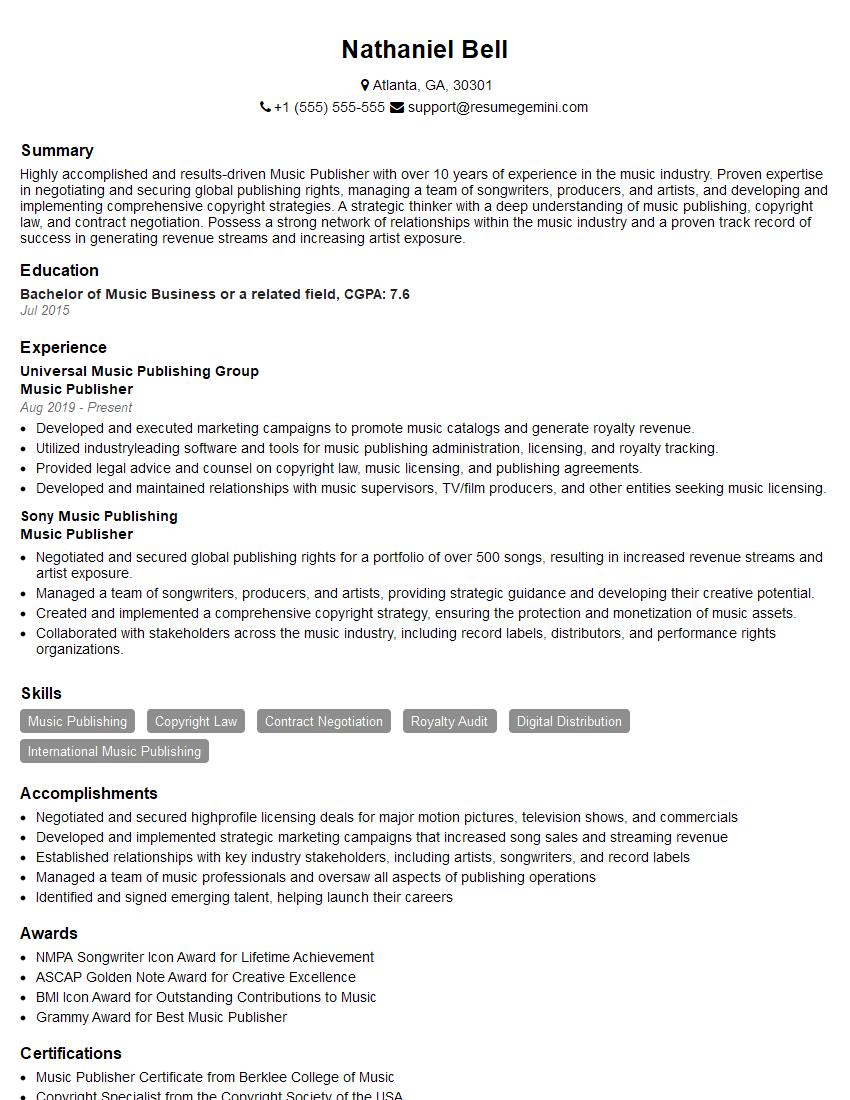
Music Publisher Resume Sample
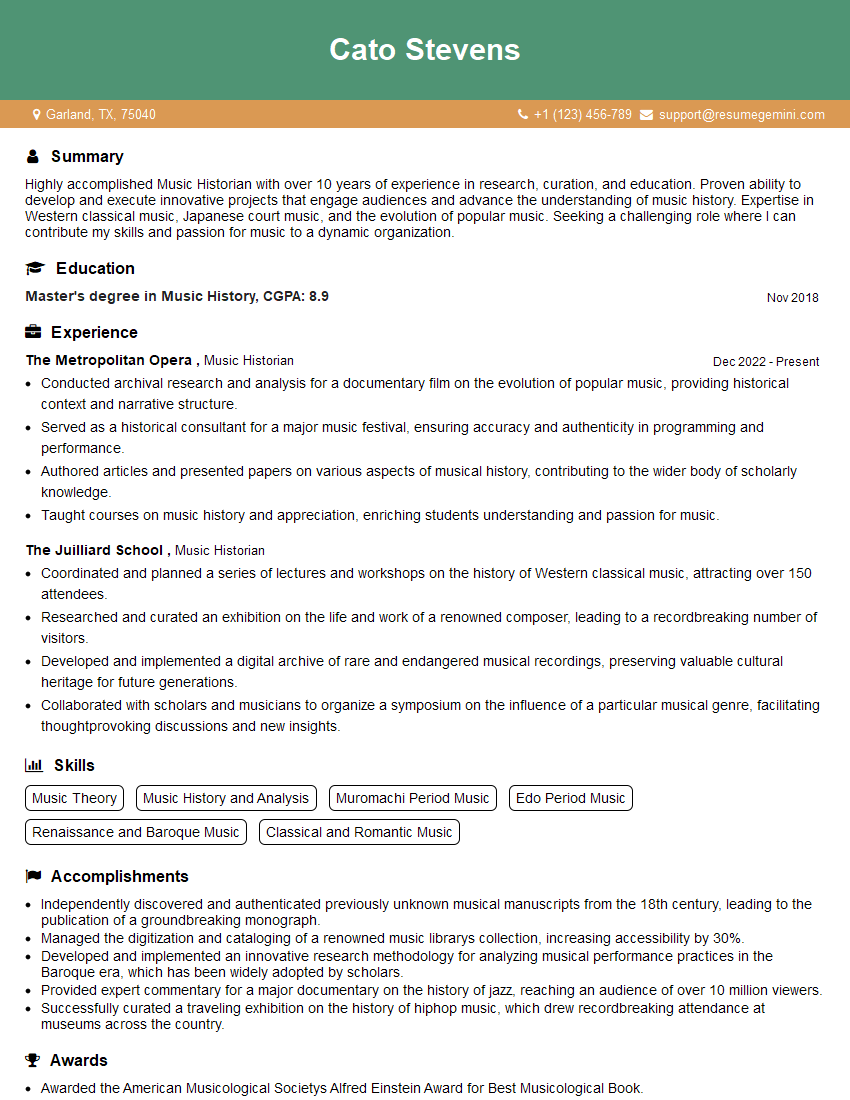
Music Historian Resume Sample
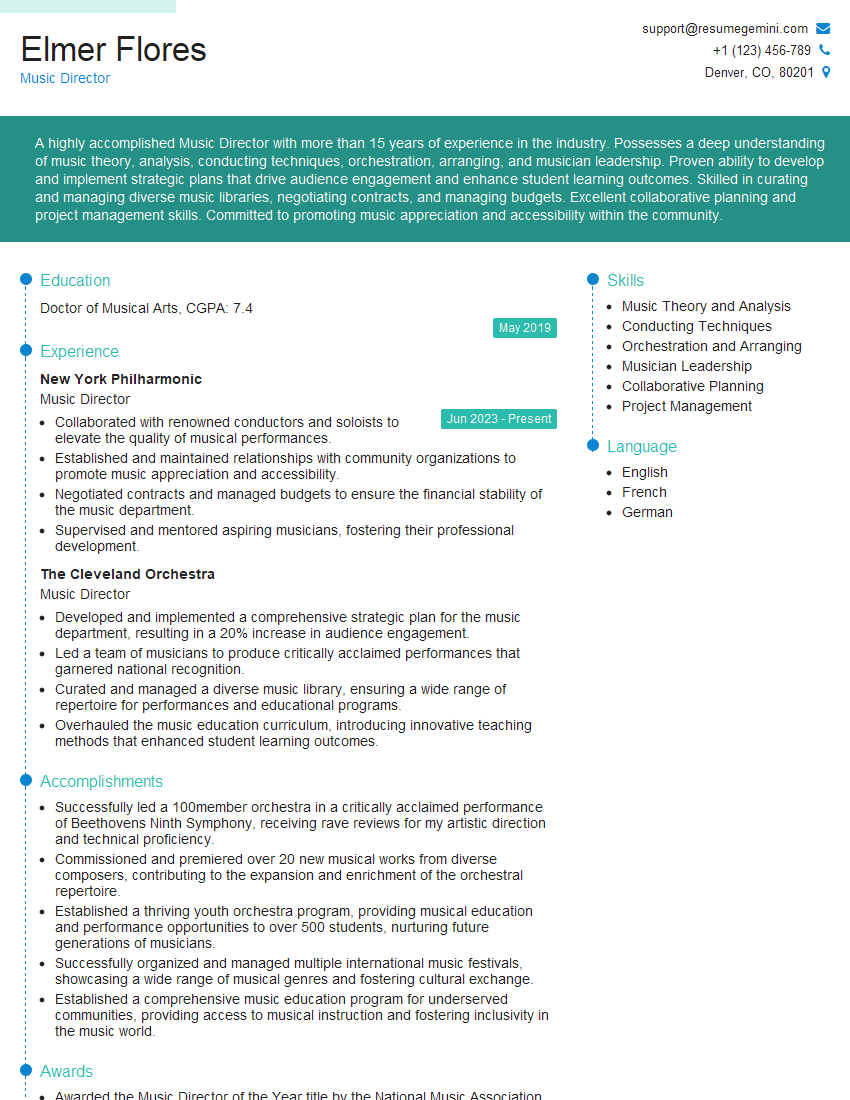
Music Director Resume Sample
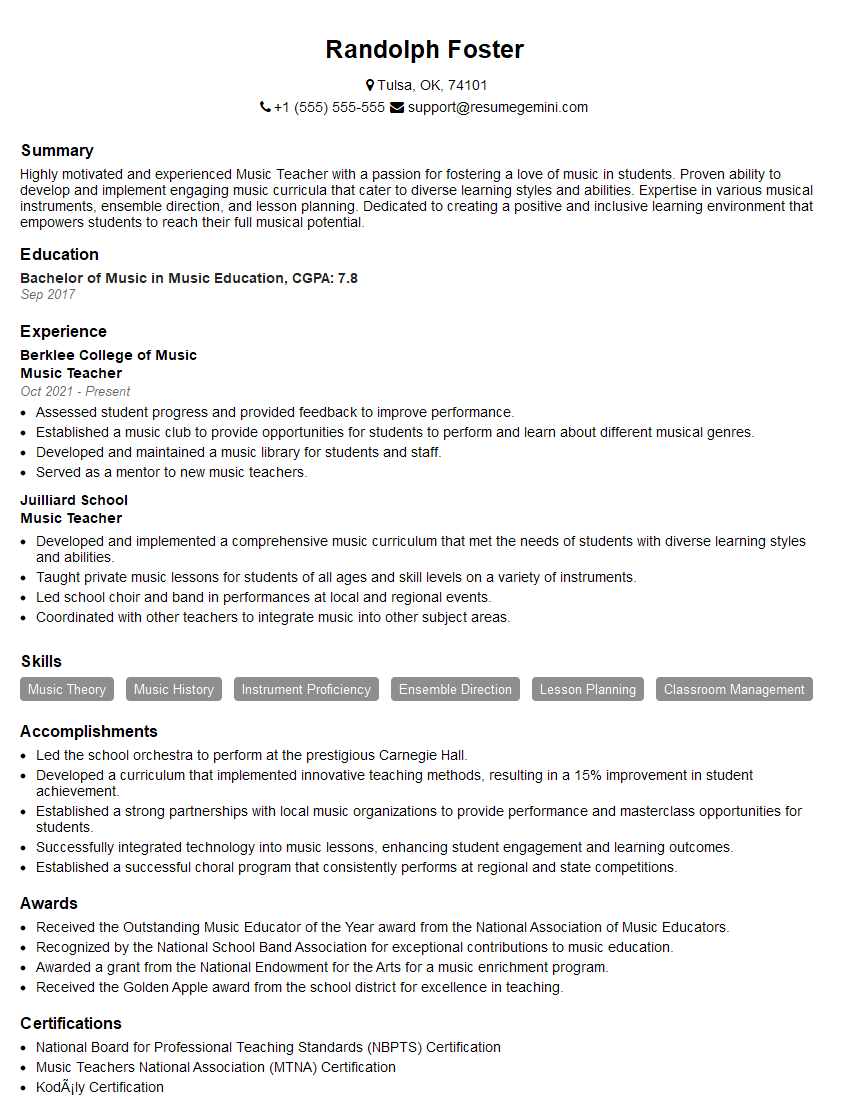
Music Teacher Resume Sample
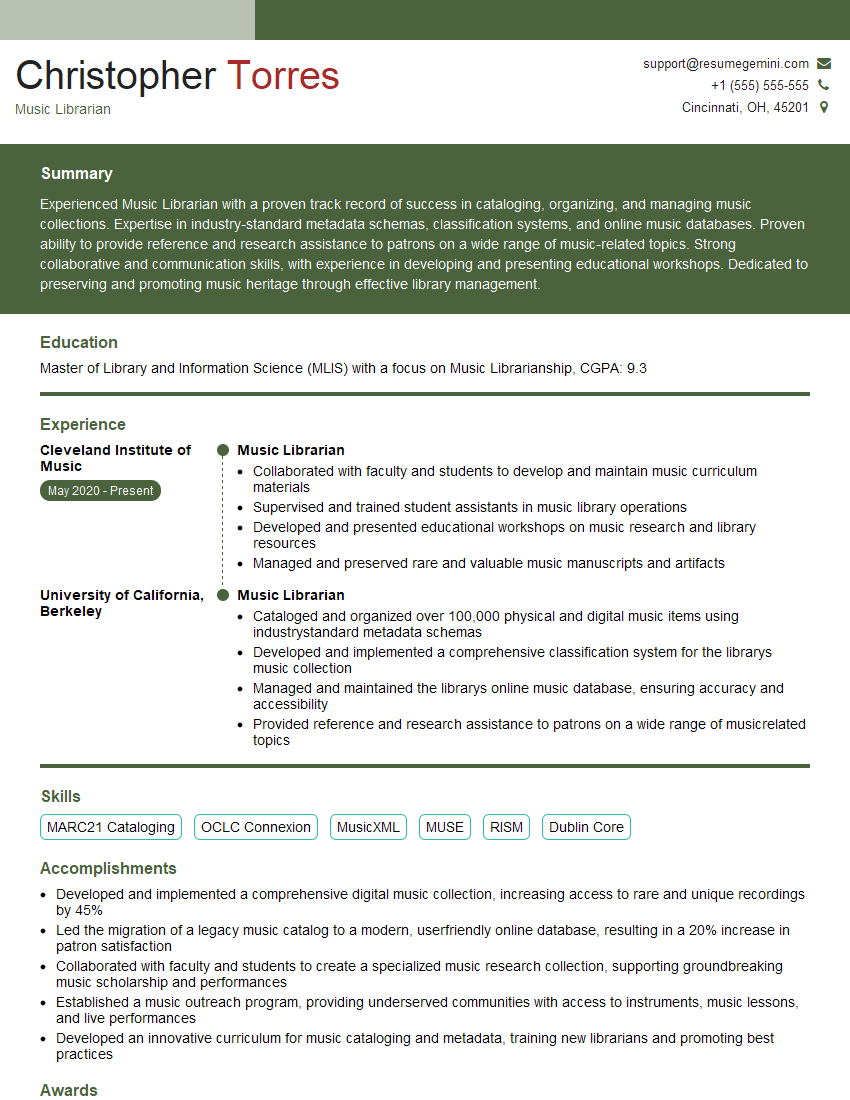
Music Librarian Resume Sample
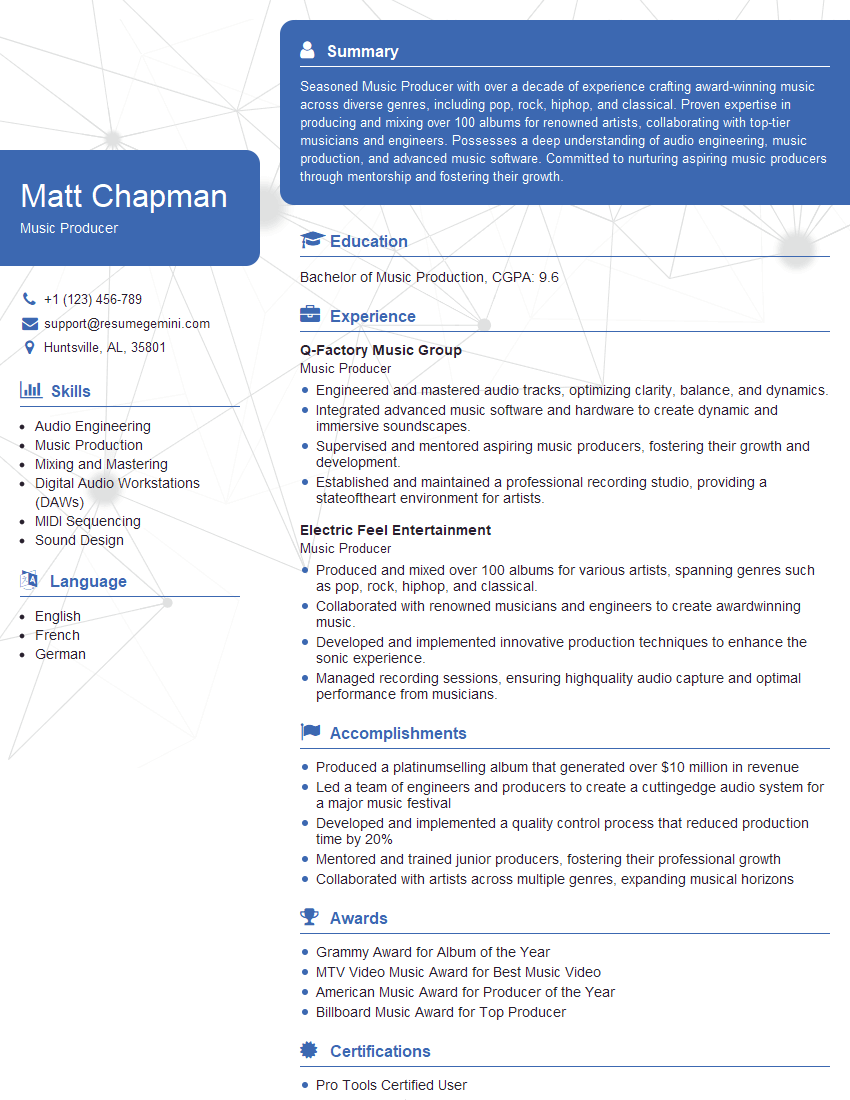
Music Producer Resume Sample
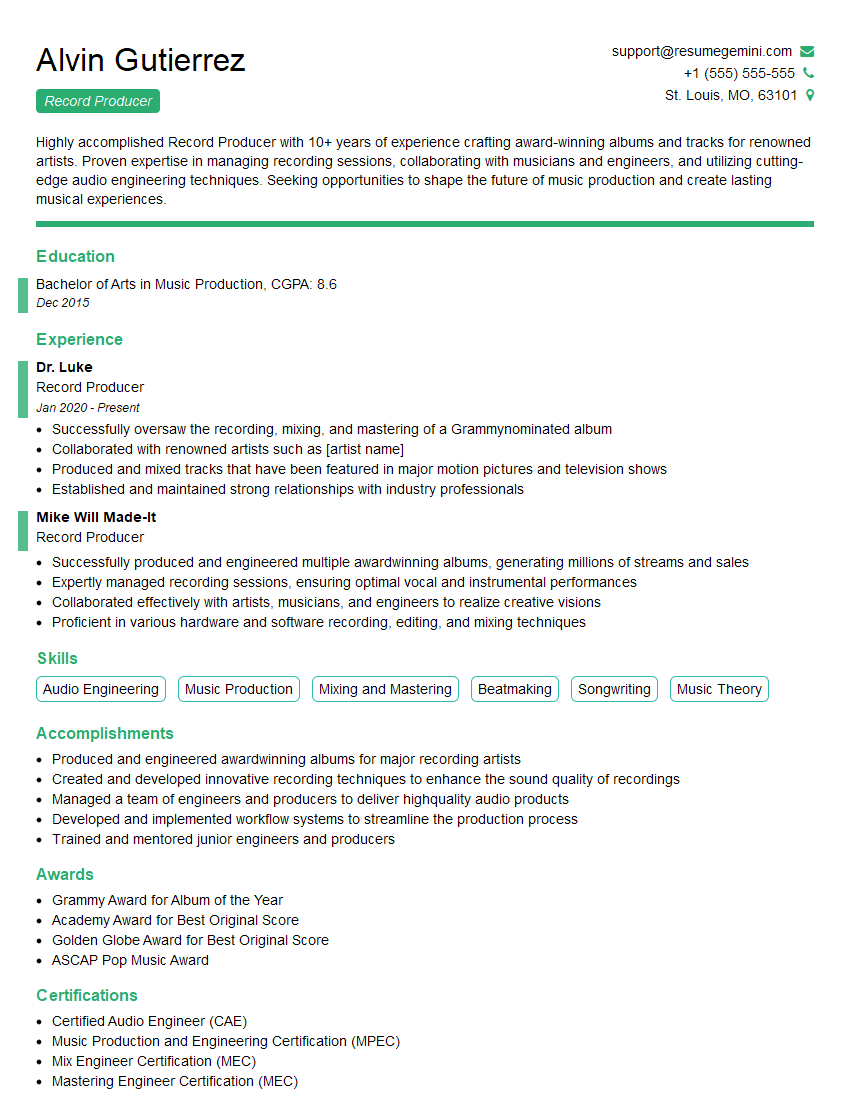
Record Producer Resume Sample
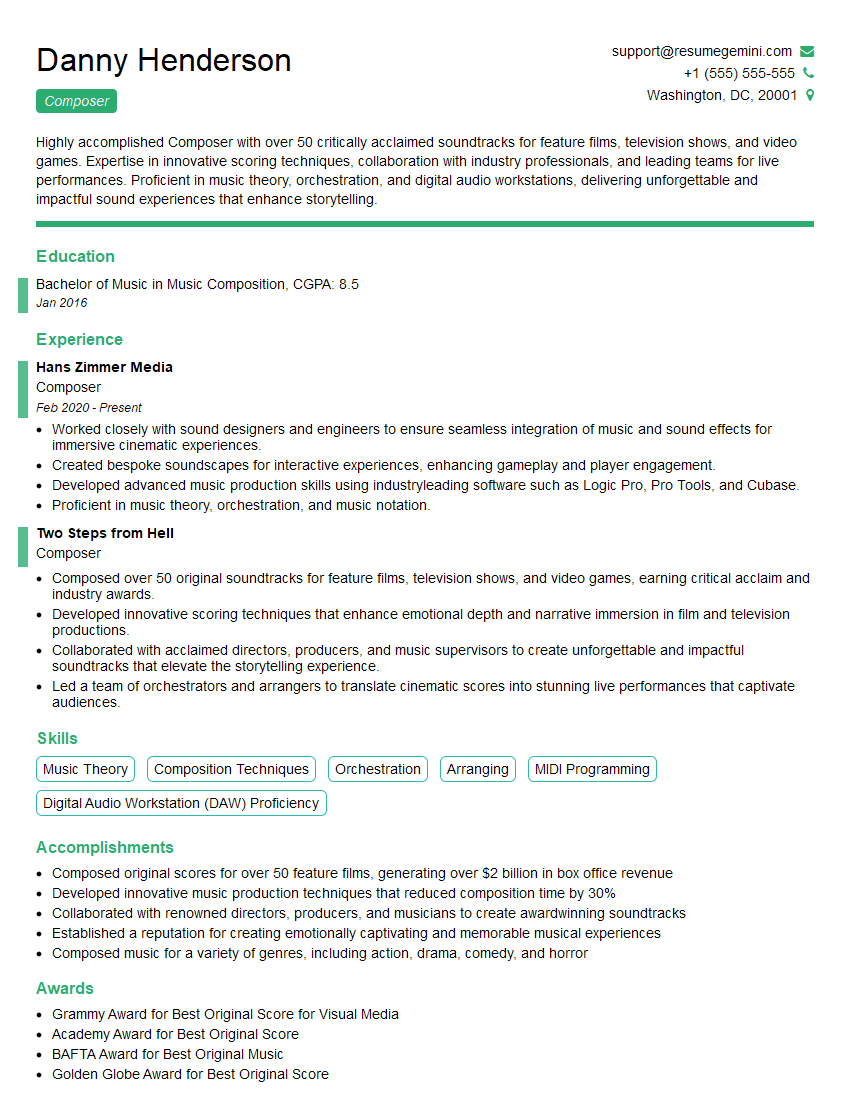
Composer Resume Sample
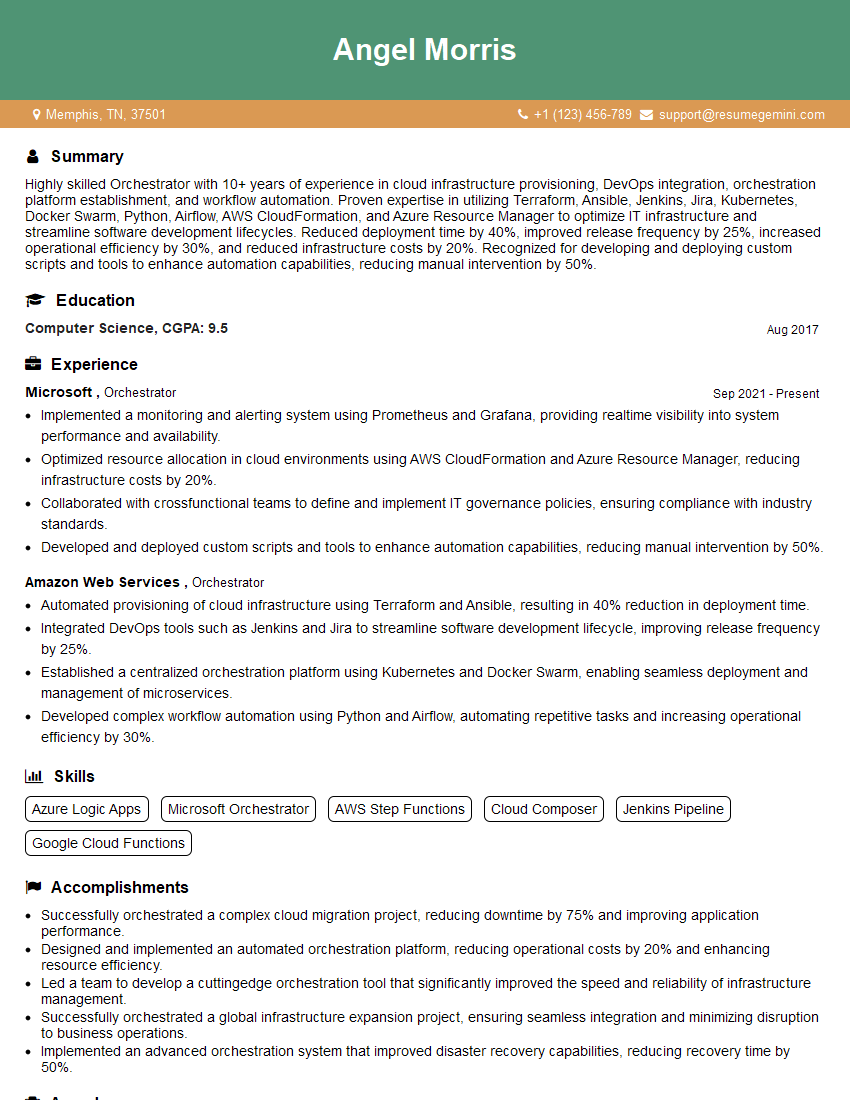
Orchestrator Resume Sample
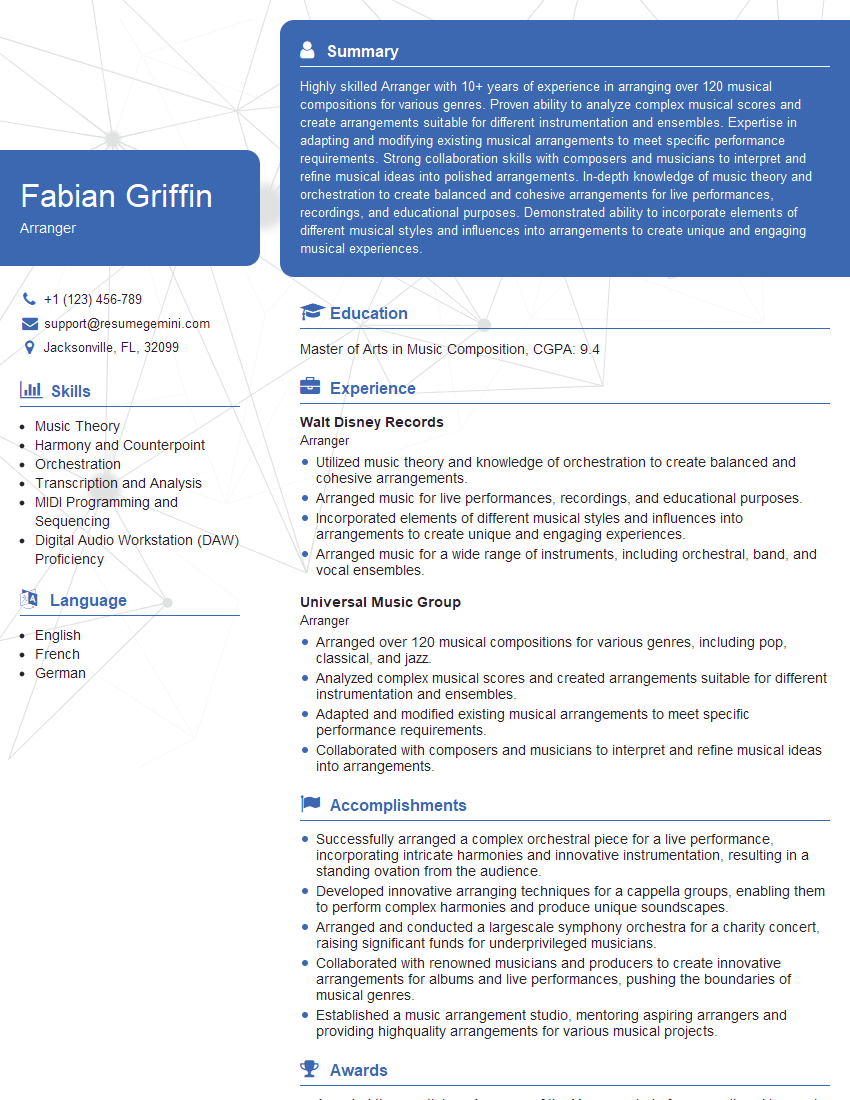
Arranger Resume Sample
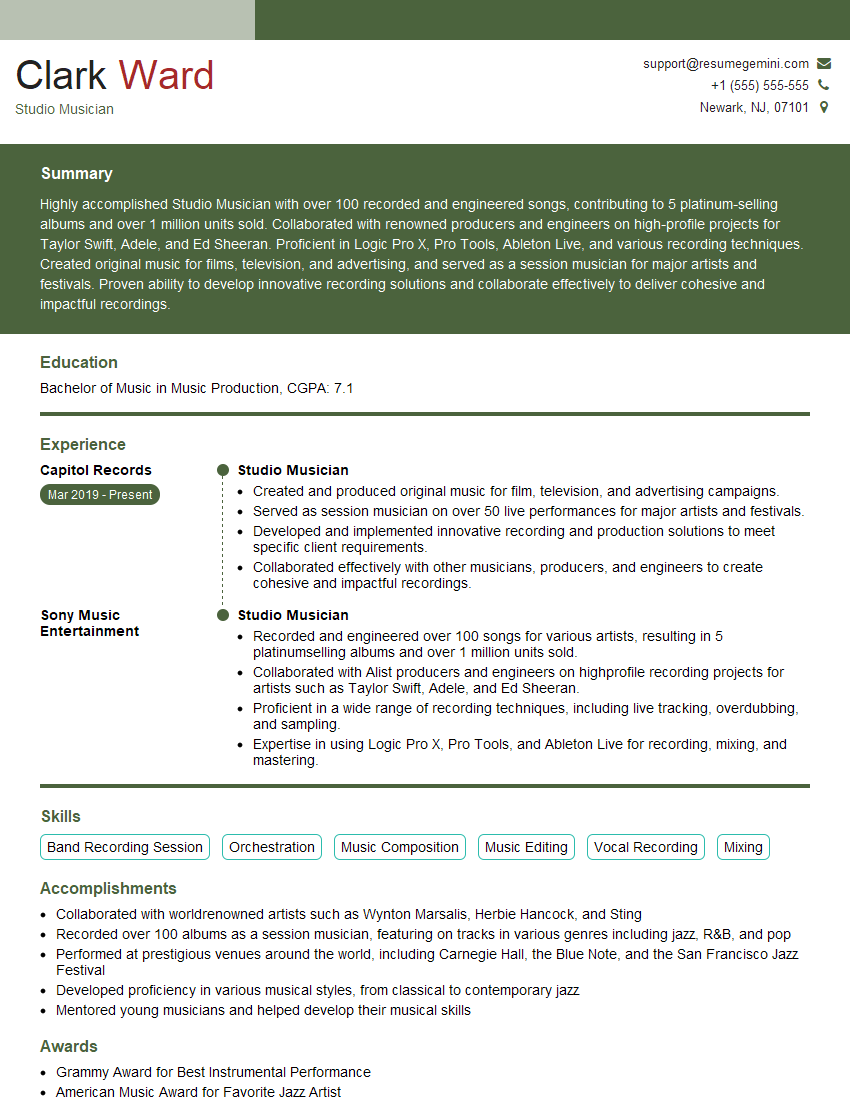
Studio Musician Resume Sample
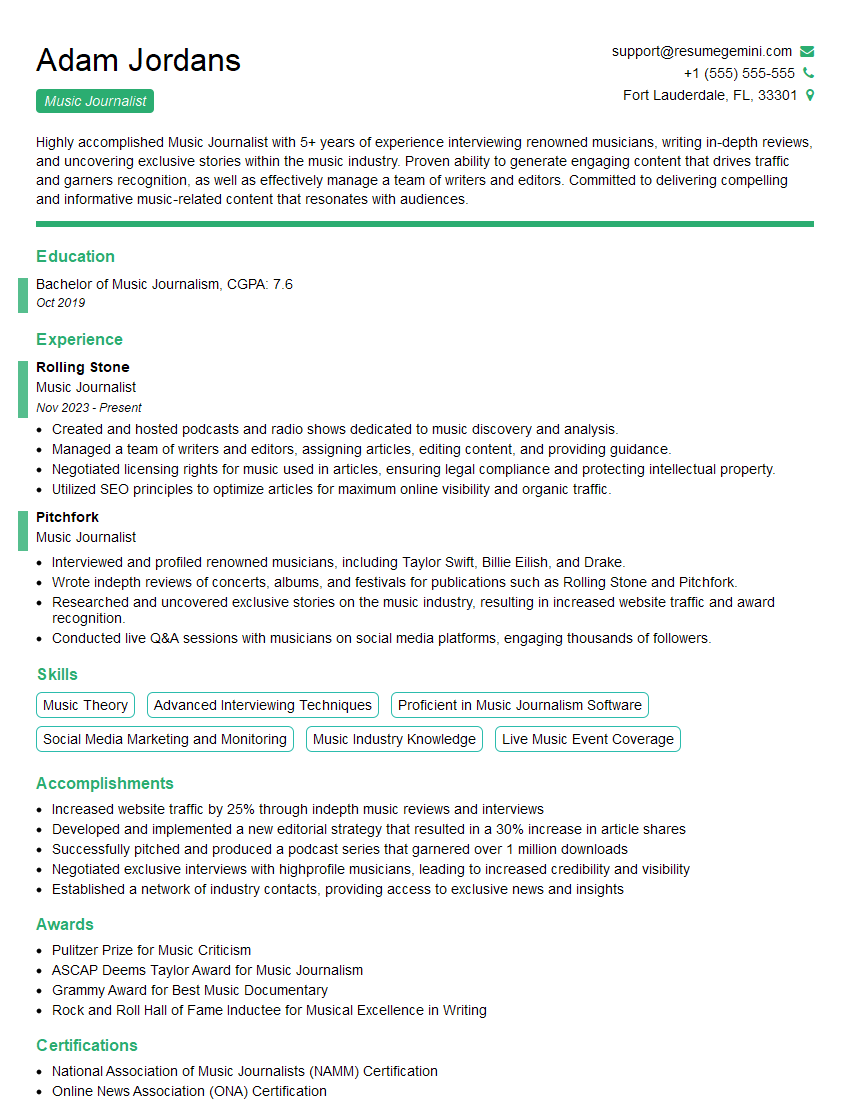
Music Journalist Resume Sample
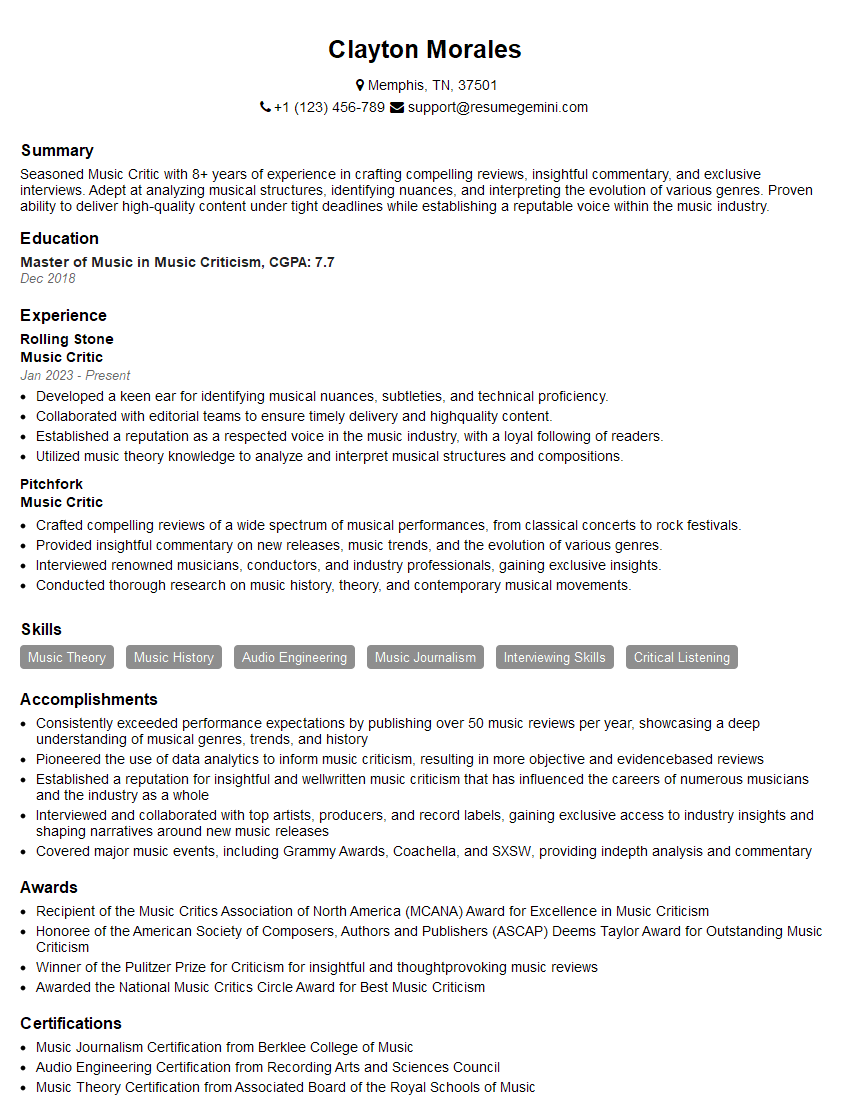
Music Critic Resume Sample
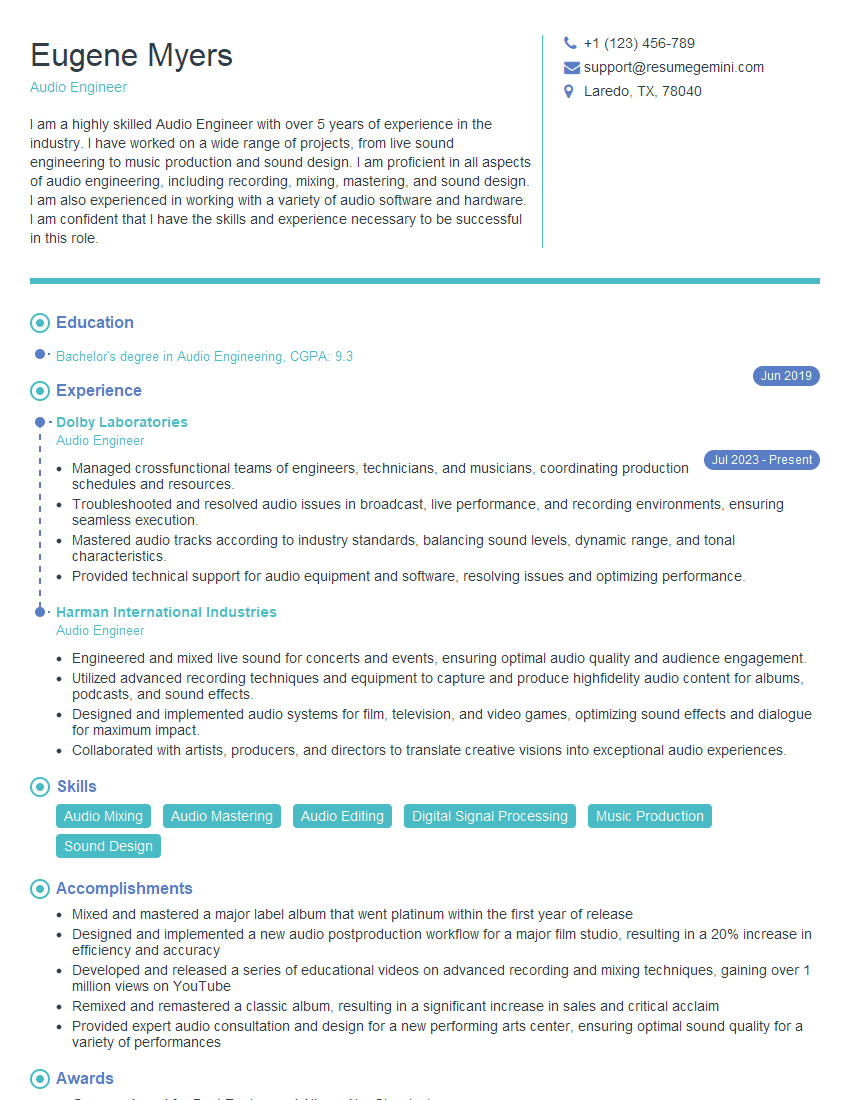
Audio Engineer Resume Sample
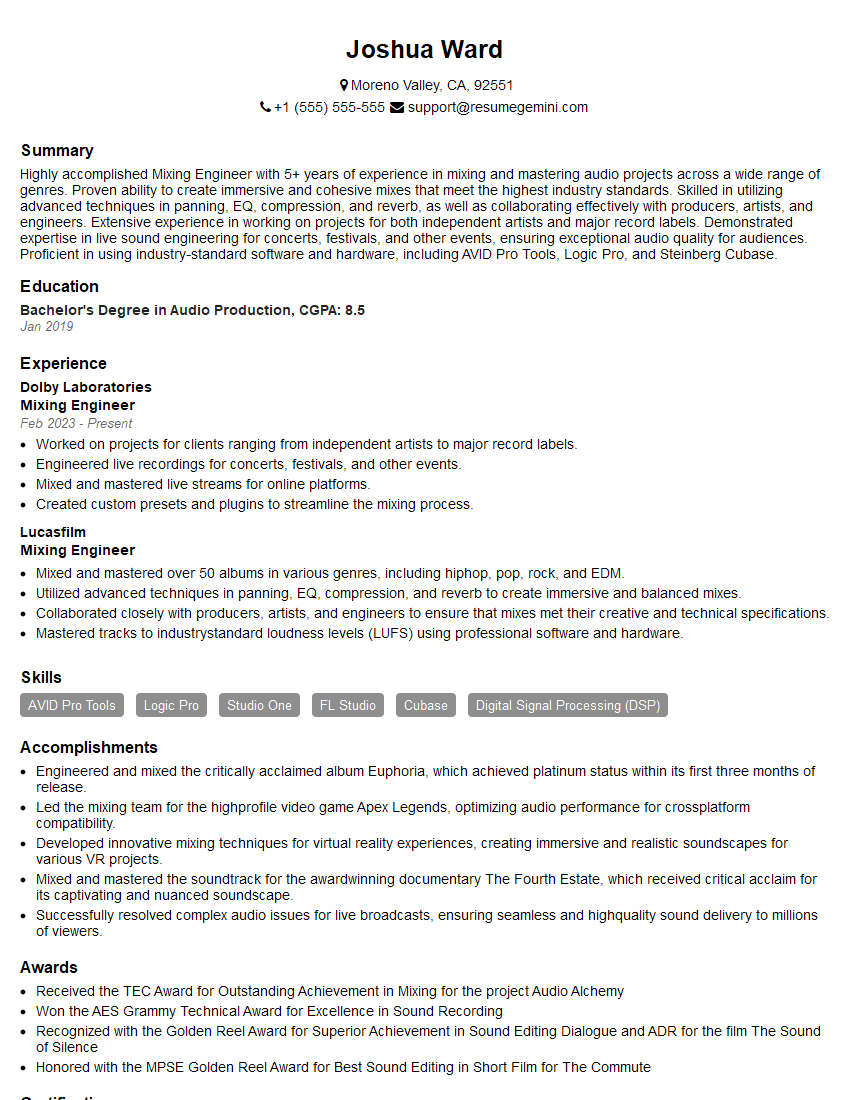
Mixing Engineer Resume Sample
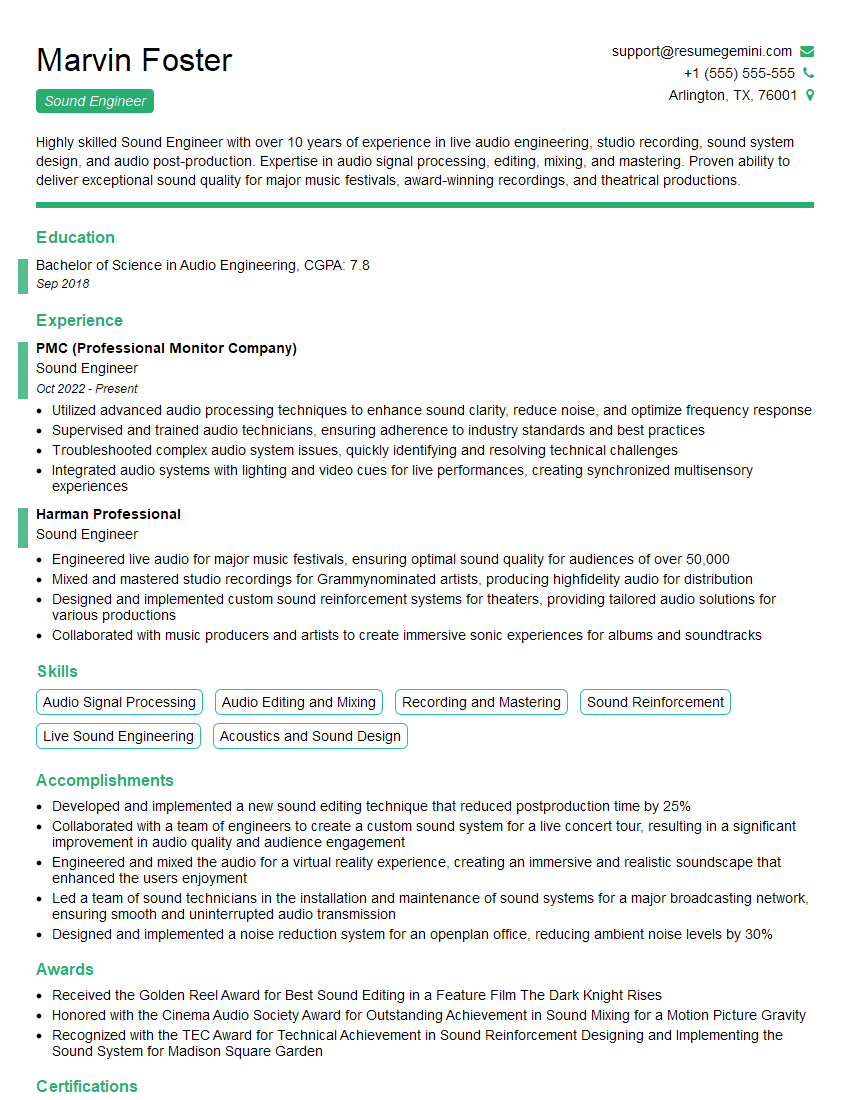
Sound Engineer Resume Sample
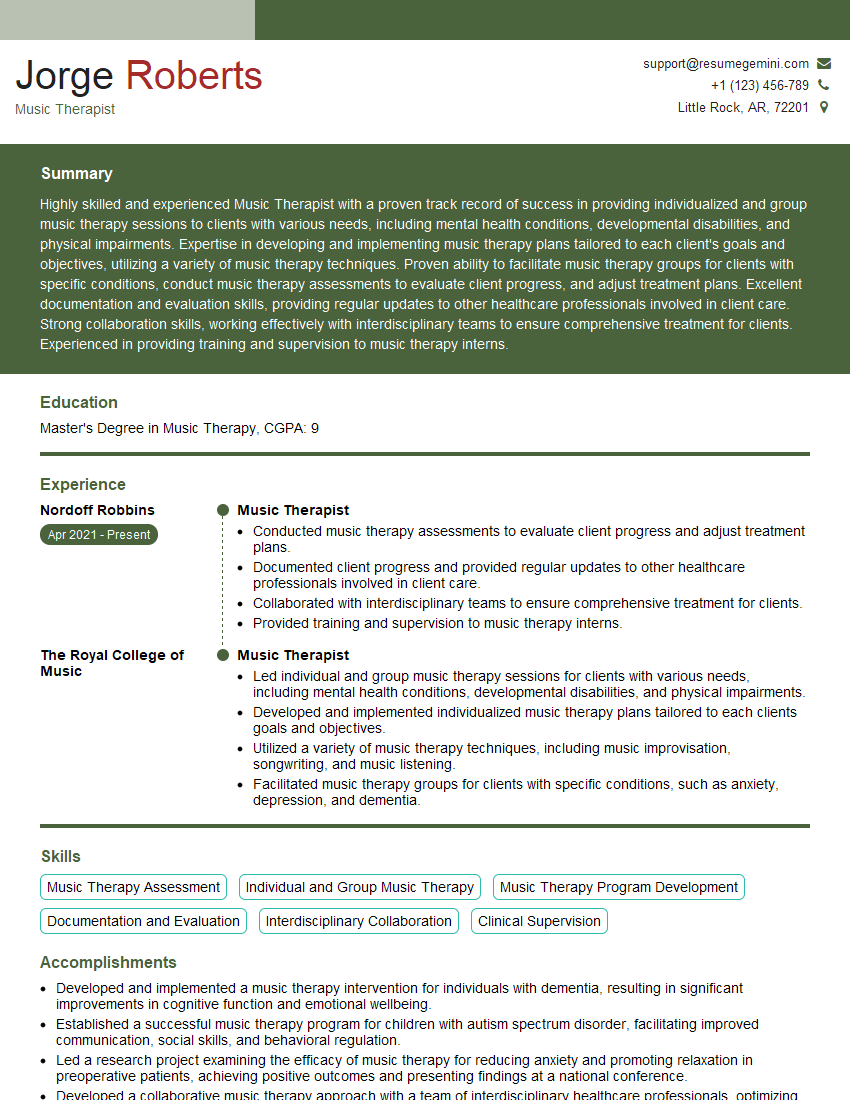
Music Therapist Resume Sample
Explore more articles
Users Rating of Our Blogs
Share Your Experience
We value your feedback! Please rate our content and share your thoughts (optional).
What Readers Say About Our Blog
Very informative content, great job.
good