Interviews are opportunities to demonstrate your expertise, and this guide is here to help you shine. Explore the essential Solar System Design and Analysis Software interview questions that employers frequently ask, paired with strategies for crafting responses that set you apart from the competition.
Questions Asked in Solar System Design and Analysis Software Interview
Q 1. Explain the difference between monocrystalline, polycrystalline, and thin-film solar panels.
The main difference between monocrystalline, polycrystalline, and thin-film solar panels lies in their silicon structure and manufacturing process, directly impacting their efficiency and cost.
- Monocrystalline silicon panels: These are made from a single, large silicon crystal, resulting in a uniform structure. This uniformity allows for higher efficiency (typically 18-22%) because there are fewer imperfections hindering electron flow. They’re usually black and are known for their sleek appearance, but they’re also more expensive to produce.
- Polycrystalline silicon panels: These are made from multiple silicon crystals melted and solidified together. This process is less expensive than monocrystalline production, making them a more budget-friendly option. However, their efficiency is slightly lower (typically 15-17%) due to the less uniform structure and more grain boundaries.
- Thin-film solar panels: These use a thin layer of photovoltaic material deposited onto a substrate like glass or metal. This thin layer drastically reduces the amount of silicon needed, resulting in lower manufacturing costs and lighter weight panels. However, their efficiency is generally lower (typically 8-13%) than crystalline silicon panels, and they may have a shorter lifespan.
Think of it like this: monocrystalline is like a perfectly smooth, polished marble slab; polycrystalline is like a mosaic made of different-sized marble pieces; and thin-film is like a thin paint layer on a surface. Each has its advantages and disadvantages.
Q 2. Describe your experience with PVSyst or similar solar system design software.
I have extensive experience using PVSyst, and also have worked with similar software such as Helioscope and SAM. PVSyst, in particular, has been instrumental in numerous projects. I’m proficient in using its features for detailed system design, including site analysis, shading analysis, performance simulation, and economic evaluation. For instance, in a recent project involving a large-scale solar farm, I used PVSyst to model the system’s performance under various weather conditions and different panel orientations to optimize energy yield and minimize costs. The software’s ability to import high-resolution weather data and accurately model the complex interactions of solar radiation, panel performance, and energy storage was critical in achieving optimal results. I’m also adept at interpreting the output reports from PVSyst, using this data to make informed decisions regarding component selection, system sizing, and overall project feasibility. Furthermore, I’m comfortable exporting data into other software for detailed financial modelling and reporting.
Q 3. How do you account for shading effects in solar system design?
Shading is a significant factor affecting solar panel performance. Even a small amount of shade can dramatically reduce the output of an entire string of panels due to the series connection of cells. PVSyst and similar software utilize sophisticated algorithms to model shading. These involve several steps:
- Digital Elevation Model (DEM) Import: Importing high-resolution DEM data provides accurate information about the surrounding terrain, buildings, and vegetation.
- 3D Model Creation: The software creates a 3D model of the site, including the solar panels themselves and any potential shading objects.
- Shading Analysis: Using solar radiation models, the software then calculates the amount and duration of shading on each panel throughout the day and year.
- Performance Calculation: Finally, the impact of shading on the overall system output is calculated, showing how the shade impacts the energy production, often showing a significant decrease in efficiency.
In practice, I’ve used this functionality to strategically position panels to minimize shading, choosing optimal panel layouts, and even designing shading mitigation strategies such as installing selective trackers or incorporating bypass diodes into the panel string design.
Q 4. What are the key parameters considered during solar system sizing?
Solar system sizing involves careful consideration of several key parameters to ensure the system meets the energy needs while remaining cost-effective.
- Energy Demand: This is the most crucial factor; estimating the daily, monthly, and annual energy consumption of the load is paramount.
- Solar Irradiance: The amount of solar energy reaching the site, taking into account geographical location and weather patterns.
- Panel Specifications: This includes the panel’s power rating, efficiency, temperature coefficients, and dimensions.
- Inverter Selection: Inverters convert DC power from panels to AC power; their capacity must match the panel’s output and the load.
- Battery Storage (if applicable): Battery capacity, charging and discharging rates are key if a battery backup is needed.
- System Losses: Accounting for losses due to wiring, temperature, soiling, and other factors is crucial for accurate sizing.
- Economic Factors: The initial investment cost, financing options, and long-term operational costs need careful consideration.
I often use iterative design processes with software, adjusting parameters and comparing results to find optimal balance of performance, cost, and efficiency.
Q 5. Explain the concept of solar irradiance and its impact on system performance.
Solar irradiance refers to the power per unit area received from the sun in the form of solar radiation. It’s measured in kW/m² or W/m². Solar irradiance is a critical parameter in solar system design because it directly impacts the amount of power a solar panel can generate. Higher irradiance values lead to greater power output, while lower values reduce it.
For example, a solar panel with a rated power of 300W might generate closer to 200W on a cloudy day with low irradiance compared to 300W or even more on a bright sunny day with high irradiance.
Software like PVSyst incorporates highly detailed hourly irradiance data from weather stations or satellite data, crucial for accurately predicting energy production over time.
Q 6. How do you model the performance of a solar system over its lifetime?
Modeling solar system performance over its lifetime involves considering various factors that affect its energy production over time. This is a critical aspect of the design process.
- Panel Degradation: Solar panels gradually lose their efficiency over time (typically 0.5-1% per year). PVSyst allows for inputting various degradation models to simulate this.
- Soiling Losses: Dust, dirt, and other contaminants accumulate on panels, reducing their output. This can be modeled using algorithms which consider local climate data.
- Temperature Effects: The efficiency of solar panels decreases as their temperature increases. This is factored into the model through temperature coefficients, which are often specified by the manufacturer.
- Weather Patterns: Long-term weather data, including cloud cover, precipitation, and ambient temperature, are used to simulate performance throughout the system’s lifetime.
By running a simulation, I can predict the yearly energy output and assess the financial viability of the project over 25 or more years.
Q 7. What are the different types of inverters and their applications?
Inverters are crucial components in solar systems. They convert the direct current (DC) electricity generated by solar panels into alternating current (AC) electricity used in homes and businesses.
- String Inverters: These are the most common type. A string inverter converts the DC power from an entire series string of solar panels into AC power. They are relatively inexpensive, but if one panel in the string fails, the entire string’s output is compromised.
- Microinverters: Each panel has its own microinverter, converting DC to AC individually. This reduces the effect of shading or panel failures on other panels, increasing overall system efficiency. They are more expensive but provide improved performance and monitoring capabilities.
- Power Optimizers: These devices sit between panels and the inverter, maximizing individual panel power output by adjusting voltage based on conditions like shading. They offer a balance between the cost of string inverters and the improved efficiency and monitoring of microinverters.
The choice of inverter depends on factors like system size, budget, desired performance, and the need for advanced monitoring.
Q 8. Explain the importance of MPPT (Maximum Power Point Tracking) in solar systems.
MPPT, or Maximum Power Point Tracking, is crucial in solar systems because solar panels don’t produce power at a constant rate. Their output depends heavily on sunlight intensity and temperature. The voltage and current at which a solar panel generates its maximum power (its ‘maximum power point’) changes constantly throughout the day. An MPPT controller continuously monitors the voltage and current from the solar panel and adjusts the load to keep the panel operating at this optimal point.
Think of it like this: imagine a water wheel. You want the water to flow at just the right speed to turn the wheel most efficiently. Too slow, and it doesn’t turn well. Too fast, and it overwhelms the wheel. The MPPT controller is like an intelligent valve, constantly adjusting the water flow (current) to keep the wheel (solar panel) spinning at its peak efficiency.
Without MPPT, a solar system would operate at a significantly lower efficiency, wasting potential energy and reducing the overall power output. The difference can be substantial, especially in variable sunlight conditions.
Q 9. How do you determine the optimal tilt and azimuth angles for a solar array?
Determining optimal tilt and azimuth angles for a solar array is critical for maximizing energy production. Tilt refers to the angle of the panel relative to the horizontal, while azimuth is the compass direction the panel faces. The ideal angles depend heavily on geographical location (latitude), time of year, and the specific objective (maximizing yearly energy, maximizing summer energy, etc.).
Several methods exist for determining these angles. One common approach uses solar irradiance data specific to the location. Software tools and online calculators often use these data to model solar energy production at various tilt and azimuth combinations. They consider factors such as solar declination angle, hour angle, and the equation of time to predict daily and annual energy yields.
For instance, a system designed for maximizing yearly production in a mid-latitude location might aim for a tilt angle close to the latitude, while azimuth would ideally be south (in the Northern Hemisphere). However, for optimal summer energy capture, a slightly steeper tilt angle might be beneficial.
Software packages often employ optimization algorithms to find the absolute best configuration. This process considers shading effects from nearby buildings or trees, which can significantly impact energy yield.
Q 10. Describe your experience with energy yield calculations and loss estimations.
My experience with energy yield calculations and loss estimations involves utilizing sophisticated software such as PVsyst, SAM (System Advisor Model), and Helioscope. These tools allow detailed modeling of solar system performance, factoring in numerous variables.
Energy yield calculations involve projecting the total energy a solar array will generate over a specific time period (daily, monthly, or annually). This necessitates using detailed solar irradiance data, panel performance curves, and system losses. I’m proficient in assessing different loss factors, including:
- Module mismatch losses: Variations in individual panel performance.
- Wiring and connection losses: Resistance in wiring and connectors.
- Soiling losses: Reduction in output due to dirt and dust accumulation.
- Shading losses: Partial or full shading of panels.
- Temperature losses: Panel output decreases as temperature increases.
- Inverter losses: Efficiency losses in the power inverter.
Accurately estimating these losses is crucial for realistic energy yield predictions. For example, I once worked on a project where detailed shading analysis revealed significant losses due to a nearby building. Reorienting the array based on my analysis resulted in a substantial increase in projected energy production.
Q 11. How do you assess the economic viability of a solar project?
Assessing the economic viability of a solar project requires a thorough cost-benefit analysis. This involves comparing the initial investment costs with the long-term benefits of reduced electricity bills and potential revenue generation from net metering.
The analysis typically involves the following steps:
- Determining initial investment costs: This includes the cost of panels, inverters, racking, installation, permits, and other related expenses.
- Estimating energy production: Utilizing energy yield calculations (as described above).
- Projecting energy savings: Calculating the reduction in electricity bills based on the energy produced.
- Considering incentives and rebates: Including any government incentives, tax credits, or utility rebates.
- Calculating the payback period: Determining the time it takes for the cumulative energy savings to equal the initial investment.
- Analyzing the internal rate of return (IRR) and net present value (NPV): These financial metrics provide a comprehensive assessment of the project’s profitability.
For example, in a recent project, I created a detailed financial model showing a payback period of less than 7 years and a high IRR, which successfully convinced the client to proceed with the solar installation. The model included sensitivity analyses to assess the impact of variations in electricity prices and incentive programs.
Q 12. What are the different types of energy storage systems used in conjunction with solar?
Several energy storage systems can be paired with solar to address intermittency issues and improve grid stability. Common types include:
- Battery storage: Typically lithium-ion batteries, these store excess solar energy for use during periods of low or no sunlight. They provide backup power during outages and can improve grid reliability. Different chemistries (e.g., lead-acid) offer varying performance characteristics and costs.
- Pumped hydro storage: This involves pumping water uphill during periods of high solar energy and releasing it to generate electricity when needed. It’s suitable for large-scale applications.
- Thermal storage: Stores energy as heat, often using molten salts or other materials with high heat capacity. This is mainly used in concentrated solar power (CSP) plants.
- Compressed air energy storage (CAES): Compresses air during periods of excess energy and then uses it to drive turbines when electricity is needed.
The choice of energy storage system depends on factors such as the size of the solar installation, budget, and specific energy needs. For a residential system, battery storage is often the most practical option. For larger-scale projects, pumped hydro or thermal storage may be more appropriate.
Q 13. Explain the concept of net metering and its implications.
Net metering is a billing mechanism that credits solar energy system owners for the excess electricity they generate and feed back into the grid. Essentially, it allows homeowners or businesses with solar panels to ‘sell’ excess electricity to the utility company at the retail rate.
The implications are significant. Net metering reduces electricity bills and incentivizes the adoption of solar energy by making it more financially attractive. However, the specifics of net metering programs vary widely across different regions and jurisdictions. Some programs offer full retail credit for excess energy, while others provide a lower rate or have yearly or lifetime caps on the amount of energy that can be credited.
For example, in some areas, the utility company may compensate the solar panel owner at the wholesale rate instead of the retail rate, making net metering less financially advantageous. Understanding the details of local net metering regulations is crucial for evaluating the financial viability of a solar project.
Q 14. Describe your experience with grid interconnection requirements.
Grid interconnection requirements ensure that solar systems operate safely and reliably within the existing electricity grid. These requirements are established by utility companies and regulatory bodies to prevent grid instability, protect utility workers, and safeguard the overall electricity supply.
My experience with grid interconnection includes working with utility company guidelines, preparing interconnection applications, and coordinating with engineers and inspectors. This typically involves the following:
- System design compliance: Ensuring that the solar system meets all the relevant technical specifications, such as voltage levels, frequency, and power quality requirements.
- Safety protocols: Implementing measures for safe disconnection and isolation of the system in case of emergencies.
- Metering and monitoring: Installing appropriate metering equipment to accurately measure the electricity generated and consumed.
- Interconnection agreement: Negotiating and signing a formal agreement with the utility company outlining the terms and conditions of the grid connection.
- Inspections and testing: Undergoing inspections and tests to verify system compliance and safety.
A project I recently worked on required extensive coordination with the utility company to address specific interconnection requirements related to voltage regulation and fault current contributions. Successfully navigating these requirements was crucial for obtaining the necessary permits and ensuring the successful grid connection of the solar system.
Q 15. How do you handle system faults and failures in a solar system?
Handling system faults and failures in a solar system involves a multi-layered approach focusing on prevention, detection, and mitigation. Prevention starts with rigorous design and installation adhering to best practices and using high-quality components. This includes careful consideration of environmental factors like extreme weather and potential shading issues.
Detection relies on robust monitoring systems. These systems, often incorporating sensors and data loggers, continuously track key performance indicators (KPIs) like voltage, current, and temperature. Anomalies in these KPIs trigger alerts, enabling timely intervention. For example, a sudden drop in voltage might indicate a fault in a string inverter, while unusually high temperatures could suggest a problem with panel cooling.
Mitigation strategies depend on the nature of the fault. Smaller issues, like a single faulty panel, might only require replacing the affected component. More severe failures, such as a grid outage, necessitate implementing backup systems, such as battery storage, to ensure continuous power supply. Sophisticated systems utilize predictive analytics to anticipate potential problems based on historical data and prevent failures before they occur.
Finally, a comprehensive maintenance plan, including regular inspections and preventative maintenance, is crucial for longevity and reliability. Think of it like a regular car check-up – keeping things in good condition proactively minimizes the chance of major problems down the line.
Career Expert Tips:
- Ace those interviews! Prepare effectively by reviewing the Top 50 Most Common Interview Questions on ResumeGemini.
- Navigate your job search with confidence! Explore a wide range of Career Tips on ResumeGemini. Learn about common challenges and recommendations to overcome them.
- Craft the perfect resume! Master the Art of Resume Writing with ResumeGemini’s guide. Showcase your unique qualifications and achievements effectively.
- Don’t miss out on holiday savings! Build your dream resume with ResumeGemini’s ATS optimized templates.
Q 16. What are the safety considerations involved in solar system design and installation?
Safety is paramount in solar system design and installation. Several key considerations must be addressed to mitigate risks to personnel and property. Firstly, all work must adhere to relevant electrical codes and safety regulations, including proper grounding, insulation, and lockout/tagout procedures to prevent electrical shock.
Secondly, workers must be properly trained and equipped with appropriate Personal Protective Equipment (PPE), such as insulated gloves, safety glasses, and hard hats. This is crucial during both installation and maintenance activities. Thirdly, fire safety is vital. Solar panels, while not inherently flammable, can generate heat, requiring proper spacing and ventilation to prevent fire hazards. Installation should also account for potential lightning strikes and include appropriate surge protection devices.
Finally, environmental concerns are important, particularly during the disposal of old panels and batteries, which contain hazardous materials requiring responsible recycling. Clear communication with homeowners about safe operation and potential hazards, providing them with an instruction manual and emergency contact information is also crucial. A holistic safety approach ensures a safe and reliable solar power system for years to come.
Q 17. What software packages are you proficient in for solar system design and analysis?
My proficiency extends across several leading software packages for solar system design and analysis. I’m highly experienced with PVsyst, a comprehensive simulation program capable of detailed performance modeling accounting for various environmental factors and system configurations. I also utilize Helioscope, particularly for its user-friendly interface and quick system design capabilities. Furthermore, I am proficient in AutoCAD for creating detailed system layouts and integrating solar designs into building plans. In addition to these, I have experience using HOMER Pro for microgrid design and optimization, considering factors like storage capacity and grid connection.
These tools allow for thorough analysis, including energy yield estimations, economic feasibility studies, and system optimization for maximum efficiency and cost-effectiveness. Each software’s strengths and weaknesses inform my choice depending on the specific project requirements.
Q 18. Explain your understanding of different solar cell technologies.
My understanding of solar cell technologies encompasses various types, each with its own advantages and disadvantages. The most common is crystalline silicon, which includes monocrystalline and polycrystalline cells. Monocrystalline cells, made from a single silicon crystal, boast higher efficiency but are more expensive to produce. Polycrystalline cells, made from multiple silicon crystals, are less efficient but more cost-effective.
Thin-film solar cells, such as cadmium telluride (CdTe) and copper indium gallium selenide (CIGS), offer flexibility and lighter weight but generally exhibit lower efficiencies. Perovskite solar cells are a promising emerging technology, exhibiting high potential for efficiency and cost reduction but still under development for widespread commercial applications. Finally, organic solar cells utilize organic materials, offering flexibility and potential for low-cost manufacturing but currently demonstrating lower efficiency.
The choice of solar cell technology depends on several factors including cost, efficiency requirements, aesthetic considerations, and available space. A trade-off between these factors is usually necessary to achieve optimal system performance. Each technology plays a unique role in the expanding solar market catering to different needs and applications.
Q 19. Describe your experience with performance monitoring and data analysis of solar systems.
Performance monitoring and data analysis are critical for optimizing solar system performance and identifying potential issues. My experience involves using various monitoring platforms and tools to collect real-time data on energy production, system efficiency, and other key performance indicators. This data is then analyzed to identify trends, anomalies, and areas for improvement.
For instance, I’ve used data from monitoring systems to pinpoint the cause of reduced energy generation in a particular system, which was eventually traced to shading issues caused by tree growth. By analyzing performance data over time, I’ve identified the optimal tilt angle and orientation for maximizing energy yield in a specific geographic location. This data-driven approach ensures optimal system performance and allows for proactive maintenance, extending the lifespan of the system and reducing downtime.
Software packages like PVsyst and specialized monitoring platforms provide the tools for data analysis. I typically use data visualization techniques to identify trends and correlations, allowing for informed decision-making and continuous improvement of system performance. The combination of data analysis and experience in solar system design and engineering is key to effective system optimization.
Q 20. How do you conduct a site assessment for a solar project?
A comprehensive site assessment is crucial for the success of any solar project. It involves a detailed evaluation of the site’s suitability for solar energy generation. This assessment typically begins with a thorough review of the site’s geographical characteristics, including the location’s latitude, longitude, and altitude. These factors significantly impact the amount of solar irradiance received.
Next, I would analyze the site’s shading characteristics. This includes identifying potential shading sources such as trees, buildings, and other structures. Detailed shading analysis using tools like Helioscope is crucial to determine the optimal panel placement and orientation to minimize shading losses. Additionally, the roof structure, its strength and load-bearing capacity must be assessed to determine the feasibility of mounting solar panels.
Finally, aspects like the availability of electrical grid connections, access to the site for installation and maintenance, and the prevailing local building codes and permits need to be considered. Once all these factors are carefully evaluated, I’ll develop a tailored proposal taking into account the unique characteristics of the site and project goals.
Q 21. Explain the concept of capacity factor and its significance.
The capacity factor represents the actual output of a power generation system compared to its maximum potential output over a specific period. It’s expressed as a percentage. For example, a solar power plant with a capacity factor of 20% means it generates 20% of its maximum possible output over a given period (typically a year). This is because solar energy generation is intermittent and depends on weather conditions like sunshine and cloud cover.
The significance of the capacity factor lies in its ability to assess the efficiency and reliability of a power generation system. A higher capacity factor indicates greater efficiency and consistent energy production, while a lower capacity factor suggests lower efficiency and higher variability in energy output. For example, a system with a higher capacity factor would require less capacity to generate the same amount of energy.
Understanding the capacity factor is critical in economic assessments and project planning. Investors and developers use this metric to assess the financial viability of a solar project, considering the potential energy production and investment costs. It also influences decisions regarding system sizing and storage capacity to ensure consistent power supply despite the intermittent nature of solar energy. A well-designed system aims to maximize the capacity factor through careful site selection, optimal panel orientation, and effective system management.
Q 22. How do you design a solar system to meet specific energy demands?
Designing a solar system to meet specific energy demands involves a multi-step process that begins with a thorough energy audit. This audit identifies the client’s energy consumption patterns – how much energy they use daily, seasonally, and peak demand periods. We use specialized software to model this data, often incorporating historical weather data for the specific location.
Next, we determine the appropriate solar panel system size. This includes calculating the number of panels needed based on their individual power output (wattage), considering factors like panel efficiency, shading, and available roof space. Software tools help simulate different panel arrangements, tilt angles, and orientations to maximize energy generation. For example, we might use PVsyst or Helioscope to model the system and predict its yearly energy output. This ensures we meet the energy demand while minimizing the system’s size and cost.
Finally, we incorporate any necessary energy storage (batteries) to ensure consistent power supply, especially during periods of low sunlight or peak demand. The size of the battery bank is determined by the desired energy autonomy – how long the system should operate without grid power. The entire design is meticulously documented and reviewed for safety and regulatory compliance.
Q 23. What are the environmental impacts of solar energy systems?
While solar energy is a clean energy source, its production and deployment have some environmental impacts. The manufacturing process of solar panels requires energy and materials, some of which can be toxic if not handled properly. For example, the production of silicon wafers involves energy-intensive processes and the use of chemicals. Proper disposal and recycling of end-of-life panels are crucial to minimize environmental impact. We mitigate this by selecting panels from manufacturers with strong environmental policies and working with recycling partners.
Land use is another consideration. Large-scale solar farms require significant land areas, potentially impacting habitats and ecosystems. However, solar panels can often be integrated into existing infrastructure like rooftops or brownfield sites, minimizing this impact. Careful site selection and environmental impact assessments are vital components of our design process.
Finally, there are minor impacts from the manufacturing and transportation of solar components, but these are generally smaller compared to the environmental benefits of reduced reliance on fossil fuels. The overall life-cycle assessment consistently demonstrates solar energy’s significantly positive environmental contribution.
Q 24. How do you ensure the long-term reliability of a solar system?
Ensuring long-term reliability of a solar system requires careful consideration at every stage of the design and implementation. We begin by choosing high-quality, durable components from reputable manufacturers with strong warranties. This includes panels, inverters, and mounting hardware. We conduct rigorous quality checks during installation to ensure proper wiring, grounding, and system integration.
Regular system monitoring and maintenance are paramount. We often use sophisticated monitoring software to track the system’s performance, identifying any anomalies or potential problems early on. This proactive approach helps prevent larger, costly repairs down the line. Scheduled maintenance, including panel cleaning and inverter inspections, is crucial to optimize system performance and extend its lifespan. A well-maintained system can operate efficiently for 25 years or more.
Furthermore, designing for environmental resilience is key. We consider factors like wind loads, snow loads, and potential extreme weather events during the design phase to ensure the system can withstand these challenges. Proper grounding and surge protection are essential to safeguard the system against lightning strikes.
Q 25. Describe your experience in designing solar systems for different climates and geographical locations.
My experience spans diverse climates and geographical locations. Designing for a sunny desert climate involves optimizing panel placement for maximum sun exposure and considering measures to mitigate high temperatures. This might involve using specific panel types with higher temperature coefficients and implementing cooling strategies. Conversely, designing for a northern climate requires careful consideration of snow accumulation and shading from trees or buildings, leading to different panel orientations and tilt angles. We utilize specialized software that allows us to input specific geographical data, including solar irradiance, temperature, and weather patterns, ensuring optimal system design for any location.
For example, I recently designed a system for a remote Alaskan village, focusing on optimizing energy production during limited sunlight hours and incorporating robust components to withstand extreme cold and snow. Another project involved designing a large-scale solar farm in the Arizona desert, focusing on maximizing energy output in intense sunlight and minimizing water consumption for cooling. The software we use allows for detailed simulations, helping us make informed design decisions for each unique location.
Q 26. How do you incorporate battery storage systems into your solar designs?
Incorporating battery storage into solar designs significantly enhances system reliability and energy independence. The size of the battery system depends on the client’s energy needs and desired level of backup power. We carefully analyze energy consumption patterns to determine the optimal battery capacity. Factors such as daily energy usage, peak demand periods, and desired autonomy (how long the system should run without grid connection) are all critical considerations.
Software tools allow us to simulate different battery configurations, exploring various battery chemistries (like lithium-ion or lead-acid) and their respective performance characteristics. We need to consider the battery’s depth of discharge, charging and discharging rates, and overall lifespan to ensure the system meets the client’s energy demands and budgetary constraints. The integration of the battery system with the solar array and the grid requires careful consideration of safety and regulatory compliance. Proper sizing and placement of charge controllers and inverters are essential to ensure efficient and safe operation.
For instance, in a recent residential project, we integrated a lithium-ion battery system to provide backup power during grid outages, enabling the homeowner to maintain essential services even during power disruptions. The software helped optimize the battery size, ensuring sufficient capacity while staying within the client’s budget.
Q 27. What are the challenges associated with integrating renewable energy sources into the electricity grid?
Integrating renewable energy sources like solar into the electricity grid presents several challenges. The intermittent nature of solar power – its dependence on sunlight – requires sophisticated grid management strategies. The grid needs to handle fluctuations in power generation due to changing weather conditions. Smart grids, equipped with advanced forecasting and control systems, are crucial for managing these fluctuations. This includes integrating advanced energy storage solutions and demand-side management techniques.
Another challenge lies in balancing the supply and demand of electricity. A surplus of solar power during peak generation periods needs to be efficiently managed, possibly through smart grid technologies that redirect surplus energy to other grid sections or storage solutions. Similarly, during periods of low solar output, other power generation sources must reliably compensate. This necessitates robust grid infrastructure and sophisticated grid management protocols.
Furthermore, the integration of distributed generation, such as rooftop solar installations, requires upgraded grid infrastructure to handle the increased capacity. This might include upgrading transformers and transmission lines. Regulatory frameworks and standardized interconnection procedures are essential for the safe and seamless integration of renewable energy into the existing grid. Addressing these challenges requires collaboration between energy providers, renewable energy developers, and grid operators.
Q 28. How do you use software to optimize the design of a solar tracking system?
Software plays a crucial role in optimizing the design of solar tracking systems. We use specialized software to simulate the performance of different tracking mechanisms, including single-axis and dual-axis trackers. These simulations factor in geographical location, solar irradiance data, and the specific characteristics of the solar panels. The software models the movement of the sun throughout the day and the year, allowing us to predict the energy output for various tracking configurations.
By inputting parameters such as panel type, tracker type, and site-specific data, we can evaluate the potential energy gains from using a tracking system compared to a fixed-tilt system. The software outputs performance metrics such as annual energy yield, energy gain over a fixed-tilt system, and potential reduction in land usage. This allows for an optimized selection of tracker type and configuration. We often compare simulations using different algorithms for sun tracking, including algorithms that consider cloud cover and shading.
For example, in a recent project involving a large-scale solar farm, the software predicted a significant increase in energy production (over 25%) by using dual-axis trackers compared to fixed-tilt panels. This data played a significant role in the final design decision, maximizing the return on investment for the client.
Key Topics to Learn for Solar System Design and Analysis Software Interview
- Solar Irradiance Modeling: Understanding different models (e.g., isotropic, anisotropic) and their impact on system performance. Practical application: Analyzing the effect of shading on energy yield.
- System Sizing and Optimization: Calculating optimal array size, inverter capacity, and battery storage based on load profiles and energy requirements. Practical application: Designing a cost-effective system for a specific residential or commercial application.
- Performance Analysis and Simulation: Utilizing software tools to simulate system behavior under various conditions (e.g., varying solar irradiance, temperature, load demand). Practical application: Identifying potential bottlenecks and optimizing system efficiency.
- Component Selection and Modeling: Understanding the characteristics of different PV modules, inverters, and batteries and accurately modeling their behavior within the software. Practical application: Comparing the performance of different PV technologies for a given project.
- Economic Analysis: Performing levelized cost of energy (LCOE) calculations, return on investment (ROI) analysis, and net present value (NPV) calculations to evaluate project viability. Practical application: Justifying project investments to stakeholders.
- Grid Integration and Compliance: Understanding grid codes and interconnection requirements. Practical application: Designing a system that meets all regulatory standards.
- Data Analysis and Reporting: Extracting meaningful insights from simulation results and generating comprehensive reports. Practical application: Presenting performance data to clients or management.
Next Steps
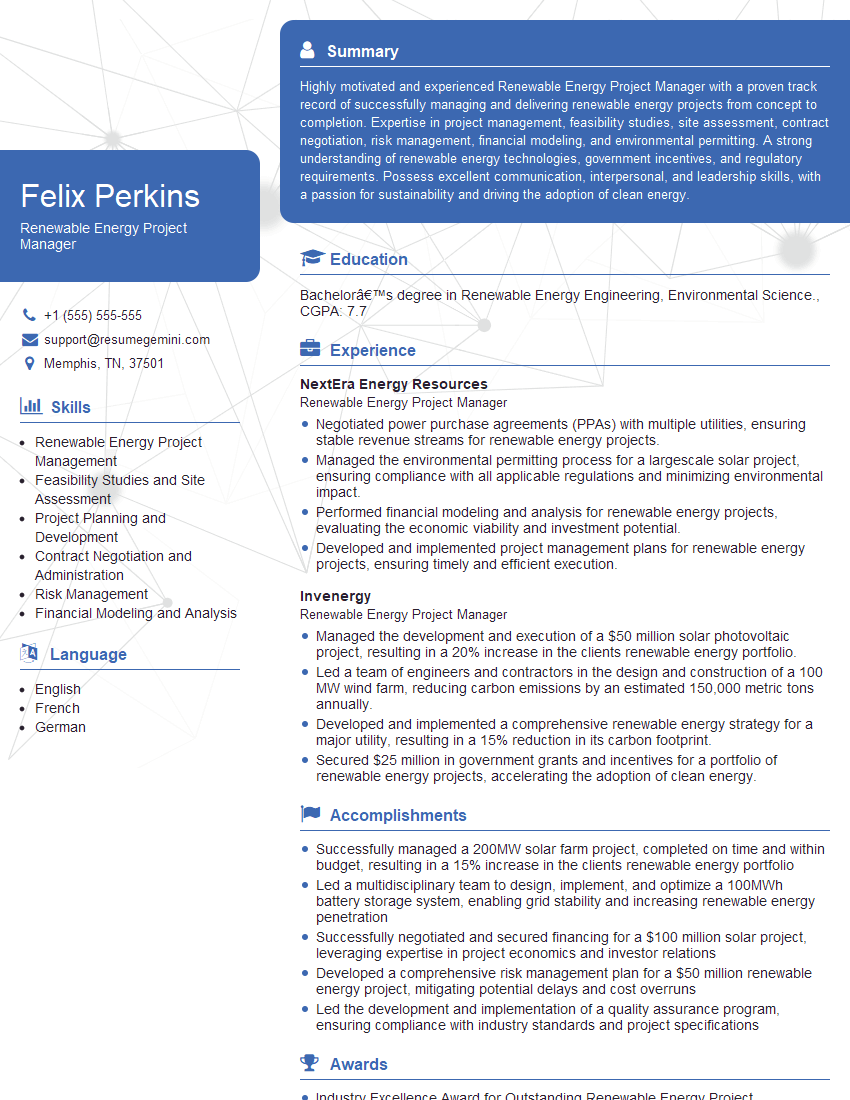
Mastering Solar System Design and Analysis Software is crucial for career advancement in the rapidly growing renewable energy sector. It opens doors to exciting roles with higher earning potential and greater responsibility. To maximize your job prospects, it’s essential to create a compelling, ATS-friendly resume that showcases your skills and experience effectively. ResumeGemini is a trusted resource that can help you build a professional resume that stands out. They offer examples of resumes tailored to Solar System Design and Analysis Software to guide you in creating a winning application. Invest time in crafting a strong resume – it’s your first impression on potential employers.
Explore more articles
Users Rating of Our Blogs
Share Your Experience
We value your feedback! Please rate our content and share your thoughts (optional).
What Readers Say About Our Blog
Very informative content, great job.
good