Interviews are opportunities to demonstrate your expertise, and this guide is here to help you shine. Explore the essential Forestry Law and Regulations interview questions that employers frequently ask, paired with strategies for crafting responses that set you apart from the competition.
Questions Asked in Forestry Law and Regulations Interview
Q 1. Explain the difference between federal and state forestry regulations.
Federal and state forestry regulations work in tandem, but their jurisdictions differ. Federal regulations, primarily managed by agencies like the USDA Forest Service, often focus on national forests and broader environmental concerns, including endangered species protection and overall forest health on a national scale. They might set minimum standards for sustainable logging practices or dictate rules regarding access to federal lands. State regulations, conversely, tend to focus on privately owned forests and lands managed by state agencies. They handle specifics like timber harvesting permits, forest fire prevention measures within their borders, and often contain stricter regulations tailored to their specific ecosystems and environmental conditions. Think of it like this: federal laws provide the overall framework, while state laws build upon that foundation with region-specific details.
For example, the federal government might have a rule about the minimum tree diameter that can be harvested on national forest lands, while a state might impose a more stringent requirement for privately owned woodlands within its borders based on local species and environmental sensitivities. This duality ensures both broad national protection and flexible, locally responsive forest management.
Q 2. Describe the process for obtaining a timber harvesting permit.
Obtaining a timber harvesting permit is a multi-step process. First, you’ll need to identify the specific land and determine its ownership and any existing conservation easements. Next, you submit an application to the relevant authority – typically the state forestry agency, though sometimes county or local governments are involved, depending on the location and land ownership. The application requires detailed information: a harvest plan outlining the specific areas to be logged, the methods to be used (e.g., clear-cutting, selective harvesting), measures to minimize environmental impact (erosion control, stream protection), and a timetable. The agency then reviews the plan, assessing its compliance with state and federal laws, including environmental regulations. This may involve site inspections. If approved, you’ll receive a permit specifying the terms and conditions of the harvest. Failure to comply with these conditions can result in permit revocation and penalties.
Imagine it like applying for a building permit – the authorities ensure the project is safe and doesn’t violate zoning laws or other regulations. Similarly, forestry permits safeguard the environment and ensure responsible forest management.
Q 3. What are the key legal considerations for forest road construction?
Forest road construction necessitates careful legal navigation. Key considerations include securing the necessary permits and approvals from relevant agencies. This often requires environmental impact assessments to evaluate potential disruptions to waterways, wildlife habitats, and sensitive ecosystems. The design must comply with regulations aimed at minimizing erosion, water pollution, and habitat fragmentation. Property rights must be respected, ensuring that easements or rights-of-way are properly secured from landowners. Furthermore, the construction process itself needs to adhere to strict environmental regulations to prevent soil erosion, protect water quality, and minimize noise and air pollution. Failure to comply can lead to fines, permit revocation, and potential legal action from environmental groups or affected landowners.
For instance, a project might need to install culverts to prevent stream sedimentation or employ specific erosion control measures on steep slopes, all mandated by environmental protection regulations.
Q 4. How does the Endangered Species Act impact forestry practices?
The Endangered Species Act (ESA) significantly impacts forestry practices. If a listed threatened or endangered species or its critical habitat is present on or near a proposed logging site, the ESA mandates measures to prevent the species’ harm or habitat destruction. This might involve altering harvest plans to avoid critical habitats, implementing mitigation measures like creating wildlife corridors, or obtaining an incidental take permit allowing limited impacts under specific conditions. Essentially, the forestry practices must be adjusted to ensure compliance with ESA, prioritizing species protection.
For example, if a certain owl species nests in old-growth forests, logging operations might need to leave specific stands untouched or modify logging schedules to avoid harming the nests or their habitat during sensitive nesting periods.
Q 5. Define ‘sustainable forestry’ and explain its legal implications.
Sustainable forestry is a management approach aiming to maintain the ecological, economic, and social benefits of forests over the long term. It involves practices like selective harvesting, reforestation, and protection of biodiversity. Legal implications stem from various laws and regulations promoting sustainable forestry practices. Many jurisdictions have implemented regulations requiring sustainable forestry certification (like FSC – Forest Stewardship Council) for timber sales or government contracts, thus influencing logging practices and forest management plans. Failing to adhere to these sustainable practices can lead to permit denials, fines, and reputational damage.
Imagine it as a bank account – sustainable forestry ensures that future generations have access to the ‘interest’ (ecological and economic benefits) while maintaining the ‘principal’ (the forest itself). Failing to practice it risks depleting the principal and leaving little for future generations.
Q 6. What are the penalties for violating forestry regulations?
Penalties for violating forestry regulations vary depending on the severity and nature of the violation and governing jurisdiction. They can range from warnings and administrative fines to the revocation of permits, criminal charges, and substantial financial penalties. The fines can reach tens or even hundreds of thousands of dollars, particularly for significant environmental damage or repeated offenses. In severe cases, individuals or companies could face jail time. The penalties are designed to deter illegal or environmentally harmful logging practices and promote responsible forest management.
The potential for significant penalties underscores the importance of understanding and adhering to all applicable regulations. This includes accurate record-keeping, proper permitting, and rigorous adherence to harvest plans.
Q 7. Describe the process for appealing a forestry permit denial.
The process for appealing a forestry permit denial typically involves a formal appeal to the agency that issued the denial. This usually involves submitting a detailed appeal explaining the reasons for challenging the decision and providing any new evidence or arguments that were not previously considered. There might be specific timeframes and procedures for submitting the appeal, as outlined in the agency’s regulations. In some jurisdictions, an independent administrative body or hearing officer may review the appeal. Further appeals to state courts might be possible if the administrative appeals process fails to resolve the issue. The process may involve legal representation to present the case effectively.
Think of it as an administrative process, with clear steps to follow, and often involving legal counsel to ensure your rights are protected and the appeal is presented effectively.
Q 8. Explain the legal aspects of forest fire prevention and suppression.
Forest fire prevention and suppression is governed by a complex web of laws and regulations, varying significantly by jurisdiction. Generally, these laws aim to prevent fires through measures like controlled burns (under permit), restrictions on activities during high-risk periods (e.g., open burning bans), and public education campaigns. Suppression efforts involve quick response times, resource allocation (firefighting crews, equipment, air support), and often collaborative efforts between governmental agencies, private landowners, and even volunteer firefighting organizations. Legal liabilities can arise from negligence leading to a fire, or inadequate fire prevention measures on private land. For example, a landowner might face penalties for failing to maintain a defensible space around their property, contributing to a wildfire that spreads to neighboring lands. Laws often dictate who is responsible for firefighting costs, particularly when negligence is involved. Failure to comply with fire prevention regulations can result in fines, and in severe cases, even criminal charges.
Q 9. How do riparian buffer zones affect timber harvesting operations?
Riparian buffer zones, areas of vegetation alongside rivers and streams, are legally protected in many jurisdictions to preserve water quality, prevent erosion, and provide wildlife habitat. Timber harvesting operations are significantly impacted by these zones. Laws typically prohibit or severely restrict logging within these buffers. The exact width and allowed activities within the buffer vary depending on local regulations and the specific characteristics of the waterbody. For instance, some regulations might permit selective thinning but prohibit clear-cutting within the buffer zone. Failure to comply can result in hefty fines, project suspension, and legal action by environmental agencies. Imagine a logging company planning to harvest near a river. They must carefully plan their operation to avoid the buffer zone, potentially altering their harvesting strategy and potentially reducing the total volume of timber harvested.
Q 10. What are the legal requirements for forest product transportation?
Legal requirements for forest product transportation vary by region and the type of product being transported. Common regulations address issues such as load security to prevent spills or accidents, vehicle weight limits to protect roads and bridges, permits for oversized or overweight loads, and documentation requirements demonstrating the legal origin of the timber (chain-of-custody certification). Regulations often specify routes that can be used, particularly for heavy loads to avoid sensitive environmental areas. For example, a truck carrying a large load of logs might need special permits and might be restricted from certain roads. Failure to comply can lead to fines, vehicle impoundment, and delays in the transportation process. The legal implications of illegal logging, such as transporting timber harvested without the necessary permits, are severe and can include criminal penalties.
Q 11. Discuss the legal implications of clear-cutting versus selective harvesting.
Clear-cutting, the removal of all trees in an area, and selective harvesting, the removal of specific trees, have vastly different legal implications. Clear-cutting is often more heavily scrutinized due to its potential for soil erosion, habitat loss, and visual impacts. Many jurisdictions have regulations restricting the size and location of clear-cuts, often requiring reforestation plans. Selective harvesting, while generally considered less environmentally disruptive, still needs to comply with regulations regarding the protection of endangered species, preservation of riparian zones, and overall forest health. The choice between these methods often depends on a variety of factors, including the age and species composition of the forest, local regulations, and the long-term goals of forest management. Permitting processes often require detailed plans outlining the harvesting method and its potential environmental impacts. Non-compliance can result in legal action and the revocation of permits.
Q 12. How does forestry law address forest fragmentation?
Forestry law addresses forest fragmentation—the breaking up of large forest areas into smaller, isolated patches—through various strategies. Regulations might promote the creation of wildlife corridors to connect fragmented habitats, restricting development in areas crucial for connectivity. Some jurisdictions employ landscape-level planning to identify and protect key areas needed to maintain ecological integrity. Policies may also incentivize sustainable forest management practices that minimize fragmentation, such as focusing on selective harvesting techniques and creating buffer zones between fragmented areas. The legal tools used vary, from zoning regulations to habitat protection laws and incentives for private landowners to adopt sustainable practices. Enforcement often relies on monitoring and enforcement by governmental agencies.
Q 13. Explain the role of environmental impact assessments in forestry projects.
Environmental impact assessments (EIAs) are crucial for forestry projects. Laws often mandate EIAs for projects exceeding a certain scale or affecting sensitive ecological areas. The EIA process involves assessing the potential environmental impacts of a project—such as habitat loss, water quality changes, and greenhouse gas emissions—and exploring mitigation measures. The assessment results are then used to inform decision-making, and the project may be modified or even rejected based on the findings. The legal framework often outlines the specific requirements of the EIA, including the information needed, the public consultation process, and the review by environmental agencies. Failure to conduct a proper EIA or disregard its findings can lead to legal challenges and the suspension or cancellation of the project.
Q 14. What are the legal protections for old-growth forests?
Legal protections for old-growth forests vary widely depending on jurisdiction. Some areas designate old-growth forests as protected areas, restricting all logging or other extractive activities. Other jurisdictions might use zoning regulations or other land-use planning tools to limit activities within these areas. Legal protections often involve considerations of biodiversity, ecological integrity, and cultural or historical significance. There can also be legal challenges to logging old-growth forests from environmental groups, based on arguments of habitat destruction and the loss of unique ecosystems. Successful legal challenges can lead to court-ordered injunctions halting logging operations until the legal issues are resolved. The legal landscape for old-growth forests is constantly evolving as societies re-evaluate their values related to conservation and sustainable resource management.
Q 15. How does climate change legislation impact forestry management?
Climate change legislation significantly impacts forestry management by mandating adaptations to mitigate its effects and enhance forest resilience. These laws often incorporate strategies like promoting carbon sequestration, managing risks from increased wildfires and pest outbreaks, and adapting forest management practices to changing climate conditions. For example, regulations might incentivize planting drought-resistant tree species or require more frequent forest thinning to reduce wildfire risk. These changes are often driven by national or regional climate action plans and integrated into existing forest management plans.
For instance, the European Union’s climate policies influence forestry practices across member states through regulations promoting sustainable forest management and encouraging the use of wood as a renewable resource, thus offsetting carbon emissions from other sectors. In North America, similar legislation exists at both the federal and state/provincial levels, often incorporating specific requirements for forest carbon accounting and reporting. Failing to comply with such legislation can result in penalties, ranging from fines to restrictions on logging permits.
Career Expert Tips:
- Ace those interviews! Prepare effectively by reviewing the Top 50 Most Common Interview Questions on ResumeGemini.
- Navigate your job search with confidence! Explore a wide range of Career Tips on ResumeGemini. Learn about common challenges and recommendations to overcome them.
- Craft the perfect resume! Master the Art of Resume Writing with ResumeGemini’s guide. Showcase your unique qualifications and achievements effectively.
- Don’t miss out on holiday savings! Build your dream resume with ResumeGemini’s ATS optimized templates.
Q 16. Describe the legal framework for managing invasive species in forests.
The legal framework for managing invasive species in forests is multifaceted and generally involves a combination of prevention, early detection, rapid response, and long-term control measures. Laws often mandate early detection programs, requiring forest managers to actively monitor for the presence of invasive species. They also dictate procedures for reporting and responding to invasions. Penalties for failure to comply with these regulations can be severe, ranging from fines to legal action.
The legal basis for controlling invasive species often originates from broader environmental protection laws, with specific regulations outlining prohibited species, control methods, and responsibilities of different stakeholders (landowners, government agencies). For example, many jurisdictions have regulations prohibiting the import or transportation of certain invasive plants. Laws may also mandate the eradication or control of already established populations, sometimes necessitating specific methods approved by regulatory authorities. Failure to contain the spread of invasive species may lead to significant legal repercussions for landowners or organizations.
Q 17. Explain the legal aspects of forest carbon sequestration.
The legal aspects of forest carbon sequestration are increasingly complex and evolving. Regulations often focus on carbon accounting and reporting, ensuring accurate measurement and verification of carbon stored in forests. This involves establishing methodologies for calculating carbon stocks and determining the effectiveness of forest management practices in enhancing carbon sequestration. Legal frameworks may also establish market mechanisms, such as carbon credit trading systems, that incentivize carbon sequestration by providing financial rewards for carbon storage. For example, regulations may define what qualifies as a ‘carbon credit’ and how those credits can be traded.
One key legal challenge relates to defining forest ownership and management rights in the context of carbon markets. Clear legal frameworks are needed to clarify who owns the carbon credits associated with a particular forest, and what rights they hold to sell or trade those credits. Furthermore, ensuring the permanence of carbon stored in forests is a critical issue that legal frameworks address through mechanisms such as long-term land-use restrictions and monitoring requirements. Violations of the regulations governing forest carbon sequestration can lead to loss of carbon credits, financial penalties, and legal disputes.
Q 18. What are the key legal considerations for forest certification schemes (e.g., FSC)?
Forest certification schemes, such as the Forest Stewardship Council (FSC), establish standards for sustainable forest management and provide independent verification of compliance. The legal considerations revolve around the enforceability of these standards and the consequences of non-compliance. While FSC certification itself isn’t a legal requirement in most jurisdictions, it can have significant legal implications. For example, companies that commit to sourcing certified wood may face contractual obligations to ensure their supply chains meet FSC standards.
Furthermore, governmental regulations can influence the adoption of forest certification schemes, either through incentives or mandates. Governments might create favorable policies for certified wood products, such as preferential procurement programs, or they may establish regulations that indirectly support sustainable forest management practices aligned with certification standards. Even without direct legal mandates, FSC certification provides a degree of legal protection against accusations of unsustainable practices. It offers a demonstrable record of adherence to internationally recognized standards of responsible forestry.
Q 19. Discuss the differences between public and private forestry ownership and their legal implications.
The legal implications of public versus private forestry ownership differ significantly. Publicly owned forests are subject to stricter regulations, often managed by government agencies with a mandate for public benefit. These regulations focus on aspects like public access, environmental protection, and multiple-use management. Regulations governing logging, road building, and recreational activities in public forests are often stringent and subject to extensive public review and consultation processes.
Private forestry ownership grants landowners more autonomy in managing their forests but still needs to adhere to environmental laws and regulations. These regulations might include limitations on logging practices to protect water quality, endangered species, or forest health. Private landowners also have property rights that need to be balanced against public interests such as protection of water resources and wildlife habitats. Disputes over land use and resource management between private landowners and the state frequently arise, requiring courts to interpret laws and balance the various interests involved.
Q 20. How does forestry law address issues of public access to forests?
Forestry law addresses public access to forests in varying ways, balancing the public’s right to enjoy natural resources with the need to protect forest ecosystems and private property rights. Publicly owned forests often have explicit provisions for public access, with designated trails, recreational areas, and specific regulations governing activities like camping, hunting, and fishing. However, access can be restricted in certain areas to protect sensitive habitats or for safety reasons. These restrictions are typically defined within the relevant regulations and enforced by agencies.
Private forest lands usually have restricted public access, with landowners retaining the right to control who enters their property. However, exceptions may exist based on existing easements, public rights of way, or specific legislation. Landowners can face legal challenges related to public access to their private property, such as lawsuits alleging negligence if accidents occur on their land. Navigating this area requires careful consideration of the specific laws and regulations within the jurisdiction and balancing private property rights with public access and safety.
Q 21. Explain the legal requirements for protecting forest biodiversity.
Legal requirements for protecting forest biodiversity vary widely, but common elements include regulations safeguarding endangered species and their habitats, conservation of biodiversity hotspots, and the maintenance of ecological processes. Laws often mandate environmental impact assessments for forestry operations, which require careful consideration of the potential effects on biodiversity before undertaking any significant projects. Further regulations specify protected areas and restrict activities within those areas to maintain biodiversity.
Specific legal tools employed include endangered species acts, which provide legal protection to threatened and endangered species and their habitats. These acts often restrict or prohibit actions that could negatively impact the species. Other legislation may focus on maintaining old-growth forests, which are important reservoirs of biodiversity. These laws might place limitations on logging or other practices that alter the structure and function of these unique forest ecosystems. Enforcement mechanisms vary, from fines and penalties for violations to habitat restoration projects, aiming to ensure compliance and protect biodiversity.
Q 22. What are the legal implications of using herbicides or pesticides in forestry?
Using herbicides and pesticides in forestry carries significant legal implications, primarily revolving around environmental protection and public safety. The application of these chemicals is heavily regulated at both the federal and state levels. These regulations often dictate which chemicals can be used, how they can be applied (e.g., aerial spraying restrictions near populated areas), and the required safety precautions to protect human health and the environment. Failure to comply can lead to hefty fines, legal action from environmental agencies, and even criminal charges in severe cases.
For example, the Endangered Species Act requires careful consideration of the potential impact of pesticide use on listed species and their habitats. Similarly, the Federal Insecticide, Fungicide, and Rodenticide Act (FIFRA) mandates registration of pesticides before they can be used and dictates the safe handling and application practices. State-level laws often mirror and expand upon these federal regulations, adding further layers of complexity.
In practice, foresters must meticulously follow label instructions, obtain necessary permits, maintain detailed records of applications, and implement appropriate buffer zones to mitigate risks. They must also conduct thorough environmental assessments before any treatment to ensure compliance with all applicable laws. Ignoring these regulations can result in significant liabilities, highlighting the importance of robust compliance programs.
Q 23. Describe the legal challenges associated with managing forest pests and diseases.
Managing forest pests and diseases presents numerous legal challenges, often intersecting with property rights, environmental protection, and interstate commerce. Early detection and rapid response are crucial, but actions must be taken within the confines of the law. For example, the use of certain control methods, like prescribed burning or biological control, may require permits and environmental impact assessments.
One major challenge arises when dealing with pests or diseases that cross state or national boundaries. Coordinating control efforts across jurisdictions requires interstate agreements and collaboration, which can be complex and time-consuming. Furthermore, the economic impact of forest pests and diseases can lead to disputes over liability and compensation. For instance, a landowner might sue a neighboring landowner if the latter’s negligent forestry practices caused a pest infestation to spread.
Another key challenge is balancing the need for pest and disease control with the protection of non-target species and ecosystems. The use of chemical controls can have unintended consequences, necessitating careful planning and monitoring to ensure compliance with environmental regulations. Legal frameworks like the National Environmental Policy Act (NEPA) require a thorough assessment of the potential environmental impacts before implementing any large-scale control measures.
Q 24. How does zoning affect forestry practices?
Zoning regulations significantly impact forestry practices by dictating allowable land uses. Zoning ordinances can restrict forestry activities within specific areas, often to protect residential areas, sensitive ecosystems, or water resources. For example, a zone might prohibit clear-cutting or limit the height of trees near power lines. This zoning can impact harvesting methods, reforestation plans, and even the types of trees that can be planted.
Foresters must carefully review local zoning ordinances before undertaking any activity. Failure to comply with zoning regulations can result in fines, stop-work orders, and even legal challenges from neighbors or local authorities. Understanding zoning maps and regulations is critical for the sustainable and legally compliant management of forest lands. Zoning may also influence the permitted intensity of forestry operations, limiting the scale of logging or other activities within a given area.
Imagine a scenario where a forester wants to conduct a clear-cut operation near a residential area. If the local zoning regulations prohibit clear-cutting within a certain distance of residential properties, the forester will have to alter their plan or seek a variance, a formal request for an exception to the zoning rules. This process may require demonstrating that the proposed operation won’t negatively affect the surrounding community.
Q 25. Explain the concept of easements and their relevance to forestry.
Easements are legal rights granted to one party to use another party’s land for a specific purpose. In forestry, easements are crucial for managing access to forests, utility lines, and other necessities. For example, a logging company might have an easement to use a road across a landowner’s property to access their logging area. Similarly, utility companies may hold easements for maintaining power lines that traverse forested lands.
These easements must be clearly defined in legal documents, specifying the exact location, permitted activities, and duration of the easement. Disputes often arise regarding the scope and extent of an easement. A landowner may claim that the easement is being used beyond its intended purpose, leading to legal challenges. For instance, an easement granted for road access may not allow the construction of a permanent storage facility.
The relevance of easements to forestry is multifaceted. They facilitate efficient forest management by allowing access to otherwise inaccessible areas. However, they also present potential challenges. Careful negotiation and clear documentation are essential to avoid future conflicts. It’s important to remember that an easement is a right, not ownership; the landowner still retains title to the land subject to the easement.
Q 26. How does eminent domain apply to forestry operations?
Eminent domain is the power of the government to take private property for public use, provided that just compensation is paid to the owner. This power applies to forestry operations when the government needs to acquire land for projects like building roads, dams, or other infrastructure that may impact forests. The government must follow due process, which typically involves an appraisal process to determine fair market value.
Landowners can challenge the government’s taking in court, arguing that the proposed project is not for a public use or that the compensation offered is inadequate. The legal process can be lengthy and complex, involving expert witnesses, appraisals, and court hearings. Forestry operations can be significantly disrupted or even halted if the land involved is subject to eminent domain proceedings.
Consider a scenario where the government needs to build a new highway that cuts through a privately owned forest. The government can exercise eminent domain to acquire the necessary land. However, the landowner is entitled to fair compensation for the land’s value, including any potential timber value. The fair compensation aspect is usually the key point of negotiation and potential legal challenge.
Q 27. Discuss the legal responsibilities of landowners regarding forest fire prevention.
Landowners bear significant legal responsibilities regarding forest fire prevention, varying by jurisdiction. These responsibilities typically include creating defensible space around structures, regularly clearing flammable vegetation, properly disposing of cigarettes and other ignition sources, and complying with any burn permits or restrictions imposed by local authorities. Failure to meet these obligations can lead to legal liabilities, particularly if a fire starts on their property and spreads to neighboring lands, causing damage or injury.
Many jurisdictions have laws requiring landowners to maintain a specified width of defensible space, a buffer zone free of flammable materials. Negligence in fire prevention can expose landowners to lawsuits for damages caused by wildfires originating on their property. Insurance companies may also deny claims if a landowner fails to demonstrate reasonable care in fire prevention. Furthermore, some states have laws holding landowners liable for the costs of fighting wildfires that originate on their property, even if the fire was accidental.
In practice, landowners should develop and implement comprehensive fire prevention plans, which should be tailored to local conditions and risk factors. This includes regular maintenance of their property, staying updated on fire restrictions, and promptly reporting any suspected wildfires to the relevant authorities. Proactive fire prevention is not just good land stewardship; it is also a legal obligation.
Q 28. What are the key legal considerations for forest conservation easements?
Forest conservation easements are voluntary legal agreements where landowners restrict certain uses of their land to protect its conservation values. Key legal considerations include the terms and conditions of the easement, its enforceability, and the tax implications for the landowner. The easement is typically recorded in the land records, binding future owners of the property.
The terms of the easement should be clearly defined and precisely worded to avoid ambiguities. They often specify permitted and prohibited activities, such as restrictions on logging, development, or certain types of land management practices. The easement’s enforceability relies on the clarity of its terms and the legal mechanisms for enforcement, typically involving monitoring by a conservation organization and potential legal action if violations occur.
From a tax perspective, landowners who donate a conservation easement may be eligible for significant federal and state tax benefits, including deductions for the value of the conservation easement. These tax benefits are a major incentive for landowners to participate in conservation easement programs. However, strict rules and regulations govern the qualification for these tax benefits, and proper legal counsel is essential to ensure compliance. The IRS carefully scrutinizes conservation easement donations to ensure they meet the requirements for tax deductibility.
Key Topics to Learn for Forestry Law and Regulations Interview
- Federal and State Forestry Laws: Understanding the legal framework governing forest management, including the National Forest Management Act (NFMA) and relevant state statutes. Consider the differences in legislation across jurisdictions.
- Timber Harvesting Regulations: Knowledge of regulations surrounding logging practices, including sustainable harvesting techniques, reforestation requirements, and environmental impact assessments. Be prepared to discuss practical applications of these regulations on a specific project.
- Forest Conservation and Protection: Familiarity with laws protecting endangered species, preserving biodiversity, and mitigating wildfire risks. This includes understanding the role of environmental impact statements and permitting processes.
- Land Use Planning and Zoning: Understanding how forestry regulations interact with broader land use plans and zoning ordinances. This may include knowledge of easement acquisition and public access regulations.
- Enforcement and Compliance: Knowledge of regulatory agencies, enforcement procedures, and potential penalties for non-compliance. Be ready to discuss scenarios requiring compliance-focused problem solving.
- Private vs. Public Land Management: Understanding the differences in legal frameworks and management approaches for privately owned and publicly managed forests. This includes consideration of property rights and public access.
- Environmental Law and its intersection with Forestry: Understanding the interplay between environmental protection laws (Clean Water Act, Endangered Species Act, etc.) and forestry practices. Be prepared to discuss potential conflicts and solutions.
Next Steps
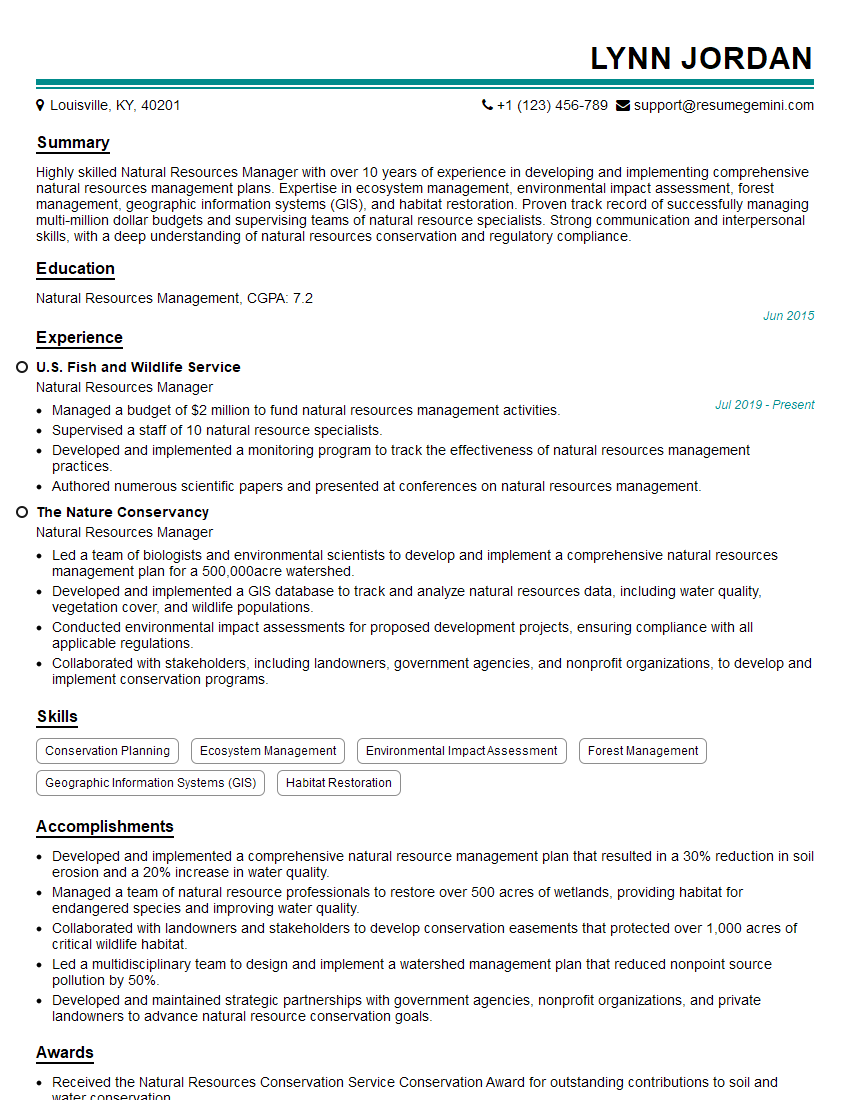
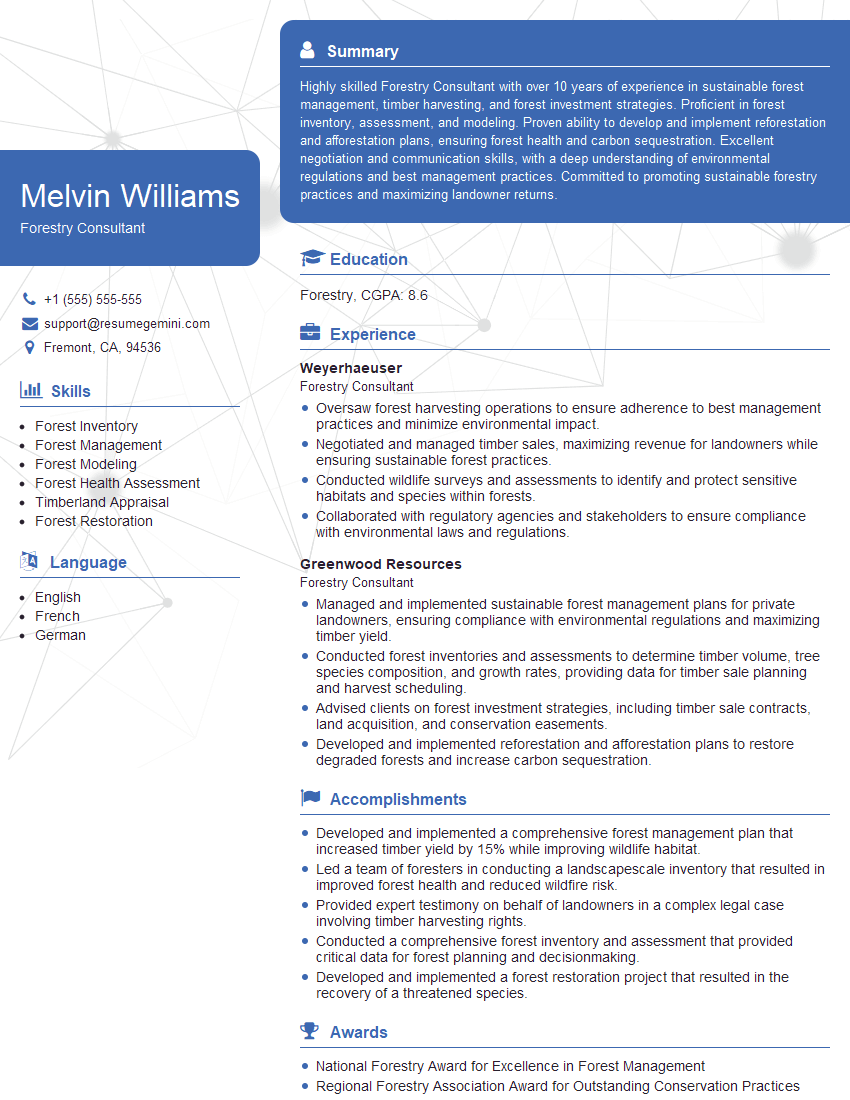
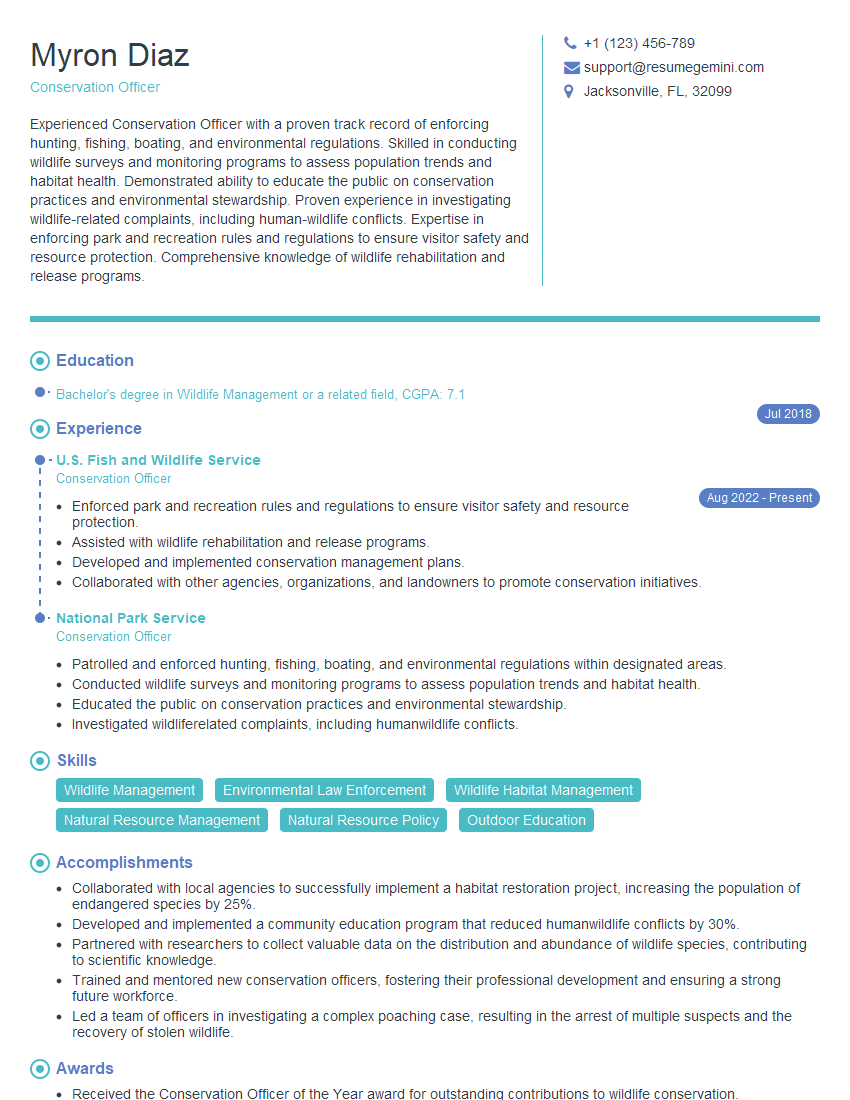
Mastering Forestry Law and Regulations is crucial for career advancement in this field. A strong understanding of these complex legal issues demonstrates your commitment to responsible forest management and increases your marketability to employers. To help you shine, create a powerful, ATS-friendly resume that highlights your expertise. ResumeGemini is a trusted resource to help you build a professional and impactful resume that showcases your skills and experience effectively. Examples of resumes tailored to Forestry Law and Regulations are available to guide you through the process.

Explore more articles
Users Rating of Our Blogs
Share Your Experience
We value your feedback! Please rate our content and share your thoughts (optional).
What Readers Say About Our Blog
Very informative content, great job.
good