The thought of an interview can be nerve-wracking, but the right preparation can make all the difference. Explore this comprehensive guide to Rooftop Solar Design interview questions and gain the confidence you need to showcase your abilities and secure the role.
Questions Asked in Rooftop Solar Design Interview
Q 1. Explain the different types of rooftop solar panel mounting systems.
Rooftop solar panel mounting systems are crucial for the structural integrity and performance of a solar array. The choice depends on factors like roof type, panel orientation, and building codes. Common types include:
- Racking Systems: These are the most prevalent, using pre-assembled aluminum or steel frames to mount panels on pitched or flat roofs. They offer flexibility in panel placement and are relatively easy to install. Think of them like scaffolding for your solar panels.
- Ballasted Systems: Ideal for flat roofs where penetration is undesirable, these systems use weighted concrete blocks or other ballast to secure the panels. They’re quicker to install but require more roof space and may be less aesthetically pleasing.
- Integrated Systems: These systems are integrated directly into the roof during construction or retrofitted, often using tile-integrated or shingle-integrated panels. They provide a sleek, integrated look but are usually more expensive and complex to install.
- Standalone Systems: These might involve custom-designed structures for unique roof configurations or ground-mounted arrays that feed power into the building. This option is often chosen when roof space is limited or unsuitable.
Selecting the right system involves careful consideration of structural integrity, roof load capacity, wind resistance, and aesthetic preferences. For instance, a racking system might be best for a pitched tile roof, while a ballasted system would be suitable for a low-slope commercial building where penetration is restricted.
Q 2. Describe your experience with PVsyst or similar solar design software.
I have extensive experience using PVsyst, a leading software for solar energy system design. I’ve used it across numerous projects, from small residential installations to large-scale commercial deployments. PVsyst allows for detailed modeling of the solar resource, system components, and energy production. I routinely use its features for:
- Shading analysis: Accurately determining the impact of trees, buildings, and other obstructions on energy yield.
- System sizing: Optimizing the number of panels, inverters, and other components to meet the energy needs of a given site.
- Performance simulation: Predicting the yearly energy production under different weather conditions.
- Financial analysis: Assessing the economic viability of a solar project, considering factors like initial investment costs, electricity tariffs, and incentives.
For example, in a recent project, PVsyst helped identify an area of significant shading on a rooftop that wasn’t immediately apparent during a site visit. By adjusting panel placement within the constraints of the roof, I was able to mitigate the shading losses and increase the overall system output by approximately 5%.
Q 3. How do you calculate the energy production of a rooftop solar system?
Calculating the energy production of a rooftop solar system involves a multifaceted approach that combines several key factors. It’s not a single formula, but a process.
The core calculation relies on the solar panel’s rated power (usually in kilowatts, kWp), the solar resource (measured in kWh/m²/year), and the system’s efficiency. We start with estimating the annual solar radiation at the specific location using meteorological data and tools like PVsyst.
Here’s a simplified approach:
- Determine the total system power (kWp): This is the sum of the rated power of all installed solar panels.
- Estimate the annual solar radiation: This data is typically obtained from publicly available resources or weather databases specific to the geographic location.
- Account for system losses: This is crucial! Losses arise from various factors (discussed in a later question) and typically reduce the output by 10-20%. This needs to be factored in via a loss factor (e.g., 0.8 to 0.9).
- Calculate the annual energy production: This is calculated as:
Annual Energy Production (kWh) = Total System Power (kWp) * Annual Solar Radiation (kWh/m²/year) * Panel Area (m²) * System Loss Factor
The accuracy of this calculation depends heavily on the accuracy of the input data and a careful accounting of system losses. More sophisticated tools like PVsyst perform these calculations automatically and provide more nuanced results.
Q 4. What are the key considerations for shading analysis in rooftop solar design?
Shading analysis is critical in rooftop solar design, as even minor shading can significantly impact energy production. The goal is to identify and minimize the impact of shading on the array’s performance throughout the day and year. Key considerations include:
- Identifying shading sources: This includes trees, buildings, chimneys, and other structures that might cast shadows on the panels. We utilize site surveys, visual inspections, and software tools like PVsyst to map shading precisely.
- Determining the duration and intensity of shading: Understanding the time of day and year when shading occurs is essential. Some shading might be brief, while other shading could impact production significantly.
- Impact on system design: Shading can cause power mismatch and reduce the overall array’s efficiency. Strategies to mitigate shading include optimizing panel orientation, spacing, and potentially adjusting the system design to accommodate shading.
- Using shading analysis software: Tools like PVsyst incorporate advanced shading models that account for the changing position of the sun throughout the year, enabling accurate predictions of shading impact.
For example, a single tree casting a shadow on a portion of the array during peak sunlight hours can reduce yearly energy generation by a surprising amount. Careful planning and precise shading analysis are crucial to avoid such pitfalls.
Q 5. Explain the concept of array sizing and optimization.
Array sizing and optimization is the process of determining the optimal number and configuration of solar panels to maximize energy production while staying within budget and code constraints. It’s a balancing act between cost and performance.
The process generally involves:
- Defining energy needs: Assessing the building’s energy consumption to determine the required solar energy output.
- Choosing panel type and size: Considering factors like panel efficiency, power output, and physical dimensions.
- Optimizing array orientation and tilt: Positioning the panels to maximize sunlight exposure based on the location’s latitude and shading conditions. South-facing is generally ideal in the Northern Hemisphere.
- Determining string sizing: Grouping panels into strings that connect to the inverter. Improper string sizing can lead to performance losses.
- Accounting for inverter capacity: The inverter must be appropriately sized to handle the power produced by the array without overloading.
Optimization involves using software like PVsyst to simulate different array configurations and identify the design that yields the highest energy production for the given constraints. It also involves balancing cost-effectiveness – adding more panels might boost production but also increase installation costs. A well-optimized array delivers maximum energy output within a reasonable budget.
Q 6. How do you account for energy losses in a solar system design?
Energy losses in a solar system are inevitable, and accurately accounting for them is essential for realistic energy production estimations. These losses can significantly reduce the actual output compared to the theoretical maximum. Key loss categories include:
- Soiling losses: Dust, dirt, snow, and other debris accumulating on the panels reduce their ability to absorb sunlight. Regular cleaning is crucial.
- Shading losses: As discussed earlier, shadows cast on the panels reduce their output.
- Mismatch losses: Variations in the performance of individual panels within a string can lead to energy losses.
- Temperature losses: Solar panel efficiency decreases with increasing temperature. Proper ventilation and panel placement can help mitigate this.
- Wiring and connection losses: Resistance in the wiring and connections between panels, inverters, and the grid leads to minor energy losses.
- Inverter losses: Inverters aren’t 100% efficient; some energy is lost in the conversion process.
In my designs, I utilize software and empirical data to estimate these losses. For example, a typical loss factor of 15-20% is often used to account for combined losses. This factor is applied during the energy production calculations. The more detailed the analysis, the more accurately losses can be accounted for. Using software like PVsyst aids in quantifying these losses and improving the accuracy of system design.
Q 7. Describe your experience with microinverter vs. string inverter systems.
Microinverters and string inverters are two main types of inverters used in solar systems. Each has its advantages and disadvantages:
- String Inverters: These convert power from a string of panels (usually 10-20 panels) into AC power. They are less expensive per watt than microinverters, but a single malfunctioning panel can affect the entire string. This is a major drawback.
- Microinverters: These convert power from a single panel into AC power. This allows for better performance in partially shaded conditions and simplifies troubleshooting, as a faulty panel only affects itself. However, they are more expensive per watt.
My experience shows that microinverters are preferred in situations with significant shading or where maximizing individual panel performance is critical, such as installations on complex rooftops with obstructions. They offer greater resilience and easier maintenance. String inverters, while cheaper initially, can be less efficient in partially shaded conditions and require more complex troubleshooting. The choice often depends on the project’s specific requirements, budget, and the level of desired performance and maintenance ease.
Q 8. How do you determine the appropriate size of inverters for a given system?
Determining the right inverter size is crucial for optimal solar system performance. Think of the inverter as the translator between your solar panels (DC power) and your home’s electrical system (AC power). We need to ensure it can handle the maximum power your panels produce while operating efficiently.
The process involves several steps:
- Calculating Total Panel Output (DC): We add up the wattage of all solar panels. For example, 20 panels at 350W each gives a total DC output of 7000W (7kW).
- Considering Inverter Efficiency: Inverters aren’t 100% efficient. A typical efficiency rating is around 95%. So, we adjust our total DC output: 7kW / 0.95 ≈ 7.37kW.
- Adding Safety Margin: It’s best to oversize slightly to accommodate future expansion or minor performance variations. A 10-15% increase is common. In our example: 7.37kW * 1.15 ≈ 8.48kW.
- Selecting Inverter Size: We choose an inverter with a capacity slightly larger than the calculated value. In this scenario, a 10kW inverter would be a suitable choice.
Selecting the wrong size can lead to underperformance (too small) or unnecessary cost (too large). The size also depends on factors like the available roof space, shade, and energy consumption requirements.
Q 9. What are the safety considerations for designing and installing rooftop solar systems?
Safety is paramount in solar installations. We follow strict protocols at every stage:
- Electrical Safety: This includes working with appropriately rated equipment, utilizing lockout/tagout procedures to prevent accidental energization, and ensuring proper grounding and bonding. We always adhere to the National Electrical Code (NEC).
- Roof Safety: We use fall protection equipment, such as harnesses and safety lines, for all rooftop work. Regular roof inspections are also critical, ensuring no damage occurs during the installation process.
- Fire Safety: Proper cable management, using fire-resistant materials, and ensuring adequate ventilation around inverters and other components are essential to prevent fire hazards.
- Environmental Safety: We handle solar panels and batteries with care to avoid damage and potential leakage of hazardous materials. Proper disposal of waste is also crucial.
- Personnel Safety: Regular safety training for our team members is crucial, ensuring they understand the potential hazards and best practices for working with electricity and at heights.
Safety isn’t just about following rules; it’s a mindset. We conduct thorough site assessments before starting any work to identify and mitigate potential risks.
Q 10. Explain the process of obtaining necessary permits and approvals for solar installations.
Obtaining permits and approvals is a vital step. It ensures your project adheres to local regulations and is safe for both occupants and the community. The process varies by location, but generally involves these steps:
- Site Assessment: We first determine local zoning regulations and building codes that apply to the specific property.
- Permit Application: We prepare a comprehensive application, including detailed drawings of the system, the chosen equipment specifications, and electrical schematics. This often includes structural engineering reports.
- Plan Review: The local authority reviews the application to confirm it meets all regulations and safety standards. This may involve revisions and resubmissions.
- Inspection: Once the installation is complete, a thorough inspection is scheduled to verify compliance with the approved plans.
- Permit Issuance: Upon successful inspection, the permit is issued, authorizing the system to be connected to the grid.
Each jurisdiction has its process; familiarizing ourselves with local requirements is crucial. We use specialized software to manage permit applications and track their progress.
Q 11. How do you ensure compliance with relevant building codes and standards?
Compliance with building codes and standards is non-negotiable. We maintain strict adherence to the National Electrical Code (NEC), International Building Code (IBC), and any relevant local ordinances. Here’s our approach:
- Code Research: We thoroughly investigate and understand the applicable codes for each project location.
- Design Compliance: Our design process incorporates code requirements from the outset, ensuring the system meets all safety and performance standards.
- Material Selection: We only use listed and labeled equipment that complies with relevant safety standards (UL listed, for example).
- Documentation: We meticulously document all aspects of the installation process, including material certifications, inspections reports, and as-built drawings, to demonstrate compliance.
- Third-Party Inspections: We often engage third-party inspectors for independent verification of compliance.
Non-compliance can lead to significant penalties, delays, and even system rejection. Proactive adherence is the best strategy.
Q 12. What are the different types of solar trackers and their applications?
Solar trackers optimize energy production by adjusting the angle of solar panels throughout the day to follow the sun’s path. Different types exist, each suited for specific applications:
- Single-Axis Trackers: These rotate around one axis (typically east-west) to follow the sun’s movement across the sky. They are cost-effective and relatively easy to install. Ideal for areas with significant variations in sun elevation throughout the year.
- Dual-Axis Trackers: These rotate around two axes (azimuth and elevation) to constantly point directly at the sun. They provide the highest energy yield but are more expensive and complex to install and maintain. Best suited for high-irradiance areas where maximizing energy production is paramount.
- Fixed-Tilt Systems: Although not trackers, they’re important to compare against. These systems maintain a constant angle throughout the year, optimized for the average solar angle at the location. They’re the simplest and most affordable but yield less energy than trackers.
The choice depends on factors such as budget, available space, expected energy yield requirements, and the site’s latitude and climate.
Q 13. Discuss your experience with battery storage systems for rooftop solar installations.
Battery storage is becoming increasingly popular in rooftop solar systems. It allows homeowners to store excess solar energy generated during the day and use it at night or during periods of low solar production. My experience encompasses several aspects:
- System Design and Sizing: We determine the appropriate battery capacity based on energy consumption patterns, desired backup power duration, and the size of the solar array.
- Battery Technology Selection: We consider various battery chemistries (e.g., lithium-ion, lead-acid) based on factors like cost, lifespan, safety, and environmental impact. Lithium-ion is increasingly popular for its high energy density and longer lifespan.
- Integration with Inverters: We ensure seamless integration between the battery storage system and the solar inverter, often using hybrid inverters capable of handling both AC and DC power.
- Safety Considerations: We prioritize safe installation and operation of battery systems, addressing fire risks, thermal management, and proper ventilation.
- Monitoring and Maintenance: We incorporate monitoring systems to track battery performance, state of charge, and overall system health. Regular maintenance is crucial for optimizing lifespan and safety.
Battery storage adds complexity but greatly increases the system’s value by improving energy independence and resilience.
Q 14. How do you assess the structural integrity of a roof for a solar installation?
Assessing roof structural integrity is critical. A poorly supported solar system can damage the roof, causing leaks or even structural failure. Our process involves:
- Roof Inspection: We conduct a visual inspection to assess the roof’s condition, identifying any signs of damage, rot, or deterioration. We check for the presence of suitable attachment points.
- Structural Calculations: We calculate the weight of the solar array and its potential load on the roof. This involves considering snow loads, wind loads, and the weight of the mounting system.
- Engineering Review: In many cases, a structural engineer is consulted to perform a detailed analysis, particularly for older roofs or those with unusual designs. The engineer provides a structural assessment report verifying the roof’s ability to support the additional load.
- Attachment Point Assessment: We ensure the chosen attachment points are suitable for the system’s weight and will not damage the roof’s structure. This may involve adding reinforcements or using specialized mounting hardware.
Ignoring this step is risky. A failed structural assessment can lead to costly repairs or even liability issues.
Q 15. Describe your experience with different types of solar panels (monocrystalline, polycrystalline, thin-film).
My experience encompasses all three major solar panel types: monocrystalline, polycrystalline, and thin-film. Each has its strengths and weaknesses, impacting the overall design and cost-effectiveness of a rooftop solar system.
- Monocrystalline panels: These are known for their high efficiency, typically exceeding 20%, due to their uniform silicon structure. They are generally more expensive but produce more power per unit area, making them ideal for space-constrained roofs. I’ve used them extensively in projects where maximizing energy generation is paramount, even if it means a higher initial investment.
- Polycrystalline panels: These offer a more cost-effective alternative with slightly lower efficiency (around 15-17%). The less-uniform silicon structure results in slightly lower energy output, but the price difference can be significant, making them a popular choice for budget-conscious projects. I often recommend them for larger systems where the overall cost savings outweigh the slight reduction in efficiency.
- Thin-film panels: These are flexible and lightweight, making them suitable for complex roof shapes or areas with limited structural support. Their efficiency is generally lower (around 8-12%) but they offer advantages in specific applications, like integrating with building-integrated photovoltaics (BIPV). I’ve used them in projects with aesthetic considerations or where traditional panel installation was challenging.
Selecting the right panel type involves carefully considering factors like budget, available roof space, energy needs, and aesthetic preferences. My approach is to analyze all these parameters before recommending a specific type to ensure optimal system performance and client satisfaction.
Career Expert Tips:
- Ace those interviews! Prepare effectively by reviewing the Top 50 Most Common Interview Questions on ResumeGemini.
- Navigate your job search with confidence! Explore a wide range of Career Tips on ResumeGemini. Learn about common challenges and recommendations to overcome them.
- Craft the perfect resume! Master the Art of Resume Writing with ResumeGemini’s guide. Showcase your unique qualifications and achievements effectively.
- Don’t miss out on holiday savings! Build your dream resume with ResumeGemini’s ATS optimized templates.
Q 16. Explain the concept of net metering and its impact on system design.
Net metering is a billing mechanism that allows solar energy system owners to sell excess electricity generated by their system back to the utility grid. This significantly impacts system design because it influences the size and capacity of the system needed.
Imagine a homeowner with a large energy demand during the day. With net metering, they can size their system to generate more energy than they consume during peak sunlight hours. The excess energy is then fed back into the grid, effectively reducing their overall electricity bill. This often means designing a larger system than would be necessary without net metering.
However, net metering policies vary widely by location and can include limitations on the amount of excess energy that can be exported to the grid. These limitations necessitate a careful analysis of the local regulations and energy consumption patterns before finalizing the system design to optimize energy production within the bounds of the net metering agreement.
Q 17. How do you perform load calculations for a solar energy system?
Load calculations are crucial for determining the appropriate size of a solar energy system. It involves assessing the energy consumption of all appliances and devices in a building to determine the total energy demand. This isn’t a simple sum; it requires understanding peak demand – when energy use is highest – to ensure the system can meet those needs.
The process typically involves:
- Gathering energy consumption data: This might involve reviewing utility bills, conducting energy audits, and analyzing appliance specifications.
- Categorizing loads: Separating loads into essential and non-essential is helpful for system sizing in off-grid scenarios.
- Calculating peak demand: This involves identifying the highest energy consumption period (e.g., evening hours) to determine the system’s capacity requirements.
- Applying safety factors: Adding a buffer to account for future energy consumption increases or unforeseen circumstances is important.
For example, a home with high air conditioning use will require a larger system than a home with primarily lighting and small appliances. The calculation might look like this (simplified): Total daily energy consumption = 50 kWh. Peak demand = 8 kW. With a safety factor of 1.2, the recommended system size would be 9.6kW.
Q 18. What are the key factors to consider when designing a grid-tied vs. off-grid system?
The primary difference between grid-tied and off-grid systems lies in their reliance on the utility grid. Grid-tied systems are connected to the utility grid, providing backup power in case of solar panel failure. Off-grid systems operate independently of the grid, relying solely on solar power (and potentially battery storage) for electricity.
- Grid-tied: Key considerations include net metering regulations, utility interconnection requirements, and the need for a backup power source (generator or battery system) if desired. The design is simpler as it does not need to account for consistent power output and storage.
- Off-grid: Key considerations include battery capacity (to store energy during periods of low sunlight), inverter selection, system sizing to meet load demands even during extended periods of low solar radiation, and managing energy consumption to optimize battery lifespan. The design is far more complex and costly.
Choosing between these systems depends on factors like location (grid access), budget, energy consumption, and the level of energy independence desired. In areas with reliable grid infrastructure, a grid-tied system might be more cost-effective, but in remote areas or for clients seeking energy independence, an off-grid system is necessary, even if it entails more complex engineering and higher initial investment.
Q 19. How do you handle roof penetrations and flashing details in a solar design?
Roof penetrations are a critical aspect of rooftop solar design, requiring careful consideration to ensure water tightness and structural integrity. This involves specifying proper flashing details to prevent leaks and damage to the roof.
My approach involves:
- Selecting appropriate mounting systems: Choosing a system compatible with the roof type (e.g., tile, shingle, metal) and minimizing penetrations where possible.
- Detailed flashing design: Creating comprehensive drawings that specify the type and configuration of flashing materials (e.g., rubber, metal) to ensure a watertight seal around each penetration point.
- Compliance with building codes: Adhering to all local building codes and regulations regarding roof penetrations and safety.
- Collaboration with roofing professionals: Working closely with roofing contractors to ensure the proper installation of the mounting system and flashing to avoid any issues post-installation.
Poor flashing design can lead to leaks, costly repairs, and potential damage to the building structure. Therefore, meticulous attention to detail in this area is paramount. I always utilize high-quality materials and detailed drawings to minimize the risk of water damage.
Q 20. Describe your experience with AutoCAD or other CAD software for solar design.
I’m proficient in AutoCAD, and regularly use it along with PVsyst and Helioscope for detailed solar design. AutoCAD is essential for creating accurate site plans, roof layouts, and system schematics. I utilize its features to model the roof geometry, position solar panels, and design the mounting system, ensuring optimal panel placement and minimizing shading.
Here’s an example of how I leverage AutoCAD:
- Creating 3D models of roofs: This helps visualize the system’s fit on the building and identify potential shading issues.
- Developing detailed panel layouts: This ensures optimal placement to maximize energy generation.
- Generating accurate system schematics: These are crucial for installers to understand the system configuration and installation procedures.
Beyond AutoCAD, software like PVsyst and Helioscope allows me to perform detailed performance simulations, considering factors like shading, weather data, and panel performance characteristics. This comprehensive approach ensures the system design is both feasible and performs as expected.
Q 21. What are the common challenges faced in rooftop solar design and how do you overcome them?
Rooftop solar design presents various challenges; here are some common ones and how I address them:
- Shading: Trees, buildings, or chimneys can significantly reduce energy production. I use shading analysis software to identify and mitigate shading by optimizing panel placement and angle, or proposing solutions like tree trimming.
- Roof complexity: Unusual roof shapes or orientations can complicate system design. Careful 3D modeling and site surveys are necessary to address these complexities and determine the feasibility of installation.
My approach focuses on proactive problem-solving and collaboration with other professionals (structural engineers, roofing contractors, electricians) to overcome these challenges and deliver efficient and safe solar energy systems.
Q 22. Explain your approach to managing a solar design project timeline and budget.
Managing a solar design project’s timeline and budget requires a meticulous, phased approach. I begin by creating a detailed work breakdown structure (WBS), breaking down the project into smaller, manageable tasks with assigned timelines and responsible parties. This WBS forms the basis of my project schedule, typically managed using project management software like MS Project or Asana. For budgeting, I develop a comprehensive cost estimate encompassing all aspects – from site assessment and design to equipment procurement, installation, permitting, and commissioning. This includes contingency planning for unforeseen expenses.
Example: For a recent residential project, the WBS included tasks like site survey (2 days), design and engineering (5 days), permitting (10 days), equipment procurement (7 days), installation (3 days), and system commissioning (1 day). This allowed for precise tracking of progress and identification of potential delays. The budget included detailed costs for panels, inverters, racking, labor, permitting fees, and a 10% contingency for unexpected issues, like unforeseen roof complexities.
Regular monitoring and reporting are crucial. I use Gantt charts to visualize the schedule, track progress against milestones, and identify potential risks proactively. Budget tracking involves comparing actual expenses against the projected budget, flagging variances, and implementing corrective actions. This proactive approach ensures projects are completed on time and within budget.
Q 23. How do you communicate technical information to non-technical stakeholders?
Communicating technical information to non-technical stakeholders requires clear, concise language and visual aids. I avoid jargon and technical terms whenever possible, opting for simple analogies and relatable examples. For instance, instead of discussing ‘maximum power point trackers,’ I might explain how they optimize energy production like a gear shift in a car, maximizing efficiency. Visuals like diagrams, flowcharts, and infographics are invaluable tools. They present complex data in an easily digestible format.
Example: When presenting a solar system design to a homeowner, I’d use a simple diagram showing the system components (panels, inverter, meter), and explain how sunlight converts into electricity and feeds into their home. I would also use a chart showing projected energy savings and payback periods, translated into easily understandable dollar figures and reduction in monthly bills. This approach ensures everyone understands the project’s scope, benefits, and potential challenges.
Q 24. How do you stay updated on the latest advancements in solar technology?
Staying updated in the rapidly evolving solar technology landscape is essential. I achieve this through a multi-pronged approach: I regularly attend industry conferences and webinars, subscribe to leading solar industry publications and journals (like Solar Power World, PV Magazine), and actively participate in online forums and communities. I also engage with manufacturers’ representatives to learn about new product releases and advancements. This continuous learning keeps me abreast of the latest innovations in panel technology (like PERC and bifacial panels), inverter designs, energy storage solutions, and software tools.
Example: Recently, I attended the Intersolar Europe conference, where I learned about the latest advancements in high-efficiency solar cells and innovative racking systems. This knowledge directly informs my design choices, ensuring my projects incorporate the most cost-effective and efficient technologies available. Furthermore, I regularly check for updates on new software and modeling tools to improve the accuracy and efficiency of my design processes.
Q 25. Describe your experience with energy modeling and simulation software.
I have extensive experience using energy modeling and simulation software, primarily PVsyst and Helioscope. These tools allow for detailed analysis of site-specific solar resource, system performance, and energy production. I utilize these programs to optimize system design, minimizing shading impacts and maximizing energy yield. This process includes inputting detailed site data (latitude, longitude, roof orientation, shading obstructions) and system parameters (panel type, inverter specifications). The software then simulates energy production based on weather data and various system configurations, allowing for informed decision-making.
Example: In a recent project with significant shading from nearby trees, I used Helioscope to model different panel layouts and orientations, assessing the impact of shading on energy production. The simulation helped determine the optimal panel arrangement that maximized energy yield despite the shading. This minimized the overall system cost and ensured optimal energy production for the client.
Q 26. What are your preferred methods for conducting site assessments for solar installations?
My site assessment process begins with a thorough review of available information, including aerial imagery, property surveys, and utility connection data. This is followed by an on-site visit. During this visit, I perform a comprehensive assessment of the roof’s condition, orientation, shading, and structural integrity to ensure suitability for a solar installation. I also assess accessibility for installation, identify potential obstacles, and document any relevant site conditions. I use tools like inclinometers, digital cameras, and measuring tapes to collect precise data. This data feeds directly into the design process.
Example: In a recent assessment, I discovered that a client’s roof had some minor structural issues that were not immediately apparent. By conducting a thorough inspection, I identified these issues and collaborated with the client and a structural engineer to ensure the roof could safely support a solar array before proceeding with the design.
Q 27. How do you ensure the long-term performance and maintenance of a solar system?
Ensuring long-term performance and maintenance involves several key strategies. First, I emphasize high-quality components from reputable manufacturers and utilize robust design practices. Second, I perform thorough commissioning after installation to verify system functionality and optimize performance. Third, I provide clients with detailed operation manuals and recommend regular maintenance checks (e.g., cleaning panels, inspecting connections). Finally, I often offer maintenance plans, including annual inspections and cleaning, to proactively address potential issues and extend system lifespan. This preventative approach significantly reduces the risk of major repairs and downtimes.
Example: I typically recommend a bi-annual inspection for my clients, which includes checking for panel defects, inspecting wiring and connections, and cleaning panels. This helps to prevent performance degradation and identify any potential problems before they escalate into costly repairs.
Q 28. Explain your understanding of different interconnection agreements with utilities.
Interconnection agreements with utilities are critical for ensuring a solar system’s safe and compliant operation. These agreements outline the technical requirements and procedures for connecting a solar system to the utility grid. They typically address aspects like voltage levels, grounding, overcurrent protection, and metering. The complexity of these agreements varies depending on the utility company and the size of the solar system. My understanding encompasses different types of interconnection, including net metering (allowing customers to sell excess power back to the grid), feed-in tariffs, and wholesale power purchase agreements. I’m experienced in navigating these regulations and ensuring compliance throughout the design and installation process.
Example: For a large commercial solar project, I worked closely with the utility company to understand their interconnection requirements, ensuring our design adhered to their specifications. This included detailed technical drawings, system performance guarantees, and participation in utility-mandated testing and inspections. This collaborative approach ensured a smooth and timely interconnection process.
Key Topics to Learn for Rooftop Solar Design Interview
- Site Assessment & Surveying: Understanding roof types, shading analysis, and using surveying tools to determine optimal panel placement and system sizing.
- Solar Panel Technology: Familiarize yourself with different panel types (monocrystalline, polycrystalline, thin-film), their efficiencies, and performance characteristics. Be prepared to discuss the pros and cons of each.
- System Design & Modeling: Mastering software tools for designing solar systems, including load calculations, energy production estimations, and system optimization techniques.
- Electrical Design & Components: Deep understanding of inverters, charge controllers, wiring diagrams, and safety regulations pertaining to electrical systems.
- Building Codes & Permits: Knowledge of relevant building codes, permitting processes, and compliance requirements for solar installations.
- Financial Modeling & ROI: Ability to calculate system costs, energy savings, and return on investment for different solar projects.
- Project Management & Communication: Demonstrate understanding of project timelines, budget management, and effective communication with clients and contractors.
- Problem-Solving & Troubleshooting: Be prepared to discuss your approach to identifying and resolving technical challenges that may arise during a project.
- Sustainability & Environmental Impact: Discuss the environmental benefits of solar energy and your understanding of sustainable practices in solar installations.
Next Steps
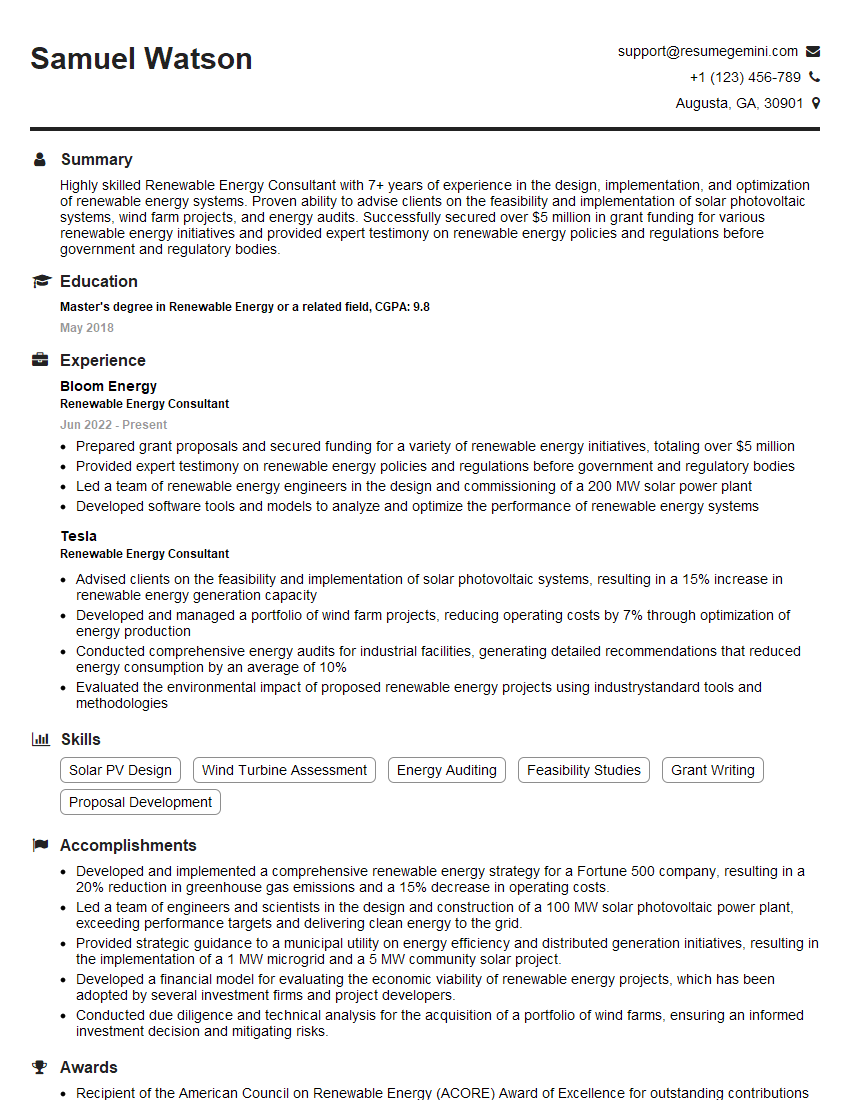
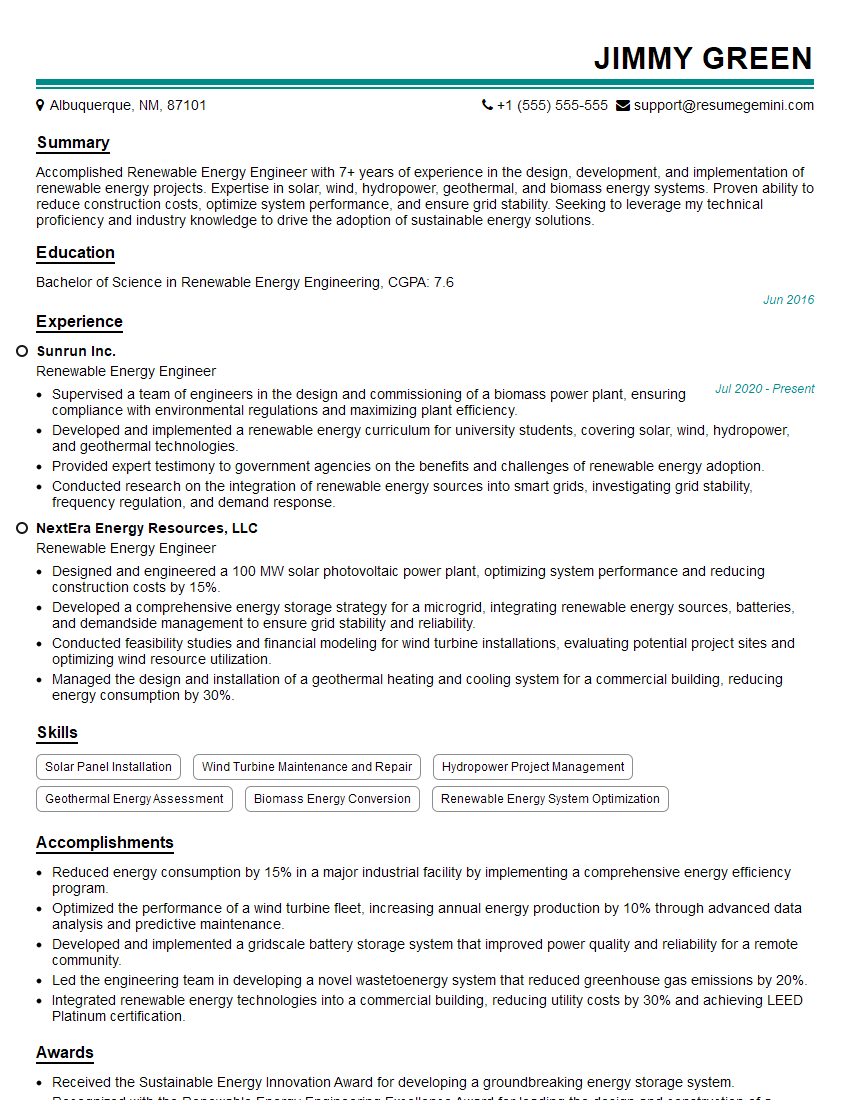
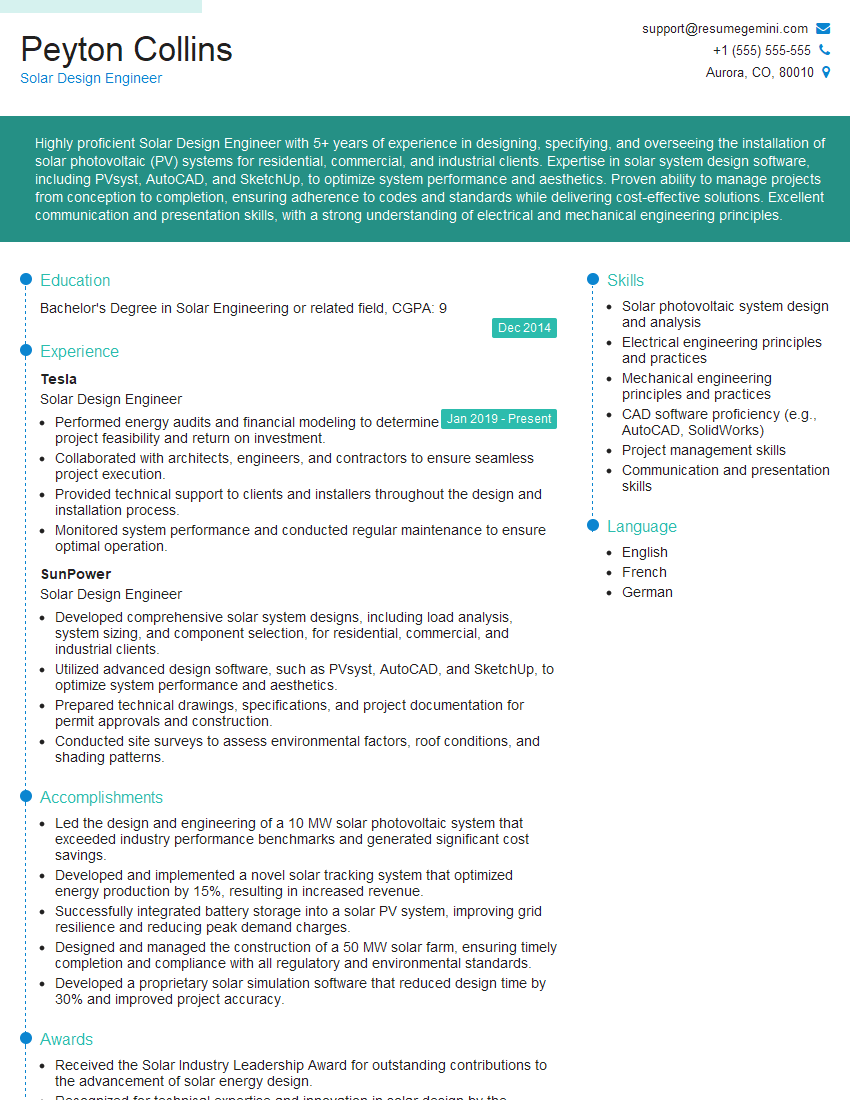
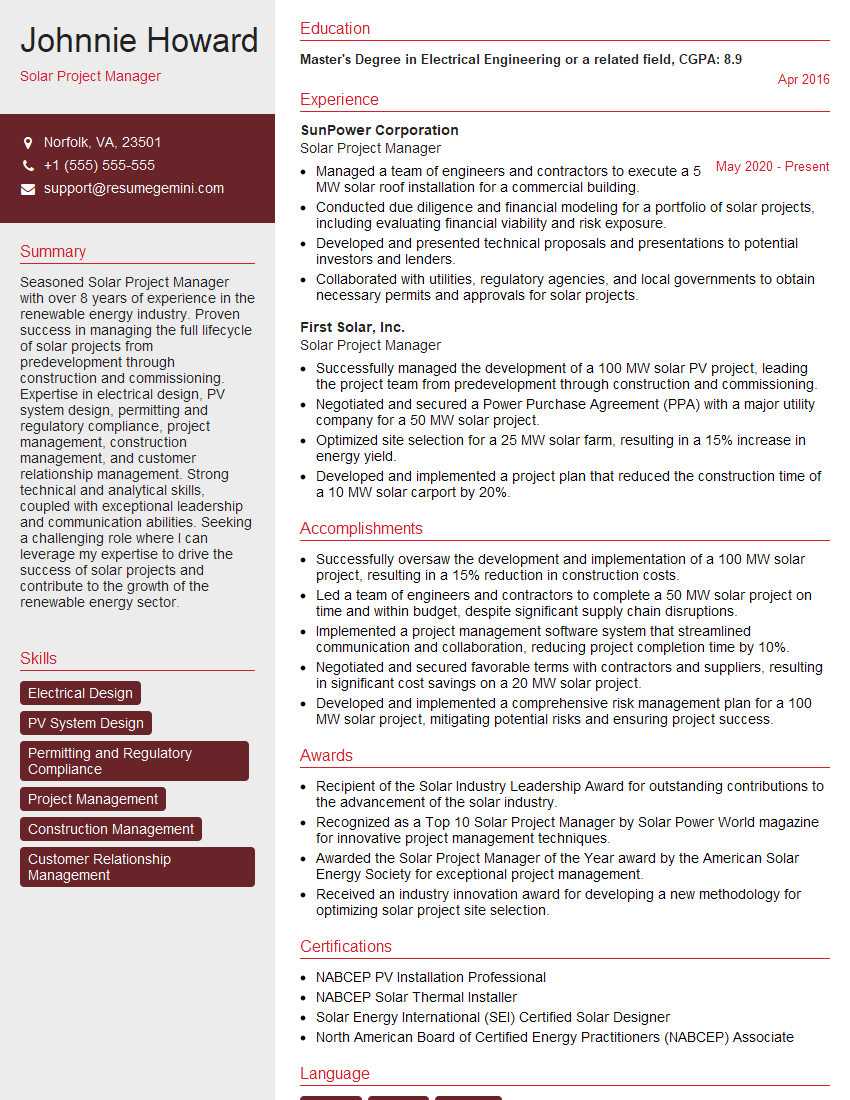
Mastering Rooftop Solar Design opens doors to a rewarding career in a rapidly growing industry. Demonstrate your expertise with a compelling resume that showcases your skills and experience. Creating an ATS-friendly resume is crucial for maximizing your job prospects. To help you build a professional and effective resume, we recommend using ResumeGemini. ResumeGemini provides a streamlined process and offers examples of resumes tailored to Rooftop Solar Design, ensuring your application stands out.


Explore more articles
Users Rating of Our Blogs
Share Your Experience
We value your feedback! Please rate our content and share your thoughts (optional).
What Readers Say About Our Blog
Very informative content, great job.
good