Interviews are more than just a Q&A session—they’re a chance to prove your worth. This blog dives into essential Environmental Control Systems Maintenance interview questions and expert tips to help you align your answers with what hiring managers are looking for. Start preparing to shine!
Questions Asked in Environmental Control Systems Maintenance Interview
Q 1. Describe your experience with troubleshooting malfunctioning HVAC systems.
Troubleshooting malfunctioning HVAC systems involves a systematic approach. I begin by carefully listening to the client’s description of the problem – is it no cooling, poor heating, strange noises, or inconsistent temperatures? Then, I perform a visual inspection, checking for obvious issues like tripped breakers, leaking refrigerant, or loose connections. My next step involves using diagnostic tools such as pressure gauges, multimeters, and temperature sensors to assess refrigerant levels, airflow, voltage, and amperage. For example, if a system isn’t cooling effectively, I’d check the refrigerant pressure – low pressure might indicate a leak, while high pressure could signal a compressor problem. If the problem persists, I move to component-level diagnostics, testing individual parts like blower motors, capacitors, and control boards. I always document my findings thoroughly, outlining the problem, the diagnostic process, and the solution implemented. One time, I diagnosed a seemingly simple lack of cooling to be a faulty capacitor on the compressor after checking refrigerant levels and airflow, highlighting the importance of a methodical process.
Q 2. Explain the principles of refrigeration cycles.
Refrigeration cycles are based on the principle that liquids absorb heat when they evaporate (vaporize) and release heat when they condense. The most common type is the vapor-compression cycle. It involves four main stages:
- Evaporation: The refrigerant, a low-pressure, low-temperature liquid, absorbs heat from the space to be cooled, vaporizing into a gas.
- Compression: The gaseous refrigerant is compressed by a compressor, raising its temperature and pressure.
- Condensation: The high-pressure, high-temperature gas releases heat to the surrounding environment (usually outdoors) as it condenses back into a liquid.
- Expansion: The high-pressure liquid refrigerant passes through an expansion valve, which lowers its pressure and temperature, preparing it to begin the cycle again.
Think of it like sweating: your body releases sweat (liquid), which evaporates and cools your skin. The refrigeration cycle works similarly, but using a special refrigerant that is designed for efficient heat transfer.
Q 3. What are the common causes of low refrigerant levels in an HVAC system?
Low refrigerant levels are a common problem in HVAC systems. The most frequent causes include:
- Leaks: These can occur in various parts of the system, including refrigerant lines, condensers, evaporators, or connections. Leaks can be caused by corrosion, vibration, or physical damage.
- Improper Installation: Incorrect installation of the system can lead to leaks or inefficient refrigerant flow.
- Component Failure: A failing compressor or expansion valve might lead to refrigerant loss.
Identifying the leak location requires using specialized equipment like electronic leak detectors or dye tracing. For example, I once discovered a slow leak in a soldered joint that only revealed itself after using a dye injection and pressure testing the system.
Q 4. How do you diagnose and repair a faulty compressor?
Diagnosing a faulty compressor begins with assessing the system’s performance. Symptoms include no cooling or heating, unusual noises (like knocking or squealing), high amperage draw, or overheating. I use a multimeter to measure the voltage and amperage draw of the compressor; high amperage might indicate a short circuit or mechanical problem. I’d also check the compressor’s oil level (often through sight glasses) and inspect for any signs of external damage or leaks. If a problem is suspected, I will often check starting and run capacitors for functionality. If the compressor is faulty, replacement is often necessary, involving careful removal, proper disposal of the old unit, and precise installation of the replacement, followed by a vacuum and recharge of the system to remove any air or moisture.
Q 5. Describe your experience with preventative maintenance on HVAC equipment.
Preventative maintenance is crucial for extending the lifespan and efficiency of HVAC equipment. My preventative maintenance routine includes:
- Visual inspection: Checking for any signs of damage, corrosion, or leaks.
- Cleaning: Cleaning condenser coils, evaporator coils, and air filters to ensure proper airflow.
- Testing: Verifying the proper operation of all components, including the compressor, blower motor, and control system.
- Lubrication: Lubricating moving parts as needed.
- Refrigerant check: Checking refrigerant levels and for leaks.
Regular preventative maintenance can prevent costly repairs down the road. For example, by regularly cleaning the condenser coils, we can maintain optimal efficiency and extend its lifespan, saving the customer both money and energy.
Q 6. What are the different types of HVAC systems and their applications?
Various types of HVAC systems exist, each suited for specific applications:
- Split Systems: These consist of an indoor unit (evaporator) and an outdoor unit (condenser), connected by refrigerant lines. Common in residential settings.
- Packaged Units: All components are housed in a single cabinet, often used in smaller commercial buildings.
- Heat Pumps: These can provide both heating and cooling using a refrigeration cycle, reversing the flow of refrigerant depending on the need. Energy efficient in moderate climates.
- Chillers: Large-scale refrigeration systems used in commercial and industrial buildings for cooling.
- VAV (Variable Air Volume) Systems: Provide varying amounts of air to different zones within a building, enhancing energy efficiency and comfort.
The choice of system depends on factors like building size, climate, budget, and energy efficiency requirements.
Q 7. Explain the importance of regular filter changes in HVAC systems.
Regular filter changes are critical for maintaining optimal HVAC system performance and indoor air quality. Dirty filters restrict airflow, reducing efficiency and potentially damaging the system. A clogged filter forces the system to work harder, consuming more energy and increasing wear and tear on components. Moreover, dirty filters trap dust, allergens, and other contaminants, compromising indoor air quality and potentially exacerbating allergies or respiratory problems. I recommend filter changes every 1-3 months, depending on usage and filter type. Neglecting filter changes leads to higher energy bills, reduced system lifespan, and poorer indoor air quality. Replacing the filter is a simple yet impactful aspect of maintenance.
Q 8. How do you interpret HVAC system schematics and blueprints?
HVAC schematics and blueprints are the roadmaps for any HVAC technician. They provide a visual representation of the entire system, detailing the layout of components like air handlers, chillers, pumps, and ductwork. Understanding these documents is crucial for effective maintenance and troubleshooting.
I approach interpreting them systematically. First, I identify the key components and their interconnections – tracing the flow of air, refrigerant, and water. I look for equipment specifications, pipe sizes, and valve locations. For example, a legend will usually define different line types (e.g., solid lines for refrigerant, dashed lines for condensate). I’ll cross-reference the schematics with the physical layout of the building to ensure alignment. Any discrepancies, like missing components or conflicting information, need immediate clarification.
Let’s say I’m working on a large commercial building. The blueprint will show me the precise location of a specific damper within the extensive ductwork. The schematic will show me how that damper is controlled – whether it’s pneumatic or electronically actuated, and its connection to the building automation system. This level of detail allows for efficient and accurate maintenance and repair.
Q 9. Describe your experience working with building automation systems (BAS).
Building Automation Systems (BAS) are the central nervous systems of modern buildings. My experience with BAS is extensive, encompassing various platforms like Tridium Niagara, Schneider Electric, and Siemens. I’m proficient in accessing and navigating these systems to monitor, control, and troubleshoot HVAC equipment. I can interpret data trends to predict potential failures and optimize energy efficiency.
For instance, I’ve used BAS to remotely adjust the setpoints of air handling units based on occupancy sensors, resulting in significant energy savings. I’ve also leveraged BAS diagnostics to identify a failing compressor motor in a chiller long before it resulted in a complete system failure. This prevented costly downtime and repairs. My skills extend to programming and configuring BAS functionalities, enabling me to customize control strategies for optimal building performance.
Troubleshooting within a BAS often involves identifying the root cause of a problem by analyzing data points. For example, if a zone is consistently too hot, I’d use the BAS to investigate potential causes such as malfunctioning sensors, damper issues, or problems with the heating coil. The ability to drill down into the data and identify the problem rapidly is essential.
Q 10. How do you ensure the safety of yourself and others while working on HVAC systems?
Safety is paramount in HVAC work. It’s not just about protecting myself, but everyone in the vicinity. My approach to safety is proactive and multi-faceted. I always begin by performing a thorough job hazard analysis, identifying potential risks associated with the task at hand. This includes hazards associated with working at heights, electrical work, exposure to refrigerants, and confined space entry.
I adhere strictly to established safety procedures, including lockout/tagout procedures to prevent accidental energization of equipment. I wear appropriate personal protective equipment (PPE), such as safety glasses, gloves, and respirators, tailored to the specific task and hazards. I regularly inspect equipment and tools to ensure they are in good working order and safe to use. Furthermore, I never compromise safety for speed. Taking the extra time to follow safety procedures is always worth it.
For example, before entering a confined space like a chilled water pump room, I would perform an atmospheric test to check for oxygen levels and the presence of hazardous gases. I’d also ensure proper ventilation and have a safety observer present. My commitment to safety extends beyond personal protection; it encompasses creating a safe environment for others around me by consistently applying best practices and maintaining vigilance.
Q 11. What are your experience with different types of refrigerants and their environmental impact?
My experience encompasses a wide range of refrigerants, from older ozone-depleting substances like R-22 to modern, environmentally friendly alternatives such as R-410A, R-32, and R-1234yf. I understand the properties of each refrigerant, including its thermodynamic characteristics and its environmental impact, notably its Global Warming Potential (GWP) and Ozone Depletion Potential (ODP).
R-22, for instance, has been phased out due to its high ODP. R-410A is a more environmentally friendly alternative but still has a relatively high GWP. The industry is shifting towards refrigerants with lower GWPs, such as R-32 and R-1234yf, to minimize greenhouse gas emissions. Understanding these differences is critical for selecting appropriate refrigerants for new installations and for managing the lifecycle of existing systems. Proper refrigerant handling and recovery techniques are crucial to minimizing environmental impact and adhering to regulations like the Montreal Protocol and other related environmental protection laws.
Practical experience involves handling refrigerant safely during maintenance, repair, and recovery operations. This includes using proper equipment like recovery machines and leak detection tools, following established procedures to avoid leaks, and always ensuring proper disposal of refrigerants.
Q 12. Explain the concept of air balancing in HVAC systems.
Air balancing is the process of adjusting the airflow within an HVAC system to ensure that each space receives the correct amount of air. This is crucial for maintaining comfortable temperatures and proper indoor air quality. An unbalanced system can lead to uncomfortable temperatures in some areas, excessive energy consumption, and potential health issues.
The process involves measuring the airflow at various points within the system using specialized tools such as anemometers. Then, we adjust dampers and other components to achieve the desired airflow rates based on the design specifications. Air balancing typically takes place after the installation of the HVAC system and periodically as part of ongoing maintenance. There are various methods of air balancing, including balancing dampers, and adjusting fan speeds and other control elements.
For example, if a particular office space is consistently too cold despite the thermostat settings, air balancing can reveal that the space is receiving less airflow than it should. This could be due to a partially closed damper or a blockage in the ductwork. By adjusting the dampers, we can ensure proper airflow distribution, resolving the temperature issue and enhancing the system’s efficiency. Poorly balanced systems often lead to uneven temperatures, wasted energy, and occupant discomfort.
Q 13. How do you handle emergency repairs on HVAC systems?
Emergency HVAC repairs demand a swift and efficient response. My approach prioritizes safety and the quick restoration of critical functions. I begin by assessing the situation quickly to determine the nature of the problem and its immediate impact. This might involve evaluating the symptoms – for example, complete loss of cooling, localized overheating, or unusual noises. My primary objective is to mitigate the immediate issue and prevent further damage.
If a critical system failure occurs, such as a complete loss of cooling during a heatwave, I prioritize the most urgent repairs first, while still adhering to safety protocols. This often means working outside of normal operating hours. The repairs might entail replacing a failed component or implementing temporary solutions to restore functionality while permanent repairs are planned. Thorough documentation of all emergency repairs, including the problem, corrective action, and any safety concerns, is crucial for future reference and analysis.
For instance, a sudden compressor failure in a chiller would require immediate action. I would isolate the faulty unit, secure the area, and assess the potential impact on building occupants. Temporary solutions such as using backup chillers or auxiliary cooling systems might be implemented until a permanent repair or replacement is completed. Post-repair, a thorough inspection is crucial to ensure the system is functioning optimally and safely.
Q 14. Describe your experience with different types of HVAC control systems (e.g., pneumatic, electronic).
My experience with HVAC control systems encompasses various types, from older pneumatic systems to modern, sophisticated digital electronic controls. Pneumatic systems, while simple in design, rely on compressed air to actuate dampers and valves. They are generally less precise and more prone to leaks than electronic systems.
Electronic systems, on the other hand, offer greater precision and flexibility through the use of microprocessors and digital sensors. These systems can integrate with building automation systems, providing sophisticated control and monitoring capabilities. I’m proficient in working with both direct digital control (DDC) and programmable logic controller (PLC)-based systems. I’m familiar with various communication protocols like BACnet and Modbus for exchanging data between different components.
For example, troubleshooting a pneumatic system might involve checking for air leaks using specialized equipment. With electronic systems, troubleshooting would often involve using a hand-held controller or a computer interface to access system data, diagnose fault codes, and adjust parameters. My experience spans across these different control systems allows me to effectively diagnose and resolve control issues across a variety of building types and system configurations.
Q 15. Explain the principles of heat transfer.
Heat transfer is the movement of thermal energy from a region of higher temperature to a region of lower temperature. This happens through three primary mechanisms: conduction, convection, and radiation.
- Conduction: Heat transfer through direct contact. Imagine touching a hot stove – the heat directly transfers to your hand. In HVAC, this is seen in the transfer of heat through the metal walls of a duct or heat exchanger.
- Convection: Heat transfer through the movement of fluids (liquids or gases). Think of boiling water – the hot water rises, and cooler water sinks, creating a cycle. In HVAC, this is crucial in the movement of air within the ductwork and around the heat exchanger, transferring heat to or from the air.
- Radiation: Heat transfer through electromagnetic waves. The sun warming the earth is a prime example. In HVAC, radiant heating systems directly transfer heat to objects and people in a room through infrared radiation, while the sun’s radiant heat on a building’s surface contributes to the heating load.
Understanding these principles is fundamental to designing, installing, and maintaining efficient HVAC systems. For example, proper insulation minimizes conductive heat loss, while optimized airflow maximizes convective heat transfer. Consideration of solar radiation is critical in passive building design.
Career Expert Tips:
- Ace those interviews! Prepare effectively by reviewing the Top 50 Most Common Interview Questions on ResumeGemini.
- Navigate your job search with confidence! Explore a wide range of Career Tips on ResumeGemini. Learn about common challenges and recommendations to overcome them.
- Craft the perfect resume! Master the Art of Resume Writing with ResumeGemini’s guide. Showcase your unique qualifications and achievements effectively.
- Don’t miss out on holiday savings! Build your dream resume with ResumeGemini’s ATS optimized templates.
Q 16. How do you troubleshoot electrical issues in HVAC systems?
Troubleshooting electrical issues in HVAC systems requires a systematic approach, always prioritizing safety. First, disconnect power to the system before starting any work. Then:
- Visual Inspection: Look for obvious signs like loose wires, damaged insulation, or burnt components. Often, a simple visual check reveals the problem.
- Voltmeter Checks: Use a multimeter to check voltage levels at various points in the system, comparing them to the system’s specifications. This helps identify faulty wiring, breakers, or control components.
- Continuity Testing: Test for continuity in wires and components to ensure there are no breaks in the electrical path. A lack of continuity indicates a broken wire or faulty component.
- Component Testing: Isolate components (e.g., motors, capacitors, relays) and test them individually using appropriate test methods. For example, checking the capacitance of a capacitor using a capacitor meter, or testing the resistance of a motor winding with a multimeter.
- Control System Diagnostics: Many modern HVAC systems have advanced control systems with built-in diagnostic capabilities. These systems often provide error codes that can pinpoint the electrical problem. Understanding these codes and their meanings is critical.
For instance, I once worked on a system where a condenser fan motor failed to start. Using a voltmeter, I identified a lack of voltage at the motor terminals. Further investigation revealed a faulty contactor, which I replaced, restoring the system’s functionality.
Q 17. What are the common causes of air leaks in ductwork?
Air leaks in ductwork are a common problem leading to reduced efficiency and discomfort. Several factors contribute:
- Improper Connections: Gaps between duct sections, poorly sealed joints, and missing fasteners are frequent culprits. These are often found in areas that are difficult to access and are often missed during initial installation.
- Damaged Ductwork: Physical damage such as punctures, cracks, or holes caused by rodents or construction activities leads to air leakage.
- Poor Sealing: Inadequate sealing around duct penetrations through walls or floors. A failure to use mastic sealant or flexible duct sealant appropriately is a major cause of air leaks.
- Duct Material Degradation: Over time, flexible ductwork can deteriorate and crack, creating leaks. Metal ductwork can rust and corrode.
- Improper Sizing and Design: Ductwork that is too small or poorly designed can cause excessive pressure drops, leading to leaks at poorly sealed joints.
Identifying leaks requires careful inspection, using techniques such as visual checks, smoke testing (using a smoke pen or machine), or pressure testing the ductwork to detect pressure drops indicating leaks. Repairing these leaks involves sealing gaps with mastic or tape, replacing damaged sections, or installing additional insulation. Regular maintenance checks can help prevent significant leaks from occurring.
Q 18. How do you identify and address water leaks in HVAC systems?
Water leaks in HVAC systems can stem from several sources and necessitate prompt attention to prevent damage.
- Condensation: Excessive moisture in the air can condense on cold surfaces such as evaporator coils or ductwork. Poor insulation or inadequate ventilation can exacerbate this. A visual inspection to check for proper drainage is a common starting point.
- Leaking Condensate Drain Lines: The drain lines carrying condensate from the evaporator coil can become clogged, cracked, or disconnected, resulting in water leaks. Checking the lines for clogs or damage is essential.
- Refrigerant Leaks: Leaks in the refrigerant lines can lead to frost or ice buildup, and eventually water as the ice melts. Using specialized refrigerant leak detection tools is necessary to identify these leaks.
- Leaking Coils: Cracks or holes in the evaporator or condenser coils can cause refrigerant leaks, leading to water leaks.
- Roof Leaks: Leaks in the building’s roof can penetrate into the HVAC equipment, causing water damage. This requires coordinating with roofing professionals.
Identifying the source requires a thorough investigation, often involving visual inspection, moisture meters, and dye tracing. Repairing the leak involves fixing the drain lines, patching the coils, sealing refrigerant leaks, or addressing roof leaks. This can involve replacing the components if severely damaged.
Q 19. Describe your experience with commissioning new HVAC systems.
Commissioning new HVAC systems is a critical process to ensure proper performance and efficiency. My experience includes:
- Pre-commissioning: Reviewing design documents, attending pre-construction meetings, and verifying the equipment specifications against the design plans. This stage helps prevent problems during the construction phase.
- System Testing: Performing comprehensive testing of all components and subsystems to ensure that they are functioning correctly. This includes verifying airflow, pressure drops, temperature, and electrical parameters.
- Documentation: Carefully documenting all test results, observations, and adjustments made during the commissioning process. This creates a baseline for future maintenance and troubleshooting.
- Start-up and Adjustment: Assisting with the start-up of the system and making any necessary adjustments to optimize performance and efficiency. Fine-tuning controls and balancing the system to meet design specifications is a major part of this stage.
- Training: Providing training to building operators on proper operation and maintenance of the HVAC system. This ensures long-term efficient operation and helps to avoid future problems.
For example, in a recent project, pre-commissioning activities revealed an error in the duct sizing which could have resulted in inadequate cooling. By catching this early, changes were made to the design before construction, avoiding costly rework.
Q 20. Explain the concept of energy efficiency in HVAC systems.
Energy efficiency in HVAC systems refers to minimizing energy consumption while maintaining desired indoor environmental conditions. This involves optimizing several factors:
- Efficient Equipment: Using high-efficiency HVAC equipment (e.g., high SEER-rated air conditioners, high AFUE-rated furnaces) which directly reduces energy consumption. SEER and AFUE ratings measure the efficiency of these components.
- Proper Sizing: Ensuring the system is properly sized to match the building’s heating and cooling load. An oversized system cycles on and off frequently, reducing efficiency and increasing wear-and-tear.
- Effective Air Distribution: Optimizing airflow through the ductwork and within the building. Proper duct sealing, balancing, and insulation minimizes energy losses.
- Advanced Control Systems: Using smart thermostats, variable-speed drives, and building automation systems to optimize system operation. These systems can reduce energy consumption by automatically adjusting to changing conditions.
- Building Envelope Improvements: Enhancing the building’s insulation, windows, and air sealing to reduce heat gain or loss. This minimizes the load on the HVAC system, reducing energy needs.
Energy-efficient systems reduce operating costs, minimize environmental impact, and improve occupant comfort. Simple steps such as regular filter changes are essential to maintaining efficiency over time.
Q 21. What are your strategies for improving the energy efficiency of an existing HVAC system?
Improving the energy efficiency of an existing HVAC system can involve several strategies:
- Upgrade Components: Replacing old, inefficient components (such as motors, fans, or coils) with more efficient models. This is particularly effective for older systems.
- Improve Ductwork: Sealing air leaks in the ductwork, insulating ducts, and optimizing airflow. This reduces energy loss due to air leaks and improves efficiency.
- Install a Variable-Speed Drive (VSD): VSDs control the speed of fans and pumps, allowing for more precise control and reduced energy consumption. They can reduce motor energy usage significantly.
- Upgrade Controls: Installing smart thermostats or upgrading the building automation system to optimize system operation. This includes setting optimized setpoints and integrating with other building systems.
- Implement a Preventative Maintenance Program: Regular maintenance, including filter changes, coil cleaning, and component inspections, helps to ensure optimal system performance and prevent energy-wasting inefficiencies. A maintenance schedule is critical.
- Building Envelope Upgrades: While not directly related to the HVAC system itself, improving building insulation, windows, and sealing reduces the heating and cooling load on the system, improving its overall energy efficiency.
The most effective strategies depend on the specific system and building characteristics. A comprehensive energy audit helps prioritize improvements and identify the areas with the greatest potential for energy savings. For example, a simple upgrade to a programmable thermostat, properly scheduled, can significantly reduce energy consumption in many buildings.
Q 22. How do you maintain accurate records of HVAC system maintenance and repairs?
Maintaining accurate HVAC system records is crucial for preventative maintenance, warranty claims, and regulatory compliance. My approach involves a multi-faceted system leveraging both digital and physical methods.
- Computerized Maintenance Management System (CMMS): I utilize a CMMS software (like Fiix, UpKeep, or similar) to digitally log all maintenance activities, including preventative maintenance schedules, repairs performed, parts used, labor hours, and associated costs. This allows for easy data retrieval, trend analysis, and reporting. For example, tracking filter changes helps identify potential airflow issues early on.
- Physical Logs and Work Orders: While digital records are preferred, I maintain physical work orders, signed by both the technician and the client, as a backup and for immediate access in situations with limited internet connectivity. These logs include details of the performed work, including timestamps and photos of before and after conditions.
- Asset Tagging: Each piece of equipment has a unique asset tag, linked to its record in the CMMS, for efficient tracking and identification of maintenance history.
- Regular Audits: I conduct regular audits to ensure data accuracy and completeness in both digital and physical records. This helps to identify any discrepancies and correct them promptly.
This comprehensive approach ensures that all maintenance and repair information is readily accessible, accurate, and compliant with industry standards.
Q 23. Describe your experience working with various types of HVAC equipment (e.g., chillers, boilers, air handlers).
My experience encompasses a wide range of HVAC equipment. I’ve worked extensively with chillers (both absorption and centrifugal), boilers (both high-pressure and low-pressure systems), and various air handlers (including VAV and constant volume systems).
- Chillers: I’m proficient in troubleshooting chiller issues such as low capacity, high head pressure, and condenser fouling. For example, I’ve successfully diagnosed and repaired a centrifugal chiller experiencing low capacity by identifying and replacing a faulty compressor motor.
- Boilers: I have experience with boiler maintenance, including water treatment, combustion efficiency tuning, and safety system checks. In one instance, I identified a leaky heat exchanger in a high-pressure boiler, preventing a potential hazardous situation.
- Air Handlers: My expertise includes maintenance and repair of air handlers, including filter changes, belt replacements, balancing dampers, and troubleshooting airflow issues. I often use tools such as a manometer to measure pressure drops across filters, helping to pinpoint areas needing attention.
My experience ensures I can effectively maintain and repair various HVAC systems in diverse settings.
Q 24. What are the common safety regulations related to HVAC work?
Safety is paramount in HVAC work. Common regulations I adhere to include:
- Lockout/Tagout (LOTO): Before performing any maintenance or repair on energized equipment, LOTO procedures are meticulously followed to prevent accidental energization and potential injury. This involves disconnecting power sources, locking them out, and tagging them with clear warnings.
- Personal Protective Equipment (PPE): Appropriate PPE is always worn, including safety glasses, gloves, respirators (when working with refrigerants or in dusty environments), and hearing protection (when operating loud machinery).
- Confined Space Entry: If working in confined spaces (e.g., inside air handlers), procedures for confined space entry, including atmospheric monitoring, ventilation, and rescue plans, are strictly followed.
- Refrigerant Handling: Safe handling of refrigerants is critical. Proper procedures for refrigerant recovery, recycling, and disposal are strictly adhered to, in accordance with EPA regulations.
- Fall Protection: When working at heights, appropriate fall protection measures, such as harnesses and safety lines, are implemented.
Regular safety training and adherence to these regulations are essential for preventing accidents and ensuring a safe working environment.
Q 25. How do you handle conflicts or disagreements with colleagues or supervisors?
Conflict resolution is a crucial skill in any team environment. My approach involves professional communication and collaborative problem-solving.
- Active Listening: I begin by actively listening to understand the other person’s perspective, ensuring all parties feel heard and valued.
- Clear Communication: I communicate my thoughts and concerns clearly and respectfully, focusing on the issue at hand, not resorting to personal attacks.
- Finding Common Ground: I look for common ground and areas of agreement to build a foundation for a solution.
- Collaboration: I collaborate with the other party to develop a mutually acceptable solution. If the conflict involves a supervisor, I respectfully explain my viewpoint and seek their guidance.
- Escalation (If Necessary): If the conflict cannot be resolved internally, I escalate it to the appropriate management level, providing a detailed and objective account of the situation.
My goal is always to find a solution that fosters a positive and productive work environment.
Q 26. Describe your experience with diagnosing and resolving problems related to indoor air quality.
Diagnosing and resolving indoor air quality (IAQ) issues requires a systematic approach. I begin by identifying symptoms, such as musty odors, excessive dust, or occupant complaints of respiratory issues.
- Visual Inspection: I conduct a thorough visual inspection of the HVAC system, looking for signs of mold growth, leaks, or debris buildup.
- Air Sampling: I utilize air sampling techniques to identify the presence of pollutants such as mold spores, bacteria, or volatile organic compounds (VOCs). Results guide corrective actions.
- Testing and Measurement: I use tools like IAQ meters to measure temperature, humidity, carbon dioxide levels, and other parameters to assess IAQ. High CO2 levels might indicate inadequate ventilation.
- Troubleshooting: Once the source of poor IAQ is identified, I address the issue. This could involve cleaning or replacing air filters, repairing leaks, increasing ventilation rates, or addressing mold issues.
- Documentation: I meticulously document all findings and actions taken to create a record for future reference and to verify the effectiveness of implemented solutions.
Addressing IAQ problems protects the health and well-being of building occupants and contributes to a comfortable and productive environment.
Q 27. Explain your understanding of different types of HVAC system controls (e.g., thermostats, sensors).
HVAC system controls are essential for efficient and comfortable operation. My understanding includes various types, including:
- Thermostats: These devices regulate temperature by controlling the HVAC system’s operation based on setpoints. I have experience working with various types, including programmable, smart, and wireless thermostats. For example, I’ve programmed smart thermostats to optimize energy consumption through occupancy scheduling.
- Sensors: Sensors provide critical data to the control system, including temperature sensors (measuring air and water temperatures), pressure sensors (monitoring pressure drops across filters), and humidity sensors. Understanding sensor data is key to identifying system problems.
- Programmable Logic Controllers (PLCs): PLCs are the brains of many modern HVAC systems. I’m familiar with PLC programming and troubleshooting, allowing me to make adjustments or repairs as needed. My experience includes reading and interpreting PLC ladder logic diagrams.
- Building Management Systems (BMS): I have experience interfacing with BMS, allowing centralized monitoring and control of various HVAC systems within a building. BMS often provide valuable data for trend analysis and predictive maintenance.
A solid understanding of these controls allows me to optimize system performance, improve energy efficiency, and ensure occupant comfort.
Q 28. What are your experience with using diagnostic tools for HVAC systems?
Proficiency with diagnostic tools is essential for efficient troubleshooting. I regularly use various tools, including:
- Multimeters: Used to measure voltage, current, and resistance, helping to identify electrical faults within the system.
- Manometers: Used to measure pressure differences across filters and other components, helping to identify airflow restrictions.
- Refrigerant Leak Detectors: Essential for identifying refrigerant leaks in refrigeration systems, preventing environmental damage and ensuring system efficiency.
- Temperature and Humidity Sensors: Used to measure temperatures and humidity levels at various points in the system, allowing for a comprehensive assessment of system performance.
- Thermal Cameras: These cameras detect temperature differences, which can help identify faulty components, such as failing motors or insulation deficiencies.
- Data Loggers: Used to collect data over time, helping to identify trends and patterns that might indicate potential problems.
My experience with these tools allows for accurate diagnosis and efficient repair of HVAC systems, ensuring optimal performance and reliability.
Key Topics to Learn for Environmental Control Systems Maintenance Interview
- HVAC System Fundamentals: Understanding the principles of heating, ventilation, and air conditioning (HVAC) systems, including refrigeration cycles, air distribution, and heat transfer mechanisms.
- Practical Application: Troubleshooting common HVAC issues such as refrigerant leaks, malfunctioning compressors, and inadequate airflow, and applying diagnostic techniques to identify root causes.
- Building Automation Systems (BAS): Familiarization with BAS functionalities, including monitoring, control, and data logging of environmental parameters within buildings. Understanding different control strategies (e.g., PID control).
- Practical Application: Configuring and programming BAS to optimize energy efficiency and maintain desired environmental conditions, interpreting data from BAS to identify maintenance needs.
- Preventive Maintenance Schedules & Procedures: Developing and implementing effective preventative maintenance programs to minimize equipment failures and extend system lifespan.
- Practical Application: Performing routine inspections, cleaning, and lubrication of HVAC components, accurately documenting maintenance activities and generating reports.
- Safety Regulations and Compliance: Understanding and adhering to relevant safety regulations, including handling refrigerants, working at heights, and lockout/tagout procedures.
- Practical Application: Implementing safe work practices, using appropriate personal protective equipment (PPE), and ensuring compliance with environmental regulations.
- Troubleshooting and Diagnostics: Employing systematic troubleshooting techniques to diagnose and repair complex system malfunctions using specialized tools and diagnostic equipment.
- Practical Application: Interpreting diagnostic codes, using electrical schematics and blueprints, and effectively communicating repair solutions to supervisors and clients.
- Energy Efficiency and Sustainability: Implementing strategies to optimize energy consumption and reduce environmental impact, such as implementing energy-efficient equipment and control strategies.
- Practical Application: Analyzing energy usage data, identifying areas for improvement, and recommending modifications to enhance energy efficiency.
Next Steps
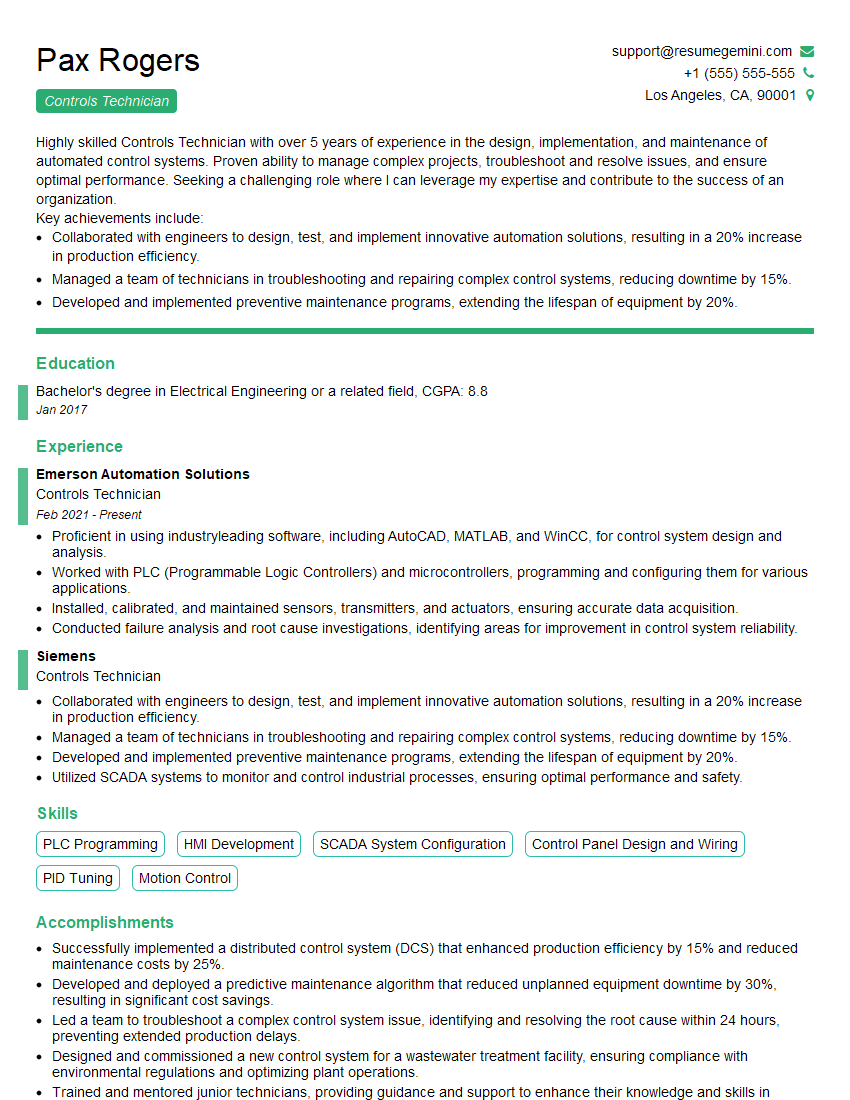
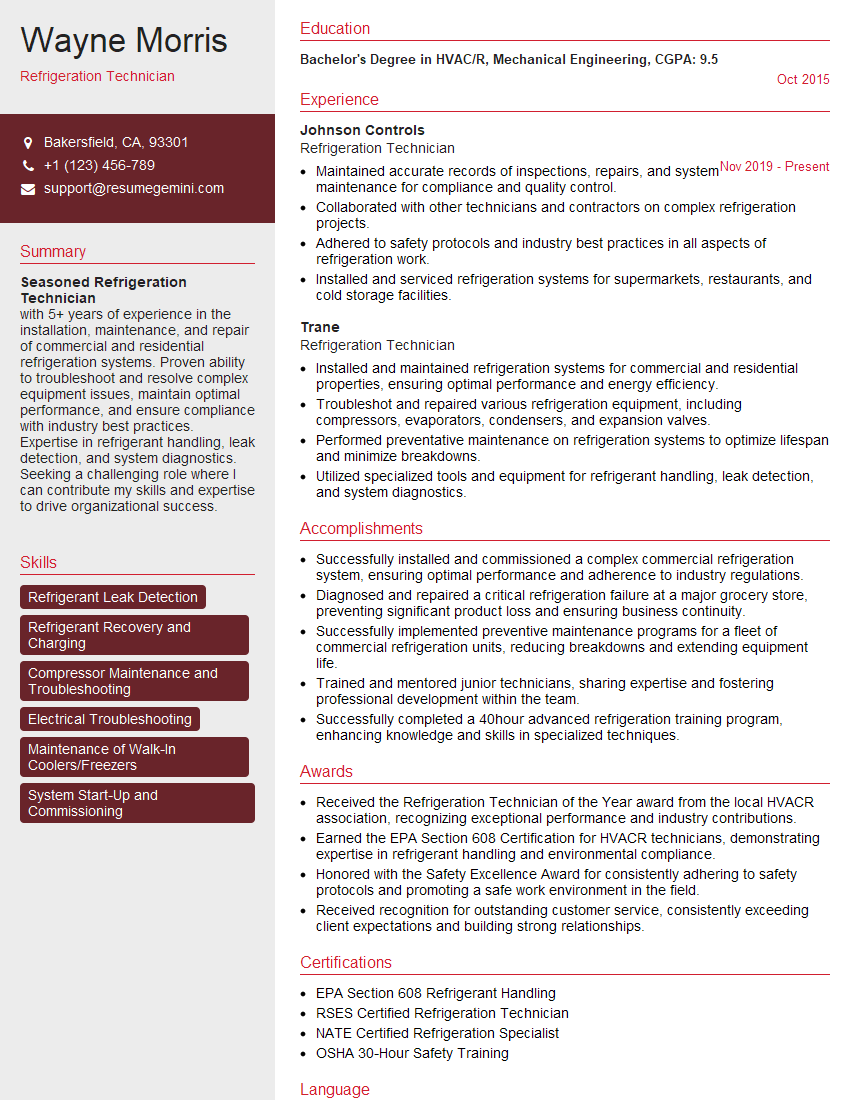
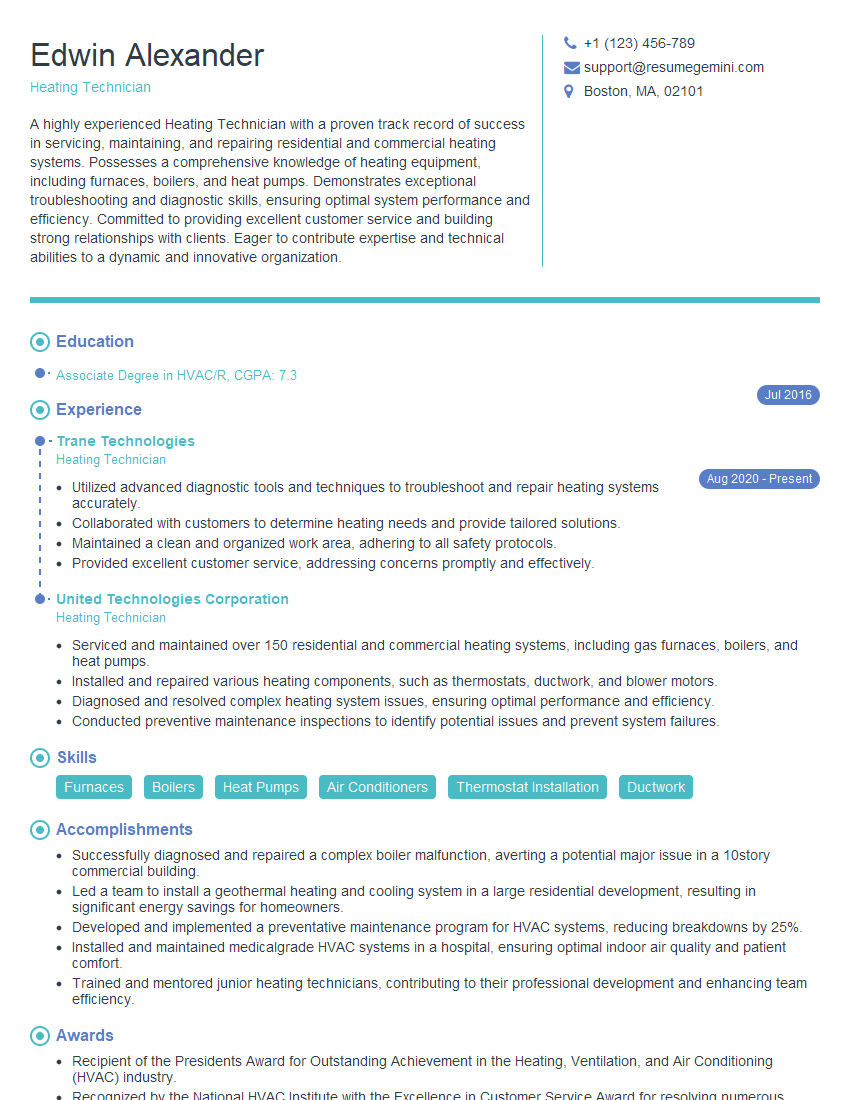
Mastering Environmental Control Systems Maintenance opens doors to a rewarding career with excellent growth potential, offering opportunities for specialization and advancement into supervisory or management roles. A strong resume is crucial for showcasing your skills and experience to potential employers. Creating an ATS-friendly resume is essential for maximizing your job prospects. ResumeGemini is a trusted resource that can help you build a professional and effective resume tailored to the specific requirements of Environmental Control Systems Maintenance roles. Examples of resumes tailored to this field are available to help you get started.
Explore more articles
Users Rating of Our Blogs
Share Your Experience
We value your feedback! Please rate our content and share your thoughts (optional).
What Readers Say About Our Blog
Very informative content, great job.
good