Cracking a skill-specific interview, like one for Experience in Studio Environment, requires understanding the nuances of the role. In this blog, we present the questions you’re most likely to encounter, along with insights into how to answer them effectively. Let’s ensure you’re ready to make a strong impression.
Questions Asked in Experience in Studio Environment Interview
Q 1. Describe your experience working within a collaborative studio environment.
Collaboration is the lifeblood of a successful studio. My experience spans numerous projects where I’ve worked seamlessly with designers, developers, producers, and clients. I thrive in environments that foster open communication and shared responsibility. I’ve actively participated in daily stand-up meetings, sprint planning sessions, and design critiques, always contributing constructively and offering solutions. For example, on a recent rebranding project, I collaborated closely with the design team, providing constant feedback on technical feasibility and ensuring a smooth transition from concept to implementation. This involved actively participating in brainstorming sessions, presenting technical limitations and advantages of different approaches, and helping bridge the communication gap between the creative vision and technical realities.
I’m adept at using collaborative tools like Slack and Microsoft Teams for quick communication and file sharing, and project management software like Jira or Asana for task tracking and progress monitoring. This ensures everyone is on the same page, reducing misunderstandings and streamlining the workflow.
Q 2. What software and hardware are you proficient with in a studio setting?
My proficiency extends across a wide range of software and hardware. I’m highly skilled in industry-standard software such as Adobe Creative Suite (Photoshop, Illustrator, InDesign), Figma, and Sketch for design and prototyping. I’m also proficient in various coding languages including HTML, CSS, JavaScript, and have experience with backend technologies like Node.js and Python. On the hardware side, I’m comfortable working with high-end iMacs, Wacom tablets, and various digital cameras, ensuring optimal image quality.
I understand the importance of maintaining a well-organized and efficient workstation, understanding that a clean workspace leads to a clear mind and improved productivity. I prioritize efficient file management and backup strategies, regularly saving my work in a structured manner to avoid potential data loss.
Q 3. Explain your workflow for managing multiple projects simultaneously in a studio.
Managing multiple projects effectively involves a robust system of organization and prioritization. I typically use project management software like Asana or Jira, creating separate boards for each project with clearly defined tasks, deadlines, and assignees. I break down large projects into smaller, manageable tasks, assigning each a priority level based on urgency and importance. I employ time-blocking techniques, allocating specific time slots for focused work on each project. I utilize Kanban boards to visualize the workflow, identify bottlenecks, and re-prioritize as needed.
For example, in a situation where I was simultaneously working on a website redesign and a mobile app development, I used Asana to track tasks and dependencies across both projects. This allowed me to stay on top of deadlines for each project while maintaining a consistent workflow.
Q 4. How do you handle conflicting deadlines or priorities in a studio environment?
Conflicting deadlines and priorities are inevitable in a fast-paced studio environment. My approach involves proactive communication and collaborative problem-solving. I immediately flag potential conflicts to the project manager, presenting alternative solutions and proposing adjustments to timelines or task assignments. This often involves prioritizing tasks based on their impact and urgency, sometimes re-negotiating deadlines with clients to ensure the project’s quality is not compromised.
For instance, if a high-priority project faced a delay, I would proactively communicate the situation to all stakeholders and present options to mitigate the impact, possibly by re-allocating resources or adjusting the scope.
Q 5. Describe your experience with version control systems in a studio context.
Version control systems are essential for maintaining the integrity and collaborative nature of studio projects. I have extensive experience with Git, both using the command line and through GUI clients like Sourcetree. I understand branching strategies, merging, and resolving conflicts. Using Git allows for easy tracking of changes, collaboration among team members, and the ability to revert to previous versions if necessary.
A real-world example: during the development of a large-scale website, our team utilized Git to manage the codebase. Each developer worked on separate branches, and Git ensured that all changes were tracked, allowing for seamless merging and conflict resolution, preventing any accidental overwriting of crucial code.
Q 6. How do you ensure consistent quality and branding across projects in a studio?
Maintaining consistent quality and branding is paramount. This involves establishing clear style guides that outline visual elements, typography, color palettes, and brand voice. These guidelines act as a central repository for all team members to reference. I actively participate in creating and updating these guidelines, ensuring that they are comprehensive and easily accessible. Regular design reviews and feedback sessions help to maintain consistency across projects.
For example, I’ve helped create a style guide for a new client which includes brand colours, font choices, logo usage guidelines, image styles, and voice guidelines. This style guide was then shared with all team members across multiple projects to ensure brand consistency across all deliverables.
Q 7. Explain your process for troubleshooting technical issues in a studio setting.
Troubleshooting technical issues requires a systematic approach. I start by identifying the problem, collecting relevant information (error messages, system logs), and attempting to reproduce the issue. I then consult documentation, search online forums, and utilize debugging tools to diagnose the root cause. If I’m unable to resolve the issue independently, I collaborate with colleagues or seek help from external resources.
For example, recently a software plugin caused rendering issues in a project. After thorough investigation, I discovered a conflict with other plugins. By systematically disabling each plugin, I identified the source and provided a solution either by updating the conflicting plugins or finding alternative solutions. Open communication about technical challenges is vital to preventing similar issues in the future and contributing to a collaborative learning environment.
Q 8. How do you communicate effectively with team members and clients in a studio environment?
Effective communication in a studio environment hinges on clarity, active listening, and choosing the right medium. With team members, I prioritize face-to-face conversations for complex issues or brainstorming sessions, leveraging tools like Slack or Microsoft Teams for quick updates or project-specific discussions. I use a clear, concise style, avoiding jargon, and always confirm understanding. With clients, I tailor my communication to their technical proficiency. For instance, I might use visual aids and simple language for clients less familiar with the technical aspects, while offering detailed technical reports for clients with a stronger background. Regular check-ins, progress reports, and proactive communication of potential roadblocks are key to maintain transparency and build trust.
For example, during a recent project, a client was concerned about a deadline. Instead of simply responding with a ‘yes, we can meet it,’ I scheduled a call, walked them through our workflow, highlighted the completed tasks, and proactively addressed potential risks. This approach not only reassured them but also strengthened our working relationship.
Q 9. Describe a time you had to adapt to a change in the studio’s workflow.
In a previous studio, we transitioned from a waterfall methodology to an agile approach. Initially, this was challenging as it required a shift in mindset and processes. We had to learn to embrace iterative development, prioritize tasks differently, and adapt to the faster pace of sprints. My approach was to actively participate in training sessions, seek mentorship from experienced agile practitioners, and thoroughly study the new tools and processes. I focused on understanding the core principles of agile, such as collaboration and flexibility, and applied these to my daily tasks. This included actively participating in daily stand-ups, sprint planning, and retrospectives. The result was a significant increase in team collaboration, faster feedback loops, and a more adaptable and efficient workflow.
Q 10. How do you prioritize tasks and manage your time effectively in a busy studio?
Prioritizing tasks and managing time in a busy studio requires a structured approach. I utilize techniques like Eisenhower Matrix (Urgent/Important), where I categorize tasks based on urgency and importance. This helps me focus on high-impact activities first. I also break down large tasks into smaller, more manageable sub-tasks, making them less daunting and easier to track. Time-blocking is another essential tool – I dedicate specific time slots for particular activities, minimizing distractions. I rely on project management tools to track progress, set deadlines, and identify potential bottlenecks. Finally, regular review and adjustment are crucial; I consistently evaluate my schedule and prioritize tasks as needed to ensure I’m effectively utilizing my time.
For instance, if I have a high-priority deadline approaching alongside several smaller tasks, I will block out dedicated time slots for the high-priority task, scheduling the smaller ones around it, ensuring I’m not overwhelmed and can deliver on time.
Q 11. Describe your experience with studio-specific project management tools.
I have extensive experience with various studio-specific project management tools, including Jira, Asana, and Trello. Jira’s strength lies in its robust features for managing complex projects, particularly in software development, allowing for detailed task tracking, issue management, and sprint tracking. Asana excels in team collaboration and task assignment, offering a visually appealing interface that facilitates communication. Trello’s Kanban-style boards are ideal for visualizing workflow and managing smaller projects or personal tasks. My proficiency extends to utilizing these tools for task assignment, progress tracking, reporting, and collaboration. I understand how to configure them to suit different project needs and team sizes. I can also train others on their effective use, ensuring seamless team collaboration.
Q 12. What is your experience with asset management and organization within a studio?
Effective asset management is crucial for a smooth workflow and prevents costly errors. My experience involves implementing and maintaining organized asset libraries using tools like Adobe Experience Manager or cloud-based solutions. I believe in a clear, consistent naming convention, metadata tagging (including keywords, descriptions, and project information), and a robust file structure that’s intuitive and easily navigated. Regular audits are conducted to ensure assets are up-to-date, properly versioned, and readily accessible. This approach minimizes the time spent searching for assets and reduces the risk of using outdated or incorrect files. I also ensure that all assets are properly backed up and secured to prevent data loss.
For instance, I once implemented a new asset management system which reduced our asset retrieval time by 40% and significantly decreased errors related to using incorrect versions of files.
Q 13. How do you contribute to a positive and collaborative team dynamic in the studio?
Contributing to a positive team dynamic involves fostering open communication, mutual respect, and collaboration. I actively participate in team meetings, offering constructive feedback and actively listening to others’ ideas. I believe in celebrating team successes, acknowledging individual contributions, and providing support when colleagues face challenges. I strive to create an inclusive environment where everyone feels comfortable sharing their thoughts and concerns. Proactive problem-solving, a willingness to help others, and a positive attitude contribute to a more productive and enjoyable workspace. I’m always keen to offer help to colleagues who might be struggling with a task or are facing a deadline. This not only assists my team members but also reinforces a sense of camaraderie and support.
Q 14. Describe your experience with quality assurance and testing procedures in a studio.
Quality assurance and testing are integral to delivering high-quality work. My experience involves implementing and executing thorough testing procedures, including unit testing, integration testing, and user acceptance testing (UAT). This involves creating detailed test plans, designing test cases, and documenting test results. I leverage both automated testing tools and manual testing to ensure comprehensive coverage. I collaborate closely with developers and designers to identify and resolve issues early in the development lifecycle. This approach minimizes costly revisions later in the process and ensures that the final product meets the required standards of quality and functionality. I also actively participate in post-mortem reviews to learn from past mistakes and continuously improve our QA processes.
Q 15. How familiar are you with industry-standard file formats and codecs?
My familiarity with industry-standard file formats and codecs is extensive. Understanding these is crucial for seamless collaboration and efficient workflow in a studio environment. I’m proficient with image formats like TIFF (for high-quality, lossless image editing), PNG (for web graphics and images with transparency), and JPEG (for photographic images, balancing quality and file size). For video, I’m experienced with codecs such as ProRes (for high-quality editing, especially on Apple systems), DNxHD (a versatile codec suitable for various platforms), and H.264/H.265 (for compression-efficient distribution). I also understand the nuances of different container formats like MOV, MP4, and AVI, recognizing their strengths and limitations depending on the project’s needs. For example, choosing between ProRes and H.264 depends heavily on the stage of production; ProRes is ideal for editing due to its high quality and ease of editing, while H.264 is preferred for final delivery to reduce file size.
Beyond these common formats, I’m also familiar with specialized formats used in VFX and animation, such as EXR (OpenEXR), known for its high dynamic range and layering capabilities. The selection of a proper file format and codec isn’t just a matter of technical proficiency; it directly impacts storage space, render times, and overall project efficiency. In the past, choosing the wrong codec for a high-resolution project almost led to a missed deadline. Since then I’ve been meticulous in choosing codecs and formats, always consulting project specifications and anticipated workflow needs.
Career Expert Tips:
- Ace those interviews! Prepare effectively by reviewing the Top 50 Most Common Interview Questions on ResumeGemini.
- Navigate your job search with confidence! Explore a wide range of Career Tips on ResumeGemini. Learn about common challenges and recommendations to overcome them.
- Craft the perfect resume! Master the Art of Resume Writing with ResumeGemini’s guide. Showcase your unique qualifications and achievements effectively.
- Don’t miss out on holiday savings! Build your dream resume with ResumeGemini’s ATS optimized templates.
Q 16. How do you handle feedback and criticism on your work within a studio setting?
Handling feedback and criticism is an essential part of working in a collaborative studio environment. I approach it constructively, viewing it as an opportunity for growth and improvement. My process begins with active listening; I carefully consider the feedback, asking clarifying questions to ensure full understanding. I avoid immediate defensiveness and focus on understanding the rationale behind the comments. I then evaluate the feedback objectively. Is the critique valid? Does it align with the project’s goals? If it’s valid, I’ll analyze how to incorporate it effectively. If not, I’ll respectfully explain my rationale, often providing visual examples or data to support my point of view. For instance, one time a director wanted to shift the color palette significantly in post-production. While this was outside of our initial plan, I presented data showing how the shift could negatively impact the visual consistency across the entire project. Through a discussion, we compromised on a more subtle change that preserved the visual integrity while meeting the director’s stylistic requests. The key is to always remain professional, maintaining a collaborative mindset. A successful outcome comes from open communication and a shared goal of creating the best possible product.
Q 17. Explain your experience with different rendering techniques in a studio environment.
My experience with rendering techniques is extensive. I’m well-versed in various methods, from scanline rendering (a traditional technique known for its efficiency in certain scenarios) to ray tracing (which provides photorealistic images with accurate light interactions) and path tracing (an advanced form of ray tracing known for its high-quality results). I’ve worked extensively with different render engines such as Arnold, V-Ray, and Redshift, understanding their strengths and weaknesses. For instance, Arnold excels at producing realistic subsurface scattering, which is vital for skin and other organic materials, while V-Ray offers a robust set of tools for architectural visualization. The choice of rendering engine and technique often depends on the project’s complexity, budget, and required realism.
I’ve also encountered and overcome challenges with rendering, such as optimizing render times by using techniques like proxy geometry and smart materials. Dealing with noisy renders, and learning to troubleshoot issues with shaders or scene lighting are common challenges. I’ve found that meticulous scene organization and the careful choice of render settings significantly impact the speed and quality of the final renders. For instance, on a large-scale animation project, we identified bottlenecks in the rendering process by profiling the scene. We were able to reduce render times by 40% by optimizing geometry and adjusting render settings. This ultimately saved the studio considerable time and resources.
Q 18. Describe your knowledge of color grading and color space management.
Color grading and color space management are fundamental aspects of my post-production workflow. I understand the importance of working within a consistent color space throughout the production pipeline, from acquisition (using cameras with appropriate color profiles) to final output. I’m proficient in using color grading software like DaVinci Resolve and Adobe Premiere Pro, employing various techniques to achieve the desired look and feel. Understanding color spaces such as Rec.709 (for HDTV) and DCI-P3 (for digital cinema) is crucial for ensuring the final output looks correct on different displays.
I often encounter challenges where footage from various sources needs to be matched in color, requiring meticulous attention to detail and understanding of color correction tools. This often involves adjusting white balance, exposure, and contrast, and carefully handling color saturation and hue. I use tools like scopes (vectorscopes, histograms, waveforms) to ensure accuracy and consistency in my color grading work. For instance, I once had to match the color of archival footage shot on different film stocks with newly shot digital footage. The process involved careful analysis of the color properties and creative application of color correction and grading techniques to ensure a seamless and aesthetically pleasing final result.
Q 19. How do you contribute to the optimization of studio workflows and processes?
Contributing to the optimization of studio workflows is a priority for me. This involves identifying inefficiencies and proposing solutions to streamline processes. I’ve been involved in implementing new software or hardware, researching efficient rendering techniques, and standardizing file naming conventions. For instance, we improved our review process by implementing a cloud-based system, improving communication and collaboration amongst the team. This reduced the time spent on reviewing edits significantly.
I also participate in brainstorming sessions where we discuss and implement better project management strategies. My experience with different software packages allows me to contribute to software selection and training initiatives. I believe in continuous improvement, and I’m always looking for better ways to organize and streamline workflow. On one occasion, we identified a bottleneck in our rendering farm, and after investigating the issue, I identified a few configurations that, when optimized, boosted rendering speeds by over 25%. By creating a detailed report detailing these findings, I could share my insights and contribute to the continuous improvement of our studio workflows. These efforts are crucial not just to efficiency but also to maintaining a positive and productive studio environment.
Q 20. Explain your experience with audio mixing and mastering techniques.
My experience with audio mixing and mastering is foundational to my overall post-production capabilities. While not my primary focus, I possess a solid understanding of audio principles and utilize industry-standard audio editing software like Pro Tools and Audacity. I can perform basic audio editing, noise reduction, and sound design tasks, including syncing audio to video. I am aware of mixing principles, understanding the roles of different audio tracks (dialogue, sound effects, music).
My approach to audio mixing focuses on clarity and balance, working to ensure that each audio element contributes effectively to the overall storytelling. I understand the importance of proper gain staging and avoiding clipping. However, for more complex projects involving intricate sound design and mixing, I collaborate closely with dedicated audio professionals. For example, on a documentary film project, I handled basic audio editing and cleanup, but I collaborated with a sound designer and mixer for creating the final soundtrack and overall audio mix, allowing me to focus on my area of expertise. It’s vital to recognize that even in a generalist role, understanding the fundamentals of audio production is important to make informed decisions about audio within a production.
Q 21. What is your experience with creating and maintaining studio documentation?
Creating and maintaining studio documentation is crucial for knowledge sharing, efficiency, and project continuity. I’m experienced in creating clear and concise documentation including project specifications, technical notes, and workflow diagrams. I understand the importance of using a consistent documentation system and keeping it up-to-date. I’ve worked with various methods, including using shared online document platforms, creating detailed wikis, and generating templates for different project types.
For example, I once created a comprehensive set of tutorials and documentation for our studio’s custom asset pipeline. This significantly reduced the onboarding time for new employees, promoting a more streamlined and efficient workflow. I believe clear and consistent documentation avoids confusion and ensures that projects can be easily picked up by others, even if team members leave the project or the studio. This includes detailing file naming conventions, software settings, and technical specifications—all of which are vital for smooth collaboration and maintaining project integrity across the team.
Q 22. Describe your experience with different lighting techniques for photography or film.
Lighting is fundamental in a studio environment, shaping mood, highlighting subjects, and creating the desired visual impact. My experience encompasses a wide range of techniques, from basic three-point lighting to more advanced methods like Rembrandt lighting and split lighting.
Three-Point Lighting: This foundational technique uses a key light (main light source), a fill light (softer light to reduce shadows), and a backlight (to separate the subject from the background). I’ve used this extensively for product photography, ensuring even illumination and highlighting product features.
Rembrandt Lighting: This dramatic technique creates a small triangle of light on the shadowed side of the face, adding depth and character. I’ve employed this for portrait photography, aiming for a classic, artistic look.
Split Lighting: This technique divides the face with a light source, creating a strong contrast and a dramatic effect. I’ve utilized this for creating a more mysterious or intense mood in portrait or fashion shoots.
High-Key and Low-Key Lighting: I understand the difference between high-key (bright, airy feel) and low-key (dark, moody atmosphere) lighting and can adapt my approach accordingly, depending on the project’s needs. For example, a high-key setup would be ideal for a product shoot aiming for a clean, modern aesthetic.
Beyond these basic techniques, I’m also proficient in using various light modifiers like softboxes, umbrellas, and reflectors to control light diffusion, intensity, and direction. I always consider the subject matter, desired mood, and overall aesthetic before selecting the appropriate lighting scheme.
Q 23. How do you ensure the security and backup of studio projects and files?
Data security and backup are paramount. My approach involves a multi-layered strategy to protect studio projects and files. This includes both physical and digital safeguards.
Regular Backups: I implement a robust backup system using both on-site and off-site storage. On-site backups are performed daily to a separate hard drive, while off-site backups are conducted weekly to a cloud storage service like Backblaze or a secure external server. This redundancy ensures data protection against equipment failure or theft.
Access Control: Strict access control measures are implemented, with password-protected computers and network drives. Access is granted on a need-to-know basis, minimizing the risk of unauthorized data access or modification.
Version Control: For collaborative projects, I utilize version control systems like Git to track changes, enabling easy rollback to previous versions if necessary. This is particularly useful in preventing accidental data loss or overwriting.
Physical Security: The studio space itself is secured with appropriate locks and alarm systems. Important hardware is also protected from theft or damage.
Data Encryption:Sensitive data is encrypted both in transit and at rest, adding an extra layer of security.
Regular audits of the backup systems and security protocols are also performed to ensure the effectiveness of these measures and to identify any potential vulnerabilities.
Q 24. Explain your understanding of studio budgeting and resource allocation.
Studio budgeting and resource allocation require meticulous planning and efficient management. My experience includes developing and adhering to budgets, forecasting expenses, and optimizing resource utilization.
Detailed Budgeting: I begin by creating a detailed budget that outlines all anticipated expenses, including equipment rental, personnel costs, materials, and post-production expenses. This is done in consultation with the client or project manager, ensuring alignment on cost expectations.
Resource Allocation: Once the budget is finalized, I allocate resources effectively, prioritizing tasks based on their importance and urgency. This involves coordinating personnel schedules, equipment bookings, and material procurement to optimize efficiency and minimize downtime.
Cost Tracking: Throughout the project, I meticulously track expenses against the budget, regularly reviewing progress and identifying potential cost overruns. Early detection allows for corrective actions, keeping the project within budget.
Value Engineering: I’m proficient in value engineering, finding ways to reduce costs without compromising quality. This could involve exploring alternative equipment rental options or finding more cost-effective materials while maintaining the desired aesthetic.
Effective budgeting and resource allocation are critical for successful project delivery and profitability. My approach ensures that projects are completed on time and within the allocated budget.
Q 25. Describe your experience with different types of studio cameras and equipment.
My experience encompasses a variety of studio cameras and equipment, ranging from high-end professional cameras to more specialized tools.
Cameras: I’m proficient with various camera systems, including Canon EOS series, Sony Alpha series, and RED cinema cameras. I understand the nuances of each system, adapting my approach depending on the project requirements (e.g., resolution, frame rate, dynamic range).
Lighting Equipment: I’m experienced with various lighting equipment, from studio strobes (like Profoto and Broncolor) to continuous lighting (LED panels and Kino Flo). I understand the differences in their applications and capabilities, choosing the most appropriate lighting for different shooting styles.
Grip Equipment: I have practical experience with grip equipment including tripods, stands, c-stands, sandbags, and various rigging tools, ensuring the secure and stable setup of cameras and lighting.
Audio Equipment: I’m familiar with various audio recording devices, microphones, and mixers to ensure high-quality sound recording.
Beyond the individual equipment, I possess a strong understanding of the interconnectivity and workflow of different pieces of equipment, leading to efficient and streamlined productions. I’m also familiar with troubleshooting technical issues and making informed decisions regarding equipment selection based on the specific demands of each project.
Q 26. How familiar are you with studio safety regulations and procedures?
Studio safety is a top priority. I’m thoroughly familiar with all relevant safety regulations and procedures, ensuring a safe and productive work environment.
Electrical Safety: I understand the risks associated with handling electrical equipment and always adhere to safe practices, including proper grounding and the use of appropriate safety equipment.
Fire Safety: I’m aware of fire hazards in a studio setting and know the procedures for using fire extinguishers and evacuating the premises in case of a fire. Regular fire drills are essential.
Chemical Safety: When working with chemicals, like cleaning fluids, I take all necessary precautions including the use of personal protective equipment (PPE) such as gloves and eye protection. Proper ventilation is also paramount.
Equipment Handling: Safe handling procedures for heavy equipment and proper lifting techniques are essential to avoid injury.
Emergency Procedures: I am familiar with emergency protocols and contact information for relevant authorities in case of accidents or emergencies.
Regular safety briefings and training sessions are essential to reinforce these protocols and maintain a secure workspace. Safety is not just a guideline; it’s a core value that I prioritize in all studio operations.
Q 27. Explain your approach to managing and resolving conflicts between team members.
Conflict resolution is a crucial skill in a collaborative environment. My approach is to address conflicts promptly, fairly, and professionally.
Open Communication: I encourage open and honest communication between team members. Creating a safe space for expressing concerns is essential. Often, conflicts arise from miscommunication or misunderstandings.
Active Listening: I listen carefully to all sides of the conflict, understanding their perspectives and concerns before attempting to find solutions. Active listening is key to finding common ground.
Mediation: If the conflict isn’t easily resolved, I facilitate discussions between the involved parties, acting as a neutral mediator to help them find a mutually acceptable solution. The goal is to find a win-win scenario.
Documentation: In cases of persistent conflict, maintaining thorough documentation of the events and agreed-upon resolutions is essential. This is for record-keeping and future reference.
Escalation: If mediation is unsuccessful, I’m prepared to escalate the conflict to higher management or seek external conflict resolution services. This is a last resort but is necessary in severe situations.
Ultimately, my goal is to maintain a positive and productive work environment where team members feel respected and valued, minimizing the occurrence of conflicts and resolving them effectively when they do arise.
Q 28. How do you maintain a high level of productivity and efficiency in a studio environment?
Maintaining high productivity and efficiency in a studio requires a structured approach and a focus on optimizing workflows.
Detailed Planning: Thorough pre-production planning, including shot lists, schedules, and equipment lists, is crucial. This eliminates uncertainty and streamlines the process.
Efficient Workflow: I optimize workflows by implementing streamlined processes and using appropriate software to manage projects. This includes using project management tools to track tasks and deadlines and cloud storage for collaborative file sharing.
Team Collaboration: I promote clear communication and collaboration within the team. Regular meetings and check-ins keep everyone informed and aligned on goals. This minimizes potential delays and misunderstandings.
Time Management: Effective time management is essential. I utilize time-blocking techniques to schedule tasks, allocate time for breaks, and ensure efficient use of studio time.
Continuous Improvement: I regularly review processes to identify areas for improvement and implement changes to further enhance efficiency. This is an ongoing process aiming to refine workflows and maximize productivity.
By focusing on planning, optimization, and teamwork, I create an environment that encourages high productivity and consistently delivers high-quality results on time and within budget.
Key Topics to Learn for Experience in Studio Environment Interview
- Studio Workflow & Collaboration: Understanding different studio workflows (Agile, Waterfall, etc.), effective communication strategies within a team environment, and the role of various team members (designers, developers, producers).
- Project Management in a Studio Setting: Practical application of project management methodologies (Kanban, Scrum) to manage tasks, deadlines, and resources within a studio environment. Experience with project tracking tools and reporting progress.
- Technical Proficiency & Software: Demonstrating familiarity with relevant software and technologies commonly used in your target studio environment (e.g., specific design software, version control systems, project management platforms). Highlight your proficiency level and any specialized skills.
- Problem-Solving & Adaptability: Showcase your ability to identify and solve problems creatively within a collaborative setting. Discuss experiences adapting to unexpected challenges and changes in project scope or deadlines.
- Client Communication & Presentation: Explain your experience presenting work to clients or stakeholders, understanding their needs, and effectively communicating complex technical information in a clear and concise manner.
- Asset Management & Organization: Demonstrate your understanding of efficient asset management techniques, version control, and file organization strategies vital for a smooth studio workflow.
- Quality Assurance & Testing: Explain your approach to quality assurance within a studio setting, including testing procedures, bug reporting, and collaboration with developers to ensure high-quality outputs.
Next Steps
Mastering “Experience in Studio Environment” significantly boosts your career prospects, opening doors to exciting roles in creative and innovative companies. A strong, ATS-friendly resume is crucial for getting your foot in the door. To enhance your job search and showcase your skills effectively, we highly recommend using ResumeGemini to build a professional resume that highlights your relevant experience. ResumeGemini provides examples of resumes tailored to “Experience in Studio Environment” to guide you in crafting a compelling application.
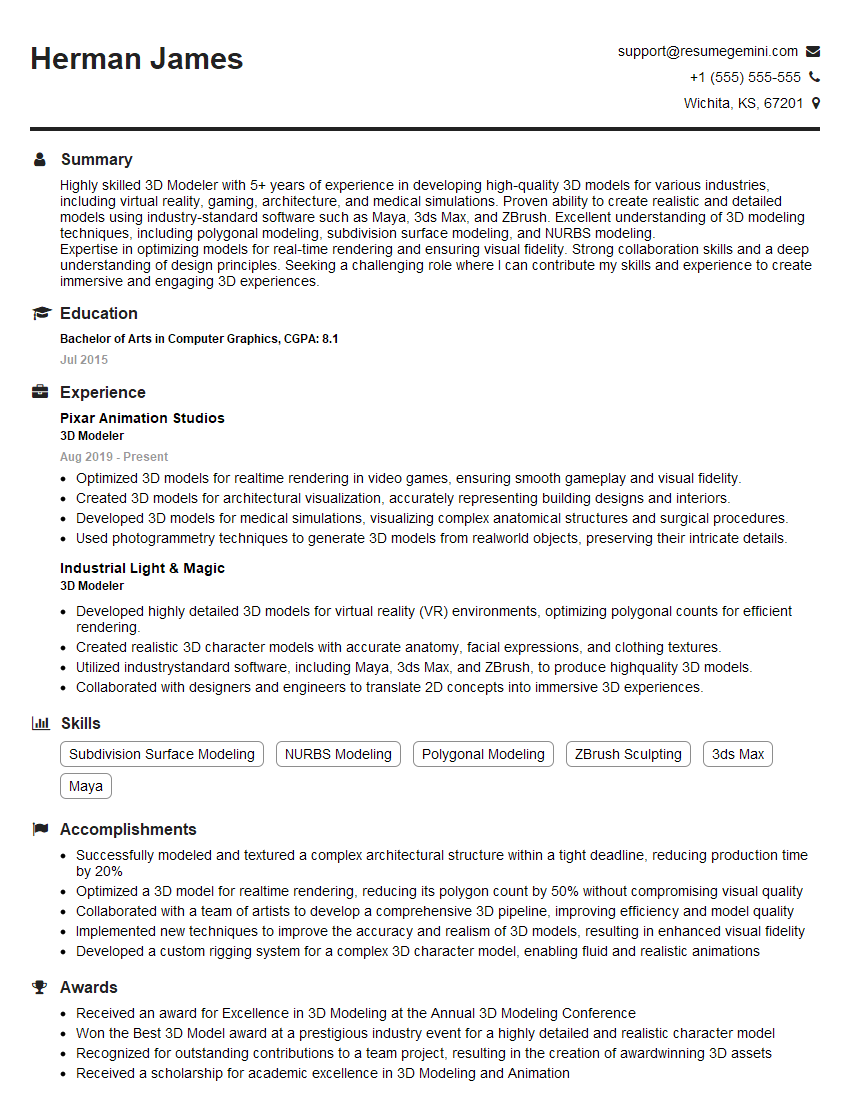
3D Modeler Resume Sample
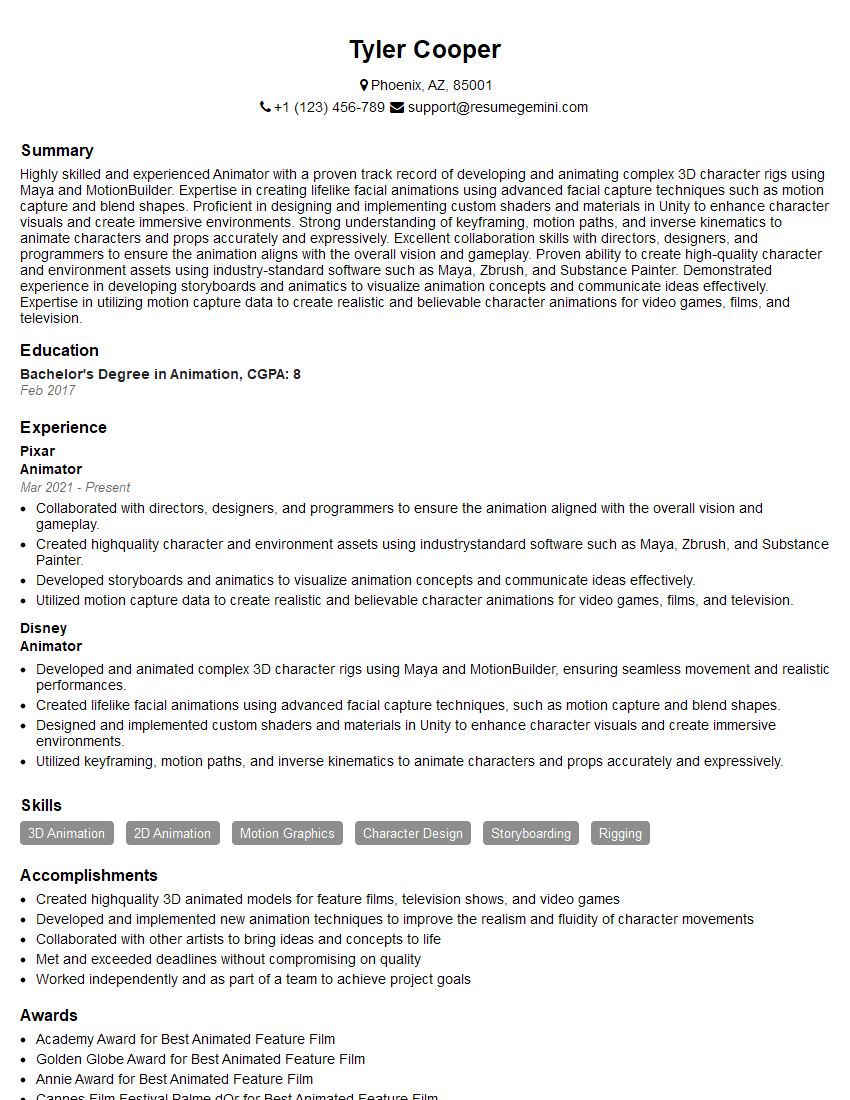
Animator Resume Sample
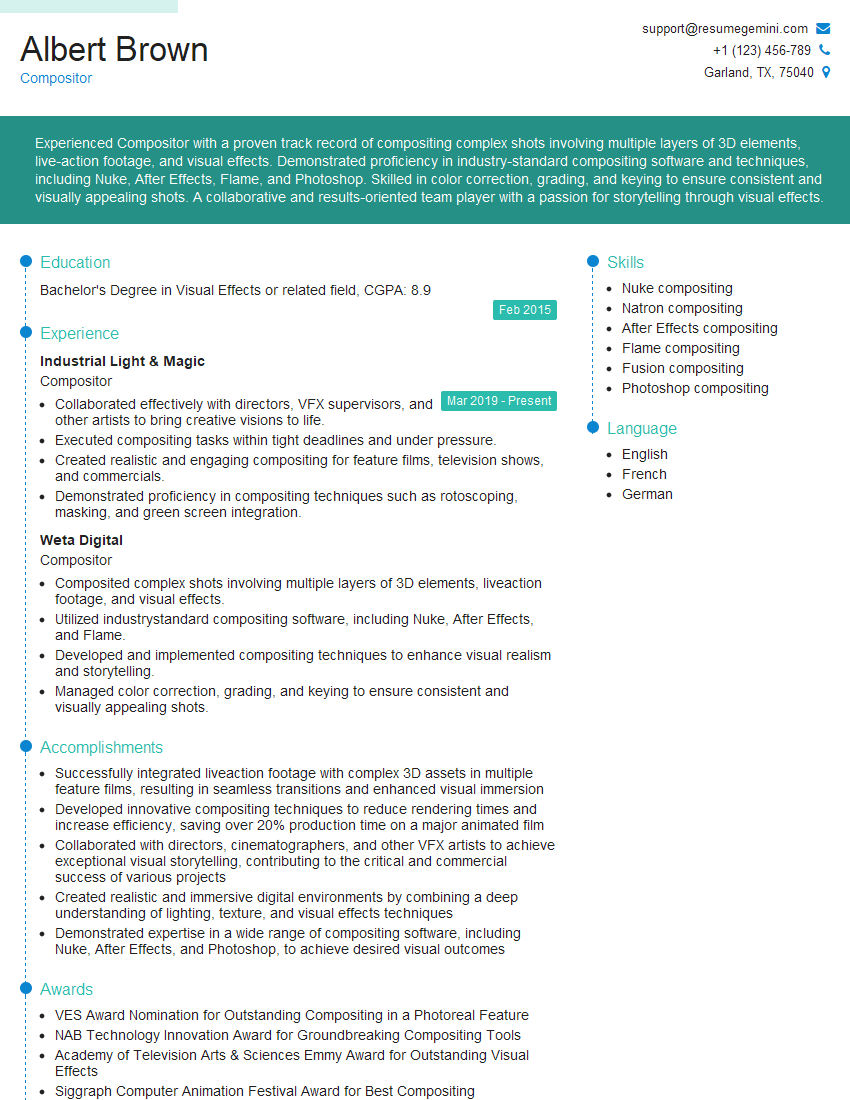
Compositor Resume Sample
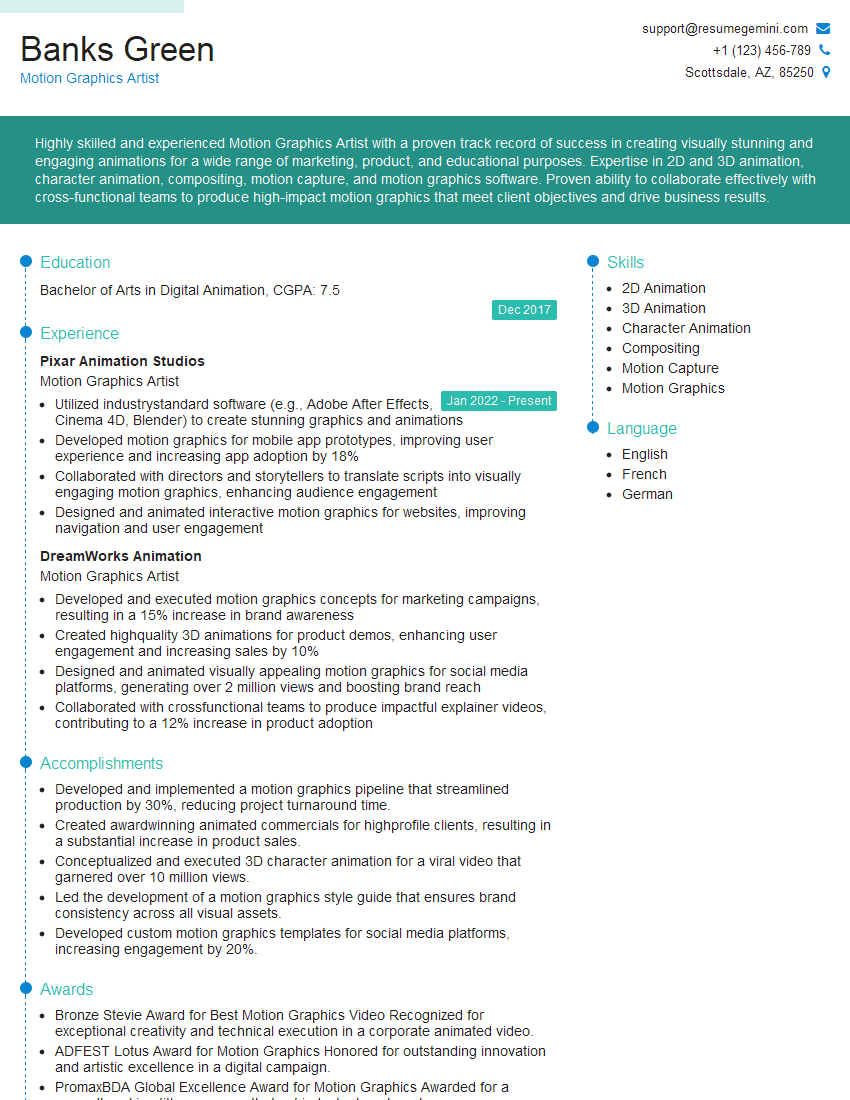
Motion Graphics Artist Resume Sample
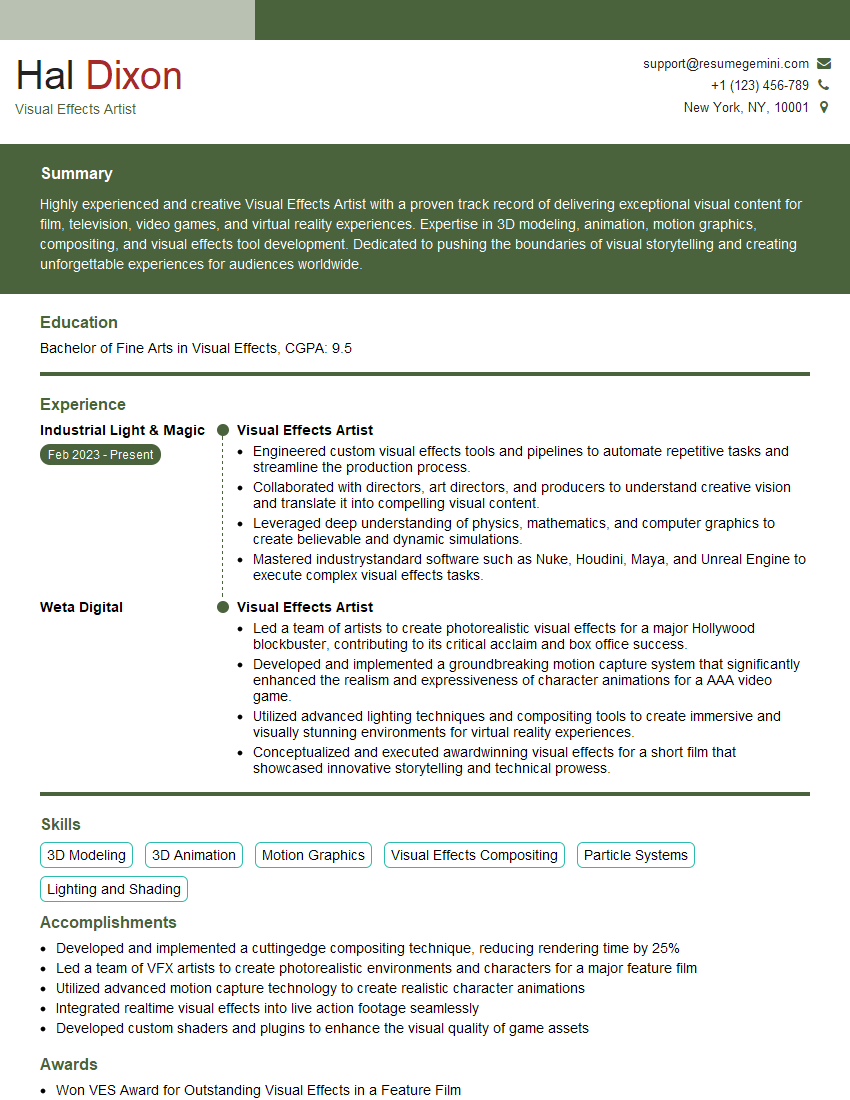
Visual Effects Artist Resume Sample
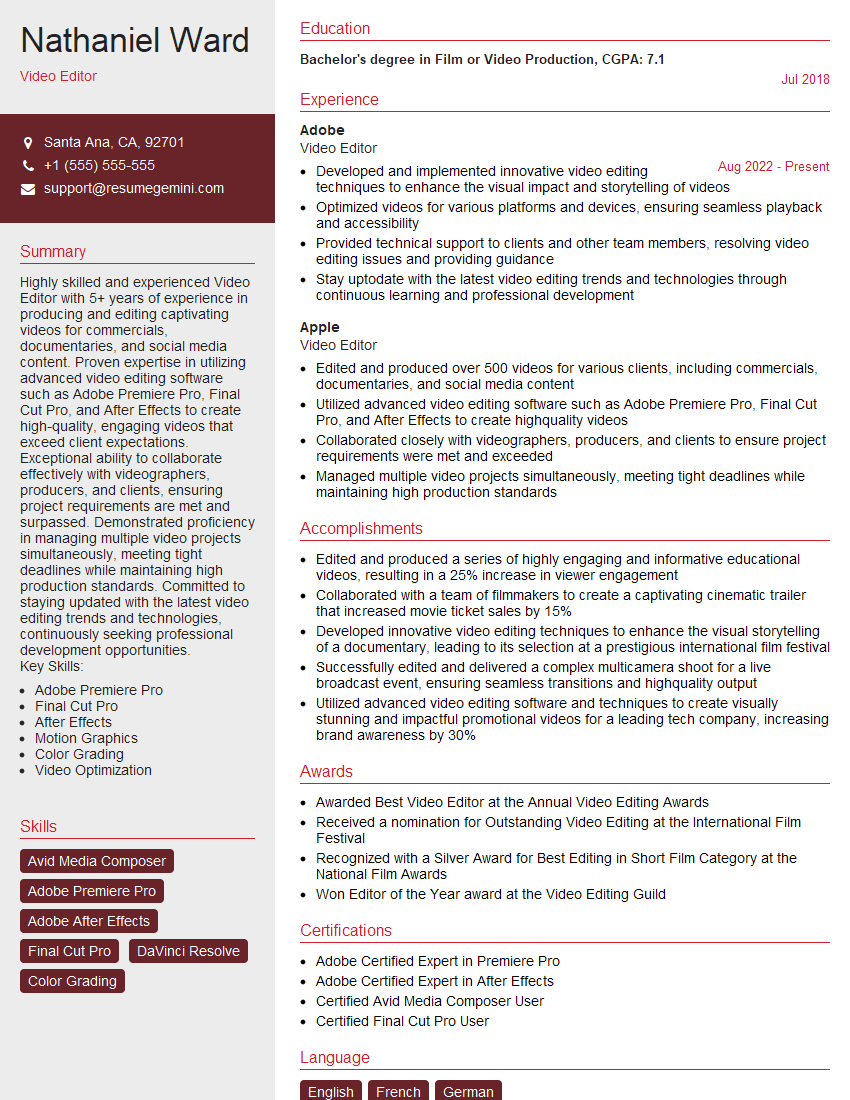
Video Editor Resume Sample
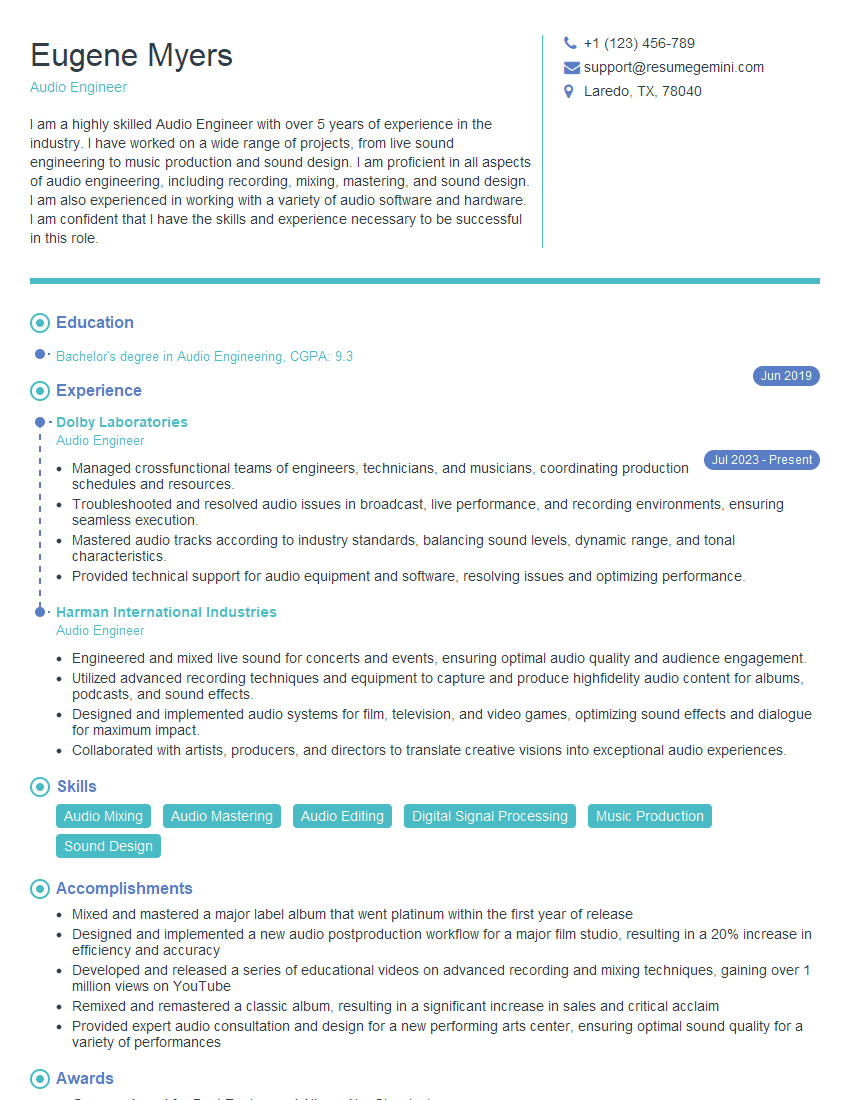
Audio Engineer Resume Sample

Studio Coordinator Resume Sample

Studio Engineer Resume Sample
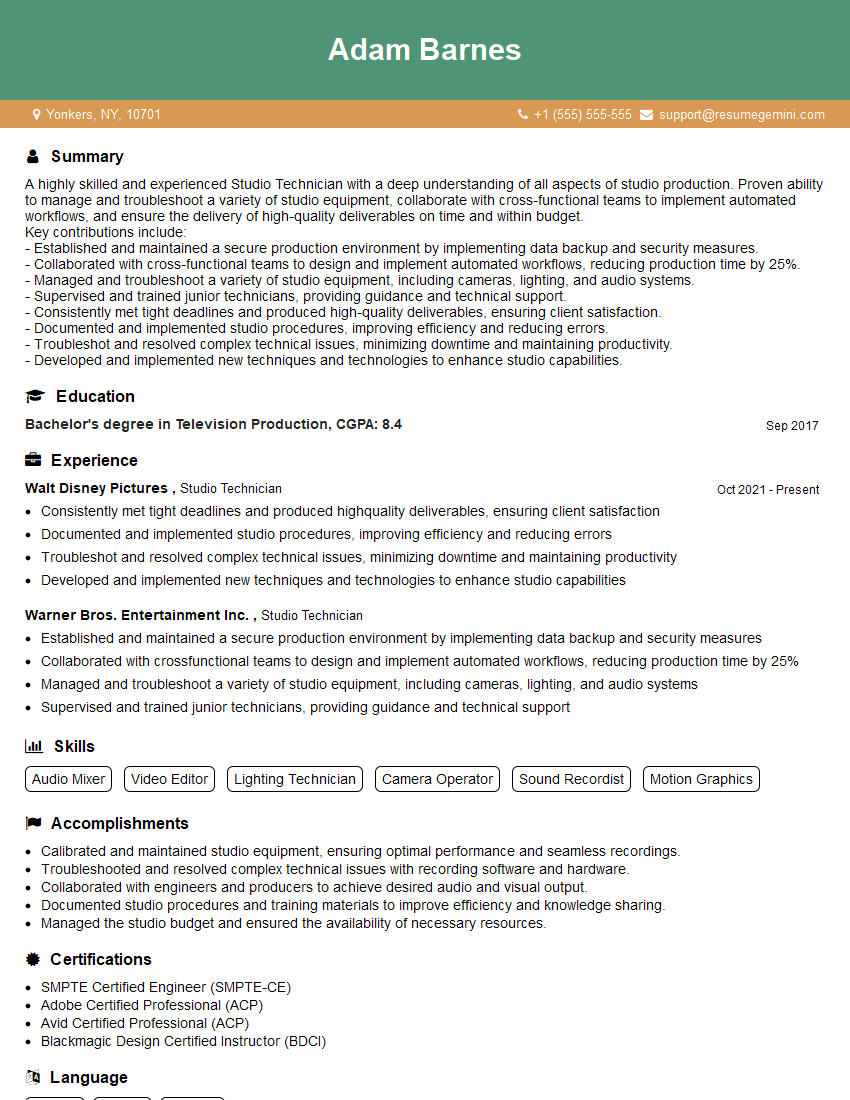
Studio Technician Resume Sample
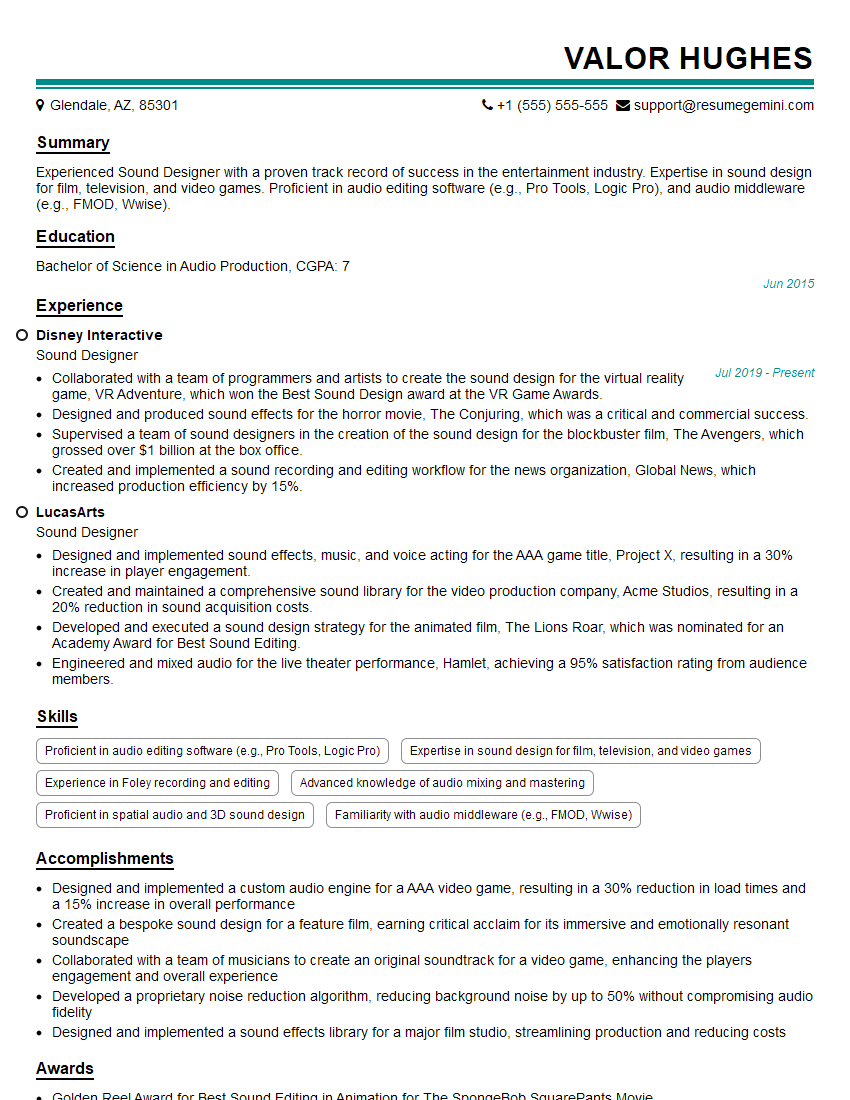
Sound Designer Resume Sample
Explore more articles
Users Rating of Our Blogs
Share Your Experience
We value your feedback! Please rate our content and share your thoughts (optional).
What Readers Say About Our Blog
Very informative content, great job.
good