Feeling uncertain about what to expect in your upcoming interview? We’ve got you covered! This blog highlights the most important Metalworking and Welding interview questions and provides actionable advice to help you stand out as the ideal candidate. Let’s pave the way for your success.
Questions Asked in Metalworking and Welding Interview
Q 1. Explain the difference between MIG and TIG welding.
MIG (Metal Inert Gas) and TIG (Tungsten Inert Gas) welding are both arc welding processes using a shielding gas to protect the weld pool from atmospheric contamination, but they differ significantly in their techniques and applications.
MIG Welding: Uses a consumable electrode wire that acts as both the filler material and the electrode. The wire is fed continuously into the weld pool, making it a relatively fast and efficient process. It’s versatile and commonly used for joining various metals, especially in mass production due to its speed and ease of use. Think of it like a glue gun, constantly feeding material to the joint.
TIG Welding: Uses a non-consumable tungsten electrode to create the arc. Filler metal is added separately, allowing for precise control over the weld bead. This offers superior weld quality, especially for critical applications requiring high aesthetics or strength. Think of it like using a paintbrush; you have finer control over the placement and amount of filler material.
Key Differences Summarized:
- Electrode: MIG uses consumable wire; TIG uses a non-consumable tungsten electrode.
- Filler Metal: MIG uses the electrode wire as filler; TIG uses separate filler rods.
- Speed: MIG is generally faster; TIG is slower but more precise.
- Weld Quality: TIG typically produces higher-quality welds with better aesthetics.
- Applications: MIG is suitable for mass production and faster applications; TIG excels in precision work and critical applications.
Q 2. Describe the various types of welding joints.
Welding joints are classified based on the geometry of the joint and how the members are arranged. Common types include:
- Butt Joint: The edges of two parts are joined end-to-end. This is the simplest joint, but can be challenging to achieve complete penetration.
- Lap Joint: One part overlaps the other. This is simple to construct and provides good weld access but is typically less strong than a butt joint.
- T-Joint: One part joins another at a 90-degree angle, resembling the letter ‘T’. Often requires careful preparation to prevent weld defects.
- Corner Joint: Two parts meet at a 90-degree angle, joining at the corner. It offers high structural integrity in some designs.
- Edge Joint: The edges of two parts are joined side-by-side. This joint is used when the materials are thin.
- J and U Joints: Pre-grooved joints (J or U shapes) are commonly used in thicker materials to ensure complete weld penetration.
The choice of joint depends on factors like material thickness, strength requirements, ease of welding, and access to the joint area.
Q 3. What are the safety precautions you take while welding?
Welding safety is paramount. My safety precautions always include:
- Personal Protective Equipment (PPE): Wearing a welding helmet with appropriate shade lenses, welding gloves, flame-resistant clothing, and safety shoes is mandatory.
- Ventilation: Ensuring adequate ventilation to remove harmful fumes and gases produced during welding. This often involves using extraction systems or working in well-ventilated areas.
- Fire Safety: Keeping a fire extinguisher nearby and ensuring the surrounding area is free of flammable materials.
- Eye Protection: Protecting eyes from sparks and UV radiation, even when not directly welding.
- Respiratory Protection: Using appropriate respirators when working with materials that produce toxic fumes.
- Proper Technique: Following correct welding procedures to avoid mishaps and injury. This includes maintaining proper posture and avoiding fatigue.
- Pre-weld Inspection: Always inspecting the material before welding to ensure it’s free of defects.
I also follow all relevant safety regulations and company policies to ensure a safe work environment. I regularly participate in safety training to stay updated on best practices.
Q 4. How do you select the appropriate welding process for a given material?
Selecting the appropriate welding process involves considering several factors:
- Material Type: Different metals require different welding processes. For example, TIG is often preferred for aluminum and stainless steel due to its precise control, whereas MIG is commonly used for mild steel.
- Material Thickness: Thicker materials may require processes like SMAW (Shielded Metal Arc Welding) or Submerged Arc Welding (SAW) for deep penetration. Thinner materials often lend themselves to TIG or MIG.
- Joint Design: The geometry of the joint influences the choice of welding process. A complex joint might require TIG for better control.
- Required Weld Quality: For high-quality, aesthetic welds, TIG is often preferred. MIG welding, although efficient, may require post-weld treatment for certain applications.
- Production Rate: MIG is a faster process, ideal for mass production, while TIG is better suited for smaller, high-precision projects.
- Cost Considerations: Different processes have different equipment and material costs, so cost-effectiveness is an important factor.
For example, if I need to weld thin stainless steel sheets with a high aesthetic requirement, TIG welding would be the most suitable choice. However, for a large-scale project welding mild steel plates, MIG welding would be more efficient and cost-effective.
Q 5. What are the common welding defects and how do you prevent them?
Common welding defects include:
- Porosity: Small holes in the weld caused by gas entrapment. Prevention involves proper shielding gas coverage and cleaning of the base material.
- Incomplete Penetration: The weld does not fully penetrate the joint. This can be prevented by using the appropriate welding parameters and joint design.
- Undercutting: A groove melted into the base material along the edge of the weld. Adjusting welding parameters and technique can remedy this.
- Spatter: Small molten metal droplets ejected from the weld pool. It can be minimized by proper technique and parameter selection.
- Cracking: Cracks in the weld, often caused by stress or poor material compatibility. Preheating, using appropriate filler metal, and slow cooling can help prevent this.
- Slag Inclusion: Trapped slag from the welding process within the weld bead. This requires thorough cleaning of the weld area before welding.
Prevention usually involves meticulous preparation, using correct welding parameters, and employing proper welding technique. Regular inspection of welds throughout the process and post-weld inspection is also critical.
Q 6. Explain the importance of preheating in welding.
Preheating is crucial in welding, particularly with thicker materials or those prone to cracking. It involves raising the base metal temperature before welding to reduce thermal stress.
Why is it important?
- Reduces Cooling Rate: Preheating lowers the cooling rate of the weld, minimizing the formation of hard, brittle zones that are susceptible to cracking. Think of it like slowly cooling a glass to prevent it from shattering.
- Improves Weldability: Certain metals, like high-carbon steel, become more weldable at higher temperatures, reducing the risk of defects.
- Reduces Residual Stress: Preheating minimizes residual stresses that can lead to cracking or distortion.
The preheat temperature depends on the material, thickness, and welding process. It’s typically determined by consulting welding codes and specifications, and this is always a crucial aspect of my weld planning.
Q 7. Describe your experience with different welding consumables (e.g., electrodes, wire).
My experience encompasses a wide range of welding consumables. I’ve worked extensively with various electrode types for SMAW (Shielded Metal Arc Welding), including E6010 (low hydrogen), E7018 (low hydrogen), and various stainless steel electrodes. I understand the importance of selecting electrodes with appropriate chemical compositions, coating types, and diameter for specific applications. For instance, E7018 is often preferred for critical applications due to its low-hydrogen properties, preventing hydrogen cracking.
In MIG welding, I have extensive experience using solid wire, flux-cored wire, and metal-cored wire for different applications. The choice depends on factors like metal type, thickness, joint design, and the desired weld characteristics. For example, flux-cored wire is useful for out-of-position welding because of its self-shielding properties.
With TIG welding, I have experience using various tungsten electrodes with different levels of purity. Tungsten electrode selection affects the arc stability, weld penetration, and overall quality. The selection depends on the type of material being welded and the shielding gas used.
My experience also includes understanding and using filler materials designed for specific base metals. For example, filler metals with higher nickel content are sometimes used with stainless steel to achieve superior corrosion resistance.
Q 8. How do you interpret welding symbols?
Welding symbols are a standardized language used on engineering drawings to communicate precisely where and how a weld should be made. They’re crucial for ensuring consistent, high-quality welds across various manufacturing processes. Think of them as a shorthand for complex welding instructions.
Reference Line: The horizontal line from which all other elements are referenced.
Arrow Side: The side of the joint the symbol is pointing to indicates the weld is located on this side of the joint.
Other Side: If a symbol is present on the other side of the reference line, it indicates a weld on both sides.
Weld Type: Symbols vary, showing different types of welds like fillet welds, groove welds, spot welds etc. Each type has a unique symbol.
Weld Size: The height (for fillet welds) or leg length (for groove welds) is usually indicated by a numerical value near the symbol, possibly with a fraction.
Weld Length: The length of the weld is usually indicated, often with a dimension line.
Finishing Symbol: Symbols may indicate post-weld finishing processes such as grinding or chipping.
For example, a simple fillet weld symbol might show a small triangle on the arrow side of the reference line, with the size indicated next to it. A more complex symbol might combine several elements to specify the type, size, length, and location of the weld along with the type of finishing process required.
Q 9. What are your experience with different types of metal (steel, aluminum, etc.)?
My experience encompasses a wide range of metals, with a particular focus on steel and aluminum. With steel, I’ve worked extensively with various grades, from mild steel commonly used in construction to high-strength low-alloy (HSLA) steels for demanding applications requiring high tensile strength. I am familiar with the varying weldability characteristics of different steel grades, including the appropriate preheating and post-weld heat treatment (PWHT) requirements to ensure optimal properties. For aluminum, I understand the challenges posed by its low melting point and tendency to oxidize. This has led me to master different welding processes suited to aluminum, such as Gas Tungsten Arc Welding (GTAW) or Gas Metal Arc Welding (GMAW) with specific filler materials and shielding gases. I’ve also worked with other metals, including stainless steel (understanding the importance of controlling the chromium content to avoid corrosion), and have a foundational understanding of working with titanium and nickel alloys, though less extensive experience with the latter.
My practical experience includes working on projects involving different metal thicknesses and configurations, from thin sheet metal to thicker plates, and I’m adept at choosing the optimal welding process and parameters for each situation.
Q 10. What is the difference between destructive and non-destructive testing in welding?
Destructive and non-destructive testing (NDT) are both crucial for ensuring weld quality, but they differ fundamentally in their approach. Destructive testing involves destroying a sample of the weld to evaluate its properties, while NDT allows for inspection without causing damage.
Destructive Testing (DT): This includes tensile testing (measuring the weld’s strength and ductility), bend testing (assessing its toughness and ability to deform), and impact testing (determining its resistance to fracture under impact). DT provides quantitative data on the weld’s mechanical properties. Think of it as a thorough medical checkup involving invasive procedures. It’s precise but costly and impractical for large-scale inspection.
Non-Destructive Testing (NDT): This is more commonly used because it allows for the inspection of the entire weld without destruction. Several techniques exist, including visual inspection (checking for surface defects), radiographic testing (using X-rays or gamma rays to detect internal flaws), ultrasonic testing (using sound waves to identify internal defects), magnetic particle testing (detecting surface and near-surface cracks in ferromagnetic materials), and dye penetrant testing (identifying surface-breaking cracks).
Often, a combination of NDT and DT is used. NDT is used for initial screening to identify potential problems. Then targeted DT is applied to a smaller number of samples for detailed analysis in cases where NDT findings indicate issues.
Q 11. Explain your experience with different types of cutting equipment.
My experience with cutting equipment is extensive, ranging from basic hand-held tools to sophisticated CNC-controlled machines. I’m proficient in using:
Oxy-fuel cutting: A thermal cutting process using a mixture of oxygen and fuel gases to reach high temperatures, ideal for thicker materials like steel. I understand the safety precautions vital for oxy-fuel cutting, including proper cylinder handling and avoiding flashback.
Plasma arc cutting: A thermal cutting process using a high-velocity jet of plasma to melt and cut the material. This offers greater precision and speed compared to oxy-fuel cutting and is suitable for a wide range of materials.
Laser cutting: A high-precision thermal cutting process using a focused laser beam. I’ve used laser cutters for intricate cutting patterns on thin sheet metals and for high-speed cutting of thicker materials.
Mechanical cutting (e.g., shearing, sawing): These methods involve using mechanical force to cut the material and are suitable for certain applications, especially where heat-affected zones need to be minimized.
My experience includes selecting the most appropriate cutting method based on factors such as material thickness, required accuracy, and the desired edge quality.
Q 12. Describe the different types of metal finishing processes.
Metal finishing processes are essential for enhancing the appearance, durability, and functionality of metal parts. They fall into several categories:
Mechanical Finishing: This involves using mechanical means to remove material or alter the surface texture. Examples include grinding (removing material to achieve a smooth surface), polishing (creating a highly reflective surface), buffing (producing a smoother finish than polishing), and honing (producing a very precise surface finish).
Chemical Finishing: This involves chemical reactions to alter the surface properties. Examples include pickling (removing oxides and other surface contaminants), etching (creating a textured surface), and anodizing (creating a protective oxide layer on aluminum).
Electrochemical Finishing: This utilizes electrochemical processes, like electropolishing (creating a smoother, brighter surface by anodic dissolution) and electroplating (depositing a layer of another metal onto the surface for corrosion protection or aesthetics).
Coating: This involves applying a protective or decorative layer onto the metal surface. Examples include painting, powder coating, and applying various types of protective films.
The choice of finishing process depends on the application’s specific requirements. For instance, high-precision parts might require electropolishing for a mirror finish, while a structural component might need powder coating for durability.
Q 13. What is your experience with CNC machining?
My experience with CNC machining is considerable. I’m proficient in programming and operating various CNC machines, including milling machines, lathes, and routers. This includes creating and optimizing CNC programs using CAD/CAM software, setting up machines, and performing quality control checks to ensure dimensional accuracy and surface finish. I’m comfortable working with different materials and cutting tools, and I understand the importance of selecting appropriate cutting parameters to minimize wear and tear and maximize efficiency. I’ve worked on projects ranging from prototyping to small-batch production runs and possess skills in various CNC programming languages (G-code, etc.)
For instance, I’ve used CNC milling to create precise fixtures for welding, and CNC lathes to machine custom parts needed for certain assembly operations. My experience ensures efficient process optimization through toolpath generation and machine setup.
Q 14. How do you ensure the quality of your welds?
Ensuring weld quality is paramount in my work. My approach is multi-faceted and involves the following steps:
Proper Preparation: This is crucial and includes cleaning the base materials to remove any contaminants that could compromise the weld’s integrity, using appropriate joint design for the weld type, and preheating the base materials if necessary (particularly for steels).
Selecting the Right Process and Parameters: Choosing the welding process (GTAW, GMAW, SMAW etc.) and parameters (voltage, current, travel speed etc.) that are optimal for the material and joint design. This requires a deep understanding of the heat input required to achieve a proper weld penetration and fusion.
Consistent Technique: Maintaining consistent welding technique throughout the process ensures uniform weld beads and minimizes defects.
Non-Destructive Testing: Using NDT methods such as visual inspection, radiographic testing or ultrasonic testing to detect any potential flaws or defects in the weld.
Post-Weld Inspection: Even after NDT and if the results are satisfactory, visual inspection is used to assess the appearance of the weld and look for signs of improper penetration, cracks, porosity, or other defects. This often involves measuring the weld bead dimensions to check for consistency.
Documentation: Thorough documentation of every step, including the welding parameters used, NDT results, and any corrective actions taken, is essential for traceability and quality control.
By diligently following these steps, I aim to consistently produce high-quality welds that meet or exceed required specifications.
Q 15. Describe your problem-solving skills in a welding scenario.
My problem-solving approach in welding starts with a thorough understanding of the problem. I begin by visually inspecting the weld, noting any defects like cracks, porosity, or lack of fusion. Then, I analyze the welding parameters – the type of welding process used (e.g., GMAW, SMAW, GTAW), the amperage, voltage, travel speed, and shielding gas used. I also consider the base materials, their thickness and cleanliness. For instance, if I find excessive spatter in a GMAW weld, I’d first check the wire feed speed, then the voltage, and finally, the gas flow. If the issue persists, I might adjust the contact tip-to-work distance. I systematically eliminate possibilities until I identify the root cause. One time, I encountered significant undercut in a fillet weld. By systematically reviewing the process, I discovered the welder was using an amperage too high for the thin sheet metal, leading to excessive penetration and undercut. Reducing the amperage immediately resolved the issue. I document all troubleshooting steps and corrective actions, ensuring consistent quality and continuous improvement.
Career Expert Tips:
- Ace those interviews! Prepare effectively by reviewing the Top 50 Most Common Interview Questions on ResumeGemini.
- Navigate your job search with confidence! Explore a wide range of Career Tips on ResumeGemini. Learn about common challenges and recommendations to overcome them.
- Craft the perfect resume! Master the Art of Resume Writing with ResumeGemini’s guide. Showcase your unique qualifications and achievements effectively.
- Don’t miss out on holiday savings! Build your dream resume with ResumeGemini’s ATS optimized templates.
Q 16. How do you handle welding process deviations?
Handling welding process deviations requires a proactive and systematic approach. First, I carefully analyze the deviation from the pre-determined parameters. Is it a change in weld bead appearance (e.g., inconsistent bead width, excessive spatter), mechanical properties (e.g., reduced tensile strength), or dimensional tolerances? Once the deviation is identified, I investigate the possible causes. This might involve checking the welding equipment (e.g., gas flow, wire feed), the materials (e.g., cleanliness, pre-heating), and the environment (e.g., wind, ambient temperature). For example, if the weld penetration is insufficient, I might need to increase the amperage or preheat the metal. If excessive spatter is occurring in GMAW welding, I may adjust the wire feed speed or shielding gas flow. I document all deviations, their causes, and corrective actions, using this data to improve future processes and prevent similar deviations.
Q 17. What is your experience with blueprint reading and interpretation?
I possess extensive experience in blueprint reading and interpretation, crucial for translating design specifications into successful weldments. My proficiency extends beyond simply understanding basic dimensions and tolerances. I can interpret welding symbols, understanding the type of weld required (e.g., fillet, groove, plug), the weld size, and the location of welds. I understand different views (e.g., isometric, sectional), material specifications, and surface finish requirements. I’ve worked with various CAD software packages to review designs and confirm their weldability. For example, I’ve successfully interpreted blueprints for complex pressure vessels, requiring precise weld placement and dimensional accuracy to ensure structural integrity. My experience allows me to identify potential design flaws that could compromise weld quality or manufacturability during the blueprint review stage itself, which prevents costly rework later.
Q 18. Explain your experience with different types of welding equipment.
My experience encompasses a wide range of welding equipment, including:
- Shielded Metal Arc Welding (SMAW): Proficient in using various SMAW machines, including Lincoln Electric and Miller Electric welders, for different applications and materials.
- Gas Metal Arc Welding (GMAW): Extensive experience with Miller and Lincoln GMAW systems, mastering various wire feeds, shielding gases, and techniques for different metals (steel, aluminum, stainless steel).
- Gas Tungsten Arc Welding (GTAW): Skilled in using GTAW equipment, employing different filler metals and shielding gas combinations for precise welding of thin materials and intricate designs.
- Flux-Cored Arc Welding (FCAW): Experienced in using FCAW for outdoor applications and situations requiring high deposition rates.
Beyond the basics, I’m also familiar with robotic welding systems and their programming, as well as specialized equipment for underwater or high-altitude welding. My knowledge extends to the maintenance and troubleshooting of these various welding systems.
Q 19. How do you maintain welding equipment?
Maintaining welding equipment is paramount for ensuring safety, quality, and efficiency. My maintenance routine includes regular inspections to check for any damage, wear and tear, or leaks. This includes checking the gas lines for leaks, inspecting the welding gun for cracks or damage, and verifying the correct functioning of the wire feed mechanism (for GMAW) and the electrode holder (for SMAW). I also conduct regular cleaning, removing spatter and slag buildup. For example, I regularly clean the contact tip on the GMAW torch to prevent nozzle clogging. I keep detailed maintenance logs, recording all inspections, cleaning, and repair work, ensuring traceability and compliance with safety regulations. Preventive maintenance, such as changing consumables like contact tips, shielding gas nozzles, and liners at recommended intervals, minimizes downtime and ensures optimal performance. I understand the importance of following manufacturer’s instructions for specific equipment.
Q 20. What are the common causes of weld porosity?
Weld porosity, the presence of small holes or voids in a weld, is a significant defect that can weaken the weld’s structural integrity. Several factors contribute to weld porosity:
- Moisture Contamination: Moisture in the base metal, filler material, or shielding gas can react and form gas pockets during welding.
- Insufficient Shielding Gas Coverage: Inadequate shielding gas coverage allows atmospheric gases to contaminate the weld pool.
- Poor Joint Preparation: Improper joint design, fit-up, or cleaning can trap gases within the weld zone.
- Excessive Welding Current: High amperage can sometimes trap gases within the weld pool before they can escape.
- Incorrect Welding Technique: Improper welding techniques, such as excessive travel speed or pausing during welding, can cause gas entrapment.
Addressing these issues involves proper material cleaning and pre-heating, employing appropriate shielding gas coverage, optimizing welding parameters, and maintaining proper welding techniques. In my experience, a thorough understanding of root causes is critical for effectively mitigating porosity. For example, I once encountered porosity in a stainless steel weld due to moisture trapped in the joint. By pre-heating the components and meticulously cleaning the weld joint, we eliminated the problem.
Q 21. Describe your experience with working in a team environment.
I thrive in team environments. Effective communication and collaboration are essential for successful project completion in metalworking and welding. I’ve consistently worked effectively within teams of varying sizes, from small fabrication shops to large-scale construction projects. My approach involves actively listening to team members, sharing my expertise, and contributing to collaborative problem-solving. I’m comfortable sharing responsibilities, offering support to my colleagues, and mentoring less experienced welders. On one project, our team faced a tight deadline for a complex welding assembly. Through clear communication and a coordinated effort, we successfully delivered the project on time and to the required quality standards. I believe that fostering a positive and respectful team atmosphere is vital for achieving both individual and collective success.
Q 22. How do you troubleshoot welding problems?
Troubleshooting welding problems requires a systematic approach. I start by carefully observing the weld defect – is it porosity (small holes), cracking, incomplete penetration, excessive spatter, or something else? Then, I consider the welding process used (MIG, TIG, stick, etc.), the base materials, the filler metal, and the welding parameters (voltage, amperage, travel speed, shielding gas flow).
- Porosity often indicates insufficient shielding gas coverage or contamination of the base metal. I’d check for leaks in the gas system and ensure the metal is clean.
- Cracking can be caused by too high a heat input, improper preheating, or the use of incompatible materials. I would adjust welding parameters and potentially preheat the materials according to specifications.
- Incomplete penetration suggests insufficient amperage or travel speed. I’d increase the amperage, reduce speed, or switch to a more powerful welding process.
I meticulously document my findings, including photos and notes, to facilitate future analysis and prevent recurrence. Sometimes, destructive testing like a macro-etch is required to fully understand the root cause. The process is iterative; I adjust parameters, re-weld, and inspect until the weld meets the required quality standards.
Q 23. What are the different types of heat treatments?
Heat treatments modify the microstructure of metals to alter their properties like strength, hardness, and ductility. Different types of heat treatments are tailored to achieve specific results.
- Annealing: This involves heating the metal to a specific temperature, holding it there for a period, and then slowly cooling it. This relieves internal stresses and softens the metal, making it easier to machine. I’ve used annealing on high-carbon steel to improve machinability before subsequent processes.
- Normalizing: Similar to annealing but with a faster cooling rate (usually in air). This refines the grain structure, improving strength and toughness. I use normalizing to improve the mechanical properties of steel castings.
- Hardening: This involves heating the steel to its austenitizing temperature, then rapidly cooling it (quenching). This traps carbon in solution, creating a hard martensite structure. This is crucial for tools and components needing high wear resistance. I’ve quenched steel tools in oil to achieve optimal hardness.
- Tempering: This follows hardening and involves reheating the hardened steel to a lower temperature, followed by slow cooling. This reduces brittleness while retaining some hardness, improving toughness. Tempering is essential to control the final properties of hardened steel parts.
Choosing the correct heat treatment depends on the material, desired properties, and the application. Incorrect heat treatment can significantly affect the performance and lifespan of a component.
Q 24. Describe your experience with different types of measuring tools.
My experience encompasses a wide range of measuring tools essential for accurate and precise metalworking. This includes:
- Vernier Calipers: Used for accurate measurements of linear dimensions, I rely on them for checking dimensions of machined parts.
- Micrometers: Providing even higher precision than calipers, I use these for extremely tight tolerance work, such as measuring the thickness of thin sheet metal.
- Dial Indicators: For measuring surface flatness and runout, vital in ensuring the accuracy of machined surfaces and rotating components.
- Protractors and Angle Finders: Essential for accurate angle measurements during machining or welding setups, ensuring parts are correctly aligned.
- Measuring Tapes and Rules: Useful for larger scale measurements, particularly in fabrication settings.
- Laser Measurement Tools: More sophisticated tools providing fast and accurate non-contact measurements, useful for large components or difficult-to-reach areas.
The choice of tool depends on the required accuracy, the size of the part, and the type of measurement needed. I always ensure tools are properly calibrated and maintained for accurate results.
Q 25. What is your experience with robotic welding?
I have extensive experience with robotic welding, particularly in high-volume production environments. I’ve programmed and operated various robotic welding systems, including Fanuc and ABB robots. My responsibilities have included:
- Robot Programming: Using industry-standard software (such as RoboDK or the manufacturer’s specific software), I’ve created welding programs that precisely guide the robot’s movements along the weld path.
- Fixture Design and Implementation: Proper fixturing is crucial for consistent and repeatable welds. I’ve worked on designing and implementing robust fixturing systems to hold parts securely during automated welding.
- Welding Parameter Optimization: Fine-tuning welding parameters (current, voltage, speed, wire feed rate) to optimize weld quality and speed for each specific application and material.
- Troubleshooting and Maintenance: I’m proficient in diagnosing and resolving issues related to robot malfunctions, sensor errors, and welding defects. This also includes routine maintenance to prevent downtime.
Robotic welding significantly increases productivity and consistency compared to manual welding, especially for complex geometries and repetitive tasks. It’s a critical tool for modern manufacturing.
Q 26. What is your familiarity with AWS D1.1 (Structural Welding Code) or similar standards?
I am very familiar with AWS D1.1 (Structural Welding Code) and similar international welding standards, such as ISO and EN standards. I understand the requirements for weld procedures, welder qualification, inspection techniques, and the documentation necessary to ensure weld quality and safety.
My understanding extends to interpreting the code’s requirements for specific weld types, materials, and joint designs. I use this knowledge to specify appropriate welding procedures, ensure compliance with regulations, and interpret inspection reports. This familiarity is critical in ensuring the structural integrity of welded components and structures.
For example, I know the differences between different weld symbols, how to interpret the weld size and type requirements, and how the standards dictate necessary testing and inspection methodologies. This is especially important in projects involving critical structures where safety is paramount.
Q 27. How do you ensure workplace safety while performing metalworking tasks?
Workplace safety is paramount in metalworking. My approach is proactive and involves several key elements:
- Personal Protective Equipment (PPE): Consistent and correct use of PPE, including welding helmets, gloves, safety glasses, hearing protection, and appropriate clothing, is non-negotiable. I always inspect my PPE before starting any work.
- Machine Guarding: Ensuring all machinery is properly guarded to prevent accidental contact with moving parts. I regularly inspect guards to ensure their effectiveness.
- Housekeeping: Maintaining a clean and organized workspace is essential to prevent trips and falls. I always ensure that materials are properly stored and pathways are clear.
- Lockout/Tagout Procedures: I rigorously follow lockout/tagout procedures whenever working on or near machinery to prevent accidental starts.
- Emergency Procedures: I am familiar with and trained in all emergency procedures, including fire safety and first aid.
- Risk Assessments: Before any task, I conduct or participate in risk assessments to identify potential hazards and implement mitigating controls.
Safety is not just a set of rules; it’s a mindset. I actively promote a safety-conscious culture by reporting hazards, participating in safety training, and encouraging others to follow safety protocols.
Q 28. Describe your experience with using various hand tools in metalworking
My experience with hand tools in metalworking is extensive, covering a wide range of applications. I’m proficient in the safe and effective use of tools such as:
- Hammers: Various types, from ball-peen hammers for shaping metal to soft-faced hammers for delicate work. I select the appropriate hammer for the task and material.
- Chisels: For cutting and shaping metal, I’m skilled in using various types of chisels, including cold chisels, cape chisels, and round-nose chisels. Safety is paramount when using chisels; correct striking technique is vital to avoid injury.
- Files: For smoothing and shaping metal surfaces, I’ve worked with various types of files, from rough-cut files for initial shaping to fine files for finishing work.
- Wrenches: For tightening and loosening bolts and nuts, I use different types of wrenches, including open-ended, box-end, and socket wrenches, selecting the appropriate type for the specific fastener.
- Screwdrivers: For driving and removing screws, I’m adept at using various types of screwdrivers, ensuring proper fit to avoid damage to the screw head.
- Pliers: For gripping, bending, and cutting wire, I use various types of pliers, including slip-joint pliers, needle-nose pliers, and lineman’s pliers.
I prioritize proper tool selection and maintenance to ensure efficiency and safety. A well-maintained toolset is crucial for accurate and reliable work.
Key Topics to Learn for Your Metalworking and Welding Interview
- Safety Procedures and Regulations: Understanding and applying relevant safety protocols, including PPE usage, hazard identification, and emergency procedures. This demonstrates a commitment to workplace safety, a crucial aspect of any metalworking and welding role.
- Welding Processes: Familiarity with various welding techniques (e.g., MIG, TIG, Stick, Arc) including their applications, advantages, and limitations. Be prepared to discuss your experience with different processes and materials.
- Metal Properties and Selection: Knowledge of different metal types (steel, aluminum, stainless steel etc.), their properties (strength, ductility, weldability), and appropriate selection based on project requirements. Understanding the impact of material choice on the final product is key.
- Blueprint Reading and Interpretation: Ability to interpret technical drawings, welding symbols, and specifications to accurately execute welding tasks. This is essential for translating designs into tangible results.
- Joint Design and Preparation: Understanding various joint types and their suitability for different applications. Knowing how to properly prepare materials for welding to ensure strong and reliable welds is crucial.
- Welding Defects and Troubleshooting: Ability to identify common welding defects (porosity, cracking, undercut) and understand corrective measures. Demonstrating problem-solving skills is highly valuable.
- Quality Control and Inspection: Familiarity with quality control procedures and inspection techniques to ensure welds meet required standards. This showcases your commitment to precision and adherence to best practices.
- Maintenance and Repair Techniques: Understanding routine maintenance procedures for welding equipment and the ability to troubleshoot and repair minor equipment malfunctions. This indicates practical skills and resourcefulness.
- Fabrication Techniques: Knowledge of various metal fabrication processes beyond welding, including cutting, bending, and shaping techniques. This demonstrates a broader skillset within metalworking.
Next Steps
Mastering metalworking and welding opens doors to diverse and rewarding careers in manufacturing, construction, and various specialized industries. A strong understanding of these skills positions you for advancement and higher earning potential. To maximize your job prospects, create an ATS-friendly resume that effectively highlights your qualifications. ResumeGemini is a trusted resource for building professional, impactful resumes. We provide examples of resumes tailored specifically to the metalworking and welding industry to help you showcase your skills effectively and land your dream job.

Metallurgist Resume Sample
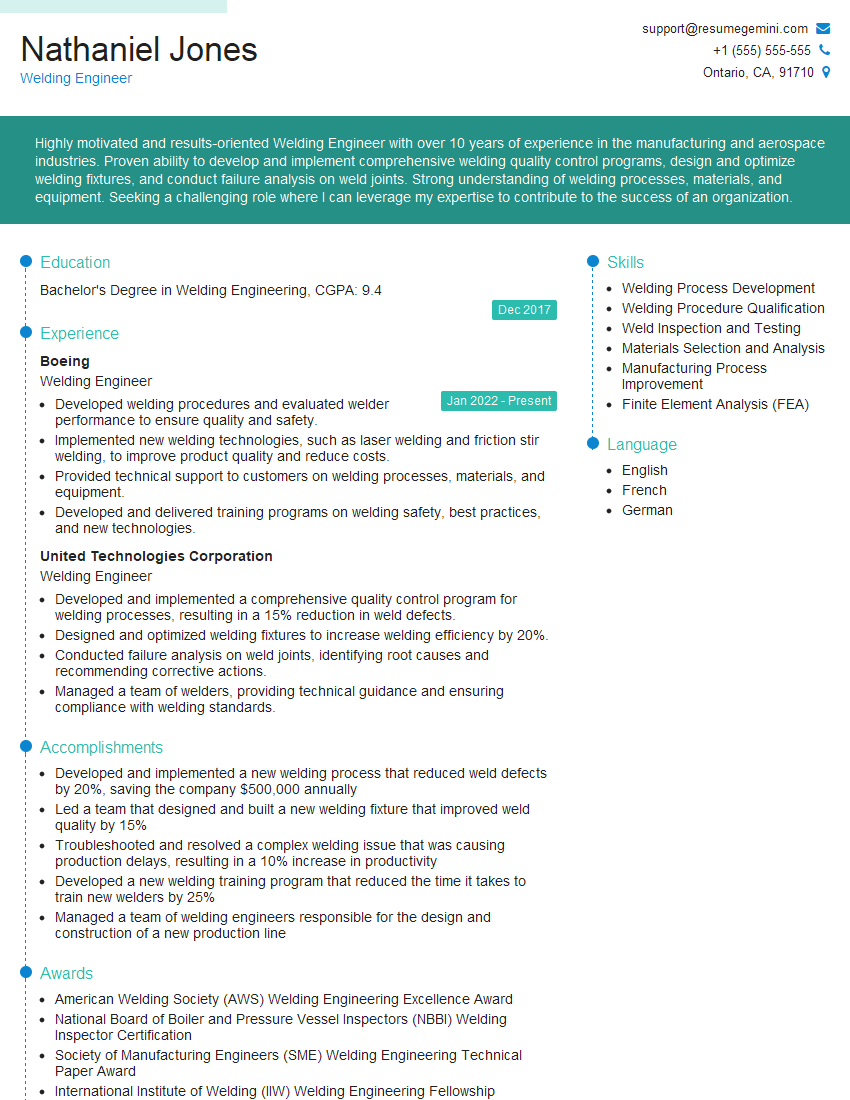
Welding Engineer Resume Sample
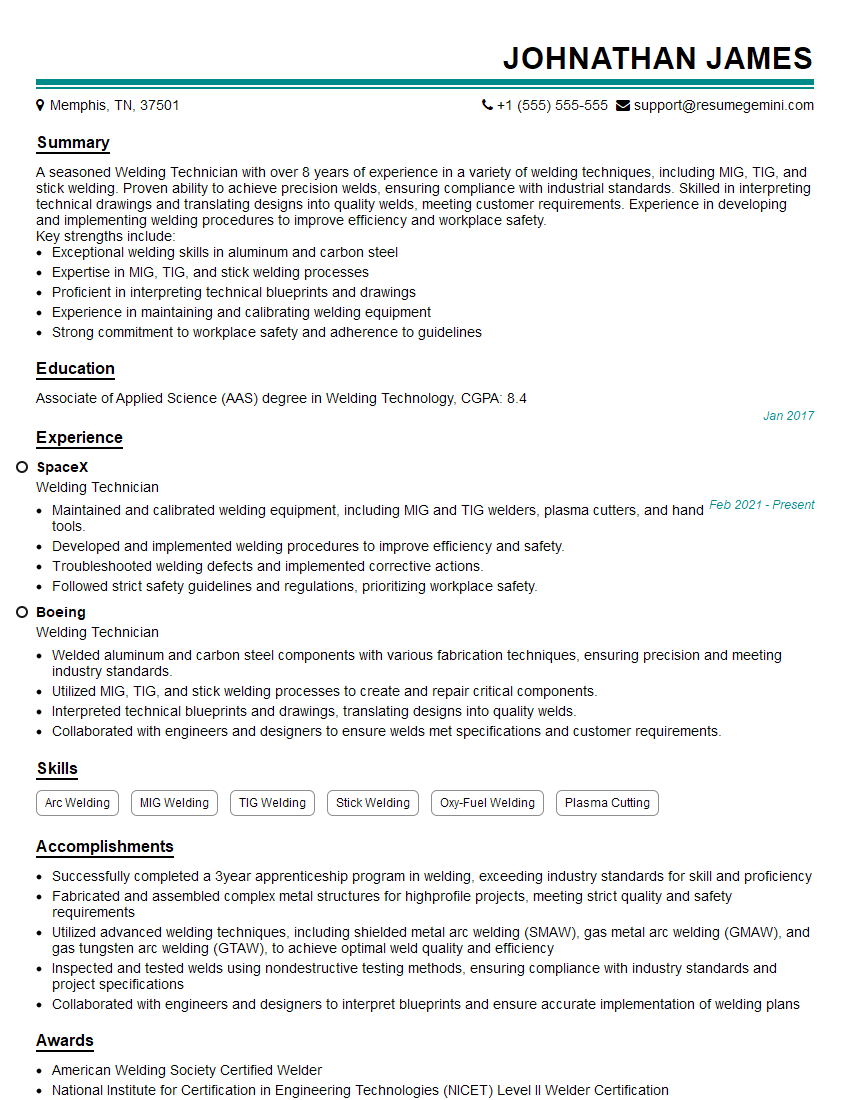
Welding Technician Resume Sample
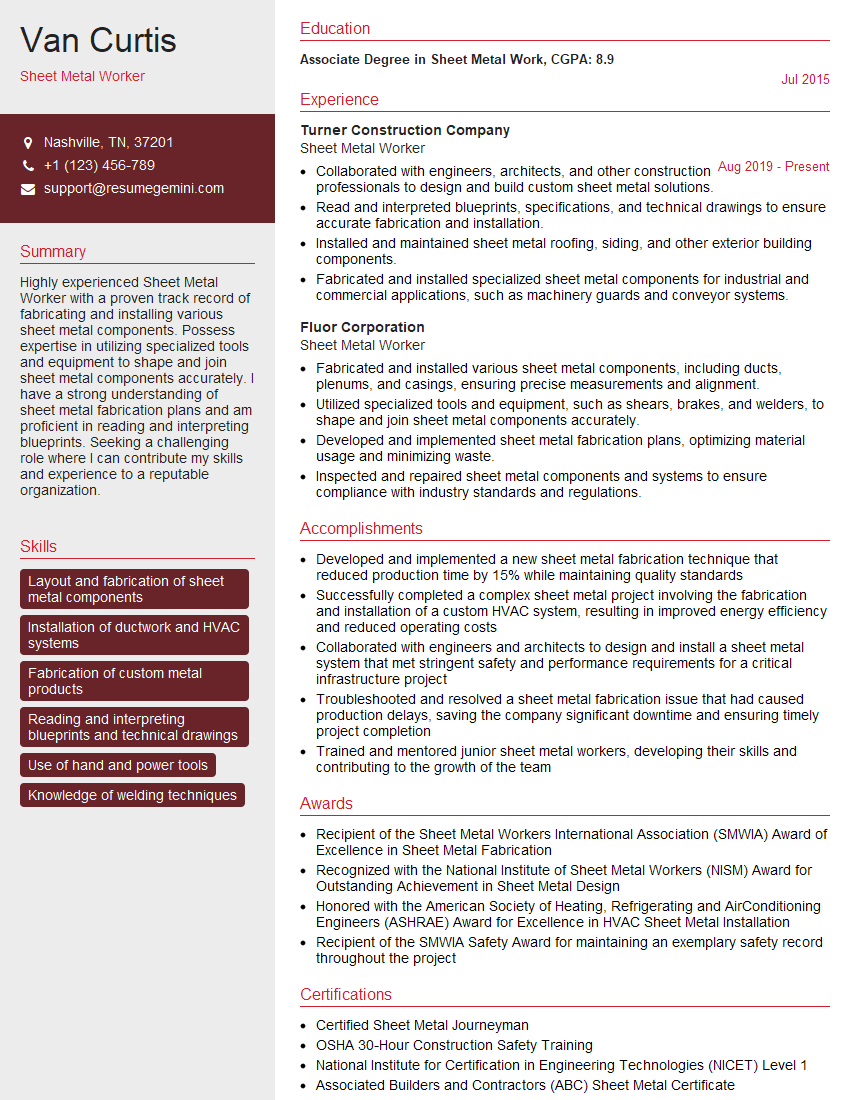
Sheet Metal Worker Resume Sample
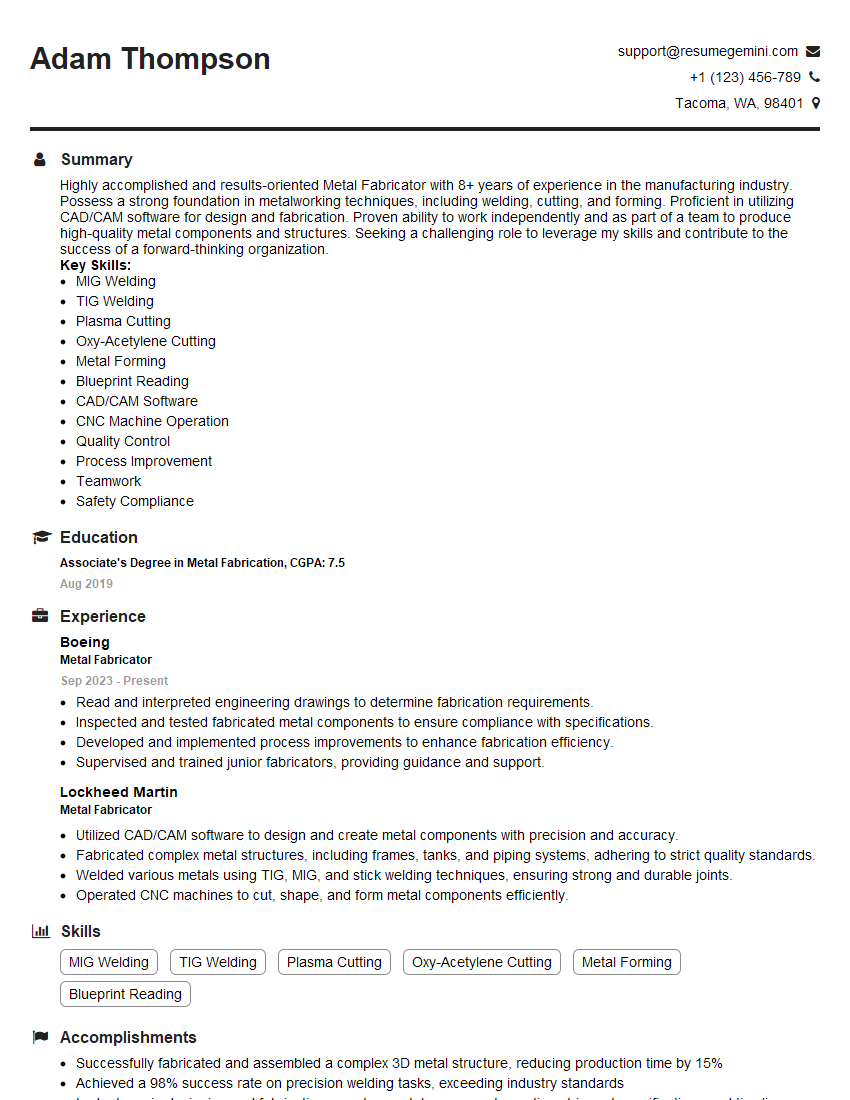
Metal Fabricator Resume Sample
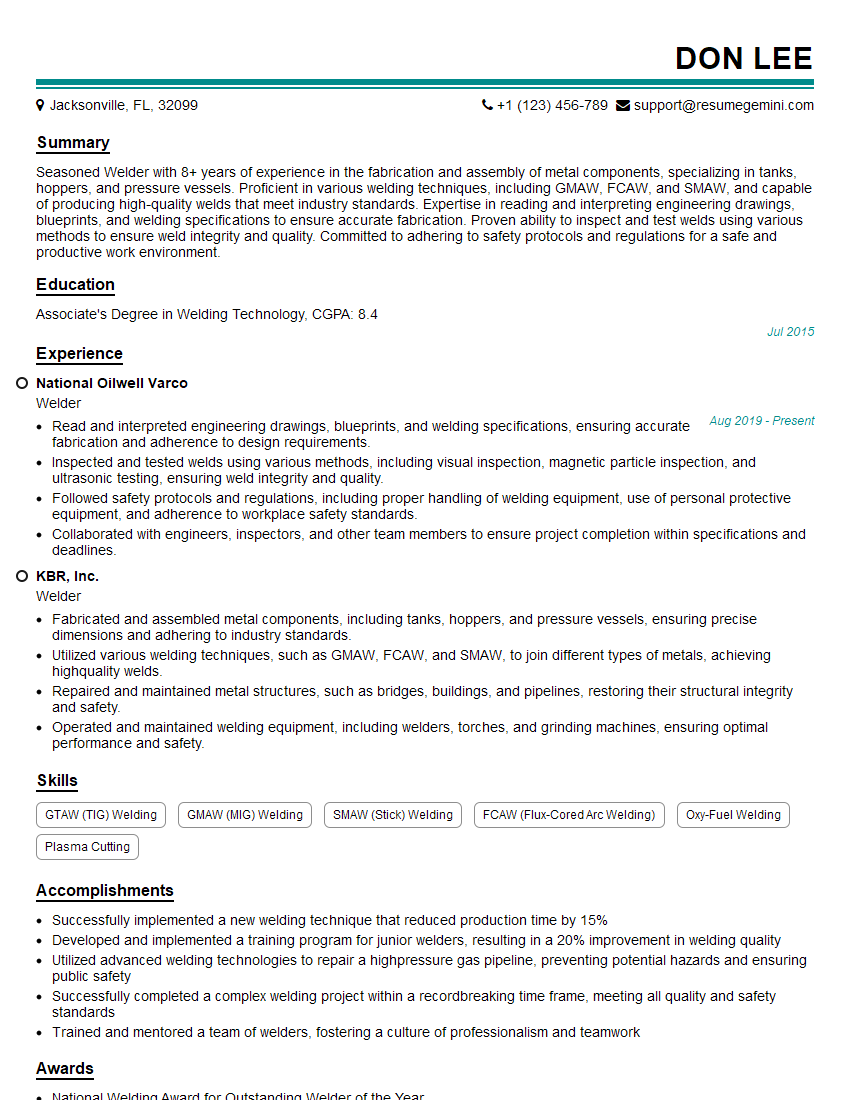
Welder Resume Sample
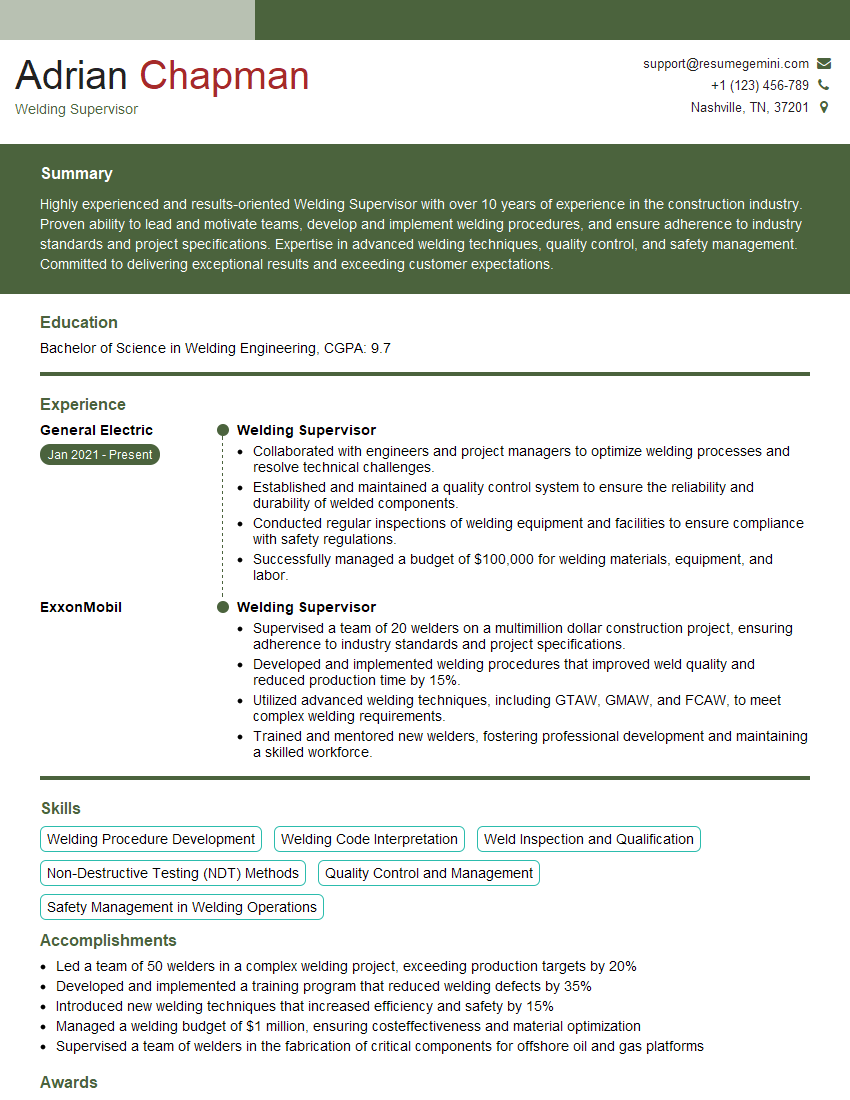
Welding Supervisor Resume Sample
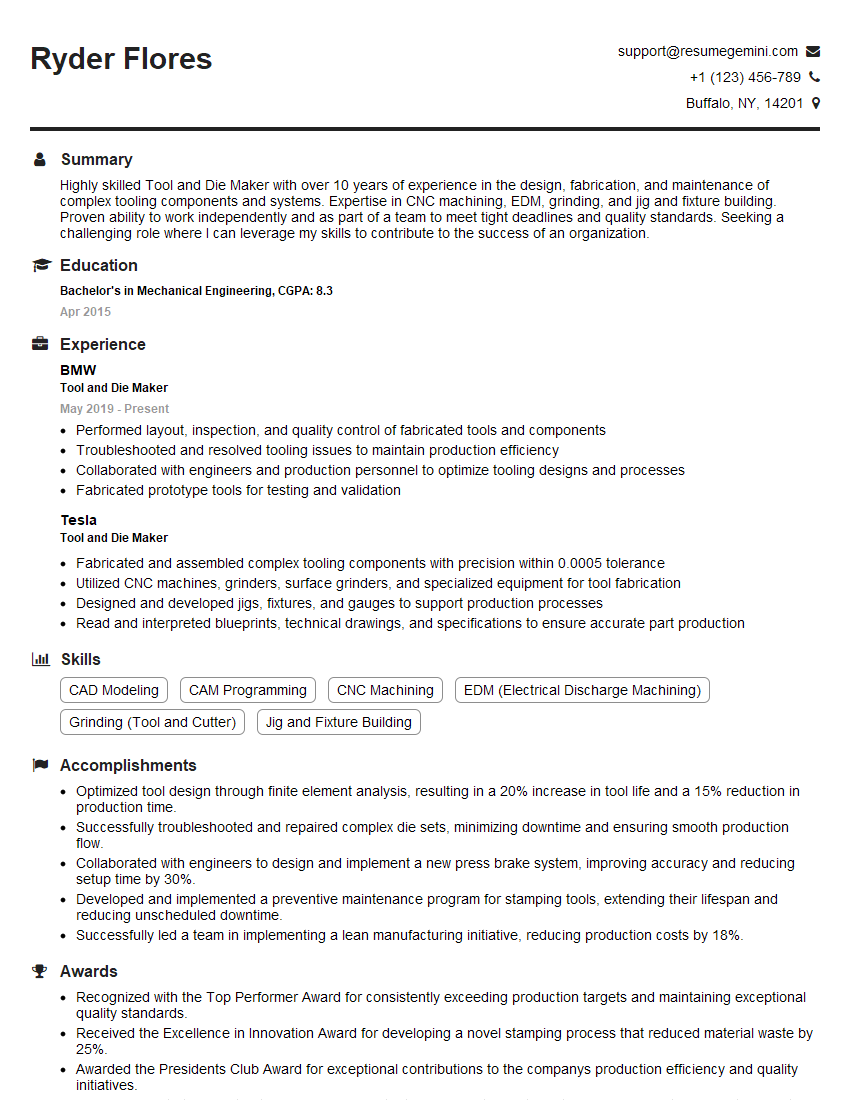
Tool and Die Maker Resume Sample
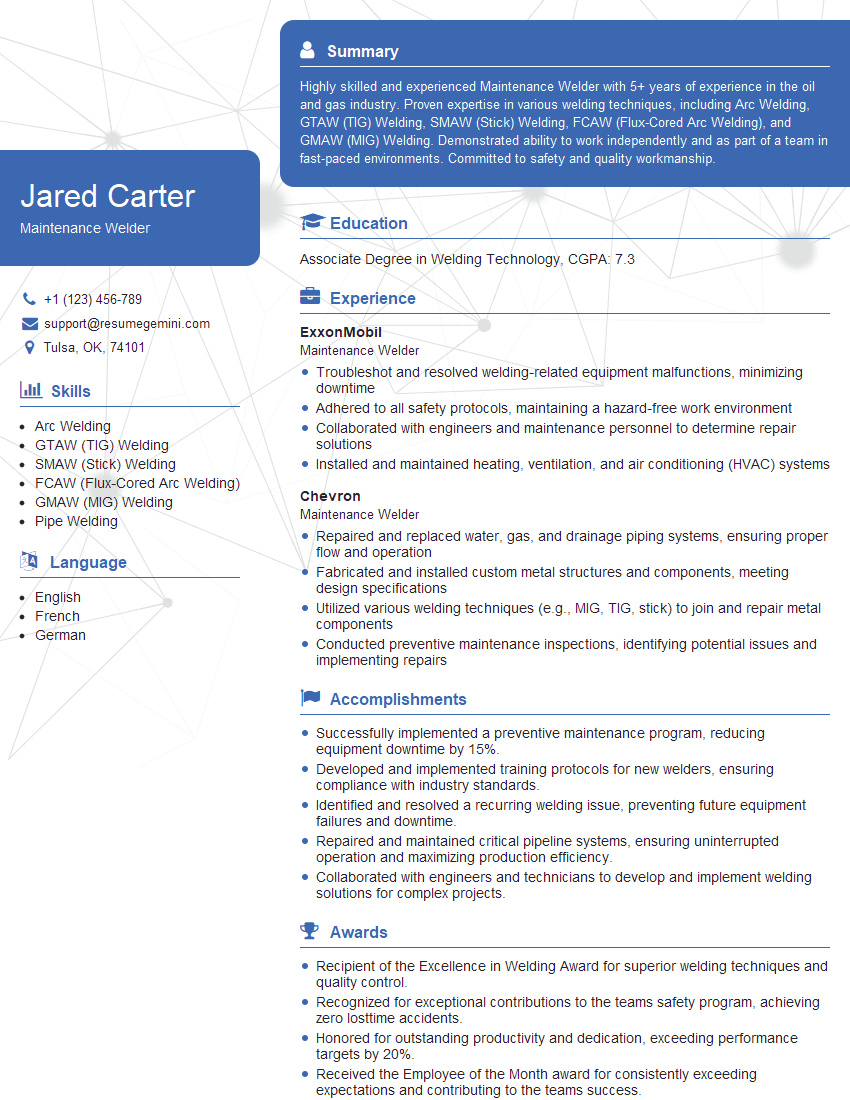
Maintenance Welder Resume Sample
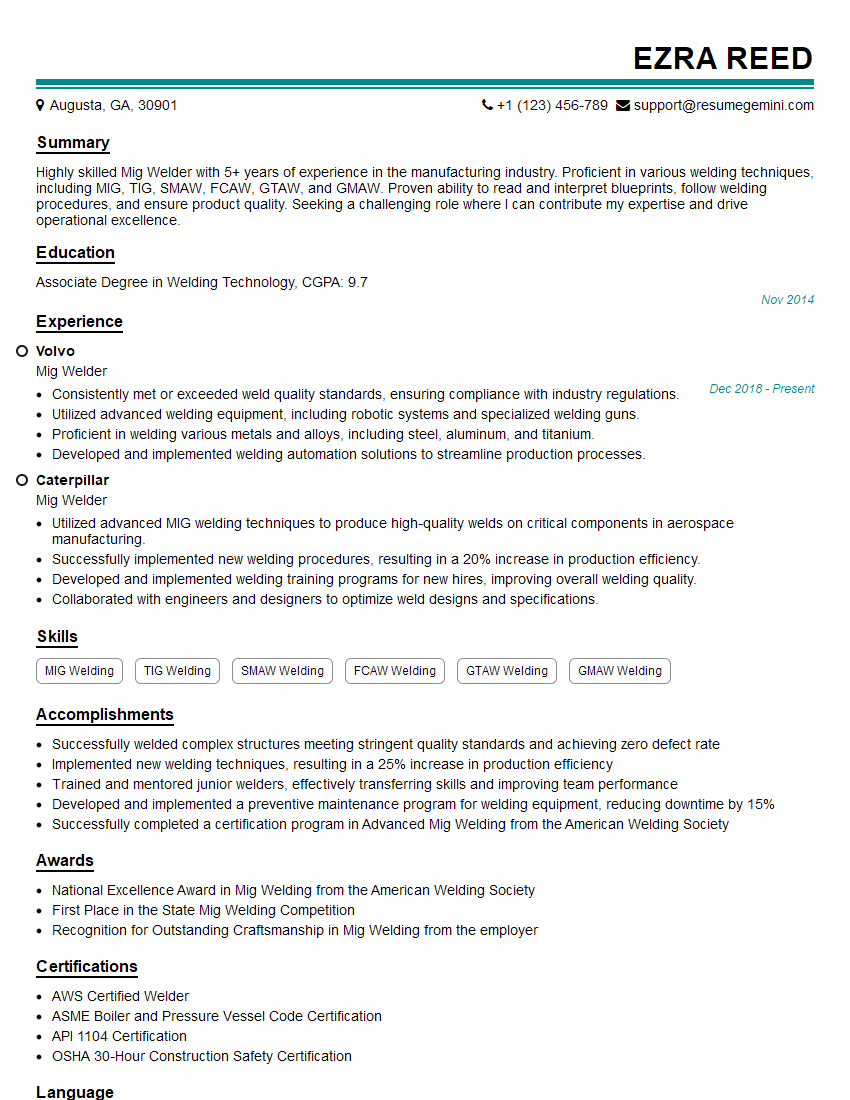
Mig Welder Resume Sample
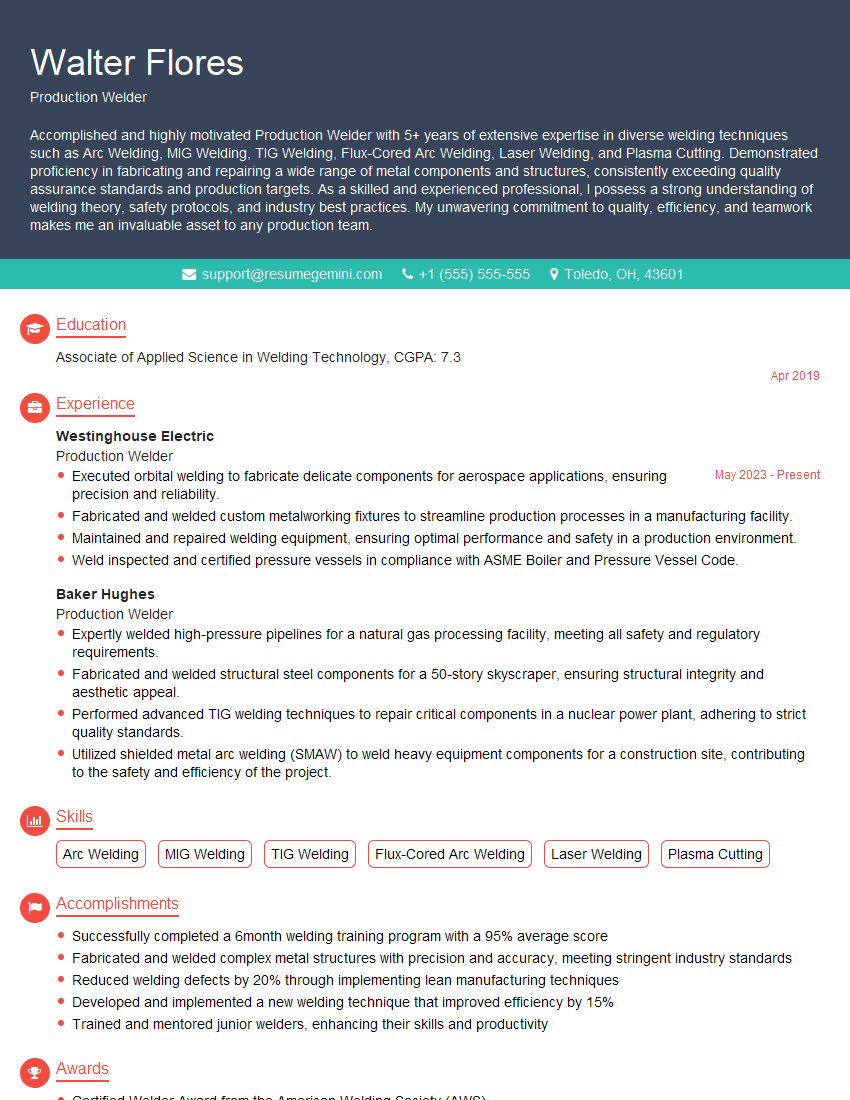
Production Welder Resume Sample
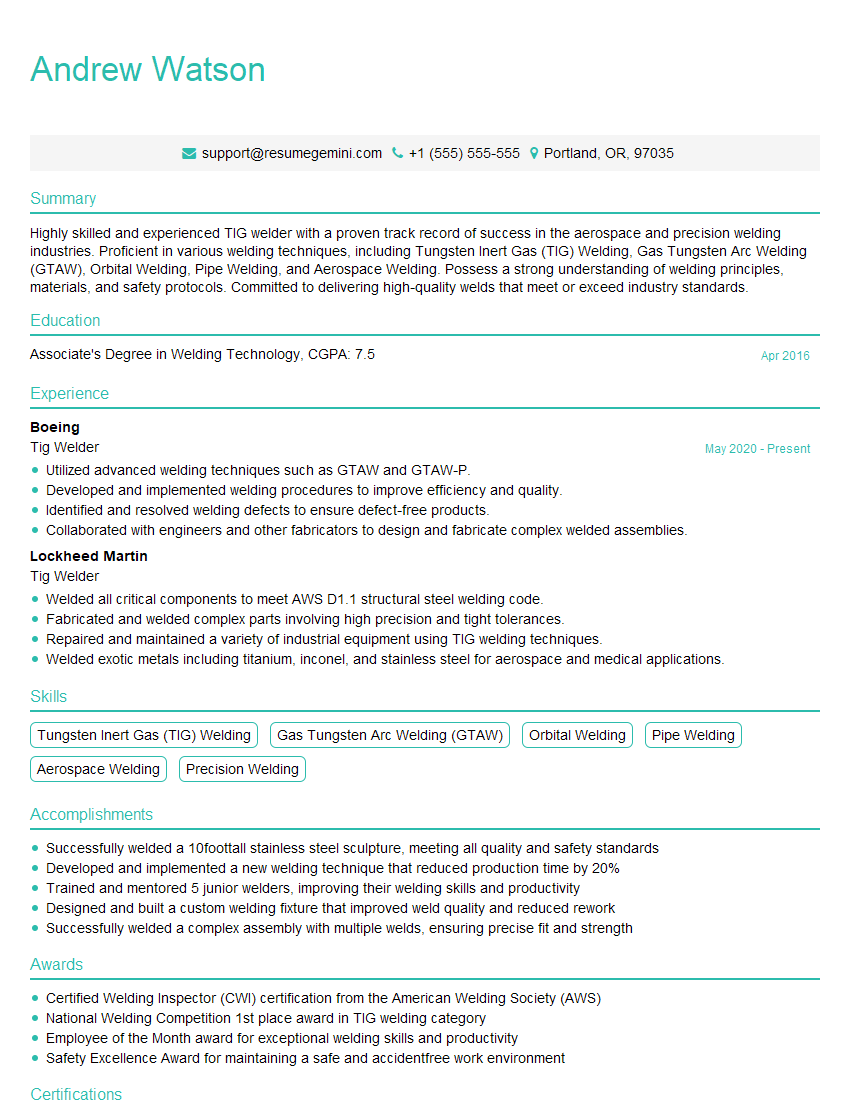
Tig Welder Resume Sample
Explore more articles
Users Rating of Our Blogs
Share Your Experience
We value your feedback! Please rate our content and share your thoughts (optional).
What Readers Say About Our Blog
Very informative content, great job.
good