Unlock your full potential by mastering the most common Maintaining Professional Records and Documentation interview questions. This blog offers a deep dive into the critical topics, ensuring you’re not only prepared to answer but to excel. With these insights, you’ll approach your interview with clarity and confidence.
Questions Asked in Maintaining Professional Records and Documentation Interview
Q 1. Explain your experience with different record-keeping systems (e.g., electronic, paper-based).
Throughout my career, I’ve managed records using both paper-based and electronic systems. Paper-based systems, while sometimes slower, offer a tangible record, useful for certain legal or archival purposes. My experience includes meticulously maintaining physical files, implementing robust filing systems with clear labeling and indexing, and ensuring proper storage conditions to prevent damage. For instance, in a previous role at a law firm, I managed client files involving sensitive legal documents. This required strict adherence to a detailed filing system that categorized documents by case number, client name, and date, ensuring rapid retrieval when needed.
Electronic record-keeping, however, offers significant advantages in terms of scalability, search functionality, and version control. I’m proficient in various Electronic Document Management Systems (EDMS), including SharePoint, Dropbox, and cloud-based solutions like Google Drive. My experience encompasses setting up and managing these systems, implementing security protocols, and training colleagues on their effective use. For example, in my current role, I migrated a large paper-based archive into a digital system, improving accessibility and reducing physical storage needs. This involved meticulous scanning, quality control checks, and metadata tagging to facilitate efficient search and retrieval.
Q 2. Describe your process for organizing and categorizing large volumes of documents.
Organizing large volumes of documents requires a systematic approach. My process starts with defining a clear categorization scheme. This usually involves creating folders and subfolders based on predefined criteria relevant to the organization’s needs – for example, by project, client, department, or document type. I then utilize a combination of manual sorting and automated tools (like keyword searching within EDMS) to assign documents to their respective categories. Think of it like organizing a library: you need a logical system – Dewey Decimal or a custom system – to effectively place and retrieve books.
Furthermore, I employ a hierarchical folder structure to avoid ambiguity and ensure efficient retrieval. Each folder is clearly labeled, and a comprehensive index or metadata system tracks the location of every document. Regular audits and reviews help maintain the organization, ensuring the system remains current and efficient. For example, at a previous marketing firm, I managed marketing campaign materials, which involved organizing thousands of documents including briefs, creative assets, and client communications by campaign name and associated tasks.
Q 3. How do you ensure the accuracy and completeness of records?
Accuracy and completeness are paramount. I employ a multi-layered approach: Firstly, I implement strict data entry protocols with mandatory fields and validation checks to minimize errors during the initial recording stage. Secondly, regular data quality checks and audits are conducted using both manual reviews and automated data validation tools to identify and rectify inconsistencies or missing information. This is like proofreading a document multiple times – once for grammar, another for factual accuracy.
Thirdly, I employ a version control system to track changes and ensure the latest version of a document is always accessible. For example, if a document requires multiple revisions, each version is clearly labeled and archived, making it easy to trace the evolution of the document. Finally, documentation of processes and procedures, including clear guidelines for data entry, ensures consistency and aids in identifying potential issues early.
Q 4. What methods do you use to maintain the confidentiality and security of sensitive documents?
Confidentiality and security are non-negotiable. My methods incorporate multiple layers of protection. Firstly, access control mechanisms are implemented through user roles and permissions within the EDMS, limiting access to sensitive information based on ‘need-to-know’. Secondly, documents are encrypted both at rest and in transit, using robust encryption algorithms, providing an extra layer of security. This is like using a combination lock on a safe – multiple safeguards ensure only authorized individuals can access the contents.
Thirdly, regular security audits are conducted to identify and address potential vulnerabilities. This could involve checking for outdated software, weak passwords, or unauthorized access attempts. Finally, employee training emphasizes data security best practices, including safe password management and awareness of phishing scams. For instance, in a healthcare setting, patient medical records would require strict adherence to HIPAA regulations which I would implement through appropriate access controls and encryption.
Q 5. Explain your experience with metadata management and tagging.
Metadata management and tagging are critical for efficient information retrieval and analysis. I utilize metadata schemas (predefined sets of data fields) to capture relevant information about each document – this could include author, date created, keywords, and document type. This process allows for advanced searching and filtering, making it much easier to locate specific information. It’s like adding detailed labels and tags to library books, making them easily searchable by subject, author, or keyword.
I’m proficient in applying various tagging methodologies, including hierarchical and faceted tagging, to ensure comprehensive and consistent indexing. For example, using a faceted approach for tagging a marketing document, I might apply tags such as ‘Campaign: Spring Launch,’ ‘Product: New Widget,’ and ‘Target Audience: Millennials’. This allows for complex searches across multiple dimensions, providing rich search capabilities.
Q 6. How do you handle document retention and disposal procedures according to legal and regulatory requirements?
Document retention and disposal must comply with legal and regulatory requirements. I’m familiar with various regulations such as HIPAA, GDPR, and industry-specific compliance standards. My process starts with establishing a clear retention policy, outlining the required retention periods for different document types. This is crucial as it defines how long certain documents need to be kept for legal or compliance reasons. For example, financial records may have different retention periods compared to marketing materials.
Once the retention period expires, a secure disposal procedure is followed. This may involve shredding physical documents and securely deleting electronic documents, with appropriate audit trails to document the disposal process. Regular reviews of the retention policy ensure it remains up-to-date and aligned with the evolving legal and regulatory landscape. For example, a compliance audit of a financial institution would involve meticulously checking adherence to relevant regulations, ensuring all records are handled according to the defined retention and disposal policy.
Q 7. Describe your experience with document version control.
Document version control is essential for maintaining accuracy and avoiding confusion. I employ versioning systems that track changes and allow for easy retrieval of previous versions. This could involve using features within an EDMS, employing specialized version control software (like Git for code), or even a simple naming convention such as ‘Document Name_v1.0, Document Name_v2.0’ for less complex documents.
Each version is clearly identified with a version number, date, and author, providing a clear audit trail. This helps to resolve discrepancies and ensures that all stakeholders are working with the latest and most accurate version. For example, in a collaborative design project, version control is vital to ensure that all team members are working off the latest design files. It allows for tracking changes, collaboration, and prevents any confusion or accidental overwriting of files.
Q 8. How do you manage requests for information and retrieval of documents?
Managing information requests and document retrieval involves a structured approach that prioritizes efficiency and accuracy. It begins with a clear understanding of the request – is it a simple query, a formal discovery request, or something else?
My process involves:
- Request Clarification: I confirm the specifics of what’s needed: document type, date range, keywords, etc. This prevents wasted time searching for the wrong information.
- Search and Retrieval: I leverage the organization’s document management system (DMS) and my knowledge of its filing structure to locate the requested documents. This often includes using metadata tags, keywords, and advanced search operators.
- Verification and Redaction (if necessary): Before releasing any documents, I review them to ensure they meet the request and comply with confidentiality and data privacy regulations. Redaction tools are used when sensitive information needs to be removed.
- Delivery and Tracking: I deliver the documents via secure methods, tracking their delivery and acknowledging receipt. This could involve email, secure file transfer protocols (like SFTP), or a controlled physical delivery.
For instance, if I receive a request for all client communications from a specific project in 2022, I’d use the project name and date range to filter results in our DMS, verify their relevance, redact any personally identifiable information (PII) not relevant to the request, and send a secure link to the requester.
Q 9. What software or tools have you used for records management?
Throughout my career, I’ve worked with a variety of software and tools for records management. My experience includes:
- SharePoint: This is a versatile platform I’ve used for version control, document collaboration, and metadata tagging. It’s especially useful for managing large volumes of documents and ensuring multiple users can access and contribute.
- M-Files: A robust DMS that provides strong security features and metadata management capabilities. I’ve used it for complex projects requiring strict access control and robust audit trails.
- OpenText Content Suite: For large-scale enterprise-level document management, this suite offers comprehensive solutions for capturing, storing, and managing digital and physical documents.
- Various cloud storage solutions (e.g., Dropbox, Google Drive – used with appropriate security measures): These are helpful for smaller projects or sharing documents internally and externally with appropriate access controls.
My choice of tool depends heavily on the scale and complexity of the project, as well as the organization’s existing infrastructure and security policies.
Q 10. How do you ensure the accessibility of records to authorized personnel?
Ensuring accessibility to authorized personnel is paramount. It’s a matter of balancing the need for efficient access with stringent security measures. This is achieved through a multi-layered approach:
- Role-Based Access Control (RBAC): The DMS should have a robust RBAC system, granting access only to those with a legitimate need to view or modify documents. For instance, HR personnel might only access employee records, while legal staff might have broader access.
- Strong Authentication and Authorization: This includes using secure passwords, multi-factor authentication (MFA), and regular password changes. Access logs are meticulously reviewed to detect any unauthorized activity.
- Data Encryption: Documents, both at rest and in transit, are encrypted using industry-standard encryption protocols to protect against unauthorized access, even if a breach occurs.
- Regular Security Audits: Regular audits assess the effectiveness of the access control system and identify potential vulnerabilities. This proactive approach helps mitigate risks.
Imagine a scenario where a sensitive financial report is stored. Only the finance team, management, and perhaps the auditors should have access, based on defined roles and responsibilities.
Q 11. Describe your experience with implementing or improving records management systems.
In a previous role, I led the implementation of a new DMS to replace an outdated, inefficient system reliant on physical filing cabinets. The process was multifaceted:
- Needs Assessment: We meticulously analyzed the organization’s needs, including document types, volume, and access requirements.
- System Selection: After evaluating several options, we chose M-Files due to its strong security features and metadata management capabilities.
- Data Migration: We developed a phased migration plan to transfer existing records into the new system, ensuring data integrity and minimal disruption.
- User Training: Comprehensive training was provided to all staff on using the new system, highlighting efficient workflows and best practices.
- Ongoing Optimization: After implementation, we monitored system usage, collected feedback, and made adjustments to workflows and access permissions as needed. We continuously strive to improve efficiency and user satisfaction.
This project resulted in significant improvements in document retrieval time, reduced storage costs, and enhanced data security.
Q 12. How do you handle discrepancies or inconsistencies in records?
Discrepancies or inconsistencies in records are addressed through a rigorous verification process.
- Identification: These are often discovered during routine audits or when responding to requests. The discrepancies could be simple errors, conflicting information, or missing documents.
- Investigation: I’d investigate the root cause – was it a data entry error, a failure in workflow, or something more systemic?
- Resolution: This might involve contacting the originator of the record to clarify the information, comparing multiple sources, or if necessary, marking the document as superseded or otherwise flagging the inconsistency.
- Documentation: I maintain detailed documentation of the discrepancies, the investigation, and the corrective actions taken. This helps prevent future occurrences.
For example, if two versions of a contract exist with differing clauses, a thorough investigation would be conducted to determine the correct and valid version, and the process for resolving such future conflicts would be reviewed.
Q 13. Explain your process for auditing records to ensure compliance.
Auditing records for compliance involves a systematic review to ensure they meet regulatory requirements and internal policies. This is a crucial aspect of maintaining data integrity and minimizing legal risks.
- Planning: The audit scope is clearly defined, specifying the records to be reviewed, the criteria for compliance, and the timeframe.
- Selection: A sample of records is selected using a statistically sound method to ensure representativeness.
- Review: The selected records are examined against the defined compliance criteria, noting any discrepancies.
- Reporting: The findings are documented in a comprehensive report, highlighting any compliance issues, recommendations for corrective action, and overall assessment of the records management system’s effectiveness.
- Follow-up: Corrective actions are implemented to address identified issues, and a follow-up audit may be conducted to verify the effectiveness of the remedial measures.
For example, if an organization is subject to data privacy regulations like GDPR, an audit would examine whether personal data is properly secured, processed lawfully, and accessible only to authorized personnel.
Q 14. How do you prioritize tasks when dealing with multiple urgent requests?
Prioritizing tasks with multiple urgent requests requires a structured approach. It’s about efficiently managing competing demands and ensuring critical tasks are addressed promptly.
My approach involves:
- Assessment: I evaluate each request based on urgency, impact, and deadline, considering factors like potential legal ramifications or reputational damage.
- Categorization: I categorize requests into high, medium, and low priority based on the assessment.
- Time Allocation: I allocate time to each task proportionally to its priority, focusing on the most critical requests first. I use time-blocking techniques and utilize project management tools to help visualize and manage this.
- Communication: I keep stakeholders informed of the prioritization process and expected completion times. Open communication helps manage expectations and prevents misunderstandings.
For example, if I receive a subpoena for certain documents, that would immediately take precedence over other requests, no matter the deadline. This demonstrates a clear understanding of legal requirements and their implications.
Q 15. Describe your experience with integrating records management into other business processes.
Integrating records management into other business processes isn’t just about storing documents; it’s about making information readily accessible to support daily operations. I approach this by first understanding the specific business process – for example, the sales cycle, human resources onboarding, or project management. Then, I identify the key documents involved and map how they flow through the process. This involves analyzing existing workflows to pinpoint bottlenecks or inefficiencies.
For instance, in a sales cycle, integrating records management might involve automatically filing contracts and proposals upon closure, triggering automated reminders for follow-ups, and generating reports on sales performance based on readily accessible data. This requires a close collaboration with the sales team to understand their needs and tailor the system accordingly. The implementation might involve using a CRM system that directly interfaces with the records management system, automating the filing of documents and data extraction.
In another example, I streamlined a project management workflow by integrating a document control system. This ensured version control for all project documents and facilitated easy access for team members, thereby improving collaboration and reducing confusion. The key is to make the system intuitive and user-friendly, so employees actively use it rather than resorting to their own ad-hoc filing systems.
Career Expert Tips:
- Ace those interviews! Prepare effectively by reviewing the Top 50 Most Common Interview Questions on ResumeGemini.
- Navigate your job search with confidence! Explore a wide range of Career Tips on ResumeGemini. Learn about common challenges and recommendations to overcome them.
- Craft the perfect resume! Master the Art of Resume Writing with ResumeGemini’s guide. Showcase your unique qualifications and achievements effectively.
- Don’t miss out on holiday savings! Build your dream resume with ResumeGemini’s ATS optimized templates.
Q 16. How do you manage large-scale document migration projects?
Managing large-scale document migration projects requires a structured and phased approach. I typically follow a methodology that includes a thorough needs assessment, detailed planning, execution, and testing stages. The first step involves identifying the source and destination systems, analyzing the volume and types of documents, and assessing the level of data cleansing and transformation required. Then, a detailed plan is developed, outlining timelines, resources, and potential risks.
For example, when migrating thousands of physical files to a cloud-based system, I’d first create a detailed inventory, categorize documents using a well-defined classification scheme (e.g., based on file type, department, project), and develop a plan for digitization (scanning, OCR). A pilot program on a smaller subset of documents allows for testing and refinement of the process before full-scale execution. Quality assurance is crucial; thorough checks for data accuracy and completeness are essential throughout the migration. Finally, post-migration support and training are provided to ensure users can effectively utilize the new system.
The project’s success hinges on clear communication and stakeholder management. Regular progress reports and addressing potential issues proactively are vital. Choosing the right technology (migration tools, document management systems) and establishing appropriate security protocols are also critical elements in a successful migration.
Q 17. How do you train others on proper records management procedures?
Training others on proper records management procedures is a crucial aspect of ensuring compliance and efficient information management. My approach combines classroom-style instruction with hands-on exercises and ongoing support. I start by explaining the ‘why’ behind records management – compliance, efficiency, risk mitigation, and legal defensibility. I tailor the training to the specific roles and responsibilities of the participants.
For instance, training for administrative staff would focus on practical skills like file naming conventions, using the document management system, and applying retention schedules. Management training would focus on the strategic aspects – setting policies, ensuring compliance, and overseeing the program’s effectiveness. I typically employ a variety of training methods: interactive presentations, case studies, workshops, and online modules for asynchronous learning.
Feedback and ongoing support are equally important. I make myself available for questions, provide additional resources, and conduct follow-up sessions to reinforce learning and address any lingering challenges. Regular audits and evaluations ensure the procedures are being followed consistently and identify areas for improvement.
Q 18. What is your experience with different indexing and classification methods?
I have extensive experience with various indexing and classification methods. The choice of method depends heavily on the nature of the records, the organization’s structure, and the intended use of the information. Simple alpha-numeric systems are suitable for smaller collections, while more complex hierarchical systems are necessary for larger and more diverse collections.
Examples include:
- Subject-based classification: Grouping documents based on their subject matter (e.g., Finance, Marketing, Human Resources).
- Geographic classification: Organizing records by location (e.g., country, state, city).
- Chronological classification: Arranging documents by date or time period.
- Hierarchical classification schemes: Creating a structured hierarchy using keywords, such as the Dewey Decimal System for libraries.
In addition to these, I’ve also utilized metadata tagging and keyword indexing to improve searchability and retrieval of electronic documents. Choosing the appropriate indexing method requires careful analysis of the organization’s information needs and the characteristics of the records themselves. The goal is to create a system that’s both efficient and allows for effective retrieval of information when needed.
Q 19. How familiar are you with relevant data privacy regulations (e.g., GDPR, HIPAA)?
I am very familiar with relevant data privacy regulations, including GDPR (General Data Protection Regulation) and HIPAA (Health Insurance Portability and Accountability Act). Understanding these regulations is paramount in ensuring the security and ethical handling of sensitive information.
GDPR, for example, requires organizations to implement stringent data protection measures, including consent management, data minimization, and data breach notification protocols. My experience involves developing and implementing procedures that ensure compliance with these requirements, such as implementing data encryption, access control measures, and data retention policies that align with legal requirements.
Similarly, HIPAA mandates strict security and privacy rules for protected health information (PHI). In settings that handle PHI, I ensure compliance through the implementation of robust security protocols, employee training, and regular audits to maintain compliance. The key is a proactive approach – regularly reviewing and updating policies and procedures to adapt to evolving regulations and best practices.
Q 20. Describe your experience with disaster recovery and business continuity planning for records.
Disaster recovery and business continuity planning for records are critical for organizational resilience. My approach involves a multi-faceted strategy focusing on prevention, mitigation, and recovery. Prevention involves establishing robust security measures, such as fire suppression systems, physical security for facilities, and secure access controls for electronic records.
Mitigation includes implementing regular backups, both on-site and off-site, employing data redundancy techniques, and establishing a well-defined chain of custody for critical records. The recovery plan outlines procedures to restore access to records in the event of a disaster. This includes specifying recovery time objectives (RTOs) and recovery point objectives (RPOs), which define acceptable downtime and data loss in case of a disruption.
For instance, I’ve developed plans that involve utilizing cloud-based storage for off-site backups, employing a geographically diverse backup strategy, and establishing a clear communication plan to coordinate recovery efforts among different teams. Regular testing and drills are essential to ensure the plan’s effectiveness and readiness. The key is to plan for various scenarios, considering the potential impact on operations, data integrity, and regulatory compliance.
Q 21. How do you utilize technology to improve records management efficiency?
Technology plays a vital role in improving records management efficiency. I utilize a variety of technologies to streamline processes, enhance security, and improve accessibility. These include:
- Document Management Systems (DMS): These systems provide centralized storage, version control, and search capabilities for electronic documents. I’ve implemented DMS solutions that integrate with other business systems, automating workflows and improving overall efficiency.
- Optical Character Recognition (OCR): This technology allows for the conversion of scanned documents into searchable text, significantly improving accessibility and search functionality.
- Cloud storage: Cloud-based solutions offer scalable and secure storage for both electronic and digitized records. I leverage cloud services to ensure business continuity and disaster recovery.
- Workflow automation tools: These tools can automate routine tasks like routing documents for approval, creating reminders, and generating reports, freeing up staff for more strategic tasks.
The choice of technology depends on the specific needs of the organization, but the overarching goal is to leverage technology to create a seamless, user-friendly, and efficient records management system. Regular monitoring and evaluation ensure the technology continues to support the organization’s evolving needs.
Q 22. Describe your experience with creating and maintaining a records retention schedule.
Creating and maintaining a records retention schedule is crucial for any organization. It’s essentially a roadmap that dictates how long different types of records need to be kept, based on legal, regulatory, and business requirements. This schedule ensures compliance, reduces storage costs, and protects against data loss.
My experience involves collaborating with legal, compliance, and operational teams to identify all record types within the organization. Then, we assess each type’s retention period, considering factors like legal obligations (e.g., tax records, contracts), industry regulations (e.g., HIPAA for healthcare), and internal business needs (e.g., audit trails, performance reviews).
For example, in a previous role, we created a schedule for a financial institution. We categorized records into groups like ‘Customer Accounts,’ ‘Transactions,’ and ‘Loan Documents.’ Each category had a defined retention period – ranging from 7 years for certain transaction records to permanently for some regulatory documents. The schedule was meticulously documented, including disposal methods (secure shredding, electronic deletion) to ensure compliance.
The schedule isn’t static; it requires regular review and updates to reflect changes in legislation, business practices, or technology. We implemented a system of annual reviews to ensure the schedule remained current and relevant.
Q 23. How do you address challenges related to legacy records systems?
Legacy records systems present significant challenges, often involving outdated software, incompatible formats, and inaccessible data. Addressing these challenges requires a multifaceted approach.
First, a thorough assessment of the legacy system is needed to understand its capabilities, limitations, and data content. This might involve analyzing system documentation, interviewing key personnel, and sampling data to evaluate its quality and integrity.
Next, a migration strategy needs to be developed. This could involve data migration to a modern records management system (RMS), which allows for easier access, better security, and improved searchability. Sometimes, data needs to be converted from older formats to more current ones (e.g., converting from proprietary formats to PDFs). During this process, data cleansing and validation are crucial to ensure accuracy and consistency.
Finally, a strong communication plan is essential to inform stakeholders about the migration process, potential disruptions, and the benefits of the new system. It’s akin to renovating a house – it might be disruptive, but the end result is a much more efficient and valuable space. In one instance, I managed the migration of a 20-year-old client database to a cloud-based RMS, requiring careful planning, phased implementation, and rigorous testing to minimize disruptions to ongoing operations.
Q 24. What metrics do you use to measure the effectiveness of records management processes?
Measuring the effectiveness of records management processes requires a combination of quantitative and qualitative metrics. Quantitative metrics include:
- Storage costs: Tracking storage costs over time helps to assess the efficiency of records management in reducing physical and digital storage needs.
- Retrieval time: Monitoring the time it takes to locate and retrieve records provides insights into the accessibility and organization of the records system.
- Compliance rate: Measuring the adherence to legal and regulatory requirements related to records retention and disposal.
- Error rate: Tracking errors in records management processes, such as incorrect filing or data entry, helps to identify areas for improvement.
Qualitative metrics include:
- User satisfaction: Gathering feedback from users about their experience with the records management system.
- Staff training and competence: Assessing the level of training and competency of staff in records management practices.
- System usability: Evaluating the ease of use and efficiency of the records management system itself.
By tracking these metrics regularly, organizations can identify areas of strength and weakness in their records management processes, allowing them to make data-driven improvements.
Q 25. Explain your understanding of different record formats (e.g., PDF, Word, images).
Understanding different record formats is vital for effective records management. Each format has its own strengths and weaknesses.
PDF (Portable Document Format): This is a widely used format that maintains formatting and is highly portable across different operating systems and software. However, it’s not always ideal for editing or collaboration.
Word (.doc, .docx): These are common word processing formats, easily editable and collaborative, but they can be vulnerable to version control issues if not managed properly.
Images (.jpg, .png, .tiff): These are useful for storing visual information, but metadata is crucial for searchability and organization. Different formats offer varying levels of compression and quality.
Effective records management requires understanding these formats’ properties to ensure proper storage, accessibility, and long-term preservation. For instance, we might opt for lossless image formats (like TIFF) for archival purposes to avoid degradation of image quality over time, while using JPEG for less critical visuals due to its better compression.
Q 26. How do you handle requests for records that are not readily accessible?
When faced with requests for records that aren’t readily accessible, a systematic approach is necessary.
First, I’d determine the nature of the request and the urgency. Is it a legal discovery request, a routine internal inquiry, or something else?
Next, I would utilize the organization’s records management system to search for the requested records using appropriate keywords and metadata. If the records aren’t found electronically, I’d consult the records retention schedule to determine if the records should still exist and where they might be physically archived (e.g., offsite storage).
If the records are located but require processing (e.g., redaction, translation), I would ensure this is done correctly and efficiently, adhering to all privacy and legal requirements. If the records are not found and should exist, a thorough investigation is needed to understand why they are missing. This may involve reviewing existing records, interviewing staff, and possibly initiating a formal investigation. Transparency and timely communication with the requester are key throughout this process.
Q 27. Describe a time you had to resolve a conflict related to records management.
In a previous role, a conflict arose concerning the disposal of outdated patient records in a healthcare setting. A group of clinicians argued that certain records should be retained indefinitely, even though they exceeded the retention period stipulated by HIPAA and internal policy. They were concerned about potential future litigation and felt a moral obligation to preserve the data.
To resolve the conflict, I convened a meeting with the clinicians, legal counsel, and the records management team. We reviewed the relevant regulations, established the potential risks and benefits of retaining the records (e.g., storage costs, legal liabilities, potential patient privacy breaches), and discussed alternative approaches such as secure, anonymized archiving of the records.
Through collaborative discussion and a clear presentation of the legal and practical considerations, we reached a compromise. The sensitive data was securely anonymized and archived in accordance with best practices, balancing compliance with the clinicians’ concerns. This situation highlighted the importance of open communication, clear policy adherence, and a collaborative approach to conflict resolution in records management.
Key Topics to Learn for Maintaining Professional Records and Documentation Interview
- Record Keeping Systems: Understanding various methods for maintaining professional records (physical, digital, cloud-based), their advantages and disadvantages, and selecting the most appropriate system for different contexts.
- Data Integrity and Security: Implementing procedures to ensure accuracy, completeness, and security of records, including data backup, access control, and compliance with relevant regulations (e.g., HIPAA, GDPR).
- Documentation Best Practices: Mastering techniques for creating clear, concise, and well-organized documentation, including using consistent formatting, proper labeling, and effective indexing.
- Record Retention Policies: Developing and implementing policies that define how long records should be kept, based on legal, regulatory, and organizational requirements.
- Archiving and Retrieval: Efficient methods for storing and retrieving records, including utilizing appropriate technology and developing searchable databases.
- Auditing and Compliance: Understanding the importance of regular audits to ensure compliance with internal policies and external regulations, and the ability to address any discrepancies found.
- Workflow Optimization: Designing and implementing efficient workflows to streamline the processes of creating, storing, and managing records. This includes leveraging technology to automate tasks where appropriate.
- Problem-solving: Applying critical thinking skills to address challenges related to record keeping, such as data loss, retrieval difficulties, and compliance issues.
Next Steps
Mastering Maintaining Professional Records and Documentation is crucial for career advancement in numerous fields. It demonstrates organizational skills, attention to detail, and a commitment to compliance – highly valued attributes in today’s workplace. To significantly boost your job prospects, create an ATS-friendly resume that showcases your expertise. ResumeGemini is a trusted resource that can help you build a compelling and effective resume, highlighting your skills in this critical area. Examples of resumes tailored to Maintaining Professional Records and Documentation are available to guide you.

Knowledge Manager Resume Sample
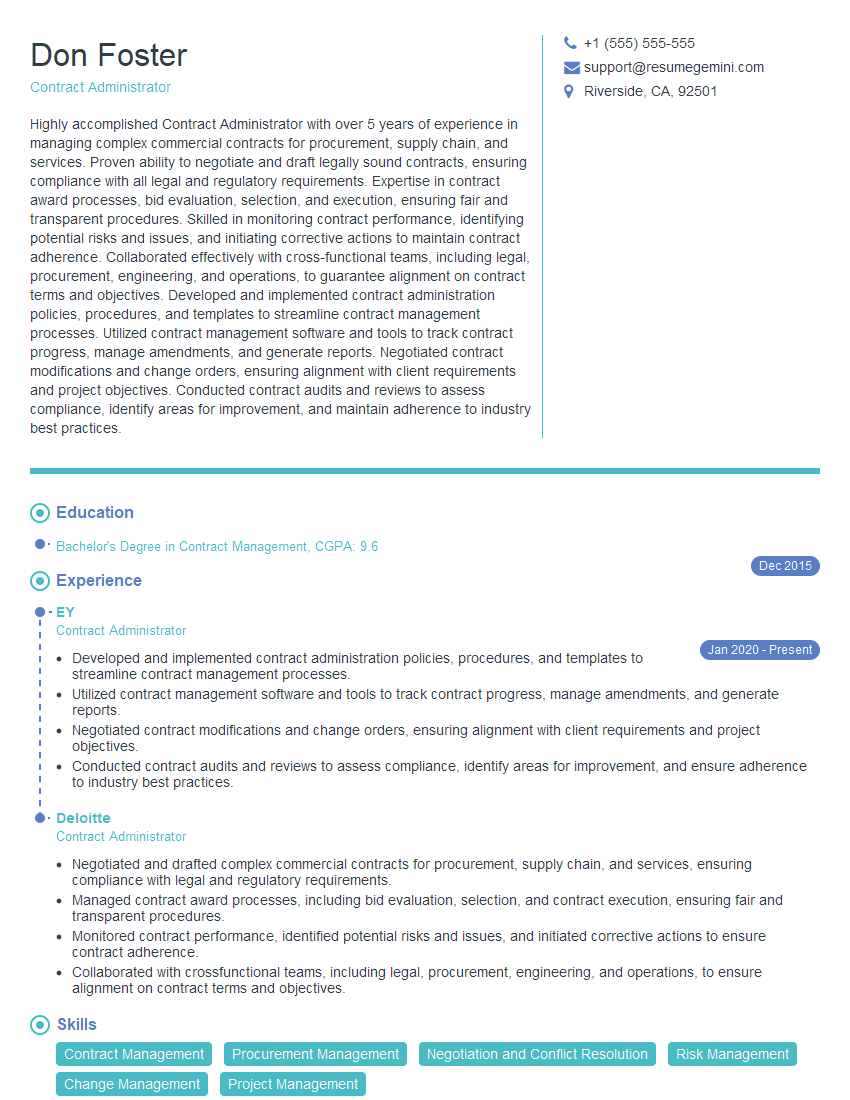
Contract Administrator Resume Sample
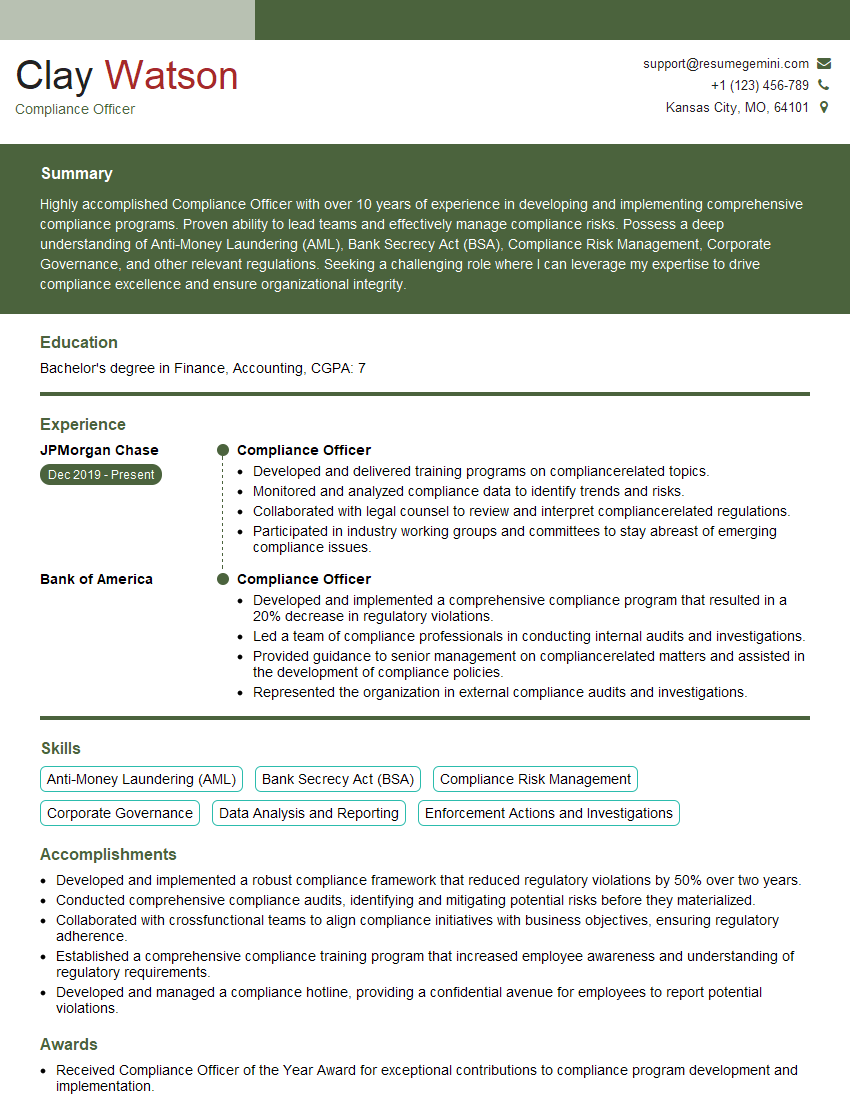
Compliance Officer Resume Sample
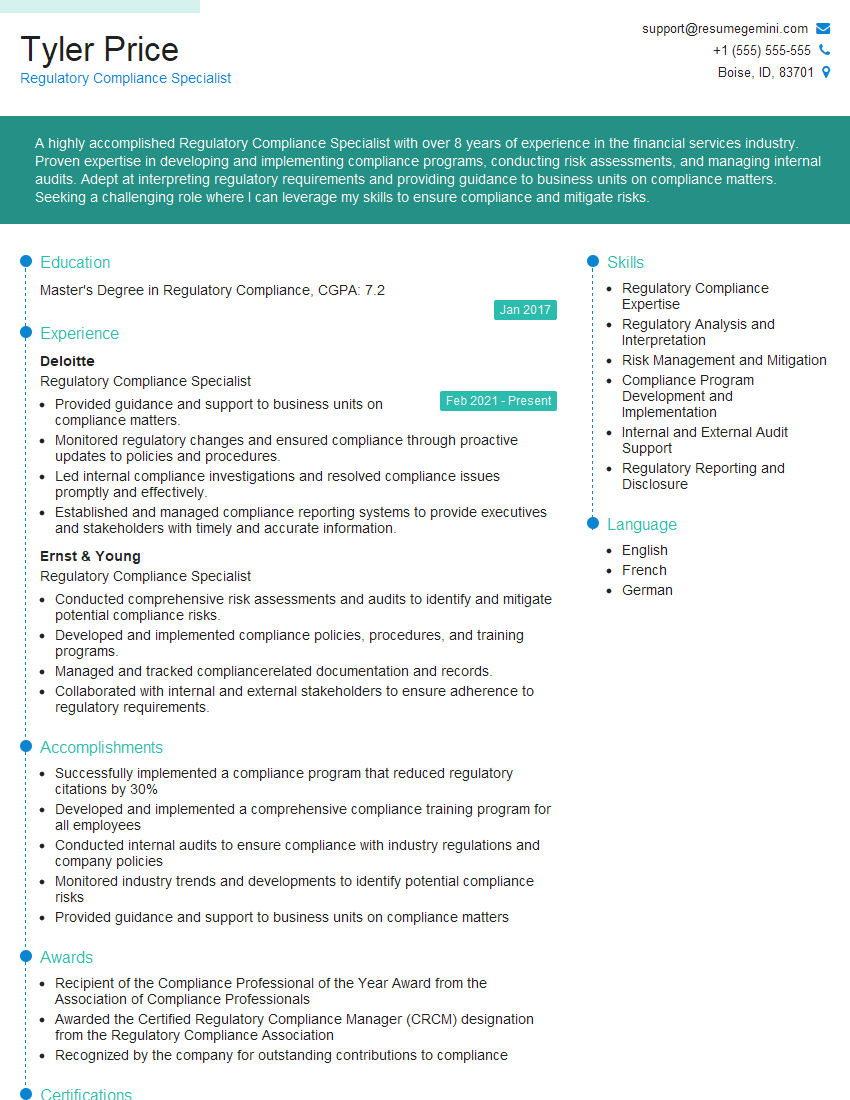
Regulatory Compliance Specialist Resume Sample
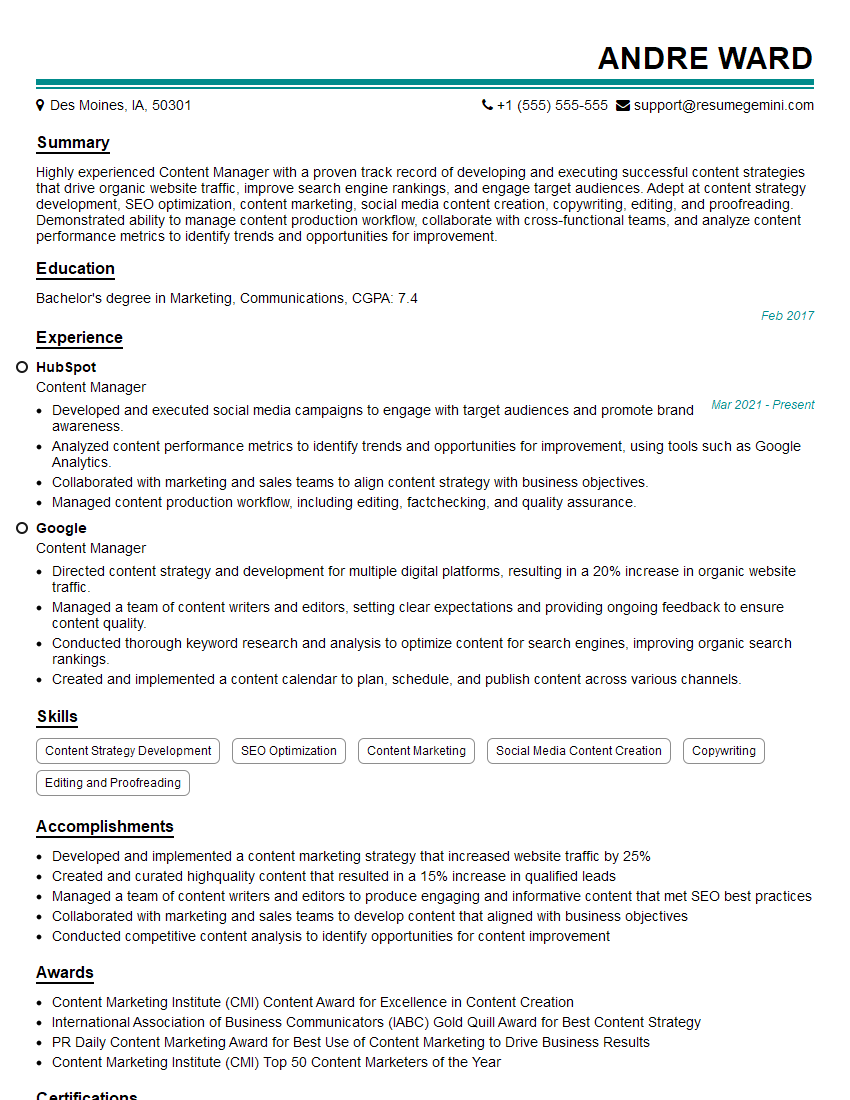
Content Manager Resume Sample
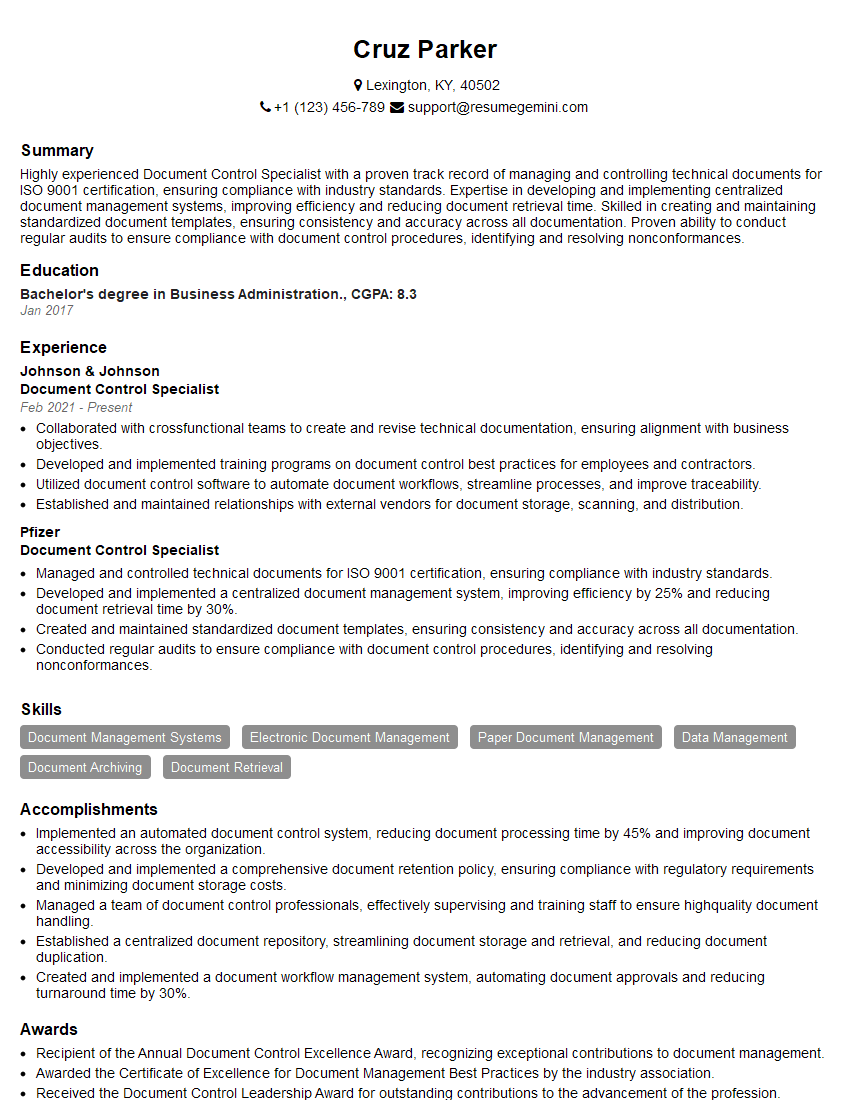
Document Control Specialist Resume Sample
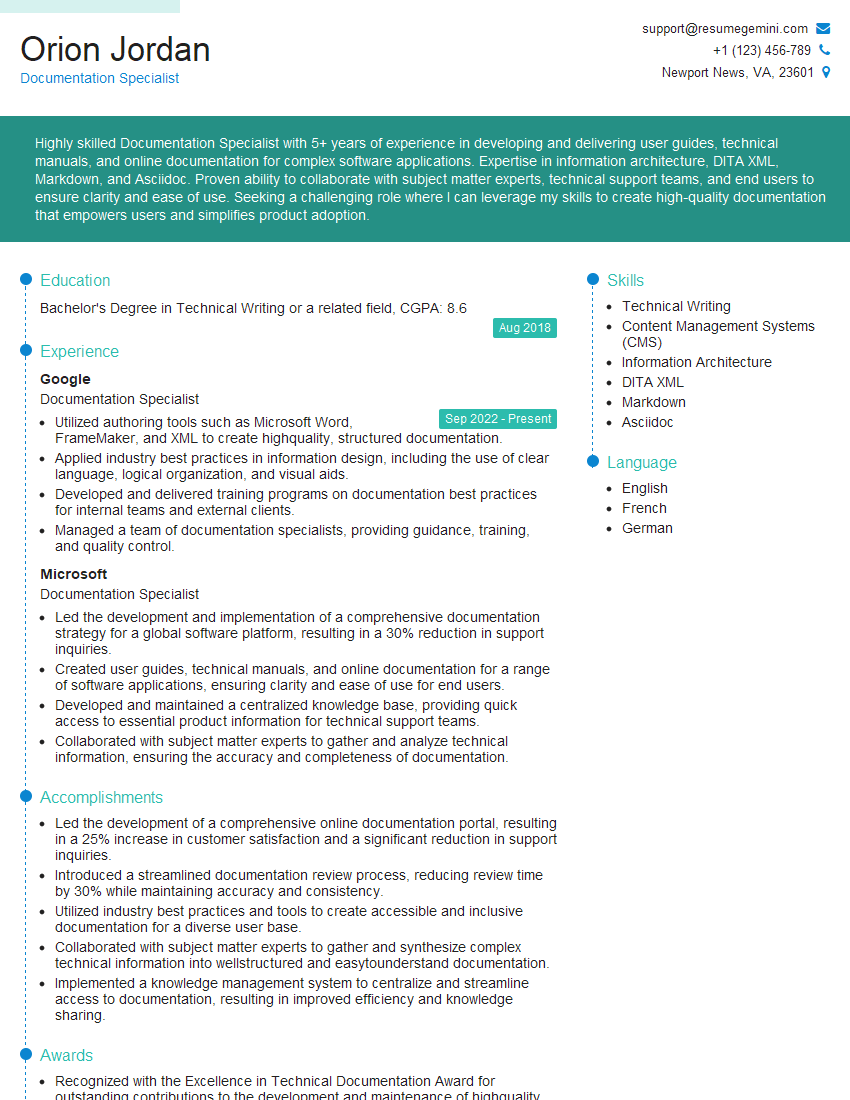
Documentation Specialist Resume Sample
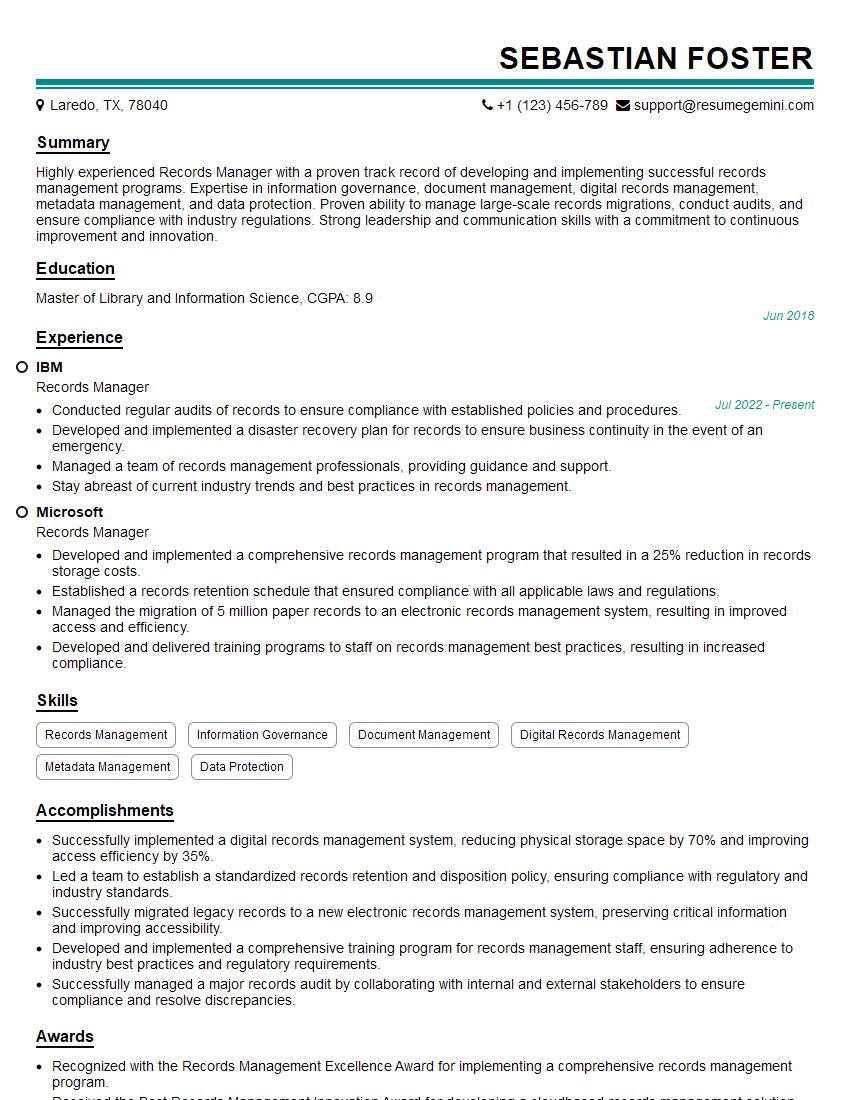
Records Manager Resume Sample
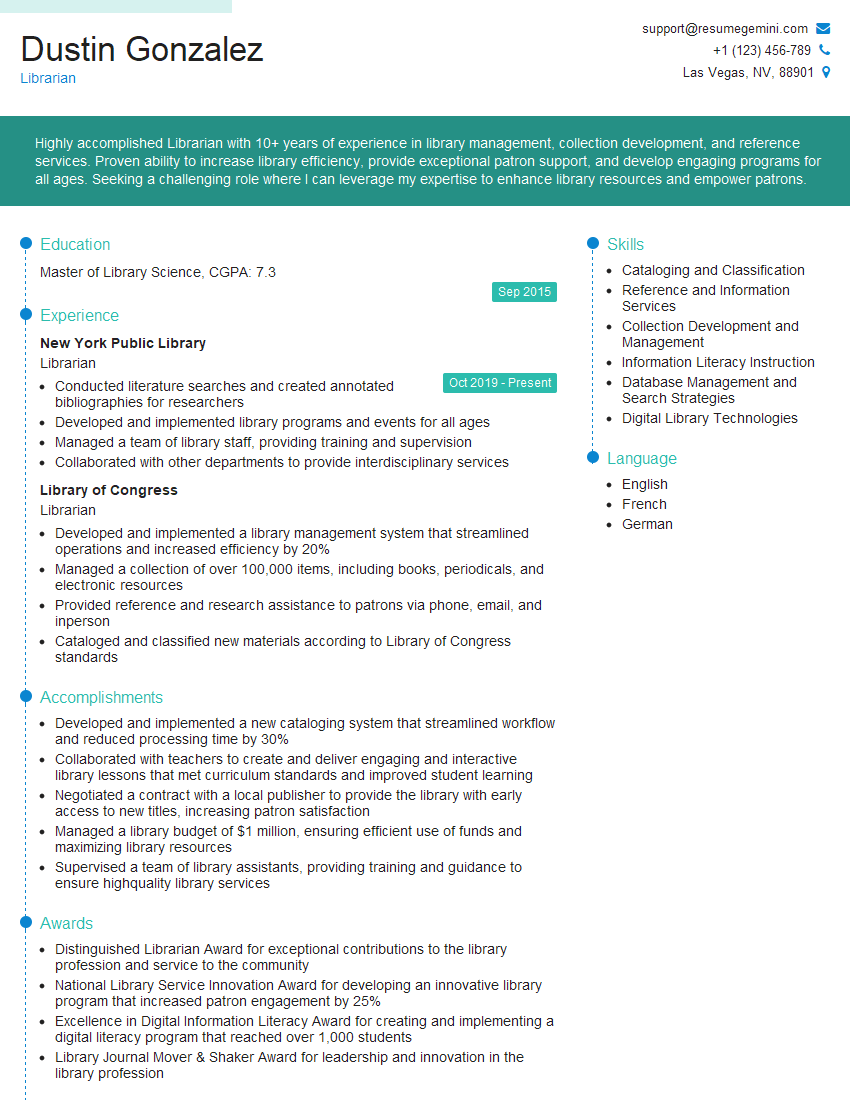
Librarian Resume Sample
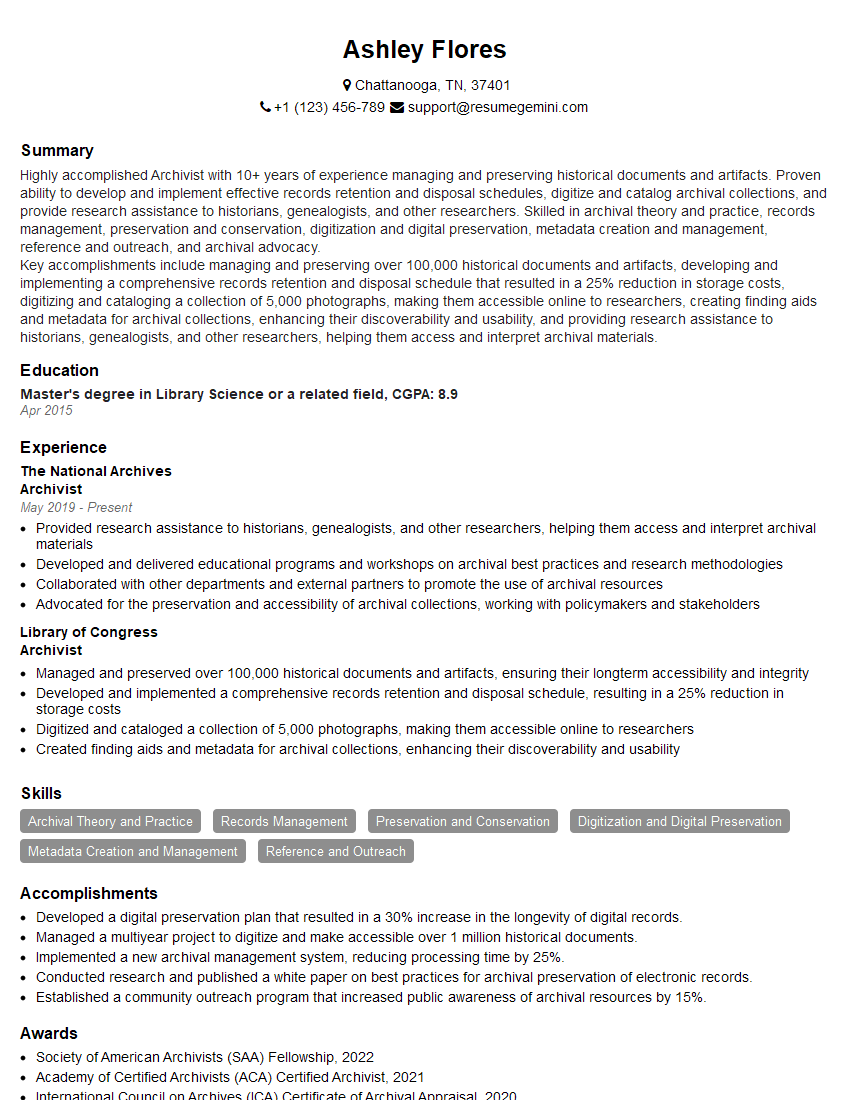
Archivist Resume Sample

Technical Writer Resume Sample

Records Analyst Resume Sample
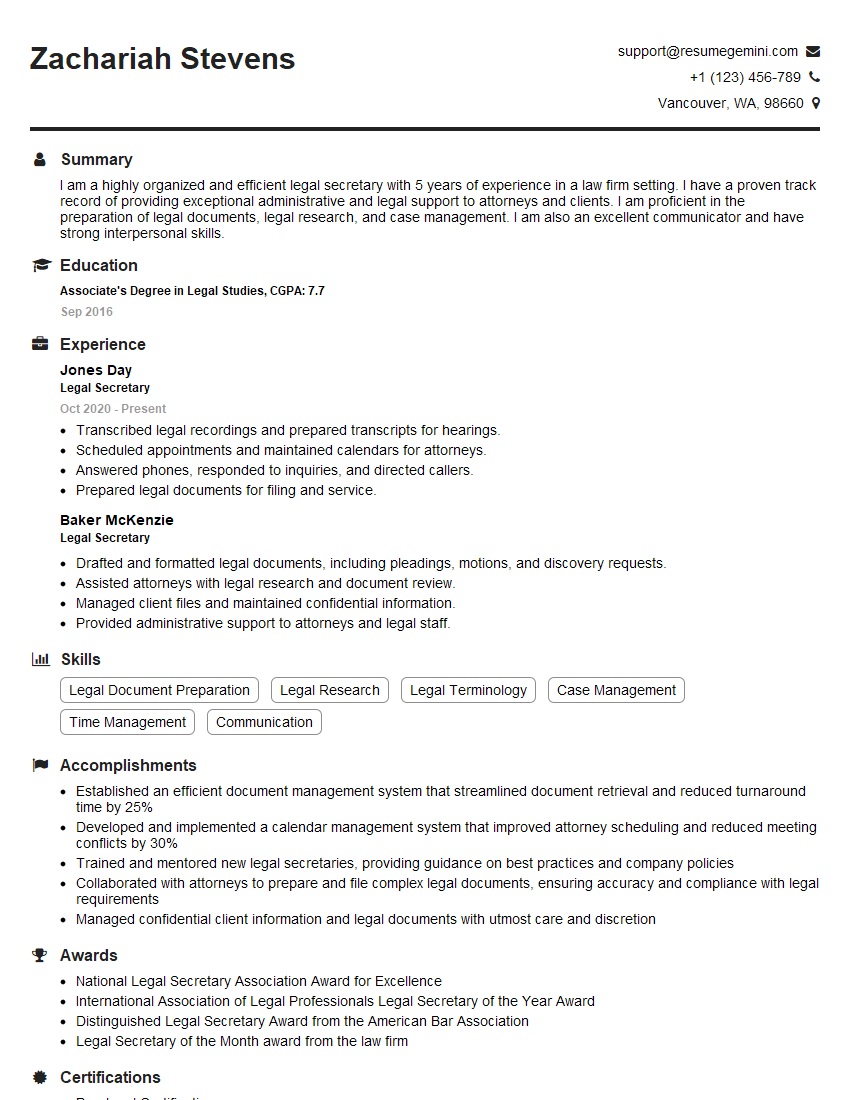
Legal Secretary Resume Sample
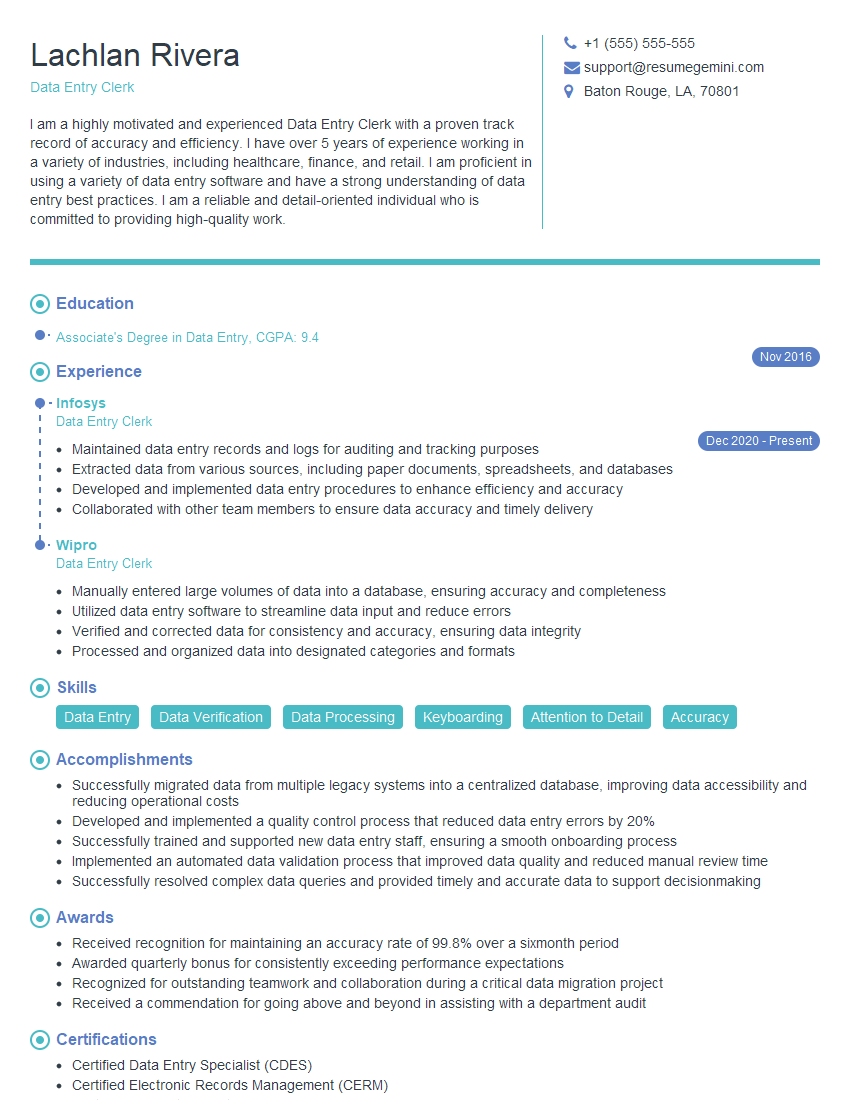
Data Entry Clerk Resume Sample
Explore more articles
Users Rating of Our Blogs
Share Your Experience
We value your feedback! Please rate our content and share your thoughts (optional).
What Readers Say About Our Blog
Very informative content, great job.
good