Feeling uncertain about what to expect in your upcoming interview? We’ve got you covered! This blog highlights the most important Plastic Pipe Installation interview questions and provides actionable advice to help you stand out as the ideal candidate. Let’s pave the way for your success.
Questions Asked in Plastic Pipe Installation Interview
Q 1. What types of plastic pipes are commonly used in construction?
Several types of plastic pipes are commonly used in construction, each suited to different applications. The most prevalent include Polyvinyl Chloride (PVC), High-Density Polyethylene (HDPE), and Cross-Linked Polyethylene (PEX). Other less common but still important types include Chlorinated Polyvinyl Chloride (CPVC) for hot water applications and Polypropylene (PP) for certain chemical resistance needs. The choice depends on factors such as the fluid being transported, pressure requirements, temperature range, and cost considerations.
Q 2. Explain the differences between PVC, HDPE, and PEX pipes.
PVC, HDPE, and PEX pipes, while all plastics, have distinct properties:
- PVC (Polyvinyl Chloride): Relatively rigid, inexpensive, and commonly used for drainage, sewer, and low-pressure water applications. Its strength is its affordability and ease of joining using solvent welding. However, it’s less flexible and has a lower temperature tolerance compared to HDPE and PEX.
- HDPE (High-Density Polyethylene): Highly flexible, strong, and durable, making it ideal for high-pressure gas and water lines, as well as underground drainage. It’s joined using butt fusion welding, a process requiring specialized equipment. HDPE excels in resisting impact and abrasion.
- PEX (Cross-Linked Polyethylene): Flexible, resistant to freezing, and easy to install. It uses compression fittings or crimp rings, making it quicker to connect than HDPE. PEX is frequently chosen for radiant heating and cooling systems, and domestic hot and cold water lines due to its flexibility and resistance to freezing.
Q 3. Describe the process of fusion welding HDPE pipes.
Fusion welding HDPE pipes creates a seamless, molecular bond, resulting in a joint as strong as the pipe itself. The process involves several crucial steps:
- Preparation: The pipe ends must be precisely cut and cleaned to ensure a proper surface for welding. Any burrs or imperfections are removed.
- Heating: The prepared pipe ends are inserted into the heating plates of a fusion machine. The plates heat the pipe ends to a specific temperature, softening the plastic.
- Fusion: Once the plastic reaches the correct temperature, the heating plates are removed, and the pipe ends are carefully joined under pressure.
- Cooling: The joint is held under pressure while it cools, allowing the softened plastic to fuse together completely.
- Inspection: Once cooled, the weld is inspected visually for any flaws. The finished weld should appear smooth and uniform.
Q 4. How do you ensure a leak-free connection during plastic pipe installation?
Ensuring leak-free connections in plastic pipe installations requires meticulous attention to detail at every stage. This starts with selecting appropriate fittings and using the correct joining method for the pipe material (solvent welding for PVC, fusion welding for HDPE, compression fittings for PEX).
- Proper Preparation: Clean and dry pipe ends are essential for any connection method. Debris can prevent a proper seal.
- Correct Fitting Selection: Using the wrong size or type of fitting can lead to leaks. Always refer to the manufacturer’s specifications.
- Thorough Inspection: After installation, carefully inspect each joint for leaks. Visual inspection and even a pressure test (as discussed later) are valuable steps to ensure the integrity of the system.
- Appropriate Joining Techniques: Correct solvent welding, fusion welding, or compression fitting techniques are crucial and should be performed by qualified personnel.
Q 5. What are the safety precautions for working with plastic pipes?
Safety is paramount during plastic pipe installation. Specific precautions include:
- Personal Protective Equipment (PPE): Always wear appropriate safety glasses, gloves, and protective clothing to avoid injury from sharp tools, chemicals (used in solvent welding), or potential pipe bursts during pressure testing.
- Proper Handling: Heavy pipes should be handled using appropriate lifting techniques and equipment to prevent back injuries.
- Ventilation: Adequate ventilation is crucial when using solvents during PVC welding to minimize exposure to fumes.
- Awareness of Underground Utilities: Before excavation, always locate and mark underground utilities (gas, electric, water) to avoid damaging them and preventing potential hazards.
- Trained Personnel: Complex joining methods such as fusion welding should be carried out only by qualified and trained personnel.
Q 6. What are the common causes of leaks in plastic pipe systems?
Leaks in plastic pipe systems are often caused by:
- Improper Installation: This is the most common cause, ranging from incorrect jointing techniques to using unsuitable fittings or insufficient pipe support.
- Damaged Pipes: External forces, such as ground movement or impacts from construction equipment, can cause cracks or punctures in the pipe.
- Material Degradation: Exposure to UV radiation, chemicals, or extreme temperatures can degrade the pipe material over time, leading to weakening and leaks.
- Poor-Quality Materials: Using substandard pipes or fittings can compromise the system’s integrity.
- Settlement and Soil Movement: The ground shifting can stress pipe joints, causing them to fail.
Q 7. How do you perform pressure testing on a newly installed plastic pipe system?
Pressure testing a newly installed plastic pipe system is crucial for verifying its integrity. The process typically involves:
- System Isolation: Isolate the section of pipe to be tested from the rest of the system.
- Pressure Inflation: Connect a pressure gauge and pump to the system and slowly increase the pressure to the specified test pressure. This pressure is typically higher than the operating pressure to ensure sufficient margin of safety.
- Pressure Holding: Maintain the test pressure for a specified duration (often several hours), observing the gauge for any pressure drop, which indicates a leak.
- Leak Detection: If a pressure drop occurs, carefully inspect the system for visible leaks. Sometimes, leak detection equipment (such as electronic leak detectors) is necessary to pinpoint the exact location of the leak.
- Pressure Release: Once the test is complete, slowly release the pressure from the system.
Q 8. What are the different methods for joining plastic pipes?
Joining plastic pipes depends heavily on the pipe material (PVC, HDPE, CPVC, etc.) and the diameter. Several reliable methods exist, each with its strengths and weaknesses:
Solvent Welding (for PVC and CPVC): This is a common method for smaller diameter pipes. A special solvent cement dissolves the surface of the pipe and fitting, creating a strong, chemically bonded joint. Think of it like super glue for plastic pipes. It’s crucial to follow manufacturer instructions precisely regarding application time and drying period. Incorrect application leads to weak joints.
Electrofusion (for HDPE and PEX): For larger diameter HDPE pipes, electrofusion fittings with embedded heating elements are used. An electrical current activates these elements, melting the pipe and fitting materials and fusing them together. This creates exceptionally strong and durable joints, ideal for high-pressure applications. Specialized equipment is needed for this method.
Butt Fusion (for HDPE): This method, used primarily for larger HDPE pipes, involves heating and melting the ends of two pipes before joining them under pressure. This creates a seamless joint. Specialized butt fusion equipment is required for this accurate and precise process. The alignment and pressure applied during butt fusion are critical for its success.
Compression Fittings (for various types): These fittings use compression rings and nuts to secure the pipe, making for a quick and relatively simple joining method, especially suitable for smaller diameter pipes and repairs. They are widely used for their versatility and ease of use. However, they may not be suitable for high-pressure applications.
Threaded Fittings (for some PVC and CPVC): For certain applications, threaded fittings allow for easy connection and disconnection. However, thread sealant is always needed to ensure leak-proof joints.
The choice of method depends heavily on factors like pipe material, diameter, pressure requirements, and the application itself. Incorrect selection can result in leaks, weakening of the system, or even structural failures.
Q 9. Explain the importance of proper pipe sizing and selection.
Proper pipe sizing and selection are paramount for ensuring efficient and reliable water flow, minimizing energy loss, and preventing costly problems down the line. Undersized pipes lead to higher pressure drops, reduced flow rates, and increased energy consumption by pumps. Oversized pipes, while seemingly innocuous, can create problems such as water hammer and increased installation costs.
Factors to consider include:
Flow rate requirements: This dictates the minimum pipe diameter necessary to handle the required volume of fluid.
Pressure: The pipe needs to withstand the maximum working pressure of the system without bursting or leaking. Pipe wall thickness is crucial here.
Material selection: Different materials (PVC, HDPE, CPVC) have different properties in terms of strength, chemical resistance, and temperature tolerance. The selection must align with the application requirements. For example, CPVC is preferred for its higher temperature tolerance compared to standard PVC.
Local building codes and regulations: These regulations often specify minimum pipe dimensions and material requirements. Ignoring them can lead to project rejection.
I once worked on a project where the initial design underestimated the flow rate, leading to an undersized pipe. This resulted in insufficient water pressure at the farthest points of the system, necessitating a costly redesign and pipe replacement. This taught me the crucial lesson of meticulous planning and accurate pipe sizing calculations.
Q 10. How do you handle pipe expansion and contraction due to temperature changes?
Plastic pipes expand and contract with temperature fluctuations. This movement, if not properly accounted for, can cause stress on the pipe joints and lead to leaks or failure. Several strategies mitigate this:
Expansion loops: These are strategically placed bends or loops in the pipe system that allow for expansion and contraction without putting undue stress on straight sections or fittings. The amount of loop required is calculated based on pipe length, material, and temperature range.
Expansion joints: These are specialized components designed to accommodate axial movement, absorbing the expansion and contraction forces. They are essential for long runs of pipes or installations subject to significant temperature variations.
Proper anchoring and support: Pipes should be properly secured with support structures spaced appropriately to prevent sagging and to allow for thermal expansion without stress. However, over-constraining the pipe is as bad as having no restraint and should be avoided.
Ignoring thermal expansion can lead to pipe rupture, damage to fittings, and leaks. Accurate calculation of expansion and contraction using engineering principles is crucial, ensuring safe and lasting installations.
Q 11. Describe your experience with different types of pipe fittings.
My experience encompasses a wide range of plastic pipe fittings, including:
Elbows: Used to change the direction of the pipe run.
Tees: Used to create branches or splits in the pipe.
Couplings: Used to join two pipes of the same diameter.
Reducers: Used to connect pipes of different diameters.
Caps: Used to close off the end of a pipe.
Unions: Used to allow for easy disconnection of pipes without damaging the system.
I’ve worked extensively with solvent weld fittings, electrofusion fittings, and compression fittings. The selection depends on the application, pipe material, and pressure requirements. For example, solvent weld fittings are suitable for low-pressure applications, while electrofusion fittings are necessary for high-pressure installations with larger diameter HDPE pipes. The quality of the fittings is crucial; using substandard fittings can compromise the overall integrity of the pipe system and lead to failures.
Q 12. What are the common problems encountered during plastic pipe installation?
Common problems encountered during plastic pipe installation include:
Improper jointing: This is a leading cause of leaks. Insufficient solvent welding, incorrect electrofusion parameters, or poorly tightened compression fittings can all result in leaks.
Incorrect pipe sizing: Undersized pipes lead to inadequate flow rates and high pressure, potentially causing pipe damage. Oversized pipes contribute to water hammer issues.
Lack of adequate support: Sagging pipes can lead to stress on the joints, potential cracking, and leaks.
Improper handling and storage: Damaged pipes from dropping or improper storage can lead to leaks or failures during or after installation.
Environmental factors: Extreme temperatures, UV exposure (especially for PVC), and soil conditions can affect pipe lifespan and integrity.
Preventing these issues involves careful planning, use of high-quality materials, precise installation techniques, and adherence to manufacturer’s guidelines.
Q 13. How do you troubleshoot problems with plastic pipe systems?
Troubleshooting plastic pipe systems begins with careful observation and systematic investigation. The approach involves:
Visual inspection: Check for obvious signs of leaks, cracks, or damage.
Pressure testing: This is essential for identifying leaks in pressurized systems. The system is pressurized, and any pressure drop indicates a leak.
Dye testing: A dye is added to the water to help visually locate leaks.
Acoustic leak detection: Specialized equipment detects the sound of leaks.
Tracing the pipe run: Start from the point of the problem and trace the pipe back to identify the source of the leak.
Once the problem is identified, the appropriate repair method is selected – this could range from simple tightening of a fitting to complete pipe section replacement. Accurate diagnosis and careful repair are key to restoring the system’s functionality.
Q 14. What tools and equipment are necessary for plastic pipe installation?
The tools and equipment needed for plastic pipe installation vary depending on the pipe material, diameter, and joining method. However, some essential items include:
Pipe cutter: For accurately cutting pipes to the required length.
Deburring tool: Removes burrs from the cut ends of the pipes to ensure smooth, leak-free joints.
Solvent cement and primer (for solvent welding): Specific to the type of plastic pipe being used.
Electrofusion welding machine (for electrofusion): Essential for this method.
Butt fusion machine (for butt fusion): Specialized equipment with heating elements and clamps.
Measuring tapes, levels, and plumb bobs: Ensure accurate alignment.
Various wrenches and fittings:
Safety equipment: Safety glasses, gloves, and appropriate personal protective equipment.
Having the right tools and knowing how to use them safely and effectively significantly impacts the quality and efficiency of the installation. Investing in high-quality tools is vital for long-term success and the prevention of accidents.
Q 15. How do you interpret piping schematics and blueprints?
Interpreting piping schematics and blueprints is fundamental to successful plastic pipe installation. It involves understanding the symbols, dimensions, and specifications detailed within the document. Think of it like reading a map for your plumbing system. The schematics illustrate the layout of the pipes, their sizes, materials, connections, and the overall flow of liquids or gases. Blueprints provide the broader context, showing the building’s structure and how the piping system integrates with other elements.
Symbols: Familiarize yourself with standard symbols for various pipe fittings (elbows, tees, unions), valves, and equipment. Each symbol represents a specific component, crucial for accurate assembly.
Dimensions: Pay close attention to pipe diameters (expressed in inches or millimeters), lengths, and distances between components. Accurate measurements prevent misfits and ensure proper functionality.
Specifications: The blueprints specify materials (e.g., PVC, HDPE), pressure ratings, and other crucial data needed for selecting appropriate pipes and fittings. This ensures the system’s longevity and safety.
Isometric Drawings: These 3D representations offer a clearer view of complex pipe layouts and connections, helping anticipate potential challenges during installation.
For instance, in a recent project involving a large-scale irrigation system, the schematics guided us through a complex network of HDPE pipes with varying diameters, specifying precise locations for valves and pressure regulators. Understanding these details prevented costly errors and ensured optimal water flow.
Career Expert Tips:
- Ace those interviews! Prepare effectively by reviewing the Top 50 Most Common Interview Questions on ResumeGemini.
- Navigate your job search with confidence! Explore a wide range of Career Tips on ResumeGemini. Learn about common challenges and recommendations to overcome them.
- Craft the perfect resume! Master the Art of Resume Writing with ResumeGemini’s guide. Showcase your unique qualifications and achievements effectively.
- Don’t miss out on holiday savings! Build your dream resume with ResumeGemini’s ATS optimized templates.
Q 16. Explain your experience with trenchless pipe installation techniques.
Trenchless pipe installation techniques offer a less disruptive alternative to traditional excavation. I have extensive experience with various methods, including horizontal directional drilling (HDD), pipe bursting, and cured-in-place pipe (CIPP) lining.
HDD: This technique involves drilling a pilot hole underground to create a path for the new pipe. It’s ideal for navigating obstacles like roads, buildings, and underground utilities. I’ve utilized HDD for installing HDPE gas lines under busy city streets, minimizing disruption to traffic and pedestrian access.
Pipe Bursting: This method uses a bursting head to break up the old pipe and simultaneously pull a new pipe into its place. It’s efficient for replacing existing pipelines without extensive excavation. I’ve employed this technique to replace aging sewer lines with minimal ground disturbance.
CIPP Lining: This is a trenchless rehabilitation method where a resin-saturated liner is inserted into the existing pipe and cured to create a new, smooth pipe within the old one. It’s perfect for extending the life of aging pipes without the need for replacement. I’ve successfully used CIPP to rehabilitate corroded water mains, significantly improving their performance and lifespan.
My experience includes managing all aspects of trenchless projects, from initial site assessment and planning to equipment operation, crew supervision, and ensuring adherence to safety regulations.
Q 17. Describe your knowledge of relevant building codes and regulations.
Thorough understanding of relevant building codes and regulations is paramount. My knowledge encompasses local, state, and national codes concerning plastic pipe installation, including those related to pressure ratings, material specifications, jointing methods, and safety precautions. I’m particularly familiar with the International Plumbing Code (IPC), International Fuel Gas Code (IFGC), and relevant ASTM standards for plastic pipe materials.
These codes dictate the permissible pipe materials, their pressure ratings, required testing procedures, and installation practices. For instance, the IPC defines specific requirements for drainage pipe slopes, jointing techniques, and venting systems. Similarly, the IFGC sets rigorous standards for gas pipe installation, including leak detection and testing methods. I ensure compliance by meticulously reviewing project specifications against these codes before, during, and after installation. Regular updates on code changes are essential to maintain this compliance, and I actively participate in industry training programs.
Q 18. How do you manage waste materials during plastic pipe installation?
Proper waste management during plastic pipe installation is crucial for environmental responsibility and compliance with regulations. My approach involves a multi-faceted strategy focusing on segregation, recycling, and responsible disposal.
Segregation: We segregate different waste materials such as plastic pipe scraps, fittings, packaging, and soil. This allows for efficient recycling and minimizes landfill waste.
Recycling: Many plastic pipe types are recyclable. We partner with certified recycling facilities to process the collected plastic scraps, contributing to a circular economy.
Responsible Disposal: Any non-recyclable waste is disposed of according to local regulations, ensuring compliance with environmental protection guidelines. We maintain detailed records of waste quantities and disposal methods.
Spill Prevention: We implement strict measures to prevent spills of hazardous substances such as solvents or cleaning agents, mitigating environmental risks.
In a recent project, we successfully diverted over 70% of generated plastic waste from landfills through our rigorous recycling program. This initiative underscores our commitment to sustainable practices.
Q 19. What is your experience with different types of pipe supports and hangers?
Selecting appropriate pipe supports and hangers is critical to prevent sagging, stress fractures, and leaks. My experience encompasses a wide variety of support systems tailored to different pipe sizes, materials, and installation environments.
Types: I’ve worked with various supports, including rigid hangers (for secure, fixed points), spring hangers (to accommodate thermal expansion and contraction), and roller supports (for minimizing friction in long runs). The choice depends on factors like pipe diameter, material, expected loading, and temperature variations.
Materials: Support materials range from galvanized steel for strength and durability to more corrosion-resistant options like stainless steel for demanding environments.
Spacing: Proper spacing is crucial to minimize stress on the pipes. Codes and manufacturers’ guidelines specify maximum span lengths between supports.
Installation: Accurate installation, ensuring secure attachments and proper alignment, is vital. Improperly installed supports can lead to structural failure.
For example, in a high-temperature process piping system, we used spring hangers to accommodate thermal expansion, preventing stress on the pipes. This careful selection and installation of support systems ensured the long-term integrity and reliability of the system.
Q 20. How do you ensure the proper slope of drainage pipes?
Maintaining the proper slope on drainage pipes is essential to ensure efficient gravity flow. Insufficient slope leads to blockages and potential backups, while excessive slope can cause erosion and damage.
We use laser levels and digital inclinometers to achieve precise grading. The required slope is typically specified in the design documents or determined according to local codes (often expressed as a percentage or ratio, e.g., 1/4 inch per foot or 2%). For instance, a 1/4 inch per foot slope means the pipe drops 1/4 inch for every foot of horizontal distance.
Techniques: To achieve this, we employ methods such as using a laser level to establish a consistent grade along the trench, creating a graded bed of compacted gravel or sand, and carefully adjusting the pipe placement to maintain the correct slope. Regular checks throughout the installation process using a level or inclinometer ensure consistency and prevent errors that could compromise drainage efficiency.
In a recent project involving a large stormwater drainage system, precise slope management was critical to prevent flooding during heavy rainfall. Our careful attention to detail ensured the system functioned as designed, effectively managing runoff and minimizing the risk of water damage.
Q 21. What are the different methods for cleaning and preparing pipes for installation?
Thorough cleaning and preparation of pipes before installation are crucial for ensuring leak-free joints and the overall integrity of the system. The process depends on the pipe material and its intended use.
Cleaning: Pipes are cleaned to remove any debris, dirt, or contaminants that could affect the seal of joints. Methods include brushing, compressed air, and high-pressure water jetting. For critical applications, specific solvents might be used to remove stubborn residue.
Deburring: Sharp edges or burrs on the pipe ends are removed to prevent damage to gaskets and ensure a smooth, even joint.
Priming (for solvent-weld systems): Solvent welding requires careful preparation. Pipe ends are cleaned and primed with a special solvent cement primer to enhance bonding between the pipe and the fitting.
Inspection: Before assembly, pipes are visually inspected for any defects, such as cracks, scratches, or distortions, and the correct size and type of pipe is confirmed.
For example, in a potable water system, meticulous cleaning and priming of PVC pipes are critical to ensure the safety and quality of the drinking water. This step is just as important as selecting high-quality materials and following precise jointing procedures.
Q 22. How do you maintain accurate records during plastic pipe installation projects?
Maintaining accurate records during plastic pipe installation is crucial for project success, compliance, and future maintenance. Think of it like a meticulously kept recipe – if you miss a step, the final product might not be as intended. My approach involves a multi-faceted system:
Digital Documentation: I utilize project management software to log every aspect, from material specifications (pipe diameter, material type, manufacturer) and quantities, to daily progress reports, including weather conditions and any unforeseen challenges encountered. This software often includes features for attaching photos and videos for visual documentation.
Physical Records: Alongside digital records, I maintain physical copies of relevant documents – material certifications, inspection reports, and as-built drawings. These serve as backups and are useful on-site where internet access might be limited.
Daily Logs: Each day’s work is meticulously logged, including personnel involved, equipment used, and specific tasks completed. This detailed approach allows for easy tracking of progress and identification of potential bottlenecks.
Quality Control Checklists: To ensure compliance with standards and specifications, I use detailed checklists for every stage – from excavation to final pressure testing. These checklists are designed to ensure that no critical steps are missed.
GPS Tracking (where applicable): For large-scale projects, integrating GPS tracking into the process can provide valuable data on pipe placement and overall project progress.
This comprehensive approach ensures traceability, allows for quick problem-solving, and facilitates future maintenance and repairs. For instance, if a section of pipe needs replacing years later, the records will help identify the specific material used and its relevant properties, allowing for a seamless and efficient repair.
Q 23. Describe your experience with working in confined spaces.
Working in confined spaces requires a high degree of awareness and adherence to safety protocols. I have extensive experience working in trenches, manholes, and other confined spaces during plastic pipe installation. My approach prioritizes safety and efficiency:
Permit-to-Work Systems: I always ensure that a proper permit-to-work is obtained before entering any confined space, verifying that all necessary safety measures are in place.
Atmospheric Monitoring: Before and during work in a confined space, I use gas detection equipment to monitor oxygen levels, combustible gases, and toxic substances. This ensures a safe working environment.
Rescue Plans: Every confined space operation has a detailed rescue plan in place, including designated personnel and equipment, to ensure a swift response in case of an emergency.
Personal Protective Equipment (PPE): Appropriate PPE, including respirators, safety harnesses, and fall protection equipment, is always worn and regularly inspected.
Communication Systems: Clear and consistent communication is crucial. Two-way radios ensure seamless communication between workers inside and outside the confined space.
For example, during a recent project involving the installation of a large-diameter pipe beneath a busy road, we meticulously followed all confined space entry procedures, ensuring the safety of our team while successfully completing the installation on time and within budget. Safety is never compromised, and all team members are thoroughly trained in confined space entry protocols.
Q 24. What is your experience with working at heights?
Working at heights is another aspect of plastic pipe installation that demands strict adherence to safety regulations. My experience includes working on elevated platforms, scaffolding, and other elevated structures. Safety is paramount, and my approach focuses on prevention:
Risk Assessments: Before starting any work at height, a comprehensive risk assessment is conducted to identify potential hazards and implement appropriate control measures.
Fall Protection: This is non-negotiable. I always ensure that appropriate fall protection systems, such as harnesses, lifelines, and anchor points, are in place and correctly used. Regular inspections of the equipment are also carried out.
Scaffolding and Access Equipment: When using scaffolding or other access equipment, I ensure it’s properly erected, inspected, and complies with all relevant safety standards.
Training and Competency: All team members involved in work at heights have undergone thorough training and possess the necessary certifications to perform their tasks safely.
Weather Conditions: Work at heights is never undertaken in adverse weather conditions, such as high winds or heavy rain.
In one instance, while working on a water supply project requiring the installation of pipes on a steep hillside, our thorough preparation and adherence to safety protocols prevented any accidents, ensuring the project’s completion without incident.
Q 25. How do you ensure the structural integrity of a plastic pipe system?
Ensuring the structural integrity of a plastic pipe system is critical for its long-term performance and reliability. It’s like building a strong house – the foundation is everything! My approach involves a combination of careful planning, proper installation, and rigorous testing:
Proper Design and Material Selection: The design must account for factors such as pressure, soil conditions, and the type of fluid being transported. The selection of the correct pipe material (e.g., HDPE, PVC) is crucial for ensuring its suitability for the specific application.
Correct Installation Techniques: Careful excavation, proper bedding, and accurate backfilling are essential for preventing pipe damage and ensuring its stability. This includes using the right equipment and techniques to avoid stressing or damaging the pipe during handling and installation.
Joint Integrity: The integrity of the pipe joints is crucial. We use appropriate joining methods (e.g., fusion welding for HDPE, solvent welding for PVC) and ensure that each joint is properly tested for leaks and strength.
Pressure Testing: After installation, the entire system undergoes a rigorous pressure test to verify its ability to withstand the expected operating pressures. This is done according to the relevant industry standards.
Regular Inspections: Even after completion, regular inspections are vital to identify potential issues early on. This proactive approach helps prevent major problems and ensures the long-term structural integrity of the system.
For example, during a large water main installation, we employed a comprehensive testing regime, identifying and addressing minor issues during the testing phase. This prevented any failures after the system went into operation, ensuring the safety and reliability of the water supply.
Q 26. Describe your experience with working on large-scale projects.
I have extensive experience working on large-scale projects, which often involve complex logistics, coordination with multiple teams, and meticulous planning. My approach for these projects emphasizes proactive management and effective communication:
Detailed Project Planning: This involves developing a comprehensive project plan with clearly defined timelines, milestones, and responsibilities for each team member. Detailed risk assessments are integrated into the plan to address potential challenges proactively.
Resource Management: Efficient resource allocation is crucial. This includes managing personnel, equipment, and materials to optimize workflow and avoid delays.
Effective Communication: Maintaining clear and consistent communication among all stakeholders, including clients, contractors, and regulatory bodies, is vital for project success. Regular meetings and progress reports help ensure everyone is aligned.
Quality Control: Rigorous quality control procedures are implemented at every stage to ensure the project meets all specifications and safety standards. This helps identify and rectify issues early on before they escalate.
Progress Monitoring: Regular monitoring of project progress against the established plan allows for timely adjustments and efficient problem-solving.
For instance, I was involved in a project involving the installation of a large-diameter pipeline for a new industrial complex. Through effective planning and coordination with numerous subcontractors, we completed the project on time and within budget, maintaining the highest safety standards throughout.
Q 27. How do you handle unexpected problems or delays on a project?
Unexpected problems and delays are inevitable in any construction project, particularly large-scale installations. My approach involves a methodical process that emphasizes problem-solving and proactive mitigation:
Immediate Assessment: The first step is to quickly and accurately assess the nature and extent of the problem or delay.
Root Cause Analysis: We then conduct a root cause analysis to understand the underlying reasons for the issue. This helps prevent similar problems in the future.
Develop Solutions: Based on the root cause analysis, we develop and evaluate several potential solutions, considering their impact on the project timeline and budget.
Implementation and Monitoring: The chosen solution is implemented, and its effectiveness is closely monitored to ensure it addresses the problem effectively.
Communication and Reporting: All stakeholders are kept informed throughout the process, including any impact on the project schedule or budget. Formal reports documenting the issue, solution, and any lessons learned are prepared.
In one instance, during a particularly wet period, we experienced unexpected delays due to ground instability. By employing a modified excavation technique and adjusting our schedule accordingly, we managed to mitigate the delays and complete the project without significantly impacting the overall timeline or budget. The incident provided valuable insights which were documented and shared with the team, improving future project planning.
Q 28. What are your salary expectations?
My salary expectations are commensurate with my experience and expertise in plastic pipe installation, my proven track record of successful project completion, and my commitment to safety and quality. I am open to discussing a competitive salary package that reflects my value and contribution to your organization. I would be happy to provide you with more specific figures after learning more about the role’s responsibilities and the overall compensation structure of your company.
Key Topics to Learn for Plastic Pipe Installation Interview
- Pipe Material Properties: Understanding the characteristics of various plastic pipe materials (PVC, HDPE, CPVC, etc.), including their strength, flexibility, and chemical resistance, is crucial. Consider how these properties influence installation methods and project suitability.
- Fusing and Joining Techniques: Mastering different joining methods like solvent welding, electrofusion, and butt fusion is essential. Be prepared to discuss the advantages and disadvantages of each technique, and when each is most appropriate for specific pipe diameters and applications.
- Installation Best Practices: Familiarize yourself with industry standards and safety regulations related to trenching, bedding, backfilling, and pressure testing. Understand the importance of proper pipe alignment, support, and slope for optimal performance and longevity.
- Troubleshooting and Problem Solving: Be ready to discuss common challenges encountered during installation, such as leaks, pipe collapses, or improper joint formation. Demonstrate your ability to diagnose problems, implement solutions, and prevent future issues.
- Blueprint Reading and Interpretation: Practice interpreting construction drawings and specifications to accurately understand pipe routing, dimensions, and connection points. This shows your ability to translate design plans into practical installation procedures.
- Safety Procedures and Regulations: Highlight your knowledge of relevant safety protocols, including proper use of personal protective equipment (PPE), hazard identification, and emergency procedures. This is vital in demonstrating responsible and safe work practices.
- Equipment and Tools: Demonstrate familiarity with the tools and equipment used in plastic pipe installation, including cutting tools, fusion machines, and testing equipment. Be prepared to discuss their proper operation and maintenance.
Next Steps
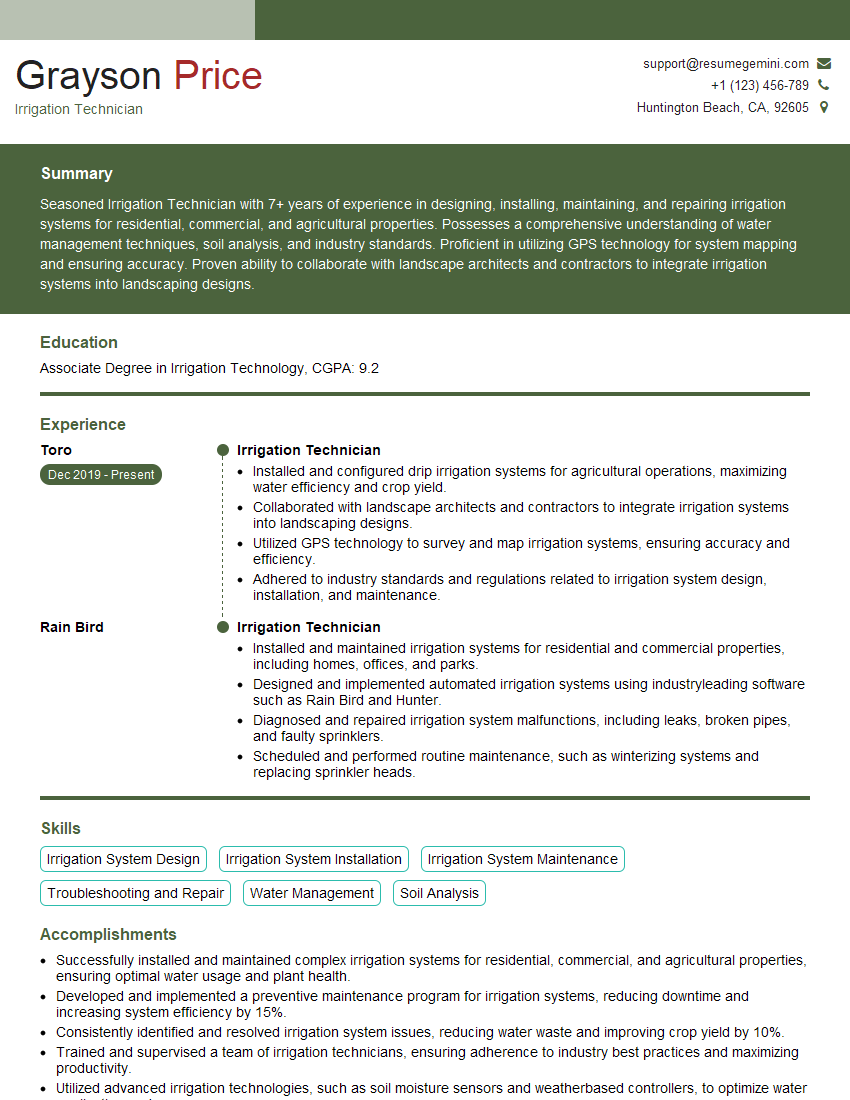
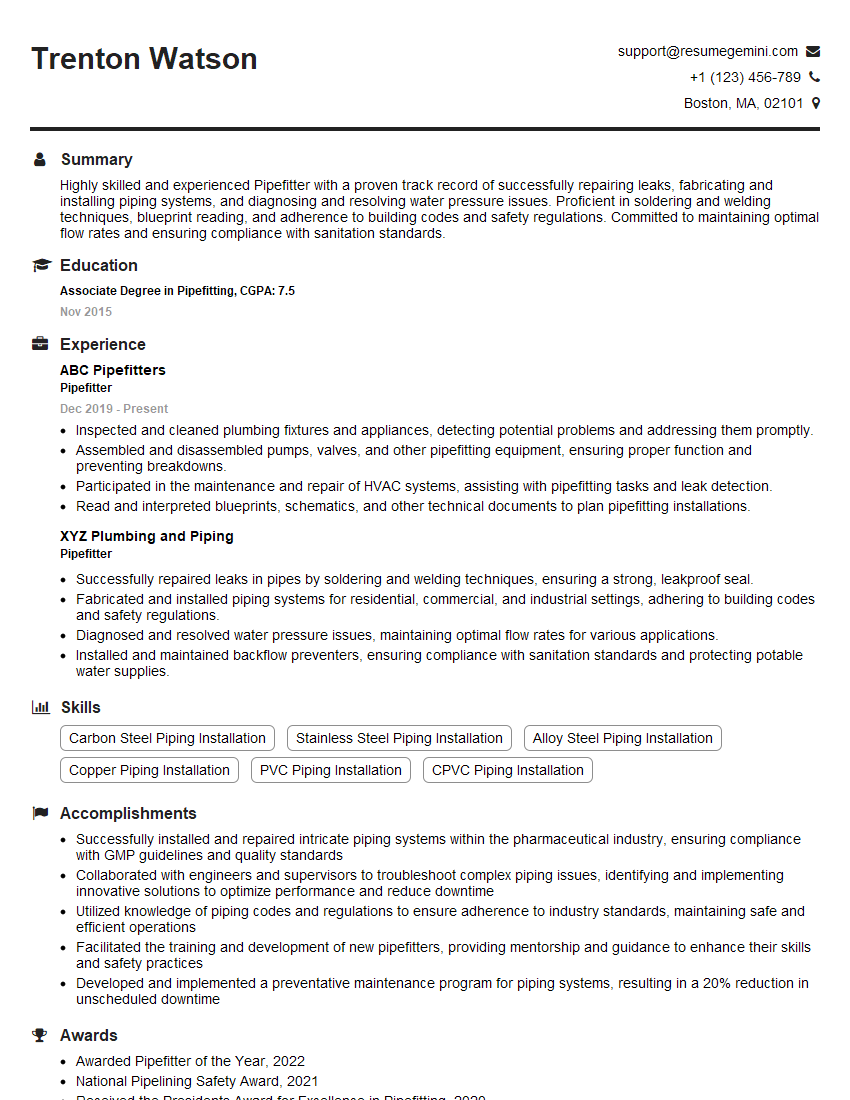
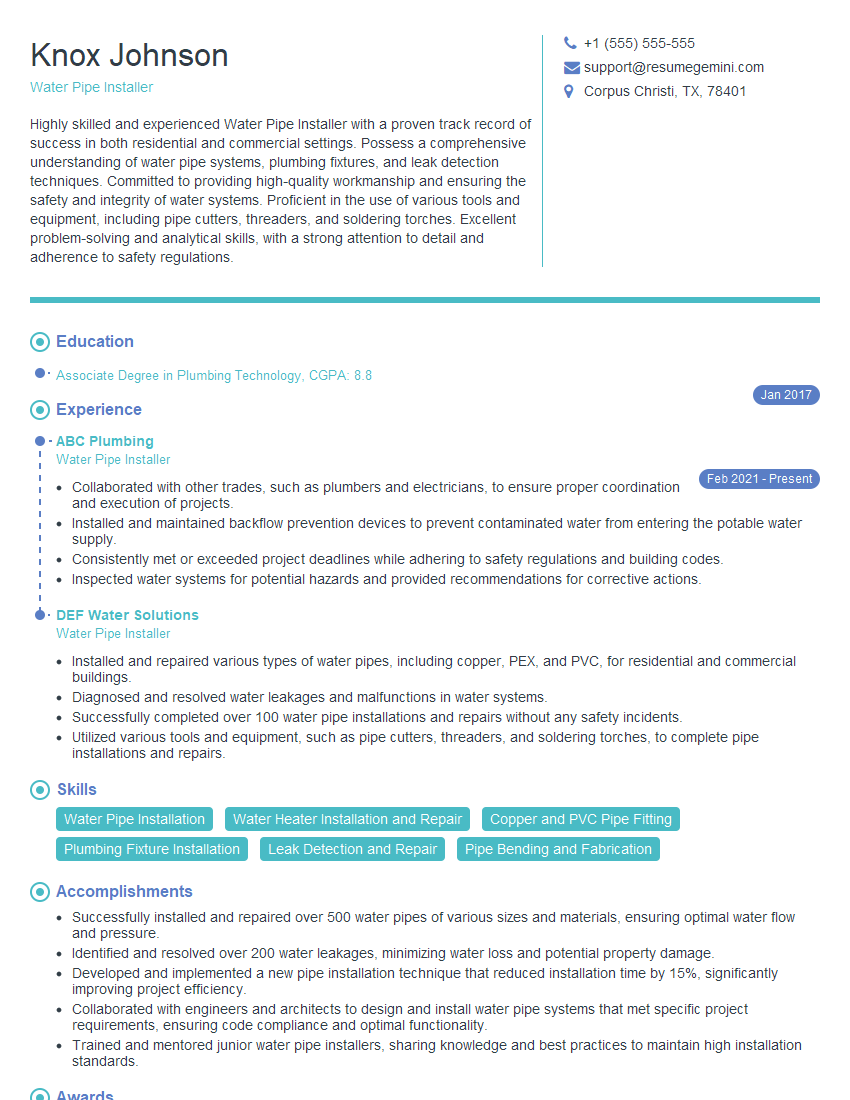
Mastering plastic pipe installation opens doors to rewarding careers with excellent growth potential. This skillset is highly sought after in construction, infrastructure development, and industrial settings. To increase your job prospects, creating a strong, ATS-friendly resume is paramount. ResumeGemini is a trusted resource that can help you build a professional resume that highlights your skills and experience effectively. Examples of resumes tailored to Plastic Pipe Installation are available to guide you, further enhancing your job application strategy.
Explore more articles
Users Rating of Our Blogs
Share Your Experience
We value your feedback! Please rate our content and share your thoughts (optional).
What Readers Say About Our Blog
Very informative content, great job.
good