Preparation is the key to success in any interview. In this post, we’ll explore crucial Communication and Coordination with Crew interview questions and equip you with strategies to craft impactful answers. Whether you’re a beginner or a pro, these tips will elevate your preparation.
Questions Asked in Communication and Coordination with Crew Interview
Q 1. Describe your experience in coordinating large crews.
My experience coordinating large crews spans over ten years, encompassing diverse projects in film production, construction, and event management. I’ve successfully managed teams ranging from 15 to over 100 individuals. This involved meticulous planning, resource allocation, and ongoing communication to ensure projects stayed on schedule and within budget. A key success factor has been my ability to break down complex tasks into manageable sub-tasks, assigning them based on individual strengths and experience levels. For example, during a large-scale film shoot, I coordinated the efforts of camera crews, lighting technicians, sound engineers, and catering staff, all while maintaining clear communication and resolving any arising conflicts promptly.
I leverage project management software extensively to track progress, manage deadlines, and facilitate clear communication between team members. This centralized approach ensures everyone is aligned and informed. This isn’t just about assigning tasks, it’s about cultivating a sense of shared responsibility and team ownership.
Q 2. How do you handle conflicting priorities among crew members?
Conflicting priorities are inevitable in team environments. My approach involves a structured process that prioritizes open communication and collaborative problem-solving. Firstly, I facilitate a meeting where each team member clearly articulates their priorities and the rationale behind them. Then, we use a prioritization matrix, considering factors like urgency, impact, and resource availability. This allows for a data-driven decision, rather than relying solely on subjective opinions. Sometimes, compromise is necessary, and I guide the team to find mutually agreeable solutions. For instance, if two tasks have equally high urgency, we might split them, allocating resources to both to ensure timely completion.
Transparency is crucial. Once a decision is made, I clearly communicate the reasons behind it to all involved. This helps to prevent resentment and fosters a sense of collective ownership over the project’s success.
Q 3. Explain your approach to resolving communication breakdowns within a team.
Communication breakdowns are often subtle, manifesting as misunderstandings, missed deadlines, or low morale. My approach focuses on proactive identification and swift resolution. I begin by actively listening to team members, seeking to understand the root cause of the breakdown. This might involve individual one-on-one conversations or small group meetings. Sometimes, a simple clarification or a different communication method can resolve the issue. For instance, if written instructions were unclear, I might switch to a visual aid or a short video demonstration.
In more complex cases, I facilitate a structured brainstorming session to identify potential solutions collaboratively. I encourage open dialogue, actively suppressing any judgment or blame. Once a solution is identified, I clearly communicate the action plan to all stakeholders and monitor its implementation to ensure the issue is resolved effectively and efficiently.
Q 4. What methods do you use to ensure clear and concise communication with your crew?
Clear and concise communication is paramount. I utilize a multi-faceted approach that includes regular team meetings, readily available communication channels (like project management software and instant messaging), and clear task assignments. Before a task is assigned, I ensure everyone understands the goals, expectations, and deadlines. I use visuals like flowcharts and diagrams when necessary, especially for complex tasks. Daily stand-up meetings offer a quick check-in point for progress updates and any roadblocks. I also make a conscious effort to actively solicit feedback from team members to ensure clarity and address any misunderstandings promptly.
Written communication follows a standardized format, including clear subject lines, concise bullet points, and action-oriented instructions. This structured approach ensures consistent and effective communication across the team.
Q 5. How do you build rapport and trust with your crew members?
Building rapport and trust involves consistent effort and genuine care. I make it a point to get to know my crew members personally, understanding their strengths, weaknesses, and aspirations. This allows me to tailor my communication and leadership style to individual needs. I actively listen to their concerns and ideas, fostering a sense of value and inclusion. Regular team-building activities, both formal and informal, help strengthen bonds. I also ensure fair treatment, providing constructive feedback and recognizing achievements. Transparency and honesty are key—I openly communicate challenges and actively involve the team in finding solutions.
Celebrating successes, both big and small, is crucial. It reinforces positive behavior and strengthens the sense of collective accomplishment. Trust is earned, not demanded, and it’s cultivated through consistent actions that demonstrate integrity, respect, and empathy.
Q 6. Describe a time you had to motivate a low-performing crew member.
In a previous construction project, a carpenter consistently missed deadlines and produced subpar work. Instead of direct reprimand, I scheduled a private meeting to understand the underlying cause. It turned out he was struggling with personal issues impacting his focus and performance. I offered him support and adjusted his workload to manageable levels, providing additional training and mentoring where needed. We set clear, achievable goals, celebrating smaller milestones to boost his confidence. I also paired him with a more experienced team member for additional support and guidance.
The key was empathetic understanding. By addressing the root cause of the underperformance, rather than just the symptoms, I helped him regain his confidence and improve his productivity. His work quality improved significantly, and he became a valuable contributor to the team.
Q 7. How do you delegate tasks effectively to maximize crew efficiency?
Effective delegation maximizes crew efficiency. I begin by clearly defining tasks, outlining expectations, providing necessary resources, and setting realistic deadlines. I delegate tasks based on individual skills and experience, ensuring the right person is assigned to the right job. This prevents wasted time and effort. I also ensure there’s clear accountability and a mechanism for regular progress updates. For example, I might use project management software to assign tasks, track progress, and facilitate communication. Before delegating, I thoroughly explain the rationale and expected outcomes, fostering ownership and engagement.
Regular check-ins help me provide support and address any challenges promptly. Delegation isn’t about dumping work; it’s about empowering team members to contribute their best, while ensuring the overall project runs smoothly and efficiently. I actively encourage questions and provide ongoing support, building confidence and competence within the team.
Q 8. How do you maintain effective communication during emergencies?
Maintaining effective communication during emergencies hinges on clarity, brevity, and a pre-established communication protocol. Think of it like a well-rehearsed play – everyone knows their lines and how to react.
- Prioritize critical information: Focus on the most urgent details first – location, nature of the emergency, immediate actions required. Avoid unnecessary details that could cause confusion.
- Use clear and concise language: Avoid jargon or technical terms that might not be understood by everyone. Use plain English.
- Utilize multiple communication channels: In a crisis, one communication channel might fail. Having backups, such as radios, satellite phones, and pre-arranged meeting points, is crucial.
- Establish a designated communication leader: One person should be responsible for disseminating information to avoid conflicting instructions.
- Regular check-ins: Establish a routine for check-ins to ensure everyone is safe and accounted for.
For example, during a wildfire, my team and I used a combination of radios for immediate updates on fire location and spread, and text messages for less time-sensitive updates like resource allocation and crew member safety checks.
Q 9. What strategies do you use to ensure all crew members are informed of updates and changes?
Ensuring everyone’s informed requires a multi-pronged approach that combines proactive and reactive strategies. It’s about building a culture of transparency and accountability.
- Regular briefings: Daily or shift briefings are essential for relaying updates, changes in plans, and addressing any concerns. These should be interactive, allowing for questions and feedback.
- Utilizing communication technology: Email, instant messaging platforms, and project management software can be instrumental in disseminating information efficiently. Remember to use clear subject lines and organize information logically.
- Visual aids: Maps, diagrams, and checklists can enhance understanding, particularly for complex updates or changes.
- Confirmation of receipt: Employ methods to confirm that information has been received and understood, such as requiring acknowledgements or sign-offs.
- Open-door policy: Create a safe space for team members to seek clarification on updates at any time.
In a recent project, we used a dedicated project management platform to track progress, share documents, and post updates. Each crew member was responsible for acknowledging receipt of important notifications, ensuring everyone was on the same page.
Q 10. Explain your approach to managing conflict within a crew.
Managing conflict within a crew demands a calm, fair, and constructive approach. It’s about addressing issues promptly and fostering a collaborative environment.
- Address conflicts promptly: Don’t let small issues fester. Address them directly and privately.
- Active listening: Allow each party to express their perspective without interruption. Focus on understanding their concerns, not just responding.
- Mediation, not judgment: Facilitate a discussion where individuals can find a mutually acceptable solution. Avoid taking sides or assigning blame.
- Focus on solutions: Shift the conversation from blame to problem-solving. Help the individuals identify potential solutions.
- Document the resolution: Keep a record of the conflict and the agreed-upon solution for future reference.
Once, a disagreement arose between two crew members regarding work allocation. Through active listening and mediation, we identified the root cause – a misunderstanding of roles and responsibilities. We clarified roles, and developed a more transparent work allocation process to prevent future issues.
Q 11. Describe your experience using communication tools (e.g., radio, email, instant messaging) to coordinate a crew.
My experience spans various communication tools, each suited to different contexts and communication needs. The key is selecting the right tool for the job and understanding its limitations.
- Radios: Ideal for immediate communication in dynamic environments, especially during emergencies or when immediate action is required. Clear, concise communication is vital.
- Email: Suitable for disseminating non-urgent information, sharing documents, and confirming details. Important to be mindful of email etiquette.
- Instant messaging: Useful for quick exchanges, questions, and updates. Best for smaller groups or quick queries.
- Project Management Software: Excellent for tracking tasks, sharing updates, and managing workflows. Offers centralized information sharing.
During a large-scale construction project, we relied on radios for real-time coordination of heavy machinery, email for document sharing and approvals, and a project management platform for task assignments and progress tracking. This integrated approach ensured seamless communication and collaboration.
Q 12. How do you provide constructive feedback to your crew?
Constructive feedback focuses on specific behaviors and their impact, not on personal attacks. It’s about helping individuals improve and grow.
- Be specific: Instead of saying ‘you’re not a team player,’ say ‘during the recent project, I noticed you didn’t participate in team brainstorming sessions.’
- Focus on behavior, not personality: Describe the observed behavior and its consequences.
- Offer suggestions: Provide concrete suggestions for improvement, making it actionable feedback.
- Balance positive and negative: Start with something positive, then address areas for improvement. End on a positive note.
- Provide a safe environment: Encourage open dialogue and ensure the individual feels comfortable sharing their perspective.
For example, instead of saying ‘your work is sloppy,’ I’d say, ‘I noticed a few inconsistencies in your latest report. Perhaps reviewing the formatting guidelines before submission might help ensure consistency in the future.’
Q 13. How do you handle complaints or grievances from crew members?
Handling complaints or grievances requires empathy, fairness, and a commitment to finding a resolution. It’s about demonstrating that you value your crew’s concerns.
- Listen actively: Let the individual fully express their concerns without interruption.
- Empathize: Show that you understand their perspective, even if you don’t agree.
- Investigate the complaint: Gather information from all relevant parties to understand the situation fully.
- Take action: Develop a plan to address the complaint, whether it involves policy changes, disciplinary action, or other remedies.
- Communicate the outcome: Keep the individual informed of the investigation’s progress and the final resolution.
In one instance, a crew member complained about unfair work assignments. After a thorough investigation, we discovered an imbalance in workload distribution. We revised our assignment policy to ensure a fairer distribution, demonstrating our commitment to addressing their concerns.
Q 14. Describe your experience in conducting crew briefings.
Crew briefings are critical for setting expectations, clarifying roles, and ensuring everyone is on the same page. They’re about fostering teamwork and a shared understanding.
- Clear objectives: Begin by stating the briefing’s purpose and expected outcomes.
- Relevant information: Focus on information directly related to the task or project at hand.
- Interactive session: Encourage questions and open discussion. A two-way communication is essential.
- Visual aids: Use maps, diagrams, or other visuals to improve understanding.
- Summarize key takeaways: Conclude by summarizing the main points and actions needed.
Before each mission, I conduct thorough briefings that cover the day’s objectives, safety protocols, potential challenges, and communication strategies. I ensure everyone participates actively and understands their roles and responsibilities before we begin.
Q 15. How do you measure the effectiveness of your communication strategies?
Measuring the effectiveness of communication strategies isn’t just about gut feeling; it requires a structured approach. I utilize a multi-faceted approach, combining quantitative and qualitative data.
Quantitative Metrics: I track key performance indicators (KPIs) like task completion rates, on-time performance, error rates, and the number of communication breakdowns (e.g., misunderstandings leading to delays or rework). For instance, if our daily reporting system shows a consistent improvement in on-time project submissions post-implementation of a new communication protocol, it points towards its effectiveness.
Qualitative Feedback: I regularly solicit feedback from crew members through surveys, one-on-one meetings, and focus groups. This helps identify areas where communication could be improved and allows me to gauge crew satisfaction with the current system. For example, open-ended questions in a post-project survey can reveal whether the information flow was clear and if everyone felt heard.
Observational Analysis: Direct observation during crew operations, noticing communication patterns and problem-solving dynamics, offers invaluable qualitative insights. For instance, observing a team handling an unexpected equipment failure would reveal how effective their communication was in addressing the situation.
By combining these data sources, I gain a comprehensive understanding of communication effectiveness and can make data-driven adjustments to optimize strategies.
Career Expert Tips:
- Ace those interviews! Prepare effectively by reviewing the Top 50 Most Common Interview Questions on ResumeGemini.
- Navigate your job search with confidence! Explore a wide range of Career Tips on ResumeGemini. Learn about common challenges and recommendations to overcome them.
- Craft the perfect resume! Master the Art of Resume Writing with ResumeGemini’s guide. Showcase your unique qualifications and achievements effectively.
- Don’t miss out on holiday savings! Build your dream resume with ResumeGemini’s ATS optimized templates.
Q 16. How do you adapt your communication style to different crew members?
Adapting communication style is crucial for effective teamwork. I believe in a tailored approach, understanding that each crew member has unique preferences and communication styles. This is not about changing who they are, but about finding the optimal communication channel and method that works best for them in a professional context.
Communication Preferences: I make an effort to understand individual preferences – some prefer concise emails, while others thrive in face-to-face discussions. Knowing if someone is a visual, auditory, or kinesthetic learner allows me to present information accordingly, enhancing understanding.
Experience Levels: My communication style adapts based on crew experience. New crew members require more detailed instructions and frequent check-ins. Experienced members may only need high-level updates and trust to execute independently. For example, a new technician might need step-by-step visual instructions, whereas an experienced one only needs a high-level overview.
Personality Types: While avoiding stereotypes, I am mindful of personality differences. Direct and concise communication might be effective with some, while others might require a more collaborative and empathetic approach. Consider a team member who prefers being more involved in decision-making versus one who prefers clear directions.
Building rapport is key. Open communication and actively listening create an environment where everyone feels comfortable expressing their needs and feedback.
Q 17. How do you ensure safety protocols are followed by all crew members?
Ensuring safety protocol adherence is paramount. It requires a combination of proactive measures and reactive responses.
Proactive Measures: This includes comprehensive training, regular refresher courses, clear communication of safety regulations, and readily accessible safety manuals. I employ role-playing scenarios during training and emphasize the consequences of non-compliance in realistic terms.
Reactive Measures: This involves immediate intervention when safety breaches occur. Investigations are conducted promptly, root causes identified, and corrective actions implemented. Emphasis is on learning from mistakes, not just punishment. We create a ‘Just Culture,’ encouraging reporting of near misses without fear of repercussions, so we can prevent future accidents.
Technology: Technology plays a crucial role. Safety checklists on mobile devices, real-time monitoring systems, and automated alerts improve adherence and provide immediate feedback. For example, a system that tracks equipment usage and automatically generates alerts if a safety check isn’t done before operation.
Leadership by Example: It’s important that I actively model safe practices, so that crew members see safety as a top priority across the entire team.
A strong safety culture is fostered through consistent reinforcement, open communication, and a clear demonstration that safety is not merely a guideline, but an integral part of our operations.
Q 18. Describe your experience in training new crew members.
Training new crew members is a structured process focused on knowledge transfer and skill development. I use a blended learning approach, combining various methods to cater to different learning styles.
On-the-Job Training: Mentorship programs pair new members with experienced ones, allowing for hands-on learning and observation in a practical setting.
Classroom Training: Formal sessions cover theoretical aspects, safety procedures, and company policies. Interactive exercises and quizzes help reinforce learning. The use of case studies can effectively communicate practical application of learned knowledge.
Simulations and Role-Playing: These allow new crew members to practice skills in a safe environment, building confidence and improving decision-making. Simulating scenarios like equipment malfunctions or emergency situations helps prepare them for real-world challenges.
Regular Feedback and Assessment: Continuous feedback is provided throughout the training process, ensuring understanding and addressing any knowledge gaps. Regular evaluations help track progress and identify areas for improvement.
My goal is not just to teach, but also to build confidence and foster a sense of belonging within the team. Regular check-ins and open communication create a supportive learning environment.
Q 19. How do you manage the expectations of various stakeholders regarding crew performance?
Managing stakeholder expectations requires clear and consistent communication. Transparency is key to maintaining positive relationships and ensuring everyone understands the crew’s performance and progress.
Regular Reporting: I provide regular updates to stakeholders – often through written reports, presentations, or briefings – detailing progress against key performance indicators (KPIs) and addressing any challenges faced. These reports need to be easily understood by the intended audience.
Open Communication Channels: I ensure that stakeholders have multiple channels to voice concerns or request information. This could include scheduled meetings, email updates, or a dedicated communication platform.
Proactive Problem Solving: Addressing potential issues promptly and transparently helps manage expectations. If delays are anticipated, informing stakeholders early and providing clear reasons and revised timelines mitigates potential frustrations.
Performance Metrics: Clearly defined metrics are crucial. Stakeholders need to understand how crew performance is measured, and what constitutes success or areas needing improvement. For example, providing regular updates of project milestones, with clear indicators of completion percentage.
By proactively managing communication and setting clear expectations, I build trust and maintain strong relationships with all stakeholders.
Q 20. What are your preferred methods for documenting crew communication and progress?
Effective documentation is crucial for accountability, transparency, and continuous improvement. My preferred methods combine digital and physical records.
Digital Documentation: I utilize project management software (e.g., Asana, Trello) to track tasks, assignments, progress, and communication. This provides a centralized repository for all project-related information, accessible to all authorized personnel. Using a shared communication platform allows for a seamless flow of information within the team.
Meeting Minutes: Formal meeting minutes are documented, recording decisions, action items, and assigned responsibilities. This ensures clear accountability and prevents misunderstandings.
Progress Reports: Regular written reports summarizing progress towards goals and objectives are shared with relevant stakeholders. These reports are formatted for ease of understanding and use visual elements to highlight key findings.
Incident Reports: A detailed record of any incidents or near misses, including root cause analysis and corrective actions, is maintained. This allows for continuous improvement in safety and operational efficiency.
This combined approach ensures comprehensive documentation, facilitating effective communication, and allowing for easy retrieval of information when needed. This structured approach helps in tracking overall performance and identifying potential areas of improvement.
Q 21. How do you use technology to improve crew communication and coordination?
Technology significantly enhances crew communication and coordination. I leverage various tools to optimize efficiency and effectiveness.
Instant Messaging Platforms: Tools like Slack or Microsoft Teams facilitate quick communication and real-time updates during operations. Dedicated channels for different teams or projects streamline information flow.
Project Management Software: As mentioned earlier, software like Asana or Trello helps manage tasks, track progress, and centralize communication. The ability to assign tasks, set deadlines and monitor progress in real-time allows for better coordination and accountability.
Video Conferencing: Tools like Zoom or Google Meet enable face-to-face communication, especially important for remote teams or situations requiring visual demonstrations.
Mobile Apps: Specialized mobile applications for safety checklists, equipment maintenance, or data collection improve efficiency and ensure information is readily available in the field.
Data Analytics: By integrating data from various sources, I can analyze communication patterns, identify bottlenecks, and make data-driven decisions to optimize crew performance. For example, analyzing communication frequency and response times within a project management software.
The strategic use of technology minimizes communication barriers, improves information flow, and empowers the crew to work more effectively and safely.
Q 22. Describe a time you had to make a difficult decision affecting your crew.
One challenging decision involved a critical project deadline nearing while a key crew member was experiencing a personal emergency. The project was time-sensitive, and the team member’s role was crucial. My decision-making process involved several steps. First, I prioritized empathy and ensured the crew member felt supported, offering assistance wherever possible. Simultaneously, I assessed the project’s critical path and identified tasks that could be reassigned or temporarily delayed without jeopardizing the overall outcome. I held a transparent meeting with the entire team, explaining the situation and the revised plan. This involved open communication and collaboration to find solutions collectively. We successfully met the deadline while also supporting our teammate. This highlighted the importance of balancing productivity with compassion and effective delegation in crisis management.
Q 23. How do you monitor crew performance and identify areas for improvement?
Monitoring crew performance is a multi-faceted process. I utilize a combination of methods, including regular progress meetings, individual check-ins, and performance reviews. These meetings are designed to be collaborative and focus on problem-solving rather than solely on evaluating performance. I use project management software to track task completion, identify bottlenecks, and measure efficiency. Beyond quantitative data, I observe team dynamics during project execution, noting communication styles and collaboration patterns. This qualitative assessment helps identify areas for improvement in teamwork and communication protocols. For example, if I notice frequent misunderstandings related to task assignments, I’d introduce a more structured task management system, potentially involving visual aids like Kanban boards. Areas for improvement are addressed through personalized feedback, training opportunities, or team-building activities.
Q 24. How do you maintain morale and motivation within a high-pressure work environment?
Maintaining morale in high-pressure situations demands a proactive approach focusing on both individual and team well-being. Open communication is paramount. Regular team meetings provide a platform to address concerns, celebrate achievements, and foster a sense of shared purpose. Recognizing and appreciating individual contributions—both big and small—is vital. This might involve verbal praise during meetings, acknowledging achievements in emails, or offering small tokens of appreciation. In addition to professional development opportunities, offering flexible work arrangements where possible, promoting work-life balance, and encouraging team-building activities outside of work can strengthen morale. For instance, organizing an informal team lunch or arranging a fun offsite event can significantly boost team spirit and improve the overall work environment.
Q 25. How do you prioritize tasks effectively during times of high workload?
Effective task prioritization during high workloads relies on a clear understanding of project goals and deadlines. I employ several strategies including the Eisenhower Matrix (urgent/important), which helps categorize tasks based on their level of urgency and importance. Then, I break down complex tasks into smaller, more manageable sub-tasks. This makes progress more visible and less overwhelming. I also use project management tools to visualize workflow and dependencies, allowing for a better understanding of task sequencing. Finally, I encourage open communication among the team to identify and resolve any roadblocks promptly. If a task is not contributing to the overall project goal, we re-evaluate its importance and consider reassignment or elimination. This proactive approach minimizes unnecessary stress and keeps the team focused on the highest-priority deliverables.
Q 26. What is your experience in managing crew schedules and assignments?
My experience in managing crew schedules and assignments encompasses various techniques. I utilize project management software to create and maintain detailed schedules, ensuring clarity on deadlines and individual responsibilities. I consider individual skill sets and preferences when assigning tasks, maximizing efficiency and individual satisfaction. I regularly review the schedule and adjust it based on unforeseen challenges or changing project priorities. This may involve reorganizing tasks, reassigning responsibilities, or adjusting deadlines. Maintaining open communication with the crew about scheduling changes is essential to prevent confusion and maintain productivity. Transparency in the decision-making process ensures the team understands the rationale behind any adjustments, fostering a sense of collaboration and trust.
Q 27. How do you ensure all members of the crew are properly equipped for their tasks?
Ensuring proper equipment is a crucial aspect of safety and productivity. This involves a combination of preventative measures and proactive checks. Before each task or project, we conduct a thorough equipment check, ensuring all tools, materials, and safety gear are in optimal condition and readily available. We maintain a detailed inventory system, tracking equipment usage and scheduling regular maintenance to prevent malfunctions. For specialized equipment, crew members receive appropriate training and certification. Regular safety briefings reinforce proper usage procedures and address potential hazards. Any equipment issues or maintenance needs are immediately addressed, preventing delays and ensuring a safe working environment. This approach demonstrates a commitment to both efficiency and crew safety.
Q 28. Describe your experience with implementing new communication protocols within a crew.
Implementing new communication protocols requires careful planning and execution. I begin by assessing the current communication methods and identifying their shortcomings. This might involve surveying the crew to gather feedback and pinpoint areas needing improvement. Once the need and goals are clear, I introduce the new protocols gradually, explaining the rationale behind each change and providing comprehensive training. This might involve workshops, online tutorials, or hands-on demonstrations. I emphasize the benefits of the new system for team productivity and efficiency. Crucially, I establish a feedback loop, enabling the crew to voice their concerns and suggest improvements. The ongoing refinement of the communication system ensures it remains relevant and effective, enhancing team collaboration and responsiveness.
Key Topics to Learn for Communication and Coordination with Crew Interview
- Effective Communication Styles: Understanding and adapting your communication style to different team members and situations (e.g., written, verbal, visual). Practical application: How would you handle a disagreement between team members regarding project priorities?
- Active Listening and Feedback: Mastering active listening techniques to ensure clear understanding and providing constructive feedback to improve team performance. Practical application: Describe a time you received critical feedback and how you used it to improve your work.
- Conflict Resolution and Negotiation: Strategies for identifying and resolving conflicts within a team, fostering collaboration, and navigating difficult conversations. Practical application: How would you address a situation where a team member consistently misses deadlines?
- Teamwork and Collaboration: Understanding the dynamics of teamwork, identifying individual strengths and weaknesses, and fostering a positive and productive team environment. Practical application: Describe your experience working effectively in a team setting on a challenging project.
- Coordination and Scheduling: Utilizing project management tools and techniques to efficiently coordinate tasks, deadlines, and resources within a team. Practical application: Explain your approach to managing multiple projects with overlapping deadlines.
- Information Dissemination and Reporting: Effectively communicating project updates, progress reports, and relevant information to stakeholders in a clear and concise manner. Practical application: How would you communicate a significant project setback to your team and management?
- Technological Proficiency: Familiarity with relevant communication and collaboration tools (e.g., project management software, instant messaging platforms). Practical application: What communication tools are you most proficient in and how have you used them to enhance team collaboration?
Next Steps
Mastering communication and coordination with crew is paramount for career advancement in any collaborative environment. Strong communication skills directly impact project success, team morale, and your overall professional reputation. To significantly enhance your job prospects, it’s crucial to create a compelling and ATS-friendly resume that showcases these skills effectively. ResumeGemini is a trusted resource to help you build a professional resume that highlights your strengths and experience. We provide examples of resumes tailored to Communication and Coordination with Crew roles to help you get started. Invest time in crafting a strong resume – it’s your first impression!
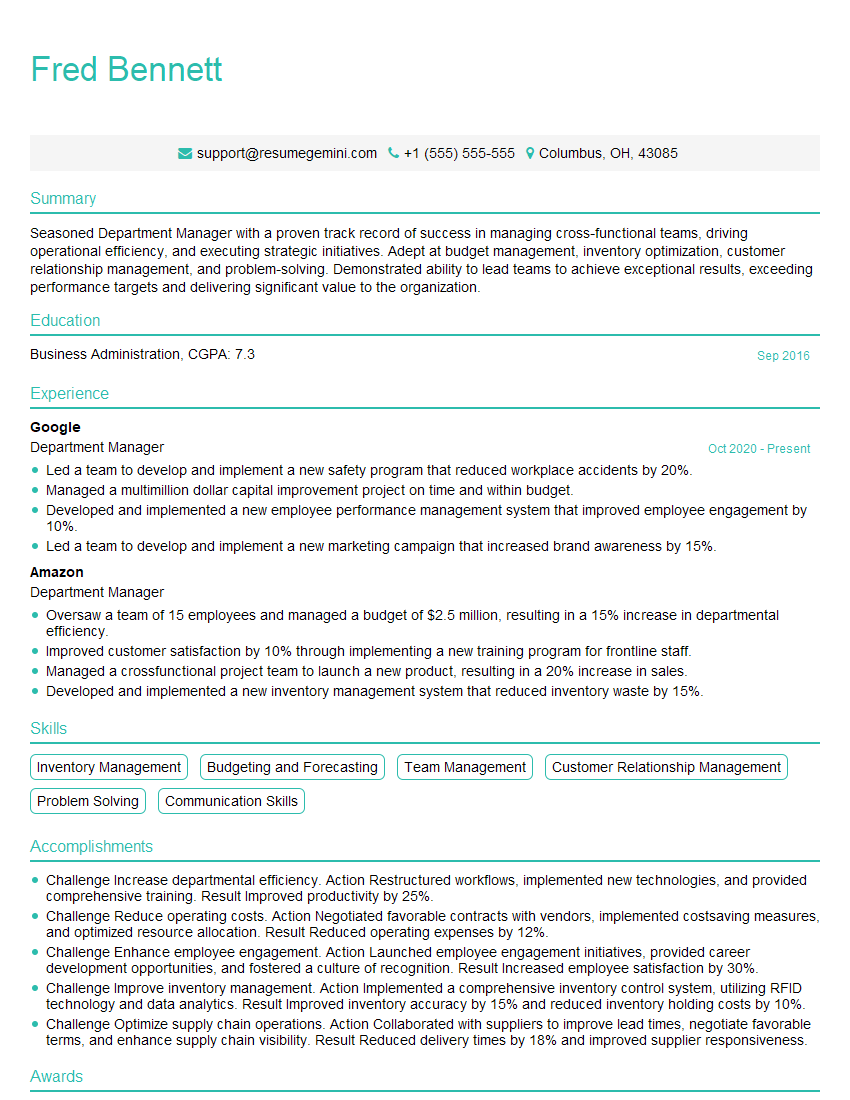
Department Manager Resume Sample
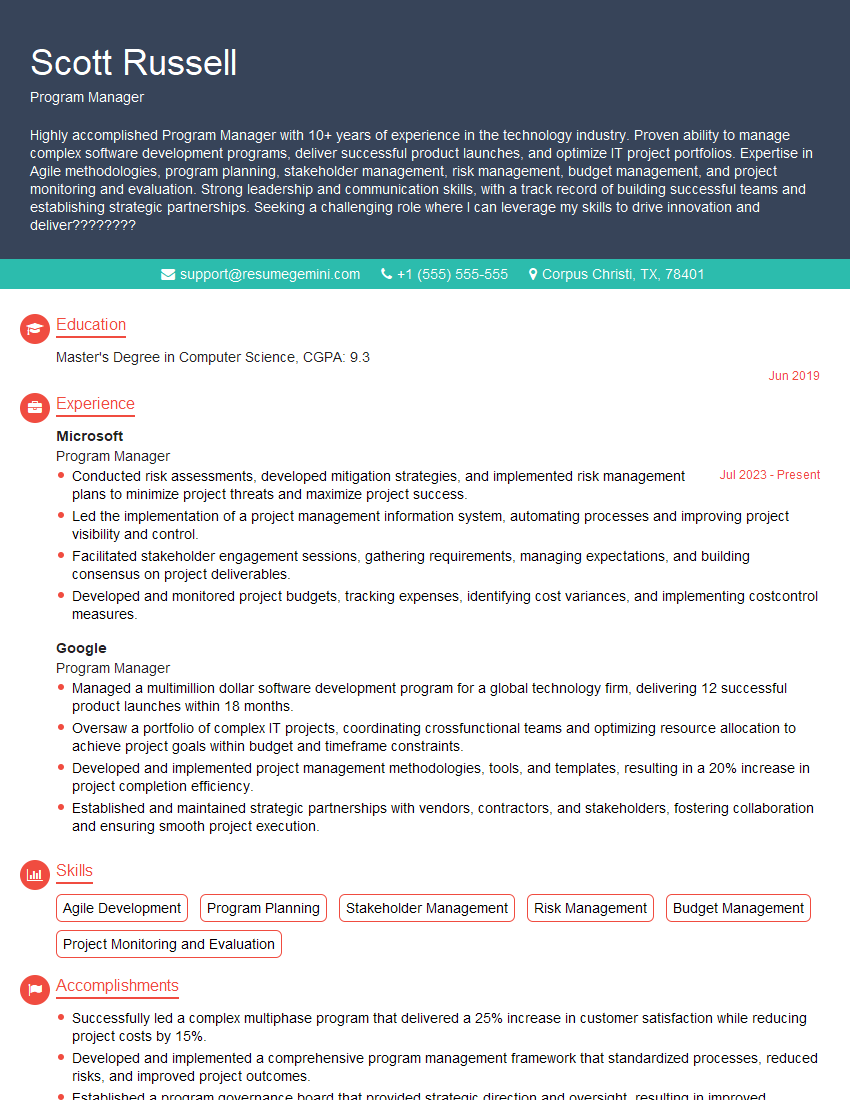
Program Manager Resume Sample
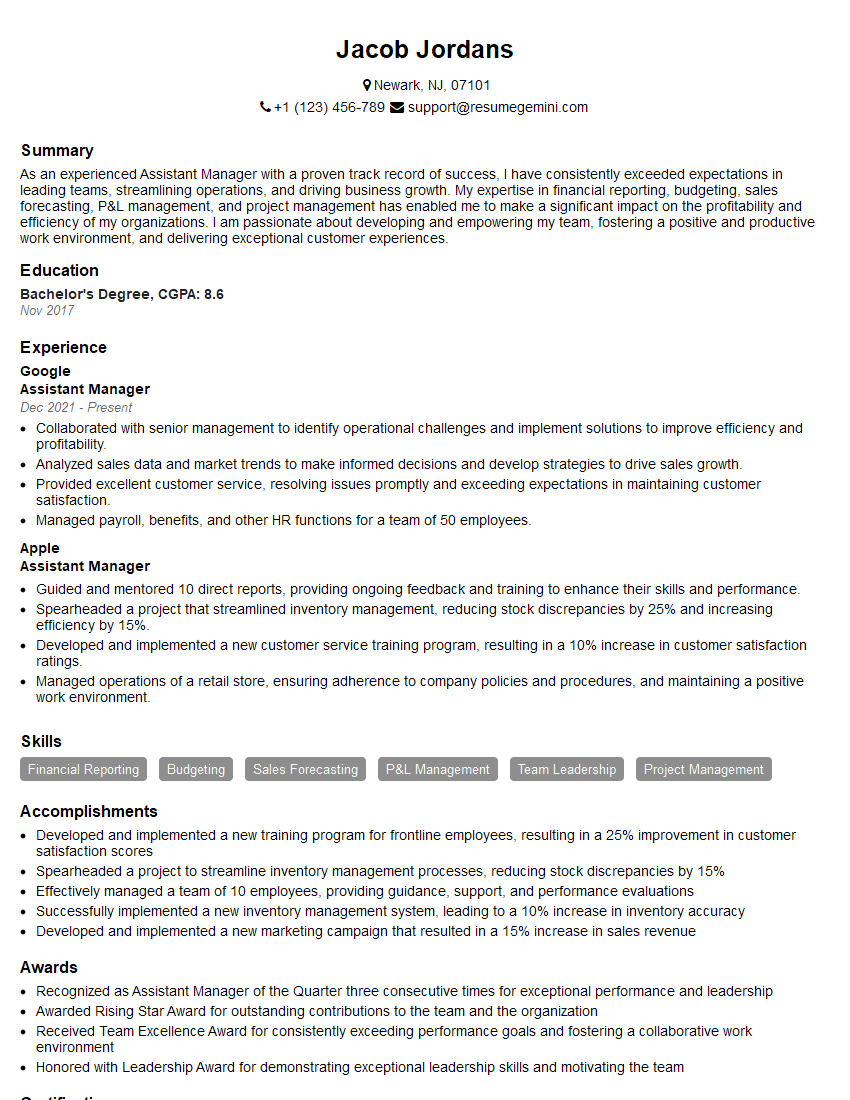
Assistant Manager Resume Sample

Operations Manager Resume Sample
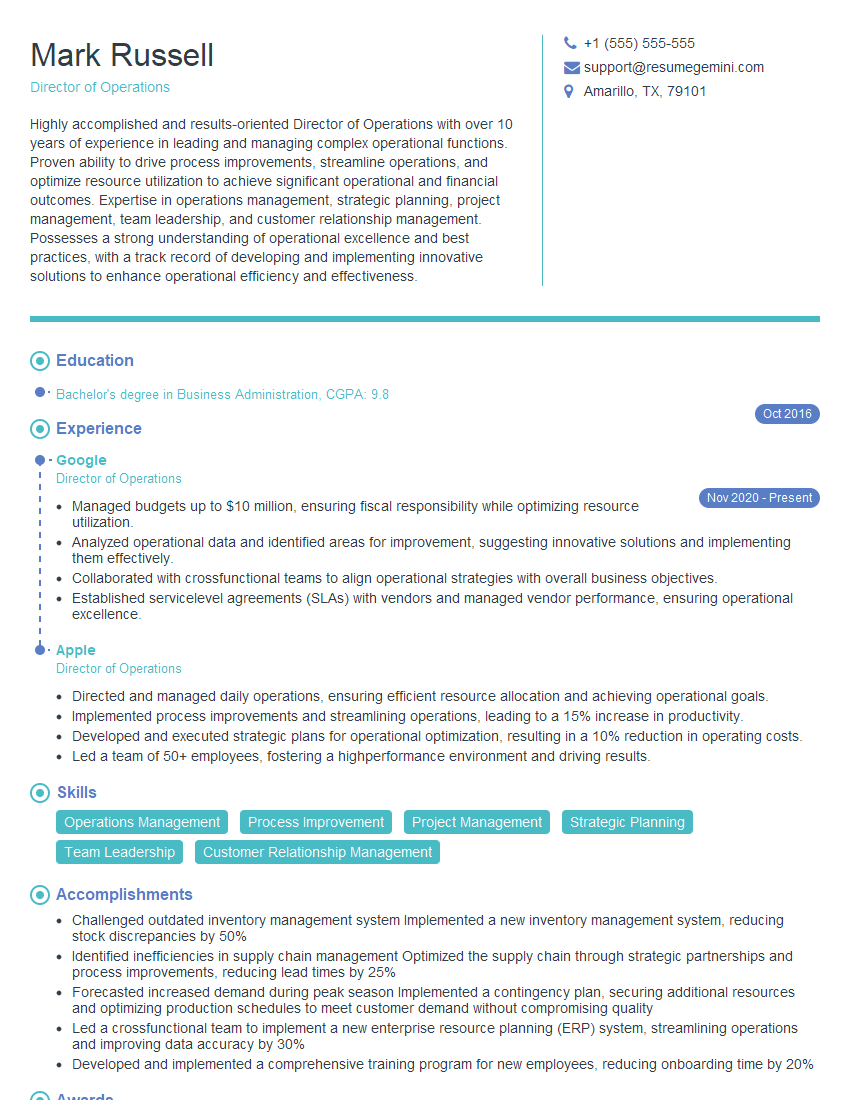
Director of Operations Resume Sample
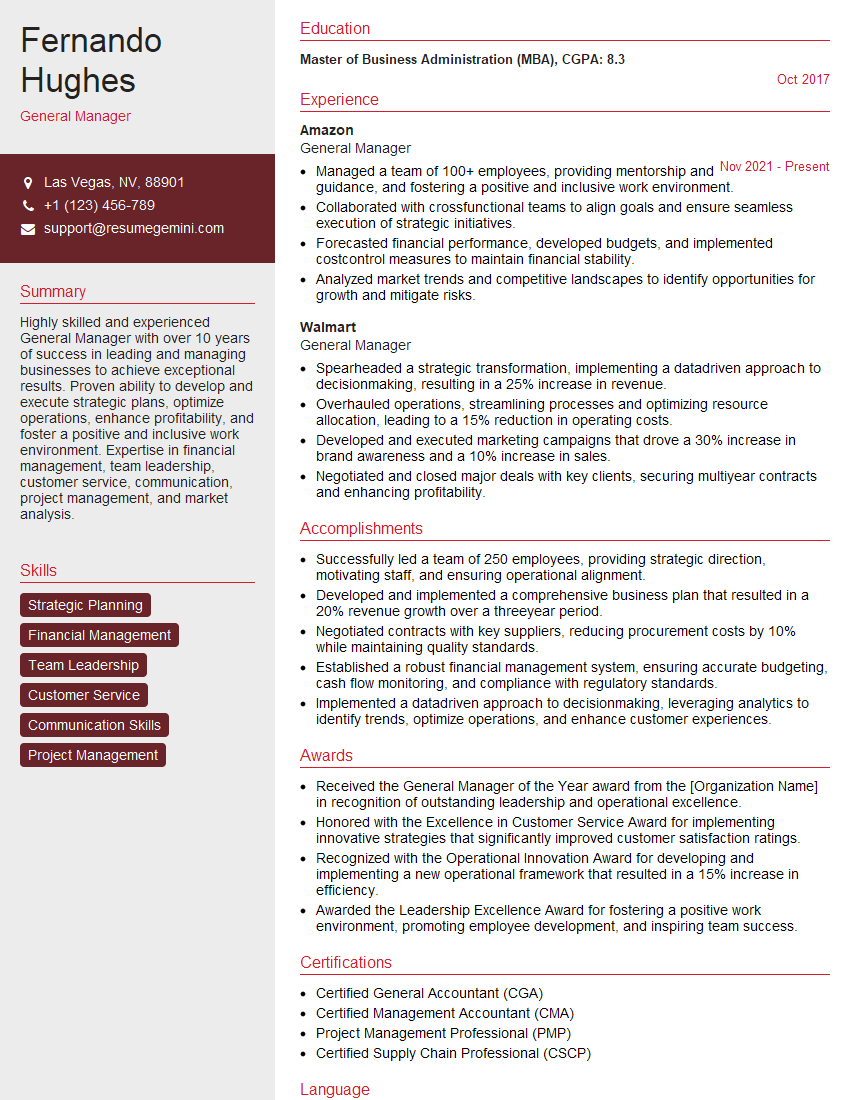
General Manager Resume Sample
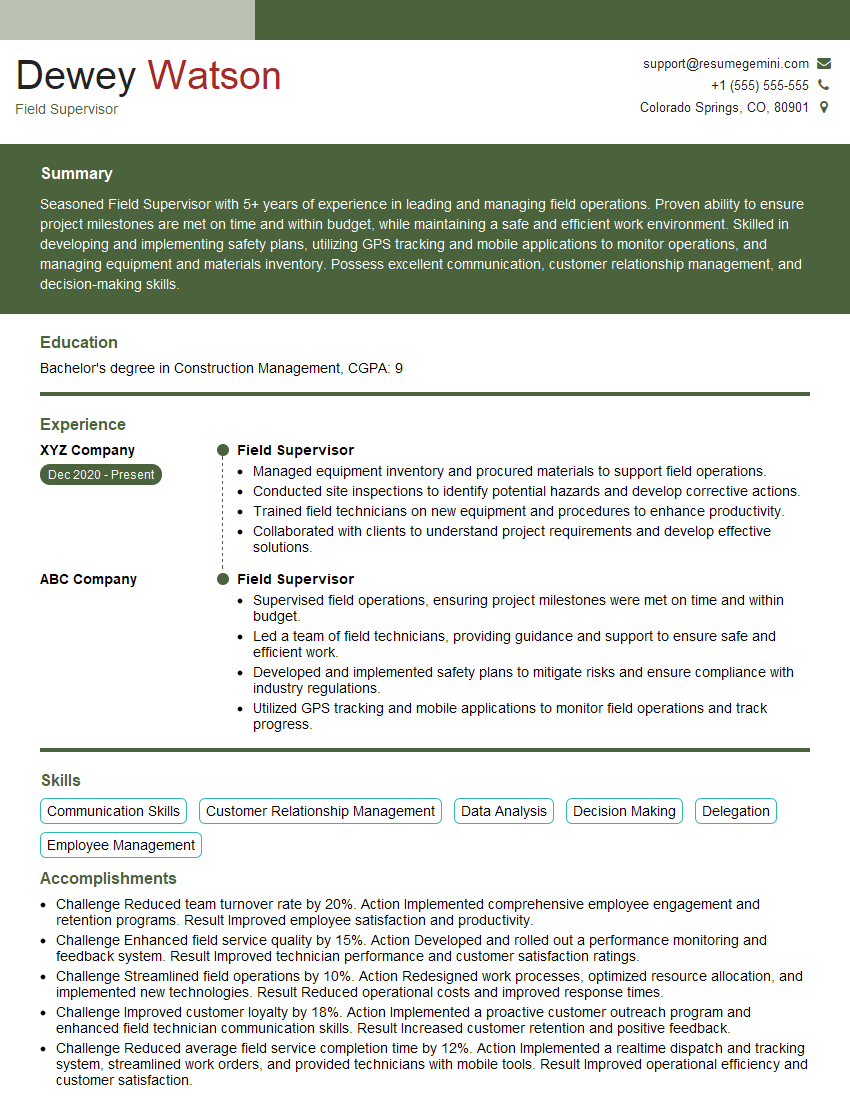
Field Supervisor Resume Sample
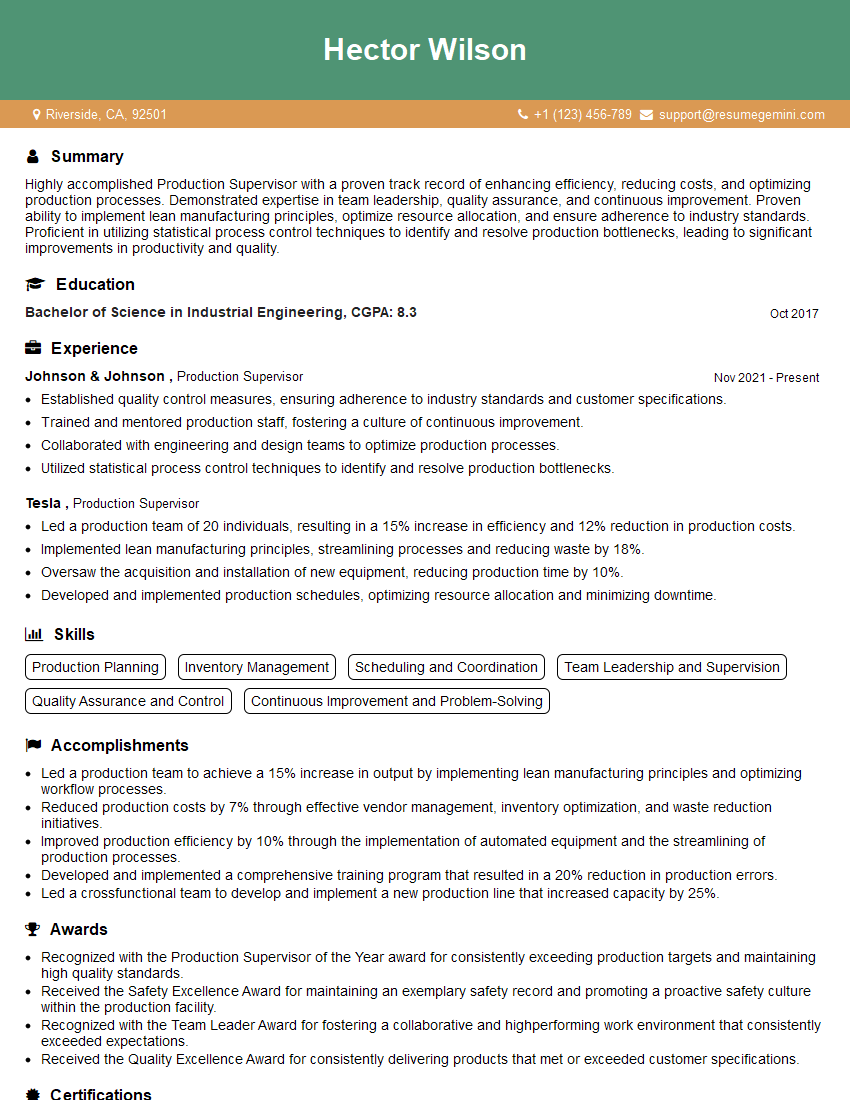
Production Supervisor Resume Sample
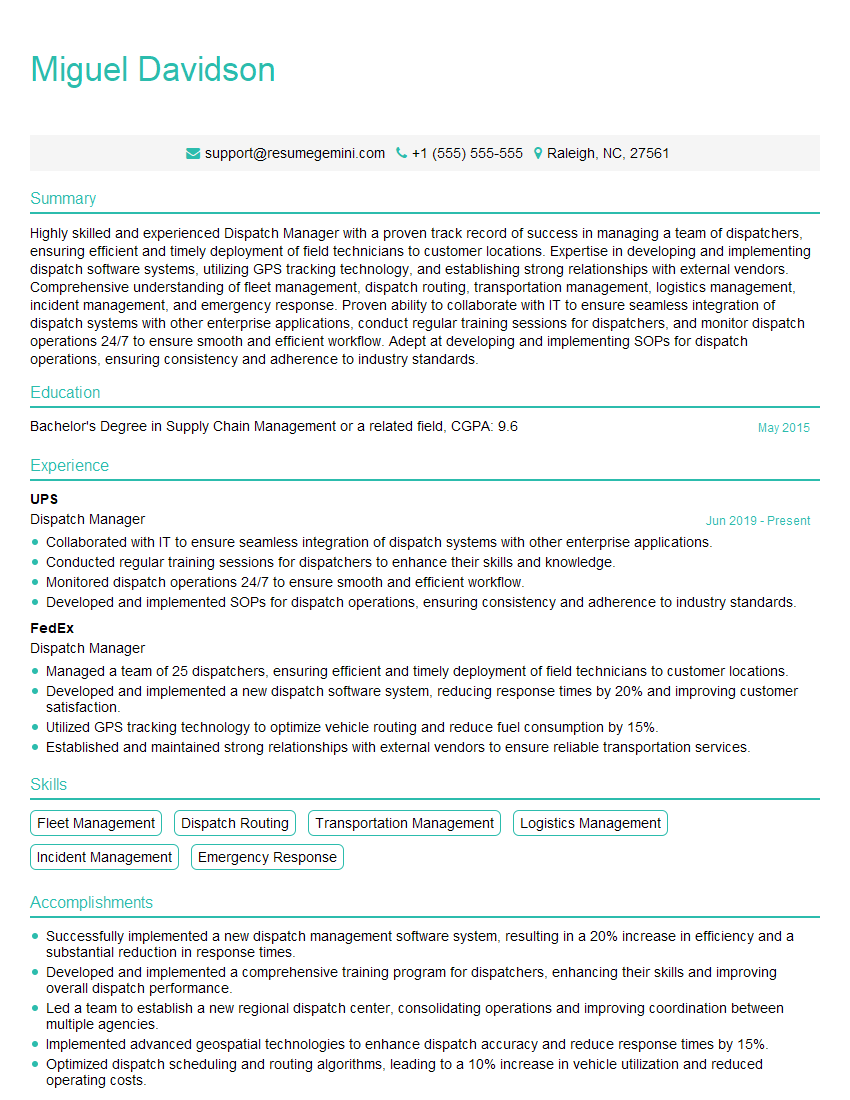
Dispatch Manager Resume Sample
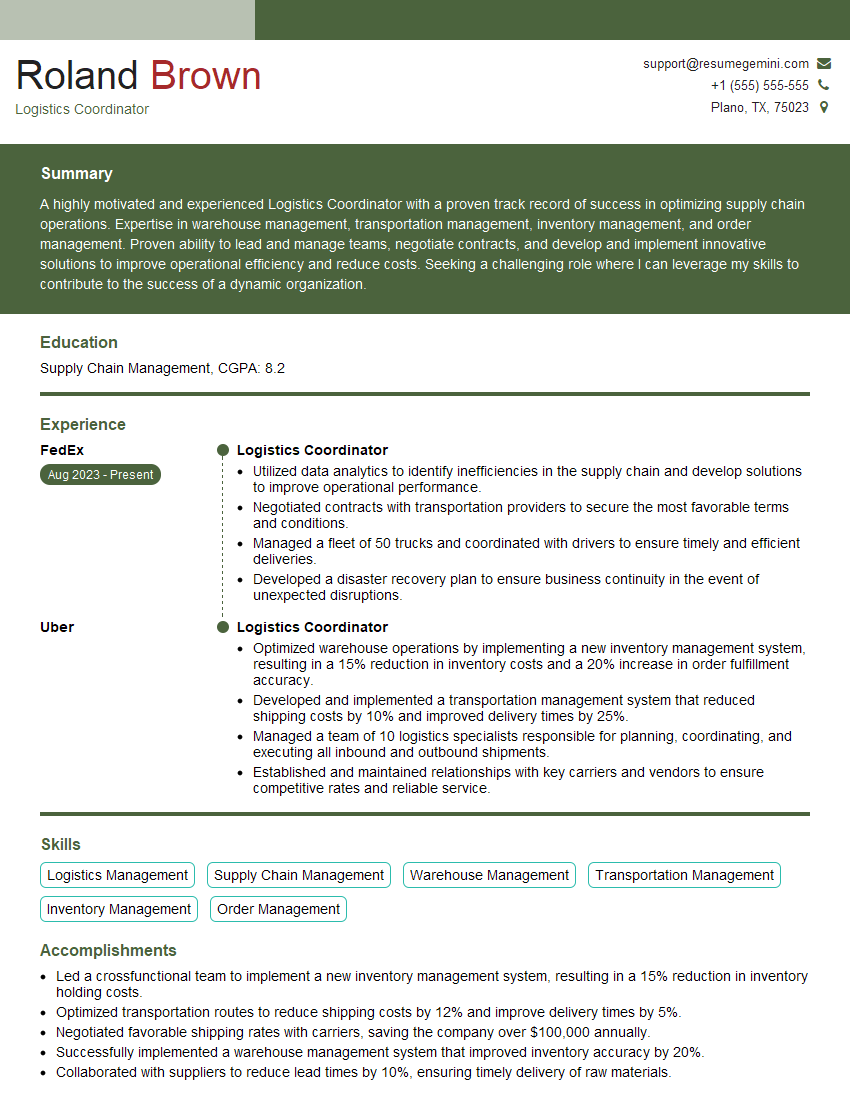
Logistics Coordinator Resume Sample

Construction Superintendent Resume Sample

Project Manager Resume Sample
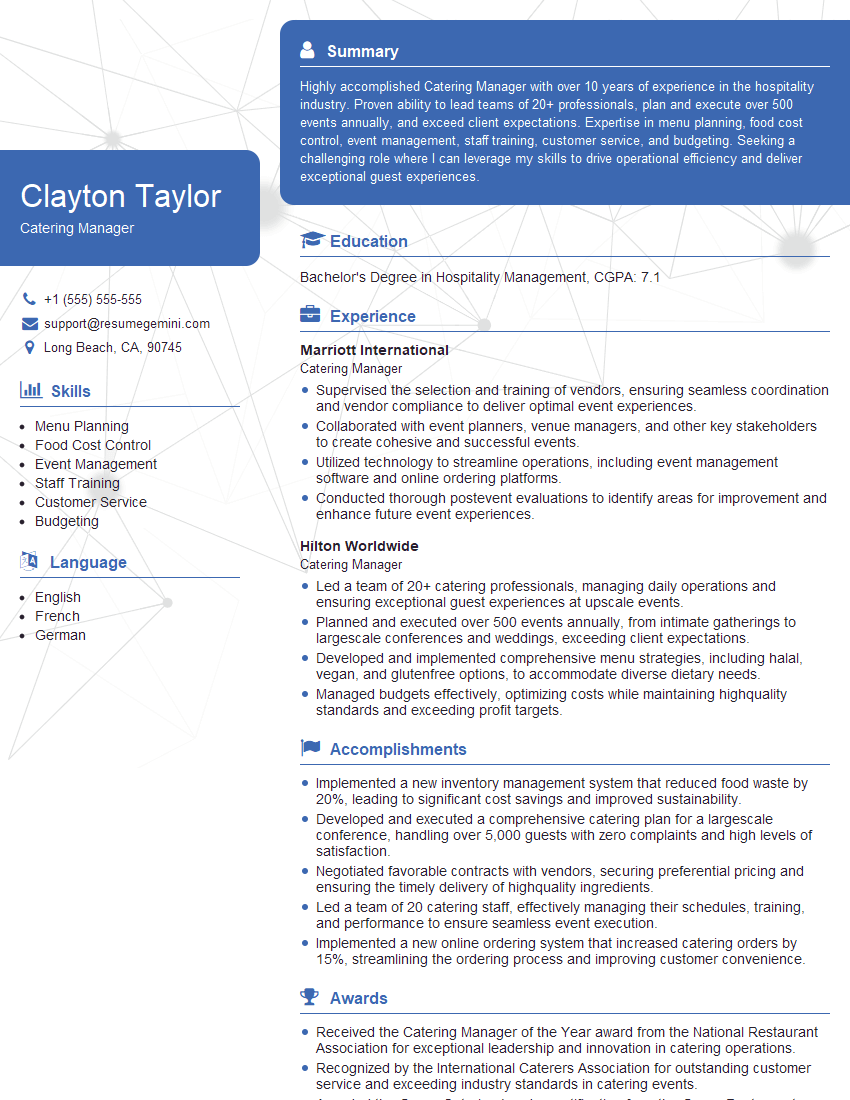
Catering Manager Resume Sample
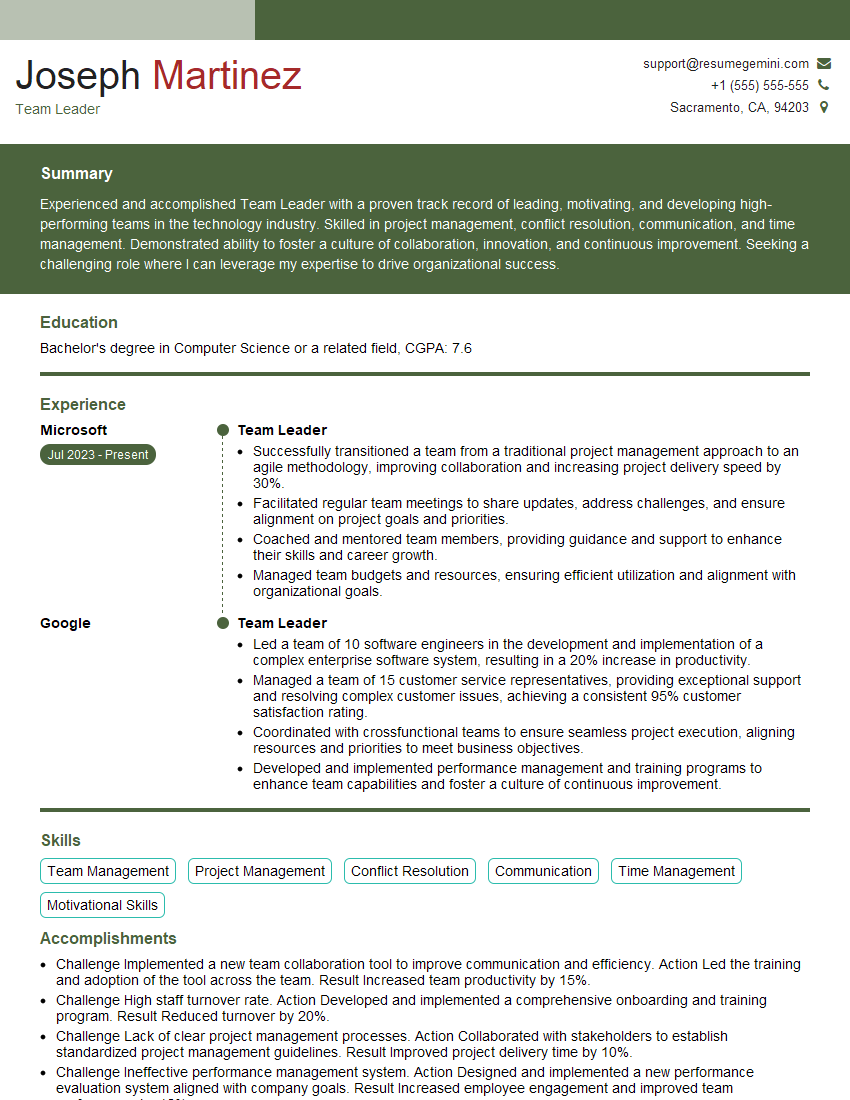
Team Leader Resume Sample
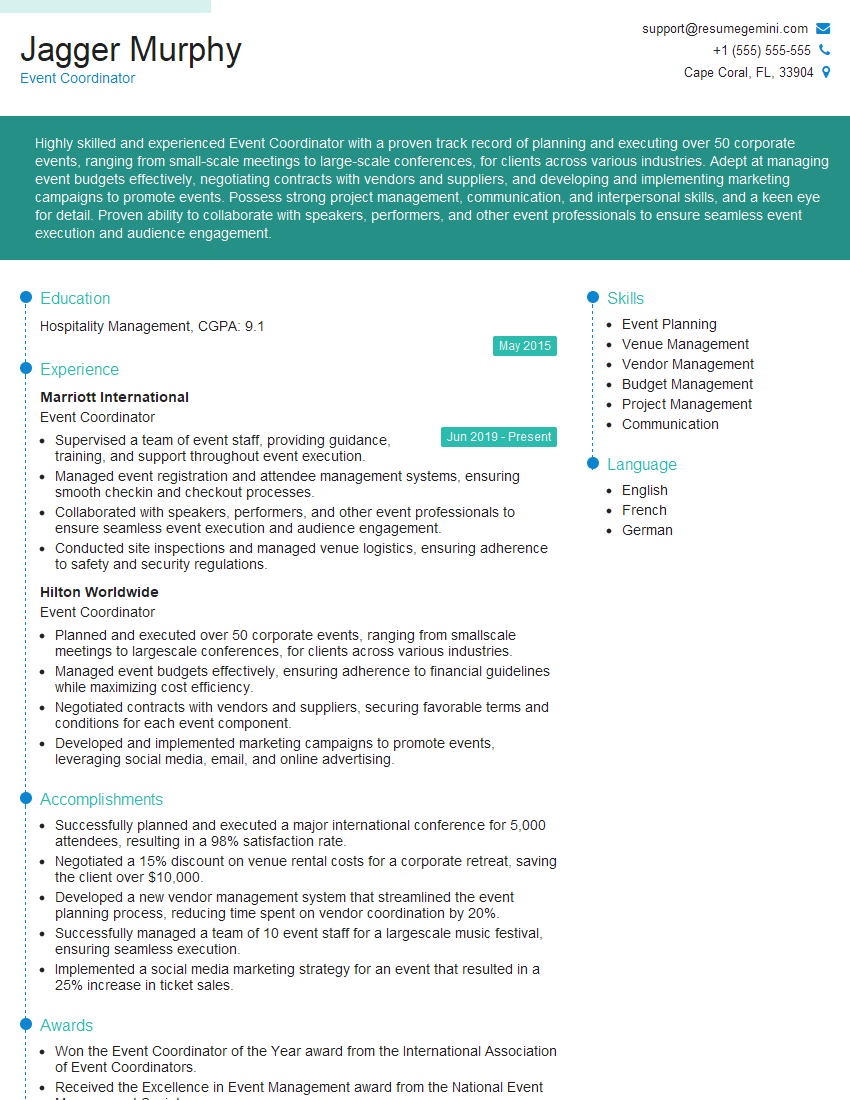
Event Coordinator Resume Sample
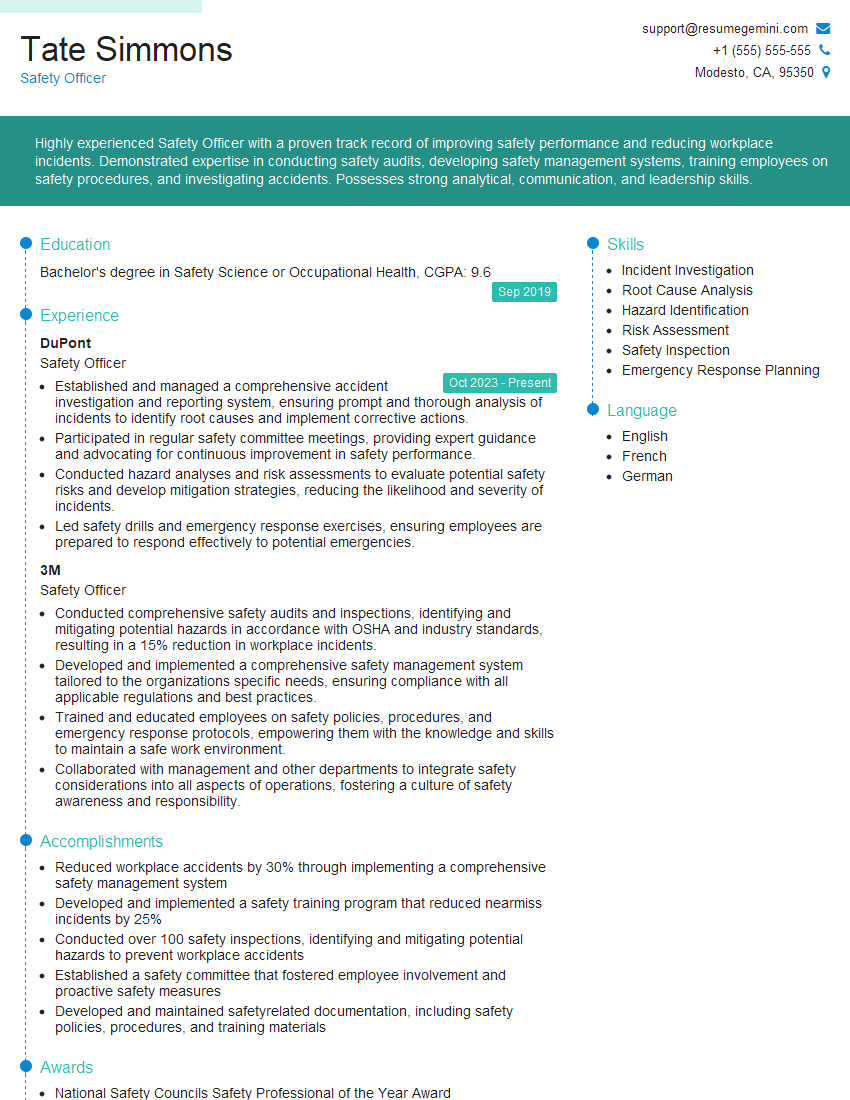
Safety Officer Resume Sample
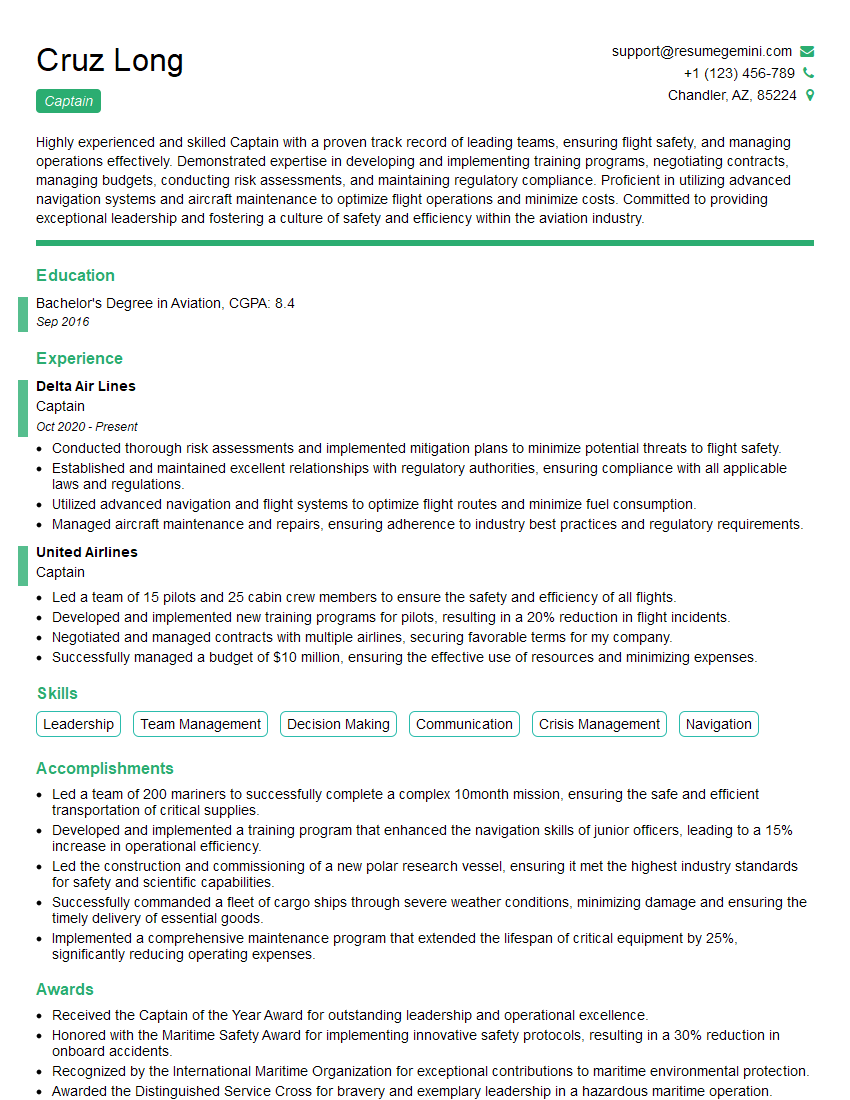
Captain Resume Sample
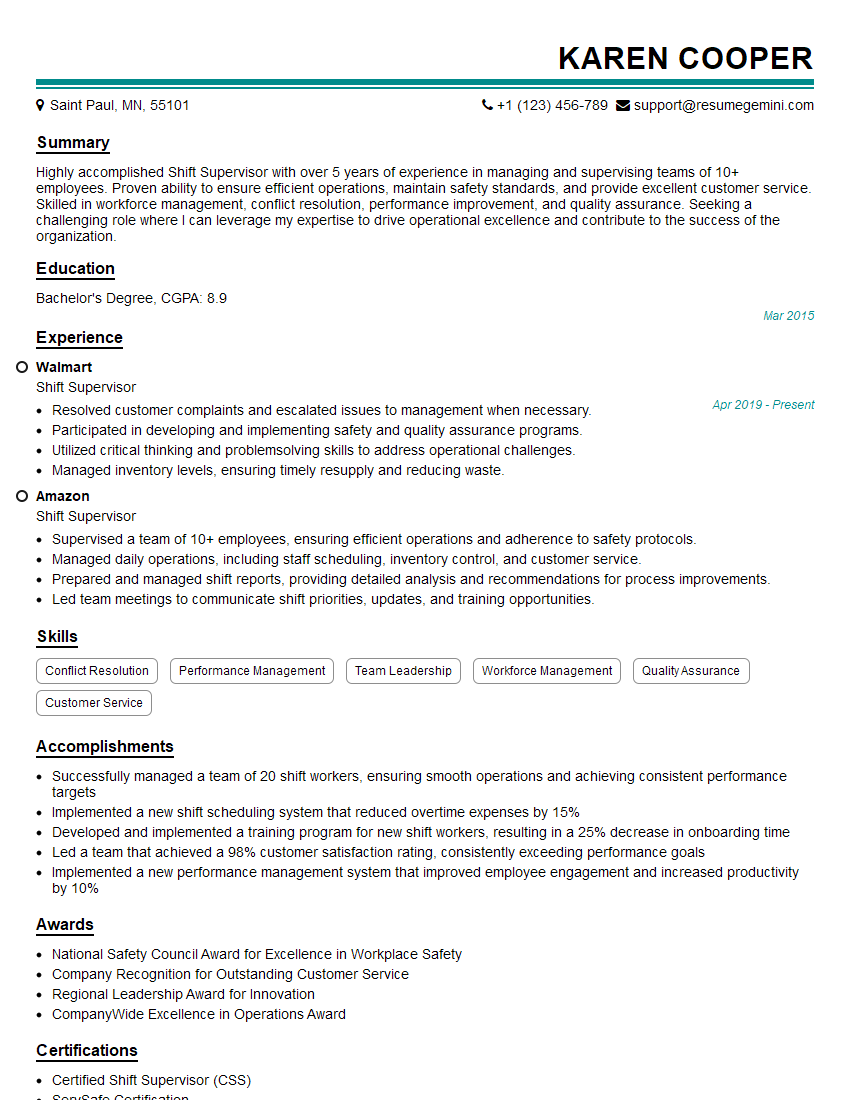
Shift Supervisor Resume Sample
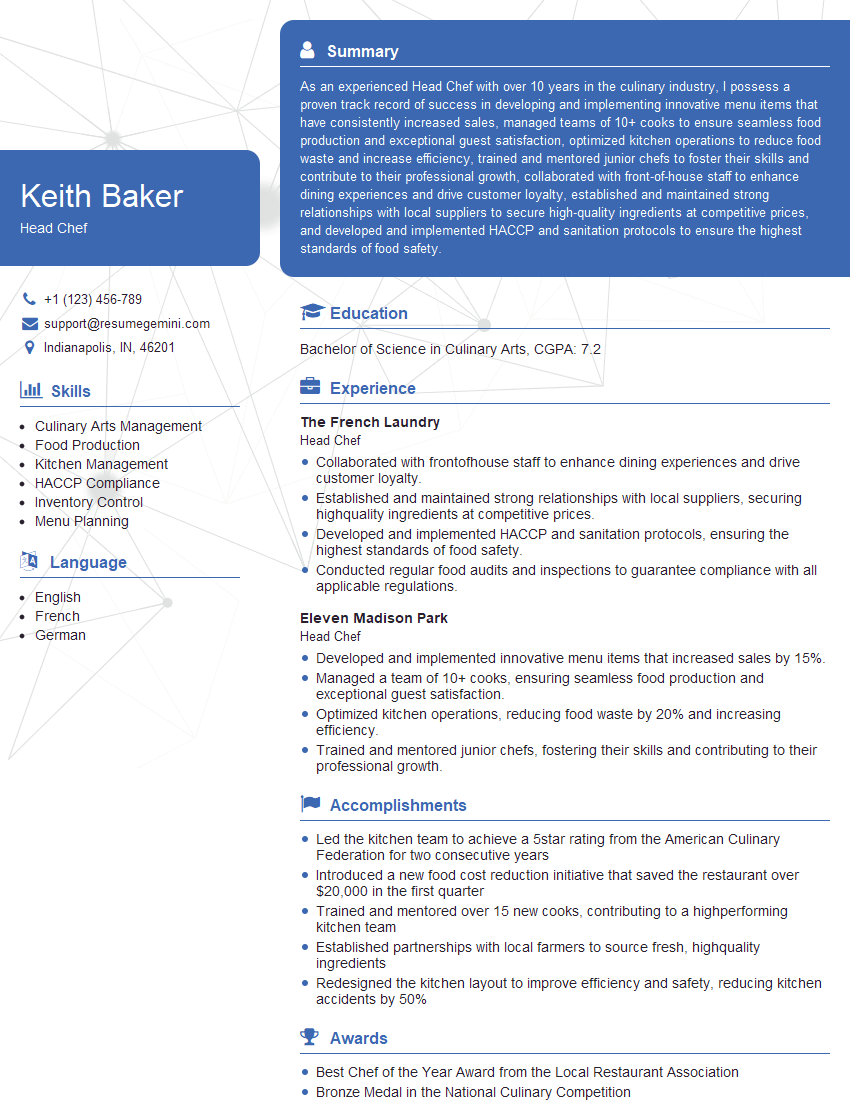
Head Chef Resume Sample
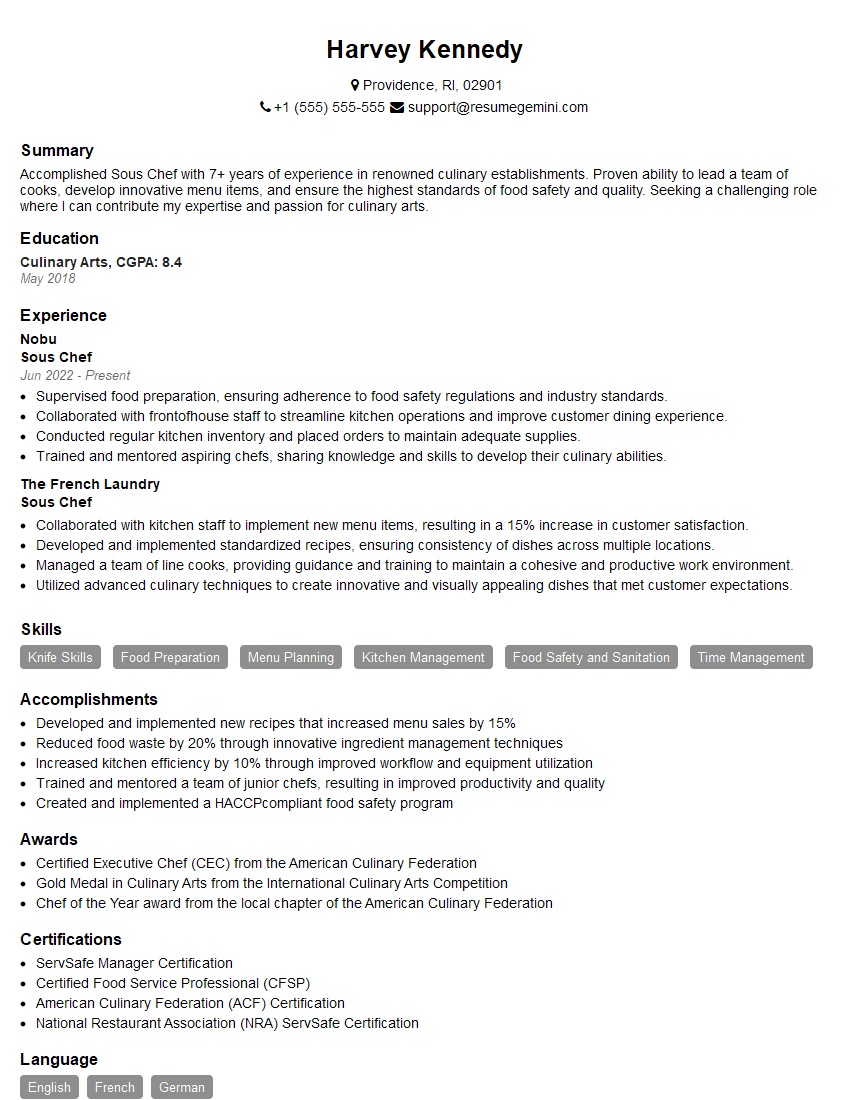
Sous Chef Resume Sample
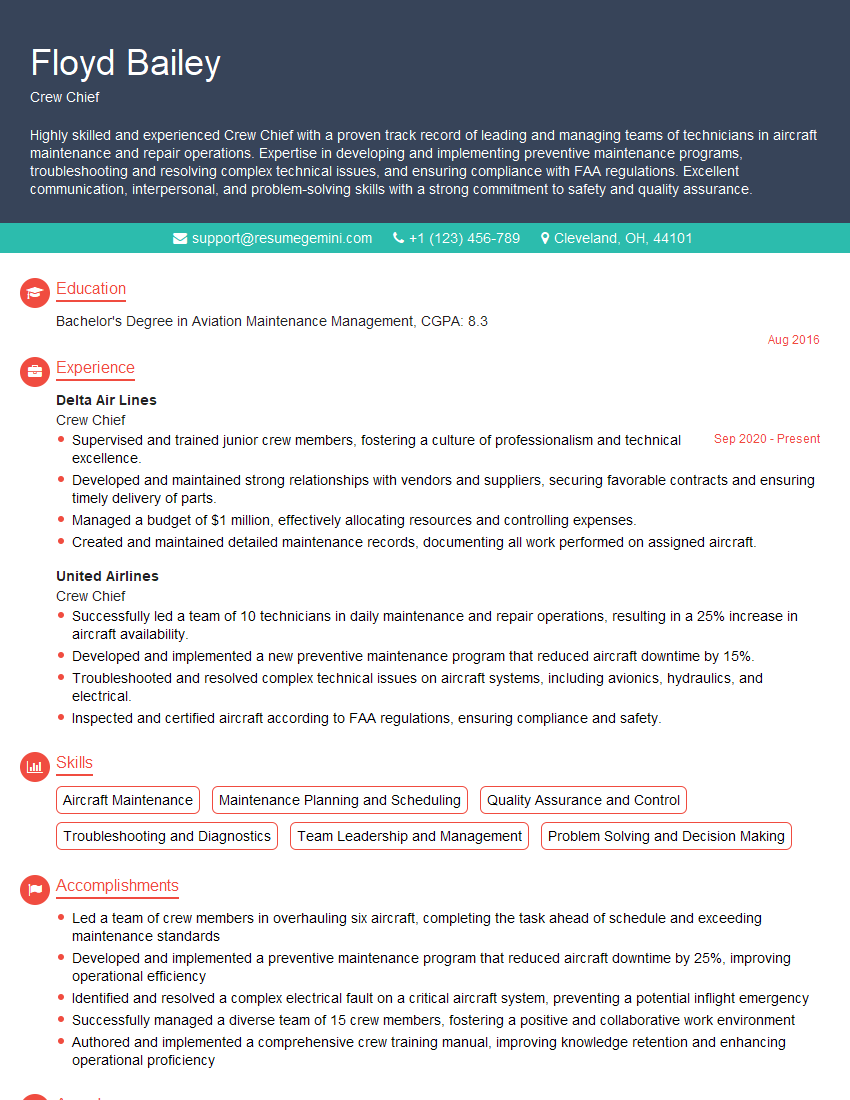
Crew Chief Resume Sample
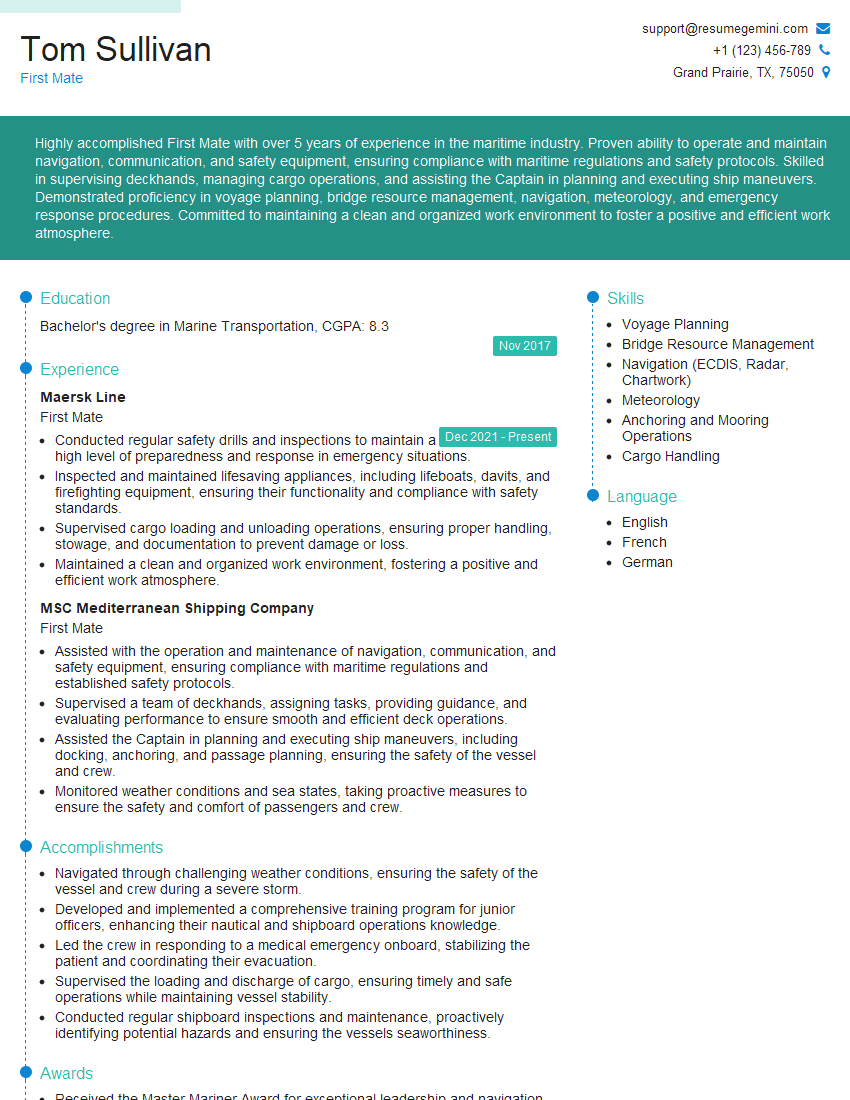
First Mate Resume Sample
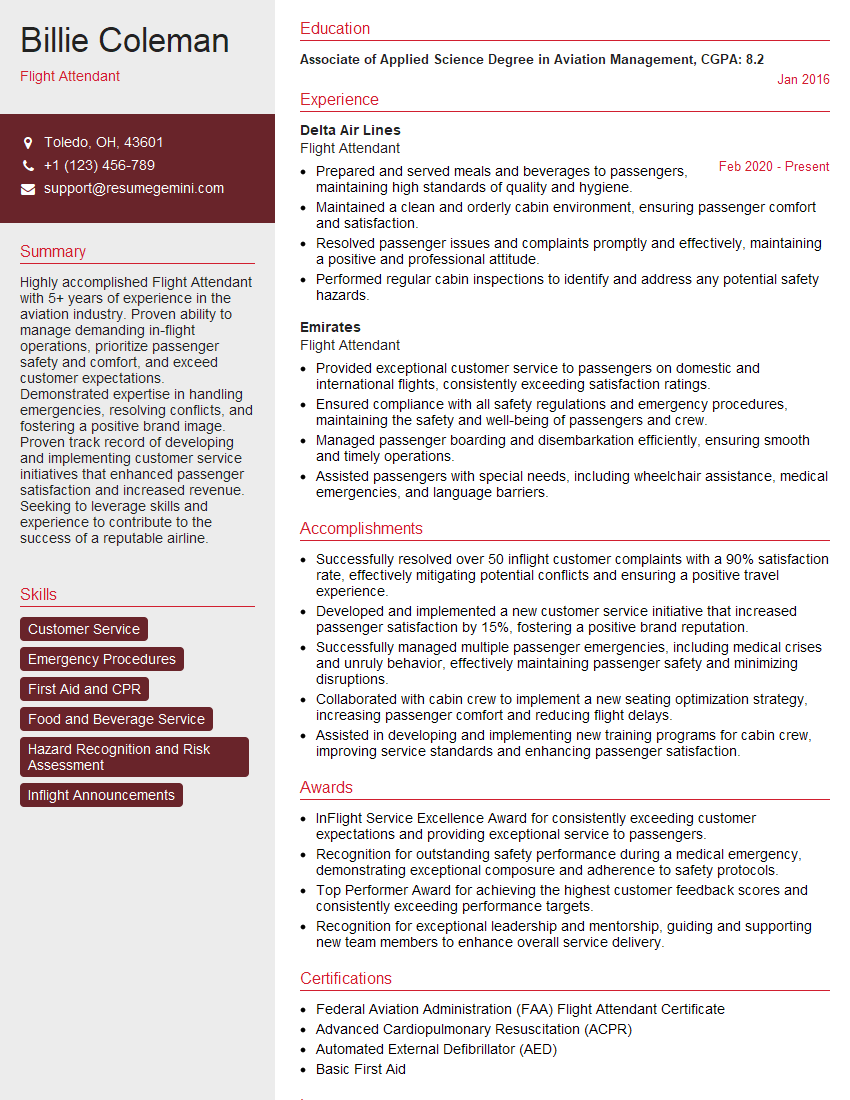
Flight Attendant Resume Sample
- Department Manager
- Program Manager
- Assistant Manager
- Operations Manager
- Director of Operations
- General Manager
- Field Supervisor
- Production Supervisor
- Dispatch Manager
- Logistics Coordinator
- Construction Superintendent
- Project Manager
- Catering Manager
- Team Leader
- Event Coordinator
- Safety Officer
- Captain
- Shift Supervisor
- Head Chef
- Sous Chef
- Crew Chief
- First Mate
- Flight Attendant
Explore more articles
Users Rating of Our Blogs
Share Your Experience
We value your feedback! Please rate our content and share your thoughts (optional).
What Readers Say About Our Blog
Very informative content, great job.
good