Interviews are more than just a Q&A session—they’re a chance to prove your worth. This blog dives into essential National Council of Architectural Registration Boards (NCARB) Certificate interview questions and expert tips to help you align your answers with what hiring managers are looking for. Start preparing to shine!
Questions Asked in National Council of Architectural Registration Boards (NCARB) Certificate Interview
Q 1. Describe your experience with the NCARB Record.
The NCARB Record is essentially a digital portfolio and tracking system for architects pursuing licensure. It’s the central hub for managing your education, experience, and examination progress towards obtaining your NCARB Certificate. Think of it as your professional ‘resume’ for architecture, but much more comprehensive. It meticulously documents everything from your education transcripts to your work experience, all in one secure location. I have extensive experience using the NCARB Record, regularly updating it to ensure my progress is accurately reflected and to maintain compliance with NCARB’s requirements. For example, I’ve successfully used it to track my IDP hours, submit my application for the Architect Registration Examination (ARE), and ultimately receive my certificate.
My familiarity extends to utilizing the Record’s various features such as managing education documentation, uploading experience reports, and monitoring ARE scores. I understand the importance of its accurate maintenance for a seamless licensure process.
Q 2. Explain the process of obtaining an NCARB Certificate.
Obtaining an NCARB Certificate is a multi-step process designed to ensure architects meet a nationally consistent standard of competency. It typically begins with completing a professional degree in architecture accredited by the National Architectural Accrediting Board (NAAB). Next, you must complete the Architectural Experience Program (AXP), which requires documenting a minimum of 3,740 hours of professional experience across six experience areas. Once the AXP is complete, you can begin the Architect Registration Examination (ARE). The ARE is a series of six computer-based exams covering various aspects of architectural practice. After successful completion of the ARE, you’ll submit your application for certification through the NCARB Record. Finally, you will apply for licensure in the specific state or jurisdiction where you intend to practice. Think of it like completing a multi-level video game: you must complete each level (education, AXP, ARE) successfully to advance to the next, ultimately unlocking the ‘NcarB Certificate’ achievement.
Q 3. How familiar are you with the Architect’s Professional Conduct Rules?
I am very familiar with the Architect’s Professional Conduct Rules. These rules, while specific variations exist depending on the jurisdiction, generally address ethical standards and professional responsibilities expected of licensed architects. These principles are crucial in maintaining public trust and ensuring the profession’s integrity. They cover areas like conflicts of interest, client confidentiality, and the appropriate use of professional seals. I understand the importance of adhering to these rules in all aspects of my work, from project design to business practices. For instance, I know that it is crucial to always act in the best interest of my clients and avoid any situations that might compromise my objectivity or impartiality. Ignoring these rules can have serious consequences, including disciplinary actions and potentially the loss of licensure.
Q 4. What are the different pathways to licensure through NCARB?
NCARB offers various pathways to licensure, catering to different educational backgrounds and experiences. The most common pathway involves completing a NAAB-accredited professional degree, fulfilling the AXP requirements, and passing the ARE. However, there are other pathways, such as the evaluation of foreign education or alternative experience pathways for individuals with significant professional experience but non-traditional educational backgrounds. These pathways offer flexibility for those who may not have followed the traditional route to becoming an architect. NCARB’s website provides a detailed breakdown of these alternative pathways, ensuring that qualified individuals, regardless of their background, can achieve licensure.
Q 5. Describe your understanding of the NCARB Experience Program.
The NCARB Experience Program (now AXP) is a crucial component of the architectural licensure process. It requires documenting a minimum of 3,740 hours of experience across six key practice areas: Project Management, Project Planning and Design, Project Programming and Analysis, Practice Management, Construction and Evaluation, and Technical Application. This structured program ensures that aspiring architects gain broad and in-depth experience across various aspects of architectural practice before becoming licensed. I’ve successfully completed my AXP, meticulously documenting my experience through the NCARB Record. This process helped me understand the depth and breadth of the profession, and it prepared me for the complexities of managing projects and collaborating within a team.
The AXP’s structured approach to experiential learning ensures graduates develop competence across the profession’s facets, preparing them for the real-world challenges of architectural practice. It’s a highly effective system promoting well-rounded professionals.
Q 6. How do you manage your professional development to meet NCARB requirements?
Maintaining professional development is vital to remain current and competitive in the architecture field. I actively engage in various activities to meet NCARB’s continuing education requirements. This includes attending conferences, workshops, and online courses focused on the latest design trends, building technologies, and professional practice. I also participate in professional organizations like AIA to network and learn from experienced architects. Regularly reviewing industry publications and building codes ensures I stay updated on changes in regulations and best practices. I diligently track my continuing education activities within my NCARB Record, ensuring compliance and showcasing a commitment to lifelong learning.
Q 7. Explain your understanding of the IDP program and its impact on licensure.
The IDP (now AXP) program is integral to obtaining licensure. It’s a structured system for accumulating the necessary practical experience required to demonstrate competency in various architectural domains. Completion of the AXP requires documenting 3,740 hours of experience across six key practice areas. This structured approach ensures that graduates gain a comprehensive understanding of architectural practice, far exceeding the traditional apprenticeship model. The impact on licensure is significant; without completing the AXP, candidates are ineligible to sit for the ARE and therefore cannot obtain their NCARB Certificate and subsequent state licensure. Think of it as a crucial bridge between formal education and independent practice, ensuring quality and consistency within the profession.
Q 8. Have you ever encountered an ethical dilemma in your architectural practice? Describe how you resolved it.
Ethical dilemmas are unfortunately common in architecture. One I faced involved a client who requested a design change that, while aesthetically pleasing, would violate building codes and potentially compromise structural integrity. My initial instinct was to simply refuse the change, but I understood the client’s emotional attachment to the design.
To resolve this, I presented a series of alternative solutions, clearly outlining the risks and benefits of each option. I documented everything—the initial request, my concerns, the proposed alternatives, and the client’s final decision. This documentation ensured transparency and protected me from potential liability. Ultimately, we found a compromise that satisfied both the client’s aesthetic preferences and building code requirements. The key was open communication, providing multiple options, and thorough documentation – all integral to maintaining ethical conduct.
Q 9. Describe a project where you had to balance design intent with budgetary constraints.
A recent project involved designing a community center with ambitious sustainability features. The initial design incorporated high-end, energy-efficient materials and systems, exceeding the initial budget by a significant margin.
To reconcile design intent with budgetary constraints, we employed a value engineering process. This involved systematically reviewing each element of the design, identifying potential cost reductions without compromising essential functionality or the overall design vision. We substituted some materials with equally effective but more affordable alternatives, optimized the building’s layout for cost savings in construction, and explored alternative construction methods. We also prioritized the most impactful sustainability features, focusing our efforts on those with the greatest environmental and economic benefits. Through this collaborative process, we achieved a beautiful and functional community center, staying within the revised budget while retaining many of the initial sustainability goals.
Q 10. Explain your experience with building codes and regulations.
My experience with building codes and regulations is extensive. I’m proficient in interpreting and applying codes at both the local and national levels, including the International Building Code (IBC) and accessibility standards like ADA.
I’ve handled everything from permit applications and code compliance reviews to resolving code-related issues during construction. I understand the importance of proactive code compliance, reducing potential delays and disputes. I regularly use code-checking software to ensure my designs meet all applicable standards. A recent example was navigating the complex requirements for a high-rise building, coordinating with the local building department to secure approvals in a timely manner.
Q 11. How do you stay updated on changes in building codes and technology?
Staying current in the ever-evolving fields of building codes and technology is crucial. I accomplish this through a multi-pronged approach.
- Professional Organizations: I’m an active member of AIA (American Institute of Architects) and other relevant professional organizations, attending conferences, webinars, and workshops to stay informed about updates.
- Subscription Services: I subscribe to industry publications and online resources that provide regular updates on code changes and new technologies.
- Continuing Education: I actively pursue continuing education credits focusing on code updates and the latest architectural software and construction technologies.
- Networking: I regularly network with other architects, engineers, and contractors to share information and learn from their experiences.
This holistic strategy keeps my knowledge base current and ensures I am always providing the best possible solutions for my clients.
Q 12. Describe your proficiency in using architectural software (e.g., Revit, AutoCAD).
I am highly proficient in several architectural software packages. My expertise includes Revit, AutoCAD, SketchUp, and Lumion.
In Revit, I’m skilled in BIM (Building Information Modeling) workflows, from creating detailed 3D models and construction documentation to collaborating with other design professionals. I routinely use AutoCAD for precise 2D drafting and detailing, while SketchUp facilitates quick concept modeling and presentation. Lumion allows me to generate photorealistic renderings that effectively communicate design intent to clients. I can confidently leverage the strengths of each software to efficiently and effectively complete various project tasks. For example, recently I used Revit to coordinate MEP (Mechanical, Electrical, and Plumbing) systems in a large commercial building, identifying potential clashes and resolving conflicts before construction began.
Q 13. How do you manage project timelines and deadlines effectively?
Effective project timeline management is critical. I utilize a combination of strategies to ensure projects are completed on schedule and within budget.
- Detailed Project Schedules: I create detailed project schedules using Gantt charts or similar tools, breaking down large tasks into smaller, manageable components.
- Regular Monitoring: I regularly monitor progress against the schedule, proactively identifying and addressing any potential delays.
- Risk Assessment: I conduct thorough risk assessments to anticipate potential problems and develop mitigation strategies.
- Communication: I maintain clear and consistent communication with clients and the project team, keeping everyone informed about progress and any potential challenges.
By combining these methods, I can effectively manage even the most complex projects, ensuring timely delivery and client satisfaction.
Q 14. Explain your experience in collaborating with other design professionals (engineers, contractors).
Collaboration is fundamental in architecture. I have a strong track record of effectively collaborating with structural engineers, MEP engineers, contractors, and other design professionals.
My approach emphasizes clear communication, open dialogue, and a shared understanding of project goals. I utilize BIM software to facilitate seamless coordination between different disciplines, identifying and resolving conflicts early in the design process. I believe in fostering a collaborative environment where everyone feels valued and empowered to contribute their expertise. For instance, during a recent project, I worked closely with the structural engineer to optimize the building’s structural system, resulting in a more efficient and cost-effective design. Regular meetings, shared cloud-based models, and transparent communication were key to the project’s success.
Q 15. Describe a time you had to solve a complex design problem.
One particularly challenging design problem involved integrating a modern, sustainable design into a historically significant urban context. The project required balancing the client’s desire for a cutting-edge, energy-efficient building with the preservation requirements of the surrounding historic district. The complexity arose from the need to meet stringent building codes, address aesthetic concerns from the historical preservation society, and simultaneously achieve ambitious sustainability goals (LEED Gold certification).
My approach involved a multi-phased process. First, I conducted extensive research, studying historical building techniques and architectural styles prevalent in the area. This allowed me to design a building that harmonized with the neighborhood’s character. Second, I utilized advanced Building Information Modeling (BIM) software to explore various design iterations, testing different materials and configurations to optimize energy efficiency and minimize environmental impact. Third, I facilitated numerous meetings with stakeholders, including the historical society, city planners, and the client, to present design options and address their concerns, fostering collaboration and buy-in. The final design successfully navigated the complex requirements, earning the LEED Gold certification and positive reviews from the community.
Career Expert Tips:
- Ace those interviews! Prepare effectively by reviewing the Top 50 Most Common Interview Questions on ResumeGemini.
- Navigate your job search with confidence! Explore a wide range of Career Tips on ResumeGemini. Learn about common challenges and recommendations to overcome them.
- Craft the perfect resume! Master the Art of Resume Writing with ResumeGemini’s guide. Showcase your unique qualifications and achievements effectively.
- Don’t miss out on holiday savings! Build your dream resume with ResumeGemini’s ATS optimized templates.
Q 16. How do you prioritize multiple tasks and manage your time efficiently?
Effective time management is critical in architecture. I employ a combination of strategies to prioritize tasks and enhance productivity. I start by using a project management tool to break down large projects into smaller, manageable tasks, each with a defined deadline. I then prioritize these tasks based on their urgency and importance, employing the Eisenhower Matrix (urgent/important) to categorize them. High-priority tasks are tackled first. I also allocate specific time blocks in my day for focused work on individual tasks, minimizing interruptions. Regular review and adjustment of the schedule ensures I stay on track. Furthermore, I proactively communicate with clients and colleagues to manage expectations and avoid conflicts. This helps prevent task overload and ensures a smooth workflow.
Q 17. Describe your experience in preparing construction documents.
My experience in preparing construction documents encompasses all phases, from schematic design through construction administration. I’m proficient in creating detailed drawings using AutoCAD and Revit, including plans, sections, elevations, details, and schedules. I understand the importance of clear, concise communication through drawings; each element is carefully labeled and dimensioned to avoid ambiguity. Beyond the drawings themselves, I’m experienced in creating specifications, which define the materials and methods of construction. I’m also adept at coordinating drawings with other disciplines like structural and MEP engineers, ensuring consistency and resolving potential conflicts. Experience with BIM software has been particularly valuable in coordinating complex projects and creating accurate, easily-accessible information for contractors.
Q 18. How do you ensure the accuracy and completeness of construction drawings?
Ensuring accuracy and completeness in construction drawings is paramount to avoid costly errors during construction. My approach involves a multi-layered quality control process. Firstly, I meticulously review each drawing myself, checking for inconsistencies, errors in dimensions and notations, and completeness of information. Secondly, I conduct peer reviews, having another architect independently check my work. This fresh perspective often catches errors I might have overlooked. Thirdly, I utilize BIM software to detect clashes between different disciplines (structural, MEP etc.), minimizing conflicts before construction begins. Finally, I maintain a detailed checklist throughout the drafting process to ensure that all necessary sheets are included and that the drawings are up-to-date with any changes or revisions. This systematic approach drastically reduces errors and improves the quality of the final construction documents.
Q 19. Explain your understanding of sustainable design principles.
Sustainable design principles are fundamental to modern architecture. They center around minimizing the environmental impact of buildings throughout their lifecycle, from construction to demolition. Key principles include energy efficiency (reducing energy consumption through passive and active strategies), water conservation (implementing low-flow fixtures and rainwater harvesting), material selection (using recycled and locally sourced materials), and waste reduction (minimizing construction waste and maximizing material reuse). Beyond these, incorporating aspects of daylighting, thermal comfort, and indoor air quality contribute to a healthy and sustainable built environment. The goal is to create buildings that are not only environmentally responsible but also economically viable and enhance occupant wellbeing.
Q 20. Describe a project where you incorporated sustainable design strategies.
In a recent project for a new community center, we implemented several sustainable design strategies. We oriented the building to maximize natural daylighting, reducing the need for artificial lighting. We incorporated a green roof to manage stormwater runoff, improve insulation, and reduce the urban heat island effect. Locally sourced and rapidly renewable materials like bamboo were used for interior finishes, minimizing transportation emissions and supporting local businesses. We also designed a highly efficient HVAC system with heat recovery ventilation to optimize energy performance. These strategies contributed to achieving a LEED Silver certification, showcasing our commitment to environmentally responsible design. The project highlighted how sustainable choices not only benefit the environment but also enhance the building’s aesthetic appeal and operational efficiency.
Q 21. How do you communicate complex architectural concepts to clients and stakeholders?
Communicating complex architectural concepts effectively requires a clear and adaptable approach. I begin by understanding the client’s knowledge level and tailoring my communication style accordingly. I use a variety of tools: visual aids such as 3D models, renderings, and simplified drawings help visualize the design; interactive presentations allow for dynamic engagement; annotated plans, sections and details can clarify specific design elements. I avoid technical jargon whenever possible, using plain language to explain complex ideas. I actively encourage questions and feedback, ensuring the client fully grasps the design intent and potential implications. I also maintain a well-documented record of design decisions and communication, fostering transparency and trust. By actively listening to client needs and adapting my communication to be both understandable and informative, I successfully bridge the gap between technical expertise and client understanding.
Q 22. Describe your experience with presenting design proposals.
Presenting design proposals is a crucial aspect of architectural practice, requiring a blend of technical expertise, persuasive communication, and client understanding. My approach involves a structured process, beginning with thorough research to understand the client’s needs and the project’s context. I then develop compelling visual presentations, using high-quality renderings, models, and diagrams to showcase the design’s key features and benefits.
For instance, in a recent project for a sustainable community center, I created a presentation that emphasized the building’s energy efficiency, community integration, and aesthetic appeal. This involved not only showcasing the design itself, but also presenting lifecycle cost analyses, community engagement strategies, and a detailed budget breakdown. The presentation culminated in a Q&A session allowing for client feedback and iterative refinement of the design. The combination of visuals, data, and interactive discussion ensured a successful proposal outcome.
I strive to tailor each presentation to the specific audience, whether it’s a client, a review board, or a community group. This ensures that the information is clear, concise, and relevant, ultimately leading to a stronger understanding and buy-in from stakeholders.
Q 23. How do you manage conflicts and disagreements within a design team?
Managing conflicts within a design team is vital for successful project delivery. My approach is proactive and focuses on open communication, mutual respect, and collaborative problem-solving. I believe that disagreements are often opportunities for innovation and improvement, and I foster an environment where team members feel comfortable expressing their opinions and concerns.
When conflicts arise, I facilitate constructive dialogue by actively listening to each team member’s perspective, identifying the root causes of the disagreement, and guiding the team towards a mutually acceptable solution. This may involve brainstorming alternative approaches, weighing the pros and cons of different options, and establishing clear decision-making processes. For example, if disagreements arise about material selection, I’d facilitate a discussion comparing the cost, sustainability, and aesthetic aspects of each option, ultimately reaching a consensus based on project goals and priorities.
In situations requiring mediation, I ensure all perspectives are heard fairly and guide the team towards compromise. The goal is not to suppress dissent but to channel it into creative problem-solving that enhances the project’s quality.
Q 24. How familiar are you with LEED certification?
I am very familiar with LEED (Leadership in Energy and Environmental Design) certification. I understand the various rating systems, including LEED for New Construction (NC), LEED for Existing Buildings: Operations & Maintenance (EBOM), and LEED for Interiors (ID+C). My experience encompasses integrating LEED principles throughout the design process, from site selection and material choices to energy modeling and waste management.
I’ve successfully guided several projects towards LEED certification, incorporating strategies like maximizing daylighting, employing high-performance building envelopes, using sustainable materials, and optimizing water usage. For example, in a recent school design, we incorporated green roofs to reduce stormwater runoff, solar panels for renewable energy, and locally sourced materials to minimize transportation emissions. This led to a significant reduction in the building’s environmental footprint and resulted in a LEED Gold certification.
My understanding extends beyond the technical requirements to encompass the broader implications of sustainable design, including cost savings, improved occupant health, and positive community impact.
Q 25. What is your experience with the bidding and negotiation process?
My experience with the bidding and negotiation process is extensive, ranging from preparing comprehensive bid documents to negotiating contracts with contractors and subcontractors. I am proficient in understanding and interpreting construction documents, cost estimating, and developing detailed specifications.
In the bidding phase, I ensure that the project’s scope is clearly defined, specifications are accurate and unambiguous, and the bidding process is fair and transparent. I’ve worked with various bidding methods, including open bidding, selective bidding, and negotiated contracts, adapting my approach based on the project’s complexity and client’s requirements. I review bids meticulously, analyzing cost breakdowns, contractor qualifications, and risk assessments to select the most suitable team for the project.
During negotiations, I strive to achieve a balance between value for money and minimizing risk. This involves careful consideration of contractual terms, payment schedules, and dispute resolution mechanisms. My goal is to establish a collaborative relationship with the contractor built on mutual trust and understanding, fostering a smooth and efficient construction process.
Q 26. Describe your experience with construction administration and observation.
Construction administration and observation are crucial for ensuring that a project is built according to the design intent and within budget and schedule. My experience in this area involves reviewing shop drawings, responding to contractor’s requests for information (RFIs), conducting regular site visits, and documenting progress.
I actively participate in construction meetings, coordinating between the design team, the contractor, and other stakeholders. I review submittals to ensure compliance with the design specifications and relevant codes, identify potential conflicts, and propose solutions. During site visits, I observe the construction process, verify the accuracy of the work, and address any quality control issues promptly.
For example, during a recent project, I identified a discrepancy between the shop drawings and the design documents related to a crucial structural element. Addressing this early avoided costly rework and project delays. My role in construction administration goes beyond mere oversight; it’s about proactive problem-solving and ensuring the project’s successful completion.
Q 27. How do you handle changes and revisions during the construction phase?
Handling changes and revisions during construction is an inevitable aspect of architectural practice. My approach focuses on a systematic and documented process. Any proposed changes are documented via formal change orders, including a detailed description of the alteration, its impact on the schedule and budget, and any necessary revisions to the contract.
I work collaboratively with the contractor and client to assess the feasibility of each request, ensuring that it aligns with the project’s overall goals and doesn’t compromise its quality or safety. The change order process incorporates a review of cost implications and schedule adjustments, ensuring transparency and preventing unforeseen expenses.
For instance, if a client requests a change to the exterior cladding material, I would prepare a change order that outlines the cost difference, the lead time for acquiring the new material, and any potential implications on the project schedule. This approach safeguards the project from cost overruns and maintains open communication among all involved parties.
Q 28. Describe your approach to quality control in architectural projects.
Quality control is paramount in architectural projects, encompassing all aspects of the design and construction process. My approach incorporates a multi-layered system of checks and balances, starting with rigorous design review and extending throughout construction.
During the design phase, I utilize various quality control measures such as peer reviews, design audits, and model checking to identify potential flaws or inconsistencies. This proactive approach minimizes errors before they become costly to rectify. During construction, regular site visits and detailed documentation form the core of my quality control efforts.
I meticulously review shop drawings and submittals, ensuring that all aspects of the work comply with the design specifications and relevant building codes. Addressing issues promptly and documenting all corrections ensures a consistently high level of quality. This rigorous approach extends to communication, ensuring clear documentation and efficient collaboration throughout the project lifecycle.
Key Topics to Learn for National Council of Architectural Registration Boards (NCARB) Certificate Interview
- Architectural Experience: Deeply understand and articulate your project experience, highlighting your contributions and problem-solving skills. Focus on demonstrating competency in all phases of the design process.
- Professional Practice: Showcase your knowledge of professional ethics, codes of conduct, and legal aspects relevant to architectural practice. Be prepared to discuss your understanding of sustainable design principles and building codes.
- Design Thinking and Communication: Prepare to discuss your approach to design challenges, illustrating your ability to communicate effectively with clients and collaborate within a team. Be ready to explain your design rationale and decision-making processes.
- Project Management & Leadership: Demonstrate your proficiency in managing projects, from initial concept to final completion. Highlight your ability to meet deadlines, manage budgets, and lead teams effectively.
- Technology & Software Proficiency: Be ready to discuss your expertise in relevant architectural software (e.g., Revit, AutoCAD) and your ability to utilize technology to enhance your design process.
- Building Codes and Regulations: Showcase your familiarity with relevant building codes and regulations, and how you incorporate them into your designs to ensure compliance and safety.
- Sustainability and Environmental Consciousness: Demonstrate your understanding of sustainable design principles, green building practices, and their impact on the environment.
Next Steps
Mastering the NCARB Certificate significantly enhances your career prospects, opening doors to licensure and broader professional opportunities. A strong, ATS-friendly resume is crucial for showcasing your skills and experience to potential employers. To maximize your chances, consider using ResumeGemini to build a professional and impactful resume tailored to the architectural field. ResumeGemini offers examples specifically designed for candidates holding or pursuing the NCARB Certificate, helping you present your qualifications effectively and secure your dream job.
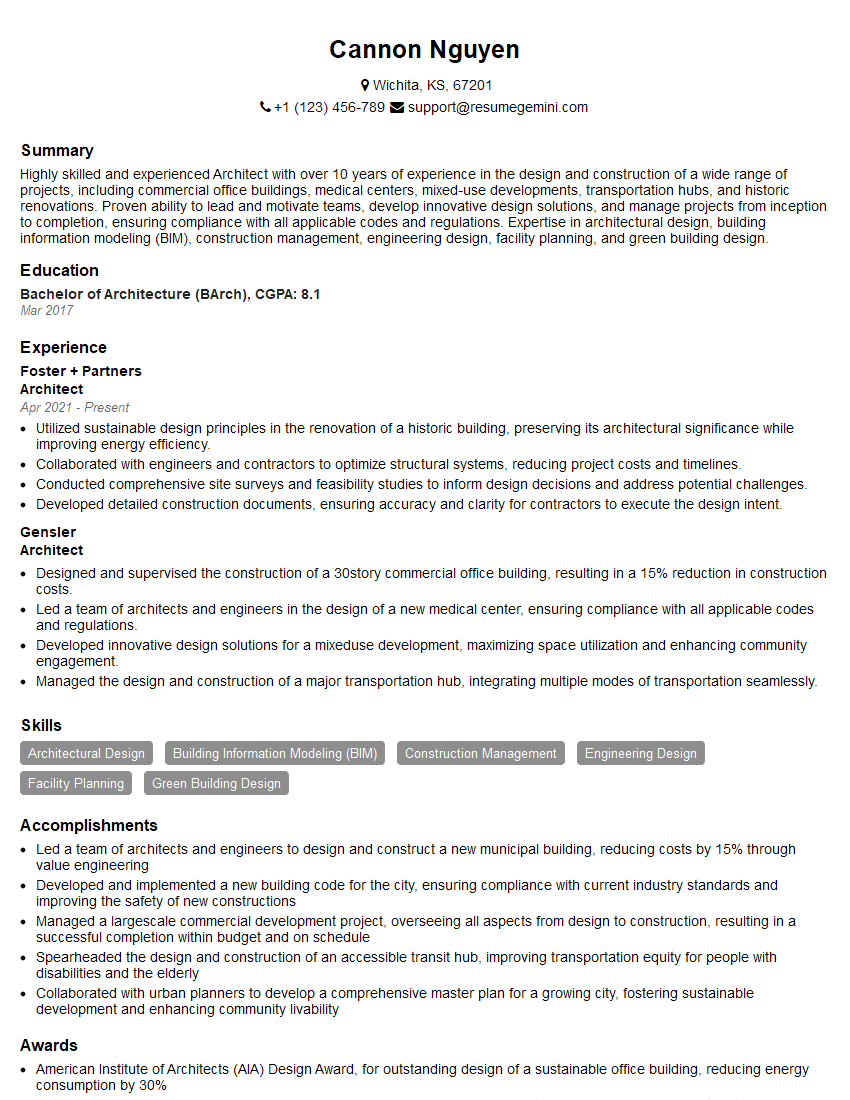
Architect Resume Sample
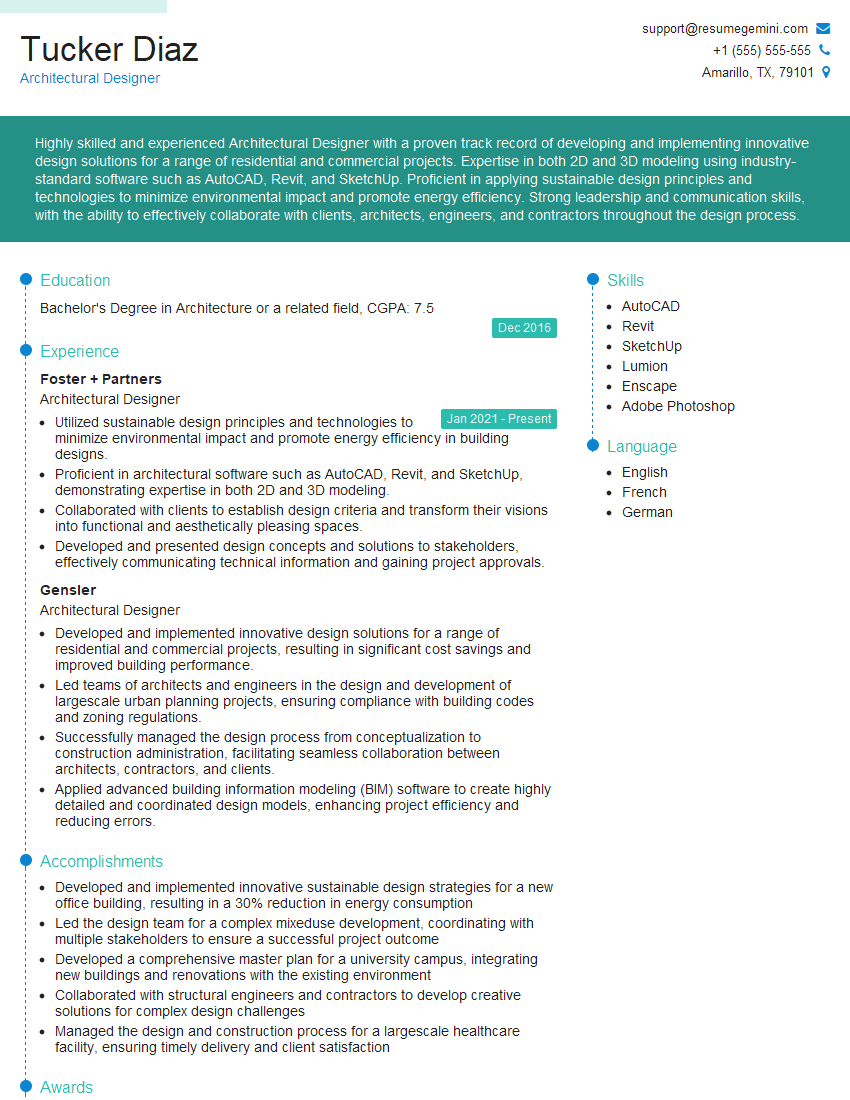
Architectural Designer Resume Sample
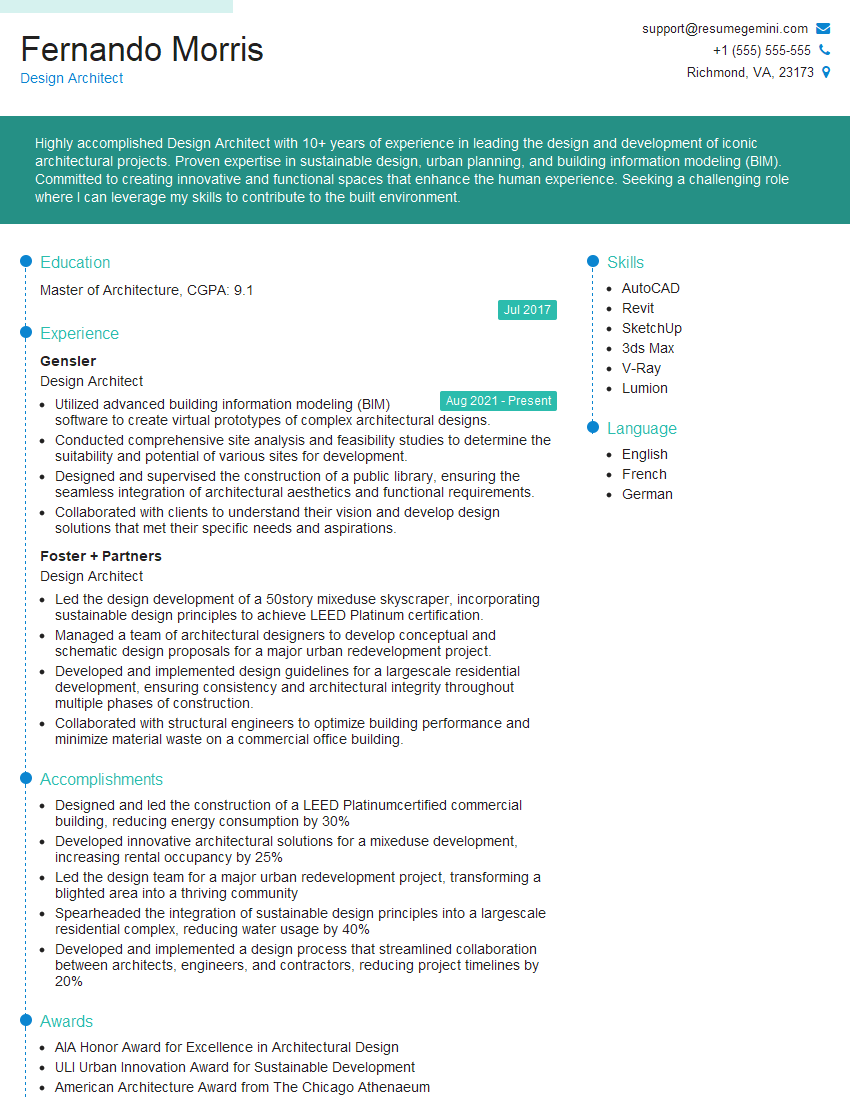
Design Architect Resume Sample
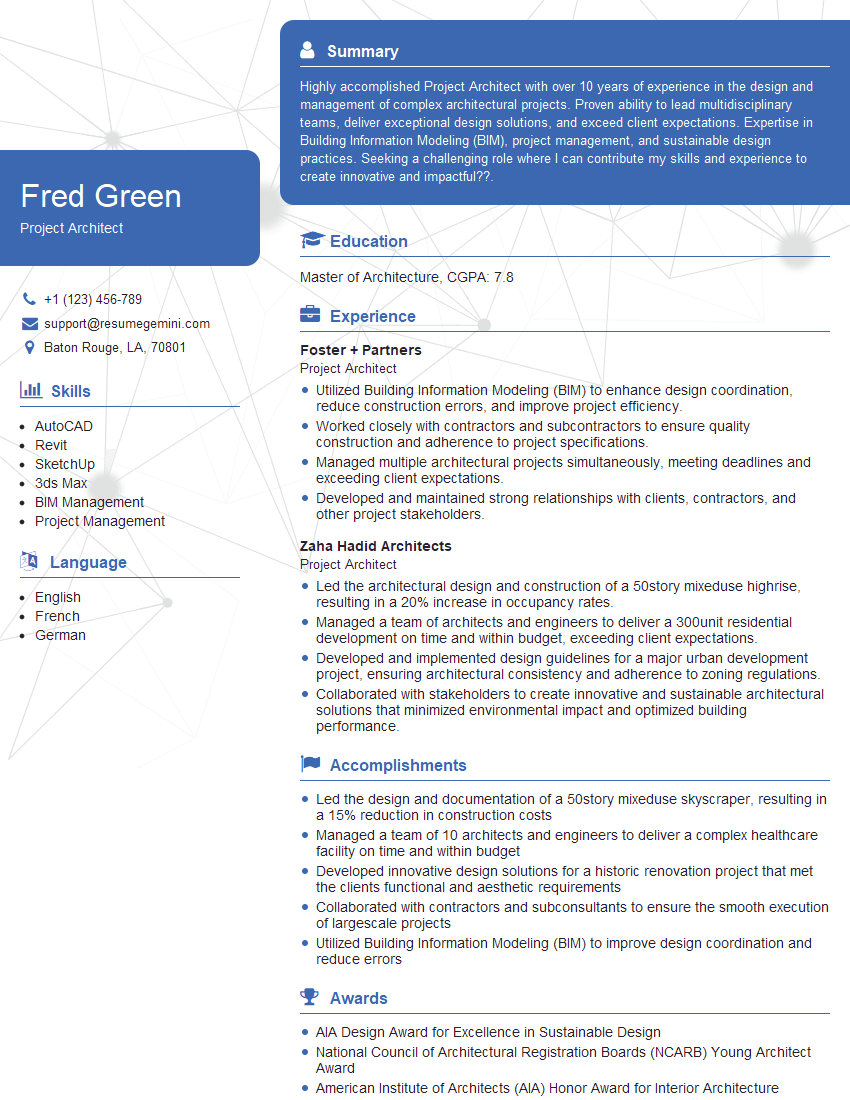
Project Architect Resume Sample
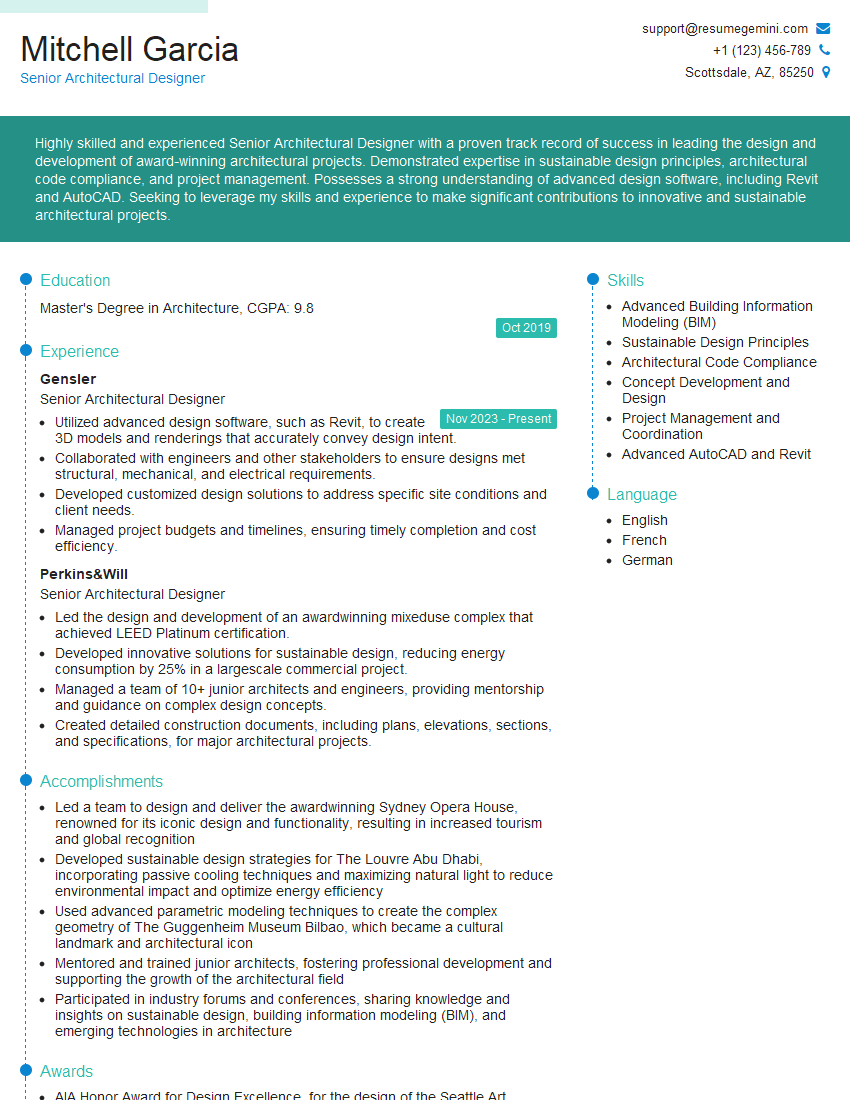
Senior Architectural Designer Resume Sample
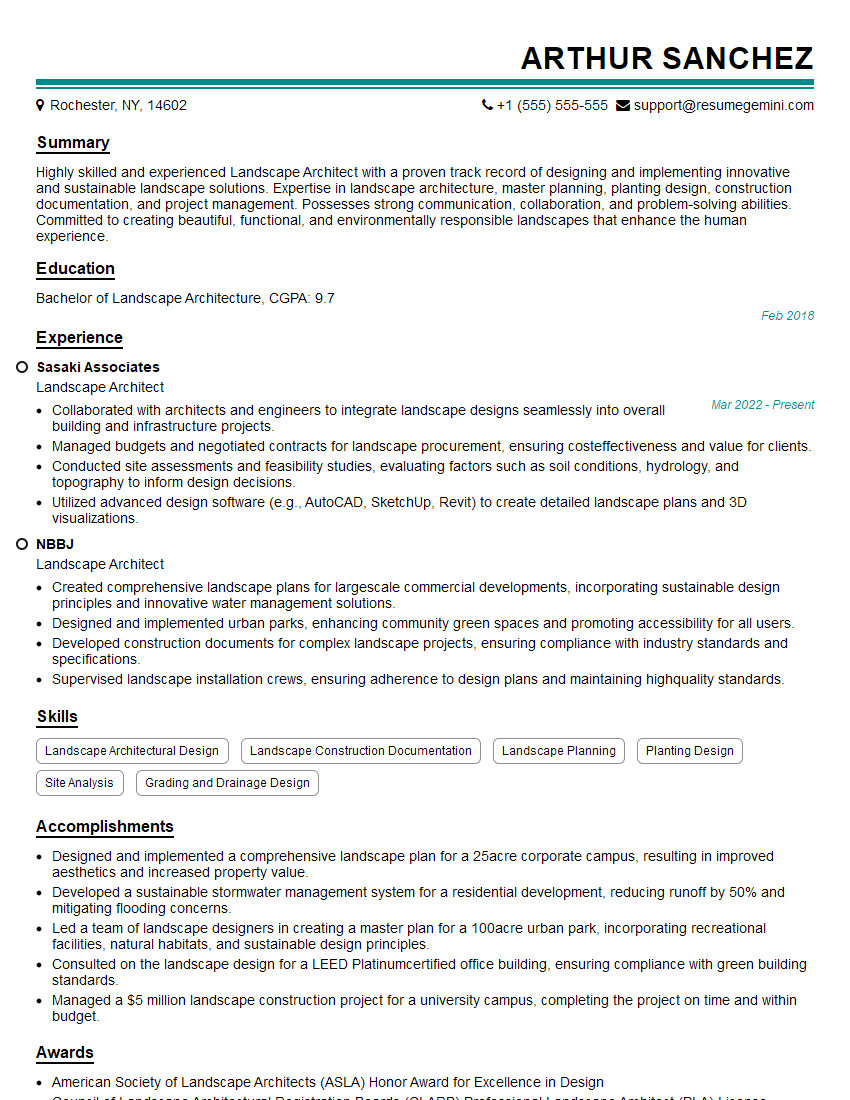
Landscape Architect Resume Sample
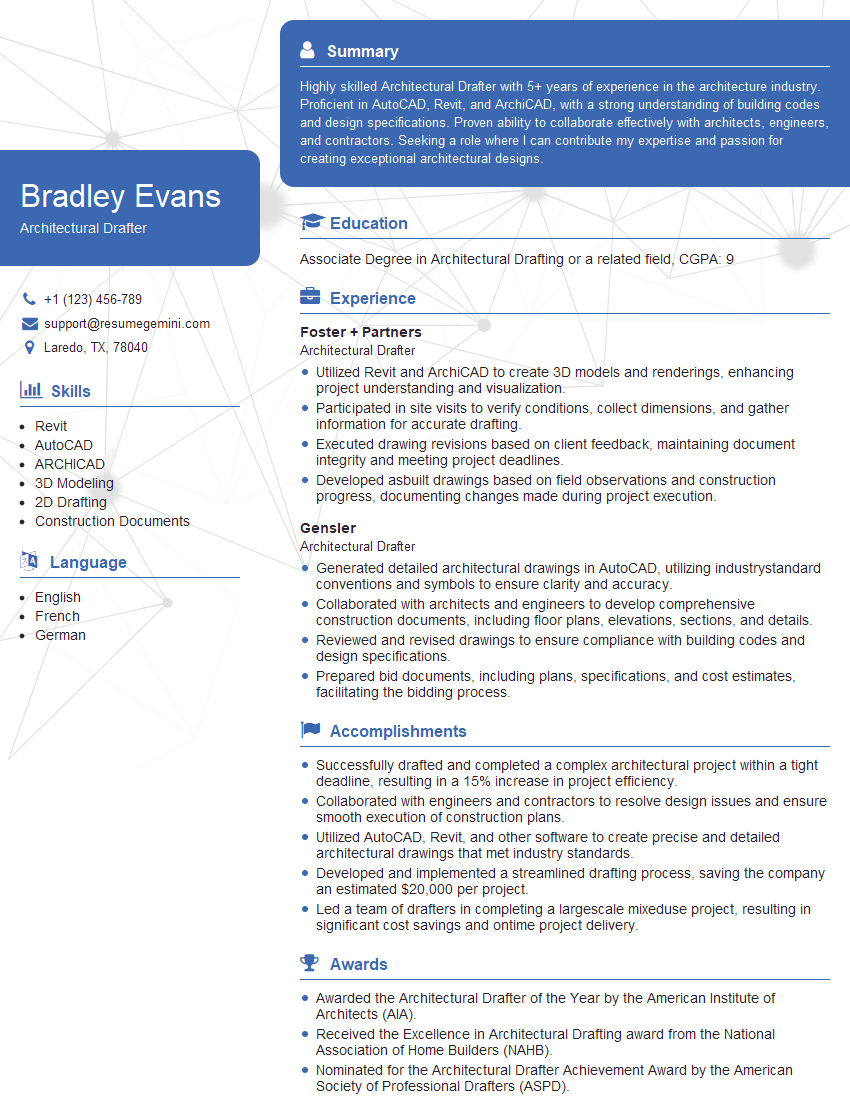
Architectural Drafter Resume Sample
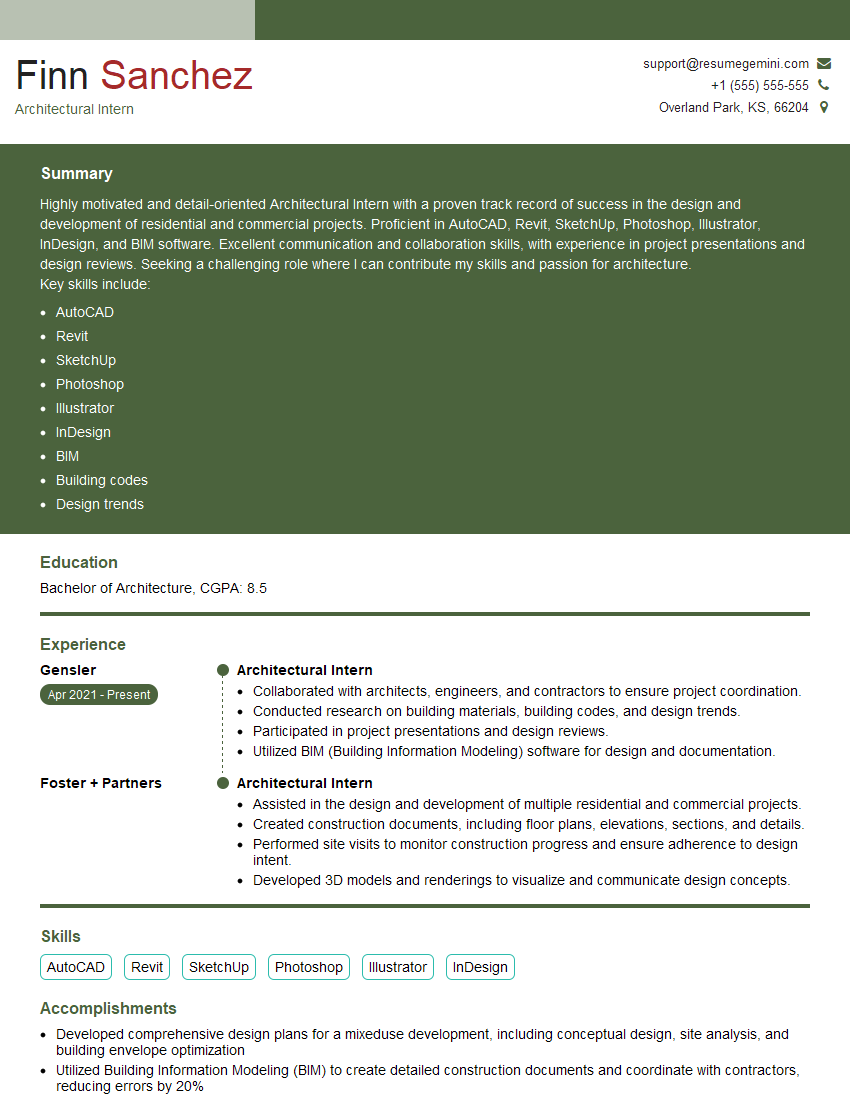
Architectural Intern Resume Sample
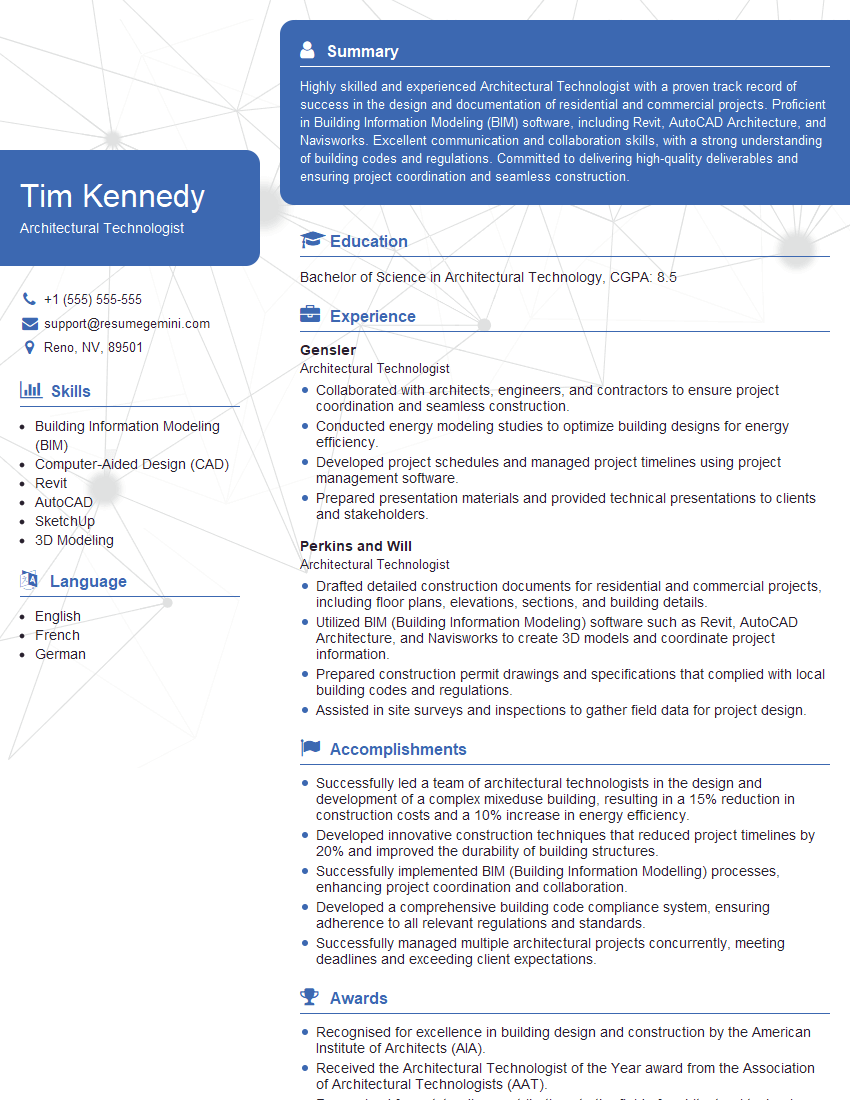
Architectural Technologist Resume Sample
Explore more articles
Users Rating of Our Blogs
Share Your Experience
We value your feedback! Please rate our content and share your thoughts (optional).
What Readers Say About Our Blog
Very informative content, great job.
good