Every successful interview starts with knowing what to expect. In this blog, we’ll take you through the top Knowledge of Plant-Based Healing Remedies interview questions, breaking them down with expert tips to help you deliver impactful answers. Step into your next interview fully prepared and ready to succeed.
Questions Asked in Knowledge of Plant-Based Healing Remedies Interview
Q 1. Describe the difference between a tincture and a decoction.
Both tinctures and decoctions are herbal preparations used in plant-based medicine, but they differ significantly in their extraction methods. Think of it like brewing tea versus making a concentrated essence.
A tincture is an alcoholic extract of plant material. It involves soaking the plant (fresh or dried) in a high-proof alcohol, usually vodka or brandy, for several weeks. The alcohol acts as a solvent, drawing out a wide range of active compounds, including volatile oils and resins. The resulting liquid is rich in plant constituents and has a long shelf life due to the preservative qualities of alcohol. For example, a St. John’s Wort tincture would be made by steeping the plant’s flowers in alcohol.
A decoction, on the other hand, involves boiling the plant material in water for an extended period. This method is best suited for tougher plant parts like roots, bark, and seeds, which require more aggressive extraction to release their beneficial components. The resulting liquid is a watery extract, often less potent than a tincture, and may require refrigeration to maintain its quality. A decoction of dandelion root, for instance, would involve simmering the chopped root in water for 30-60 minutes.
In essence, tinctures offer a more concentrated and longer-lasting preparation, ideal for potent compounds, while decoctions provide a gentler, water-based extract, suited to milder herbs or those whose active constituents are more readily water-soluble.
Q 2. What are the contraindications for St. John’s Wort?
St. John’s Wort (Hypericum perforatum), while beneficial for some, has several important contraindications. It’s crucial to remember that it’s not a harmless herb and should only be used under the guidance of a qualified healthcare practitioner.
- Drug Interactions: This is the most significant concern. St. John’s Wort is a potent inducer of cytochrome P450 enzymes (specifically CYP3A4), which metabolize numerous medications. This can lead to reduced effectiveness of many drugs, including antidepressants (SSRIs, SNRIs), birth control pills, anticoagulants, immunosuppressants, and many others. The interaction can be dangerous, leading to treatment failure or adverse effects.
- Photosensitivity: Some individuals experience increased sensitivity to sunlight after taking St. John’s Wort. This can manifest as sunburn or skin rashes. It’s vital to avoid prolonged sun exposure while using this herb.
- Pregnancy and Breastfeeding: The safety of St. John’s Wort during pregnancy and breastfeeding is not fully established. It’s best to avoid its use during these periods.
- Underlying Health Conditions: Individuals with certain health conditions, such as liver or kidney disease, should exercise caution and consult a doctor before using St. John’s Wort.
Always inform your doctor or herbalist about all medications and supplements you are taking before starting St. John’s Wort to avoid potentially dangerous drug interactions.
Q 3. Explain the concept of synergy in herbal combinations.
Synergy in herbal combinations refers to the enhanced effect achieved when combining herbs compared to the sum of their individual effects. It’s like a team working together more effectively than individual players. Instead of simply adding up the benefits, the herbs work together to amplify their healing potential.
This can happen in several ways:
- Additive Effect: Herbs with similar actions reinforce each other. For example, combining chamomile and lavender for relaxation. Both herbs have calming properties, and together, their effect is stronger than either herb alone.
- Synergistic Effect: One herb enhances the activity of another. For example, turmeric and black pepper. Piperine in black pepper increases the bioavailability of curcumin in turmeric, making it more readily absorbed and utilized by the body.
- Potentiation Effect: One herb boosts the effect of another. For instance, using ginger with other anti-inflammatory herbs to amplify their effects.
Understanding synergy is crucial for formulating effective herbal combinations. It’s not just about throwing herbs together; it’s about carefully selecting herbs that complement and enhance each other’s actions to create a greater therapeutic impact.
Q 4. How would you assess a patient’s suitability for plant-based remedies?
Assessing a patient’s suitability for plant-based remedies is a multi-faceted process that requires careful consideration of several factors. It’s not a one-size-fits-all approach.
My assessment would include:
- Detailed Medical History: This includes current medications, allergies, pre-existing conditions (especially liver and kidney function), and pregnancy or breastfeeding status. This is paramount to identify potential contraindications and drug interactions.
- Current Health Concerns: Understanding the patient’s primary health concerns allows for the selection of appropriate herbs.
- Lifestyle Factors: Diet, exercise, stress levels, and other lifestyle habits can influence the effectiveness of herbal remedies.
- Patient Preferences and Beliefs: Respecting the patient’s preferences and beliefs is crucial. Some patients may prefer specific herbs or methods of administration.
- Physical Examination (if applicable): In some cases, a physical examination might be necessary to better understand the patient’s condition and to assess the appropriateness of herbal remedies.
After gathering this information, I would discuss the potential benefits and risks of using plant-based remedies with the patient, ensuring they have a clear understanding before proceeding. I would also emphasize the importance of regular follow-ups to monitor progress and address any potential side effects.
Q 5. What are the key safety considerations when recommending herbal remedies?
Safety is paramount when recommending herbal remedies. It’s crucial to approach herbal medicine with the same level of care and attention to detail as conventional medicine.
- Proper Identification: Ensuring accurate identification of the plant is crucial to prevent accidental ingestion of toxic look-alikes. This is where expertise in plant identification is crucial.
- Dosage and Administration: Following appropriate dosage guidelines is vital. Overdosing on certain herbs can cause adverse effects. Proper methods of preparation and administration are also essential.
- Drug Interactions: Thorough knowledge of potential interactions between herbs and conventional medications is necessary. Patients should always disclose all medications they are taking.
- Allergies and Sensitivities: Checking for allergies to plants in the same family as the recommended herb is vital. A simple skin patch test can be helpful in some cases.
- Quality Control: Using high-quality, sustainably sourced herbs is crucial. The source of herbs should be reputable to ensure purity and consistency.
- Informed Consent: Patients must give informed consent, understanding the benefits, risks, and limitations of the treatment.
Always emphasize that herbal remedies are not a replacement for conventional medical treatment, especially for serious conditions. They should be considered complementary or supportive therapies, preferably under the guidance of a qualified healthcare professional.
Q 6. Discuss the role of phytochemicals in plant-based healing.
Phytochemicals are bioactive compounds produced by plants. These compounds are responsible for many of the health-promoting effects associated with plant-based diets and remedies. They are not essential nutrients in the same way vitamins and minerals are, but they contribute significantly to overall health and well-being.
These diverse compounds play a variety of roles in plant-based healing:
- Antioxidants: Many phytochemicals act as antioxidants, protecting cells from damage caused by free radicals. Examples include flavonoids, carotenoids, and vitamin E.
- Anti-inflammatory Agents: Several phytochemicals have potent anti-inflammatory properties. Curcumin (from turmeric) and gingerols (from ginger) are well-known examples.
- Antimicrobial Properties: Some phytochemicals exhibit antimicrobial activity, inhibiting the growth of bacteria, fungi, and viruses. Examples include allicin (from garlic) and thymol (from thyme).
- Other Activities: Phytochemicals also influence various other biological processes, including hormone regulation, detoxification, and immune function.
The complex interplay of these phytochemicals is what contributes to the overall therapeutic effect of many plant-based remedies. It is the synergy of these diverse compounds that underlies the effectiveness of many traditional herbal preparations.
Q 7. Explain the process of identifying and harvesting medicinal plants ethically and sustainably.
Ethical and sustainable harvesting of medicinal plants is vital to ensure their continued availability for future generations. It’s not just about gathering plants; it’s about responsible stewardship.
The process involves:
- Proper Identification: Accurate identification is crucial to avoid accidentally harvesting toxic look-alikes. Training and expertise in plant identification are essential.
- Sustainable Harvesting Techniques: Harvesting should be done in a way that minimizes damage to the plant population. This often involves selective harvesting (only taking what is needed), leaving some plants to reproduce, and avoiding over-harvesting in a single area.
- Respect for Biodiversity: Harvesting should not threaten the biodiversity of the ecosystem. Avoid removing entire populations of plants from a particular area.
- Community Engagement: In many cases, local communities have traditional knowledge about medicinal plants. Engaging and working with these communities is crucial to ensure sustainable harvesting practices. This may involve obtaining permission and sharing benefits with local populations.
- Propagation and Cultivation: Whenever possible, wild harvesting should be supplemented with the cultivation of medicinal plants. This reduces the pressure on wild populations and ensures a consistent supply of high-quality herbs.
- Respect for Land Ownership: Always ensure you have permission to harvest on private or protected land.
Ethical and sustainable harvesting is a cornerstone of responsible herbalism. It is about preserving the resource for future use while respecting both the environment and the communities that depend on these plants.
Q 8. How would you address a patient’s concern about potential drug interactions with herbal remedies?
Addressing potential drug interactions with herbal remedies is paramount for patient safety. Many herbal remedies contain bioactive compounds that can interact with pharmaceuticals, either enhancing or inhibiting their effects. This can lead to unintended consequences, ranging from mild side effects to serious health risks. My approach involves a thorough assessment of the patient’s current medication regimen, including over-the-counter drugs, supplements, and herbal remedies.
I always begin by asking detailed questions about the patient’s medication history. Then, I consult reliable databases and scientific literature, such as the Natural Medicines Comprehensive Database, to identify potential interactions. For example, St. John’s Wort, commonly used for mild depression, is known to interact with many medications, including birth control pills and antidepressants, reducing their effectiveness. If a potential interaction is identified, I discuss the risks and benefits with the patient, emphasizing the importance of open communication with their physician. Sometimes, adjustments to medication dosage or a temporary discontinuation of the herbal remedy might be necessary. In some cases, I might suggest alternative remedies with fewer known interactions. Ultimately, my goal is to work collaboratively with the patient and their physician to ensure safe and effective treatment.
Q 9. Describe your experience with different methods of herbal preparation (e.g., infusions, tinctures, poultices).
Over the years, I’ve gained extensive experience with various herbal preparation methods, each with its unique properties and applications. Infusions, essentially herbal teas, are simple to prepare: steeping dried or fresh herbs in hot water. This method is ideal for extracting water-soluble compounds and is often used for mild ailments like digestive upset (e.g., chamomile tea). Tinctures are alcohol-based extracts that preserve a wider range of plant constituents, including both water- and alcohol-soluble compounds. They offer a concentrated form of the herb, making them suitable for long-term use and easier to dose accurately. For example, a tincture of Echinacea can be taken to support the immune system. Poultices are external applications, typically made by mashing fresh herbs and applying them directly to the skin. They’re useful for topical treatments like wound healing or reducing inflammation. For instance, a plantain poultice can be applied to minor burns or insect bites. The choice of method depends heavily on the desired outcome, the specific herb, and the patient’s needs. I always explain the preparation method thoroughly to my patients, ensuring they understand proper usage and storage.
Q 10. What are some common plant-based remedies for anxiety and depression?
Several plant-based remedies have traditionally been used to address anxiety and depression, though it’s crucial to remember that they shouldn’t replace professional medical advice or treatment. Lavender, for instance, possesses calming properties and is often used in aromatherapy or as a tea to alleviate anxiety and promote relaxation. Chamomile, known for its gentle sedative effects, can help reduce stress and improve sleep quality. Passionflower, a more potent herb, has been studied for its anxiolytic effects and may be helpful for individuals experiencing moderate anxiety. Rhodiola rosea, an adaptogen, helps the body adapt to stress and may improve mood and energy levels. St. John’s Wort, as mentioned earlier, shows potential for mild to moderate depression but necessitates careful monitoring due to its numerous drug interactions. It’s essential to note that the effectiveness of these remedies varies significantly among individuals, and a holistic approach, considering lifestyle factors and psychological support, is usually more beneficial.
Q 11. What are the key considerations for formulating a custom herbal blend?
Formulating a custom herbal blend requires careful consideration of several factors. First, a thorough understanding of the patient’s individual needs and health status is crucial. The blend’s purpose – whether it’s for improved sleep, immune support, or digestive health – must be clearly defined. Second, the synergistic effects of different herbs should be considered. Some herbs complement each other, enhancing their individual effects. For example, combining chamomile and valerian root can create a more powerful sleep-inducing effect. Third, the safety and potential interactions of the chosen herbs must be thoroughly evaluated. Dosage is also critical; individual needs and the potency of the herbs are considered to ensure the blend is both effective and safe. Finally, appropriate preparation methods and storage instructions are provided to maintain the blend’s potency and efficacy. For example, a blend for digestive support might contain ginger, peppermint, and chamomile, while a blend for immune support might include echinacea, elderberry, and astragalus. Each blend is unique, tailored to the individual patient and always under the guidance of a healthcare professional.
Q 12. How do you stay updated on the latest research in plant-based healing?
Staying current with the latest research in plant-based healing is vital. I actively engage in several strategies to achieve this. I subscribe to peer-reviewed journals specializing in ethnobotany, phytomedicine, and complementary and alternative medicine. I regularly attend conferences and workshops, connecting with fellow practitioners and researchers. I utilize reputable online databases, such as PubMed and the Natural Medicines Comprehensive Database, to access the latest clinical trials and research articles. Furthermore, I maintain a network of colleagues and collaborate with researchers to stay abreast of emerging findings. Continuing education is an ongoing commitment, ensuring my practice remains informed and safe.
Q 13. Explain the principles of Traditional Chinese Medicine (TCM) related to herbal remedies.
Traditional Chinese Medicine (TCM) uses herbal remedies based on the principles of balancing the body’s Qi (vital energy) and maintaining harmony among the five elements (wood, fire, earth, metal, and water). Each herb has specific properties – some are warming, others cooling; some are considered tonics, others purgatives. TCM practitioners assess a patient’s overall constitution – including their pulse, tongue appearance, and symptoms – to determine the underlying imbalance. Then, they select a combination of herbs tailored to address the specific deficiency or excess of Qi and restore harmony. For example, Ginseng, a warming tonic herb, might be used to invigorate Qi and support overall vitality, while chrysanthemum, a cooling herb, might be used to reduce heat and inflammation. TCM emphasizes the holistic approach, considering the patient’s entire being, rather than focusing solely on isolated symptoms. The precise combinations and preparation methods are meticulously chosen to achieve therapeutic goals within the TCM framework.
Q 14. Discuss the ethical considerations of using plant-based remedies in a clinical setting.
Ethical considerations in using plant-based remedies are crucial. Informed consent is paramount: patients must fully understand the benefits, risks, and limitations of the remedies, including potential drug interactions. Transparency regarding the source, quality, and preparation of the herbs is essential. Practitioners should avoid making unsubstantiated claims about the efficacy of herbal remedies and should always differentiate between established scientific evidence and traditional uses. Respect for cultural heritage is also important, acknowledging the indigenous knowledge associated with many plant-based remedies and ensuring responsible sourcing to avoid exploitation. Finally, maintaining accurate records and documenting the patient’s response to treatment are crucial for accountability and future research. Ethical practice ensures responsible and sustainable use of plant-based resources while promoting patient safety and well-being.
Q 15. How would you educate a patient about the proper use and dosage of herbal remedies?
Educating a patient about herbal remedies requires a careful, individualized approach. It’s crucial to emphasize that ‘natural’ doesn’t automatically mean ‘safe’ or ‘effective’. I always begin by understanding the patient’s health condition, current medications, and any allergies. Then, I explain the intended use of the specific herb, its mechanism of action (as understood), and the recommended dosage. This information is always sourced from reputable scientific studies and established herbal pharmacopoeias, not just anecdotal evidence.
For example, if recommending chamomile for sleep, I’d explain that it contains apigenin, a compound that binds to certain brain receptors, promoting relaxation. I’d then specify the recommended dosage – perhaps a tea made from one to two teaspoons of dried chamomile flowers per cup, to be consumed one hour before bedtime. I’d also stress the importance of following the prescribed dosage precisely. Overdosing, even with natural remedies, can lead to adverse effects. I provide clear, written instructions and encourage patients to ask questions. Furthermore, I emphasize the importance of regular check-ins to monitor efficacy and address any concerns.
- Dosage forms: Clearly explaining the difference between tinctures, capsules, teas, and other forms and the dosage variations for each.
- Interaction with other medications: A critical discussion of potential interactions with prescription or over-the-counter drugs.
- Monitoring for side effects: A clear explanation of what to look for and when to seek immediate medical attention.
Career Expert Tips:
- Ace those interviews! Prepare effectively by reviewing the Top 50 Most Common Interview Questions on ResumeGemini.
- Navigate your job search with confidence! Explore a wide range of Career Tips on ResumeGemini. Learn about common challenges and recommendations to overcome them.
- Craft the perfect resume! Master the Art of Resume Writing with ResumeGemini’s guide. Showcase your unique qualifications and achievements effectively.
- Don’t miss out on holiday savings! Build your dream resume with ResumeGemini’s ATS optimized templates.
Q 16. What are some common side effects associated with herbal remedies?
Herbal remedies, while often considered safe, can still cause side effects. These vary significantly depending on the herb, the dosage, and the individual’s health status. Some common side effects include:
- Allergic reactions: Skin rashes, itching, swelling, difficulty breathing. This is especially important to consider for patients with known allergies.
- Gastrointestinal issues: Nausea, vomiting, diarrhea, constipation. Certain herbs can stimulate or irritate the digestive tract.
- Drug interactions: Herbal remedies can interact with prescription medications, potentially reducing their effectiveness or increasing the risk of adverse effects. For example, St. John’s Wort can interact with many antidepressants.
- Other effects: Depending on the herb, other side effects like dizziness, drowsiness, headaches, or increased sensitivity to sunlight are possible.
It’s vital to emphasize that these are potential side effects and not all individuals will experience them. Open communication with the patient regarding any symptoms experienced is crucial for proper management and potential adjustment of treatment.
Q 17. Describe your experience in working with patients from diverse backgrounds.
Working with patients from diverse backgrounds has enriched my practice immensely. I’ve learned that cultural beliefs and practices significantly influence healthcare choices. Some cultures have rich traditions of herbal medicine, while others may be more skeptical. I approach each patient with cultural sensitivity, actively listening to their beliefs and experiences to build trust and rapport. For instance, I had a patient from a South Asian background who was hesitant to use Western medicine alongside traditional Ayurvedic remedies. Through careful discussion and collaboration, we integrated both approaches in a way that respected her beliefs while ensuring her safety and well-being. This involved researching the compatibility of her Ayurvedic remedies with her other medications, and using a combination of evidence-based practices and culturally appropriate approaches.
I’ve also adapted my communication style to match diverse needs. This includes providing information in multiple languages (or working with interpreters), using visual aids to convey complex information, and respecting patients’ differing levels of health literacy. This inclusive approach enhances understanding, improves compliance, and ultimately leads to better health outcomes.
Q 18. How do you handle conflicting information regarding the efficacy of different plant-based remedies?
Conflicting information regarding herbal remedies is a common challenge. I address this by emphasizing the importance of evidence-based medicine. I rely on high-quality research from reputable journals, systematic reviews, and meta-analyses. I also consult established herbal pharmacopoeias and databases like the National Center for Complementary and Integrative Health (NCCIH) for reliable information. When conflicting studies exist, I explain the limitations and methodological differences in the research to the patient, clarifying that more robust evidence is needed to reach definitive conclusions. Transparency is key – I don’t shy away from acknowledging uncertainties; instead, I use this as an opportunity to highlight the importance of ongoing research and critical evaluation of information sources.
For example, if two studies provide conflicting results on the effectiveness of turmeric for arthritis, I’d explain the study designs, sample sizes, and potential biases in each. I’d then emphasize the need for larger, more well-designed studies before drawing firm conclusions. This approach fosters trust and highlights that I’m not promoting remedies without a thorough understanding of their potential benefits and limitations.
Q 19. Explain the difference between allopathic and plant-based medicine approaches.
Allopathic medicine, also known as conventional or Western medicine, relies primarily on pharmaceuticals, surgery, and other technologically advanced interventions. It focuses on identifying and treating specific diseases, often through a reductionist approach targeting individual symptoms or pathogens. Plant-based medicine, on the other hand, incorporates the use of herbal remedies, dietary changes, and other natural therapies. It often takes a more holistic approach, considering the interconnectedness of mind, body, and spirit in health and disease.
Analogy: Imagine a car malfunction. Allopathic medicine would be like focusing solely on fixing the broken part, maybe replacing it entirely. Plant-based medicine might involve checking the entire car’s system to see if the root cause could also be linked to something else that needs adjustment or if a certain fuel or oil is making it break faster. The two approaches are not mutually exclusive and can complement each other under careful professional guidance.
Q 20. How do you assess the quality and purity of herbal products?
Assessing the quality and purity of herbal products is crucial for patient safety and efficacy. I look for products from reputable suppliers who adhere to Good Manufacturing Practices (GMP). GMP standards ensure consistent quality, purity, and potency. I verify that products have been tested for heavy metals, pesticides, and microbial contamination. I also check for accurate labeling, ensuring that the product contains what it claims and that the dosage information is correct. Looking for certifications from organizations like the United States Pharmacopeia (USP) can also be a helpful indicator of quality. I also try to obtain information on the specific growing and harvesting conditions to minimize possible contaminations.
For example, I might check for a USP verification mark on a product, indicating it meets specific quality and purity standards. I’d also examine the label for information on the part of the plant used (e.g., leaf, root, bark), the extraction method, and the concentration of active compounds. This detailed review of certifications and labels helps to ensure patients receive safe and effective herbal remedies.
Q 21. What is your approach to addressing patients’ skepticism towards plant-based therapies?
Addressing skepticism towards plant-based therapies requires a patient and empathetic approach. I begin by acknowledging the patient’s concerns and validating their right to question. Then, I share evidence-based information, explaining the mechanisms of action of specific herbal remedies and highlighting their potential benefits, supported by scientific research whenever possible. I emphasize that plant-based therapies are not a replacement for conventional medicine in all cases but can be a valuable complementary approach under proper medical supervision.
I often use stories or case studies from my own practice to illustrate the positive experiences of other patients. Building trust and a strong doctor-patient relationship is crucial. Finally, I invite the patient to participate actively in making informed decisions about their care, respecting their autonomy and empowering them to take an active role in their healing journey.
Q 22. Describe your experience with record-keeping and documentation in a plant-based healing context.
Record-keeping is paramount in plant-based healing. It ensures patient safety, allows for tracking treatment progress, and aids in future research. My system involves detailed, chronologically-ordered patient files. Each file includes a comprehensive intake form documenting the patient’s medical history, current symptoms, lifestyle, and dietary habits. Subsequent entries record consultations, herbal remedies prescribed (including dosage, frequency, and preparation method), observed responses, and any adjustments made to the treatment plan. I use a combination of a secure digital database and physical, locked filing cabinets for data storage, complying with all relevant data privacy regulations. For example, a patient with anxiety might have entries detailing their initial consultation, the prescription of a chamomile and lavender tea blend, follow-up appointments noting reduced anxiety levels, and any modifications to the blend based on their feedback. This meticulous record-keeping is crucial for demonstrating effective treatment and ensuring continuity of care.
Q 23. How do you ensure the safety and efficacy of herbal preparations you recommend?
Ensuring the safety and efficacy of herbal preparations is my top priority. This involves several steps: Firstly, I source herbs from reputable suppliers who provide certificates of analysis guaranteeing purity and potency. Secondly, I meticulously follow established preparation methods, paying close attention to extraction techniques (e.g., decoction, infusion, tincture) and storage conditions to maintain optimal quality. Thirdly, I thoroughly research the safety profile of each herb, considering potential interactions with medications and contraindications for specific health conditions. For instance, while St. John’s Wort is known for its antidepressant properties, I’d carefully assess a patient’s medication list to avoid interactions with other medications they are taking. Finally, I maintain open communication with patients, encouraging them to report any adverse reactions immediately. This multi-layered approach minimizes risks and maximizes the therapeutic benefits of the herbal remedies I recommend.
Q 24. How do you maintain professional boundaries with patients?
Maintaining professional boundaries is essential. I clearly define my role as a practitioner of plant-based healing, emphasizing that I am not a substitute for a licensed medical doctor. I avoid dual relationships, such as socializing outside of professional consultations, and I always prioritize the patient’s well-being above any personal gain. My consultations are conducted in a professional setting, with clear time limits. Furthermore, I respect the patient’s autonomy and never pressure them into any treatment they are uncomfortable with. I openly discuss limitations of plant-based remedies and emphasize the importance of consulting their physician for diagnoses and treatment of serious illnesses. This professional approach fosters trust and ensures the patient’s comfort and safety.
Q 25. Explain your understanding of the legal and regulatory aspects of using and selling herbal remedies.
The legal and regulatory landscape surrounding herbal remedies varies significantly by location. In many jurisdictions, herbal products are regulated differently than pharmaceuticals. I adhere strictly to all local, state, and federal laws and regulations regarding the sale and use of herbal remedies. This includes accurate labeling, complying with Good Manufacturing Practices (GMP) where applicable, and avoiding claims of curing or treating specific diseases without appropriate scientific evidence. I regularly consult with legal professionals to stay updated on any changes in regulations. I also make it very clear to clients that I am not providing medical advice and that they should always consult with their physician for diagnoses and treatment of any serious conditions. Understanding and following these regulations is crucial to protect both myself and my clients.
Q 26. Describe your experience with patient consultations and treatment plans.
Patient consultations are the cornerstone of my practice. Each consultation begins with a thorough intake, gathering information about their health history, current symptoms, lifestyle, and goals. Then, I perform a comprehensive assessment, considering physical symptoms, emotional state, and lifestyle factors. Based on this assessment, I create a personalized treatment plan involving specific herbal remedies, lifestyle recommendations (e.g., dietary changes, stress management techniques), and follow-up appointments. For instance, a patient experiencing digestive issues might receive a treatment plan including herbal teas to soothe the gut, dietary advice emphasizing easily digestible foods, and stress-reduction exercises. The plan is documented meticulously and reviewed and adjusted at each subsequent consultation, fostering a collaborative approach to healing.
Q 27. How do you address patient concerns and manage expectations related to treatment outcomes with plant-based remedies?
Addressing patient concerns and managing expectations is vital. I encourage open communication, creating a safe space for patients to voice their questions and anxieties. I explain that plant-based remedies typically work gradually, not providing instant results, and that the timeline for improvement varies depending on individual factors. I set realistic expectations by discussing both the potential benefits and limitations of the chosen remedies. For example, if a patient is expecting immediate relief from chronic pain, I will clearly explain that while herbal remedies may offer pain reduction, it may be a gradual process and may require combining them with other therapies. This transparent communication builds trust and helps patients manage their expectations effectively.
Q 28. What is your approach to continuing professional development in the field of plant-based healing?
Continuing professional development is an ongoing commitment. I participate in workshops, conferences, and online courses focused on herbalism, botanical medicine, and related fields. I regularly review scientific literature to stay abreast of the latest research findings. I also engage in mentorship relationships with experienced practitioners to enhance my knowledge and refine my skills. This continuous learning ensures I provide the highest quality care and remain up-to-date on best practices in plant-based healing. Furthermore, I actively seek feedback from patients to assess the effectiveness of my treatments and identify areas for improvement in my practice.
Key Topics to Learn for Knowledge of Plant-Based Healing Remedies Interview
- Botanical Nomenclature and Identification: Understanding the scientific names and characteristics of commonly used medicinal plants. This includes accurate identification to avoid misidentification and potential harm.
- Phytochemistry and Pharmacology: Knowledge of the active compounds in plants and their mechanisms of action within the body. This involves understanding how different plants interact and potential synergistic effects.
- Traditional Herbal Medicine Systems: Familiarity with various traditional practices (Ayurveda, Traditional Chinese Medicine, etc.) and their applications of plant-based remedies. Discuss the historical context and cultural significance of these practices.
- Therapeutic Applications and Indications: Knowing the specific uses of plant-based remedies for various health conditions. Understanding contraindications and potential side effects is crucial.
- Preparation and Dosage: Understanding different methods of preparing herbal remedies (tinctures, infusions, decoctions, etc.) and appropriate dosages for different patient populations. This includes considerations for safety and efficacy.
- Safety and Interactions: Thorough knowledge of potential drug interactions and contraindications of plant-based remedies. This involves being able to assess patient health history and provide informed recommendations.
- Ethical Considerations and Sustainability: Understanding the ethical sourcing of plant materials and the importance of sustainable harvesting practices. This shows awareness of the environmental impact of herbal medicine.
- Research and Evidence-Based Practice: Ability to critically evaluate scientific literature on the efficacy and safety of plant-based remedies. This demonstrates a commitment to evidence-based practice.
- Client Communication and Consultation: Skills in effectively communicating with clients about the benefits and risks of plant-based remedies, and tailoring recommendations to individual needs.
Next Steps
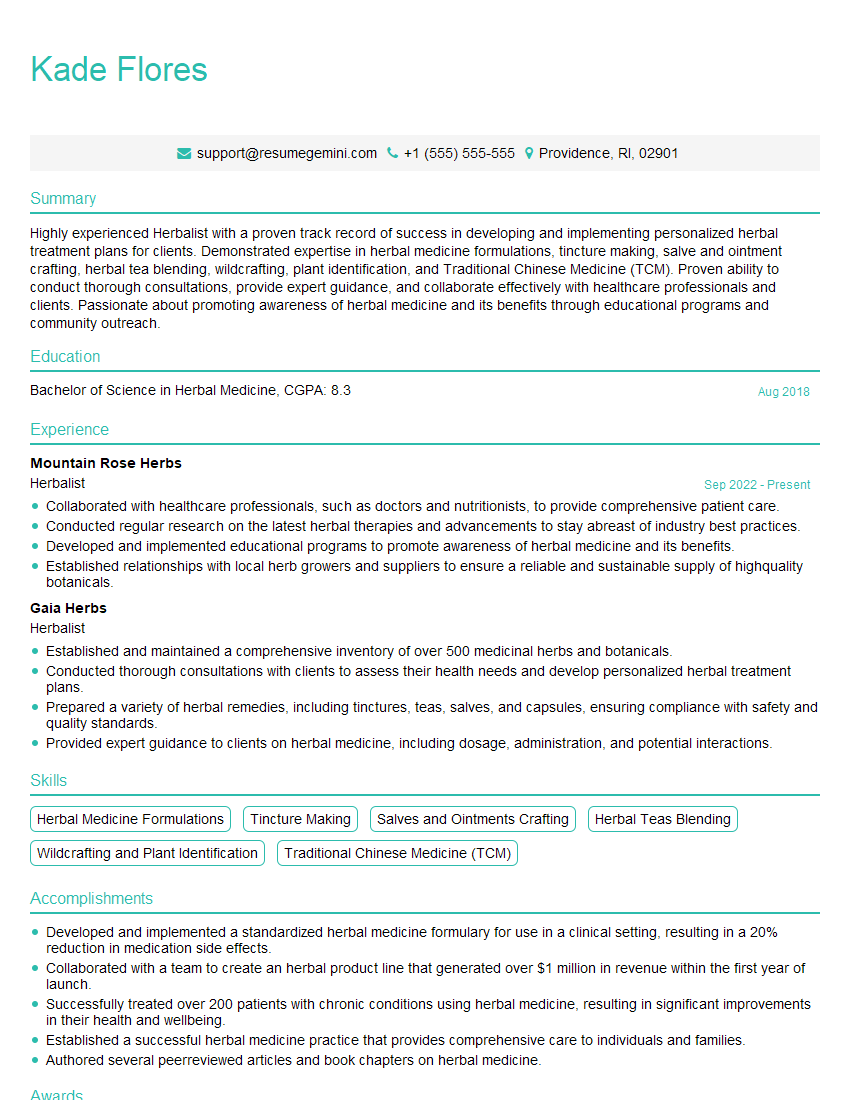
Mastering knowledge of plant-based healing remedies is crucial for career advancement in holistic health, naturopathy, and related fields. A strong understanding of these principles opens doors to exciting opportunities and allows you to provide safe and effective care. To maximize your job prospects, invest time in crafting an ATS-friendly resume that highlights your skills and experience. ResumeGemini is a trusted resource that can help you build a professional resume that stands out. Examples of resumes tailored to showcasing expertise in Knowledge of Plant-Based Healing Remedies are available to guide you. Take the next step toward your dream career today!
Explore more articles
Users Rating of Our Blogs
Share Your Experience
We value your feedback! Please rate our content and share your thoughts (optional).
What Readers Say About Our Blog
Very informative content, great job.
good