Unlock your full potential by mastering the most common Skill in Psychometry and Object Reading interview questions. This blog offers a deep dive into the critical topics, ensuring you’re not only prepared to answer but to excel. With these insights, you’ll approach your interview with clarity and confidence.
Questions Asked in Skill in Psychometry and Object Reading Interview
Q 1. Explain the principles of psychometry and object reading.
Psychometry and object reading are closely related parapsychological abilities involving the purported reception of information about an object’s history, its past owners, or events associated with it, by making physical contact or being in proximity to it. Psychometry focuses on the direct sensing of energies imprinted on an object, while object reading incorporates broader intuitive insights gained through observation and interaction with the item.
The core principle is the belief that objects retain a kind of energetic ‘memory’ or imprint of past events and individuals connected to them. Think of it like a faint echo or residual energy left behind. This residual energy isn’t necessarily electromagnetic or scientifically measurable in conventional ways but is perceived through heightened extrasensory perception (ESP).
For example, holding an antique locket might trigger visions of a past romance, feelings of loss, or glimpses of the original owner’s life. This isn’t guesswork; it’s a claimed intuitive process of receiving impressions through tactile and sensory connections with the object itself.
Q 2. Describe your experience with different types of objects and their energetic signatures.
My experience spans a wide array of objects, each carrying a unique energetic signature. I’ve worked with everything from antique jewelry and vintage photographs to everyday items like old letters and worn-out tools. Each category has its nuances.
- Jewelry: Often reveals strong emotional connections – love, loss, joy, grief, associated with the owner’s life experiences. The materials themselves also contribute to the energetic impression; gold might signify wealth or status, while silver could represent a quieter or more introspective personality.
- Photographs: Provide clear visual impressions, even if faded or damaged. They’re excellent for capturing relationships and personalities. I can often sense the emotional climate depicted in the photo and even receive information about events preceding or following the actual moment captured.
- Letters and Documents: These reveal intensely personal details, capturing the emotions and thoughts of the writer. The handwriting itself carries significant information, reflecting the personality and even potential emotional states of the author.
- Tools and Everyday Objects: These are powerful for reflecting the work ethic, personality, and even the life circumstances of the person who used them. A well-worn hammer might reveal a skilled craftsman’s pride in his work, while a neglected tool might show a sense of abandonment or failure.
The intensity of the energetic signature varies significantly. Freshly minted coins hold fainter imprints, whereas items that have undergone considerable time and exposure to significant life events hold the strongest and most vivid impressions.
Q 3. How do you differentiate between accurate impressions and subjective interpretations?
Differentiating between accurate impressions and subjective interpretations is crucial for ethical and reliable practice. This is achieved through a combination of techniques and rigorous self-awareness.
- Cross-referencing: If possible, I verify impressions with known facts about the object or its history. If the impressions align with verifiable information, it strengthens the accuracy of the reading.
- Specific details: I focus on precise details rather than generalizations. Vague impressions are less reliable than clear, specific details that are easily verifiable.
- Emotional detachment: Maintaining a neutral emotional stance is paramount. My personal biases or preconceptions can color the impressions I receive. Meditation and mindful practices significantly aid in this.
- Intuitive validation: A strong, clear sense of certainty accompanies accurate impressions, distinct from hesitant or speculative interpretations. This internal sense of validation acts as an internal check.
For example, receiving a specific date related to an object’s history and later confirming it through external research helps to validate the accuracy of the impression. Conversely, generalized statements like “this object has seen much sadness,” while possibly true, require more specific detail and verification to be considered an accurate reading.
Q 4. What techniques do you use to enhance your psychometric abilities?
Enhancing psychometric abilities involves a multifaceted approach encompassing mental and physical disciplines.
- Meditation and mindfulness: Regular practice quiets the mind, reducing mental chatter and making it easier to receive subtle impressions.
- Grounding techniques: Connecting to the earth’s energy helps to stabilize and center oneself, providing a solid base for accessing intuitive information.
- Sensory awareness exercises: Improving one’s sensitivity to subtle sensory information (tactile, visual, auditory) can significantly enhance the ability to perceive energetic imprints on objects.
- Visualization and guided imagery: Imagining oneself interacting with the object’s energy fields can open the channels of perception.
- Developing intuitive trust: Learning to trust the validity of initial impressions and allowing insights to unfold organically is essential for improving accuracy and confidence.
These are not quick fixes but ongoing practices. Consistent effort and dedication are crucial for cultivating and strengthening these abilities.
Q 5. How do you handle conflicting or ambiguous impressions from an object?
Conflicting or ambiguous impressions are a common challenge in psychometry. The key is to approach them systematically and with a critical mind.
- Analyze the source: Determine if the conflicting impressions originate from different periods in the object’s history or from different individuals associated with it.
- Seek clarity: Employ techniques like meditation or guided imagery to delve deeper and resolve the inconsistencies. Sometimes, simply pausing and focusing on the object can bring clarity.
- Contextualize the information: Try to understand the timeline and interrelationships between different impressions. This can help piece together a more coherent narrative.
- Acknowledge uncertainty: If resolution remains elusive, it’s ethically crucial to acknowledge the ambiguity rather than forcing a definitive interpretation.
- Present findings transparently: In a professional reading, communicate both the consistent and conflicting impressions to the client, allowing them to interpret the information in their own context.
For instance, if an object simultaneously gives impressions of both happiness and sadness, it might indicate a complex history involving both positive and negative events experienced by the owner or through interactions with the object.
Q 6. Describe your process for grounding and protecting yourself during a psychometric reading.
Grounding and protection are vital aspects of psychometric readings. Before, during, and after a reading, I utilize several techniques to maintain a safe and effective session.
- Grounding: I visualize roots extending from my feet deep into the earth, drawing energy and stability. I also connect to a stabilizing image or sensation, such as a calm body of water or a strong mountain.
- Protection: I visualize a protective sphere of white light around myself, deflecting any unwanted or negative energies. I also mentally affirm my intention to receive only accurate and beneficial information.
- Breathing exercises: Deep, conscious breathing helps to regulate energy flow and maintain a centered state.
- Post-reading release: After each session, I engage in practices such as visualization, washing my hands, or spending time in nature to release any residual energies.
These practices are essential not just for my protection, but to ensure that I receive clear, uncluttered impressions and avoid picking up on extraneous or unwanted energy influences during the reading.
Q 7. How do you ensure the ethical and responsible use of your abilities?
Ethical and responsible use of psychometric abilities is paramount. My practice adheres to strict guidelines to maintain integrity and prevent harm.
- Informed consent: Clients are fully informed about the nature of the reading and its limitations before proceeding.
- Confidentiality: All information received during a reading remains strictly confidential.
- Accuracy and transparency: I strive for accuracy in my impressions, acknowledging limitations and uncertainties when necessary. Findings are presented transparently, without embellishment or sensationalism.
- Avoiding predictions: I avoid making definitive predictions about the future, as psychometry primarily focuses on past and present events.
- Respect for client autonomy: Clients are empowered to make their own decisions based on the information received, and my role is to facilitate their understanding, not to dictate their actions.
- Professional boundaries: I maintain clear professional boundaries, avoiding personal relationships or exploitation of clients’ vulnerabilities.
Ultimately, my goal is to use this ability to provide insightful information that empowers clients to gain a deeper understanding of themselves and their past, within an ethical and responsible framework.
Q 8. Explain how you would approach analyzing a seemingly ordinary object.
Analyzing a seemingly ordinary object begins with a process of sensory engagement and intuitive exploration. It’s not just about looking at the object, but about feeling it, sensing its energy. I start by holding the object, often with my eyes closed, to minimize visual distractions and maximize my receptivity to subtle energetic impressions. I focus on creating a mental connection, almost like a conversation. I then note physical sensations – the texture, temperature, weight – and any emotional or mental images that arise. These impressions form the foundation of my interpretation. For example, a seemingly innocuous key might trigger a feeling of anxiety, leading me to explore the possible past experiences associated with it. Its worn edges might suggest frequent use, potentially offering clues about the owner’s lifestyle or habits. The material it’s made of – the metal, the design – could offer further insights into its age or origin.
This initial sensory phase is followed by a more analytical process. I reflect on the images and sensations, searching for patterns and connections. This might involve exploring potential symbolism and metaphors, considering cultural influences, and drawing upon historical context. Ultimately, the goal is to build a narrative around the object, a story of its past interactions and the experiences it embodies.
Q 9. How do you manage skepticism or doubt from clients or colleagues?
Skepticism is a natural and healthy part of any investigative process, especially in a field like psychometry. I address skepticism by being transparent about my methods, acknowledging the limitations of psychometry, and framing my findings as possibilities rather than definitive statements. It is crucial to emphasize the collaborative nature of the process. I encourage clients and colleagues to actively participate in the interpretation and verification process, to compare my insights with their knowledge and other available evidence. For example, if I’m working with law enforcement on a missing person’s case and receive an impression of a specific location, I’d present this as a lead that needs further investigation by traditional methods. My goal isn’t to replace traditional methods but to complement and enhance them.
Further, I maintain a highly ethical approach, emphasizing rigorous documentation and a clear distinction between my intuitive perceptions and verifiable facts. This transparency and accountability often help to build trust and overcome initial reservations.
Q 10. Can you discuss a case where your psychometric skills were particularly helpful?
In one case, I was asked to analyze a collection of old letters found in a recently discovered attic. The letters were faded, some torn, and seemingly insignificant at first glance. However, upon holding them, I felt a strong sense of sadness and isolation. I experienced vivid images of a young woman writing late at night, her handwriting reflecting both determination and despair. The impressions pointed towards a hidden love affair and a secret pregnancy. This information was later corroborated through historical records and family genealogies, which helped to bring closure to the family researching the letters. This case highlighted how even seemingly mundane objects can hold powerful emotional imprints that can be accessed through psychometric exploration.
Q 11. How do you integrate psychometry with other investigative techniques?
Psychometry isn’t meant to stand alone; it works best as a complementary tool. I integrate it with other investigative techniques by utilizing my findings to focus and direct further inquiries. For instance, if psychometry suggests a specific location connected to a missing person, this information can be used to prioritize searches conducted by traditional means. If a psychometric reading provides a description of an individual or an object, this description can inform police sketches or forensic investigations. The process is iterative; the insights from psychometry often suggest new lines of inquiry that need to be pursued through conventional methods.
In a historical context, psychometry can inform research by offering insights into a period or individual’s life, which can then be verified through archival documents or further research. This holistic approach allows for cross-validation, reinforcing the credibility and accuracy of the findings.
Q 12. What are the limitations of psychometry, and how do you account for them?
Psychometry, like any intuitive skill, has its limitations. It’s important to acknowledge that the impressions received are subjective and open to interpretation. Accuracy is not guaranteed, and findings should always be viewed as potential leads, not irrefutable truths. Environmental factors, the psychometrist’s own emotional state, and the object’s history can all influence the accuracy of the reading. Moreover, the more time that has passed since an event, the more fragmented or distorted the impressions might be.
I account for these limitations by meticulously documenting every step of the process – the physical sensations, the images received, and the reasoning behind my interpretations. This comprehensive documentation allows others to assess my methodology and the potential sources of error. I always emphasize the need for corroboration through independent verification and encourage skepticism as a crucial part of the process.
Q 13. Describe your experience working with law enforcement or other professionals.
I’ve collaborated with law enforcement agencies on several occasions, primarily in missing person cases and cold case investigations. My role is usually as a consultant, providing information that may help direct the investigation. The interaction typically involves a detailed briefing about the case, providing the object for psychometric analysis, and then presenting my findings as leads to be further investigated by law enforcement professionals. Similarly, I have worked with historians and archaeologists in exploring artifacts and historical sites, providing insights that can complement traditional research methodologies.
In all these collaborations, clear communication, transparency, and mutual respect for the strengths and limitations of various investigative approaches are essential for a successful partnership.
Q 14. How do you document and report your findings from a psychometric reading?
Documentation is critical for the credibility and integrity of psychometric readings. My documentation follows a standardized format, including detailed descriptions of the object, the date and time of the reading, the physical sensations experienced, the mental images received, and a chronological account of the intuitive process. This information is presented in a clear, concise manner, devoid of subjective interpretation in the initial stages. A separate section then provides the possible interpretations and potential lines of inquiry, clearly distinguishing between the raw impressions and the interpretive conclusions drawn.
All data is timestamped, and audio recordings of the session are often used to capture subtle cues and impressions that might be missed in written notes. This comprehensive approach ensures accuracy, enables peer review, and allows for future reference or reassessment. This thorough documentation underscores my commitment to responsible practice within a framework of ethical and transparent investigation.
Q 15. How would you handle a situation where your reading contradicts other evidence?
Discrepancies between my readings and other evidence are approached with a rigorous, investigative mindset. Psychometry isn’t about infallible pronouncements; it’s about gathering information, which must then be critically examined. I wouldn’t dismiss my reading outright, but I would consider several possibilities:
- Incomplete information: The external evidence might be partial or misinterpreted. Perhaps a crucial detail is missing from official records or eyewitness testimonies.
- Multiple layers of energy: An object may hold multiple energetic imprints, some more prominent than others. My initial reading might have picked up on a less dominant but equally valid energy signature.
- Subjectivity of evidence: Consider, for instance, conflicting accounts of a historical event. My reading might align with a perspective not widely represented in existing historical narratives.
I would meticulously review my initial reading, re-examine the object, seek additional data, and perhaps even consult with other experts if appropriate. The aim is to construct a comprehensive understanding, even if it requires reconciling seemingly contradictory information. For example, if my reading suggests a hidden compartment in an antique box, and visual inspection shows none, I’d employ other methods like X-ray examination to investigate further.
Career Expert Tips:
- Ace those interviews! Prepare effectively by reviewing the Top 50 Most Common Interview Questions on ResumeGemini.
- Navigate your job search with confidence! Explore a wide range of Career Tips on ResumeGemini. Learn about common challenges and recommendations to overcome them.
- Craft the perfect resume! Master the Art of Resume Writing with ResumeGemini’s guide. Showcase your unique qualifications and achievements effectively.
- Don’t miss out on holiday savings! Build your dream resume with ResumeGemini’s ATS optimized templates.
Q 16. What steps do you take to verify the accuracy of your psychometric impressions?
Verifying psychometric impressions involves a multi-pronged approach combining intuitive insights with empirical validation. I utilize several techniques:
- Cross-referencing: I compare my intuitive insights with readily available historical records, biographical information, or any other corroborating evidence related to the object or its owner.
- Controlled experimentation: In certain cases, I might conduct blind tests, where I receive an object without prior knowledge of its history and attempt a reading, later comparing my impressions against verifiable information.
- Seeking feedback: I often gather feedback from the client or object owner, not to reinforce my reading but to explore discrepancies and refine my understanding. Their input can shed light on aspects I may have missed.
- Record keeping: Detailed records of my readings, including the methodology, impressions, and subsequent verifications, are crucial for improving accuracy over time and ensuring accountability.
For instance, if I sensed a strong connection to a specific location from a piece of jewellery, I might subsequently research the geographical origins of its materials or any known associations with that place.
Q 17. How do you maintain objectivity and avoid personal bias in your readings?
Objectivity is paramount in psychometry. To mitigate personal bias, I employ several strategies:
- Mindful grounding: Before each reading, I practice grounding techniques to center myself and clear my mind of preconceived notions. This involves deep breathing exercises, meditation, or even simply connecting with nature.
- Controlled environment: I work in a quiet, neutral space free from distractions that might influence my perceptions. The surroundings shouldn’t evoke emotional responses that might colour my readings.
- Structured approach: I use a structured approach to my readings, following a set protocol to ensure consistency and reduce the impact of spontaneous biases. This involves a specific sequence of steps, from initial observation to interpretation.
- Self-reflection: Regular self-reflection on my work helps me identify and address any recurring biases or personal patterns that might be influencing my readings. This process involves reviewing my recordings, seeking feedback from colleagues, and engaging in professional development.
Maintaining objectivity is an ongoing process, demanding constant awareness and critical self-evaluation. I consider it a crucial aspect of ethical and responsible psychometric practice.
Q 18. What is your understanding of the scientific debate surrounding psychometry?
The scientific community largely views psychometry as a parapsychological phenomenon, meaning it lacks widespread acceptance within mainstream scientific circles due to the challenges in replicating results under controlled conditions. There’s a significant debate regarding the validity and mechanisms behind psychometry.
Skeptical perspectives often highlight the lack of robust scientific evidence, citing potential biases, suggestion effects, and the difficulty in controlling for variables such as expectation and coincidence. They emphasize the need for rigorous, controlled experiments to validate claims.
Proponents, including myself, argue that the current limitations in scientific methodology might not be adequately equipped to capture the subtle energetic interactions involved. Research methods that focus solely on quantifiable data may fail to account for the qualitative aspects of psychometric experiences. We advocate for more open-minded research methodologies capable of exploring the subtle energetic interactions that we believe underly the phenomenon.
Ultimately, the scientific debate highlights the need for continued research employing rigorous methodologies that can address both the skeptical concerns and the positive experiences reported by practitioners.
Q 19. How do you handle emotionally challenging or disturbing information obtained through psychometry?
Handling emotionally challenging information is a crucial aspect of ethical psychometry. If I encounter disturbing content during a reading, my priority is the well-being of the client. My approach is multi-faceted:
- Pause and center: I pause the reading to ground myself and process the information. This prevents me from becoming overwhelmed and ensures I can respond appropriately.
- Careful delivery: I deliver sensitive information with compassion and empathy, using clear, concise language that avoids unnecessary distress. I avoid sensationalizing or speculating on potentially disturbing details.
- Referrals: If the information reveals issues requiring professional help, such as trauma or mental health concerns, I make appropriate referrals to qualified professionals such as therapists or counselors.
- Self-care: Processing emotionally charged information can be draining. I prioritize self-care practices, like meditation or spending time in nature, to manage my emotional well-being.
It’s important to remember that I am a psychometrist, not a therapist. My role is to provide information, not to diagnose or treat. Maintaining professional boundaries and offering support within the scope of my expertise is paramount.
Q 20. Describe your experience with different types of energetic fields.
My experience encompasses various energetic fields associated with objects and their histories. These energies aren’t always easily categorized but often present in combinations:
- Emotional residue: This is perhaps the most common type, encompassing the feelings and emotional states imprinted on an object by its previous owners or users. It might manifest as intense joy, sorrow, fear, or even anger.
- Mental imprints: These are less about raw emotion and more about thoughts, intentions, and memories associated with the object. I might perceive snippets of conversations, focused intentions, or even fleeting moments in time.
- Environmental energies: Sometimes, I detect energies related to the object’s environment – the location where it was created, used, or stored. This might involve the atmosphere, geographical elements, or even historical events connected to that location.
- Spiritual energies: In rare instances, I encounter energies that seem to transcend the purely personal or environmental, indicating spiritual influence or connections to broader metaphysical realms. These readings require a sensitive and respectful approach.
These energies often blend and interact in complex ways. Understanding these nuances is crucial to interpreting the information received accurately.
Q 21. How do you assess the authenticity of an object before conducting a reading?
Assessing an object’s authenticity is vital before a reading, as a forgery or replica might yield misleading information. My assessment process involves:
- Visual inspection: I carefully examine the object for any signs of damage, repair, or inconsistencies that could suggest forgery. This might involve checking for unusual wear patterns, inconsistencies in materials, or discrepancies in craftsmanship.
- Provenance research: Whenever possible, I research the object’s history, examining its chain of ownership, any documentation related to its creation or acquisition, and verification through reputable sources.
- Material analysis: In some cases, I may request or arrange for professional material analysis to confirm the age, composition, and origin of the object. This could involve carbon dating, material analysis, or consultation with relevant experts.
- Intuitive sensing: Even before formal analysis, my intuition plays a role. I’ll sense if the object ‘feels’ authentic or if there’s a sense of artificiality or manipulation in its energy. This is a subjective element, but it can offer valuable initial impressions.
My aim is to ensure that the object is genuine, as far as can be reasonably determined, to provide accurate and reliable readings. Addressing authenticity builds trust and enhances the integrity of the psychometric process.
Q 22. What are the potential risks and benefits of using psychometry?
Psychometry, the ability to gain information about an object and its past by touching it, offers both exciting possibilities and potential challenges. The benefits include gaining insights into historical events, solving crimes by gleaning information from crime scene objects, and providing emotional closure to individuals connected to significant items. For example, I once helped a woman connect with her deceased grandmother through a cherished locket, providing comforting details of her grandmother’s life. However, risks exist. The information received may be overwhelming or emotionally distressing, particularly if dealing with traumatic events imprinted on the object. Ethical considerations are paramount; ensuring client consent, respecting privacy, and avoiding making definitive claims beyond what the object reveals are crucial. Misinterpretation of information or the influence of personal biases also present risks, requiring rigorous self-reflection and ongoing professional development to mitigate.
Q 23. How do you adapt your techniques based on the type of object and the context of the reading?
Adapting my techniques to different objects and contexts is essential for accurate readings. A small, delicate item like a locket requires a gentle touch and a meditative approach to avoid overwhelming the psychic imprint. I might focus on imagery and emotional impressions, building a narrative slowly. Conversely, a larger object like a piece of furniture might hold a broader, less personal history. My approach would shift towards understanding the collective energy surrounding it, possibly discerning timelines and patterns of use. The context is also vital. A reading for a grieving individual requires empathy and sensitivity, focusing on comforting information and avoiding potentially disturbing details. Conversely, a reading for a detective investigating a crime demands a focus on objective details, potentially prioritizing concrete evidence over emotional impressions. For example, with a vintage photograph, I may focus on the people’s emotions, while with an antique tool, I’d investigate its purpose and past owners.
Q 24. How do you deal with difficult clients or situations?
Dealing with difficult clients or situations requires a combination of professional boundaries, empathy, and clear communication. Some clients may be skeptical or confrontational, while others may be emotionally vulnerable. I address skepticism by explaining the process clearly and emphasizing that the reading is an exploration, not a definitive statement. For emotionally vulnerable clients, providing a safe and supportive space is crucial. I listen actively, offer reassurance, and validate their feelings. If a situation becomes excessively challenging – for instance, a client’s emotional distress is overwhelming – I might suggest a break or recommend seeking support from a therapist or counselor. Maintaining professional boundaries is crucial; I never offer medical, legal, or financial advice, and I always respect client confidentiality.
Q 25. Explain the difference between psychometry and other related psychic abilities.
While psychometry focuses specifically on receiving information from physical objects, other psychic abilities are distinct. Clairvoyance, for example, involves receiving information through extrasensory perception without physical contact, seeing images or events directly. Clairaudience involves hearing voices or sounds beyond normal perception. Precognition is the ability to see future events. Psychometry differs because it is directly tied to a physical object acting as a conduit for information. The object’s energy acts as a lens, focusing impressions that might otherwise be diffuse or inaccessible. For example, while clairvoyance might show a vision of a past event, psychometry would allow me to receive similar information by holding an object from that event and reading its residual impressions.
Q 26. How do you maintain your psychic abilities and prevent burnout?
Maintaining psychic abilities and preventing burnout requires a holistic approach. Regular meditation and mindfulness practices help to center and ground me, improving my clarity and reducing mental fatigue. Protecting my energy by setting boundaries, managing my workload, and prioritizing self-care are crucial. This includes ensuring sufficient rest, healthy nutrition, and engaging in activities that bring joy and rejuvenation. Grounding techniques, such as connecting with nature or engaging in physical activity, are also essential to release residual energy after a reading. I also actively seek support from a supportive community of fellow psychometrists to share experiences and learn from each other.
Q 27. Describe your approach to continuing education and professional development in psychometry.
Continuing education is a cornerstone of my practice. I regularly attend workshops and conferences focusing on psychometry, expanding my understanding of the skill and exploring related fields such as energy healing and historical research. I maintain a library of relevant books and articles, and engage in self-study to refine my techniques and broaden my knowledge. Mentorship from experienced psychometrists is invaluable, providing insights and guidance on ethical considerations and practical approaches. Engaging in peer review and seeking feedback on my readings enhances my accuracy and helps me identify areas for improvement. This ongoing pursuit of knowledge ensures I’m delivering the most accurate and responsible readings possible.
Key Topics to Learn for Skill in Psychometry and Object Reading Interview
- Theoretical Foundations: Understanding the history and philosophical underpinnings of psychometry and object reading. Exploring different theoretical models and their strengths and weaknesses.
- Developing Sensory Acuity: Techniques for enhancing sensitivity to subtle energies and vibrations. Practice exercises for improving concentration and intuition.
- Practical Application in Various Contexts: Applying psychometric skills in investigative settings, therapeutic scenarios, or historical research. Analyzing case studies and real-world examples.
- Ethical Considerations: Understanding and applying ethical guidelines related to confidentiality, informed consent, and responsible practice within the field.
- Interpretation and Analysis: Developing critical thinking skills to accurately interpret received information, discern biases, and avoid misinterpretations. Methods for verifying information obtained through psychometry.
- Problem-Solving Approaches: Strategies for overcoming challenges in obtaining clear readings, dealing with conflicting information, and navigating ambiguous situations.
- Documentation and Reporting: Proper methods for recording and reporting findings, maintaining clear and accurate documentation of the psychometric process.
Next Steps
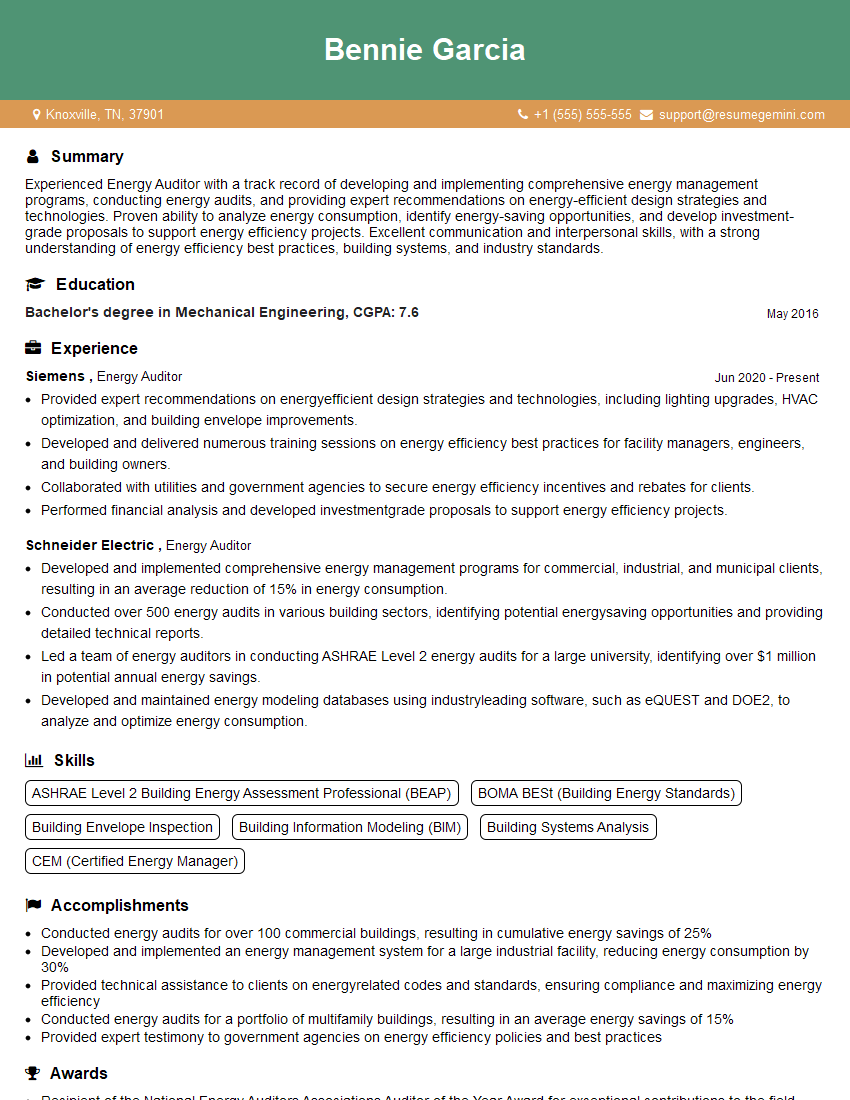
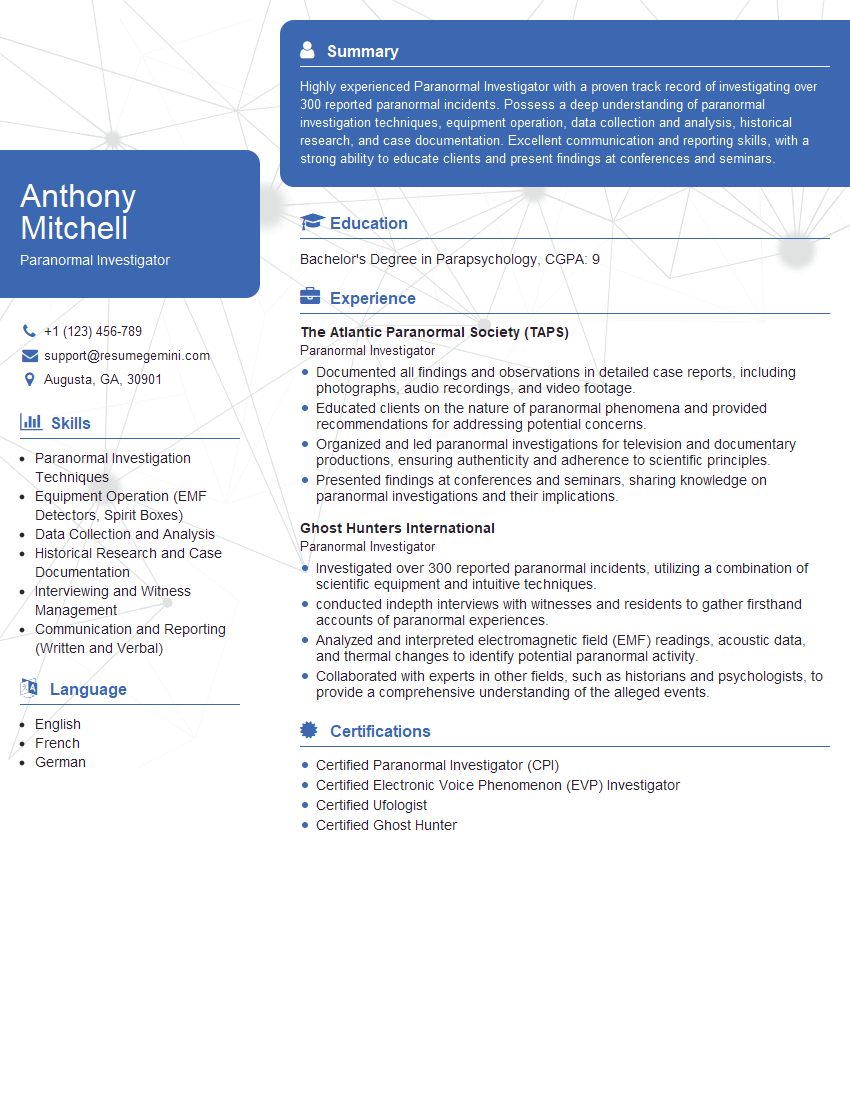
Mastering psychometry and object reading opens doors to exciting and fulfilling career paths, offering unique problem-solving skills highly valued in diverse fields. To maximize your job prospects, it’s crucial to create a resume that showcases your abilities effectively. An ATS-friendly resume is essential for getting your application noticed by potential employers. We highly recommend using ResumeGemini, a trusted resource for building professional and impactful resumes. ResumeGemini offers examples of resumes tailored specifically to highlight skills in psychometry and object reading, helping you present your qualifications in the most compelling way. Take the next step toward your dream career – create a standout resume today!
Explore more articles
Users Rating of Our Blogs
Share Your Experience
We value your feedback! Please rate our content and share your thoughts (optional).
What Readers Say About Our Blog
Very informative content, great job.
good