The thought of an interview can be nerve-wracking, but the right preparation can make all the difference. Explore this comprehensive guide to Hand and Machine Sewing Proficiency interview questions and gain the confidence you need to showcase your abilities and secure the role.
Questions Asked in Hand and Machine Sewing Proficiency Interview
Q 1. What types of sewing machines are you familiar with?
My experience encompasses a wide range of sewing machines, from basic mechanical models to advanced computerized machines. I’m proficient with both industrial and domestic machines. This includes straight-stitch machines ideal for mass production, zigzag machines for versatile stitching, sergers for clean, professional finishes, and embroidery machines for intricate designs. I’m also familiar with the features and operation of various brands such as Singer, Brother, Janome, and industrial brands like Juki and Pfaff. My understanding extends to their maintenance and troubleshooting.
- Mechanical Machines: These offer a hands-on approach, relying on manual adjustments for stitch length and width. Great for learning fundamental techniques.
- Computerized Machines: These provide pre-programmed stitches and settings, streamlining the sewing process. Ideal for complex projects and speed.
- Industrial Machines: Built for durability and speed, these machines are essential for high-volume sewing tasks.
- Sergers/Overlock Machines: These machines create professional-looking seams and prevent fabric from fraying. Invaluable for garments and other projects requiring a clean finish.
Q 2. Describe your experience with different sewing machine needles.
Selecting the right needle is crucial for successful sewing. The wrong needle can lead to skipped stitches, broken needles, or even damage to the fabric. I have extensive experience with various needle types, categorized by size, material, and point type.
- Needle Size: Numbered according to their thickness, smaller numbers indicate finer needles for delicate fabrics like silk, while larger numbers are used for heavier fabrics like denim. I always match the needle to the fabric weight.
- Needle Material: Steel is common, but needles made of titanium or other specialized materials offer increased durability and reduced breakage, particularly beneficial when working with heavy or abrasive fabrics.
- Needle Point Type: Sharp points are ideal for woven fabrics, ballpoints are essential for knits to prevent snags, and needles with different points are designed for specific tasks like quilting or leather work. For example, I use a ballpoint needle for jersey and a sharp needle for cotton.
My experience ensures that I always choose the correct needle type to minimize sewing issues and maintain fabric integrity. Incorrect needle selection can lead to unsightly results and damaged materials. I make sure the needle is also properly inserted and tightened in the machine before starting work.
Q 3. Explain the process of setting up a sewing machine for different fabrics.
Setting up a sewing machine for different fabrics involves adjusting several key parameters to achieve optimal results. The most crucial adjustments are usually tension, stitch length, and presser foot pressure.
- Fabric Weight: Lighter fabrics like chiffon require a smaller stitch length and potentially reduced presser foot pressure to prevent puckering. Heavier fabrics like canvas or denim need a longer stitch length and increased pressure for secure stitching. I adjust the presser foot pressure via the appropriate dial or lever on the machine.
- Fabric Type: Woven fabrics generally require a different approach than knit fabrics. Knits often need a ballpoint needle and a slightly more flexible presser foot to prevent skipped stitches or damage to the fabric structure.
- Stitch Length: Longer stitch lengths are more suitable for heavier fabrics to accommodate the thicker materials, while shorter stitch lengths are better for lighter fabrics to avoid puckering. I always test my stitch settings on a scrap piece of the fabric I’m using, similar in design to my actual project.
- Tension: Tension needs adjustment depending on the fabric type and the thread used. In most cases, a balanced tension is ideal where top and bottom threads interlock neatly. I usually start with the manufacturer’s recommended settings as a baseline before finetuning as needed.
Essentially, it’s a process of fine-tuning the machine to work harmoniously with the specific fabric, always paying attention to the details of the stitching and adjusting accordingly until a nice, clean stitch is produced. Understanding these adjustments is key to producing high-quality results and avoiding problems.
Q 4. How do you troubleshoot common sewing machine problems?
Troubleshooting sewing machine problems requires a systematic approach. I begin by identifying the problem and then systematically checking possible causes.
- Skipped Stitches: This could be due to a bent or dull needle, incorrect tension, improper threading, or lint buildup. My process involves checking the needle, adjusting the tension, rethreading, and cleaning the machine.
- Broken Needles: This usually results from sewing too fast, using the wrong needle type, or hitting a hard object in the fabric. I carefully inspect the needle and ensure it’s appropriate for the material and sewing speed.
- Jammed Machine: This might be caused by improper threading, a tangled bobbin, or fabric buildup under the needle plate. I meticulously check each step of the threading process, replace or clean the bobbin, and remove fabric obstructions.
- Uneven Stitches: This can be a result of uneven thread tension, incorrect needle placement, or a worn-out feed dog. I check tension settings, align the needle, and check for damage to the feed dog. If the feed dogs are damaged they need to be replaced.
I often consult the sewing machine’s manual and online resources for more specific troubleshooting steps if needed. Prevention is also a key part of my approach—regular maintenance such as cleaning and oiling prevents many issues. Experience helps me quickly diagnose the root cause and implement the appropriate solution.
Q 5. What are your preferred hand-sewing stitches and when would you use each one?
My hand-sewing repertoire includes various stitches, each with a specific application:
- Running Stitch: A simple stitch used for basting or quick repairs. It’s like a drawn-out line of evenly spaced small stitches and is frequently used as a temporary stitch prior to machine stitching.
- Backstitch: A strong stitch used for seams that need extra durability. It’s created by stitching forward and then retracing stitches slightly so they interlock.
- Slip Stitch: An almost invisible stitch for joining seams or attaching facing. You stitch through one layer of fabric and loop under another, resulting in nearly undetectable stitches.
- Blanket Stitch: A decorative stitch for finishing edges of fabric and is often used to create an elegant or rustic look on blankets, pillows, or other projects.
- Satin Stitch: Creates a smooth surface with closely spaced stitches for embroidery and decorative accents. The stitches are tightly packed together, filling a defined area completely.
The choice of stitch depends entirely on the project’s needs. For example, I’d use a slip stitch for an invisible hem and a backstitch for a durable seam. Understanding the characteristics of each stitch allows me to select the most appropriate one for each task.
Q 6. Describe your experience with different types of fabric and their sewing requirements.
My experience spans a wide variety of fabrics, each with unique sewing requirements:
- Woven Fabrics (Cotton, Linen, Silk): These fabrics have a distinct grain and require careful attention to cutting and sewing to prevent distortion. I always pre-wash woven fabrics to avoid shrinkage after completion of the project.
- Knit Fabrics (Jersey, Rib Knit): These fabrics are stretchy and require special needles (ballpoint) to prevent snagging. I often use a walking foot for even feeding when sewing knits.
- Leather and Suede: These materials are dense and require heavy-duty needles and specialized techniques to ensure a clean stitch. I take extra care to avoid puncturing the material unnecessarily.
- Velvet and other delicate fabrics: These require a slow sewing speed to prevent puckering or damaging the material, as well as gentle handling during the entire sewing process.
Understanding the properties of each fabric—its drape, stretch, weight, and texture—is critical for selecting appropriate needles, thread, stitch types, and sewing techniques to achieve a professional result. I make a point of understanding the material’s properties and adjust my techniques accordingly. Knowing whether a fabric will fray, stretch, or wrinkle guides my seam allowances and stitch selections.
Q 7. How do you determine the appropriate seam allowance for a particular garment?
Determining the appropriate seam allowance depends on several factors, including the garment type, fabric weight, and desired finished look:
- Standard Seam Allowance: A 5/8-inch seam allowance is common for many garments as it allows for sufficient space for finishing techniques like serging or overcasting. It’s a common standard, but often dependent on the style and designer.
- Variations: Some garments might require a smaller seam allowance (e.g., 1/4 inch for French seams) or a larger one (e.g., 1 inch for heavier fabrics or decorative seams). A larger seam allowance can be especially handy when using bulky or thick materials.
- Pattern Instructions: The pattern I am using will always specify the recommended seam allowance, and I will typically adhere to those instructions unless I have a reason to deviate.
- Design Considerations: The design itself might influence the seam allowance. For instance, a garment with tight curves or intricate details may necessitate a smaller allowance for better fit and less bulk.
My experience allows me to judge the appropriate seam allowance based on these factors. I consider the overall design and the type of finishing I’ll be applying to create a well-proportioned and well-finished garment. I always double-check the pattern before cutting into my fabric. I prefer to err on the side of a slightly larger seam allowance which can be trimmed down if necessary.
Q 8. Explain the importance of proper fabric preparation before sewing.
Proper fabric preparation is paramount to achieving a professional finish and ensuring the longevity of your garment. Think of it as laying a strong foundation for a house – without it, the whole structure is compromised.
Pre-washing: This crucial step prevents shrinkage after the garment is sewn. Different fabrics react differently; some may require a gentle hand-wash, while others can tolerate machine washing. Always check the fabric’s care label.
Pressing: Pressing the fabric before cutting helps to remove wrinkles and ensures accurate pattern placement. Use the appropriate iron setting to avoid damaging the fabric. A light spray of water can help to release wrinkles in stubborn fabrics.
Napping: For fabrics with nap (a directional texture like velvet or corduroy), ensure that the nap runs consistently in the same direction throughout the garment. This avoids visible differences in color or texture.
Checking for flaws: Before cutting, carefully inspect the fabric for any imperfections such as holes, stains, or uneven weaving. These should be noted and accounted for in the cutting process.
For example, I once worked on a delicate silk garment. Pre-washing was essential to avoid significant shrinkage after construction. I hand-washed the silk and gently pressed it before proceeding with the pattern layout.
Q 9. What are your methods for ensuring accurate pattern placement and cutting?
Accurate pattern placement and cutting are fundamental to a well-fitting garment. I employ several methods to ensure precision:
Pattern tracing: For valuable or delicate fabrics, I trace the pattern pieces onto tissue paper instead of cutting directly into the fabric, minimizing the risk of error.
Notching and marking: I carefully mark all notches and pattern markings onto the fabric using tailor’s chalk or a fabric marker. This is crucial for aligning pattern pieces accurately during construction.
Grainlines: I always pay close attention to grainline markings on the pattern. These indicate the direction of the fabric’s lengthwise yarns. Cutting along the grainline ensures that the finished garment will hang and drape correctly.
Layering and pinning: When cutting multiple layers of fabric, I use weights to hold the fabric in place and carefully pin the pattern pieces securely to prevent shifting.
Sharp shears: Using sharp, high-quality shears is essential for clean cuts and prevents fraying. Dull shears can lead to uneven cuts and damage the fabric.
For a recent project involving a complex jacket pattern, tracing the pieces onto tissue paper allowed me to check the fit and make adjustments before cutting into the expensive wool fabric. This saved time and material.
Q 10. Describe your experience with different types of sewing patterns.
My experience encompasses a wide range of sewing patterns, from simple to highly complex designs. I’m proficient in working with various pattern formats, including:
Commercial patterns: I have extensive experience using commercially available patterns, such as those from Butterick, Simplicity, and McCall’s. I’m adept at understanding their sizing charts and making necessary adjustments for fit.
Independent designer patterns: I’ve worked with patterns from independent designers, often featuring more intricate details and unique construction methods. These often require a higher level of skill and attention to detail.
Self-drafted patterns: I can draft my own patterns, using both traditional draping techniques and digital pattern-making software. This ability allows me to create truly bespoke garments tailored to specific needs and body shapes.
Vintage patterns: Working with vintage patterns allows me to connect with historical sewing techniques and styles. These patterns may require additional research and interpretation, but the results are often rewarding.
Recently, I adapted a vintage pattern for a modern client, adjusting the sizing and some design elements to create a contemporary yet historically-inspired piece.
Q 11. How do you manage and organize your sewing supplies?
Organization is key to efficient sewing. I maintain a well-organized sewing space and employ various storage solutions to keep my supplies readily accessible and in good condition:
Designated storage: I use clear containers, drawers, and labelled shelves to store notions, threads, buttons, and other small items. This allows for easy identification and retrieval.
Thread management: I store my threads by color and type, using a spool rack for easy access and to prevent tangling.
Fabric storage: Fabrics are stored flat in drawers or hung on rods to prevent wrinkles and creasing. I use acid-free tissue paper to protect delicate fabrics from light and dust.
Tool organization: My sewing tools are stored in a designated area, with frequently used items easily accessible.
Having a well-organized sewing space enhances efficiency and creativity, allowing me to focus on the sewing process itself rather than searching for supplies.
Q 12. How do you handle fabric shrinkage and stretching during the sewing process?
Addressing fabric shrinkage and stretching is crucial for achieving a well-fitting and durable garment. My strategies include:
Pre-shrinking: As mentioned earlier, pre-washing fabrics before cutting is essential to prevent shrinkage after sewing. I always check the care label for specific washing instructions.
Testing fabric stability: Before embarking on a project, I often test a small piece of fabric to assess its tendency to stretch or shrink. This allows me to choose appropriate construction methods to mitigate these issues.
Using stabilizers: For fabrics prone to stretching, I might use interfacing or other stabilizers to add structure and prevent distortion during the sewing process.
Careful seam construction: I utilize techniques that reduce strain on seams, such as using smaller stitches in high-stress areas or reinforcing seams with topstitching.
Careful pressing: Proper pressing throughout the construction process helps to prevent stretching and maintain the shape of the garment.
Recently, I worked with a lightweight linen fabric prone to stretching. I used a lightweight fusible interfacing to provide stability and carefully pressed the seams to avoid distortion.
Q 13. Explain your experience with various finishing techniques (e.g., serging, binding).
Finishing techniques are critical for achieving a professional and durable garment. I’m proficient in several methods:
Serging: Serging, or overlocking, creates a neat and durable seam finish, preventing fraying and adding a decorative element. I choose the appropriate stitch type based on fabric weight and type.
Binding: Bias binding is excellent for finishing raw edges on necklines, armholes, and other curved seams. It provides a clean, professional look and prevents fraying. I can create my own bias binding from coordinating fabrics.
Zigzag stitch: A simple yet effective method for finishing raw edges, particularly on lighter fabrics. The zigzag stitch prevents fraying and provides a subtle decorative effect.
French seams: For fine fabrics, French seams enclose the raw edges completely, resulting in a very neat and durable finish. They are especially suitable for delicate or sheer fabrics.
For instance, I recently used French seams on a silk blouse to create a flawless and professional finish. The enclosed seams ensured that the raw edges of the fabric weren’t visible.
Q 14. How do you ensure the quality and consistency of your sewing work?
Maintaining consistent high-quality sewing relies on a combination of skills and practices:
Attention to detail: I meticulously check each step of the process, ensuring that all seams are aligned, stitches are even, and finishing is consistent throughout. This attention to detail translates into a finished product of impeccable quality.
Proper tools and maintenance: I use high-quality sewing machines and tools, and regularly maintain and clean them. This is critical for ensuring smooth operation and consistent stitch quality.
Practice and refinement: Continuous practice and refinement of techniques are essential to improve skill and precision. I am always learning and seeking opportunities to expand my expertise.
Self-assessment and feedback: After completing a project, I critically assess the finished product, identifying areas for improvement. Constructive criticism from others is also valuable.
My commitment to precision and continuous improvement ensures that my sewing work consistently meets the highest standards of quality.
Q 15. What safety precautions do you take when using sewing machines and other tools?
Safety is paramount in sewing. Before I even begin, I ensure my workspace is well-lit and clutter-free to prevent accidents. This includes keeping cords out of walkways and ensuring proper ventilation, especially when working with fabrics that might release fumes during cutting or ironing.
- Machine Safety: Always unplug the machine before cleaning, oiling, or making any adjustments. I never reach into the moving parts and use the appropriate attachments for different fabrics to prevent jams or damage. I regularly check the machine’s safety features, such as the needle guard and presser foot.
- Hand Sewing Safety: When hand-sewing, I use sharp, well-maintained needles and avoid leaving them loose on the work surface. I also use a thimble to protect my finger from needle pricks. Proper posture is crucial to prevent back strain and fatigue.
- General Safety: I wear safety glasses when using rotary cutters to prevent eye injuries from flying debris. If using spray adhesive or other chemicals, I do so in a well-ventilated area and wear a mask.
Think of it like driving – following safety protocols isn’t just a suggestion; it’s essential for accident prevention. It’s a habit I’ve cultivated over years of sewing.
Career Expert Tips:
- Ace those interviews! Prepare effectively by reviewing the Top 50 Most Common Interview Questions on ResumeGemini.
- Navigate your job search with confidence! Explore a wide range of Career Tips on ResumeGemini. Learn about common challenges and recommendations to overcome them.
- Craft the perfect resume! Master the Art of Resume Writing with ResumeGemini’s guide. Showcase your unique qualifications and achievements effectively.
- Don’t miss out on holiday savings! Build your dream resume with ResumeGemini’s ATS optimized templates.
Q 16. What software or technology have you used for sewing pattern design or creation?
While I’m proficient in drafting patterns by hand, I also leverage digital tools to enhance efficiency and precision. I have extensive experience with Adobe Illustrator and Photoshop for creating and manipulating sewing patterns. I use Illustrator to vectorize sketches, creating clean lines and precise measurements crucial for accurate pattern construction. Photoshop helps with fabric manipulation and colorway simulations.
For more advanced 3D pattern design and grading, I’ve experimented with software like CLO3D. This allows me to virtually drape patterns onto a 3D model, enabling faster prototyping and testing of designs before committing to fabric cutting. It’s especially valuable for intricate garments where fit is paramount.
Q 17. Describe your experience with industrial sewing equipment.
My experience with industrial sewing equipment is substantial. I’ve worked extensively with machines like the Juki, Singer, and Durkopp Adler lines, specializing in high-speed, industrial-grade sewing machines used for production. This includes experience with flat-bed, cylinder-bed, and post-bed machines, each designed for specific applications. I’m comfortable operating these machines for various tasks, from basic straight stitching to complex decorative stitching and specialized techniques like blindstitching and topstitching.
I understand the importance of maintaining optimal sewing speed and stitch quality in a production setting. This includes making adjustments to tension, stitch length, and feed dog settings depending on the fabric type and project requirements. My experience goes beyond simple operation; I’m capable of performing minor repairs and adjustments on these machines when needed.
Q 18. How do you maintain and clean your sewing machines?
Regular maintenance is crucial for optimal machine performance and longevity. After each sewing session, I remove fabric scraps, lint, and dust from the bobbin area, hook race, and feed dogs using a soft brush or compressed air. I also wipe down the exterior of the machine with a damp cloth.
Periodically (usually once a month, more frequently for high-usage machines), I perform a more thorough cleaning and lubrication. This involves removing the bobbin case and needle plate to access all internal parts, then carefully cleaning and oiling according to the manufacturer’s instructions. I use high-quality sewing machine oil and avoid over-oiling which can attract dust and gum up the machine. The needle should also be changed regularly to maintain consistent stitch quality and prevent breakage.
For industrial machines, I adhere to a stricter maintenance schedule, often involving professional servicing every six months to ensure peak performance and safety.
Q 19. What is your experience with sewing different types of closures (zippers, buttons, etc.)?
I’m adept at installing a wide variety of closures, including zippers (invisible, lapped, center-front), buttons (various types and attachments), hooks and eyes, snaps, and more. My experience ranges from traditional hand-sewing techniques to using specialized tools for cleaner and more professional finishes.
For example, when installing an invisible zipper, I use a zipper foot and take extra care to ensure the zipper is completely hidden within the seam. Button installation varies based on fabric weight and button type; I choose appropriate methods for shank buttons, self-covered buttons, or buttons with shanks already attached. I use specialized tools like pliers for attaching snaps and hooks and eyes neatly and securely.
Q 20. How do you adapt to changes in sewing instructions or designs?
Adaptability is key in sewing. When encountering alterations in sewing instructions or designs, I meticulously analyze the changes and determine their impact on the final garment. I break down any modifications into smaller, manageable steps. If needed, I create a revised plan detailing the adjusted measurements and construction techniques.
For example, if a pattern calls for a different fabric than originally specified, I might adjust seam allowances to account for the fabric’s drape or weight. If the instructions are unclear or contradictory, I’ll consult additional resources, like online tutorials or books, to clarify any uncertainties. Essentially, I approach every change strategically, ensuring the integrity of the final product.
Q 21. Explain your problem-solving approach when encountering sewing challenges.
My problem-solving approach is methodical and systematic. When facing a sewing challenge, I begin by accurately identifying the problem, whether it’s a skipped stitch, fabric puckering, or fitting issue. I then analyze potential causes: incorrect machine settings, fabric choice, pattern inaccuracies, or technique errors.
I then systematically test solutions. For example, if stitches are skipping, I’ll check the needle for damage, the thread tension, and the bobbin winding. If fabric is puckering, I’ll examine the stitch length, seam allowance, and pressing techniques. I keep detailed notes during the troubleshooting process to avoid repeating past errors. If the issue remains unresolved, I’ll seek external assistance by consulting online forums or experienced sewers, learning from their expertise.
Consider it like a detective solving a case – meticulous observation and a structured process are essential to pinpoint the root cause and find an effective solution.
Q 22. What is your experience working with specific fabrics, such as leather, silk, or denim?
My experience spans a wide range of fabrics, each requiring a unique approach. Leather, for instance, demands specialized needles and a slower, more deliberate stitching style to avoid breakage. Its thickness necessitates a stronger machine and potentially the use of heavier-duty thread. I’ve worked extensively with various leather types – from supple lambskin to robust full-grain – adapting my techniques to achieve clean, durable seams. Silk, on the other hand, is incredibly delicate. I use fine needles, a gentle hand, and often a walking foot to prevent slippage and ensure even feeding through the machine. The key is to minimize tension to avoid puckering or damage. Denim presents a different challenge with its density and tendency to fray. I typically use a denim needle and reinforce seams with zigzag stitching to prevent unraveling and increase durability. In all cases, pre-washing the fabric is crucial to account for shrinkage before cutting and sewing.
Q 23. How do you work effectively in a team environment within a sewing production line?
Effective teamwork on a sewing production line is paramount. It’s not just about individual skill, but about seamless collaboration. In my experience, clear communication is key. We utilize a system where each team member is responsible for a specific stage of the garment production, and we maintain open lines of communication to address any issues or delays promptly. For example, if a seamstress encounters a problem with a pattern, she immediately informs the pattern maker. This proactive approach minimizes bottlenecks and ensures a consistent flow. I’ve also found that mutual respect and a willingness to help each other are vital; we often assist one another if one person falls behind or needs assistance with a complex task. This shared responsibility fosters a positive work environment and leads to higher quality and efficiency.
Q 24. Describe your experience with quality control procedures in a sewing setting.
Quality control is an integral part of the sewing process. My experience includes rigorous checks at every stage, starting from the initial inspection of fabrics for defects like holes or inconsistencies in weave. During the sewing process, I meticulously examine each seam for even stitching, appropriate tension, and the absence of skipped stitches. Once a garment is assembled, a final inspection checks for accurate sizing, correct placement of details, and overall finish. We use checklists and standardized procedures to maintain consistency. If any defects are found, they are carefully documented, and the necessary corrections are made. In instances of major flaws, the garment may be rejected. This attention to detail ensures that the final product meets the highest standards of quality and aligns with the brand’s image.
Q 25. What are some common sewing errors and how do you avoid them?
Common sewing errors stem from several sources – improper thread tension, incorrect needle selection, skipping stitches, and inaccurate cutting. To avoid these, I meticulously check my machine’s settings before starting each project, ensuring the thread tension is appropriate for the fabric’s weight and type. Selecting the correct needle for the fabric is critical; a wrong needle will lead to broken needles, skipped stitches, or fabric damage. I use a seam ripper to correct any skipped stitches or mistakes during the sewing process. Careful measuring and precise cutting are crucial to minimizing alterations and ensuring a smooth final product. Finally, regular maintenance of my sewing machine keeps it running smoothly and prevents mechanical issues that can contribute to errors.
Q 26. How do you stay up-to-date with current trends and techniques in sewing?
Staying current involves a multi-faceted approach. I regularly subscribe to sewing magazines and online blogs to keep abreast of new techniques, fabric innovations, and design trends. I actively participate in online sewing communities and forums, where I exchange ideas and learn from other experienced sewers. Attending industry workshops and trade shows also provides valuable insights into the latest advancements in machinery and techniques. In addition, I explore online tutorials and courses to further hone my skills in specific areas, for example, recently completed a course on advanced embroidery techniques. This continuous learning ensures that my skill set remains updated and competitive.
Q 27. Describe your experience with garment construction techniques like darts, pleats, and gathers.
Garment construction techniques like darts, pleats, and gathers are fundamental. Darts shape the garment to fit the body’s contours. I’m proficient in various dart techniques, including single, double, and French darts, adapting the method to the fabric and design. Pleats add texture and volume; I can create knife pleats, box pleats, and inverted pleats, understanding how the direction and depth of the pleats affect the overall look. Gathers introduce softness and fullness; I skillfully create even gathers using techniques such as basting and shirring, paying close attention to distribute the fullness evenly. For instance, I recently constructed a dress that required precise pleating in the skirt and carefully tailored darts in the bodice, showcasing my ability to handle a wide variety of construction techniques to achieve the desired outcome.
Q 28. How do you interpret and follow complex sewing patterns?
Interpreting complex sewing patterns requires careful attention to detail and a systematic approach. I begin by thoroughly studying the pattern instructions and diagrams. This includes understanding the different pattern pieces, their markings, and the assembly sequence. I pay close attention to notations such as grain lines, notches, and seam allowances. I always pre-cut my fabric according to the pattern’s specifications, checking multiple times for accuracy. I use a process of assembling the garment in stages, following the pattern’s instructions precisely. If there are any ambiguities, I use my sewing experience to make informed adjustments and always refer back to the pattern itself, comparing the progress with the diagram. If still uncertain, I’ll consult relevant reference books or seek clarification from other expert sewers. The key is patience, precision, and consistent referencing of the pattern.
Key Topics to Learn for Hand and Machine Sewing Proficiency Interview
- Hand Sewing Techniques: Understanding various stitches (running stitch, backstitch, slip stitch, etc.), their applications, and choosing the appropriate stitch for different fabrics and projects. Practical application: Demonstrate proficiency in executing these stitches neatly and efficiently.
- Machine Sewing Techniques: Mastering machine operation, including threading, bobbin winding, stitch selection, tension adjustment, and basic maintenance. Practical application: Explain how to troubleshoot common machine problems like skipped stitches or uneven fabric feeding.
- Fabric Selection and Properties: Knowledge of different fabric types (cotton, silk, linen, etc.), their drape, weight, and suitability for various garments. Practical application: Explain how fabric choice impacts the sewing process and the final garment’s appearance.
- Pattern Interpretation and Alterations: Ability to read and understand sewing patterns, make necessary alterations for fit and style, and accurately cut and sew according to the pattern instructions. Practical application: Describe your approach to fitting a garment and adjusting patterns for individual needs.
- Seam Finishing Techniques: Understanding various seam finishes (serging, pinking, zig-zag stitching) and their importance in preventing fraying and enhancing garment durability. Practical application: Discuss the advantages and disadvantages of different seam finishes and how to choose the most appropriate method.
- Sewing Machine Maintenance and Troubleshooting: Proficiency in basic machine maintenance (cleaning, oiling), and ability to identify and resolve common sewing machine issues. Practical application: Explain your process for maintaining your sewing machine and troubleshooting problems you’ve encountered.
- Safety Procedures and Best Practices: Understanding and adhering to safety guidelines when using sewing machines and hand tools. Practical application: Describe your approach to maintaining a safe and organized sewing workspace.
Next Steps
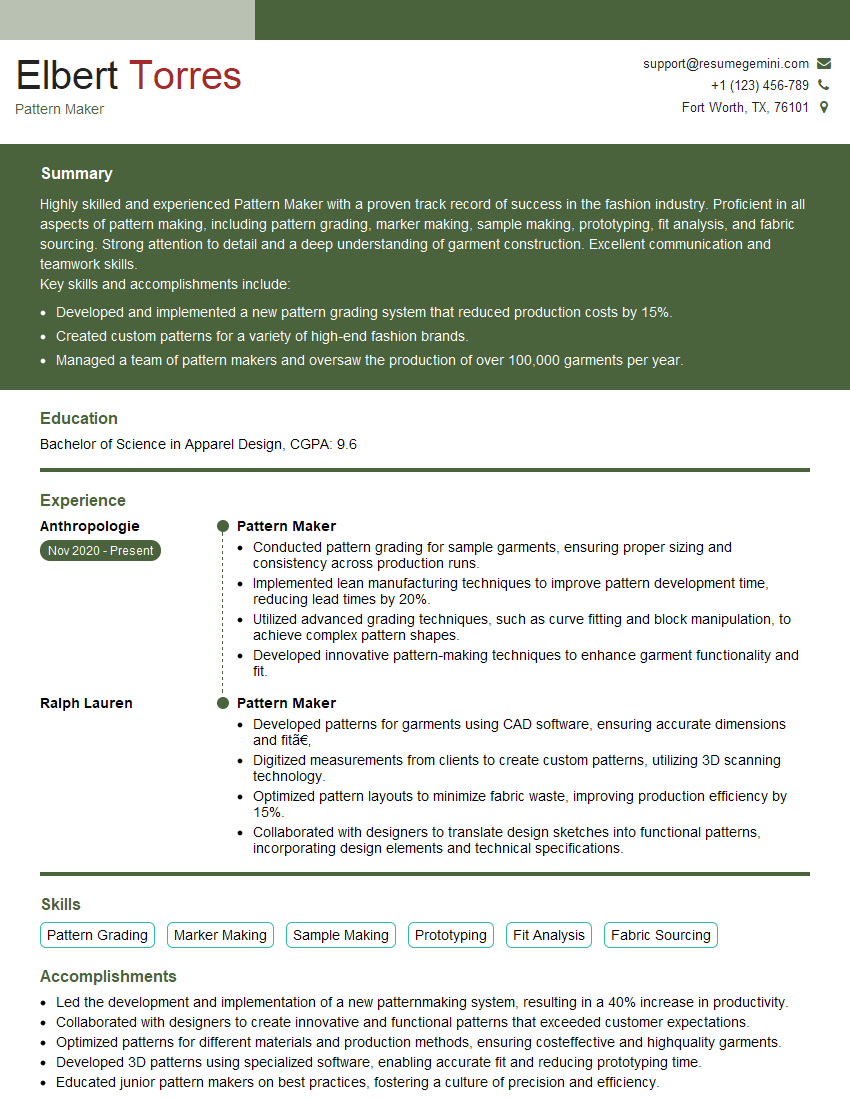
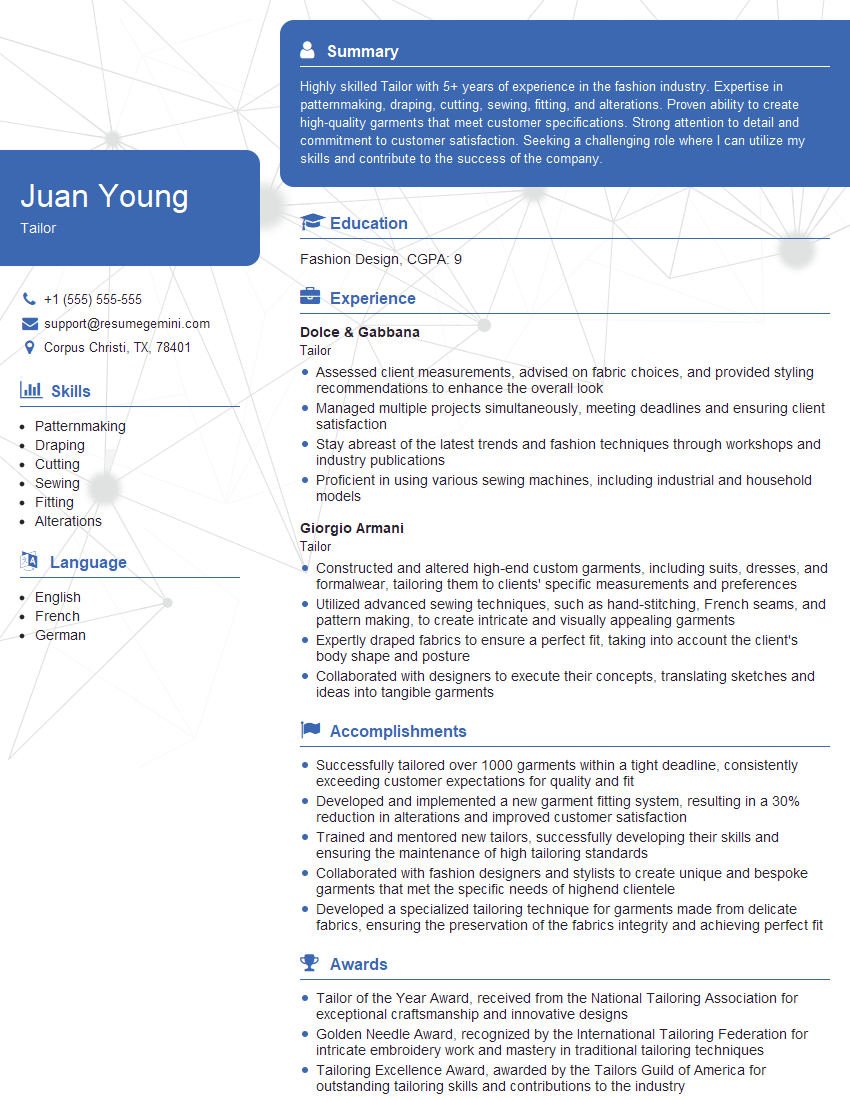
Mastering hand and machine sewing proficiency is crucial for career advancement in various fields, from fashion design and garment manufacturing to tailoring and alterations. A strong understanding of these skills demonstrates your dedication to craftsmanship and attention to detail, making you a highly valuable asset to any team. To increase your job prospects, focus on crafting an ATS-friendly resume that highlights your accomplishments and skills effectively. ResumeGemini is a trusted resource to help you build a professional and impactful resume. Examples of resumes tailored to Hand and Machine Sewing Proficiency are available to guide you.





Explore more articles
Users Rating of Our Blogs
Share Your Experience
We value your feedback! Please rate our content and share your thoughts (optional).
What Readers Say About Our Blog
Very informative content, great job.
good