Interviews are opportunities to demonstrate your expertise, and this guide is here to help you shine. Explore the essential Hardware Application interview questions that employers frequently ask, paired with strategies for crafting responses that set you apart from the competition.
Questions Asked in Hardware Application Interview
Q 1. Explain the difference between synchronous and asynchronous circuits.
The fundamental difference between synchronous and asynchronous circuits lies in their reliance on a clock signal.
Synchronous circuits operate in lockstep with a global clock signal. All operations within the circuit are synchronized to the rising or falling edge of this clock. This makes them predictable and easier to debug, but can limit speed due to the clock frequency.
Think of a well-orchestrated orchestra: each instrument (logic element) plays its part at the precisely timed beat of the conductor (clock). This synchronization is crucial for maintaining timing integrity. Examples include most microprocessors, memory controllers, and digital signal processors.
Asynchronous circuits, on the other hand, do not rely on a global clock. Instead, they operate based on the completion of previous operations. This allows for potentially higher speeds, as events trigger subsequent events without waiting for a clock cycle, but introduces complexities in design and verification, as timing analysis becomes more challenging.
Imagine a team of assembly line workers. Each worker performs their task independently, and the next worker only starts once the previous worker completes their task. If one worker is slightly faster, the next one can start earlier; but if one worker takes significantly longer, the whole process slows down. This is asynchronous operation.
In summary: synchronous circuits are simpler to design but less flexible in terms of speed, whereas asynchronous circuits can be faster but significantly more difficult to design and verify.
Q 2. Describe your experience with different types of memory (SRAM, DRAM, Flash).
My experience encompasses working with several types of memory, each with its strengths and weaknesses.
- SRAM (Static Random-Access Memory): SRAM uses flip-flops to store each bit, meaning it retains data as long as power is supplied. This provides fast access times, typically in the nanosecond range. However, it’s denser and more expensive than DRAM. I’ve used SRAM in high-speed cache memory designs where speed is paramount.
- DRAM (Dynamic Random-Access Memory): DRAM stores each bit as a charge in a capacitor. Because the charge leaks, it requires periodic refreshing to maintain data integrity. This results in slower access times compared to SRAM but offers higher density and lower cost per bit. I’ve extensively used DRAM in main memory design for various embedded systems. I am also familiar with the different types of DRAM like SDRAM, DDR SDRAM, and newer standards.
- Flash Memory: Flash memory is a non-volatile memory, meaning it retains data even when power is removed. It’s slower than both SRAM and DRAM but offers high density and non-volatility, making it ideal for data storage like SSDs and embedded systems’ program storage. I’ve worked with different types of flash memories, including NOR and NAND flash, and understand their trade-offs in terms of read/write speeds, endurance, and cost.
Choosing the right type of memory depends heavily on the application’s requirements – the speed-density-cost trade-off is always a key consideration.
Q 3. How do you debug a hardware problem?
Debugging hardware problems requires a systematic approach. My typical process involves these steps:
- Reproduce the Problem: First, I meticulously document the steps to reproduce the issue consistently. This includes noting the environmental conditions, inputs, and outputs observed.
- Isolate the Faulty Component: Using various diagnostic techniques (like signal tracing with an oscilloscope, logic analyzer, or in-circuit emulator), I pinpoint the area of the circuit exhibiting the malfunction.
- Analyze Signals: I carefully examine the signals at different points in the circuit using test equipment. This helps identify discrepancies from the expected behavior and helps narrow down the cause of the failure.
- Schematic Review: I thoroughly review the schematic diagrams to verify the design and check for any potential errors in the circuit.
- Testing and Iteration: Based on the analysis, I perform targeted tests by modifying the circuit or replacing suspected components. This iterative process continues until the root cause is identified and rectified.
- Documentation: Thorough documentation of the problem, its symptoms, diagnostic steps, and the solution is crucial, both for future reference and for collaboration within a team.
In addition to these steps, I also leverage simulation tools to verify my design before it goes into production. This helps catch many problems early in the design cycle, preventing expensive and time-consuming debugging later on.
Q 4. What are the different types of digital logic gates and their truth tables?
Digital logic gates are the fundamental building blocks of digital circuits. They perform Boolean operations on one or more binary inputs to produce a single binary output. Here are some common types:
- AND Gate: Outputs 1 only when all inputs are 1.
Truth Table: A | B | Output
-------|-------|--------
0 | 0 | 0
0 | 1 | 0
1 | 0 | 0
1 | 1 | 1 - OR Gate: Outputs 1 if at least one input is 1.
Truth Table: A | B | Output
-------|-------|--------
0 | 0 | 0
0 | 1 | 1
1 | 0 | 1
1 | 1 | 1 - NOT Gate (Inverter): Inverts the input signal.
Truth Table: A | Output
-------|--------
0 | 1
1 | 0 - NAND Gate: Outputs 0 only when all inputs are 1 (NOT AND).
- NOR Gate: Outputs 0 if at least one input is 1 (NOT OR).
- XOR Gate (Exclusive OR): Outputs 1 if exactly one input is 1.
Truth Table: A | B | Output
-------|-------|--------
0 | 0 | 0
0 | 1 | 1
1 | 0 | 1
1 | 1 | 0 - XNOR Gate (Exclusive NOR): Outputs 1 if both inputs are the same (NOT XOR).
These gates can be combined to create complex logic circuits that perform sophisticated operations.
Q 5. Explain the concept of clock domains and clock domain crossing.
A clock domain is a portion of a digital system that operates with its own clock signal. Clock domain crossing (CDC) refers to the transfer of data between different clock domains.
Imagine multiple teams in a company working on different projects, each with its own deadlines (clocks). CDC is like transferring documents between those teams. It’s critical to ensure data integrity and prevent data loss or corruption during this transfer, which is why CDC is a major design consideration.
CDC presents a significant challenge because the two clocks might not be synchronized; there’s a chance of data being sampled while the signal is transitioning. This could cause metastability (discussed in the next question). To mitigate this, techniques like asynchronous FIFOs (First-In, First-Out), synchronizers (multiple flip-flops in series) and grey coding are commonly used. The choice depends on data throughput and data reliability requirements.
Q 6. What is metastability and how can it be mitigated?
Metastability is an unpredictable state in a flip-flop or latch where the output is neither a clear 0 nor a clear 1. It occurs when a data signal changes close to the clock edge during a clock domain crossing. The flip-flop enters a metastable state, and the time it takes to resolve to a stable 0 or 1 is indeterminate.
Think of a light switch stuck halfway – it’s neither fully on nor fully off. In digital circuits, this indeterminate state can lead to unpredictable behavior and system malfunction. The longer the metastability persists, the more likely it is to propagate through the system, causing unpredictable errors.
Mitigation techniques include:
- Sufficient Synchronization: Employing multiple flip-flops in series to increase the probability of resolving metastability before the signal propagates further. Each flip-flop has a probability of resolving to a stable state; using multiple flip-flops drastically reduces the likelihood of metastable propagation.
- Asynchronous FIFOs: These specialized FIFOs handle data transfer between asynchronous clock domains without requiring synchronization, effectively isolating metastability issues.
- Careful Clock Design: Ensuring sufficient setup and hold times to minimize the chances of metastability, possibly by employing different clock frequencies.
- Grey Coding: Using a Grey code encoding scheme reduces the number of bits that change simultaneously, decreasing the likelihood of metastability during transitions.
The choice of mitigation strategy depends on the specific application’s requirements and acceptable risk level.
Q 7. Describe your experience with schematic capture and PCB design tools.
I have extensive experience with schematic capture and PCB design tools. My proficiency spans several popular software packages, including Altium Designer, Eagle, and KiCad.
Schematic Capture: I’m adept at creating and managing complex schematics, employing hierarchical design techniques to manage the complexity of large designs. I’m familiar with best practices for schematic design, ensuring clarity, readability, and maintainability of the design. This includes using consistent naming conventions, proper annotation, and effective use of design libraries.
PCB Design: I’m proficient in all aspects of PCB design, from component placement and routing to generating manufacturing files. My experience includes working with different PCB technologies, including multilayer boards, high-speed design considerations, and the implementation of signal integrity techniques to minimize noise and interference. I also possess skills in creating manufacturing documentation (BOM, Gerber files etc.).
Specific examples of my use of these tools include the design of a high-speed communication interface, where careful consideration was given to signal integrity, or designing an embedded system where component placement minimized the overall size and improved thermal management. In both cases, my choice of tools was determined by the project requirements and the availability of specific features.
Q 8. Explain your understanding of signal integrity and EMI/EMC.
Signal integrity refers to the quality of a signal as it travels through a circuit. Maintaining signal integrity is crucial because signal degradation can lead to data corruption or system malfunction. EMI (Electromagnetic Interference) and EMC (Electromagnetic Compatibility) are closely related. EMI refers to unwanted electromagnetic energy that interferes with the proper functioning of a circuit or system. EMC, on the other hand, is the ability of a device or system to function correctly in its electromagnetic environment without causing unacceptable interference to other devices.
Think of it like this: imagine a river (your signal). Signal integrity ensures the river flows smoothly without significant loss or distortion. EMI is like rocks and debris thrown into the river, disrupting the flow. EMC is the process of designing the riverbanks (your device) and the surrounding environment so the river flows smoothly despite the potential for rocks and debris (EMI).
In practice, we maintain signal integrity through careful design of PCB layouts, proper component selection (e.g., using differential signaling or shielded cables), and the use of termination techniques to prevent signal reflections. Addressing EMI/EMC involves techniques like grounding, shielding, filtering, and the use of specialized components to minimize electromagnetic emissions and susceptibility.
Q 9. How familiar are you with various microcontrollers and microprocessors?
I have extensive experience with a wide range of microcontrollers and microprocessors, from 8-bit AVR microcontrollers like the ATmega328P used in Arduino projects, to 32-bit ARM Cortex-M processors found in many embedded systems, and even high-performance x86 processors used in desktop and server applications. My experience includes selecting the appropriate processor based on project requirements, writing firmware, debugging, and optimizing performance. For example, I once optimized a real-time control system using a Cortex-M4 processor by employing advanced techniques like memory mapping and interrupt handling to achieve the necessary speed and reliability.
My familiarity extends to different architectures, including RISC (Reduced Instruction Set Computer) and CISC (Complex Instruction Set Computer) architectures, and I understand the trade-offs between power consumption, processing speed, and memory usage for different processor families. I’m comfortable working with different development environments and tools, such as Keil MDK, IAR Embedded Workbench, and various IDEs specific to individual processors.
Q 10. Describe your experience with different bus architectures (e.g., SPI, I2C, UART).
I’m proficient in working with various bus architectures, including SPI, I2C, and UART. Each has its strengths and weaknesses. SPI (Serial Peripheral Interface) is a synchronous, full-duplex communication protocol offering high speed, but it requires more complex wiring than simpler protocols. I2C (Inter-Integrated Circuit) is a simpler, multi-master, synchronous protocol that’s suitable for low-speed communication with multiple devices sharing the same bus, ideal for sensor networks. UART (Universal Asynchronous Receiver/Transmitter) is an asynchronous, simple protocol widely used for communication between a microcontroller and other devices such as a PC or a modem; it’s robust but relatively slower than SPI.
For example, I’ve used SPI to interface a high-resolution ADC (Analog-to-Digital Converter) for fast data acquisition in a data logging system. I’ve used I2C to communicate with various sensors (temperature, humidity, pressure) on a single bus to minimize wiring complexity. I’ve also extensively used UART for debugging and communication with external devices in various projects.
My experience also includes troubleshooting communication issues on these buses, identifying and fixing problems related to clock synchronization, data integrity, and bus contention.
Q 11. Explain your experience with HDL (VHDL or Verilog).
I have significant experience with HDL (Hardware Description Language), specifically Verilog. I’ve used it extensively to design and simulate digital circuits, from simple logic gates to complex state machines and processors. My proficiency includes writing testable, modular code, using parameterized modules for reusability, and employing advanced techniques like asynchronous FIFOs (First-In, First-Out) and clock domain crossing to manage complex data flows.
//Example Verilog code for a simple D-flip flop module dff (input clk, input d, output reg q); always @(posedge clk) q <= d; endmodule
I'm comfortable with various simulation tools and understand the importance of verifying the functionality and timing of the designed circuits before implementation.
Q 12. Describe your experience with FPGA design and implementation.
I have extensive experience in FPGA (Field-Programmable Gate Array) design and implementation. This includes designing the hardware architecture, writing HDL code, synthesizing, implementing, and testing the design on the target FPGA. I'm proficient in using various FPGA development tools and familiar with constraints management for optimal timing performance. I've worked with several FPGA vendors like Xilinx and Altera (Intel), utilizing their respective development tools and methodologies.
For instance, I successfully designed a custom communication protocol using an FPGA to handle high-speed data transfer between different modules in a complex system, optimizing for low latency and high throughput. This involved careful consideration of resource allocation, clock management, and I/O constraints to meet the performance requirements.
My experience also extends to debugging and troubleshooting issues on the FPGA, utilizing tools such as logic analyzers and oscilloscopes to identify and resolve timing and functional problems.
Q 13. How do you perform timing analysis on a digital circuit?
Timing analysis on a digital circuit involves determining the time it takes for signals to propagate through different parts of the circuit and verifying that the circuit meets its timing constraints. This is crucial for ensuring the correct operation of the circuit at the desired clock speed. The process typically involves using specialized Electronic Design Automation (EDA) tools.
The steps generally include:
- Defining constraints: Specifying clock frequencies, input and output delays, and setup and hold times for flip-flops.
- Static Timing Analysis (STA): Running STA to identify critical paths (the longest paths in the circuit) and potential timing violations.
- Analyzing reports: Examining the STA reports to identify any timing violations (setup or hold time violations) and their locations in the circuit.
- Optimization: Modifying the design, using techniques such as pipelining or re-timing, to meet timing constraints. This might involve changing the placement or routing of components on the PCB or making design changes at the HDL level.
- Iterative process: This is an iterative process; changes made are verified by rerunning STA. This continues until the design meets all timing requirements.
Timing analysis is essential for high-speed digital designs where even nanosecond-level timing errors can lead to system malfunction.
Q 14. What is the difference between a CPLD and an FPGA?
Both CPLDs (Complex Programmable Logic Devices) and FPGAs are programmable logic devices, but they differ significantly in architecture and capabilities. CPLDs are best suited for smaller, simpler designs. They have a relatively small number of logic elements, organized into macrocells that are interconnected via a relatively fast internal routing matrix. This architecture allows for low power consumption and quick reconfiguration time but limits the design size and complexity.
FPGAs, on the other hand, are much more complex and scalable. They contain a massive array of configurable logic blocks (CLBs), interconnected by a flexible routing matrix that is considerably larger than that found in CPLDs. This allows them to implement far larger and more complex designs, making them suitable for tasks like high-speed signal processing, image processing, and custom processors. However, they consume more power, have higher latency in routing and are generally slower to reconfigure.
Think of it like this: a CPLD is like a small, efficient toolbox with a limited set of tools, whereas an FPGA is like a large, versatile workshop with a wide range of tools and much greater capacity for complex projects. The choice depends entirely on the project's complexity and requirements.
Q 15. Explain your experience with power management techniques in hardware design.
Power management is crucial in hardware design, especially for battery-powered devices or systems where energy efficiency is paramount. My experience encompasses various techniques, from low-power components selection to sophisticated power gating strategies.
For instance, in designing a low-power sensor node, I've utilized techniques like:
- Clock gating: Disabling clock signals to inactive parts of the circuit, minimizing power consumption. Think of it like turning off individual lights in a room when not needed.
- Power gating: Completely turning off power supply to inactive modules. This is more aggressive than clock gating, like switching off whole sections of a building when unused.
- Low-power modes: Utilizing sleep and doze modes in microcontrollers to drastically reduce current draw when the device is idle. This is similar to a computer going into hibernation.
- Voltage scaling: Adjusting the supply voltage to reduce power dissipation, trading off speed for lower power. It's like adjusting the water pressure in a system; lower pressure means less energy needed but slower flow.
I also have experience with power management Integrated Circuits (PMICs) which manage power distribution and sequencing across different modules in a complex system. In one project, selecting an optimal PMIC with features like programmable voltage outputs and current limiting was essential for meeting the stringent power budget.
Career Expert Tips:
- Ace those interviews! Prepare effectively by reviewing the Top 50 Most Common Interview Questions on ResumeGemini.
- Navigate your job search with confidence! Explore a wide range of Career Tips on ResumeGemini. Learn about common challenges and recommendations to overcome them.
- Craft the perfect resume! Master the Art of Resume Writing with ResumeGemini's guide. Showcase your unique qualifications and achievements effectively.
- Don't miss out on holiday savings! Build your dream resume with ResumeGemini's ATS optimized templates.
Q 16. How do you ensure the reliability and robustness of your hardware designs?
Reliability and robustness are paramount. I employ a multi-pronged approach starting from the design phase itself. This includes:
- Robust component selection: Choosing components with wide operating temperature ranges, high Mean Time Between Failures (MTBF), and appropriate certifications for the target application. I always check datasheets meticulously.
- Design for manufacturability (DFM): Considering factors like PCB layout, thermal management, and signal integrity to minimize potential issues during manufacturing and operation.
- Redundancy and fault tolerance: Implementing redundant components or features in critical subsystems to ensure continued operation even if a component fails. This is like having a backup generator in case of a power outage.
- Simulation and analysis: Utilizing tools like SPICE for circuit simulation, thermal analysis software, and finite element analysis (FEA) to identify and mitigate potential design flaws before prototyping.
Furthermore, thorough testing, as detailed in my subsequent answers, plays a vital role in ensuring the reliability and robustness of the final hardware.
Q 17. Describe your experience with hardware testing methodologies.
My experience encompasses a broad range of hardware testing methodologies, from basic functional tests to advanced stress and environmental testing. I'm adept at developing test plans, creating test benches, and automating testing procedures.
This includes:
- Functional testing: Verifying that the hardware performs as designed according to its specifications. This involves systematically testing all features and functionalities.
- Stress testing: Pushing the hardware beyond its normal operating limits to evaluate its performance under extreme conditions such as high temperature, high voltage, or heavy load.
- Environmental testing: Subjected the hardware to various environmental conditions like temperature cycling, humidity, vibration, and shock to confirm its resilience.
- Burn-in testing: Running the hardware continuously for an extended period to identify early failures and improve product reliability.
- In-circuit testing (ICT): Automated testing technique used during manufacturing to detect defects in the circuit before assembly is complete.
In a recent project, we utilized a combination of automated test equipment (ATE) and custom-written test scripts to efficiently execute functional and stress tests, significantly reducing testing time and improving throughput.
Q 18. Explain your understanding of different types of testing (e.g., unit testing, integration testing).
Different types of testing play critical roles in ensuring the quality of a hardware design. They form a hierarchical approach, starting with small units and integrating them to the final system.
- Unit testing: Testing individual components or modules in isolation. For example, testing a specific digital signal processor (DSP) algorithm independently. This helps identify problems early in the development lifecycle.
- Integration testing: Testing the interaction between different modules after they have been individually tested. For example, verifying communication between a microcontroller and a sensor module. This ensures that the modules work together correctly.
- System testing: Testing the complete system as a whole to verify that all components and modules work together correctly to meet the specified requirements. This is the final step before release.
These testing methods are often complemented by other types such as regression testing (checking that new code hasn't broken existing functionality), and acceptance testing (verifying the product meets customer requirements).
Q 19. What are your experiences with version control systems (e.g., Git) in hardware development?
Git is my primary version control system for hardware development. It's indispensable for managing code, schematics, design documents, and test data. I'm proficient in using Git for branching, merging, and resolving conflicts.
In a team environment, Git allows multiple engineers to work concurrently on different aspects of the design without stepping on each other's toes. Branching allows for parallel development, while merging combines the work back into the main codebase.
I also leverage Git's capabilities for tracking changes, reverting to previous versions if needed, and collaborating effectively with team members. This is essential for traceability and troubleshooting when issues arise.
Beyond Git, I'm familiar with other version control concepts and systems which are equally important for effective collaborative design.
Q 20. Describe your familiarity with various communication protocols (e.g., Ethernet, USB, CAN).
I'm familiar with various communication protocols crucial in hardware design. My experience includes:
- Ethernet: Used for high-speed data transfer over a network. I've worked with Ethernet controllers and implemented network communication protocols in embedded systems.
- USB: A widely used standard for connecting peripherals. I have experience with USB device design and implementing USB host/device controllers.
- CAN (Controller Area Network): Used extensively in automotive and industrial applications for real-time communication. My experience includes designing and implementing CAN communication stacks in microcontrollers.
- I2C (Inter-Integrated Circuit): A low-speed communication protocol for connecting ICs. I've used I2C for communication between sensors and microcontrollers.
- SPI (Serial Peripheral Interface): Another low-speed protocol for connecting peripherals. My experience includes implementing SPI in various embedded systems.
Protocol selection heavily depends on the application requirements. For example, Ethernet is ideal for high-bandwidth applications, while CAN excels in harsh environments requiring robustness and real-time performance. Understanding the trade-offs between speed, power consumption, cost, and complexity is vital for optimal protocol selection.
Q 21. How do you choose the appropriate components for a given hardware design?
Choosing the right components is a critical aspect of hardware design. It involves a careful consideration of several factors:
- Functional Requirements: The component must meet the specific functional requirements of the design. For example, a microcontroller must have sufficient processing power, memory, and peripherals to handle the tasks.
- Performance Specifications: Factors like speed, power consumption, accuracy, and operating temperature range should align with the design needs.
- Cost: Balancing performance and cost is crucial for commercially viable designs. It's often necessary to find the best cost-effective component meeting the required performance.
- Availability: Selecting components that are readily available from reliable suppliers is important for timely production.
- Reliability: Choosing components with high MTBF and appropriate certifications reduces the risk of failures.
- Size and Form Factor: The physical size and packaging of components are critical constraints for space-constrained applications.
My approach involves a thorough evaluation of available components from different manufacturers, comparing their specifications and analyzing trade-offs. Data sheets become indispensable resources in this process. Using component selection tools and databases can significantly streamline the decision-making.
Q 22. Explain your approach to troubleshooting complex hardware issues.
Troubleshooting complex hardware issues requires a systematic approach. I begin by gathering all available information: error messages, system logs, environmental factors, and any recent changes made to the hardware or software. Then, I follow a structured process:
- Identify the symptoms: Pinpoint the exact problem. Is the system completely unresponsive, or is there a specific function malfunctioning? For instance, if a server is slow, is it slow across all applications or just one? This helps isolate the problem area.
- Isolate the problem area: Once the symptoms are clear, I systematically check each potential component or subsystem. This might involve visual inspection for loose connections or damaged parts, running diagnostic tests, or utilizing specialized hardware tools like logic analyzers or oscilloscopes.
- Test individual components: Once a suspected area is identified, I isolate and test individual components to identify the faulty element. This might involve swapping known-good components or using dedicated test equipment to check voltage, current, and signal integrity.
- Research and analysis: If the fault isn't readily apparent, I consult schematics, datasheets, and online resources to understand component behavior and expected voltage levels. Analyzing logs and error messages provides crucial clues. For example, a recurring memory error might indicate a faulty RAM module.
- Implement the solution and verify: Once the faulty component is identified and replaced or repaired, I rigorously test the system to ensure the issue is resolved. This includes running stress tests and monitoring system performance to rule out recurrences.
For example, I once worked on a server farm where a significant number of servers experienced intermittent crashes. Through systematic troubleshooting, I discovered a common power supply issue—a specific model that had a design flaw resulting in voltage fluctuations under high load. Replacing the faulty power supplies across the entire farm solved the problem.
Q 23. What is your experience with different design methodologies (e.g., top-down, bottom-up)?
I'm proficient in both top-down and bottom-up design methodologies. The choice depends on the project's complexity and requirements.
- Top-down design: Starts with a high-level system overview, progressively breaking it down into smaller, manageable modules. This is advantageous for large, complex systems where a clear, overall architecture is crucial. It ensures that each module fits seamlessly into the larger picture. I used this approach in developing a sophisticated FPGA-based communication system where the overall protocol defined module functionality.
- Bottom-up design: Begins with individual components and their interactions, gradually integrating them to form larger subsystems until a complete system is built. This is helpful when working with well-understood components or when prototyping novel modules. I employed this method in designing a custom sensor interface where readily available sensor modules were integrated into a central control unit.
Often, a hybrid approach, combining aspects of both, is most effective. For instance, I might use a top-down approach to define the initial architecture and then apply a bottom-up approach to refine and optimize individual modules.
Q 24. Describe your experience with hardware simulation and verification.
Hardware simulation and verification are critical for ensuring designs meet specifications before physical prototyping. I've extensively used tools like ModelSim, VHDL, Verilog, and SystemVerilog for simulating and verifying digital circuits. My experience includes:
- Functional verification: Using testbenches to stimulate the design and verify its functionality against the design specification. This involves writing code to test various scenarios, including edge cases and fault conditions.
- Timing analysis: Using simulation tools to analyze the timing characteristics of the design, ensuring it meets timing constraints and operates at the required speed.
- Formal verification: Employing formal methods to mathematically prove the correctness of the design, providing a higher level of assurance than simulation alone.
For instance, in a recent project involving a high-speed data acquisition system, I developed comprehensive testbenches to simulate various data rates and environmental conditions, identifying and correcting timing issues before the hardware was built. This significantly reduced the prototyping and debugging cycle, saving both time and cost.
Q 25. What is your experience with different types of electronic components (resistors, capacitors, inductors)?
My experience encompasses a wide range of electronic components. Understanding the characteristics and limitations of each component is vital for robust and efficient circuit design.
- Resistors: I am familiar with various resistor types (carbon film, metal film, surface mount) and their applications in voltage division, current limiting, and pull-up/pull-down circuits. I understand the importance of tolerance and power rating selection.
- Capacitors: My knowledge includes different capacitor types (ceramic, electrolytic, tantalum) and their applications in filtering, energy storage, and timing circuits. I am aware of considerations such as capacitance value, voltage rating, and ESR (Equivalent Series Resistance).
- Inductors: I understand the role of inductors in filtering, energy storage, and creating resonant circuits. I consider factors like inductance value, Q factor, and saturation current.
In practice, choosing the right component involves balancing performance requirements with cost and physical constraints. For example, in a high-frequency application, I would select low-ESR capacitors to minimize signal distortion, whereas in a low-power application, minimizing power dissipation might lead to the choice of a specific resistor type.
Q 26. Explain your understanding of different types of power supplies.
Power supplies are crucial for providing the necessary voltage and current to a circuit. I have experience with various types:
- Linear regulators: Simple, efficient at low power, but generate significant heat at higher currents. Suitable for low-power applications.
- Switching regulators: More efficient at higher power levels, but more complex to design and can generate noise. Widely used in applications needing higher power efficiency.
- AC-DC converters: Convert mains AC voltage to a DC voltage suitable for electronic circuits. Important considerations include safety standards and efficiency.
- DC-DC converters: Convert a DC voltage to a different DC voltage. Useful for generating various voltage rails within a system.
The choice of power supply depends heavily on factors such as the required voltage and current, efficiency requirements, and size/weight limitations. For example, in a portable device where battery life is crucial, I would select a high-efficiency switching regulator. Conversely, in a low-power sensor, a simpler linear regulator may suffice.
Q 27. What are your experiences with thermal management in hardware design?
Thermal management is essential for reliable and long-lasting hardware. Overheating can lead to component failure and reduced performance. My experience includes:
- Heat sink design: Selecting and designing appropriate heat sinks to dissipate heat away from components. This involves considering thermal resistance, surface area, and airflow.
- Thermal simulation: Using thermal simulation tools to model and analyze the temperature distribution within a system. This helps identify potential hot spots and optimize cooling strategies.
- Fan placement and airflow management: Optimizing fan placement and airflow to effectively cool components. This includes understanding the impact of airflow restrictions and turbulence.
- Material selection: Choosing materials with good thermal conductivity to facilitate heat dissipation. For example, using copper heat sinks or thermal pads.
In a recent project involving a high-power amplifier, thermal simulations revealed a potential overheating issue in a specific transistor. By modifying the heat sink design and adding an additional fan, I prevented overheating and ensured the amplifier's reliable operation.
Q 28. Describe your experience working with design constraints and specifications.
Working within design constraints and specifications is crucial in hardware design. These constraints can involve:
- Cost: Minimizing the cost of components and manufacturing while maintaining performance.
- Size and weight: Designing compact and lightweight systems, particularly important for portable devices.
- Power consumption: Minimizing power consumption to extend battery life or reduce energy costs.
- Performance requirements: Meeting specific requirements on speed, accuracy, and reliability.
- Safety standards: Adhering to relevant safety standards and regulations (e.g., UL, CE).
Successfully navigating these constraints often requires trade-offs. For example, choosing a lower-cost component might increase power consumption or reduce performance. Effective design involves careful consideration of all these factors and making informed decisions to balance competing requirements. I frequently utilize tools like spreadsheets and design optimization software to analyze different design choices and select the optimal solution given the project's constraints.
Key Topics to Learn for Hardware Application Interview
- Embedded Systems Design: Understanding microcontrollers, microprocessors, and real-time operating systems (RTOS). Practical application: Designing a system for a specific embedded application, such as a sensor network or a control system.
- Digital Logic Design: Mastering Boolean algebra, combinational and sequential logic circuits, and state machines. Practical application: Designing and troubleshooting digital circuits for data acquisition or signal processing.
- Computer Architecture: Familiarizing yourself with CPU architecture, memory hierarchies, and I/O systems. Practical application: Optimizing code for specific hardware platforms to improve performance.
- Hardware Description Languages (HDLs): Proficiency in Verilog or VHDL for designing and simulating digital circuits. Practical application: Developing and verifying complex digital designs using simulation and synthesis tools.
- Hardware-Software Co-design: Understanding the interaction between hardware and software components. Practical application: Developing efficient embedded systems by carefully considering the hardware and software aspects.
- Testing and Debugging: Mastering techniques for verifying the functionality and performance of hardware systems. Practical application: Developing and executing test plans to ensure the reliability of hardware designs.
- Troubleshooting and Problem-Solving: Developing effective strategies for identifying and resolving hardware issues. Practical application: Debugging hardware malfunctions using various techniques like oscilloscopes and logic analyzers.
Next Steps
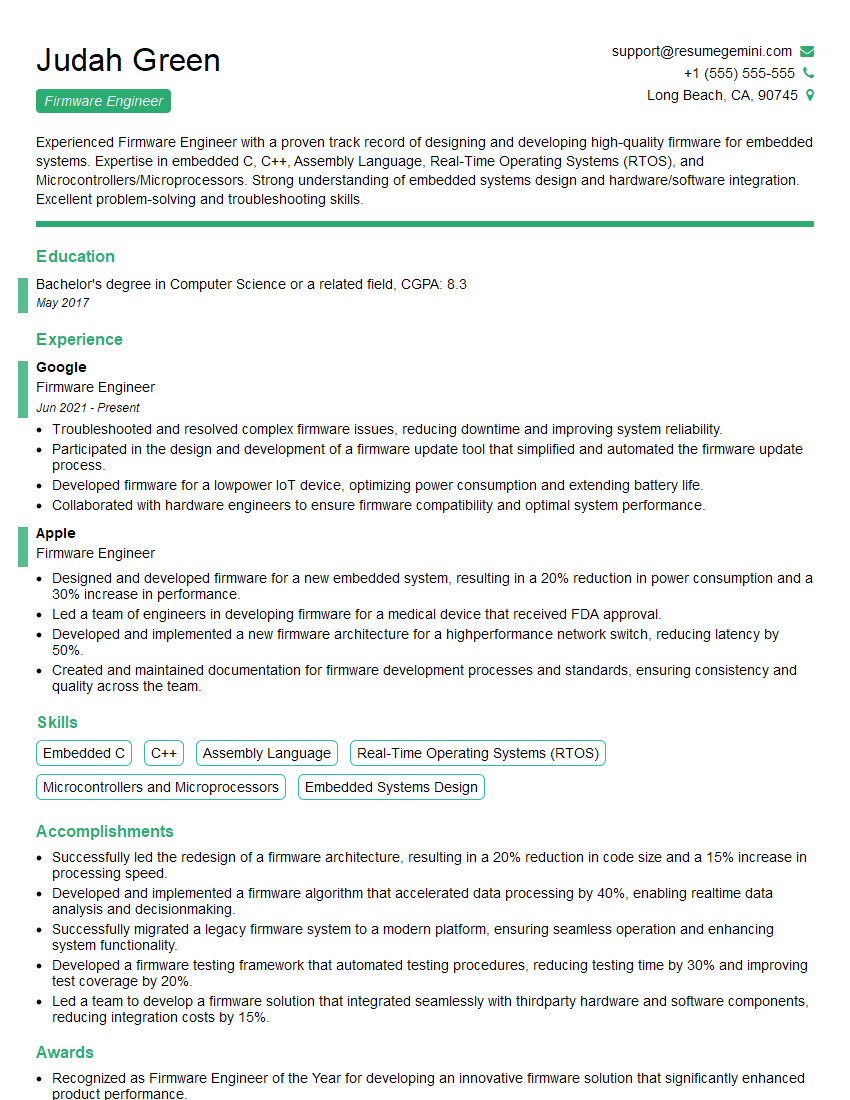
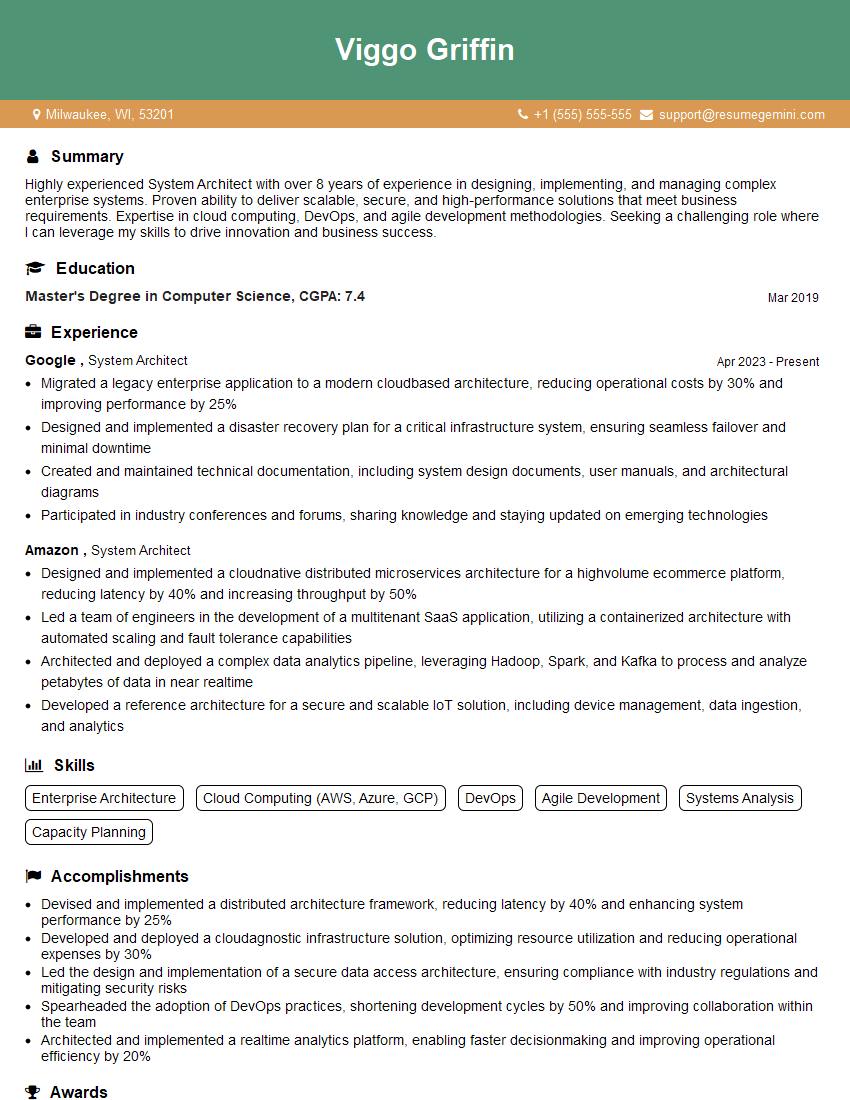
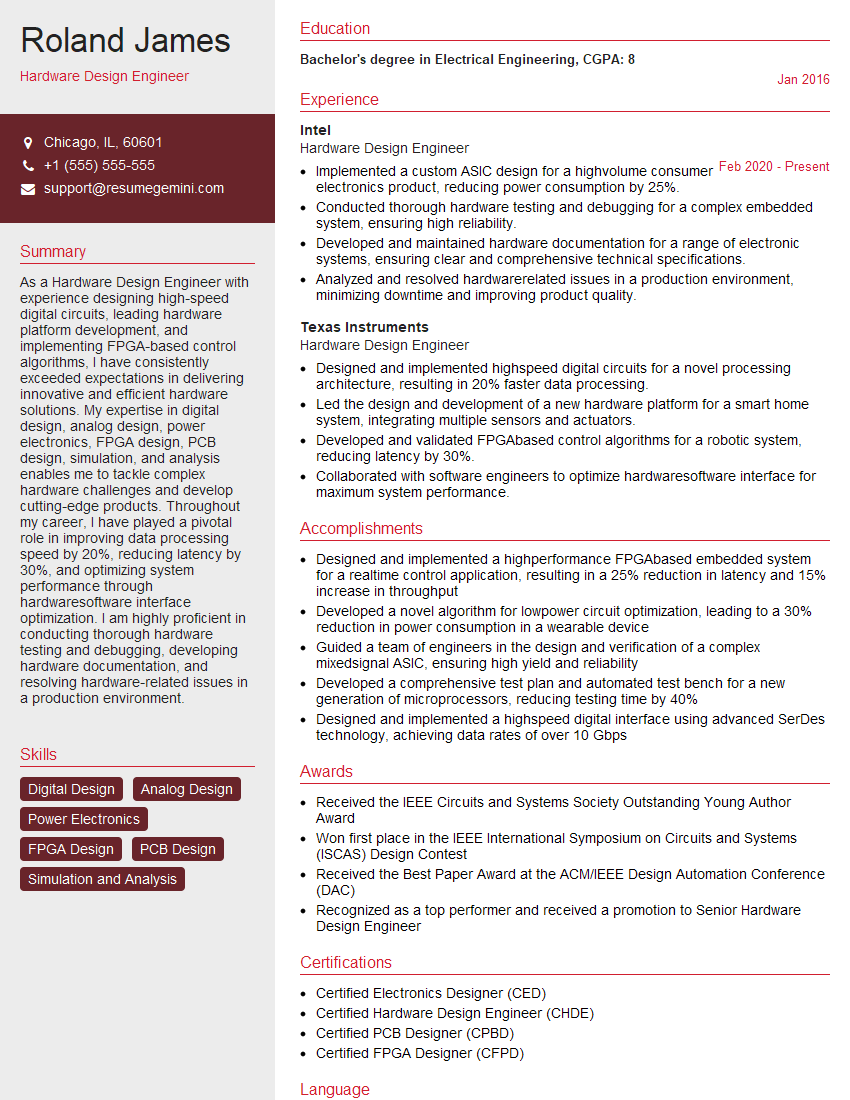
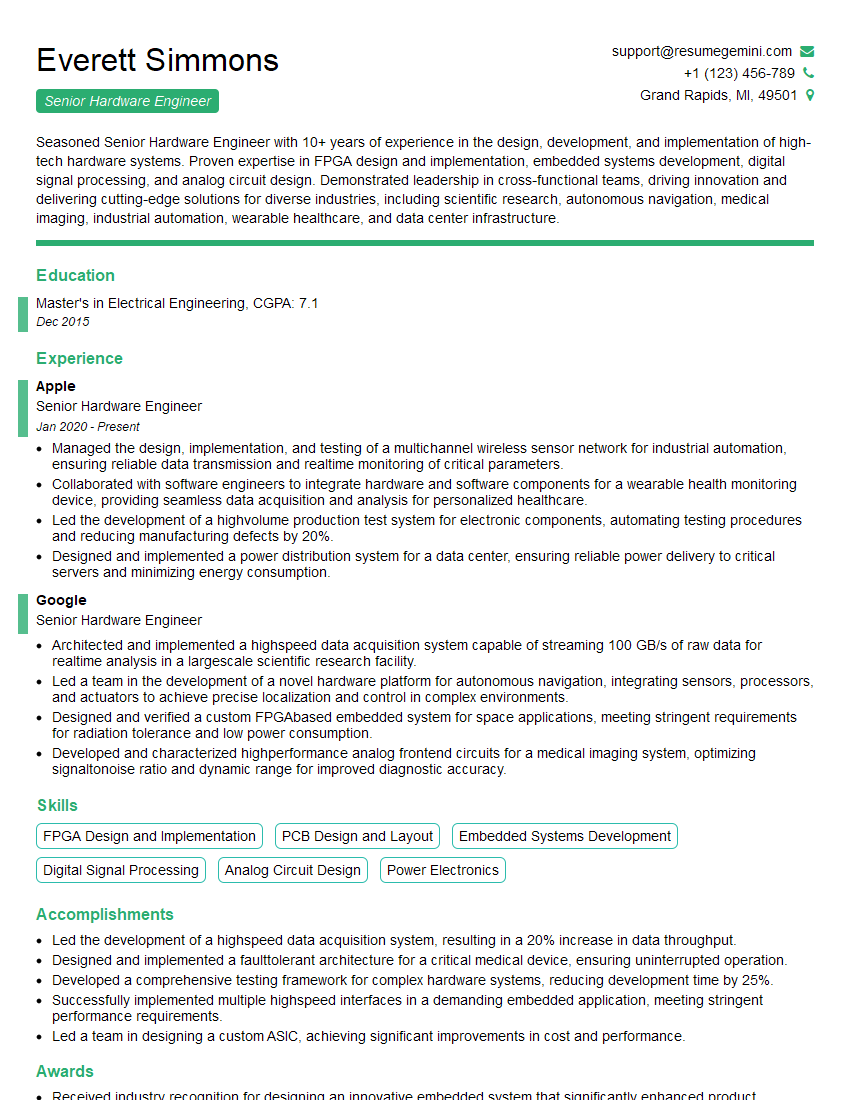
Mastering hardware application skills opens doors to exciting and rewarding careers in diverse fields, from autonomous vehicles to medical devices and beyond. Your expertise in this area is highly valuable in today's tech landscape. To significantly increase your job prospects, creating a compelling and ATS-friendly resume is crucial. We highly recommend leveraging ResumeGemini to build a professional resume that showcases your skills and experience effectively. ResumeGemini offers a streamlined process and provides examples of resumes tailored to Hardware Application roles, helping you present yourself in the best possible light to potential employers.
Explore more articles
Users Rating of Our Blogs
Share Your Experience
We value your feedback! Please rate our content and share your thoughts (optional).
What Readers Say About Our Blog
Very informative content, great job.
good