Every successful interview starts with knowing what to expect. In this blog, we’ll take you through the top Forensic Nursing Skills interview questions, breaking them down with expert tips to help you deliver impactful answers. Step into your next interview fully prepared and ready to succeed.
Questions Asked in Forensic Nursing Skills Interview
Q 1. Describe your experience collecting forensic evidence.
Collecting forensic evidence is a meticulous process requiring precision and adherence to strict protocols. My experience encompasses a wide range of scenarios, from sexual assault examinations to domestic violence cases and even death investigations. This involves systematically documenting and collecting various forms of evidence, including biological samples (such as blood, semen, saliva, hair), trace evidence (fibers, hairs, soil), and photographic documentation of injuries and the crime scene itself (if I am present). I am proficient in using specialized kits and tools to collect and preserve this evidence, ensuring its integrity for later analysis. For example, in a sexual assault case, I would carefully collect swabs from various body areas according to established protocols, ensuring proper chain of custody is maintained from the moment of collection. In a case involving a suspected assault, meticulous photographic documentation of injuries, along with the appropriate collection of clothing and other potential evidence, is crucial. Each piece of evidence is handled individually, labeled, and packaged to prevent contamination or degradation.
Q 2. Explain the chain of custody procedures you follow.
Chain of custody refers to the unbroken documentation of who had control of the evidence at any given time. Maintaining this is paramount to ensure the evidence’s admissibility in court. My procedures involve:
- Initial Documentation: Each item of evidence is carefully labeled with a unique identifier, date, time, location of collection, and my initials.
- Secure Storage: Evidence is stored in tamper-evident bags or containers, sealed and signed.
- Transfer Records: Every transfer of evidence from one person to another is meticulously documented, including the date, time, recipient’s name, and signature. This often involves using chain of custody forms.
- Evidence Log: A detailed log is maintained, detailing each piece of evidence and its whereabouts.
- Secure Transportation: Evidence is transported securely, often in locked containers or vehicles, to prevent unauthorized access or tampering.
Q 3. How do you handle emotionally charged situations with victims?
Handling emotionally charged situations with victims requires a high level of empathy, patience, and professionalism. I prioritize creating a safe and supportive environment where the victim feels heard and respected. This involves active listening, validating their feelings, and offering reassurance. I avoid judgmental language and focus on providing clear and concise explanations of the procedures. I emphasize that they are in control and can ask questions at any time. In some instances, collaboration with mental health professionals or victim advocates is crucial to provide comprehensive support. For example, if a patient is experiencing intense emotional distress, I may allow them breaks or offer comfort measures before proceeding. Building rapport and trust is key to successfully conducting the examination and ensuring the patient feels empowered throughout the process.
Q 4. What is your understanding of informed consent in forensic nursing?
Informed consent in forensic nursing is crucial. It means obtaining the patient’s voluntary agreement to undergo a specific examination or procedure after they’ve been provided with all necessary information. This information should be presented in a clear, understandable manner, free from coercion or undue influence. The patient needs to understand the purpose of the exam, the procedures involved, potential risks and benefits, their right to refuse any part of the exam, and the use of collected evidence. If the patient is deemed incompetent to consent (e.g., due to altered mental status), legal guardians or designated representatives must provide consent. Documentation of informed consent, including the date, time, and method of obtaining consent, is vital. A signed consent form is ideal, but if this is not possible, detailed documentation of the conversation is essential.
Q 5. Describe your experience documenting forensic findings.
Documenting forensic findings requires meticulous attention to detail and accuracy. My documentation typically includes:
- Detailed Narrative: A comprehensive written account of the examination, including observations of injuries, the collection of evidence, and the patient’s statements.
- Photographs: High-quality photographs of injuries, evidence, and the overall scene (if applicable).
- Sketches: Detailed sketches of injuries or evidence locations.
- Evidence Labels: Consistent and clear labeling of all collected evidence, including unique identifiers and chain-of-custody information.
- Medical Records: Integrating forensic findings into the patient’s medical record, ensuring complete and accurate documentation of care.
Q 6. How do you ensure the accuracy and reliability of your evidence collection?
Accuracy and reliability in evidence collection are paramount. I use various methods to ensure this:
- Proper Training and Certification: Ongoing professional development and adherence to established protocols are essential.
- Sterile Techniques: Utilizing sterile techniques when collecting biological samples prevents contamination.
- Appropriate Packaging: Using appropriate containers and packaging materials to preserve evidence integrity.
- Chain of Custody: Rigorous adherence to chain-of-custody procedures.
- Quality Control: Regular review of procedures and equipment to identify and address potential sources of error.
Q 7. What are the legal and ethical considerations in forensic nursing?
Forensic nursing involves complex legal and ethical considerations.
- Confidentiality: Maintaining patient confidentiality is crucial, balancing the need for disclosure with legal requirements.
- Patient Autonomy: Respecting the patient’s right to make informed decisions about their care.
- Objectivity: Maintaining objectivity in all aspects of the examination and documentation.
- Legal Admissibility: Ensuring that the evidence collected is legally admissible in court.
- Professional Boundaries: Maintaining appropriate professional boundaries with patients and other stakeholders.
Q 8. How do you maintain patient confidentiality in forensic cases?
Maintaining patient confidentiality in forensic cases is paramount and governed by strict legal and ethical guidelines. It begins with understanding the limitations of disclosure. Information shared by a patient is protected under various laws, including HIPAA in the US. This means I cannot disclose any identifying information or details of the case to anyone without the patient’s explicit consent, unless legally mandated to do so (e.g., a court order).
In practice, this means meticulously documenting all findings in a secure, password-protected electronic health record (EHR) accessible only to authorized personnel. I use unique identifiers instead of names whenever possible in reports. Even casual conversations about a case are avoided in public spaces. For instance, I wouldn’t discuss details of a case with colleagues while on a lunch break. The security of the EHR system itself is critical; I adhere to all organizational policies regarding access and data security.
Beyond the EHR, secure communication methods are used for contacting law enforcement or other professionals involved in the case. All physical evidence is meticulously labelled, chain-of-custody documented, and securely stored to prevent unauthorized access. It’s a constant vigilance, built into every step of the process.
Q 9. Explain your understanding of different types of trauma and their impact on evidence collection.
Trauma comes in many forms – physical, sexual, emotional, and psychological – and understanding their nuances is crucial for effective evidence collection. Physical trauma, like blunt force injuries or stab wounds, leaves obvious physical evidence that needs to be carefully documented with photography, measurements, and collection of samples. The location, nature, and characteristics of the injuries are meticulously recorded.
Sexual assault presents its own unique challenges. Evidence collection follows a specific protocol, often involving a SANE (Sexual Assault Nurse Examiner) exam, which focuses on the careful collection of biological specimens (e.g., swabs, clothing) and documentation of injuries. The psychological impact of sexual assault can significantly affect evidence collection, as the survivor might experience emotional distress or memory difficulties. A sensitive and empathetic approach is vital to ensure evidence is gathered without causing further trauma.
Emotional and psychological trauma, like that resulting from domestic violence or witnessing a crime, may not leave visible physical evidence but can still be profoundly impactful. In such cases, forensic nursing focuses on documenting the patient’s narrative, their emotional state, and any observable psychological effects. This information can be crucial in building a case, even without traditional physical evidence. For example, a patient’s detailed description of an assault, including emotional responses and contextual information, is extremely valuable.
Q 10. Describe your experience working with law enforcement personnel.
My experience working with law enforcement personnel has been extensive and collaborative. I’ve worked closely with detectives, investigators, and crime scene technicians on numerous cases. Effective collaboration is key to a successful outcome. My role often involves briefing law enforcement on my findings, explaining the medical aspects of the case, and answering their questions about injuries, evidence, and timelines.
For example, in one case involving a child abuse investigation, I provided the detective with a detailed medical report along with photographic evidence of the injuries. This information was critical in building the case against the perpetrator. Open communication and mutual respect are critical. I ensure that my communication is clear, concise, and unbiased, focusing on factual information obtained during the examination. Maintaining clear, professional boundaries is also crucial; my role is to provide medical expertise, while law enforcement focuses on investigating the crime. This professional balance is crucial for successful collaboration.
Q 11. How do you manage stress in a high-pressure forensic environment?
The forensic nursing environment can be incredibly stressful. Exposure to traumatic events, managing high-pressure situations, and dealing with the emotional impact of cases can take a significant toll. I use a multi-pronged approach to manage stress. First, self-care is paramount. This includes maintaining a healthy work-life balance, ensuring sufficient sleep, regular exercise, and a healthy diet. I also utilize stress-reduction techniques like mindfulness and deep breathing exercises, particularly after particularly challenging cases.
Secondly, I rely heavily on a strong support system. This includes my colleagues, my supervisor, and a network of professionals who understand the unique demands of forensic nursing. Openly discussing difficult cases with trusted individuals helps to process emotions and prevents burnout. Finally, my professional organization offers resources and support, including access to peer support groups and counseling services, should I need them. This proactive approach to stress management is essential for maintaining my well-being and effectiveness in my role.
Q 12. What is your experience with SANE examinations?
I have extensive experience conducting SANE examinations. A SANE examination is a comprehensive medical and forensic examination conducted by a specially trained nurse on a survivor of sexual assault. The process is meticulous and trauma-informed. It involves a detailed medical history, a thorough physical examination to document injuries, and the collection of forensic evidence using standardized protocols. Evidence collection is approached with sensitivity and respect, focusing on both the medical and legal needs of the survivor. The survivor’s emotional well-being is prioritized throughout the process.
My experience includes performing numerous SANE examinations, working with diverse populations, and providing follow-up care. I am proficient in collecting various forensic samples such as swabs, clothing, and other materials while adhering to strict chain-of-custody procedures. I am also well-versed in documenting findings thoroughly and preparing detailed reports for legal proceedings. It’s a highly specialized area requiring extensive training and a deep understanding of both forensic science and trauma-informed care.
Q 13. How do you assess and address the psychological needs of trauma survivors?
Assessing and addressing the psychological needs of trauma survivors is an integral part of forensic nursing. It starts with active listening and creating a safe, empathetic environment. This allows survivors to share their experiences without feeling judged or pressured. The approach is completely trauma-informed, meaning that any intervention or discussion needs to consider the impact of the trauma on the survivor.
Assessments involve evaluating the survivor’s emotional state, anxiety levels, signs of PTSD, and any immediate safety concerns. I use validated screening tools where appropriate to assess the severity of psychological symptoms. Interventions can range from providing immediate emotional support and crisis intervention to making referrals to mental health professionals for ongoing therapy. Providing information about available resources and support groups is also critical. For example, connecting a survivor with a rape crisis center or a support group can significantly improve their coping mechanisms and overall well-being. My goal is to empower survivors and help them navigate the complex emotional aftermath of their experience.
Q 14. Explain your knowledge of various forensic examination techniques.
My knowledge of forensic examination techniques is broad and encompasses various aspects of evidence collection and documentation. This includes proficiency in performing physical examinations to document injuries, utilizing specialized equipment like colposcopes for detailed examinations, and collecting various biological specimens such as blood, saliva, and hair samples according to chain-of-custody procedures.
I am also skilled in photographing injuries and documenting wound characteristics meticulously. This includes using appropriate lighting and scales to ensure accurate representation. Moreover, my expertise includes understanding different types of evidence, such as trace evidence (e.g., fibers, hairs), and how to collect and preserve them to maintain integrity. I am familiar with various documentation methods, including narrative reports, photographic documentation, and the use of specialized software for creating detailed case files. Maintaining the chain of custody throughout the entire process is critical. All procedures are guided by established forensic protocols to ensure the admissibility of evidence in legal settings. My training ensures accuracy and reliability, contributing significantly to the integrity of the investigation.
Q 15. How do you differentiate between accidental, intentional, and self-inflicted injuries?
Differentiating between accidental, intentional, and self-inflicted injuries requires a meticulous and systematic approach. It’s not a simple process of looking at a wound and declaring its origin; rather, it involves a detailed assessment of the injury’s mechanism, location, pattern, and the surrounding circumstances. Consider this like solving a puzzle where each piece of information contributes to the overall picture.
Accidental Injuries: These result from unplanned events, typically lacking a specific intent to cause harm. Examples include falls, traffic accidents, or burns from accidental contact with a hot surface. The injury pattern often reflects the mechanism of injury; a fall might show injuries consistent with impact at the point of contact.
Intentional Injuries: These are inflicted purposefully to cause harm. The pattern of injury is often more specific and may indicate the type of weapon used. For example, a stab wound will have a different pattern than a blunt force trauma. The location of injuries can also be telling; intentional injuries may target vulnerable areas or follow a specific pattern, such as strangulation marks on the neck.
Self-Inflicted Injuries: These are injuries intentionally caused by the victim themselves. The location, pattern, and the victim’s statement, if available, are crucial. Common examples include cutting injuries to the wrists or arms, or overdoses. However, the context is key. Sometimes, a self-inflicted injury might be a suicide attempt, whereas other times, it may be an attempt at self-harm or a way to express emotional distress. Proper documentation and careful consideration of context are crucial to avoid misinterpretation.
In practice, I combine physical examination findings with the patient’s statement (if reliable), the scene investigation reports (if available), and any other relevant information to reach a conclusion. It is important to remember that sometimes the exact classification of an injury can be challenging, and a definitive answer might not always be possible.
Career Expert Tips:
- Ace those interviews! Prepare effectively by reviewing the Top 50 Most Common Interview Questions on ResumeGemini.
- Navigate your job search with confidence! Explore a wide range of Career Tips on ResumeGemini. Learn about common challenges and recommendations to overcome them.
- Craft the perfect resume! Master the Art of Resume Writing with ResumeGemini’s guide. Showcase your unique qualifications and achievements effectively.
- Don’t miss out on holiday savings! Build your dream resume with ResumeGemini’s ATS optimized templates.
Q 16. What is your understanding of the legal implications of evidence mishandling?
Evidence mishandling in forensic nursing has significant legal implications. It can lead to compromised cases, wrongful convictions, or acquittals of guilty individuals. This is a serious ethical breach with potentially devastating consequences. Maintaining the chain of custody – a meticulous record of everyone who has handled the evidence and when – is paramount. Any deviation from established protocols can severely impact the admissibility of evidence in court.
For instance, if a sample is contaminated, improperly stored, or its chain of custody is broken, the evidence becomes unreliable and may be deemed inadmissible. This could lead to the dismissal of charges, the release of a dangerous perpetrator, or a miscarriage of justice. The legal ramifications could also include disciplinary action against the nurse, civil lawsuits, and even criminal charges for gross negligence or intentional misconduct. Strict adherence to established protocols is not just a procedural requirement; it’s fundamental to ensuring justice and protecting the integrity of the legal process.
Q 17. Describe your experience in court testimony and deposition preparation.
I have extensive experience in providing court testimony and preparing for depositions. This involves not only a deep understanding of the case and the relevant evidence, but also the ability to communicate complex medical information clearly and concisely to a non-medical audience – judges, juries, or lawyers. Preparation is crucial. This begins with thoroughly reviewing the case file, including medical records, police reports, and any other relevant documentation. I then craft clear and concise reports, focusing on objective observations and the data collected.
During depositions and courtroom testimony, I aim for neutrality, focusing on factual accuracy rather than advocacy. I understand the importance of avoiding speculation and sticking to what I observed and documented. I practice presenting information in a manner that is easily understandable and avoids overwhelming technical jargon. I’ve learned to anticipate potential questions and prepare clear, succinct answers to ensure effective and credible testimony.
For example, in one case involving a child abuse allegation, I spent weeks meticulously reviewing the medical records, photographs of the injuries, and the child’s developmental history before testifying. This allowed me to present a clear, detailed description of the injuries and confidently answer complex questions from both the prosecution and the defense.
Q 18. How do you maintain your professional competence in forensic nursing?
Maintaining professional competence in forensic nursing requires a commitment to continuous learning and professional development. The field is constantly evolving with advancements in medical knowledge, legal precedents, and investigative techniques. I actively participate in continuing education courses, workshops, and conferences related to forensic nursing, forensic science, and relevant legal updates. This allows me to stay abreast of the latest research, best practices, and legal standards.
I also engage in professional organizations, such as the International Association of Forensic Nurses (IAFN), to network with colleagues, access resources, and remain informed about current trends and challenges in the field. Peer review of cases and participation in interdisciplinary team discussions also contributes significantly to my professional growth. Regularly reviewing and updating my knowledge and skills helps me maintain the highest standards of professional practice in my field.
Q 19. What are the limitations of forensic nursing evidence?
Forensic nursing evidence, while crucial, does have limitations. The reliability of the evidence can be affected by several factors. First, the timing of the examination is important. Delayed examinations can impact the accuracy of findings due to the natural healing process. For example, bruises fade over time, and the precise nature of an injury might be difficult to establish after several days.
Secondly, the quality of the initial documentation and collection of evidence is vital. Inconsistent or incomplete documentation weakens the evidence. Furthermore, human error, both in observation and documentation, can introduce biases or inaccuracies. The inherent subjectivity in interpreting some findings also poses limitations; two experts may reach slightly different conclusions based on the same data. Finally, the absence of certain types of evidence, such as witness statements or security footage, can significantly limit our ability to reconstruct events.
Therefore, it’s essential to acknowledge these limitations when presenting forensic nursing evidence and to interpret findings carefully, considering all possible explanations and uncertainties.
Q 20. Describe a challenging forensic case you encountered and how you addressed it.
One particularly challenging case involved a patient presenting with multiple injuries, some consistent with domestic violence and others seemingly accidental. The patient initially gave inconsistent accounts of the events. This presented a complex situation requiring a cautious and thorough approach.
My strategy involved a systematic assessment: First, I meticulously documented all injuries, noting their location, characteristics, and potential mechanisms of injury. I photographed and measured each injury to provide objective evidence. I then conducted a thorough interview, focusing on building rapport and allowing the patient to describe their experiences in their own words. I used open-ended questions to encourage detailed responses, avoiding leading or suggestive inquiries. I also carefully noted any inconsistencies in their statements, looking for possible explanations without making assumptions.
By using a multidisciplinary approach, collaborating with law enforcement and social workers, we were able to piece together a more coherent narrative. Additional evidence, including witness testimonies and forensic evidence, supported the conclusion of domestic violence despite the patient’s initial conflicting statements. This underscored the importance of careful documentation, active listening, and teamwork in complex forensic cases.
Q 21. How do you prioritize your responsibilities during a complex forensic situation?
Prioritizing responsibilities during a complex forensic situation requires a structured approach. My priorities are always centered on the patient’s immediate safety and well-being. This includes ensuring their physical and emotional stability, providing necessary medical care, and collaborating with other professionals (law enforcement, social workers) to ensure their safety and access to support services.
Next, I prioritize the systematic collection and preservation of forensic evidence. This involves meticulous documentation of injuries, collection of samples, and maintaining the chain of custody. I follow established protocols to ensure the integrity of the evidence and its admissibility in court. Finally, I prioritize timely and accurate reporting of my findings, focusing on clear and objective communication to prevent misinterpretations.
Essentially, I use a triage-like approach, prioritizing life-saving interventions, followed by evidence preservation, and then thorough documentation and reporting. Effective communication and collaboration within the interdisciplinary team are key to managing these competing priorities during complex situations.
Q 22. What are the key differences between adult and pediatric forensic examinations?
The key differences between adult and pediatric forensic examinations stem primarily from developmental considerations. Adult examinations focus on obtaining a detailed history, conducting a thorough physical examination including documentation of injuries, and collecting evidence consistent with the alleged assault. Pediatric examinations, however, require a more nuanced approach.
- Communication: Children may not have the vocabulary or understanding to articulate what happened, necessitating the use of age-appropriate communication techniques, including play therapy or drawing.
- Physical Examination: The physical examination is modified to account for the child’s developmental stage and anatomical differences. For example, the genital examination might be delayed or modified to minimize trauma.
- Evidence Collection: The approach to evidence collection is also modified. For instance, while swabs from the genital area might be collected in adults, the same techniques may not be suitable for a child, requiring alternative methods and specialized tools.
- Legal Considerations: There are also significant legal considerations. Parental or guardian consent is crucial, and child protective services may be involved. In cases of suspected abuse, a multidisciplinary team approach, involving child psychologists, social workers, and law enforcement, is essential.
For example, a 5-year-old might communicate through drawings, whereas an adult can provide a verbal account. This necessitates different methods for collecting information and building a case.
Q 23. Explain your understanding of different types of sexual assault evidence collection.
Sexual assault evidence collection is a meticulous process aimed at preserving biological and physical evidence linking a suspect to a victim. It involves several critical steps:
- Clothing Collection: All clothing worn during the assault is carefully collected and packaged separately in paper bags to prevent contamination or degradation. This often includes underwear, outerwear, and any other items that may contain trace evidence.
- Swab Collection: Swabs are used to collect biological samples such as saliva, semen, and vaginal or anal secretions. These are collected following established protocols, using sterile swabs and specific containers to prevent cross-contamination.
- Body Fluids Collection: If applicable, body fluids such as urine or blood are collected for forensic analysis. These specimens may reveal the presence of drugs, alcohol, or DNA.
- Fingernail Scrapings: Fingernails are scraped to collect any possible material such as skin cells, fibers, or other trace evidence that may have been transferred during the assault.
- Photographs and Videography: Detailed photographs and videography of injuries and the crime scene are crucial for documenting the extent of physical harm and preserving the evidence in a visual record. This also aids in testimony.
- Hair and Fiber Collection: Hair samples from the victim and any foreign hairs found on the victim’s body or clothing are carefully collected and preserved.
Each item is meticulously documented, and a chain of custody is established to ensure the integrity and admissibility of the evidence in court. The entire process needs to be conducted with utmost sensitivity to the victim’s emotional and physical well-being.
Q 24. How do you ensure proper preservation and storage of forensic evidence?
Proper preservation and storage of forensic evidence is critical to maintain its integrity and admissibility in court. Any compromise in the chain of custody can lead to the evidence being deemed inadmissible. This involves a multi-step process:
- Proper Packaging: Each piece of evidence is packaged individually in appropriate containers to prevent contamination and degradation. For example, biological samples are stored in sealed containers at specific temperatures. Clothing is placed in paper bags, and trace evidence is collected using specialized techniques and containers.
- Chain of Custody Documentation: Meticulous documentation is essential to track the movement and handling of the evidence from the time it’s collected until it’s presented in court. This includes documenting who handled the evidence, when, and under what conditions.
- Storage Conditions: Evidence is stored in secure, controlled environments to prevent degradation or contamination. Temperature, humidity, and light exposure are all carefully controlled. For example, biological samples might be refrigerated or frozen.
- Inventory Management: A detailed inventory is maintained to track all pieces of evidence, including their location and condition. This is crucial for ensuring accountability and managing the evidence properly.
Think of it like a carefully orchestrated relay race: each person involved is responsible for maintaining the integrity of the evidence until it reaches the finish line—the courtroom.
Q 25. Describe your experience in working with different age groups and diverse populations.
My experience spans a wide range of age groups and diverse populations, including children, adolescents, adults, and elderly individuals from various cultural and socioeconomic backgrounds. Working with children requires specialized communication and examination techniques, understanding their developmental stages and employing age-appropriate language and approaches.
I’ve worked with individuals from diverse cultural and ethnic backgrounds, recognizing the importance of cultural sensitivity and adapting my communication style to suit their needs and comfort levels. This necessitates an awareness of potential language barriers and cultural norms regarding physical touch and disclosure. For instance, a detailed understanding of a community’s religious or cultural beliefs regarding healthcare and bodily autonomy is crucial in ensuring a respectful and appropriate examination.
Working with elderly individuals often requires a modified approach, taking into account potential physical limitations, cognitive impairments, or sensory deficits. Compassion and patience are crucial when addressing their unique needs.
In each case, establishing rapport and trust is paramount. My approach focuses on empathetic communication, providing a safe and comfortable environment, and respecting their autonomy throughout the examination process.
Q 26. How do you interpret and apply forensic science principles in your practice?
Forensic science principles are fundamental to my practice. I apply these principles to ensure accurate and reliable evidence collection and interpretation. This includes:
- Understanding of Injury Mechanisms: Identifying the type and pattern of injuries helps to reconstruct the events leading up to the assault. For example, the presence of specific injuries might suggest the use of a particular weapon or type of assault.
- Chain of Custody: Strict adherence to the chain of custody ensures the integrity and admissibility of evidence. I meticulously document every step of the evidence handling process.
- Trace Evidence Analysis: Understanding trace evidence, such as fibers, hairs, or biological fluids, enables me to connect suspects to victims or the crime scene.
- Scientific Method: The scientific method forms the basis of my approach, emphasizing objectivity, accuracy, and attention to detail. Conclusions are drawn based on evidence, not assumptions or speculation.
For example, recognizing a specific type of bite mark can link a suspect to the assault. Similarly, trace evidence like fibers found on the victim’s clothing can match the suspect’s clothing, strengthening the case. These principles ensure that the evidence is presented accurately and rigorously in court, contributing to justice.
Q 27. How do you collaborate with multidisciplinary teams in forensic cases?
Collaboration with multidisciplinary teams is crucial in forensic cases. Effective teamwork ensures comprehensive care for the victim and strengthens the legal case. The team typically includes:
- Law Enforcement: Collaboration with law enforcement involves providing detailed information about the examination findings, evidence collected, and potential injuries to aid in the investigation.
- Prosecutors: I work closely with prosecutors to prepare for court testimony, providing expert witness testimony on forensic findings and evidence.
- Social Workers: Social workers provide support and resources to victims, addressing their emotional, psychological, and social needs.
- Mental Health Professionals: Mental health professionals help victims cope with the psychological trauma resulting from the assault.
- Child Protective Services: In cases involving child abuse, child protective services play a critical role in ensuring the child’s safety and well-being.
Effective communication and information sharing are paramount within this team. Regular meetings and case conferences help to coordinate efforts and ensure the victim receives comprehensive and coordinated care.
Q 28. What are your career goals in forensic nursing?
My career goals in forensic nursing involve expanding my expertise in specialized areas, such as advanced sexual assault examination techniques and the forensic examination of children. I aim to contribute to the development of training programs for other forensic nurses and enhance the quality of care provided to victims of violence. I also aspire to become a recognized expert witness, providing testimony in legal proceedings.
Furthermore, I am committed to advocating for policy changes to improve the legal and medical systems’ response to victims of violence. This includes promoting increased access to forensic nursing services, improved training for healthcare professionals, and stronger legislation to protect victims’ rights. Ultimately, my goal is to make a significant contribution to improving justice for victims of violence and fostering safer communities.
Key Topics to Learn for Forensic Nursing Skills Interview
- Legal Aspects of Forensic Nursing: Understanding legal terminology, chain of custody procedures, and the importance of accurate documentation. Practical application: Knowing how to properly collect and preserve evidence while adhering to legal standards.
- Sexual Assault Forensic Examinations (SAFE): Mastering the comprehensive assessment, collection of evidence, and provision of compassionate care to survivors. Practical application: Demonstrating knowledge of SANE (Sexual Assault Nurse Examiner) protocols and ethical considerations.
- Trauma-Informed Care: Understanding the impact of trauma on patients and applying trauma-informed principles in all aspects of care. Practical application: Describing strategies for building rapport and providing culturally sensitive care to individuals who have experienced violence.
- Evidence Collection and Preservation: Proficiency in the proper collection, handling, and documentation of forensic evidence, including bodily fluids, trace evidence, and photographic documentation. Practical application: Describing techniques for minimizing contamination and maintaining the integrity of the evidence chain.
- Documentation and Reporting: Understanding the critical importance of detailed, accurate, and objective documentation. Practical application: Demonstrating ability to write clear and concise reports suitable for legal proceedings.
- Collaboration with Multidisciplinary Teams: Experience working effectively with law enforcement, attorneys, and other healthcare professionals. Practical application: Illustrating effective communication and teamwork skills in a high-pressure environment.
- Ethical Considerations and Professional Boundaries: Understanding ethical dilemmas and maintaining professional boundaries in forensic nursing practice. Practical application: Demonstrating knowledge of relevant ethical codes and guidelines.
Next Steps
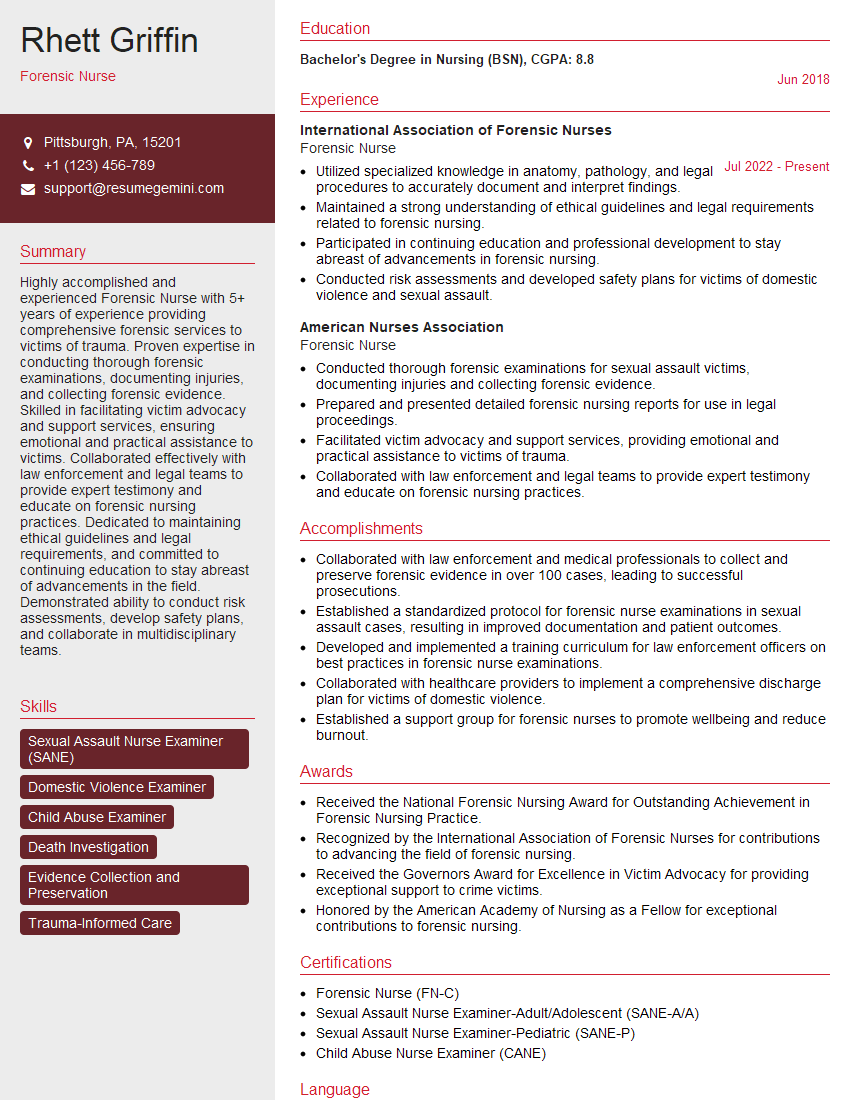
Mastering Forensic Nursing Skills is crucial for career advancement, opening doors to specialized roles and leadership opportunities within the field. A strong, ATS-friendly resume is essential to showcasing your qualifications effectively and increasing your chances of securing interviews. To build a professional resume that highlights your unique skills and experience, we highly recommend using ResumeGemini. ResumeGemini offers a user-friendly platform and provides examples of resumes specifically tailored to Forensic Nursing Skills, helping you present your qualifications in the best possible light.
Explore more articles
Users Rating of Our Blogs
Share Your Experience
We value your feedback! Please rate our content and share your thoughts (optional).
What Readers Say About Our Blog
Very informative content, great job.
good