Cracking a skill-specific interview, like one for Fire Alarm and Security System Installation, requires understanding the nuances of the role. In this blog, we present the questions you’re most likely to encounter, along with insights into how to answer them effectively. Let’s ensure you’re ready to make a strong impression.
Questions Asked in Fire Alarm and Security System Installation Interview
Q 1. Explain the difference between a conventional and addressable fire alarm system.
The core difference between conventional and addressable fire alarm systems lies in how they identify the location of a fire. Think of it like this: a conventional system is like a single phone line – when someone picks up the phone (a fire alarm activates), you know there’s a problem, but not exactly where. An addressable system is like a network of phones – each phone has a unique number (address), so you know precisely which location is reporting the alarm.
- Conventional Systems: These systems use zones. Multiple detectors are wired together into a zone. When a detector activates, the entire zone is indicated as alarming, requiring manual investigation to pinpoint the exact location of the alarm. They are simpler and cheaper, but less precise.
- Addressable Systems: Each device (detector, module, etc.) has a unique address, allowing the control panel to identify the exact location of the alarm. This offers precise location data, enabling faster response times and more efficient investigations. They are more complex and costly, but offer superior functionality.
For example, imagine a large office building. A conventional system might just indicate that a fire alarm is triggered on the third floor, while an addressable system would precisely pinpoint the alarm to room 312, saving valuable time in locating the fire.
Q 2. Describe the process of installing a smoke detector.
Installing a smoke detector is a straightforward process, but accuracy and adherence to building codes are paramount. Here’s a step-by-step guide:
- Planning: Determine the optimal locations based on building codes and the type of smoke detector (ionization or photoelectric). Generally, detectors should be installed on ceilings or high walls in each bedroom, hallway, and on every level of the house.
- Mounting: Securely mount the base using the provided screws, ensuring it’s level. The detector should be at least 4 inches from any walls or corners to allow for proper air circulation.
- Wiring: Connect the wires according to the wiring diagram. This typically involves connecting the power and alarm circuits.
- Testing: After installation, use the test button to verify the detector is functioning correctly. You should hear a loud beep.
- Final Inspection: Check for loose connections or other potential issues. Ensure all detectors are firmly mounted and the wiring is tidy.
It’s crucial to follow the manufacturer’s instructions carefully. Never modify the detector or its wiring unless you’re a qualified technician.
Q 3. How do you troubleshoot a malfunctioning fire alarm system?
Troubleshooting a malfunctioning fire alarm system requires a systematic approach. The first step is to identify the nature of the malfunction. Is it a false alarm, a constant alarm, or is the system unresponsive?
- Check the Control Panel: Examine the control panel for any error codes or indications of faults. Most modern panels provide detailed information on the issue.
- Inspect the Wiring: Look for loose connections, damaged cables, or short circuits. This often involves checking the wiring at both the detectors and the control panel.
- Test Individual Devices: Use the test button on each detector to ensure that it is functioning properly. Also, test the sounders and strobes to ensure they’re working correctly.
- Examine the Batteries (if applicable): Check the batteries in battery-powered detectors and replace them if necessary.
- Consult System Documentation: Refer to the system’s documentation for specific troubleshooting steps and error code explanations.
If the problem persists, it’s essential to contact a qualified fire alarm technician. Attempting complex repairs without proper training can be dangerous and could compromise the system’s integrity.
Q 4. What are the common types of security cameras and their applications?
Several types of security cameras cater to various needs and applications. The choice depends on factors like budget, desired resolution, viewing range, and lighting conditions.
- Analog Cameras: These cameras transmit video signals over coaxial cables. They are relatively inexpensive but offer lower resolution and limited features.
- IP Cameras: These cameras transmit video over an IP network, offering high resolution, advanced features like pan-tilt-zoom (PTZ), and remote access. They’re suitable for larger systems with network infrastructure.
- PTZ (Pan-Tilt-Zoom) Cameras: These cameras offer remote control over pan, tilt, and zoom functions, providing a wide field of view and allowing operators to zoom in on specific areas.
- Dome Cameras: Their rounded shape makes them less susceptible to vandalism and provides a wider viewing angle.
- Bullet Cameras: These are cylindrical cameras often used in outdoor applications due to their weather resistance.
- Thermal Cameras: These detect heat signatures, offering functionality in low-light or no-light environments.
Applications range from residential surveillance (using simple IP cameras) to large-scale security systems in commercial settings (employing a combination of PTZ, dome, and possibly thermal cameras).
Q 5. Explain the principles of access control systems.
Access control systems manage who can enter specific areas or access certain resources. The fundamental principle is to restrict access based on pre-defined rules and authorizations. Think of it as a sophisticated digital gatekeeper.
These systems typically consist of several components: access readers (e.g., card readers, keypad), controllers (processing authentication requests), access credentials (e.g., cards, fobs, PINs), and software for managing users and access permissions. Authentication happens when a user presents a credential to a reader. The reader verifies the credential against the system database. If authenticated, the controller grants access.
Real-world examples include secured office buildings, data centers, and restricted areas in manufacturing plants. They enhance security, track entry/exit, and improve accountability.
Q 6. Describe your experience with different types of access control readers.
My experience encompasses several access control reader types:
- Magnetic Stripe Card Readers: These readers are simple and inexpensive but relatively less secure because magnetic stripe cards can be easily duplicated.
- Proximity Card Readers: These readers use RFID (Radio-Frequency Identification) technology, offering increased convenience and security compared to magnetic stripe readers. A simple card swipe or proximity is sufficient for authentication.
- Biometric Readers: These readers use biometric data like fingerprints or facial recognition for authentication, providing the highest security level. However, they are often more expensive and require robust management.
- PIN Pad Readers: These readers require users to enter a Personal Identification Number (PIN) for access. They are often used in conjunction with other reader types for enhanced security.
I’ve worked with different brands and models of these readers, integrating them into various access control systems, from small office systems to larger corporate facilities. My experience includes the installation, configuration, and troubleshooting of these readers.
Q 7. How do you test and maintain a fire alarm system?
Testing and maintaining a fire alarm system is crucial for ensuring its effectiveness. Regular maintenance prevents malfunctions and keeps occupants safe.
- Weekly Tests: Manually initiate a test alarm to ensure the system is functioning correctly. This involves activating a test station or using the control panel to initiate a system test. Check that all horns and strobes are working.
- Monthly Tests: Perform a thorough inspection of all devices, checking for any damage, loose connections, or obstructions. Inspect batteries in battery-backed-up systems.
- Annual Tests: A qualified technician should conduct a comprehensive test, including a full system check, operational testing of each device, and a review of the system’s documentation.
- Regular Maintenance: Keep the system clean and free from dust and debris. Replace any faulty components promptly.
Proper documentation of all tests and maintenance activities is essential. This documentation serves as a record of compliance with safety standards and aids in troubleshooting if issues arise.
Q 8. What are the NFPA codes related to fire alarm systems?
The National Fire Protection Association (NFPA) publishes numerous codes relevant to fire alarm systems, ensuring safety and consistency across installations. The most crucial is NFPA 72, National Fire Alarm and Signaling Code. This comprehensive document covers everything from system design and installation to testing and maintenance. It details requirements for different types of fire alarm systems, including conventional, addressable, and wireless systems. Specific sections address notification appliances, power supplies, and system testing procedures. For example, NFPA 72 dictates the minimum audible signal levels required in different occupancy types, ensuring everyone can hear the alarm. Another important code is NFPA 101, Life Safety Code, which dictates the overall fire safety requirements for buildings, including integration with fire alarm systems. Compliance with these codes is crucial for ensuring building occupants’ safety and legal adherence.
- NFPA 72: The core code, covering all aspects of fire alarm system design, installation, and maintenance.
- NFPA 101: Focuses on building life safety and integrates fire alarm systems into the overall building safety strategy.
Q 9. Describe your experience with different types of fire suppression systems.
My experience encompasses a wide range of fire suppression systems. I’ve worked extensively with water-based systems, including wet pipe, dry pipe, and deluge systems. Wet pipe systems are the most common, always filled with water, ready to discharge upon activation. Dry pipe systems are used in areas susceptible to freezing, filled with compressed air until activated. Deluge systems provide a more rapid discharge over a large area, often used in high-risk environments like server rooms. I’m also proficient with gas-based systems, such as carbon dioxide (CO2) and clean agent systems. These are preferred where water damage is unacceptable, like in computer rooms or museums. Clean agents are environmentally friendly and electrically non-conductive. Finally, I have experience with foam systems, ideal for flammable liquid fires. Each system requires a specific design approach based on the risk assessment of the protected area and the type of fire hazard present. For instance, a kitchen would need a system capable of handling grease fires, possibly a wet chemical or pre-action system, while an electrical substation might necessitate a clean agent system to avoid electrical short circuits.
Q 10. How do you ensure the integrity of a security system network?
Ensuring the integrity of a security system network involves a multi-layered approach. First, robust physical security is crucial. This includes secure server rooms with access control, preventing unauthorized physical access to the network infrastructure. Secondly, network segmentation is key, separating sensitive parts of the system from the less critical ones. This minimizes the impact of a potential breach. Thirdly, we implement strong cybersecurity measures. This involves regular software updates, strong passwords, and firewalls to prevent unauthorized access and malicious activity. Regular penetration testing simulates attacks to identify vulnerabilities and improve the system’s resilience. Finally, we establish a strong monitoring system, constantly tracking network activity and alerting us to any suspicious behavior. Think of it like a castle with multiple layers of defense: a strong outer wall (physical security), inner gates (network segmentation), armed guards (cybersecurity measures), and vigilant watchtowers (monitoring). This multi-faceted approach ensures the system remains secure and reliable.
Q 11. Explain the importance of proper grounding in fire alarm and security systems.
Proper grounding is absolutely critical in both fire alarm and security systems. It protects equipment from damage caused by electrical surges and ensures the safety of personnel. Grounding provides a low-impedance path for fault currents, preventing dangerous voltage build-up that could lead to equipment failure, electrical shock, or even fire. In fire alarm systems, proper grounding is essential for reliable operation of the detectors and notification appliances. A poorly grounded system might lead to false alarms or, more seriously, a failure to activate during a real fire. Similarly, in security systems, grounding ensures the proper functioning of cameras, sensors, and other devices. Imagine a lightning strike hitting near your building. A well-grounded system would safely channel that surge to earth, protecting the equipment. Without proper grounding, the surge could fry sensitive electronics and disrupt the entire system, compromising safety and security.
Q 12. What are the safety precautions you take during installation and maintenance?
Safety is paramount during installation and maintenance. We always follow strict safety protocols, starting with a thorough site survey to identify potential hazards. We utilize lockout/tagout procedures when working on energized equipment to prevent accidental activation. We wear appropriate personal protective equipment (PPE), including safety glasses, gloves, and hard hats. We’re trained to handle potentially hazardous materials safely and follow all relevant OSHA regulations. When working at heights, we use proper fall protection equipment. Furthermore, we maintain a clean and organized work area to prevent accidents and ensure efficient work. Regular safety meetings reinforce these procedures and ensure everyone is aware of the latest best practices.
Q 13. How do you handle a false alarm?
Handling a false alarm involves a systematic approach. First, we investigate the cause of the alarm. This may involve checking detectors, control panels, and any other potential sources. We then reset the system once the cause is identified and addressed. If the cause is unknown, a more thorough inspection may be required. We document all actions taken and communicate with the building occupants and authorities, especially if it was a significant event that triggered an emergency response. It’s important to find the root cause of the false alarm to prevent it from happening again. For example, a faulty smoke detector might require replacement, while an accidental activation of a pull station needs corrective action like enhanced signage or employee training. Proactive maintenance and regular testing are key to reducing false alarms.
Q 14. Describe your experience with different types of intrusion detection sensors.
My experience includes various intrusion detection sensors. Passive infrared (PIR) sensors detect changes in heat signatures, commonly used for indoor applications. Photoelectric sensors detect light beams being broken, often used for outdoor perimeter protection. Microwave sensors detect movement through changes in microwave energy, suitable for both indoor and outdoor use. Dual-technology sensors combine PIR and microwave technology, offering greater accuracy and reducing false alarms. More advanced sensors include vibration sensors, which detect changes in vibration patterns, useful for securing doors and windows, and glass-break sensors, which detect the sound of breaking glass. The choice of sensor depends on the specific application, considering factors like environment, cost, and the level of security required. For example, a high-security facility might use a layered approach, combining multiple sensor types for enhanced protection.
Q 15. How do you program and configure a security system panel?
Programming and configuring a security system panel involves interacting with its software interface, often via a keypad or dedicated software on a computer. This process varies depending on the manufacturer and model, but generally involves several key steps:
- System Setup: This includes setting the system’s date and time, programming user codes and access levels, defining zones (areas protected by specific sensors), and setting up system parameters like alarm delays and reporting options.
- Adding Devices: Each sensor, door contact, keypad, etc., has a unique address that needs to be programmed into the panel. This is often done by entering the device’s address and type into the panel’s programming menu. Some systems use automatic device detection, simplifying this process.
- Partitioning (if applicable): Larger systems might be partitioned to manage separate areas independently. Each partition can have its own user codes, zones, and schedules.
- Programming Schedules: Most systems allow scheduling of different modes (armed, disarmed, stay mode) to suit daily routines. For instance, you might arm the system automatically at night and disarm it in the morning.
- Testing: After programming, thorough testing is crucial to verify that all zones and devices are functioning correctly. This involves triggering sensors and checking the panel’s response.
For instance, I recently programmed a Honeywell Lynx Touch panel. The process involved accessing the programming menu via the keypad, assigning zone types (door contact, motion detector), and then testing each zone by opening and closing doors or triggering motion detectors to ensure correct reporting.
Career Expert Tips:
- Ace those interviews! Prepare effectively by reviewing the Top 50 Most Common Interview Questions on ResumeGemini.
- Navigate your job search with confidence! Explore a wide range of Career Tips on ResumeGemini. Learn about common challenges and recommendations to overcome them.
- Craft the perfect resume! Master the Art of Resume Writing with ResumeGemini’s guide. Showcase your unique qualifications and achievements effectively.
- Don’t miss out on holiday savings! Build your dream resume with ResumeGemini’s ATS optimized templates.
Q 16. What software or tools do you use for fire alarm and security system design?
I use a variety of software and tools for designing fire alarm and security systems, depending on the project’s scope and complexity. These include:
- CAD Software (AutoCAD, Revit): For creating detailed floor plans, system layouts, and cable routing diagrams. This allows visualization of the system’s physical layout and helps in planning optimal placement of devices.
- Specialized Fire Alarm Design Software: Software like System Sensor’s IAS or similar programs helps in designing fire alarm systems, calculating system capacity, and ensuring compliance with codes. This often includes features for generating reports and system drawings.
- Security System Design Software: Some security manufacturers offer software for designing security systems, helping in selecting appropriate equipment, calculating cable lengths, and creating system documentation. These tools often provide integration with video management systems.
- Spreadsheet Software (Excel): Used for creating bills of materials, managing device information, and organizing project data.
- Testing and Commissioning Software: Many systems have associated software for testing and commissioning, enabling systematic verification of the system’s functionality before handover.
For example, in a recent large office building project, we used AutoCAD to map out the fire alarm system’s layout, considering factors like building codes, escape routes, and sensor placement. System Sensor IAS was used for detailed fire alarm calculations and design documentation.
Q 17. Explain your experience with different types of cabling used in these systems.
My experience encompasses a wide range of cabling types used in fire alarm and security systems. The choice of cable depends on factors like voltage, current carrying capacity, environmental conditions, and the specific requirements of the system and building codes.
- Category 5e/6 (CAT5e/CAT6): Used for network connections between security system components, such as IP cameras, network video recorders (NVRs), and access control systems. CAT6 is preferred for its higher bandwidth.
- Coaxial Cable (RG-59, RG-6): Traditionally used for analog CCTV cameras but is less common now with the prevalence of IP cameras.
- Fiber Optic Cable: For long-distance transmission of high-bandwidth data, particularly in large installations. Provides superior security and immunity to electromagnetic interference.
- Low-Voltage Wire (18 AWG, 22 AWG): Used for connecting sensors, detectors, and other devices to the control panels. The gauge of the wire is chosen based on the length of the run and the current draw of the devices.
- Fire Alarm Cable (Plenum-rated): Critically important for fire alarm systems. Plenum-rated cables are designed to minimize smoke and toxic gas production in the event of a fire, ensuring safe evacuation.
For example, in a recent project, we used fiber optic cable for connecting remote IP cameras to the central NVR due to their distance and the need for high-bandwidth transmission. We employed plenum-rated cable for the fire alarm system to meet code compliance.
Q 18. How do you document your work and maintain system records?
Thorough documentation and record-keeping are crucial for maintaining and servicing fire alarm and security systems. My approach involves several key aspects:
- As-Built Drawings: Detailed drawings showing the final installation, including the location of all devices, cabling routes, and system components. These are updated as any changes are made.
- System Diagrams: Schematics showing the connections between various components, including network diagrams for IP-based systems.
- Programming Records: Records of all programming changes made to the security system panel, including dates, times, and a description of the changes. This is essential for troubleshooting and future modifications.
- Test Reports: Comprehensive reports detailing the results of system tests, including dates, times, and pass/fail results for each component.
- Maintenance Logs: A record of all maintenance activities performed, including dates, descriptions of work completed, and any parts replaced.
- Warranty Information: Records of all warranties for equipment and services.
I use a combination of digital and physical storage methods. Digital records are stored securely in a shared network drive and backed up regularly, while key documents (like as-built drawings) are also maintained in physical format. This ensures data is accessible and protected even in unforeseen circumstances.
Q 19. Describe your experience with integrating fire alarm and security systems.
Integrating fire alarm and security systems offers significant advantages, such as enhanced safety and streamlined security management. My experience includes various integration methods:
- Supervisory Signals: Fire alarm systems can send signals to security systems, triggering specific actions like lockdown procedures or automatically notifying security personnel. For example, a fire alarm triggering an automatic door lock-down.
- Centralized Monitoring: Integrated systems allow for monitoring of both fire and security events from a single interface, improving response times and simplifying management. One platform allows viewing of both CCTV feeds and alarm statuses.
- Access Control Integration: Security systems can restrict access to areas based on fire alarm status. For instance, automatic door unlocks in emergency situations guided by fire alarm signals.
- Data Integration: Systems can be connected to share data for analysis and reporting, allowing for the identification of trends and potential vulnerabilities. Data analysis might reveal patterns related to false alarms, improving system performance.
In one project, we integrated a fire alarm system with an access control system to automatically unlock designated exit doors in a fire event, ensuring fast and safe evacuation. The systems also shared event logs, providing a comprehensive record of both security and fire-related incidents.
Q 20. How do you troubleshoot network connectivity issues in a security system?
Troubleshooting network connectivity issues in a security system requires a systematic approach. My process usually involves these steps:
- Check Physical Connections: Inspect all cables and connectors for damage or loose connections. This often identifies simple problems.
- Verify IP Addresses and Subnet Masks: Ensure that all devices have valid IP addresses and are on the same subnet. Incorrect configuration is a common cause of network problems.
- Test Network Connectivity: Use tools like ping and traceroute to test network connectivity between devices. This helps identify the point of failure.
- Check Network Switches and Routers: Verify that network switches and routers are functioning correctly and not overloaded. Sometimes, restarting these devices can resolve temporary network glitches.
- Examine System Logs: Check system logs for any error messages related to network connectivity. This provides clues about the nature of the problem.
- Consult Network Diagrams: Review network diagrams to ensure that all devices are correctly connected and that the network configuration is valid.
For example, recently, a network camera wasn’t accessible. By checking the system logs, I found an incorrect IP address entry. Changing the IP address resolved the connectivity issue immediately. If physical layer issues were suspected, I would use a cable tester to verify cable integrity.
Q 21. What are the common causes of fire alarm system malfunctions?
Fire alarm system malfunctions can stem from various sources. Identifying the root cause requires careful investigation. Here are some common culprits:
- Power Supply Issues: Low voltage or power outages can disable the entire system or individual components. Regular battery tests are vital.
- Faulty Devices: Malfunctioning smoke detectors, heat detectors, or other devices can cause false alarms or system failures. Regular testing and maintenance are crucial.
- Wiring Problems: Damaged, loose, or improperly connected wiring can disrupt signal transmission and lead to malfunctions. Careful cable management and regular inspections are key.
- Software Glitches: Software bugs or incorrect programming can cause system errors or prevent proper operation. Keeping software updated and using reliable programming practices is essential.
- Environmental Factors: Extreme temperatures, humidity, or dust can affect the performance of fire alarm components. Proper environmental control is critical.
- Improper Maintenance: Lack of regular maintenance can lead to component failure and increase the risk of malfunctions. Scheduled maintenance according to the manufacturer’s recommendations is a must.
For instance, a recent false alarm was traced to a faulty smoke detector that was triggering repeatedly due to dust accumulation. Regular cleaning and scheduled testing would have prevented this.
Q 22. How do you ensure compliance with relevant building codes and regulations?
Ensuring compliance with building codes and regulations is paramount in fire alarm and security system installations. It’s not just about avoiding penalties; it’s about protecting lives and property. My approach is multifaceted:
Thorough Code Review: Before any project begins, I meticulously review all applicable codes, such as NFPA 72 (National Fire Alarm Code) and local building ordinances. This includes understanding specific requirements for the building type, occupancy, and local jurisdiction.
Detailed Design & Documentation: The design phase meticulously documents every component, its placement, and its connection to the overall system. This documentation serves as a blueprint for installation and inspection, ensuring everything aligns with the codes. For instance, I’ll specify the exact type and placement of smoke detectors based on room type and code requirements.
Rigorous Testing & Inspection: Following installation, a comprehensive testing process is critical. This involves functionality tests, ensuring alarms activate correctly and are properly interconnected. We then invite the relevant authorities for inspection to verify compliance with all regulations.
Maintaining Records: Complete documentation, including test results, inspection reports, and permits, is meticulously maintained. This provides a verifiable audit trail demonstrating compliance and facilitates any future maintenance or upgrades.
Think of it like building a house – you wouldn’t skip inspections or ignore building permits. Ignoring codes in fire and security systems is far more dangerous; it risks lives and property.
Q 23. Describe a challenging installation project you worked on and how you overcame the challenges.
One particularly challenging project involved installing a fire alarm system in a historic building undergoing renovation. The building’s age presented several obstacles:
Compromised Wiring: The existing wiring was outdated, fragile, and in some cases, non-existent. We had to carefully navigate this, often using specialized techniques to ensure the new system didn’t compromise the building’s integrity.
Aesthetic Constraints: Maintaining the building’s historical aesthetic was crucial. We had to use discreet mounting methods and carefully select equipment that blended seamlessly with the architecture. This required extensive research and collaboration with preservation specialists.
Difficult Access: The building’s layout and cramped spaces made installing certain components difficult. We employed specialized tools and techniques, including using smaller, more maneuverable equipment, and coordinating with other contractors on-site to ensure efficient progress.
We overcame these challenges by utilizing a phased approach. We carefully planned each stage, addressing the unique constraints at each step. We also collaborated extensively with the architects, contractors, and building inspectors to ensure the smooth execution of the project, achieving a result that was both safe and aesthetically pleasing.
Q 24. How do you prioritize tasks during a busy workday?
Prioritizing tasks during a busy workday involves a strategic approach that blends urgency and importance. I use a combination of methods:
Prioritization Matrix (Eisenhower Matrix): I categorize tasks based on urgency and importance (Urgent/Important, Important/Not Urgent, Urgent/Not Important, Not Urgent/Not Important). This allows me to focus on the crucial, time-sensitive tasks while also proactively addressing those that contribute to long-term success.
Project Management Software: Utilizing project management tools allows for a clear overview of all tasks, deadlines, and dependencies. This ensures all tasks are tracked and no deadlines are missed.
Time Blocking: I allocate specific time slots for particular tasks, enhancing focus and productivity. This ensures that each task receives the appropriate time commitment without being rushed.
Regular Review and Adjustment: I regularly review my task list to assess progress, re-prioritize if needed, and account for any unexpected delays. Adaptability is key in a fast-paced environment.
Think of it like managing a team of firefighters – you need to tackle the most dangerous situations first while also ensuring proactive measures are in place to prevent future incidents.
Q 25. Explain your experience working with different manufacturers’ equipment.
I possess extensive experience with various manufacturers’ equipment, including major players like Honeywell, Siemens, and Bosch. This experience enables me to select the optimal equipment for each project based on factors such as budget, building requirements, and system integration needs.
Understanding System Architectures: My familiarity extends beyond individual components to encompass the overall system architecture of each manufacturer. This allows me to seamlessly integrate different systems and components from various manufacturers where necessary.
Troubleshooting Expertise: Encountering malfunctions requires a deep understanding of various manufacturers’ systems. My experience allows for quick diagnosis and effective troubleshooting.
Continuous Learning: The industry is constantly evolving, with manufacturers regularly introducing new products and technologies. I continually update my knowledge through training courses, manufacturer documentation, and industry publications.
Different manufacturers offer distinct advantages, and selecting the right equipment is critical for both functionality and long-term reliability. My experience ensures the right choices are made for optimal performance.
Q 26. What are the key performance indicators (KPIs) you use to measure success in this role?
Key performance indicators (KPIs) I use to measure my success include:
On-Time Project Completion: Meeting project deadlines consistently demonstrates efficiency and effective planning.
Project Budget Adherence: Staying within budget showcases responsible resource management and cost-effectiveness.
Client Satisfaction: Positive client feedback highlights successful collaboration and project delivery that meets or exceeds expectations.
System Uptime: Minimizing system downtime post-installation ensures reliable system performance and minimized disruptions.
Compliance with Codes and Regulations: Successfully passing inspections and adhering to all relevant standards demonstrates adherence to safety and legal requirements.
These KPIs provide a comprehensive assessment of my performance, ensuring all aspects of the role are met successfully. It’s not just about installing the system, but ensuring it’s reliable and meets the client’s needs.
Q 27. How do you stay updated with the latest advancements in fire alarm and security technology?
Staying updated with advancements in fire alarm and security technology is crucial in this rapidly evolving field. My approach involves:
Industry Publications & Websites: I regularly review leading industry publications and websites to stay informed on the latest trends, new products, and best practices.
Manufacturer Training: Participating in manufacturer-sponsored training programs ensures proficiency with their latest technologies and systems.
Industry Conferences & Seminars: Attending industry conferences and seminars provides opportunities to learn from experts, network with peers, and explore cutting-edge innovations.
Professional Certifications: Pursuing and maintaining relevant certifications, such as NICET certifications, demonstrates commitment to ongoing professional development and keeps my knowledge up-to-date with the latest standards.
Technology in this field is always advancing. Staying informed ensures I can leverage the best tools and techniques to provide clients with the most effective and reliable solutions.
Q 28. What are your salary expectations for this role?
My salary expectations for this role are commensurate with my experience, skills, and the responsibilities involved. I am open to discussing a competitive compensation package based on the specifics of the position and the company’s compensation structure. I am confident that my contributions will generate significant value, justifying a compensation package that reflects my market worth.
Key Topics to Learn for Fire Alarm and Security System Installation Interview
- National Fire Alarm and Signaling Code (NFPA 72): Understanding the latest NFPA 72 code requirements is crucial for safe and compliant installations. This includes knowledge of system design, testing procedures, and documentation.
- System Design and Blueprint Reading: Interpreting blueprints and designing efficient and effective fire alarm and security systems based on building layouts and specific client needs. Practical application involves translating design specifications into a functional system.
- Wiring and Cabling Techniques: Mastering proper wiring techniques for various alarm system components, adhering to safety regulations and ensuring system integrity. This includes understanding different cable types and their applications.
- Troubleshooting and Diagnostics: Developing strong troubleshooting skills to identify and resolve system malfunctions efficiently. This involves using diagnostic tools and applying logical problem-solving approaches.
- Testing and Inspection Procedures: Thorough knowledge of testing and inspection procedures according to NFPA 72, ensuring systems are fully operational and meet regulatory standards. This includes understanding various testing methods and documentation requirements.
- Types of Fire Alarm Systems (conventional, addressable): Understanding the differences between various fire alarm system types, their applications, and their respective advantages and disadvantages.
- Integration of Security Systems (CCTV, Access Control): Knowledge of integrating fire alarm systems with other security systems, improving overall building security and creating a unified system.
- Safety Regulations and Best Practices: Adherence to all relevant safety regulations and industry best practices throughout the installation and maintenance processes. This includes personal safety and workplace safety protocols.
Next Steps
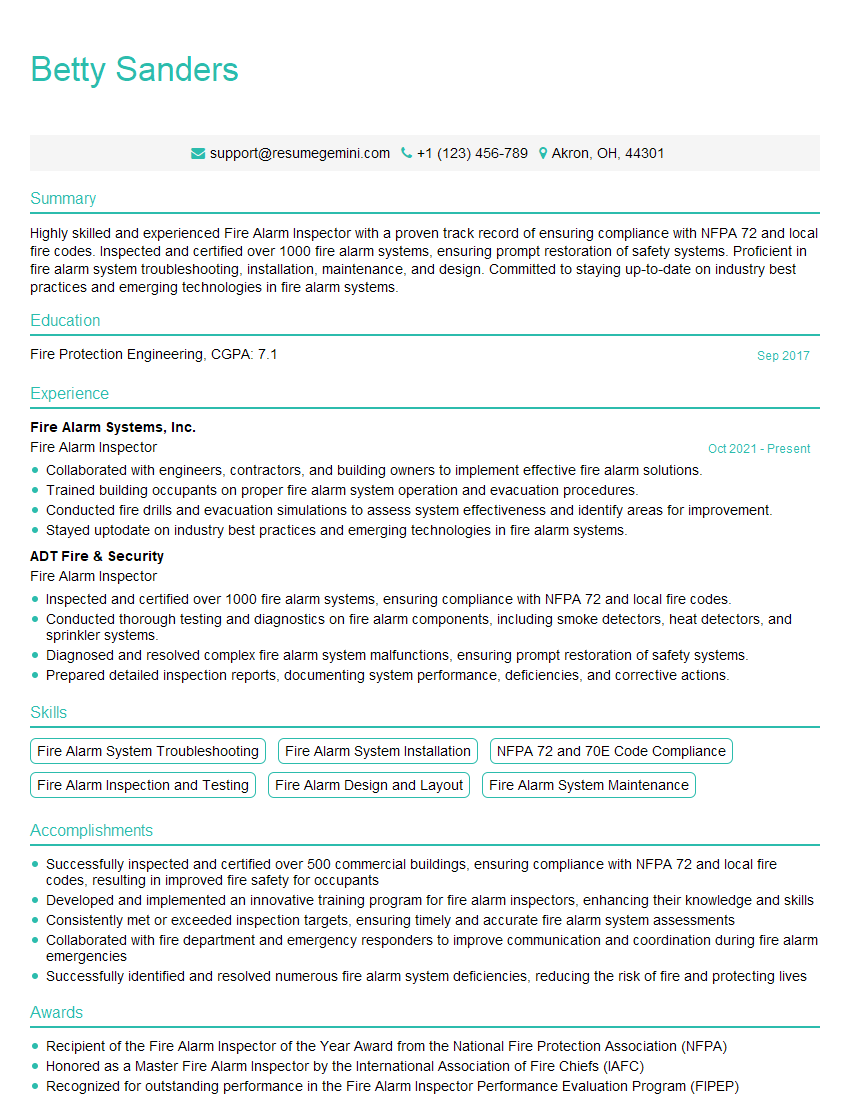
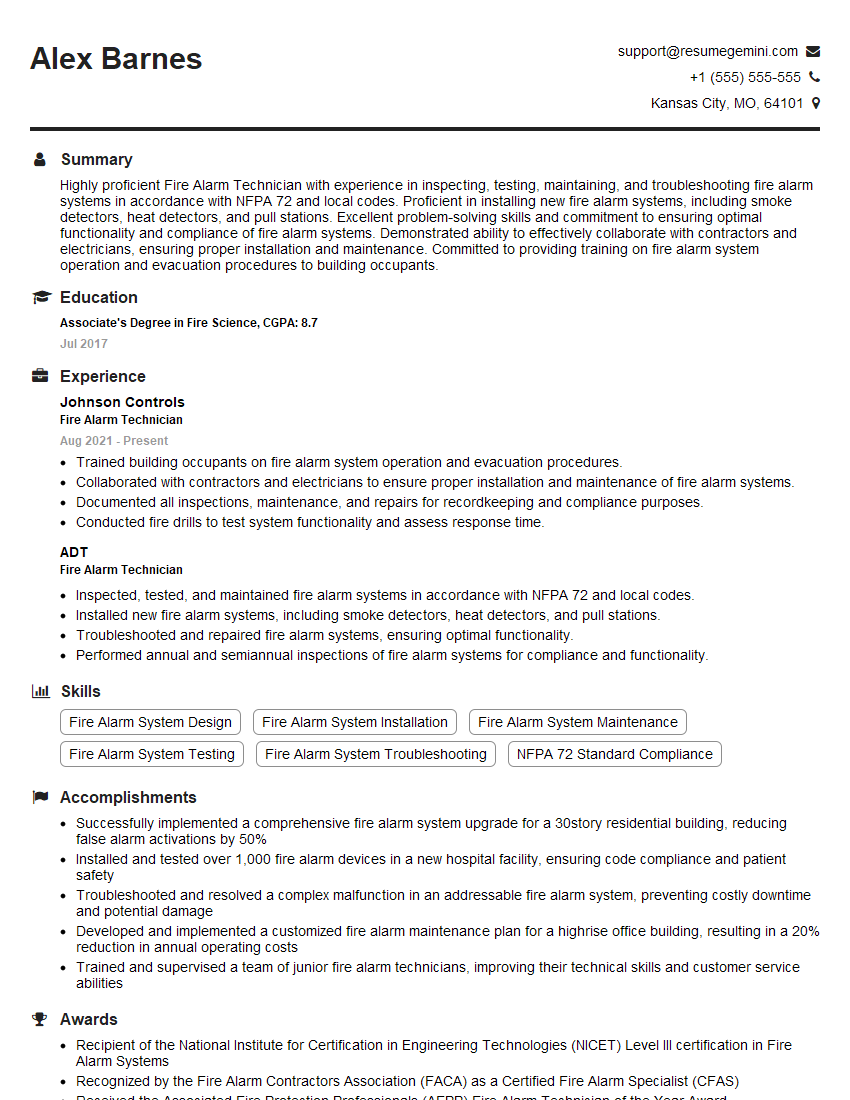
Mastering Fire Alarm and Security System Installation opens doors to a rewarding career with excellent growth potential. This field demands skilled professionals, and showcasing your expertise through a well-crafted resume is essential. An ATS-friendly resume is key to getting your application noticed by recruiters and hiring managers. To help you build a truly impactful resume, we recommend using ResumeGemini. ResumeGemini provides tools and resources to create a professional and effective resume, and we offer examples of resumes tailored specifically to the Fire Alarm and Security System Installation field to help guide you.
Explore more articles
Users Rating of Our Blogs
Share Your Experience
We value your feedback! Please rate our content and share your thoughts (optional).
What Readers Say About Our Blog
Very informative content, great job.
good